NEET-UG 2008 Question Paper

QUESTION PAPER

2008 NEET EXAM

NEET-UG 2008 Question Paper

2008

NEET-UG

CBSE EXAMINATION PAPER-2008

NEET-ZOOLOGY

(Solved)

Time allowed : 3 hours

Maximum Marks : 799

General Instructions :

Read the following instructions carefully and follow them :

  1. This question paper contains 200 questions. All questions are compulsory.
  2. This question paper is divided into 1 sections.
  3. Section A – questions number 1 to 200 are multiple choice questions
  4. There is no overall choice given in the question paper. However, an internal choice has been provided in few questions.
  5. Use of calculator is NOT allowed.

Section A

Question 1.

Which two of the following five physical parameters have the same dimensions?

(A) Energy density

(B) Refractive index

(C) Dielectric constant

(D) Young’s modulus

(E) Magnetic field

[4 Marks]
  • (A) (A) and (E)
  • (B) (A) and (D)
  • (C) (C) and (E)
  • (D) (B) and (D)
Question 2.

If the error in the measurement of radius of a sphere is 2%, then the error in the determination of volume of the sphere will be:

[4 Marks]
  • (A) 6%
  • (B) 2%
  • (C) 4%
  • (D) 8%
Question 3.

The distance travelled by a particle starting from rest and moving with an acceleration (4 / 3) ms⁻², in the third second is:

[4 Marks]
  • (A) 6m
  • (B) 4m
  • (C) (19 / 3) m
  • (D) (10 / 3)m
Question 4.

A particle shows distance–time curve as given in this figure.

The maximum instantaneous velocity of the particle is around the point:
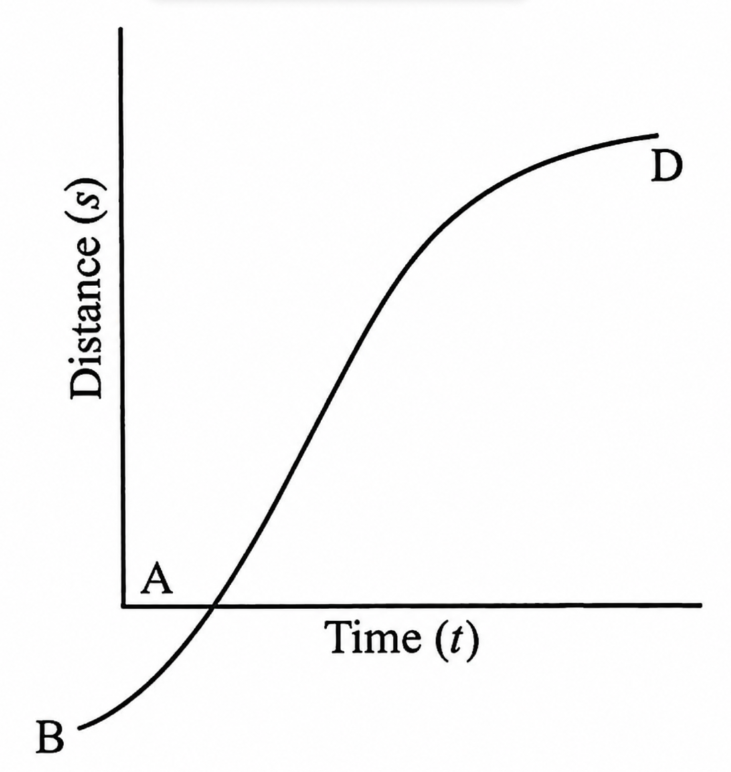
[4 Marks] Diagram 1 – NEET-UG 2008 Question Paper
  • (A) A
  • (B) D
  • (C) B
  • (D) C
Question 5.

A particle moves in a straight line with a constant acceleration. It changes its velocity from 10 ms⁻¹ to 20 ms⁻¹ while passing through a distance 135 m in t second. The value of t is:

[4 Marks]
  • (A) 9
  • (B) 10
  • (C) 12
  • (D) 1.8
Question 6.

A particle of mass m is projected with velocity v making an angle of 45° with the horizontal. When the particle lands on the level ground the magnitude of the change in its momentum will be:

[4 Marks]
  • (A) 2 mv
  • (B) mv / √2
  • (C) zero
  • (D) mv√2
Question 7.

Sand is being dropped on a conveyor belt at the rate of M kg/s. The force necessary to keep the belt moving with a constant velocity of v m/s will be:

[4 Marks]
  • (A) zero
  • (B) 2 Mv newton
  • (C) (Mv / 2) newton
  • (D) Mv newton
Question 8.

Three forces acting on a body are shown in the figure. To have the resultant force only along the y‑direction, the magnitude of the minimum additional force needed is:
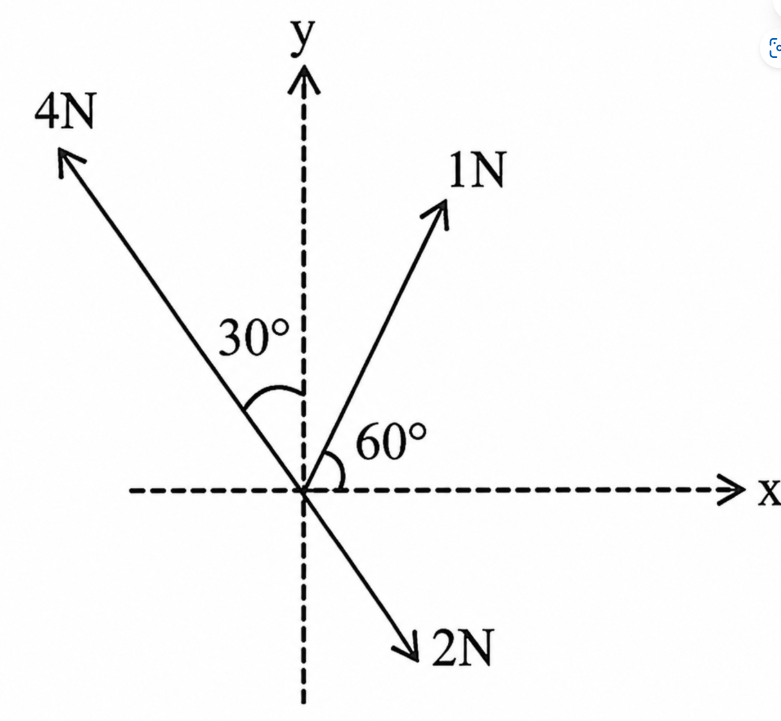
[4 Marks] Diagram 2 – NEET-UG 2008 Question Paper
  • (A) √3 N
  • (B) 0.5 N
  • (C) (√3 / 4) N
  • (D) 1.5 N
Question 9.

Water falls from a height of 60 m at the rate of 15 kg/s to operate a turbine. The losses due to frictional force are 10% of energy. How much power is generated by the turbine? (g = 10 m/s²)

[4 Marks]
  • (A) 10.2 kW
  • (B) 7.0 kW
  • (C) 8.1 kW
  • (D) 12.3 kW
Question 10.

A shell of mass 200 gm is ejected from a gun of mass 4 kg by an explosion that generates 1.05 kJ of energy. The initial velocity of the shell is:

[4 Marks]
  • (A) 120 ms⁻¹
  • (B) 100 ms⁻¹
  • (C) 40 ms⁻¹
  • (D) 80 ms⁻¹
Question 11.

The ratio of radii of gyration of a circular ring and a circular disc, of the same mass and radius, about an axis passing through their centres and perpendicular to their planes are:

[4 Marks]
  • (A) 3 : 2
  • (B) √2 : 1
  • (C) 2 : 1
  • (D) 1 : √2
Question 12.

A thin rod of length L and mass M is bent at its midpoint into two halves so that the angle between them is 90°. The moment of inertia of the bent rod about an axis passing through the bending point and perpendicular to the plane defined by the two halves of the rod is:

[4 Marks]
  • (A) ML² / 12
  • (B) ML² / 24
  • (C) ML² / 6
  • (D) √2ML² / 24
Question 13.

A roller coaster is designed such that riders experience “weightlessness” as they go round the top of a hill whose radius of curvature is 20 m. The speed of the car at the top of the hill is between:

[4 Marks]
  • (A) 14 m/s and 15 m/s
  • (B) 16 m/s and 17 m/s
  • (C) 15 m/s and 16 m/s
  • (D) 13 m/s and 14 m/s
Question 14.

On a new scale of temperature (which is linear) and called the W scale, the freezing and boiling points of water are 39° W and 239° W respectively. What will be the temperature on the new scale, corresponding to a temperature of 39° C on the Celsius scale?

[4 Marks]
  • (A) 200° W
  • (B) 139° W
  • (C) 117° W
  • (D) 78° W
Question 15.

An electric kettle takes 4 A current at 220 V. How much time will it take to boil 1 kg of water from temperature 20° C? The temperature of boiling water is 100° C.

[4 Marks]
  • (A) 12.6 min
  • (B) 4.2 min
  • (C) 6.3 min
  • (D) 8.4 min
Question 16.

If Q, E and W denote respectively the heat added, change in internal energy and the work done in a closed cyclic process, then:

[4 Marks]
  • (A) W = 0
  • (B) Q = W = 0
  • (C) E = 0
  • (D) Q = 0
Question 17.

At 10°C the value of the density of a fixed mass of an ideal gas divided by its pressure is x. At 110°C this ratio is:

[4 Marks]
  • (A) x
  • (B) (383 / 283)x
  • (C) (283 / 383)x
  • (D) (10 / 110)x
Question 18.

Two simple harmonic motions of angular frequency 100 and 1000 rad s⁻¹ have the same displacement amplitude. The ratio of their maximum acceleration is:

[4 Marks]
  • (A) 1 : 10³
  • (B) 1 : 10
  • (C) 1 : 10⁴
  • (D) 1 : 10²
Question 19.

A point performs simple harmonic oscillation of period T and the equation of motion is given by x = a sin⁡(ωt + π / 6). After the elapse of what fraction of the time period the velocity of the point will be equal to half of its maximum velocity?

[4 Marks]
  • (A) T / 8
  • (B) T / 3
  • (C) T / 6
  • (D) T / 12
Question 20.

The wave described by y=0.25sin⁡(10πx−2πt),

where x and y are in meters and t in seconds, is a wave travelling along the:

[4 Marks]
  • (A) −ve x direction with frequency 1 Hz.
  • (B) +ve x direction with frequency π Hz and wavelength λ = 0.2 m.
  • (C) +ve x direction with frequency 1 Hz and wavelength λ = 0.2 m.
  • (D) −ve x direction with amplitude 0.25 m and wavelength λ = 0.2 m
Question 21.

A thin conducting ring of radius R is given a charge +Q. The electric field at the centre O of the ring due to the charge on the part AKB of the ring is E. The electric field at the centre due to the charge on the part ACDB of the ring is
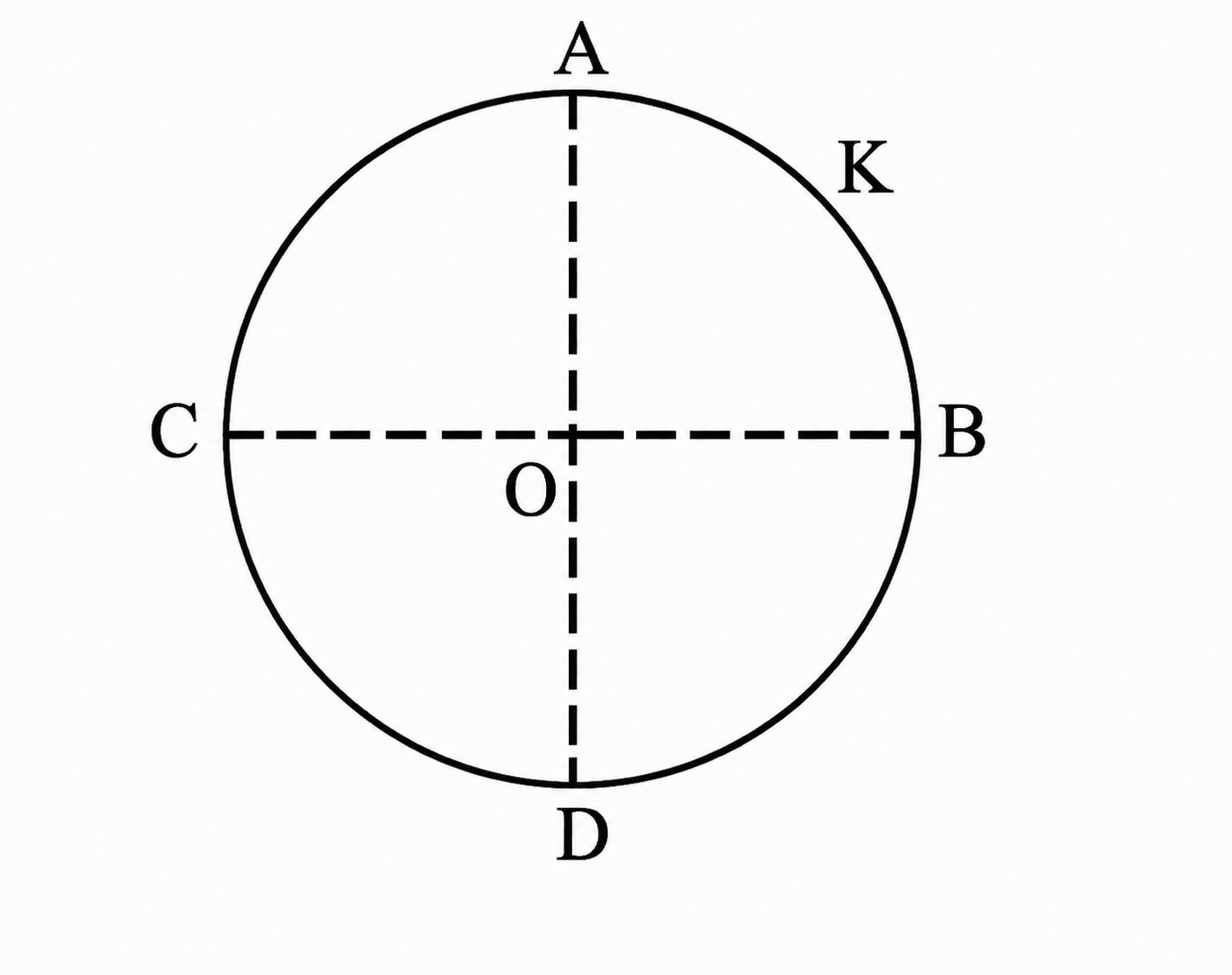
[4 Marks] Diagram 3 – NEET-UG 2008 Question Paper
  • (A) E along KO
  • (B) E along KO
  • (C) E along OK
  • (D) 3 E along OK
Question 22.

The electric potential at a point in free space due to a charge Q coulomb is Q × 10¹¹ volts. The electric field at that point is

[4 Marks]
  • (A) 12πε₀ Q × 10²² volt/m
  • (B) 4πε₀ Q × 10²² volt/m
  • (C) 12πε₀ Q × 10²⁰ volt/m
  • (D) 4πε₀ Q × 10²⁰ volt/m
Question 23.

A parallel plate capacitor has a uniform electric field E in the space between the plates. If the distance between the plates is d and area of each plate is A, the energy stored in the capacitor is:

[4 Marks]
  • (A) (1 / 2) ε₀ E²
  • (B) E²Ad / ε₀
  • (C) ε₀ EAd
  • (D) (1 / 2) ε₀ E² Ad
Question 24.

A wire of a certain material is stretched slowly by ten per cent. Its new resistance and specific resistance become respectively:

[4 Marks]
  • (A) 1.21 times, same
  • (B) 1.1 times, 1.1 times
  • (C) both remain the same
  • (D) 1.2 times, 1.3 times
Question 25.

Bacterial leaf blight of rice is caused by a species of

[4 Marks]
  • (A) Erwinia
  • (B) Alternaria
  • (C) Pseudomonas
  • (D) Xanthomonas
Question 26.

In the light of recent classification of living organisms into three domains of life (bacteria, archaea and eukarya), which one of the following statements is true about archaea?

[4 Marks]
  • (A) Archaea completely differ from prokaryotes
  • (B) Archaea have some novel features that are absent in other prokaryotes and eukaryotes
  • (C) Archaea completely differ form both prokaryotes and eukaryotes
  • (D) Archaea resemble eukarya in all respects
Question 27.

Thermococcus, Methanococcus and Methan-obacterium exemplify:

[4 Marks]
  • (A) Bacteria whose DNA is relaxed or positively supercoiled but which have a cytoskeleton as well as mitochondria
  • (B) Bacteria that contain a cytoskeleton and ribosomes
  • (C) Archaebacteria that contain protein homologous to eukaryotic core histones
  • (D) Archaebacteria that lack any histones resembling those found in eukaryotes but whose DNA is negatively supercoiled
Question 28.

In which one of the following, male and female gametophytes do not have free living independent existence?

[4 Marks]
  • (A) Polytrichum
  • (B) Cedrus
  • (C) Funaria
  • (D) Pteris
Question 29.

Which one of the following is heterosporous?

[4 Marks]
  • (A) Salvinia
  • (B) Dryopteris
  • (C) Equisetum
  • (D) Adiantum
Question 30.

Select one of the following pairs of important features distinguishing Gnetum from Cycas and Pinus and showing affinities with angiosperms

[4 Marks]
  • (A) absence of resin duct and leaf venation
  • (B) perianth and two integuments
  • (C) embryo development and apical meristem
  • (D) presence of vessel elements and absence of archegonia
Question 31.

Ascaris is characterized by

[4 Marks]
  • (A) presence of true coelom and metamerism (metamerisation)
  • (B) presence of true coelom but absence of metamerism
  • (C) presence of neither true coelom nor metamerism
  • (D) absence of true coelom but presence of metamerism
Question 32.

Which one of the following is NOT a characteristic of phylum Annelida?

[4 Marks]
  • (A) Ventral nerve cord
  • (B) Pseudocoelom
  • (C) Segmentation
  • (D) Closed circulatory system
Question 33.

Which one of the following phyla is correctly matched with its two general characteristics?

[4 Marks]
  • (A) Mollusca - Normally oviparous and development through a trochophore or veliger larva
  • (B) Echinodermata - Pentamerous radial symmetry and mostly internal fertilization
  • (C) Arthropoda – Body divided into head, thorax and abdomen and respiration by tracheae
  • (D) Chordata – Notochord at some stage and separate anal and urinary openings to the outside
Question 34.

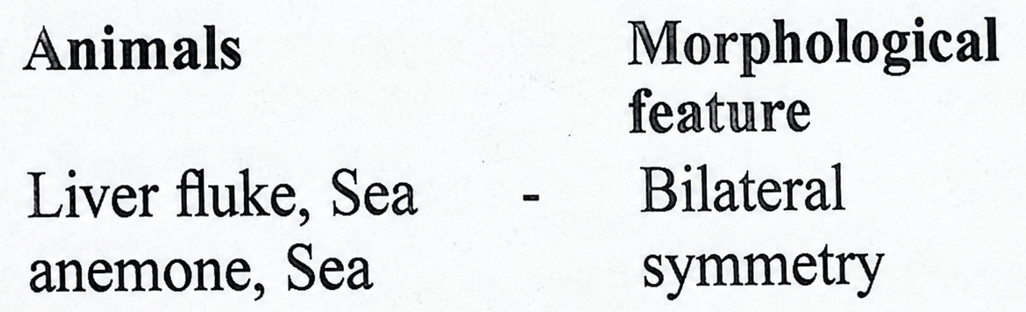
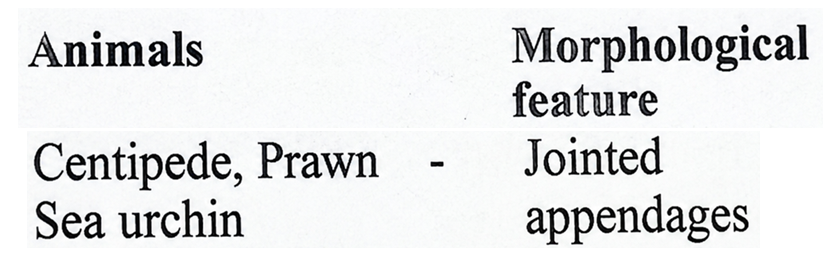
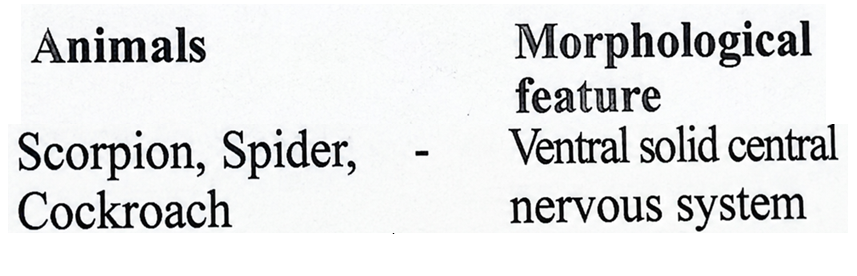
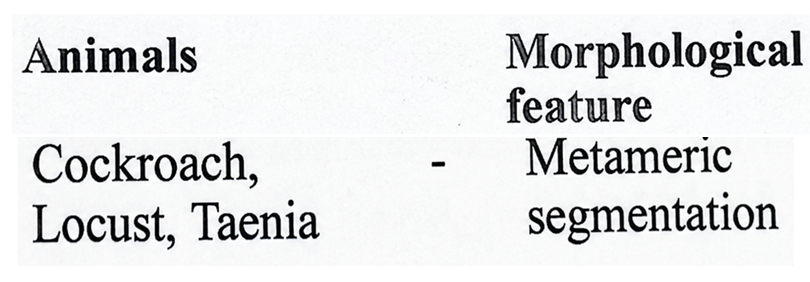
Which one of the following groups of three animals each is correctly matched with their one characteristic morphological feature?

[4 Marks]
  • (A) Diagram 4 – NEET-UG 2008 Question Paper
  • (B) Diagram 5 – NEET-UG 2008 Question Paper
  • (C) Diagram 6 – NEET-UG 2008 Question Paper
  • (D) Diagram 7 – NEET-UG 2008 Question Paper
Question 35.

Which one of the following is the true description about an animal concerned?

[4 Marks]
  • (A) Cockroach – 10 pairs of spiracles (2 pairs on thorax and 8 pairs on abdomen)
  • (B) Rat – Left kidney is slightly higher in position than the right one
  • (C) Frog – Body divisible into three regions – head, neck and trunk
  • (D) Earthworm – The alimentary canal consists of a sequence of pharynx, oesophagus, stomach, gizzard and intestine
Question 36.

Replum is present in the ovary of flower of

[4 Marks]
  • (A) Pea
  • (B) Sun flower
  • (C) Lemon
  • (D) Mustard
Question 37.

The length of different internodes in a culm of sugarcane is variable because of

[4 Marks]
  • (A) shoot apical meristem
  • (B) position of axillary buds
  • (C) intercalary meristem
  • (D) size of leaf lamina at the node below each internode
Question 38.

Vascular tissues in flowering plants develop from

[4 Marks]
  • (A) phellogen
  • (B) plerome
  • (C) periblem
  • (D) dermatogen
Question 39.

Which one of the following is resistant to enzyme action?

[4 Marks]
  • (A) Cork
  • (B) Wood fibre
  • (C) Leaf cuticle
  • (D) Pollen exine
Question 40.

Earthworms have no skeleton but during burrowing, the anterior end becomes turgid and acts as a hydraulic skeleton. It is due to

[4 Marks]
  • (A) setae
  • (B) gut peristalsis
  • (C) coelomic fluid
  • (D) blood
Question 41.

Keeping in view the fluid mosaic model for the structure of cell membrane, which one of the following statements is correct with respect to movement of lipids and proteins from one lipid monolayer to the other (described as flip-flop movement)?

[4 Marks]
  • (A) Both lipids and proteins can flip-flop
  • (B) While lipids can rarely flip-flop, protein can not
  • (C) Neither lipids, nor proteins can flip-flop
  • (D) While proteins can flip-flop, lipids can not
Question 42.

Cellulose is the major component of cell walls of

[4 Marks]
  • (A) Pseudomonas
  • (B) Saccharomyces
  • (C) Xanthomonas
  • (D) Pyhtium
Question 43.

The two sub-units of ribosome remain united at critical ion level of

[4 Marks]
  • (A) magnesium
  • (B) calcium
  • (C) copper
  • (D) manganese
Question 44.

Vacuole in a plant cell

[4 Marks]
  • (A) lacks membrane and contains air
  • (B) lacks membrane and contains water and excretory substances
  • (C) is membrane-bound and contains water and excretory substances
  • (D) is membrane-bound and contains storage proteins and lipids
Question 45.

A competitive inhibitor of succinic dehydrogenase is

[4 Marks]
  • (A) m-ketoglutarate
  • (B) Malate
  • (C) Oxaloacetate
  • (D) Malonate
Question 46.

The rupture and fractionation do not usually occur in the water column in vessel/tracheids during the ascent of sap because of

[4 Marks]
  • (A) weak gravitational pull
  • (B) transpiration pull
  • (C) cohesion and adhesion
  • (D) lignified thick walls
Question 47.

Carbohydrates are commonly found as starch in plant storage organs. Which of the following five properties of starch (A–E) make it useful as a storage material?

(A) Easily translocated

(B) Chemically non-reactive

(C) Easily digested by animals

(D) Osmotically inactive

(E) Synthesized during photosynthesis

The useful properties are

[4 Marks]
  • (A) (A) and (E)
  • (B) (A), (C) and (E)
  • (C) (B) and (D)
  • (D) (B) and (C)
Question 48.

Nitrogen fixation in root nodules of Alnus is brought about by:

[4 Marks]
  • (A) Azorhizobium
  • (B) Frankia
  • (C) Clostridium
  • (D) Bradyrhizobium
Question 49.

Electrons from excited chlorophyll molecule of photosystem II are accepted first by:

[4 Marks]
  • (A) Cytochrome-f
  • (B) Cytochrome-b
  • (C) Quinone
  • (D) Ferredoxin
Question 50.

In leaves of C₄ plants malic acid synthesis during CO₂ fixation occurs in

[4 Marks]
  • (A) guard cells
  • (B) bundle sheath
  • (C) mesophyll cells
  • (D) epidermal cells
Question 51.

The energy-releasing process in which the substrate is oxidised without an external electron acceptor is called

[4 Marks]
  • (A) glycolysis
  • (B) aerobic respiration
  • (C) photorespiration
  • (D) fermentation
Question 52.

The chemiosmotic coupling hypothesis of oxidative phosphorylation proposes that adenosine triphosphate (ATP) is formed because:

[4 Marks]
  • (A) there is a change in the permeability of the inner mitochondrial membrane toward adenosine diphosphate (ADP)
  • (B) a proton gradient forms across the inner membrane
  • (C) ADP is pumped out of the matrix into the intermembrane space
  • (D) high energy bonds are formed in mitochondrial proteins
Question 53.

In germinating seeds fatty acids are degraded exclusively in the

[4 Marks]
  • (A) peroxisomes
  • (B) mitochondria
  • (C) proplastids
  • (D) glyoxysomes
Question 54.

Senescence as an active developmental cellular process in the growth and functioning of a flowering plant, is indicated in

[4 Marks]
  • (A) floral parts
  • (B) leaf abscission
  • (C) annual plants
  • (D) vessels and tracheid differentiation
Question 55.

Importance of day length in flowering of plants was first shown in

[4 Marks]
  • (A) lemma
  • (B) tobacco
  • (C) cotton
  • (D) petunia
Question 56.

Which one of the following is the correct matching of the site of action on the given substrate, the enzyme acting upon it and the end product?

[4 Marks]
  • (A) Stomach: Fats Micelles
  • (B) Small intestine: Proteins Amino acids
  • (C) Duodenum: Triglycerides Monoglycerides
  • (D) Small intestine: Starch Disaccharide (Maltose)
Question 57.

What will happen if the secretion of parietal cells of gastric glands is blocked with an inhibitor?

[4 Marks]
  • (A) Enterokinase will not be released from the duodenal mucosa and so trypsinogen is not converted to trypsin
  • (B) In the absence of HCl secretion, inactive pepsinogen is not converted into the active enzyme pepsin
  • (C) Gastric juice will be deficient in pepsinogen
  • (D) Gastric juice will be deficient in chymosin
Question 58.

Which type of white blood cells are concerned with the release of histamine and the natural anti-coagulant heparin?

[4 Marks]
  • (A) Monocytes
  • (B) Eosinophils
  • (C) Neutrophils
  • (D) Basophils
Question 59.

The most active phagocytic white blood cells are:

[4 Marks]
  • (A) eosinophils and lymphocytes
  • (B) neutrophils and monocytes
  • (C) neutrophils and eosinophils
  • (D) lymphocytes and macrophages
Question 60.

The haemoglobin of a human foetus

[4 Marks]
  • (A) has a lower affinity for oxygen than that of the adult.
  • (B) has affinity for oxygen the same as that of an adult.
  • (C) has only 2 protein subunits instead of 4.
  • (D) has a higher affinity for oxygen than that of an adult.
Question 61.

In humans, blood passes from the post caval to the diastolic right atrium of heart due to

[4 Marks]
  • (A) suction pull
  • (B) pushing open of the venous valves
  • (C) stimulation of the sino auricular node
  • (D) pressure difference between the post caval and atrium
Question 62.

Which one of the following items gives its correct total number?

[4 Marks]
  • (A) Cervical vertebrae in humans – 8
  • (B) Types of diabetes – 3
  • (C) Floating ribs in humans – 4
  • (D) Amino acids found in proteins – 16
Question 63.

During the propagation of a nerve impulse, the action potential results from the movement of:

[4 Marks]
  • (A) Na⁺ ions from extracellular fluid to intracellular fluid
  • (B) Na⁺ ions from intracellular fluid to extracellular fluid
  • (C) K⁺ ions from extracellular fluid to intracellular fluid
  • (D) K⁺ ions from intracellular fluid to extracellular fluid
Question 64.

Given below is a diagrammatic cross section of a single loop of human cochlea:

Which one of the following options correctly represents the names of three different parts?
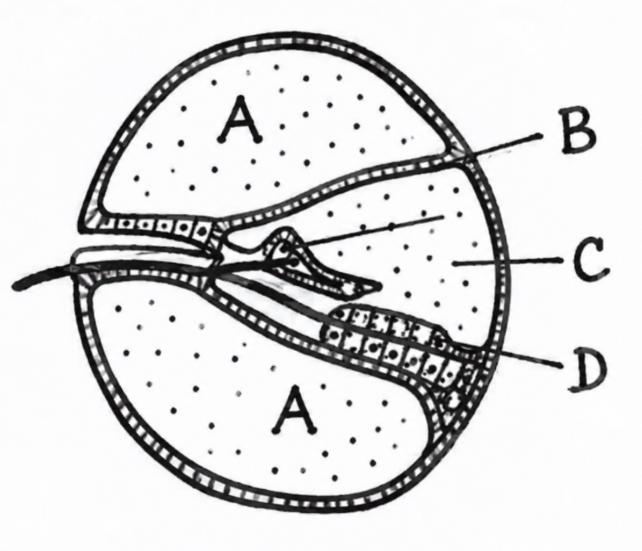
[4 Marks] Diagram 8 – NEET-UG 2008 Question Paper
  • (A) D: Sensory hair cells, A: Endolymph, B: Tectorial membrane
  • (B) A: Perilymph, B: Tectorial membrane, C: Endolymph
  • (C) B: Tectorial membrane, C: Perilymph, D: Secretory cells
  • (D) C: Endolymph, D: Sensory hair cells, A: Serum
Question 65.

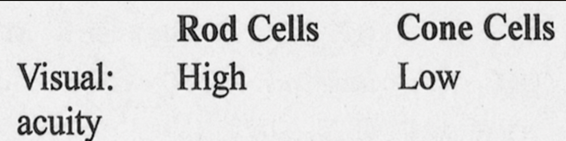
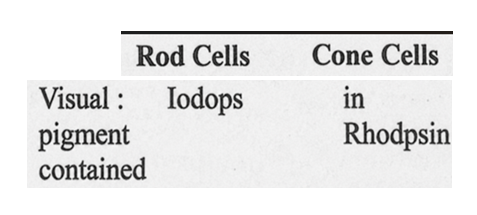
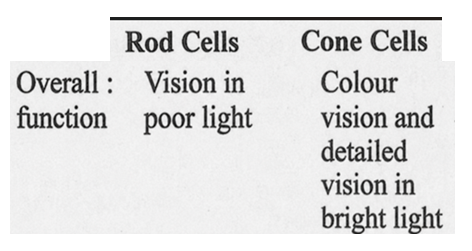
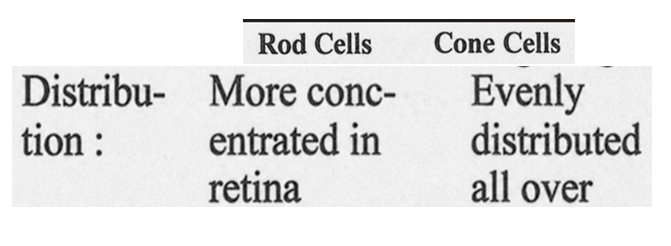
Which one of the following is the correct difference between Rod Cells and Cone Cells of our retina?

[4 Marks]
  • (A) Diagram 9 – NEET-UG 2008 Question Paper
  • (B) Diagram 10 – NEET-UG 2008 Question Paper
  • (C) Diagram 11 – NEET-UG 2008 Question Paper
  • (D) Diagram 12 – NEET-UG 2008 Question Paper
Question 66.

A cell can be balanced against 110 cm and 100 cm of potentiometer wire, respectively with and without being short circuited through a resistance of 10Q. Its internal resistance is

[4 Marks]
  • (A) 2.0 ohm
  • (B) zero
  • (C) 0.5 ohm
  • (D) 1.0 ohm
Question 67.

A current of 3 amp flows through the 2Ω resistor shown in the circuit. The power dissipated in the 5-Ω resistor is:
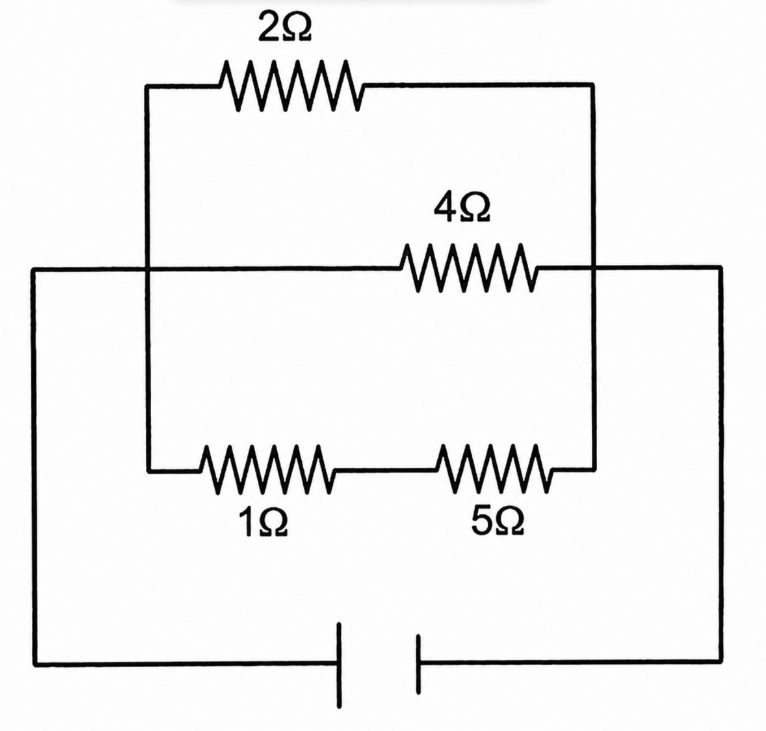
[4 Marks] Diagram 13 – NEET-UG 2008 Question Paper
  • (A) 1 watt
  • (B) 5 watt
  • (C) 4 watt
  • (D) 2 watt
Question 68.

A particle of mass m, charge Q and kinetic energy T enters a transverse uniform magnetic field of induction 𝐁⃗. After 3 seconds, the kinetic energy of the particle will be:

[4 Marks]
  • (A) 3T
  • (B) 2T
  • (C) T
  • (D) 4T
Question 69.

A closed loop PQRS carrying a current is placed in a uniform magnetic field. If the magnetic forces on segments PS, SR, and RQ are F₁, F₂, and F₃ respectively and are in the plane of the paper and along the directions shown, the force on the segment QP is
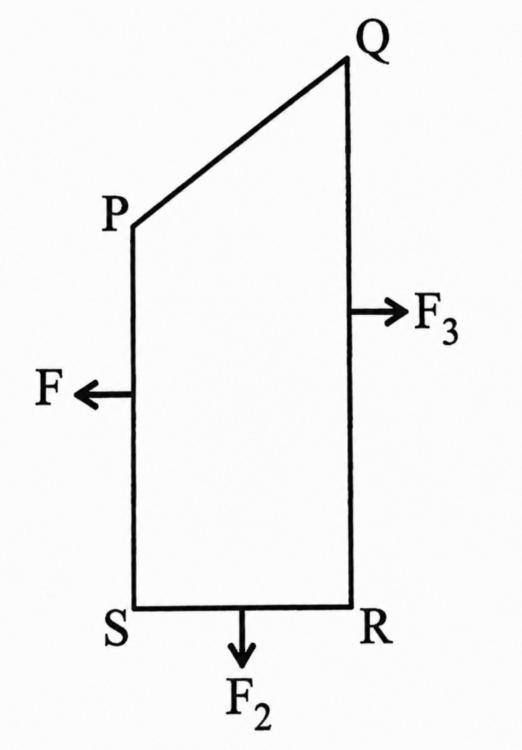
[4 Marks] Diagram 14 – NEET-UG 2008 Question Paper
  • (A) F₃ − F₁ − F₂
  • (B) √(F₃ − F₁)² + F₂²
  • (C) √(F₃ − F₁)² − F₂²
  • (D) F₃ − F₁ + F₂
Question 70.

A galvanometer of resistance 50 Ω is connected to battery of 3V along with a resistance of 2950 Ω in series. A full scale deflection of 30 divisions is obtained in the galvanometer. In order to reduce this deflection to 20 divisions, the resistance in series should be

[4 Marks]
  • (A) 4450 Ω
  • (B) 5550 Ω
  • (C) 6050 Ω
  • (D) 5050 Ω
Question 71.

Curie temperature is the temperature above which

[4 Marks]
  • (A) ferromagnetic material becomes paramagnetic material
  • (B) paramagnetic material becomes diamagnetic material
  • (C) paramagnetic material becomes ferromagnetic material
  • (D) ferromagnetic material becomes diamagnetic material
Question 72.

A circular disc of radius 0.2 meter is placed in a uniform magnetic field of induction 1/π (Wb/m²) in such a way that its axis makes an angle of 60° with 𝐁⃗. The magnetic flux linked with the disc is:

[4 Marks]
  • (A) 0.01 Wb
  • (B) 0.08 Wb
  • (C) 0.06 Wb
  • (D) 0.02 Wb
Question 73.

A long solenoid has 500 turns. When a current of 2 ampere is passed through it, the resulting magnetic flux linked with each turn of the solenoid is 4×10⁻³ Wb. The self-inductance of the solenoid is

[4 Marks]
  • (A) 40 henry
  • (B) 1.0 henry
  • (C) 2.0 henry
  • (D) 2.5 henry
Question 74.

In an a.c. circuit the e.m.f. (e) and the current (i) at any instant are given respectively by

e = E₀ sin ⁡ωt

i = I₀ sin ⁡(ωt−ϕ)

The average power in the circuit over one cycle of a.c. is

[4 Marks]
  • (A) E₀Ⅰ₀
  • (B) (E₀Ⅰ₀ / 2)sin Φ
  • (C) (E₀Ⅰ₀ / 2)cos Φ
  • (D) E₀Ⅰ₀ / 2
Question 75.

The velocity of electromagnetic radiation in a medium of permittivity ε₀ and permeability μ₀ is given by

[4 Marks]
  • (A) √(μ₀ ε₀)
  • (B) √(ε₀ / μ₀)
  • (C) 1 / √(μ₀ ε₀)
  • (D) √(μ₀ / ε₀)
Question 76.

Two thin lenses of focal lengths f₁ and f₂ are in contact and coaxial. The power of the combination is:

[4 Marks]
  • (A) f₁ + f₂ / f₁f₂
  • (B) f₁ + f₂ / 2
  • (C) √(f₁ / f₂)
  • (D) √(f₂ / f₁)
Question 77.

A boy is trying to start a fire by focusing sunlight on a piece of paper using an equiconvex lens of focal length 10 cm. The diameter of the Sun is 1.39 x10⁹ m and its mean distance from the earth is 1.5 x 10¹¹ m. What is the diameter of the Sun’s image on the paper?

[4 Marks]
  • (A) 12.4 x 10⁻⁴m
  • (B) 6.5 x 10⁻⁵m
  • (C) 6.5 x10⁻⁴m
  • (D) 9.2 x 10⁻⁴m
Question 78.

The periodic waves of intensities I₁ and I₂ pass through a region at the same time in the same direction. The sum of the maximum and minimum intensities is:

[4 Marks]
  • (A) (√I₁ - √I₂)²
  • (B) (√I₁ + √I₂)²
  • (C) I₁ + I₂
  • (D) 2(I₁ + I₂)
Question 79.

In the phenomenon of electric discharge through gases at low pressure, the coloured glow in the tube appears as a result of:

[4 Marks]
  • (A) collisions between the charged particles emitted from the cathode and the atoms of the gas
  • (B) collision between different electrons of the atoms of the gas
  • (C) collision between the atoms of the gas
  • (D) excitation of electrons in the atoms
Question 80.

A particle of mass 1 mg has the same wavelength as an electron moving with a velocity of 3×10⁶ ms⁻¹. The velocity of the particle is:

[4 Marks]
  • (A) 9 × 10⁻² ms⁻¹
  • (B) 3 × 10⁻³¹ ms⁻¹
  • (C) 2.7 × 10⁻²¹   ms⁻¹
  • (D) 2.7 × 10⁻¹⁸  ms⁻¹
Question 81.

The work function of a surface of a photosensitive material is 6.2 eV. The wavelength of incident radiation for which the stopping potential is 5 V lies in the:

[4 Marks]
  • (A) Ultraviolet region
  • (B) Visible region
  • (C) Infrared region
  • (D) X-ray region
Question 82.

The ground state energy of hydrogen atom is 13.6 eV. When its electron is in the first excited state, its excitation energy is

[4 Marks]
  • (A) 0
  • (B) 10.2 eV
  • (C) 6.8 eV
  • (D) 3.4 eV
Question 83.

Two nuclei have their mass numbers in the ratio of 1 : 3. The ratio of their nuclear densities would be

[4 Marks]
  • (A) 1 : 3
  • (B) 3 : 1
  • (C) (3)¹ᐟ³ : 1
  • (D) 1 : 1
Question 84.

If M(A; Z), Mₚ, and Mₙ denote the masses of the nucleus ᴬ_ZX, proton and neutron respectively in units of u (1 u = 931.5 MeV/c²) and BE represents its bonding energy in MeV, then

[4 Marks]
  • (A) M(A, Z) = ZMₚ + (A − Z)Mₙ − BE/c²
  • (B) M(A, Z) = ZMₚ + (A − Z)Mₙ + BE
  • (C) M(A, Z) = ZMₚ + (A − Z)Mₙ + BE/c²
  • (D) M(A, Z) = ZMₚ + (A − Z)Mₙ − BE
Question 85.

Two radioactive materials X₁ and X₂ have decay constants 5λ and λ respectively. If initially they have the same number of nuclei, then the ratio of the number of nuclei of X₁ to that of X₂ will be 1 / e after a time

[4 Marks]
  • (A) e / λ
  • (B) 1 / 4λ
  • (C) λ
  • (D) (1 / 2) λ
Question 86.

A p-n photodiode is made of a material with a band gap of 2.0 eV. The minimum frequency of the radiation that can be absorbed by the material is nearly

[4 Marks]
  • (A) 20 × 10¹⁴ Hz
  • (B) 1 × 10¹⁴ Hz
  • (C) 5 × 10¹⁴ Hz
  • (D) 10 × 10¹⁴ Hz
Question 87.

The voltage gain of an amplifier with 9% negative feedback is 10. The voltage gain without feedback will be

[4 Marks]
  • (A) 90
  • (B) 10
  • (C) 1.25
  • (D) 100
Question 88.

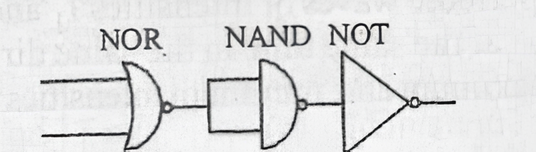
The circuit

is equivalent to

[4 Marks] Diagram 15 – NEET-UG 2008 Question Paper
  • (A) AND gate
  • (B) NAND gate
  • (C) OR gate
  • (D) NOR gate
Question 89.

If the lattice parameter for a crystal line structure is 3.6 Å, then the atomic radius in fcc crystal is

[4 Marks]
  • (A) 1.27 Å
  • (B) 2.92 Å
  • (C) 2.10 Å
  • (D) 1.81 Å
Question 90.

The energy required to charge a parallel plate condenser of plate separation d and plate area of cross‑section A such that the uniform electric field between the plates is E₁, is

[4 Marks]
  • (A) (1 / 2) ε₀E² Ad
  • (B) ε₀E² / Ad
  • (C) ε₀E² Ad
  • (D) (1 / 2) ε₀E² / Ad
Question 91.

In the circuit shown, the current through the 4 Ω resistor is 1 A when the points P and M are connected to a DC voltage source. The potential difference between the points M and N is
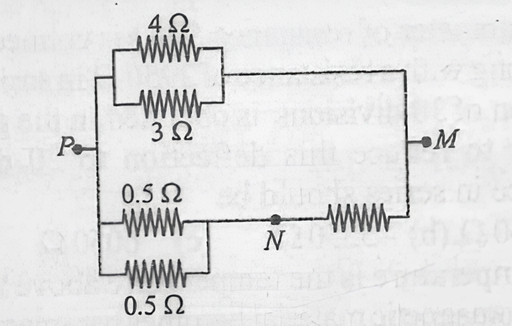
[4 Marks] Diagram 16 – NEET-UG 2008 Question Paper
  • (A) 1.0 V
  • (B) 1.5 V
  • (C) 0.5 V
  • (D) 3.2 V
Question 92.

What volume of oxygen gas (O₂) measured at 0°C and 1 atm, is needed to burn completely 1 L of propane gas (C₃H₈) measured under the same conditions?

[4 Marks]
  • (A) 5L
  • (B) 10 L
  • (C) 7L
  • (D) 6L
Question 93.

Number of moles of MnO₄⁻ required to oxidize one mole of ferrous oxalate completely in acidic medium will be:

[4 Marks]
  • (A) 7.5 moles
  • (B) 0.2 moles
  • (C) 0.6 mole
  • (D) 0.4 moles
Question 94.

Volume occupied by one molecule of water (density = 1 g cm⁻³) is:

[4 Marks]
  • (A) 9.0 × 10⁻²³ cm³
  • (B) 3.0 × 10⁻²³ cm³
  • (C) 6.023 × 10⁻²³ cm³
  • (D) 5.5 × 10⁻²³ cm³
Question 95.

An organic compound contains carbon, hydrogen and oxygen. Its elemental analysis gave C, 38.71% and H, 9.67%. The empirical formula of the compound would be:

[4 Marks]
  • (A) CH₂O
  • (B) CH₃O
  • (C) CHO
  • (D) CH₄O
Question 96.

The measurement of the electron position if associated with an uncertainty in momentum, which is equal to 1 × 10⁻¹⁸ g cm s⁻¹. The uncertainty in electron velocity is, (mass of an electron is 9 × 10⁻²⁸ g)

[4 Marks]
  • (A) 1 × 10¹¹ cm s⁻¹
  • (B) 1 × 10⁹ cm s⁻¹
  • (C) 1 × 10⁵ cm s⁻¹
  • (D) 1 × 10⁶ cm s⁻¹
Question 97.

How many moles of lead (II) chloride will be formed from a reaction between 6.5 g of PbO and 3.2 g of HCl?

[4 Marks]
  • (A) 0.029
  • (B) 0.011
  • (C) 0.044
  • (D) 0.333
Question 98.

If uncertainty in position and momentum are equal, then uncertainty in velocity is:

[4 Marks]
  • (A) √(h / (2π))
  • (B) (1 / 2m) √(h / π)
  • (C) (1 / m) √(h / π)
  • (D) √(h / π)
Question 99.

The angular shape of ozone molecule (O₃) consists of:

[4 Marks]
  • (A) 2 sigma and 2 pi bonds
  • (B) 1 sigma and 1 pi bonds
  • (C) 2 sigma and 1 pi bonds
  • (D) 1 sigma and 2 pi bonds
Question 100.

The correct order of increasing bond angles in the following triatomic species is:

[4 Marks]
  • (A) NO₂⁺ < NO₂ < NO₂⁻
  • (B) NO₂⁻ < NO₂⁺ < NO₂
  • (C) NO₂⁻ < NO₂ < NO₂⁺
  • (D) NO₂⁺ < NO₂⁻ < NO
Question 101.

Which of the following are not the state functions?

(I) q + w 

(II) q 

(III) w 

(IV) H − TS

[4 Marks]
  • (A) (I), (II) and (III)
  • (B) (II) and (III)
  • (C) (I) and (IV)
  • (D) (II), (III) and (IV)
Question 102.

Cornea transplant in humans is almost never rejected. This is because

[4 Marks]
  • (A) it is composed of enucleated cells
  • (B) it is a non‑living layer
  • (C) it has no blood supply
  • (D) its cells are least penetrable by bacteria
Question 103.

The blood calcium level is lowered by the deficiency of

[4 Marks]
  • (A) parathormone
  • (B) thyroxine
  • (C) both calcitonin and parathormone
  • (D) calcitonin
Question 104.

Which one of the following pairs of organs includes only the endocrine glands?

[4 Marks]
  • (A) Parathyroid and Adrenal
  • (B) Pancreas and Parathyroid
  • (C) Thymus and Testes
  • (D) Adrenal and Ovary
Question 105.

Unisexuality of flowers prevents

[3 Marks]
  • (A) both geitonogamy and xenogamy
  • (B) autogamy and geitonogamy
  • (C) geitonogamy, but not xenogamy
  • (D) autogamy, but not geitonogamy
Question 106.

What does the filiform apparatus do at the entrance into ovule?

[4 Marks]
  • (A) It helps in the entry of pollen tube into a synergid
  • (B) It guides pollen tube from a synergid to egg
  • (C) It brings about opening of the pollen tube
  • (D) It prevents entry of more than one pollen tube into the embryo sac
Question 107.

Endosperm is consumed by developing embryo in the seed of

[4 Marks]
  • (A) maize
  • (B) pea
  • (C) castor
  • (D) coconut
Question 108.

Dry indehiscent single‑seeded fruit formed from bicarpellary syncarpous inferior ovary is

[4 Marks]
  • (A) Berry
  • (B) Cremocarp
  • (C) Caryopsis
  • (D) Cypsela
Question 109.

The fleshy receptacle of syconus of fig encloses a number of:

[4 Marks]
  • (A) Mericarps
  • (B) Berries
  • (C) Samaras
  • (D) Achenes
Question 110.

The fruit is chambered, developed from inferior ovary and has seeds with succulent testa in

[4 Marks]
  • (A) guava
  • (B) cucumber
  • (C) orange
  • (D) pomegranate
Question 111.

Which one of the following statements is incorrect about menstruation?

[4 Marks]
  • (A) The beginning of the cycle of menstruation is called menarche
  • (B) At menopause in the female, there is especially abrupt increase in gonadotropic hormones
  • (C) During normal menstruation about 40 ml blood is lost
  • (D) The menstrual fluid can easily clot
Question 112.

Which extra‑embryonic membrane in humans prevents desiccation of the embryo inside the uterus?

[4 Marks]
  • (A) Chorion
  • (B) Allantois
  • (C) Yolk sac
  • (D) Amnion
Question 113.

Given below are four methods (A-D) and their modes of action (a-d) in achieving contraception. Select their correct matching from the four options that follow:
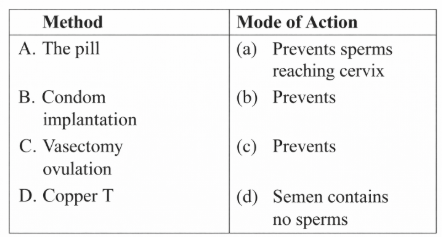
[4 Marks] Diagram 17 – NEET-UG 2008 Question Paper
  • (A) A -(b), B-(c), C-(a), D-(d)
  • (B) A -(d), B-(a), C-(b), D-(c)
  • (C) A -(c), B-(d), C-(a), D-(b)
  • (D) A -(c), B-(a), C-(d), D-(b)
Question 114.

Consider the statements given below regarding contraception and answer as directed thereafter

(i) Medical Termination of Pregnancy (MTP) during first trimester is generally safe

(ii) Generally chances of conception are nil until mother ‘breast-feeds the infant upto two years

(iii) Intrauterine devices like copper-T are effective contraceptives

(iv) Contraception pills may be taken upto one week after coitus to prevent conception

Which two of the above statements are correct?

[4 Marks]
  • (A) iii and iv
  • (B) ii and iii
  • (C) i and ii
  • (D) i and iii
Question 115.

Which one of the following conditions in humans is correctly matched with its chromosomal abnormality/linkage?

[4 Marks]
  • (A) Downs syndrome – 44 autosomes + XO
  • (B) Erythroblastosis foetalis – X‑linked
  • (C) Klinefelter’s syndrome – 44 autosomes + XXY
  • (D) Colour blindness – Y‑linked
Question 116.

Haploids are more suitable for mutation studies than the diploids. This is because

[4 Marks]
  • (A) haploids are reproductively more stable than diploids
  • (B) mutagens penetrate in haploids more effectively than diploids
  • (C) haploids are more abundant in nature than diploids
  • (D) all mutations, whether dominant or recessive are expressed in haploids
Question 117.

Which one of the following pairs of nitrogenous bases of nucleic acids, is wrongly matched with the category mentioned against it?

[4 Marks]
  • (A) Uracil, Cytosine – Pyrimidines
  • (B) Thymine, Uracil – Pyrimidines
  • (C) Adenine, Thymine – Purines
  • (D) Guanine, Adenine – Purines
Question 118.

Which one of the following pairs of codons is correctly matched with their function or the signal for the particular amino acid?

[4 Marks]
  • (A) UUA, UCA – Leucine
  • (B) AUG, ACG – Start/Methionine
  • (C) UAG, UGA – Stop
  • (D) GUU, GCU – Alanine
Question 119.

Polysome is formed by

[4 Marks]
  • (A) a ribosome with several subunits
  • (B) ribosomes attached to each other in a linear arrangement
  • (C) several ribosomes attached to a single mRNA
  • (D) many ribosomes attached to a strand of endoplasmic reticulum
Question 120.

In the DNA molecule

[4 Marks]
  • (A) there are two strands which run parallel in the 5′ → 3′ direction
  • (B) the proportion of Adenine in relation to thymine varies with the organism
  • (C) there are two strands which run anti‑parallel, one in 5′ → 3′ direction and other in 3′ → 5′
  • (D) the total amount of purine nucleotides and pyrimidine nucleotides is not always equal
Question 121.

Which one of the following scientists name is correctly matched with the theory put forth by him?

[4 Marks]
  • (A) Pasteur – Inheritance of acquired characters
  • (B) Weismann – Theory of continuity of Germplasm
  • (C) De Vries – Natural selection
  • (D) Mendel – Theory of Pangenesis
Question 122.

Darwinism finches are an excellent example of

[4 Marks]
  • (A) connecting links
  • (B) brood parasitism
  • (C) seasonal migration
  • (D) adaptive radiation
Question 123.

Thorn of Bougainvillea and tendril of Cucurbita are example of

[4 Marks]
  • (A) analogous organs
  • (B) homologous organs
  • (C) vestigial organs
  • (D) retrogressive evolution
Question 124.

Which one of the following pairs of items correctly belongs to the category of organs mentioned against it?

[4 Marks]
  • (A) Wings of honey bee and wings of crow – Homologous organs
  • (B) Nephridia of earthworm and malpighian tubules of Cockroach – Excretory organs
  • (C) Nictitating membrane and blind spot in human eye – Vestigial organs
  • (D) Thorn of Bougainvillea and tendril of Cucurbita – Analogous organs
Question 125.

Which one of the following is incorrect about the characteristics of protobionts (coacervates and microspheres) as envisaged in the biogenic origin of life?

[4 Marks]
  • (A) They were able to reproduce
  • (B) They could separate combinations of molecules from the surroundings
  • (C) They could maintain an internal environment
  • (D) They were partially isolated from the surroundings
Question 126.

Match the disease in Column I with the appropriate items (pathogen/prevention/treatment) in Column II.
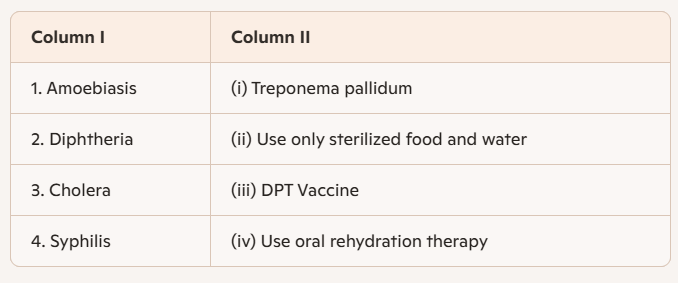
[4 Marks] Diagram 18 – NEET-UG 2008 Question Paper
  • (A) (1) – (i), (2) – (ii), (3) – (iii), (4) – (iv)
  • (B) (1) – (ii), (2) – (iv), (3) – (i), (4) – (iii)
  • (C) (1) – (ii), (2) – (i), (3) – (iii), (4) – (iv)
  • (D) (1) – (ii), (2) – (iii), (3) – (iv), (4) – (i)
Question 127.

To which type of barriers under innate immunity, do the saliva in the mouth and the tears from the eyes, belong?

[4 Marks]
  • (A) Cytokine barriers
  • (B) Cellular barriers
  • (C) Physiological barriers
  • (D) Physical barriers
Question 128.

Which one of the following is the correct statement regarding the particular psychotropic drug specified?

[4 Marks]
  • (A) Opium stimulates nervous system and causes hallucinations
  • (B) Hashish causes after thought perceptions and hallucinations
  • (C) Morphine leads to delusions and disturbed emotions
  • (D) Barbiturates cause relaxation and temporary euphoria
Question 129.

Which one of the following is being tried in India as a biofuel substitute for fossil fuels?

[4 Marks]
  • (A) Aegilops
  • (B) Musa
  • (C) Azadirachta
  • (D) Jatropha
Question 130.

Consider the following four measures (a–d) that could be taken to successfully grow chickpea in an area where bacterial blight disease is common

(1) Spray with Bordeaux mixture

(2) Control of the insect vector of the disease pathogen

(3) Use of only disease-free seeds

(4) Use of varieties resistant to the disease

Which two of the above measures can control the disease?

[4 Marks]
  • (A) 1 and 4
  • (B) 2 and 3
  • (C) 1 and 2
  • (D) 3 and 4
Question 131.

Which one of the following proved effective for biological control of nematodal disease in plants?

[4 Marks]
  • (A) Gliocladium virens
  • (B) Pseudomonas cepacia
  • (C) Pisolithus tinctorius
  • (D) Paecilomyces lilacinus
Question 132.

Trichoderma harzianum has proved a useful microorganism for

[4 Marks]
  • (A) reclamation of wastelands
  • (B) gene transfer in higher plants
  • (C) biological control of soil‑borne plant pathogens
  • (D) bioremediation of contaminated soils
Question 133.

Modern detergents contain enzyme preparations of:

[4 Marks]
  • (A) Acidophiles
  • (B) Alkaliphiles
  • (C) Thermoacidophiles
  • (D) Thermophiles
Question 134.

Human insulin is being commercially produced from a transgenic species of

[4 Marks]
  • (A) Escherichia
  • (B) Mycobacterium
  • (C) Saccharomyces
  • (D) Rhizobium
Question 135.

Which one of the following is linked to the discovery of Bordeaux mixture as a popular fungicide?

[4 Marks]
  • (A) Black rust of wheat
  • (B) Loose smut of wheat
  • (C) Downy mildew of grapes
  • (D) Bacterial leaf blight of rice
Question 136.

The linking of antibiotic resistance gene with the plasmid vector became possible with

[4 Marks]
  • (A) DNA polymerase
  • (B) Endonucleases
  • (C) DNA ligase
  • (D) Exonucleases
Question 137.

Gel electrophoresis is used for

[4 Marks]
  • (A) isolation of DNA molecule
  • (B) construction of recombinant DNA by joining with cloning vectors
  • (C) cutting of DNA into fragments
  • (D) separation of DNA fragments according to their size
Question 138.

What is antisense technology?

[4 Marks]
  • (A) RNA polymerase producing DNA
  • (B) When a piece of RNA that is complementary in sequence is used to stop expression of a specific gene
  • (C) Production of somaclonal variants in tissue cultures
  • (D) A cell displaying a foreign antigen used for synthesis of antigens
Question 139.

Cry endotoxins obtained from Bacillus thuringiensis are effective against

[4 Marks]
  • (A) nematodes
  • (B) boll worms
  • (C) flies
  • (D) mosquitoes
Question 140.

Consider the following statements about biomedical technologies?

  1. During open heart surgery blood is circulated in the heart‑lung machine

  2. Blockage in coronary arteries is removed by angiography

  3. Computerised axial tomography (CAT) shows detailed internal structure as seen in a section of body

  4. X‑ray provides clear and detailed images of organs like prostate glands and lungs Which two of the above statements are correct?

[4 Marks]
  • (A) 3 and 4
  • (B) 2 and 4
  • (C) 1 and 2
  • (D) 1 and 3
Question 141.

A transgenic food crop which may help in solving the problem of night blindness in developing countries is

[4 Marks]
  • (A) Bt Soybean
  • (B) Golden rice
  • (C) Starlink maize
  • (D) Flavr Savr tomatoes
Question 142.

Consider the following four statements (a–d) about certain desert animals such as kangaroo rat.

  1. They have dark colour and high rate of reproduction and excrete solid urine

  2. They do not drink water, breathe at a slow rate to conserve water and have their body covered with thick hairs

  3. They feed on dry seeds and do not require drinking water

  4. They excrete very concentrated urine and do not use water to regulate body temperature

Which two of the above statements for such animals are true?

[4 Marks]
  • (A) 2 and 3
  • (B) 3 and 4
  • (C) 1 and 2
  • (D) 3 and 1
Question 143.

What is true about the isolated small tribal populations?

[4 Marks]
  • (A) There is a decline in population as boys marry girls only from their own tribe.
  • (B) Hereditary diseases like colour blindness do not spread in the isolated population.
  • (C) Wrestlers who develop strong body muscles in their lifetime pass this character on to their progeny.
  • (D) There is no change in population size as they have a large gene pool.
Question 144.

About 70% of total global carbon is found in

[4 Marks]
  • (A) agroecosystems
  • (B) grasslands
  • (C) oceans
  • (D) forests
Question 145.

The slow rate of decomposition of fallen logs in nature is due to their

[4 Marks]
  • (A) low moisture content
  • (B) anaerobic environment around them
  • (C) low cellulose content
  • (D) poor nitrogen content
Question 146.

Consider the following statements concerning food chains

  1. removal of 80% tigers from an area resulted in greatly increased growth of vegetation

  2. removal of most of the carnivores resulted in an increased population of deers

  3. the length of food chains is generally limited to 3–4 trophic levels due to energy loss

  4. the length of food chains may vary from 2 to 8 trophic levels

Which two of the above statements are correct?

[4 Marks]
  • (A) (3) and (4)
  • (B) (1) and (4)
  • (C) (2) and (3)
  • (D) (1) and (2)
Question 147.

The table below gives the population (in thousands) of ten species (A–J) in four areas (a–d) consisting of the number of habitats given within brackets against each. Study the table and answer the question which follows:

Which area out of a to d shows maximum species diversity?
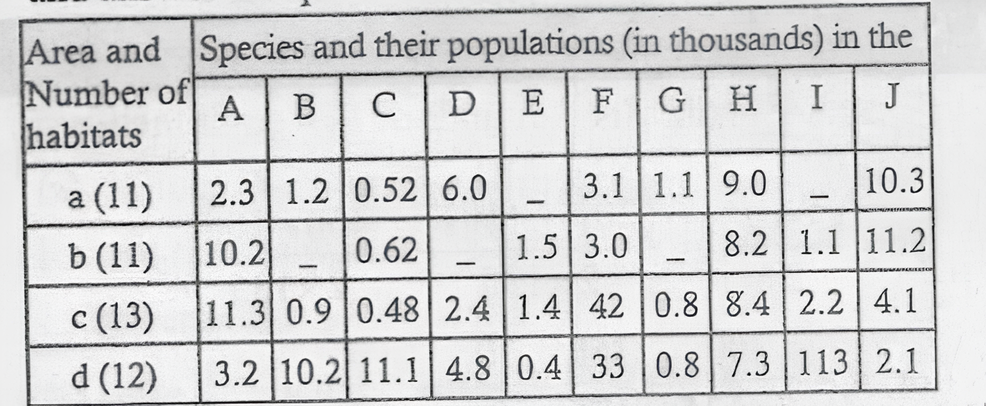
[4 Marks] Diagram 19 – NEET-UG 2008 Question Paper
  • (A) a
  • (B) d
  • (C) c
  • (D) b
Question 148.

Quercus species are the dominant component in

[4 Marks]
  • (A) Alpine forests
  • (B) Tropical rain forests
  • (C) Scrub forests
  • (D) Temperate deciduous forests
Question 149.

Which one of the following is not observed in biodiversity hotspots?

[4 Marks]
  • (A) Accelerated species loss
  • (B) Species richness
  • (C) Lesser inter‑specific competition
  • (D) Endemism
Question 150.

World Summit on Sustainable Development (2002) was held in

[4 Marks]
  • (A) South Africa
  • (B) Argentina
  • (C) Sweden
  • (D) Brazil
Question 151.

According to Central Pollution Control Board (CPCB), which particulate size in diameter (in micrometers) of the air pollutants is responsible for greatest harm to human health?

[4 Marks]
  • (A) 1.0 or less
  • (B) 5.2 – 2.5
  • (C) 2.5 or less
  • (D) 1.5 or less
Question 152.

A lake near a village suffered heavy mortality of fishes within a few days. Consider the following reasons for this?

  1. Lots of urea and phosphate fertilizer were used in the crops in the vicinity

  2. The area was sprayed with DDT by an aircraft

  3. The lake water turned green and stinky

  4. Phytoplankton populations in the lake declined initially thereby greatly reducing photosynthesis.

Which two of the above were the main causes of fish mortality in the lake ?

[4 Marks]
  • (A) (1) and (3)
  • (B) (3) and (4)
  • (C) (1) and (2)
  • (D) (1) and (4)
Question 153.

Which one of the following is the correct percentage of the two (out of the total of 4) green house gases that contribute to the total global warming?

[4 Marks]
  • (A) CFCs 14%, Methane 20%
  • (B) CO₂ 40%, CFCs 30%
  • (C) N₂O 6%, CO₂ 86%
  • (D) Methane 20%, N₂O 18%
Question 154.

In human adult females oxytocin:

[4 Marks]
  • (A) stimulates pituitary to secrete vasopressin
  • (B) is secreted by anterior pituitary
  • (C) causes strong uterine contractions during parturition
  • (D) stimulates growth of mammary glands
Question 155.

What is vital capacity of our lungs?

[4 Marks]
  • (A) Total lung capacity minus expiratory reserve volume
  • (B) Total lung capacity minus residual volume
  • (C) Inspiratory reserve volume plus expiratory reserve volume
  • (D) Inspiratory reserve volume plus tidal volume
Question 156.

The C4 plants are photosynthetically more efficient than C3 plants because:

[4 Marks]
  • (A) CO₂ generated during photorespiration is trapped and recycled through PEP carboxylase
  • (B) the CO₂ compensation point is more
  • (C) the CO₂ efflux is not prevented
  • (D) they have more chloroplasts
Question 157.

Which one of the following is incorrect about the characteristics of protobionts (coacervates and microspheres) as envisaged in the abiogenicorigin of life?

[4 Marks]
  • (A) They could separate combinations of molecules from the surroundings
  • (B) They were able to reproduce
  • (C) They were partially isolated from the surruounding
  • (D) They could maintain an internal environment
Question 158.

Bacterial leaf blight of rice is caused by aspecies of:

[4 Marks]
  • (A) Pseudomonas
  • (B) Xanthomonas
  • (C) Alternaria
  • (D) Erwinia
Question 159.

If a gas expands at constant temperature, it indicates that:

[4 Marks]
  • (A) number of the molecules of gas increases
  • (B) kinetic energy of molecules remains the same
  • (C) pressure of the gas increases
  • (D) kinetic energy of molecules decreases
Question 160.

Bond dissociation enthalpy of H₂, Cl₂ and HCl are 434, 242 and 431 kJ mol⁻¹ respectively. Enthalpy of formation of HCl is:

[4 Marks]
  • (A) 245 kJ mol⁻¹
  • (B) –93 kJ mol⁻¹
  • (C) –245 kJ mol⁻¹
  • (D) 93 kJ mol⁻¹
Question 161.

For the gas phase reaction,

PCl₅(g) ⇌ PCl₃(g) + Cl₂(g)

which of the following conditions are correct?

[4 Marks]
  • (A) ΔH < 0 and ΔS < 0
  • (B) ΔH = 0 and ΔS < 0
  • (C) ΔH > 0 and ΔS < 0
  • (D) ΔH > 0 and ΔS > 0
Question 162.

If the concentration of OH⁻ ions in the reaction

Fe(OH)₃(s) ⇌ Fe³⁺(aq) + 3OH⁻(aq)

is decreased by 1/4 times, then equilibrium concentration of Fe³⁺ will increase by:

[4 Marks]
  • (A) 16 times
  • (B) 4 times
  • (C) 8 times
  • (D) 64 times
Question 163.

The dissociation equilibrium of a gas AB₂ can be represented as

2AB₂(g) ⇌ 2AB(g) + B₂(g)

The degree of dissociation is ‘x’ and is small compared to 1. The expression relating the degree of dissociation (x) with equilibrium constant Kₚ and total pressure P is:

[4 Marks]
  • (A) (Kₚ / P)
  • (B) (2Kₚ / P)¹ᐟ³
  • (C) (2Kₚ / P)¹ᐟ²
  • (D) (2Kₚ / P)
Question 164.

The values of Kp₁ and Kp₂ for the reactions:

X ⇌ Y + Z ...(a)

A ⇌ 2B ...(b)

are in the ratio of 9 : 1. If degree of dissociation of X and A be equal, then total pressure at equilibrium for (a) and (b) are in the ratio:

[4 Marks]
  • (A) 1 : 9
  • (B) 36 : 1
  • (C) 1 : 1
  • (D) 3 : 1
Question 165.

Equal volumes of three acid solutions of pH3, 4, and 5 are mixed in a vessel. What will be the H⁺ ion concentration in the mixture?

[4 Marks]
  • (A) 3.7 × 10⁻⁴ M
  • (B) 1.11 × 10⁻⁴ M
  • (C) 3.7 × 10⁻³ M
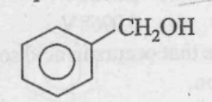
  • (D) 1.11 × 10⁻³ M`
Question 166.

The value of equilibrium constant of the reaction

HI(g) ⇌ (1 / 2) H₂(g) + (1 / 2) I₂(g) is 8.0.

The equilibrium constant of the reaction

H₂(g) + I₂(g) ⇌ 2HI(g) will be:

[4 Marks]
  • (A) 1 / 16
  • (B) 16
  • (C) 1 / 8
  • (D) 1 / 64
Question 167.

Equimolar solutions of the following were prepared in water separately. Which one of the solutions will record the highest pH?

[4 Marks]
  • (A) CaCl₂
  • (B) MgCl₂
  • (C) BaCl₂
  • (D) SrCl₂
Question 168.

The sequence of ionic mobility in aqueous solution is:

[4 Marks]
  • (A) Na⁺ > K⁺ > Rb⁺ > Cs⁺
  • (B) Rb⁺ > K⁺ > Cs⁺ > Na⁺
  • (C) K⁺ > Na⁺ > Rb⁺ > Cs⁺
  • (D) Cs⁺ > Rb⁺ > K⁺ > Na⁺
Question 169.

The alkali metals form salt‑like hydrides by the direct synthesis at elevated temperature. The thermal stability of these hydrides decreases in which of the following orders?

[4 Marks]
  • (A) LiH > NaH > KH > RbH > CsH
  • (B) NaH > LiH > KH > RbH > CsH
  • (C) KH > NaH > LiH > CsH > RbH
  • (D) CsH > RbH > KH > NaH > LiH
Question 170.

In the hydrocarbon

CH₃ – CH = CH – CH₂ – C ≡ CH
6   5   4   3  2  1

The state of hybridization of carbons 1, 3, and 5 are in the following sequence:
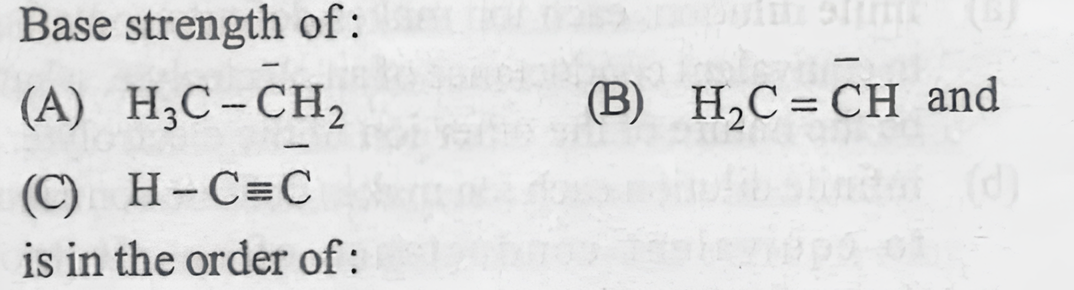
[4 Marks]
  • (A) sp, sp³, sp²
  • (B) sp², sp, sp³
  • (C) sp, sp², sp³
  • (D) sp³, sp², sp
Question 171.

[4 Marks] Diagram 20 – NEET-UG 2008 Question Paper
  • (A) (C) > (B) > (A)
  • (B) (B) > (A) > (C)
  • (C) (A) > (C) > (B)
  • (D) (A) > (B) > (C)
Question 172.

The stability of carbanions in the following:
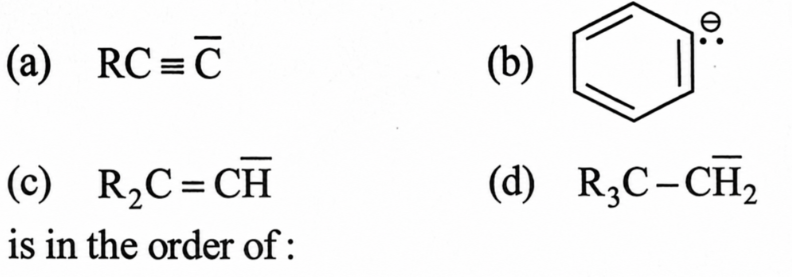
[4 Marks] Diagram 21 – NEET-UG 2008 Question Paper
  • (A) (a) > (b) > (c) > (d)
  • (B) (b) > (c) > (d) > (a)
  • (C) (d) > (b) > (c) > (a)
  • (D) (a) > (c) > (b) > (d)
Question 173.

[4 Marks] Diagram 22 – NEET-UG 2008 Question Paper
  • (A) Diagram 23 – NEET-UG 2008 Question Paper
  • (B) Diagram 24 – NEET-UG 2008 Question Paper
  • (C) Diagram 25 – NEET-UG 2008 Question Paper
  • (D) Diagram 26 – NEET-UG 2008 Question Paper
Question 174.

Which one of the following is most reactive towards electrophilic attack ?

[4 Marks]
  • (A) Diagram 27 – NEET-UG 2008 Question Paper
  • (B) Diagram 28 – NEET-UG 2008 Question Paper
  • (C) Diagram 29 – NEET-UG 2008 Question Paper
  • (D) Diagram 30 – NEET-UG 2008 Question Paper
Question 175.

Green chemistry means such reactions which

[4 Marks]
  • (A) are related to the depletion of ozone layer
  • (B) study the reactions in plants
  • (C) reduce the use and production of hazardous chemicals
  • (D) produce colour during reactions
Question 176.

Percentage of free space in a body centred cubic unit cell is:

[4 Marks]
  • (A) 34%
  • (B) 28%
  • (C) 30%
  • (D) 32%
Question 177.

If ‘a’ stands for the edge length of the cubic systems:

simple cubic, body centred cubic and face centred cubic, then the ratio of radii of the spheres in these systems will be respectively,

[4 Marks]
  • (A) a : √3a :√2a
  • (B) (1 / 2)a : √3a : (1 / √2)a
  • (C) (1 / 2)a : (√3 / 2)a : (√3 / 2)a
  • (D) (1 / 2)a : (√3 / 4)a : (1 / 2√2)a
Question 178.

Kohlrausch’s law states that at:

[4 Marks]
  • (A) infinite dilution, each ion makes definite contribution to conductance of an electrolyte whatever be the nature of the other ion of the electrolyte.
  • (B) infinite dilution, each ion makes definite contribution to equivalent conductance of an electrolyte, whatever be the nature of the other ion of the electrolyte.
  • (C) finite dilution, each ion makes definite contribution to equivalent conductance of an electrolyte, whatever be the nature of the other ion of the electrolyte.
  • (D) infinite dilution each ion makes definite contribution to equivalent conductance of an electrolyte depending on the nature of the other ion of the electrolyte.
Question 179.

With which one of the following elements silicon should be doped so as to give p‑type semiconductor?

[4 Marks]
  • (A) Selenium
  • (B) Boron
  • (C) Arsenic
  • (D) Germanium
Question 180.

On the basis of the following E° values, the strongest oxidizing agent is:

[Fe(CN)₆]⁴⁻ → [Fe(CN)₆]³⁻ + e⁻ ; E° = −0.35 V

Fe²⁺ → Fe³⁺ + e⁻ E° = −0.77 V

[4 Marks]
  • (A) Fe²⁺
  • (B) [Fe(CN)₆]⁴⁻
  • (C) Fe³⁺
  • (D) [Fe(CN)₆]³⁻
Question 181.

Standard free energies of formation (in kJ/mol) at 298 K are –237.2, –394.4 and –8.2 for H₂O(l), CO₂(g) and pentane (g), respectively. The value of E°_cell for the pentane–oxygen fuel cell is:

[4 Marks]
  • (A) 0.0968 V
  • (B) 1.0968 V
  • (C) 1.968 V
  • (D) 2.0968 V
Question 182.

The bromination of acetone that occurs in acid solution is represented by this equation:

CH₃COCH₃(aq) + Br₂(aq) → CH₃COCH₂Br(aq) + H⁺(aq) + Br⁻(aq)

These kinetic data were obtained for given reaction concentrations.
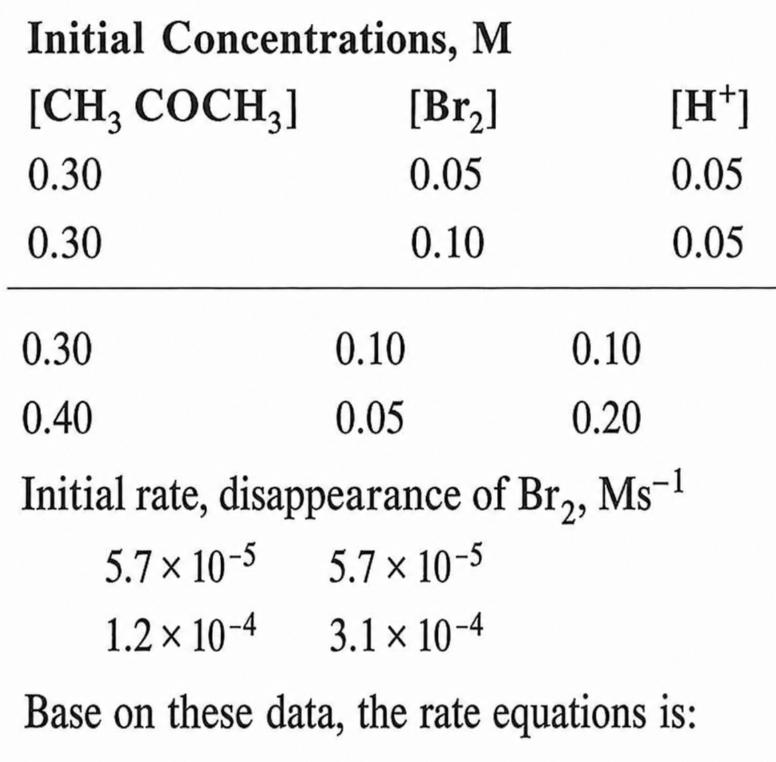
[4 Marks] Diagram 31 – NEET-UG 2008 Question Paper
  • (A) Rate = k[CH₃COCH₃][Br₂][H⁺]
  • (B) Rate = k[CH₃COCH₃][Br₂][H⁺]²
  • (C) Rate = k[CH =COCH₃][Br₂]
  • (D) Rate = k[CH₃COCH₃][H⁺]
Question 183.

The rate constants k₁ and k₂ for two different reactions are 10¹⁶. e_(-2000/T) and 10¹⁵.e_(-1000/T), respectively. The temperature at which k₁ = k₂ is:

[4 Marks]
  • (A) (2000 / 2.303) K
  • (B) (1000 / 2.303) K
  • (C) 1000 K
  • (D) 2000 K
Question 184.

The correct order of decreasing second ionisation enthalpy of Ti (22), V (23), Cr (24) and Mn (25) is:

[4 Marks]
  • (A) V > Mn > Cr > Ti
  • (B) Mn > Cr > Ti > V
  • (C) Ti > V > Cr > Mn
  • (D) Cr > Mn > V > Ti
Question 185.

In an S_N2 substitution reaction of the type

which one of the following has the highest reactivity rate?
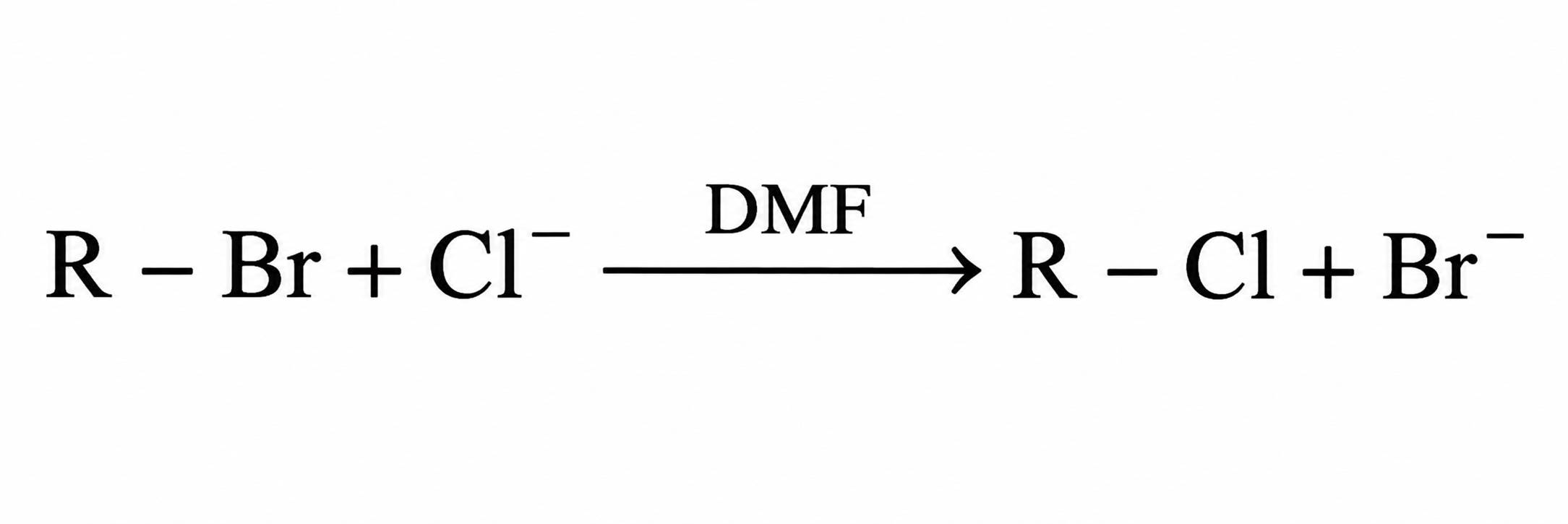
[4 Marks] Diagram 32 – NEET-UG 2008 Question Paper
  • (A) Diagram 33 – NEET-UG 2008 Question Paper
  • (B) Diagram 34 – NEET-UG 2008 Question Paper
  • (C) Diagram 35 – NEET-UG 2008 Question Paper
  • (D) Diagram 36 – NEET-UG 2008 Question Paper
Question 186.

How many stereoisomers does this molecule have?

CH₃CH = CHCH₂CHBrCH₃

[4 Marks]
  • (A) 4
  • (B) 2
  • (C) 6
  • (D) 8
Question 187.

A strong base can abstract an α-hydrogen from:

[4 Marks]
  • (A) alkene
  • (B) amine
  • (C) alkane
  • (D) ketone
Question 188.

Acetophenone when reacted with a base, C₂H₅ONa, yields a stable compound which has the structure.

[4 Marks]
  • (A) Diagram 37 – NEET-UG 2008 Question Paper
  • (B) Diagram 38 – NEET-UG 2008 Question Paper
  • (C) Diagram 39 – NEET-UG 2008 Question Paper
  • (D) Diagram 40 – NEET-UG 2008 Question Paper
Question 189.

The relative reactivities of acyl compounds towards nucleophilic substitution are in the order of:

[4 Marks]
  • (A) Acyl chloride > Acid anhydride > Ester > Amide
  • (B) Acid anhydride > Amide > Ester > Acyl chloride
  • (C) Ester > Acyl chloride > Amide > Acid anhydride
  • (D) Acyl chloride > Ester > Acid anhydride > Amide
Question 190.

Which one of the following is an amine hormone?

[4 Marks]
  • (A) Insulin
  • (B) Progesterone
  • (C) Oxypurin
  • (D) Thyroxine
Question 191.

Which one of the following statement is not true?

[4 Marks]
  • (A) Buna-S is a copolymer of butadiene and styrene
  • (B) Natural rubber is a 1,4-polymer of isoprene
  • (C) Natural rubber has the trans-configuration at every double bond
  • (D) In vulcanization the formation of sulphur bridges between different chains make rubber harder and stronger.
Question 192.

Which of the following complexes exhibits the highest paramagnetic behaviour?

where gly = glycine, en = ethylenediamine and bpy = bipyridyl moieties

(At.nos Ti = 22, V = 23, Fe = 26, Co = 27)

[4 Marks]
  • (A) [V(gly)₂(OH)₂(NH₃)₂]⁺
  • (B) [Fe(en)(bpy)(NH₃)₂]²⁺
  • (C) [Ti(NH₃)₆]³⁺
  • (D) [Co(ox)₂(OH)₂]⁻
Question 193.

In which of the following coordination entities the magnitude Δ₀ (CFSE in octahedral field) will be maximum?

(At. No. Co = 27)

[4 Marks]
  • (A) [Co(CN)₆]³⁻
  • (B) [Co(C₂O₄)₃]³⁻
  • (C) [Co(NH₃)₆]³⁺
  • (D) [Co(H₂O)₆]³⁺
Question 194.

Which of the following statements is not correct?

[4 Marks]
  • (A) The number of carbon atoms in an unit cell of diamond is 4
  • (B) Molecular solids are generally volatile
  • (C) The fraction of the total volume occupied by the atoms in a primitive cell is 0.48
  • (D) The number of Bravais lattices in which a crystal can be categorized is 14
Question 195.

Four diatomic species are listed below the different sequences. Which of these presents the correct order of their increasing bond order?

[4 Marks]
  • (A) NO < C₂²⁻ < O₂⁻ < He2⁺
  • (B) C₂²⁻ < He₂⁺ < NO < O₂⁻
  • (C) O₂⁻ < NO < O₂²⁻ < He₂⁺
  • (D) He₂⁺ < O₂⁻ < NO < C₂²⁻
Question 196.

In DNA, the complimentary bases are

[4 Marks]
  • (A) Adenine and thymine, guanine and cytosine
  • (B) Adenine and guanine, thymine and cytosine
  • (C) Adenine and thymine, guanine and uracil
  • (D) Uracil and adenine, cytosine and guanine
Question 197.

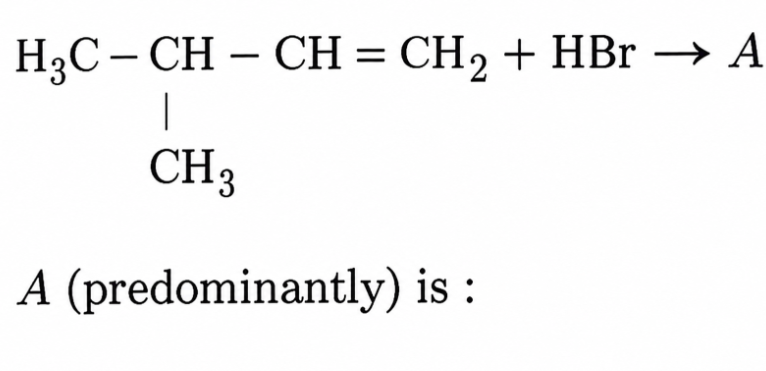
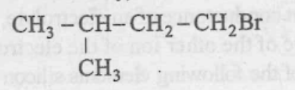
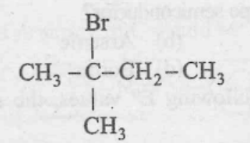
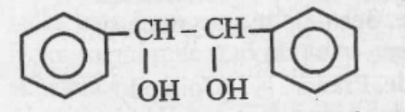
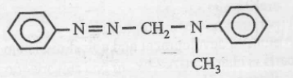
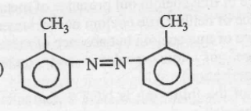
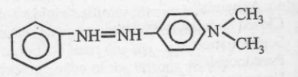
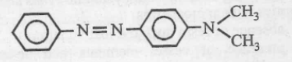
In a reaction of aniline a coloured product C was obtained The structure of C would be
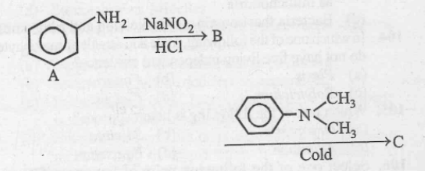
[4 Marks] Diagram 41 – NEET-UG 2008 Question Paper
  • (A) Diagram 42 – NEET-UG 2008 Question Paper
  • (B) Diagram 43 – NEET-UG 2008 Question Paper
  • (C) Diagram 44 – NEET-UG 2008 Question Paper
  • (D) Diagram 45 – NEET-UG 2008 Question Paper
Question 198.

Which one of the following proved effective for biological control of nematodal disease in plants?

[4 Marks]
  • (A) Pisolithus tinctorius
  • (B) Pseudomonas cepacia
  • (C) Gliocladium virens
  • (D) Paecilomyces lilacinus
Question 199.

Trichoderma harzianum has proved a useful microorgan-ism for

[4 Marks]
  • (A) reclamation of wastelands
  • (B) bioremediation of contaminated soils
  • (C) gene transfer in higher plants
  • (D) biological control of soil-borne plant pathogens
Question 200.

Modern detergents contain enzyme preparations of:

[4 Marks]
  • (A) Alkaliphiles
  • (B) Acidophiles
  • (C) Thermoacidophiles
  • (D) Thermophiles