CBSE EXAMINATION PAPER-2020
NEET-ZOOLOGY
(Solved)
General Instructions :
Read the following instructions carefully and follow them :
- This question paper contains 180 questions. All questions are compulsory.
- This question paper is divided into 1 sections.
- Section A – questions number 1 to 180 are multiple choice questions
- There is no overall choice given in the question paper. However, an internal choice has been provided in few questions.
- Use of calculator is NOT allowed.
Section A
An intrinsic semiconductor is converted into n-type extrinsic semiconductor by doping it with
n type semiconductors are obtained by adding a pentavalent impurity (like phosphorous) with intrinsic semiconductor.
The E.M. wave with shortest wavelength among the following is,
The increasing order of wavelength of electromagnetic wave is as follows - λ_γ-rays < λ_x-rays < λ_infrared < λ_microwave < λ_radiowave Clearly, γ-rays has shortest wavelength.
A wheel with 20 metallic spokes each 1 m long is rotated with a speed of 120 rpm in a plane perpendicular to a magnetic field of 0.4 G. The induced emf between the axle and rim of the wheel will be (1 G = 10⁻⁴ T)
Given, Magnetic field, B = 0.4 G = 0.4 × 10⁻⁴ T Length of each metallic spoke, l = 1 m Frequency of revolution, f = 12 rpm = 120 / 60 rps = 2 Hz Emf induced between the axle and rim of the wheel is e = 1/2 Bωl² = 1/2 B(2πf)l² = πBfl² = 3.14 × 0.4 × 10⁻⁴ × 2 × 1² = 2.51 × 10⁻⁴ V
Out of the following which one is a forward biased diode?
-
(A)

-
(B)

-
(C)

-
(D)

A p-n junction diode is in forward biased when p-side is at higher potential than n-side. Since, O(V) > −3V. Hence in option diode circuit is in forward biased.
Two coherent sources of light interfere and produce fringe pattern on a screen. For central maximum, the phase difference between the two waves will be,
For central maximum, path difference between the interfering waves meeting on the screen is zero. ∴ Phase difference = 2π/λ × path difference = 2π/λ × 0 = 0
Time intervals measured by a clock give the following readings : 1.25 s, 1.24 s, 1.27 s, 1.21 s and 1.28 s What is the percentage relative error of the observations?
Average value of time interval T̄ = (1.25 + 1.24 + 1.27 + 1.21 + 1.28) / 5 = 625 / 5 s = 1.25 s Absolute errors in the measured values of time intervals are |ΔT₁| = |1.25 − 1.25| = 0 |ΔT₂| = |1.25 − 1.24| = 0.01 |ΔT₃| = |1.25 − 1.27| = 0.02 |ΔT₄| = |1.25 − 1.21| = 0.04 |ΔT₅| = |1.25 − 1.28| = 0.03 Mean absolute error, ΔT̄ = (|ΔT₁| + |ΔT₂| + |ΔT₃| + |ΔT₄| + |ΔT₅|) / 5 = (0 + 0.01 + 0.02 + 0.04 + 0.03) / 5 = 0.1 / 5 = 0.02 s ∴ Percentage relative error = ΔT̄ / T̄ × 100 = 0.02 / 1.25 × 100 = 1.6%.
An ideal gas equation can be written as P = ρRT / M₀ where ρ and M₀ are respectively,
Ideal gas equation is given by, PV = nRT Here, P = pressure of the ideal gas V = Volume of the ideal gas R = universal gas constant T = Temperature n = no. of moles of gas ∴ P = 1/V nRT = 1/V (m/M₀) RT (∵ n = m/M₀)
= (m/V) RT / M₀ = ρRT / M₀
ρ = m/V = mass density
M₀ = Molar mass
The magnetic field in a plane electromagnetic wave is given by, B_y = 2×10⁻⁷ sin(π×10³x + 3π×10¹¹t)T Calculate the wavelength.
Magnetic field in plane electromagnetic wave is given as B_y = 2 × 10⁻⁷ sin(π × 10³x + 3π × 10¹¹t) T Comparing with general equation of electromagnetic wave, B_y = B₀ sin(kx − ωt), we get k = π × 10³ A = 2 × 10⁻⁷ We know that wave number, k = 2π/λ = π × 10³ ⇒ λ = 2/10³ = 2 × 10⁻³ m
A barometer is constructed using a liquid (density = 760 kg/m³). What would be the height of the liquid column, when a mercury barometer reads 76 cm? (density of mercury = 13600 kg/m³)
Density of liquid, ρ_m = 760 kg/m³ Density of mercury, ρ_m = 13600 kg/m³ Height of liquid column in mercury barometer, h_m = 76 cm = 0.76 m Let h_l be the height of liquid in liquid column, then according to given condition p_liquid = p_mercury ⇒ h_l ρ_l g = h_m ρ_m g ⇒ h_l = h_m ρ_m / ρ_l = 0.76 × 13600 / 760 = 13.6 m
The P-V diagram for an ideal gas in a piston cylinder assembly undergoing a thermodynamic process is shown in the figure.
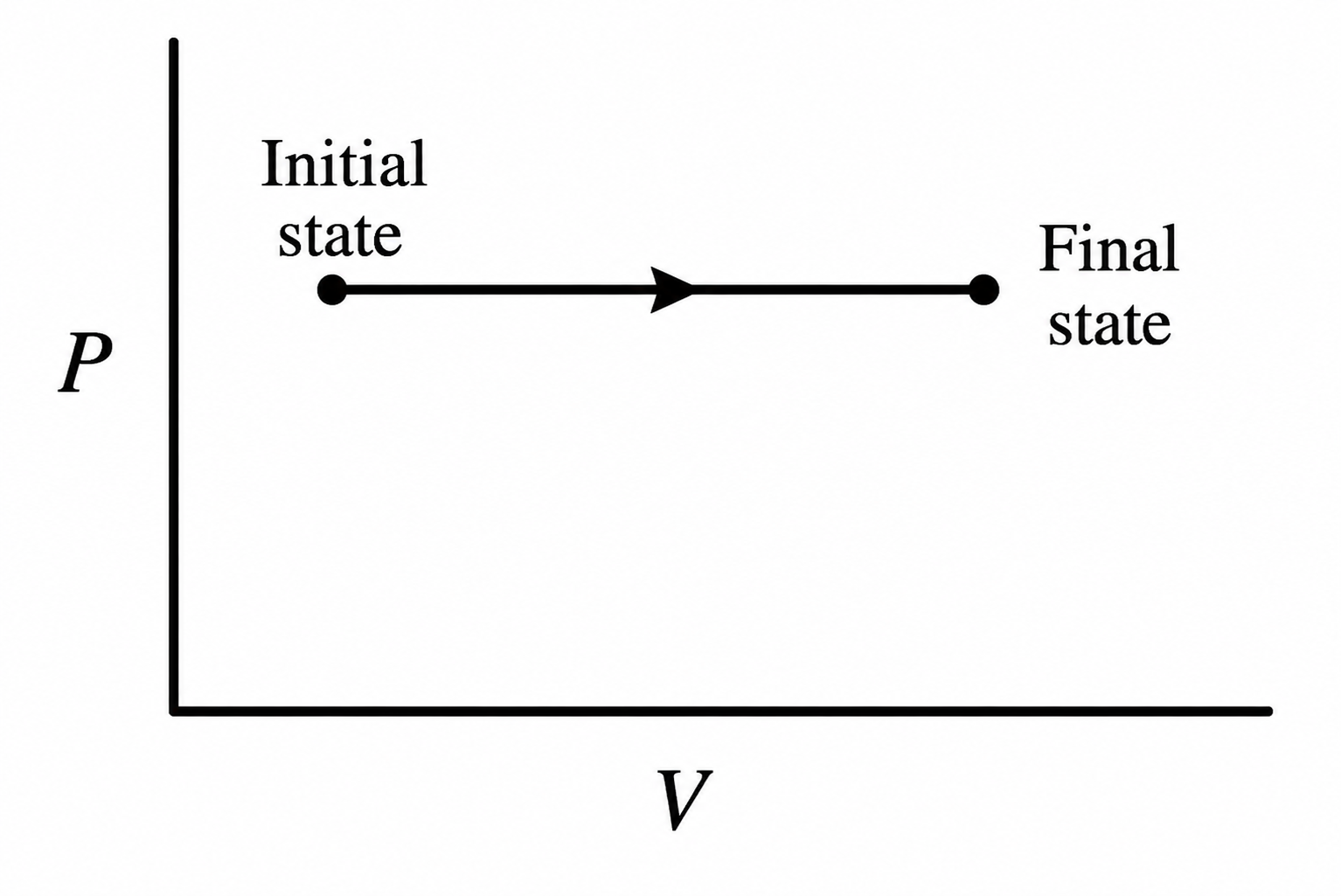
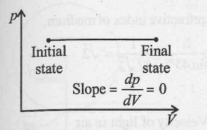
The given graph represents isobaric expansion. From the graph, it is clear pressure of ideal gas in the piston cylinder is constant. Thus, the process is isobaric.
The electric field at a point on the equatorial plane at a distance r from the centre of a dipole having dipole moment p(vector) is given by, (r >> separation of two charges forming the dipole, ε₀ - permittivity of free space)
The magnitude of electric field at equatorial plane at a distance r from the centre of dipole is E = 1 / 4πε₀ · p / (y² + r²)³ᐟ² Here, y = separation between two charges For r >> y
E = 1 / 4πε₀ · P / r³
A light bulb and an inductor coil are connected to an ac source through a key as shown in the figure below. The key is closed and after sometime an iron rod is inserted into the interior of the inductor. The glow of the light bulb
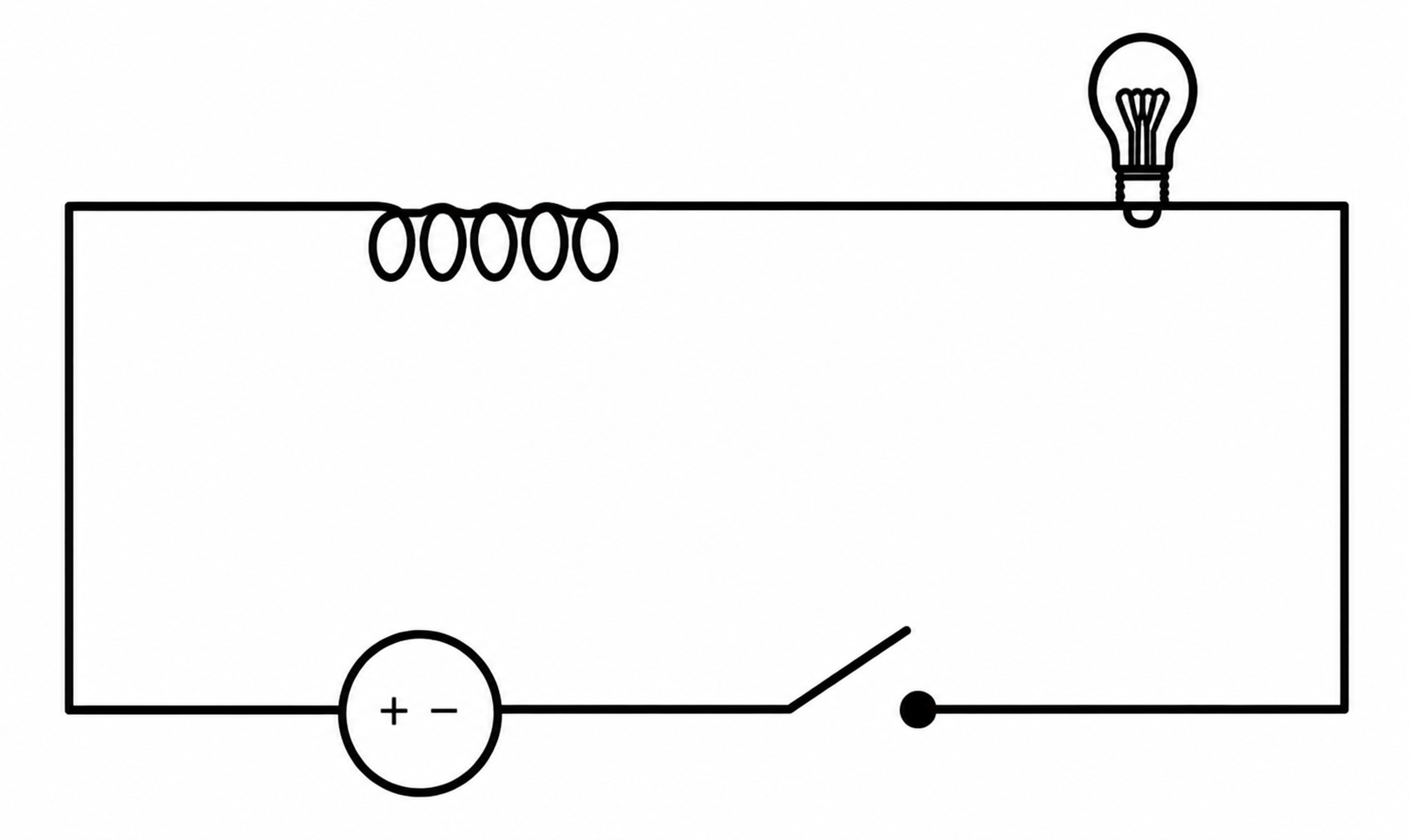
When an iron rod is inserted into the interior of the inductor, then inductance (L) of the coil increases. Hence, inductive reactance (X_L = ωL) also increases. Current in the circuit containing inductor is given by I = e / X_L = e / ωL As inductive resistance of the inductor increases, current in the circuit decreases. Therefore, glow of the light bulb will decrease.
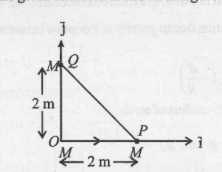
Three identical spheres, each of mass M, are placed at the corners of a right angle triangle with mutually perpendicular sides equal to 2 m (see figure). Taking the point of intersection of the two mutually perpendicular sides as the origin, find the position vector of centre of mass.
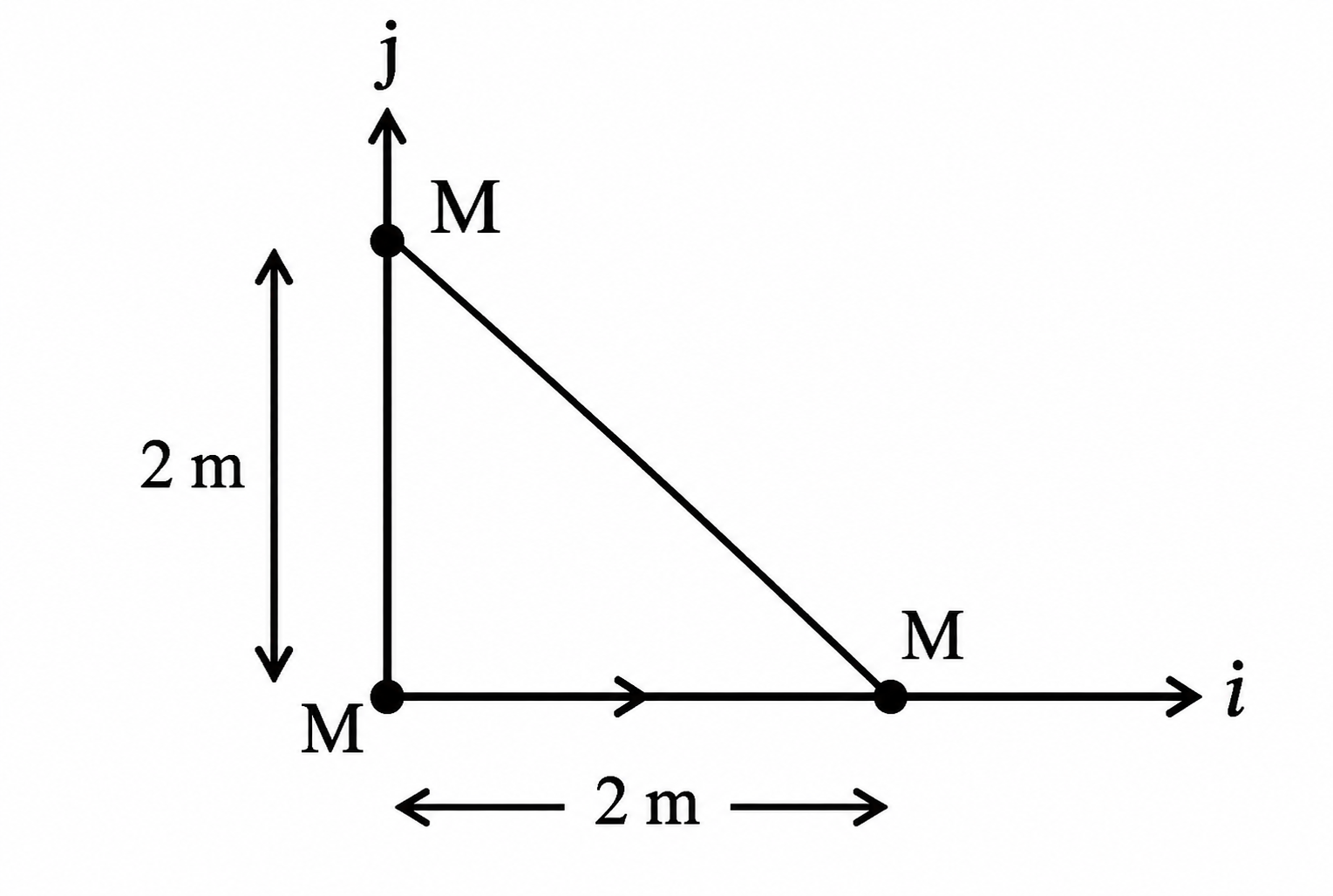
The given situation is shown in figure. The coordinates of centre of mass are X_COM = (M × 0 + M × 2 + M × 0) / 3M = 2/3
Y_COM = (M × 0 + M × 2 + M × 0) / 3M = 2/3
Position vector = 2/3 î + 2/3 ĵ
The angle of 1' (minute of angle) in radian is nearly equal to
We know that 1 minute = 1/60 degree = 1/60 × π/180 rad (∵ 180 degree = π radian) = 2.91 × 10⁻⁴ rad.
The total energy of an electron in the nᵗʰ stationary orbit of the hydrogen atom can be obtained by
In a hydrogen atom, the energy of electron in nᵗʰ orbit is E_n = −13.6/n² eV
A wire of length L metre carrying a current of I Ampere is bent in the form of circle. Its magnetic moment is
Let R be the radius of the circle, L = 2πR ⇒ R = L/2π Area, A = πR² = πL²/4π² = L²/4π ∴ Magnetic moment, M = IA = IL²/4π Am²
What is the depth at which the value of acceleration due to gravity becomes 1/n times the value that at the surface of earth? (radius of earth = R)
Let at depth d, gravitational acceleration becomes g/n Acceleration due to gravity at a depth d below earth surface is, g_d = g(1 − d/R) where, R = radius of earth We have given, g_d = g/n ⇒ g(1 − d/R) = g/n ⇒ 1 − d/R = 1/n ⇒ 1 − 1/n = d/R ⇒ (n − 1)/n = d/R ⇒ d = (n − 1)/n R
An object is placed on the principal axis of a concave mirror at a distance of 1.5 f (f is the focal length). The image will be at,
From the new Cartesian sign convention, Object distance, u = −1.5f According to mirror formula, 1/v + 1/u = 1/f ⇒ 1/v + 1/(−1.5f) = 1/(−f) ⇒ 1/v = −1/f + 1/1.5f = 1/f [−1 + 1/1.5] = (−1.5 + 1)/1.5f ⇒ 1/v = 1/f (−1/3) ⇒ v = −3f
The acceleration of an electron due to the mutual attraction between the electron and a proton when they are 1.6 Å apart is, (mₑ = 9 × 10⁻³¹ kg, e = 1.6 × 10⁻¹⁹ C) (Take 1/4πε₀ = 9 × 10⁹ Nm²C⁻²)
Force of mutual attraction between the electron and proton is F = Ke²/r² (Here, K = 9 × 10⁹) ⇒ F = 9 × 10⁹ × e²/r² = 9 × 10⁹ × (1.6 × 10⁻¹⁹)² / (1.6 × 10⁻¹⁰)² = 9 × 10⁻⁹ N ∴ Acceleration of electron = F/mₑ = 9 × 10⁻⁹ / 9 × 10⁻³¹ = 10⁻⁹ × 10³¹ = 10²² m/s²
If the critical angle for total internal reflection from a medium to vacuum is 45°, then velocity of light in the medium is,
Critical angle for total internal reflection, i_c = 45° We know that refractive index of medium, μ = 1/sin i_c = 1/sin 45° = 1/(1/√2) = √2 ∴ μ = √2 Also, μ = Velocity of light in air / Velocity of light in medium = √2 ⇒ 3 × 10⁸ / vₘ = √2 ⇒ vₘ = 3/√2 × 10⁸ m/s
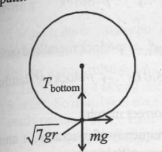
A point mass 'm' is moved in a vertical circle of radius 'r' with the help of a string. The velocity of the mass is √7gr at the lowest point. The tension in the string at the lowest point is
Velocity of point mass in vertical circle at lowest point, vₜ = √7gr vₜ = √7gr > √5gr
Hence, point mass will have completed the vertical circular path. At the lowest point m will act downward and tension in the upward direction,
T_bottom − mg = mv²/r
⇒ T_bottom − mg = m/r (√7gr)²
⇒ T_bottom − mg = 7mg
⇒ T_₍bottom₎ = 8mg
The power of a biconvex lens is 10 dioptre and the radius of curvature of each surface is 10 cm. Then the refractive index of the material of the lens is
Power of biconvex lens, P = 10D Focal length of biconvex lens, f = 1/P = 1/10 = 0.1 m = 10 cm According to lens Maker's formula, 1/f = (μ − 1)(1/R₁ − 1/R₂) For biconvex lens, R₁ = R, R₂ = −R ∴ 1/10 = (μ − 1)(1/R − 1/−R) = (μ − 1)(2/R) Given, R = 10 cm ∴ 1/10 = (μ − 1)(2/10) ⇒ 1 = (μ − 1) × 2 ⇒ μ − 1 = 1/2 ⇒ μ = 1 + 1/2 = 3/2
NOTES:
Lens Maker’s Formula is given by:
1/F=(μ−1)(1/R₁−1/R₂)
For a biconvex lens, R₁=R , R₂= - R
∴ F=R/2(μ−1)
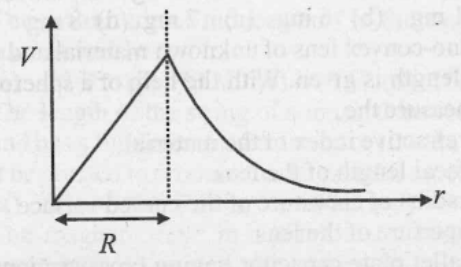
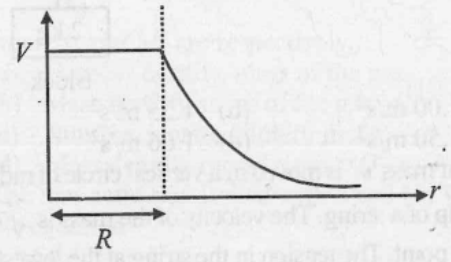
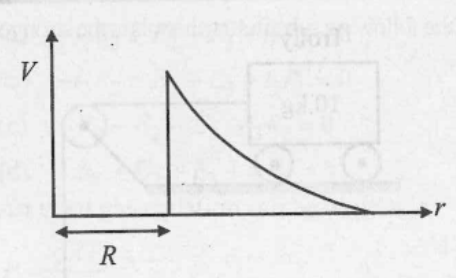
The variation of electrostatic potential with radial distance rfrom the centre of a positively charged metallic thin shell of radius R is given by the graph
-
(A)
-
(B)
-
(C)
-
(D)
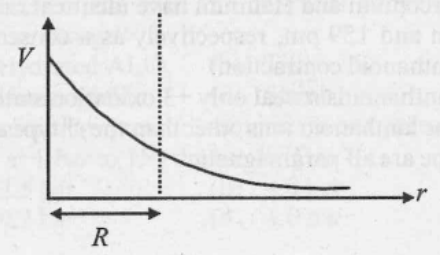
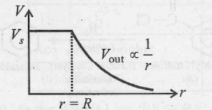
Inside the charged metallic thin shell electric potential remains constant and equal to the potential at the surface of spherical shell. Outside the spherical shell, V ∝ 1/r
Hence, variation of potential (V) with distance given as
Which of the following gate is called universal gate?
NAND and NOR gate are called universal because all type of logic gates like the OR, the AND and the NOT can be realised with the help of NAND and NOR gate.
Identify the function which represents a periodic motion.
Sinωt and cosωt, both are periodic function of same angular frequency (ω) and period 2π/ω
As sum of two periodic functions is also a periodic function, hence sinωt + cosωt represents periodic motion.
A person sitting in the ground floor of a building notices through the window, of height 1.5 m, a ball dropped from the roof of the building crosses the window in 0.1 s. What is the velocity of the ball when it is at the top most point of the window? (g = 10 m/s²)
Time taken to cross the window, t = 0.1 s
Height of the window, h = 1.5 m
Let u be the velocity at the top most point of the window, then using h = u t + 1/2 g t²
⇒1.5 = u × 0.1 + ½ × 10 × (0.1)²
⇒ 1.5 = 0.1u + 0.05
⇒u= 1.5 − 0.05 / 0.1 ⇒ 1.45 / 0.1 = 14.5 m/s
Which among the following salt solutions is basic in nature?
Sodium acetate (CH₃COONa) is a salt of strong base (NaOH) and weak acid (CH₃COOH), therefore its salt solution is basic in nature.
If 8 g of a non-electrolyte solute is dissolved in 114 g of n-octane to reduce its vapour pressure of 80%, the molar mass (in g mol⁻¹) of the solute is [Given that molar mass of n-octane is 114 g mol⁻¹]
Assuming dilute solution (moles of solvent >>> moles of solute)
⇒ (P₁⁰ − P₁)/P₁⁰ = Moles of solute / Moles of solvent
⇒ (P₁⁰ − P₁)/P₁⁰ = (W₂ × M₁)/(M₂ × W₁)
∵ ΔP = P₁⁰ − P₁ ΔP/P₁⁰ = (W₂ × M₁)/(M₂ × W₁)
Here W₁ and W₂ are the masses and M₁ and M₂ are the molar masses of solute and solvent respectively.
Now, 20/100 = (8/M₂) × (114/114)
M₂ = (8 × 100)/20 = 40 g mol⁻¹
Identify compound (a) in the following reaction:
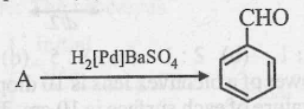
Benzoyl chloride is right answer.
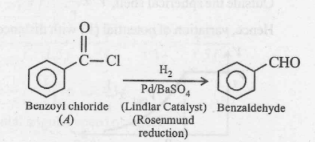
Identify the incorrect statement from the following:
Most common oxidation state of lanthanoids is +3. However, +4 and +2 ions in solution are also known.
The half-life for a zero order reaction having 0.02 M initial concentration of reactant is 100 s. The rate constant (in mol L⁻¹ s⁻¹) for the reaction is
For a zero order reaction, t₅₀ = (1/k) × (a₀/2) (at t₅₀ a= a₀/2)
⇒ k= a₀/2 × t₅₀ = 0.02M / 2× 100s = 1 × 10⁻⁴ mol L⁻¹ s⁻¹
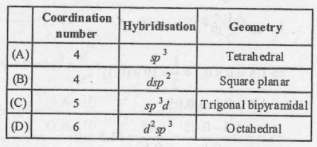
Match the coordination number and type of Hybridisation with distribution of hybrid orbitals in space based on valence bond theory.
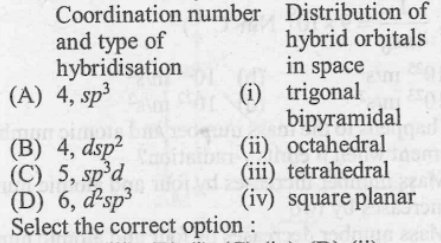
(A)-(iii), (B)-(iv), (C)-(i), (D)-(ii) is the right answer.
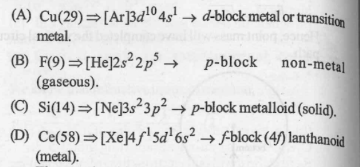
Match the element in column I with that in column II.
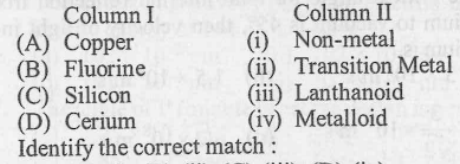
(A)-(ii), (B)-(i), (C)-(iv), (D)-(iii) is right answer.
In collision theory of chemical reaction, Z₍AB₎ represents
Z_AB ⇒ collision frequency of reactants, A and B = number of effective binary collisions between A and B in one second in unit volume.
At standard conditions, if the change in enthalpy for the following reaction is −109 kJ mol⁻¹.
H₂(g) + Br₂(g) → 2HBr(g)
Given that bond energy of H₂ and Br₂ is 435 kJ mol⁻¹ and 192 kJ mol⁻¹ respectively, what is the bond energy (in kJ mol⁻¹) of HBr?
H₂(g) + Br₂(g) → 2HBr(g)
[H–H] + [Br–Br] → [H–Br]
⇒ ΔrH = Σ(BE)_Reactants − Σ(BE)_Products( BE= bond energy)
⇒ [(BE)_H₂ + (BE)_Br₂] − [(BE)_HBr × 2]
⇒ −109 = (435 + 192) − (BE)_HBr × 2
⇒ (BE)HBr = 368 kJ mol⁻¹
The solubility product for a salt of the type AB is 4 × 10⁻⁸. What is the molarity of its standard solution?
AB → A⁺ + B⁻
Kₛₚ = s × s = s² ⇒ s = √Kₛₚ = √(4 × 10⁻⁸) = 2 × 10⁻⁴ mol L⁻¹
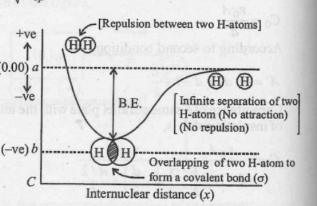
The potential energy (y) curve for H₂ formation as a function of internuclear distance (x) of the H atoms is shown below. The bond energy of H₂ is
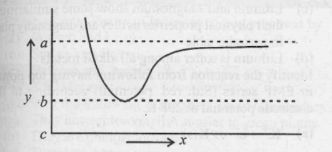
From the above curve, bond energy (BE) of H₂ molecule is (b − a)
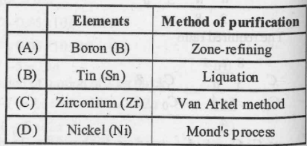
Match the element in Column I with methods of purification in Column II.
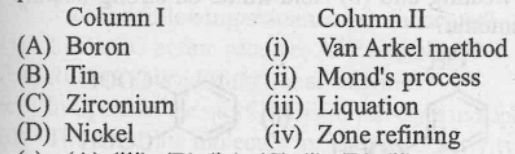
(A)-(iv), (B)-(iii), (C)-(i), (D)-(ii) is the right answer.
A liquid compound (x) can be purified by steam distillation only if it is
Steam distillation technique is applied to separate the substances which are steam volatile and immiscible with H₂O.
What is the role of gypsum, CaS0₄.2H₂O in setting of cement? Identify the correct option from the following :
Gypsum (CaS0₄.2H₂O) is present in Portland cement in an amount by mass of 2–3% . It slows down the process of setting cement , so that it gets sufficiently hardened.
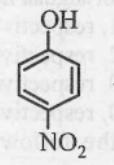
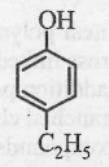
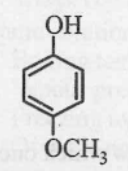
‘Which of te following substituted phenols is the strongest acid?
-
(A)
-
(B)
-
(C)
-
(D)
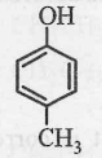
In given substituents, −NO₂, −OCH₃, −CH₃ and −C₂H₅, −NO₂ is a strong deactivating group due to −I and −R effect. So it will pull electrons towards itself and facilitates easy removal of H⁺. Thus, p-nitrophenol will be strongest acid among the given compounds.
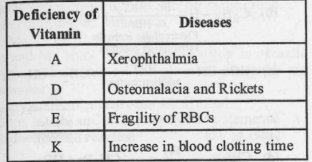
Deficiency of which vitamin causes osteomalacia?
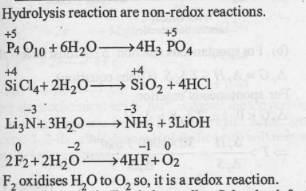
Which one of the following reaction does not come under hydrolysis of phosphorus?
Which one of the following compounds shows both, Frenkel as well as Schottky defects?
AgBr shows both, Frenkel as well as Schottky defects.
Which of the following is not true about chloramphenicol?
Antibiotics which kill or inhibit a wide range of gram-positive and gram-negative bacteria are said to be broad spectrum antibiotics whereas those effective mainly against gram-positive or gram-negative bacteria are said to be narrow spectrum antibiotics.
Chloramphenicol is a bacteriostatic (inhibitory) broad spectrum antibiotic, which shows inhibitory effect on wide range of gram-positive and gram-negative bacteria (microbes).
The oxidation number of the underlined atom in the following species
Identify the incorrect option.
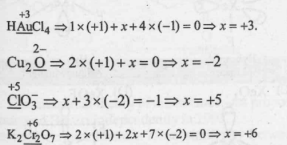
Cu₂O is −1 is correct answer
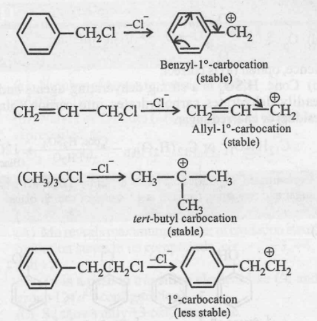
Which of the following will NOT undergo Sₙ1 reaction with OH⁻ ?
- (A) CH₂ = CH − CH₂Cl
-
(B)
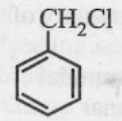
- (C) CH₂ = C(CH₃) − CH₂Cl
-
(D)
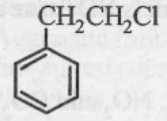
The S1_N reactivity is proportional to stability of carbocation formed in the rate determining step.
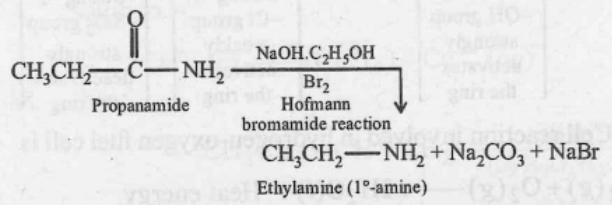
Reaction of propanamide with ethanolic sodium hydroxide and bromine will give
Ethylamine is right answer.
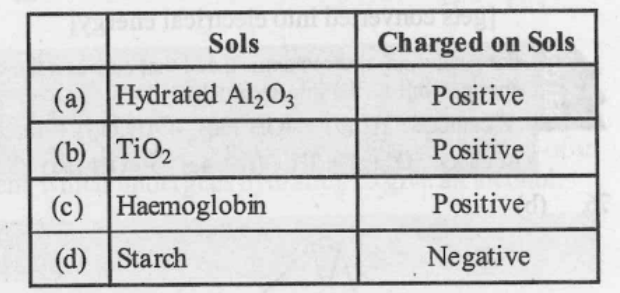
In which of the sols, the colloidal particles are with negative charge?
Starch is the right answer.
The minimum pressure required to compress 600 dm³ of a gas at 1 bar to 150 dm³ at 40°C is
As per Boyle's Law,
P₁V₁ = P₂V₂
Given,
P₁ = 1 bar, P₂ = ?
V₁ = 600 dm³, V₂ = 150 dm³
⇒ P₂(min) = (P₁V₁)/V₂
= (1 × 600)/150
= 4 bar
The number of angular nodes and radial nodes in 3s orbital are
For 3s-orbital,
n = 3, l = 0
Number of radial nodes
= (n − l − 1)
= 3 − 0 − 1
= 2
Number of angular nodes = l = 0
Which of the following statement is correct about Bakelite?
Bakelite is a cross linked condensation thermosetting copolymer of phenol (C₆H₅OH) and formaldehyde (HCHO).
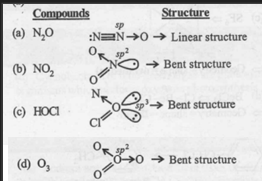
Among the compounds shown below which one revealed a linear structure?
N₂O is right answer.
The reaction of concentrated sulphuric acid with carbohydrate (C₁₂H₂₂O₁₁) is an example of
Conc. H₂SO₄ is a strong dehydrating agent and it readily dehydrates carbohydrates into carbon (black residue or charred sugar).

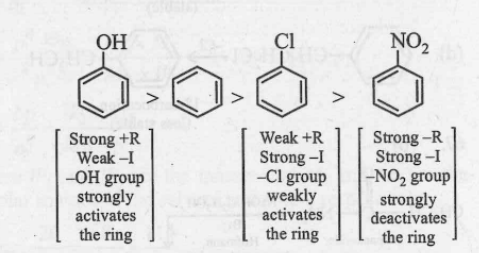
Which of the following compound is most reactive in electrophilic aromatic substitution?
-
(A)

-
(B)

-
(C)

-
(D)

In a typical fuel cell, the reactant (R) and product (P) are
Cell reaction involved in hydrogen-oxygen fuel cell is
2H₂(g) + O₂(g) → 2H₂O(l) + Heat energy
get converted into electrical energy.
Which of the following statement is NOT true about acid rain?
Acid rain which is mainly caused by air pollutants like SO₂, NO₂ and CO₂, reacts with marble, CaCO₃ of Taj Mahal causing damage to it.
CaCO₃(s) + H₂SO₄(aq) → CaSO₄(aq) + H₂O(l) + CO₂(g)
As a result, Taj Mahal is being slowly disfigured, discoloured and lustreless.
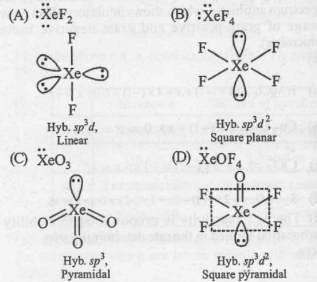
Match the compounds of Xe in column I with the molecular structure in column II
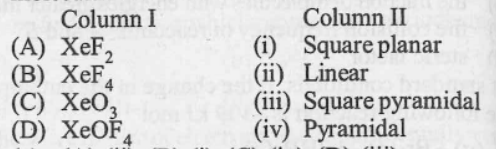
(A)-(ii), (B)-(i), (C)-(iv), (D)-(iii) is right answer.
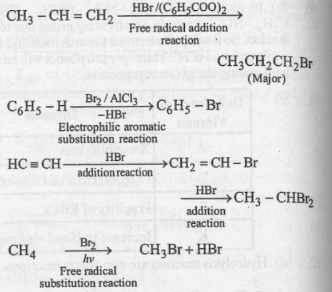
Which of the following is a free radical substitution reaction?
Methane with Br₂/hν is correct answer.
If for a certain reaction ΔᵣᵣH is 30 kJ mol⁻¹ at 450 K, the value of Δ ᵣS (in JK⁻¹ mol⁻¹) for which the same reaction will be spontaneous at the same temperature, is
For spontaneous reaction ΔᵣG must be less than zero.
ΔᵣG = ΔᵣH − TΔᵣS
For spontaneous reaction,
ΔᵣG < 0, i.e., TΔᵣS > ΔᵣH
⇒ T> ΔᵣH /ΔᵣS = 30 × 1000 J mol⁻¹/ΔᵣS [Given, T=450K]
⇒ ΔᵣS > (30 × 1000 J mol⁻¹) / 450 K
⇒ ΔᵣS > 66.67 J mol⁻¹ K⁻¹
∴ For reaction to be spontaneous, the value of ΔᵣS must be greater than 66.67 J mol⁻¹ K⁻¹.
Which of the following statement is not true about glucose?
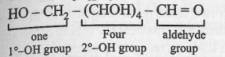
Glucose (C₆H₁₂O₆) can be simply shown as
Glucose is an aldohexose (made of six carbon atoms) and it is also a reducing sugar as it contains −CHO group alongwith 5 −OH groups are present.
Identify the correct statement from the following.
LiCl is deliquescent and crystallises as a dihydrate,
LiCl·2H₂O.
The hydration enthalpies of alkaline earth metal ions decreases with increase in ionic size down the group. So, order of hydration enthalpy is
Be²⁺ > Mg²⁺ > Ca²⁺ > Sr²⁺ > Ba²⁺
Li and Mg show diagonal relationship in periodic table, hence their physical and chemical properties are almost similar.
Li is much harder than other alkali metals.
Identify the reaction from following having top position in EMF series (Std. red. potential at 298 K).
Reduction half reaction E/V at 298 K
K⁺ + e⁻ → K , −2.93
Mg²⁺ + 2e → Mg , −2.36
Fe²⁺ + 2e → Fe , −0.44
Au³⁺ + 3e → Au , +1.40
As per electrochemical series, Au³⁺ occupies the top position.
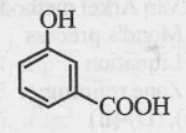
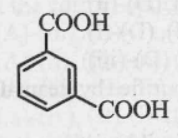
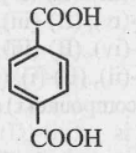
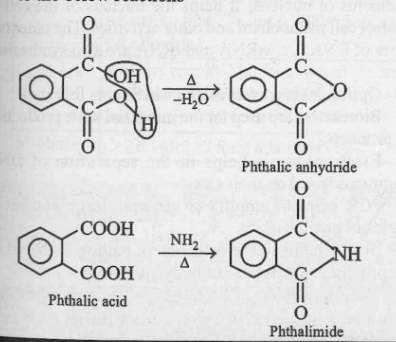
Which of the following acid will form an (a) Anhydride on heating and (b) Acid imide on strong heating with ammonia?
-
(A)
-
(B)
-
(C)
-
(D)
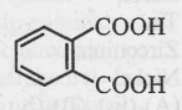
Among isomeric benzene dicarboxylic acids, only benzene-1,2-dicarboxylic acid (phthalic acid) will respond to the below reactions.
One mole carbon atom weighs 12 g, the number of atoms in it is equal to, (Mass of carbon-12 is 1.9926 × 10⁻²³ g)
Number of atoms in 1 mole of carbon =6.022 × 10²³
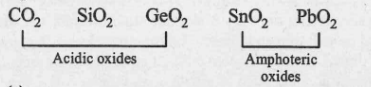
Which of the following oxide is amphoteric in nature?
Nature of dioxides (MO₂) of group 14 elements can be represented as
Isotonic solutions have same
Isotonic solutions are such solution which have same osmotic pressure at a given temperature.
How many (i) sp² hybridised carbon atoms and (ii) π bonds are present in the following compound?
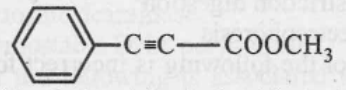
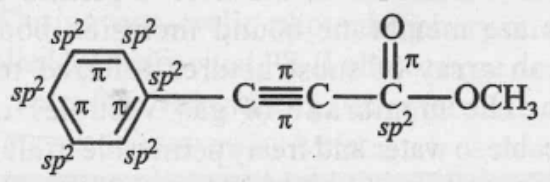
Number of sp² hybridised carbon atom = 7 Number of π-bonds = 6
Chromosomal theory of inheritance was proposed by
Chromosomal theory of inheritance was proposed by Sutton and Boveri independently in1902. The two workers found a close similarity between the transmission of hereditary traits and behaviour of chromosomes while passing from one generation to the next through gametes.
Which of the following is incorrect about Cynobacteria?
Cyanobacteria or blue-green algae are photosynthetic organisms which perform oxygenic photosynthesis. They have the ability of nitrogen fixation due to the presence of large pale cells called heterocyst in their filaments. Due to the presence of thick walls, heterocysts are impermeable to oxygen.
The impact of immigration on population density is
Population density is the number of individuals present per unit area or volume at a given time. It is calculated by the formula
D = N/S,
where D = Density, N = Total number of individuals and S = Number of units of space. Since immigration increases the number of individuals in an area, population density increases. Thus, immigration has positive impact on population density.
Which of the following statements is incorrect?
C₄ plants, Kranz anatomy in leaf is found due to the presence of two types of cells viz., mesophyll cells and bundle sheath cells.
The mesophyll cells are specialised to perform light reaction, evolve O₂ and produce assimilatory power. The bundle sheath cells possess RuBisCO and thus, perform RuBisCO activity in this site.
Inclusion bodies of blue-green, purple and green photosynthetic bacteria are
Gas vacuoles are the inclusion bodies in many aquatic prokaryotes like blue-green, purple and green photosynthetic bacteria. These are generally small, hollow cylindrical structure which facilitates air permeability. Gas vacuoles are membrane bound inclusion bodies that contain an array of substructures referred to as gas vesicles. The membrane of gas vacuoles is rigid, impermeable to water and freely permeable to all gases.
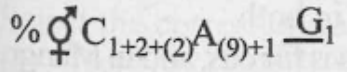
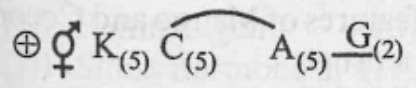
Which of the following is the correct floral formula of Liliaceae?
-
(A)
-
(B)
-
(C)

-
(D)
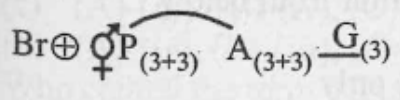
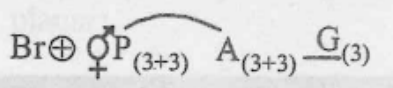
Floral formula of Liliaceae is
It represents bracteate, actinomorphic, bisexual flowers having six tepals and six epitepalous stamens. Ovary is superior with three lobed stigma.
Male and female gametophytes do not have an independent free living existence in :
Male and female gametophyte do not have an independent free-living existence in gymnosperms and angiosperms. In them they remain within the sporangia retained on the sporophytes. The pollen grain is released from the microsporangium and are carried in air current and come in contact with the opening of the ovules borne on megasporophylls. The pollen tube carrying the male gametes grows towards archegonia in the ovule and discharges their contents near the mouth of the archegonia.
Inhibitory substances in dormant seeds cannot be removed by subjecting seeds to :
Presence of inhibitory substances in dormant seeds can be removed by subjecting seeds to
(i) growth hormones like gibberellic acid, cytokinins
(ii) by stratification in which seeds requiring low temperature are first allowed to imbibe water and then exposed to low temperature.
(iii) low concentration of nitrates because it promote seed germination.
Ascorbic acid is known to cause seed dormancy as it is a potent chemical inhibitor.
In some plants thalamus contributes to fruit formation. Such fruits are termed as:
A fruit in which floral parts other than ovary, like thalamus, base of sepals, petals, etc., fuse with pericarp and contribute in fruit formation is called false fruit or pseudocarp.
In strawberry, the whole soft edible part of fruit is represented by an overgrown receptacle. Apple, mulberry and strawberry are false fruits.
The biosynthesis of ribosomal RNA occurs in :
The biosynthesis of ribosomal RNA occurs in nucleolus of nucleus. It helps the nucleus of the cell to control cell metabolism and other activities. The other two types of RNA, i.e., mRNA and tRNA are also synthesised here.
Large, empty colorless cells of the adaxial epidermis along the veins of grass leaves are
Grass leaves are isobilateral or typical monocot leaves. In such leaves, at places, the upper or adaxial epidermis contain groups of large thin-walled, colourless cells called bulliform cells. These cells are highly vacuolated and can store water, if available. However, these cells lose water and become flaccid in case of water deficiency.
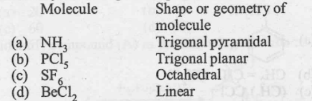
Identify the wrong match pair :
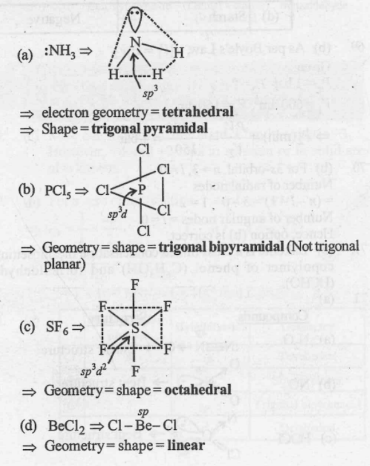
Match the following aspects with the respective metal
Aspects | Metal |
|---|---|
(A) The metal which reveals a maximum number of oxidation states | (i) Scandium |
(B) The metal although placed in the 3d block is considered not as a transition (ii) Copper
element.
(C) The metal which does not exhibit variable oxidation states. (iii) Manganese
(D) The metal which in +1 oxidation state in aqueous solution (iv) Zinc
undergoes disproportionation.
(A) Mn reveals the maximum number of oxidation states, i.e., six oxidation states in its compounds, viz., +2, +3, +4, +5, +6 and +7.
(B) Zn is a pseudo-transition element like Cd and Hg of Group 12 (d¹⁰-configuration).
(C) Sc shows only +3 oxidation state.
(D) Cu⁺ undergoes disproportionation reaction in aqueous solution.
2Cu⁺(aq)⟶Cu⁰(s)+Cu²⁺⟶Cu0(s)+Cu²⁺(aq)
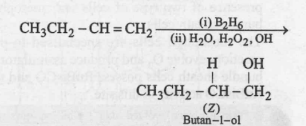
What is Z?

It is an example of the hydroboration–oxidation reaction of an alkene, which undergoes hydration to give an alcohol.
The Mean Free Path l for a gas molecule depends upon the diameter, d, of the molecule as:
The mean free path / for a gas molecule is given as
l = 1/ √2Πnd² ⇒ l ∝ 1/d²
where, d = diameter of molecule of gas
n=number of molecules per unit volume.
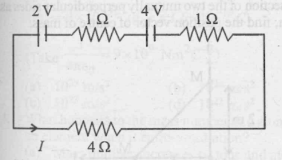
For the circuit shown in the figure, the current I will be
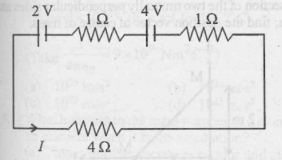
The circut diagram is shown below.
Applying Kirchoff's voltage law in the loop, we get
4I+I:1- 4+I.1-2=0
⇒ 6I = 6
⇒ I=1A
The equivalent resistance between A and B for the mesh shown in the figure is
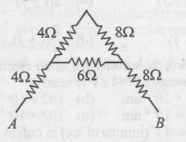
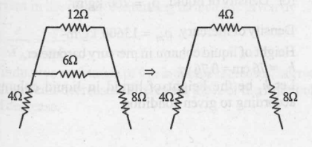
Resistance of 4Ω and 8Ω are connected in series with
each other and parallel with a resistance of 6Ω .
∴R_ AB= [(4+8)∥6]+4+8
=( 12+6)/(12×6)+ 12= 16Ω
In a mixture, DNA fragments are separated by
Electrophoresis is a technique used for the separation of substances of different ionic properties. It is used in molecular biology and biotechnology. RDT to separate the DNA fragments that are being cut by restriction endonuclease. In this technique, DNA fragments " are loaded on agarose gel and then electric field is applied. X Due to negatively charged, DNA fragments move towards anodes (+ve charge). The smaller fragments move farther way as compared to larger fragments and thus, these get separated.
Which of the following is incorrect for wind-pollinated plants?
Because wind pollinated plants have single ovule in each ovary. In case of wind pollination, anemophily, many pollens are produced because anemophily is highly wasteful and non-directional process. These pollens are also light-weight, small, dusty and dry.
To catch the wind-borne pollens, stigma is exposed and hairy. Flowers are small and inconspicuous, colourless and nectarless.
In a mitotic cycle, the correct sequence of phases is
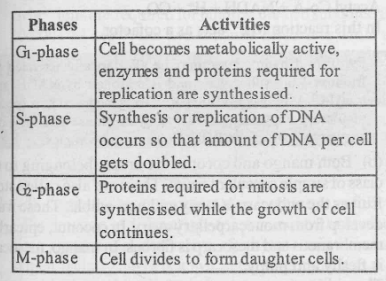
In a mitotic cycle, the correct sequence of phases is G₁, S, G₂, M. The first three phases, i.e., G₁, S, G₂ occurring during interphase. Whereas the M-phase is the period of actual cell division. The major event occurring in each phase is tabulated below:
Embryological support for evolution was proposed by
Embryological support for evolution was proposed by Ernst Haeckel. He proposed biogenetic law in the year 1864. According to this law, 'structure of origin develops earlier than structure of newer origin. In other words, it states "Ontogeny repeats phylogeny", i.e., development of structures in an organism follow the same sequence as they evolved in his ancestors.
Phycorythrin is the major pigment in
Phycoerythrin is the major pigment in red algae or rhodophytes. The photosynthetic pigments in red algae include chlorophyll-a, carotenoids and phycobilins. Phycoerythrin belongs to the phycobilins. These pigments are soluble in water.
Phycoerythrin (PE) is a red protein pigment complex produced by the light-harvesting phycobiliprotein family. It is present in red algae and cryptophytes as an accessory to the main chlorophyll pigments responsible for photosynthesis.
According to Alexander von Humboldt
Alexander von Humboldt was a German naturalist and geographer. He proposed that within a region, species richness increases with increasing explored area, but only up to a limit.
Accordingly, the relation between species richness and area for a wide variety of taxa turn out to be rectangular hyperbola. The relationship appears as a straight line on a logarithmic scale and described by the equation:
log S = log C + Z log A
Where, S = Species richness, A = Area, Z = Regression coefficient, C = Y-intercept.
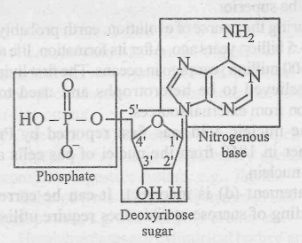
In the polynucleotide chain of DNA, a nitrogenous base is linked to the -OH of
In a DNA polynucleotide chain, a nitrogenous base is linked to the hydroxyl (–OH) of 1' C pentose sugar. It is represented in the structure given below.
During non-cyclic photophosphorylation, when electrons are lost from the reaction centre at PSII, what is the source which replaces these electrons?
During non-cyclic photophosphorylation, electrons expelled by the excited PS-II photocentre does not return to it. Therefore, it requires an external electron donor and that purpose is served by water.
H₂O undergo photolysis and the electrons thus released are picked up by PS-II (P₆₈₀) and handed over to PS-I or P₇₀₀.
In Recombinant DNA technology antibiotics are used
Normally, the genes encoding resistance to antibiotics such as chloramphenicol, ampicillin, tetracycline or kanamycin, etc., are considered useful selectable markers for E. coli.
Vectors carry an antibiotic-resistant gene which helps to select the recombinant cells from non-recombinant ones as only recombinant cells would exhibit the antibiotic resistance and would be able to survive in antibiotic rich medium. Such genes that the host cell requires for growth under certain conditions and differentiate the recombinant cells from non-recombinant ones are called as selectable ‘markers.
Which of the following statements is incorrect?
It can be corrected as the energy content decreases from the first (producer) to fourth (consumer) level. At each level about 90% of energy is lost and only 10% is passed to the next level.
Attachment of spindle fibers to kinetochores of chromosomes begins in
During the metaphase stage of cell cycle, spindle fibres originating from the centrosomes attaches to the kinetochore of chromosomes. Kinetochore is a disc-shaped structure at the surface of centromere through which the sister chromatids are held together. During metaphase, the chromosomes arrange themselves at the equator or metaphase plate. Due to this arrangement, the attachment of spindle fibres to kinetochore is clearly visible.
Correct position of floral parts over thalamus in mustard plant is
A flower has four different whorls arranged successively on the swollen end of the stalk or pedicel called thalamus or receptacle. In mustard, flower is hypogynous, i.e., the gynoecium occupies the highest position while the other parts are situated below it. The ovary in such flowers is said to be superior.
After about how many years of formation of earth, life appeared on this planet?
During the course of evolution, earth probably formed about 4.5 billion years ago. After its formation, life appeared about 500 million years ago in oceans. The first living forms were believed to be heterotrophs and used to derive nutrition from external resources.
The term 'Nuclein' for the genetic material was used by
The nucleic acid was first reported by Friedrich Miescher in 1869 from the nuclei of pus cells and was named nuclein.
Select the incorrect statement.
Long distance transport of sucrose from the source to sink is carried out by phloem. It is bidirectional movement. Both loading of food at the source and unloading of the same at sink region are active processes, i.e., require energy in the form of ATP.
The number of contrasting characters studied by Mendel for his experiments was
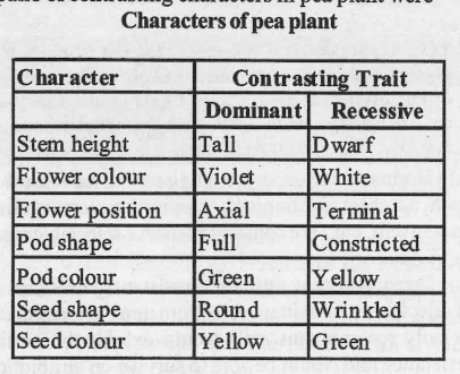
Mendel conducted breeding experiments on garden pea by selecting seven pairs of contrasting characters. Luckily all these characters were related as dominant and recessive and none of them showed linkage. The seven pairs of contrasting characters in pea plant were
Vegetative propagule in Agave is termed as
Vegetative propagule in Agave is bulbil. It develops as a small bud on the axial leaf and after falling on the soil, it develops into a new plant.
Identify the statement which is incorrect.
Glycine is a example of amino acid. It is a neutral amino acid that contains only one amino group and one carboxylic group with non-cyclic hydrocarbon chain.
A species which was introduced for ornamentation but has become a trouble-some weed in India :
Eichhornia crassipes (water hyacinth) was introduced in several tropical countries including India for ornamental purpose but later this exotic species became a trouble-some aquatic weed.
This free floating weed clogged rivers and lakes and threatened the survival of many native species to the point of extinction. This species was called "Terror of Bengal" in India.
Eichhornia crassipes (water hyacinth) is an exotic shrub which is growing at an alarming rate on the surface of water body. It inhibits the growth of fish as well as other aquatic organisms because of lack of light and also decreases biochemical oxygen demand in the water.
Pyruvate dehydrogenase activity during aerobic respiration requires :
Pyruvate dehydrogenase enzyme is involved in the conversion of pyruvate to acetyl CoA, after the completion of glycolysis and before the start of Krebs' cycle. This enzyme is made up of decarboxylase, lipoic acid, transacetylase and Mg²⁺ ion. The reaction occur in following way -
Pyruvate + NAD⁺ + CoA → Acetyl CoA + NADH + H⁺ + CO₂
In this reaction Mg²⁺ acts as a cofactor.
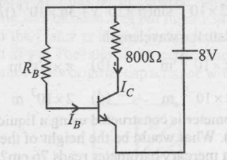
A n-p-n transistor is connected in common emitter configuration (see figure) in which collector voltage drop across load resistance (800 Ω) connected to the collector circuit is 0.8 V. The collector current is
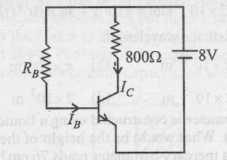
Given,
Resistance of load, R_c=800Ω
Voltage drop across load resistance, V_c= 0.8V
Current through R_c
I_c= 0.8/R_c =0.8/800=10⁻³A=1 mA
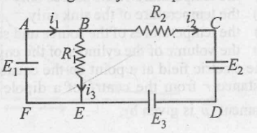
For the circuit given below, the Kirchoff's loop rule for the loop BCDERB is given by the equation
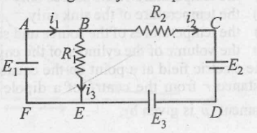
The circuit diagram is given below
Applying Kirchoff's Voltage law in loop BCDEB,
R₂l₂+E₂—E₃- I₃R₁ =0.
Calculate the acceleration of the block and trolly system shown in the figure. The coefficient of kinetic friction between the trolly and the surface is 0.05. (g = 10 m/s²?, ‘mass of the string is negligible and no other friction exists).
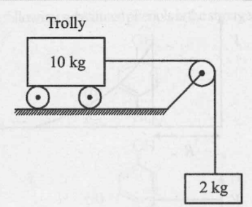
ss of the trolly, m₁, = 10 kg
Coefficient of kinetic friction, μ =0.05
Mass of the block, m₂, =2 kg
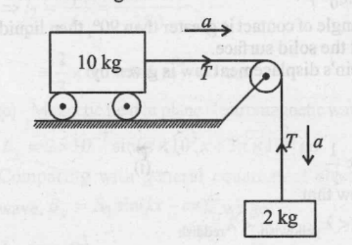
The free-body diagram of the block and trolly system is.
shown in the figure.
If'a’ be the common acceleration of the system.
Equation of motion of 10 kg trolly,
T- μ R=10a
⇒T-0.05x10g =10a
⇒T-0.05x10x10 =10a
⇒ T- 5=10a ......(i)
Equation of motion of 2kg block,
2g-T=2a⇒ 2x10-T=2a
⇒20-T=2a (ii)
‘Adding Eqs. (i) and (ii), we have
20-5⇒12a⇒ 15=12a
⇒ a=15/12 =5/4=1.25 m s⁻²
A parallel plate capacitor having cross-sectional area A and separation d has air in between the plates. Now an insulating slab of same area but thickness d/2 is inserted between the plates as shown in figure having dielectric constant K(=4). The ratio of new capacitance to its original capacitance to its original capacitance will be
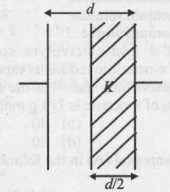
Capacitance of parallel plate capacitor with air is
Cₒ=εₒA/d
According to the second condition,
A′=A, d′=d−t + t/k
The capacitance of the same parallel plate capacitor with the introduction of an insulating slab is
C=εₒA/(d−t)+t/k=εₒA/(d/2+d/8)=8/5 .εₒA/d
The required ratio is
C/Cₒ=8/5 ⋅εₒA/d/εₒA/d
C/Cₒ=8/5
⇒C:Cₒ=8:5
In the following, in each set a conservation approach and an example of method of conservation are given
(A) In situ conservation – Biosphere Reserve
(B) Ex situ conservation – Sacred groves
(C) In situ conservation – Seed bank
(D) Ex situ conservation – Cryopreservation
Select the option with correct match of approach and method
In situ conservation is on site conservation technique, i.e. the species are protected in their natural habitats only. In this approach, the important components of biological diversity are protected and managed through protected areas, biosphere reserves and sacred forests or lakes.
On the other hand, ex situ conservation involves the conservation of selected rare flora or fauna in places outside their natural habitat. It includes off site collection and gene banks. In gene banks, germplasm, tissue or embryos are stored in preserved conditions using the technologies like orchards, tissue culture and cryopreservation.
Match the following techniques or instruments with their usage:
Techniques / Instruments | Usage |
|---|---|
(A) Bioreactor | (i) Separation of DNA fragments |
(B) Electrophoresis | (ii) Production of large quantities of products |
(C) PCR (D) ELISA | (iii) Detection of pathogen, based on antigen-antibody reaction (iv) Amplification of |
* Bioreactors are used for the industrial scale production
of products.
* Electrophoresis helps in the separation of DNA
fragments based on their size.
* PCR helps to amplify or generate large number of copies of nucleic acids.
* ELISA helps in the detection of pathogens based on
the principle of antigen-antibody interaction.
Identify the correct features of Mango and Coconut fruits.
(i) In both, fruit is a drupe.
(ii) Endocarp is edible in both.
(iii) Mesocarp in Coconut is fibrous, and in Mango it is fleshy.
(iv) In both, fruit develops from a monocarpellary ovary only.
Select the correct option from below:
Both mango and coconut are drupe, belonging to the class of simple succulent fruits. These are also called stone fruits as the endocarp is stony and non-edible. These fruits develop from a monocarpellary ovary. In coconut, epicarp is membranous and mesocarp is fibrous. In mango, mesocarp is fleshy and pulpy.
Thus, statements (i), (iii), (iv) are correct while (ii) is incorrect.
Match the items in Column I with those in Column II:
Column I | Column II |
|---|---|
(A) Herbivores–Plants | (i) Commensalism |
(B) Mycorrhiza–Plants | (ii) Mutualism |
(C) Sheep–Cattle | (iii) Predation |
(D) Orchid–Tree | (iv) Competition |
Select the correct option from the following:
Option ((A)–(iii), (B)–(ii), (C)–(iv), (D)–(i)) is the correct match, which is as follows:
The relationship between herbivores and plants is prey-predator type in which herbivores are predators and plants are the prey.
In mycorrhiza, the plant association benefits both species and thus represents mutualism.
Sheep and cattle show competition for common resources like food, i.e., grass.
Orchids are epiphytes that grow on trees and derive nutrients from them. In this process, trees are neither harmed nor helped. Thus, it is a type of commensalism relationship.
Air (Prevention and Control of Pollution) Act was amended in 1987 to include among pollutants:
The Air (Prevention and Control of Pollution) Act was amended in 1987 to include noise among pollutants. This Act is meant for preserving the quality of air and controlling air and noise pollution and prevent their detrimental effects on human health and health of other biological entities.
In Glycine max, the product of biological nitrogen fixation is transported from the root nodules to other parts as:
In Glycine max (Soyabean), the products of biological nitrogen fixation are transported from the root nodules to other parts as nitrate.
Which of the following statements about cork cambium is incorrect?
Cork cambium is a meristematic tissue involved in secondary growth. It is also called phellogen. It is a few layers thick and cuts off cells into an outer layer and an inner layer. The former differentiates into cork or phellem, while the latter differentiates into secondary cortex or phelloderm. The phellogen, phellem, and phelloderm are collectively known as periderm. In woody trees, phellogen cuts off closely arranged parenchymatous cells, which rupture the epidermis and form lenticels. Thus, statement (b) is incorrect while the others are correct.
Match the following:
Column I | Column II |
|---|---|
(A) Aquaporin | (i) Amide |
(B) Asparagine | (ii) Polysaccharide |
(C) Abscisic acid | (iii) Polypeptide |
(D) Chitin | (iv) Carotenoids |
Select the correct option:
Option ((A)–(iii), (B)–(i), (C)–(iv), (D)–(ii)) is the correct match, which is as follows:
Chemically, aquaporins are major intrinsic proteins that form pores in the membranes of cells.
Asparagine is the beta-amide derivative of aspartic acid.
Abscisic acid is an apocarotenoid.
Chitin is a heteropolysaccharide consisting of two types of monosaccharide monomers.
Which of the following statements is incorrect about gymnosperms?
Statement (Male and female gametophytes are free living.) is incorrect. It can be corrected as follows:
In gymnosperms, the male and the female gametophytes do not have an independent free-living existence. The male gametophyte remains within the sporangia, retained on the sporophytes, and is dependent on the sporophyte.
Which of the following elements helps in maintaining the structure of ribosomes?
Each ribosome consists of two unequal subunits, a larger and a smaller one. Mg²⁺ ions are required for binding the two subunits. Below 0.0001 M Mg²⁺, the two subunits dissociate, while above this strength, the two subunits form the dimer.
Match the following concerning the activity/function and the phytohormone involved:
Column I | Column II |
|---|---|
(A) Fruit ripener | (i) Abscisic acid |
(B) Herbicide | (ii) GA₃ |
(C) Bolting agent | (iii) 2, 4-D |
(D) Stress hormone | (iv) Ethephon |
Select the correct option from the following:
Option ((A)–(iv), (B)–(iii), (C)–(ii), (D)–(i)) is the correct match, which is as follows:
The functions of different phytohormones include:
Ethephon is a common derivative of ethylene and is used to ripen fruits.
2,4-D is a synthetic auxin and is used as a herbicide against dicotyledonous weeds.
Gibberellic acid induces bolting in plants, i.e., the promotion of internodal elongation just prior to their reproductive phase.
Abscisic acid is a stress hormone as it helps plants overcome unfavourable conditions by inhibiting growth.
Who coined the term 'Kinetin'?
The term kinetin was coined by Skoog and Miller in 1955. Chemically, kinetin is 6-furfuryl aminopurine. It was the first cytokinin to be discovered from degraded autoclaved herring sperm DNA. Kinetin does not occur naturally.
Which of the following statements is incorrect regarding the phosphorus cycle?
Statement (There is appreicable respiratory release of phosphorus into atmosphere) is incorrect and can be corrected as follows:
Phosphorus cycle is a type of sedimentary cycle, i.e., its main reservoirs are soil and rocks. It is mainly found as phosphates in rocks. During this cycle, phosphorus-solubilising bacteria like Pseudomonas, Acetobacter, etc. help release phosphorus from organic remains. A large amount of phosphate is lost in the sea by sedimentation. There is no respiratory release of phosphorus into the atmosphere because phosphorus is an inorganic nutrient that does not take part in respiration.
First discovered restriction endonuclease that always cuts DNA molecule at a particular point by recognising a specific sequence of six base pairs is
Hind II was the first discovered endonuclease. It was isolated by Smith, Wilcox, and Kelley (1968) from Haemophilus influenzae bacteria. It always cuts DNA at a particular point by recognising a specific sequence of six base pairs. The recognition sequence of Hind II is:
5′-GTCGAC-3′
3′-CAGCTG-5′
Which of the following is associated with decrease in cardiac output?
Parasympathetic neural signals (a component of the autonomic nervous system) decrease the rate of heartbeat, speed of conduction of action potential and thereby the cardiac output.
Match the following group of organisms with their respective distinctive characteristics and select the correct option.
Organisms | Characteristics |
|---|---|
(A) Platyhelminthes | (i) Cylindrical body with no segmentation |
(B) Echinoderms | (ii) Warm-blooded animals with direct development |
(C) Hemichordates | (iii) Bilateral symmetry with incomplete digestive system |
(D) Aves | (iv) Radial symmetry with indirect development |
The option ((A)–(iii), (B)–(iv), (C)–(i), (D)–(ii) is the correct match, which is as follows:
Platyhelminthes are bilaterally symmetrical with an incomplete digestive system, e.g., Taenia.
Echinoderms are radially symmetrical with indirect development, e.g., starfish, sea urchin, etc.
Hemichordates are cylindrical-bodied animals with no segmentation, e.g., Balanoglossus.
Aves are warm-blooded animals with direct development, e.g., pigeon.
Which is the basis of genetic mapping of human genome as well as DNA fingerprinting?
Polymorphism in DNA sequence is the basis of genetic mapping of the human genome as well as DNA fingerprinting. Polymorphism simply means variation at the genetic level that arises due to mutation.
The best example for pleiotropy is:
The best example of pleiotropy is phenylketonuria, which occurs in humans. In pleiotropy, a single gene can exhibit multiple phenotypic expressions. This gene is called a pleiotropic gene. In phenylketonuria, a single gene mutation that codes for the enzyme phenylalanine hydroxylase is seen. This manifests itself through phenotypic expressions characterised by mental retardation and a reduction in hair and skin pigmentation.
The total Lung Capacity (TLC) is the total volume of air accommodated in the lungs at the end of a force inspiration. This includes:
The Total Lung Capacity (TLC) is the total volume of air accommodated in the lungs at the end of a forced inspiration. This includes Residual Volume (RV), Expiratory Reserve Volume (ERV), Tidal Volume (TV), and Inspiratory Reserve Volume (IRV).
TLC is also equal to Vital Capacity (VC) + Residual Volume (RV).
Thus, option (RV (Residual Volume); ERV (Expiratory Reserve Volume); TV (Tidal Volume); and IRV (Inspiratory Reserve Volume)) is correct.
Hormones stored and released from neurohypophysis are
Neurohypophysis (pars nervosa) is also known as the posterior pituitary, which stores and releases two hormones called oxytocin and vasopressin. These hormones are actually synthesised by the hypothalamus and are transported axonally to the neurohypophysis.
According to Central Pollution Control Board (CPCB) what size (in diameter) of particulate is responsible for causing greater harm to human health?
According to the Central Pollution Control Board (CPCB), particulate matter of size 2.5 micrometres or less in diameter (PM2.5) is responsible for causing the greatest harm to human health. These fine particles can be inhaled deep into the lungs and can cause breathing and respiratory symptoms, irritation, inflammation, damage to the lungs, and premature deaths.
Cyclosporin A, used as immunosuppression agent, is produced from
Bioactive molecule cyclosporin-A is used as an immunosuppressive agent in organ transplant patients. It is produced by the fungus Trichoderma polysporum.
Monascus purpureus is a yeast that helps produce statins (blood cholesterol-lowering agents).
Saccharomyces cerevisiae is a yeast that produces ethanol.
Penicillium notatum is a fungus that produces penicillin (an antibiotic).
For the commercial and industrial production of Critic Acid, which of the following microbes is used?
For the commercial and industrial production of citric acid, the fungus Aspergillus niger is used. Other microbes help as follows:
Lactobacillus sp. – produces lactic acid
Saccharomyces cerevisiae – produces ethanol
Clostridium butylicum – produces butyric acid
All vertebrates are chordates but all chordates are not vertebrates, why?
The members of subphylum Vertebrata possess a notochord during the embryonic period. The notochord is replaced by a cartilaginous or bony vertebral column in the adult. Thus, all vertebrates are chordates, but all chordates are not vertebrates.
The phenomenon of evolution of different species in a given geographical area starting from a point and spreading to other habitats is called
The process of evolution of different species in a given geographical area, starting from a point and literally radiating to other geographical areas (habitats), is called adaptive radiation.
E. coli has only 4.6 × 10⁶ base pairs and completes the process of replication within 18 minutes; then the average rate of polymerisation is approximately:
E. coli has 4.6 × 10⁶ base pairs. It completes the replication process in 18 minutes, i.e., 18 × 60 seconds.
Rate of polymerisation = 4.6 × 10⁶ bp/18 × 60 s
= 4.6×10⁵/18 × 6 = 46 × 10⁴/108 = 460000/108 = 42591 bp/s
Rate of polymerisation = 42591 bp/s.
or approximately 4000 bp/sec.
The size of Pleuropneumonia-like organism (PPLO) is:
The size of various organisms/cells are:
Pleuropneumonia-Like Organism (PPLO) – 0.1 μm
Viruses – 0.02–0.2 μm
Bacterial cell – 1–2 μm
Eukaryotic cell – 10–20 μm
Intrinsic factor that helps in the absorption of vitamin B₁₂ is secreted by:
Parietal cells (oxyntic cells) secrete HCl and intrinsic factor. The intrinsic factor is essential for the absorption of vitamin B₁₂. Goblet cells secrete mucus. Peptic (chief) cells secrete the proenzyme pepsinogen. Hepatic cells secrete bile.
Match the following columns with reference to cockroach and select the correct option:
Column I | Column II |
|---|---|
(A) Grinding of the food | (i) Hepatic caecal particles |
(B) Secrete gastric juice | (ii) 10th segment |
(C) 10 pairs | (iii) Proventriculus |
(D) Anal Cerci | (iv) Spiracles |
(v) Alary muscles |
The option ((A)–(iii), (B)–(i), (C)–(iv), (D)–(ii)) is the correct match with reference to the cockroach, which is as follows:
Grinding of food particles is done by the proventriculus (gizzard).
Hepatic caeca are a ring of 6–8 blind tubules present at the junction of the foregut and midgut. They secrete digestive juice.
There are 10 pairs of small holes called spiracles present on the lateral side of the body, which are part of the respiratory system.
Anal cerci are a pair of jointed filamentous structures present on both sides in the 10th segment.
The increase in osmolarity from outer to inner medullary interstitium is maintained due to:
(i) Close proximity between Henle's loop and vasa recta
(ii) Counter current mechanism
(iii) Selective secretion of HCO₃⁻ and hydrogen ions in PCT
(iv) Higher blood pressure in glomerular capillaries
As the close proximity between the Henle's loop and vasa recta, along with the counter-current mechanism, helps maintain an increasing osmolarity towards the inner medullary interstitium, i.e., from 300 mOsmol L⁻¹ in the cortex (outside) to about 1200 mOsmol L⁻¹ in the inner medulla (inside).
Select the correct statement:
Statement in option (Reduction in Glomerular Filtration Rate activates JG cells to release renin.) is correct, as a reduction in the glomerular filtration rate (GFR) activates the juxtaglomerular (JG) cells to release renin, which converts angiotensinogen in blood into angiotensin-I.
Other statements are incorrect and can be corrected as follows:
Atrial Natriuretic Factor (ANF) causes vasodilation and thereby decreases blood pressure.
Angiotensin-II is a powerful vasoconstrictor and decreases the GFR.
Counter-current pattern of blood flow is observed in the vasa recta.
Which of the following STDs are not curable?
Except for Hepatitis-B, genital herpes, and HIV infection, other sexually transmitted diseases are completely curable if detected early and treated properly. Diseases or infections that are transmitted through sexual intercourse are collectively called Sexually Transmitted Diseases (STDs), Venereal Diseases (VD), or Reproductive Tract Infections (RTIs).
Match the following columns and select the correct option:
Column I | Column II |
|---|---|
(A) Smooth endoplasmic reticulum | (i) Protein synthesis |
(B) Rough endoplasmic reticulum | (ii) Lipid synthesis |
(C) Golgi complex | (iii) Glycosylation |
(D) Centriole | (iv) Spindle formation |
The option ((A)–(ii), (B)–(i), (C)–(iii), (D)–(iv)) is the correct match, which is as follows:
Smooth Endoplasmic Reticulum (SER) is the major site for the synthesis of lipids.
Rough Endoplasmic Reticulum (RER) is actively involved in protein synthesis and secretion.
Golgi complex is an important site for the formation of glycoproteins and glycolipids, i.e., glycosylation.
Centrioles help in spindle formation during cell division.
Hominid fossil discovered in Java in 1891, now extinct, having cranial capacity of about 900 cc was:
A hominid fossil discovered in Java in 1891, now extinct, having a cranial capacity of about 900 cc, was Homo erectus. It probably ate meat.
The proteolytic enzyme rennin is found in:
The proteolytic enzyme rennin is found in the gastric juice of infants. It helps in the digestion of milk proteins (casein) into paracasein.
Match the following columns and select the correct option:
Column I | Column II |
|---|---|
(A) Dragonflies | (i) Biocontrol agents of several plant pathogens |
(B) Bacillus thuringiensis | (ii) Get rid of Aphids and mosquitoes |
(C) Glomus | (iii) Narrow spectrum insecticidal applications |
(D) Baculoviruses | (iv) Biocontrol agent of lepidopteran plant pests |
(v) Absorb phosphorus from soil |
Option ((A)–(ii), (B)–(iv), (C)–(v), (D)–(iii)) is the correct match, which is as follows:
Dragonflies help to get rid of aphids and mosquitoes.
Bacillus thuringiensis acts as a biocontrol agent for lepidopteran and plant pests.
Glomus is a fungus that forms mycorrhiza to absorb phosphorus from the soil.
Baculoviruses are used in narrow-spectrum insecticidal applications.
Select the incorrectly matched pair from the following:
The incorrectly matched pair is option (Chondrocytes — Smooth muscle cells). It can be corrected as follows:
Chondrocytes are cartilage cells. The intercellular material of cartilage is solid, pliable, and resistant to compression. Cells of this tissue are called chondrocytes, which are enclosed in small cavities within the matrix secreted by them.
The yellowish fluid "colostrum" secreted by mammary glands of mother during the initial days of lactation has abundant antibodies (IgA) to protect the infant. This type of immunity is called as:
Passive immunity is when ready-made antibodies are directly given to protect the body against foreign agents.
For example, the yellowish fluid colostrum secreted by the mother during the initial days of lactation contains abundant antibodies (IgA) that protect the infant. The foetus also receives some antibodies from its mother through the placenta during pregnancy.
Select the correct option of haploid cells from the following groups:
Out of the given options, the haploid cells are secondary spermatocyte, first polar body, ovum, secondary oocyte, spermatids and second polar body. The diploid cells are primary oocyte and primary spermatocyte. Thus, option (Secondary spermatocyte, First polar body, Ovum) is correct.
During Meiosis I, in which stage synapsis takes place?
During the zygotene stage of meiosis-I, chromosomes start pairing together and this process of association is called synapsis. Such paired chromosomes are called homologous chromosomes.
Select the correct statement from the following:
Statement in option (Restriction enzyme digestions are performed by incubating purified DNA molecules with restriction enzymes under optimum conditions.) is correct, as restriction enzyme digestion is performed by incubating purified DNA molecules with restriction enzymes under optimum conditions.
Other statements are incorrect and can be corrected as follows:
Gel electrophoresis is used for the separation and isolation of DNA fragments.
The DNA polymerase enzyme uses DNA templates to catalyse the polymerisation of deoxynucleotides.
PCR (Polymerase Chain Reaction) is used for the amplification of a DNA segment.
Spooling is:
Spooling is the method of collection of isolated DNA in the form of fine threads in the suspension. This is done to isolate DNA from the cell during the process of recombinant DNA technology.
Match the following columns and select the correct option:
Column I | Column II |
|---|---|
(A) Ovary | (i) Human chorionic Gonadotropin |
(B) Placenta | (ii) Estrogen & Progesterone |
(C) Corpus luteum | (iii) Androgens |
(D) Leydig cells | (iv) Progesterone only |
The option ((A)–(ii), (B)–(i), (C)–(iv), (D)–(iii)) is the correct match, which is as follows:
Ovary produces oestrogen and progesterone.
Placenta produces Human Chorionic Gonadotropin (hCG).
Corpus luteum produces progesterone only.
Leydig cells produce androgens.
Match the following columns and select the correct option:
Column I | Column II |
|---|---|
(A) Pituitary hormone | (i) Steroid |
(B) Epinephrine | (ii) Neuropeptides |
(C) Endorphins | (iii) Peptides, proteins |
(D) Cortisol | (iv) Biogenic amines |
Option ((A)–(iii), (B)–(iv), (C)–(ii), (D)–(i)) is the correct match, which is as follows:
Pituitary hormones are chemically peptides and proteins.
Epinephrine is a biogenic amine.
Endorphins are neuropeptides.
Cortisol is a steroid hormone.
The laws and rules to prevent unauthorised exploitation of bio-resources are termed as:
Bioethics are sets of laws and rules to prevent unauthorised exploitation of bioresources.
Biopiracy is the use of bioresources by multinational companies and other organisations without proper authorisation from the countries and people concerned, and without compensatory payment.
Biopatenting is the grant of patents on biological products, organisms, processes, or bioresources.
Bioengineering is the application of the life sciences, physical sciences, mathematics, and engineering principles to define and solve problems in biology, medicine, healthcare, and other fields.
Match the following columns and select the correct option:
Column I | Column II |
|---|---|
(i) Typhoid | (A) Haemophilus influenzae |
(ii) Malaria | (B) Wuchereria bancrofti |
(iii) Pneumonia | (C) Plasmodium vivax |
(iv) Filariasis | (D) Salmonella typhi |
Option ((i)–(D), (ii)–(C), (iii)–(A), (iv)–(B)) is the correct match, which is as follows:
Typhoid is caused by Salmonella typhi.
Malaria is caused by Plasmodium vivax.
Pneumonia is caused by Haemophilus influenzae.
Filariasis is caused by Wuchereria bancrofti.
RNA interference is used for which of the following purposes in the field of biotechnology?
RNA interference (RNAi) is used to develop pest-resistant plants against infestation by nematodes. RNA interference takes place in all eukaryotic organisms as a method of cellular defence. This method involves silencing of a specific mRNA due to a complementary dsRNA (double-stranded RNA) molecule that binds to and prevents translation of the mRNA (silencing).
The rate of decomposition is faster in the ecosystem due to following factors EXCEPT:
The rate of decomposition is faster in the ecosystem if detritus is rich in nitrogen and water soluble substances like sugars. Warm and moist environment also favour decomposition like wise high temperature and presence of aerobic soil microbes also helps in decomposition. But if detritus is rich in lignin and chitin decomposition rate gets slower. Thus, option (Detritus richer in lignin and chitin) is correct.
Which of the following conditions cause erythroblastosis foetalis?
If the mother is Rh−ve and the foetus is Rh+ve, then there can occur a condition called erythroblastosis foetalis. It is a special case of Rh incompatibility in which, during the second pregnancy of an Rh−ve mother carrying an Rh+ve foetus, the Rh antibodies formed by the mother (Rh−ve) can leak into the blood of the foetus (Rh+ve) and destroy the foetal RBCs.
In Human beings, at the end of 12 weeks (first trimester) of pregnancy, the following is observed:
In human beings, at the end of 12 weeks (first trimester), most of the major organ systems are formed (e.g., the limbs and external genital organs get well-developed).
Progestogens alone or in combination with estrogens can be used as a contraceptive in the form of
Progesterone, alone or in combination with oestrogens, can be used as a contraceptive in the form of pills, injections, and implants under the skin.
They inhibit ovulation and implantation of the zygote, as well as alter the quality of cervical mucus to prevent or retard the entry of sperms.
‘Which of the following options does correctly represent the characteristic features of phylum Annelida?
Animals belonging to the phylum Annelida are triploblastic, bilaterally symmetrical, and metamerically segmented.
They exhibit organ system level of body organisation with the presence of a coelom. They may be aquatic (marine and freshwater) or terrestrial, free-living, and sometimes parasitic.
Inbreeding depression is
Inbreeding depression is caused by continued inbreeding, especially close breeding, which reduces fertility and even productivity in animals. This problem is usually overcome by outbreeding.
Match the following columns and select the correct option:
Column I | Column II |
|---|---|
(A) Rods and Cones | (i) Absence of photoreceptor cells |
(B) Blind Spot | (ii) Cones are densely packed |
(C) Fovea | (iii) Photoreceptor cells |
(D) Iris | (iv) Visible coloured portion of the eye |
The option ((A)–(iii), (B)–(i), (C)–(ii), (D)–(iv)) is the correct match, which is as follows:
Rods and cones are the photoreceptor cells of the eye.
Blind spot is the area where there is an absence of photoreceptor cells in the eye.
Fovea is the area in the retina where cones are densely packed.
Iris is the visible coloured portion of the eye.
Match the following columns and select the correct option:
Column I | Column II |
|---|---|
(A) Pneumotaxic Centre | (i) Alveoli |
(B) O₂ Dissociation Curve | (ii) Pons region of the brain |
(C) Carbonic Anhydrase | (iii) Haemoglobin |
(D) Primary site of exchange of gases | (iv) R.B.C. |
Option ((A)–(ii), (B)–(iii), (C)–(iv), (D)–(i)) is the correct match, which is as follows:
Pneumotaxic centre is present in the pons region of the brain.
The O₂ dissociation curve is useful for studying the effect of factors like PCO₂, H⁺ concentration, etc., on the binding of O₂ with haemoglobin.
Carbonic anhydrase is an enzyme present on the surface of RBCs.
The primary site of exchange of gases is the alveoli of the lungs.
Match the following columns and select the correct option:
Column I | Column II |
|---|---|
(A) Gout | (i) Decreased levels of estrogen |
(B) Osteoporosis | (ii) Low Ca²⁺ ions in the blood |
(C) Tetany | (iii) Accumulation of uric acid crystals |
(D) Muscular dystrophy | (iv) Autoimmune dystrophy disorder |
(v) Genetic disorder |
The option ((A)–(iii), (B)–(i), (C)–(ii), (D)–(v)) is the correct match, which is as follows:
Gout is inflammation of joints due to the accumulation of uric acid crystals.
Osteoporosis occurs due to decreased levels of oestrogen in females. It is an age-related disorder characterised by decreased bone mass and increased chances of fractures.
Tetany is rapid spasms (wild contractions) in muscles when there is a low concentration of Ca²⁺ ions in the blood.
Muscular dystrophy is the progressive degeneration of skeletal muscles, mostly due to a genetic disorder.
Match the following columns and select the correct option:
Column I | Column II |
|---|---|
(A) Aptenodytes | (i) Flying fox |
(B) Pteropus | (ii) Angel fish |
(C) Pterophyllum | (iii) Lamprey |
(D) Petromyzon | (iv) Penguin |
The option ((A)–(iv), (B)–(i), (C)–(ii), (D)–(iii)) is the correct match, which is as follows:
Aptenodytes – Penguin
Pteropus – Flying fox
Pterophyllum – Angel fish
Petromyzon – Lamprey
In cockroach, identify the parts of the foregut in correct sequence:
In cockroach, the parts of the foregut are arranged in the following correct sequence:
Mouth → Pharynx → Oesophagus → Crop → Gizzard
The alimentary canal in the cockroach has three regions: foregut, midgut, and hindgut. The foregut comprises the mouth, which opens into a short tubular pharynx, leading to a narrow tubular passage called the oesophagus. This opens into a sac-like structure called the crop, used for storing food. The crop is followed by the gizzard (proventriculus), which helps in grinding the food particles.
Match the following events that occur in their respective phases of cell cycle and select the correct option:
Column I | Column II |
|---|---|
(A) G₁ phase | (i) Cell grows and organelle duplication |
(B) S phase | (ii) DNA replication and chromosome duplication |
(C) G₂ phase | (iii) Cytoplasmic growth |
(D) Metaphase in M-phase | (iv) Alignment of chromosomes |
Option ((A)–(i), (B)–(ii), (C)–(iii), (D)–(iv)) is the correct match, which is as follows:
In G₁ phase, cell growth and organelle duplication take place.
In S phase, DNA replication and chromosome duplication occur.
In G₂ phase, cytoplasmic growth occurs, i.e., proteins are synthesised in preparation for mitosis.
In the metaphase of M phase, chromosomes are moved to the spindle equator and get aligned along the metaphase plate through spindle fibres.
Bt cotton variety that was developed by the introduction of toxin gene of Bacillus thuringiensis (Bt) is resistant to
Btcotton isresistant to cotton ‘bollworn (Insect pest). cry I Ac and cry II Ab genes have been introduced in cotton to protect it from cotton bollworm. This makes Bt cotton as biopesticide.
According to Robert May, the global species diversity is about
Robert May estimated global species diversity at about 7 million. Although some extreme estimates range from 20 to 50 million.
Other Years