CBSE EXAMINATION PAPER-2019
NEET-ZOOLOGY
(Solved)
General Instructions :
Read the following instructions carefully and follow them :
- This question paper contains 180 questions. All questions are compulsory.
- This question paper is divided into 1 sections.
- Section A – questions number 1 to 180 are multiple choice questions
- There is no overall choice given in the question paper. However, an internal choice has been provided in few questions.
- Use of calculator is NOT allowed.
Section A
The main scale of a vernier callipers has n divisions/cm. n divisions of the vernier scale coincide with (n−1) divisions of main scale. The least count of the vernier callipers is,
n VSD = (n−1) MSD
1 VSD = (n−1)/n MSD
L.C. = 1 MSD − 1 VSD = 1 MSD − (n−1)/n MSD
= 1/n MSD = 1/n × 1/n = 1/n²
A person travelling in a straight line moves with a constant velocity v₁, for certain distance 'x' and with a constant velocity v₂ for next equal distance x. The average velocity v is given by the relation
As t₁ = x/v₁ and t₂ = x/v₂
∴ v = (x + x)/(t₁ + t₂) = 2x/(x/v₁ + x/v₂) = 2v₁v₂/(v₁ + v₂)
∴ 2/v = 1/v₁ + 1/v₂
A body of mass m is kept on a rough horizontal surface (coefficient of friction = α). A horizontal force is applied on the body, but it does not move. The resultant of normal reaction and the frictional force acting on the object is given by F, where F is,
Since body does not move hence it is in equilibrium.
fᵣ = frictional force which is less than or equal to limiting friction.
Now N = mg
Hence 𝐅⃗ = 𝐍⃗ + 𝐟⃗ᵣ
|𝐅⃗| = √((mg)² + (μmg)²)
|𝐅⃗| ≤ mg √(1 + μ²)
An object of mass 500 g, initially at rest, is acted upon by a variable force whose X-component varies with X in the manner shown. The velocities of the object at the points X
= 8 m and X = 12 m, would have the respective values of (nearly)
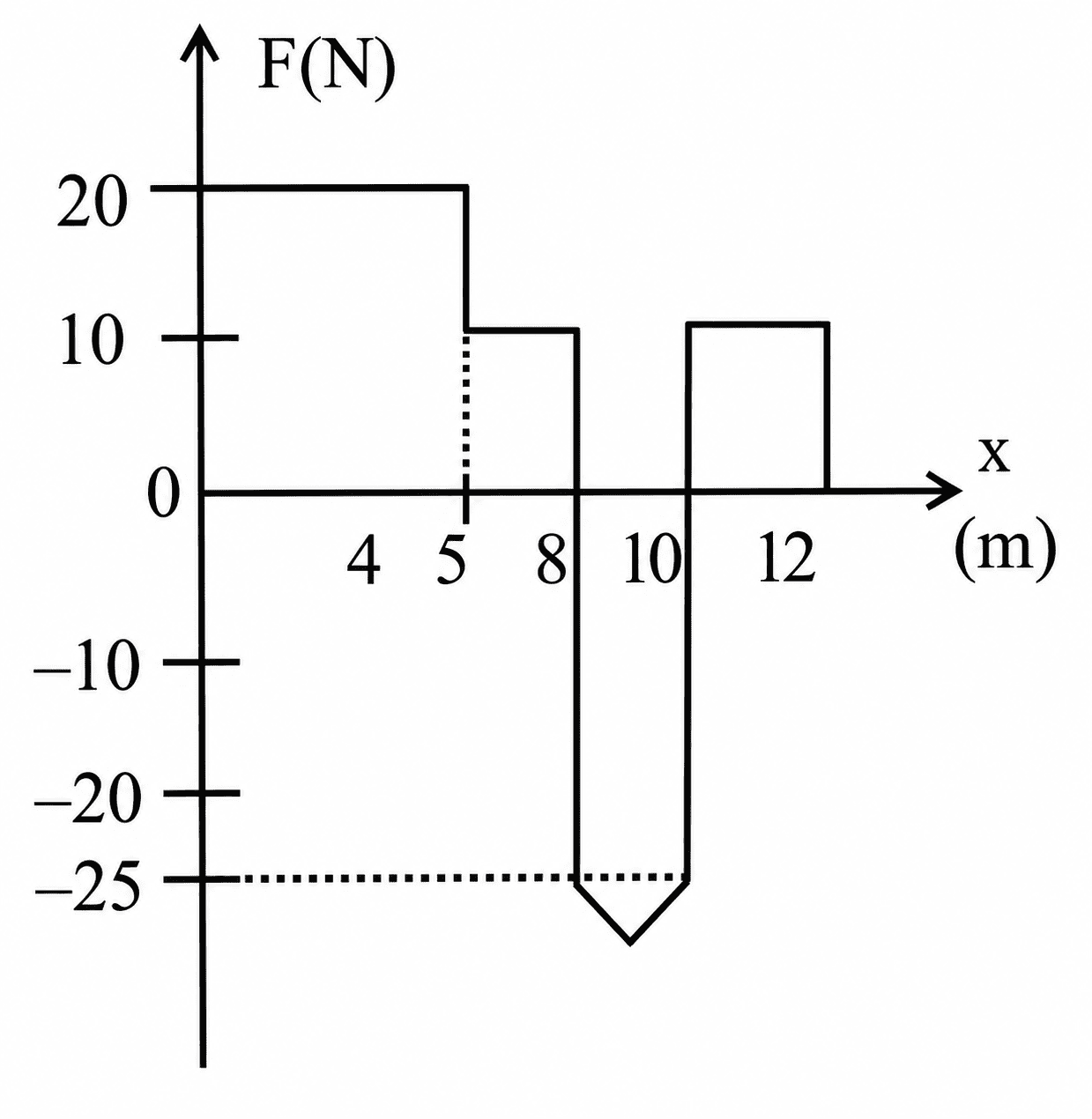
Using work-energy theorem, ΔK = work = area under
F − x graph
From x = 0 to x = 8 m
1/2mv² = 100 + 30
∴ v = √520 = 23 m/s
From x = 0 to x = 12 m
1/2mv² = 100 + 30 − 47.5 + 20
∴ v = √410 = 20.6 m/s
An object flying in air with velocity (20î +25ĵ −12k̂) suddenly breaks into two pieces whose masses are in the ratio 1 : 5. The smaller mass flies off with a velocity (100î +35ĵ +8k̂). The velocity of the larger piece will be
𝐏⃗ᵢ = 𝐏⃗f
m𝐯⃗₁ = (m/6 𝐯⃗₁ + 5m/6 𝐯⃗₂)
𝐯⃗₁= ( 𝐯⃗₁ / 6 + 5/6 𝐯⃗₂
20î + 25ĵ − 12k̂ = (100î + 35ĵ + 8k̂)/6 + 5𝐯⃗₂ /6
𝐯⃗₂ = 20î + 115ĵ − 80k̂
∴ 𝐯⃗₂ = 4î + 23ĵ − 16k̂
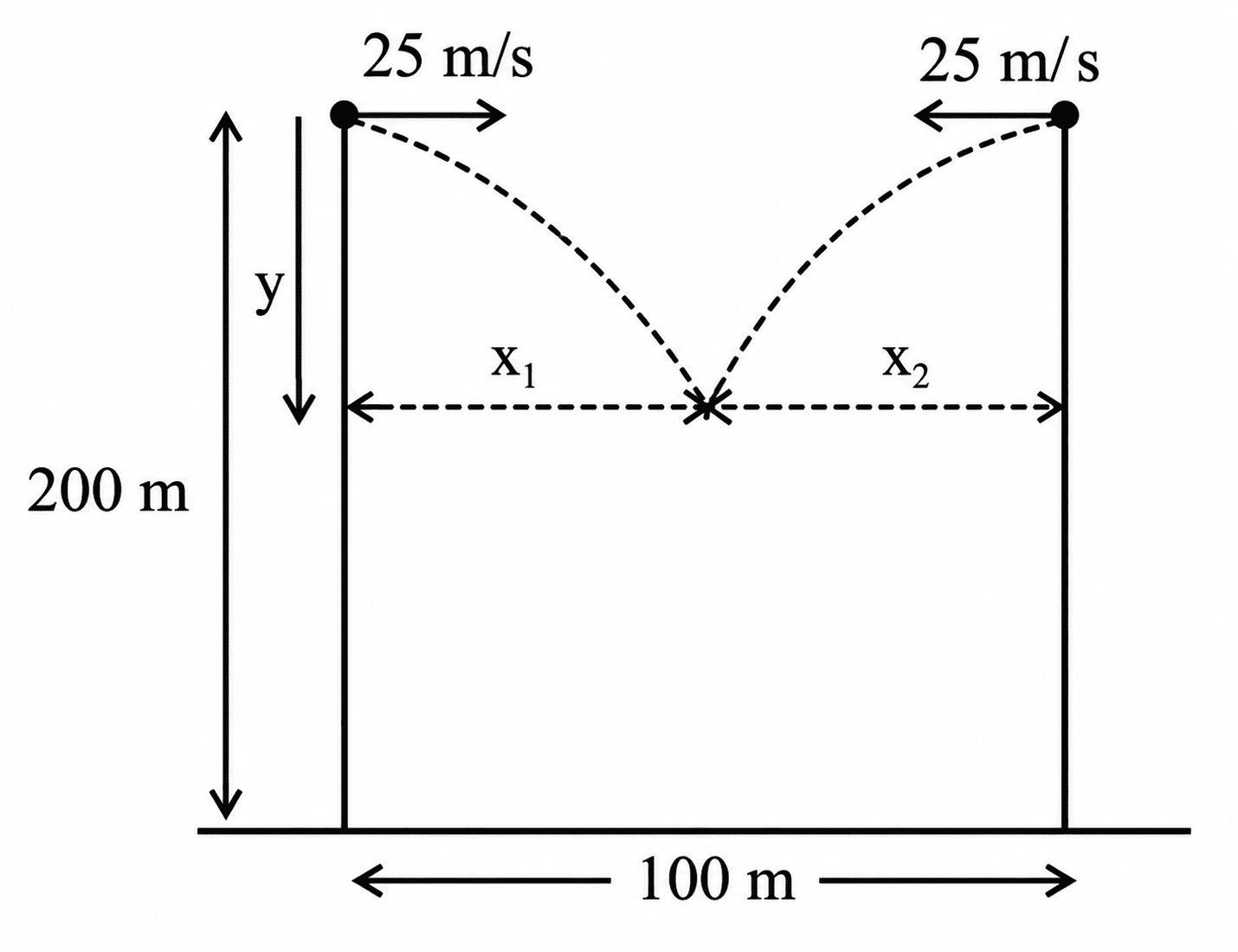
Two bullets are fired horizontally simultaneously towards each other from roof tops of two buildings 100 m apart of same height of 200 m, with the same velocity of 25 m/s. When and where will the two bullets collide? (g = 10 m/s²)
Bullets collide at time t
x₁ + x₂ = 100 m
25t + 25t = 100
t = 2 s
y = ½gt² = ½ × 10 × 2² = 20 m
h = 200 − 20 = 180 m
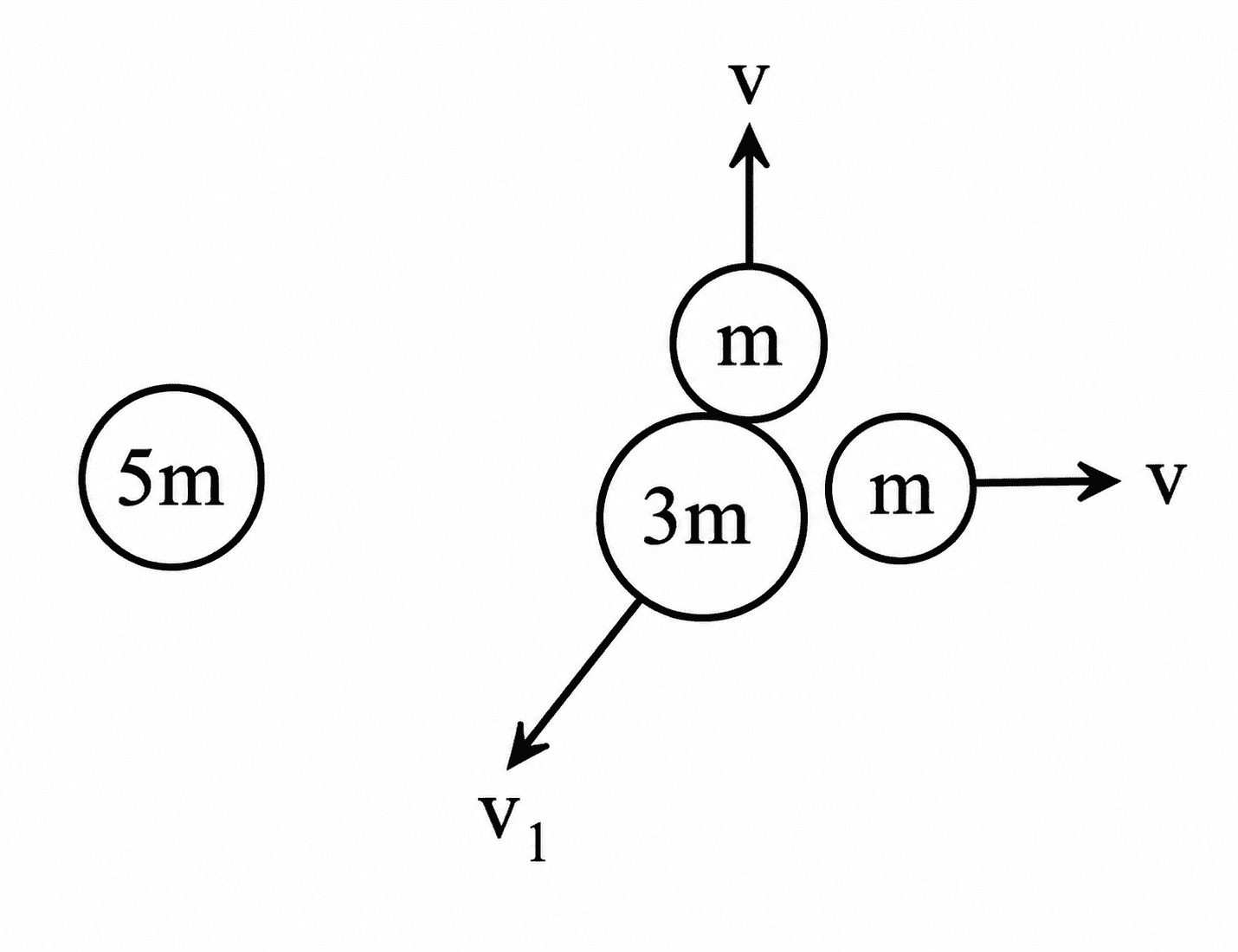
A particle of mass 5 m at rest suddenly breaks on its own into three fragments. Two fragments of mass m each move along mutually perpendicular direction with speed v each. The energy released during the process is,
From conservation of linear momentum.
0 = mvĵ₁ + mvî₁ + 3m𝐯⃗₁
𝐯⃗₁ = −v/3 (î + ĵ)
v₁ = √2/3(v)
K_f = 1/2mv² + 1/2mv² + 1/2(3m)(√2/3)² ( v)²
= mv² + mv²/3 = 4/3 mv²
ΔKE = K_f − K_i = 4/3 mv²
A particle starting from rest, moves in a circle of radius 'r'. It attains a velocity of V₀ m/s in the nᵗʰ round. Its angular acceleration will be,
v² = u² + 2as
V₀² = 0 + 2rα(2πr)n ⇒ α = V₀²/4πnr²
A solid cylinder of mass 2 kg and radius 50 cm rolls up an inclined plane of angle of inclination 30°. The centre of mass of the cylinder has speed of 4 m/s. The distance travelled by the cylinder on the inclined surface will be, [take g = 10 m/s²]
Kinetic energy at the bottom
= 1/2mv₀² + 1/2Iω² = 3/4mv₀²
As I_(solid cylinder) = 1/2MR² and V = Rω
From work–energy theorem
3/4mv₀² = mgh = mgd sinθ
d= 3/4mv₀² / mgsinθ
⇒ d = 3/4 v₀² /gsinθ =3/4.16/ 10×1/2 = 2.4 m
Assuming that the gravitational potential energy of an object at infinity is zero, the change in potential energy (final – initial) of an object of mass m, when taken to a height h from the surface of earth (of radius R), is given by,
As U = −GMm/r
∴ (P.E.)_A = −GMm/R, (P.E.)_B = −GMm/R + h
∴ ΔU = (P.E.)_B − (P.E.)_A
= −GMm/R + h + GMm/R = GMmh/(R) (R + h)
The time period of a geostationary satellite is 24 h, at a height 6R_E (R_E is radius of earth) from surface of earth. The time period of another satellite whose height is 2.5R_E from surface will be,
T² ∝ r³
T² ∝ (R_E+ h)³
T₁²/T₂² = (R_E + 6R_E)³/(R_E + 2.5R_E)³
T₁²/T₂² = 7³/(7/2)³
T₂ = 6√2 h
The stress-strain curves are drawn for two different materials X and Y. It is observed that the ultimate strength point and the fracture point are close to each other for material X but are far apart for material Y. We can say that materials X and Y are likely to be (respectively),
Fracture point and ultimate strength point is close for material X, hence X is brittle in nature and both points are far apart for material Y hence it is ductile.
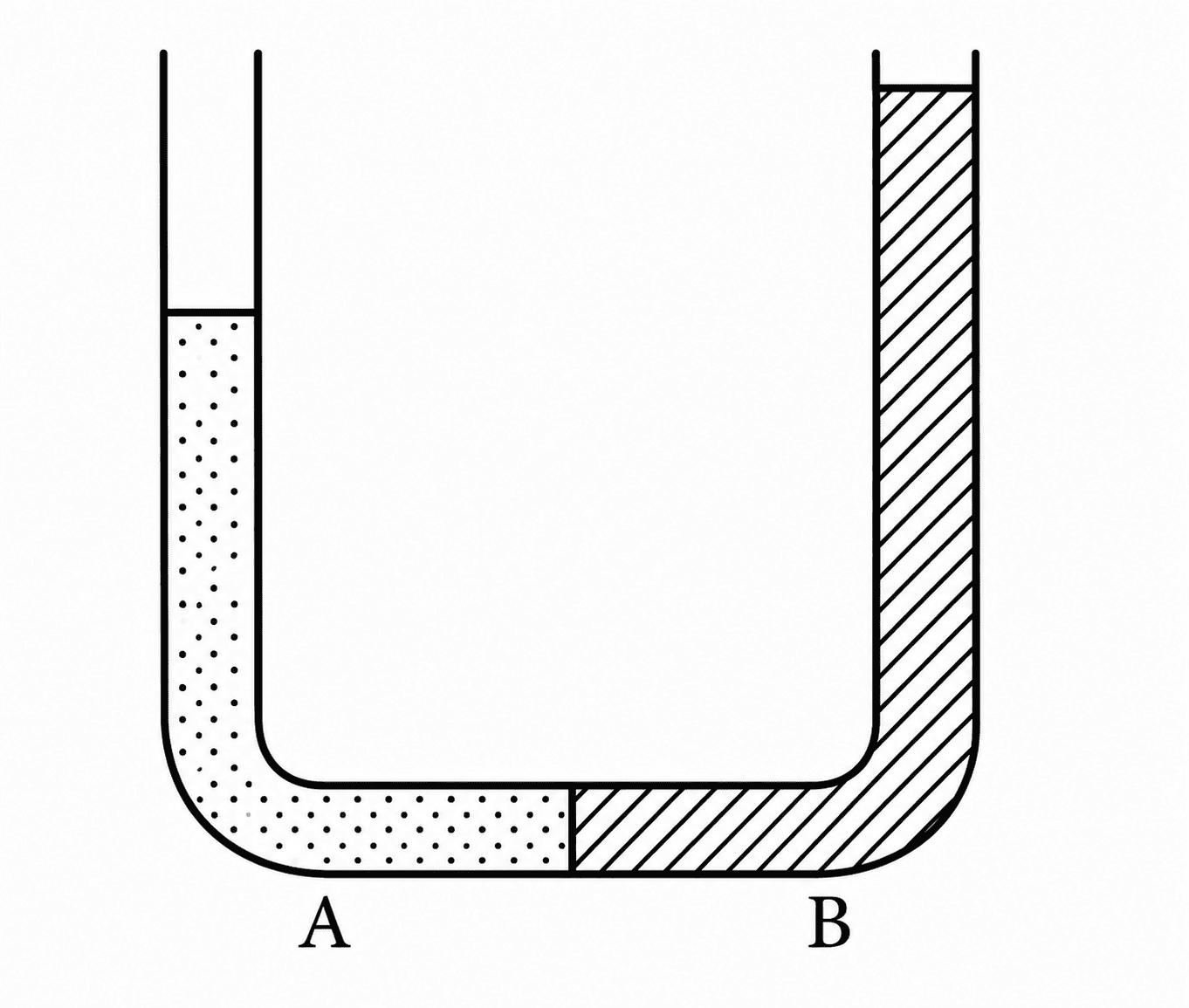
In a u-tube as shown in the fig. water and oil are in the left side and right side of the tube respectively. The heights from the bottom of water and oil columns are 15 cm and 20 cm respectively. The density of the oil is
[take π water =1000kg/m³]
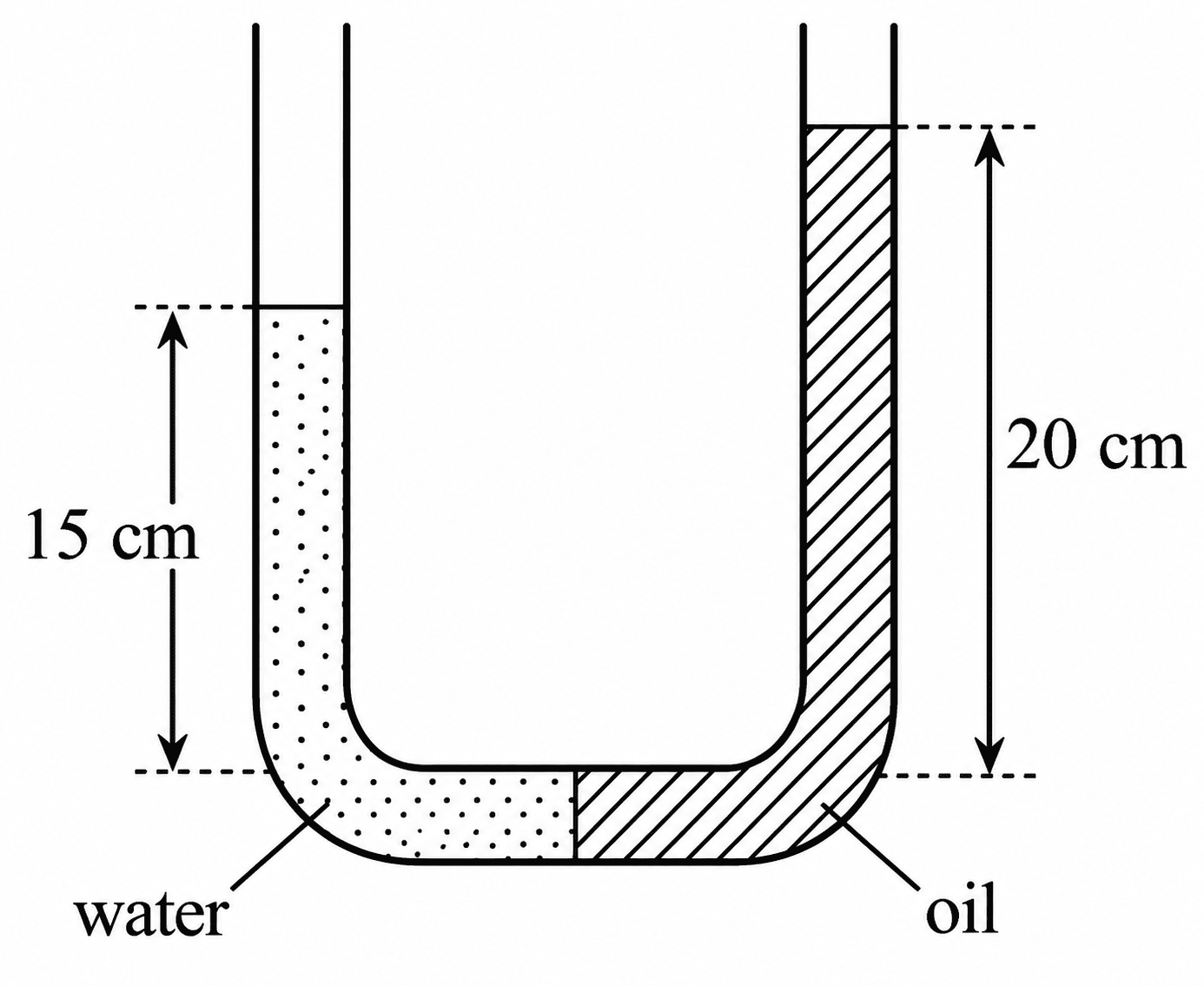
Pressure at A = Pressure at B.
Pₐ + 0.15 × 10³ × g = Pₐ + 0.20 × d₀ × g
d₀ = 0.15 × 10³ / 0.20 = 0.75 × 10³ = 750 kg/m³
Two small spherical metal balls, having equal masses, and made from materials of densities ρ₁ and ρ₂ (ρ₁ = 8ρ₂) and have radii of 1 mm and 2 mm respectively, they are made to fall vertically (from rest) in a viscous medium whose coefficient of viscosity equals η and whose density is 0.1ρ₂. The ratio of their terminal velocities would be,
Terminal velocity V_T= (ρ-σ)g
V_T₁ = 2 × (1)²/9η (ρ₁ − 0.1ρ₂)g
V_T₁ = 2 × 1/ 9η (8ρ₂ − 0.1ρ₂)g
V_T₂ = 2 × (2)²/9η (ρ₂ − 0.1ρ₂)g
∴ VT₁/VT₂ = 7.9/[4(0.9)] = 79/36
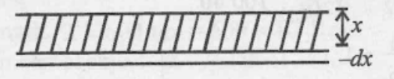
A deep rectangular pond of surface area A, containing water (density = ρ), specific heat (capacity = s), is located in a region where the outside air temperature is at a steady value of –26°C. The thickness of the frozen ice layer in this pond, at a certain instant is x. Taking the thermal conductivity of ice as K, and its specific latent heat of fusion as L, the rate of increase of the thickness of ice layer, at this instant, would be given by
We assume that at any instant thickness of ice is x.
And time taken to form additional thickness (dx) is dt.
mL = KA(26−0)dt/x
⇒ (Adx)ρL = KA(26)dt/ x
So, dx/dt= 26K/xρL
An object kept in a large room having air temperature of 25°C takes 12 minutes to cool from 80°C to 70°C. The time taken to cool for the same object from 70°C to 60°C would be nearly.
According to Newton’s law of cooling
(T₁ − T₂)/t = K [ (T₁ + T₂)/2 − T₀ ]
(80−70)/12 = K(75−25) ...(i)
(70−60)/ t′ = K(65−25) ...(ii)
⇒ t′ = 12 × 50/40 = 15 min
1 g of water, of volume 1 cm³ at 100°C, is converted into steam at same temperature under normal atmospheric pressure (>> 1 × 10⁵ Pa). The volume of steam formed equals 1671 cm³. If the specific latent heat of vaporisation of water is 2256 J/g, the change in internal energy is,
ΔQ = 2256 × 1 = 2256 J
ΔW = P[V_steam − V_water] [∵ dw = pdv]
= 1 × 10⁵ [1671 − 1] × 106 = 167 J
As ΔQ = ΔU + ΔW
2256 = ΔU + 167
ΔU = 2089 J
The value of γ = (Cₚ /Cᵥ), for hydrogen, helium and another ideal diatomic gas X (whose molecules are not rigid but have an additional vibrational mode), are respectively equal to,
For Hydrogen f = 5
For Helium f = 3
For gas X
f = 7.
γ = 1 + 2/f = 1 + 2/7=9/7
So, (7/5, 5/3, 9/7)
The distance covered by a particle undergoing SHM in one time period is (amplitude = A),
In one time period total distance travelled by the particle is 4A.
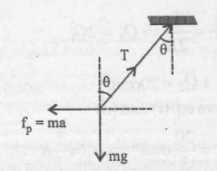
A truck is stationary and has a bob suspended by a light string, in a frame attached to the truck. The truck suddenly moves to the right with an acceleration of a. The pendulum will tilt
Tsinθ) = ma
Tcosθ = mg
tan θ=a/g
θ = tan⁻¹(a/g)
A mass falls from a height ‘h’ and its time of fall ‘t’ is recorded in terms of time period T of a simple pendulum on the surface of earth it is found that t = 2T. The entire set up is taken to the surface of another planet. Some mass is half that of earth and radius the same. Same experiment is repeated and corresponding time noted as t′ and T′. Then we can say
At surface of earth time taken in falling h distance.
t=√2h/g
and T= 2π√l/g
Given t=2T
t/T=2
For surface of other planet
g'=g/2
Time taken in falling h distance
t' = √2h/g'=√2t
and T'= 2π√l/g'= √2T
Here t'/T'= √2t/√2T=2
t'=2T
A tuning fork having frequency 800 Hz produces resonance in a resonance column tube with upper end open and lower end closed by water surface. Successive resonance are observed at lengths 9.75 cm, 31.25 cm and 52.75 cm. The speed of sound in air is,
l₁ = 9.75 cm
l₂ = 31.25 cm
l₃ = 52.75 cm
e = end correction
λ/4 + e = 9.75 cm ...(i)
3λ/4+ e = 31.25 cm ...(ii)
3λ/4- λ/4= 31.25 − 9.75
λ/2 = 21.5
λ = 43 cm
v = λ × f
= 34400 × 100 × 10⁻²
∴ v = 344 ms⁻¹
Two metal spheres, one of radius R and the other of radius 2R respectively have the same charge density. They are brought in contact and separated. What will be the new surface charge densities on them?
Q₁ = σ4πR₁ ² = σ4πR²
Q₂ = σ4π(2R)² = σ16πR²
After redistribution
Q₁/Q₂ = R/2R ⇒ Q'₂ = 2Q′₁ ........(i)
Q₁ + Q₂ = 20σπR² ....................(ii)
From eq. (i) and (ii)
Q'₁= 20/3σπR² ⇒ σ'₁ = 5/3 σ
Q'₂= 40 σπR² ⇒ σ'₂ = 5/6 σ
A sphere encloses an electric flux with magnitude ± 3 × 10⁻⁶ C. What is the total electric flux across the sphere?
Φtotal = q_enclosed/ε₀
Φtotal = 0/ε₀ = 0
Two identical capacitors C₁ and C₂ of equal capacitance are connected as shown in the circuit. Terminals a and b are on the key k are connected to charge capacitor C₁ using battery of emf V volt. Now disconnecting a and b the terminals a and b are connected. Due to this, will be the percentage loss of energy?
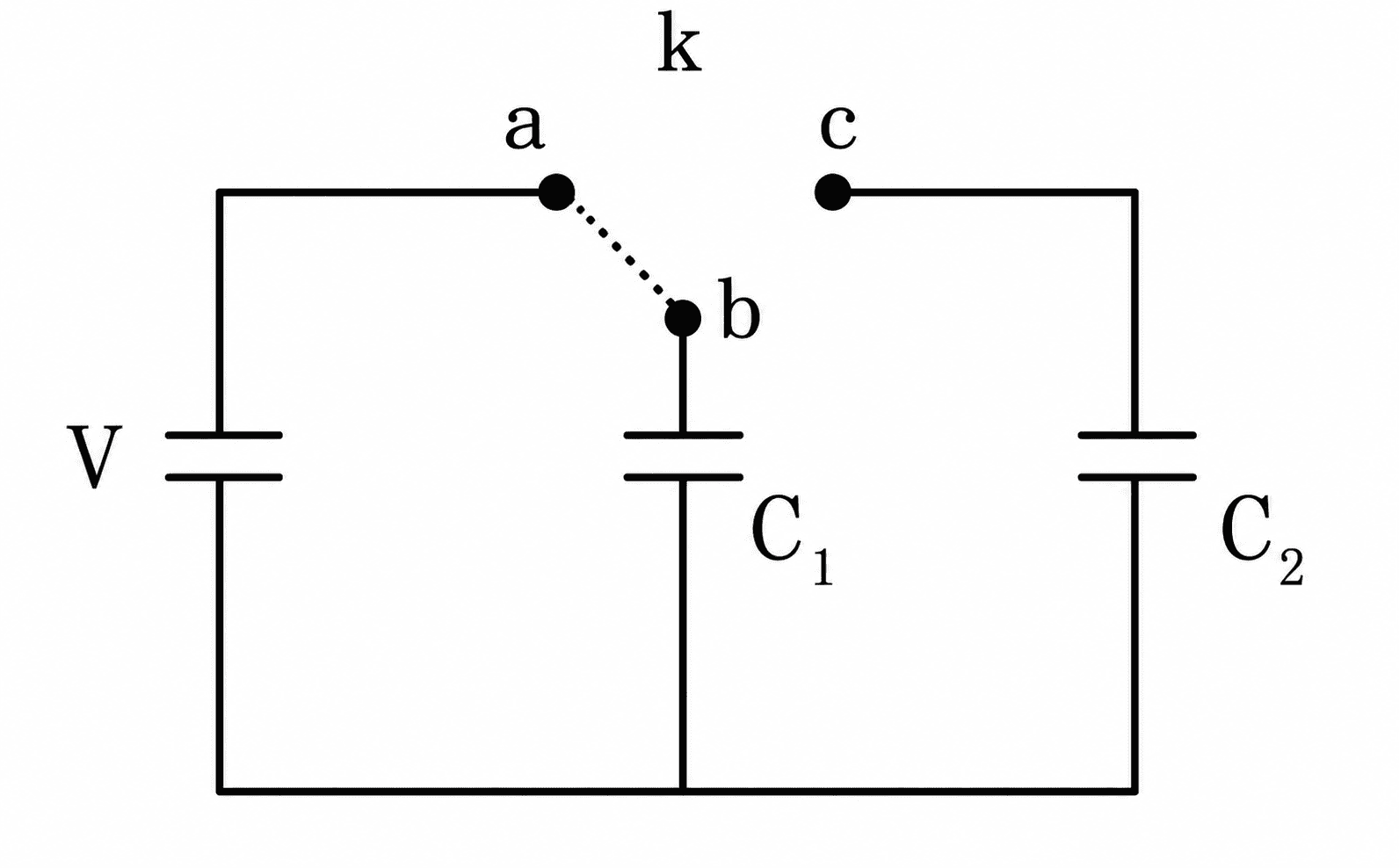
Uᵢ = 1/2 CV²
On switching key at point c
q₀ − q/C = q/C
2q = q₀
q = (q₀/2)
U_f = 1/2(q₀/2)² × 1/C + 1/2(q₀/2)² × 1/C
U_f= 1/4CV²
loss = 50%
The reading of an ideal voltmeter in the circuit shown is,
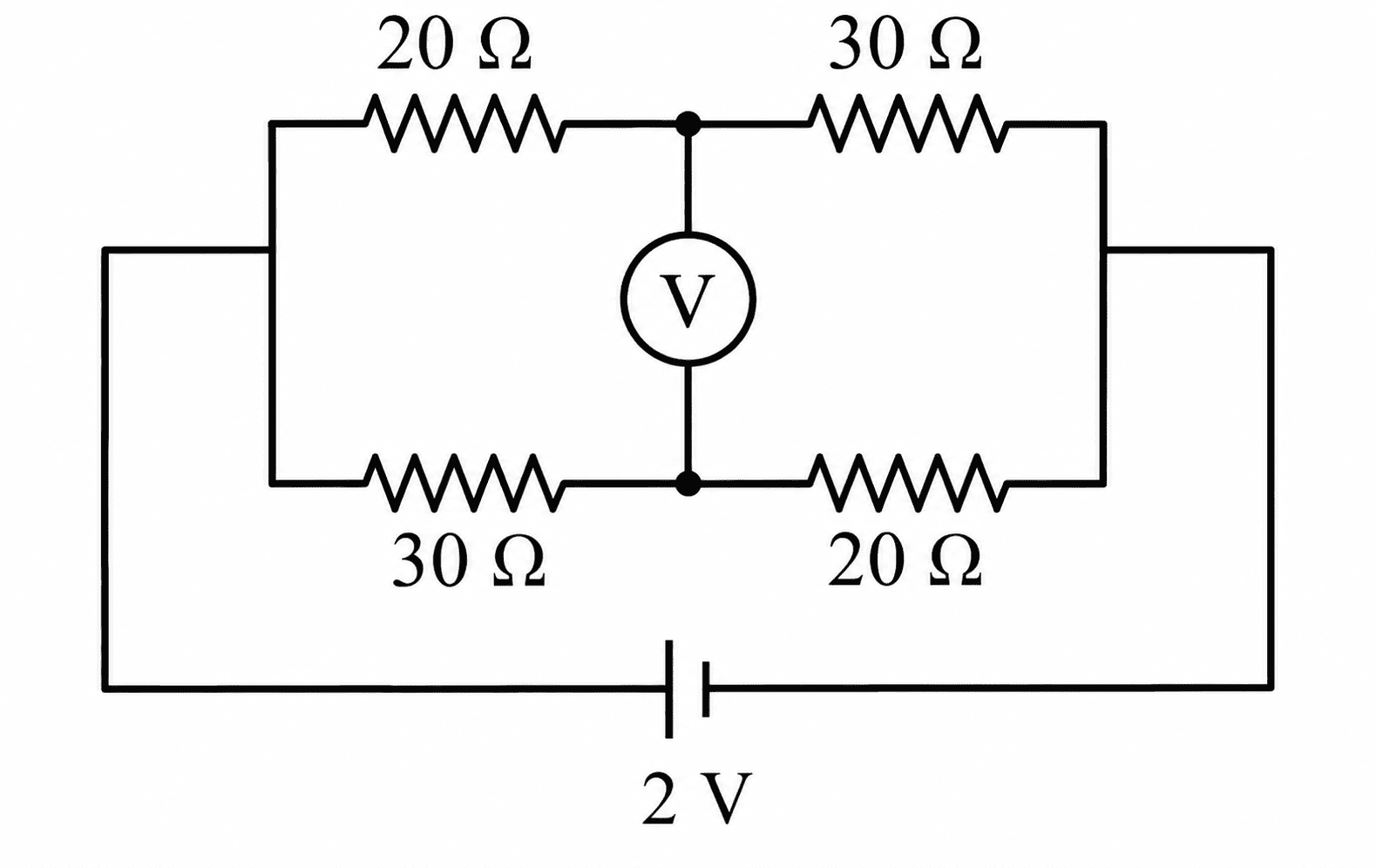
Current in first branch = 2/50 A
Current in second branch = 2/50 A
ΔV from A to P
ΔV₁ = 2- 2/50 × 20
ΔV from A to Q
ΔV₂ = 2- 2/50 × 30
Voltage difference = 0.4 V
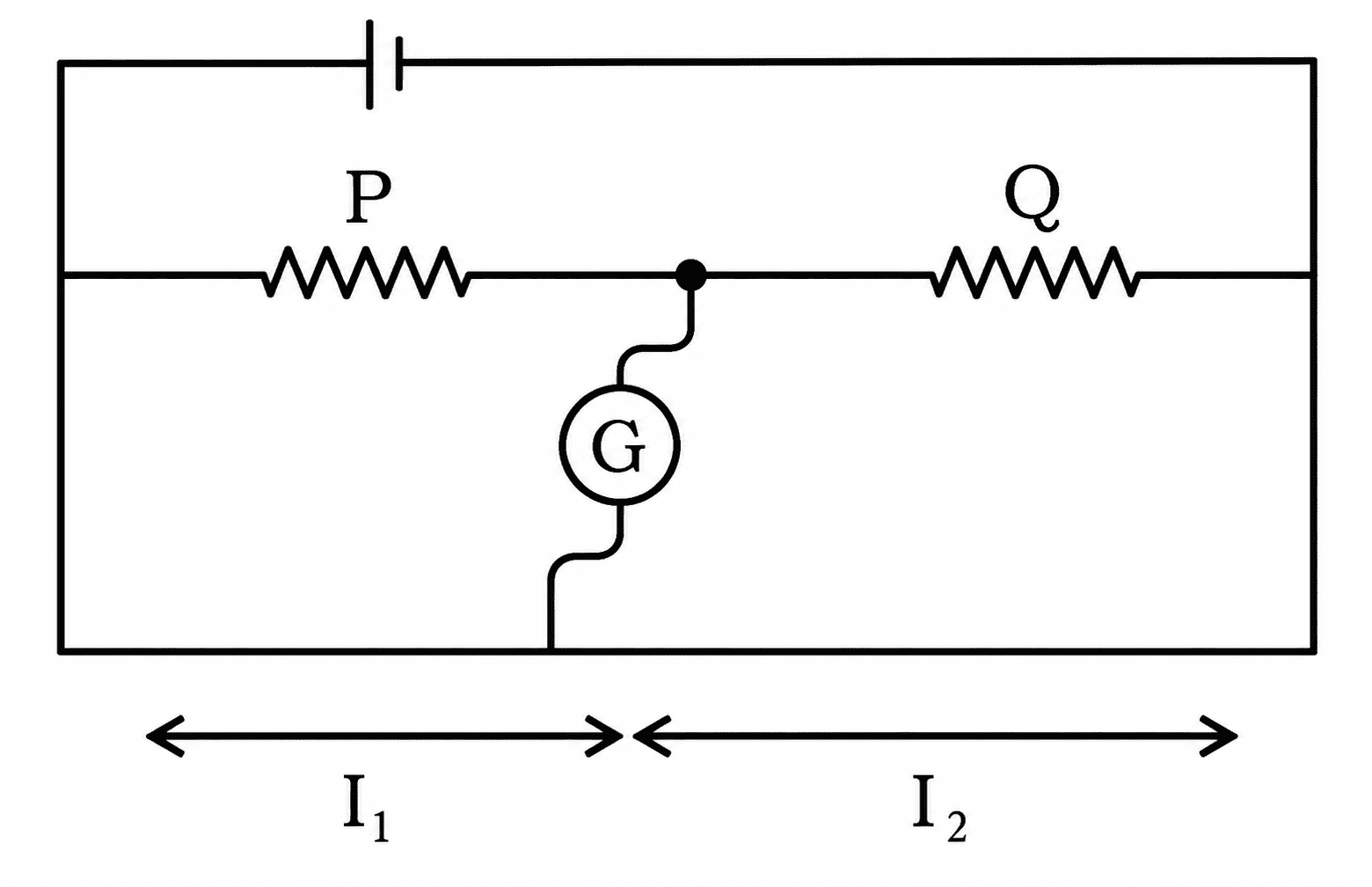
The metre bridge shown is in balance position with P/Q= l₁/l₂. If we now interchange the position of galvanometer and cell, will the bridge work? If yes, what will be balance condition?
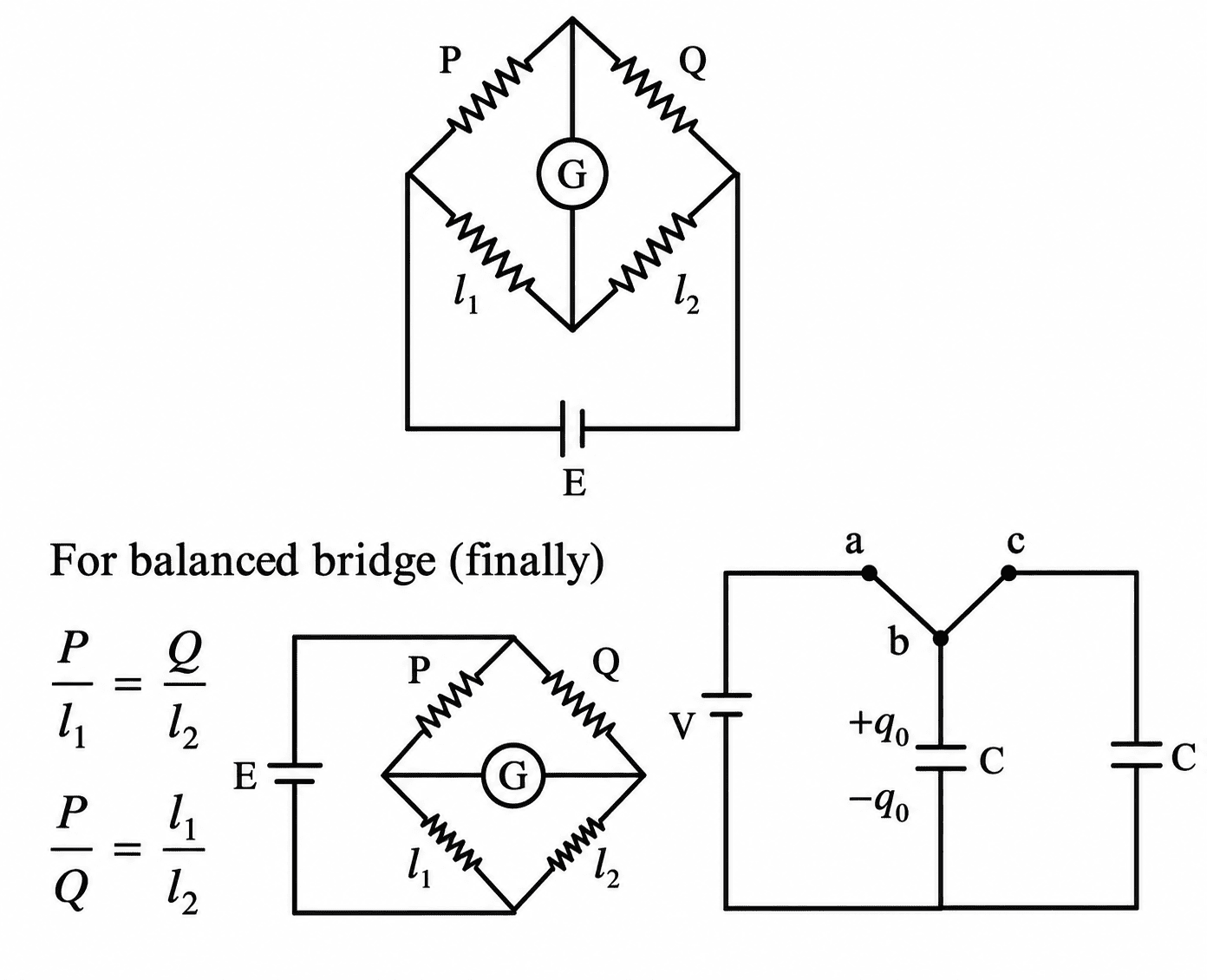
For Balanced Bridge
P/Q = l₁/l₂
On interchanging galvanometer and battery positions, balance condition remains unchanged.
Two toroids 1 and 2 have total no. of turns 200 and 100 respectively with average radii 40 cm and 20 cm respectively. If they carry same current I, the ratio of the magnetic fields along the loops is,
B=μ₀N·I/2πR
∴ B₁/B₂ = N₁R₂/N₂R₁ = 200/100 (20/40)  = 1
So, B₁/B₂ = 1
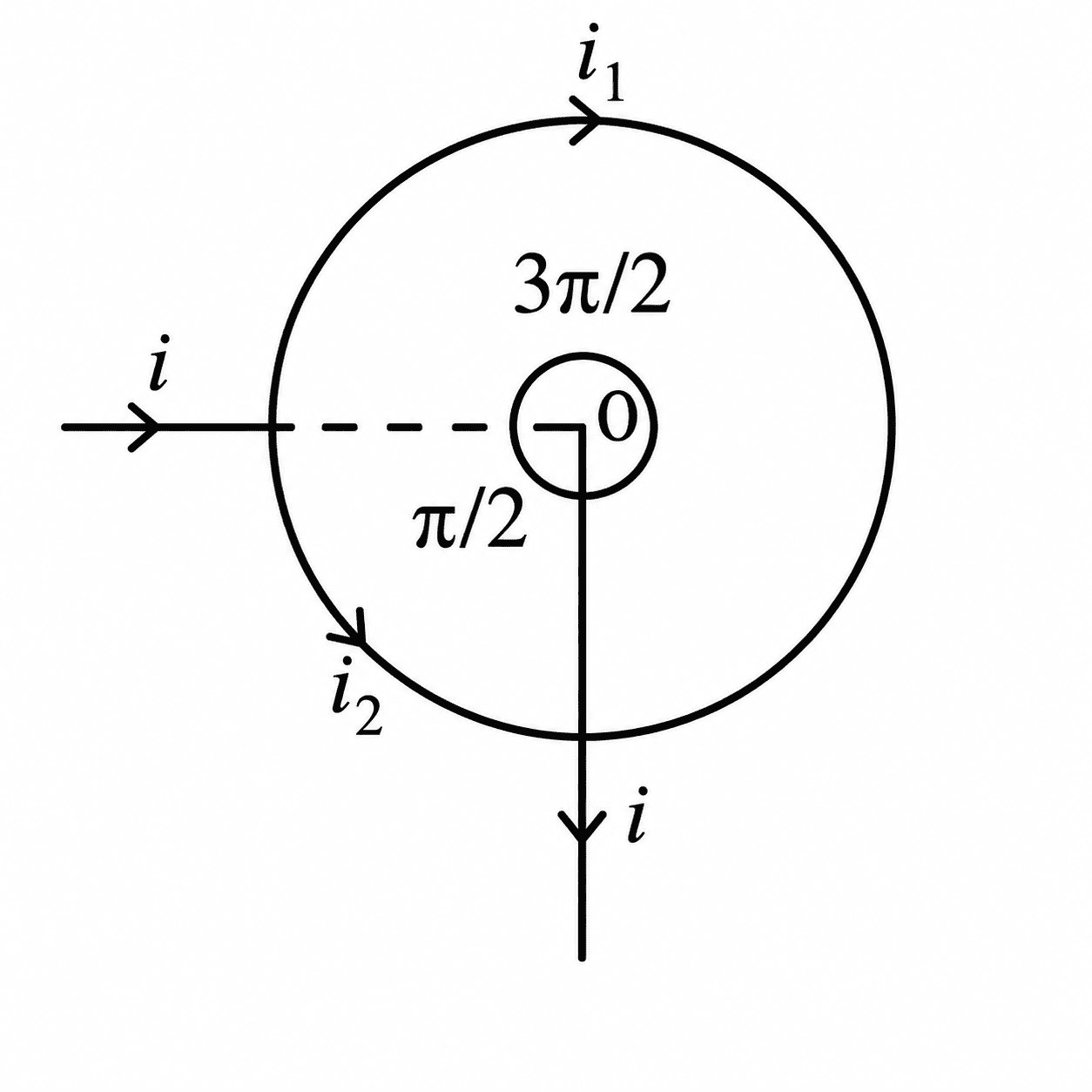
A straight conductor carrying current i splits into two parts as shown in the figure. The radius of the circular loop is R. The total magnetic field at the centre P of the loop is,
Net magnetic field at point ‘P’
Bₙₑₜ = 𝐁⃗₁ + 𝐁⃗₂
Hence, Bₙₑₜ = B₁ − B₂
i₁=i(θ/2π)⇒ B₁ = μ₀i₁/2R(2π−θ/2π)
i₂=i(2π−θ/2π) ⇒ B₂= μ₀i₂/2R(θ/2π)
Here θ = π/2
Bₙₑₜ = B₁ − B₂ = 0
The relations among the three components of earth’s magnetic field, namely horizontal component H, vertical component V and dip δ are, (B_E = total magnetic field)
H= B_Ecosδ
V=B_Esinδ
The variation of EMF with time for four types of generators are shown in the figures. Which amongst them can be called AC?
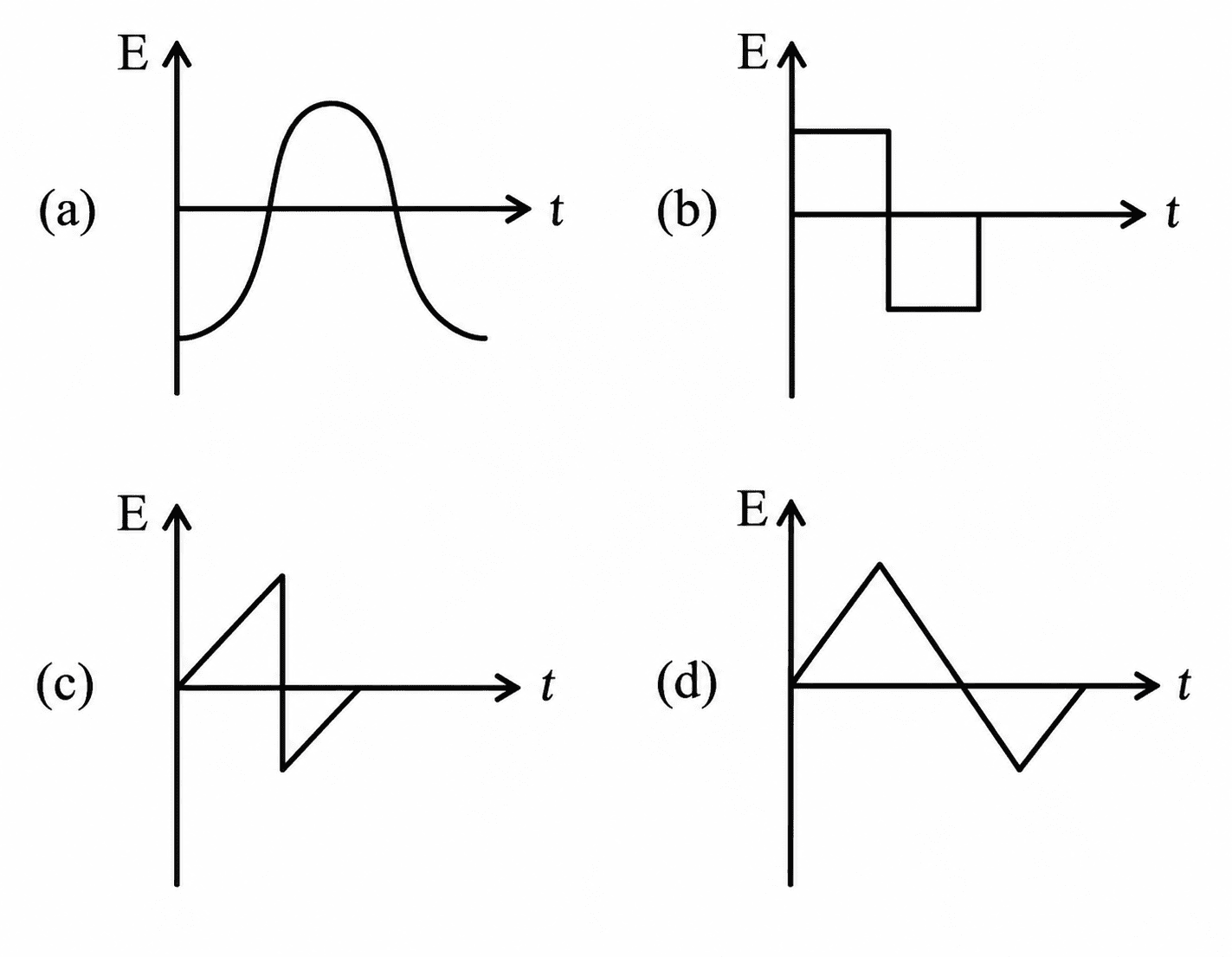
A current which changes its direction periodically is called alternating current.
A cycle wheel of radius 0.5 m is rotated with constant angular velocity of 10 rad/s in a region of magnetic field of 0.1 T which is perpendicular to the plane of the wheel. The EMF generated between its centre and rim is
Using Faraday’s law
e= Bl²ω/2 = 1/2 × 0.1 × (1/2)² × 10 = 1/8 = 0.125 V
A circuit when connected to an AC source of 12 V gives a current of 0.2 A. The same circuit when connected to a DC source of 12 V, gives a current of 0.4 A. The circuit is
I₁ = V/Z
I₁ = 12/√R² + (XL−XC)² = 0.2 A
In second case, the capacitor would provide infinite resistance but current is present in circuit, it means resistor and inductor can be present in the circuit.
Since current with AC source and DC source are different, inductor must be present with its resistance.
An equiconvex lens has power P. It is cut into two symmetrical halves by a plane containing the principal axis. The power of one part will be,
When lens is cut in two half then power of one part will be same. i.e., P, as focal length remains same.
A double convex lens has focal length 25 cm. The radius of curvature of one of the surfaces is double of the other. Find the radii if the refractive index of the material of the lens is 1.5.
1/f = (μ-1)(1/R₁-1/R₂)
1/25=(1.5-1)(1/R+1/2R) 1/25 = 0.5(3/2R)
2R = 37.5 cm R = 18.75 cm
In a Young's double slit experiment, if there is no initial phase difference between the light from the two slits, a point on the screen corresponding to the fifth minimum has path difference
Path difference for destructive interference in YDSE
⇒ ΔXₙ = (2n−1) / 2 (λ) n = 1, 2, 3.....
ΔX₅ₜₕ = 9λ/2
Angular width of the central maxima in the Fraunhofer diffraction for λ = 6000 Å is θ₀. When the same slit is illuminated by another monochromatic light, the angular width decreases by 30%. The wavelength of this light is,
Given
Wavelength, λ = 600 nm = 600 × 10⁻⁹ m
and diameter of objective, d = 2 m
Limit of resolution of telescope,
θ = 1.22λ/d = (1.22 × 600 × 10⁻⁹)/2
= 3.66 × 10⁻⁷ rad
A proton and an α-particle are accelerated from rest to the same energy. The de Broglie wavelengths λₚ and λα are in the ratio,
As λ = h/p = h/√2mK
∴ λ ∝ 1/√m (Kinetic energies are same)
λₚ/λ_∝ = √m_∝/mₚ
∴ λₚ/ λ_α = 2/1
The work function of a photosensitive material is 4.0 eV. The longest wavelength of light that can cause photon emission from the substance is (approximately)
As E = 12400/ λ
λ = 12400/4 = 3100 Å
∴ λ = 310 nm
The radius of the first permitted Bohr orbit, for the electron in a hydrogen atom equals .51 Å and its ground state energy equals –13.6 eV. If the electron in the hydrogen atom is replaced by muon (μ⁻) [charge same as electron and mass 207 mₑ], the first Bohr radius and ground state energy will be,
r ∝= 1/m
R = 0.51/207 ∴ 2.56 × 10⁻¹³ m
E ∝ m
∴ (E)_μ= 13.6 × 207 =−2.8 keV
The rate of radioactive disintegration at an instant for a radioactive sample of half life 2.2 × 10⁹ s is 10¹⁰ s⁻¹. The number of radioactive atoms in that sample at that instant is,
t₁/₂ = ln2/ λ = 0.693/ λ
λ = 0.693/2.2 × 10⁻⁹ = 3.15 × 10⁻¹⁰
R = λN
N = R/λ = 10¹⁰/3.15 × 10⁻¹⁰ = 3.17 × 10¹⁹
An LED is made from a p-n junction diode using GaAsP. The energy gap is 1.9 eV. The wavelength of the light emitted will be equal to
λ = 12400/E_g Å = 12400/1.9 = 6526 Å ≈ 654 nm
An LED is made from a p-n junction diode using GaAsP. The energy gap is 1.9 eV. The wavelength of the light emitted will be equal to
λ = 12400/E_g Å = 12400/1.9 = 6526 Å ≈ 654 nm
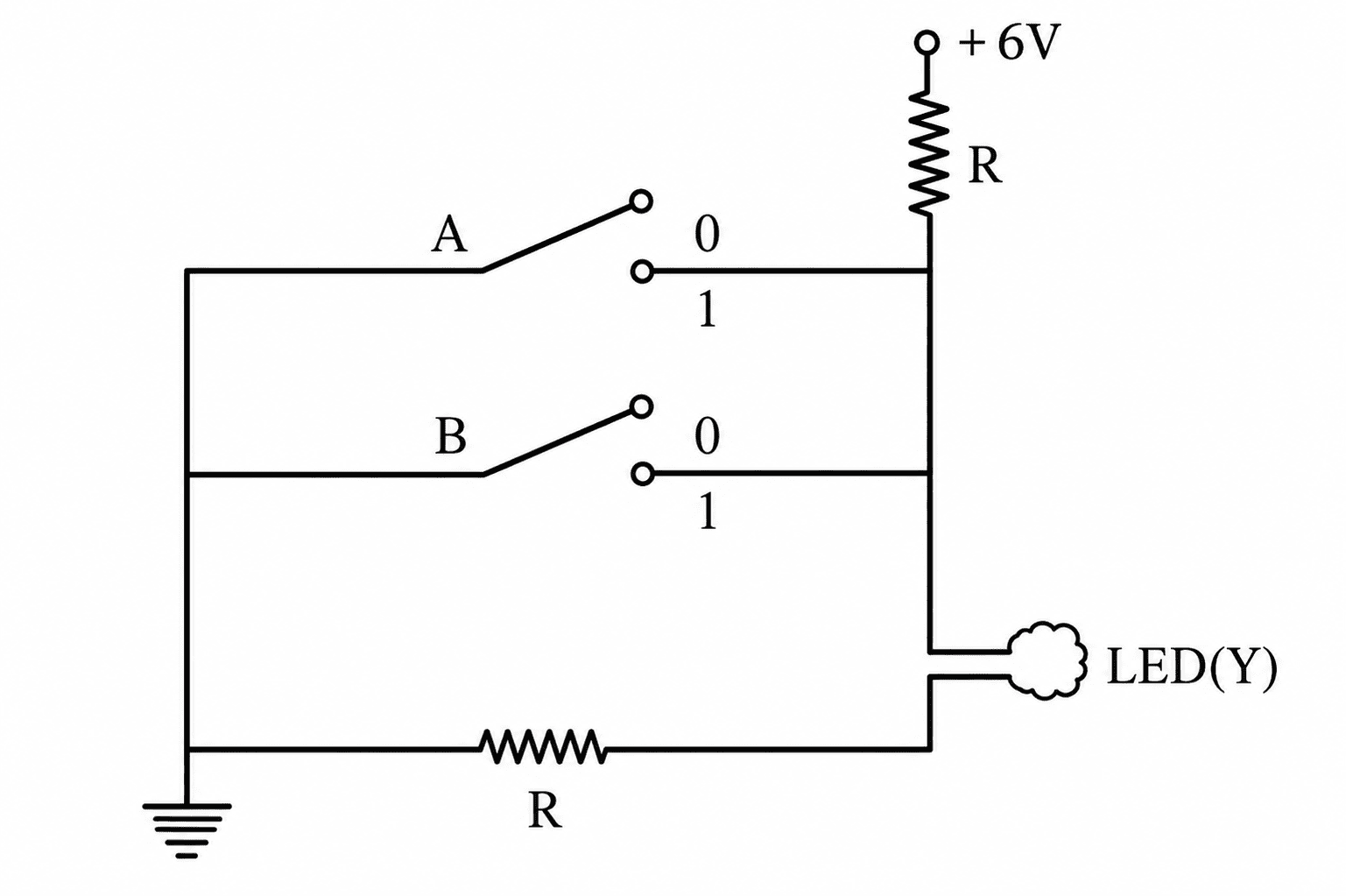
The circuit diagram shown here corresponds to the logic gate
We assume that at any instant thickness of ice is x. And time taken to form additional thickness (dx) is dt.
mL = KA(26−0)dt/x
⇒ (Adx)ρL = KA(26)dt/x
So, dx/dt = 26K/xρL

For a transparent medium of relative permeability and permittivity μᵣ and εᵣ are 1.0 and 1.44 respectively, the velocity of light in this medium would be
The speed of any electromagnetic wave (EM) like light in any medium of permeability μ and permittivity, ε is given by
v = 1/√(μ ε)
Also, μ = μ₀μᵣ and ε = ε₀εᵣ
where, μ₀ and ε₀ are permeability and permittivity in free
space and μᵣ and εᵣ are relative permeability and relative
permittivity of medium respectively.
Here, μᵣ= 1.0
εᵣ = 1.44
∴ v = 1/√(μᵣεᵣμ₀ε₀) = ε/√μᵣεᵣ
= 3 × 10⁸/√1 × 1.44
= 2.5 × 10⁸ ms⁻¹
A person standing on the floor of an elevator drops a coin. The coin reaches the floor in time t₁, if the elevator at rest and in time t₂ if the elevator is moving uniformly. The which of the following option is correct?
Let h be the height through which the coin is dropped. Then, according to the equation of motion, it is given as
h = ut +1/2 gt² ⇒ t = √2h/g [∵ u = 0]
⇒ t ∝ 1/√g
As the elevator is moving uniformly i.e., its velocity is constant, so the acceleration is zero.
∴ Relative acceleration of the lift when it is either moving upward or downward is equal to as.
g′ = g ± a = g ± 0 = g
Hence, the time for the coin to reach the floor will remain same i.e., t₁ = t₂.
In hydrogen atom, the de-Broglie wavelength of an electron in the second Bohr orbit is [Given that Bohr radius, a₀ = 52.9 pm]
nλ = 2πr
λ = 2π/n (r)
rₙ = a₀n²
r₂ = 52.9 × (2)² pm
∴ λ = 2π/2 × 52.9 × 4
λ = 211.6π pm
Orbital having 3 angular nodes and 3 total nodes is
Total number of nodes = (n − 1)
3 = n - 1 ⇒ n = 4
Number of angular nodes = 3 ⇒ f subshell
Match the oxide given in column A with its property given in column B
Which of the following options has all correct pairs?
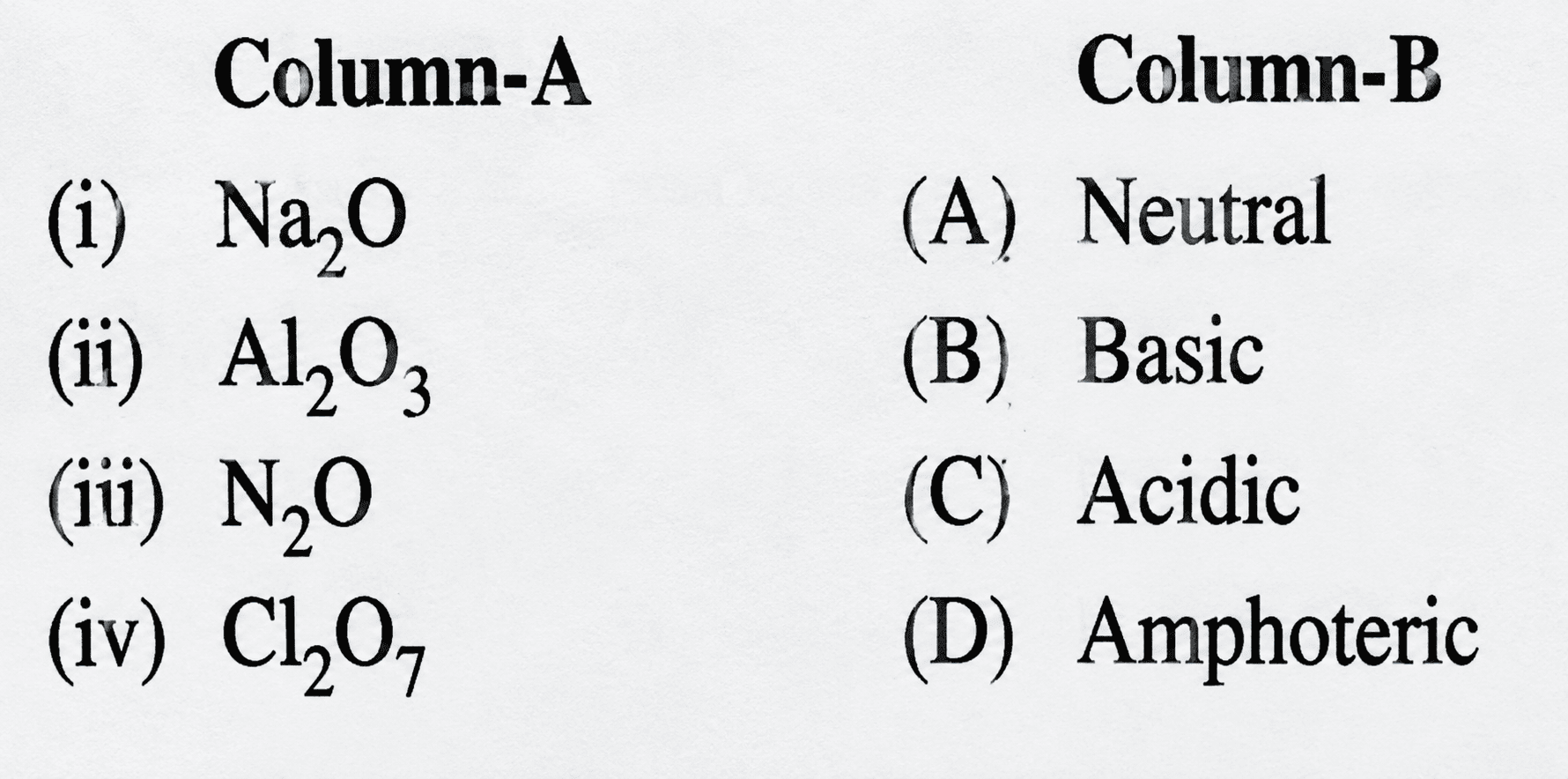
Na₂O → Basic oxide
Al₂O₃ → Amphoteric oxide
N₂O → Neutral
Cl₂O₇ → Acidic oxide
∵ Elements of group 1 and 2 form basic oxides while groups 13 and 14 elements form amphoteric oxides. Elements of group 16 and 17 form acidic oxides. Acidic character of oxides increases from left to right in the periodic table.
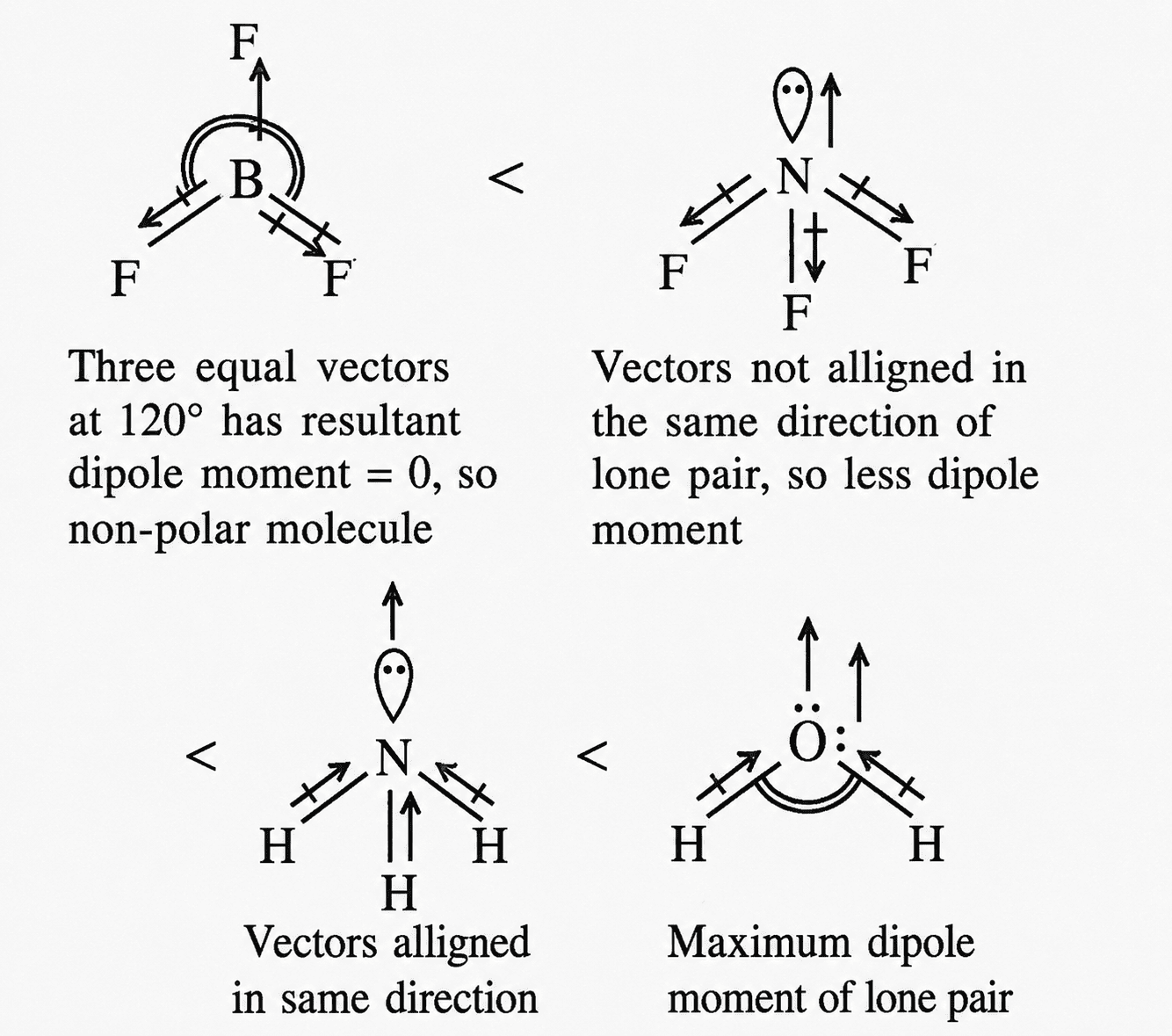
Which of the following is the correct order of dipole moment?
Dipole moment of a molecule is the vector sum of dipoles of bonds. Based on molecular geometry of molecules,
Which of the following is paramagnetic?
Molecular orbital configuration of O₂ is given as :
O₂ (16e⁻): σ1s² σ*1s² σ2s² σ*2s² σ2p² _z
π2pₓ² = π2p²ᵧ = π*2pₓ¹ = π*2p¹ᵧ
So, in O₂ molecule, there are two (2) unpaired electrons, so it is a "paramagnetic" substance in nature.
The volume occupied by 1.8 g of water vapour at 374°C and 1 bar pressure will be
[Use R = 0.083 bar L K⁻¹ mol⁻¹]
According to ideal gas equation,
PV = nRT
V = W/M (RT/P)
V = (1.8/18) × (0.083 × 647)/1 = 5.37 L
A gas at 350 K and 15 bar has molar volume 20 percent smaller than that for an ideal gas under the same conditions. The correct option about the gas and its compressibility factor (Z) is:
Compressibility factor, Z = PV/nRT
Given: At 350 K and 15 bar,
molar volume < volume of ideal gas
∴ Z < 1
Therefore, attractive forces are dominant and the gas can be compressed easily.
An ideal gas expands isothermally from 10⁻³ m³ to 10⁻² m³ at 300 K against a constant pressure of 10⁵ Nm⁻². The work done on the gas is
W = −Pₑₓₜ(V_f− Vᵢ) = −10⁵(10⁻² − 10⁻³) = −900 J
Reversible expansion of an ideal gas under isothermal and adiabatic conditions are as shown in the figure.
AB → Isothermal expansion
AC → Adiabatic expansion
Which of the following options is not correct?
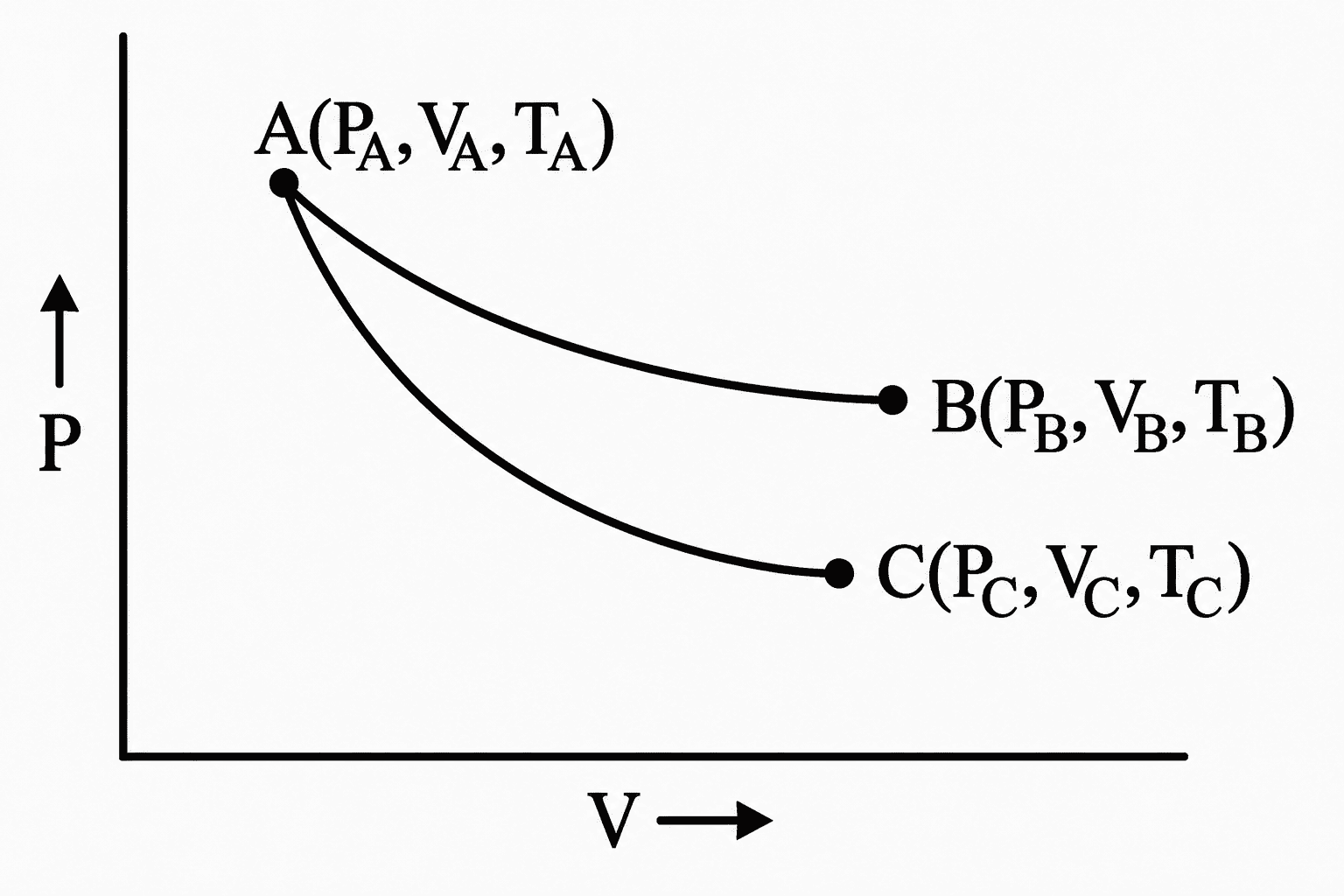
Since graph A to C represents adiabatic reversible expansion, so work is done on the expense of internal energy, therefore, there is decrease in internal energy. So temperature decreases.
i.e., T_C < T_A
Reversible expansion of an ideal gas under isothermal and adiabatic conditions are as shown in the figure.
AB → Isothermal expansion
AC → Adiabatic expansion
Which of the following options is not correct?
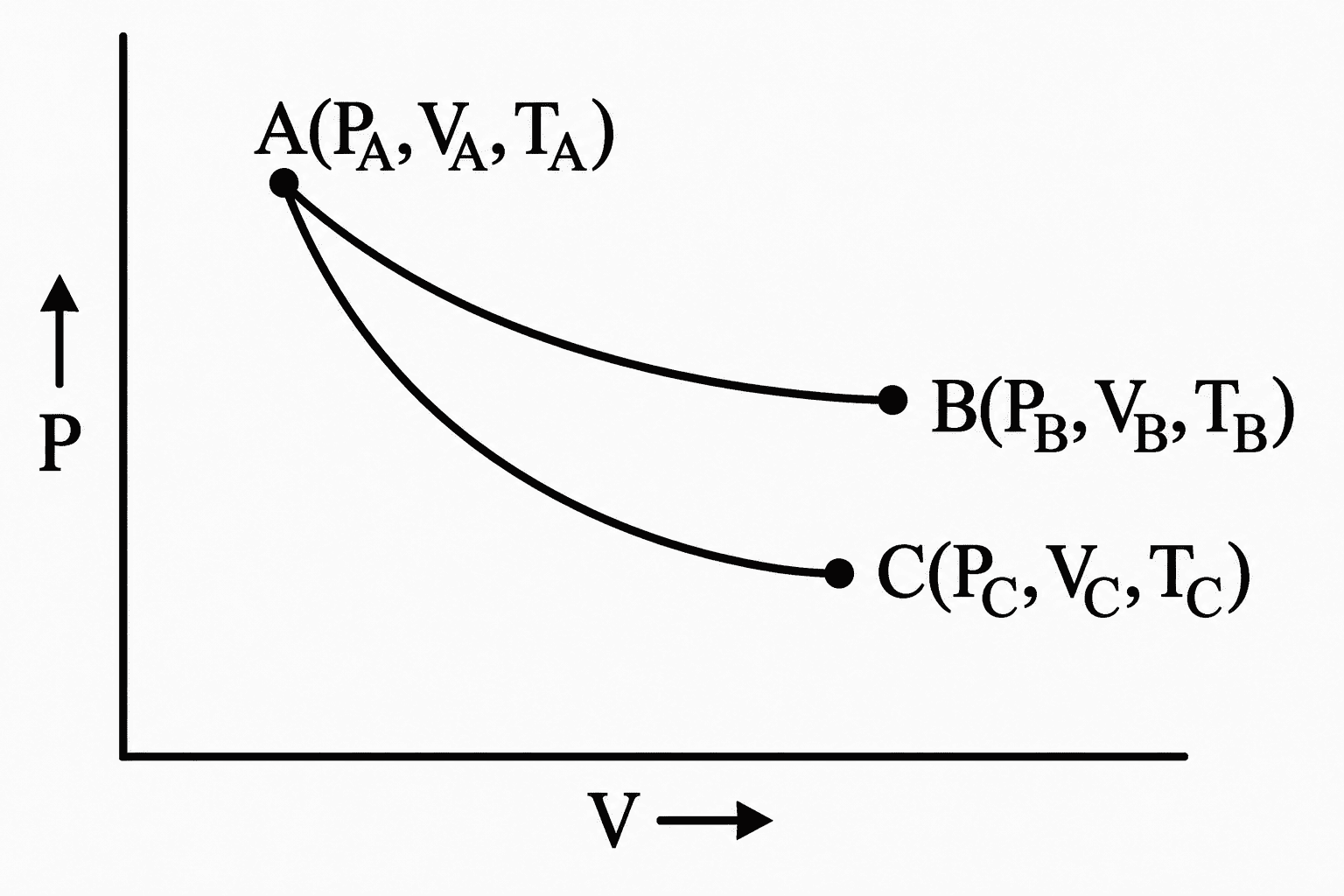
Since graph A to C represents adiabatic reversible expansion, so work is done on the expense of internal energy, therefore, there is decrease in internal energy. So temperature decreases.
i.e., T_C < T_A
The pH of 0.01 M NaOH(aq) solution will be
[OH⁻] = 0.01 M = 10⁻² M
pOH = −log[OH⁻] = −log(10⁻²) = 2
pH = 14 − pOH = 12
Which of the following cannot act both as Bronsted acid and as Bronsted base?
HCl cannot accept H⁺ therefore cannot act as Bronsted base.
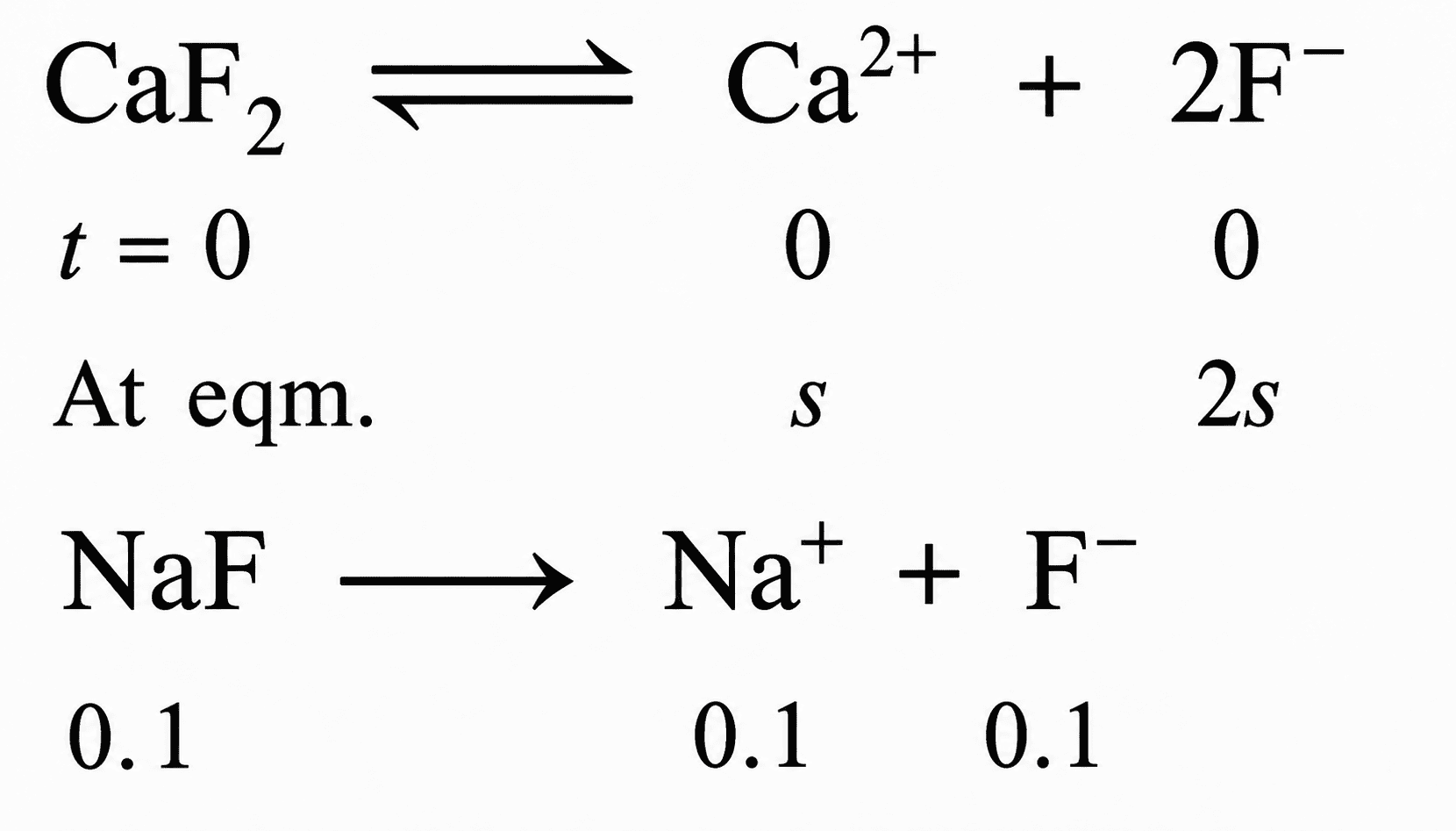
The molar solubility of CaF₂ [Kₛₚ = 5.3 × 10⁻¹¹] in 0.1 M solution of NaF will be
Due to common ion effect of NaF, solubility of CaF₂ is further suppressed. Therefore, the concentration of F⁻ will be mainly due to NaF.
Kₛₚ = [Ca²⁺][F⁻]₂
Kₛₚ = (s)(0.1 + 2s)² 0.1 + 2s ≈ 0.1,
s = Kₛₚ /(0.1)² = 5.3 × 10⁻¹¹/ (0.1)² = 5.3 × 10⁻⁹ mol L⁻¹
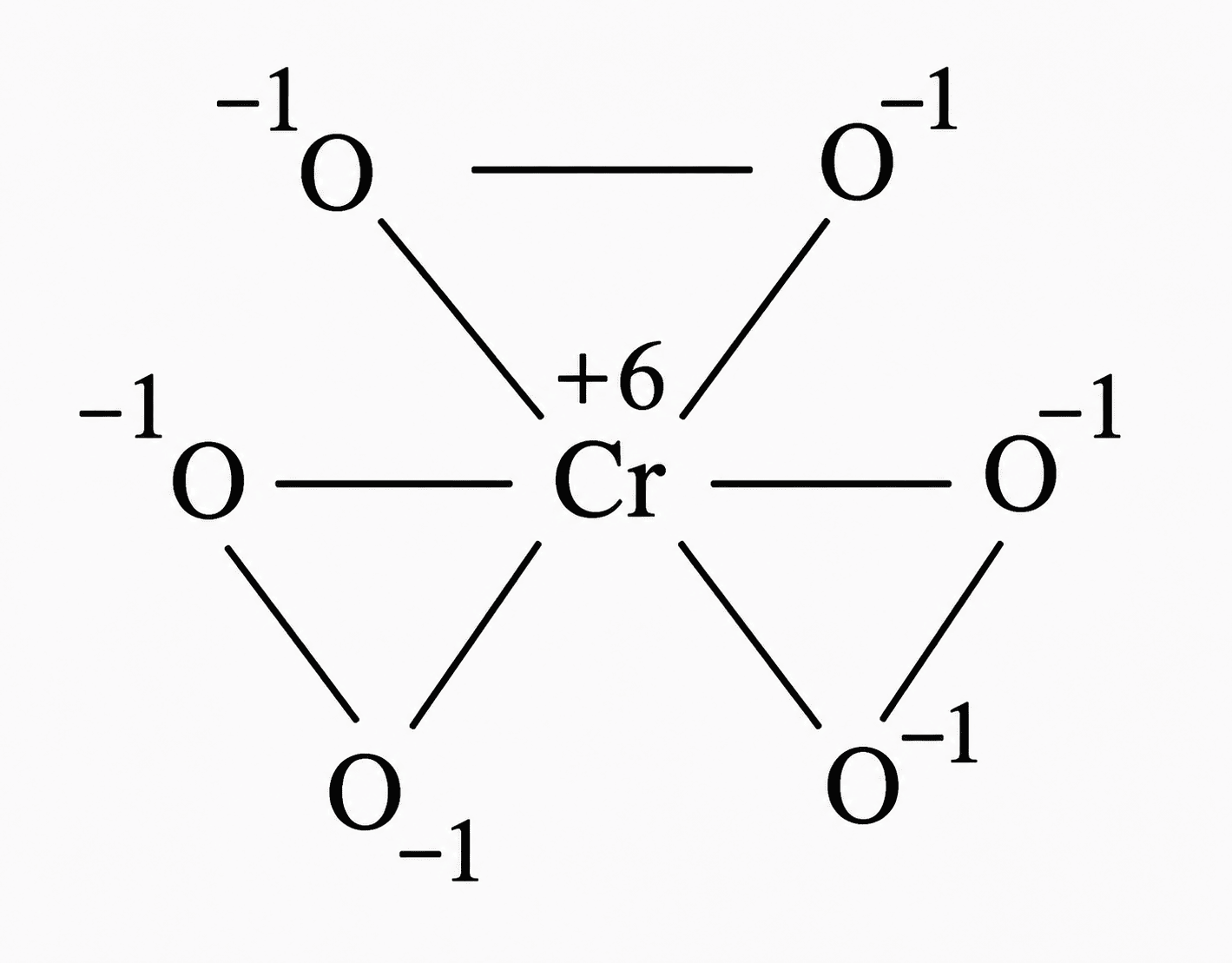
The oxidation state of Cr in CrO₆ is
+6 is the most appropriate oxidation state of Cr in CrO₆.
The standard electrode potential (E°) values of Al³⁺/Al, Ag⁺/Ag, K⁺/K and Cr³⁺/Cr are −1.66 V, 0.80 V, −2.93 V and −0.74 V, respectively. The correct decreasing order of reducing power of the metal is
Lesser the reduction potential, greater is the reducing power.
Reducing power: K > Al > Cr > Ag
The number of hydrogen bonded water molecule(s) associated with CuSO₄·5H₂O is
The actual structure of CuSO₄·5H₂O is [Cu(H₂O)₄]SO₄·H₂O, So, only one water molecule is associated with the molecule via hydrogen bond.
Which of the alkali metal chloride (MCl) forms its dihydrate salt (MCl·2H₂O) easily?
Only LiCl forms a dihydrate; other metal chlorides do not form hydrates.
Crude sodium chloride obtained by crystallisation of brine solution does not contain
Crude sodium chloride which is obtained by crystallisation of brine contains Na₂SO₄, CaSO₄, CaCl₂ and MgCl₂ are present as impurities in crude.
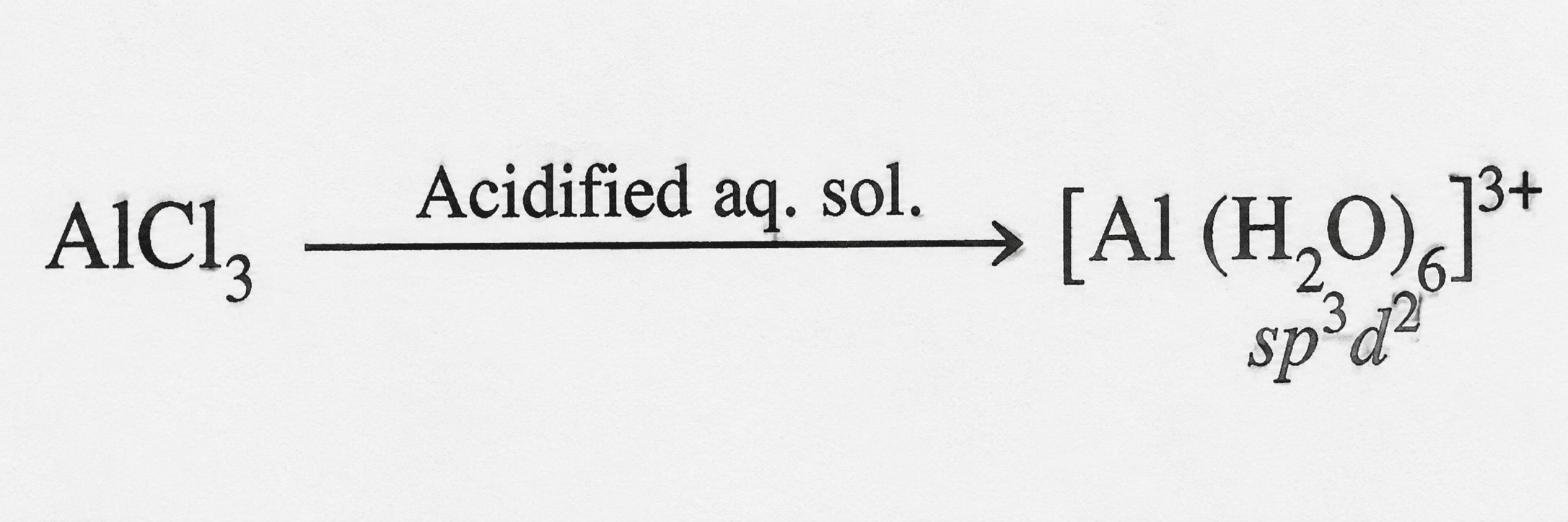
Aluminium chloride in acidified aqueous solution forms a complex 'A', in which hybridisation state of Al is 'B'. What are 'A' and 'B', respectively?
Which of the following compounds is used in cosmetic surgery?
Silicones are used in cosmetic surgery.
The most stable carbocation among the following is
-
(A)

-
(B)

-
(C)
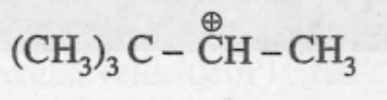
-
(D)
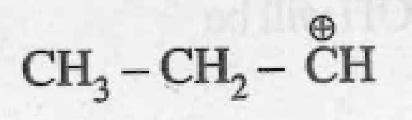
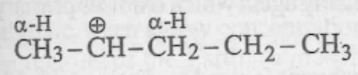
Stability of carbocation ∝ No. of α-H.
Among the given carbocations,
is the most stable carbocation (5 α-H).
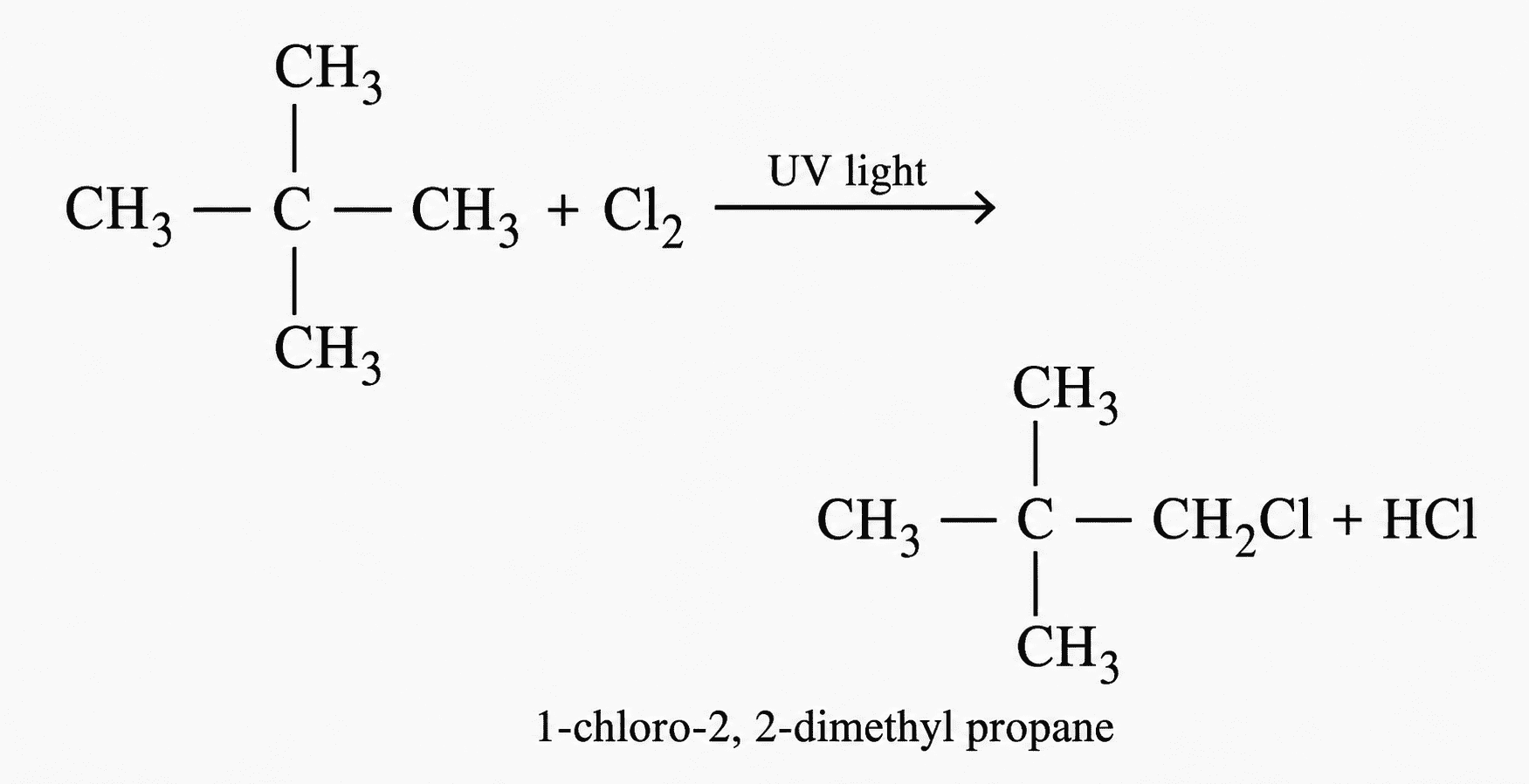
The alkane that gives only one mono-chloro product on chlorination with Cl₂ in presence of diffused sunlight is
Chlorination of neopentane with Cl₂ in presence of diffused sunlight gives only one mono-chloro compound.
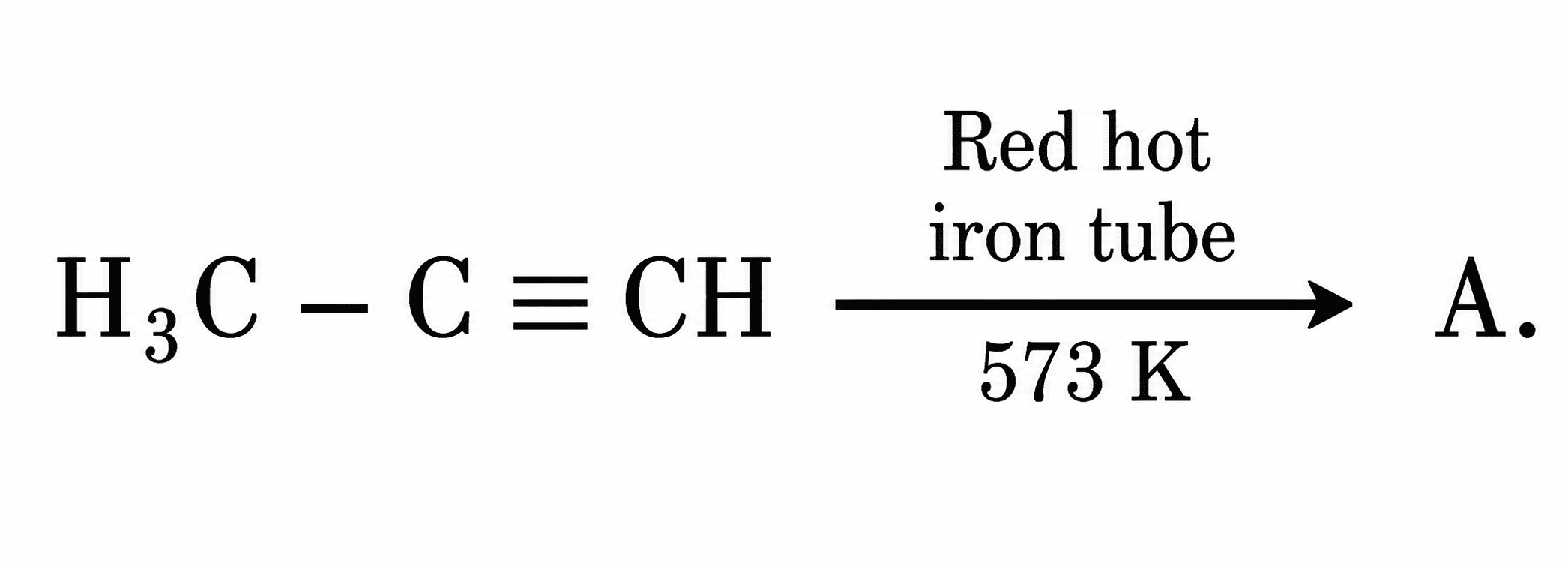
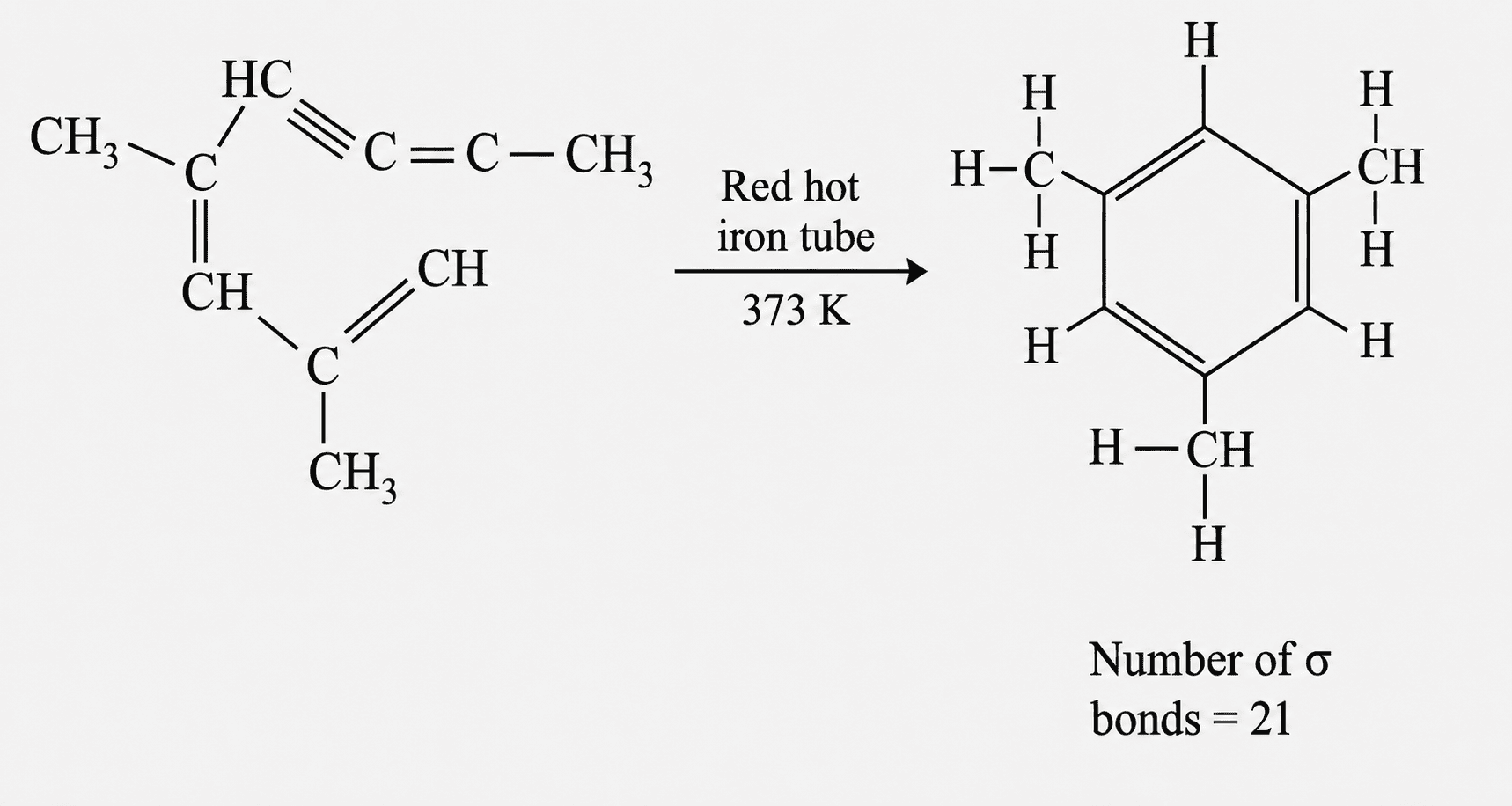
In the following reaction,
the number of sigma (σ) bonds present in the product A is
The liquefied gas that is used in dry cleaning along with a suitable detergent is
Liquefied CO₂ (carbon dioxide) with a suitable detergent is used in dry cleaning.
Formula of nickel oxide with metal deficiency defect in its crystal is Ni₀.₉₈O. The crystal contains Ni²⁺ and Ni³⁺ ions. The fraction of nickel existing as Ni²⁺ ions in the crystal is
Ni₀.₉₈O = (Ni²⁺)ₓ(Ni³⁺)₀.₉₈₋ₓ(O²⁻ )₁
Net charge = 0
[x ×(2) + [(0.98 − x) × 3] + [−2 × 1] = 0
x = 0.94
Fraction of nickel existing as
Ni²⁺ = 0.94 / 0.98 = 0.959 ≈ 0.96
The density of 2 M aqueous solution of NaOH is 1.28 g/cm³. The molality of the solution is [Given that molecular mass of NaOH = 40 g mol⁻¹]
Let volume of solution = 1 L
Moles of NaOH = 2
Mass of NaOH solution = volume × density
= 1000 × 1.28 = 1280 g
Mass of H₂O = (1280 − 2 × 40) = 1200 g = 1.2 kg
Molality(m) = Moles of NaOH / Mass of solvent (kg) = 2 / 1.2 = 1.67 m
Which of the following statements is correct regarding a solution of two components A and B exhibiting positive deviation from ideal behaviour?
In case of positive deviation from ideal behaviour A-B interactions are weaker than A–A and B–B interactions.
In water saturated air, the mole fraction of water vapour is 0.02. If the total pressure of the saturated air is 1.2 atm, the partial pressure of dry air is
Mole fraction of water vapour = 0.02
∴ Mole fraction of dry air = 1 − 0.02 = 0.98
Total pressure = 1.2 atm
Acc. to Dalton's law of partial pressure,
P_Dryair = P_Totalx_dry air = 1.2 × 0.98 = 1.176 atm
Following limiting molar conductivities are given as
λ°ₘ(H₂SO₄) = x S cm² mol⁻¹
λ°ₘ(K₂SO₄) = y S cm² mol⁻¹
λ°ₘ(CH₃COOK) = z S cm² mol⁻¹
λ°ₘ (in S cm² mol⁻¹) for CH₃COOH will be
According to Kohlrausch's law
λ°ₘ(AB)=λ°ₘ(A⁺) + λ°ₘ(B-)
So, λ°ₘ(CH₃COOH) = λ°ₘ(CH₃COO )+λ°ₘ(H⁺)
So λ°ₘ(CH₃COOH)
= λ°ₘ(CH₃COOK) + 1/2λ°ₘ(H₂SO₄) − 1/2λ°ₘ(K₂SO₄)
= z + x/2 - y/2 = z + (x-y/2)
A first order reaction has a rate constant of 2.303 × 10⁻³ s⁻¹. The time required for 40 g of this to reduce to 10 g will be
[Given that log₁₀2 = 0.3010]
For a first-order reaction,
Half-life period, t₁/₂ = 0.693 / k = 0.693 / (2.303 × 10⁻³)s⁻¹ = 300.91 s
So, 40 g requires 2 half-lives to reduce to 10 g.
∴ Time taken = 2 × 300.91
= 601.82 ≈ 602 s

For a reaction, according to Arrhenius equation, Eₐ = 0 and the rate constant at 200 K is 1.6 × 10⁶ s⁻¹. The rate constant at 400 K will be
[Given that gas constant, R = 8.314 JK⁻¹ mol⁻¹]
From Arrhenius equation,
log(k₄₀₀/k₂₀₀) = Eₐ / (2.303R)[T₂ − T₁ / T₁ T₂ ]
Since, given that Eₐ = 0,
∴ log(k₄₀₀/k₂₀₀) = 0
⇒ k₄₀₀/k₂₀₀ = 1
So, k₂₀₀=k₄₀₀
so rate constant at 400, k = 1.6 × 10⁶ s⁻¹
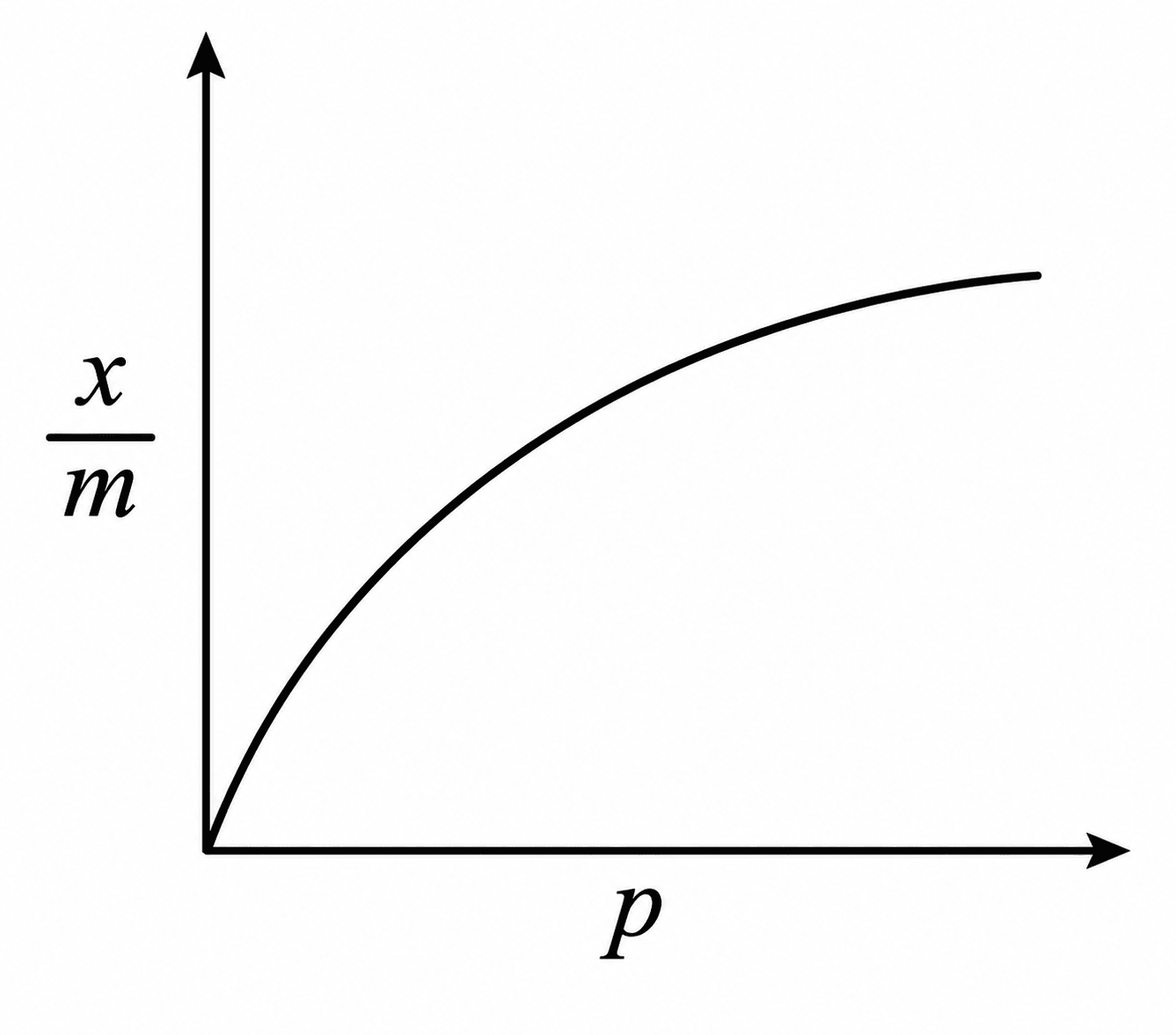
The correct option representing a Freundlich adsorption isotherm is
According to Freundlich adsorption isotherm,
x/m = kp¹ᐟⁿ ; where (n > 1)
So, x/m = kp⁰·³ as 1/n = 0.3
So, x/m = kp⁰·³ is correct
Identify the incorrect statement.
Gangue is the commercially worthless material contaminating the ore.
A compound 'X' upon reaction with H₂O produces a colourless gas 'Y' with rotten fish smell. Gas 'Y' is absorbed in a solution of CuSO₄ to give Cu₃P₂ as one of the products. Predict the compound 'X'.
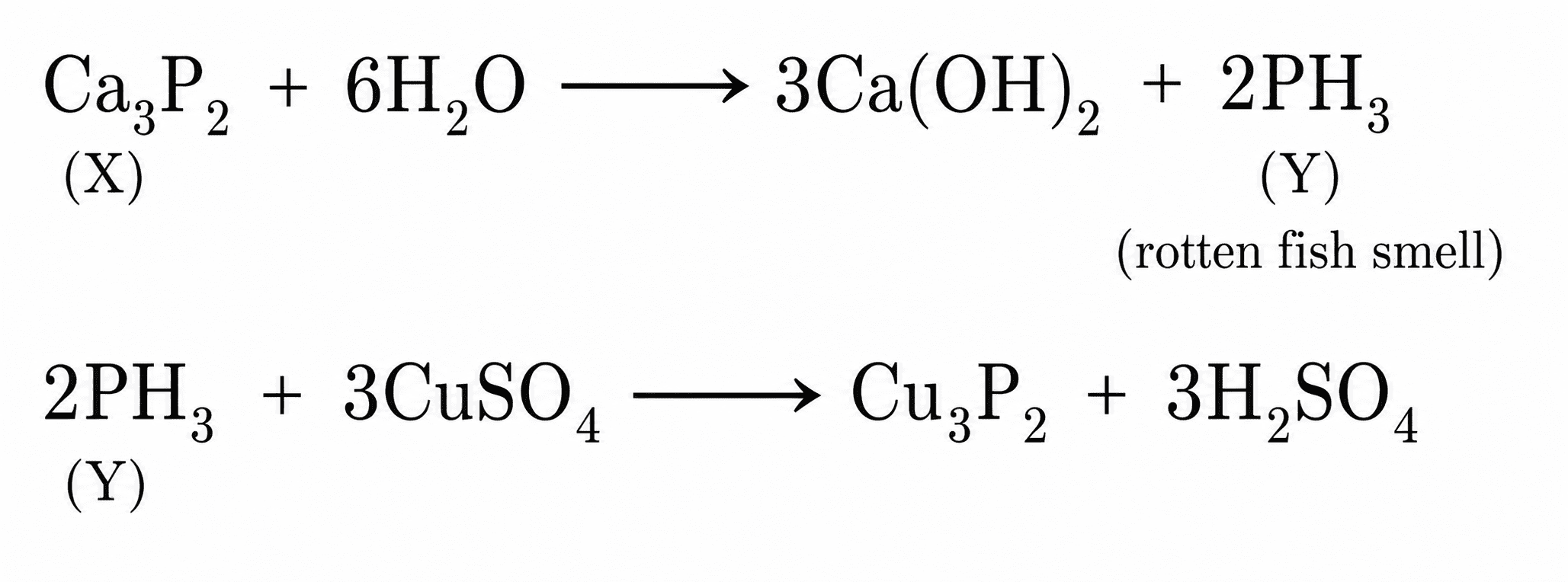
Which of the following oxoacids of phosphorus has strongest reducing property?
Hypophosphorous acid is a good reducing agent as it contains two P–H bonds.
4AgNO₃ + 2H₂O + H₃PO₂ → 4Ag + 4HNO₃ + H₃PO₄
Identify the correct formula of 'oleum' from the following.
Oleum is H₂S₂O₇.
Match the catalyst with the process.
Which of the following is the correct option?
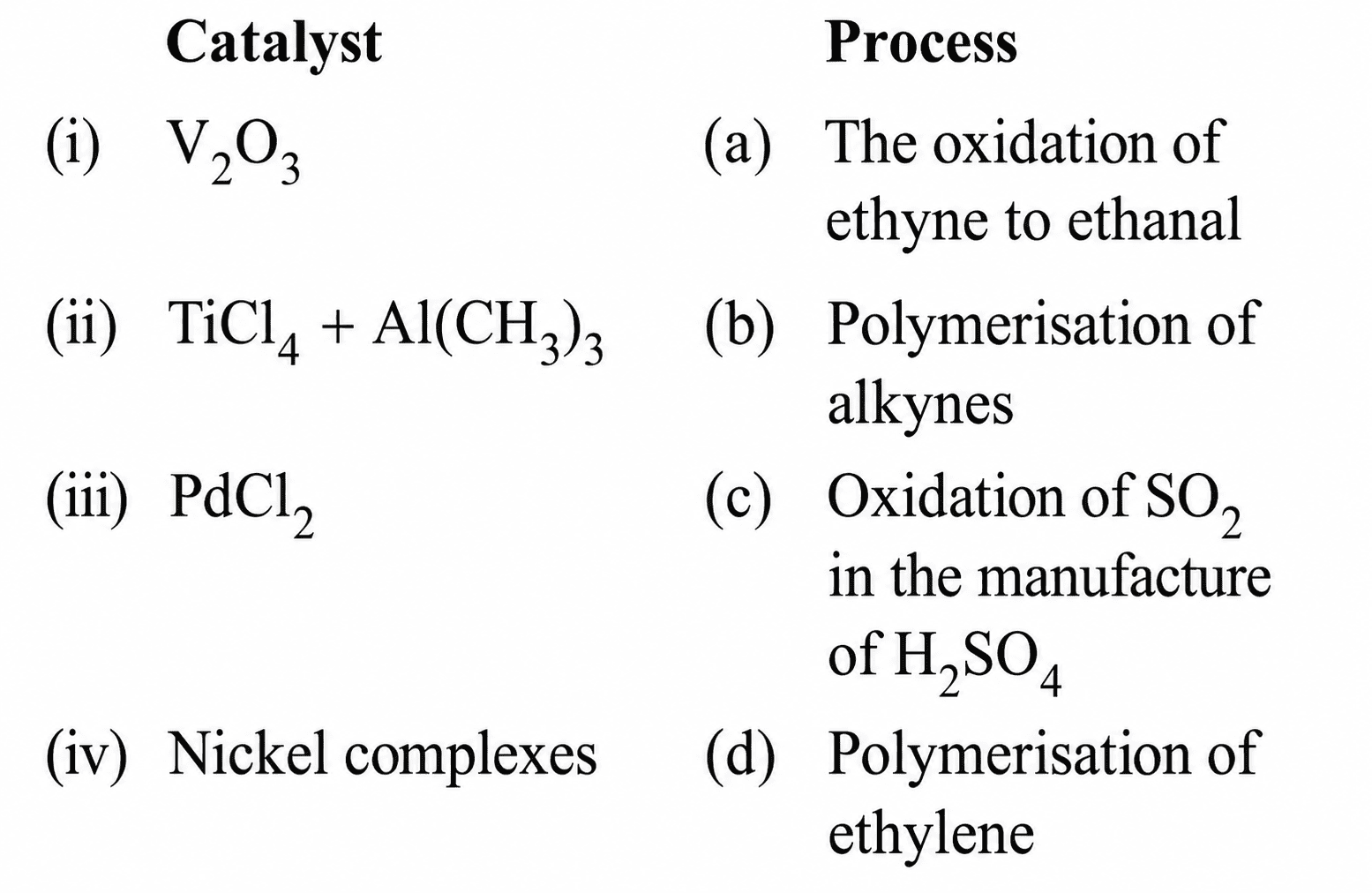
(i) V₂O₅: Used in the oxidation of SO₂ in the manufacture of H₂SO₄ by contact process.
(ii) TiCl₄ + Al(CH₃)₃: Used in the polymerisation of ethylene.
(iii) PdCl₂: Used in the oxidation of ethyne to ethanal.
(iv) Nickel complexes: Used in the polymerisation of alkynes.
The Crystal Field Stabilisation Energy (CFSE) for [CoCl₆]⁴⁻ is 18000 cm⁻¹. The CFSE for [CoCl₄]²⁻ will be
Δₜ = 4/9 Δ₀
Δₜ = 4/9× 18000 cm⁻¹ = 8000 cm⁻¹
The hydrolysis reaction that takes place at the slowest rate, among the following is
-
(A)

-
(B)

-
(C)

-
(D)
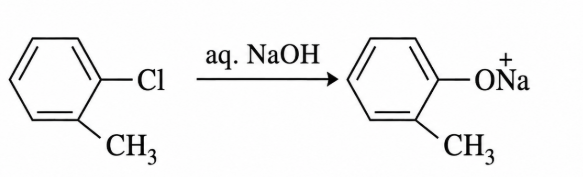
Aryl halides do not give substitution reactions due to partial double bond character between carbon and halogen.
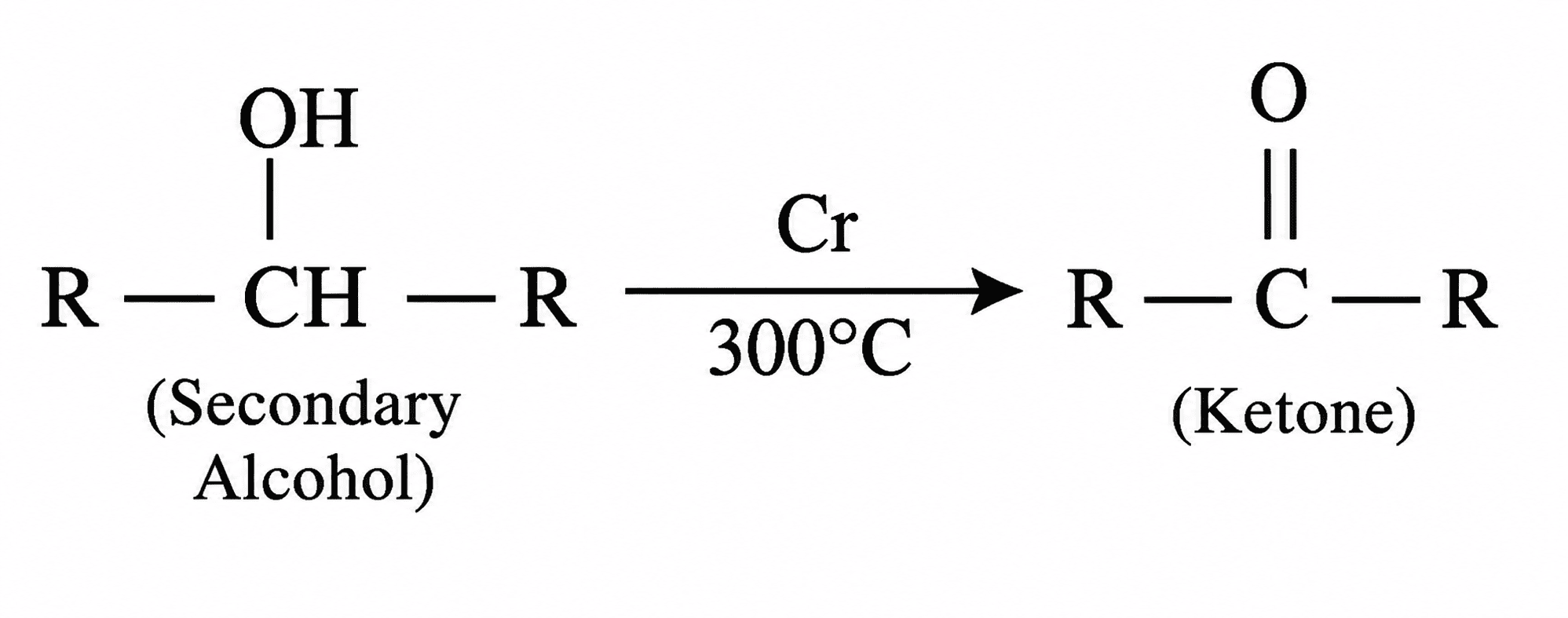
When vapour of a secondary alcohol is passed over heated copper at 573 K, the product formed is
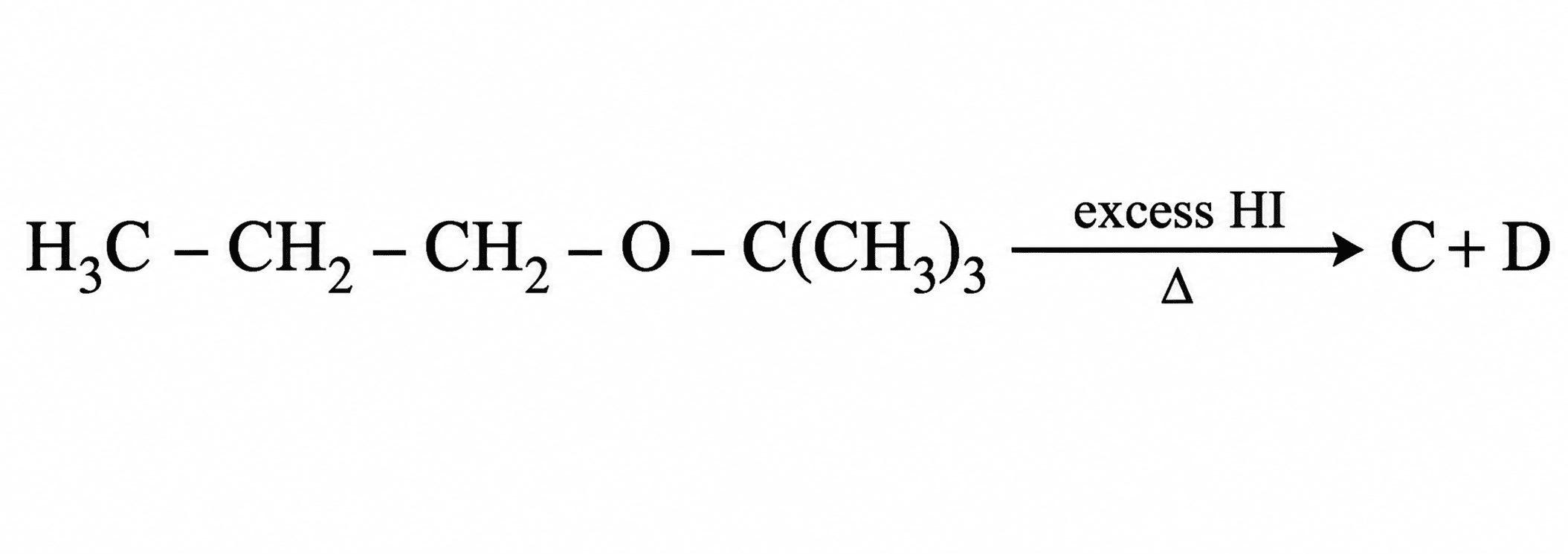
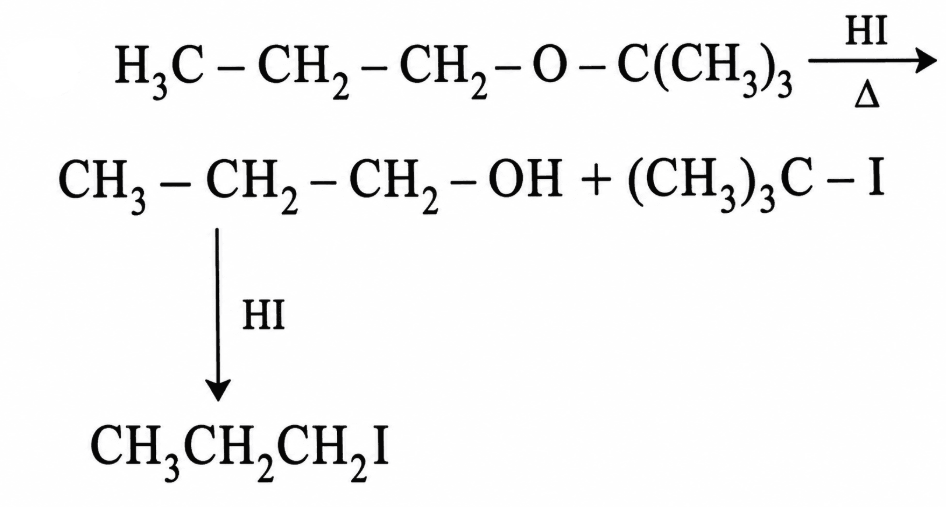
The major products C and D formed in the following reaction respectively are
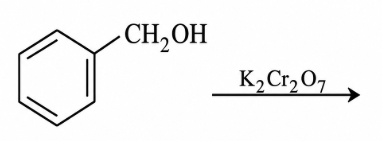
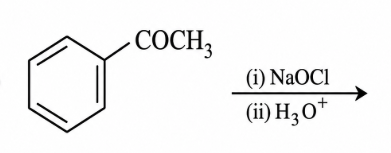
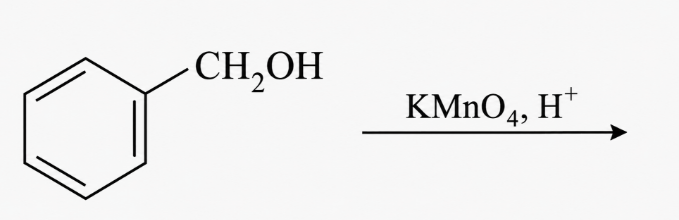
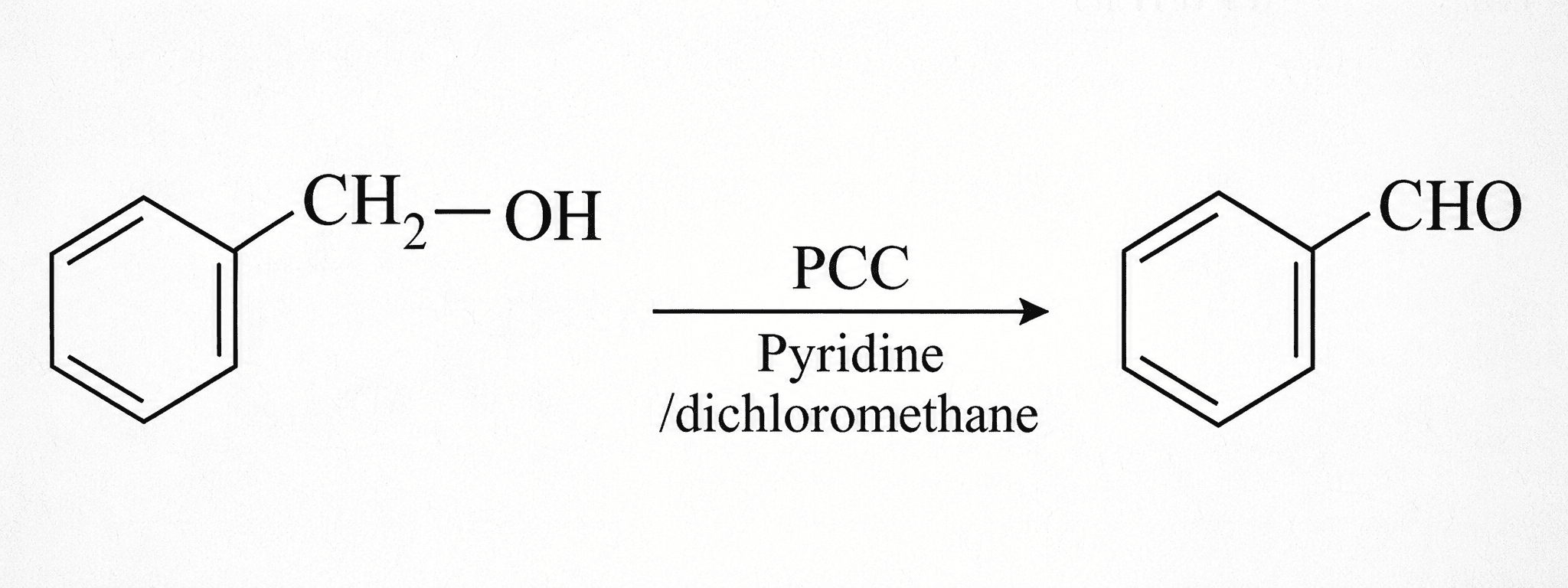
The reaction that does not give benzoic acid as the major product is
-
(A)
-
(B)
-
(C)
-
(D)
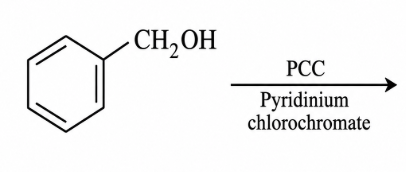
PCC s a mild oxidizing agent which oxidises primary alcohol to aldehyde.
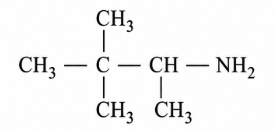
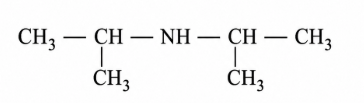
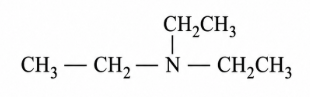
The amine that reacts with Hinsberg's reagent to give an alkali insoluble product is
-
(A)
-
(B)
-
(C)
-
(D)
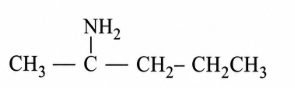
Hinsberg's reagent is used to distinguish 1°, 2° and 3° amine. Primary amines react with Hinsberg's reagent to give precipitate, which is soluble in alkali while secondary amines give a product which is insoluble in alkali. Tertiary amines do not react with Hinsberg's reagent.
Which structure(s) of proteins remain(s) intact during denaturation process?
During denaturation, primary structure of proteins remains intact while secondary and tertiary structures are destroyed.
The polymer that is used as a substitute for wool in making commercial fibres is
Polyacrylonitrile is used as a substitute for wool in making commercial fibre as Orlon or acrilan.
The artificial sweetener stable at cooking temperature and does not provide calories is
Sucralose is trichloro derivative of sucrose. It is stable at cooking temperature. It does not provide calories.
A selectable marker is used to :
Selectable marker is a gene introduced into a cell, especially a bacterium or to cells in culture that confers a suitable property for artificial selection.
Selectable markers help in identification and elimination of non-transformants whilst permitting selective growth of transformants.
Western Ghats have a large number of plant and animal species that are not found anywhere else. Which of the following terms will you use to notify such species?
The Western Ghats are a chain of hills that run along the western edge of peninsular India. These regions have moist deciduous forest and rain forest. The region might host huge diversity as well as high levels of endemism. Nearly 77% of the amphibians and 62% of the reptile species found nowhere else.
Endemic species are those species that are confined to a particular region only and not found anywhere else.
Which of the following statements about ozone is correct?
Ozone is an irritating, pale blue gas that is explosive and toxic, even at low concentrations. It is mainly found in two regions of the Earth's atmosphere. About 90% of ozone resides in a layer (called stratosphere) that begins between 6 and 10 miles (10 and 17 kilometres) above the Earth's surface and extends up to about 30 miles (50 kilometres).
The ozone found in this region is commonly known as the ozone layer. The remaining ozone is in the lower region of the atmosphere, which is commonly called the troposphere. Ozone found in stratosphere are good ozone and protects us by absorbing solar ultraviolet radiation, which otherwise could cause severe damage to living organisms on the Earth's surface. Whereas ozone found in troposphere is a bad ozone and considered as a pollutant.
Exploration of molecular, genetic and species level diversity for novel products of economic importance is known as :
Bioprospecting refers to exploring molecular, genetic and species level diversity for process of discovery and commercialisation of new products of economic importance.
Which of the following is an innovative remedy for plastic waste?
Polyblend is fine powder of recycled plastic waste. It was produced by plastic manufacturers in order to recycle plastic waste. When blended with bitumen, Polyblend can be used to lay roads which have increased road life.
Between which among the following, the relationship is not an example of commensalism?
Female wasp and fig species is not an example of commensalism. It shows mutualism in which each organism benefits from the interaction in some way. while Orchid on trees and grazing cattle with cattle egret show commensalism. Commensalism is an association between two organisms in which one benefits and the other derives neither benefit nor harm.
If an agricultural field is liberally irrigated for a prolonged period of time, it is likely to face a problem of :
Irrigation of agricultural field for a prolonged time without proper drainage leads to waterlogging in the soil. Waterlogging draws salt to the surface of the soil and causes salinity.
Which of the following statements about methanogens is not correct?
Methanogens are anaerobic unicellular organisms that release methane as a waste product of cellular metabolism.
In mung bean, resistance to yellow mosaic virus and powdery mildew were brought about by :
Mutation is the process by which genetic variations are created through changes in the base sequence within genes resulting in the creation of a new character or trait not found in the parental type. It is possible to induce mutations artificially through use of chemicals or radiations (like gamma radiations), and selecting and using the plants that have the desirable character as a source in breeding, this process is called mutation breeding.
This procedure has helped mung bean production by providing resistance against yellow mosaic virus and powdery mildew (fungal disease).
Coca alkaloid or cocaine is obtained from :
Coca alkaloids or cocaine is obtained from Erythroxylum coca, native to South America.
Among the following pairs of microbes, which pair has both the microbes that can be used as biofertilisers?
Biofertilisers are organisms that enrich the nutrient quality of the soil. The main sources of biofertilisers are bacteria, fungi and cyanobacteria. Cyanobacteria like Anabaena, Nostoc etc. and Rhizobium (which form root nodules in leguminous plants) are able to fix atmospheric nitrogen into organic forms which is used by the plant as nutrients.
Rhizobium and Aspergillus are used in production of other compounds of human benefit.
Given below are four statements pertaining to separation of DNA fragments using Gel electrophoresis. Identify the correct statement.
(A) DNA is negatively charged molecule and so it is loaded on gel towards the Anode terminal.
(B) DNA fragments travel along the surface of the gel whose concentration does not affect movement of DNA.
(C) Smaller the size of DNA fragment, larger is the distance it travels through it.
(D) Pure DNA can be visualised directly by exposing to UV radiation.
Choose correct answer from the options given below :
● DNA fragments are negatively charged molecules. They are separated by forcing them to move towards positive electrode, i.e. anode.
● Increasing the concentration of a gel reduces the migration speed of DNA.
● DNA fragment can not visualised directly but can be visualised under UV light after staining with ethidium bromide.
An enzyme catalysing the removal of nucleotides from ends of DNA is :
Restriction enzymes belong to a larger class of enzymes called nucleases. Nucleases are of two different kinds: exonucleases (which remove nucleotides from the end of a DNA molecule) and endonucleases (which break internal phosphodiester bonds at palindromic sites that are highly specific).
DNA ligase helps in ligating/joining DNA fragments. Proteases is an enzyme which breaks down proteins and peptides
In RNAi, the genes are silenced using :
RNAi (RNA interference) is triggered by double stranded RNA in a wide variety of organisms including animals, plants and fungi. It involves silencing of a specific mRNA and therefore the expression of a gene by formation of a dsRNA molecule. The dsRNA is formed by binding of a complementary RNA (antisense RNA) molecule to original mRNA thereby preventing translation of the original mRNA.
Which is the most common type of embryo sac in angiosperms?
Monosporic embryo sac (also known as Polygonum type embryo sac) is the most common type of embryo sac in flowering plants which develops after one meiosis and three sequential mitosis in megaspore mother cell.
In most angiosperms, the megaspore mother cell divides by meiosis to form four haploid megaspores arranged in a linear fashion. The three haploid megaspores nearest towards the micropyle degenerate, while one remains functional which develops into the female gametophyte.
From the following, identify the correct combination of salient features of Genetic Code.
Genetic code is the sequence of nucleotides in deoxyribonucleic acid (DNA) and ribonucleic acid (RNA) that determines the amino acid sequence of proteins. Genetic code is universal, unambiguous, non-overlapping and degenerate in nature.
Which scientist experimentally proved that DNA is the sole genetic material in bacteriophage?
Alfred Hershey and Martha Chase studied bacteriophages, or viruses that attack bacteria. In 1952, they conducted a series of experiments to prove that DNA is the genetic material. They labelled the protein of bacteriophages with radioactive sulphur and their DNA with radioactive phosphorus. The bacteriophages were allowed to infect bacteria. The protein coat is left behind while viral DNA enters a bacterium.
In the process of transcription in Eukaryotes, the RNA polymerase II transcribes :
During transcription in eukaryotes, RNA polymerase II transcribes 5.8S, 18S and 28S rRNA.
Eukaryotic transcription is carried out in the nucleus of the cell and proceeds in three sequential stages: initiation, elongation, and termination. Eukaryotes require transcription factors to first bind to the promoter region and then help recruit the appropriate polymerase.
In which genetic condition, each cell in the affected person has three sex chromosomes XXY?
Klinefelter's syndrome is a chromosomal condition in boys and men that can affect physical and intellectual development. It is caused due to presence of an additional copy of X-chromosome resulting into 44 + XXY type chromosome complement. Adult with this syndrome may have primary hypogonadism (decreased testosterone production, small or undersized testes, enlarged breast, tall stature, etc.).
What initiation and termination factors are involved in transcription in Eukaryotes?
Eukaryotic transcription is carried out in the nucleus of the cell and proceeds in three sequential stages: initiation, elongation, and termination. Eukaryotes require transcription factors to first bind to the promoter region and then help recruit the appropriate polymerase. The sigma factor (σ) causes RNA polymerase to bind to the correct sites on DNA to initiate transcription (i.e. promoters). This enables the enzyme to identify promoter sites more rapidly and enhances the affinity and increases the amount of time that holoenzyme (α2ββ′σ) is bound to promoter, i.e. it facilitates a random search for promoters.
Which of the following statements is correct about the origin and evolution of men?
Agriculture came around 10,000 years back and human settlements started.
The Dryopithecus and Ramapithecus primates existed 15 mya. They are hairy and walked like gorillas and chimpanzees.
Homo habilis probably did not eat meat. They were the first to make stone tools.
The production of gametes by the parents, the formation of zygotes, the F₁ and F₂ plants, can be understood using
Punnett square is a graphical representation of the possible genotypes of an offspring arising from a particular cross or breeding event. With the help of Punnett square the production of gametes, the formation of zygotes and the F1 and F2 plants can be understood.
In Hatch and Slack pathway, the primary CO₂ acceptor is
Hatch and Slack pathway is a cyclic pathway for CO2 fixation. The primary CO2 acceptor is a 3- carbon compound phosphoenol pyruvate (PEP) which is present in mesophyll cells.
PEP is converted to oxaloacetic acid (OAA), which is then further converted into a 4-carbon compound such as malic acid or aspartic acid, which is then transported to the bundle sheath cells. In the bundle sheath cells, it is again broken down into a 3-carbon compound with the release of CO2. The CO2 released enters the Calvin cycle in the bundle sheath cells, while the 3-carbon compound is transported back to the mesophyll cells. In the mesophyll cells, the 3-carbon compound is converted back to PEP, thus completing the cycle.
Removal of shoot tips is a very useful technique to boost the production of tea leaves. This is because :
Auxin shows apical dominance. Removal of auxin by removal of shoot tips prevents the apical dominance and promotes the growth of lateral buds which is very useful in tea leaves production.
One scientist cultured Cladophora in a suspension of Azotobacter and illuminated the culture by splitting light through a prism. He observed that bacteria accumulated mainly in the region of :
Azotobacter is aerobic bacteria and Cladophora is green alga. Engelmann used a prism to split light into its spectral components, and then illuminated a green alga, Cladophora, placed in suspension of aerobic bacteria. The bacteria were used to detect the sites of oxygen evolution.
He observed that aerobic bacteria accumulated mainly in the region of blue and red light of the split spectrum giving the first action spectrum of photosynthesis.
In order to increase the yield of sugarcane crop, which of the following plant growth regulators should be sprayed?
Gibberellins (GAs) regulate various developmental processes, including stem elongation, germination, dormancy, flowering, flower development and leaf and fruit senescence. When gibberellin is sprayed on sugarcane, the length of the stem increases.
What type of pollination takes place in Vallisneria?
Vallisneria shows epihydrophily. Epihydrophily involves transfer of pollen at the water surface. In Vallisneria male flowers after breakage float on the surface of water and reach the female flowers.
In which one of the following, both autogamy and geitonogamy are prevented?
Papaya is a dioecious plant in which male and female flowers are produced on two separate plants. Hence it prevents both autogamy as well as geitonogamy. Castor and maize are monoecious and unisexual. Wheat is monoecious and bisexual.
Match the placental types (column-I) with their examples (column-II).
Choose the correct answer from the following options:
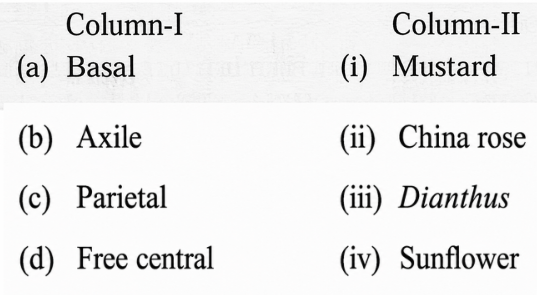
Basal : Sunflower
Axile : China rose
Parietal : Mustard
Free central : Dianthus
Match the cell organelle in column I with column II.
Choose the right match from the options given below:
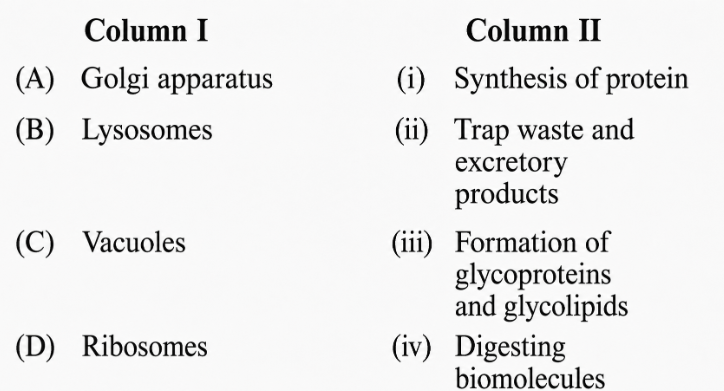
Golgi apparatus is involved in the formation of glycoproteins and glycolipids.
Lysosomes are membrane enclosed organelle. They digest excess or worn out organelles, food particles etc.
Vacuoles is a membrane enclosed fluid filled sac which transports and excretory products.
Ribosomes is a minute particle consisting of RNA and associated proteins. They bind mRNA and tRNA to synthesise polypeptides and proteins.
Prosthetic groups differ from co-enzymes in that-
Prosthetic groups are non-peptide (non-protein) compounds that mostly attach to proteins and assist them in different ways. They can be inorganic (like metals) or organic (carbon-containing). Prosthetic groups are tightly bound to the apoenzyme but coenzymes are associated with the apoenzyme last for a short period of time i.e. transiently.
Crossing over takes place between which chromatids and in which stage of the cell cycle?
Crossing over is the exchange of gene which takes place between non-sister chromatids of homologous chromosomes at pachytene stage of meiosis I resulting in new allelic combinations in the daughter cells.
"Ramachandran plot" is used to confirm the structure of
A Ramachandran plot is a way to visualise energetically allowed regions for backbone dihedral angles ψ against Φ of amino acid residues to protein structure. It is used to analyse the structure of a protein, the conformation of the amino acids present in the protein and close contacts between the atoms.
Which of the following is not a feature of active transport of solutes in plants?
Active transport is uphill transport. This transport takes place against the electrochemical potential gradient and requires additional input of energy that chiefly comes from hydrolysis of ATP. It is highly selective.
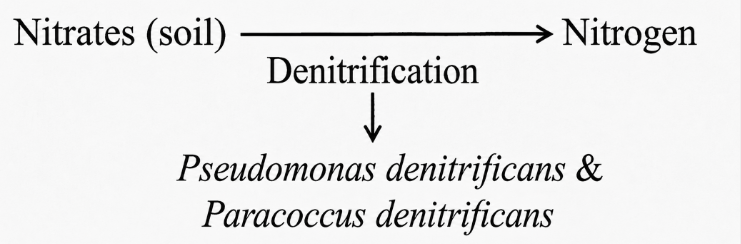
Which of the following bacteria reduce nitrate in soil into nitrogen?
Thiobacillus denitrificans, a type of denitrifiers, converts nitrates in soil to free atmospheric nitrogen, thus depleting soil fertility and reducing agricultural productivity.
What will be the direction of flow of water when a plant cell is placed in a hypotonic solution?
When a plant cell is placed in hypotonic solution water will flow into the cell as water moves from high water potential to low water potential.
Where is the respiratory electron transport system (ETS) located in plants?
Electron transport system is located in inner mitochondrial membrane, where it serves as the site of oxidative phosphorylation through the action of ATP synthase. Electron transport chains are redox reactions that transfer electrons from an electron donor to an electron acceptor.
The transfer of electrons is coupled to the translocation of protons across a membrane, producing a proton gradient. It is also found in the thylakoid membrane of the chloroplast in photosynthetic eukaryotes.
Which of the following is against the rules of ICBN?
The first word denoting the genus starts with a capital letter while the specific epithet starts with a small letter.
Mad cow disease in cattle is caused by an organism which has :
Mad cow disease (or bovine spongiform encephalopathy) is a transmissible, slowly progressive, degenerative and fatal disease affecting the central nervous system of adult cattle. It's related to a disease in humans called variant Creutzfeldt-Jakob disease (vCJD). Both disorders are universally fatal brain diseases caused by a prion.
Prions are disease-causing agents having abnormally folded proteins. Prions induce other healthy proteins to fold incorrectly, leaving patches of useless debris and holes that turn brains to sponge, resulting in death. The disease has an incubation period in cattle of up to eight years.
Which of the following statements is correct?
Lichen is a symbiosis between different organisms. It is composed of a fungal partner (mycobiont) and one or more photosynthetic partners (photobiont). The photosynthetic partner is generally green algae or cyanobacteria.
Lichens are well known as sensitive indicators of air pollution, particularly for sulphur dioxide. If air is very badly polluted with sulphur dioxide there may be no lichens present, just green algae may be found. If the air is clean, shrubby, hairy and leafy lichens become abundant.
Match the organisms in column I with habitats in column II.
Select the correct answer from the options given below:
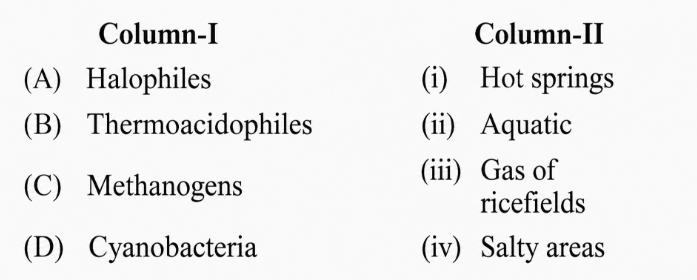
Halophiles live in salty areas.
Thermoacidophiles are present in hot springs.
Methanogens are present in gut of several ruminants.
Cyanobacteria can be present in freshwater, marine or terrestrial habitat.
In the dicot root the vascular cambium originates from :
Vascular cambium is a secondary meristematic tissue in dicot roots. It is originated from tissue located below the phloem bundles and a portion of pericycle tissue above the protoxylem.
Which of the following shows whorled phyllotaxy?
Alstonia shows whorled phyllotaxy. In whorled phyllotaxy, more than two leaves arise at each node and form a whorl or a circle.
China rose and mustard show alternate phyllotaxy in which a single leaf arises at each node in an alternate manner. Whereas Calotropis shows opposite type of phyllotaxy in which a pair of leaves arise at each node and lie opposite to each other.
Regeneration of damaged growing grass following grazing is largely due to :
Intercalary meristems are capable of cell division and they allow for rapid growth and regrowth of many monocots. Intercalary meristem, found in grasses, help to regenerate the parts removed by the grazing herbivores.
Bicarpellary ovary with obliquely placed septum is seen in :
Bicarpellary ovary with obliquely placed septum is seen in the members of family Solanaceae.
e.g. Solanum.
Select the incorrect statement regarding inbreeding.
Inbreeding depression, the reduction of fitness caused by inbreeding, is a universal phenomenon that depends on past mutation, selection, and genetic drift. Inbreeding depression can be overcome by the following ways:
• Out breeding: The breeding of animals which are unrelated to each other and do not have common ancestors for 4–6 generations.
• Out crossing: Mating done with the animals of same breed but after 4–6 generations.
• Cross breeding: Superior male mated with superior female of another breed.
• Interspecific hybridisation: Male and female animal of two different related species.
A biocontrol agent to be a part of an integrated pest management should be :
Biocontrol agents are natural enemies like parasites, predation and other mechanisms for controlling the plant pests. They play an important role in controlling the plant pests like nematodes, weeds, insects, and mites and also help in maintaining balancing of the plant species along with their natural enemies. A good biocontrol agent should be species-specific and inactive on non-target organisms.
Match the following enzymes with their functions:
Select the correct option from the following:
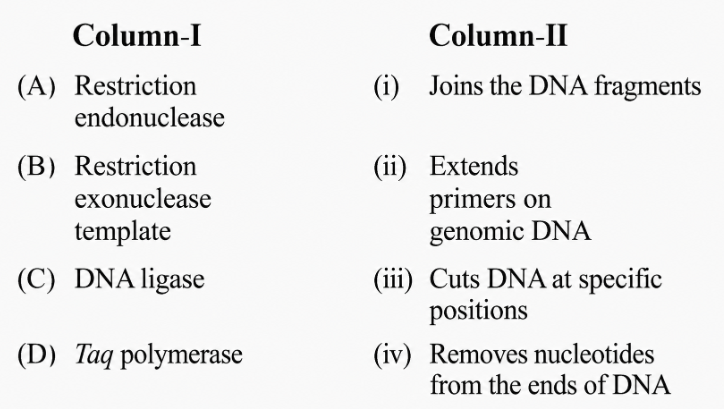
Restriction endonuclease cleaves DNA into fragments at or near specific recognition sites within the molecule known as restriction sites.
Restriction exonuclease cleaves off nucleotides one at a time from the 3′ or 5′ ends of DNA and RNA chains.
DNA ligase facilitates the joining of DNA strands together by catalysing the formation of a phosphodiester bond.
Taq polymerase is a thermostable DNA polymerase I named after the thermophilic bacterium Thermus aquaticus from which it was originally isolated by Chien et al. in 1976. It attaches the nucleotides to a DNA template, thereby copying the DNA.
The two antibiotic resistance genes on vector pBR322 are for
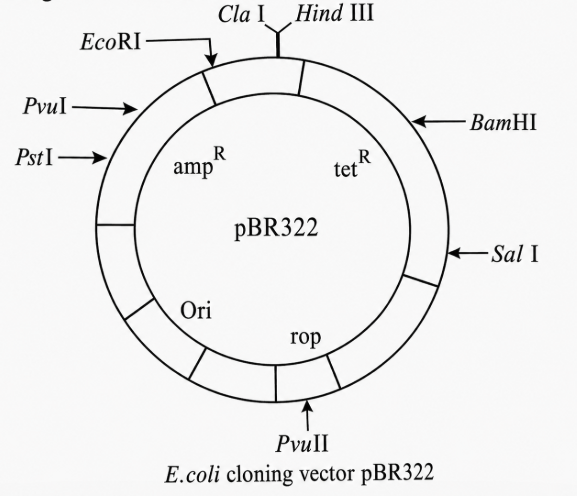
E.coli cloning vector pBR322 contains antibiotic resistance genes for Ampicillin (ampᴿ) and Tetracycline (tetR) as selectable markers.
Selectable markers help in selecting those host cells which contain the transformed vectors and eliminate the non-transformants. Plasmid pBR322 has a variety of unique recognition sites for restriction endonucleases. Two unique sites—PstI and PvuI—are located within the ampᴿ gene and BamHI and SalI are within the tetR gene.
Insertion of the DNA fragment into the plasmid using enzyme PstI or PvuI places the DNA insert within the ampᴿ gene, which makes ampR non-functional.
Bacterial cells containing such a recombinant pBR322 will be unable to grow in the presence of ampicillin but will grow on Tetracycline.
Exploitation of bioresources of a nation by multinational companies without authorisation from the concerned country is referred to as
Biopiracy refers to the use of bio-resources by multinational companies and other organisations without proper authorisation from the countries and people concerned without compensation payment.
Biowar/warfare is in which disease-producing microorganism, toxin or organic biocides (e.g. Bacillus anthracis or Yersinia pestis) are used to destroy, injure or immobilise livestock, vegetation, or human life.
Bioweapon are harmful biological agents (such as a pathogenic microorganism or a neurotoxin) used as a weapon to cause death or disease usually on a large scale.
Bioethics is the study of the ethical issues emerging from advances in biology and medicine.
Carnivorous animals – lions and leopards, occupy the same niche but lions predate mostly larger animals and leopards take smaller ones. This mechanism of competition is referred to as
If two species compete for the same resource, they could avoid competition by choosing, for instance, different times for feeding or different foraging patterns. Such mechanism is called resource partitioning.
Decline in the population of Indian native fishes due to introduction of Clarias gariepinus in river Yamuna can be categorised as
Introduction of African catfish Clarias gariepinus for aquaculture purposes has become a threat to indigenous catfishes in our rivers.
Clarias gariepinus is an alien species for the communities in Yamuna.
Match the following RNA polymerases with their transcribed products:
Select the correct option from the following:

RNA polymerase is an enzyme that is responsible for copying a DNA sequence into an RNA sequence during the process of transcription. In eukaryotes, there are three types of RNA polymerases.
(i) RNA polymerase I transcribes rRNAs genes.
(ii) RNA polymerase II transcribes hnRNAs.
(iii) RNA polymerase III transcribes tRNAs and 5srRNA.
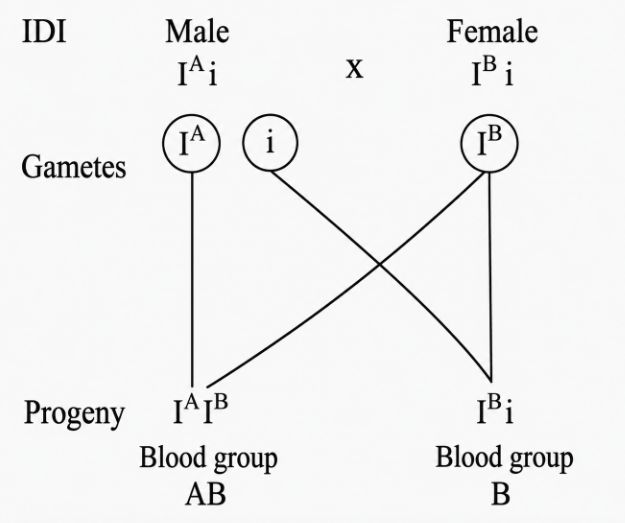
In a marriage between male with blood group A and female with blood group B, the progeny had either blood group AB or B. What could be the possible genotype of parents?
Male with blood group A can have genotype IA i or IAIA.
Female with blood group B can have genotype IBIB or IBi.
A population of a species invades a new area. Which of the following condition will lead to adaptive radiation?
Adaptive radiation occurs when a single or small group of ancestral species rapidly diversifies into a large number of descendant species. Therefore, when a population of species invades a new area with many types of vacant habitats, they face different environmental pressures and eventually adapt, exhibiting adaptive radiation.
Identify A, B and C in the diagrammatic representation of the mechanism of hormone action.
Select the correct option from the following:
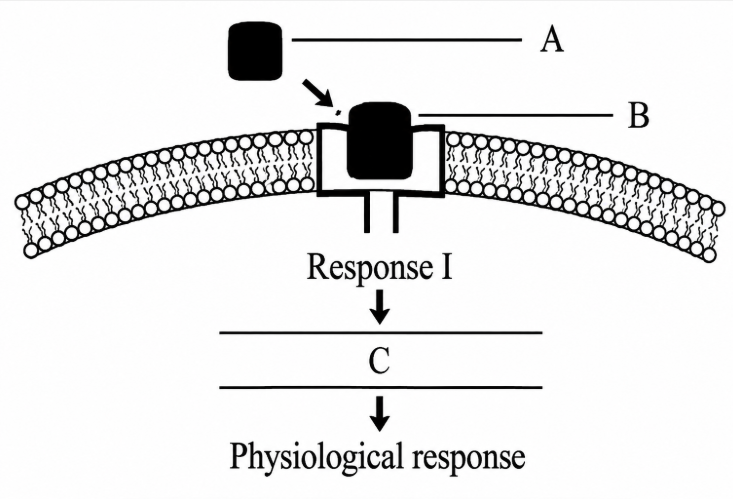
The Given diagrammatic representation showing the mechanism of protein hormone action.
'A' is a hormone such as FSH that cannot cross lipid bilayer; therefore it interacts with membrane-bound receptors and does not enter the target cell, but generates second messengers.
Peptide, polypeptide, protein hormones and catecholamines act through this mechanism.
'B' represents the extracellular receptors present on the cell surface that forms a hormone-receptor complex which brings about conformational changes in the cytoplasmic part of the receptor. This cytoplasmic part can produce second messengers such as Ca2+, cAMP, IP3 etc., which activates the existing enzyme system of the cell and accelerate the biochemical reactions of the cell.
Hence, 'C' represents the generation of second messenger.
Humans have acquired immune system that produces antibodies to neutralise pathogens. Still innate immune system is present at the time of birth because it
Innate immunity is non-specific and is accomplished by providing different types of barriers to the entry of foreign agent or any pathogen into our body.
Through this immunity, the human body protects itself against foreign material that is perceived to be harmful.
Natural killer cells are a type of lymphocytes which produce proteins called perforins that create pores on plasma membrane of tumour cells and virally infected cells through which ECF enters and kills the cells.
Passive immunity is specific and is a branch of humoral immunity.
Innate immunity does not produce memory cells; hence, no secondary immune response is seen.
Select the correct sequence of events.
The correct sequence of the events is as follows:
Gametogenesis → Gamete transfer → Syngamy → Zygote cell division (Cleavage) → Cell differentiation → Organogenesis
Gametogenesis is the formation of gametes (sperm and ovum) through spermatogenesis and oogenesis respectively.
Gamete transfer is the process of bringing together male and female gamete for fertilisation.
Syngamy is fusion of gametes leading to formation of zygote.
Cleavage is the repeated (mitotic) cell division.
Cell differentiation refers to specialisation of cell to perform specific function.
Organogenesis is the formation of organs.
Which of the following hormones is responsible for both the milk ejection reflex and the foetal ejection reflex?
Foetal ejection reflex triggers release of oxytocin from the maternal anterior pituitary gland. Oxytocin acts on the uterine muscles and causes stronger uterine contractions.
Milk ejection reflex is caused by combined neurogenic and hormonal reflexes that involve release of oxytocin from posterior pituitary gland.
Relaxin, secreted by the ovary and placenta, causes the cervix to dilate and prepares the uterus for the action of oxytocin during labour.
Oestrogen, secreted from ovary, is responsible for the development and regulation of the female reproductive system and secondary sex characteristics. Prolactin, secreted from anterior pituitary, stimulates the development and milk production in women.
No new follicles develop in the luteal phase of the menstrual cycle because:
Ovulation is followed by the luteal phase during which the corpus luteum secretes oestrogen and progesterone hormones that exert negative feedback on the hypothalamus, which in turn inhibits the release of FSH and LH. This prevents the development of new follicles during the luteal phase.
In Australia, marsupials and placental mammals have evolved to share many similar characteristics. This type of evolution may be referred to as
In Australia, marsupials and placental mammals have evolved to share many similar characteristics. This type of evolution may be referred to as convergent evolution. Many placental mammals resemble the marsupial mammals not only in structure but also in leading similar ways of life. These similarities in these two different types of mammals(Marsupials and placentals) w.r.t. ancestors are due to living in the similar ecological niches. Hence, when two different types of organisms convergent evolution has occurred.
Match the items of Column-I with Column-II.
Select the correct option from the following:
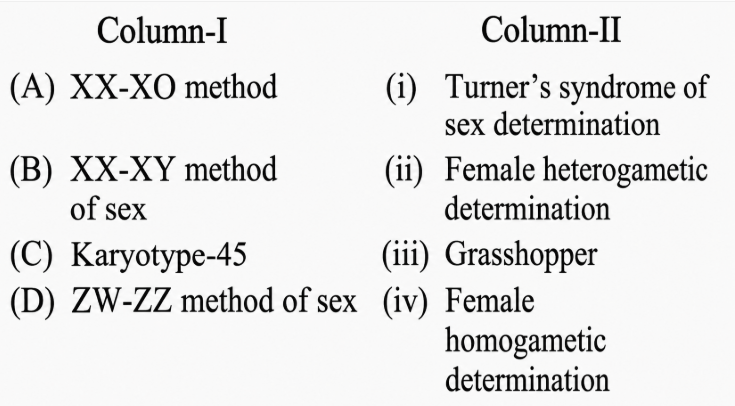
XX-XO type of sex determination is seen in crickets, grasshoppers, and some other insects. In all these organisms the female is XX and the homogametic sex. The male is heterogametic sex but only has one sex chromosome. The male in XX-XO systems produces gametes with (X) or without (O) a sex chromosome. In XX-XY method of sex determination, the sex of an individual is determined by a pair of sex chromosomes. Females typically have two of the same kind of sex chromosomes (XX), and are called the homogametic sex. Males typically have two different kinds of sex chromosomes (XY), and are called the heterogametic sex. Turner's syndrome is also known as 45, X or 45, X. It is a condition that affects only females, and results when one of the X chromosome (sex chromosome) is missing or partially missing. ZW-ZZ method of sex determination can be seen in some birds, butterflies, moths, and other organisms. Instead of X and Y chromosomes, they have Z and W chromosomes. The female is the heterogametic sex. In all these organisms female has a pair of dissimilar ZW chromosomes and male has two similar ZZ chromosomes.
What will be the sequence of mRNA produced by the following stretch of DNA?
3′ ACTGATGCATGCAG 5′ TEMPLATE STRAND
5′ TACTGATGCATGCAG 3′ CODING STRAND
5′ TACCTAGTACGTAC 3′ (Coding strand)
5′ UACCUACGUACGUA 3′ (mRNA)
In m-RNA at the place of thymine in coding strand uracil is present.
Which of the following statements is not correct?
Rods and cones are two types of photoreceptor in human retina. Cones are very sensitive to operate in day light. They are capable of colour vision and responsible for high spatial acuity. Rods are very sensitive in dim light and do not mediate colour vision and have a low spatial acuity.
Match the following joints with the bones involved.
Select the correct option from the following:
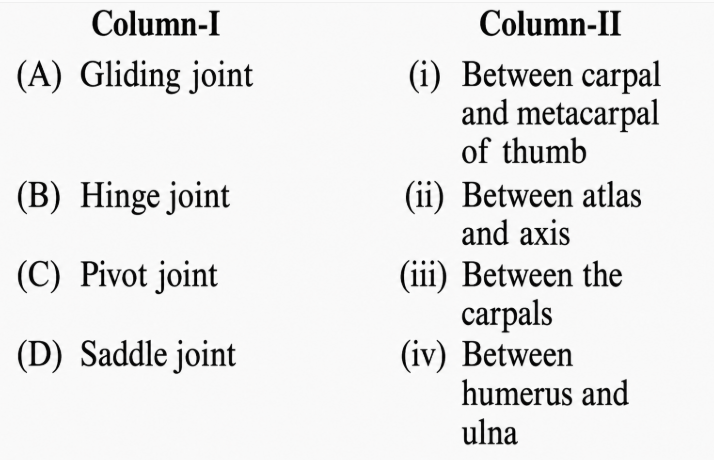
Gliding joint is present between the carpals. Hinge joint is present between humerus and ulna. Pivot joint is present between atlas and axis. Saddle joint is present between carpal and metacarpal of thumb.
Which of the following diseases is an autoimmune disorder?
Myasthenia gravis is autoimmune disorder that affects neuromuscular junction leading to fatigue, weakness and paralysis of skeletal muscles.
Arthritis is inflammation of one or more joints. It is characterised by pain, stiffness and limited function of joints.
Gout, a type of metabolic arthritis (diet related) is inflammation of joints due to accumulation of uric acid crystals. It can cause painful swelling in joints and typically affects the big toe.
Osteoporosis is age related disorder characterised by decreased bone mass and increased chances of fractures. It starts with the roughening of cartilage.
Artificial light, extended work-time and reduced sleep-time disrupt the activity of
Artificial light, extend work time and reduced sleep-time disrupt the activity of pineal gland.
Melatonin hormone of pineal gland plays a very important role in the regulation of a 24-hours (diurnal) rhythm of our body.
Melatonin helps in maintaining the normal rhythms of sleep-wake cycle and body temperature.
Which of the following is a correct statement?
IUDs (Intra uterine devices) of all types are in general treated as a foreign body thus inviting phagocytic cells to the uterus. It is a small, T-shaped plastic and copper device.
IUDs increase phagocytosis of sperms within the uterus and Cu released suppress sperm motility and the fertilising capacity of sperms.
IUDs need to be inserted by an experienced nurse and have to be replaced after few years depending on copper or hormonal level.
Which of the following sexually transmitted diseases do not specifically affect reproductive organs?
AIDS and hepatitis B are sexually transmitted infections. However, they do not specifically affect the reproductive organs.
AIDS is HIV infection affecting the immune system and the opportunistic pathogens can infect various body organs.
Hepatitis B is a viral (hepatitis B virus) infection that affects liver and can cause both acute and chronic disease.
Agents causing genital herpes, genital warts and chlamydiasis produce lesions on genital organs and also directly affect the reproductive system.
Select the correct statement.
During inspiration, diaphragm and external intercostal muscles contract causing increase in volume of thoracic cage. As a result intrapulmonary pressure decreases to a level less than atmospheric pressure, thus causing inspiration.
Expiration is initiated due to relaxation of diaphragm. Vital capacity is the maximum amount of air expired by a person after forceful inspiration or inspired after forceful expiration. It represents the changes in volume from completely emptied lungs to completely filled lungs. It is about 4800 ml. The value varies according to age and body size.
Total amount of air in lungs at end of forced inspiration is total lung capacity 5800 ml.
The maximum volume of air a person can breathe in after a forced expiration is known as:
Vital capacity is the maximum amount of air expired by a person after forceful inspiration or inspired after forceful expiration. It represents the changes in volume from completely emptied lungs to completely filled lungs. It is about 4800 ml. The value varies according to age and body size. Total amount of air in lungs at end of forceful inspiration
is total lung capacity 5800 ml
All the components of the nodal tissue are autoexcitable. Why does the SA node act as the normal pacemaker?
SA node acts as pacemaker of heart because its autoexcitable tissue have the ability to generate heart impulse at highest rate (frequency).
This electrical impulse is then transmitted by prenodal cells, or transitional (T) cells, to the right atrium and then through the rest of the heart's electrical conduction system, eventually resulting in myocardial contraction and blood distributed to the rest of the body. The sinus node continuously generates electrical impulses, thereby setting the normal rhythm and rate in a healthy heart.
Hence, the SA node is referred to as the natural or normal pacemaker of the heart.
A specialised nodal tissue embedded in the lower corner of the right atrium, close to Atrio-ventricular septum, delays the spreading of impulses to heart apex for about 0.1 sec. This delay allows
The delay in transmission of impulse from SAN to the ventricles provided by AVN prevents simultaneous contraction of ventricles and auricles. This allows atria to empty completely before ventricles start contraction.
Match the following parts of a nephron with their function:
Select the correct option from the following:
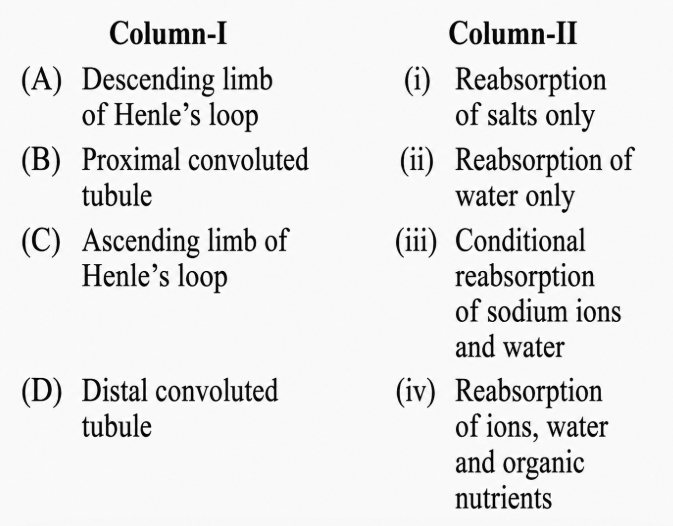
Descending limb of Henle's loop → Reabsorption of water only
PCT → Reabsorption of ions, water and organic nutrients
Ascending limb of Henle's loop → Reabsorption of salts only
DCT → Conditional reabsorption of sodium ions and water
Match the items in Column-I with those in Column-II.
Select the correct option from the following:
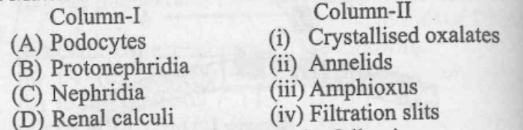
Podocytes: Podocytes are highly specialised cells in the Bowman's capsule in the kidneys that wrap around capillaries of the glomerulus. It plays an important role in glomerular function. Together with endothelial cells of the glomerular capillary loop and the glomerular basement membrane they form a filtration barrier.
Protonephridia: The excretory system in Amphioxus resembles the excretory system of invertebrates rather than higher chordates. Such type of excretory system is present in flatworms and polychaete annelids. The excretory organs are protonephridia.
Nephridia: It is an excretory and osmoregulatory organ of many invertebrates (such as annelid). It consists of a tubular with one end opening into the body cavity and the other opening into a pore at the body surface.
Renal calculi (also called kidney stones): Renal calculi are related to decreased urine volume or increased excretion of stone-forming components such as calcium, oxalate, urate, cystine, xanthine, and phosphate. They are common due to food in the urine and pain in the abdomen, etc.
Which of the following receptors are specifically responsible for maintenance of balance of body and posture?
Crista ampullaris is a sensory organ of rotation. It maintains the dynamic balance of the body. It is found in the ampulla of each of the semicircular canals of inner ear.
Otolith organ consists of two structures i.e. saccule and utricle. The projecting ridge of the saccule and utricle is called macula. The otolith function organ maintains the balance of the body.
Which of the following cell organelles is present in the highest number in secretory cells?
The important function of Golgi apparatus is to package, process and transport the materials for secretion. Therefore secretory cells have Golgi apparatus in highest number.
Non-membranous nucleoplasmic structures in nucleus are the site for active synthesis of
Nucleolus is non-membranous nucleoplasmic structure in nucleus. Nucleolus is the site of ribosomal RNA (rRNA) synthesis.
Which of the following nucleic acids is present in an organism having 70 S ribosomes only?
The organisms which have ribosomes of 70 S type are prokaryotes. Prokaryotes have double stranded DNA which is not enclosed in membrane.
After meiosis I, the resultant daughter cells have
Meiosis I is reductional division thus the resultant cell just after meiosis I will have half the number of chromosomes as compared to diploid parent cells. Therefore if the parent cell has 4C amount of DNA the daughter cell will have 2C amount of DNA and each gamete will have 1C amount of DNA.
Which of the following organic compounds is the main constituent of lecithin?
Lecithin (phosphatidylcholine) is a naturally occurring fatty substance referred to as phospholipid. It is important in cell structure and metabolism.
The main difference between active and passive transport across cell membrane is :
In active transport, materials are transported across a membrane with the help of mobile carrier protein and ATP.
In passive transport, substances move along the concentration gradient, i.e., from its higher concentration to its lower concentration.
Match the items given in Column-I with those in Column-II and choose the correct option.
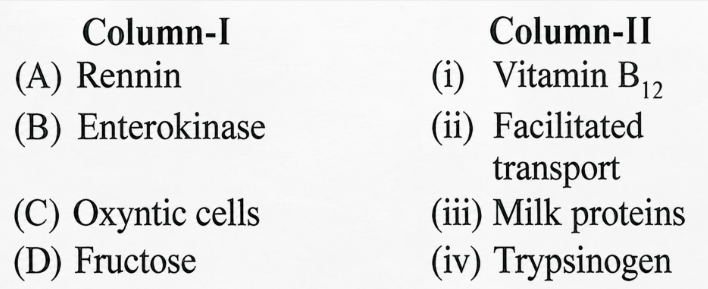
Rennin is a milk digesting proteolytic enzyme related to pepsin that is synthesised by chief cells in the stomach of some animals.
Enterokinase, produced by cells of duodenum, is involved in digestion. It converts trypsinogen (a zymogen) into its active form trypsin, resulting in the subsequent activation of pancreatic digestive enzymes.
Fructose shows facilitated transport.
Oxyntic cells secrete HCl and intrinsic factors that are essential for absorption of vitamin B12.
Match the following genera with their respective phylum.
Select the correct option:
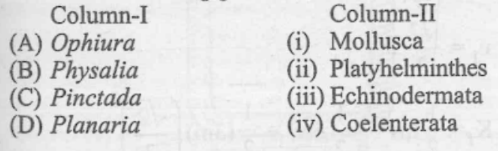
Ophiura is an echinoderm commonly known as brittle star.
Physalia is coelenterate (cnidarian) commonly known for Portuguese man of war.
Pinctada is pearl oyster belonging to taxon bivalve mollusca.
Planaria belongs to platyhelminthes (flatworms).
Which of the following animals are true coelomates with bilateral symmetry?
Annelids exhibit bilateral symmetry with metameric segmentation where external segments correspond to internal segments.
Adult echinoderms are bilaterally symmetrical.
Aschelminthes are pseudocoelomates and platyhelminthes are acoelomates.
The contrasting characters generally in a pair used for identification of animals in Taxonomic Key are referred to as :
The keys are based on the set of contrasting characters in pair known as couplet.
Match the following cell structure with its characteristic feature:
Select correct option from the following:
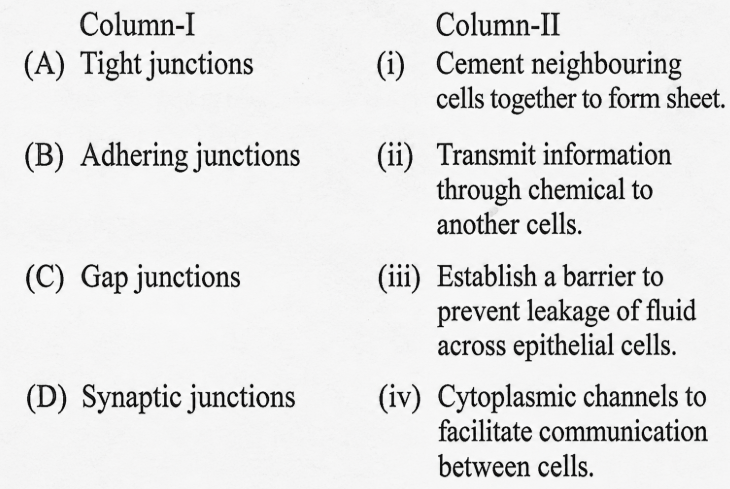
Tight junctions provide a barrier which prevents leakage of fluid across epithelial cells.
Adherens junctions aid to cement adjacent cells to form a sheet.
Gap junctions provide cytoplasmic channels to facilitate communication between adjacent cells.
Synaptic junctions help in transmission of information through chemicals.
Which of the following statements is INCORRECT?
Cockroaches receive several images of an object with the help of ommatidia. This kind of vision possessed by cockroaches is known as mosaic vision which has more sensitivity but less resolution.
Other Years