NEET-UG 2013 Question Paper — Set 2

QUESTION PAPER

2013 NEET EXAM

NEET-UG 2013 Question Paper — Set 2

2013

NEET-UG

CBSE EXAMINATION PAPER-2013

NEET-ZOOLOGY

(Solved)

Time allowed : 3 hours

Maximum Marks : 720

General Instructions :

Read the following instructions carefully and follow them :

  1. This question paper contains 180 questions. All questions are compulsory.
  2. This question paper is divided into 1 sections.
  3. Section A – questions number 1 to 180 are multiple choice questions
  4. There is no overall choice given in the question paper. However, an internal choice has been provided in few questions.
  5. Use of calculator is NOT allowed.

Section A

Question 1.

The plant body is thalloid in

[4 Marks]
  • (A) Marchantia
  • (B) Salvinia
  • (C) Funaria
  • (D) Sphagnum
Question 2.

Specialized cells for fixing atmospheric nitrogen in Nostoc are

[4 Marks]
  • (A) Nodules
  • (B) Hormogonia
  • (C) Akinetes
  • (D) Heterocysts
Question 3.

The common characteristics between tomato and potato will be maximum at the level of their

[4 Marks]
  • (A) Division
  • (B) Order
  • (C) Family
  • (D) Genus
Question 4.

What is common in all the three, Funaria, Dryopteris and Ginkgo?

[4 Marks]
  • (A) Well developed vascular tissues
  • (B) Independent sporophyte
  • (C) Presence of archegonia
  • (D) Independent gametophyte
Question 5.

The pair of quantities having same dimensions is

[4 Marks]
  • (A) impulse and surface tension
  • (B) Young’s modulus and energy
  • (C) angular momentum and work
  • (D) work and torque
Question 6.

The displacement 'x' (in meter) of a particle of mass 'm' (in kg) moving in one dimension under the action of a force is related to time 't' (in sec) by t = √x + 3. The displacement of the particle when its velocity is zero, will be

[4 Marks]
  • (A) zero
  • (B) 6m
  • (C) 4m
  • (D) 2m
Question 7.

Which one of the following is wrongly matched?

[4 Marks]
  • (A) Basidiomycetes-Puffballs
  • (B) Sargassum-Chlorophyll c
  • (C) Nostoc-Water blooms
  • (D) Spirogyra-Motile gametes
Question 8.

Among flowers of Calotropis, tulip, Sesbania, Asparagus, Colchicine, Sweet pea, Petunia, Indigofera, Mustard, Soyabean, Tobacco and groundnut how many plants have corolla with valvate aestivation?

[4 Marks]
  • (A) Seven
  • (B) Eight
  • (C) Five
  • (D) Six
Question 9.

How many plants among China rose, Ocimum, sunflower, mustard, Alstonia, guava, Calotropis and Nerium (Oleander) have opposite phyllotaxy?

[4 Marks]
  • (A) Three
  • (B) Five
  • (C) Four
  • (D) Two
Question 10.

Which of the following statements is not true for stomatal apparatus?

[4 Marks]
  • (A) Inner walls of guard cells are thick
  • (B) Stomata are involved in gaseous exchange
  • (C) Guard cells are always surrounded by subsidiary cells
  • (D) Guard cells invariably possess chloroplasts and mitochondria
Question 11.

Meristematic tissue responsible for increase in girth of tree trunk is

[4 Marks]
  • (A) Phellogen
  • (B) Lateral meristem
  • (C) Intercalary meristem
  • (D) Apical meristem
Question 12.

Inflorescence is racemose in

[4 Marks]
  • (A) Aloe
  • (B) Tulip
  • (C) Brinjal
  • (D) Soyabean
Question 13.

During the metaphase stage of mitosis spindle fibres attach to chromosomes at

[4 Marks]
  • (A) Both centromere and kinetochore
  • (B) Centromere, kinetochore and areas adjoining centromere
  • (C) Kinetochore
  • (D) Centromere
Question 14.

Uridine, present only in RNA is a

[4 Marks]
  • (A) Nucleotide
  • (B) Purine
  • (C) Nucleoside
  • (D) Pyrimidine
Question 15.

The term ‘glycocalyx’ is used for

[4 Marks]
  • (A) A layer present between cell wall and membrane of bacteria
  • (B) Bacterial cell glyco‑engineered to possess N‑glycosylated proteins
  • (C) Cell wall of bacteria
  • (D) A layer surrounding the cell wall of bacteria
Question 16.

Vectors 𝐀⃗ 𝐁⃗ and 𝐂⃗ are such that: 𝐀⃗ 𝐁⃗ = 0 and 𝐀⃗ .𝐂⃗ = 0. Then the vector parallel to 𝐀⃗ is.

[4 Marks]
  • (A) 𝐁⃗+ 𝐂⃗
  • (B) 𝐁⃗x 𝐂⃗
  • (C) 𝐀⃗ x 𝐁⃗
  • (D) 𝐁⃗ and 𝐂⃗
Question 17.

Which of the following type of plastids does not contain stored food material?

[4 Marks]
  • (A) Elaioplasts
  • (B) Aleuroplasts
  • (C) Chromoplasts
  • (D) Amyloplasts
Question 18.

A car is moving in a circular horizontal track of radius 10 m with a constant speed of 10 m/s. A bob is suspended from the roof of the car by a light wire of length 1.0 m. The angle made by the wire with the vertical is

[4 Marks]
  • (A) π/6
  • (B) π/3
  • (C) π/4
  • (D) 0°
Question 19.

During meiosis I, the chromosomes start pairing at

[4 Marks]
  • (A) Diplotene
  • (B) Pachytene
  • (C) Zygotene
  • (D) Leptotene
Question 20.

A person holding a rifle (mass of person and rifle together is 100 kg) stands on a smooth surface and fires 10 shots horizontally. If each bullet has a mass of 10 g with a muzzle velocity of 800 m s⁻¹. The final velocity acquired by the person and the average force exerted on the person are

[4 Marks]
  • (A) −1.6 m s⁻¹ ; 16 N
  • (B) −0.8 m s⁻¹ ; 8 N
  • (C) −1.6 m s⁻¹ ; 8 N
  • (D) −0.8 m s⁻¹ ; 16 N
Question 21.

Which two distinct microbial processes are responsible for the release of fixed nitrogen as dinitrogen gas (N₂) to the atmosphere?

[4 Marks]
  • (A) Bacterial fermentation in cattle, and nitrogen fixation by Rhizobium in root nodules of legumes
  • (B) Decomposition of organic nitrogen, and conversion of dinitrogen to ammonium compounds
  • (C) Aerobic nitrate oxidation, and nitrite reduction
  • (D) Anaerobic ammonium oxidation, and denitrification
Question 22.

A particle with total energy E is moving in a potential energy region U(x). Motion of the particle is restricted to the region where

[4 Marks]
  • (A) U(x) ≤ E
  • (B) U(x) = 0
  • (C) U(x) > E
  • (D) U(x) < E
Question 23.

One coolie takes 1 minute to raise a suitcase through a height of 2 m but the second coolie takes 30 s to raise the same suitcase to the same height. The powers of two coolies are in the ratio of

[5 Marks]
  • (A) 2 : 1
  • (B) 3 : 1
  • (C) 1 : 3
  • (D) 1 : 2
Question 24.

Which of the following best illustrates FEEDBACK in development?

[4 Marks]
  • (A) Astissue (X) develops, it secretes enzymes that inhibit the development of tissue (Y)
  • (B) As tissue (X) develops, it secretes something that induces tissue (Y) to develop
  • (C) As tissue (X) develops, it secretes something that slows down the growth of tissue (Y)
  • (D) Tissue (X) secretes RNA which changes the development of tissue (Y)
Question 25.

The viability of seeds is tested by

[4 Marks]
  • (A) DMSO
  • (B) 2,3, 5 triphenyl tetrazolium chloride
  • (C) Safranine
  • (D) 2, 6 dichlorophenol indophenols
Question 26.

Two discs are rotating about their axes, normal to the discs and passing through the centres of the discs. Disc D₁ has 2 kg mass and 0.2 m radius initially angular velocity of 50 rad s⁻¹. Disc D₂ has 4 kg mass, 0.1 m radius and initial angular velocity of 200 rad s⁻¹. The two discs are brought in contact due to face, with their axes of rotation coincident. The final angular velocity (in rad s⁻¹) of the system is

[4 Marks]
  • (A) 100
  • (B) 120
  • (C) 60
  • (D) 40
Question 27.

The radius of the earth is R and the radius of earth. Both have almost equal average mass-density. If Vₚ and V_E are escape velocities of the planet and the earth, respectively, then

[4 Marks]
  • (A) V_E = 3 Vₚ
  • (B) Vₚ = 2V_E
  • (C) V_E = 1.5Vₚ
  • (D) Vₚ = 1.5 V_E
Question 28.

A particle of mass m is kept at rest at a height 3R from the surface of earth, where R is radius of earth and M is mass of earth. The minimum speed with which it should be projected, so that it does not return back, is (g is acceleration due to gravity on the surface of earth)

[4 Marks]
  • (A) (2g /4)¹ᐟ²
  • (B) (gR/4)¹ᐟ²
  • (C) (GM/2R)¹ᐟ²
  • (D) (GM/R)¹ᐟ²
Question 29.

The pineapple which under natural conditions is difficult to blossom has been made to produce fruits throughout the year by application of

[4 Marks]
  • (A) Cytokinin
  • (B) NAA, 2,4-D
  • (C) Phenyl acetic acid
  • (D) IAA, IBA
Question 30.

Which of the following elements is a constituent of biotin?

[4 Marks]
  • (A) Sulphur
  • (B) Magnesium
  • (C) Calcium
  • (D) Phosphorus
Question 31.

Bundle sheath cells

[4 Marks]
  • (A) Are rich in RuBisCO
  • (B) Are rich in PEP carboxylase (c) Lack RuBisCO
  • (C) Lack RuBisCO
  • (D) Lack both RuBisCO and PEP carboxylase
Question 32.

Which one of the following statements is correct?

[4 Marks]
  • (A) Cleistogamous flowers are always autogamous
  • (B) Geitonogamy involves the pollen and stigma of flowers of different plants
  • (C) Xenogamy occurs only by wind pollination
  • (D) Chasmogamous flowers do not open at all
Question 33.

Megaspores are produced from the megaspore mother cells after

[4 Marks]
  • (A) Meiotic division
  • (B) Mitotic division
  • (C) Formation of a thick wall
  • (D) Differentiation
Question 34.

Syngamy can occur outside the body of the organism in

[4 Marks]
  • (A) Fungi
  • (B) Mosses
  • (C) Algae
  • (D) Ferns
Question 35.

Animal vectors are required for pollination in

[4 Marks]
  • (A) Maize
  • (B) Vallisneria
  • (C) Mulberry
  • (D) Cucumber
Question 36.

If the ratio of diameters, lengths and Young's modulus of steel and copper wires shown in the figure are p, q and s respectively, then the corresponding ratio of increase in their lengths would be
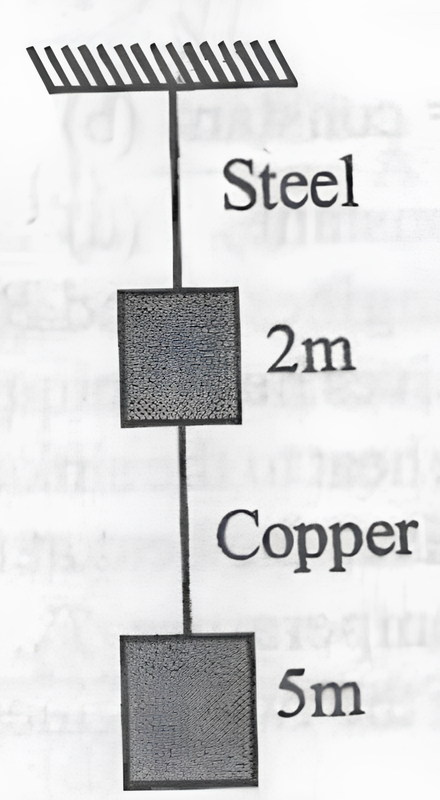
[4 Marks] Diagram 1 – NEET-UG 2013 Question Paper — Set 2
  • (A) 5q/(7sp²)
  • (B) 7q/(5sp)
  • (C) 2q/(5sp)
  • (D) 7q/(5sp²)
Question 37.

Which of the following statements is correct?

[4 Marks]
  • (A) Sporopollenin can withstand high temperatures as well as strong acids and alkalis
  • (B) Sporopollenin is made up of inorganic materials
  • (C) Sporopollenin can be degraded by enzymes
  • (D) Sporopollenin can withstand high temperatures but not strong acids
Question 38.

Albuminous seeds store their reserve food mainly in

[4 Marks]
  • (A) Cotyledons
  • (B) Endosperm
  • (C) Hypocotyl
  • (D) Perisperm
Question 39.

Random unidirectional change in allele frequencies that occurs by chance in all populations and especially in small populations is known as

[4 Marks]
  • (A) Natural selection
  • (B) Genetic drift
  • (C) Mutation
  • (D) Migration
Question 40.

A fluid is in streamline flow across a ‘horizontal pipe of variable area of cross section. For this which of the following statements is correct?

[4 Marks]
  • (A) Velocity and pressure both are maximum at the widest part of the pipe
  • (B) Velocity and pressure both are maximum at the narrowest part of the pipe
  • (C) The pipe and the pressure is minimum at the widest part of the pipe
  • (D) The velocity is maximum at the narrowest part of the pipe and pressure is maximum at the widest part of the pipe
Question 41.

The density of water at 20°C is 998 kg/m³ and at 40°C is 992 kg/m³. The coefficient of volume expansion of water is

[4 Marks]
  • (A) 10⁻⁴/°C
  • (B) 3 × 10⁻⁴/°C
  • (C) 2 × 10⁻⁴/°C
  • (D) 6 × 10⁻⁴/°C
Question 42.

Two metal rods 1 and 2 of same lengths have same temperature difference across their ends. Their thermal conductivities are K₁ and K₂ and cross-sectional areas A₁ and A₂, respectively. If the rate of heat conduction in rod 1 is four times that in rod 2, then

[4 Marks]
  • (A) 4K₁A₁ = K₂A₂
  • (B) K₁A₁ = 2K₂A₂
  • (C) K₁A₁ = 4K₂A₂
  • (D) K₁A₁ = K₂A₂
Question 43.

Which of the following is not a property of the genetic code?

[4 Marks]
  • (A) Ambiguous
  • (B) Non‑overlapping
  • (C) Universal
  • (D) Degeneracy
Question 44.

Genetic variation in a population arises due to

[4 Marks]
  • (A) Reproductive isolation and selection
  • (B) Mutations as well as recombination
  • (C) Mutations only
  • (D) Recombination only
Question 45.

Satellite RNAs are present in some

[4 Marks]
  • (A) Plant viruses
  • (B) Prions
  • (C) Viroids
  • (D) Bacteriophages
Question 46.

A system is shown in the figure to a state c by two paths adc and abc. The internal energy at a is Uₐ = 10 J. Along the path adc the system absorbs δQ₁ = 50 J and the work done is δW₁ = 20 J, whereas along the path abc the heat absorbed is Q₂ = 36 J. The amount of work done along the path abc is
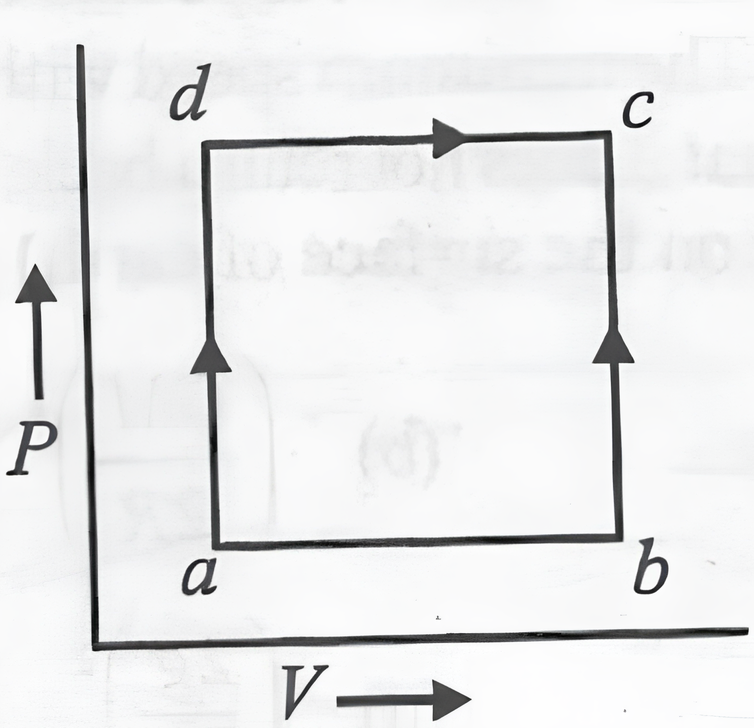
[4 Marks] Diagram 2 – NEET-UG 2013 Question Paper — Set 2
  • (A) 36J
  • (B) 10J
  • (C) 12J
  • (D) 6 J
Question 47.

One of the most frequently used techniques in DNA fingerprinting is

[4 Marks]
  • (A) AFLP
  • (B) VNTR
  • (C) SSCP
  • (D) SCAR
Question 48.

Which one of the following vectors is used to replace the defective gene in gene therapy?

[4 Marks]
  • (A) Ti plasmid
  • (B) Adenovirus
  • (C) Cosmid
  • (D) Ri plasmid
Question 49.

Which of the following relations does not give the equation of an adiabatic process, where terms have their usual meaning?

[4 Marks]
  • (A) PVᵞ = constant
  • (B) TVᵞ⁻¹ = constant
  • (C) Pᵞ T¹⁻ᵞ = constant
  • (D) P¹⁻ᵞTᵞ = constant
Question 50.

Which of the following statements is not true about somatic embryogenesis?

[4 Marks]
  • (A) Somatic embryo is induced usually by an auxin such as 2, 4‑D
  • (B) Somatic embryos can develop from microspores
  • (C) The pattern of development of a somatic embryo is comparable to that of a zygotic embryo
  • (D) A somatic embryo develops from a somatic cell
Question 51.

Genes of interest can be selected from a genomic library by using

[4 Marks]
  • (A) Gene targets
  • (B) DNA probes
  • (C) Cloning vectors
  • (D) Restriction enzymes
Question 52.

During the process of isolation of DNA, chilled ethanol is added to

[4 Marks]
  • (A) Remove proteins such as histones
  • (B) Precipitate DNA
  • (C) Break open the cell to release DNA
  • (D) Facilitate action of restriction enzymes
Question 53.

RNA interference involves

[4 Marks]
  • (A) Silencing of specific mRNA due to complementary RNA
  • (B) Interference of RNA in synthesis of DNA
  • (C) Synthesis of mRNA from DNA
  • (D) Synthesis of cDNA from RNA using reverse transcriptase
Question 54.

Benthic organisms are affected most by

[4 Marks]
  • (A) Water‑holding capacity of soil
  • (B) Light reaching the forest floor
  • (C) Surface turbulence of water
  • (D) Sediment characteristics of aquatic ecosystems
Question 55.

Which of the following has maximum genetic diversity in India?

[4 Marks]
  • (A) Rice
  • (B) Mango
  • (C) Wheat
  • (D) Groundnut
Question 56.

Which organization publishes the Red Data Book?

[4 Marks]
  • (A) GEF
  • (B) IUCN
  • (C) UNEP
  • (D) WWF
Question 57.

The largest tiger reserve in India is

[4 Marks]
  • (A) Nagarhole
  • (B) Valmiki
  • (C) Periyar
  • (D) Nagarjunsagar‑Srisailam
Question 58.

The second commitment period for Kyoto Protocol was decided at

[4 Marks]
  • (A) Cancun
  • (B) Durban
  • (C) Bali
  • (D) Doha
Question 59.

Which one of the following is a primary consumer in maize field ecosystem?

[4 Marks]
  • (A) Lion
  • (B) Grasshopper
  • (C) Wolf
  • (D) Phytoplankton
Question 60.

The characteristics of class Reptilia are :

[4 Marks]
  • (A) d. Marine animals with cartilaginous endoskeleton, body covered with placoid scales
  • (B) c. Fresh water animals with bony endoskeleton, air‑bladder to regulate buoyancy
  • (C) b. Body covered with moist skin which is devoid of scales, the ear is represented by a tympanum, alimentary canal, urinary and reproductive tracts open into a common cloaca
  • (D) a. Body covered with dry and cornified skin, scales over the body are epidermal, they do not have external ears
Question 61.

Two Carnot engines A and B are operated in series. The engine A receives heat from the source at temperature T₁ and rejects heat to the sink at temperature T. The second engine B receives the heat at temperature T and rejects it to the sink at temperature T₂. For what value of T are the efficiencies of the two engines equal?

[4 Marks]
  • (A) √(T₁T₂²)
  • (B) T₁T₂
  • (C) T₁ − T₂/2
  • (D) T₁ + T₂/2
Question 62.

In a vessel, the gas is at a pressure P. If the mass of all the molecules is halved and their speed is doubled, then the resultant pressure will be

[4 Marks]
  • (A) P/2
  • (B) P
  • (C) 2P
  • (D) 4P
Question 63.

Which one of the following animals is correctly matched with its one characteristic and the taxon?

Animal

Characteristic

Taxon

(a) Duckbilled platypus

Oviparous

Mammalian

(b) Millipede

Ventral nerve cord

Arachnida

(c) Sea Anemone

Triploblastic

Cnidaria

(d) Silverfish

Pectoral and Pelvic fins

Chordata

[4 Marks]
  • (A) a
  • (B) b
  • (C) c
  • (D) d
Question 64.

Which one of the following groups of animals reproduces only by sexual means?

[4 Marks]
  • (A) Ctenophora
  • (B) Porifera
  • (C) Cnidaria
  • (D) Protozoa
Question 65.

Sharks and dogfishes differ from skates and rays by

[4 Marks]
  • (A) Their pectoral fins distinctly marked off from cylindrical bodies
  • (B) Gill slits are ventrally placed
  • (C) Head and trunk are widened considerably
  • (D) Distinct demarcation between body and tail
Question 66.

Identify the tissue shown in the diagram and match with its characteristics and its location
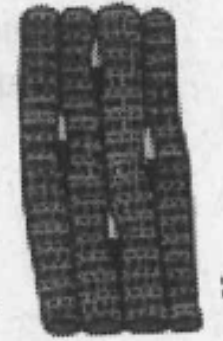
[4 Marks] Diagram 3 – NEET-UG 2013 Question Paper — Set 2
  • (A) Striated muscles, tapering at both‑ends, attached with the bones of the ribs
  • (B) Smooth muscles, show branching, found of the heart
  • (C) Skeletal muscle, shows striations and closely attached with the bones of the limbs
  • (D) Cardiac muscles, unbranched muscles, found in the walls of the heart
Question 67.

A particle of mass m oscillates along x-axis according to equation x= a sin ωt. The nature of the graph between momentum and displacement of the particle is

[4 Marks]
  • (A) ellipse
  • (B) straight line passing through origin
  • (C) Circle
  • (D) hyperbola
Question 68.

Select the correct option with respect to cockroaches

[4 Marks]
  • (A) Malpighian tubules convert nitrogenous wastes into urea
  • (B) The fore wings are tegmina which are used in flight
  • (C) Males bear short anal styles not present in females
  • (D) Nervous system comprises of a dorsal nerve cord and ten pairs of ganglion
Question 69.

Select the alternative giving correct identification and function of the

organelle ‘A’ in the diagram.
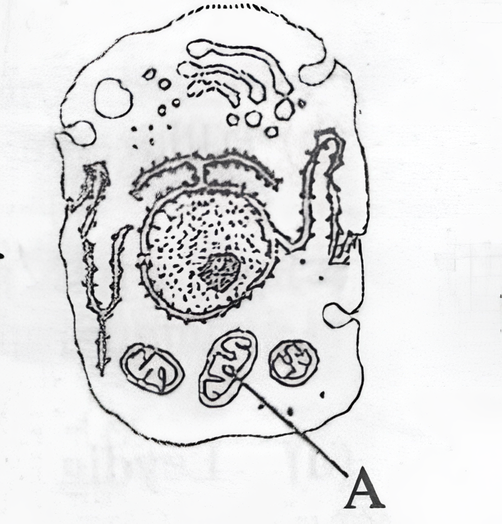
[4 Marks] Diagram 4 – NEET-UG 2013 Question Paper — Set 2
  • (A) Endoplasmic reticulum ‑ synthesis of lipids
  • (B) Mitochondria ‑ produce cellular energy in the form of ATP
  • (C) Golgi body ‑ provides packaging material
  • (D) Lysosomes ‑ secrete hydrolytic enzymes
Question 70.

The length of the wire between two ends of a sonometer is 100 cm. What should be the positions of two bridges below the wire so that the three segments of the wire have their fundamental frequencies in the ratio of 1: 3 : 5 ?

[4 Marks]
  • (A) 1500/23 cm, 500/23 cm
  • (B) 1500/23 cm, 300/23 cm
  • (C) 1500/23 cm , 2000/23 cm
  • (D) 300/23 cm, 1500/23 cm
Question 71.

Why is a capsule advantageous to a bacterium?

[4 Marks]
  • (A) It allows bacterium to “hide” from host’s immune system
  • (B) It protects the bacterium from desiccation
  • (C) It provides means of locomotion
  • (D) It allows the bacterium to attach to the surface
Question 72.

Two sources P and Q produce notes of frequency 660 HZ each. A listener moves from P to Q with a speed of 1 ms⁻¹ If the speed of sound is 330 m/s, then the number of beats heard by the listener per second will be

[4 Marks]
  • (A) 2
  • (B) 8
  • (C) zero
  • (D) 4
Question 73.

Which of the following statements about enzymes is wrong?

[4 Marks]
  • (A) Enzymes require optimum pH and temperature for maximum activity
  • (B) Enzymes are mostly proteins but some are lipids also
  • (C) Enzymes are denatured at high temperatures
  • (D) Enzymes are highly specific
Question 74.

A charge ‘q’ is placed at the centre of the line joining two equal charges ‘Q’. The system of the three charges’ will be in equilibrium if‘ "q” is equal to

[4 Marks]
  • (A) Q/2
  • (B) -Q/2
  • (C) Q/4
  • (D) -Q/4
Question 75.

An electric dipole of dipole moment p is aligned parallel to a uniform electric field E. The energy required to rotate the dipole by 90⁰ is

[4 Marks]
  • (A) infinity
  • (B) pE
  • (C) p²E
  • (D) pE²
Question 76.

The figure shows a hypothetical tetrapeptide portion of a protein with parts labelled A-D. Which one of the following option is correct?
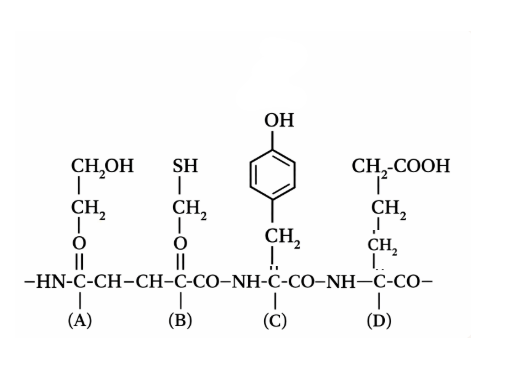
[4 Marks] Diagram 5 – NEET-UG 2013 Question Paper — Set 2
  • (A) Adis the sulphur containing amino acid - methionine
  • (B) D is the acidic amino acid - glutamic acid"
  • (C) C isan aromatic amino acid - tryptophan
  • (D) Aisthe C - terminal amino acid and D is N terminal amino acid
Question 77.

A stage of mitosis is shown in the diagram. Which stage is it and what are its characteristics?
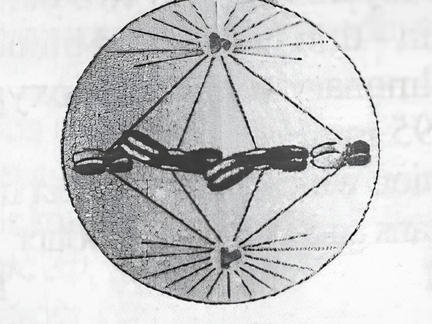
[4 Marks] Diagram 6 – NEET-UG 2013 Question Paper — Set 2
  • (A) Anaphase – centromeres split and chromatids separate and start moving away
  • (B) Metaphase – chromosomes moved to spindle equator, chromosomes made up of two sister chromatids
  • (C) Late prophase – chromosomes move to spindle equator
  • (D) Metaphase – spindle fibres attached to kinetochores, centromeres split and chromatids separate
Question 78.

A healthy person eats the following diet – 5 gm raw sugar, 4 gm albumin, 10 gm pure buffalo ghee adulterated with 2 gm vegetable ghee (hydrogenated vegetable oil) and 5 gm lignin. How many calories is he likely to get?

[4 Marks]
  • (A) 144
  • (B) 126
  • (C) 112
  • (D) 164
Question 79.

Which enzymes are likely to act on the baked potatoes eaten by a man, starting from the mouth and as it moves down the alimentary canal?

[4 Marks]
  • (A) Salivary maltase → carboxypeptidase → trypsinogen
  • (B) Disaccharidase like maltase → lipases → nucleases
  • (C) Pancreatic amylase → salivary amylase → lipases
  • (D) Salivary amylase → pancreatic amylase → disaccharidases
Question 80.

Which one of the following is one of the paths followed by air/O₂ during respiration in an adult male Periplaneta americana as it enters the animal body?

[4 Marks]
  • (A) Hypopharynx, mouth, pharynx, trachea, tissues
  • (B) Spiracle in metathorax, trachea, tracheoles, oxygen diffuses into cells
  • (C) Spiracles in prothorax, tracheoles, trachea, oxygen diffuses into cells
  • (D) Mouth, bronchial tube, trachea, oxygen enters cells
Question 81.

The figure shows a human blood cell. Identify it and give its characteristics.
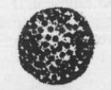
[4 Marks] Diagram 7 – NEET-UG 2013 Question Paper — Set 2
  • (A) Blood Cell-B‑lymphocyte ; Characteristics - Form about 20% of blood cells involved in immune response
  • (B) Blood Cell-Basophil ; Characteristics - Secrete serotonin, inflammatory response
  • (C) Blood Cell-Neutrophil ; Characteristics -Most abundant blood cell, phagocytic
  • (D) Blood Cell-Monocyte; Characteristics - Life span 3 days, produce antibodies
Question 82.

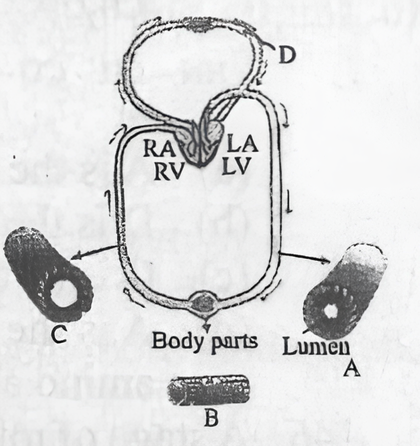
Figure shows blood circulation in humans with labels A to D. Select the option which gives correct identification of label and functions of the part:
[4 Marks] Diagram 8 – NEET-UG 2013 Question Paper — Set 2
  • (A) C — Vein — thin walled and blood flows in jerks/spurts
  • (B) D — Pulmonary vein — takes oxygenated blood to heart PO₂ = 95 mmHg
  • (C) A — Artery — thick walled and blood flows evenly
  • (D) B — Capillary — thin without muscle layers and wall two cell thick
Question 83.

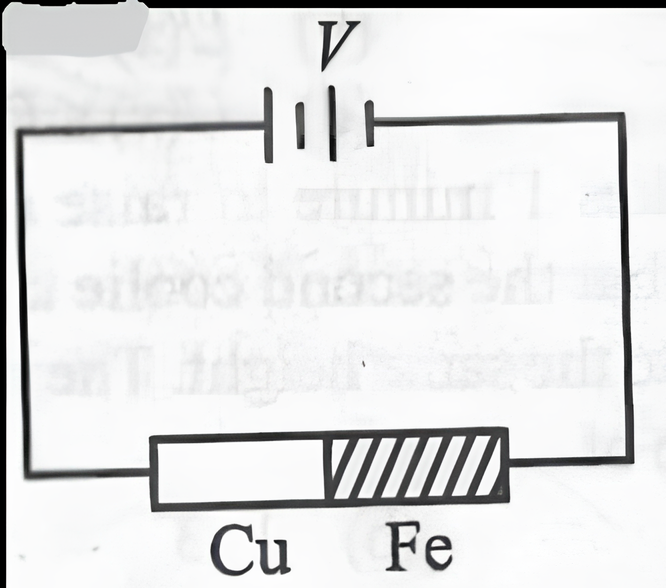
Two rods are joined end to end, as shown. Both have a cross-sectional area of 0.01 cm². Each is 1 meter long . One rod is of copper with a resistivity of 1.7 x 10⁻⁶ ohm -centimeter, the other is of iron with a resistivity of 10⁻⁵ ohm-centimeter.

How much voltage is required to produce a current Of 1 ampere in the rods?
[4 Marks] Diagram 9 – NEET-UG 2013 Question Paper — Set 2
  • (A) 0.117 V
  • (B) 0.00145V
  • (C) 0.0145V
  • (D) 1.7 x 10⁻⁶V
Question 84.

Select the correct statement with respect to disorders of muscles in humans

[4 Marks]
  • (A) An overdose of vitamin D causes osteoporosis
  • (B) Accumulation of urea and creatine in the joints causes their inflammation
  • (C) Failure of neuromuscular transmission in myasthenia gravis can prevent normal swallowing
  • (D) Rapid contractions of skeletal muscles causes muscle dystrophy
Question 85.

Select the option which shows correct matching of animal with excretory organs and excretory product.

Animal

Excretory organs

Excretory product

(a) Housefly

Renal tubules

Uric acid

(b) Labeo (Rohu)

Nephridial tubes

Ammonia

(c) Salamander

Kidney

Urea

(d) Peacock

Kidney

Urea

[4 Marks]
  • (A) b
  • (B) a
  • (C) d
  • (D) c
Question 86.

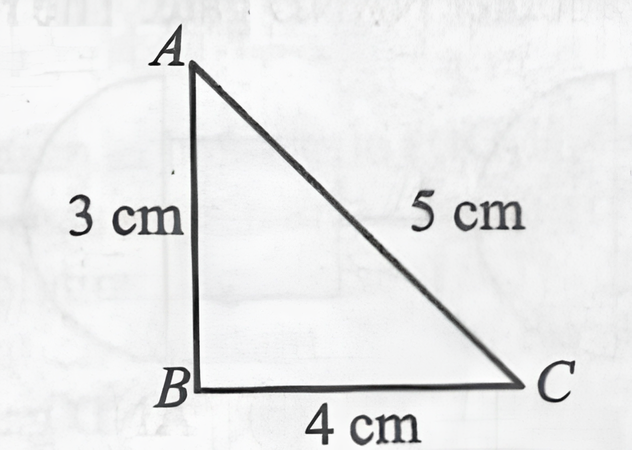
A 12 cm wire is given a shape of a right angled triangle ABC having sides 3 cm, 4 cm and 5 cm as shown in the figure. The resistance between two ends (4B, BC, CA) of the respective sides are measured one by one by a multi meter. The resistances will be in the ratio of
[4 Marks] Diagram 10 – NEET-UG 2013 Question Paper — Set 2
  • (A) 21:24:25
  • (B) 27:32:35
  • (C) 9:16:25
  • (D) 3:4:5
Question 87.

Ten identical cells connected in series are needed to heat a wire of length one meter and radius ‘r' by 10°C in time 't'. How many cells will be required to heat the wire of length

two meter of the same radius by the same temperature in time ‘t'?

[4 Marks]
  • (A) 30
  • (B) 40
  • (C) 20
  • (D) 10
Question 88.

A long straight wire carries a certain current and produces a magnetic field of 2 x 10⁻⁴ weber/m² at a perpendicular distance of 5cm from the wire. An electron situated at 5 cm

from the wire moves with a velocity 10⁷ m/s towards the wire along perpendicular to it. The force experienced by the electron will be

(charge on electron =1.6 x 10⁻¹⁹ C)

[4 Marks]
  • (A) 3.2N
  • (B) 3.2 x 10⁻¹⁶ N
  • (C) 1.6 x 10⁻¹⁶ N
  • (D) Zero
Question 89.

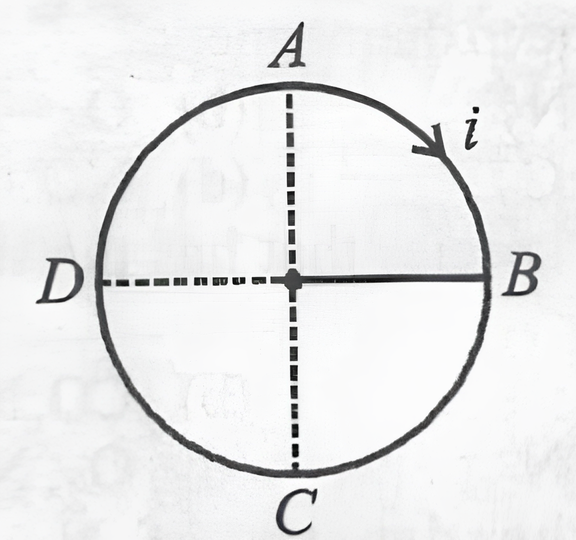
A circular coil ABCD carrying a current i is placed in a uniform magnetic field. If the magnetic force on the segment AB is 𝐅⃗, the force on the remaining segment BCDA is
[4 Marks] Diagram 11 – NEET-UG 2013 Question Paper — Set 2
  • (A) -3𝐅⃗
  • (B) -𝐅⃗
  • (C) 𝐅⃗
  • (D) 3𝐅⃗
Question 90.

A bar magnet of magnetic moment M is placed at right angles to a magnetic induction B. If a force F is experienced by each pole of the magnet, the length of the magnet will

be

[4 Marks]
  • (A) MB|F
  • (B) MF|B
  • (C) MB|F
  • (D) F|MB
Question 91.

A current of 2.5 A flows through a coil of inductance 5 H. The magnetic flux linked with the coil is

[4 Marks]
  • (A) Zero
  • (B) 12.5Wb
  • (C) 0.5Wb
  • (D) 2Wb
Question 92.

The primary of a transformer when connected to a dc battery of 10 volt draws a current of 1 mA. The number of turns of the primary and secondary windings are 50 and 100 respectively. The voltage in the secondary and the current drawn by the circuit in the secondary are respectively

[3 Marks]
  • (A) Zero and therefore no current
  • (B) 10 V and 0.5 mA
  • (C) 20 V and 0.5 mA
  • (D) 20 V and 2.0 mA
Question 93.

An electromagnetic wave of frequency v = 3.0 MHz passes from vacuum into a dielectric medium with relative permittivity ε =4.0. Then

[4 Marks]
  • (A) wavelength and frequency both remain unchanged
  • (B) wavelength is halved and frequency remains unchanged
  • (C) wavelength is doubled and frequency becomes half
  • (D) wavelength is doubled and frequency is unchanged
Question 94.

Two plane mirrors are inclined at 70°. A ray incident on one mirror at angle 0 after reflection falls on second mirror and is reflected from there parallel to first mirror. The value of 0 is

[4 Marks]
  • (A) 50⁰
  • (B) 45⁰
  • (C) 30⁰
  • (D) 55⁰
Question 95.

In Young’s double slit experiment the distance between the slits and the screen is doubled. The separation between the slits is reduced to half. As a result the fringe width

[4 Marks]
  • (A) remains unchanged
  • (B) becomes four times
  • (C) is halved
  • (D) is doubled
Question 96.

A parallel beam of light of wavelength . is incident normally on a narrow slit. A diffraction pattern is formed on a screen placed perpendicular to the direction of the incident beam.

At the second minimum of the diffraction pattern, the phase difference between the rays coming from the two edges of slit is

[4 Marks]
  • (A) 3π
  • (B) 4π
  • (C) 2π
  • (D) πλ
Question 97.

The de-Broglie wavelength of neutron in thermal equilibrium at temperature T' is

[4 Marks]
  • (A) 0.0308/√T Å
  • (B) 30.8/√T Å
  • (C) 3.08/√T Å
  • (D) 0.308/√T Å
Question 98.

A source of light is placed at a distance of 50 cm from a photocell and the stopping potential is found to be V₀. If the distance between the light source and photocell is made 25 cm, the new stopping potential will be

[4 Marks]
  • (A) V₀
  • (B) 4V₀
  • (C) 2V₀
  • (D) V₀/2
Question 99.

An electron in hydrogen atom makes a transition n₁ → n₂ where n₁ and n₂ are principal quantum numbers of the two states. Assuming Bohr's model to be valid the time period of the electron in the initial state is eight times that in the final state. The possible values of n₁ and n₂ are

[4 Marks]
  • (A) n₁ = 6 and n₂ = 2
  • (B) n₁ = 4 and n₂ = 2
  • (C) n₁ = 8 and n₂ = 2
  • (D) n₁ = 8 and n₂ = 1
Question 100.

How does the binding energy per nucleon vary with the increase in the number of nucleons?

[4 Marks]
  • (A) First decreases and then increases with increase in ‘mass number
  • (B) First increases and then decreases with increase in mass number
  • (C) Decreases continuously with mass number
  • (D) Increases continuously with mass number
Question 101.

During muscle contraction in humans the

[4 Marks]
  • (A) A band remain same
  • (B) A, H and I bands shorten
  • (C) Sarcomere does not shorten
  • (D) Actin filaments shorten
Question 102.

α-particles, β-particles and γ-rays are all having same energy. Their penetrating power in a given medium in increasing order will be

[4 Marks]
  • (A) γ, α, β
  • (B) β, γ, α
  • (C) α, β, γ
  • (D) β, α, γ
Question 103.

In an unbiased p-n junction, holes diffuse from the p-region to n-region because of

[4 Marks]
  • (A) the higher hole concentration in p-region than that in n-region
  • (B) the higher concentration of electrons in the n-region than that in the p-region
  • (C) the attraction of free electrons of n-region
  • (D) the potential difference across the p-n junction
Question 104.

One way in which the operation of a n-p-n transistor differs from that of a p-n-p

[4 Marks]
  • (A) the emitter injects holes into the base of n-p-n
  • (B) the emitter junction injects minority carriers into the base region of the p-n-p
  • (C) the emitter injects holes into the base of the p-n -p . and electrons into the base region of n-p-n
  • (D) the emitter junction is reversed biased in n-p-n
Question 105.

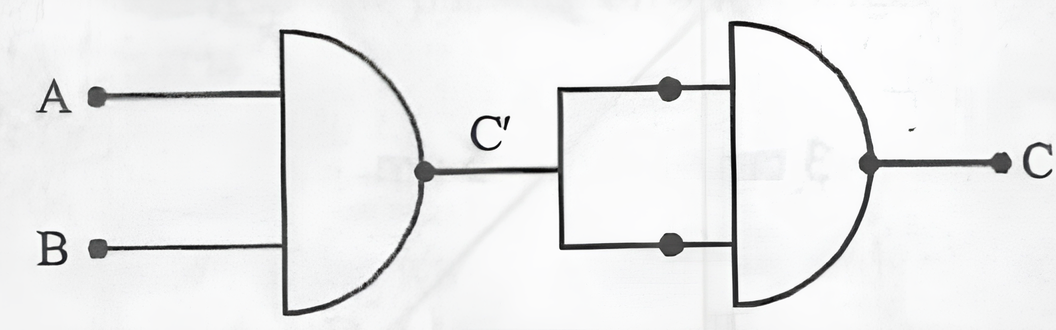
The output from a NAND gate is divided into two in parallel and fed to another NAND gate. The resulting gate is a
[4 Marks] Diagram 12 – NEET-UG 2013 Question Paper — Set 2
  • (A) ORgate
  • (B) NOR gate
  • (C) AND gate
  • (D) NOT gate
Question 106.

The ratio of radii of gyration of a circular ring and a circular disc, of the same mass and radius, about an axis passing through their centres and perpendicular to their planes are

[4 Marks]
  • (A) 3 : 2
  • (B) 1 : √ 2
  • (C) √2 : 1
  • (D) 2 : 1
Question 107.

A charge g is located at the centre of a cube. The electric flux through any face is

[4 Marks]
  • (A) 4πq /6(4πε₀)
  • (B) πq/6(4πε₀)
  • (C) 2πq/6(4πε₀)
  • (D) q/6(4πε₀)
Question 108.

In an experiment it showed that 10 mL of 0.05 M solution of chloride required 10 mL of 0.1 M solution of AgNO₃. Which of the following will be the formula of the chloride (X stands for the symbol of the element other than

[4 Marks]
  • (A) XCl₂
  • (B) XCl₄
  • (C) X₂Cl
  • (D) X₂Cl₂
Question 109.

According to the law of photochemical equivalence, the energy absorbed (in ergs/mole) is given as (h = 6.62 × 10⁻²⁷ erg s, c = 3 × 10¹⁰ cm s⁻¹, Nₐ = 6.02 × 10²³ mol⁻¹)

[4 Marks]
  • (A) 1.196 × 10¹⁶ / λ
  • (B) 1.196 × 10⁸ / λ
  • (C) 2.859 × 10⁵ / λ
  • (D) 2.859 × 10¹⁶ / λ
Question 110.

Which one of the following arrangements represents the correct order of least negative to most negative electron gain enthalpy for C, Ca, Al, F and O?

[4 Marks]
  • (A) Ca < Al < C < O < F
  • (B) Al < Ca < O < C < F
  • (C) Al < O < C < Ca < F
  • (D) C < F < O < Al < Ca
Question 111.

In which of the following pair both the species have sp³ hybridization?

[4 Marks]
  • (A) H₂S, BF₃
  • (B) SiF₄, BeH₂
  • (C) NF₃, H₂O
  • (D) NF₃, BF₃
Question 112.

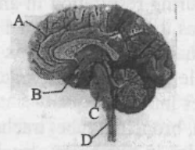
A sagittal section of human‑brain is shown here. Identify at least two labels from A‑D.
[4 Marks] Diagram 13 – NEET-UG 2013 Question Paper — Set 2
  • (A) A – Cerebral hemispheres; B – Cerebellum
  • (B) C – Mid brain; D – Cerebellum
  • (C) B – Corpus callosum; D – Medulla
  • (D) A – Cerebrum; C – Pons
Question 113.

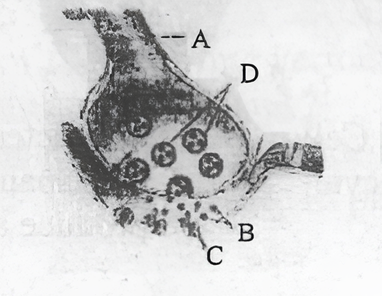
The figure shows an axon terminal and synapse. Select the option giving correct identifications of labels A‑D
[4 Marks] Diagram 14 – NEET-UG 2013 Question Paper — Set 2
  • (A) A – Axon terminal; B – Serotonin complex
  • (B) A – Action potential; C – Neurotransmitter
  • (C) B – Neurotransmitter; D – Receptor capsules
  • (D) C – Receptor; D – Synaptic vesicles
Question 114.

Which of the following represents the action of insulin?

[4 Marks]
  • (A) Increases blood glucose levels by hydrolysis of glycogen
  • (B) Increases blood glucose levels by stimulating glycogen production
  • (C) Decreases blood glucose levels by forming glycogen
  • (D) Decreases blood glucose level by promoting cellular uptake of glucose
Question 115.

Norepinephrine: (1) Is released by sympathetic fibres

(2) Is released by parasympathetic fibres

(3) Increases the heart rate

(4) Decreases blood pressure

Which of the above said statements are correct?

[4 Marks]
  • (A) (1) and (4)
  • (B) (2) and (3)
  • (C) (1) and (3)
  • (D) (2) and (4)
Question 116.

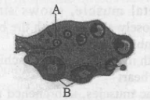
The figure shows a section of human ovary. Select the option which gives the correct identification of A and B with function/characteristic
[4 Marks] Diagram 15 – NEET-UG 2013 Question Paper — Set 2
  • (A) B – Corpus luteum – secretes estrogen
  • (B) A – Tertiary follicle – forms Graafian follicle
  • (C) B – Corpus luteum – secretes progesterone
  • (D) A – Primary oocyte – it is the prophase – I of the meiotic division
Question 117.

Select the option which correctly matches the endocrine gland with its hormone and its function.

Endocrine gland

Hormone

Function

(a) Ovary

FSH

Stimulates follicular development and the secretion of estrogens.

(b) Placenta

Estrogen

Initiates secretion of the milk.

(c) Corpus luteum

Estrogen

Essential for maintenance of endometrium.

(d) Leydig

Androgen

Initiates the cells production of sperms.

[4 Marks]
  • (A) a
  • (B) b
  • (C) c
  • (D) d
Question 118.

One of the following is not a method of contraception – which one?

[4 Marks]
  • (A) Lippes loop
  • (B) Pills of a combination of oxytocin and vasopressin
  • (C) Condoms
  • (D) Tubectomy
Question 119.

The foetal ejection reflex in humans triggers release of

[4 Marks]
  • (A) Oxytocin from maternal pituitary
  • (B) Oxytocin from foetal pituitary
  • (C) Human Chorionic Gonadotropin (hCG) from placenta
  • (D) Human Placental Lactogen (hPL) from placenta
Question 120.

‘Which one of the following statements is correct rega Sexually Transmitted Diseases (STD)?

[4 Marks]
  • (A) Haemophilia is one of the STD
  • (B) Genital herpes and sickle-cell anaemia are both STD
  • (C) The chances ofa 5 year boy contacting a STD are very little
  • (D) A person may contact syphilis by sharing milk with one already suffering from the disease
Question 121.

The stage transferred into the uterus after induced fertilization of ova in the laboratory is

[4 Marks]
  • (A) Zygote
  • (B) Embryo at 4 blastomere stage
  • (C) Embryo at 2 blastomere stage
  • (D) Morula
Question 122.

Which one is the incorrect statement with regards to the importance of pedigree analysis?

[4 Marks]
  • (A) It confirms that DNA is the carrier of genetic information
  • (B) It helps to trace the inheritance of a specific trait
  • (C) It helps to understand whether the trait in question is dominant or recessive
  • (D) It confirms that the trait is linked to one of the autosome
Question 123.

In our society women are blamed for producing female children. Choose the correct answer for the sex‑determination in humans

[4 Marks]
  • (A) Due to the genetic make up of the particular sperm which fertilizes the egg
  • (B) Due to the genetic make up of the egg
  • (C) Due to some defect like asperimia in man
  • (D) Due to some defect in the women
Question 124.

Down’s syndrome in humans is due to

[4 Marks]
  • (A) Two ‘Y’ chromosomes
  • (B) Three ‘X’ chromosomes
  • (C) Three copies of chromosome 21
  • (D) Monosomy
Question 125.

The figure gives an important concept in the genetic implication of DNA. Fill the blanks A, B and C.

[4 Marks] Diagram 16 – NEET-UG 2013 Question Paper — Set 2
  • (A) A — Erwin Chargaff; B — translation; C — replication
  • (B) A — James Watson; B — replication; C — extension
  • (C) A — Francis Crick; B — translation; C — transcription
  • (D) A — Maurice Wilkins; B — transcription; C — translation
Question 126.

In an inducible operon, the genes are

[4 Marks]
  • (A) Always expressed
  • (B) Usually not expressed unless a signal turns them “on”
  • (C) Usually not expressed unless a signal turns them “off”
  • (D) Never expressed
Question 127.

The finch species of Galapagos Islands are grouped according to their food sources. Which of the following is

[4 Marks]
  • (A) Seeds
  • (B) Carrion
  • (C) Tree buds
  • (D) Insects
Question 128.

Dinosaurs dominated the world in which of the following geological era?

[4 Marks]
  • (A) Coenozoic
  • (B) Devonion
  • (C) Jurassic
  • (D) Mesozoic
Question 129.

Identify the site where Wuchereria bancrofti is normally found on human body

[4 Marks]
  • (A) Bloog vessels of the thigh region
  • (B) Skin between the fingers
  • (C) Lymphatic vessels of the lower limbs
  • (D) Muscles of the legs
Question 130.

Which one of the following is a hallucinogenic drug?

[4 Marks]
  • (A) Opium
  • (B) Caffeine
  • (C) Morphine
  • (D) Lysergic acid diethylamide
Question 131.

Tissue culture technique can produce infinite number of new plants from a small parental tissue. The economic importance of the technique is in raising

[4 Marks]
  • (A) Development of new species
  • (B) Homozygous diploid plants
  • (C) Variants through picking up somaclonal variations
  • (D) Genetically uniform population identical to the original parent
Question 132.

Microbe used for biocontrol of pest butterfly caterpillars is

[4 Marks]
  • (A) Saccharomyces cerevisiae
  • (B) Trichoderma sp.
  • (C) Streptococcus sp.
  • (D) Bacillus thuringiensis
Question 133.

The age pyramid with broad base indicates

[4 Marks]
  • (A) High percentage of old individuals
  • (B) High percentage of young individuals
  • (C) Low percentage of young individuals
  • (D) A stable population
Question 134.

When man eats fish which feeds on zooplankton which have eaten small plants, the producer in the chain is

[4 Marks]
  • (A) Zooplankton
  • (B) Small plants
  • (C) Fish
  • (D) Man
Question 135.

Which one of the following is not a parasitic adaptation?

[5 Marks]
  • (A) Loss of unnecessary sense organs
  • (B) Development of adhesive organs
  • (C) Loss of digestive organs
  • (D) Loss of reproductive capacity
Question 136.

Climate of the world is threatened by

[4 Marks]
  • (A) Decreasing amount of atmospheric carbondioxide
  • (B) Increasing amount of atmospheric carbondioxide
  • (C) Decreasing amount of atmospheric oxygen
  • (D) Increasing concentration of atmospheric oxygen
Question 137.

Which one of the following is not correct as regards the harmful effects of particulate matter of the size 2.5 micro meters or less?

[4 Marks]
  • (A) It can be inhaled into the lungs
  • (B) It can cause respiratory problems
  • (C) It can directly enter into our circulatory system
  • (D) It can cause inflammation and damage to the lungs
Question 138.

The outer orbitals of C in ethene molecule can be considered to be hybridized to give three equivalent sp² orbitals. The total number of sigma (σ) and pi (π) bonds in ethene molecule is

[4 Marks]
  • (A) 1 sigma (σ) and 2 pi (π) bonds
  • (B) 3 sigma (σ) and 2 pi (π) bonds
  • (C) 5 sigma (σ) and 1 pi (π) bonds
  • (D) 4 sigma (σ) and 1 pi (π) bond
Question 139.

In which of the following ionisation processes the bond energy increases and the magnetic behaviour changes from paramagnetic to diamagnetic?

[4 Marks]
  • (A) O₂ → O₂⁺
  • (B) N₂ → N₂⁺
  • (C) NO → NO⁺
  • (D) C₂ → C₂⁺
Question 140.

The pair of species that has the same bond order in the following is:

[4 Marks]
  • (A) O₂, N₂
  • (B) O₂, B₂
  • (C) NO⁻, CN⁻
  • (D) CO, NO⁺
Question 141.

What is the density of N₂ gas at 227°C and 5.00 atm pressure? (R = 0.0821 atm K⁻¹ mol⁻¹)

[4 Marks]
  • (A) 3.41 g/mL
  • (B) 2.81 g/mL
  • (C) 1.40 g/mL
  • (D) 0.29 g/mL
Question 142.

When 5 litres of a gas mixture of methane and propane is perfectly combusted at 0°C and 1 atmosphere, 16 litre of oxygen at the same temperature and pressure is consumed. The amount of heat released from this combustion in kJ (ΔH_comb (CH₄) = 890 kJ mol⁻¹, ΔH_comb (C₃H₈) = 2220 kJ mol⁻¹) is

[4 Marks]
  • (A) 32
  • (B) 317
  • (C) 38
  • (D) 477
Question 143.

Three thermochemical equations are given below:

(i) C(graphite) + O₂(g) → CO₂(g); ΔᵣH° = x kJ mol⁻¹

(ii) C(graphite) + ½ O₂(g) → CO(g); ΔᵣH° = y kJ mol⁻¹

(iii)CO(g) + ½ O₂(g) → CO₂(g); ΔᵣH° = z kJ mol⁻¹

Based on the above equations, find out which of the relationship given below is correct?

[4 Marks]
  • (A) x=y -z
  • (B) x = y + z
  • (C) y = 2z - x
  • (D) z = x + y
Question 144.

At 100°C the K_w of water is 55 times its value at 25°C. What will be the pH of neutral solution? (log 55 = 1.74)

[4 Marks]
  • (A) 5.13
  • (B) 7.87
  • (C) 7.00
  • (D) 6.13
Question 145.

Accumulation of lactic acid (HC₃H ₅o₃, a monobasic acid in tissues leads to pain and a feeling of fatigue. In a 0.10 M aqueous solution, lactic acid is 3.7% dissociated. The value of dissociation constant, Ka, for this acid will be:

[4 Marks]
  • (A) 3.7 × 10⁻⁴
  • (B) 1.4 × 10⁻⁴
  • (C) 1.4 × 10⁻⁵
  • (D) 2.8 × 10⁻⁴
Question 146.

The values of K_sp of CaCO₃ and CaC₂O₄ are 4.7 × 10⁻⁹ and 1.3 × 10⁻⁹ respectively at 25°C. If the mixture of these salts is washed with water, what is the concentration of Ca²⁺ ions in water?

[4 Marks]
  • (A) 3.606 × 10⁻⁵ M
  • (B) 6.856 × 10⁻⁵ M
  • (C) 7.746 × 10⁻⁵ M
  • (D) 5.831 × 10⁻⁵ M
Question 147.

The dissociation constant of a weak acid is 1 × 10⁻⁴. In order to prepare a buffer solution with a pH = 5, the [Salt]/[Acid] ratio should be

[5 Marks]
  • (A) 5: 4
  • (B) 4: 5
  • (C) 10 : 1
  • (D) 1 : 10
Question 148.

In Castner-Kellner cell for production of sodium hydroxide:

[4 Marks]
  • (A) Brine is electrolyzed with Pt electrodes
  • (B) Molten sodium chloride is electrolyzed
  • (C) Sodium amalgam is formed at mercury cathode
  • (D) Brine is electrolyzed using graphite electrodes
Question 149.
Which statement is wrong?
[4 Marks]
  • (A) Mg ₂SiO₄ is an orthosilicate
  • (B) Basicstructural unit in silicates is the SiO ₄ , tetrahedron
  • (C) Beryl is an example of cyclic silicate
  • (D) Feldspar is not aluminosilicate
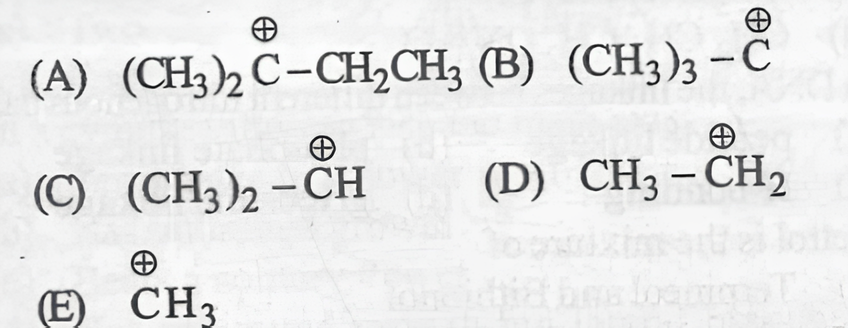
Question 150.

Arrange the following in increasing order of stability
[4 Marks] Diagram 17 – NEET-UG 2013 Question Paper — Set 2
  • (A) E
  • (B) E
  • (C) D
  • (D) A
Question 151.

Homolytic fission of the following alkanes forms free radicals CH₃ – CH₃, CH₃ – CH₂ – CH₃, (CH₃)₂CH – CH₃, CH₃ – CH₂ – CH(CH₃)₂. Increasing order of stability of the radicals is

[4 Marks]
  • (A) CH₃ – ĊH₂ < CH₃ – ĊH – CH₃ < (CH₃)₃Ċ – CH₃CH₂ < (CH₃)₂Ċ -- CH₂CH₃
  • (B) CH₃ – ĊH₂ < CH₃ – ĊH – CH₃ < (CH₃)₂Ċ – CH₂ - CH₃ < (CH₃)₃Ċ
  • (C) (CH₃)₃Ċ < (CH₃)₂Ċ – CH₂CH₃ < CH₃ – ĊH – CH₃ < CH₃ – ĊH₂
  • (D) (CH₃)₂Ċ – CH₂CH₃ < CH₃ – ĊH – CH₃ < CH₃ – ĊH₂ < (CH₃)₃Ċ
Question 152.

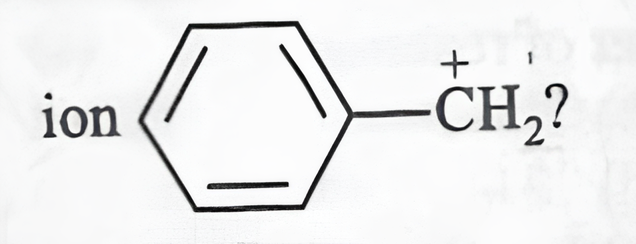
What is the hybridisation state of benzyl carbonium
[4 Marks] Diagram 18 – NEET-UG 2013 Question Paper — Set 2
  • (A) sp²d
  • (B) sp²
  • (C) spd²
  • (D) sp³
Question 153.

Nitrogen detection in an organic compound is carried out by Lassaigne’s test. The blue colour formed corresponds to which of the following formulae?
[4 Marks]
  • (A) Fe₃[Fe(CN)₆]₃
  • (B) Fe₃[Fe(CN)₆]₂
  • (C) Fe₄[Fe(CN)₆]₂
  • (D) Fe₄[Fe(CN)₆]₃
Question 154.

[4 Marks] Diagram 19 – NEET-UG 2013 Question Paper — Set 2
  • (A) A pair of geometrical isomers
  • (B) A pair of conformers
  • (C) Identical
  • (D) A pair of optical isomers
Question 155.

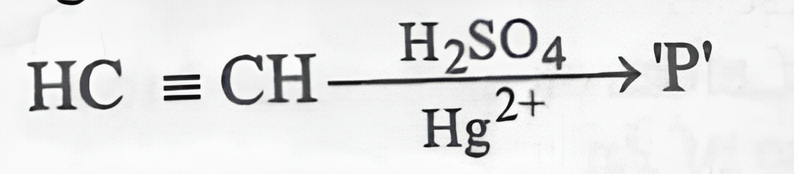
In the following reaction :

Product ‘P’ will not give
[4 Marks] Diagram 20 – NEET-UG 2013 Question Paper — Set 2
  • (A) Victory Meyer test
  • (B) Brady’s reagent test
  • (C) Tollen's reagent test
  • (D) lodoform test
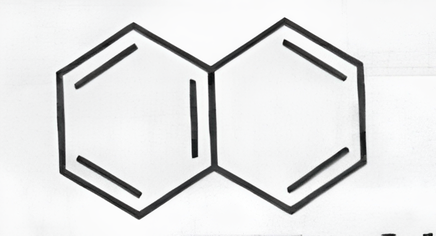
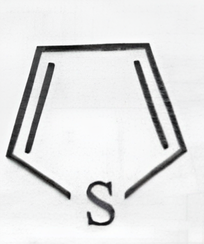
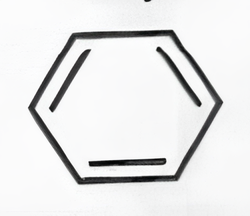
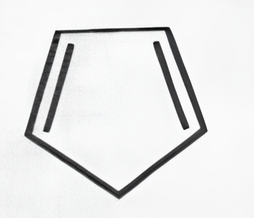
Question 156.

Which of the following chemical system is non aromatic?

[4 Marks]
  • (A) Diagram 21 – NEET-UG 2013 Question Paper — Set 2
  • (B) Diagram 22 – NEET-UG 2013 Question Paper — Set 2
  • (C) Diagram 23 – NEET-UG 2013 Question Paper — Set 2
  • (D) Diagram 24 – NEET-UG 2013 Question Paper — Set 2
Question 157.

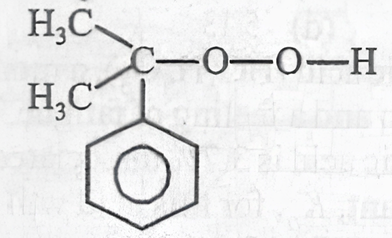
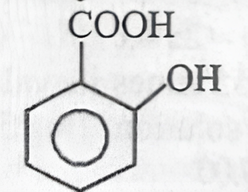
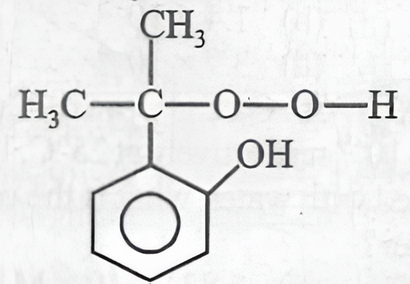
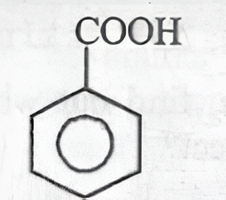
Which one of the following statements is not true?

[3 Marks]
  • (A) ‘When the pH of rain water is higher than 6.5, it is called acid rain.
  • (B) Fluoride deficiency in drinking water is harmful. Soluble fluoride is often used to bring its concentration upto 1ppm.
  • (C) Clean water would have a BOD value of 5 ppm.
  • (D) Dissolved oxygen (DO) in cold water can reach a concentration upto 10 ppm.
Question 158.

How many grams of cobalt metal will be deposited when a solution of cobalt (II) chloride is electrolyzed with a current of 10 amperes for 109 minutes (1 Faraday = 96,500 C; Atomic mass of Co = 59 u)

[4 Marks]
  • (A) 4.0
  • (B) 0.66
  • (C) 20.0
  • (D) 40.0
Question 159.

Consider the half-cell reduction reaction: Mn²⁺ + 2e⁻ → Mn, E° = -1.18 V Mn²⁺ → Mn³⁺ + e⁻, E° = -1.51 V The E° for the reaction 3Mn²⁺ → Mn⁰ + 2Mn³⁺, and possibility of the forward reaction are, respectively

[4 Marks]
  • (A) -2.69 V and no
  • (B) —4.18 V and yes
  • (C) +0.33 V and yes
  • (D) +2.69 V and no
Question 160.

A reaction is 50% completed in 2 hours and 75% completed in 4 hours. The order of

[4 Marks]
  • (A) 0
  • (B) 1
  • (C) 2
  • (D) 3
Question 161.

For a reaction between A and B the order with respect to A is 2and the order with respect to Bis 3. The concentrations of both A and B are doubled, the rate will increase by a factor of :

[4 Marks]
  • (A) 32
  • (B) 16
  • (C) 10
  • (D) 12
Question 162.

The metal oxide which cannot be reduced to metal by

carbon is

[4 Marks]
  • (A) Fe₂O₃
  • (B) Al₂O₃
  • (C) PbO
  • (D) ZnO
Question 163.

Identify the incorrect statement, regarding the molecule XeO₄:

[4 Marks]
  • (A) XeO₄ molecule is tetrahedral
  • (B) XeO₄ molecule is square planar
  • (C) There are four sp³–pσ bonds
  • (D) There are four pπ–dπ bonds
Question 164.

Sc (Z = 21) is a transition element but Zn (Z = 30) is not because

[3 Marks]
  • (A) last electron is assumed to be added to 4s level in case of Zn
  • (B) both Sc³⁺ and Zn²⁺ ions are colourless and form white compounds
  • (C) both Sc and Zn do not exhibit variable oxidation states
  • (D) in case of Sc, 3d orbitals are partially filled but in Zn these are completely filled
Question 165.

Gadolinium belongs to 4f series. Its atomic number is 64. Which of the following is the correct electronic configuration of gadolinium?

[4 Marks]
  • (A) [Xe]4f⁸6d²
  • (B) [Xe]4f⁹5s¹
  • (C) [Xe]4f⁷5d¹ 6s²
  • (D) [Xe]4f ⁶ 5⁵d²6s²
Question 166.

In a cymose inflorescence the main axis

[4 Marks]
  • (A) Has unlimited growth but lateral branches end in flowers
  • (B) Bears a solitary flower
  • (C) Has unlimited growth
  • (D) Terminates in a flower
Question 167.

The correct IUPAC name for [CrF₂(en)₂]Cl is:

[4 Marks]
  • (A) Chlorodifluoridobis (ethylene diamine) chromium (III)
  • (B) Chlorodifluoridoethy lenediaminechromium (III) chloride
  • (C) Difluorobis-(ethylene diamine) chromium (III) chloride
  • (D) Difluoridobis (ethylene diamine) chromium (III) chloride
Question 168.

In a particular isomer of [Co(NH₃)₄Cl₂] ⁰, the Cl–Co–Cl angle is 90°.

the isomer is known as .

[4 Marks]
  • (A) Position isomer
  • (B) cis-isomer
  • (C) Optical isomer
  • (D) Linkage isomer
Question 169.

Which is diamagnetic?

[4 Marks]
  • (A) [Fe(CN)₆]³⁻
  • (B) [Co(F₆)]³⁻
  • (C) [NiCl₄]²⁻
  • (D) [Ni(CN)₄]²⁻
Question 170.

The anion of acetylacetone (acac) forms Co(acac)₃ chelate with Co³⁺. The rings of the chelate are

[4 Marks]
  • (A) three membered
  • (B) five membered
  • (C) six membered
  • (D) four membered
Question 171.

Which among the following is a paramagnetic complex?

(At. No. of Mo = 42, Pt = 78)

[4 Marks]
  • (A) [Mo(CO)₆]
  • (B) [Co(NH₃)₆]³⁺
  • (C) [Pt(en)Cl₂]
  • (D) [CoBr₄]²⁻
Question 172.

Phenol is distilled with Zn dust followed by Friedel Crafts alkylation with propyl chloride in the presence of AlCl₃ to give a compound (B). (B) is oxidised in the presence of air to form the compound (C). The structural formula of (C) is

[4 Marks]
  • (A) Diagram 25 – NEET-UG 2013 Question Paper — Set 2
  • (B) Diagram 26 – NEET-UG 2013 Question Paper — Set 2
  • (C) Diagram 27 – NEET-UG 2013 Question Paper — Set 2
  • (D) Diagram 28 – NEET-UG 2013 Question Paper — Set 2
Question 173.

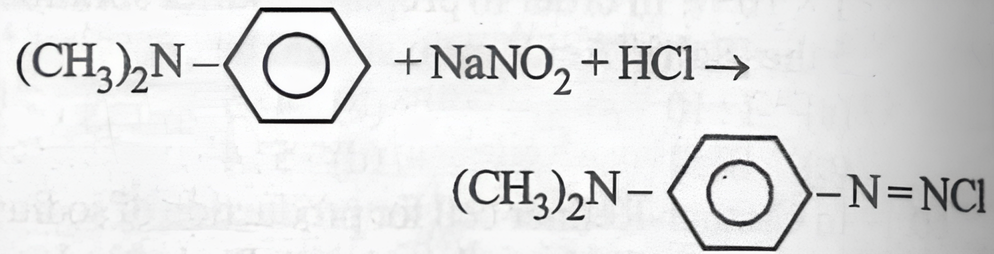
Some reactions of amines are given. Which one is correct ?

[4 Marks]
  • (A) (CH₃)₂NH + NaNO₂ + HCl → (CH₃)₂N–N=O
  • (B) CH₃NH₂ + C₆H₅SO₂Cl → CH₃NHSO₂C₆H₅
  • (C) CH₃CH₂NH₂ + HNO₂ → CH₃CH₂OH + N₂
  • (D) Diagram 29 – NEET-UG 2013 Question Paper — Set 2
Question 174.

On hydrolysis of a “compound”, two compounds are obtained. One of which on treatment with sodium nitrite and hydrochloric acid gives a product which does not respond to iodoform test. The second one reduces Tollen’s reagent and Fehling’s solution. The “compound” is

[4 Marks]
  • (A) CH₃CH₂CH₂ON=O
  • (B) CH₃CH₂CH₂CN
  • (C) CH₃CH₂CH₂NC
  • (D) CH₃CH₂CH₂CON(CH₃)₂
Question 175.

In DNA, the linkages between different nitrogenous bases are :

[4 Marks]
  • (A) peptide linkage
  • (B) phosphate linkage
  • (C) glycosidic linkage
  • (D) H-bonding
Question 176.
Dettol is the mixture of
[4 Marks]
  • (A) Chloroxylenol and Terpineol
  • (B) Chloroxylenol and Bithionol
  • (C) Phenol and Iodine
  • (D) Terpineol and Bithionol
Question 177.

Which condition is not satisfied by an ideal solution?

[4 Marks]
  • (A) Obeysance to Raoult’s Law
  • (B) Δ_mix H = 0
  • (C) Δ_mix V = 0
  • (D) Δ_mix S = 0
Question 178.

The outer electronic configuration of Gd (At. No. 64) is:

[4 Marks]
  • (A) 4f⁴ 5d⁵ 6s¹
  • (B) 4f⁵ 5d⁴ 6s¹
  • (C) 4f⁷ 5d¹ 6s²
  • (D) 4f⁸ 5d⁵ 6s²
Question 179.

Number of isomeric alcohols of molecular formula C₆H₁₄O which give positive iodoform test is

[4 Marks]
  • (A) three
  • (B) four
  • (C) five
  • (D) two
Question 180.

Arrange the following in increasing order of stability
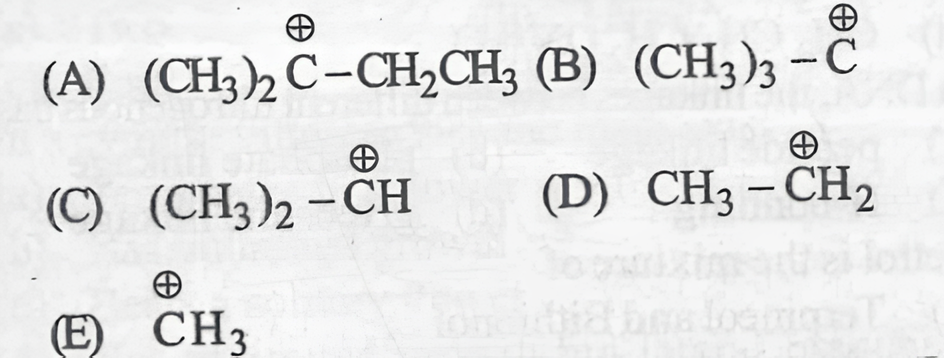
[4 Marks] Diagram 30 – NEET-UG 2013 Question Paper — Set 2
  • (A) E
  • (B) E
  • (C) A
  • (D) D