CBSE EXAMINATION PAPER-2015
NEET-ZOOLOGY
(Solved)
General Instructions :
Read the following instructions carefully and follow them :
- This question paper contains 180 questions. All questions are compulsory.
- This question paper is divided into 1 sections.
- Section A – questions number 1 to 180 are multiple choice questions
- There is no overall choice given in the question paper. However, an internal choice has been provided in few questions.
- Use of calculator is NOT allowed.
Section A
Doctors use stethoscope to hear the sounds produced during each cardiac cycle. The second sound is heard when:
The second sound heard by doctors using stethoscope occurs when semilunar valves close down after the blood flows into vessels from ventricles.
The cutting of DNA at specific locations became possible with the discovery of
Restriction enzymes are used to cut DNA at specific locations.
Choose the correct option for the following events of meiosis in correct sequence:
(A) Crossing over
(B) Synapsis
(C) Terminalisation of chiasmata
(D) Disappearance of nucleolus
Synapsis → Crossing over → Terminalisation of chiasmata → Disappearance of nucleolus.
Chromatophores take part in:
Chromatophores play an important role in the process of photosynthesis. They contain pigments and are found in blue-green algae.
In the following human pedigree, the filled symbols represent the affected individuals. Identify the type of given pedigree.
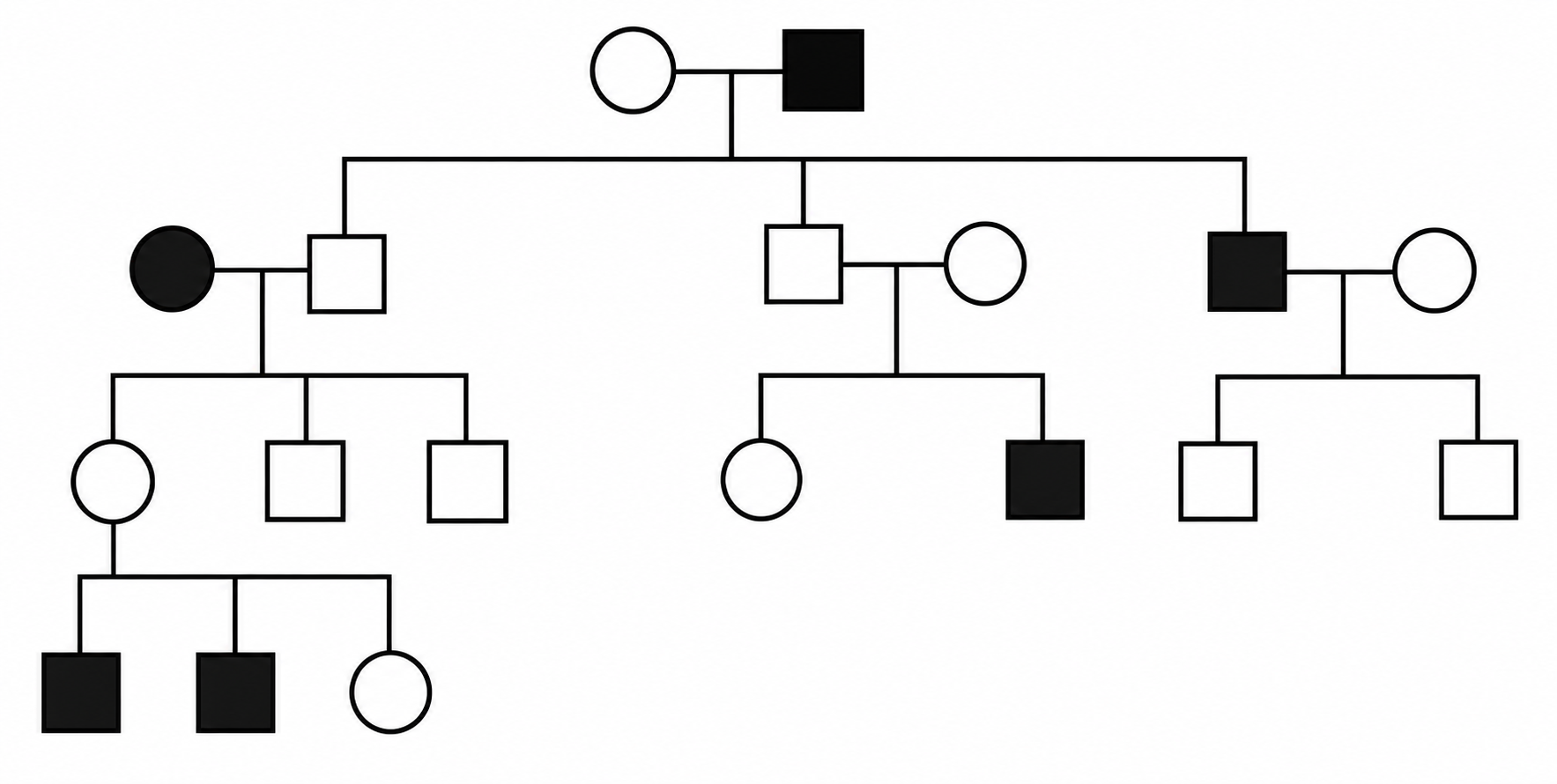
Autosomal recessive is a type of disorder in which two copies of an abnormal gene must be found for the disease in the affected person.
Flowers are unisexual in:
The flowers of cucumber are unisexual; it means they have only male flowers or only female flowers.
Read the different components from (A) to (D) in the list given below and tell the correct order of the components with reference to their arrangement from outer side to inner side in a woody dicot stem.
(A) Secondary cortex (B) Wood
(C) Secondary phloem (D) Phellem The correct order is:
The correct sequence from outer side to inner side in a woody dicot stem is as follows: Phellem → Secondary cortex → Secondary phloem → Wood. (d)→(a)→(c)→(b)
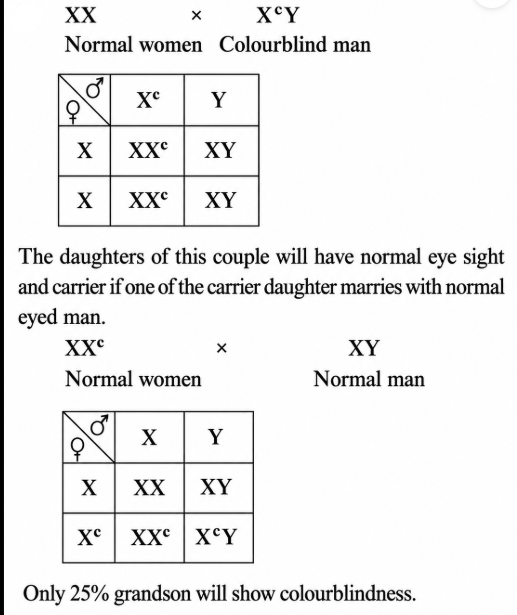
A colour blind man marries a woman with normal sight who has no history of colour blindness in her family. ‘What is the probability of their grandson being colour blind?
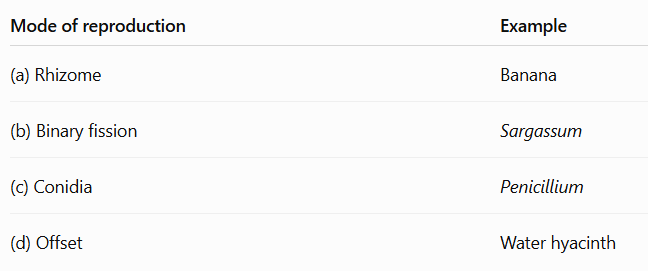
In which of the following both pairs have correct combination?
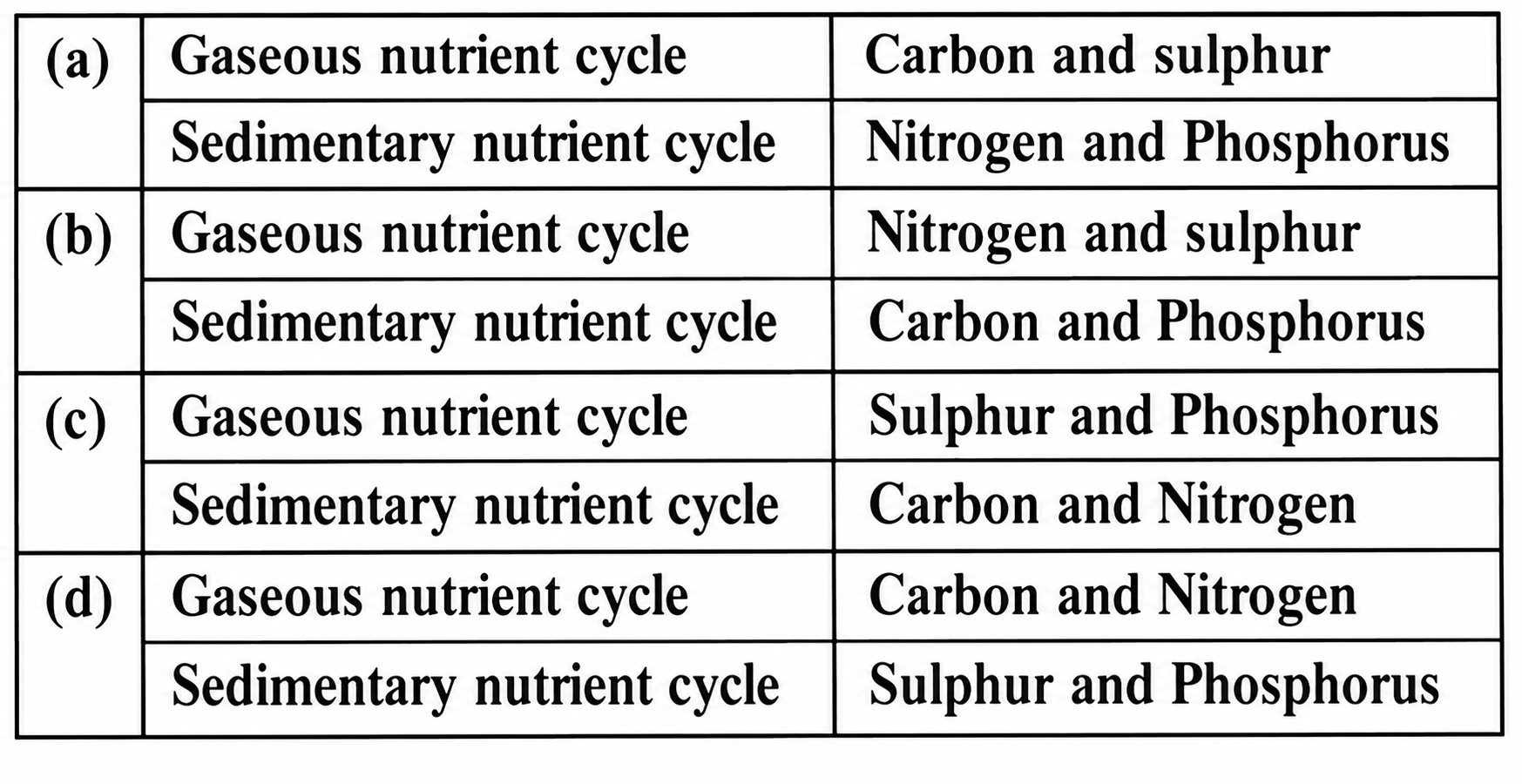
Carbon and Nitrogen are gaseous nutrient cycles. Sulphur and phosphorus are sedimentary nutrient cycles.
A childless couple can be assisted to have a child through a technique called GIFT. The full form of this technique is:
GIFT (Gamete Intra Fallopian Transfer) is a technique helping to have a child.
Destruction of the anterior horn cell of the spinal cord would result in loss of:
In poliomyelitis, anterior horn cells of spinal cord are destroyed, which causes loss of motor activities of limbs.
Name the pulmonary disease in which alveolar surface area involved in gas exchange is drastically reduced due to damage in the alveolar walls.
In the disease emphysema, alveolar surface area is reduced due to destruction of alveolar walls.
Cellular organelles with membranes are:
Lysosomes, Golgi apparatus and mitochondria are the cell organelles which have membranes.
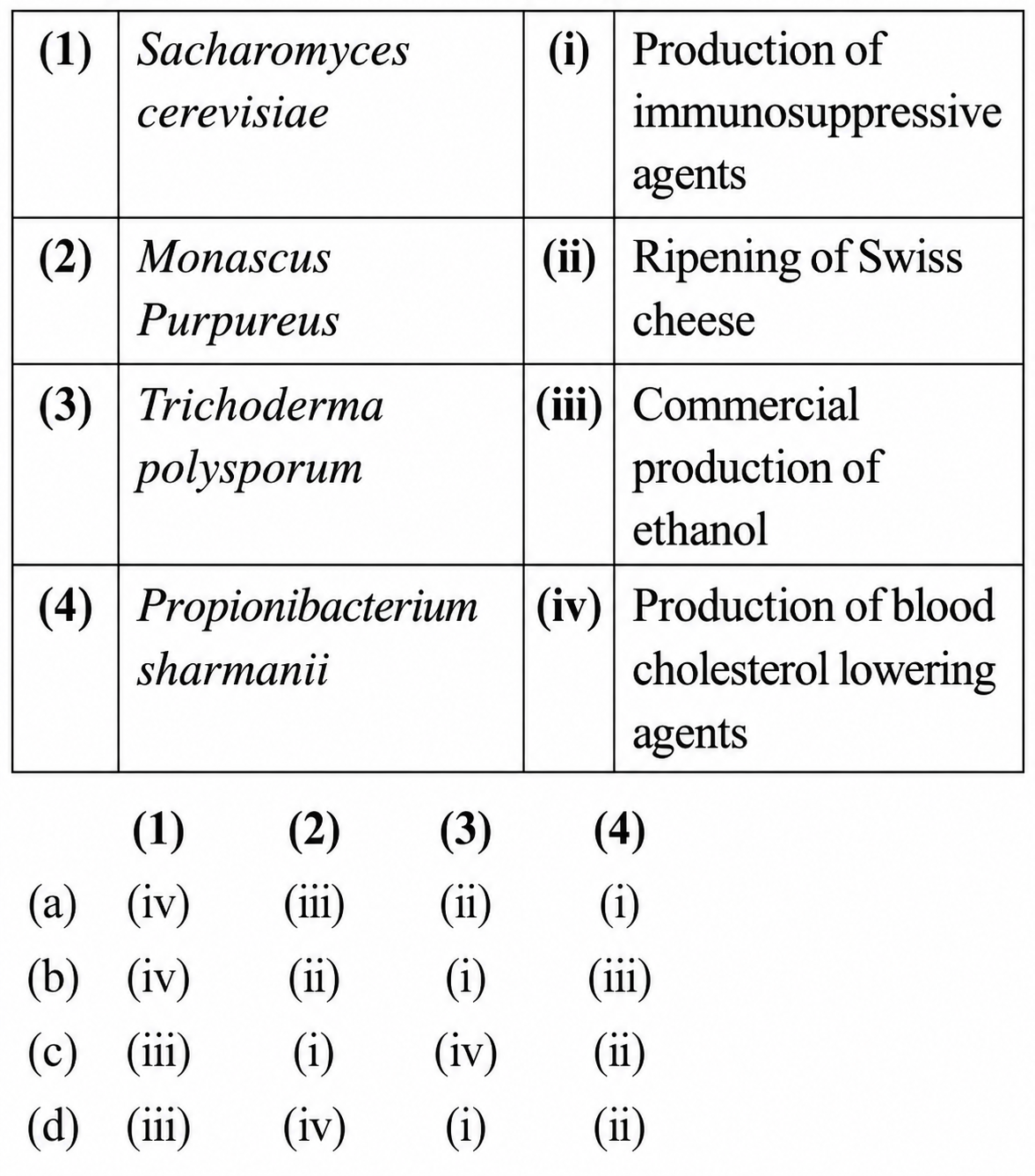
Match the columns and identify the correct option.
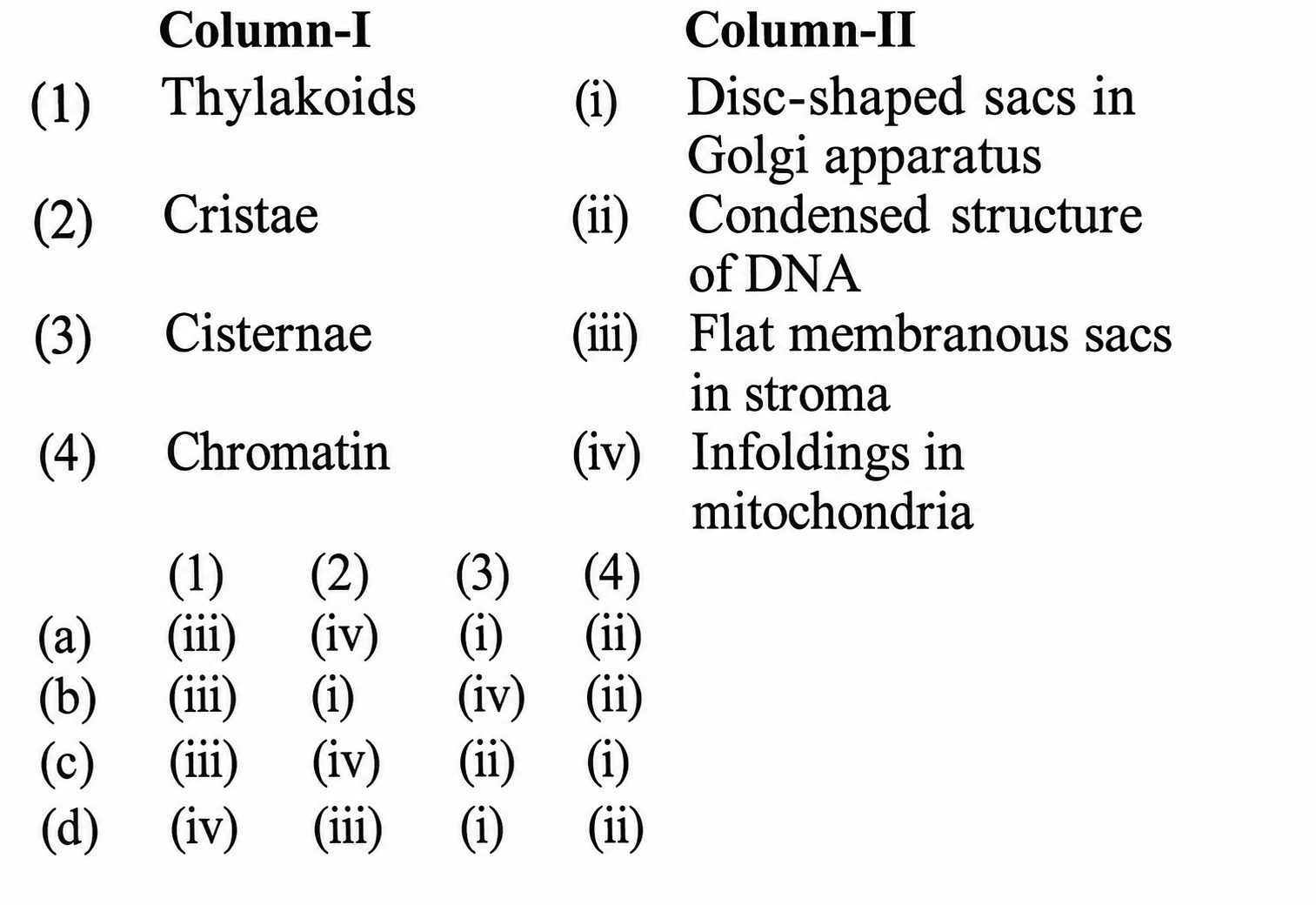
(a) → (iii), (b) → (iv), (c) → (i), (d) → (ii)
Satellite DNA is important because it:
Satellite DNA displays a high degree of polymorphism in a population and also the same degree of polymorphism in an individual, which is inherited from parents to children (offsprings).
A mixture of gases contains H₂ and O₂ gases in the ratio of 1 : 4 (w/w). What is the molar ratio of the two gases in the mixture?
Ratio of weight of gases = w_H₂ : w_O₂ = 1:4
Ratio of moles of gases =
n_H₂ : n_O₂ = 1/2 : 4/32
= 1/2 × 32/4
∴ Molar Ratio = 4 : 1
The species Ar, K⁺ and Ca²⁺ contain the same number of electrons. In which order do their radii increase?
In isoelectronic species, the radius decreases with increase in nuclear charge. Hence increasing order of radius is:
Ca⁺² < K⁺ < Ar
Which of the following pairs of ions are isoelectronic and isostructural?
ClO₃⁻ and SO₃²⁻ both have the same number of electrons (42), and the central atom in each is sp³ hybridised. Both have one lone pair on the central atom; hence they are pyramidal.
Maximum bond angle at nitrogen is present in which of the following?
NO₂⁺ has sp hybridisation, so it is linear with bond angle:
180°.
The correct bond order in the following species is:
O₂⁺ ion
Total number of electrons = (16 − 1) = 15
Electronic configuration:
σ1s² < σ*1s² < σ2s² < σ*2s² < σ2pₓ² < π2pᵧ² = π2p_z² < π*2pᵧ¹
Bond order = (N_b − Nₐ)/2
= (10 − 5)/2
= 5/2=2(1/2)
O₂⁻ (Superoxide ion):
Total number of electrons = (16 + 1) = 17
Electronic configuration:
σ1s² < σ*1s² < σ2s² < σ*2s² < σ2pₓ² < π2pᵧ² = π2p_z² < π*2pᵧ¹ = π*2p_z¹
Bond order = (N_b − Nₐ)/2
= (10 − 7)/2
= 3/2 = 1½
O₂²⁺ ion:
Total number of electrons = (16 − 2) = 14
Electronic configuration:
σ1s² < σ1s² < σ2s² < σ2s² < σ2pₓ² < π2pᵧ² = π2p_z²
Bond order = (N_b − Nₐ)/2
= (10 − 4)/2
= 6/2
= 3
So, bond order: O₂⁻ < O₂ < O₂⁺ < O₂²⁺
Which of the following options represents the correct bond order?
Oxygen molecule (O₂)
Total number of electrons = 16
Electronic configuration:
σ1s² < σ1s² < σ2s² < σ2s² < σ2pₓ² < π2pᵧ² = π2p_z² < π2pᵧ¹ = π2p_z¹
Bond order = (N_b − Nₐ)/2
= (10 − 6)/2
= 4/2
= 2
O₂⁺ ion
Total number of electrons = (16 − 1) = 15
Electronic configuration:
σ1s² < σ1s² < σ2s² < σ2s² < σ2pₓ² < π2pᵧ² = π2p_z² < π*2pᵧ¹
Bond order = (N_b − Nₐ)/2
= (10 − 5)/2
= 5/2
= 2½
O₂⁻ (Superoxide ion)
Total number of electrons = (16 + 1) = 17
Electronic configuration:
σ1s² < σ1s² < σ2s² < σ2s² < σ2pₓ² < π2pᵧ² = π2p_z² < π2pᵧ² = π2p_z¹.
Bond order = (N_b − Nₐ)/2
= (10 − 7)/2
= 3/2
= 1½
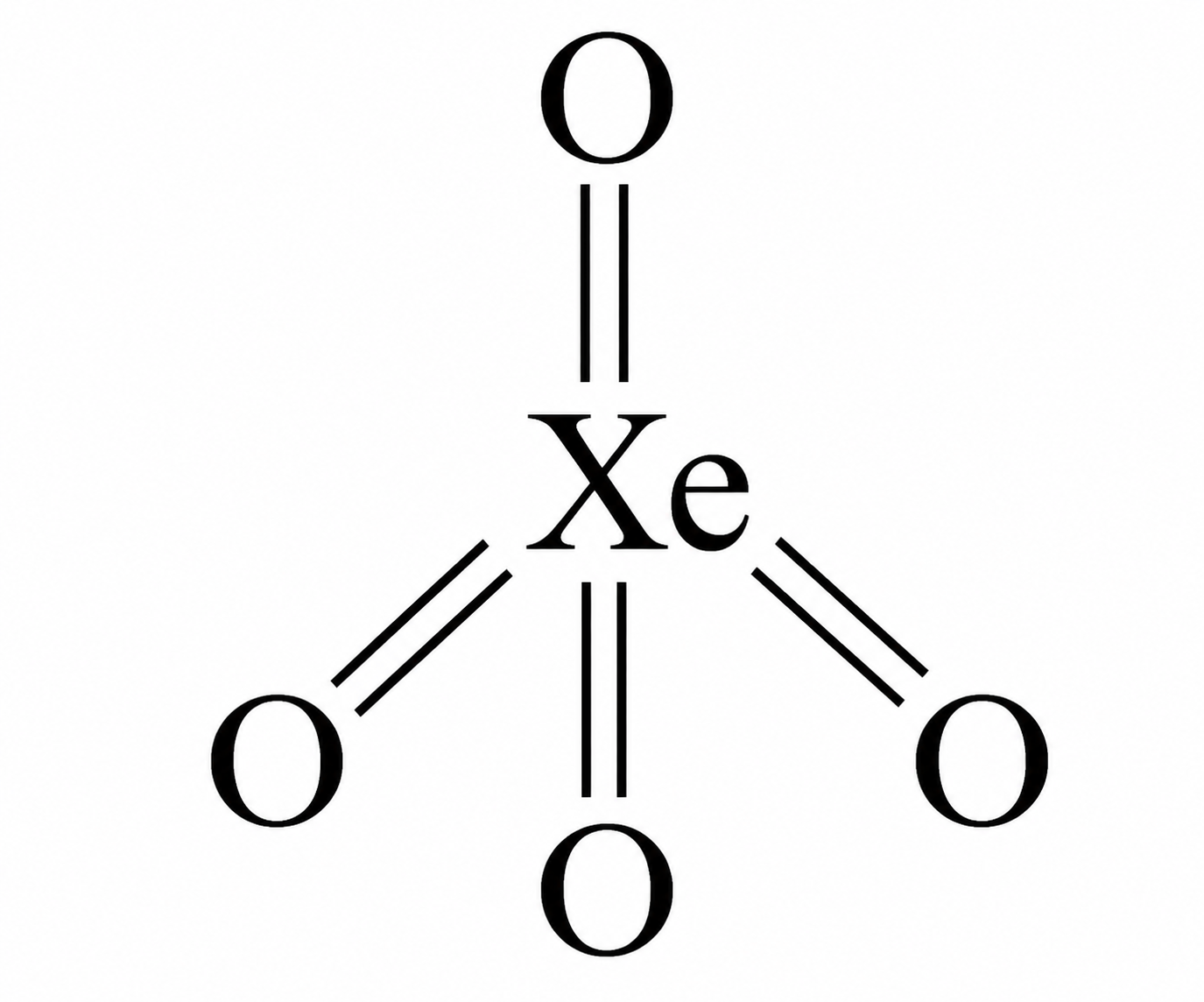
Which of the following species contains equal number of σ- and π-bonds?
Number of σ bonds = 4
Number of π bonds = 4
If the value of an equilibrium constant for a particular reaction is 1.6 × 10¹², then at equilibrium the system will contain:
Equilibrium constant for reaction:
K = 1.6 × 10¹² = [Product] / [Rectant]
The value of K is very high, so the system will contain mostly products at equilibrium.
Which of the following statements is correct for a reversible process in a state of equilibrium?
ΔG°= -2.30RTlogK
because at equilibrium ΔG=0
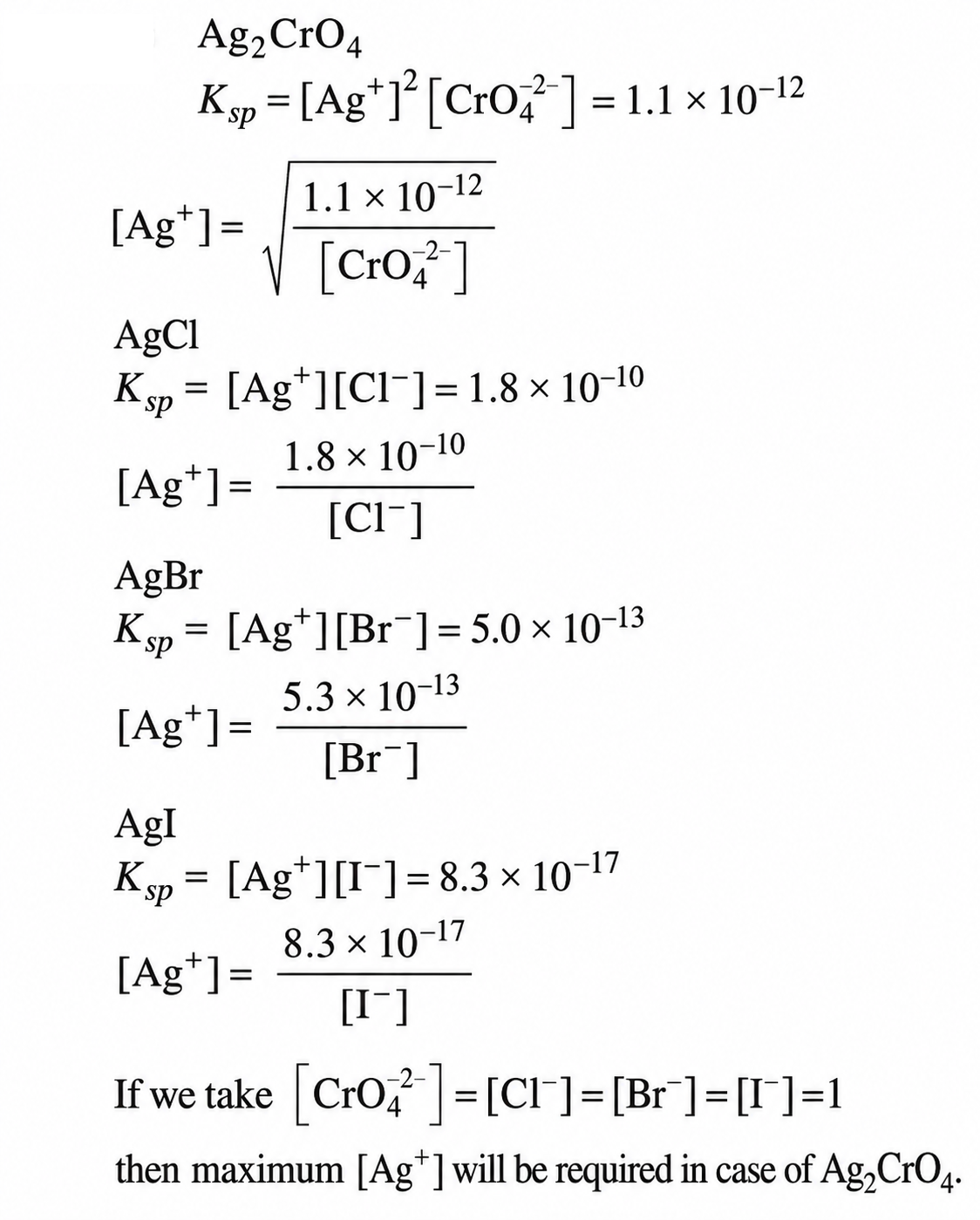
The Kₛₚ of Ag₂CrO₄, AgCl, AgBr and AgI are respectively,
1.1 × 10⁻¹², 1.8 × 10⁻¹⁰, 5.0 × 10⁻¹³, 8.3 × 10⁻¹⁷
Which of the following salts will precipitate first on adding AgNO₃ solution to a solution containing equal moles of NaCl, NaBr, NaI and Na₂CrO₄?
The function of "Sodium pump" is a biological process operating in each and every cell of all animals. Which of the following biologically important ions is also a constituent of this pump?
In sodium pump, high concentration of potassium ions and a low concentration of sodium ions are maintained within a cell by a plasma membrane protein.
Solubility of the alkaline earth's metal sulphates in water decreases in the sequence:
Solubility of alkaline earth metal sulphates decreases down the group due to decrease in hydration energy.
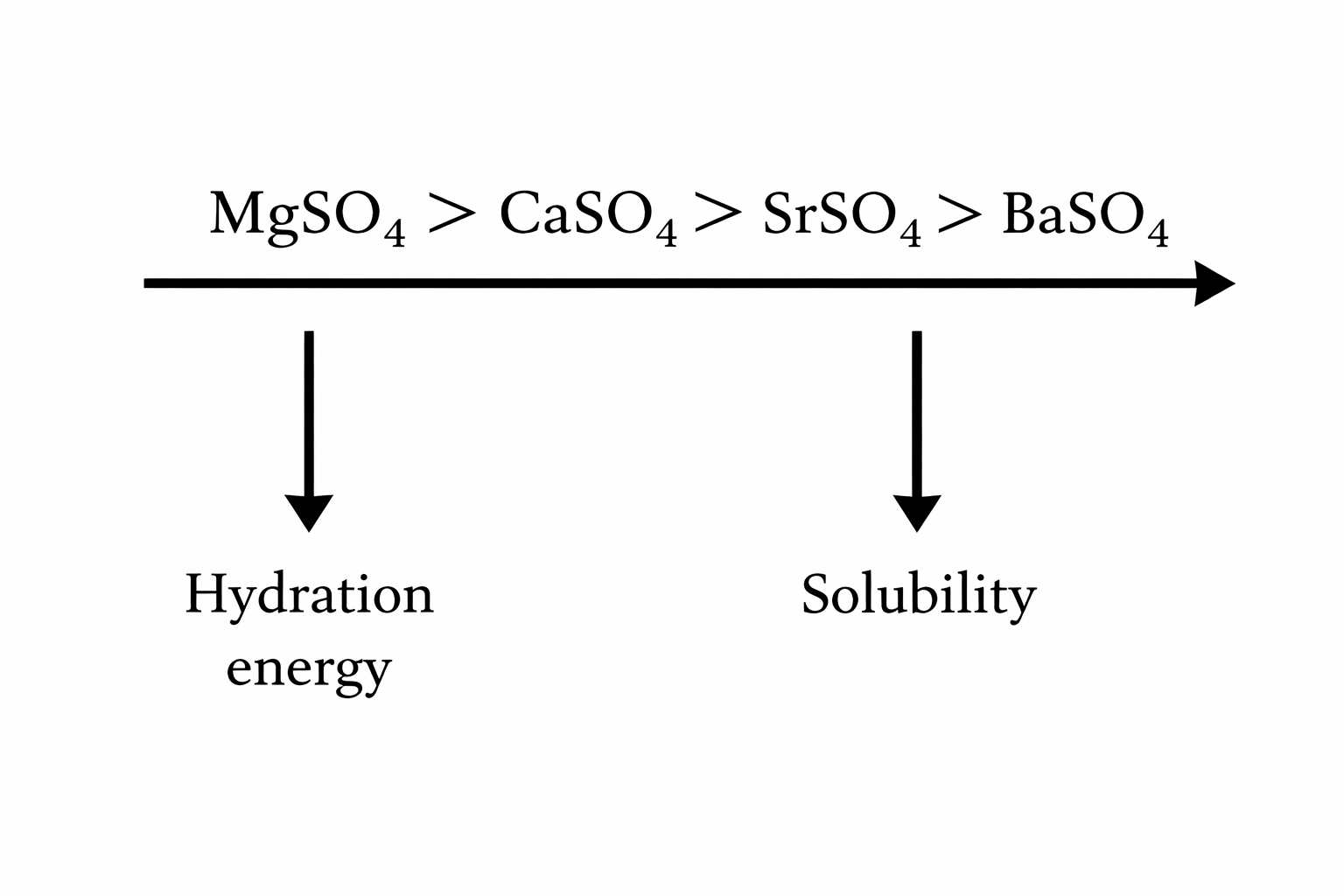
Given
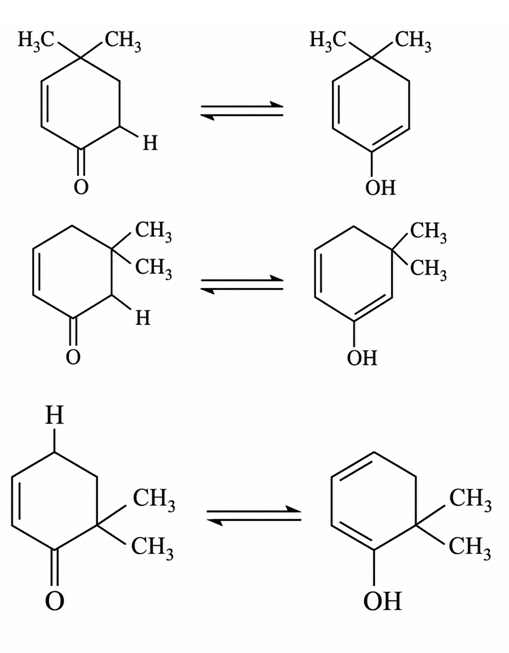
Which of the given compounds can exhibit tautomerism?
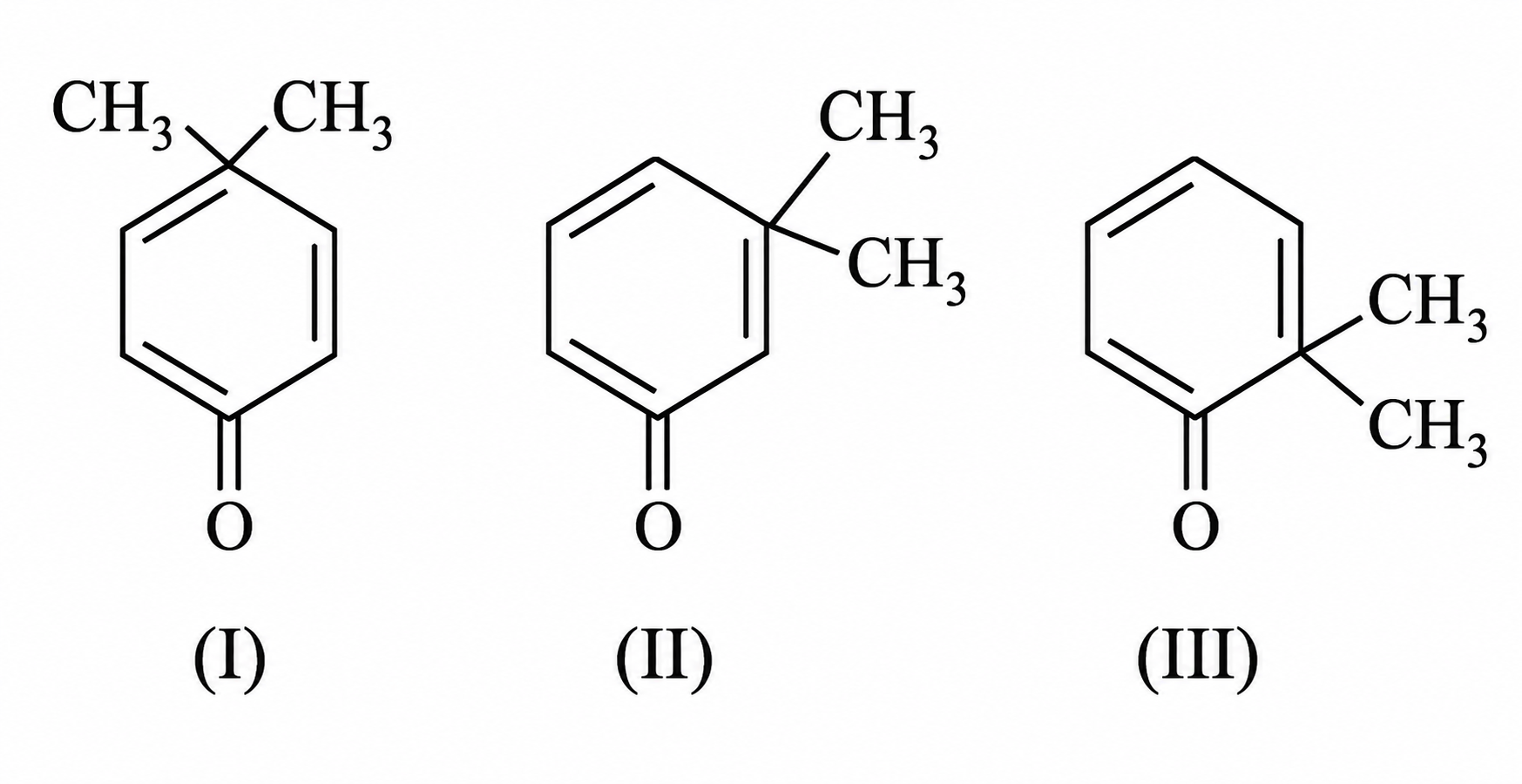
All of these compounds show tautomerism.
Consider the following compounds
Hyperconjugation occurs in :
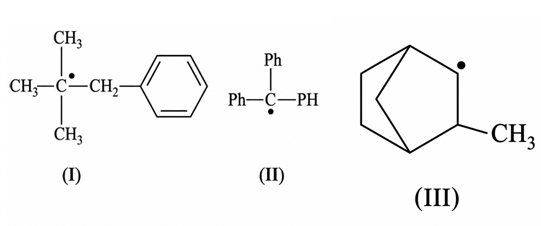
Only structure (III) has H in conjugation with free radical. So, hyperconjugation is possible in III only.
Which of the following is the most correct electron displacement for a nucleophilic reaction to take place?
-
(A)
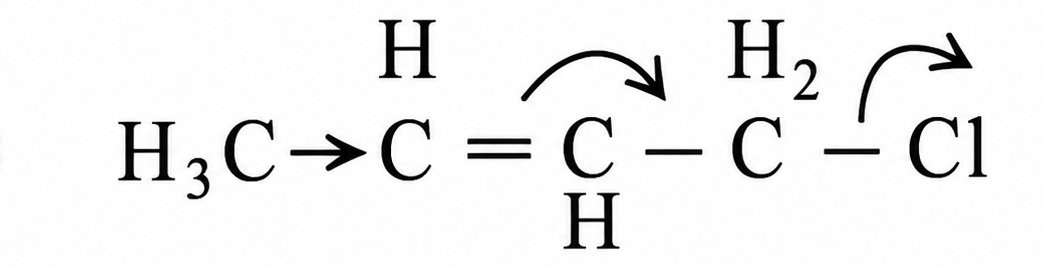
-
(B)
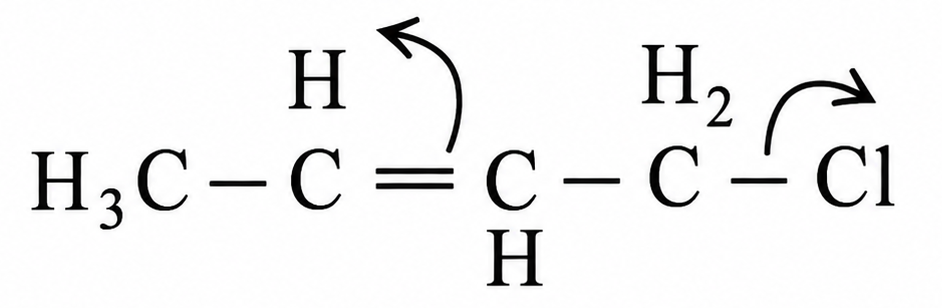
-
(C)
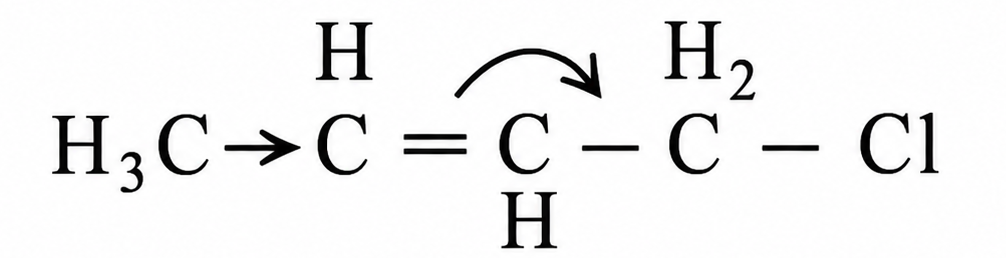
-
(D)
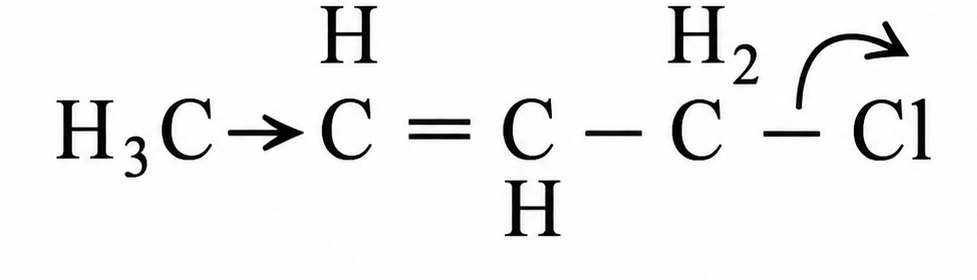
.
In Duma's method for estimation of nitrogen, 0.25 g of an organic compound gave 40 mL of nitrogen collected at 300 K temperature and 725 mm pressure. If the aqueous tension at 300 K is 25 mm, the percentage of nitrogen in the compound is:
Wt. of organic substance = 0.25 g
V₁ = 40 mL, T₁ = 300 K
P₁ = 725 − 25 = 700 mm of Hg
P₂ = 760 mm of Hg (at STP)
T₂ = 273 K
P₁V₁/T₁ = P₂V₂/T₂
V₂ (Volume of nitrogen at STP)
V₂ = 273 × 700 × 40 / 300 × 760 = 33.52 mL
Percentage of nitrogen = 28 × Volume of N₂ at STP × 100 / 22400 × Wt. of organic substance
= 28 × 33.52 × 100 / 22400 × 0.25
= 16.76 %
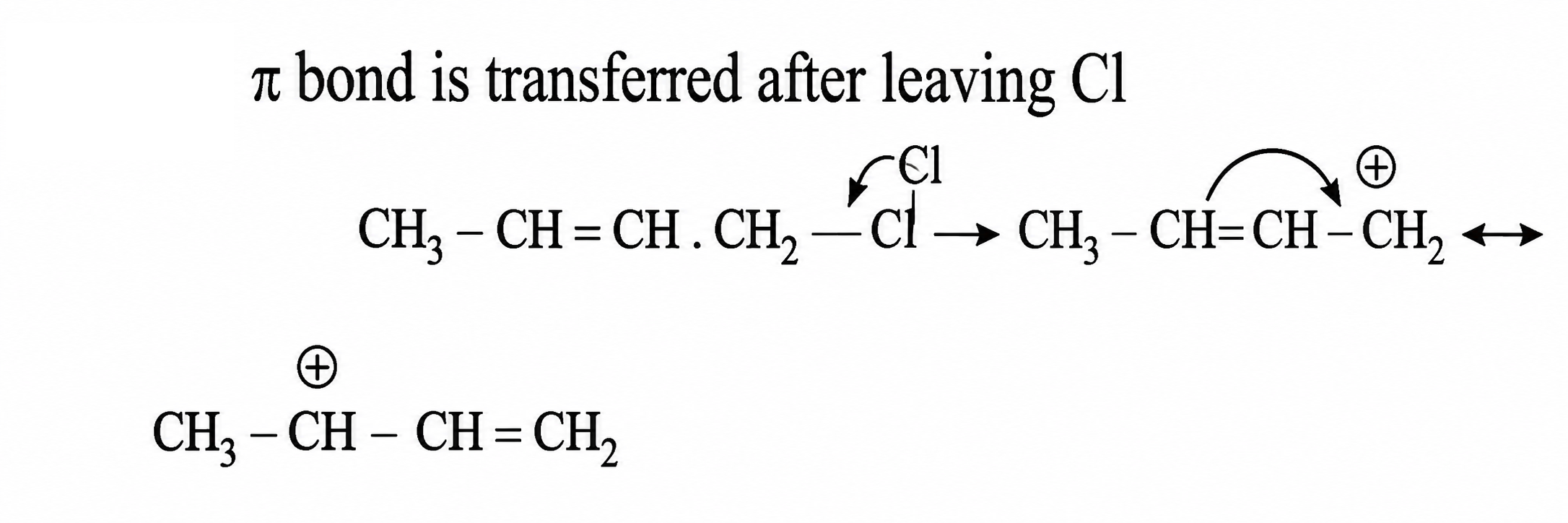
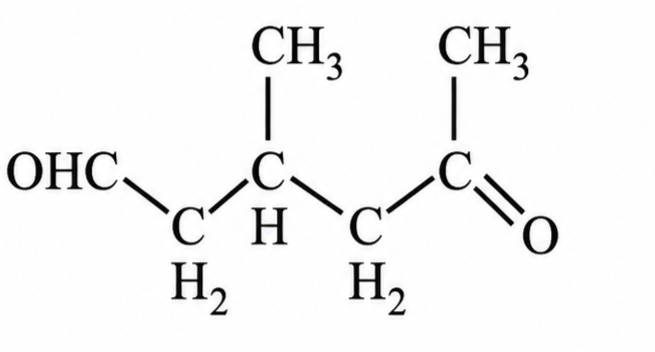
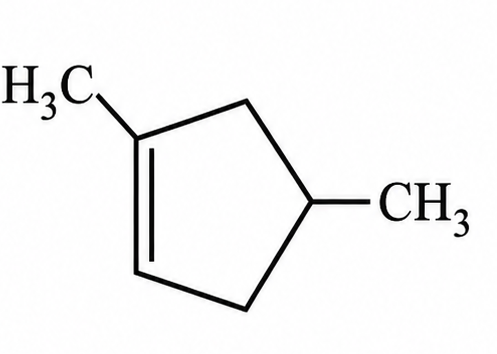
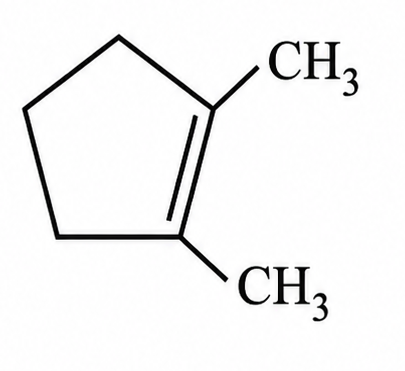
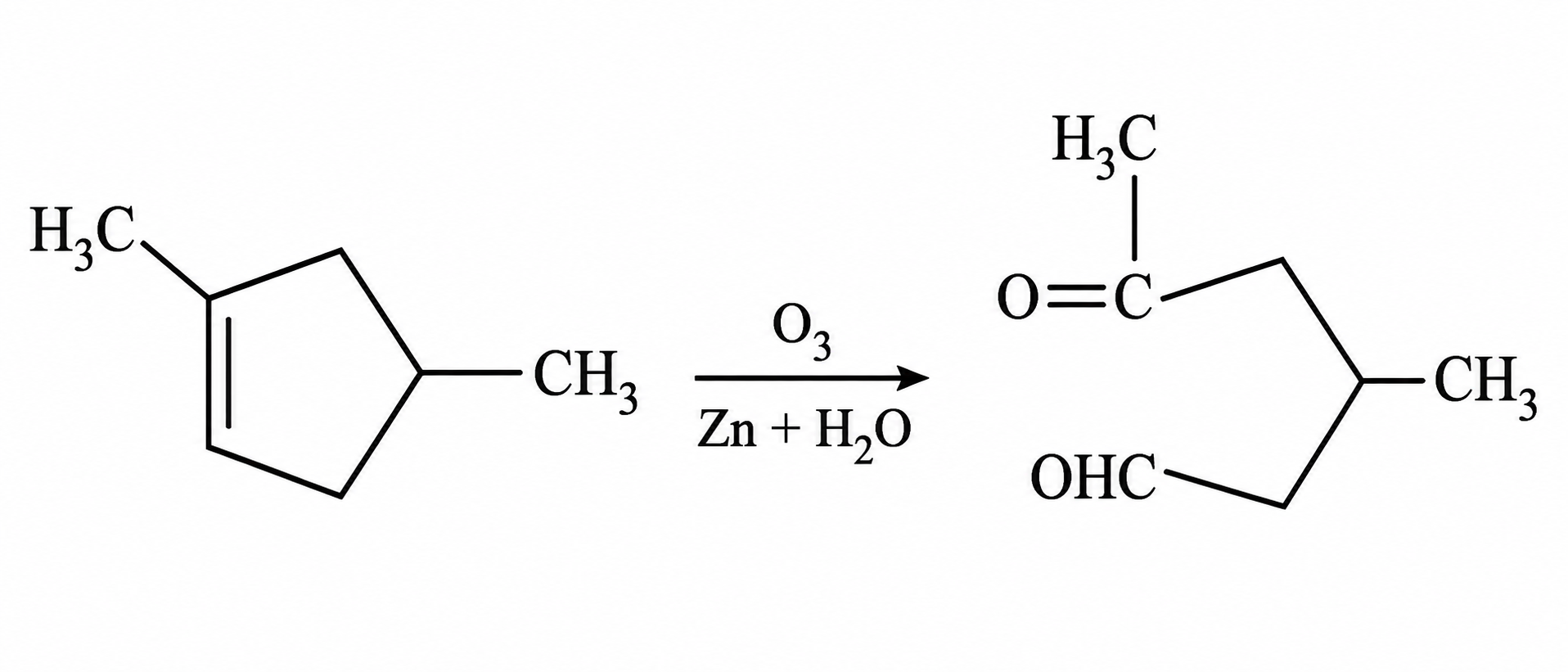
A single compound of the structure :
is obtainable from ozonolysis of which of the following cyclic compounds ?
-
(A)
-
(B)
-
(C)
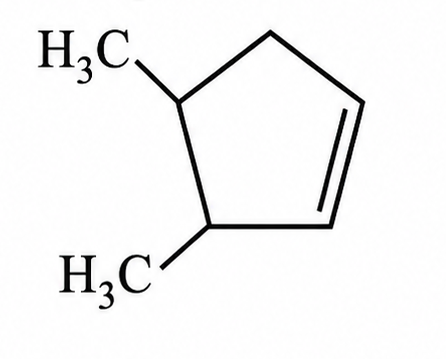
-
(D)
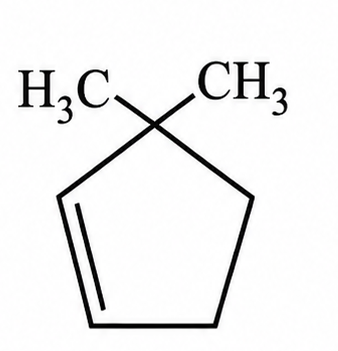
.
The total number of π - bond electrons in the following structure is :
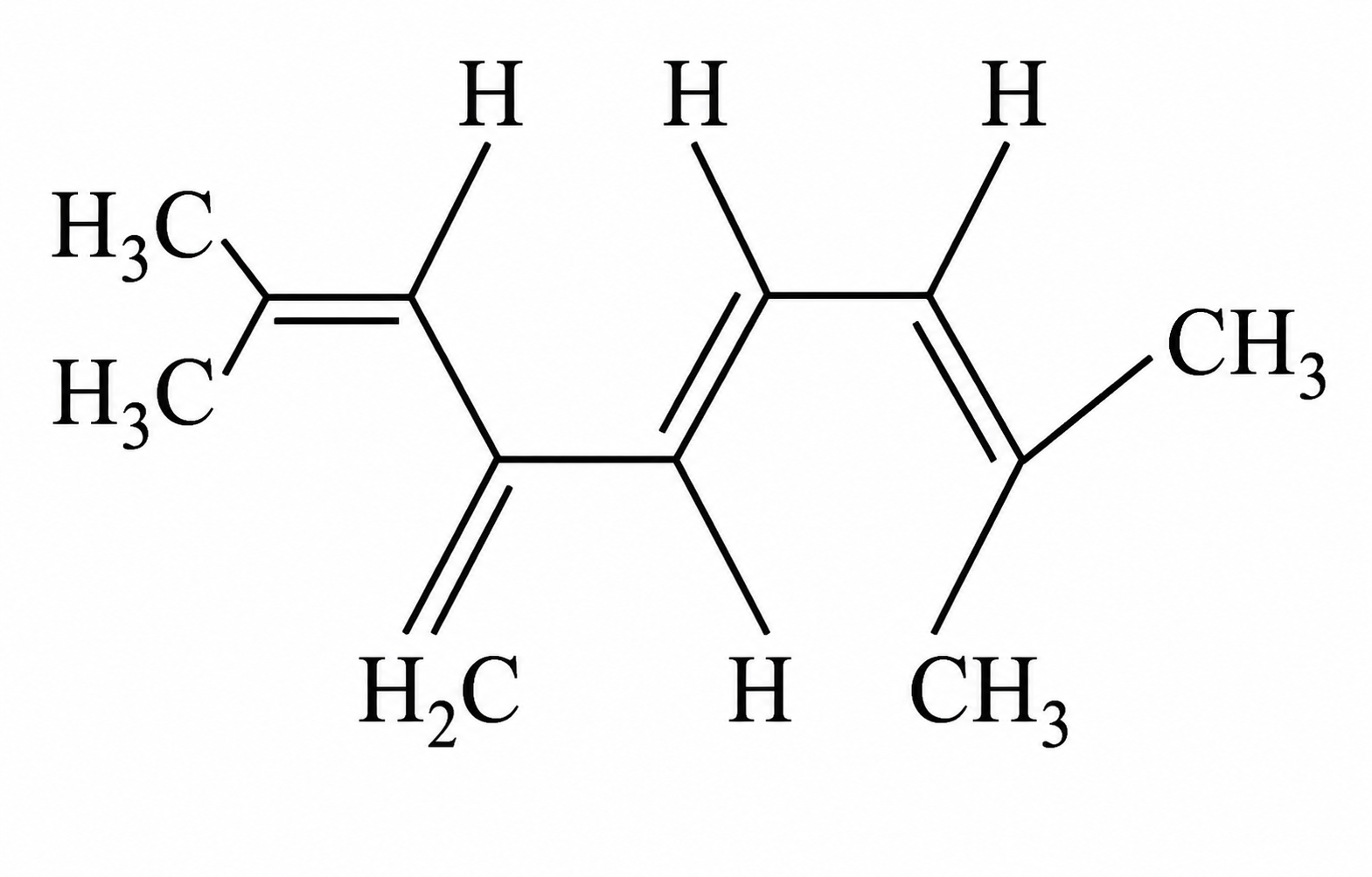
No. of double bonds = 4
No. of π bond electrons
= 2 × No. of double bonds
= 2 × 4
= 8
Which one is not equal to zero for an ideal solution?
For an ideal solution, ΔSₘᵢₓ > 0
Entropy will always increase upon mixing two compounds as disorder increases.
The oxidation of benzene by V₂O₅ in presence of air produces:
.
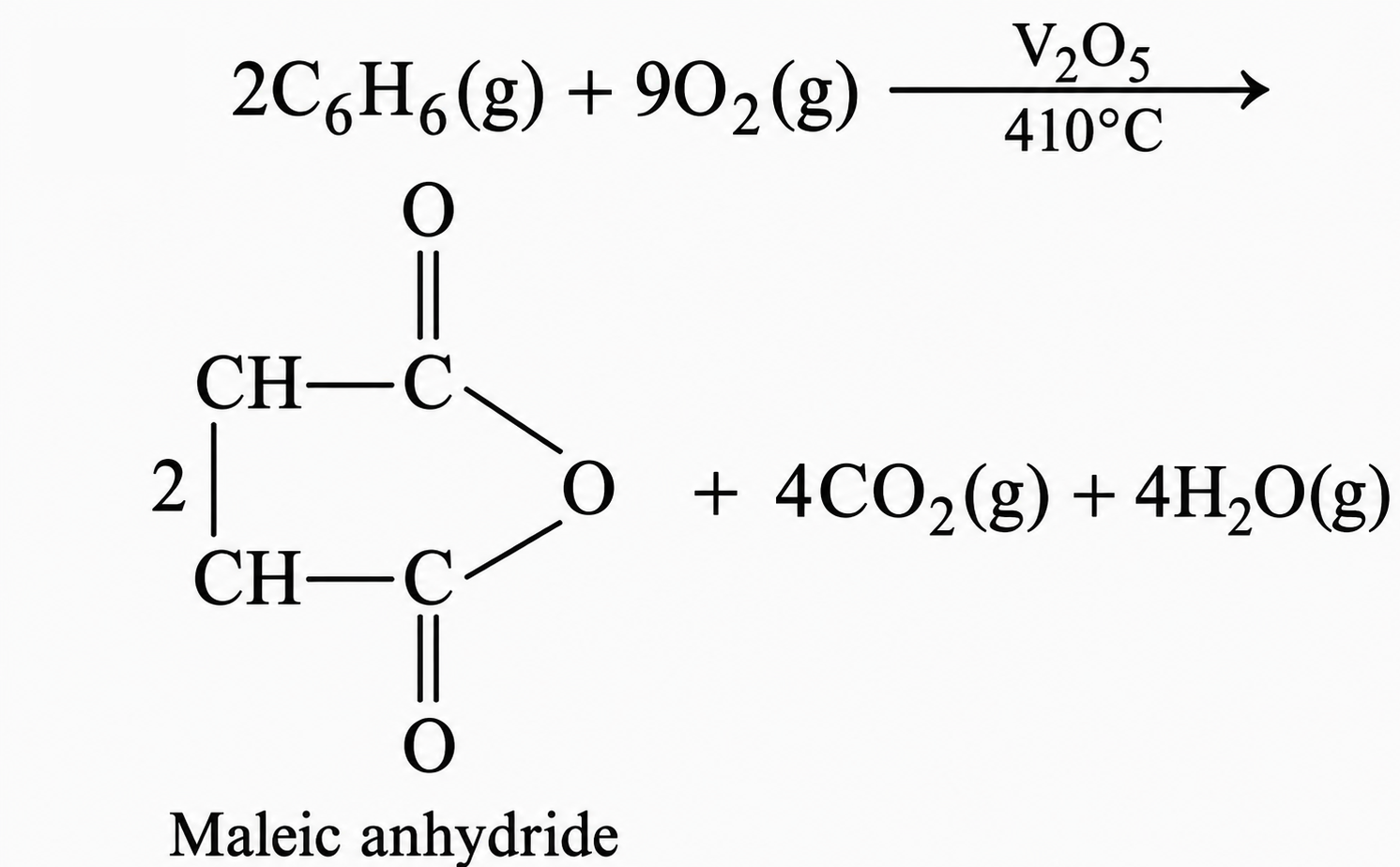
Which one of the following electrolytes has the same value of van't Hoff's factor (i) as that of Al₂(SO₄)₃ (if all are 100% ionised)?
K₄[Fe(CN)₆] ⇌ 4K⁺ + [ Fe(CN)₆]⁻
and
Al₂(SO₄)₃ → 2Al³⁺ + 3SO₄²⁻
Van't Hoff factor is 5 for both Al₂(SO₄)₃ and K₄[Fe(CN)₆].
The boiling point of 0.2 mol kg⁻¹ solution of X in water is greater than equimolal solution of Y in water. Which one of the following statements is true in this case?
ΔT_b = iK_bm
Given, (ΔT_b)ₓ > (ΔT_b)_y
iₓK_b m > i_yK_b m
(K_b is the same for the same solvent)
So, iₓ > i_y
So, x is undergoing dissociation in water.
A device that converts energy of combustion of fuels like hydrogen and methane, directly into electrical energy is known as:
A device that converts energy of combustion of fuels, directly into electrical energy is known as fuel cell.
When initial concentration of a reactant is doubled in a reaction, its half-life period is not affected. The order of the reaction is:
t_1/2 = 0.693/k
For a first-order reaction, t_1/2 is independent of the initial concentration of the reactant.
The activation energy of a reaction can be determined from the slope of which of the following graphs?
Arrhenius equation
K = Ae⁻ᴱₐ/ ᴿᵗ
ln K = ln A − EₐRT
slope = −Eₐ/R
So, the activation energy of a reaction can be determined from the slope of the graph of lnK vs 1/T..
Which property of colloidal solution is independent of charge on the colloidal particles?
Tyndall effect is an optical property, and it is independent of charge on colloidal particles.
Metals are usually not found as nitrates in their ores”. Out of the following two (i) and (ii) reasons which is/are true for the above observation?
(i) Metal nitrates are highly unstable.
(ii) Metal nitrates are highly soluble in water.
Metal nitrates are highly soluble in water and are very stable, e.g., NaNO₃ and KNO₃.
Nitrogen dioxide and sulphur dioxide have some properties in common. Which property is shown by one of these compounds, but not by the other?
SO₂ is widely used in food and drinks industries for its property as a preservative and antioxidant, while NO₂ is not used as a food preservative.
Magnetic moment 2.84 B.M. is given by:
(At. nos., Ti = 22, Cr = 24, Co = 27, Ni = 28)
Magnetic moment = 2.84 B.M. This indicates that 2 unpaired electrons are present.
Number of unpaired electrons (n) = 2
Hence, Ni²⁺ gives a magnetic moment of 2.84 B.M.

The number of d-electrons in Fe²⁺ (Z = 26) is not equal to the number of electrons in which one of the following?
Fe²⁺ = 3d⁶ (Number of d-electrons = 6)
In Cl = 1s² 2s² 2p⁶ 3s² 3p⁵
Total p-electrons = 11, which are not equal to the number of d-electrons in Fe²⁺.
p-electrons in Ne = 1s² 2s² 2p⁶ = 6
s-electrons in Mg = 1s² 2s² 2p⁶ 3s² = 6
Which of the following processes does not involve oxidation of iron?
Formation of Fe(CO)₅ from Fe involves no change in oxidation state of iron.
Because of lanthanoid contraction, which of the following pairs of elements have nearly same atomic radii? (Numbers in the parentheses are atomic numbers.)
Zr (40) and Hf (72) are in the same group (4). Because of lanthanoid contraction, they have nearly same atomic radii.
Cobalt (III) chloride forms several octahedral complexes with ammonia. Which of the following will not give chloride ions with silver nitrate at 25°C?
[CoCl₃·3NH₃] will not give test for chloride ions with silver nitrate due to absence of ionisable chloride atoms.
[CoCl₃·3NH₃] ≡ [Co(NH₃)₃Cl₃]
[Co(NH₃)₃Cl₃] -AgNO₃→ No ppt
Which of these statements about [Co(CN)₆]³⁻ is true?
In [Co(CN)₆]³⁻, the oxidation number (O.N.) of Co is +3.
CO³⁺ = 3d⁶4s⁰
CN⁻ is a strong field ligand.
Therefore, pairing of electrons occurs in this complex. Hence, no unpaired electron is present and it is a low-spin complex.
In which of the following compounds, the C–Cl bond ionisation shall give the most stable carbonium ion?
-
(A)
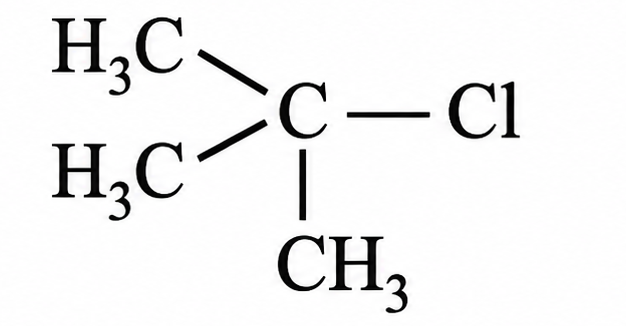
-
(B)
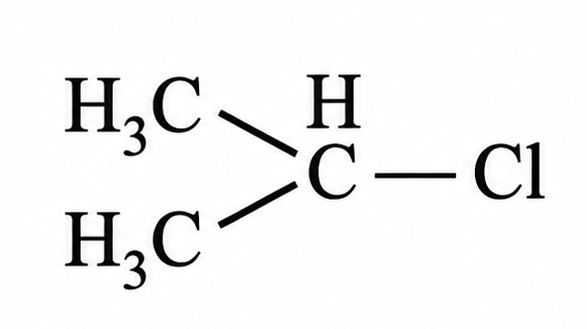
-
(C)
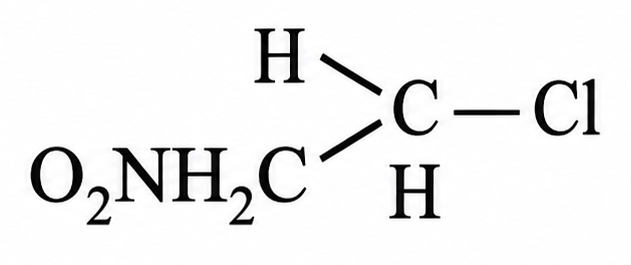
-
(D)
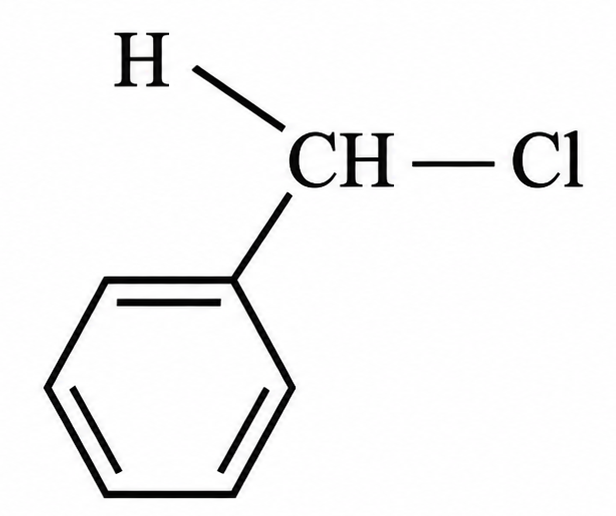
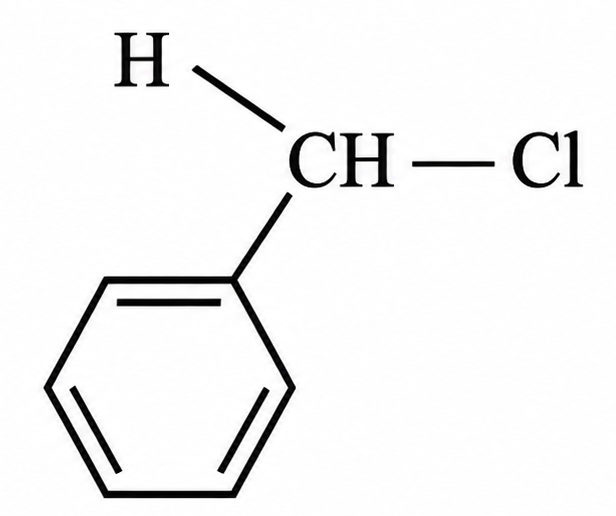
The reaction is called :
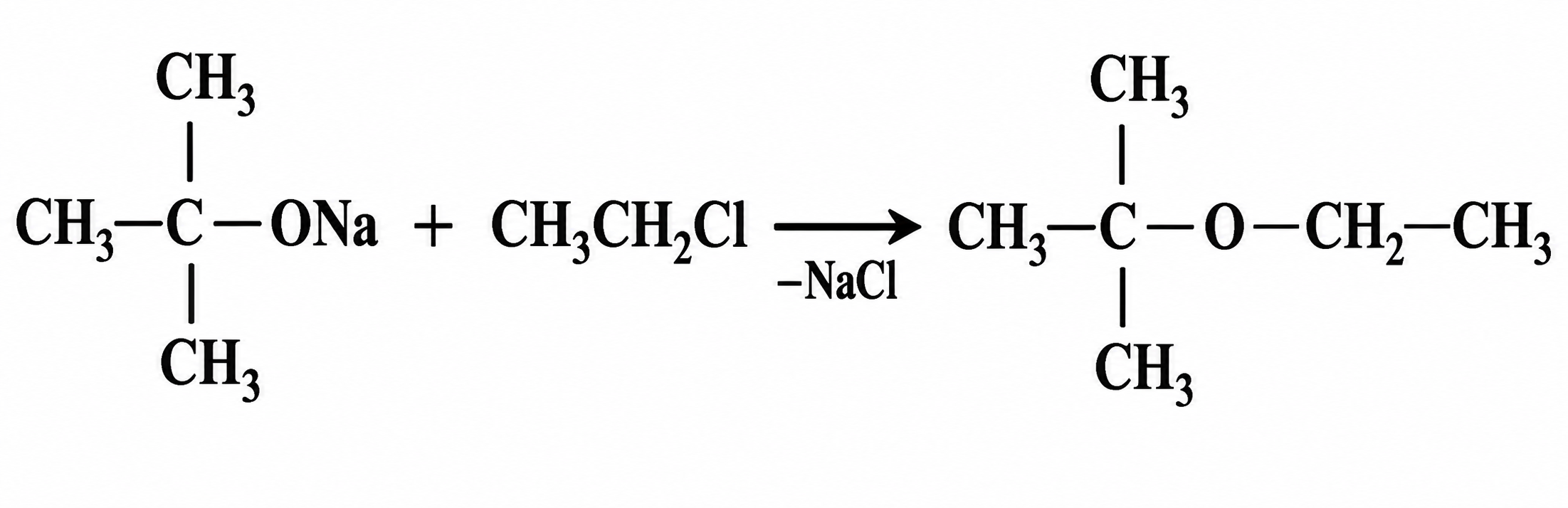
Williamson synthesis is one of the best methods for the preparation of symmetrical and unsymmetrical ethers. In this method, an alkyl halide is allowed to react with sodium alkoxide.
An organic compound 'X' having molecular formula C₅H₁₀O yields phenyl hydrazone and gives negative response to the iodoform test and Tollen's test. It produces n-pentane on reduction. 'X' could be:
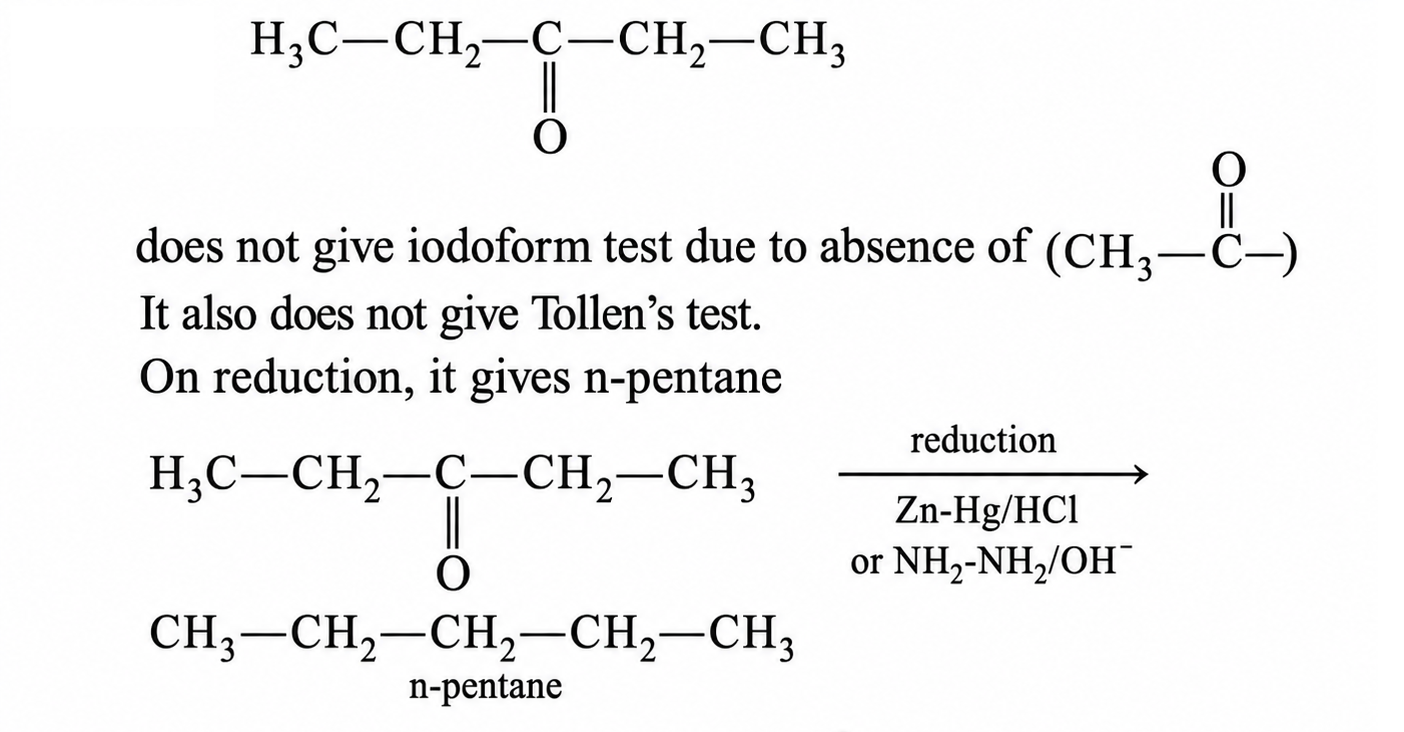
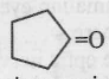
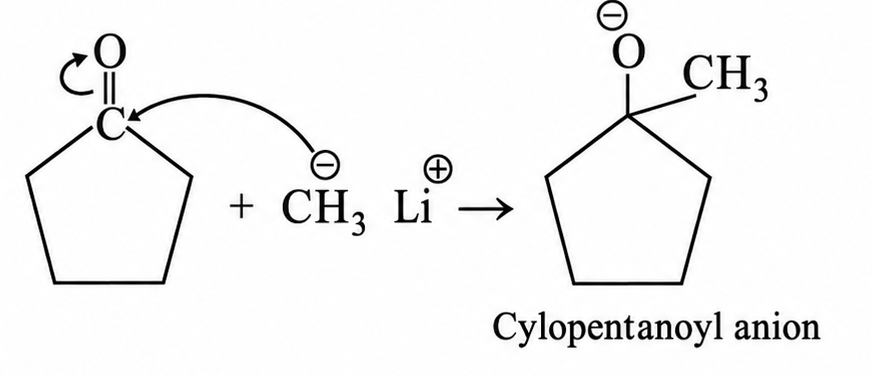
Treatment of cyclopentanone with methyl lithium gives which of the following species?
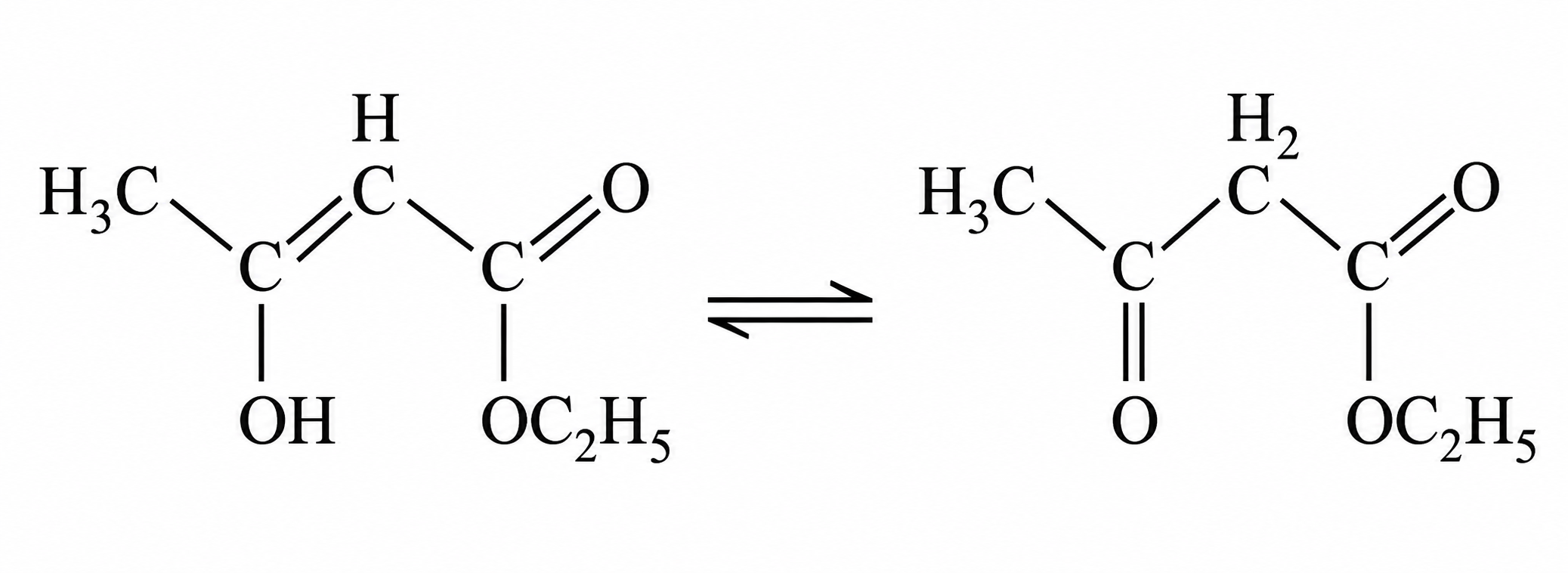
The enolic form of ethyl acetoacetate as below has:
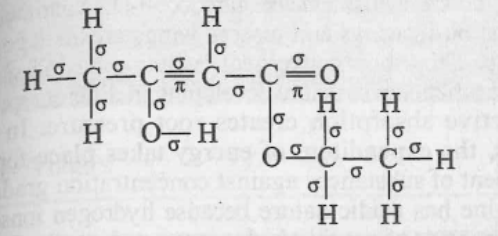
Enolic form of ethyl acetoacetate has 18 sigma and 2 pi-bonds as shown below:
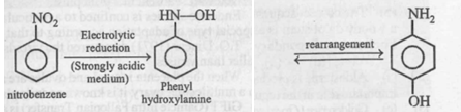
The electrolytic reduction of nitrobenzene in strongly acidic medium produces:
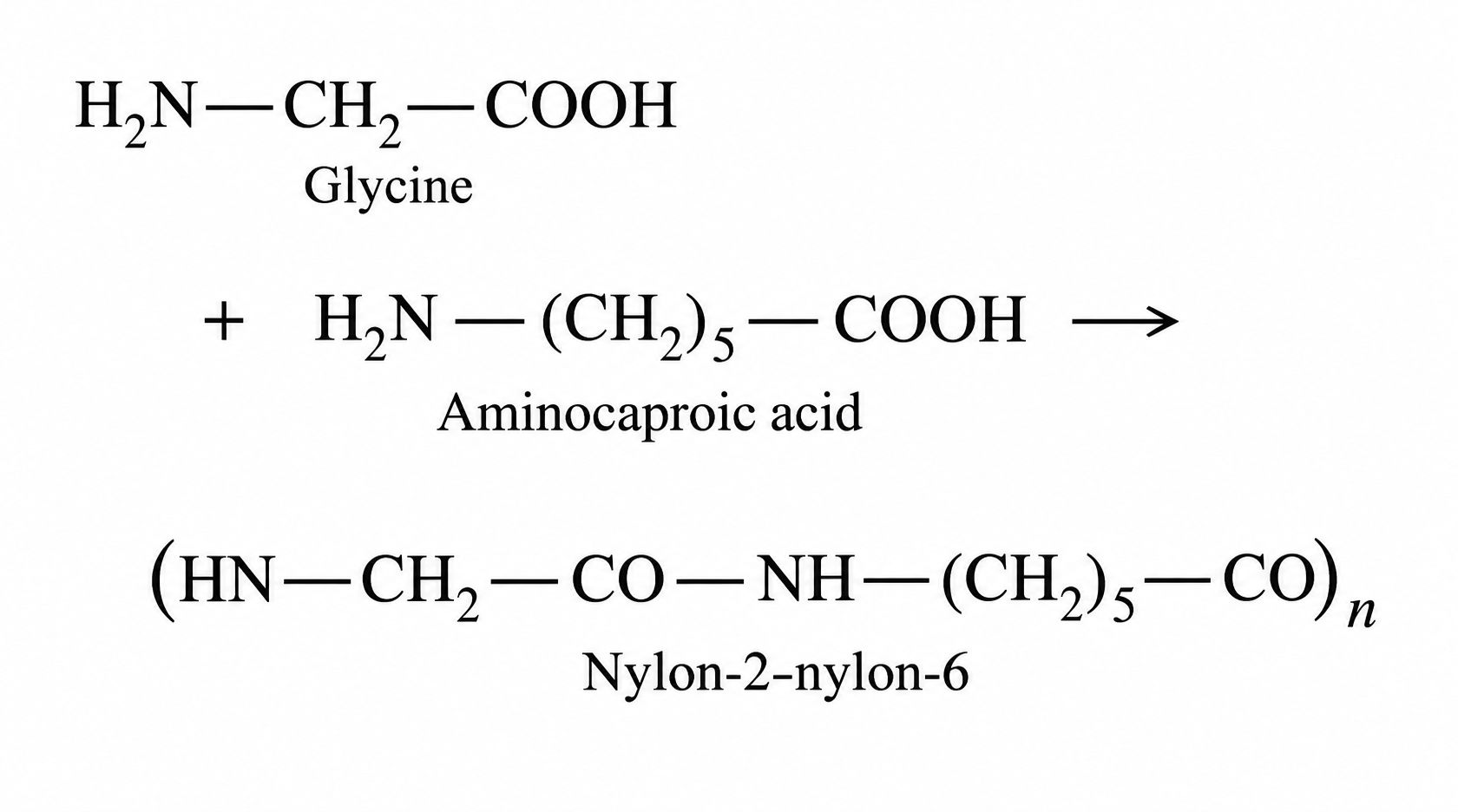
Biodegradable polymer which can be produced from glycine and aminocaproic acid is:
Bithionol is generally added to soaps as an additive to function as a/an:
Bithionol is added to soaps to impart antiseptic properties.
The angular momentum of electron in 'd' orbital is equal to:
Orbital angular momentum = √(l(l+1)h
For d-orbital l = 2
angular momentum = √2(2+1)h = √6h
The reaction of C₆H₅CH = CHCH₃ with HBr produces:
-
(A)
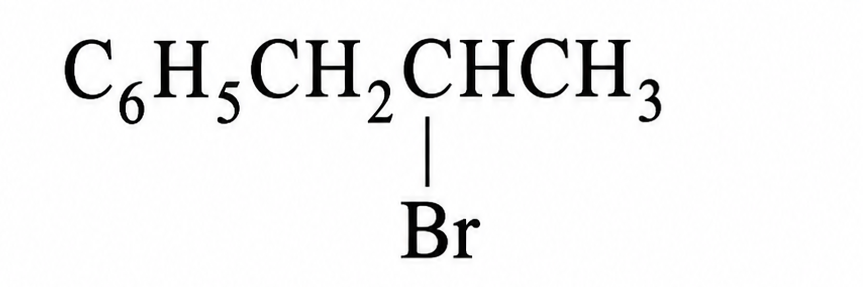
-
(B)
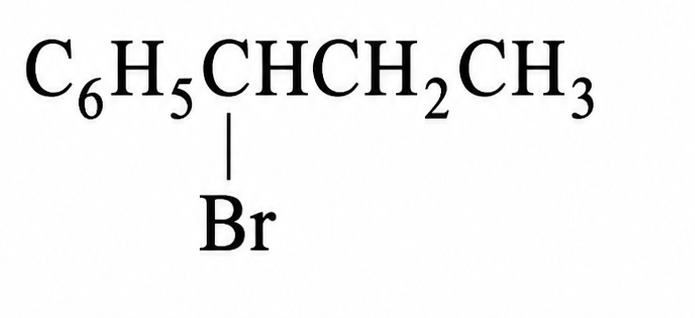
-
(C)
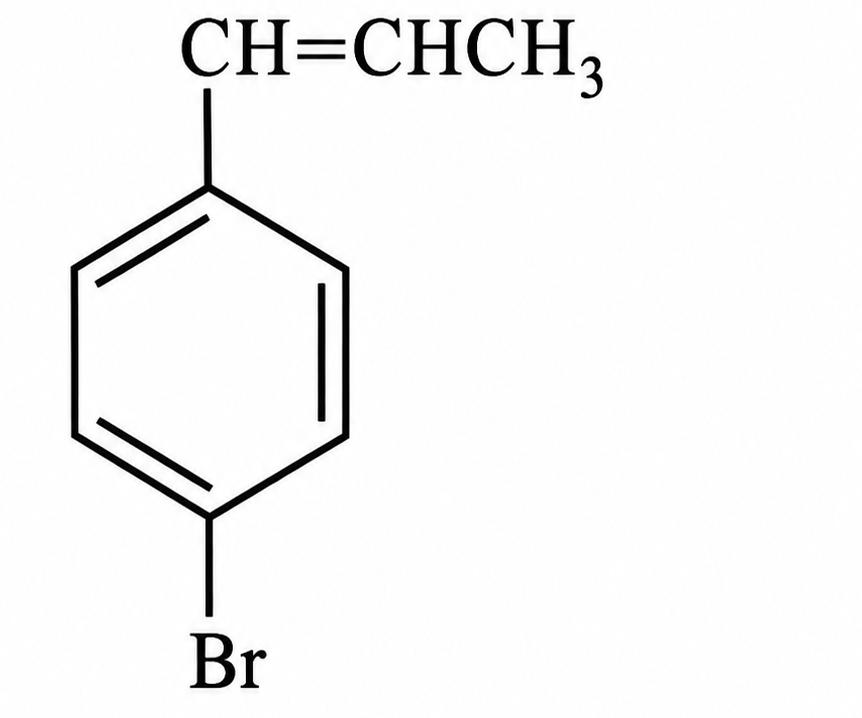
-
(D)
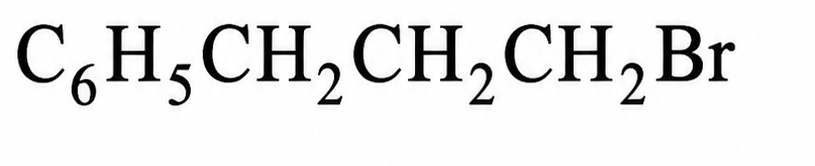
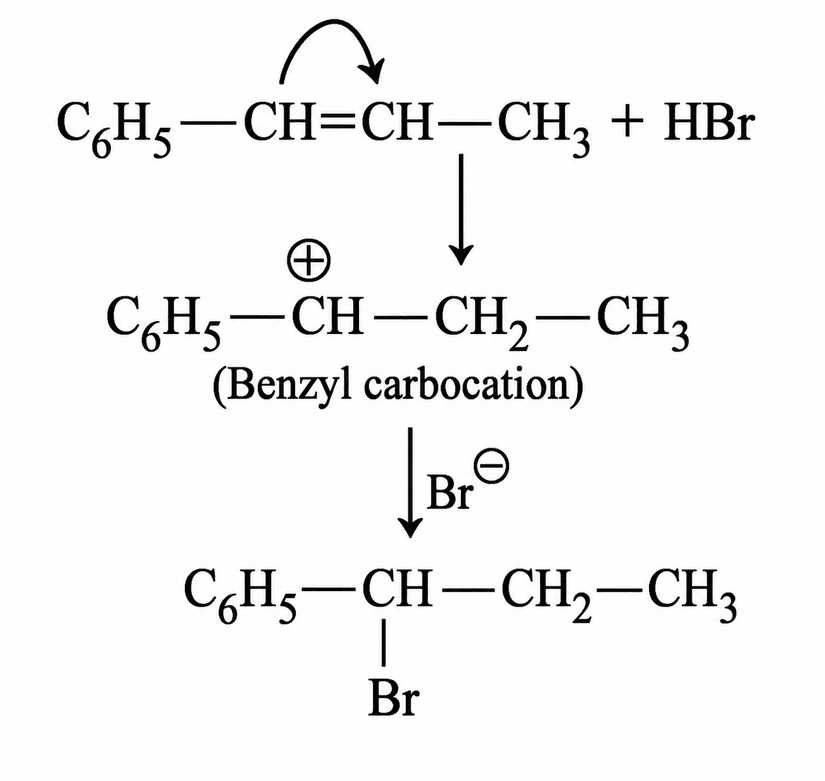
Given:
The enthalpy of the hydrogenation of these compounds will be in the order as :
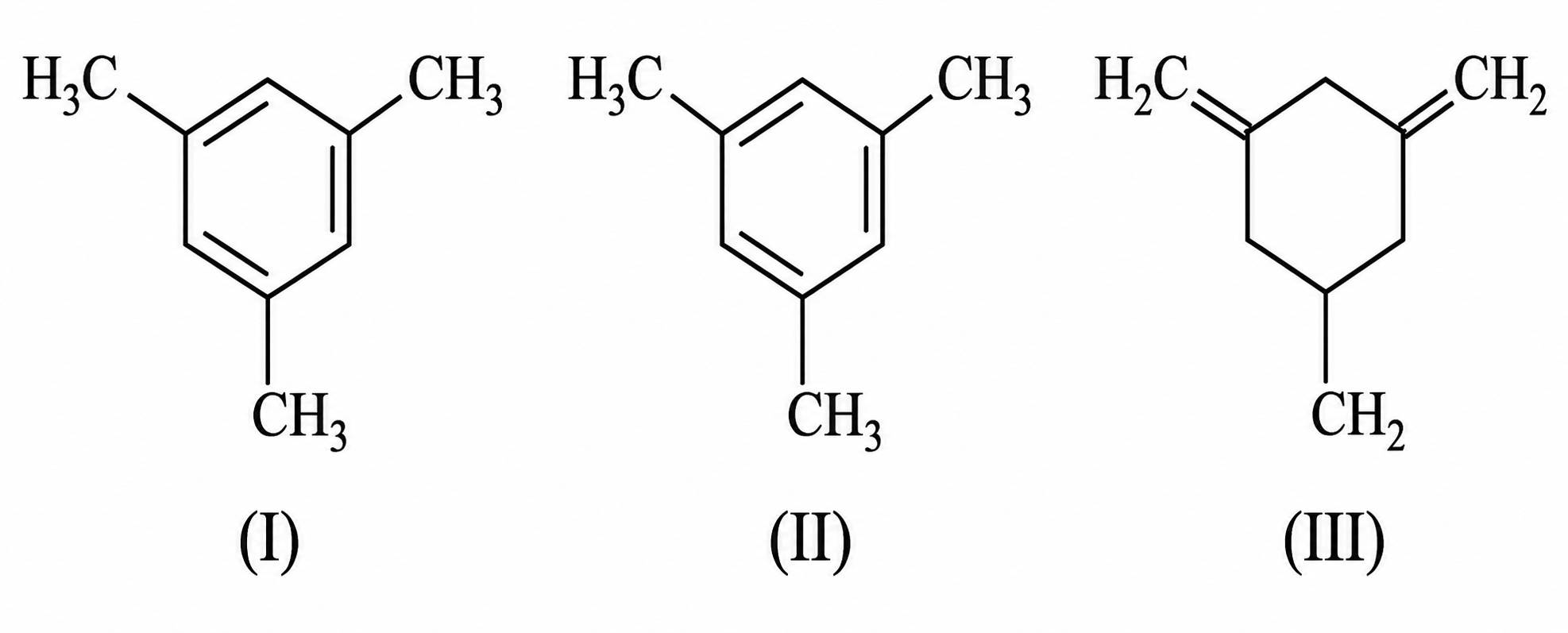
Enthalpy of hydrogenation ∝ 1/stability of alkene
∴ III > II > I
If energy (E), velocity (V) and time (T) are chosen as the fundamental quantities, the dimensional formula of surface tension will be:
As we know that,
Surface tension (S) = Force(F)/Length(L)
So, [S] = [MLT⁻²]/[L] = [MT⁻²]
Energy (E) = Force × Displacement
[E] = [ML⁻²T⁻²]
Velocity (V) = displacement/time
[V] = [LT⁻¹]
Let surface tension be expressed as, S = EᵃVᵇTᶜ
where a, b, c are constants.
Putting the dimensions,
[MLT⁻²]/[L] = [ML²T⁻²]ᵃ[L/T]ᵇ[T]ᶜ
From the principle of homogeneity,
Equating the dimensions of LHS and RHS,
[ML⁰T⁻²] = [MᵃL²ᵃ⁺ᵇT⁻²ᵃ⁻ᵇ⁺ᶜ]
⇒ a = 1, 2a + b = 0, −2a − b + c = −2
⇒ a =1, b = −2, c = −2
Hence, the dimensions of surface tension are [EV⁻²T⁻²].
A particle of unit mass undergoes one-dimensional motion such that its velocity varies according to v(x) = bx⁻²ⁿ where b and n are constants and x is the position of the particle. The acceleration of the particle as the function of x, is given by:
Given, v(x) = bx⁻²ⁿ
a = dv/dt = dv/dx . dx/dt = v.dv/dx
So, dv/dx = -2 nbx⁻²ⁿ⁻¹
Acceleration of the particle as function of x,
a = v.dv/dx = bx⁻²ⁿ {b(-2n)x⁻²ⁿ⁻¹} = -2nb²x⁻⁴ⁿ⁻¹
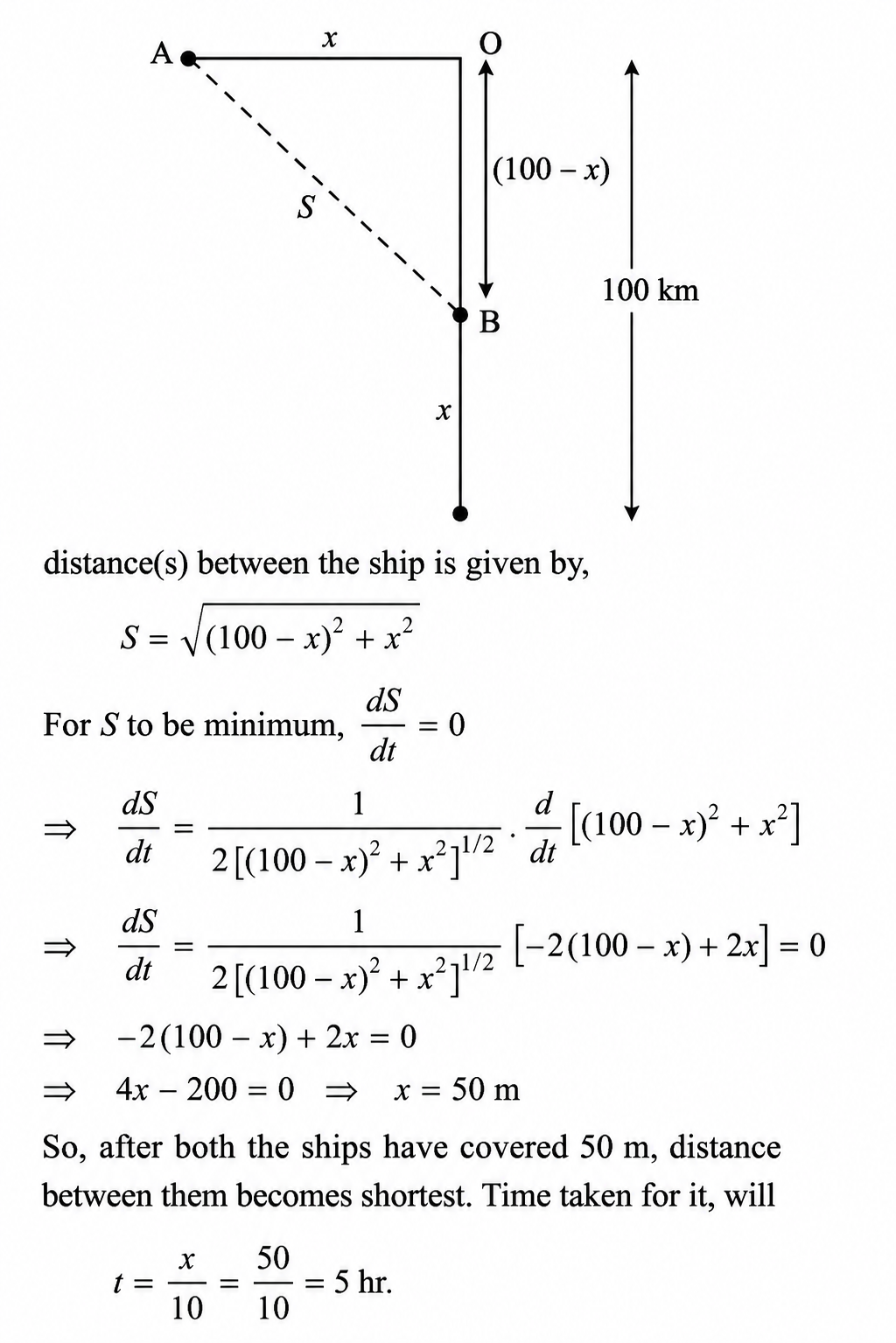
A ship A is moving Westwards with a speed of 10 km h⁻¹ and a ship B, 100 km South of A, is moving Northwards with a speed of 10 km h⁻¹. The time after which the distance between them becomes shortest, is:
Let t be the time passed and x be distance covered by the two ships after which the distance between them becomes shortest.
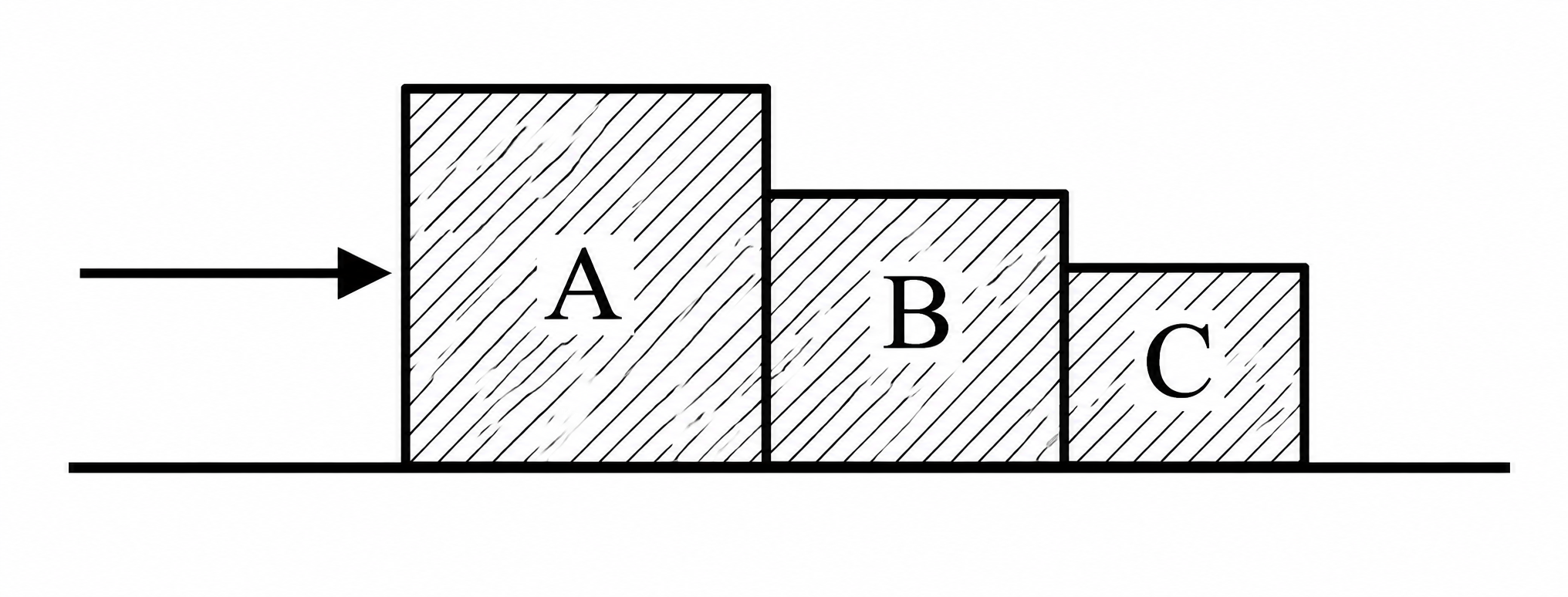
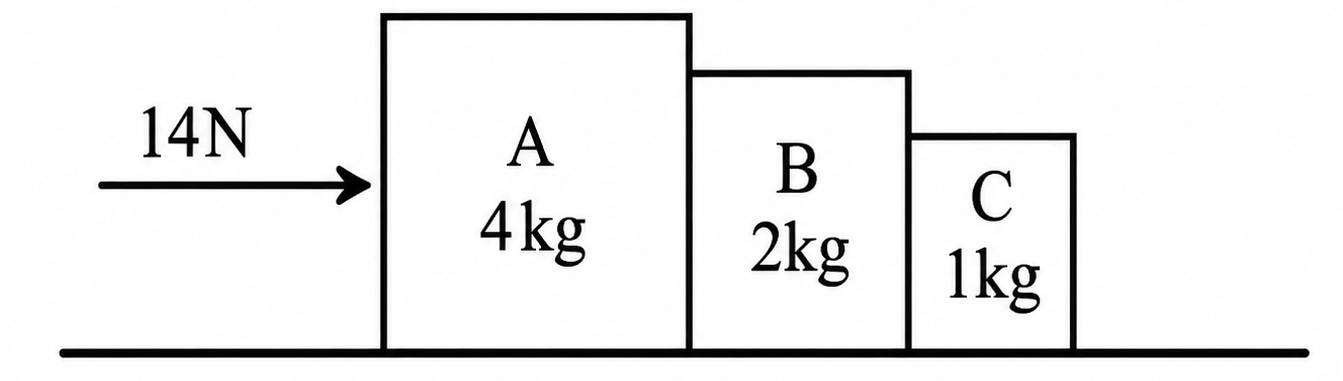
Three blocks A, B and C of masses 4 kg, 2 kg and 1 kg respectively, are in contact on a frictionless surface, as shown. If a force of 14 N is applied on the 4 kg block then the contact force between A and B is
Acceleration of system, a = Fₙₑₜ/Mₜₒₜₐₗ
= 14/4+2+1 = 14/2 = 2 m/s²
The contact force between A and B
= (m_B + m_C) × a = (2+1)×2 = 6N
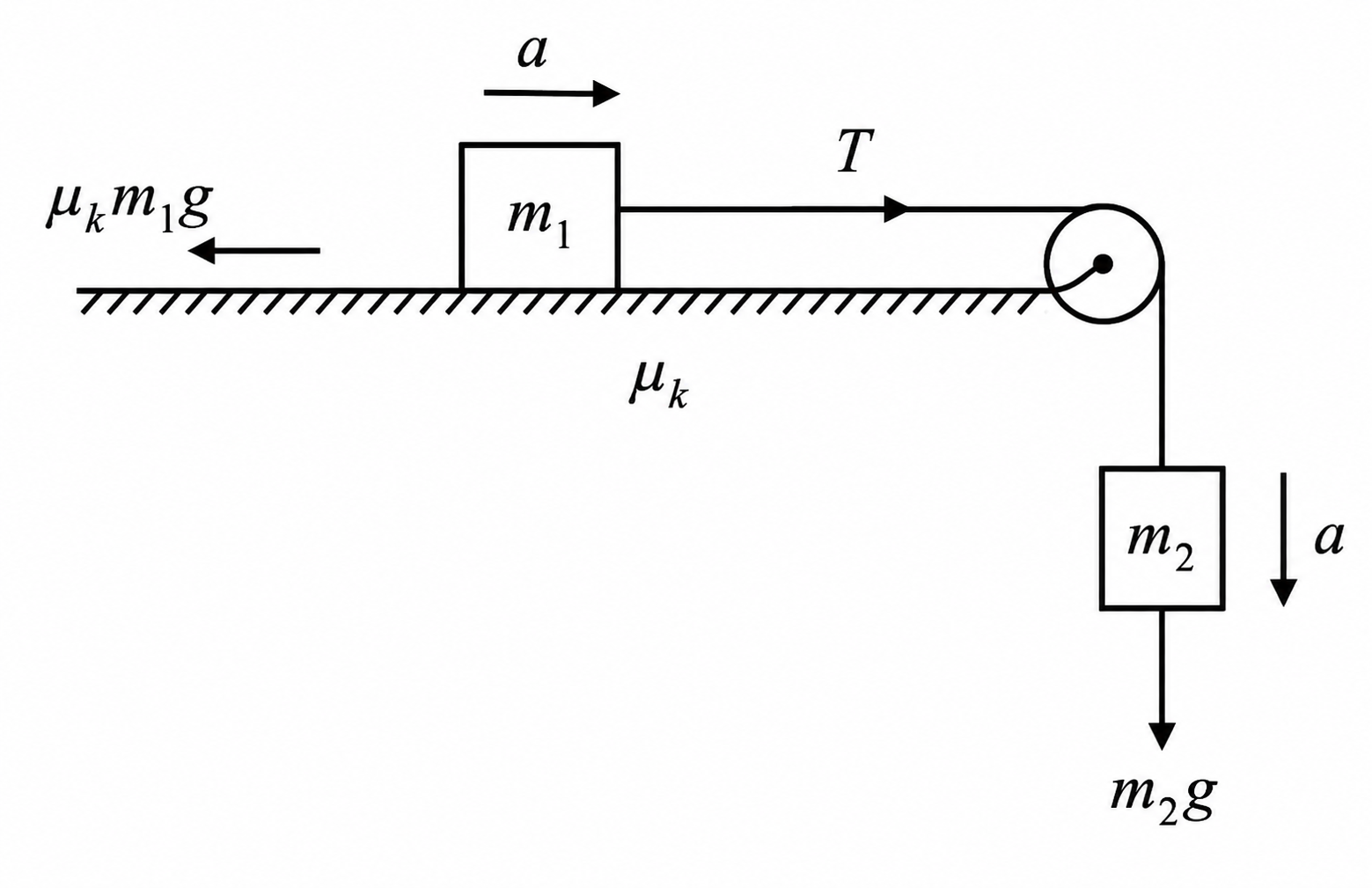
A block A of mass m₁ rests on a horizontal table. A light string connected to it passes over a frictionless pulley at the edge of the table and from its other end another block B of mass m₂ is suspended. The coefficient of kinetic friction between the block and the table is μₖ. When the block A is sliding on the table, the tension in the string is:
Far the motion of both the blocks
m₁a = T - μₖm₁g
m₂g - T = m₂a
a = m₂g - μₖm₁g/m₁+m₂
m₂g - T = (m₂)(m₂g-μₖm₁g) / m₁+m₂
solving we get tension in the string
T = m₁m₂(1+μₖm₁)g / m₁+m₂
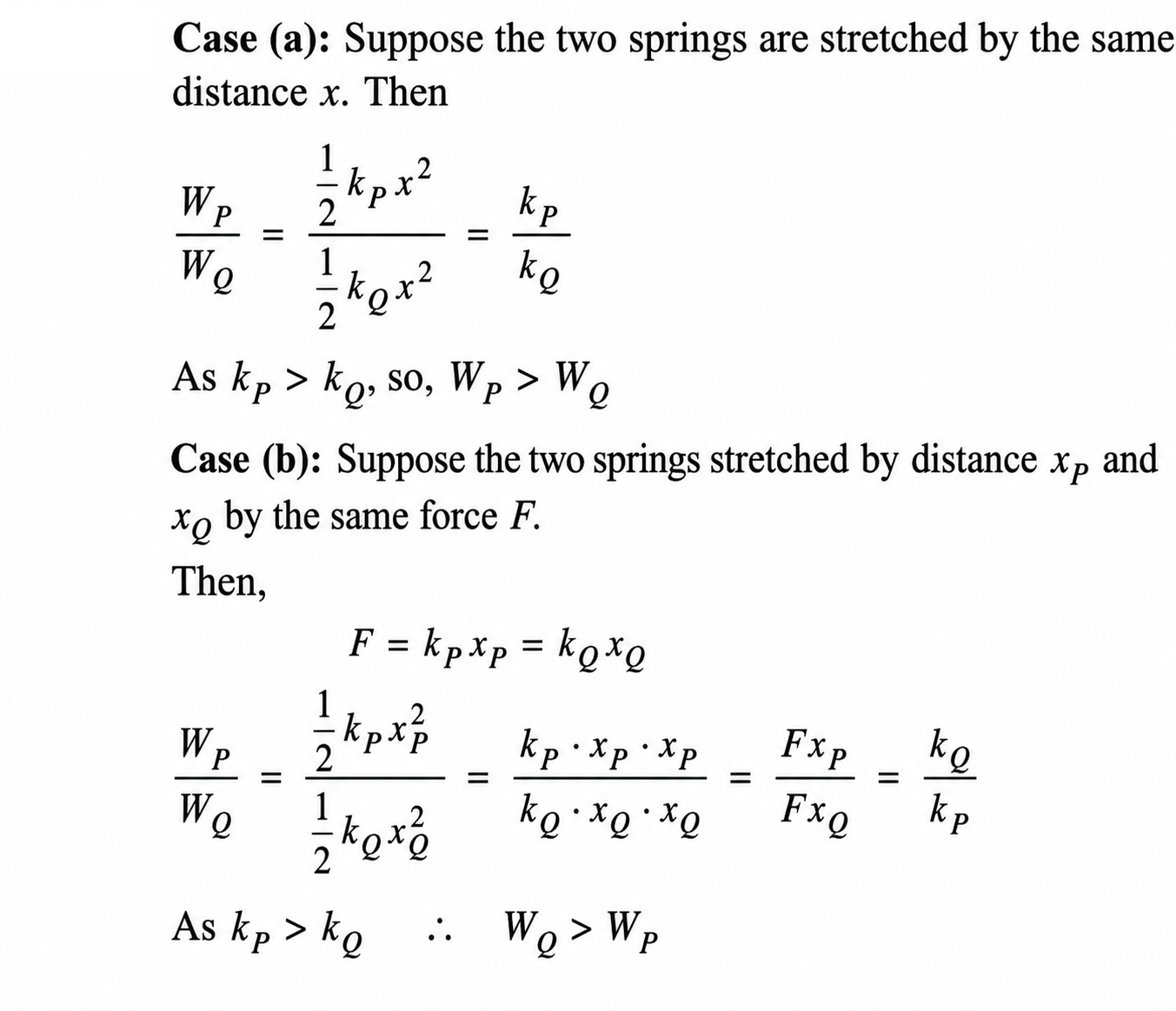
Two similar springs P and Q have spring constants Kₚ and K_Q, such that Kₚ > K_Q. They are stretched, first by the same amount (case a), then by the same force (case b). The work done by the springs, Wₚ and W_Q are related as, in case (a) and case (b), respectively.
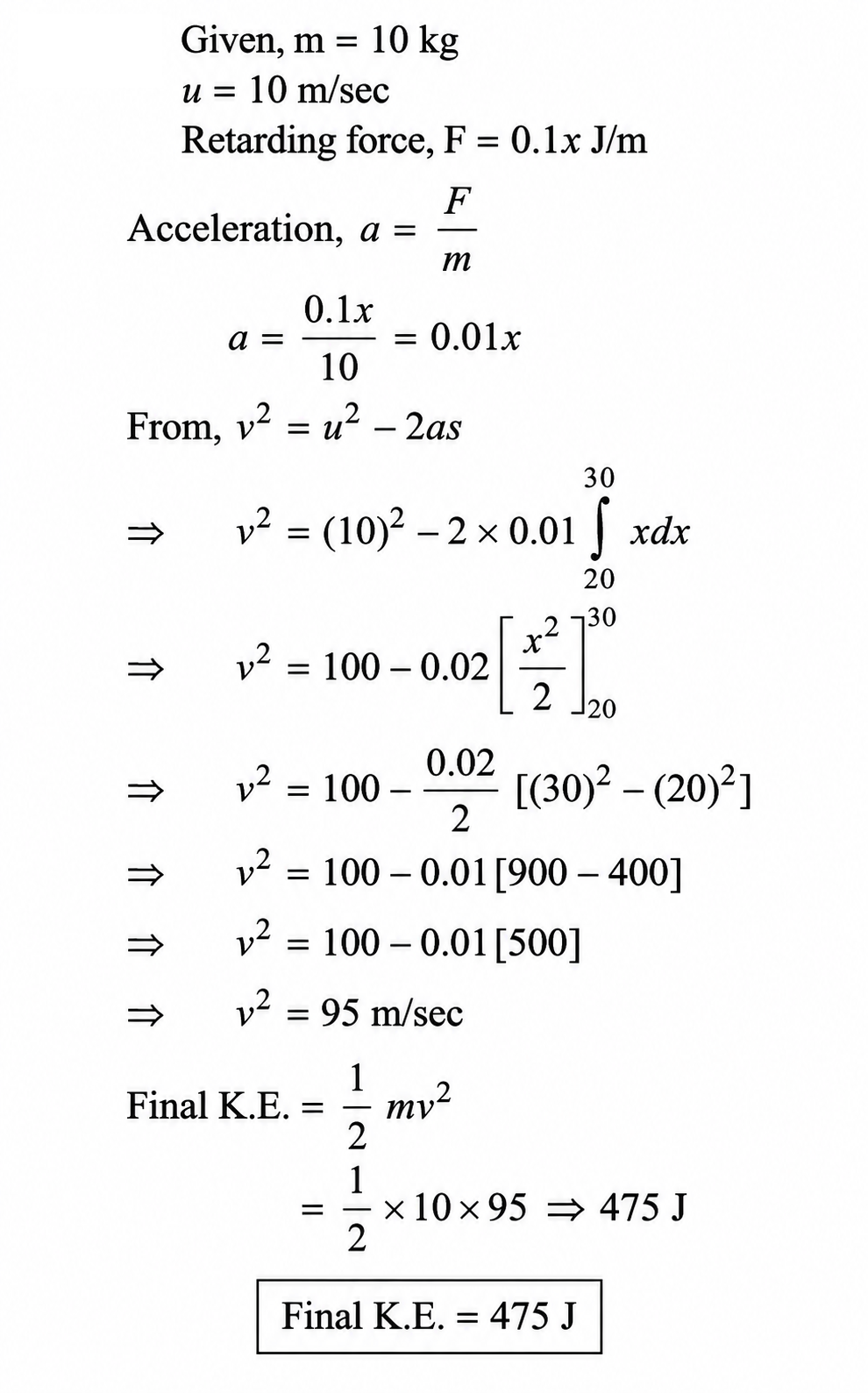
A block of mass 10 kg, moving in x direction with a constant speed of 10 ms⁻¹, is subject to a retarding force F=0.1xJ/m during its travel from x = 20 m to 30 m. Its final KE will be:
A particle of mass m is driven by a machine that delivers a constant power of k watts. If the particle starts from rest, the force on the particle at time t is:
As we know power P = dw/dt
w = Pt = 1/2mV²
So, v = √2Pt/m
Hence, acceleration a = dV/dt = √2P/m . 1/2√t
Therefore, force on the particle at time 't'
= ma = √2Km²/m . 1/2√t = √km/2t = √(mk/2) t⁻¹ᐟ²
A mass m moves in a circle on a smooth horizontal plane with velocity v₀ at a radius R₀. The mass is attached to a string which passes through a smooth hole in the plane as shown.
The tension in the string is increased gradually and in a circle of radius R₀/2. The final value of the kinetic energy is
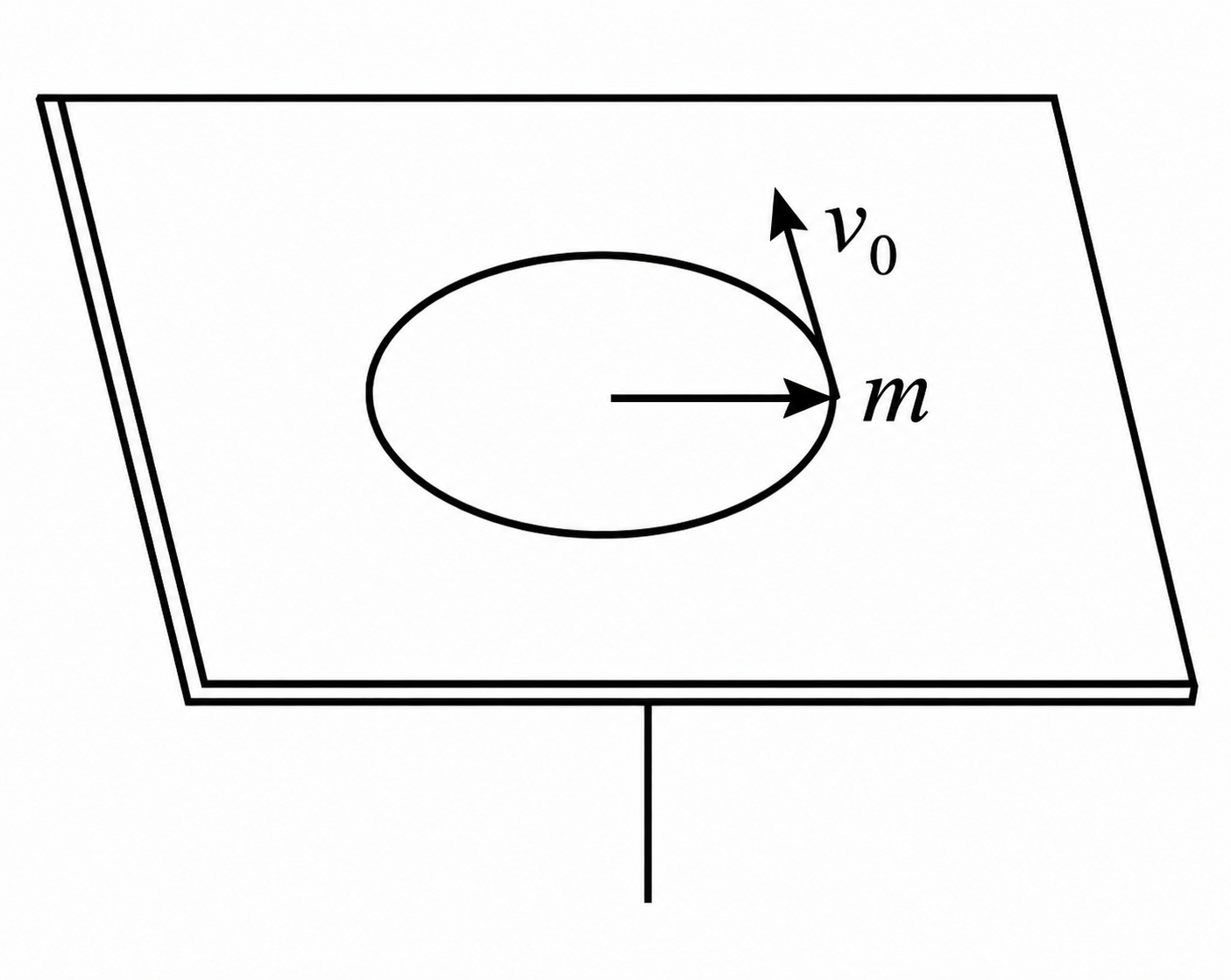
Applying angular momentum conservation
mv₀R₀ = (m)(v)(R₀/2)
v = 2v₀
Therefore, final KE = 1/2 m(2v₀)² = 2mv₀²
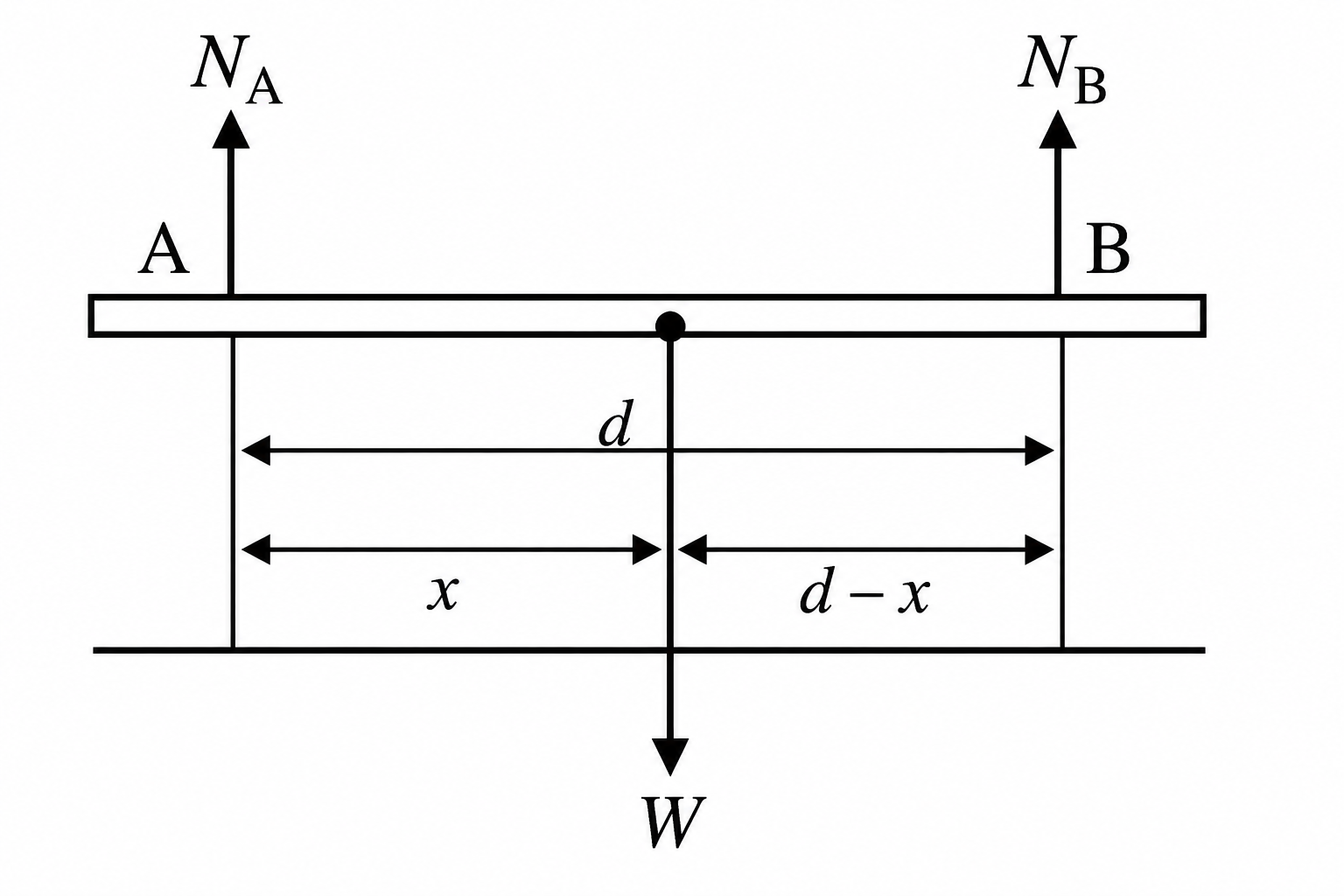
A rod of weight W is supported by two parallel knife edges A and Band is in equilibrium in a horizontal position. The Knives are at a distance d from each other. The centre of mass of the rod is at distance x from A. The normal reaction on A is
By torque balancing about B
N_A(d) = W(d-x)
N_A = W(d-x)/d
Three identical spherical shells, each of mass m and radius rare placed as shown in figure. Consider an axis XX' which is touching to two shells and passing through diameter of third shell. Moment of inertia of the system consisting of these three spherical shells about XX' axis is
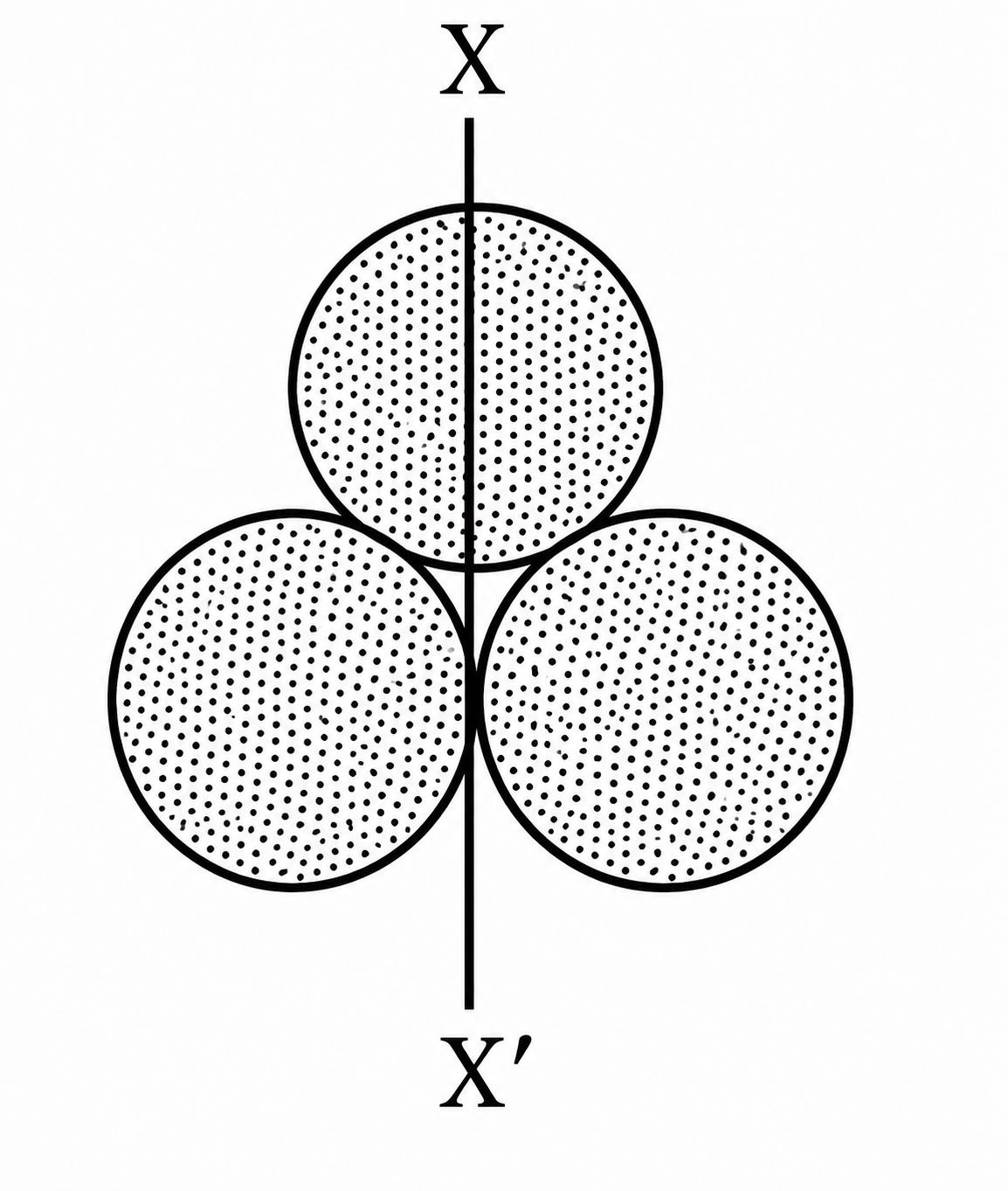
Moment of inertia of shell 1 along diameter, I_diameter = 2/3Mr²
Moment of inertia of shell 2 = M.I. of shell 3
= I_tangential = 2/3Mr² +Mr² = 35 Mr²
So, I system along axis XX′
= I_diameter + (Itangential) × 2
or, I_total = 2/3Mr² + (5/3Mr²) × 2
= 12/3 Mr² = 4 Mr²
Kepler's third law states that the square of the period of revolution (T) of a planet around the Sun is proportional to the third power of the average distance r between the Sun and the planet, i.e., T² = Kr³ where K is constant. If the masses of the Sun and the planet are M and m respectively, then as per Newton's law of gravitation, the force of attraction between them is F = GMm/r² where G is the gravitational constant.
The relation between G and K is described as:
As we know, orbital speed, v_orb = √GM/r
Time period T = 2πr/v_orb = 2πr/√GM.√r
Squaring both sides
T² = (2πr√r/√GM )² = 4π²/GM.r³
⇒ T²/r³ = 4π²/GM = K
⇒ GMK = 4π²
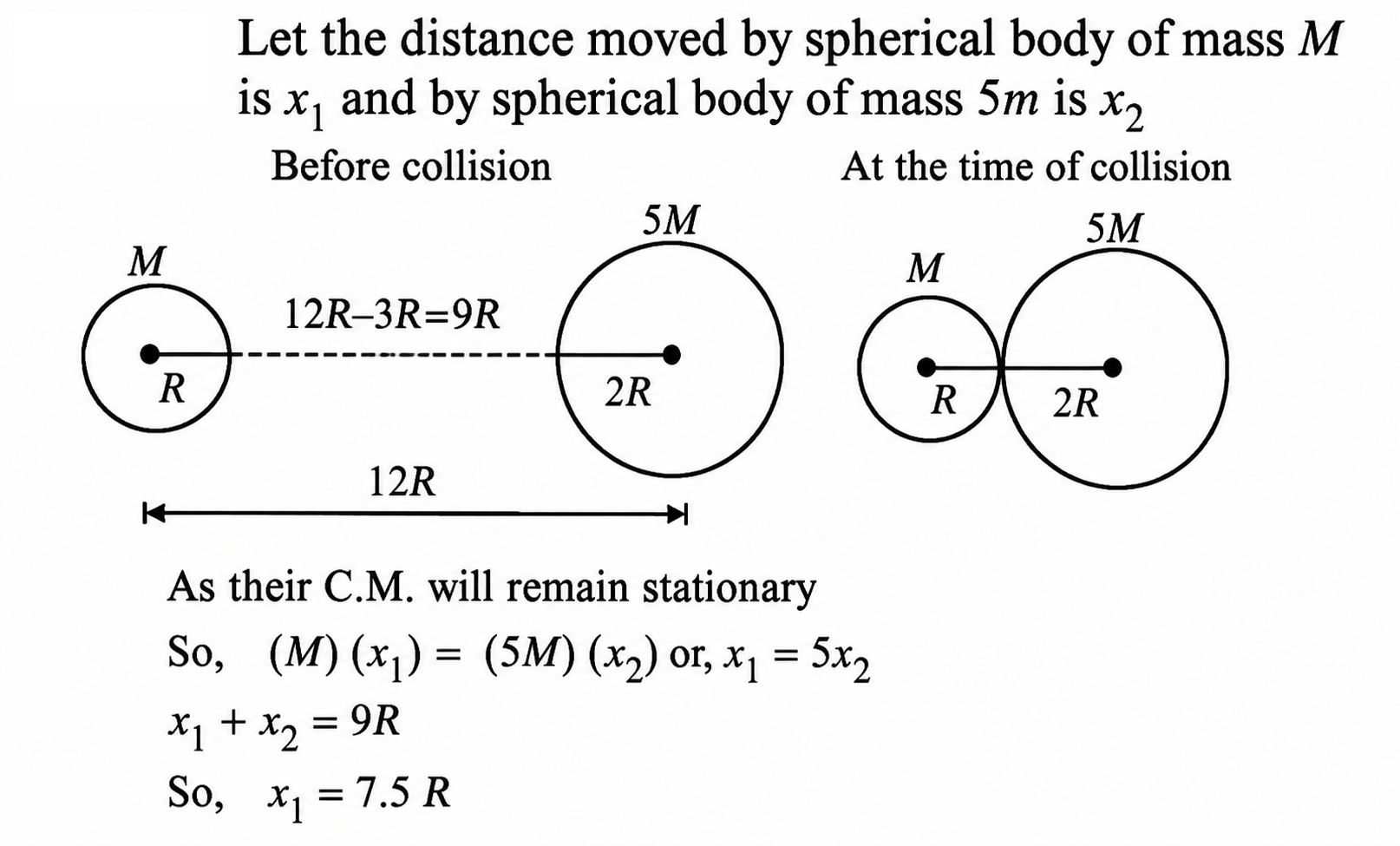
Two spherical bodies of mass M and 5M having radii R and 2R are released in free space with initial separation between their centres equal to 12R. If they attract each other due to gravitational force only, then the distance covered by the smaller body before collision is:
the approximate depth of an ocean is 2700 m. The compressibility of water is 45.4×10⁻¹¹ Pa⁻¹ and the density of water is 10³ kg/m³. What fractional compression of water will be observed at the bottom of the ocean?
Compressibility of water,
K = 45.4×10⁻¹¹ Pa⁻¹
density of water P = 10³ kg/m³
depth of ocean, h = 2700 m
We have to find ΔV/V = ?
As we know, compressibility,
K = 1/B = (ΔV/V)/P(P = ρgh)
So, (ΔV/V) = Kρgh
= 45.4 × 10⁻¹¹ × 10³ × 10 × 2700 = 1.2258 × 10⁻²
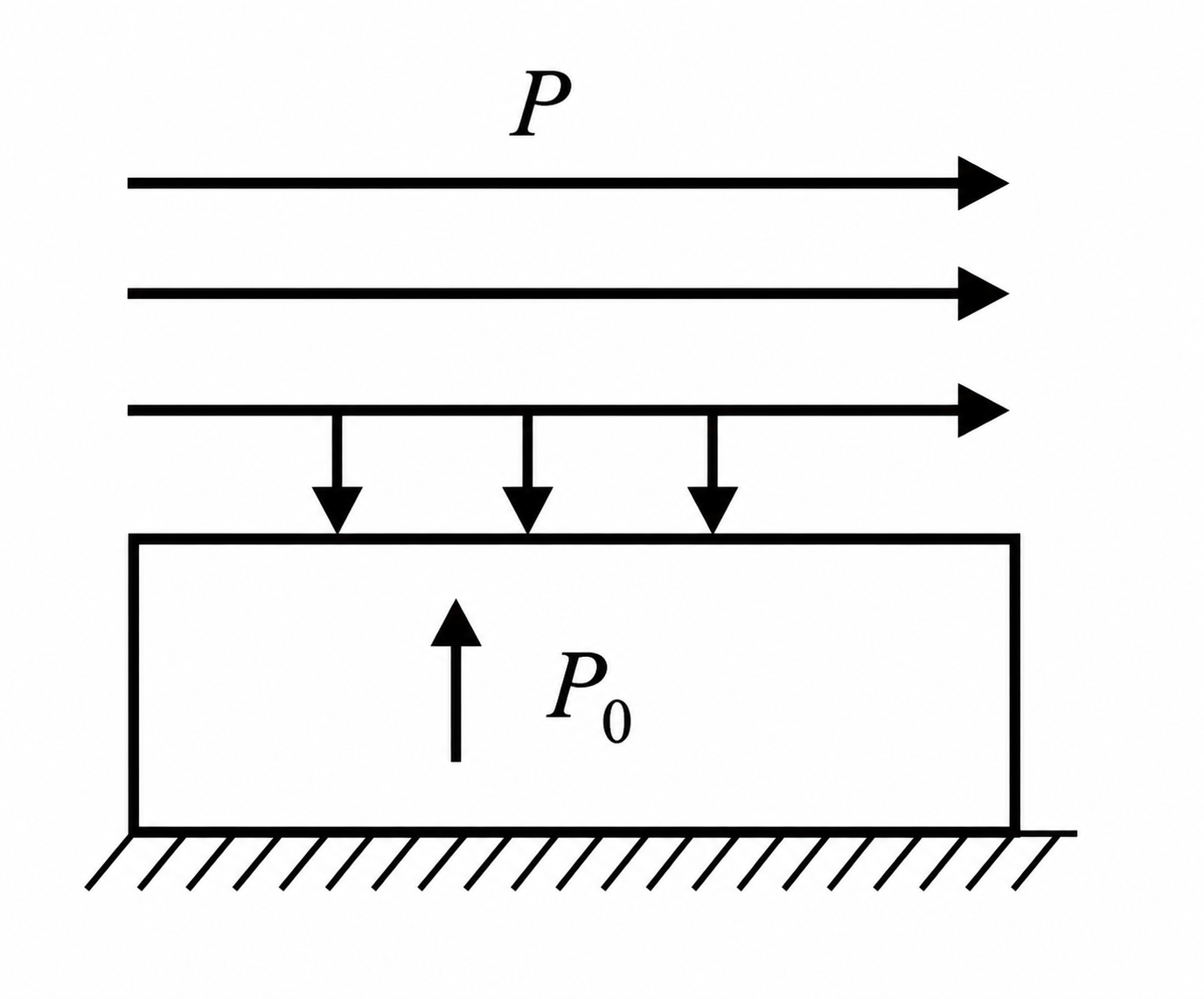
A wind with speed 40 m/s blows parallel to the roof of a house. The area of the roof is 250 m². Assuming that the pressure inside the house is atmospheric pressure, the force exerted by the wind on the roof and the direction of the force will be (ρₐᵢᵣ = 1.2 kg/m³):
According to Bernoulli's theorem,
P+1/2ρv² = P₀+0
So, ΔP = 1/2ρv²
F = ΔPA = 1/2ρv²A
= 1/2 × 1.2 × 40 × 40 × 250
= 2.4 × 10⁵ N, upwards
On observing light from three different stars P, Q and R, it was found that the intensity of violet colour is maximum in the spectrum of P, the intensity of green colour is maximum in the spectrum of R and the intensity of red colour is maximum in the spectrum of Q. If Tₚ, T_Q and T_R are the respective absolute temperatures of P, Q and R, then it can be concluded from the above observations that:
From Wien's displacement law,
λₘ × T = constant
P – max intensity is at violet
⇒ λₘ is minimum
⇒ temp maximum
R – Max. intensity is at green
⇒ λₘ is moderate
⇒ Temp moderate
Q – Max. intensity is at red
⇒ λₘ is maximum
⇒ Temp. is minimum
i.e., T_P > T_R > T_Q
The two ends of a metal rod are maintained at temperatures 100°C and 110°C. The rate of heat flow in the rod is found to be 4.0 J/s. If the ends are maintained at temperatures 200°C and 210°C, the rate of heat flow will be:
As the temperature difference ΔT =10°C as well the thermal resistance is same for both the cases, so thermal current or rate of heat flow will also be same for both the cases.
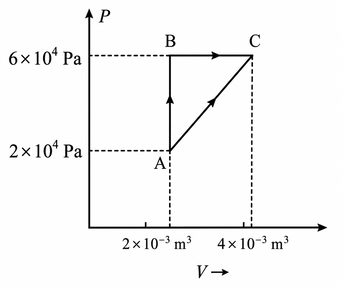
Figure below shows two paths that may be taken by a gas to go from a state A to a state C.
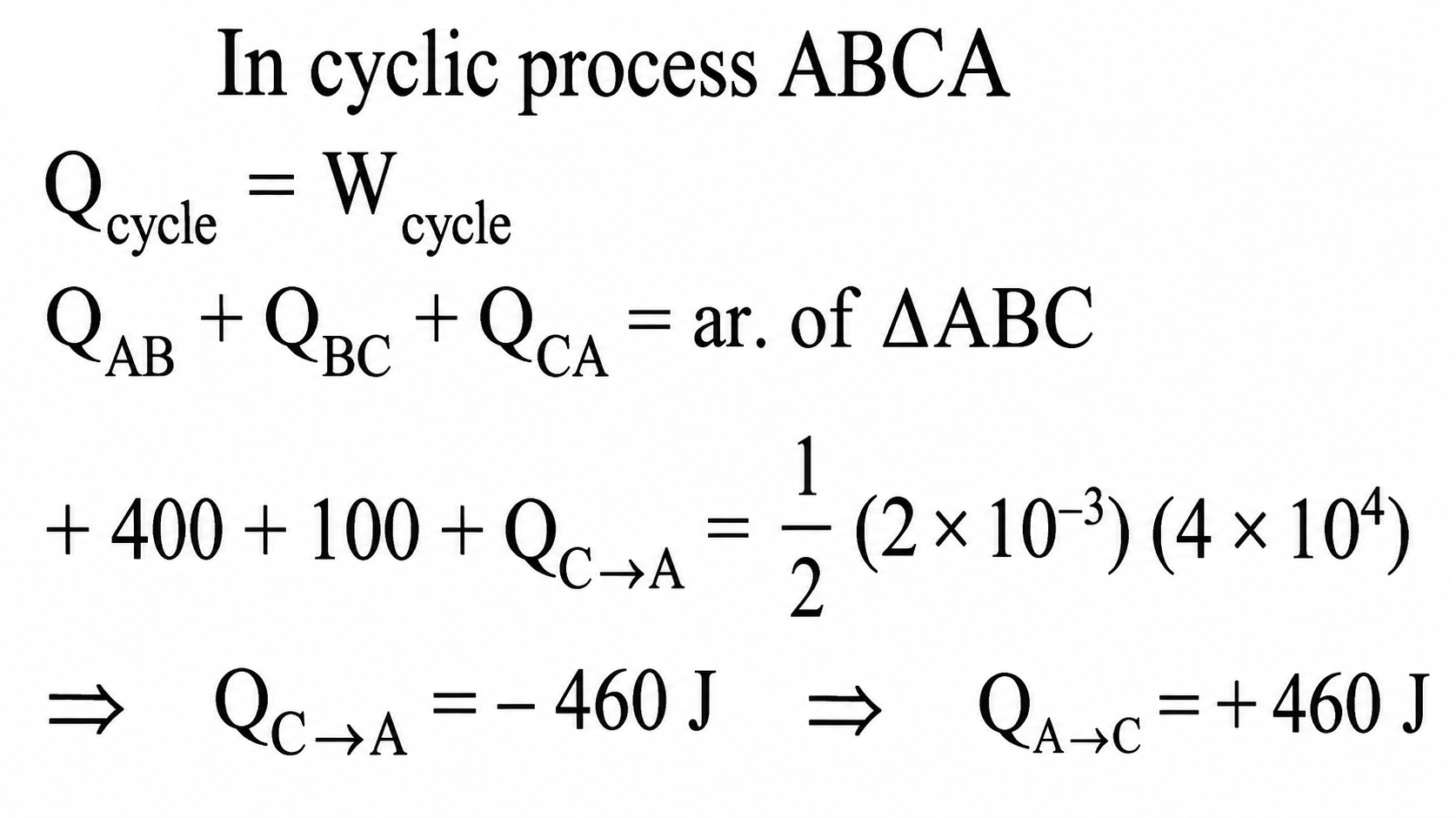
In process AB, 400 J of heat is added to the system and in process BC, 100 J of heat is added to the system. The heat absorbed by the system in the process AC will be
As the temperature difference ΔT =10°C as well the thermal resistance is same for both the cases, so thermal current or rate of heat flow will also be same for both the cases.
A Carnot engine having an efficiency of 1/10 as heat engine, is used as a refrigerator. If the work done on the system is 10 J, the amount of energy absorbed from the reservoir at lower temperature is:
Given, efficiency of engine, η = 1/10
work done on system W =10J Coefficient of performance of refrigerator
β = Q₂/W = 1-η/η = 1-1/10 / 1/10 = 9/10 / 1/10 = 9
Energy absorbed from reservoir
Q₂ = βW
Q₂ = 9 × 10 = 90 J
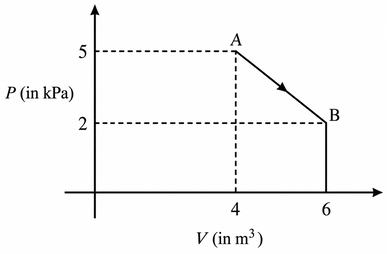
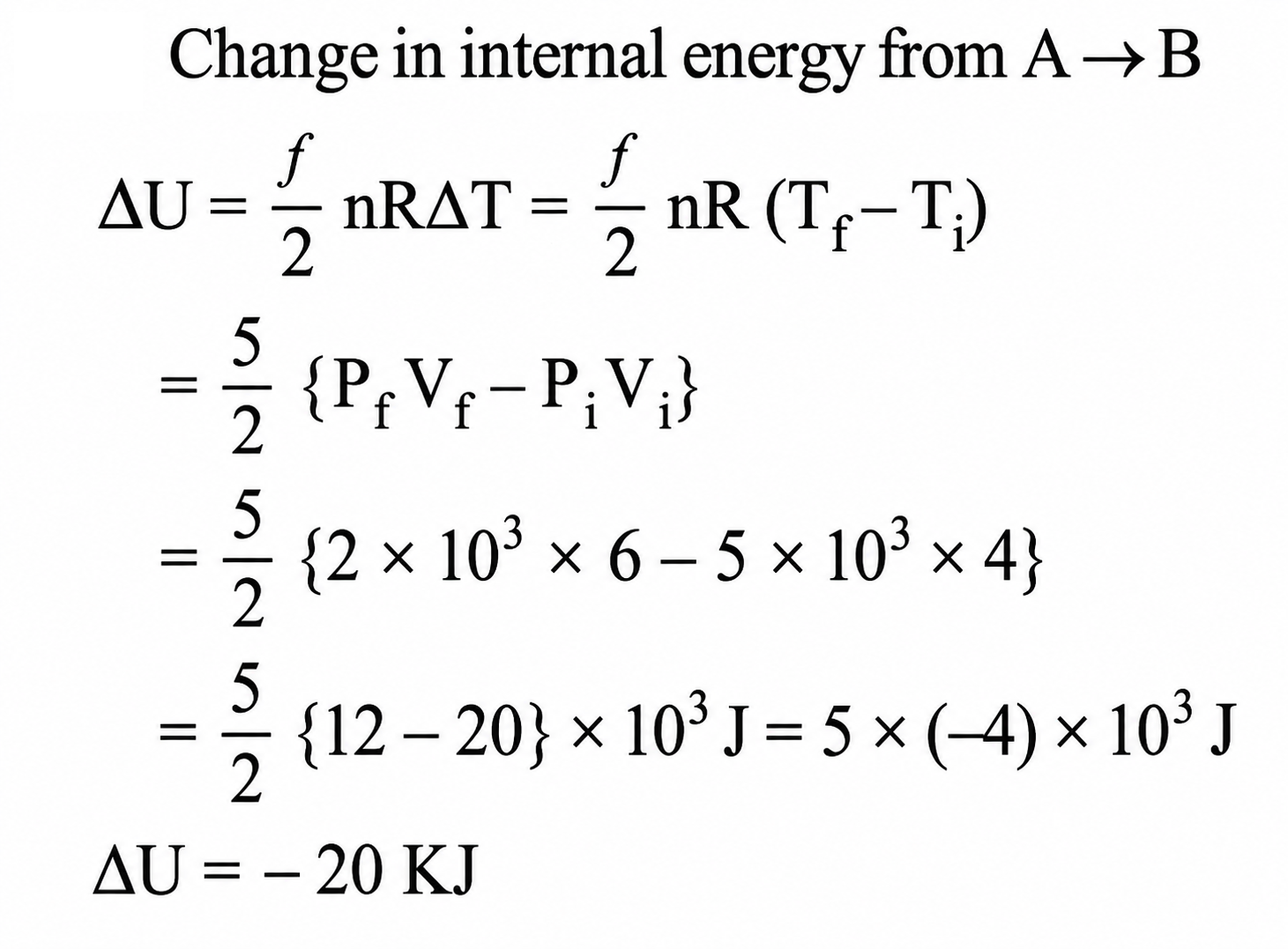
One mole of an ideal diatomic gas undergoes a transition from A to B along a path AB as shown in the figure.
The change in internal energy of the gas during the transition is:
Given, efficiency of engine, η = 1/10
work done on system W =10J Coefficient of performance of refrigerator
β = Q₂/W = 1-η/η = 1-1/10 / 1/10 = 9/10 / 1/10 = 9
Energy absorbed from reservoir
Q₂ = βW
Q₂ = 9 × 10 = 90 J
The ratio of the specific heats Cₚ/Cᵥ = γ in terms of degrees of freedom (n) is given by:
Let ‘n’ be the degree of freedom
γ = Cₚ/Cᵥ = (n/2 +1)R / (n/2)R = (1+2/n)
When two displacements represented by y₁ = asin(ωt) and y₂ = bcos(ωt) are super-imposed, the motion is:
The two displacement equations are
y₁ = asin(ωt) and y₂ = bcos(ωt) = b sin(ωt+π/2)
y_eq = y₁+y₂
= asinωt + bcosωt
= asinωt + bsin(ωt+π/2)
Since the frequencies for both SHMs are same, the resultant motion will be SHM.
Now, the amplitude,
A_eq = √(a² + b² + 2 ab cos π/2)
⇒ A_eq = √(a² + b²)
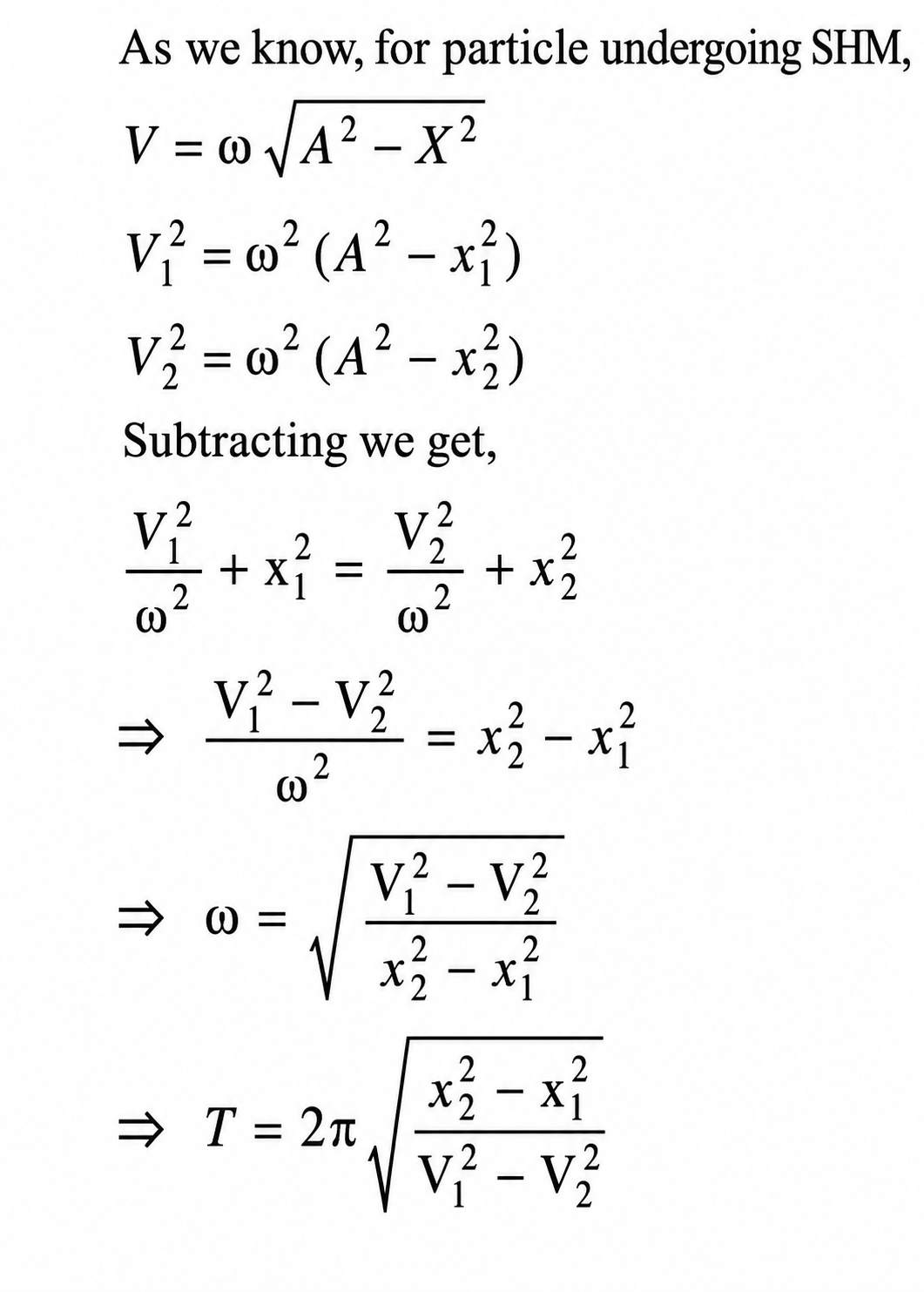
A particle is executing SHM along a straight line. Its velocities at distances x₁ and x₂ from the mean position are V₁ and V₂, respectively. Its time period is:
The fundamental frequency of a closed organ pipe of length 20 cm is equal to the second overtone of an organ pipe open at both the ends. The length of organ pipe open at both the ends is
Fundamental frequency of closed organ pipe,
v_c = v/4l_c
Fundamental frequency of open organ pipe
v₀ = v/2l₀
Second overtone frequency of open organ pipe = 3v/2l₀
From question, v/4l_c = 3v/2l₀
I₀ = 6l_c = 6 × 20 = 120 cm
A parallel plate air capacitor of capacitance C is connected to a cell of emf V and then disconnected from it. A dielectric slab of dielectric constant K, which can just fill the air gap of the capacitor, is now inserted in it. Which of the following is incorrect?
Capacitance of the capacitor, C = Q/V
After inserting the dielectric, new capacitance C' = K.C
New potential difference
V' = V/K
Uᵢ = 1/2CV² = Q²/2C (Q = CV)
U_f = Q²/2C = Q²/2KC = C²V²/2KC = (Uᵢ/K)
ΔU = U_f - Uᵢ = 1/2CV²(1/K - 1)
As the capacIitor is isolated, so charge will remain conserved and p.d. between two plates of the capacitor
V' = Q/KC = V/K
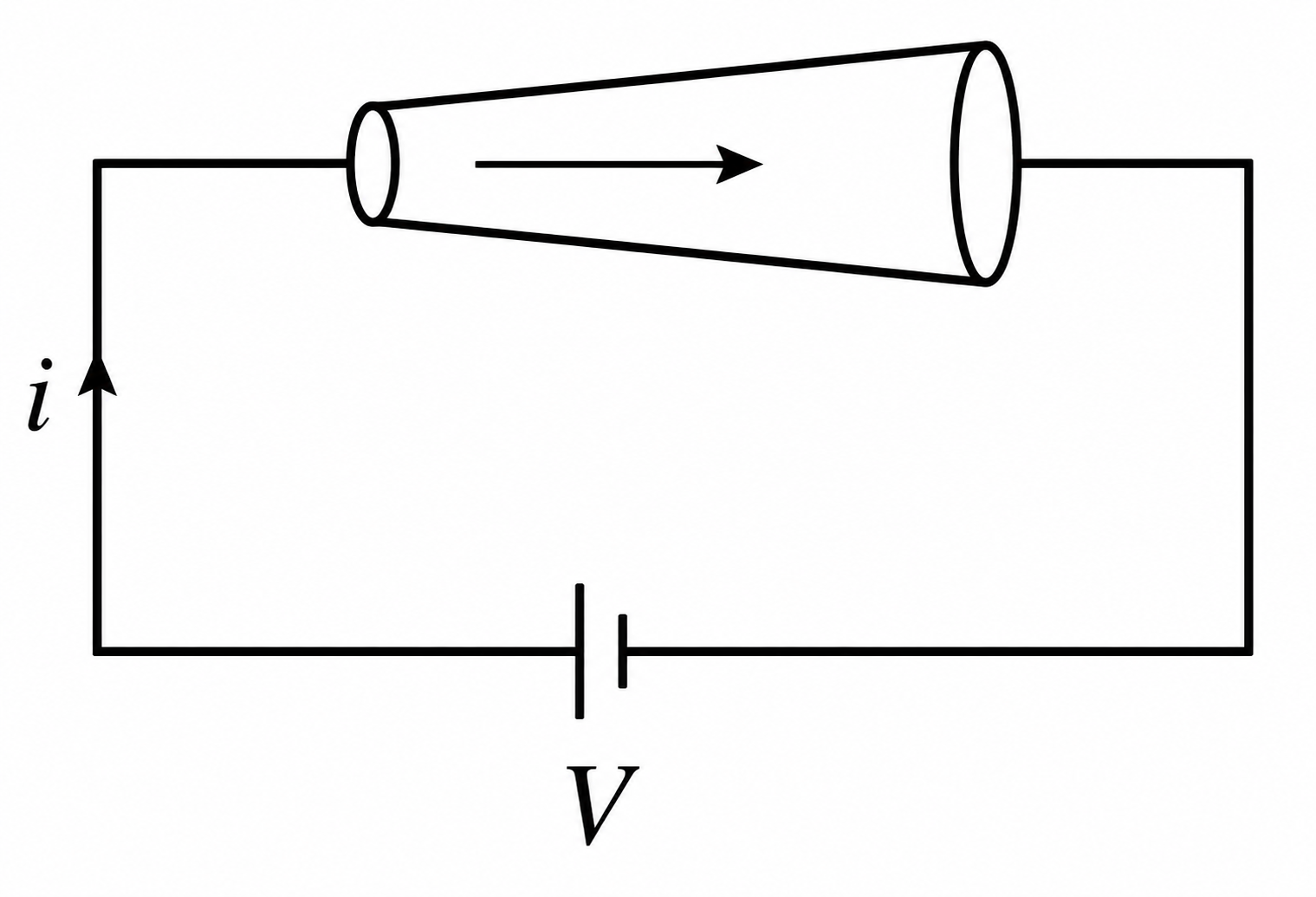
Across a metallic conductor of non-uniform cross section a constant potential difference is applied. The quantity which remains constant along the conductor is:
Here, metallic conductor can be considered as the combination of various conductors connected in series. And in series combination current remains same.
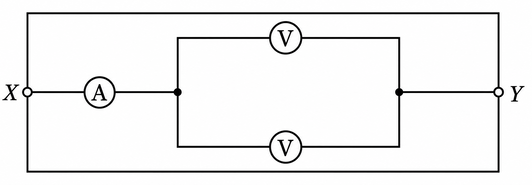
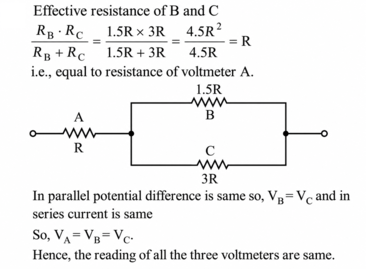
A, B and C are voltmeters of resistance R, 1.5R and 3R respectively as shown in the figure. When some potential difference is applied between X and Y, the voltmeter readings are V_A, V_B and V_C respectively. Then:
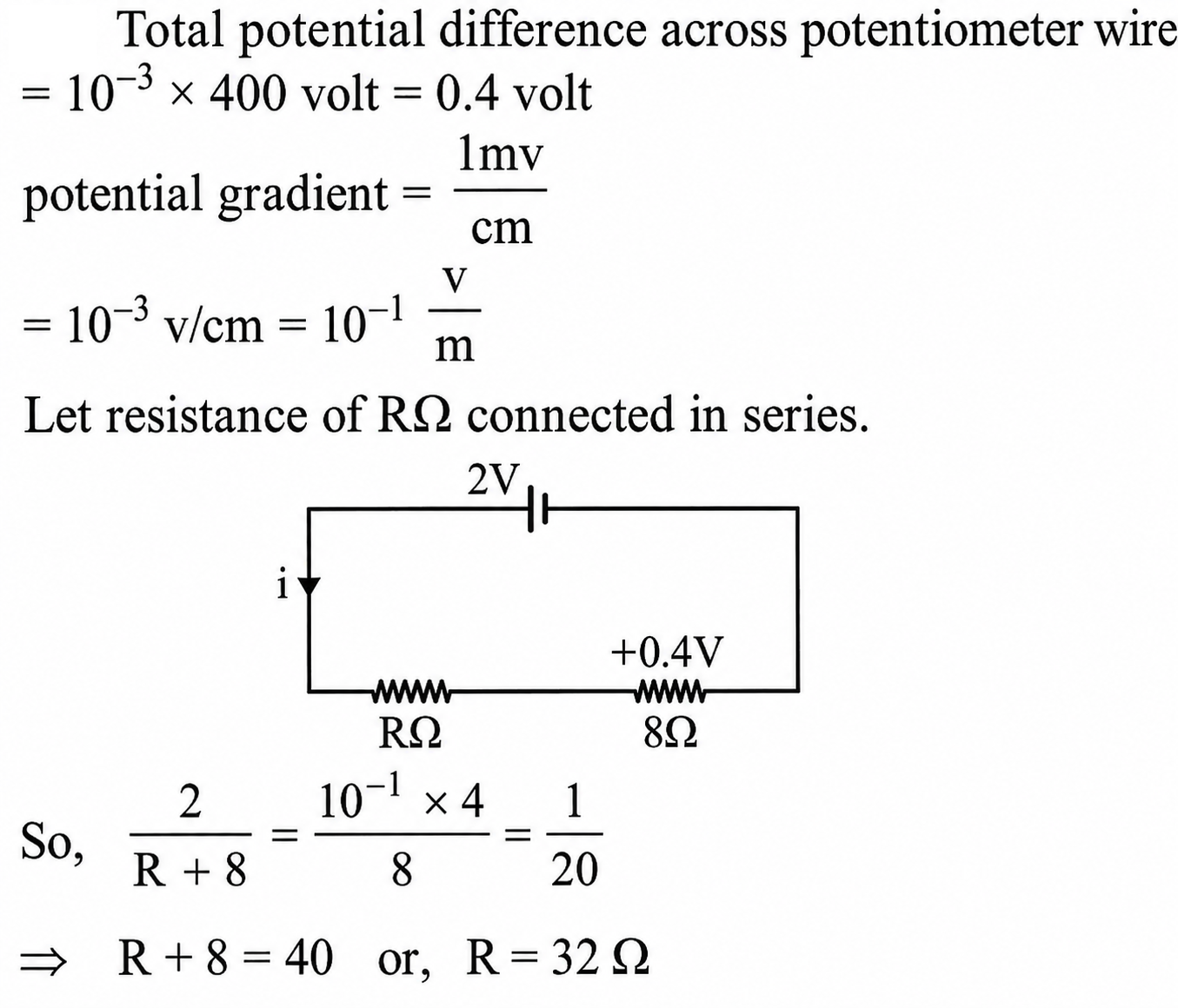
A potentiometer wire has length 4 m and resistance 8 Ω. The resistance that must be connected in series with the wire and accumulator of e.m.f. 2 V, so as to get a potential gradient 1 mV per cm on the wire is:
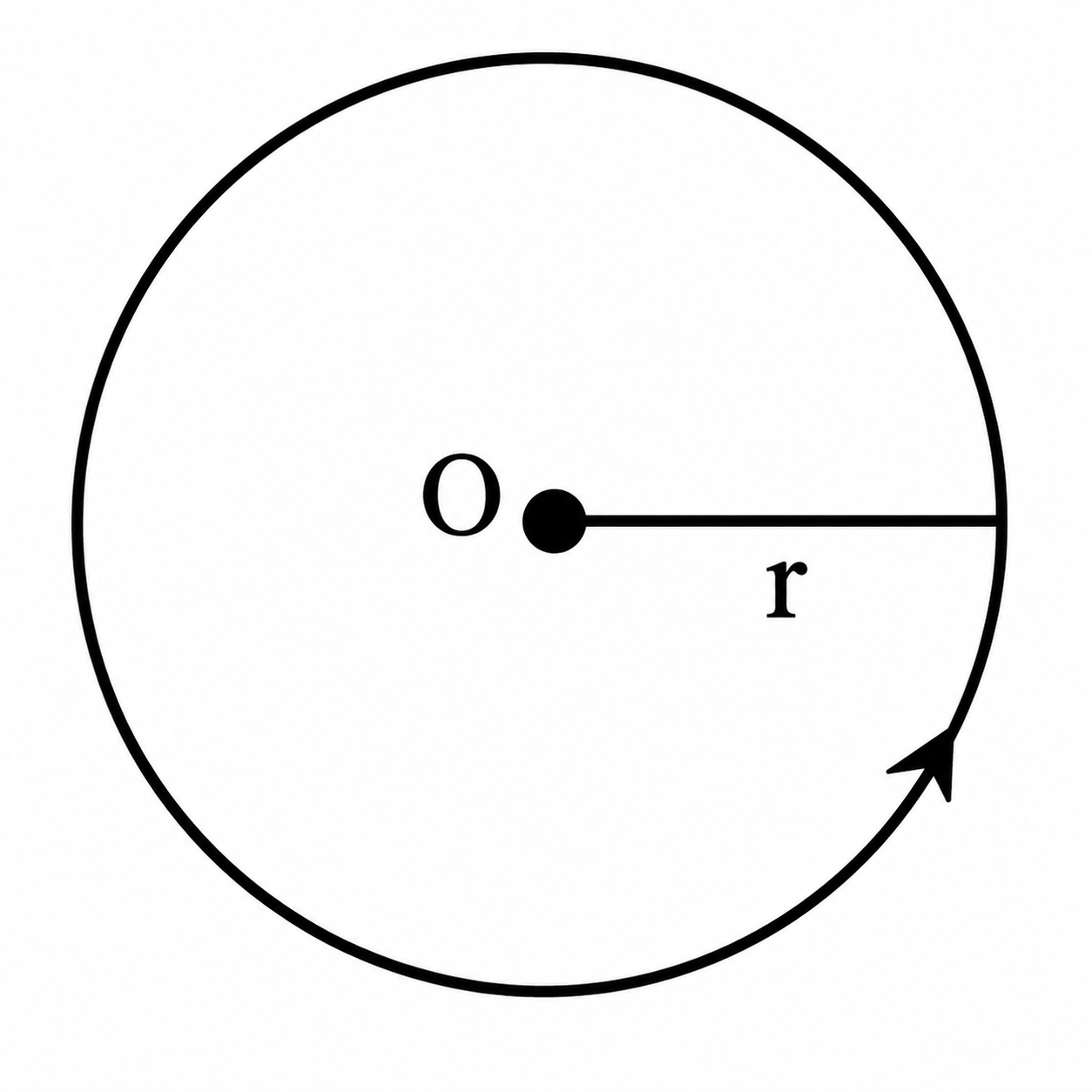
An electron moving in a circular orbit of radius r makes n rotations per second. The magnetic field produced at the centre has magnitude:
Radius of circular orbit = r
No. of rotations per second = n
i.e., T = 1/n
Magnetic field at its centre, B_c = ?
As we know, current
i = e/T = e/(1/n) = en = equivalent current
Magnetic field at the centre of circular orbit,
B_c = μ₀i/2r = μ₀ne/2r
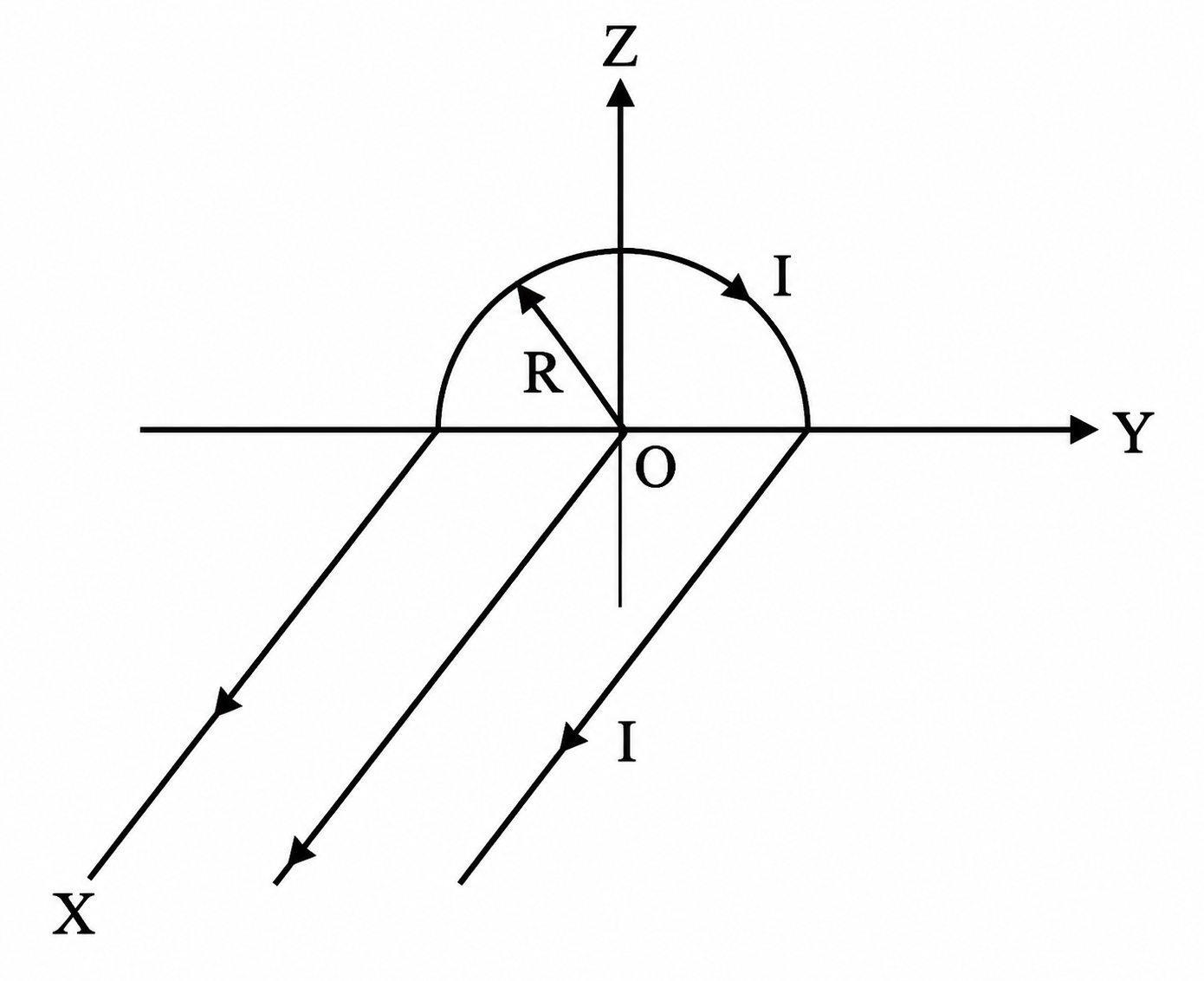
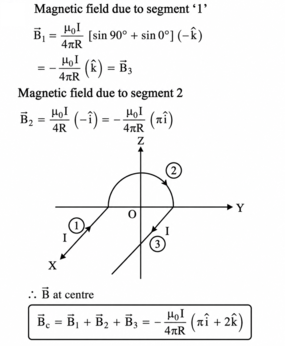
A wire carrying current I has the shape as shown in adjoining figure. Linear parts of the wire are very long and parallel to X-axis while semicircular portion of radius R is lying in Y-Z plane. Mngnetic field at point O is
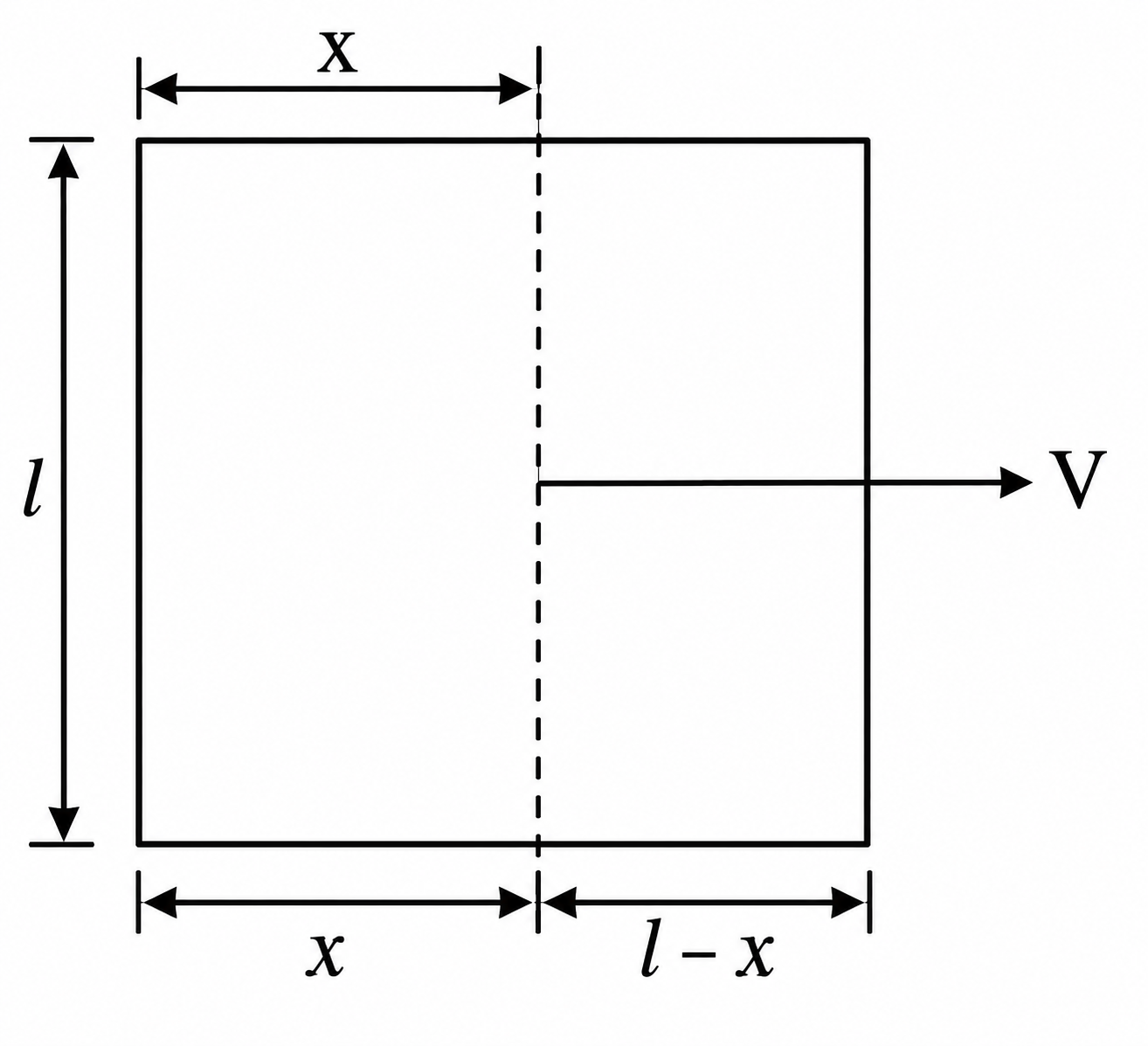
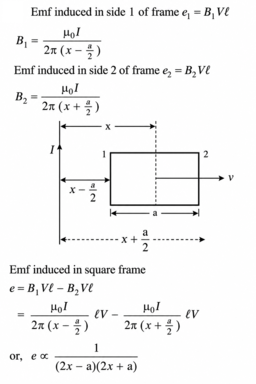
A conducting square frame of side 'a' and a long straight wire carrying current III are located in the same plane as shown in the figure. The frame moves to the right with a constant velocity V. The emf induced in the frame will be proportional to:
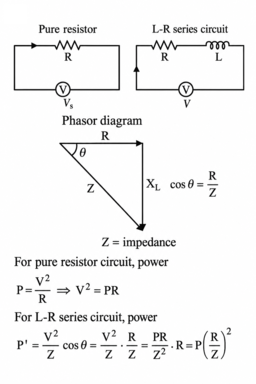
A resistance R draws power P when connected to an AC source. If an inductance is now placed in series with the resistance, such that the impedance of the circuit becomes Z, the power drawn will be:
.
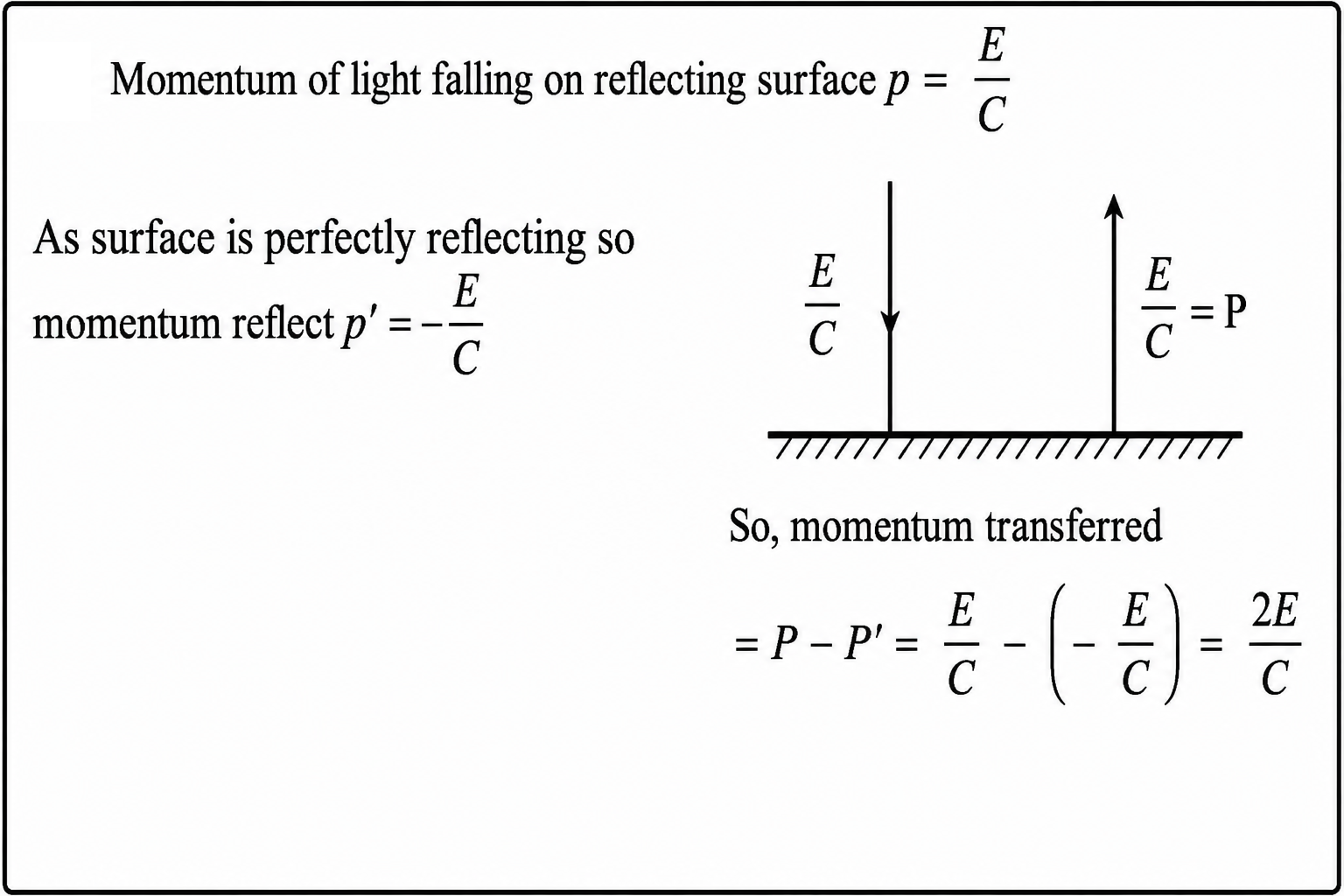
A radiation of energy E falls normally on a perfectly reflecting surface. The momentum transferred to the surface is (C = velocity of light).
.
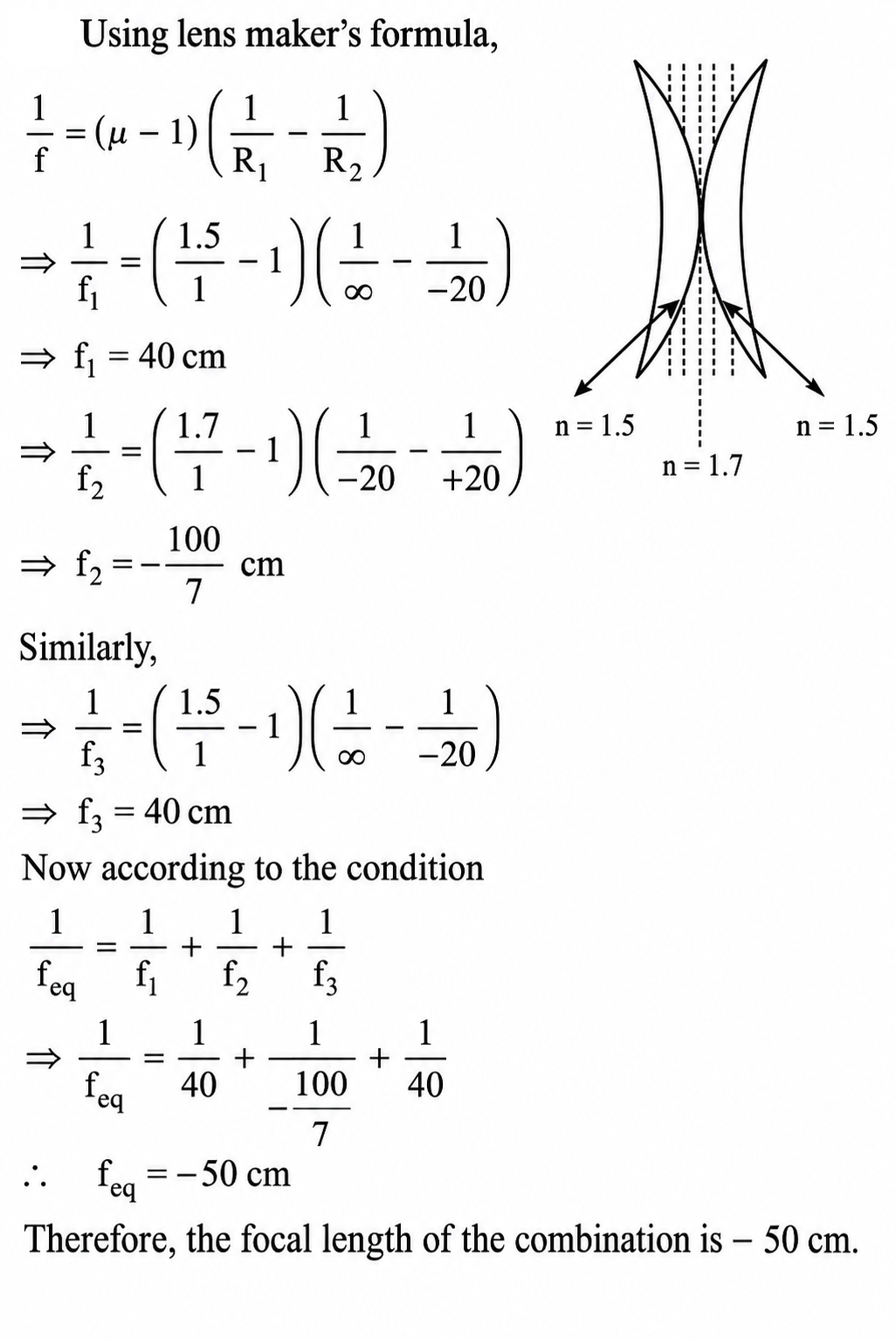
Two identical thin plano-convex glass lenses (refractive index 1.5) each having radius of curvature of 20 cm are placed with their convex surfaces in contact at the centre. The intervening space is filled with oil of refractive index 1.7. The focal length of the combination is:
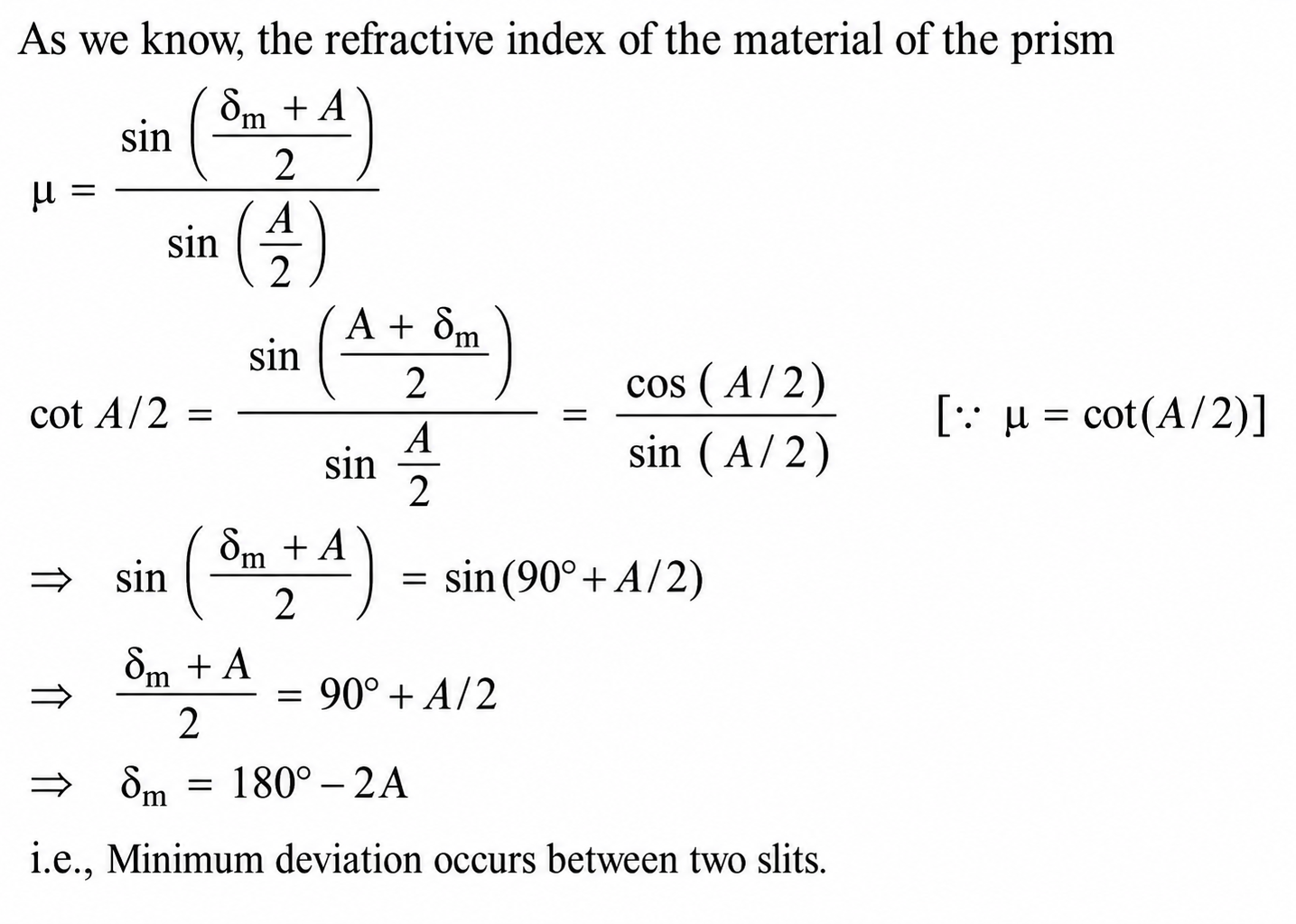
The refracting angle of a prism is A, and the refractive index of the material of the prism is cot (A/2). The angle of minimum deviation is:
In a double slit experiment, the two slits are 1 mm apart and the screen is placed 1 m away. A monochromatic light of wavelength 500 nm is used. What will be the width of each slit for obtaining ten maxima on the double slit within the central maxima of single slit pattern?
Here,
Distance between the two slits,
d = 1 mm = 10⁻³ m
Distance of the screen from the slits, D=1m
Wavelength of monochromatic light used,
λ = 500 nm = 500 × 10⁻⁹ m
Width of each slit, a = ?
Width of central maxima in single slit pattern = 2λD/a
Fringe width in double slit experiment, β = λD/d
So, the required condition,
10λD/d = 2λD/a
⇒ a = d/5D = 1/5 × 10⁻³ m =0.2 mm
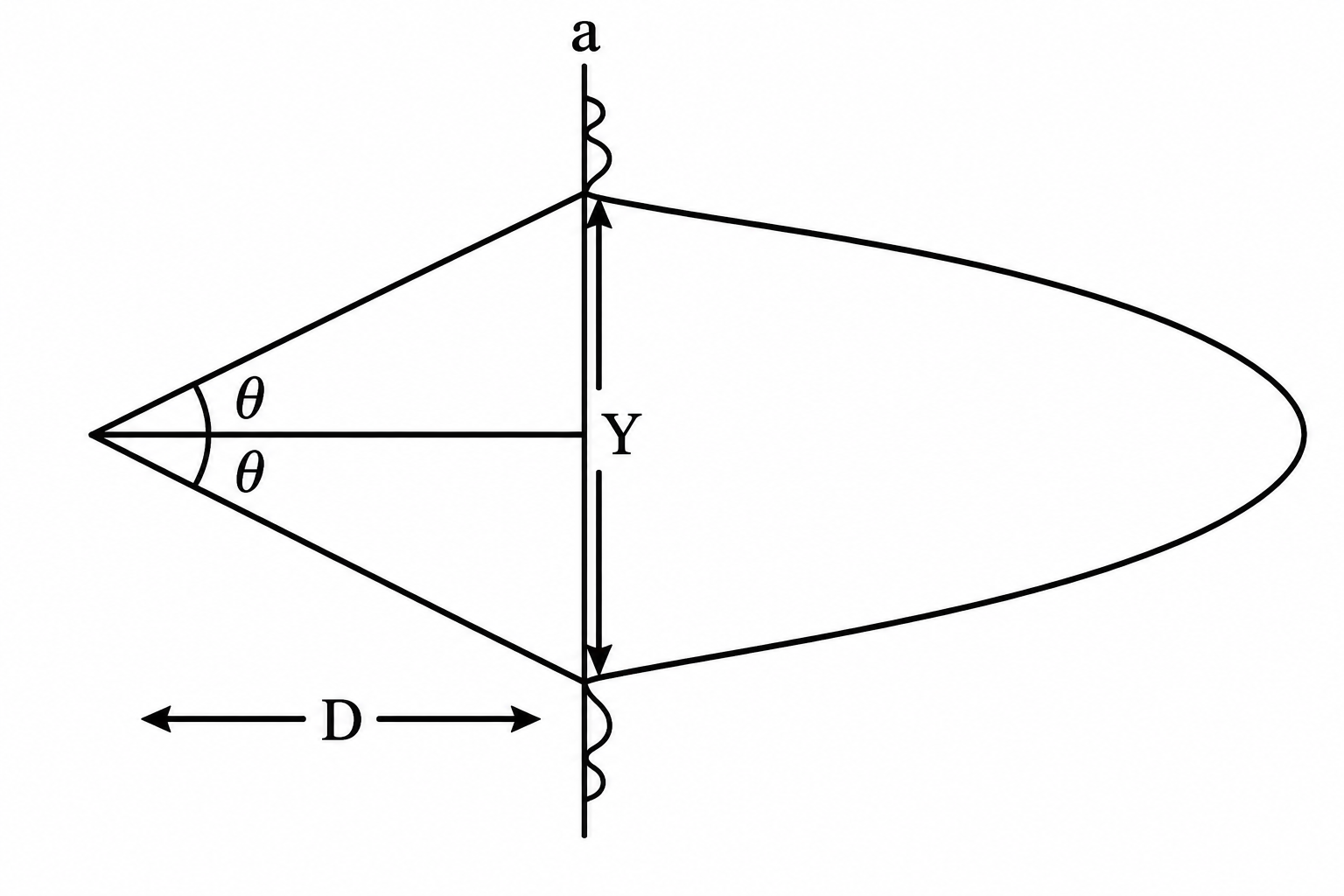
For a parallel beam of monochromatic light of wavelength λ, diffraction is produced by a single slit whose width 'a' is the wavelength of the light. If D is the distance of the screen from the slit, the width of the central maximum will be:
Linear width of central maxima,
Y = D (2θ) = 2Dθ = 2Dλ/a
∴ θ = λ/a
Which of the following figures represents the variation of particle momentum and the associated de-Broglie wavelength?
-
(A)
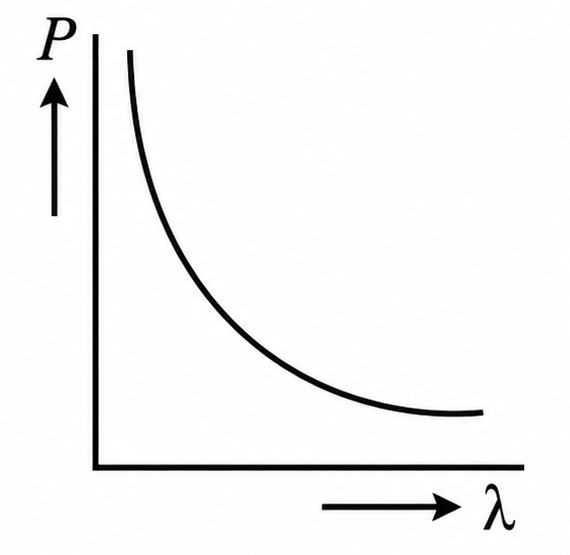
-
(B)
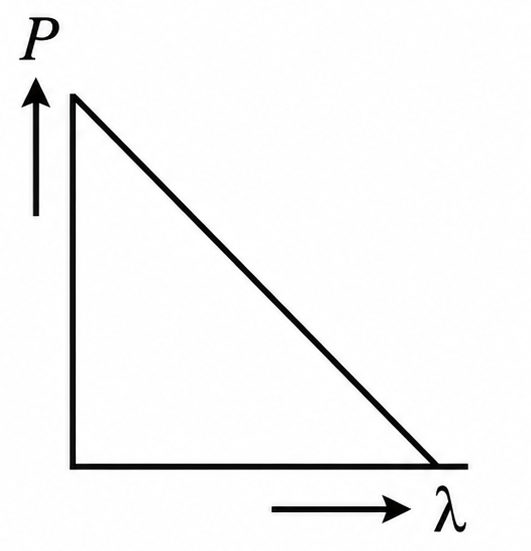
-
(C)
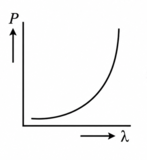
-
(D)
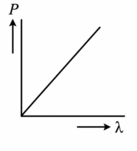
According to de-Broglie,
p = h/λ
or
P ∝ 1/λ
where,
P = particle momentum
λ = de-Broglie wavelength
h = Planck's constant
P ∝ 1/λ represents a rectangular hyperbola.
A certain metallic surface is illuminated with monochromatic light of wavelength λ. The stopping potential for photo-electric current for this light is 3V₀. If the same surface is illuminated with light of wavelength 2λ, the stopping potential is V₀. The threshold wavelength for this surface for photo-electric effect is:
As we know,
eVₛ = hc/λ −Ψ
3eV₀ = hc/λ − Ψ...(i)
eV₀ = hc/2λ − Ψ...(ii)
3eV₀ = 3hc/2λ−3Ψ...(iii)
Multiplying eqn. (ii) by (iii) and subtracting it from eqn. (i),
Ψ = hc/4λ
So, threshold wavelength,
λₜₕ = hc/Ψ = hc/hc/4λ = 4λ
Consider 3rd orbit of He⁺ (Helium), using non-relativistic approach, the speed of electron in this orbit will be given K = 9 × 10⁹ constant, Z = 2 and h (Planck's Constant) = 6.6 × 10⁻³⁴ J s
Speed of electron in nth orbit
Vₙ = 2πKZe²/nh
or v = (2.19 × 10⁶ m/s)Z/n
v = (2.19 × 10⁶) × 2/3
(Z = 2 and n = 3)
v = 1.46 × 10⁶6 m/s.
Two particles masses m₁, m₂ move with initial velocities u₁ and u₂. On collision, one of the particles get excited to higher level, after absorbing energy ε. If final velocities of be v₁ and v₂ then we must have
By law of conservation of energy,
K.E _f = K.Eᵢ − excitation energy (ε)
or
1/2m₁u₁² + 1/2m₂u₂² - ε = 1/2m₁v₁² + 1/2mv₂²
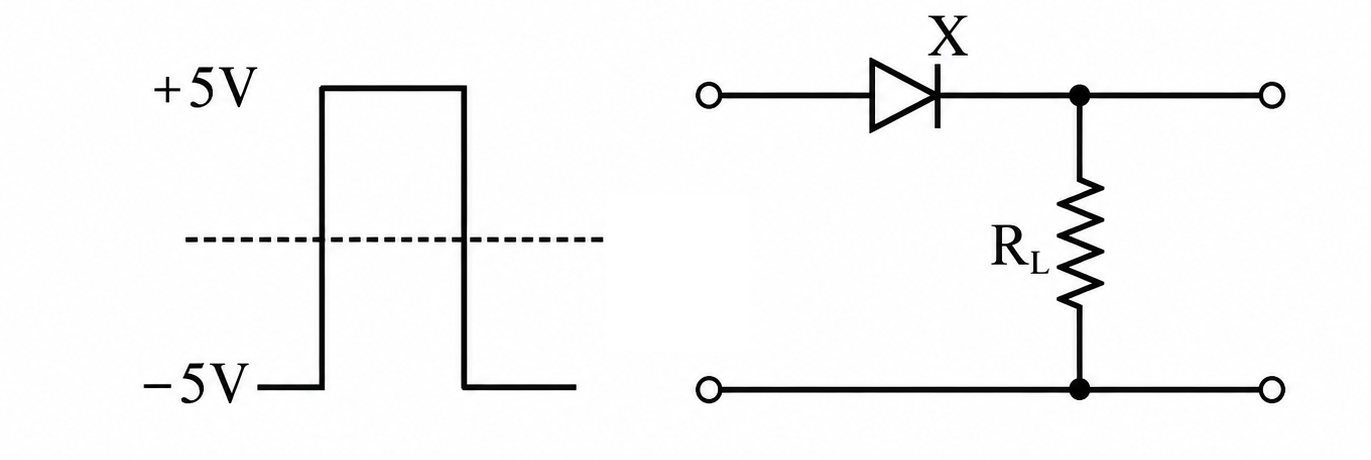
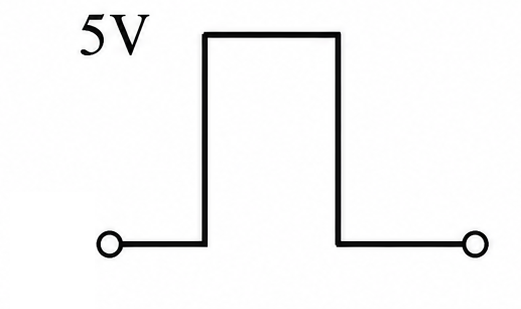
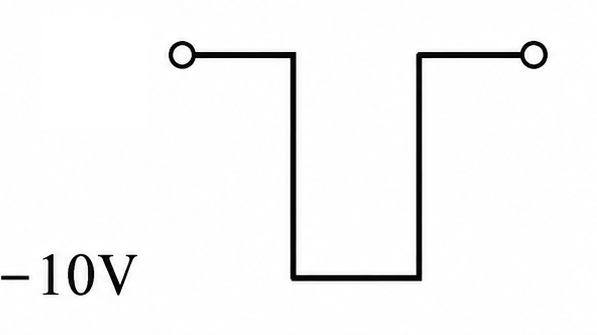
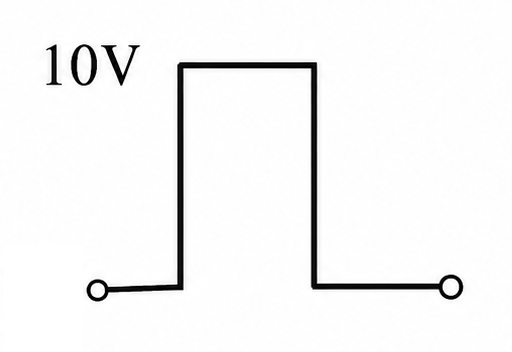
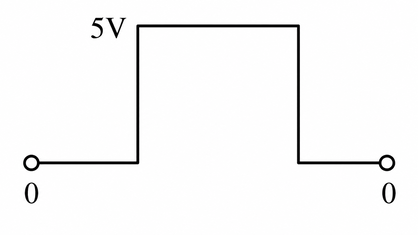
If in a p–n junction, a square input signal of 10 V is applied as shown, then the output across R_L will be …
-
(A)
-
(B)
-
(C)
-
(D)
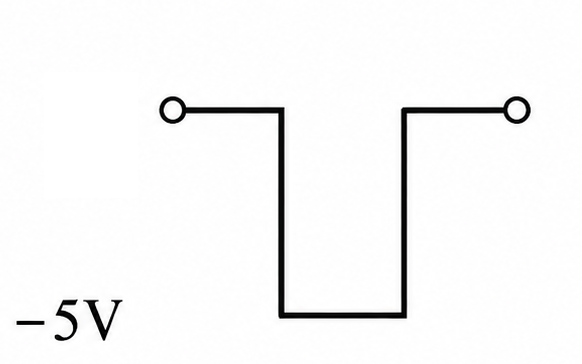
Here P-N junction diode rectifies half of the AC wave, i.e., acts as half wave rectifier.
During +ve half cycle
Diode → forward biased, output across will be:
During −ve half cycle
Diode → reverse biased, output will not be obtained.
Which logic gate is represented by the following combination of logic gate?
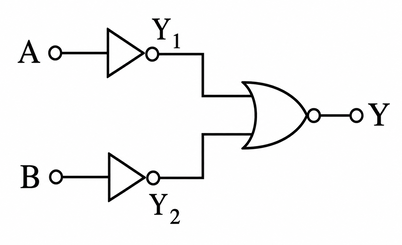
First two gates are NOT gates and the last gate is NOR gate.
Thus,
Y₁ = Α̅, Y₂ = B̅
and
Y = Y̅₁+Y̅₂
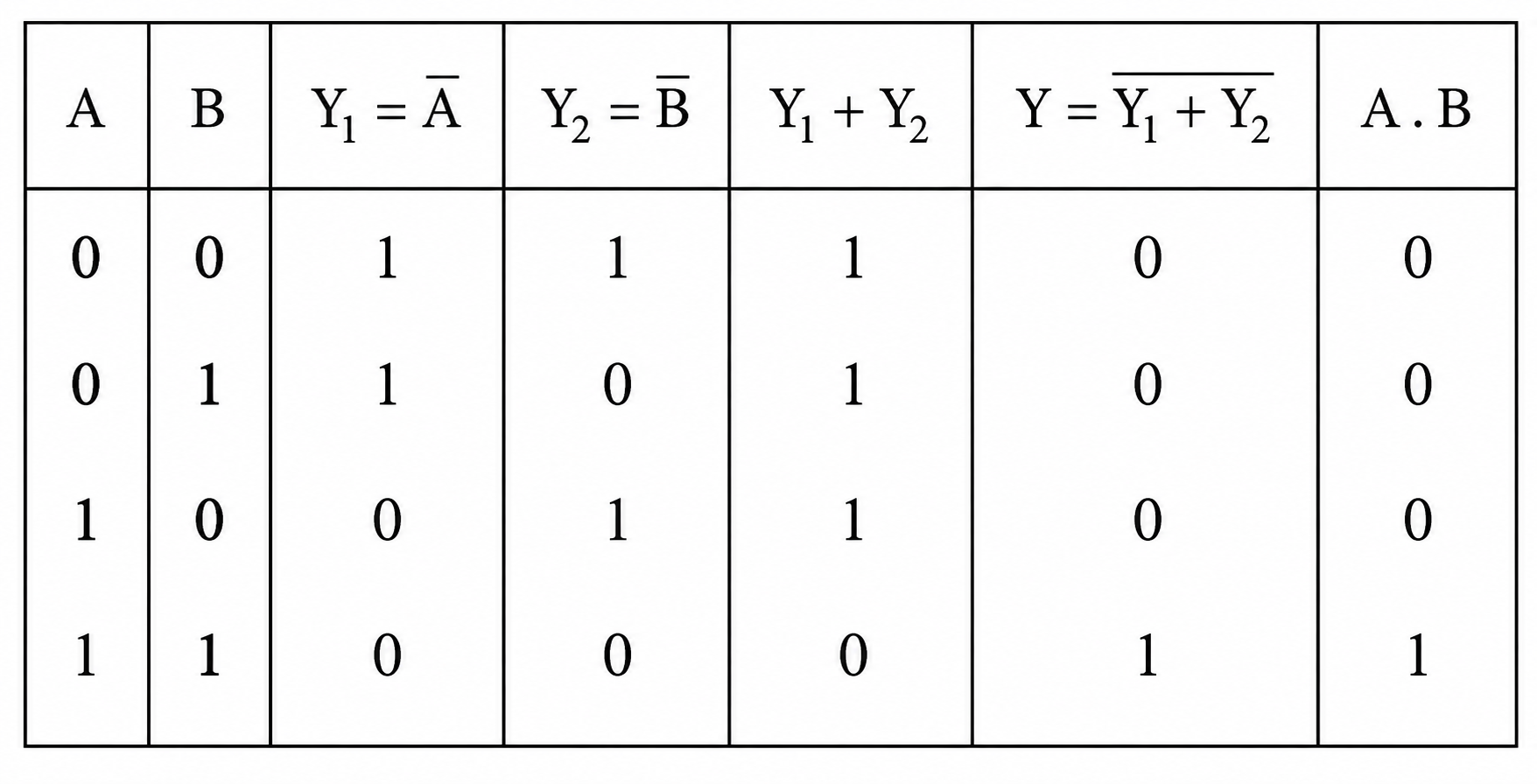
The truth table corresponding to this is as follows:
Thus the combination of gate represents AND gate.
The electric field in a certain region is acting radially outward and is given by
E = Aa. A charge contained in a sphere of radius 'a' centred at the origin of the field, will be
Net flux emitted from a spherical surface of radius a according to Gauss's theorem
Φₙₑₜ = qᵢₙ/ε₀
or (Aa)(4πa²) = qᵢₙ/ε₀
So, qᵢₙ = 4πε₀Aa³
If radius of the ²⁷₁₂Al nucleus is taken to be R_Al, then radius of ¹²⁵₅₃Te nucleus is nearly:
As we know,
R = R₀(A)¹ᐟ³
where A = mass number.
R_Al = R₀(27)¹ᐟ³ = 3R₀
R_Te = R₀(125)¹ᐟ³ 1/3 = 5R₀ = 5/3R_Al
Other Years