CBSE EXAMINATION PAPER-2016
NEET-ZOOLOGY
(Solved)
General Instructions :
Read the following instructions carefully and follow them :
- This question paper contains 180 questions. All questions are compulsory.
- This question paper is divided into 1 sections.
- Section A – questions number 1 to 180 are multiple choice questions
- There is no overall choice given in the question paper. However, an internal choice has been provided in few questions.
- Use of calculator is NOT allowed.
Section A
A parallel plate capacitor of area A, plate separation d and capacitance Cis filled with four dielectric materials having dielectric constants k₁, k₂, k₃ and k₄ as shown in the figure below. If a single dielectric material is to be used to have the same capacitance C in this capacitor, then its dielectric constant k is given by:-
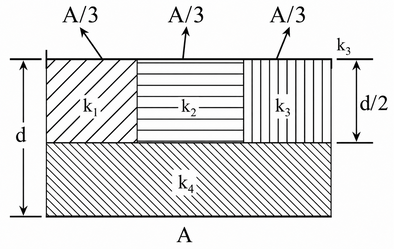
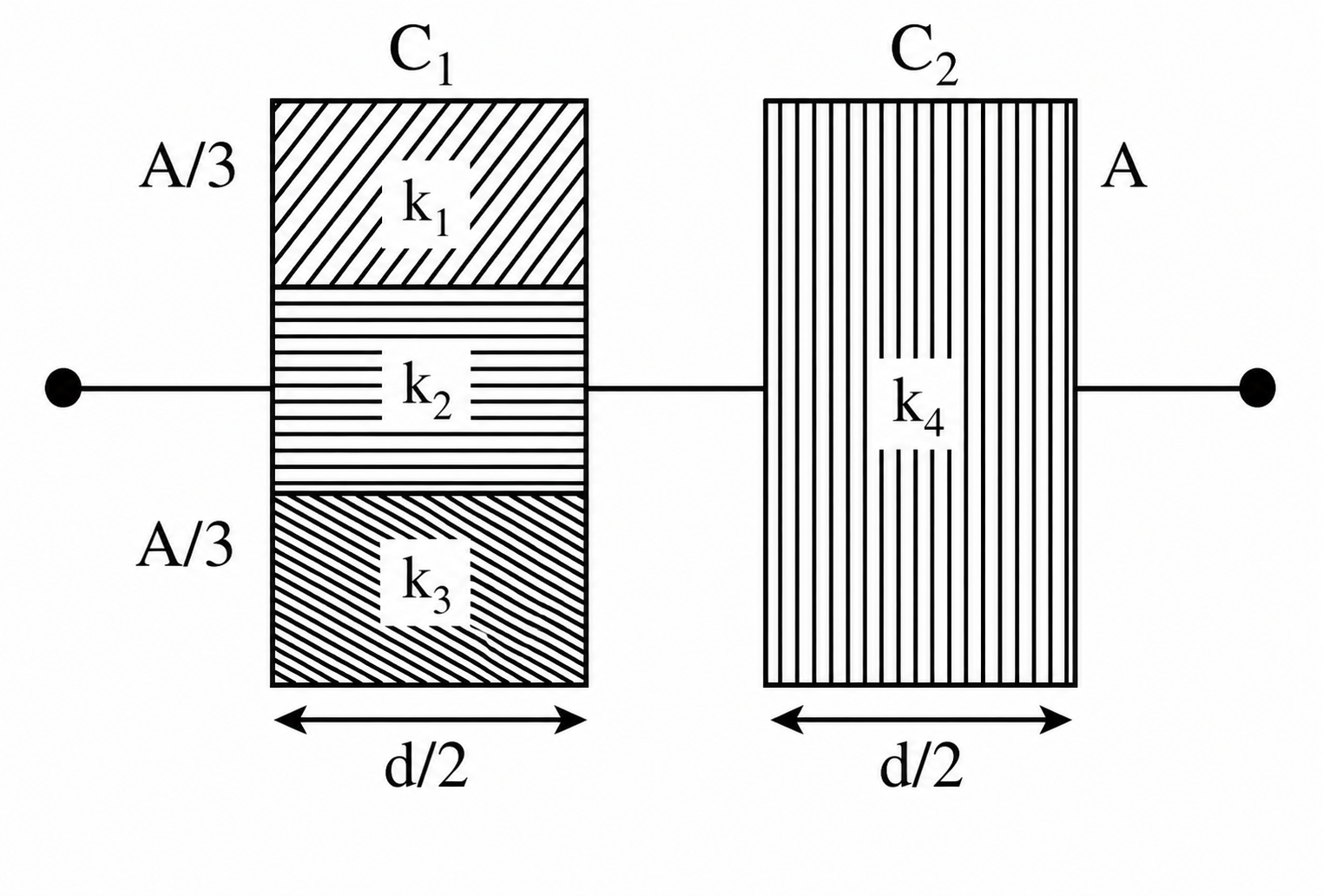
We can redraw the circuit as
1/C + 1/C₁+C₂
d/A∈₀ k = 1/(A/3∈₀) (k₁+k₂+k₃ /d/2) + 1/(A∈₀ K₄/D/2)
⇒ 2/k = 3/k₁+k₂+k₃ + 1/k₄
Which one of the following generates new genetic combinations leading to variation?
Sexual reproduction involves two gametes, male and female gametes. By the process of meiosis, crossing over takes place between non‑sister chromatids. This recombination results in the exchange of genetic material that leads to variation in progeny.
Match column‑I with column‑II and select the correct option using the codes given below:
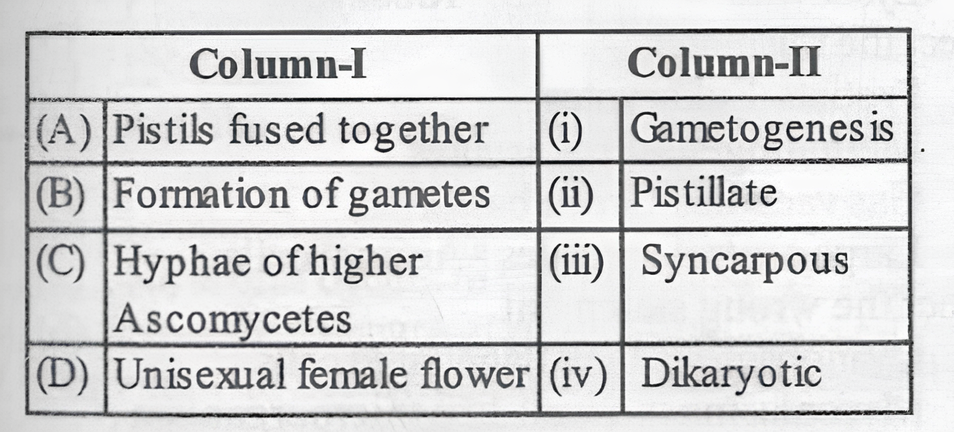
(A) Pistils fused together – Syncarpous (B) Formation of gametes – Gametogenesis (C) Hyphae of higher ascomycetes – Dikaryotic (D) Unisexual female flower – Pistillate
In majority of angiosperms
The reduction division takes place in megaspore mother cell i.e. female gametophyte. It divides by the process of meiosis and produces 4 haploid megaspores, in which one megaspore produces embryo sac, consisting of 8 nuclei by the process of mitosis and 3 cells degenerate.
Pollination in water hyacinth and water lily is brought about by the agency of
In the case of aquatic plants, water hyacinth and water lily are pollinated by both biotic factor‑insects and abiotic factor‑wind.
The ovule of an angiosperm is technically equivalent to
Ovules are initially composed of diploid cells and megasporangium. Meiotic division occurs in both to give rise to functional female gametes.
Taylor conducted the experiment to prove semiconservative mode of chromosome replication on
This was the experiment conducted by Taylor in 1969 on the root tip cells of Vicia faba. He used radioactive thymine (treating agent) to label the DNA, later it was grown in the normal medium. In the 1st generation, both the chromatids were labelled while in the second generation one chromatid of each chromosome was labelled and the other chromatid was normal. It proved the semiconservative model of chromosome replication.
The mechanism that causes a gene to move from one linkage group to another is called
Translocation is the mechanism that causes genes to move from one linkage group to another.
The equivalent of a structural gene is
Cistron is a part of DNA or RNA that shows a specific polypeptide for specific behaviour, and a gene also codes for a specific character or trait. So, it is equivalent to structural gene.
A true breeding plant is
These are the type of plants which after self-fertilization produces offspring of its own kind.
Which of the following rRNAs acts as structural RNA as well as ribozyme in bacteria?
23S rRNA is also known as 25S rRNA, which is a
ribozyme that carries aminoacetyl transferase activity which occurs in ribosomes specially in prokaryotes. Hence, it acts as structural RNA in bacteria.
Stirred-tank bioreactors have been designed for
Stirred tank bioreactor have been designed to eliminate the hazardous volatile organic materials like benzene, toluene, xylene and also for the oxygen transfer.
Oxygen transfer is an important factor for sewage treatment, and to meet the need of microorganism.
A foreign DNA and plasmid cut by the same restriction endonuclease can be joined to form a recombinant plasmid using
DNA ligase is responsible for joining two individual fragments of double stranded DNA by forming phosphodiester bond between them. These acts as molecular glue.
Which of the following is not a component of downstream processing?
Downstream processing refers to the recovery and purification of biosynthetic products, particularly pharmaceuticals, fermentation both which includes preservation, separation, and purification.
Which of the following restriction enzymes produces blunt ends?
EcoRV is used as a restriction enzyme, which first recognizes palindromic 6‑base DNA sequence 5'GAT/ATE3' and it vertically, its complementary sequence will be 3'CTA/TAG‑5'. Like this, blunt ends are formed.
Which kind of therapy was given in 1990 to a four‑year‑old girl with Adenosine Deaminase (ADA) deficiency?
It was the first gene therapy conducted on a four‑year‑old girl patient on 14th September. She was suffering from the deficiency of ADA, which is a genetic disease. WBC were taken out from her body and normal gene were incorporated into her body, which are responsible for making ADA.
How many hot spots of biodiversity in the world have been identified till date by Norman Myers?
34 hotspots of biodiversity are there in the world, which have been identified till date by Norman Myers. About 86% of hotspots are destroyed; 2.3% are left on earth.
The primary producers of the deep‑sea hydrothermal vent ecosystem are
The primary producers of the deep‑sea hydrothermal vent ecosystem are chemosynthetic bacteria. These organisms use inorganic molecules as a source of energy and convert them into organic substances. All organisms present in the vent are dependent on primary producers.
Which of the following is correct for r‑selected species?
R‑selected species have maximum rate of population and have relatively low probability to survive till adulthood.
If ‘+’ sign is assigned to beneficial interaction, ‘–’ sign to detrimental and ‘0’ sign to neutral interaction, then the population interaction represented by ‘+ +’ refers to
Here, '+' shows that the population is benefited by interaction of organism, '‑' shows harmful interaction and '0' shows the population is not affected. If the interaction is '+', '‑', it refers to parasitism. In this interaction one is benefited.
Which of the following is correctly matched?
These are also known as congress grass or carrot
weed or gajarghas, is a deadly weeds which infest crops in rapid manner and covers the surrounding. This feature of parthenium hysterophorus caused threat for biodiversity.
Red list contains data or information on
Red lists contains the information of threatened species, 41% of amphibians, 33% of reef‑building corals, 30% of conifers, 25% of mammals and 13% of birds are threatened.
Which one of the following is wrong for fungi?
The cell wall of fungi contains chitin, glucan and proteins, do not contain cellulose. Plant cell wall contains cellulose.
Methanogens belong to
These are the micro‑organisms that produces methane as by‑product in anoxic condition and belongs to Archaebacteria.
Select the wrong statement:
The wall of the diatoms contains silica, which makes it indistructible.
The label of a herbarium sheet does not carry information on
Herbarium is the collection of dried plant, which provides a basic resource for the study of systematic botany and research.
Conifers are adapted to tolerate extreme environmental conditions because of
Conifers are adapted to tolerate extreme environmental conditions because of thick waxy cuticle.
Which one of the following statements is wrong?
Algin is obtained from brown algae while carrageenan is obtained from red algae.
The term ‘polyadelphous’ is related to
Polydelphous is related with androecium, i.e. stamen, which consists of united filaments arranged in groups or bundles.
How many plants among Indigofera, Sesbania, Salvia, Allium, Aloe, mustard, groundnut, radish, gram and turnip have stamens with different lengths in their flowers?
Mustard, radish and turnip have didynamous condition, belong to Brassicaceae family and are characteristic of Brassicaceae family.
Radial symmetry is found in the flowers of
Radial symmetry is found in the flowers of Brassica.
Free‑central placentation is found in
In these plants, there is absence of septum and ovules are formed on the central axis.
Cortex is the region found between
Cortex is a type of ground tissue present between the epidermis and stele. It is enclosed by the innermost layer of cortex, and epidermis is the uppermost layer of the cortex.
The balloon‑shaped structures called tyloses
The balloon‑shaped structure grows on parenchyma cells of xylem vessels of secondary heartwood, in order to protect the plant under extreme conditions like drought.
A non‑proteinaceous enzyme is
Ribozyme are the catalytic RNAs, which acts like a protein enzymes, in which they help in joining amino-acids to form a protein molecules.
Select the mismatch :-
Largecentral vacuoles are present in plant cells.
Select the wrong statement
Pilli and fimbriae are mainly involved in motility of bacterial cells
A cell organelle containing hydrolytic enzymes is
Lysosomes are small vesicles, contain hydrolytic enzymes or digestive enzymes which act in acidic medium. They devour foreign proteins, toxic substances, dead cells etc. from the body and act as a natural defence of the body.
During cell growth, DNA synthesis takes place in
Cell cycle consists Interphase. G₁ phase, S-phase and G₂ phase. In S-phase the DNA replication occurs.
Which of the following biomolecules is common to respiration‑mediated breakdown of fats, carbohydrates and proteins?
Acetyl COA is produced during the glycolysis of carbohydrates and β — oxidation of fats. After this, enters in citric acid cycle in mitochondrion and reacts with oxaloacetate to form citrate. Acetyl - COA serves as a substrates for lysine and histones.
A few drops of sap were collected by cutting across a plant stem by a suitable method. The sap was tested chemically. Which one of the following test results indicates that it is phloem sap?
The sap of phloem cells contains maximum level of K⁺ and Mg⁺² ions. High level of K⁺ ions makes phloem cells slightly alkaline i.e. pH—(7.2-8.5).
You are given a tissue with its potential for differentiation in an artificial culture. Which of the following pairs of hormones would you add to the medium to secure shoots as well as roots?
Auxin and cytokinin interaction regulates the formation and maintenance of root and shoot meristem.
Phytochrome is a
Phytochromes are the type of chromoproteins, which gets activated by exposure of plants by red light and regulates the photoperiodism.
Which is essential for the growth of root tip?
Calcium plays an important role in cell elongation and cell division. Its deficiency can cause stunted growth of plant.
The process which makes major difference between C₃ and C₄ plants is
Photorespiration is at high rate in C₃ plants while in C₄ plant it is less and negligible.
Which one of the following statements is not correct?
Potato, banana and ginger are arised from underground stem by the process of vegetative propagation.
The part of nephron involved in active reabsorption of sodium is
Loop of Henle is a U-shaped tube that consists of an ascending and descending limb. Its primary role is to concentrate the salts in the interstitium, the tissue surrounding the loop. Descending limb are thin walled and permeable to water but impermeable to salt and thus only indirectly contributes to the concentration of the interstitium. The ascending limbs are thick walled and impermeable to water. It actively reabsorbs the remaining 2.5% of the filtered K⁺ and some amounts of Cl⁻, some Na⁺ is also reabsorbed by diffusion due to electrostatic attraction of reabsorbed Cl⁻.
Which of the following is hormone releasing IUD?
LNG-20 i.e Levonorgestrel-20 releases hormones directly into the uterus and absorbed through endometrium.
Which of the following is incorrect regarding vasectomy?
After vasectomy, sperms are formed continuously in testicles but their movements are blocked at the site of vas deferens and sperms goes through the epididymus and dies.
Embryo with more than 16 blastomeres formed due to in vitro fertilization is transferred into
Its a IVF technique i.e. In "vitro fertilization", eggs are fertilized by sperm outside and then these fertilized eggs are cultured for 2-3 days in lab on growth medium and later injected directly into the uterus.
Which of the following depicts the correct pathway of transport of sperms?
The sperms are formed inside tubules and passed outside the testis through tubuli recti, rete testis and vasa efferentia, which opens into highly convoluted structure epididymis and then from epididymis sperms transferred into vas deferens.
Match Column‑I with Column‑II and select the correct option using the codes given below :-
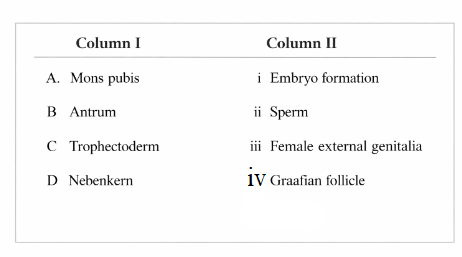
Mons pubis – Female external genelia (B) Antrum – Graafian follicle (C) Trophectoderm – Embryo formation (D) Nebenkern – Sperm
Several hormones like hCG, hPL, estrogen, progesterone are produced by
hCG i.e. human chorionic gonadotropin, hPL i.e. human placental lactogen, progesterone and estrogen are produced by placenta during pregnancy. hCG helps in the maintenance of corpus luteum, hPL stimulates mammary gland growth and lactation, estrogen causes thickening of endometrium and progesterone secreted by corpus luteum maintains endometrium for implantation of blastocyst.
If a colour‑blind man marries a woman who is homozygous for normal colour vision, the probability of their son being colour‑blind is
.
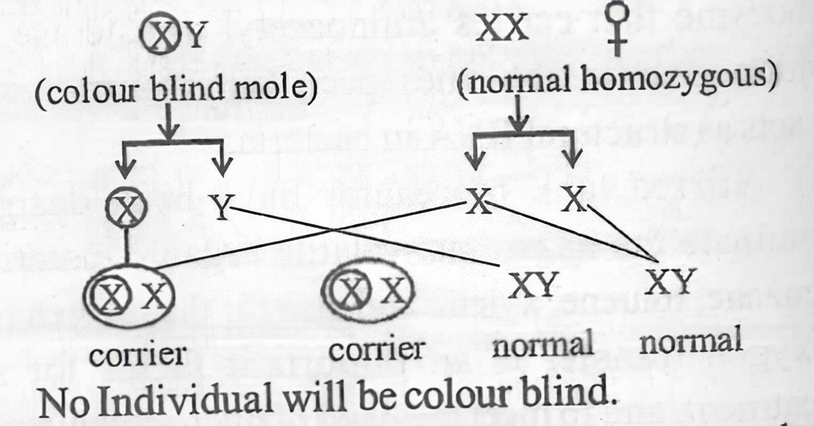
Genetic drift operates in
Genetic drift operates in small isolated population. It means the variation in the frequency of different genotypes of small population.
In Hardy‑Weinberg equation, the frequency of heterozygous individual is represented by
p²+2pq+q²=1 is the equation of Hardy‑Weinberg equilibrium. In this equation p² represents the frequency of individuals who are homozygous for one allele, 2pq is the frequency of heterozygous individuals, and q² represents the frequency of individuals who are homozygous for another allele.
The chronological order of human evolution from early to the recent is
Ramapithecus with 350 cc brain capacity were discovered in Shivalik hills in H.P., they were more ape‑like. In between 350–450 cc, Australopithecus were discovered from Africa, called Tuang baby. In between 600–700 cc, Homo habilis were known as the first tool makers — that was the beginning of the human phase. In between 800–1200 cc, Homo erectus were discovered as Java man, Peking man, and Atlantic man. Around 1500 cc, Homo sapiens evolved, known as modern man.
Which of the following is the correct sequence of events in the origin of life?
I. Formation of protobionts
II. Synthesis of organic monomers
III. Synthesis of organic polymers
IV. Formation of DNA‑based genetic systems
At first earth contained NH₃, H₂O, H₂, CH₄. The atmosphere was reducing, i.e. there was no free oxygen. When earth cooled, the primitive inorganic molecules interacted and combined with one another to synthesize organic monomers. After that these organic monomers combined to form complex polymers. These polymers aggregated to form precursors of first life as coacervates i.e. protobionts, and after protobionts, first life originated as prokaryotes.
A molecule that can act as a genetic material must fulfill the traits given below, except
Genetic material should be structurally and chemically stable.
DNA‑dependent RNA polymerase catalyzes transcription on one strand of the DNA which is called the
Template strand is the sequence of DNA which is going to direct the synthesis of mRNA.
Interspecific hybridization is the mating of
It is a process of hybridization in which two different related species are mated to produce offspring with traits of both parents.
Which of the following is correct regarding AIDS causative agent HIV?
HIV is enveloped retro‑virus having 2‑strands of single stranded RNA with reverse transcriptase enzyme.
Among the following edible fishes, which one is a marine fish having rich source of omega‑3 fatty acids?
Mackerel is a oil edible fish and rich source of omega‑3 fatty acids. It gives 2789 mg omega‑3.
Match Column‑I with Column‑II and select the correct option using the codes given below
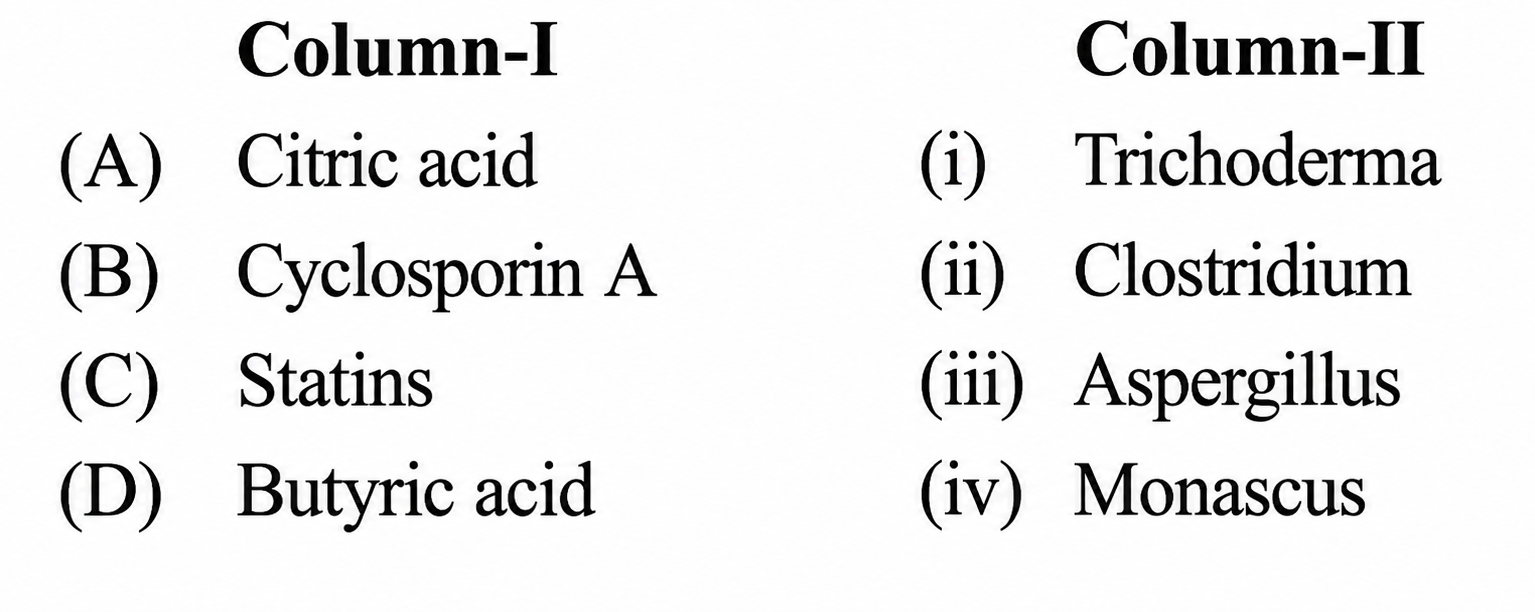
(A) Citric acid – Aspergillus (B) Cyclosporin A – Trichoderma (C) Statins – Monacus (D) Butyric acid – Clostridium
Biochemical Oxygen Demand (BOD) may not be a good index for pollution for water bodies receiving effluents from
If the effluents are discharged from petroleum industry, it can create a toxicological effect on aquatic life and even humans. It contains oil, that deplete the level of oxygen in water. It can cause loss of biodiversity, etc.
The principle of competitive exclusion was stated by
Competitive exclusion principle was stated by G.F. Gause.
Which of the following National Parks is home to the famous musk deer or hangul?
The famous musk deer or hangul are found in Dachigam National Park, Jammu & Kashmir.
A lake which is rich in organic waste may result in
A lake which is rich in organic waste may result in mortality of fish because increase in the level of organic waste in lake will increase the population of micro‑organism in water. As a result, Biological Oxygen Demand will also increase. That becomes fatal aquatic life to respire .
The highest DDT concentration in aquatic food chain shall occur in
The highest DDT concentration in aquatic food chain will be in seagull. This condition is known as ‘biomagnification.
Which of the following sets of diseases is caused by bacteria?
Tetanus is caused by the clostridium tetani bacterium and cholera by vibrio cholerae.
Match Column‑I with Column‑II for housefly classification and select the correct option using the codes given below:
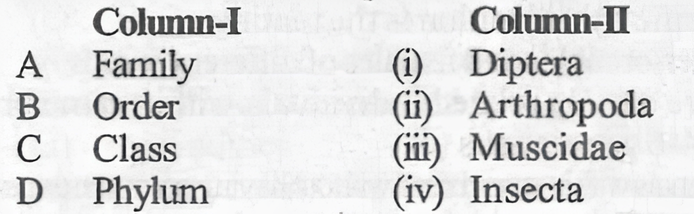
(A) Family — Muscidae
(B) Order —Diptera
(C) Class — Insecta
(D) Phylum— Arthropoda
Choose the correct statement.
Not all reptiles have 3‑chambered heart, some reptiles like crocodiles have anatomically 4‑chambered heart. Generally, reptiles have two atria and one ventricle. All pisces are covered by scales and have gills. Generally, mammals are viviparous but some mammals are oviparous also, e.g. platypus.
Study the four statements (A–D) given below and select the two correct ones out of them: (A) Definition of biological species was given by Ernst Mayr. (B) Photoperiod does not affect reproduction in plants. (C) Binomial nomenclature system was given by R.H. Whittaker. (D) In unicellular organisms, reproduction is synonymous with growth. The two correct statements are
Photoperiod affects the reproduction in plants. It is observed in many tropical species of long‑day plants, it prevents the formation of flower buds. There are many temperate plants which have variety of flowering habits, some produce in short days and some in long. Binomial nomenclature was given by Carl Linnaeus (1707–1778).
In male cockroaches, sperms are stored in which part of the reproductive system?
In male cockroaches, sperms are stored in seminal vesicles of reproductive system.
Smooth muscles are
Smooth muscles are involuntary, fusiform and non‑striated muscular tissue.
Oxidative phosphorylation is
Oxidative phosphorylation is formation of ATP by energy released from electrons removed during substrate oxidation.
Which of the following is the least likely to be involved in stabilizing the three‑dimensional folding of most proteins?
Ester bonds are least involved in stabilization of three‑dimensional structure of protein.
Which of the following describes the given graph correctly?
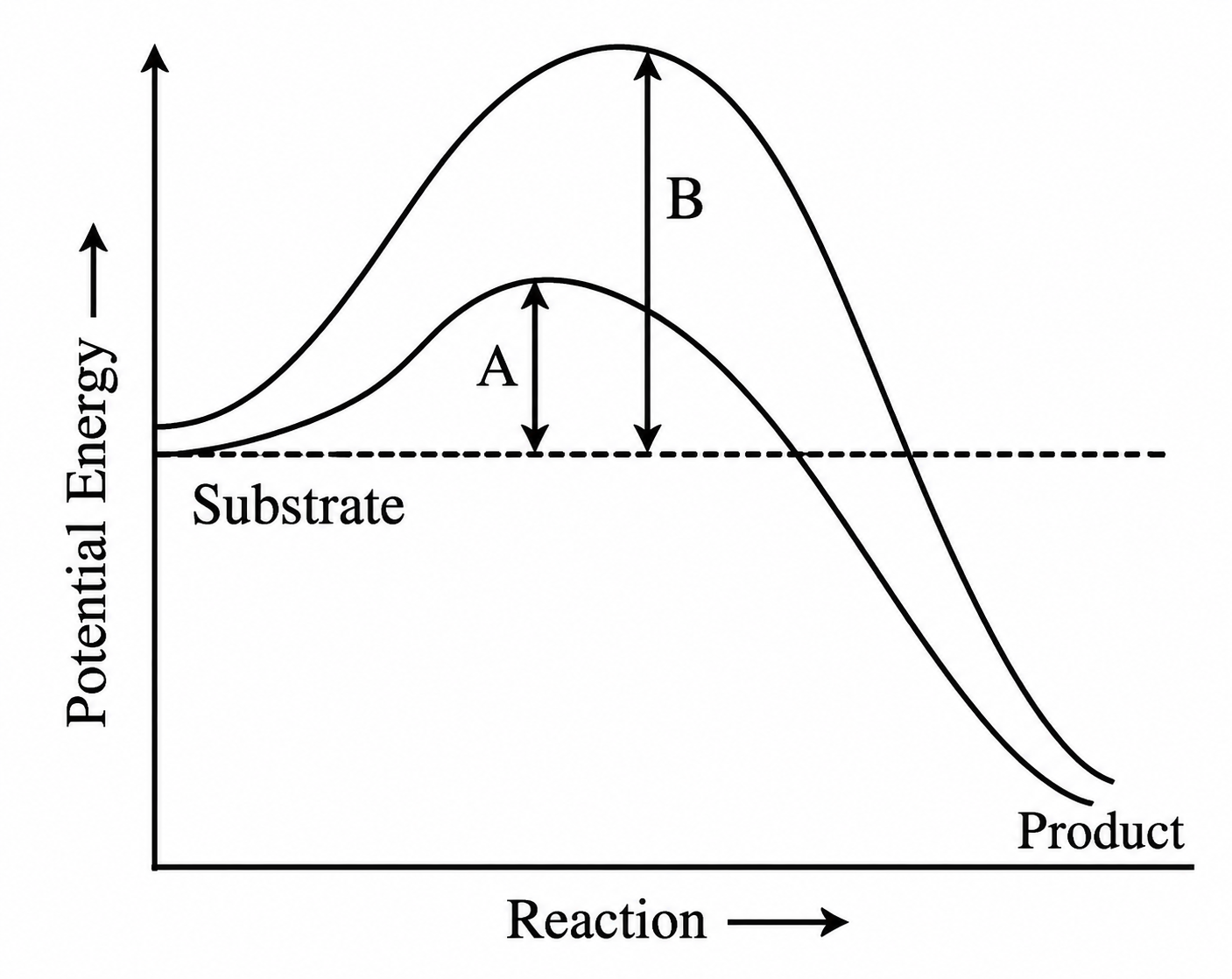
Exothermic reaction is a type of chemical reaction which releases energy in the form of heat and light. It is opposite to endothermic reaction. Graph shows, energy A is released in the presence of enzyme and energy B is released in the absence of enzyme.
When cell has stalled DNA replication fork, which checkpoint should be predominantly activated?
G₁/S is a checkpoints that controls the mechanism in eukaryotes cell cycle. This stage is localized at the end of G₁ phase and just before the entry of S‑phase.
Match the stages of meiosis in Column‑I to their characteristic features in Column‑II and select the correct option using the codes given below:
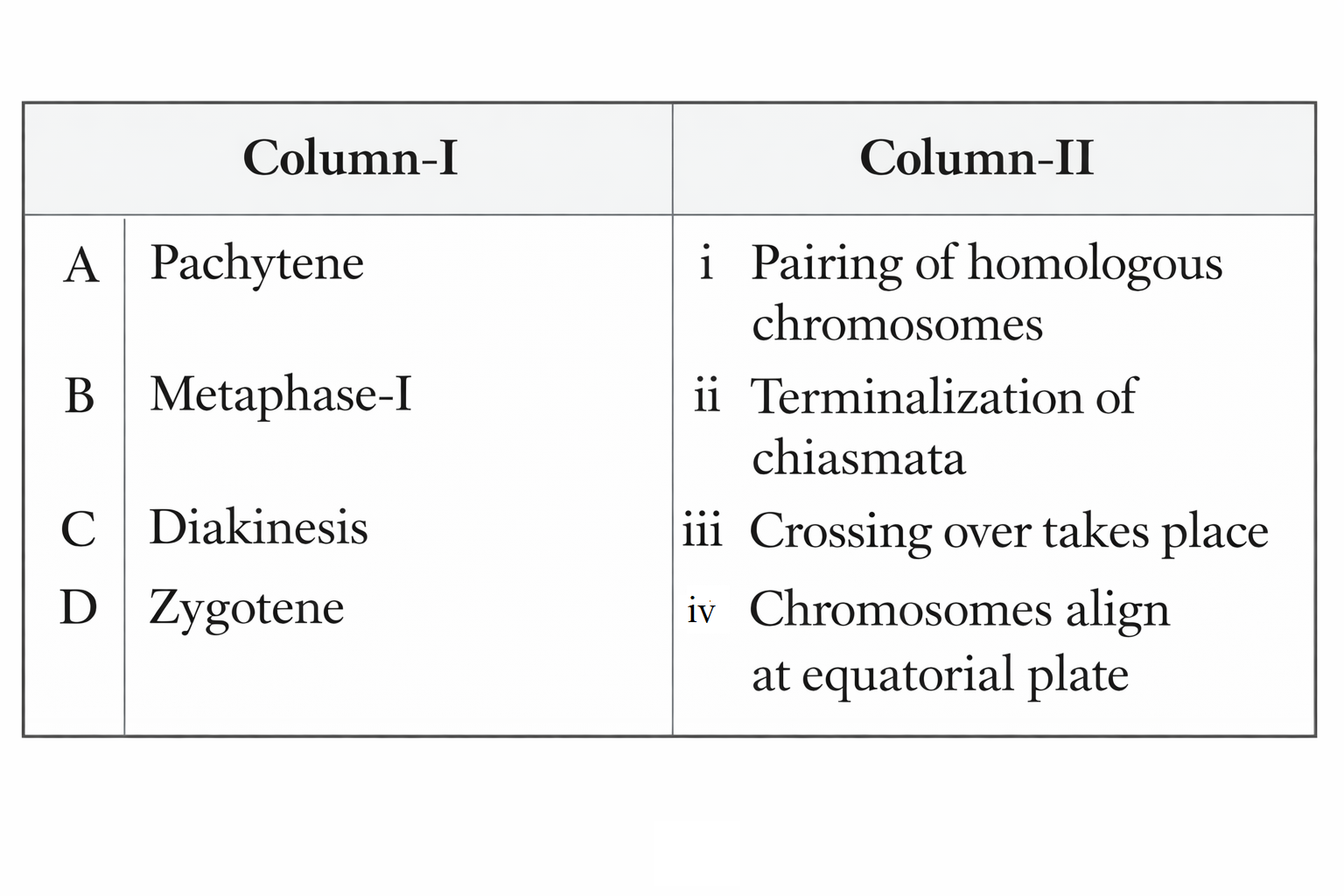
(A) Pachytene – Crossing over takes place
(B) Metaphase‑I – Chromosome align at equatorial plate
(C) Diakinesis – Terminalization of chiasmata
(D) Zygotene – Pairing of homologous chromosomes
Which hormones do stimulate the production of pancreatic juice and bicarbonate?
The Cholecystokinin and secretin are the hormones produced by the walls of duodenum.
The partial pressure of oxygen in the alveoli of the lungs is
Exchange of gases take place by simple diffusion for maintaining the concentration gradient. In diffusion, the pressure of oxygen in alveoli should be kept at a high level compared to blood, while the pressure of CO₂ in the alveoli should be lower than in blood.
Choose the correct statement.
Receptor potentials are graded in sensory cells caused by stimuli.
Nociceptors respond to pain or alert the body to potentially damaging stimuli. These are the sensors of the pain pathway.
Meissner’s corpuscles are mechanoreceptors.
‘Graves’ disease is caused due to
Grave’s disease is caused due to the hypersecretion of the thyroid gland.
Name the ion responsible for unmasking of active sites for myosin for cross‑bridge activity during muscle contraction.
Calcium is responsible for unmasking active sites for cross‑bridge activity during muscle contraction.
Name the blood cells, whose reduction in number can cause clotting disorder, leading to excessive loss of blood from the body.
Thrombocytes help in haemostasis i.e. in blood coagulation. Their deficiency can cause haemophilia.
Name a peptide hormone which acts mainly on hepatocytes, adipocytes and enhances cellular glucose uptake and utilization.
Insulin uptakes glucose through a transduction pathway from adipose tissue and muscles. It is a peptide hormone which acts mainly on hepatocytes and adipocytes, enhancing cellular glucose uptake and utilization.
Osteoporosis, an age‑related disease of skeletal system, may occur due to
After menopause in older women, there is a quick drop in the level of estrogen that can cause osteoporosis.
Serum differs from blood in
Serum lacks RBC, WBC, and clotting factors. It contains all the proteins not used in blood clotting.
Lungs do not collapse between breaths and some air always remains in the lungs which can never be expelled because
Lungs do not collapse because there is a negative intrapleural pressure pulling at the lung walls.
The posterior pituitary gland is not a ‘true’ endocrine gland because
The posterior pituitary gland is not a true endocrine gland because it stores hormones made by the hypothalamus.
The potential difference (V_A - V_B) between the points A and B in the given figure is:
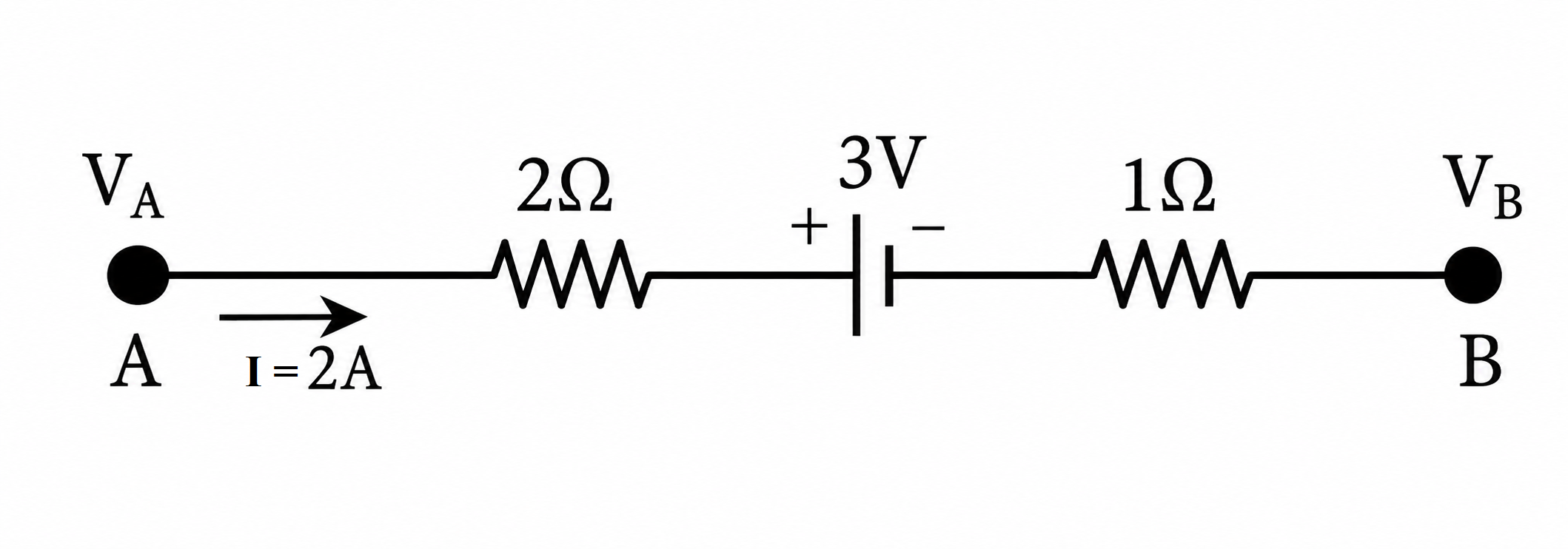
V_A- V_B = I (R₁+R₂) +3 volts
V_B = V_A - (2×2) -3 -(2×1) ⇒ V_A - V_B = 9V

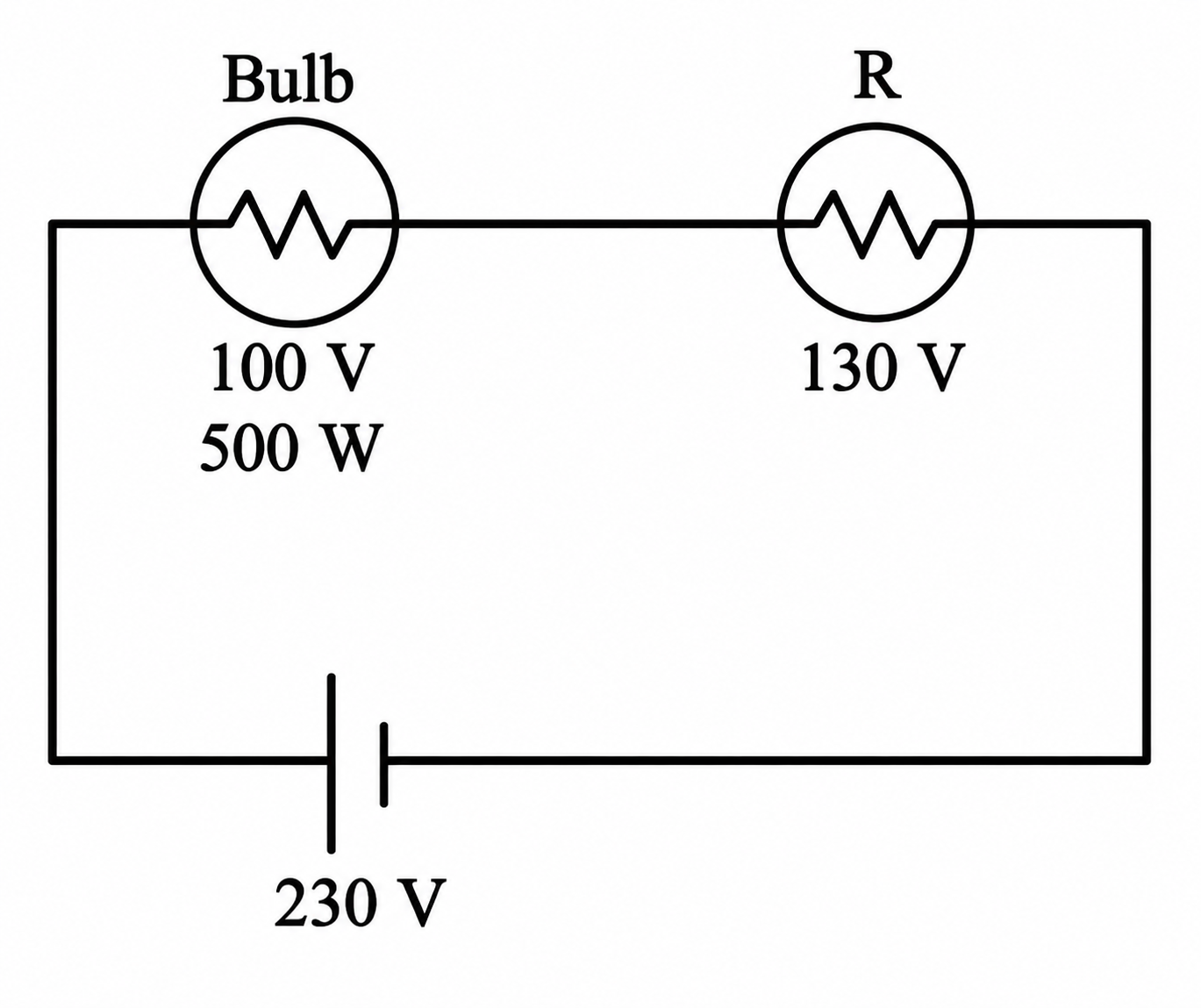
A filament bulb (500 W, 100 V) is to be used in a 230 V main supply. When a resistance R is connected in series, it works perfectly and the bulb consumes 500 W. The value of R is:
R_bulb = V²/P = 100²/500 = 20Ω
According to question R/R_bulb = 130/100
⇒R/20=130/100
⇒ R = 26Ω
A long wire carrying a steady current is bent into a circular loop of one turn. The magnetic field at the centre of the loop is B. It is then bent into a circular coil of n turns. The magnetic field at the centre of this coil of n turns will be:
According to question,
𝑙 = 2πR = n(2πr) ⇒ r= R/n
For one turn, Magnetic field B= μ₀i/2R and
For n turn, Magnetic field B’
=μ₀ni/2r ⇒B′ = μ₀n²i/2R= n²B
A bar magnet is hung by a thin cotton thread in a uniform horizontal magnetic field and is in equilibrium state. The energy required to rotate it by 60° is W. Now the torque required to keep the magnet in this new position is:
Torque τ = PE sin60° ......(i)
Energy required to rotate
W = PE (1−cos60°) ......(ii)
From (i) and (ii)
τ/W = √(3/2)/1/2 ⇒ τ = W√3
An electron is moving in a circular path under the influence of a transverse magnetic field of 3.57 × 10⁻² T. If the value of e/m is 1.76 × 10¹¹ C/kg, the frequency of revolution of the electron is:
Frequency of revolution of electron is given by,
f = eB/2πm
f = (1.76×10¹¹×3.57×10⁻²)/(2×3.14)
f = 1 GHz
Which of the following combinations should be selected for better tuning of an L–C–R circuit used for communication?
For better turning, q- factor must be high.
∴ Q-ω₀L/R = 1√LC (L/R) = 1/R √L/C
Q· factor α 1/R√C, and Q α√L
so, that R and C should be small and L should be high.
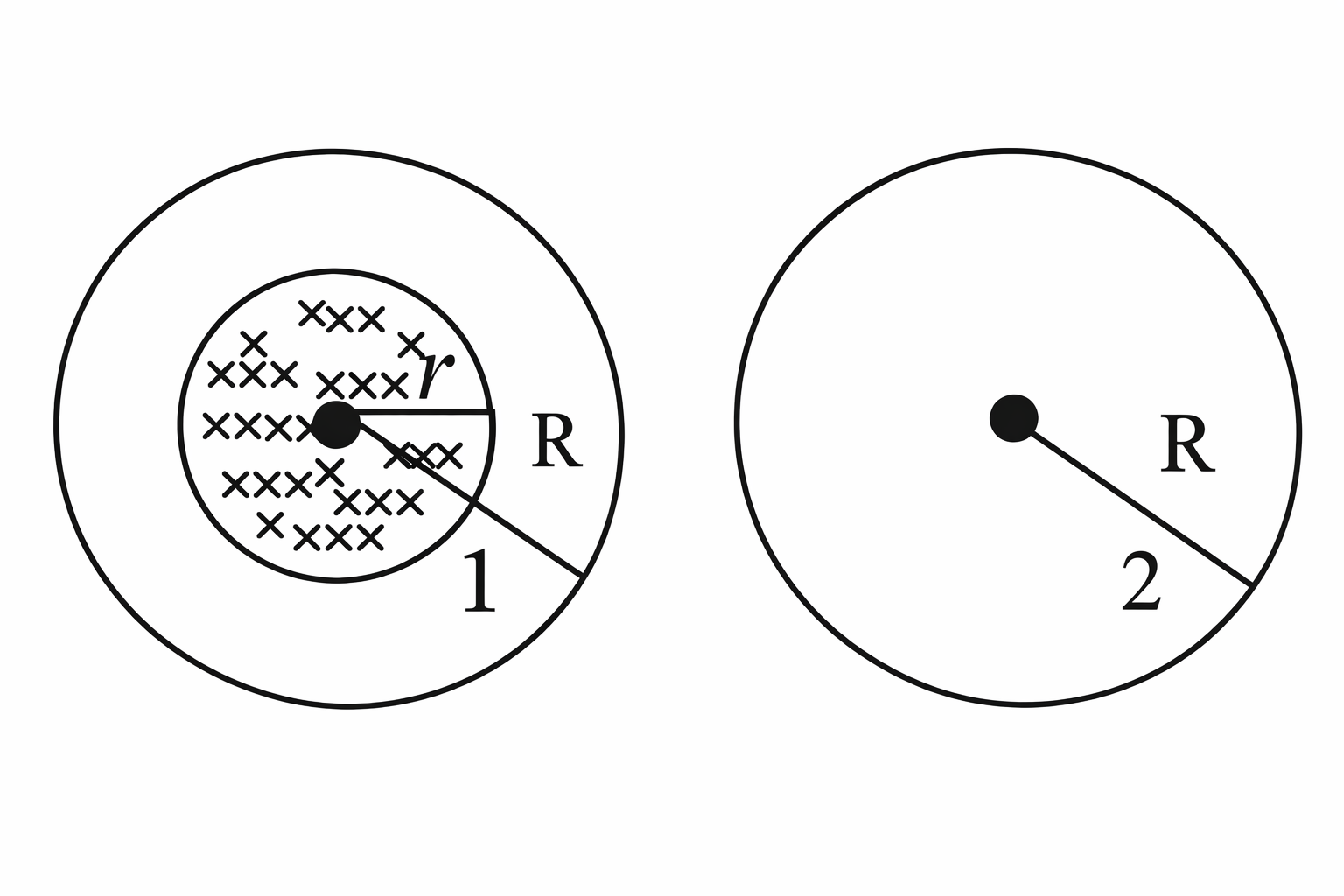
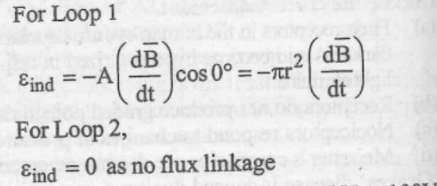
A uniform magnetic field is restricted within a region of radius r. The magnetic field changes with time at a rate dB̅/dt. Loop 1 of radius R > r encloses the region r and loop 2 of radius R is outside the region of magnetic field as shown in the figure below. Then the e.m.f. generated is:
.
The potential differences across the resistance, capacitance, and inductance are 80 V, 40 V, and 100 V respectively in an L–C–R circuit. The power factor of this circuit is:
given that, V_R = 80V, V_C = 40 and V_L = 100V
tanΦ = V_L-V_C/V_R = 100-40/80 = 3/4
or Φ=37°
Power factor = cos Φ = cos37°=4/5 or 0.8
A 100 Ω resistance and a capacitor of 100 Ω reactance are connected in series across a 220 V source. When the capacitor is 50% charged, the peak value of the displacement current is:
(i_d)ₘₐₓ = (i_c)ₘₐₓ = i₀ = ε₀/z=220√2/ √100²+100²
⇒ (i_d)ₘₐₓ = 220√2/100√2 = 2.2A
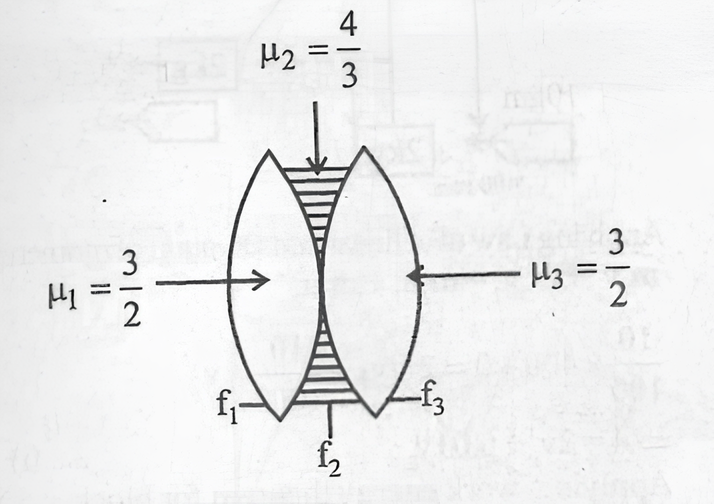
Two identical glass (μ_g = 3/2) equiconvex lenses of focal length f each are kept in contact. The space between the two lenses is filled with water (μ_w = 4/3). The focal length of the combination is:
Using Len’s Maker’s formula 1/f = (μ-1) (1/R₁-1/R₂)
Since lenses are equiconvex, R₁= -R₂
∴ f = (R/2)/ (μ-1)
f₁ = f₃ = R/2(3/2-1)= R = f (given)
f₂ = -R/2(4/3-1) = -3/2R = -3/2f
1/f_eq = (1/f₁)+(1/f₂)+(1/f₃) = 1/f + (-2/3f)+1/f
⇒1/f_eq = 4/3f⇒f_eq = 3f/4
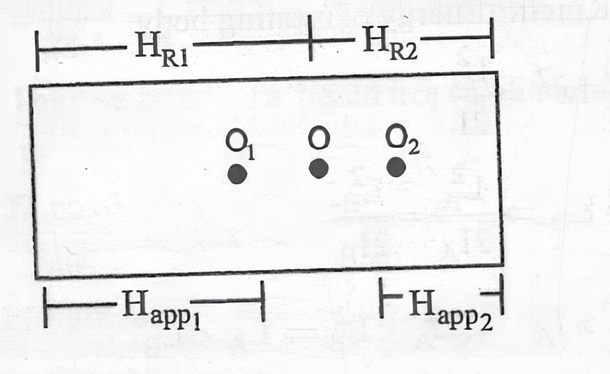
An air bubble in a glass slab with refractive index 1.5 (near normal incidence) is 5 cm deep when viewed from one surface and 3 cm deep when viewed from the opposite face. The thickness (in cm) of the slab is:
Hₐₚₚ = H_R/μg ⇒H_R= μ_gHₐₚₚ
So, H_R₁ = μ_gHₐₚₚ₁ and H_R₂ = μ_gHₐₚₚ₂
thickness = H_R₁+H_R₂
= μ_g [Hₐₚₚ₁ +Hₐₚₚ₂] =3/2 [5+3] = 3/2×8 = 12cm
The interference pattern n is obtained with two coherent light sources of intensity ratio n. In the interference pattern, Iₘₐₓ - Iₘᵢₙ / Iₘₐₓ + Iₘᵢₙ
will be:
Let us consider, the ration of intesities obtained from
two coherent sources is Ⅰ₁/Ⅰ₂ = n/1
(Iₘₐₓ) - (Iₘᵢₙ)/ (Iₘₐₓ) + (Iₘᵢₙ)= (√Ⅰ₁+ √Ⅰ₂)² - (√Ⅰ₁- √Ⅰ₂)²/√Ⅰ₁+ √Ⅰ₂)²/√Ⅰ₁- √Ⅰ₂)²
= 4√Ⅰ₁Ⅰ₂/ 2Ⅰ₁+Ⅰ₂
= 2√Ⅰ₁/Ⅰ₂/(Ⅰ₁/Ⅰ₂+1)=2√n/n+1
A person can see clearly objects only when they lie between 50 cm and 400 cm from his eyes. In order to increase the maximum distance of distinct vision to infinity, the type and power of the correcting lens the person has to use, will be:
To correct myopia far point must go to infinity.
V= -4m, u=-∞, P= ?
P= 1/f = 1/v-1/u = 1/-4-1/8 = 0.25D
A linear aperture whose width is 0.02 cm is placed immediately in front of a lens of focal length 60 cm. The aperture is illuminated normally by a parallel beam of wavelength 5×10⁻⁵ cm. The distance of the first dark band of the diffraction pattern from the centre of the screen is:
Here, focal length,
f=D=60cm
For first minima,
y=λD/a = 5×10⁻⁷ ×60/2×10⁻²×10⁻² = 5×10⁻³×60/2
=0.15cm
Electrons of mass m with de Broglie wavelength λ fall on the target in an X-ray tube. The cutoff wavelength (λ₀) of the emitted X-ray is:
de-Bronglie wavelength is given by
λ=h/p⇒ p=h/λ
E=p²/2m = h²/2mλ²
Also in X-ray E=hc/λ₀
hc/λ₀ = h²/2mλ² =λ₀ = 2mcλ/h
Photons with energy 5 eV are incident on a cathode C in a photoelectric cell. The maximum energy of emitted photoelectrons is 2 eV. When photons of energy 6 eV are incident on C, no photoelectrons will reach the anode A, if the stopping potential of A relative to C is:
Einstein Photoelectric Equation
eV=1/2 mv²ₘₐₓ = hv = Φ₀
According to question,
Ⅰ case 2 = 5 - Φ₀ ⇒ = 3eV
ⅠⅠ case eV = 6-3 =3 eV⇒ Vs = 3V.
∴V_AC = -3V
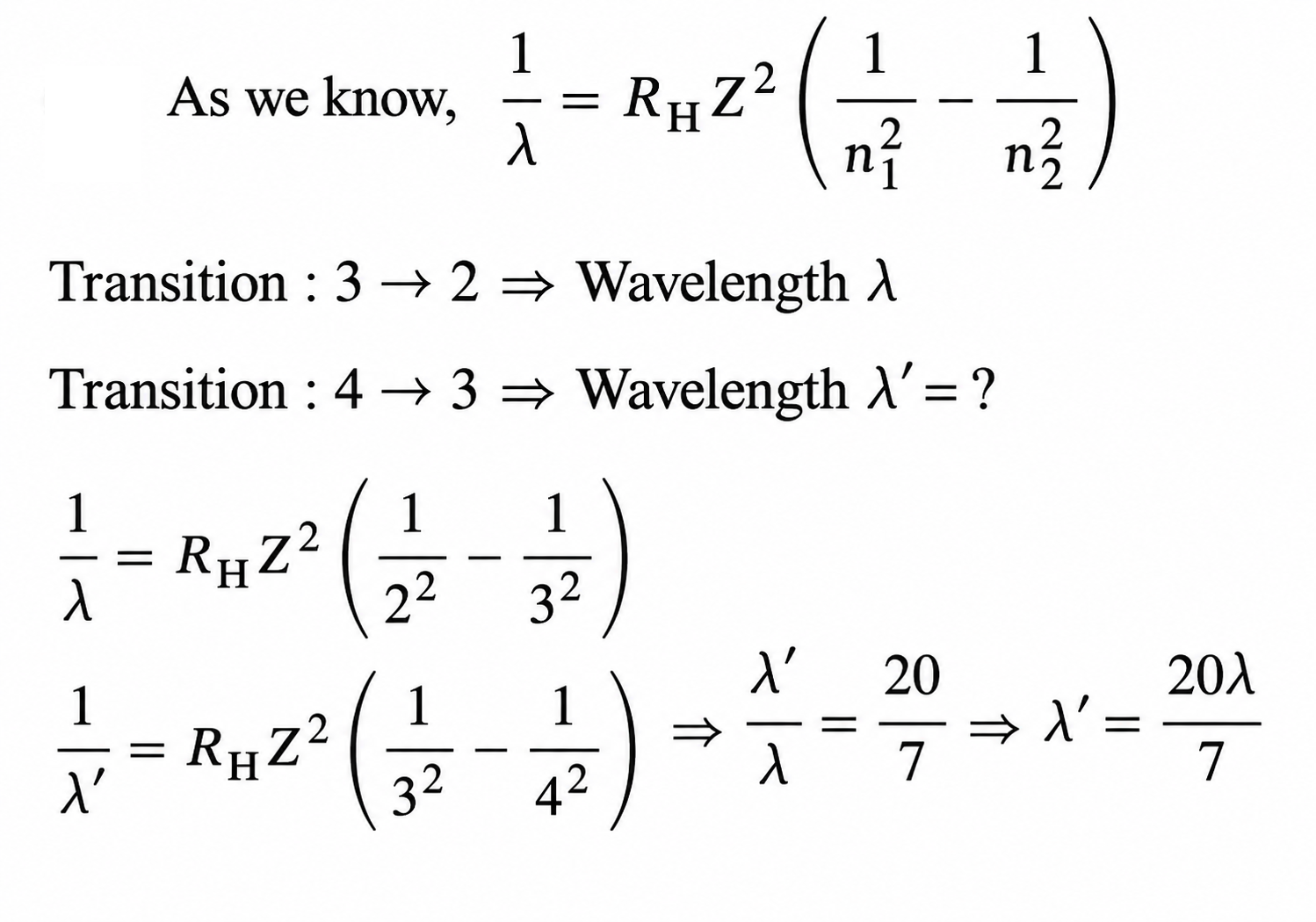
If an electron in a hydrogen atom jumps from the 3rd orbit to the 2nd orbit, it emits a photon of wavelength λ m. When it jumps from the 4th orbit to the 3rd orbit, the corresponding wavelength of the photon will be:
.
The half-life of a radioactive substance is 30 minutes. The time (in minutes) taken between 40% decay and 85% decay of the same radioactive substance is:
Decay 40% → 85%
Remaining 60% → 15%
60% —t½→30% —t½→15%
t = 2t½ = 60 min
For CE transistor amplifier, the audio signal voltage across the collector resistance of 2kΩ is 4V. If the current amplification factor of the transistor is 100 and the base resistance is 1kΩ, then the input signal voltage is:
Here, β =100; V₀ = 4V; Rᵢ = 10³Ω;
R₀ = 2× 10³Ω; Vᵢ = ?
V₀ /Vᵢ=β R₀/Rᵢ ⇒ 4/Vᵢ = 100×2×10³/10³
⇒ Vᵢ = 20cmV
The given circuit has two ideal diodes connected as shown in the figure below. The current flowing through the resistance R₁ will be:–
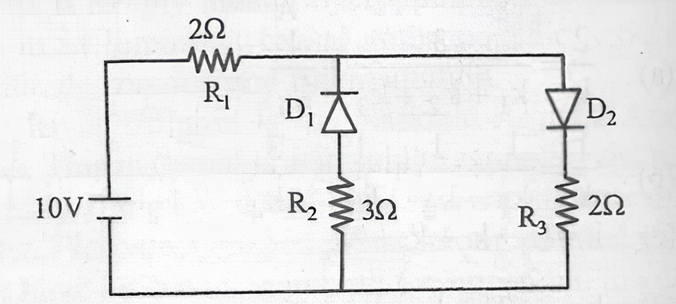
Current will not flow through D₁ as it is reverse biased. Current will flow through cell, R₁ D₂ and R₃.
∴ i = 10/2+2 = 2.5 A
What is the output Y in the following circuit, when all the three inputs A, B, C are first 0 and then 1?
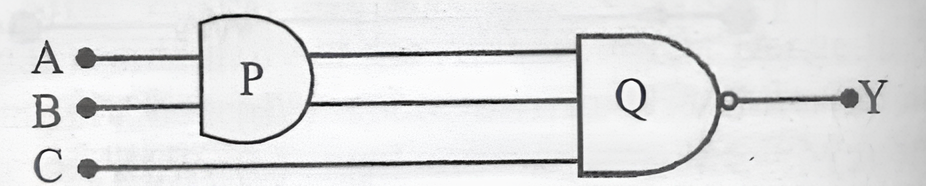
for A = B = C = 0; y=1
for A = B = C = 1; y=0

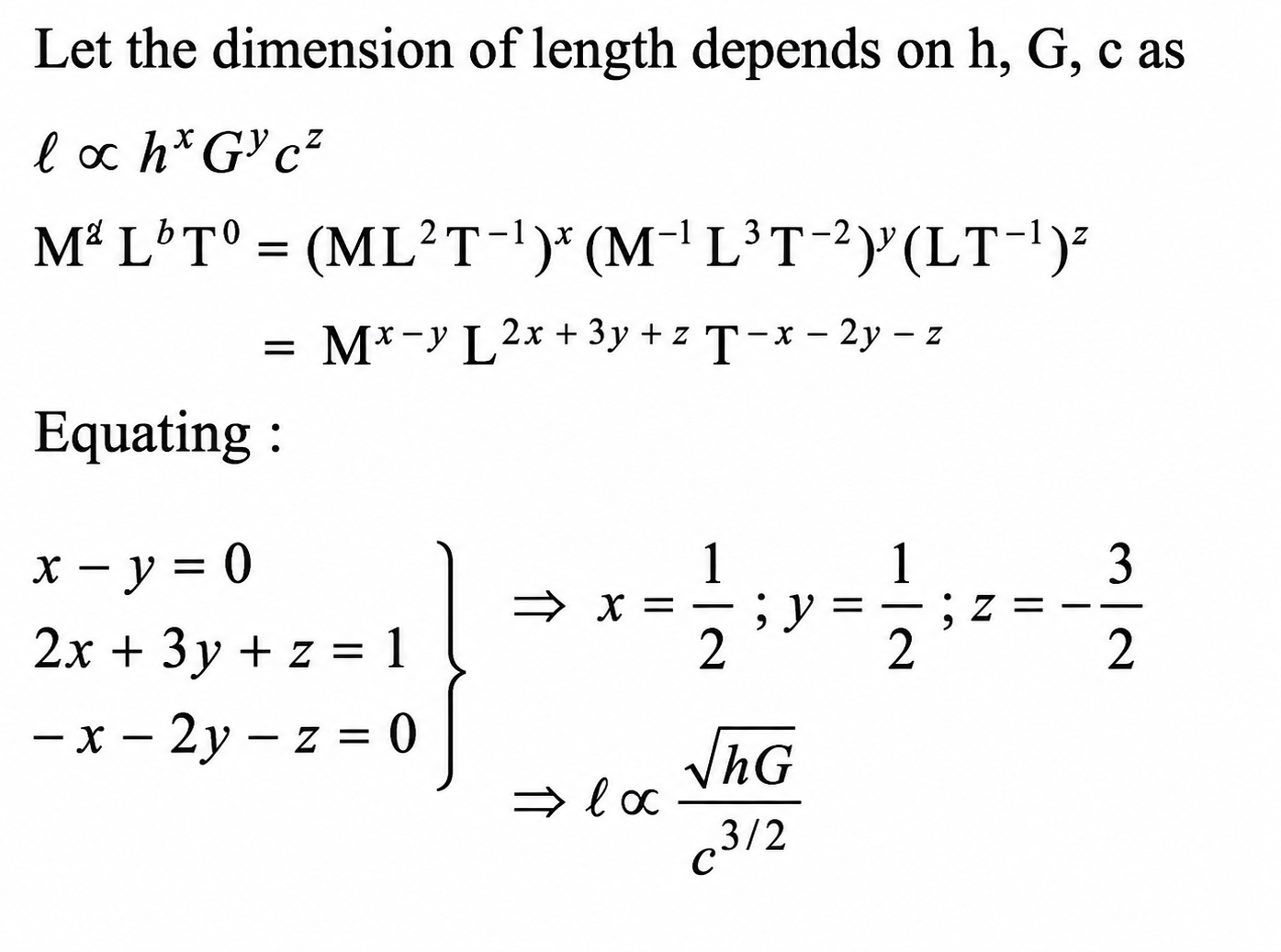
Planck's constant (h), speed of light in vacuum (c) and Newton's gravitational constant (G) are three fundamental constants. Which of the following combinations of these has the dimension of length?
.
Two cars P and Q start from a point at the same time in a straight line and their positions are represented by x₁(t) = at + bt² and x₂(t) = ft − t². At what time do the cars have the same velocity?
Given that
xₚ (t) = at +bt²
vₚ = a+2bt x_Q (t) = ft-t²
as vₚ = v_Q v_Q = f-2t
a+2bt = f-2t
⇒ t = f-a/2(1+b)
In the given figure, a = 15 m/s² represents the total acceleration of a particle moving in the clockwise direction in a circle of radius R = 2.5 m at a given instant of time. The speed of the particle is:
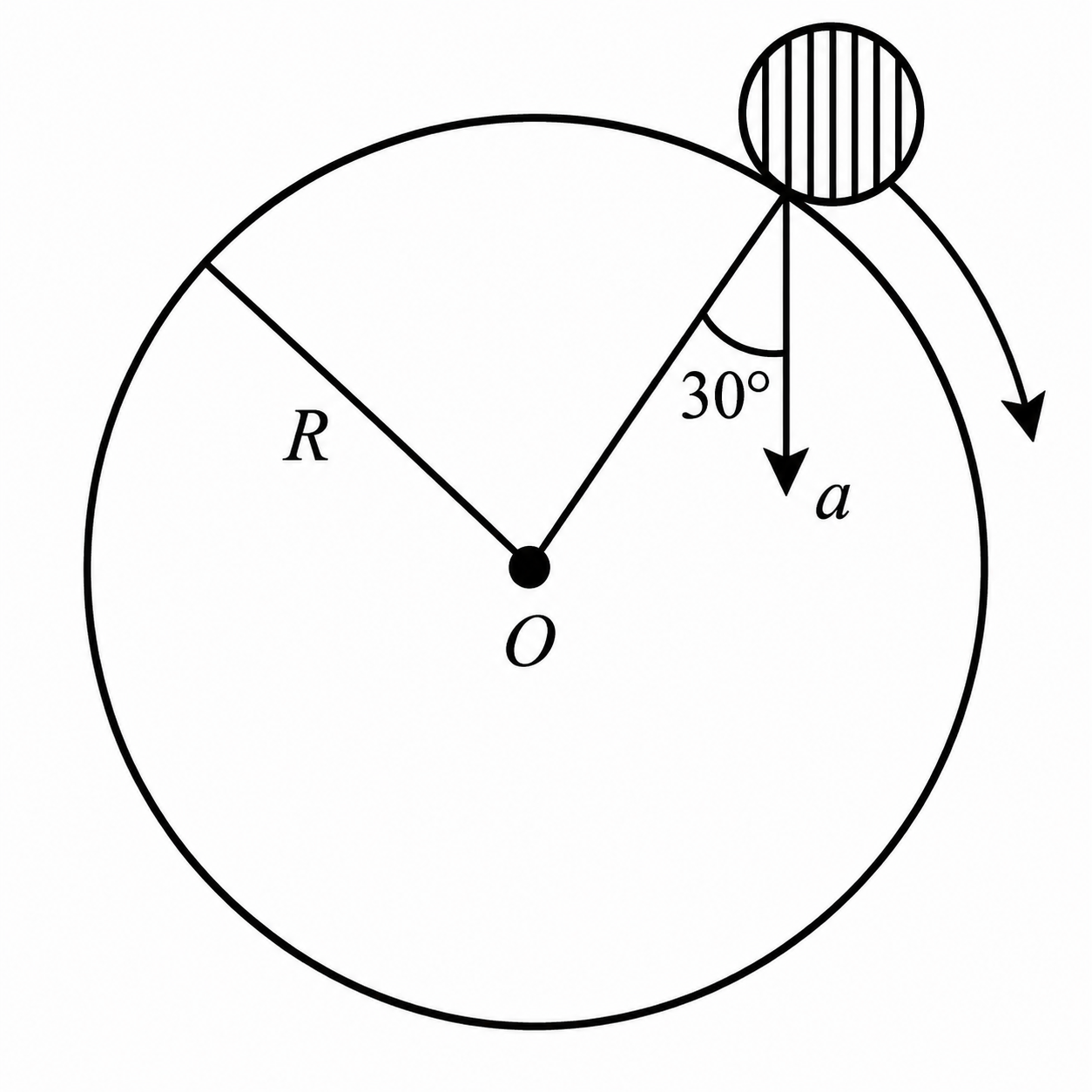
Centripetal Acceleration
a cos 30° = a_c = v²/R
⇒ v² = aR×√3/2 ⇒ v²= 32.47⇒ v ≈ 5.7m/s
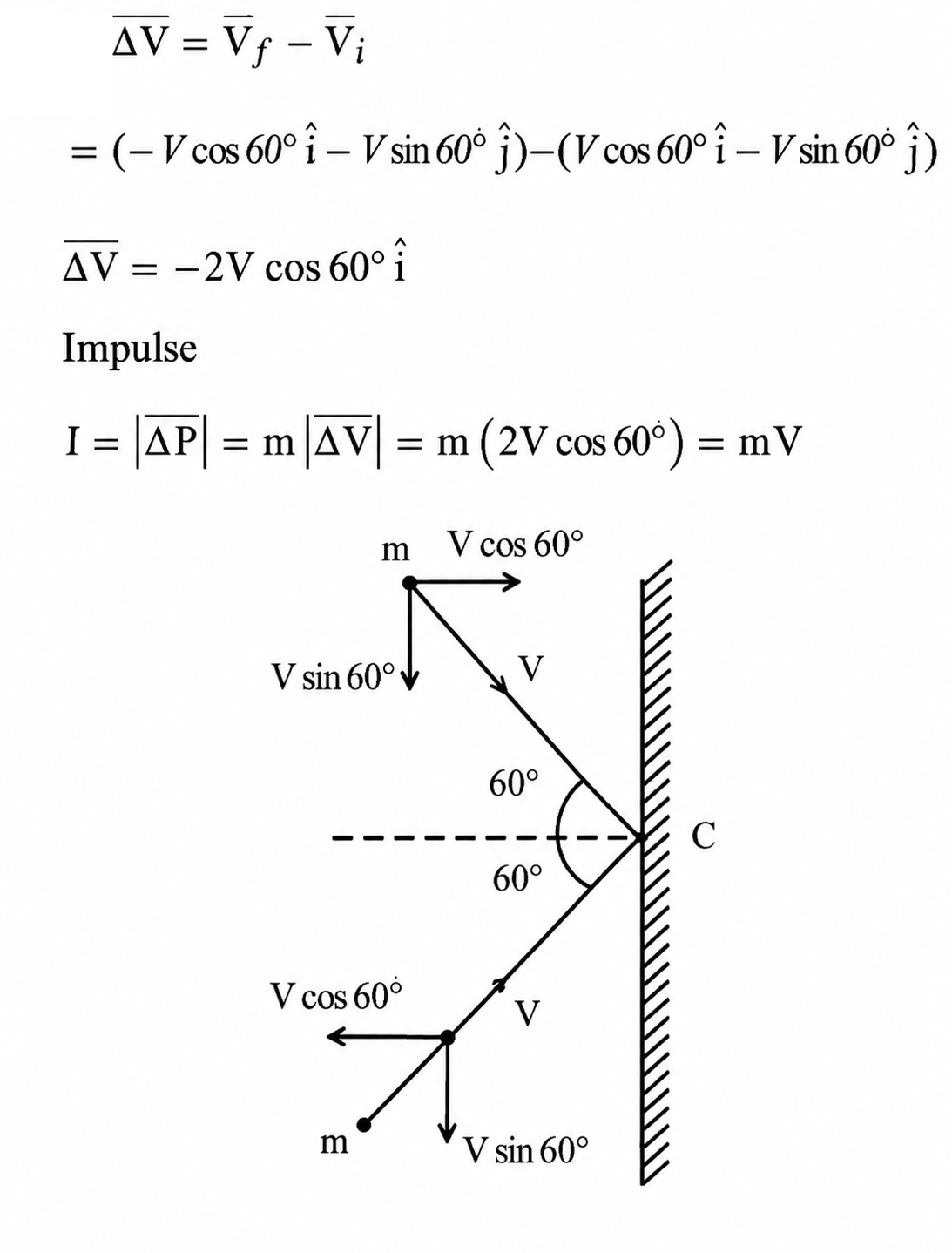
A rigid ball of mass m strikes a rigid wall at 60° and gets reflected without loss of speed as shown in the figure below. The value of impulse imparted by the wall on the ball will be:
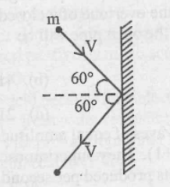
.
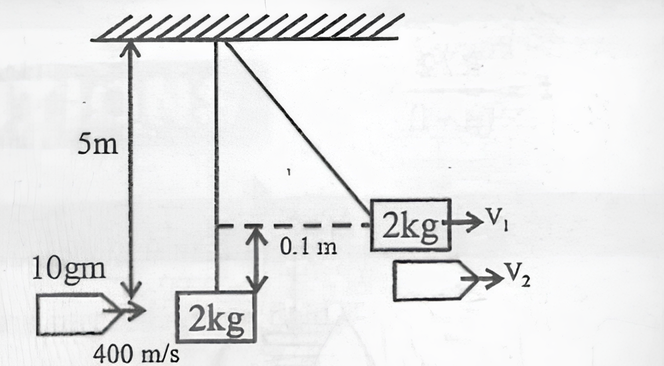
A bullet of mass 10 g moving horizontally with a velocity of 400 m/s strikes a wooden block of mass 2 kg which is suspended by a light inextensible string of length 5 m. As a result, the centre of gravity of the block is found to rise a vertical distance of 10 cm. The speed of the bullet after it emerges out horizontally from the block will be:
Applying Law of linear conservation of momentum
m₁v₁ +m₂v₂ = m₁u₁ +m₂u₂
10/100×400+0 = 2×v₁ + 10/1000×v₂
⇒ 4=2v₁ + 0.01v₂
Applying work energy theorem of block
W = ΔKE
⇒ 2×10×0.1 = 1/2×2×v₁²
⇒ vᵢ = √2=1.4 m/s
Putting the value of v₁ in equation (i)
4=2×1.4 +0.01v₂ ⇒ v₂= 120 m/s
Two identical balls A and B having velocities of 0.5 m/s and –0.3 m/s respectively collide elastically in one dimension. The velocities of B and A after the collision respectively will be:
Since both bodies are identical collision is elastic.
Therefore velocities will be interchanged after collision.
v_A= -0.3m/s and v_B = 0.5 m/s
A particle moves from a point (–2î+ 5j) to (4ĵ + 3k) when a force of (4î + 3ĵ) N is applied. How much work has been done by the force?
Work done by a force
W = F̅.s̅ = (4î +3ĵ). [2î -ĵ +3k] = 8-3 = 5J
Two rotating bodies A and B of masses m and 2m with moments of inertia I_A and I_B (I_B > I_A) have equal kinetic energy of rotation. If Lₐ and Lᵦ be their angular momenta respectively, then: –
Kinetic Energy of rotating body
K= 1/2 Ⅰw² = L²/2Ⅰ
K_A =K_B ⇒ L_A²/2Ⅰ_A = L_B²/2Ⅰ_B
∴ Ⅰ_B > Ⅰ_A
∴ L A² < L² B ⇒ L _A < L_B
A solid sphere of mass m and radius R is rotating about its diameter. A solid cylinder of the same mass and same radius is also rotating about its geometrical axis with an angular speed twice that of the sphere. The ratio of their kinetic energies of rotation (Eₛₚₕₑᵣₑ / E_cylinder) will be:
Kinetic energy of rotational motion = 1/2 Ⅰω²
Eₛₚₕₑᵣₑ = 1/2Iₛω² = 1/2 × 2/5 MR² ×ω²
E_cylinder = 1/2I_c(2ω)² = 1/2 ×MR² ×4ω²
Eₛₚₕₑᵣₑ / E_cylinder = 1/5
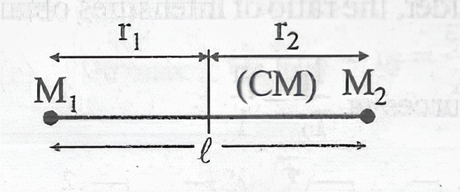
A light rod of length ℓ has two masses m₁ and m₂ attached to its two ends. The moment of inertia of the system about an axis perpendicular to the rod and passing through the centre of mass is:
r₁ = m₂ℓ/ m₁+m₂, r ₂ = m₁ℓ/m₁+m₂
I_cm = m₁r₁² + m₂r₂² = m₁m₂/m₁+m₂ ℓ²
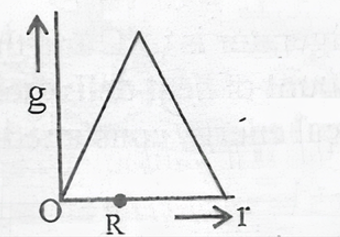
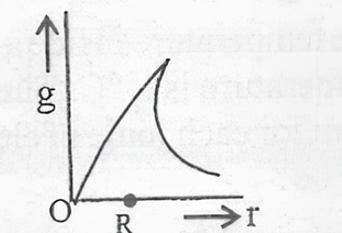
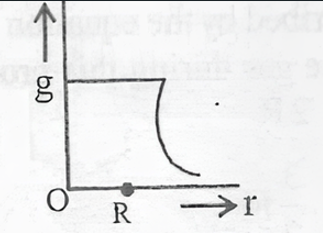
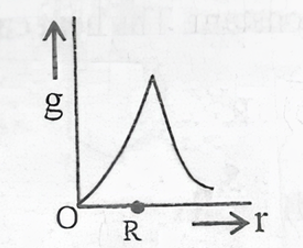
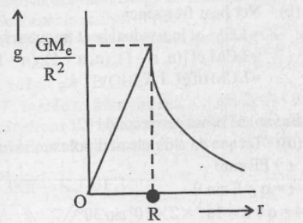
Starting from the centre of the earth having radius R, the variation of g (acceleration due to gravity ) is shown by:-
-
(A)
-
(B)
-
(C)
-
(D)
As we know
g= (GMₑ/Rₑ³) r when 0<r≤Rₑ
g= GMₑ/r² when r≥Rₑ
↑
g GMₑ/R²
A satellite of mass m is orbiting the earth (of radius R) at a height h from its surface. The total energy of the satellite in terms of g₀, the value of acceleration due to gravity at the earth's surface, is:
Total energy = - GMₑm/2(R+h)
∴ g₀= GMₑ/R² ⇒ Mₑ = g₀R²/G
∴ Energy = - mg₀R²/2(R+h)
A rectangular film of liquid is extended from (4 cm × 2 cm) to (5 cm × 4 cm). If the work done is 3×10 ⁻⁴ J, the value of the surface tension of the liquid is:
Work done W=T (2ΔA) = 3×10⁻⁴ J
⇒ T= W/2ΔA = 3×10 ⁻⁴/2×12×10 ⁻⁴ = 0.125 Nm ⁻¹
Three liquids of densities ρ₁, ρ₂, and ρ₃ (with ρ₁ > ρ₂ > ρ₃), having the same value of surface tension T, rise to the same height in three identical capillaries. The angles of contact θ₁, θ₂, and θ₃ obey:
The rise or fall of a liquid in a capillary tube is given by,
h= 2T cosθ/ρgr
as r, h, T re same
⇒ cosθ/ρ = constant
⇒ cosθ₁/ρ₁ = cosθ₂/ρ₂ = cosθ₃/ρ₃
as ρ₁>ρ₂>ρ₃
⇒ cosθ₁> cosθ₂> cosθ₃
⇒θ₁<θ₂<θ₃
As water rises ⇒θ must be acute
So, 0≤θ₁ <θ₂<θ₃ < π/2
Two identical bodies are made of a material for which the heat capacity increases with temperature. One of these is at 100°C, while the other one is at 0°C. If the two bodies are brought into contact, then assuming no heat loss, the final common temperature is:
Let θ be the final common temperature. Further, let s_c and sₕ be the average heat capacities of the cold and hot (initially) bodies respectively (where s_c < sₕ given).
From, Principle of calorimetry,
heat lost = heat gained
Sₕ (100° C-θ) = S_cθ
∴ θ = Sₕ/ (Sₕ+S_c) × 100°C = 100°C/ (1+S_c/Sₕ)
∴ S_c/ Sₕ <1
∴ θ> 100°C/2 or θ>50°C
A body cools from temperature 3T to 2T in 10 minutes. The room temperature is T. Assume that Newton’s law of cooling is applicable. The temperature of the body at the end of next 10 minutes will be:
According to Newton’s laws of cooling
T₁-T₂/t = K (T₁ + T₂/2-T)
3T-2T/10 = K (5T-2T/2) ⇒ T/10 = k (3T/2)......(i)
2 T-T′/10 = k (2T+T′/2 -T)
⇒2T-T′/10 = k (T′/2)....(ii)
By solving (i) and (ii)
T′ = 3/2 T
One mole of an ideal monatomic gas undergoes a process described by the equation PV³=constant. The heat capacity of the gas during this process is:
PVʸ = constant (Polytropic process)
Heat capacity in polytropic process is given by
[C=Cᵥ + R/1+γ]
Given that PV³ = constant ⇒γ =3....(i)
also gas is monoatomic f=3 ....(ii)
by formula
C = fR/2 + R/1-γ
C= 3/2 R- R/2 = R
The temperature inside a refrigerator is t2°C and the room temperature is t1°C. The amount of heat delivered to the room for each joule of electrical energy consumed ideally will be:
Heat delivered = Q₁
Coefficient of performance,
β= t₂+273/ t₁-t₂ = Q₂/W= Q₁-W/W = Q₁/W -1
⇒ Q₁/W=1 + t₂+273/ t₁-t₂= t₁+273/t₁-t₂
A given sample of an ideal gas occupies a volume V at a pressure P and absolute temperature T. The mass of each molecule of the gas is m. Which of the following gives the density of the gas:
As we know,
P/ρ = RT/M_w (Gas equation)
⇒ ρ = PM_w/ RT = P×(mN_A)/kN_AT = Pm/kT
A body of mass m is attached to the lower end of a spring whose upper end is fixed. The spring has negligible mass. When the mass m is slightly pulled down and released, it oscillates with a time period of 3 s. When the mass m is increased by 1 kg, the time period of oscillations becomes 5 s. The value of m in kg is:
Tension is a spring
T = 2π√m/k
3=2π√m/k .....(i)
5= 2π√m+1/k ....(ii)
Squaring and dividing ’eqn’ (i) by ’eqn’ (ii)
9/25 = m/m+1 ⇒ m =9/16
The second overtone of an open organ pipe has the same frequency as the overtone of a closed pipe L metre long. The length of the open pipe will be:
For second overtone (3rd harmonic )in open organ pipe,
3λ/2 = ℓ₀⇒λ=2ℓ₀/3
For first overton (3rd harmonic ) in closed organ pipe,
3λ/2 = ℓ₀ ⇒ 4ℓ_c/3 =4L/3
So, 2ℓ₀/3 = 4L/3 ⇒ ℓ₀ = 2L
Three sound waves of equal amplitudes have frequencies (n−1), n, (n+1). They superimpose to give beats. The number of beats produced per second will be:
Net beat frequency
=LCM of individual beat frequencies
=LCM of [(n, n-1), (n, n+1), (n-1, n+1)]
= LCM of (1, 1,2)
= 2 HZ
so, no.of beats per second = 2
An electric dipole is placed at an angle of 30° with an electric field intensity 2×10⁵ N/C. It experiences a torque equal to 4 Nm. The charge on the dipole, if the dipole length is 2 cm, is:
Torque on a dipole of dipole moment (P)
τ = PE sinθ
τ = qℓ E sinθ
4= q×2×16⁻³ × 2×10⁵ sin 30°
⇒q = 2 mC
Suppose the elements X and Y combine to form two compounds XY₂ and X₃Y₂. When 0.1 mole of XY₂ weighs 10 g and 0.05 mole of X₃Y₂ weighs 9 g, the atomic weights of X and Y are
Let us assume that atomic weight of X is Aₓ and Y is Aᵧ
No. of moles = Mol. wt. in gms / Molar mass
⇒ nₓY₂ = 0.1 = 0.5 = 10 / (Aₓ + 2Aᵧ)
⇒ Aₓ + 2Aᵧ = 100 …(1)
nₓ₃Y₂ = 0.05 = 9 / (3Aₓ + 2Aᵧ)
⇒ 3Aₓ + 2Aᵧ = 180 …(2)
From solving eq. (1) and (2), we get— Aₓ = 40, Aᵧ = 30
Which of the following pairs of d-orbitals will have electron density along the axis?
d_z² and dₓ²–y² have electron density concentrated on the axis; others have electron density between the axis.
How many electrons can fit in the orbital for which n = 3 and l = 1?
n = 3, l = 1, hence the orbital is 3p. Total 6 electrons can fit in the orbital of 3p.
Among the following which one is a wrong statement?
Both have different shape. SeF₄ is sp³d hybridised and see‑saw shape, while CH₄ is sp³ hybridised and tetrahedral in shape.
The hybridizations of atomic orbitals of nitrogen in NO₂⁺, NO₃⁻ and NH₄⁺ respectively are
Hybridisation (H) is given by
H = ½ (V + M – C + A)
V = valence electron in central atom
M = monovalent atom
C/A = Charge on cation/anion
NO₂⁺ : H = ½ (5 – 1) = 2 (sp)
NO₃⁻ : H = ½ (5 + 1) = 3 (sp²)
NH₄⁺ : H = ½ (5 + 1 – 1) = 4 (sp³)
Which of the following pairs of ions is isoelectronic and isostructural?
Isoelectronic compounds contain same no. of electrons and the structure of isostructural compounds are same. Here—
In SO₃²⁻, ClO₃⁻, No. of electrons = 42, Shape: Pyramidal
In CO₃²⁻, NO₃⁻, No. of electrons = 32, Shape: Trigonal planar
For a sample of perfect gas when its pressure is changed isothermally from pᵢ to p_f, the entropy change is given by
The entropy change of an ideal gas is given by
ΔS = nCₚm ln (T_f / Tᵢ) + nR ln (Pᵢ / P_f)
For isothermal Tᵢ = T_f, ln 1 = 0
ΔS = nR ln (Pᵢ / P_f)
The percentage of pyridine (C₅H₅N) that forms pyridinium ion (C₅H₅NH⁺) in a 0.10 M aqueous pyridine solution (K_b for C₅H₅N = 1.7 × 10⁻⁹) is
Pyridine (C₅H₅N) is a weak base. For a weak base, K_b = Cα²
α = √(1.7 × 10⁻⁹ / 0.1)
α = 1.30 × 10⁻⁴
%α = 1.30 × 10⁻⁴ × 100
%α = 0.013%
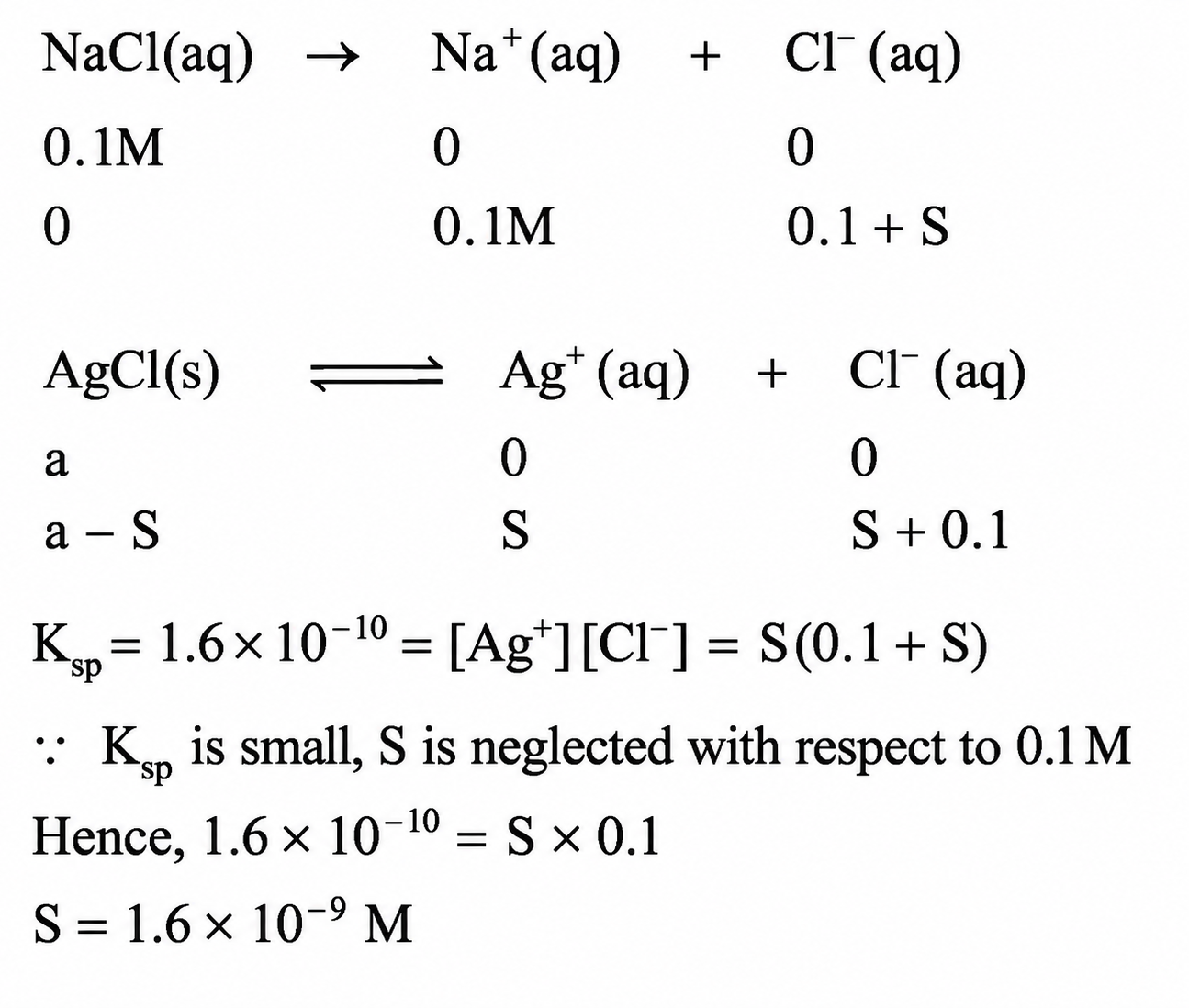
The solubility of AgCl(s) with solubility product 1.6 × 10⁻¹⁰ in 0.1 M NaCl solution would be
.
Hot concentrated sulphuric acid is a moderately strong oxidizing agent. Which of the following reactions does not show oxidizing behaviour?
Oxidation is a process in which an atom loses an electron and therefore, there is an increase in its oxidation number.
CaF₂ + H₂SO₄ → CaSO₄ + 2HF
In this reaction, none of the atom has changed oxidation number. Hence H₂SO₄ is not showing oxidising behaviour.
In context with beryllium, which one of the following statements is incorrect?
Be is small atom having high ionization potential and are covalent nature. So these are easily hydrolysed.
Boric acid is an acid because its molecule
B(OH)₃ is an weak lewis acid accepting OH⁻ ion from water B(OH)₃ + H₂O ⇌ [B(OH)₄]⁻ + H⁺
AlF₃ is soluble in HF only in presence of KF. It is due to the formation of
AlF₃ is able to form the salt K₃[AlF₆]. On the other hand anhydrous HF being weak acid does not dissociate on appreciable extent and hence AlF₃ does not form [AlF₄]⁻ or H[AlF₄]
AlF₃ + 3KF → K₃[AlF₆]
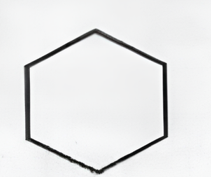
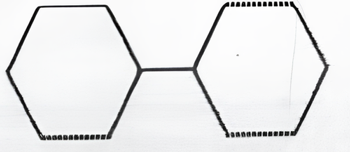
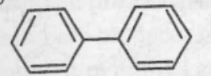
In which of the following molecules, all atoms are coplanar ?
-
(A)
-
(B)
-
(C)
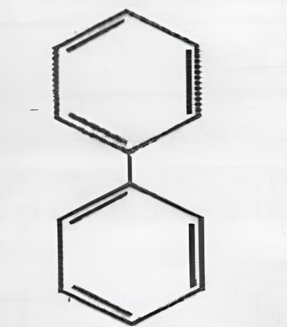
-
(D)
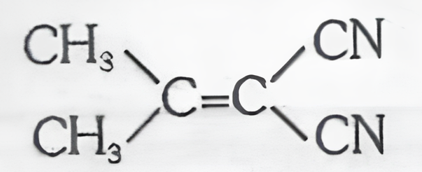
As the C-atoms undergoes sp² hybridisation, all the atoms are coplanar.
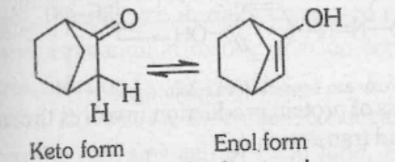
Which among the given molecules can exhibit tautomerism ?
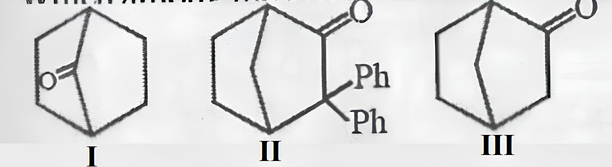
Only those molecules can show tautomerism which have hydrogen atom at carbon α position to the keto carbon
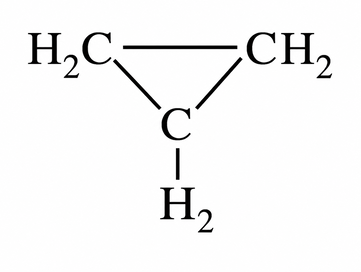
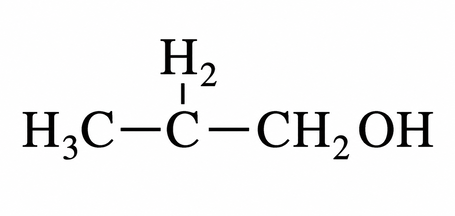
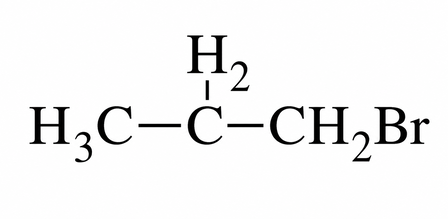
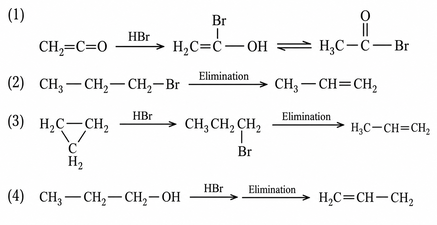
Which of the following compounds shall not produce propene by reaction with HBr followed by elimination or direct only elimination reaction?
-
(A)
-
(B)
-
(C)
- (D) H₂C = C = O
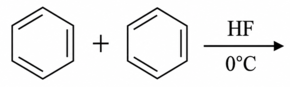
The steps in the reactions are given below:
In the given reaction
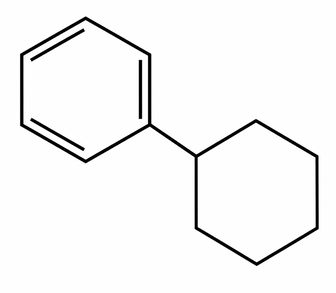
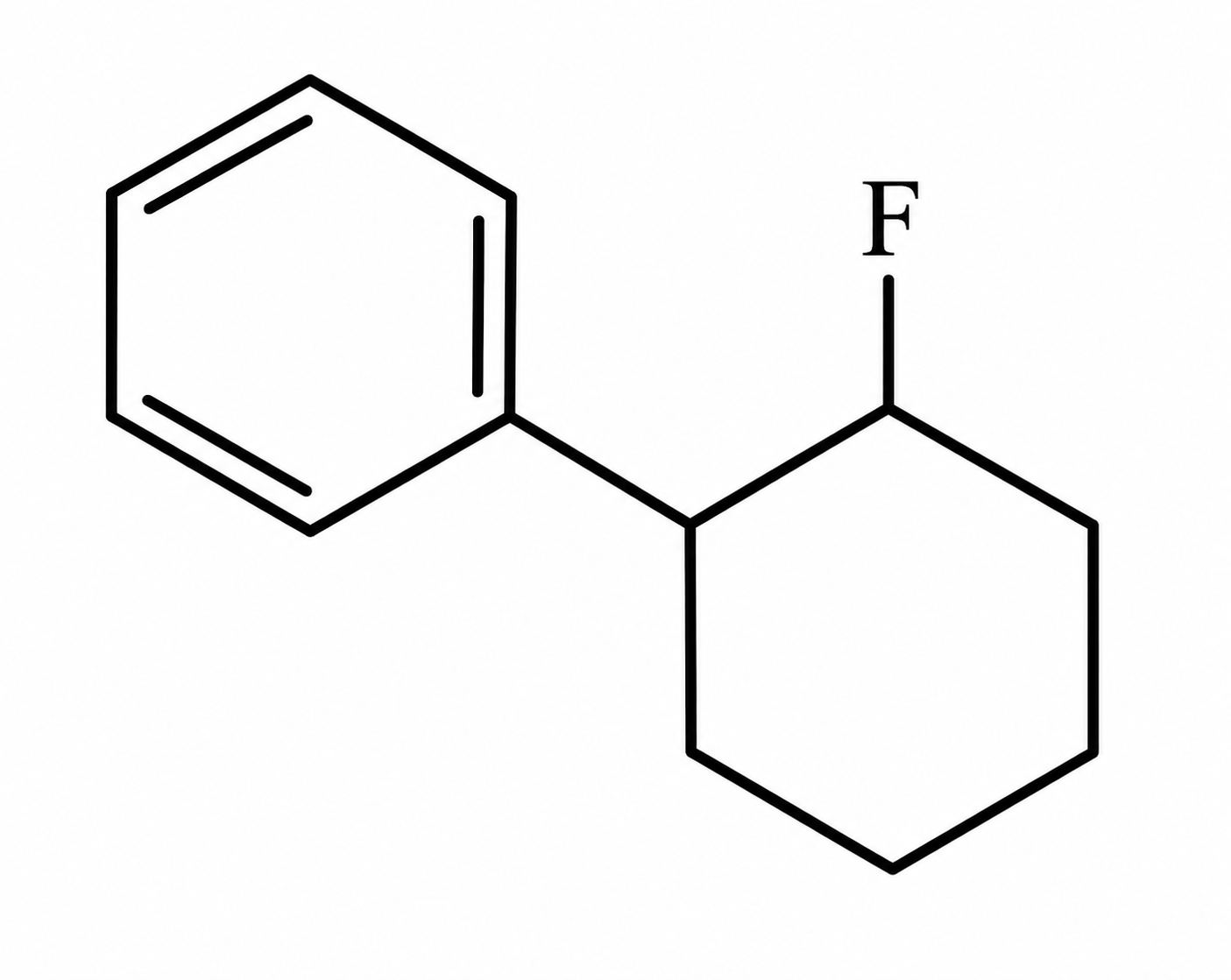
the product P is :-
-
(A)
-
(B)
-
(C)
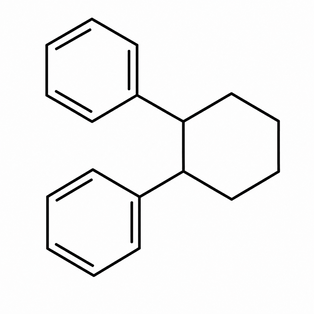
-
(D)
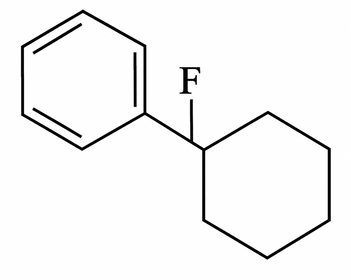
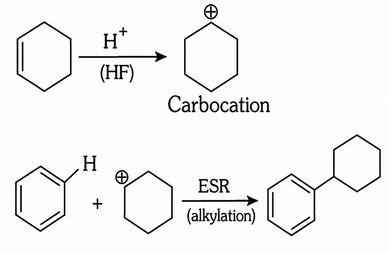
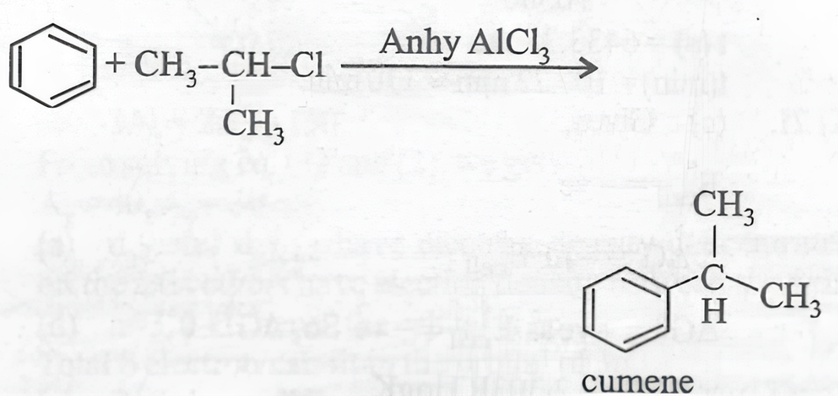
It is an example of Friedel craft reaction :
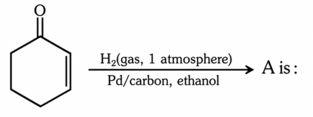
The correct structure of the product A formed in the reaction
-
(A)

-
(B)

-
(C)

-
(D)

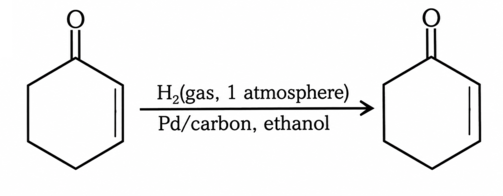
Its a hydrogenation reaction of alkene in presence of palladised charcoal.
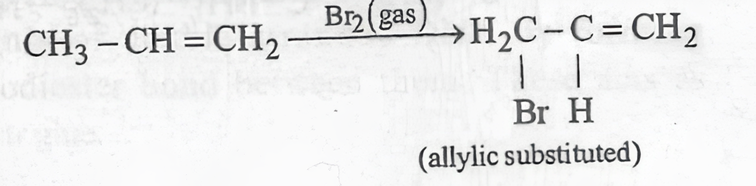
The compound that will react most readily with gaseous bromine has the formula
The reaction follows free radical mechanism.
In calcium fluoride, having the fluorite structure, the coordination numbers for calcium ion (Ca²⁺) and fluoride ion (F⁻) are
In CaF₂, the coordination numbers for Ca⁺² = 8 and F⁻ = 4
The van’t Hoff factor (i) for a dilute aqueous solution of the strong electrolyte barium hydroxide is
Ba(OH)₂ is strong electrolyte, so it is completely dissociate in solution
Ba(OH)₂ → Ba⁺² (aq) + 2OH⁻ (aq)
Van’t Hoff factor = total number of ions present in solution, i = 1 + 2 = 3
Which one of the following is incorrect for ideal solution?
For an ideal solution, ΔHₘᵢₓ = 0
ΔUₘᵢₓ = 0
and ΔSₘᵢₓ ≠ 0
According to ΔGₘᵢₓ = ΔHₘᵢₓ – TΔSₘᵢₓ = TΔSₘᵢₓ
⇒ ΔGₘᵢₓ ≠ 0
Which one of the following compounds shows the presence of intramolecular hydrogen bond?
Cellulose has intramolecular hydrogen bond. While other has intermolecular H‑bonding.
The molar conductivity of a 0.5 mol/dm³ solution of AgNO₃ with electrolytic conductivity of 5.76 × 10⁻³ S cm⁻¹ at 298 K is
Given:
Cₘ = 0.5 mol/dm³
κ = 5.76 × 10⁻³ S cm⁻¹
T = 298 K
λₘ = κ × 1000 / Cₘ = (5.76 × 10⁻³ × 1000) / 0.5
= 11.52 S cm²/mol
During the electrolysis of molten sodium chloride, the time required to produce 0.10 mol of chlorine gas using a current of 3 amperes is
2Cl⁻ → Cl₂(g) + 2e⁻. According to Faraday’s Law— W = zit and
z = Eq.wt/96500
Hence, W = E / 96500 × it
0.1 × 71 = 35.5 / 96500 × 3 × t(sec)
t(s) = 6433.33 sec
t(min) = 107.22 min ≈ 110 min
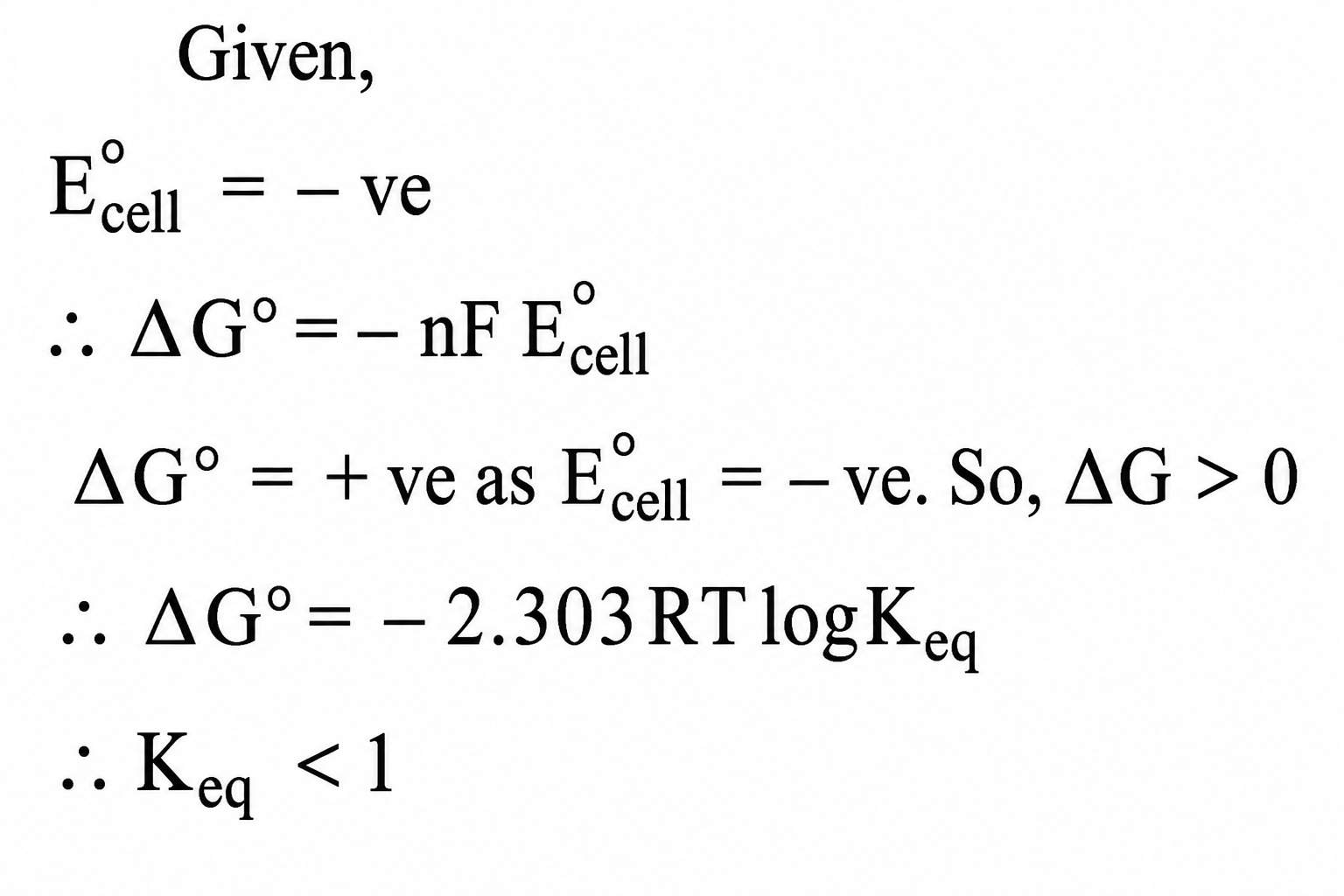
If the E_cell for a given reaction has a negative value, which of the following gives the correct relationships for the values of ΔG° and K_eq?
.
The number of electrons delivered at the cathode during electrolysis by a current of 1 ampere in 60 seconds is (charge on electron = 1.60 × 10⁻¹⁹ C)
Q = ne, n = no. of electron and e is electronic charge
⇒ i·t = n·e [∴ Q = i·t]
n = (1 × 60) / (1.6 × 10⁻¹⁹) = 3.75 × 10²⁰ electrons
Zinc can be coated on iron to produce galvanized iron but the reverse is not possible. It is because
Zinc has higher negative electrode potential than iron. Hence, iron cannot be coated on zinc. Zinc is more reactive than iron.
The decomposition of phosphine (PH₃) on tungsten at low pressure is a first-order reaction. It is because the
Because rate is proportional to the surface coverage of the tungsten metal.
The coagulation values in millimoles per litre of the electrolytes used for the coagulation of As₂S₃ are given below:
I. (NaCl) = 52,
II. (BaCl₂) = 0.69,
III. (MgSO₄) = 0.22
The correct order of their coagulating power is
Coagulation is a process of aggregating together the colloidal particles and coagulating power is inversely proportional to coagulation value.
Coagulation power ∝ 1 / coagulation value
So, the correct order is III > II > I
The suspension of slaked lime in water is known as
A suspension of fine slaked lime in water is called milk of lime and the solution is called limewater
The correct geometry and hybridization for XeF₄ are:
The hybridization in XeF₄ is sp³d² and geometry is octahedral.
Which of the following fluoro-compounds is most likely to behave as a Lewis base?
PF₃ acts as a Lewis base due to the presence of a lone pair on the P atom, which it can share with a Lewis acid.
Which one of the following statements related to lanthanons is incorrect?
The reactivity of Lanthanons is less than aluminium due to high IP which arises from Lanthanoid contraction (b) Ce⁴⁺ is a good oxidising agent and easily converted into Ce³⁺ (c) Eu(II) has a stable electronic configuration i.e. [Xe] 4f⁷ 5d⁰ 6s⁰ (d) As the size of the lanthanoid ions decreases, the covalent character of the hydroxides increases. Hence, basic strength decreases.
Jahn-Teller effect not observed in high spin complexes of :
John Teller effect is axial distortion in perfect
octahedral geometry.
In general degenerate states electronic states occupying the e, orbital set tend to show stronger J-T effects. This is primarily caused by the occupation of these high energy orbitals.
The correct increasing order of trans-effect of the following species is:
The trans effect, often called the kinetic trans effect, refers to the observation that certain ligands increase the rate of ligand substitution when positioned trans to the departing ligand. Strong trans effect = strong σ–donor + π–strong acceptor Trans effect order: CN⁻ > C₆H₅ > Br⁻ > NH₃
Which of the following can be used as the halide component for Friedel-Crafts reaction?
In chlorobenzene, bromobenzene, and chloroethene, the lone pair of halogen is delocalised with π bonds, leading to double bond character and hence less reactivity.
Consider the reaction
CH₃CH₂CH₂Br + NaCN → CH₃CH₂CH₂CN + NaBr
This reaction will be the fastest in
CH₃–CH₂–CH₂Br + NaCN → CH₃–CH₂–CH₂CN + NaBr
The above reaction is a nucleophilic substitution following S_N2 mechanism. S_N2 reactions are conducted by polar aprotic solvents like DMF, DMSO, etc.
The correct order of strengths of the carboxylic acids
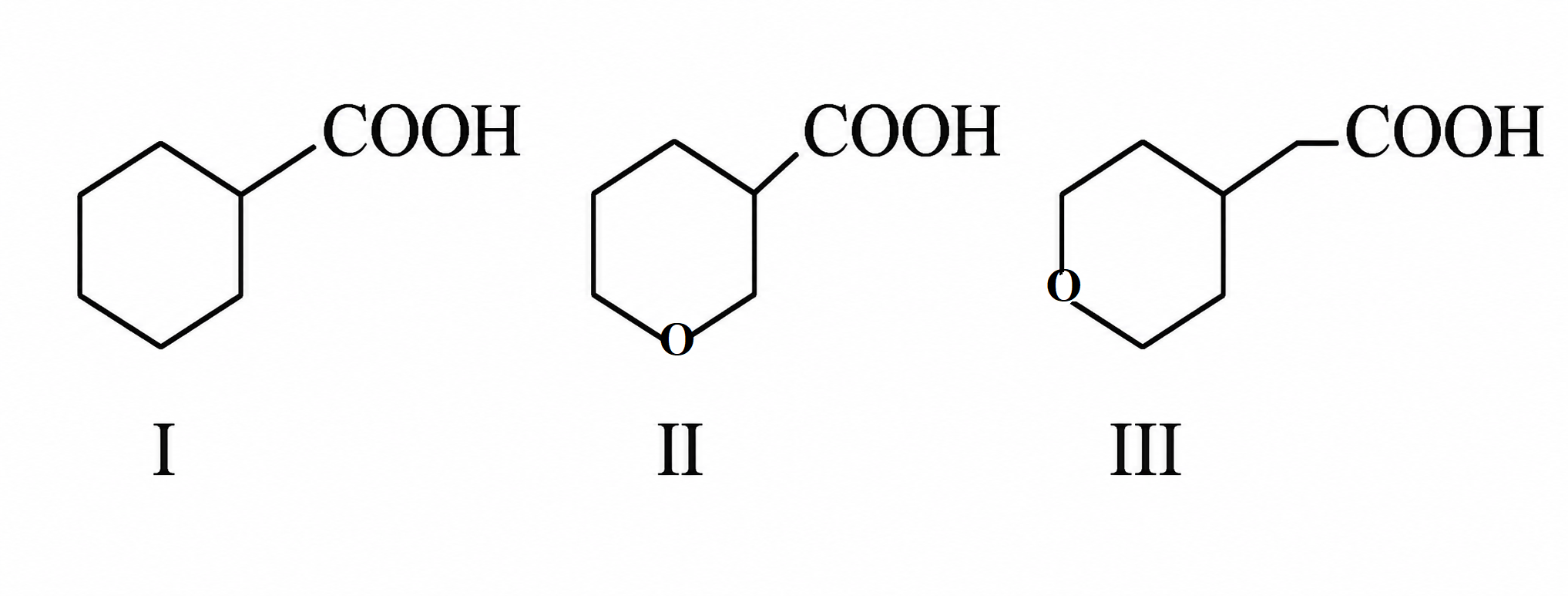
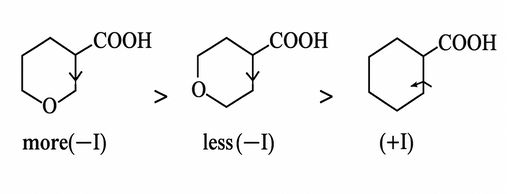
Acidic strength increases as the negative inductive effect of the ring on carboxylate ion increases.
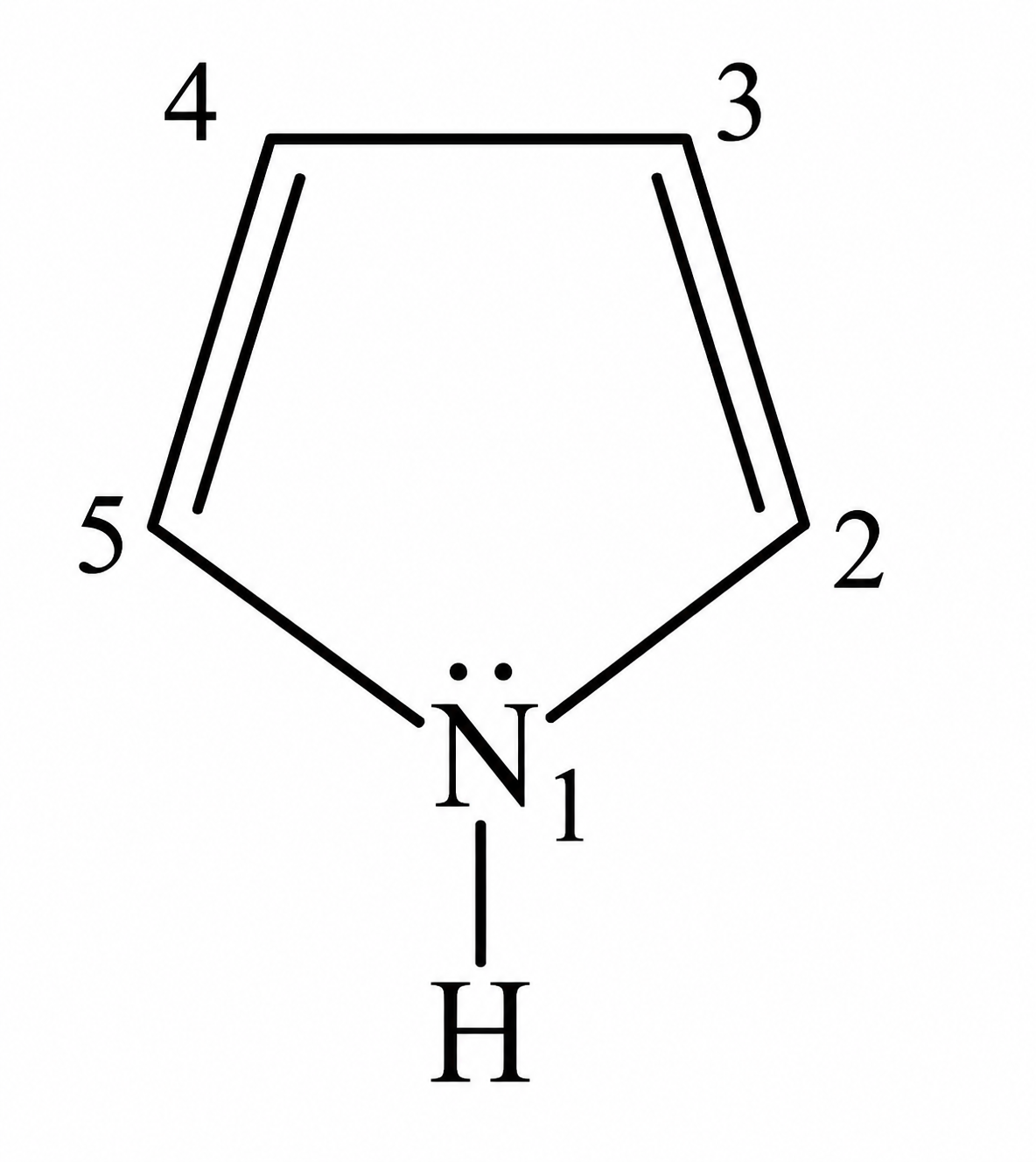
In pyrrole
The electron density is maximum on:
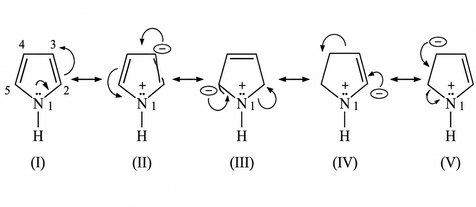
Resonance hybrids of pyrrole is :
It is clear from these resonating structures that III & IV are more stable that (II) & (V). Hence maximum electron density is at (2) and (5).
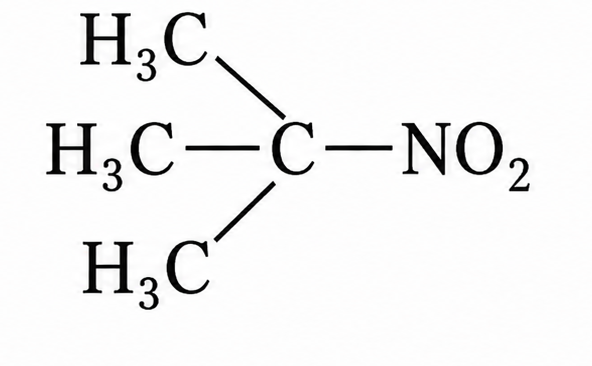
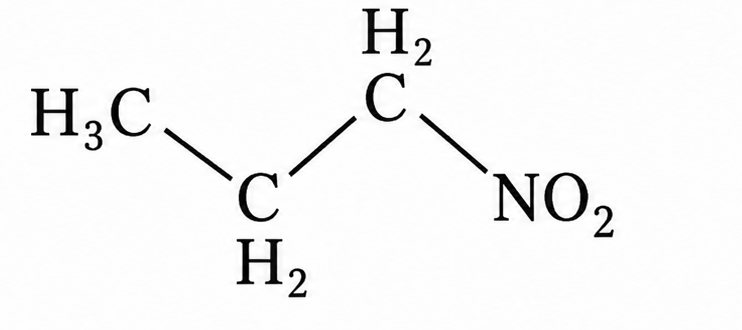
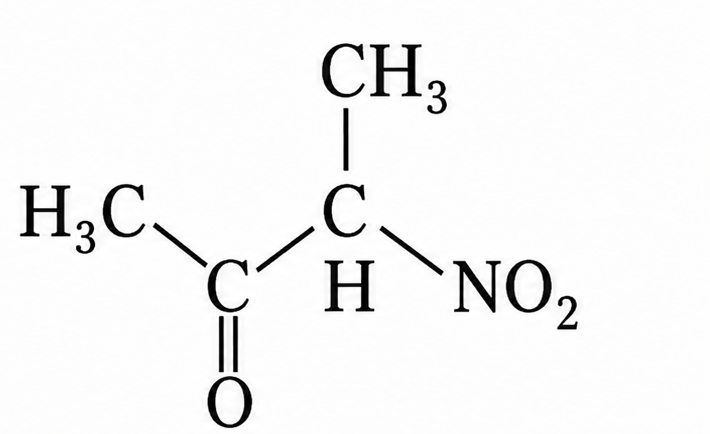
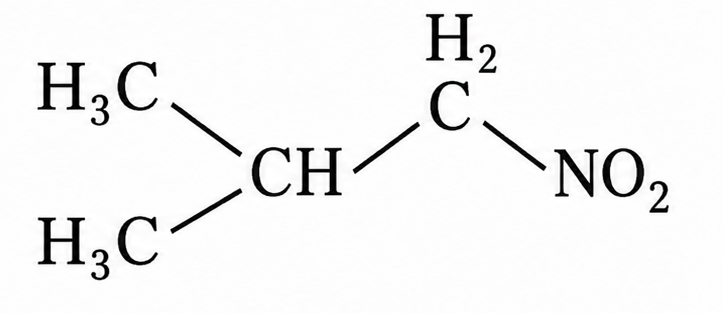
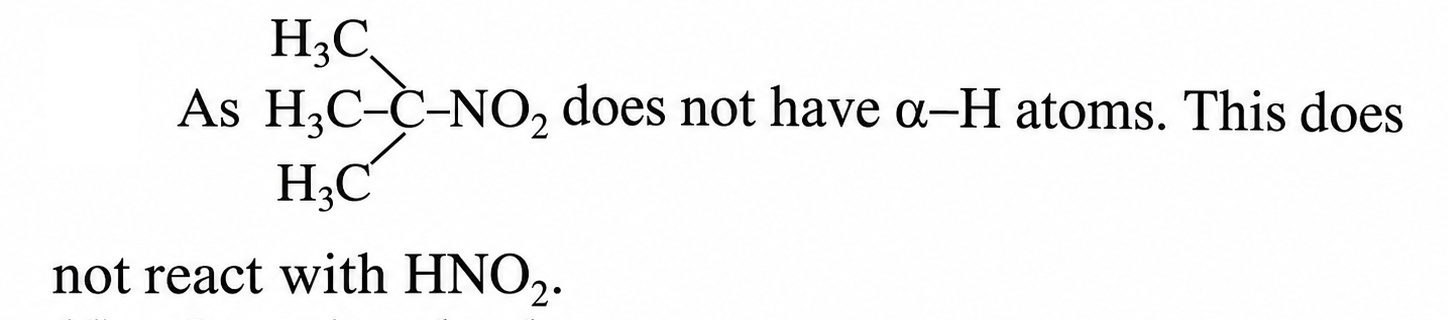
Which one of the following nitro-compounds does not react with nitrous acid?
-
(A)
-
(B)
-
(C)
-
(D)
.
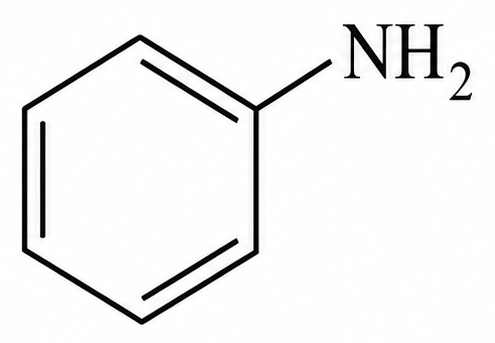
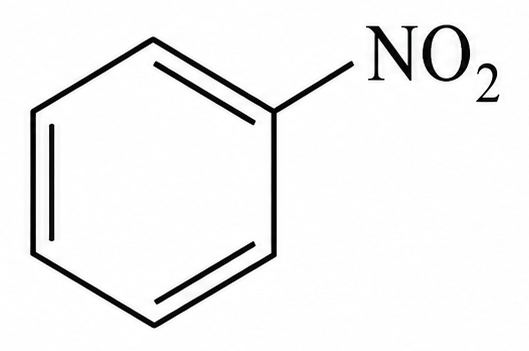
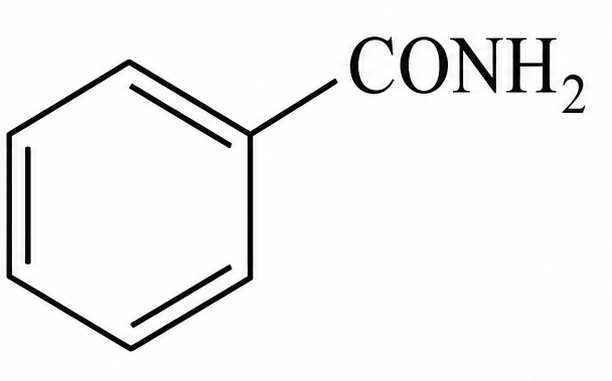
A given nitrogen-containing aromatic compound A reacts with Sn/HCl, followed by HNO₂ to give an unstable compound B. B, on treatment with phenol, forms a beautiful coloured compound C with the molecular formula C₁₂H₁₀N₂O. The structure of compound A is:
-
(A)
-
(B)
-
(C)
-
(D)
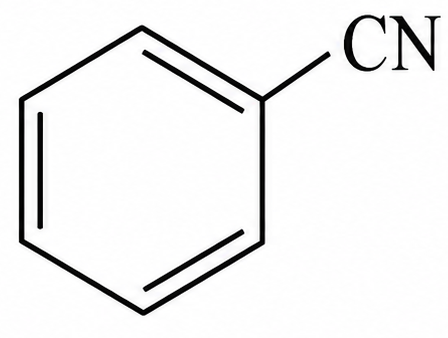
.
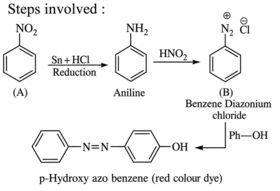
The central dogma of molecular genetics states that the genetic information flows from :
The process of protein production involves the steps : transcription and translation

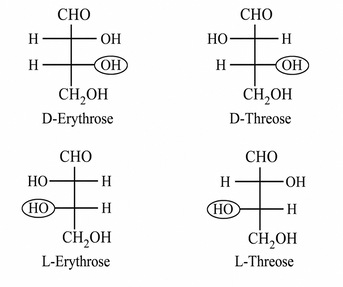
The correct corresponding order names of four aldoses with configuration given below
respectively, are:
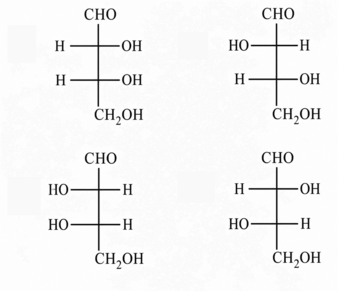
The sugars are aldotetroses having two asymmetric carbon atoms at -C₂ and C₃. A monosaccharide is given D - configuration if the OH group at the last chiral carbon lies to the right hence side or else L-configuration.
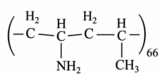
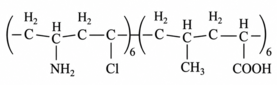
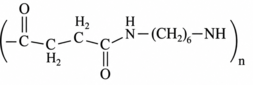
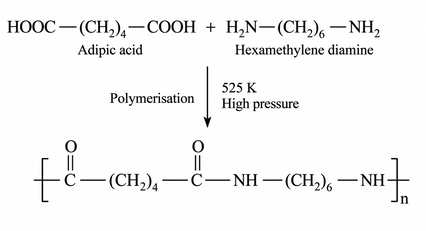
Which one of the following structures represents nylon 6,6 polymer ?
-
(A)
-
(B)
-
(C)
-
(D)
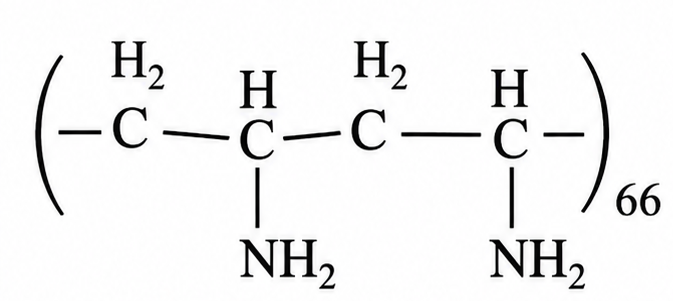
Nylon 6,6 is condensation polymer of adipic acid and hexamethylenediamine
Other Years