NEET Ug . NEET Botany . Botany . Sexual Reproduction in Flowering Plants
Chapter 9: Sexual Reproduction in Flowering Plants
Ch 9
NEET Botany
NEET Ug
Introduction
Sexual Reproduction in Angiosperms
- All flowering plants reproduce sexually by forming and fusing gametes.
- Flowers are the specialized organs for sexual reproduction in angiosperms.
- Inflorescences, flowers, and floral parts show diverse structures adapted for fruit and seed formation.
Memory Aids
- Flowers = Sexual reproduction organs in angiosperms.
- Diversity ensures successful fruit and seed formation.
Quick Checkpoints
- What is the role of flowers in angiosperms?
- How do floral structures aid reproduction?
Flower
Structure and Function
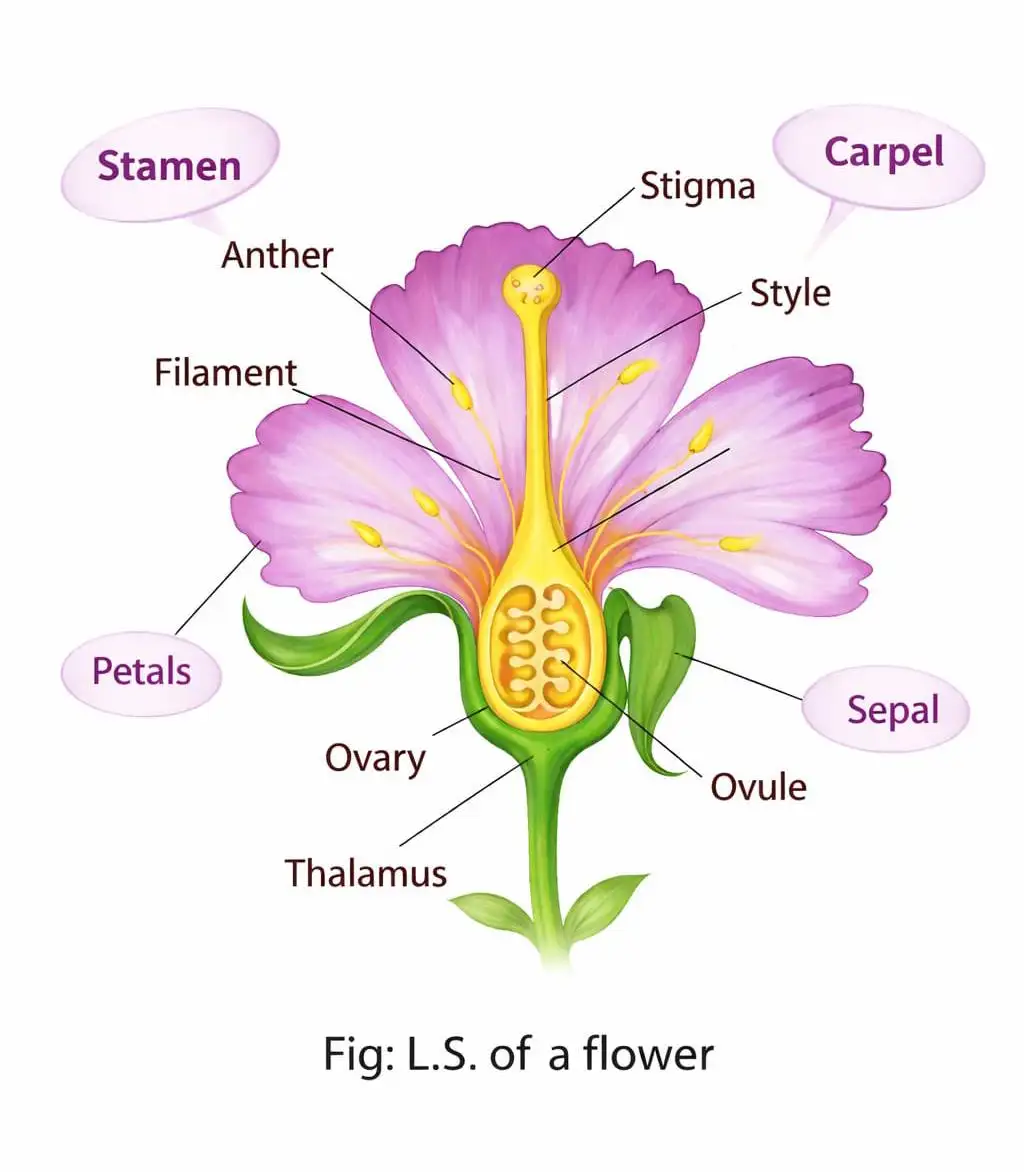
- Flower is a modified shoot with determinate growth and condensed internodes.
- Four whorls on the receptacle: calyx, corolla, androecium, gynoecium.
- Calyx: outermost whorl, usually green sepals protecting the flower bud.
- Corolla: petals, often colorful to attract pollinators.
- Androecium: male reproductive part, consists of stamens (anther + filament).
- Gynoecium: female reproductive part, consists of carpels (stigma, style, ovary).
- Ovules inside ovary develop into seeds after fertilization.
- Thalamus (floral base) supports all floral parts.
- Floriculture is the cultivation of ornamental flowering plants.
Memory Aids
- Flower = Modified shoot with 4 whorls: C-C-A-G (Calyx, Corolla, Androecium, Gynoecium).
- Stamen = Anther + Filament (male).
- Carpel = Stigma + Style + Ovary (female).
- Floriculture = Flower cultivation.
Quick Checkpoints
- What are the four whorls of a flower?
- Which parts form the male and female reproductive organs?
- What is the function of the thalamus?
- Define floriculture.
Pre-fertilisation: Structures and Events
Overview
- Floral primordium differentiates under hormonal and structural changes.
- Inflorescences bear floral buds and flowers.
- Flower has male (androecium) and female (gynoecium) reproductive organs.
- Androecium: whorl of stamens (male organ).
- Gynoecium: female reproductive organ.
Memory Aids
- Androecium = Male stamens.
- Gynoecium = Female pistils.
Quick Checkpoints
- What initiates floral primordium development?
- Define androecium and gynoecium.
Stamen, Microsporangium and Pollen Grain
Structure and Function
- Stamen consists of filament and anther.
- Filament attaches proximally to thalamus or petal.
- Anther is bilobed, each lobe with two theca (dithecous).
- Longitudinal groove separates theca.
- Anther is tetragonal with four microsporangia (pollen sacs) at corners.
- Microsporangia develop into pollen sacs filled with pollen grains.
Memory Aids
- Dithecous anther = 2 theca per lobe.
- Tetragonal anther = 4 microsporangia.
Quick Checkpoints
- What are the parts of a stamen?
- Describe the structure of an anther.
Structure of Anther
Layers and Functions
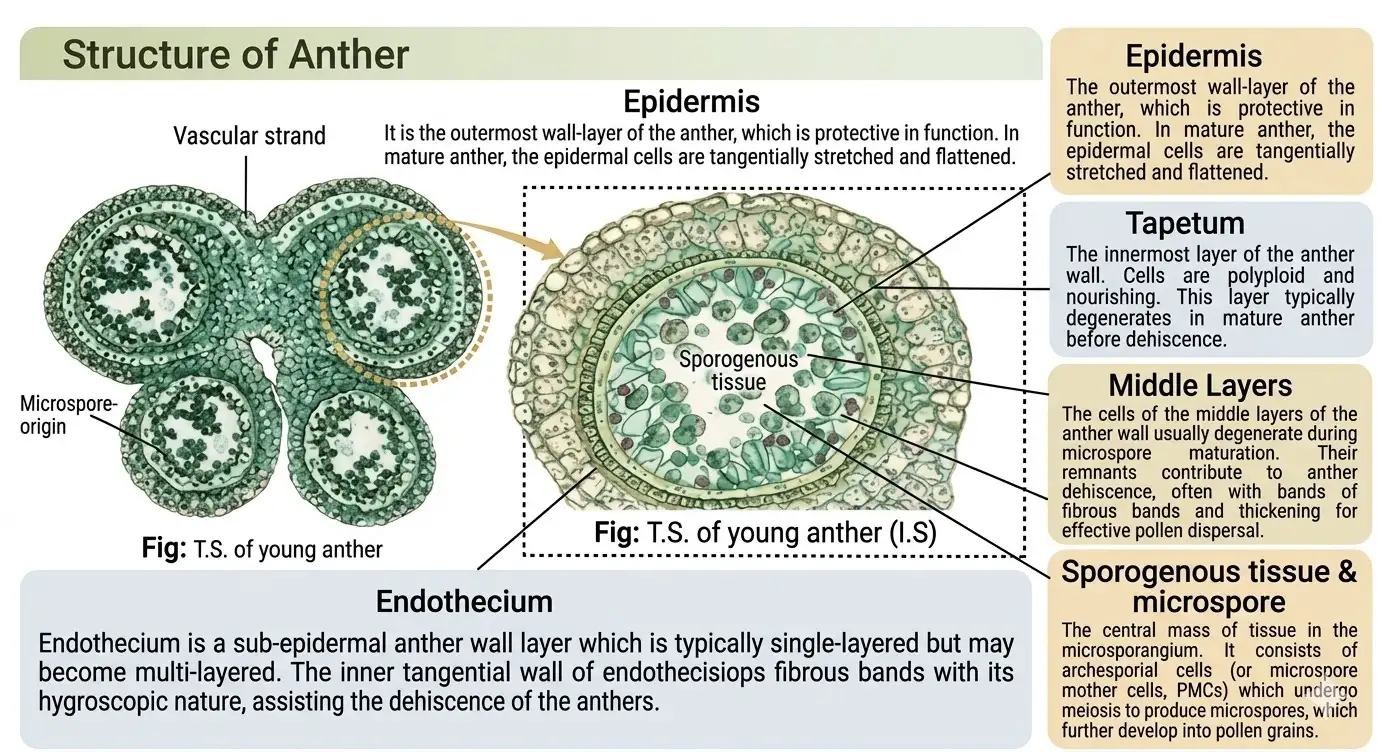
- Anther has 4 pollen sacs (microsporangia).
- Microsporangial wall has four layers: epidermis, endothecium, middle layers, tapetum.
- Outer three layers protect and aid anther dehiscence.
- Tapetum nourishes developing pollen.
Memory Aids
- Tapetum = innermost nourishing layer.
- Endothecium = fibrous bands for anther opening.
Quick Checkpoints
- List the layers of microsporangial wall.
- What is the role of tapetum?
Microsporogenesis
Process
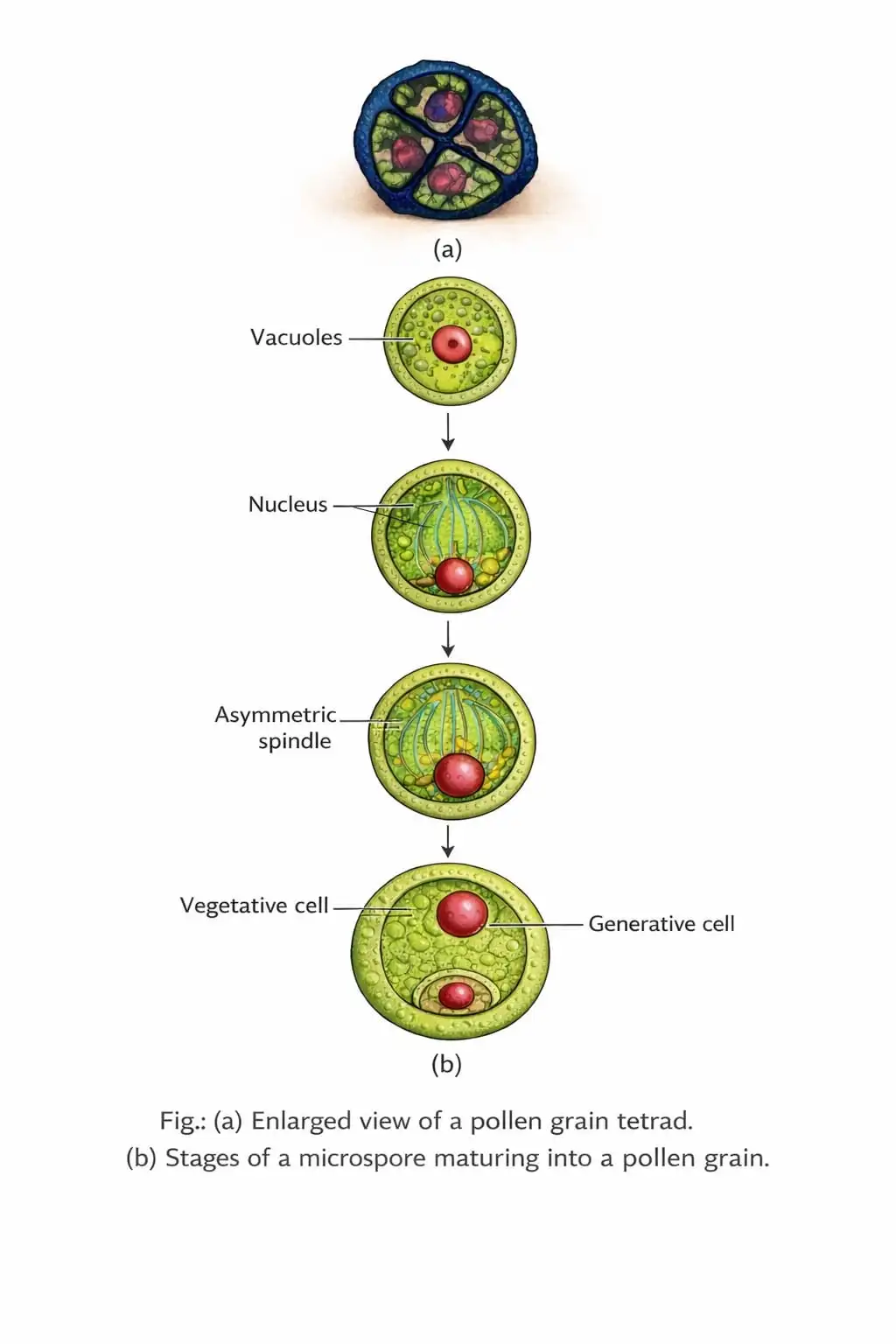
- Sporogenous tissue cells undergo meiosis forming microspore tetrads.
- Each microspore separates and develops into pollen grain.
- Microsporogenesis = formation of microspores from pollen mother cell by meiosis.
- As anther matures and dehydrates, microspores dissociate.
Memory Aids
- Microsporogenesis = meiosis in anther producing microspores.
Quick Checkpoints
- Define microsporogenesis.
- What happens to microspore tetrads?
Pollen Grain
Structure and Development
- First cell of male gametophyte, spherical, 25–50 µm diameter.
- Initially uninucleate, becomes 2–3 celled at liberation.
- Wall (sporoderm) has two layers: outer exine (sporopollenin) and inner intine.
- Exine is thick, sculptured or smooth, resistant to decay.
- Thin areas in exine are germ pores (circular) or germinal furrows (elongated).
- Intine is thin, elastic; forms pollen tube during germination.
- Nucleus divides mitotically into vegetative (tube) cell and generative cell.
- Vegetative cell: large, food-rich, irregular nucleus.
- Generative cell: small, spindle-shaped, floats in vegetative cytoplasm.
- 60% angiosperms shed pollen at 2-celled stage; generative cell divides later.
- Pollen causes allergies; viability varies by species and conditions.
- Pollen can be stored in liquid nitrogen for breeding (pollen banks).
- Used as nutrient supplements (pollen tablets).
Memory Aids
- Exine = sporopollenin, tough outer layer.
- Intine = inner elastic layer.
- Vegetative cell = tube cell; generative cell = male gamete precursor.
Quick Checkpoints
- What is sporoderm?
- Describe the two cells in mature pollen grain.
- Why is pollen viable for different durations?
Pistil, Megasporangium and Embryo Sac
Gynoecium Structure
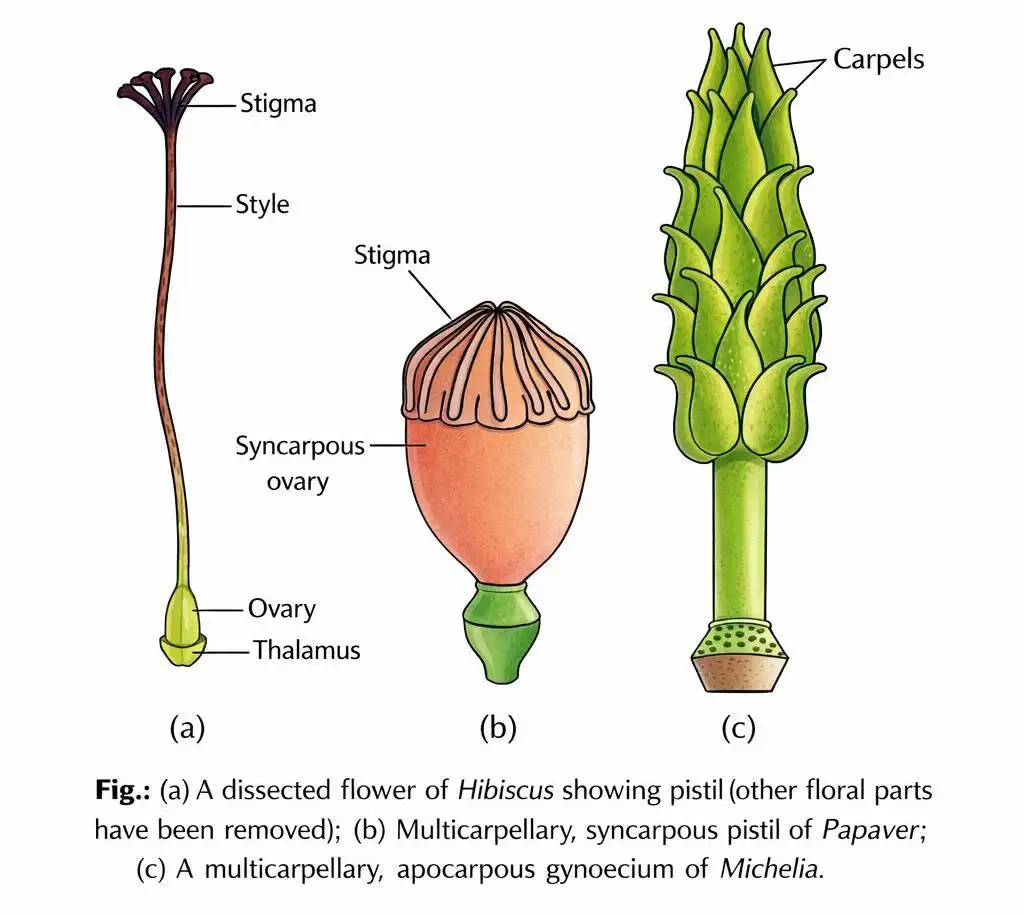
- Gynoecium = female reproductive part; single (monocarpellary) or multiple pistils (multicarpellary).
- Multiple pistils may be fused (syncarpous) or free (apocarpous).
- Each pistil has stigma (receptive), style (stalk), and ovary (swollen base).
- Ovary contains locules and placenta bearing ovules.
- Ovule number varies: one (wheat, mango) to many (papaya, orchids).
Memory Aids
- Syncarpous = fused pistils; Apocarpous = free pistils.
- Stigma = pollen receptor; Style = pollen tube path; Ovary = ovule container.
Quick Checkpoints
- Define syncarpous and apocarpous pistils.
- What are the parts of a pistil?
The Megasporangium
Ovule Structure
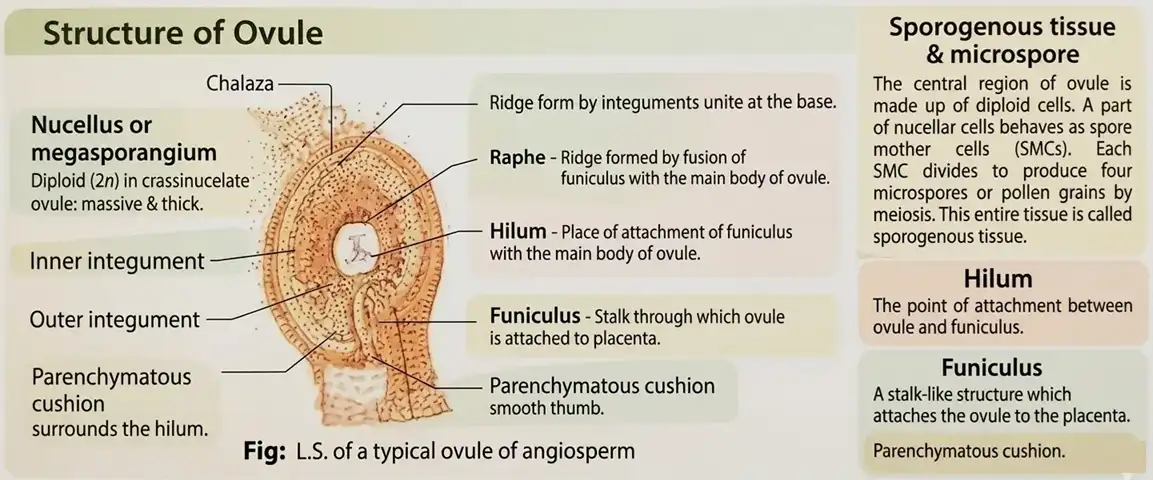
- Ovule = integumented megasporangium developing into seed after fertilisation.
- Attached to placenta by funicle (stalk).
- Hilum = junction of ovule and funicle.
- Integuments (one or two) surround nucellus (food-rich tissue).
- Micropyle = small opening at tip of ovule.
- Chalaza = basal part opposite micropyle.
- Contains embryo sac (female gametophyte).
Memory Aids
- Unitegmic ovule = single integument (Gamopetalae).
- Bitegmic ovule = two integuments (Polypetalae, monocots).
- Ategmic ovule = no integuments (e.g., Santalum album).
- Tritegmic ovule = three integuments (rare, e.g., Asphodelus).
Quick Checkpoints
- What is funicle and hilum?
- Differentiate unitegmic and bitegmic ovules.
Megasporogenesis
Process
- Megaspore mother cell (MMC) in nucellus undergoes meiosis.
- Produces four haploid megaspores in linear tetrad.
- Upper three megaspores degenerate; lowermost becomes functional megaspore.
- Functional megaspore develops into embryo sac.
Memory Aids
- Megasporogenesis = meiosis in ovule forming megaspores.
Quick Checkpoints
- Define megasporogenesis.
- What happens to the four megaspores?
Female Gametophyte
Embryo Sac Formation
- Functional megaspore forms female gametophyte (embryo sac) by mitosis.
- Monosporic development: embryo sac from single megaspore.
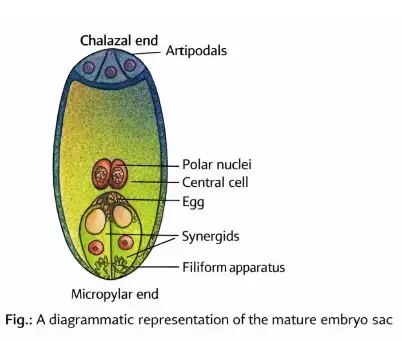
- Nucleus divides to 2-, 4-, then 8-nucleate stages without cell walls (free nuclear).
- Two polar nuclei fuse to form diploid secondary nucleus.
- Chalazal end: 3 antipodal cells.
- Micropylar end: egg apparatus with 2 synergids and 1 egg cell (oosphere).
- Synergids have filiform apparatus guiding pollen tube.
- Egg fertilizes to form zygote; synergids and antipodals degenerate post-fertilisation.
- Mature embryo sac is 8-nucleate, 7-celled.
Memory Aids
- Embryo sac = female gametophyte, 8 nuclei, 7 cells.
- Filiform apparatus guides pollen tube.
Quick Checkpoints
- What is monosporic development?
- Name the cells of the embryo sac.
Pollination
Definition and Types
- Pollination: transfer of pollen from anther to stigma of same or different flower of same species.
- Two types: Self-pollination and Cross-pollination.
- Self-pollination: pollen to stigma of same flower or genetically similar flower.
- Autogamy: pollen to stigma of same flower.
- Geitonogamy: pollen to stigma of different flower on same plant (ecologically cross-pollination).
Memory Aids
- Autogamy = same flower; Geitonogamy = different flower, same plant.
Quick Checkpoints
- Define autogamy and geitonogamy.
- What are contrivances for self-pollination?
Cross Pollination
Mechanisms
- Cross pollination (allogamy/xenogamy): pollen transfer between different plants of same species.
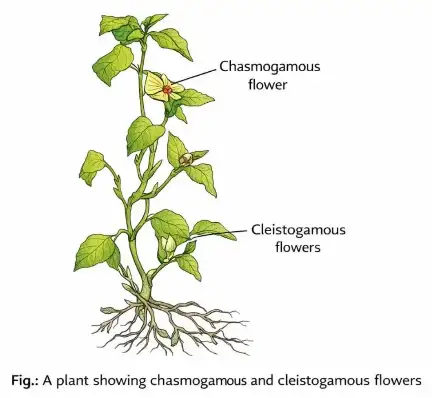
- Contrivances to prevent self-pollination:
- Dicliny (unisexual flowers): monoecious (same plant, different flowers) or dioecious (separate plants).
- Self-sterility: pollen cannot fertilize same flower stigma.
- Dichogamy: male and female organs mature at different times.
- Protandry: anthers mature first (e.g., sunflower).
- Protogyny: carpels mature first (e.g., mustard).
- Heterostyly: flowers with different anther and stigma lengths.
- Herkogamy: physical barrier between androecium and gynoecium (e.g., Calotropis).
Memory Aids
- Dicliny = unisexual flowers.
- Dichogamy = temporal separation of maturity.
- Herkogamy = physical barrier to self-pollination.
Quick Checkpoints
- What is dichogamy? Name its types.
- Explain heterostyly and herkogamy.
Types of Pollination
Abiotic Agents
- Anemophily: pollination by wind.
- Characteristics: non-showy flowers, no scent/nectar, exerted stamens and stigmas, dry small pollen, feathery stigmas.
- Examples: maize, grasses, mulberry, date palm.
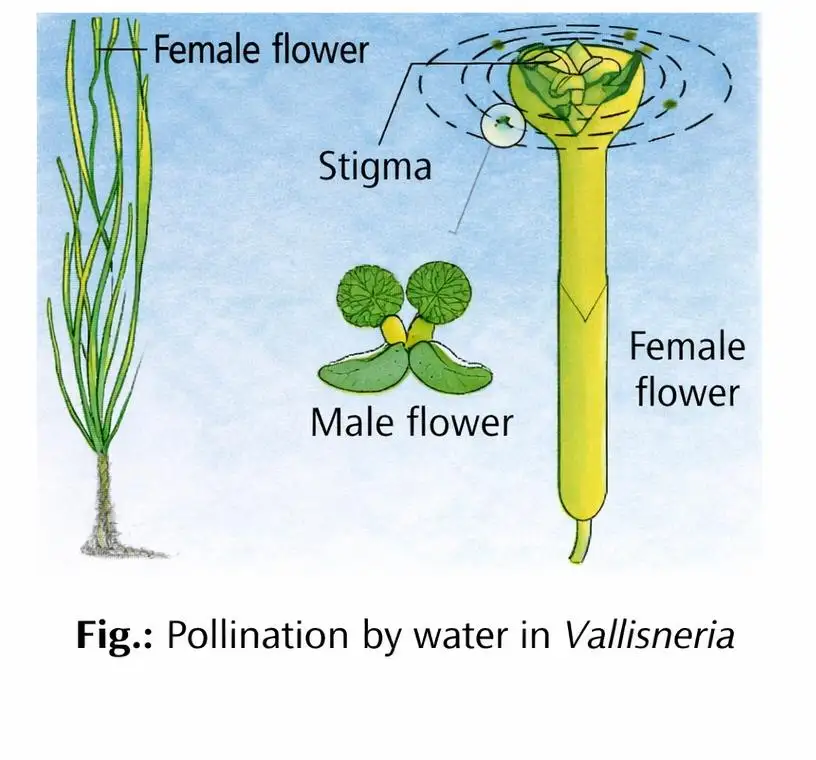
- Hydrophily: pollination by water.
- Flowers are small, inconspicuous, odourless, nectarless, often waxy.
- Pollen is small, light, non-sticky, coated with wax.
- Stigma is sticky but unwettable.
- Types: Hypohydrophily (underwater, e.g., Ceratophyllum), Epihydrophily (surface, e.g., Vallisneria).
Memory Aids
- Anemophily = wind, dry pollen, feathery stigma.
- Hydrophily = water, waxy pollen, sticky stigma.
Quick Checkpoints
- Define anemophily and hydrophily.
- Differentiate hypohydrophily and epihydrophily.
Biotic Agents
- Entomophily: pollination by insects.
- Flowers produce nectar, edible pollen, are fragrant and brightly coloured.
- Pollen grains are spiny, heavy, sticky (pollenkitt).
- Ornithophily: pollination by birds.
- Flowers are large, bright, odourless, with tubular or cup-shaped corollas, produce mucilaginous nectar.
- Chiropterophily: pollination by bats.
- Flowers are dull-coloured, strong fruity smell, abundant nectar and pollen.
- Other types: malacophily (snails), myrmecophily (ants).
Memory Aids
- Entomophily = insect pollination, nectar and scent.
- Ornithophily = bird pollination, bright and nectar-rich.
- Chiropterophily = bat pollination, dull and smelly.
Quick Checkpoints
- What are features of entomophilous flowers?
- Describe ornithophily and chiropterophily.
Pollen-Pistil Interaction
Process and Importance
- Pollination may deposit incompatible pollen.
- Stigma identifies compatible pollen via pollen-pistil interaction.
- Stigma surface has glandular papillae; types: dry (no exudate) and wet (with exudate).
- Exudates contain sugars, amino acids, proteins, mucopolysaccharides.
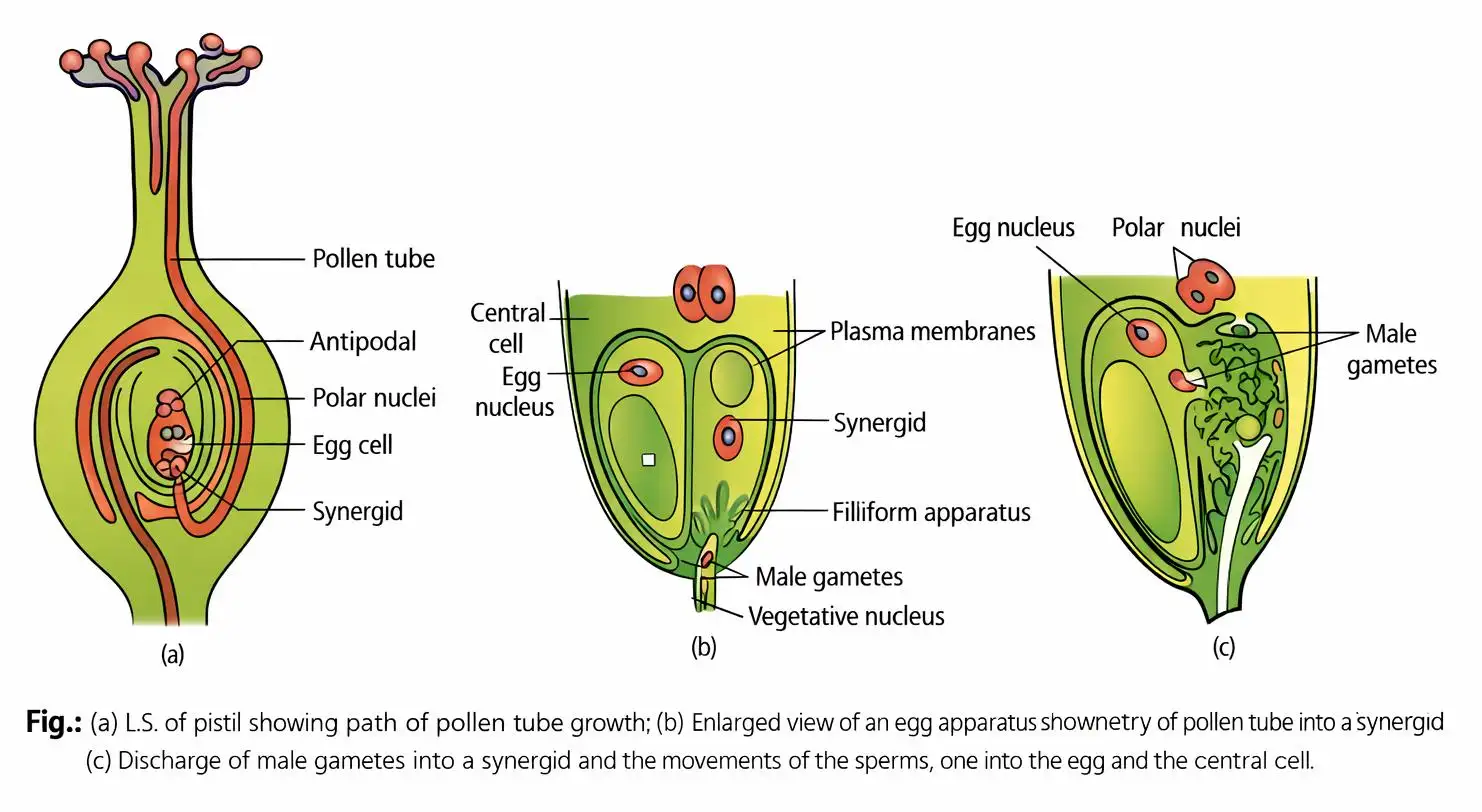
- Pollen tube secretes enzymes to digest stigma tissues.
- Pollen tube grows chemotropically guided by calcium-boron-inositol sugar complex.
- Tube enters embryo sac via synergid.
- Interaction regulates pollen acceptance or rejection, aiding breeding.
- Artificial hybridisation uses emasculation (removal of anthers) and bagging to prevent unwanted pollen.
- Unisexual flowers do not require emasculation; bagging before stigma receptivity is done.
Memory Aids
- Emasculation = anther removal to prevent self-pollination.
- Bagging = covering flowers to avoid contamination.
- Pollen-pistil interaction = compatibility check.
Quick Checkpoints
- What is emasculation and why is it done?
- How does pollen tube reach the embryo sac?
Double Fertilisation
Process and Types
- Fertilisation: fusion of male and female gametes.
- After pollination, pollen grain germinates on stigma, producing pollen tube via germ pore (siphonogamy).
- Pollen grains are usually monosiphonous (one tube per grain) but can be polysiphonous (multiple tubes per grain, e.g., Malvaceae).
- Pollen tube enters ovule through micropyle (porogamy, e.g., Lilium), chalaza (chalazogamy, e.g., Juglans, Casuarina), or integuments (mesogamy, e.g., Cucurbita, Populus).
- Regardless of entry, pollen tube enters embryo sac via micropylar region.
- Inside embryo sac, one male gamete fuses with egg forming zygote (2n) - syngamy or generative fertilisation.
- Second male gamete fuses with two polar nuclei forming triploid primary endosperm nucleus - triple fusion or vegetative fertilisation.
- Zygote develops into embryo; primary endosperm nucleus develops into endosperm.
- Syngamy and triple fusion together are called double fertilisation.
- Discovered by S.G. Nawaschin (1898) in Fritillaria and Lilium.
Memory Aids
- Siphonogamy = pollen tube formation.
- Monosiphonous = one tube; Polysiphonous = many tubes.
- Porogamy = micropyle entry; Chalazogamy = chalaza entry; Mesogamy = integument entry.
- Syngamy = zygote formation; Triple fusion = endosperm formation.
- Double fertilisation = syngamy + triple fusion.
Quick Checkpoints
- What is siphonogamy?
- Difference between monosiphonous and polysiphonous pollen grains?
- Routes of pollen tube entry into ovule?
- Define syngamy and triple fusion.
- What forms the primary endosperm nucleus?
- Who discovered double fertilisation and in which plants?
Embryo Development Stages
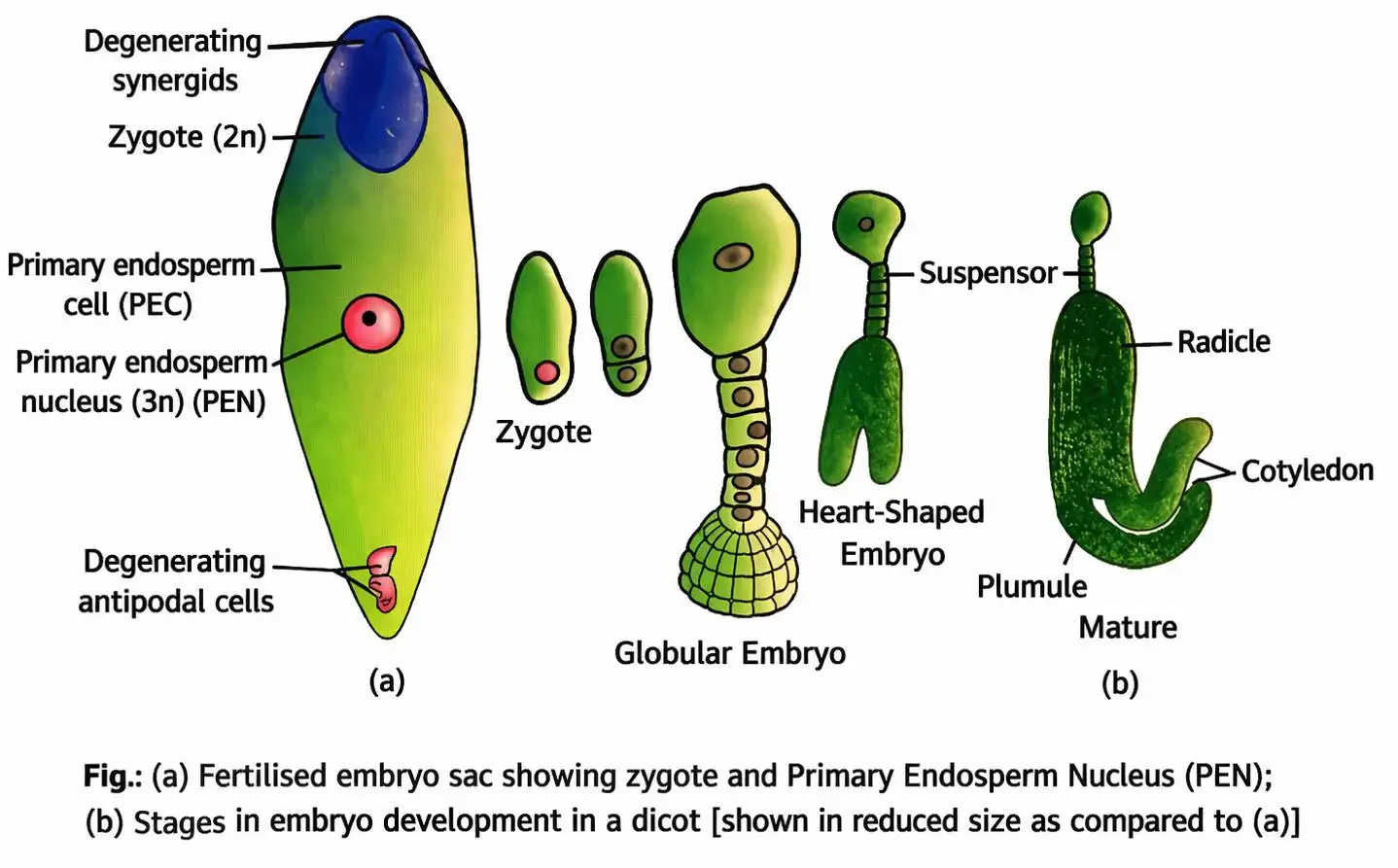
- Fertilized embryo sac contains zygote and primary endosperm nucleus.
- Zygote grows into globular embryo stage.
- Embryo develops into heart-shaped stage showing early organ formation.
- Mature embryo forms radicle (root), plumule (shoot), cotyledons (seed leaves), and suspensor (nourishment).
- Each stage marks key steps in seed plant development.
Memory Aids
- Globular stage = embryo shape formation.
- Heart-shaped stage = organ initiation.
- Radicle = future root; Plumule = future shoot.
- Suspensor = embryo nourishment.
Quick Checkpoints
- What does the primary endosperm nucleus develop into?
- Sequence of embryo development stages?
- Functions of radicle, plumule, and suspensor?
Post-Fertilisation Events
Overview
- Occurs after double fertilisation.
- Includes development of endosperm and embryo.
- Maturation of ovule into seed and ovary into fruit.
Memory Aids
- Post-fertilisation = seed + fruit formation.
Quick Checkpoints
- What events follow double fertilisation?
- Which structures mature into seeds and fruits?
Endosperm
Development and Types
- Develops before embryo.
- Primary endosperm cell divides to form triploid tissue.
- Cells store food for embryo nutrition.
- Free-nuclear stage: multiple nuclei without cell walls.
- Cellular stage: cell walls form around nuclei.
- Example: Coconut water is free-nuclear endosperm; white kernel is cellular endosperm.
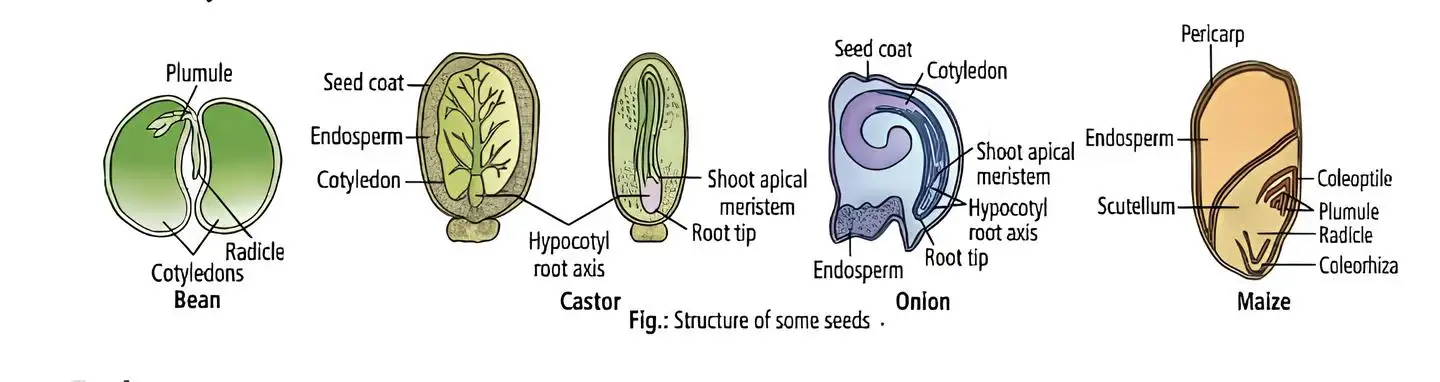
- Endosperm may be consumed by embryo (non-endospermic seeds) or persist in mature seed (endospermic seeds).
Memory Aids
- Endosperm = embryo food reserve.
- Free-nuclear = many nuclei, no walls.
- Cellular = nuclei enclosed in cells.
Quick Checkpoints
- What is the ploidy of endosperm?
- Difference between free-nuclear and cellular endosperm?
- Examples of endospermic and non-endospermic seeds?
Embryo
Structure and Development
- Develops at micropylar end of embryo sac.
- Zygote divides after some endosperm forms for nutrition.
- Stages: proembryo → globular → heart-shaped → mature embryo.
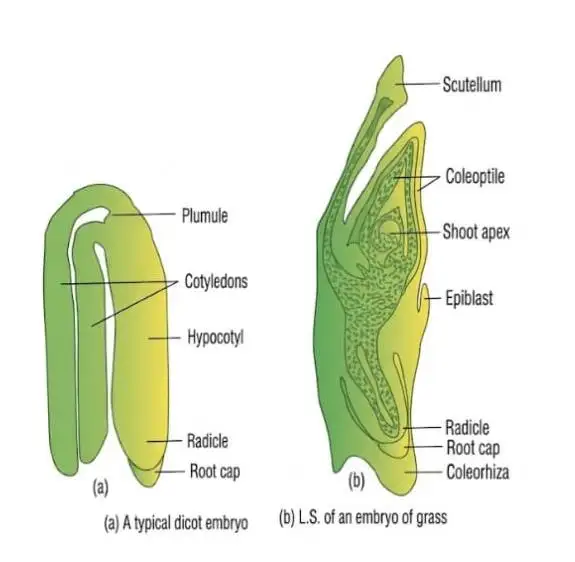
- Dicot embryo: embryonal axis + two cotyledons.
- Embryonal axis parts: epicotyl (above cotyledons), hypocotyl (below cotyledons), radicle (root tip with root cap).
- Monocot embryo: one cotyledon called scutellum.
- Monocot embryonal axis: radicle with root cap in coleorhiza; epicotyl with shoot apex and leaf primordia in coleoptile.
Memory Aids
- Dicot = 2 cotyledons; monocot = 1 cotyledon (scutellum).
- Epicotyl = shoot tip; hypocotyl = stem base; radicle = root tip.
- Coleoptile and coleorhiza protect shoot and root in monocots.
Quick Checkpoints
- Where does embryo develop in the ovule?
- What are the stages of embryo development?
- Differences between dicot and monocot embryos?
Seed
Structure and Features
- Seed = fertilised ovule; final product of sexual reproduction in angiosperms.
- Components: seed coat, cotyledons, embryo axis.
- Cotyledons store food reserves; seeds may be albuminous or non-albuminous.
- Perisperm: persistent nucellus in some seeds (e.g., black pepper).
- Seed coat formed from integuments; micropyle allows water and oxygen entry.
- Seed water content reduces at maturity; embryo enters dormancy or germinates if conditions are favorable.
- Viability: ability to germinate over time; affected by storage conditions.
- Loss of viability due to food exhaustion, embryo damage, or enzyme denaturation.
Memory Aids
- Seed = fertilised ovule with embryo and food reserve.
- Dormancy = embryo inactivity until favorable conditions.
- Viability depends on storage and seed condition.
Quick Checkpoints
- What are the main parts of a seed?
- Difference between albuminous and non-albuminous seeds?
- Factors causing loss of seed viability?
Fruit
Definition and Types
- Fruit develops from fertilised ovary and surrounding tissues.
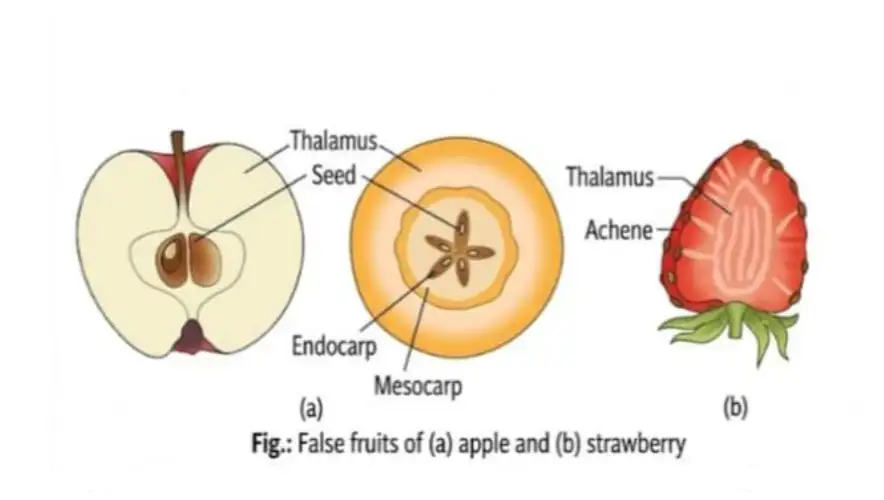
- False (pseudocarpic) fruit: flesh from ovary and other parts (e.g., apple, strawberry).
- True (eucarpic) fruit: develops only from ovary (e.g., mango).
- Pericarp: fruit wall with epicarp (skin), mesocarp (fleshy part), endocarp (inner layer around seeds).
- Fruit types: simple, aggregate, composite (multiple).
- Simple fruit: from monocarpellary or syncarpous ovary.
- Aggregate fruit: from apocarpous ovary.
- Composite fruit: from inflorescence.
- Parthenocarpy: fruit formation without fertilisation; seedless fruits (e.g., banana); induced by hormones.
Memory Aids
- False fruit = ovary + other flower parts.
- True fruit = ovary only.
- Parthenocarpy = seedless fruit formation.
Quick Checkpoints
- What is the difference between true and false fruits?
- What are the layers of pericarp?
- Define parthenocarpy and give examples.
Apomixis and Polyembryony
Apomixis
- Formation of new individuals without gamete formation or fusion.
- Asexual reproduction mimicking sexual reproduction.
Polyembryony
- Presence of more than one embryo in a seed.
- Examples: Citrus, onion, groundnut.
- Simple polyembryony: multiple embryos from fertilisation of more than one egg.
- Adventive polyembryony: extra embryos formed by sporophytic budding.
Memory Aids
- Apomixis = Asexual reproduction without gametes.
- Polyembryony = Multiple embryos in one seed.
- Simple polyembryony = Multiple eggs fertilised.
- Adventive polyembryony = Embryos from sporophyte cells.
Quick Checkpoints
- What defines apomixis?
- Which plants show polyembryony?
- Difference between simple and adventive polyembryony?
- How does adventive polyembryony occur?
NEET Botany — ALL CHAPTERS
1
The Living World
2
Plant Kingdom
3
Morphology of Flowering Plants
4
Anatomy of Flowering Plants
5
The Unit of Life
6
Photosynthesis in Higher Plants
7
Respiration in Plants
8
Plant Growth and Development
9
Sexual Reproduction in Flowering Plants
10
Principles of Inheritance and Variation
11
Molecular Basis of Inheritance
12
Biotechnology :Principles and Processes
13
Biotechnology and its Applications