NEET Ug . NEET Botany . Botany . Plant Growth and Development
Chapter 8: Plant Growth and Development
Ch 8
NEET Botany
NEET Ug
Introduction
Development and Germination
- Development = Growth + Differentiation.
- Mature plant develops from zygote via ordered events forming roots, leaves, branches, flowers, fruits, seeds.
- Development controlled by intrinsic (internal) and extrinsic (external) factors.
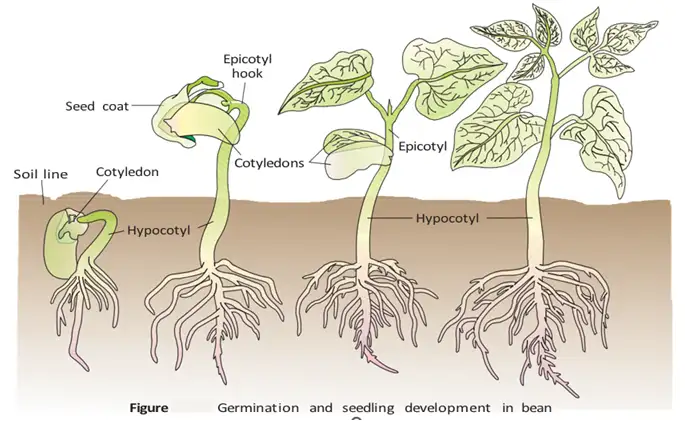
- Seed germination activates embryo growth into seedling under favorable conditions.
- Types of germination: Epigeal (cotyledons above soil), Hypogeal (cotyledons below soil).
- Photoblastic seeds require light to germinate.
- Seed viability = capacity to germinate and develop.
- Favorable conditions: water, oxygen, suitable temperature, food, growth regulators, rest period completion.
- Unfavorable conditions cause suspended growth until favorable.
Memory Aids
- Development = Growth + Differentiation.
- Epigeal = cotyledons emerge; Hypogeal = cotyledons stay underground.
- Photoblastic seeds need light.
Quick Checkpoints
- What are the two components of development?
- Difference between epigeal and hypogeal germination?
- What conditions favor seed germination?
Growth
Definition and Types
- Growth = irreversible permanent increase in size of organ, part, or cell.
- Accompanied by metabolic processes using energy.
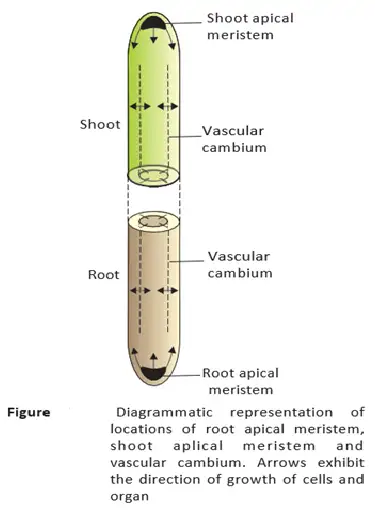
- Plant growth is indeterminate (continuous) in higher plants via meristems.
- Open form of growth: new cells added by meristem activity.
- Primary growth: elongation by apical and intercalary meristems.
- Secondary growth: increase in girth by lateral meristems (vascular cambium, cork cambium).
- Growth measurable by fresh/dry weight, length, area, volume, cell number.
- Examples: maize root apical meristem produces 17,500+ cells/hour; watermelon cells enlarge 350,000 times.
Memory Aids
- Growth = size increase + metabolism.
- Primary = length; Secondary = girth.
- Meristems drive growth.
Quick Checkpoints
- Define growth in plants.
- What is primary vs secondary growth?
- Role of meristems in growth?
Phases of Growth
Growth Phases
- Meristematic phase: active cell division, high biosynthesis, thin primary walls.
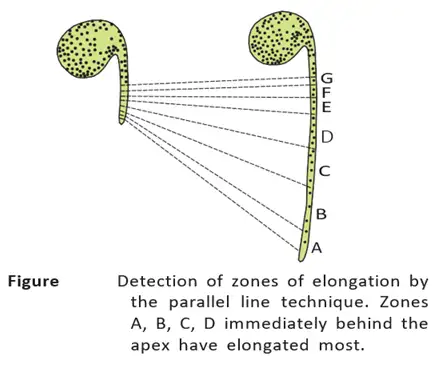
- Elongation phase: cells enlarge, vacuolation increases, new wall deposition.
- Differentiation/maturation phase: cells specialize, wall thickening, protoplasm modification.
Memory Aids
- Meristematic = divide; Elongation = enlarge; Differentiation = specialize.
Quick Checkpoints
- What happens in meristematic phase?
- How do cells change in elongation phase?
- What defines differentiation phase?
Growth Rates
Types and Measurement
- Growth rate = increase in growth per unit time.
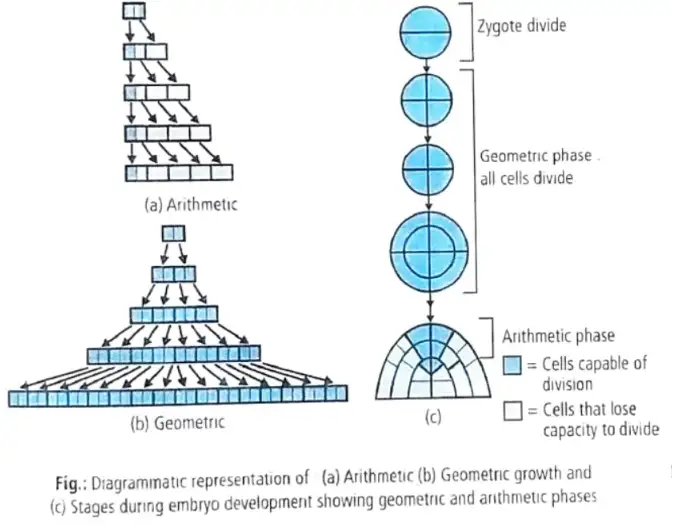
- Arithmetic growth: one daughter cell divides, other differentiates; linear increase.
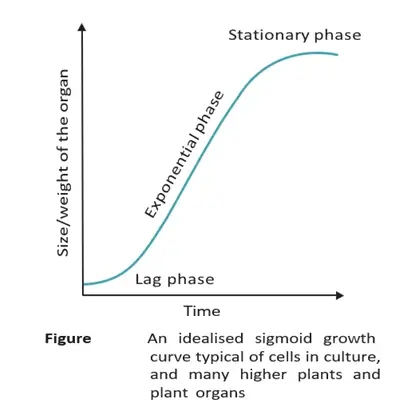
- Geometrical growth: both daughter cells divide; exponential increase; shows lag, log, stationary phases.
- Sigmoid (S-curve) growth typical in natural conditions.
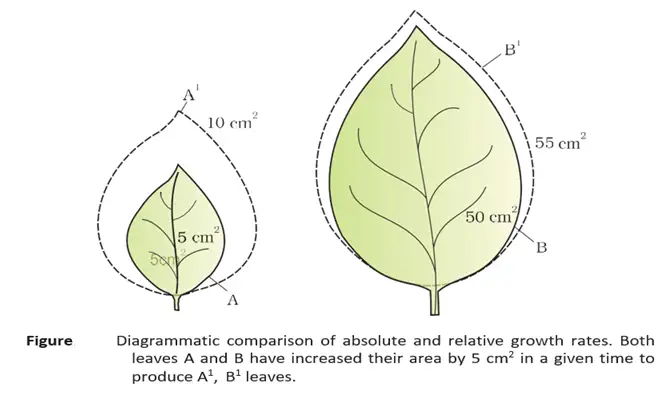
- Growth expressed as absolute growth rate (total growth/time) and relative growth rate (growth per unit initial size/time).
Memory Aids
- Arithmetic = linear growth; Geometrical = exponential growth.
- Absolute growth rate = total growth/time.
- Relative growth rate = growth per unit initial size/time.
- S-curve = lag, log, stationary phases.
Quick Checkpoints
- Difference between arithmetic and geometrical growth?
- What phases are in sigmoid growth curve?
- Define absolute and relative growth rates.
Conditions for Plant Growth
Essential Factors
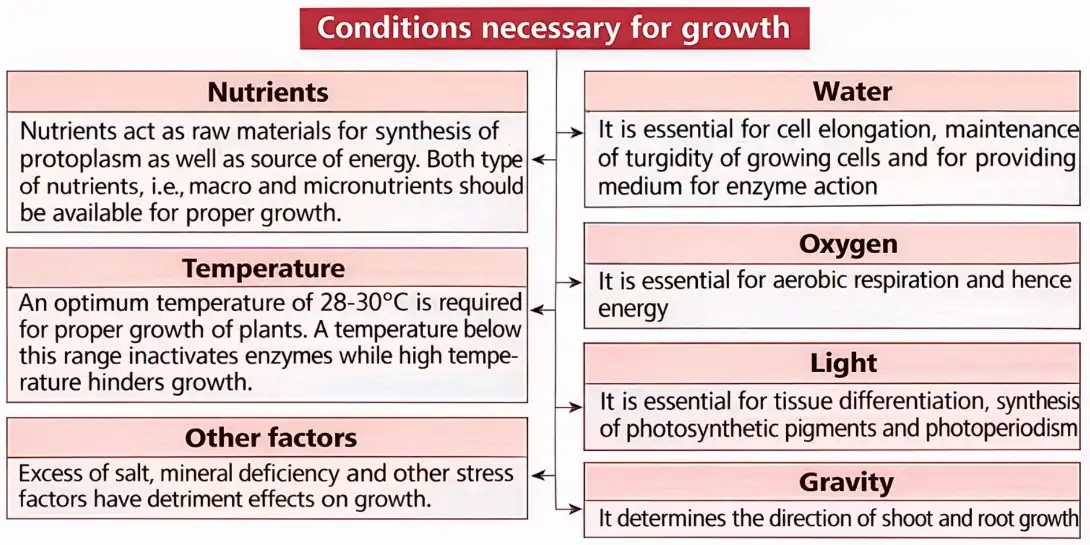
- Nutrients: macro and micronutrients for cell building and energy.
- Water: maintains cell turgor, enzyme function, growth.
- Temperature: optimal 28-30°C; extremes inhibit growth.
- Oxygen: required for respiration and energy production.
- Light: needed for pigment synthesis and growth regulation.
- Gravity: guides root and shoot orientation.
- Other factors: salt concentration and mineral availability affect growth.
Memory Aids
- Water, nutrients, light, oxygen, temperature, gravity essential.
- Optimal temperature 28-30°C.
Quick Checkpoints
- List key factors for plant growth.
- Why is water important for growth?
- How does gravity affect plant growth?
Differentiation, Dedifferentiation and Redifferentiation
Differentiation
- Permanent qualitative changes in cell structure, chemistry, and physiology.
- Occurs by activation or repression of specific genes.
- Example: Tracheary elements lose protoplasm and develop strong lignocellulosic secondary walls for water conduction.
Dedifferentiation
- Despecialisation of differentiated cells to regain division capacity.
- Dedifferentiated tissues act as meristems (e.g., interfascicular vascular cambium, cork cambium, wound cambium).
- In culture, parenchyma cells dedifferentiate to form callus (mass of dividing cells).
Redifferentiation
- Specialisation of cells derived from dedifferentiated meristems.
- Similar to differentiation by primary meristems.
- Forms secondary tissues like secondary phloem, secondary xylem, cork, and secondary cortex.
Commitment or Determination
- Same apical meristem cells produce different cell types (xylem, phloem, parenchyma, sclerenchyma, fibres, collenchyma).
- Determined by location and specific signals received.
- Example: Cells distal to root apical meristem form root cap; peripheral cells form epidermis, cortex, endodermis, pericycle, vascular tissues.
Memory Aids
- Differentiation = Permanent specialization.
- Dedifferentiation = Reversal to division-capable state.
- Redifferentiation = New specialization after dedifferentiation.
- Commitment = Location-based cell fate decision.
Quick Checkpoints
- What triggers differentiation in cells?
- How does dedifferentiation enable tissue regeneration?
- What tissues form by redifferentiation?
- What determines different cell types from the same meristem?
Development
Concept and Process
- Development is a sequence of changes in structure and function of an organism, organ, tissue, or cell.
- Includes formation, growth, differentiation, maturation, reproduction, senescence, and death.
- Plant stages: seed germination, seedling, juvenile, maturation, flowering, seed formation, senescence.
- Phase conversion (e.g., leaf initiation to expansion) is also development.
- Occurs at cellular level (e.g., chloroplast appearance in sunlight-exposed cells).
- Development ends in senescence and death.
- Controlled by intrinsic factors (genes, growth regulators) and extrinsic factors (light, temperature, water, oxygen, nutrition).
- Development pathways vary with environment and life phases, showing plasticity.
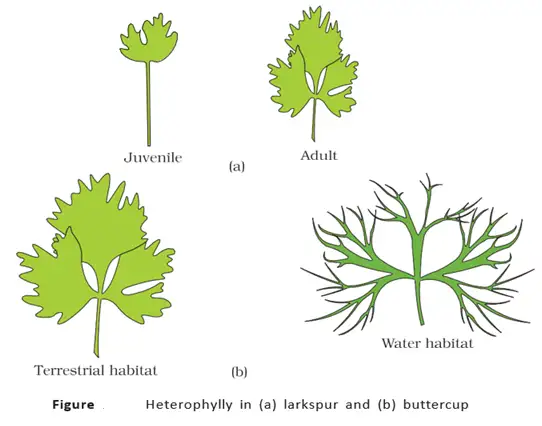
- Plasticity example: heterophylly—different leaf forms in juvenile vs mature plants or air vs water leaves.
Memory Aids
- Development = Formation + Growth + Differentiation + Maturation + Senescence + Death
- Plasticity = Ability to form different structures based on environment or growth phase
- Heterophylly = Different leaf shapes in one plant
Quick Checkpoints
- What stages are included in development?
- How do intrinsic and extrinsic factors influence development?
- Define plasticity in plant development.
- Give examples of heterophylly.
Development Sequence in Plant Cell
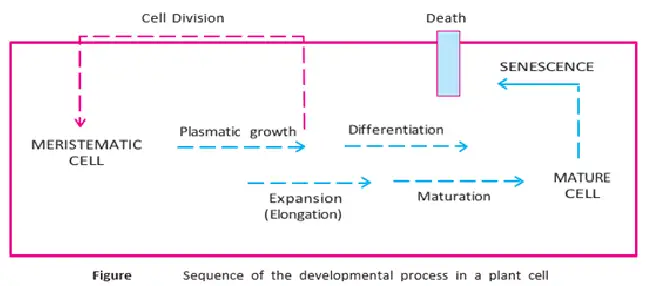
- Starts with meristematic cell capable of division.
- Cell divides to form new cells.
- Cells grow in size (plasmatic growth).
- Cells differentiate to become specialized.
- Cells expand or elongate.
- Cells mature into fully developed cells.
- Mature cells age (senescence).
- Cells die naturally at cycle end.
Memory Aids
- Meristematic cell → Division → Growth → Differentiation → Expansion → Maturation → Senescence → Death
Quick Checkpoints
- What is the first stage of cell development?
- What happens after cell division?
- Define senescence in cells.
Heterophylly Examples
- Larkspur: juvenile leaves are simple; adult leaves are complex.
- Buttercup: leaf shape varies by habitat—broad flat leaves on land, divided finely branched leaves in water.
- Shows plant adaptation to growth stages and environment.
Memory Aids
- Heterophylly = Different leaf types on one plant
- Environmental heterophylly = Leaf shape changes with habitat
Quick Checkpoints
- What is heterophylly?
- How does Buttercup leaf shape change with environment?
- Give an example of heterophylly in Larkspur.
Plant Growth Regulators
Overview
- Plant growth regulators (PGRs) are small molecules regulating growth, differentiation, and development in plants.
- Also called plant hormones or phytohormones.
- Produced naturally, active in low concentrations, and translocated to target regions.
- Divided into plant growth promoters and inhibitors based on function.

Memory Aids
- Promoters: Auxins, Gibberellins, Cytokinins.
- Inhibitors: Abscisic Acid, Ethylene.
Quick Checkpoints
- What are phytohormones?
- Difference between growth promoters and inhibitors?
Auxins
Characteristics and Discovery
- Weakly acidic hormones with unsaturated ring structure.
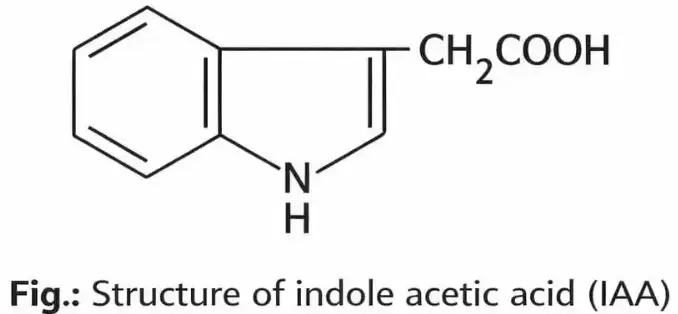
- Natural auxins: Indole-3-acetic acid (IAA), Indole-3-butyric acid (IBA).
- Synthetic auxins: NAA, 2,4-D, MCPA.
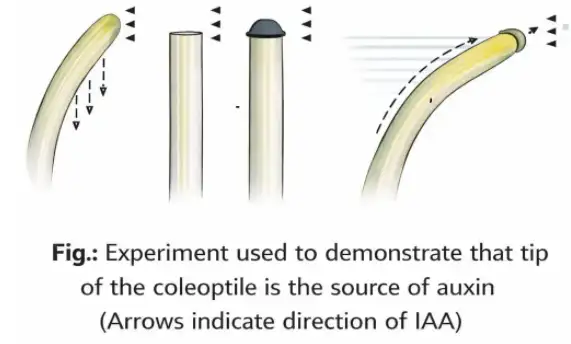
- Discovered by Darwin (1880) and E.W. Went (1928) via coleoptile experiments.
- Auxin moves basipetally (tip to base).
- IAA synthesized from tryptophan.
- Bioassays: Avena curvature test, root growth inhibition test.
Memory Aids
- Auxin = "Apex Up" (promotes apical dominance).
- IAA = Indole ring + Acetic acid group.
Quick Checkpoints
- What is the role of auxins in apical dominance?
- How does auxin affect root growth?
Physiological functions
Auxin Effects
- Stimulates cell division in cambium and elongation in shoots.
- Induces early xylem and phloem differentiation.
- Initiates rooting in stem cuttings; inhibits root growth at high concentration.
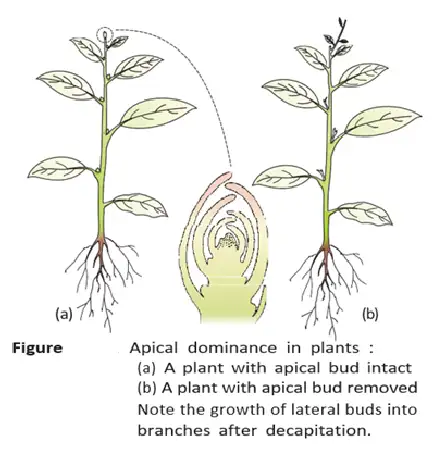
- Inhibits axillary bud growth; promotes apical dominance.
- Decapitation overcomes apical dominance (used in tea plantations, hedge making).
- Promotes flowering in pineapples and early fruit formation.
- Retards senescence and early abscission; promotes abscission in mature organs.
- Induces parthenocarpy (e.g., tomato) and feminizing effect in some plants.
- Synthetic auxins (2,4-D, 2,4,5-T) act as selective herbicides.
- Differential auxin distribution causes phototropism and geotropism.
- Stimulates respiration and metabolism by mobilizing resources.
Memory Aids
- Auxin promotes "Apex Dominance" and rooting.
- 2,4-D = selective dicot weed killer.
Quick Checkpoints
- How does auxin regulate apical dominance?
- What is the effect of auxin on senescence?
Gibberellins
Characteristics and Discovery
- Weakly acidic hormones with gibberellin ring structure.
- Discovered by Kurosawa (1926) from Gibberella fujikuroi fungus.
- GA3 is the most studied gibberellin.
- Produced in apical shoot buds, young leaves, root tips, developing seeds.
- Synthesized from mevalonic acid (acetyl Co-A derivative).
- Transported by diffusion and conducting channels.
- Bioassays: Barley endosperm test, dwarf pea test.
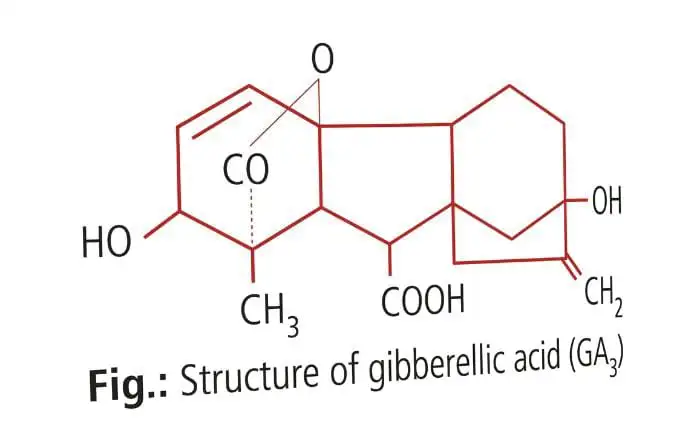
Memory Aids
- GA = "Grow Axis" (promotes stem elongation).
- GA3 overcomes dwarfism and dormancy.
Quick Checkpoints
- How does GA3 affect seed germination?
- What is bolting in plants?
Physiological functions
Gibberellin Effects
- Enhances seed germination by increasing α-amylase synthesis, overcoming dormancy.
- Induces seed germination even in dark (photoblastic seeds).
- Causes bolting (rapid internode elongation) in rosette plants.
- Overcomes genetic dwarfism (e.g., maize, pea).
- Promotes maleness in female plants.
- Delays senescence, extending fruit market period.
- Used in malting industry to speed up process.
- Improves fruit shape and stalk length (e.g., grapes, apples).
- Increases sugarcane stem length and yield.
- Hastens maturity and seed production in juvenile conifers.
Memory Aids
- GA = "Germination Activator".
- Bolting = GA-induced stem elongation.
Quick Checkpoints
- What role does gibberellin play in dormancy?
- How does GA affect fruit development?
Cytokinins
Characteristics and Discovery
- Basic hormones derived from aminopurine or phenyl urea promoting cytokinesis.
- Discovered by F. Skoog et al. observing callus proliferation with yeast extract and DNA.
- Kinetin (synthetic) discovered from degraded herring sperm DNA.
- Natural cytokinin: Zeatin from unripe maize grains and coconut milk.
- Found in regions of rapid cell division: root apices, shoot buds, young fruits.
- Bioassays: Tobacco pith culture, leaf senescence retardation, radish cotyledon expansion.
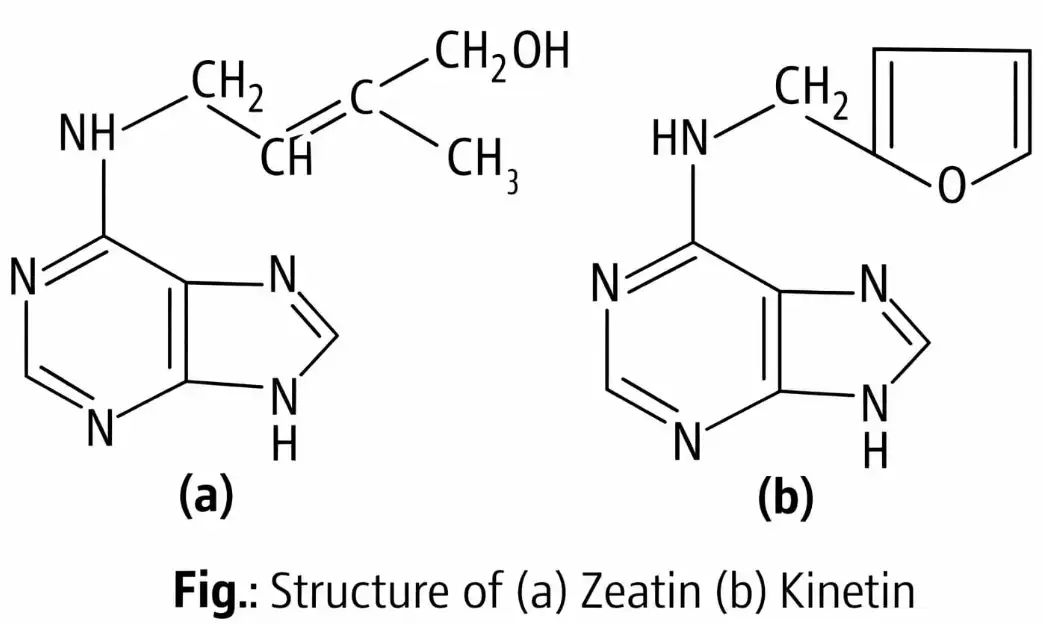
Memory Aids
- Cytokinins = "Cell Kick-starters" (promote division).
- Zeatin and Kinetin are key cytokinins.
Quick Checkpoints
- Where are cytokinins mainly found?
- How do cytokinins affect apical dominance?
Physiological functions
Cytokinin Effects
- Enhances cell division and morphogenesis.
- Increases seedling width and promotes new leaves and chloroplast formation.
- Stimulates lateral and adventitious shoot growth.
- Overcomes apical dominance.
- Induces femaleness in male plants.
- Retards senescence (Richmond-Lang effect) and abscission.
- Increases mobilization of food materials.
- Prolongs life of cut shoots and flowers; keeps vegetables fresh.
Memory Aids
- Cytokinins = "Cell division and delay senescence".
Quick Checkpoints
- What is the role of cytokinins in senescence?
- How do cytokinins influence shoot growth?
Ethylene
Characteristics and Discovery
- Only gaseous phytohormone.
- Stimulates transverse growth; inhibits longitudinal growth.
- Synthesized from methionine.
- Discovered by H.H. Cousins (1910) and identified as ethylene by R. Gane (1934).
- Produced in minimal amounts throughout plant; peaks during fruit ripening and senescence.
- Bioassays: Triple response in etiolated pea, gas chromatographic assay.
Memory Aids
- Ethylene = "E for Ethephon and Ripening".
Quick Checkpoints
- What is the triple response caused by ethylene?
- How does ethylene affect fruit ripening?
Physiological functions
Ethylene Effects
- Causes swelling and horizontal growth; forms apical hook in dicot seedlings.
- Promotes senescence and abscission of leaves and flowers.
- Increases respiration rate during fruit ripening (respiratory climacteric).
- Overcomes seed and bud dormancy; initiates germination and sprouting.
- Increases female flowers and fruit set in cucumber.
- Used to synchronize flowering and fruit set in pineapple and mango.
- Promotes internode elongation in deep water rice to keep shoots above water.
- Stimulates root growth and root hair formation.
- Commercially used as ethephon for fruit ripening and abscission.
- Induces adventitious root formation in waterlogged roots.
Memory Aids
- Ethylene = "Gas hormone for ripening and abscission".
Quick Checkpoints
- What role does ethylene play in seed dormancy?
- How is ethylene used in agriculture?
Abscisic Acid
Characteristics and Discovery
- Mildly acidic growth inhibitor, also called stress hormone.
- Production increases under drought, waterlogging, and stress.
- Discovered by Addicott et al. (1963) from cotton bolls.
- Found abundantly in chloroplasts; synthesized from mevalonic acid or xanthophyll.
- Bioassays: Rice seedling growth inhibition, α-amylase synthesis inhibition in barley endosperm.
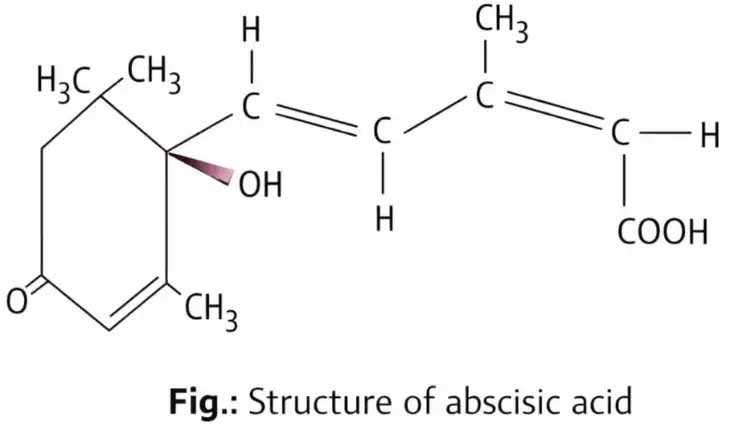
Memory Aids
- ABA = "Abscission and Dormancy Agent".
- Stress hormone that closes stomata.
Quick Checkpoints
- How does ABA induce dormancy?
- What is ABA's role in stomatal regulation?
Physiological functions
Abscisic Acid Effects
- Induces abscission of plant parts.
- Limits seed germination; induces dormancy in seeds and buds.
- Inhibits flowering in long-day plants; stimulates in some short-day plants.
- Causes partial stomatal closure under drought (antitranspirant).
- Important in seed development, maturation, and desiccation tolerance.
- Promotes leaf senescence; antagonizes gibberellin effects.
- Regulates growth synergistically or antagonistically with other hormones.
- Auxins, gibberellins, cytokinins act synergistically; ABA antagonizes them.
- Auxins, cytokinins, ethylene feminize plants; gibberellins promote maleness.
- Cytokinins and auxins prevent senescence; ABA and ethylene induce it.
- Cytokinins open stomata; ABA closes stomata.
- ABA induces dormancy; gibberellins overcome dormancy.
- Auxins, gibberellins, cytokinins promote cambial activity and fruit development; ABA inhibits.
Memory Aids
- ABA = "Antagonist to growth promoters".
- Induces dormancy and senescence.
Quick Checkpoints
- How does ABA interact with gibberellins?
- What hormones regulate dormancy and senescence?
NEET Botany — ALL CHAPTERS
1
The Living World
2
Plant Kingdom
3
Morphology of Flowering Plants
4
Anatomy of Flowering Plants
5
The Unit of Life
6
Photosynthesis in Higher Plants
7
Respiration in Plants
8
Plant Growth and Development
9
Sexual Reproduction in Flowering Plants
10
Principles of Inheritance and Variation
11
Molecular Basis of Inheritance
12
Biotechnology :Principles and Processes
13
Biotechnology and its Applications