NEET Ug . NEET Botany . Botany . Biotechnology and Its Applications
Chapter 13: Biotechnology and its Applications
Ch 13
NEET Botany
NEET Ug
Introduction
Overview
- Biotechnology involves industrial production of biopharmaceuticals and biologicals using genetically modified microbes, fungi, plants, and animals.
- Applications include therapeutics, diagnostics, GM crops, processed food, bioremediation, waste treatment, and energy production.
- Three key research areas: improved catalysts (microbes/enzymes), optimal engineering conditions, and downstream purification technologies.
Memory Aids
- Biotech = Bio + Technology for large-scale biological products.
- Three research areas: Catalyst, Conditions, Purification.
Quick Checkpoints
- What are the main applications of biotechnology?
- What are the three critical research areas?
Biotechnological Applications in Agriculture
Food Production Methods
- Three ways to increase food production: agrochemical-based, organic, and genetically engineered crop-based agriculture.
- Green Revolution tripled food supply but insufficient for growing population.
- Agrochemicals are costly for developing world farmers; conventional breeding limits yield improvement.
- Tissue culture developed for fast, efficient crop improvement.
- Plant tissue culture: growing plant cells/tissues/organs on sterile nutrient medium under controlled conditions.
- Explant: plant part grown in vitro; totipotency = ability to regenerate whole plant from any cell.
- Nutrient medium includes carbon source (sucrose), inorganic salts, vitamins, amino acids, auxins, cytokinins.
- Requirements: sterile environment, aeration, nutrient medium, optimum pH 5.7.
- Types based on growth:
- Callus culture: solid medium, undifferentiated cell mass, needs auxin + cytokinin.
- Suspension culture: liquid medium, single/small cell groups, auxin (2,4-D) only.
- Types based on explant:
- Single cell culture: cloning via mitosis.
- Shoot and root culture: regulated by cytokinin-auxin ratio.
- Somatic embryo culture: embryo from somatic cell.
- Meristem culture: shoot tips/nodal segments, virus-free plants, germplasm conservation, rapid multiplication.
- Other types: anther, ovule, ovary culture.
Memory Aids
- Totipotency = any cell can form whole plant.
- Callus = undifferentiated mass; needs auxin + cytokinin.
- Meristem culture for virus-free plants.
Quick Checkpoints
- What is totipotency?
- Difference between callus and suspension culture?
- Purpose of meristem culture?
Micropropagation
Technique and Uses
- Rapid vegetative multiplication using small explants under controlled conditions.
- Produces somaclones: genetically identical plantlets.
- Used commercially for tomato, banana, apple, etc.
- Recovers healthy plants from diseased ones by culturing virus-free meristems.
- Successful meristem culture in banana, sugarcane, potato.
- Advantages:
- Easy, safe, economical.
- Rapid multiplication year-round.
- Multiplication of sterile, ornamental, rare, endangered plants.
Memory Aids
- Somaclones = identical clones from tissue culture.
- Meristem free of virus = healthy plants.
Quick Checkpoints
- What are somaclones?
- Why is micropropagation preferred for virus-free plants?
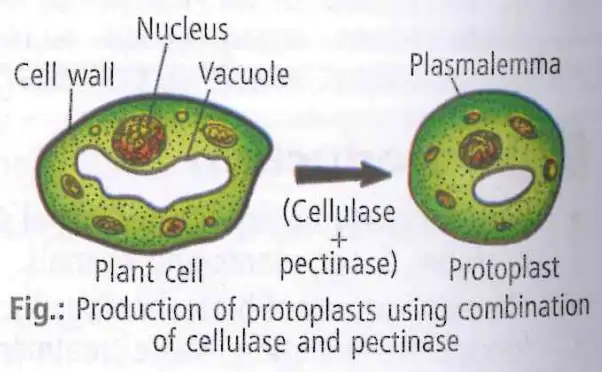
This image shows production of a protoplast by enzymatic removal of plant cell wall using cellulase and pectinase. Protoplast is a plant cell without cell wall, enclosed by plasma membrane, retaining nucleus and vacuole.
Somatic Hybridisation
Process and Examples
- Somatic hybridisation: fusion of somatic cells from two varieties/species after cell wall removal (protoplast fusion).
- Also called protoplast culture.
- First somatic hybrid: tobacco; others include Brassica, Petunia, Solanum.
- Pomato: hybrid of potato and tomato.
- Bomato: hybrid of brinjal and tomato.
- Advantages:
- Develop hybrids of asexually reproducing plants.
- Create new crop plants (e.g., pomato).
- Produce useful allopolyploids.
Memory Aids
- Protoplast fusion = somatic hybridisation.
- Pomato = potato + tomato hybrid.
Quick Checkpoints
- What is somatic hybridisation?
- Examples of somatic hybrids?
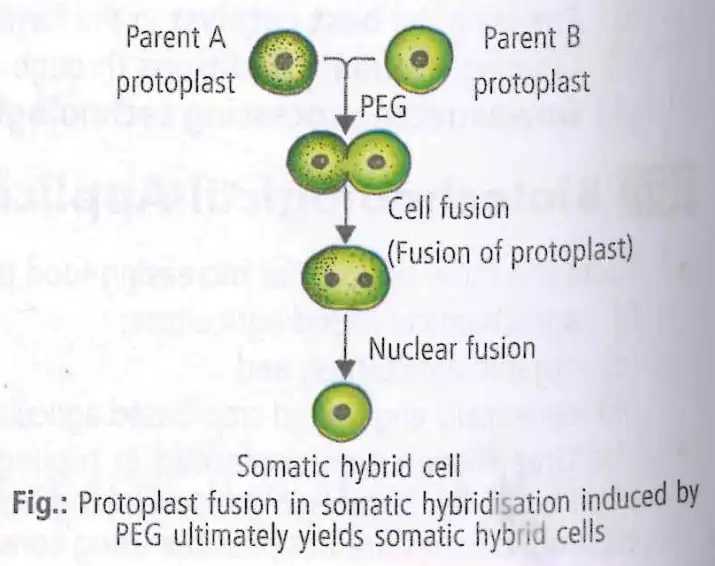
Protoplast fusion process: cell walls removed, protoplasts fused using PEG, nuclei fuse forming somatic hybrid cell with combined genetic material.
Genetically Modified Organisms (GMO)
Definition and Benefits
- GMOs are organisms genetically modified by introducing foreign genes (transgenes).
- GM crops express useful foreign genes, called transgenic plants.
- Genetic modification benefits:
- Abiotic stress tolerance (cold, drought, salt, heat).
- Reduced chemical pesticide use (pest resistance).
- Reduced post-harvest losses (e.g., Flavr Savr tomato).
- Improved mineral use efficiency.
- Enhanced nutritional value (e.g., golden rice with vitamin A).
Memory Aids
- Transgenes = foreign genes in GM plants.
- Flavr Savr tomato = longer shelf life.
Quick Checkpoints
- What are transgenic plants?
- List benefits of genetic modification in plants.
Production of Transgenic Plants
Method and Vector
- Vector: Ti plasmid from Agrobacterium tumefaciens, a natural genetic engineer.
- Ti plasmid transfers T-DNA into plant genome, causing crown gall tumors.
- Steps:
- Isolate Ti plasmid and cut T-DNA with restriction enzyme.
- Cut foreign DNA with same enzyme and insert into T-DNA (recombinant plasmid).
- Introduce recombinant plasmid into bacterium.
- Use bacterium to transfer T-DNA with foreign gene into plant cell.
- Grow plant cells in culture to regenerate transgenic plant.
- Transgenic plants carry traits like disease resistance, insect resistance, herbicide resistance, improved food quality.
Memory Aids
- Ti plasmid = tumor inducing plasmid.
- Agrobacterium tumefaciens = natural genetic engineer.
Quick Checkpoints
- What is the role of Ti plasmid?
- Outline steps to produce transgenic plants.
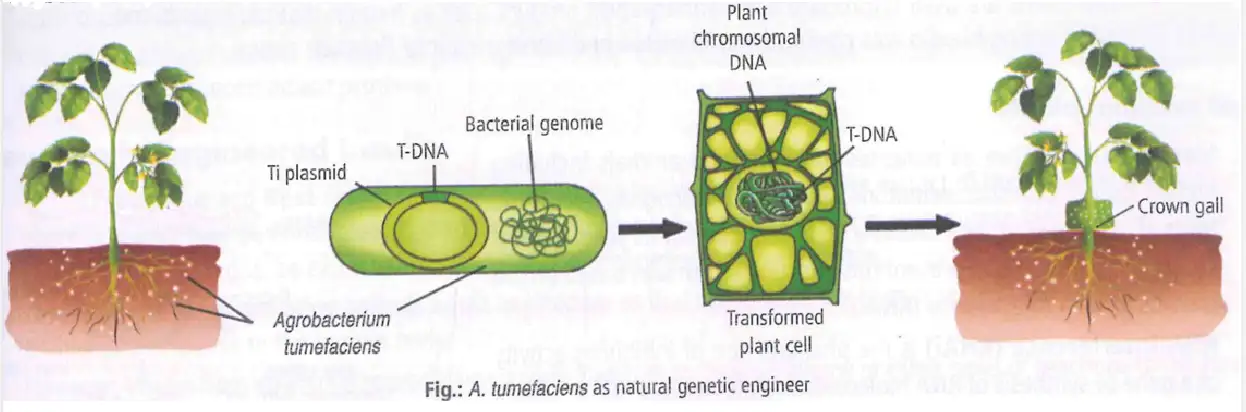
Agrobacterium tumefaciens transfers T-DNA from Ti plasmid into plant cells causing crown gall tumors; used in genetic engineering.
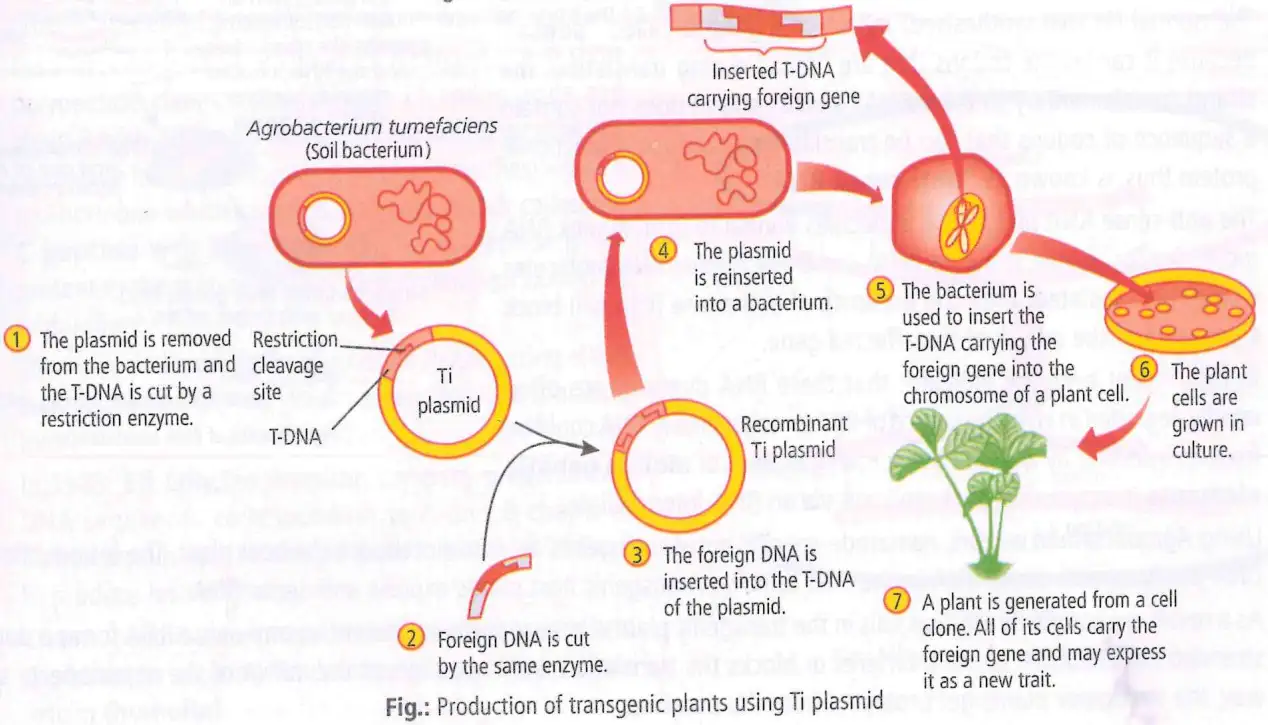
Steps to produce transgenic plants using Ti plasmid: cut plasmid and foreign DNA, insert foreign gene, transform bacterium, infect plant cells, regenerate plants with new traits.
Insect Resistance in Transgenic Plants
Bt Toxin and Application
- Bacillus thuringiensis produces proteins toxic to specific insects (lepidopterans, coleopterans, dipterans).
- Bt forms protein crystals containing inactive protoxins activated in insect gut alkaline pH.
- Activated toxin binds midgut cells, creates pores causing cell lysis and insect death.
- Bt toxin genes (cry genes) inserted into crops like cotton and corn for pest resistance.
- First transgenic crop in India: Bt cotton.
- First transgenic plant: tobacco with glyphosate resistance.
- GM plants also produce biopharmaceuticals like hirudin (blood clotting inhibitor) in Brassica napus.
Memory Aids
- Bt toxin = insect-specific protein from B. thuringiensis.
- Cry genes code for Bt toxin.
Quick Checkpoints
- How does Bt toxin kill insects?
- Which crops have Bt genes?
Pest Resistant Plants
RNA Interference (RNAi) Mechanism
- Nematode Meloidogyne incognita infects tobacco roots reducing yield.
- RNAi inhibits gene activity by producing anti-sense RNA complementary to mRNA.
- Anti-sense RNA binds mRNA forming double-stranded RNA, blocking translation.
- Double-stranded RNA often degraded, silencing gene expression.
- Agrobacterium vectors introduce nematode-specific anti-sense genes into plants.
- Transgenic plants express anti-sense RNA, preventing nematode infestation.
Memory Aids
- RNAi = gene silencing via anti-sense RNA.
- Anti-sense RNA blocks mRNA translation.
Quick Checkpoints
- What is RNA interference?
- How does anti-sense RNA protect plants from nematodes?
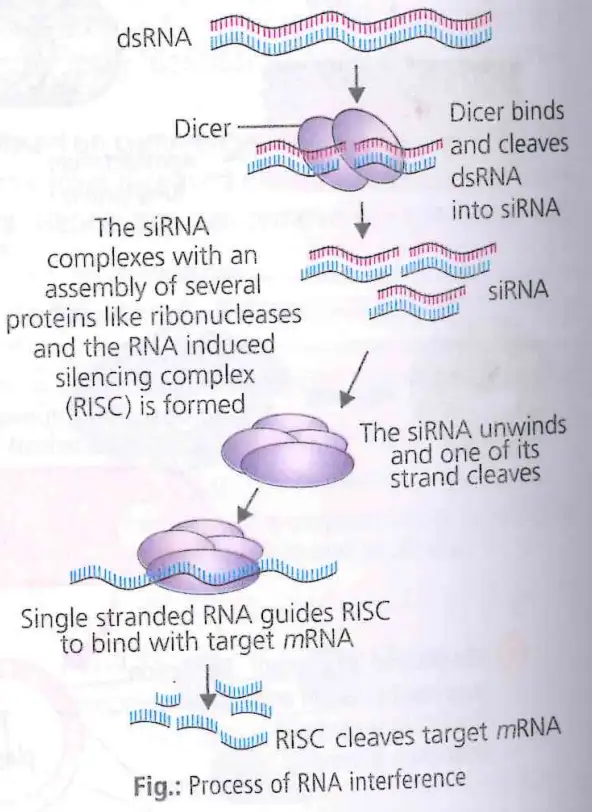
RNAi process: dsRNA cut by Dicer into siRNA, siRNA forms RISC complex, guides RISC to target mRNA, which is cleaved to prevent protein synthesis.
Example: Flavr Savr tomato blocks polygalacturonase gene to delay fruit softening and extend shelf life.
Advantages and Disadvantages of Transgenic Plants
Pros and Cons
- Advantages:
- Increased tolerance to abiotic stresses.
- Reduced chemical pesticide use.
- Lower post-harvest losses.
- Improved mineral use efficiency.
- Enhanced nutritional content (e.g., vitamin A rice).
- Disadvantages:
- Potential production of toxic/allergic metabolites.
- Unexpected susceptibility to pathogens.
- Gene transfer to related weed species.
- Ecological disturbances due to altered interactions.
Memory Aids
- GM plants = benefits + ecological risks.
Quick Checkpoints
- List advantages of transgenic plants.
- What are possible ecological risks?
Biotechnological Applications in Medicine
Overview
- Recombinant DNA technology enables mass production of safe, effective therapeutic drugs.
- Recombinant therapeutics avoid unwanted immune responses common with non-human products.
- About 30 recombinant therapeutics approved worldwide; 12 marketed in India.
- Escherichia coli initially used as host for cloning; yeast increasingly preferred for protein production.
Memory Aids
- Recombinant = Safe + Effective + Human-compatible drugs
- Yeast > E. coli for protein production
Quick Checkpoints
- What advantages do recombinant therapeutics have over animal-derived drugs?
- Why is yeast preferred over E. coli for recombinant protein production?
Genetically Engineered Insulin
Production and Structure
- 1921: Insulin extracted from dog pancreas; later from pig and cattle pancreas.
- Animal insulin effective but may cause allergic reactions.
- Insulin: 51 amino acids, two chains (A: 21, B: 30) linked by disulphide bridges.
- Human insulin synthesized as proinsulin with extra C-peptide (33 amino acids) removed during maturation.
- Main challenge: assembling mature insulin using recombinant DNA techniques.
- 1983: Eli Lilly produced separate DNA sequences for A and B chains, inserted into E. coli plasmids.
- Chains produced separately, combined by disulphide bonds to form human insulin (Humulin).
Memory Aids
- Insulin = A + B chains + disulphide bridges
- Proinsulin = Insulin + C-peptide (removed)
- Humulin = Recombinant human insulin
Quick Checkpoints
- What is the role of C-peptide in insulin synthesis?
- How is recombinant insulin produced using E. coli?
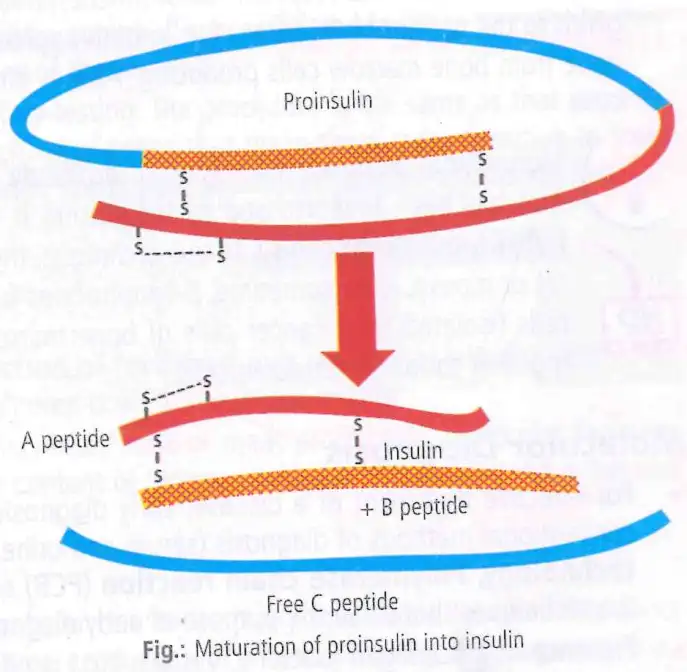
Gene Therapy
Concept and Application
- Gene therapy inserts normal genes into cells to treat genetic diseases.
- Corrects genetic defects by compensating for non-functional genes.
- First clinical gene therapy in 1990 for 4-year-old girl with ADA deficiency causing SCID.
- ADA enzyme vital for immune function; deficiency treated by bone marrow transplant or enzyme replacement but not fully cured.
- Introducing ADA gene into early embryonic cells can provide permanent cure.
Memory Aids
- Gene therapy = Gene insertion for disease correction
- ADA deficiency = SCID immune disorder
Quick Checkpoints
- What is the goal of gene therapy?
- How does gene therapy treat ADA deficiency?
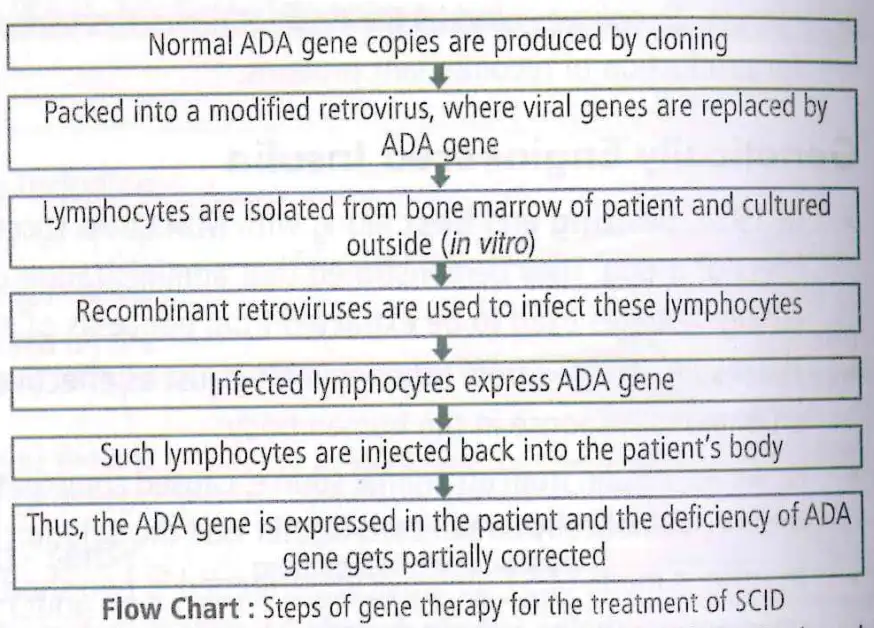
Monoclonal Antibody Production
Hybridoma Technology
- Monoclonal antibodies produced by immortalizing antigen-activated B-cells fused with myeloma cells.
- Antigen injected into mouse; B-lymphocytes isolated from spleen.
- B-cells fused with myeloma cells to form hybridoma cells producing specific antibodies.
- Technique developed by Kohler and Milstein in 1975.
- Hybridomas selected on HAT medium; only fused cells survive and multiply.
- Hybridomas produce pure monoclonal antibodies for research and therapy.
Memory Aids
- Hybridoma = B-cell + Myeloma fusion
- HAT medium selects hybrid cells
- Monoclonal = Single antibody type
Quick Checkpoints
- What is the purpose of fusing B-cells with myeloma cells?
- How are hybridomas selected and maintained?
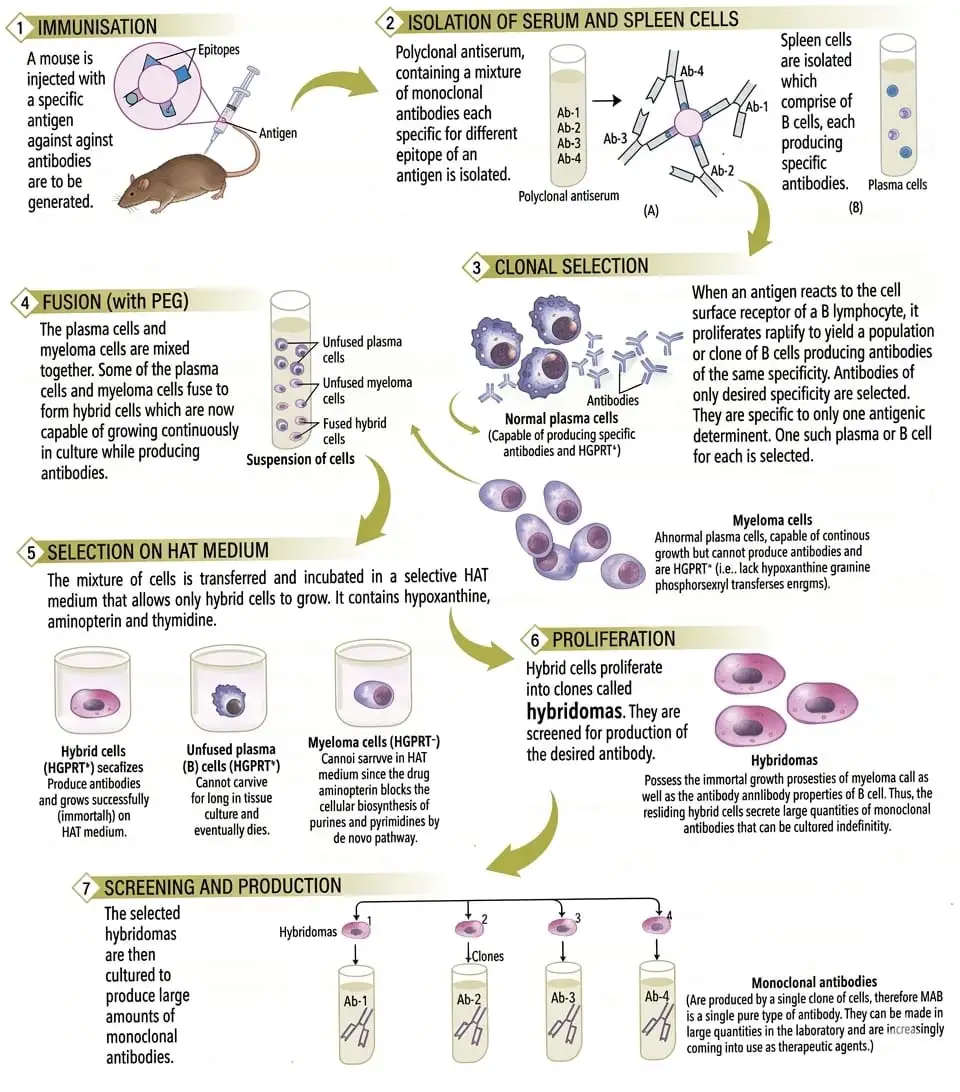
Molecular Diagnosis
Techniques and Importance
- Early diagnosis crucial for effective treatment.
- Conventional methods (serum, urine analysis) not effective for early detection.
- Recombinant DNA technology, PCR, and ELISA enable early detection.
- PCR amplifies nucleic acids to detect low pathogen levels before symptoms appear.
- PCR used to detect HIV, gene mutations in cancer, and other genetic disorders.
- Radioactive DNA/RNA probes hybridize to complementary DNA for mutation detection via autoradiography.
- ELISA detects infection by identifying antigens or antibodies based on antigen-antibody interaction.
Memory Aids
- PCR = Amplify DNA for early pathogen detection
- ELISA = Detect antigens or antibodies
- Autoradiography = Detect gene mutations with probes
Quick Checkpoints
- Why is PCR preferred for early pathogen detection?
- What principle does ELISA use for diagnosis?
Transgenic Animals
Overview
- A transgenic animal has genes (transgenes) introduced by transfection.
- Transfection: introduction of DNA (naked or vector-integrated) into animal cells.
- In other organisms, this process is called transformation.
Reasons for Production
- Normal physiology and development: Study gene regulation and effects on body functions, e.g., insulin-like growth factor.
- Study of disease: Model human diseases like cancer, cystic fibrosis, rheumatoid arthritis, Alzheimer's for treatment research.
- Biological products: Produce medicines like human proteins (e.g., a-1-antitrypsin) cheaply; example: transgenic cow "Rosie" producing human protein-enriched milk.
- Vaccine safety: Use transgenic mice to test vaccine safety, potentially replacing monkeys in polio vaccine testing.
- Chemical safety testing: Create animals sensitive to toxins to study toxic effects.
Memory Aids
- Transgene = introduced gene in animal genome.
- Transfection = DNA insertion in animal cells.
- Rosie the cow = human protein milk producer.
- Transgenic mice = vaccine and disease models.
Quick Checkpoints
- What is a transgene?
- Difference between transfection and transformation?
- Why produce transgenic animals?
- Examples of diseases modeled by transgenic animals?
Examples of Transgenic Animals
Transgenic Cattle
- Produced by microinjection of fertilised ova (surgically recovered or in vitro cultured).
- Objectives: increase milk/meat, molecular farming, improve milk casein, regulate lactose and butter fat, enhance disease resistance.
Transgenic Mice
- Preferred model due to short estrous cycle, gestation, large litters, in vitro fertilisation, embryo culture, embryonic stem cell lines.
- Used extensively for gene transfer and transgenic production studies.
Transgenic Rabbits
- Used for gene/molecular farming to produce pharmaceutically important proteins.
- Human genes transferred include interleukin 2, growth hormone, tissue plasminogen activator, a-1-antitrypsin.
Memory Aids
- Supermouse = first transgenic mouse with growth hormone gene.
- "Superbug" = genetically engineered Pseudomonas putida for oil spill cleanup.
Quick Checkpoints
- What technique is used for transgenic cattle?
- Why are mice preferred for gene transfer studies?
- Which proteins are produced using transgenic rabbits?
- What is the significance of the supermouse?
Ethical Issues
Bioethical Concerns
- Introduction of transgenes across species violates species integrity.
- Biotechnology may cause unforeseen environmental risks, including biodiversity loss.
- Human gene transfer to animals dilutes the concept of humanness.
- Animals used for pharmaceutical protein production suffer and are treated as factories.
- Exploitation of living beings for human benefit is disrespectful.
- Potential for unknown biological damage exists.
- Risk of creating new infectious agents accidentally.
Memory Aids
- Transgene transfer = Species integrity violation.
- Biotech risks = Environment + biodiversity.
- Human-animal gene mix = Humanness dilution.
- Animals as factories = Ethical concern.
- Respect life, avoid exploitation.
- Unknown risks always possible.
- New pathogens risk present.
Quick Checkpoints
- What is the role of GEAC?
- How does transgene introduction affect species?
- What are the environmental risks of biotechnology?
- Why is gene transfer between humans and animals controversial?
- What ethical issues arise from using animals in biotech?
- What biological risks cannot be ruled out?
- How can new infectious agents be created accidentally?
Biopatent
Definition and Examples
- Patent: Government right to prevent commercial use of an invention.
- Biopatents: Patents on biological entities and derived products.
- Examples: Black pepper (Piper nigrum), basmati rice (Oryza sativa), Indian mustard (Brassica campestris), pomegranate (Punica granatum), turmeric (Curcuma domestica), neem (Azadirachta indica).
Memory Aids
- Patent = exclusive commercial rights.
- Biopatent = biological product patent.
- Common plants patented: pepper, rice, mustard, pomegranate, turmeric, neem.
Quick Checkpoints
- What is a biopatent?
- Which plants have biopatents?
- Why are biopatents important?
Biopiracy
Concept and Examples
- Biopiracy: Unauthorized exploitation or patenting of biological resources of other nations.
- Example: 1997 US patent on basmati rice germplasm indigenous to India.
- India has ~200,000 rice varieties.
- Indian Patents Bill amended to prevent unauthorized use of bio-resources and traditional knowledge.
Memory Aids
- Biopiracy = illegal bio-resource exploitation.
- Basmati rice patent = key example.
- Indian law protects bio-resources.
Quick Checkpoints
- What is biopiracy?
- Give an example of biopiracy.
- How does India protect its bio-resources?
Biowar
Definition and Details
- Biowar: Use of infectious pathogens, spores, toxins as biological weapons against humans, crops, animals.
- Agents: Viruses, bacteria, fungi kept active in special containers for delivery by missile or aircraft.
- Delivery forms: Spray and powder.
- Examples of pathogens: Bacillus anthracis, Vibrio cholerae, smallpox virus, Pasteurella/Yersinia pestis, botulinum toxin.
- Bioweapons are invisible, low cost, cause more casualties than conventional/chemical weapons.
- Defenses: Gas masks, protective shelters, vaccination, antibiotics, decontamination, sensitive detection.
Memory Aids
- Biowar = biological weapons using pathogens.
- Delivery: spray/powder via missiles/aircraft.
- Key pathogens: anthrax, cholera, smallpox, plague, botulinum.
- Defenses include masks, vaccines, antibiotics.
Quick Checkpoints
- What is biowar?
- Which agents are used in bioweapons?
- How are bioweapons delivered?
- What are defenses against bioweapons?
Hybridoma Technology
Overview
- Hybridoma technology is used to produce monoclonal antibodies.
- It involves fusion of antibody-producing B-cells with myeloma cells.
- Resulting hybrid cells (hybridomas) can grow indefinitely and produce specific antibodies.
Memory Aids
- Hybridoma = B-cell + myeloma fusion.
- Produces monoclonal antibodies.
- Hybridomas grow indefinitely.
Quick Checkpoints
- What cells are fused in hybridoma technology?
- What is the product of hybridoma cells?
- Why are hybridomas important?
NEET Botany — ALL CHAPTERS
1
The Living World
2
Plant Kingdom
3
Morphology of Flowering Plants
4
Anatomy of Flowering Plants
5
The Unit of Life
6
Photosynthesis in Higher Plants
7
Respiration in Plants
8
Plant Growth and Development
9
Sexual Reproduction in Flowering Plants
10
Principles of Inheritance and Variation
11
Molecular Basis of Inheritance
12
Biotechnology :Principles and Processes
13
Biotechnology and its Applications