Class 8 . Science . Curiosity . Light Mirrors and Lenses
Chapter 10: Light: Mirrors and Lenses
Ch 10
Science
Class 8
Introduction
Curved Mirrors and Their Images
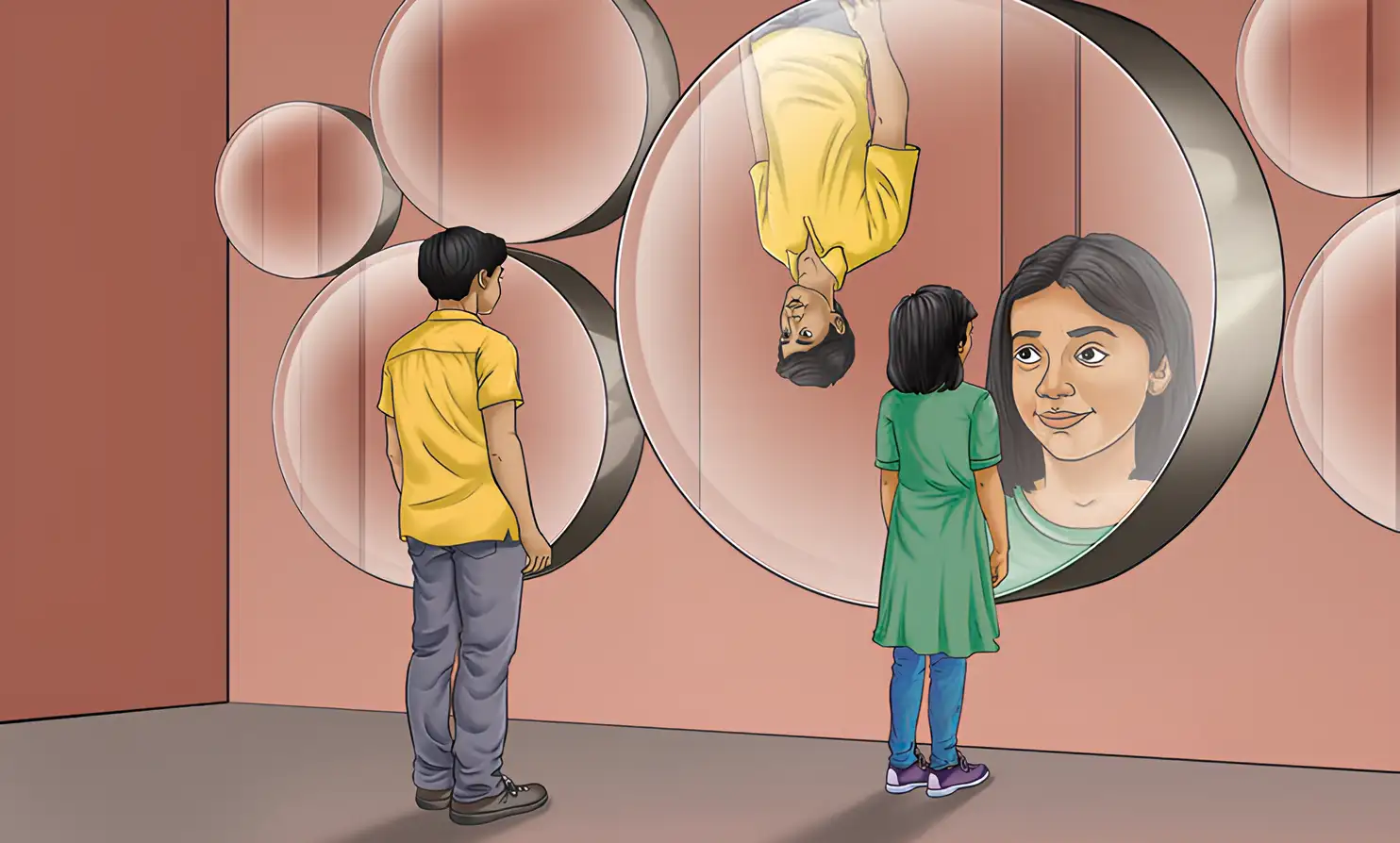
Why do images look different in spherical mirrors?
Quick recap
- Spherical mirrors have curved reflecting surfaces.
- They may curve inward or outward.
- Spherical mirrors can form enlarged, reduced or inverted images.
- A plane mirror forms an erect image of the same size.
What Are Spherical Mirrors
Spherical Mirrors
Concave and Convex Mirrors
Convex mirror — A spherical mirror whose reflecting surface curves outwards is called a convex mirror.
How Spherical Mirrors Are Made
Quick recap
- Spherical mirror: A mirror with a reflecting surface that forms part of a sphere.
- Concave: The reflecting surface curves inwards.
- Convex: The reflecting surface curves outwards.
- Making: Mirrors are formed by grinding and polishing flat glass, then applying a reflective coating.
- Spoon observation: The inner side showed an inverted image; the outer side showed an erect, smaller image.
What Are the Characteristics of Images Formed by Spherical Mirrors
How Mirror Images Differ
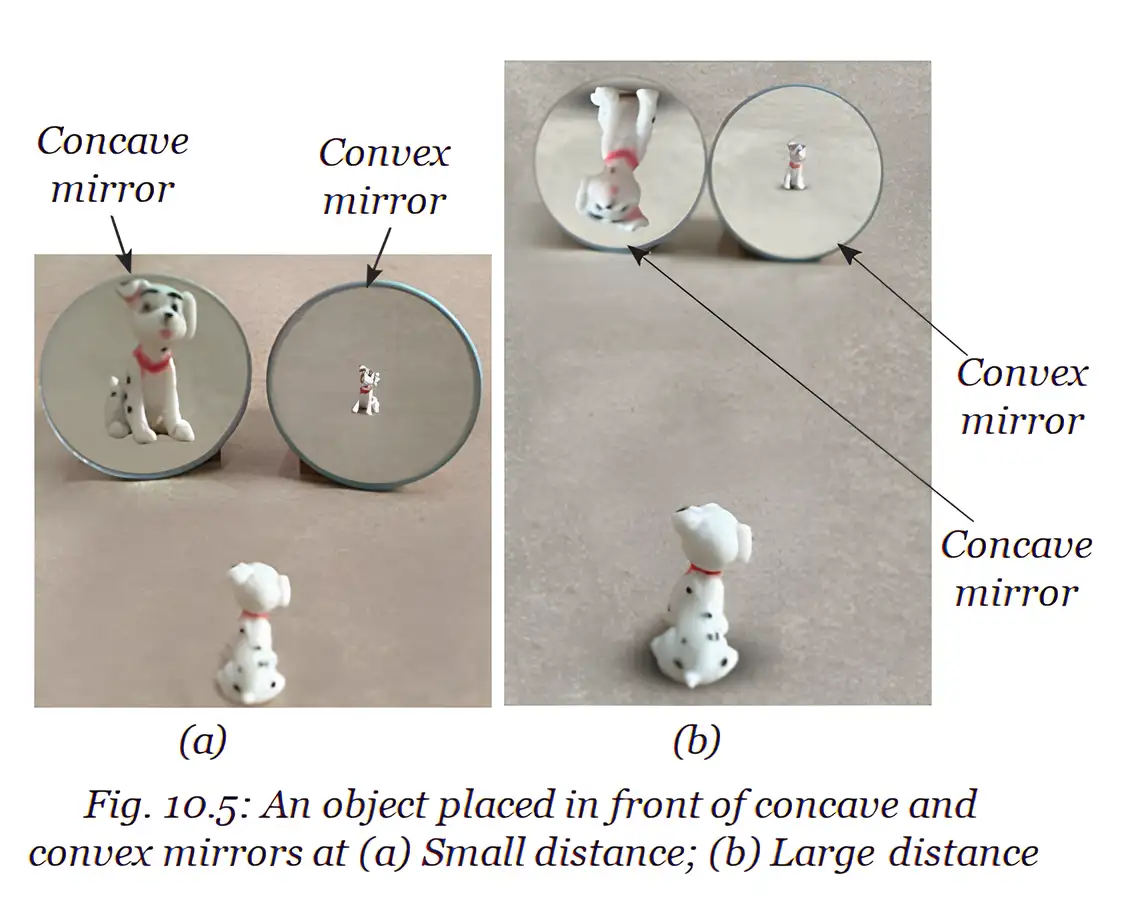
Spherical mirrors — Mirrors with a curved reflecting surface; concave and convex mirrors form images that can differ in size and orientation from the object.
| Mirror | When the object is close | As the object moves farther away |
|---|---|---|
| Plane | Erect and same size as the object | Erect and same size as the object |
| Concave | Erect and enlarged | Becomes inverted; initially enlarged, then becomes smaller as the object moves farther away |
| Convex | Erect and diminished | Remains erect and diminished; its size decreases slightly as the object moves farther away |
Shared image feature
- Lateral inversion: Images in plane, concave and convex mirrors show lateral inversion.
- Identification: Image size and orientation can help distinguish mirror types; a convex mirror always gives an erect, smaller image.
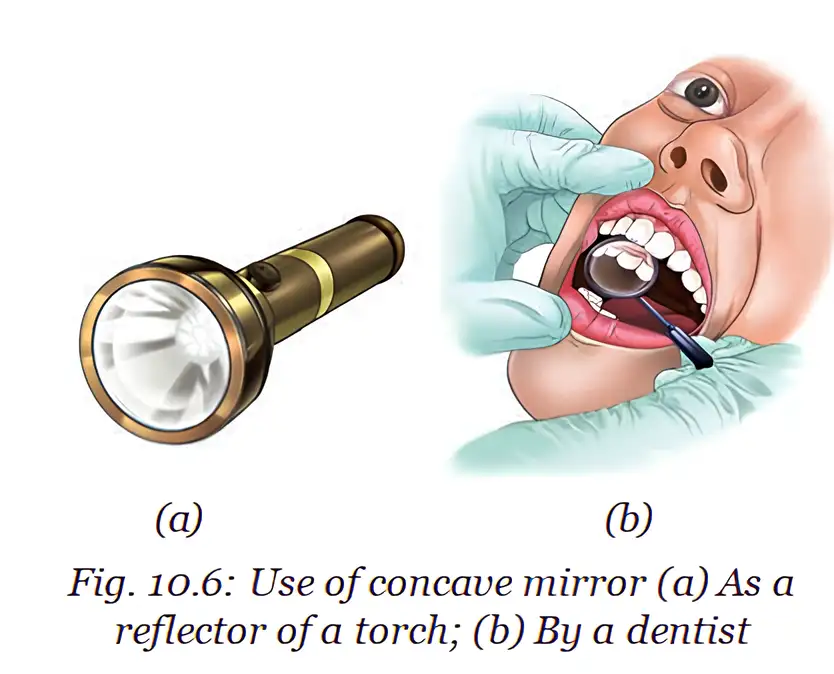
Uses of Concave Mirrors
- Torch and vehicle headlights: Concave mirrors are used as reflectors.
- Dentist’s mirror: Held close to the teeth, it forms an enlarged view for inspection.
- Reflecting telescopes: Many modern telescopes use a large concave mirror as the main mirror.
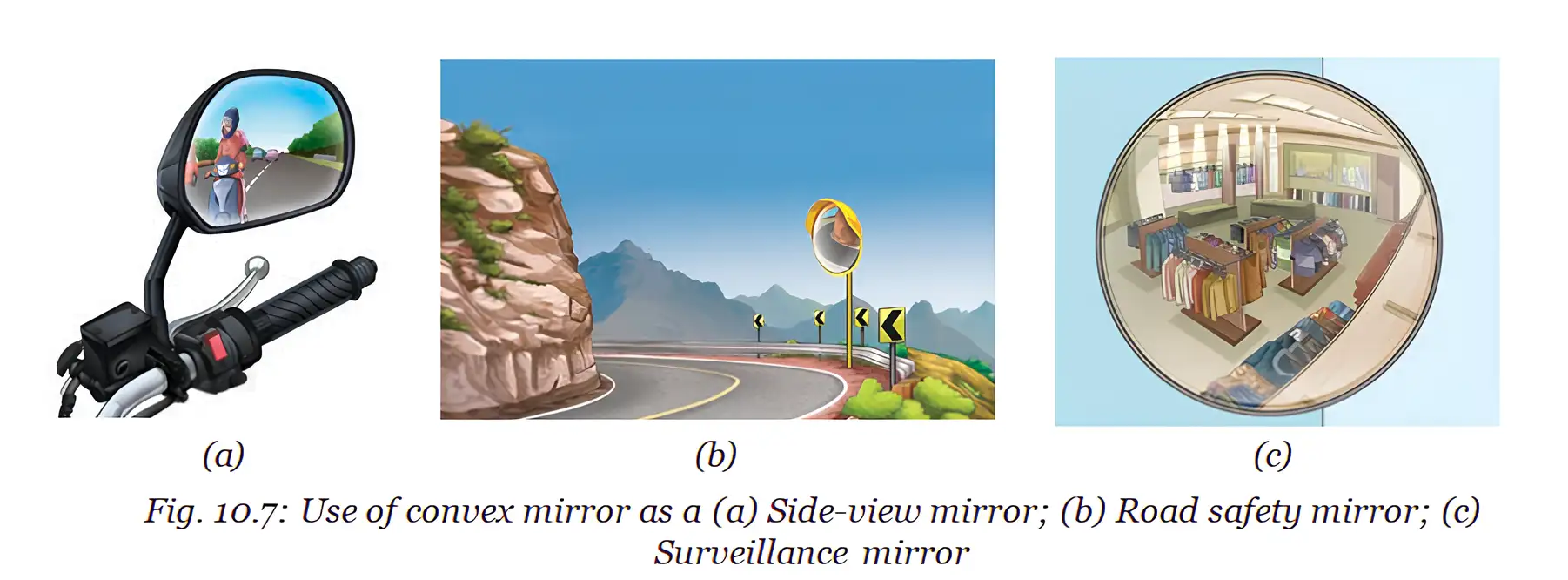
Uses of Convex Mirrors
- Vehicle side-view mirrors: Show an erect, smaller image of traffic behind and provide a wider view of the road.
- Road intersections and sharp bends: Give drivers a view of approaching traffic from the other side, helping prevent collisions.
- Big stores: Provide a wide view for monitoring large areas and deterring theft.
How does the image formed by a convex mirror change as the object moves farther away?
Why are convex mirrors used as vehicle side-view mirrors?
Quick recap
- Plane mirrors form erect images of the same size as the object.
- A close object in a concave mirror forms an erect, enlarged image.
- As an object moves farther from a concave mirror, its image becomes inverted and then decreases in size.
- Convex mirrors always form erect, diminished images.
- All three mirror types show lateral inversion.
- Concave mirrors are used in reflectors, dentists’ mirrors and reflecting telescopes; convex mirrors provide a wide view.
What Are the Laws of Reflection Part-1
Light Rays and Reflection
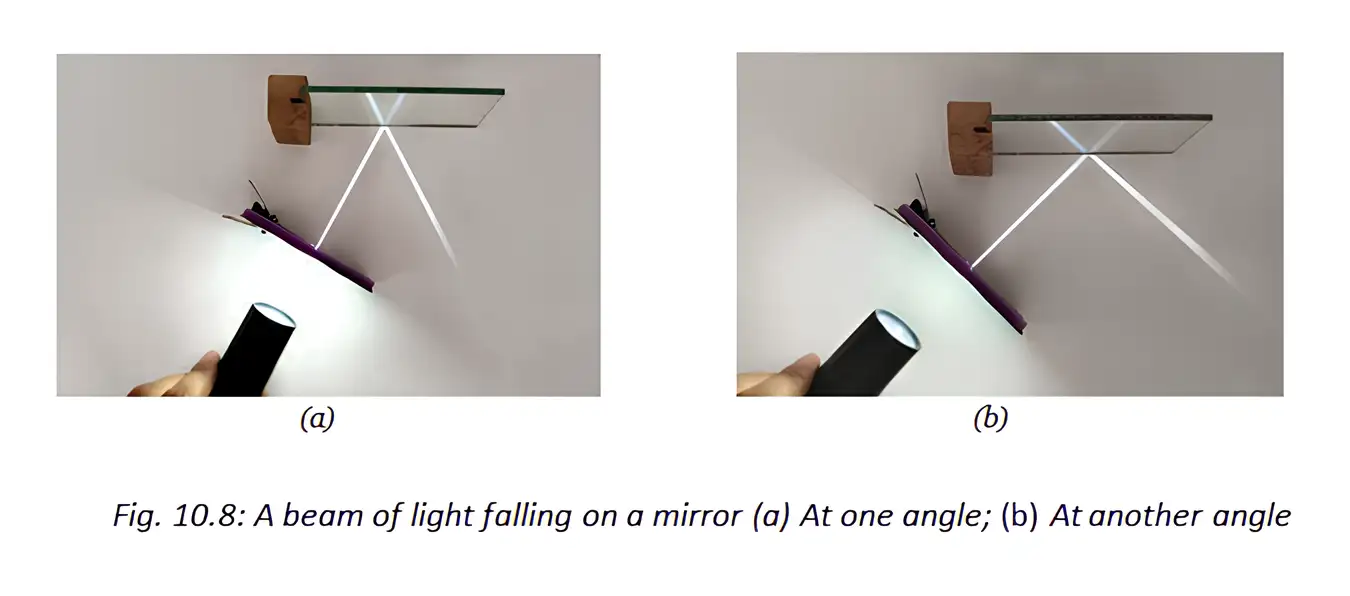
Light ray — A straight line with an arrow that represents the path and direction in which light travels.
Rays at a Plane Mirror
- Incident ray: The ray of light that falls on the mirror.
- Reflected ray: The ray of light that returns from the mirror.
- Direction: Changing the angle at which light strikes the mirror changes the direction of the reflected ray.
The Normal and Reflection Angles
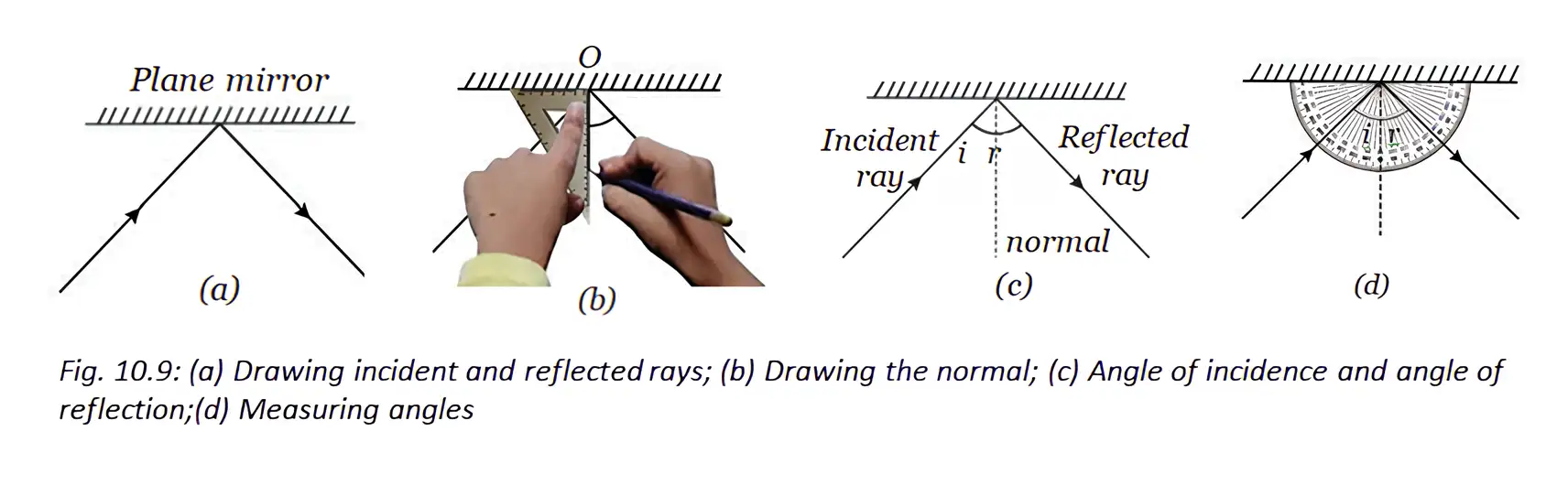
Normal — A line perpendicular to the reflecting surface at the point where the incident ray strikes it, called the point of incidence.
Angle of incidence — The angle between the normal and the incident ray, denoted by \(i\).
Angle of reflection — The angle between the normal and the reflected ray, denoted by \(r\).
Law of Reflection
- Law: The angle of incidence is equal to the angle of reflection.
- Measurement: Both angles are measured from the normal, not from the mirror surface.
- Along the normal: If the incident ray travels along the normal, then \(i=0°\) and \(r=0°\).
Quick recap
- A light ray represents the path and direction in which light travels.
- The incident ray strikes the mirror; the reflected ray returns from it.
- The normal is perpendicular to the mirror at the point of incidence.
- The angle of incidence is between the normal and incident ray; the angle of reflection is between the normal and reflected ray.
- The law of reflection states that \(i=r\).
- For an incident ray along the normal, both angles are \(0°\).
What Are the Laws of Reflection Part-2
The Second Law of Reflection
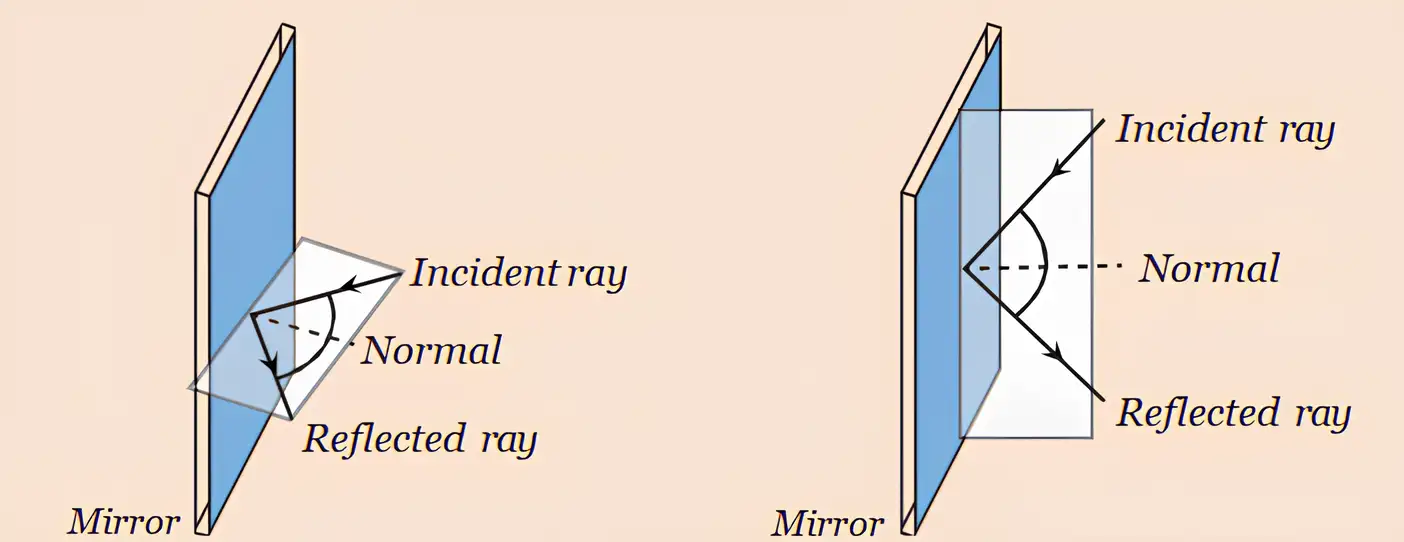
Second law of reflection — The incident ray, the normal at the point of incidence, and the reflected ray all lie in the same plane.
Understanding the law
- Plane alignment: The incident ray, normal, and reflected ray must all lie in one plane.
- Normal: It is drawn perpendicular to the mirror at the point where the ray strikes.
- Bending the sheet: The reflected beam disappears from the bent extension and reappears when the sheet is flattened.
- Same point: When rays strike the same point on a mirror, the normal there is the same, even if the incident rays have different directions.
- All mirrors: The laws of reflection apply to plane and spherical mirrors.
Reflection of Parallel Rays by Different Mirrors
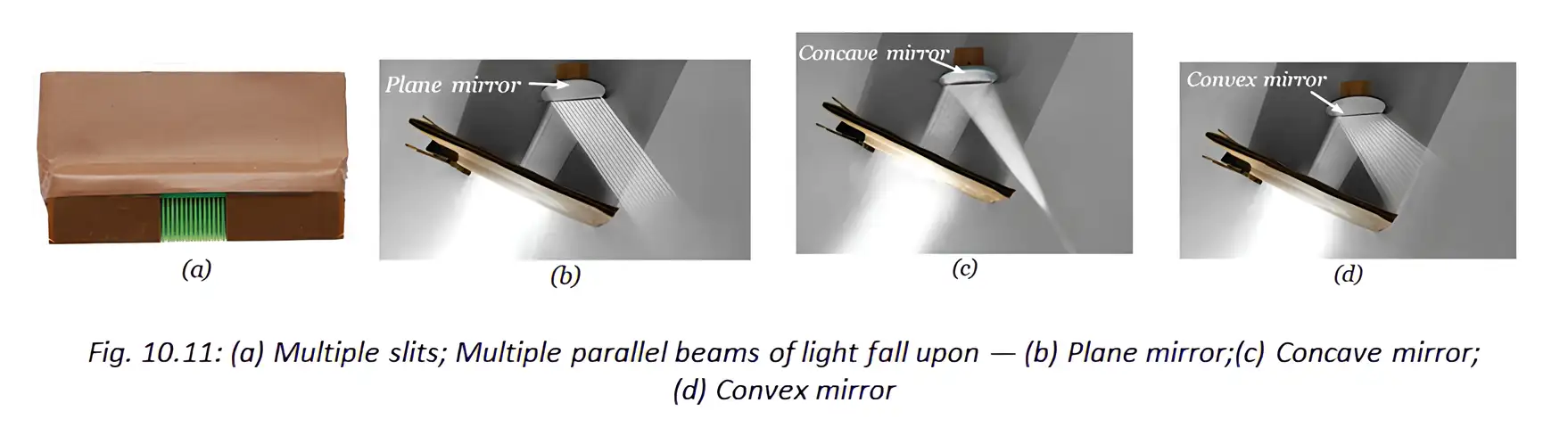
| Mirror | Reflected parallel rays | Effect |
|---|---|---|
| Plane | Remain parallel | Neither converge nor diverge |
| Concave | Move closer together | Converge |
| Convex | Spread farther apart | Diverge |
Why spherical mirrors behave differently
- Each ray: Every ray still follows the laws of reflection.
- Curved surface: The shape of a spherical mirror causes parallel rays to converge or diverge after reflection.
- Result: A concave mirror converges parallel rays; a convex mirror diverges them.
Concentrating Sunlight
Concave mirror and sunlight
- A concave mirror reflects sunlight.
- The reflected light becomes concentrated at a small point.
- The concentrated light produces heat that can ignite paper.
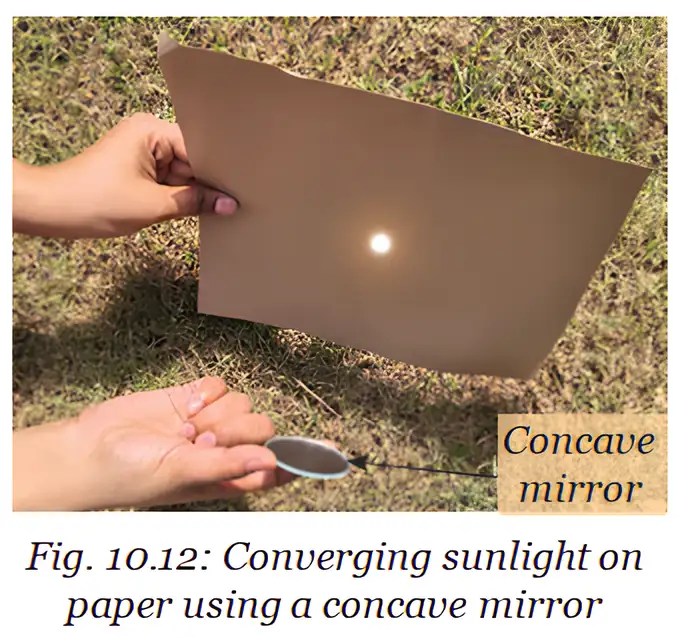
Solar concentrator — A device that uses mirrors and lenses to concentrate sunlight into a small area.
Uses of concentrated sunlight
- Steam: Concentrated sunlight can heat a liquid to produce steam.
- Applications: The steam can generate electricity; concentrated heat can also be used for large-scale cooking.
- Solar furnaces: They can reach temperatures high enough to melt steel.
State the second law of reflection.
How do plane, concave, and convex mirrors reflect parallel rays?
Quick recap
- The incident ray, normal, and reflected ray lie in the same plane.
- The laws of reflection apply to plane and spherical mirrors.
- Plane mirrors keep parallel rays parallel; concave mirrors converge them.
- Convex mirrors diverge parallel rays.
- A concave mirror can concentrate sunlight and produce enough heat to ignite paper.
- Solar concentrators can provide heat or steam for electricity, cooking, and solar furnaces.
What Is a Lens
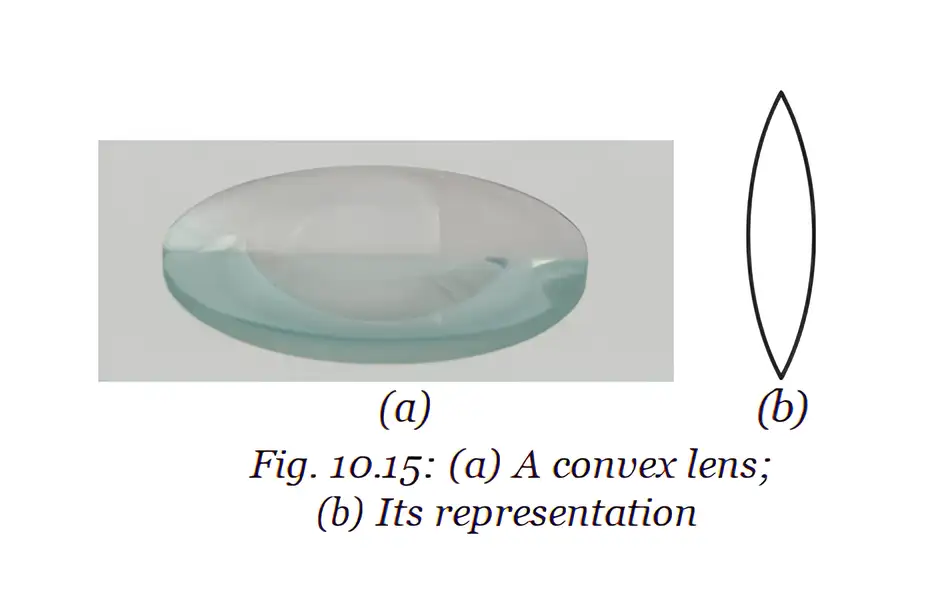
Lenses and Their Types
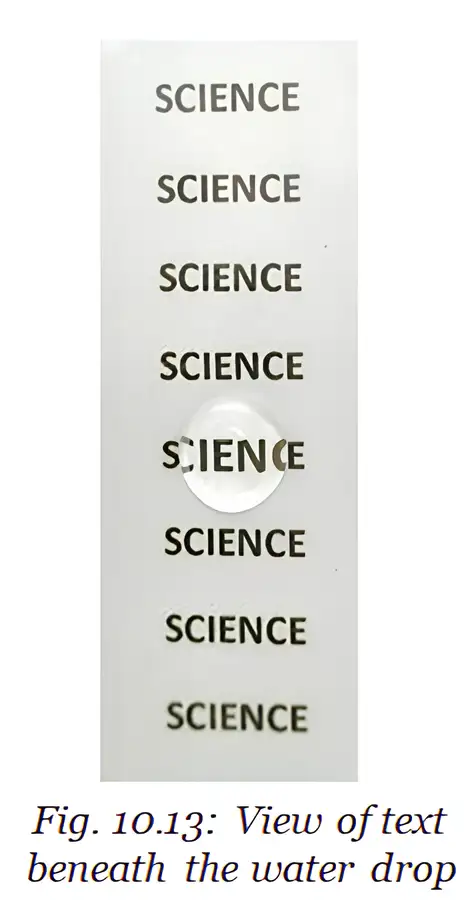
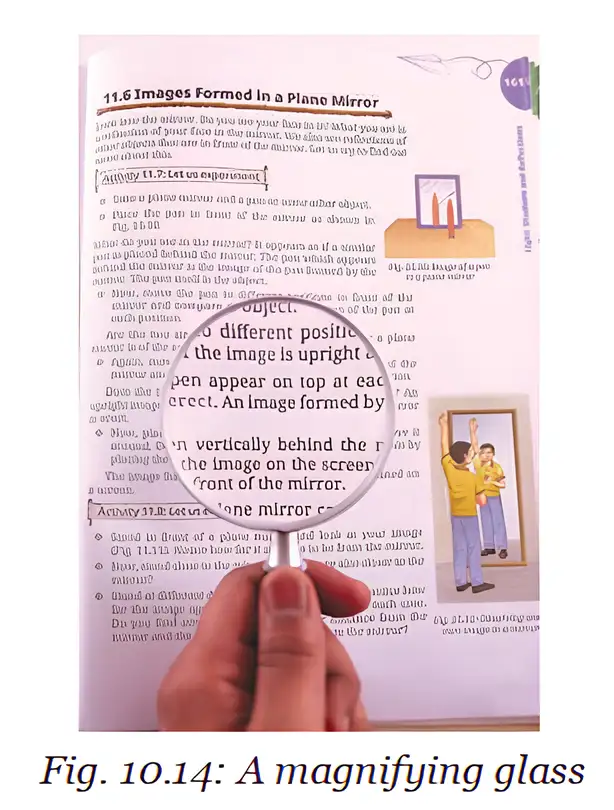
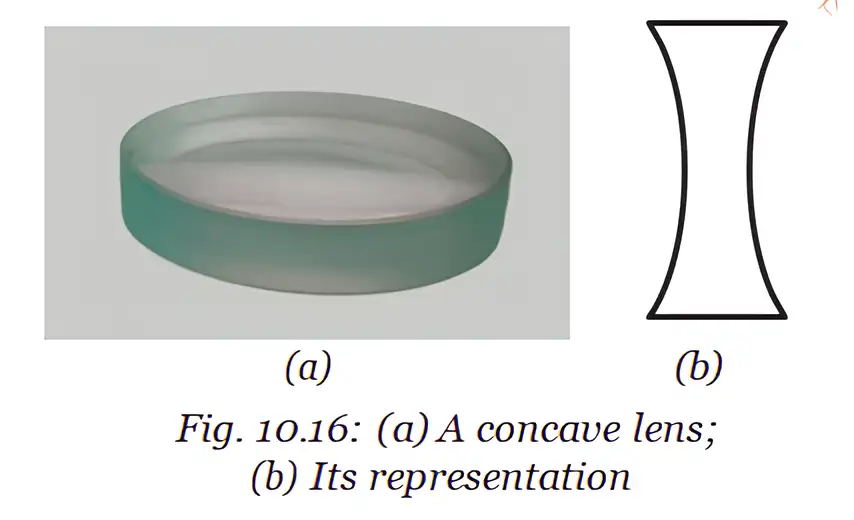
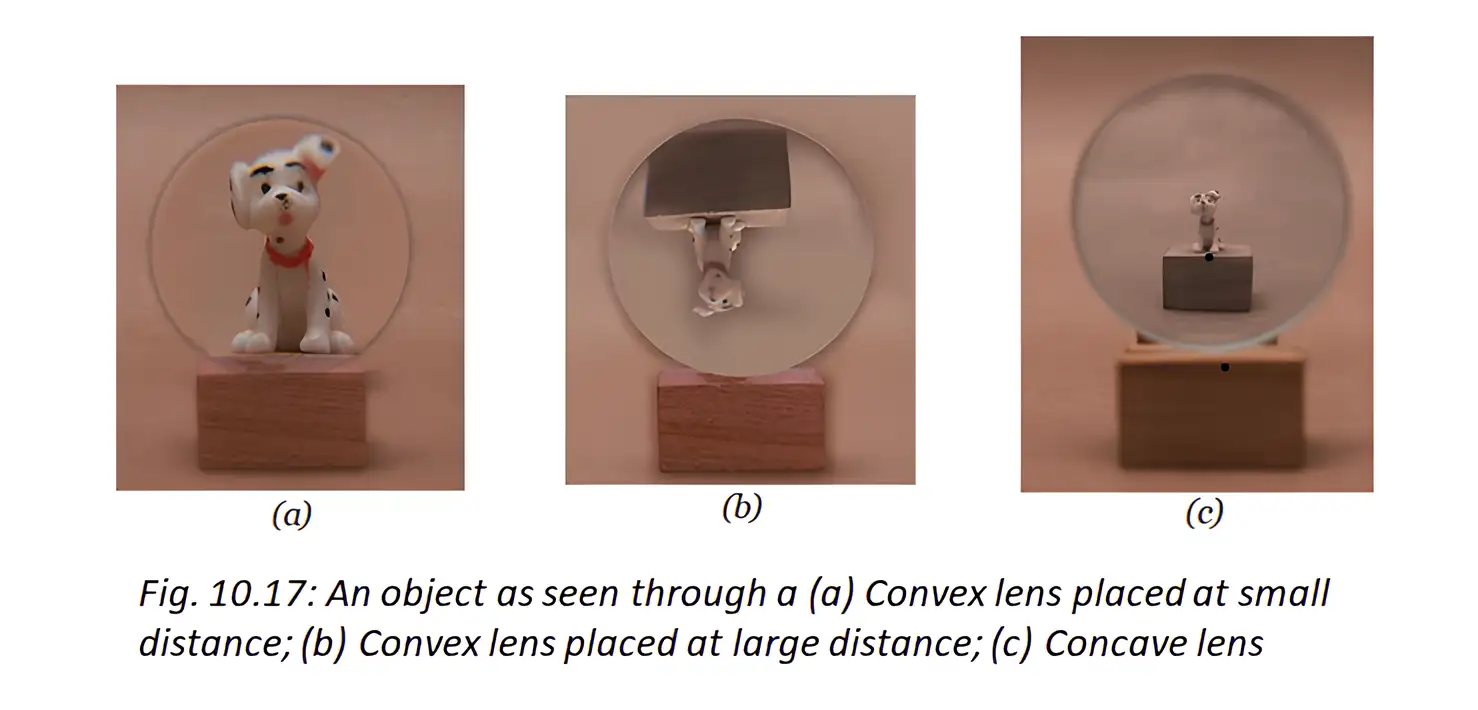
Images Seen Through Lenses
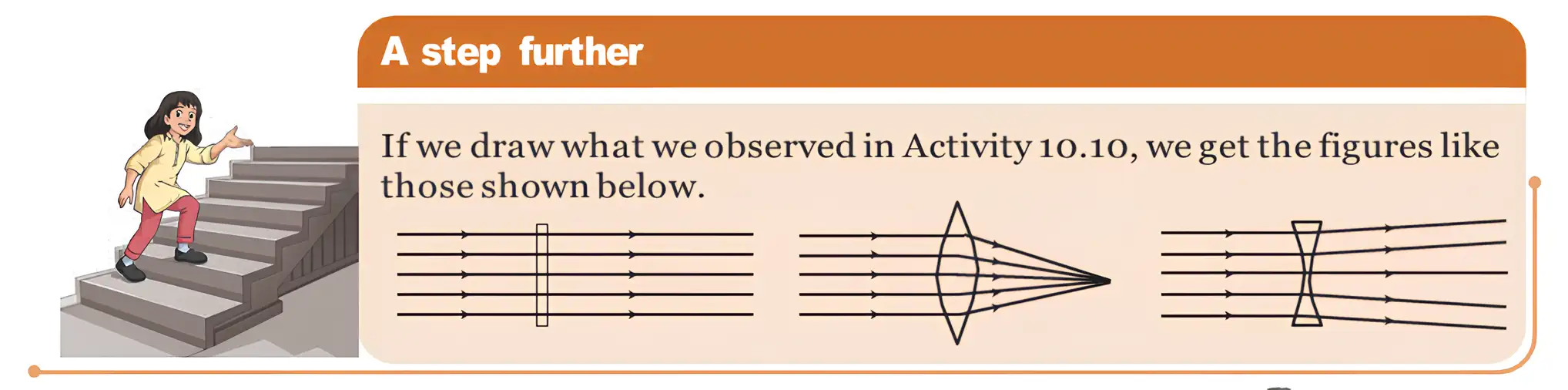
How Lenses Affect Light
Never look directly at the Sun, with or without a lens; sunlight can damage your eyes.
Uses of Lenses
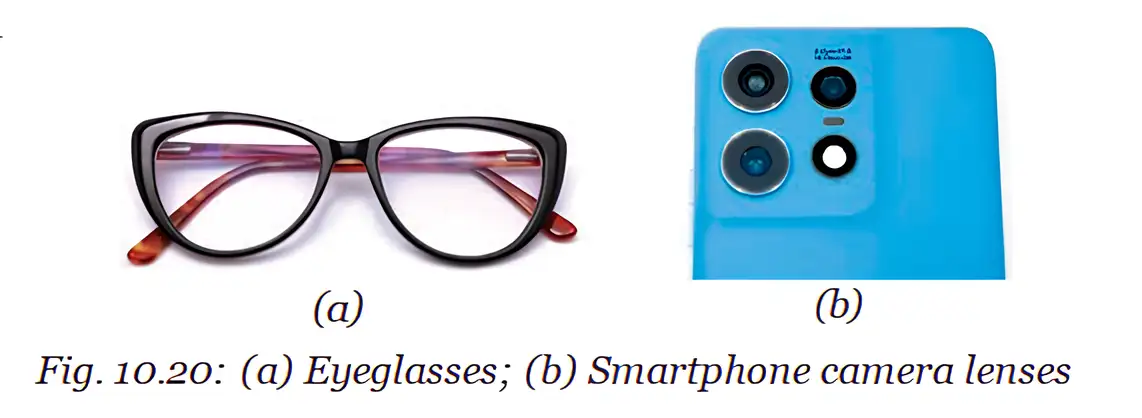
Quick recap
- A lens is transparent and has curved surfaces; light passes through it.
- A convex lens is thicker in the middle and converges light.
- A concave lens is thicker at the edges and diverges light.
- A convex lens can show an erect, enlarged image nearby and an inverted image farther away.
- A concave lens always shows an erect, diminished image.
- Lenses are used in eyeglasses, cameras, telescopes, microscopes and the eye.
Snapshots
Images Formed by Mirrors
| Mirror | Image formed |
|---|---|
| Concave | May be enlarged, diminished, or the same size; may be erect or inverted. The result depends on the object's distance from the mirror. |
| Convex | Always erect and diminished. |
Laws of Reflection
Two laws
- First law: The angle of incidence equals the angle of reflection.
- Second law: The incident ray, the normal at the point of incidence, and the reflected ray lie in the same plane.
- Applies to: Both laws hold for plane, concave, and convex mirrors.
| Mirror | Effect on light beams |
|---|---|
| Concave | Converges light beams. |
| Convex | Diverges light beams. |
Images Formed by Lenses
| Lens | Image formed |
|---|---|
| Convex | May be enlarged, diminished, or the same size; may be erect or inverted. The result depends on the object's distance from the lens. |
| Concave | Always erect and diminished. |
| Lens | Effect on light beams |
|---|---|
| Convex | Converges light beams. |
| Concave | Diverges light beams. |
State the two laws of reflection.
Which mirrors and lenses converge or diverge light?
Quick recap
- A concave mirror can form images of different sizes and orientations depending on object distance.
- A convex mirror always forms an erect, diminished image.
- The angle of incidence equals the angle of reflection.
- The incident ray, normal, and reflected ray lie in one plane; the laws apply to all mirrors.
- Concave mirrors and convex lenses converge light; convex mirrors and concave lenses diverge it.
- A convex lens can form images of different sizes and orientations depending on object distance.
- A concave lens always forms an erect, diminished image.
Science — ALL CHAPTERS
1
Exploring the Investigative World of Science
2
The Invisible Living World: Beyond Our Naked Eye
3
Health: The Ultimate Treasure
4
Electricity: Magnetic and Heating Effects
5
Exploring Forces
6
Pressure, Winds, Storms, and Cyclones
7
Particulate Nature of Matter
8
Nature of Matter: Elements, Compounds, and Mixtures
9
The Amazing World of Solutes, Solvents, and Solutions
10
Light: Mirrors and Lenses
11
Keeping Time with the Skies
12
How Nature Works in Harmony
13
Our Home: Earth, a Unique Life Sustaining Planet