Class 8 . Science . Curiosity . How Nature Works in Harmony
Chapter 12: How Nature Works in Harmony
Ch 12
Science
Class 8
Introduction
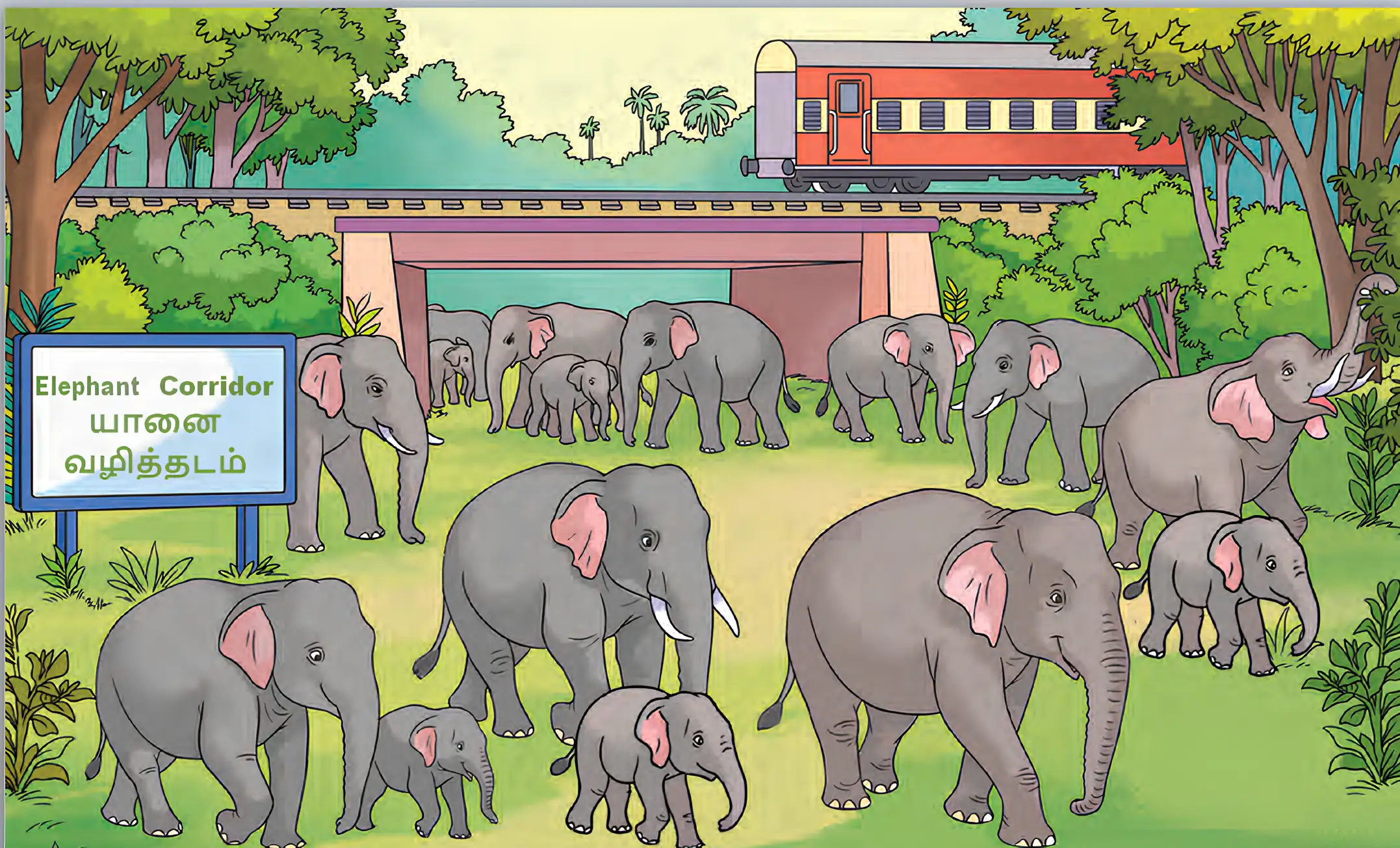
Nature’s Interconnections
Environmental interconnection — The components of an environment are linked, so changes in one can affect other components and the organisms that depend on them.
Elephants and Human Settlements
- Habitat pressures: Changing rainfall and temperature affect vegetation; cutting trees for roads and buildings worsens forest loss.
- Food and water: When vegetation is scarce and waterholes dry up, elephants may seek bananas, sugarcane and other food in nearby farms or plantations.
- Conflict: Crop damage may result, and people or domestic animals may sometimes be harmed.
- Where reported: Such elephant visits occur in parts of Odisha, Jharkhand, West Bengal, Assam and Chhattisgarh.
- Adaptation: Elephants are adapted to forest life, so sudden habitat changes can make survival difficult.
How Habitat Changes Can Lead to Human–Wildlife Conflict
- Changes in rainfall and temperature, together with tree cutting
- Forests shrink or dry, reducing animals’ natural food and water
- Elephants move towards farms and villages in search of resources
- Crops may be damaged, and people or domestic animals may be at risk
Wildlife Corridors
- Corridors: Identified and marked routes that allow wildlife to travel safely between large forest areas.
- Purpose: They support animal movement and help reduce conflict with human settlements.
How can wildlife corridors help reduce human–elephant conflict?
Quick recap
- Interconnection: Environmental components affect one another.
- Habitat change: Forest loss and changing rainfall or temperature can reduce wildlife food and water.
- Elephant movement: Elephants may enter farms and villages when resources in forests are scarce.
- Conflict: Their search for food can damage crops and sometimes harm people or domestic animals.
- Corridors: Safe routes between forest areas support wildlife movement and help reduce conflict.
How Do We Experience and Interpret Our Surroundings
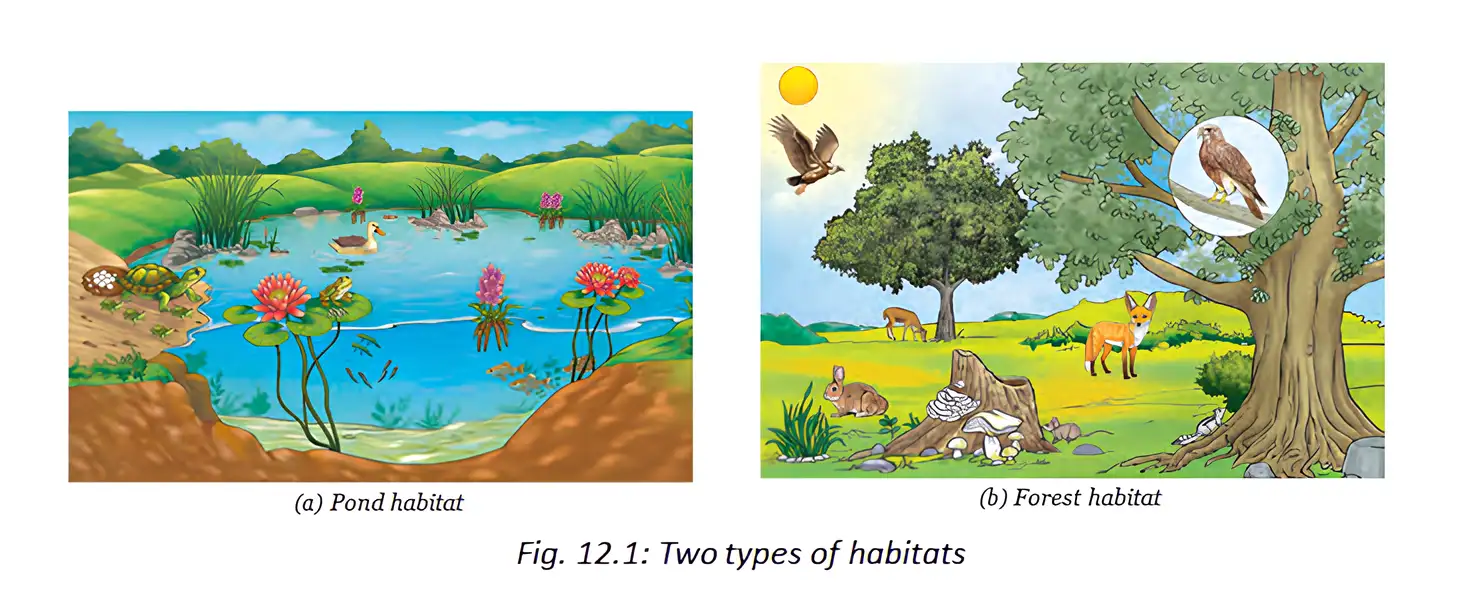
Habitat — The place where an organism lives, such as a pond, forest, farm or even the bark of a tree.
Habitats and Their Components
- Living conditions: Different habitats provide different conditions; each organism needs suitable conditions to survive.
- Adaptation: Organisms adapt to survive in the surrounding conditions of their habitat.
- Biotic components: The living organisms in a habitat, such as fish, plants and birds.
- Abiotic components: The non-living things in a habitat, such as water and soil.
- Variation: Habitats may contain different organisms and different non-living components.
| Habitat | Biotic components | Abiotic components |
|---|---|---|
| Pond | Fish | Water |
| Forest | Plants, grass, trees and birds | Soil |
Survival Needs and Interactions
- Pond resources: A pond provides fish with food, oxygen, shelter and space to grow.
- Fish’s needs: Fish obtain food from small plants and animals, and oxygen from the water.
- Interactions: Organisms interact with other living beings and with the non-living parts of their habitat.
Pond Community
- Animals: Frogs, freshwater turtles, snakes, dragonflies, mosquitoes, snails and ducks can live in ponds.
- Plants: Pond plants include algae, diatoms, duckweeds and lotus.
Physical Conditions and Coexistence
- Physical conditions: Air, sunlight, water, temperature and soil are important features of a habitat.
- Different resource use: Organisms in the same habitat may use its resources in different ways.
- Changing conditions: A forest can be warm during the day and cool at night.
- Coexistence: A snake active at night and a rodent active during the day can share a habitat while facing different conditions; organisms coexist in harmony.
Quick recap
- A habitat is the place where an organism lives.
- Living components are biotic; non-living components are abiotic.
- Organisms adapt to surrounding conditions, and habitats provide food, oxygen, shelter and space.
- Fish get food from small plants and animals and oxygen from water.
- Air, sunlight, water, temperature and soil are physical conditions of habitats.
- Organisms can coexist in one habitat by using resources differently or being active at different times.
Who All Live Together in Nature
Populations in a Habitat
Population — A population is a group of organisms of the same kind living in the same habitat at a given time.
- Counting populations records how many individuals of different organisms live in a particular place at a given time.
- Example: A \(1\,\text{m} \times 1\,\text{m}\) area may contain 20 plants of one kind and 5 of another.
- Shared needs: If only one kind of organism lived in a habitat, its members would compete for the same food, water and space; resources could become scarce.
| Concept | Meaning |
|---|---|
| Population | Organisms of the same kind living in one habitat at a given time |
| Community | Different populations sharing the same habitat |
Communities
Community — A community is made up of different populations sharing the same habitat.
- Biotic components: Plants, animals and microorganisms together form the living community of a habitat.
- Interactions: Organisms in a community interact with and depend on one another for survival.
Pollination
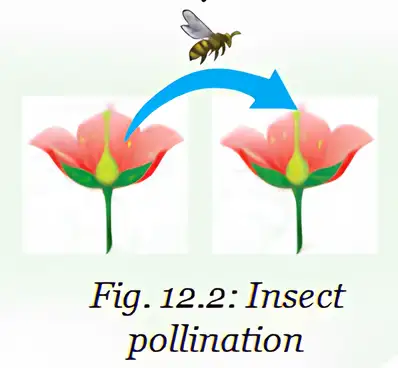
Pollination — Pollination is the transfer of pollen from stamens to the carpels of the same or another flower.
Flower Parts and Pollination
- Flower parts: A flower has a stalk, green leaf-like sepals, coloured petals, and reproductive parts: stamens (male) and carpels (female).
- Pollen transfer: Stamens release pollen grains; wind, water, insects, bats or birds can carry them to carpels.
- Importance: Pollination is essential for the formation of fruits and seeds.
How Organisms Affect One Another
Pond Study
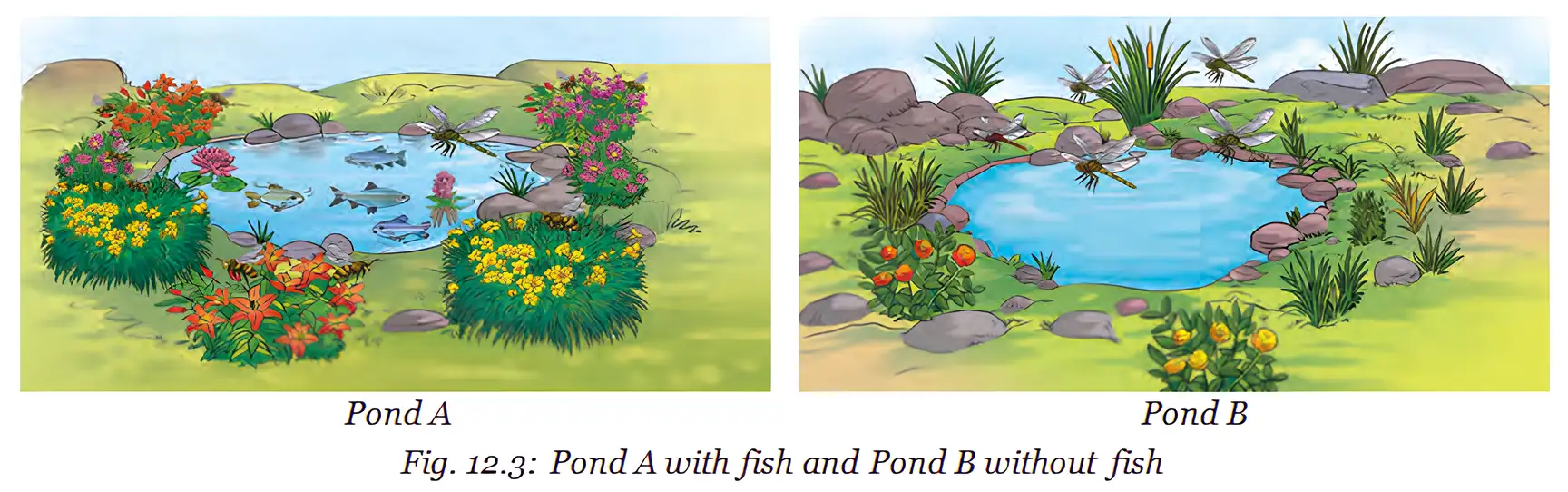
- Observations: Pond A had fish and many flowering plants nearby; Pond B had no fish and fewer flowering plants.
- Predator relationship: Fish eat dragonfly larvae, so ponds with fish had fewer dragonflies.
- Pollinators: Dragonflies eat flies, bees and butterflies. With fewer dragonflies, more of these insects may be available to pollinate nearby flowers.
- Outcome: More pollination can help nearby plants produce more seeds.
How Fish Can Affect Seed Production
- Fish eat dragonfly larvae.
- Fewer dragonflies survive.
- More bees, flies and butterflies may remain.
- More pollination of nearby flowers can occur.
- Plants may produce more seeds.
Interactions in the Habitat
- Biotic components: Fish, dragonflies, pollinators and plants affect one another through their interactions.
- Abiotic components: Non-living factors such as water, temperature and nutrients also interact with and affect organisms.
- Balance: Overfishing can change the fish population and disturb the balance between living and non-living parts of the habitat.
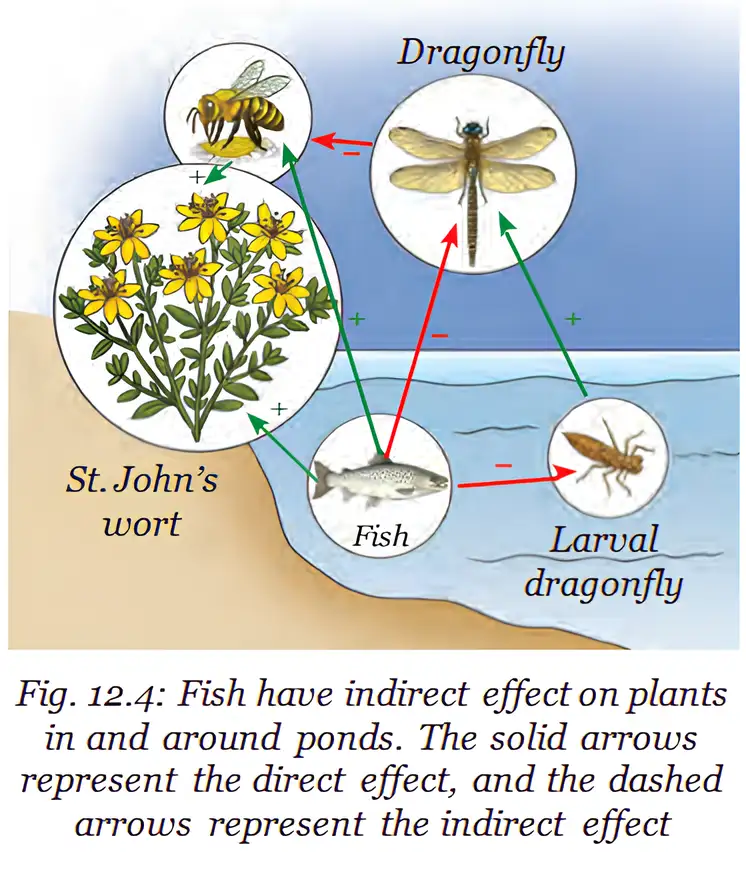
How can fish in a pond affect seed production in nearby plants?
What is the difference between a population and a community?
Quick recap
- A population is a group of the same kind of organism in a habitat at a given time.
- Different populations sharing a habitat form a community of biotic components.
- A flower has a stalk, sepals, petals, stamens and carpels.
- Pollination transfers pollen to carpels and is essential for fruit and seed formation.
- Fish may indirectly help nearby plants produce more seeds by reducing dragonflies and allowing more pollinators to remain.
- Biotic and abiotic components interact, and changes such as overfishing can disturb habitat balance.
What Are the Different Types of Interactions Among Organisms and their Surroundings
Components and interactions in a habitat
Biotic components — The living parts of a habitat, including plants, animals and microorganisms.
Abiotic components — The non-living parts of a habitat, such as air, water, soil, sunlight and temperature.
Types of interactions
- Biotic–abiotic: Organisms interact with non-living components; these interactions can influence nutrition, respiration and reproduction.
- Biotic–biotic: Organisms depend on or affect one another for nutrition, respiration and reproduction, and for access to resources.
- Abiotic–abiotic: Non-living components interact and can influence the physical characteristics of a habitat.
| Interaction type | Examples |
|---|---|
| Biotic–abiotic | Earthworms live in moist soil; microbes live in ponds; fish lay eggs in water. |
| Abiotic–abiotic | Bright sunlight raises daytime temperature and speeds up evaporation; air currents can create waves on water; soil near a pond is moist. |
| Biotic–biotic | Frogs eat insects; water snakes eat fish; frogs and fish may compete for insect larvae. Fish may lay eggs near vegetation for protection from other fish or frogs. |
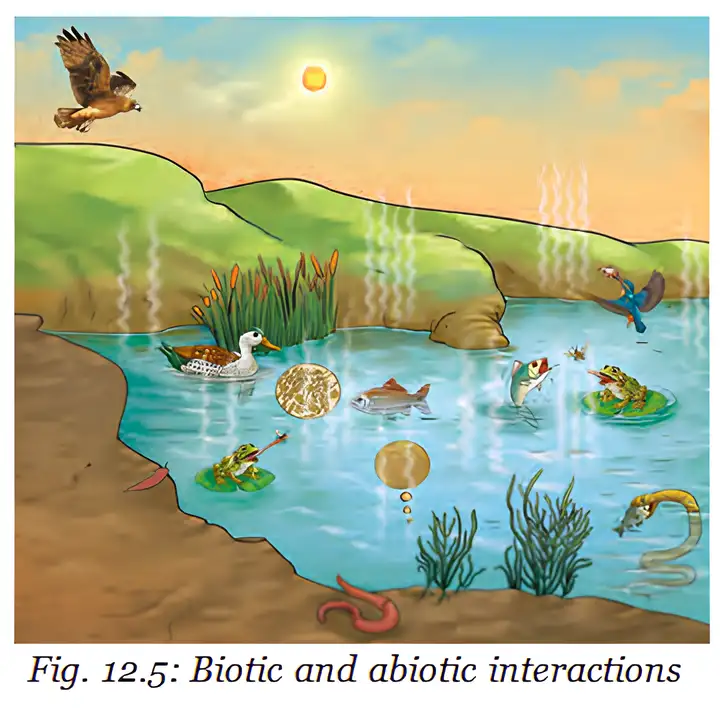
Ecosystems
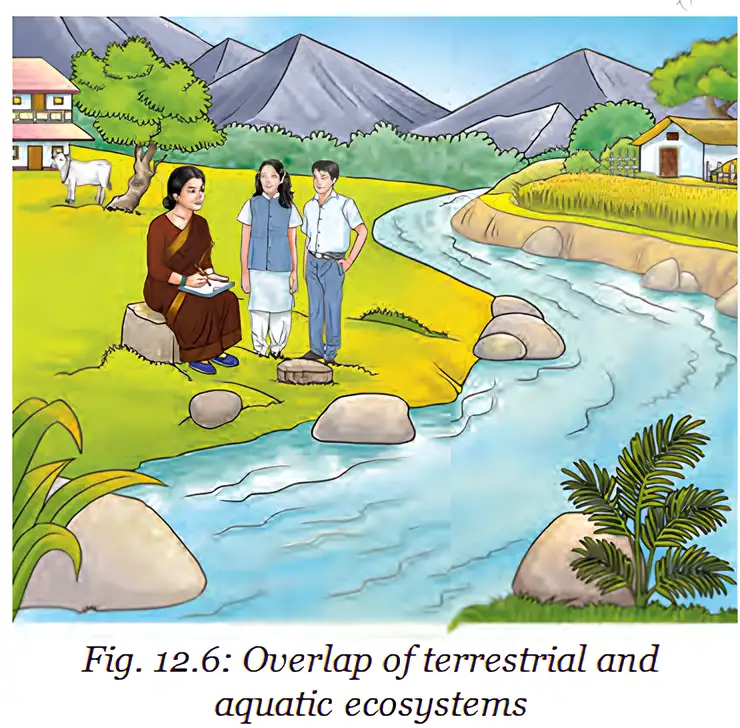
Ecosystem — A system formed by interactions among living organisms and between organisms and the non-living components of their habitat.
Ecosystem features and types
- Interactions: Organisms interact with abiotic components for food, shelter and protection.
- Size and overlap: Ecosystems may be large or small, and different ecosystems can overlap and interact.
- Aquatic ecosystems: Include ponds, rivers and lakes.
- Terrestrial ecosystems: Include forests, grasslands and farms; even a large tree such as a banyan, mango or pilkhan can support an ecosystem.
- Human-made ecosystem: Farmland is an example.
How ecosystem components depend on one another
- Plants depend on abiotic components: Sunlight, carbon dioxide and water are needed for photosynthesis; soil provides a growing medium and essential nutrients.
- Air and water: Air supplies oxygen for respiration in plants and animals; water is essential for all living organisms.
- Plants affect abiotic components: They release oxygen, hold soil with their roots, reduce erosion, retain soil moisture and help cool the atmosphere.
- Organisms depend on one another for nutrition, respiration and reproduction, as well as resources such as food.
Levels of ecological organization
- Order: Individual organism → population → community → ecosystem.
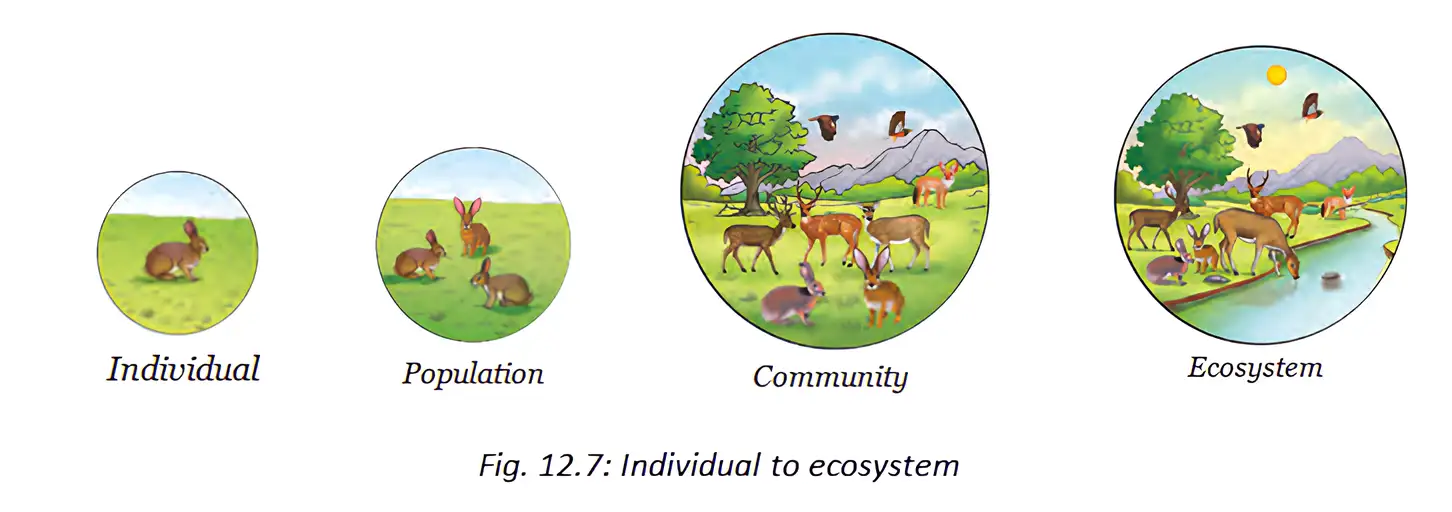
How organisms obtain food
Producer (autotroph) — An organism that makes its own food; plants do this through photosynthesis.
Consumer (heterotroph) — An organism that cannot make its own food and depends on other organisms for food.
| Group | Food | Examples |
|---|---|---|
| Producer | Makes its own food | Plants, including trees |
| Herbivore | Plants and plant products only | Deer, hare |
| Carnivore | Animals only | Leopard |
| Omnivore | Both plants and animals | Crow, fox, mouse |
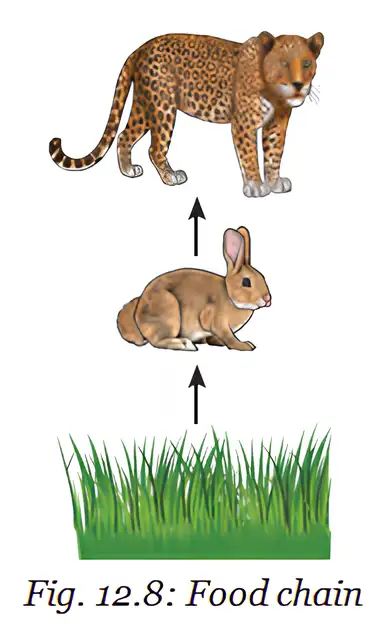
Do not confuse producers with consumers: producers make their own food, while consumers obtain food from other organisms.
What is an ecosystem?
Quick recap
- Habitats contain biotic (living) and abiotic (non-living) components that interact.
- Interactions occur between organisms and abiotic components, among organisms, and between abiotic components.
- Plants and animals depend on one another for nutrition, respiration and reproduction.
- Ecosystems may be aquatic or terrestrial, large or small, and can overlap; farmland is human-made.
- Organisms rely on abiotic components, while plants also release oxygen, hold soil, retain moisture and cool the atmosphere.
- Plants are producers; consumers include herbivores, carnivores and omnivores.
- A food chain example is grass → rabbit → leopard.
Who Eats Whom
Food Chains
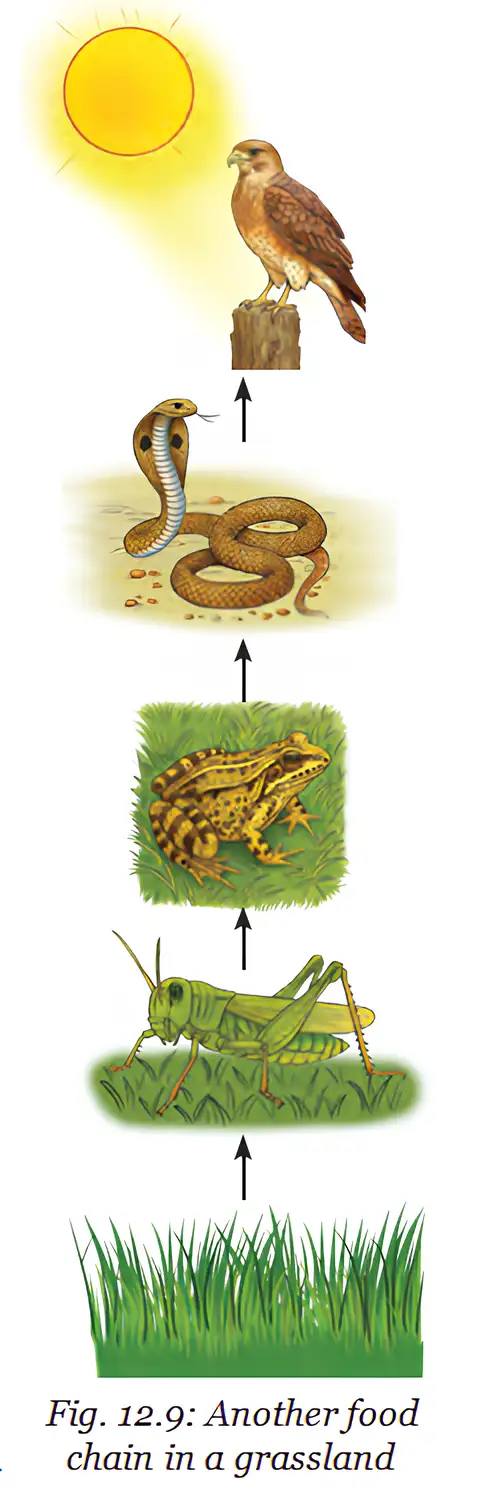
Trophic Levels and the Pyramid
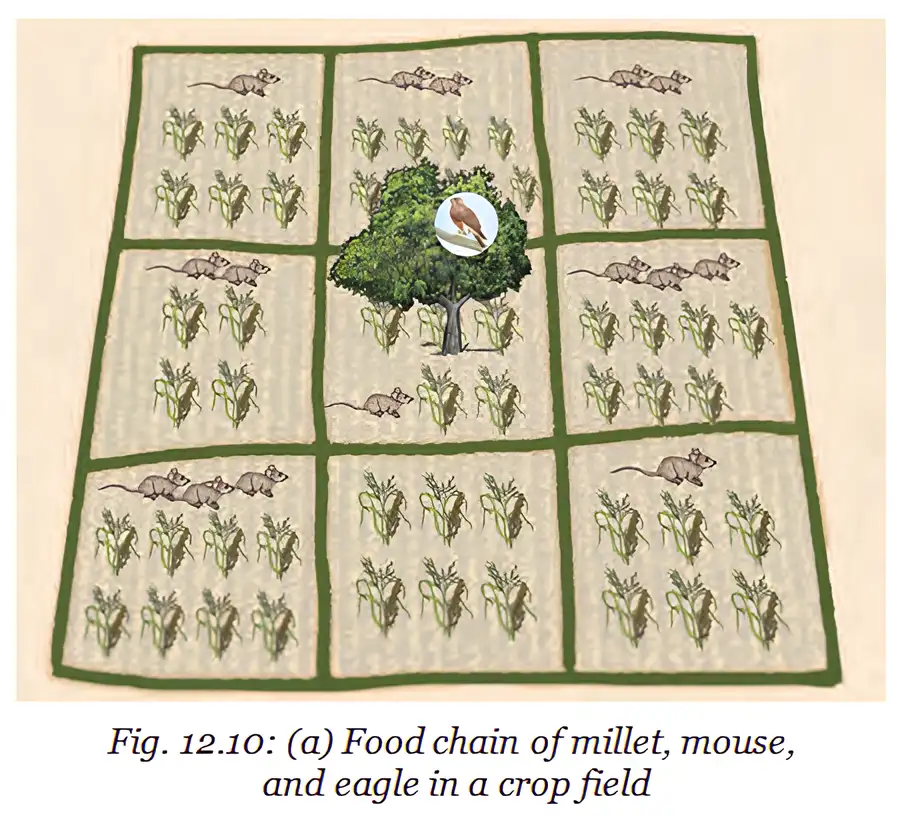
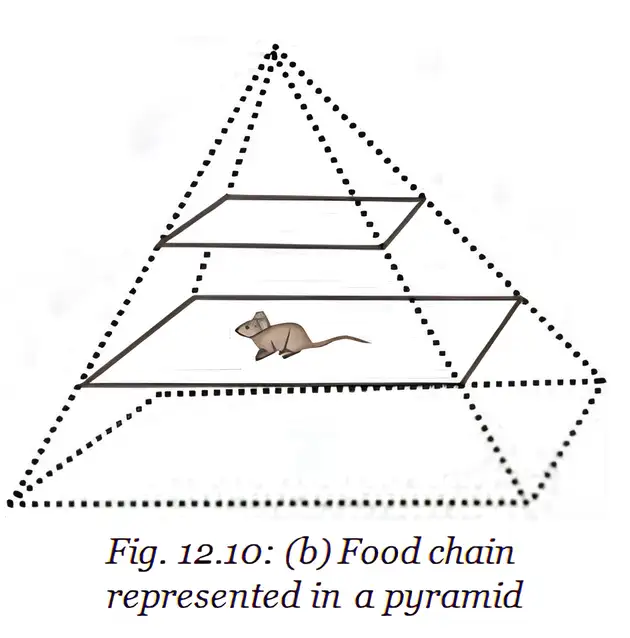
Food-chain pyramid
- Arrangement: Organisms in a food chain can be placed in levels to form a pyramid.
- Crop-field example: Millet is at the base, mice feed on it, and an eagle occupies a higher level.
- Number pattern: In the illustrated crop-field pyramid, the greatest number is placed at the base and the smallest at the top.
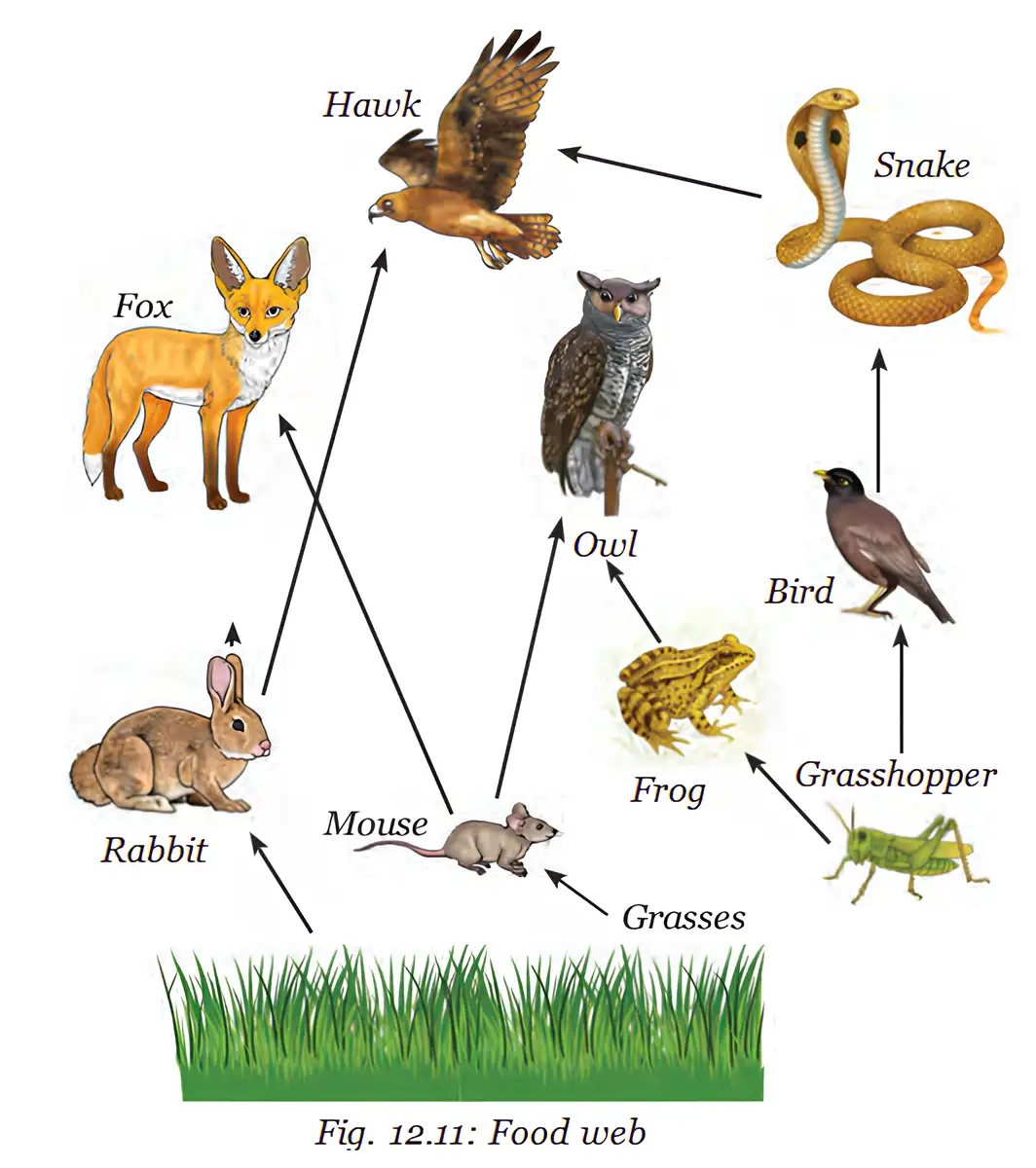
Food Webs
Waste in an organism’s life cycle
- Waste: During life, organisms produce waste, including dead matter and food waste.
What is the difference between a food chain and a food web?
Quick recap
- A food chain shows who eats whom in a simple sequence.
- Arrows point from food to the organism that eats it.
- Trophic levels mark positions in a food chain, from producers to higher-level carnivores.
- A food-chain pyramid arranges organisms in levels; in the crop-field example, the greatest number is at the base.
- Interlinked food chains form a food web.
- Organisms produce waste, including dead matter and food waste.
What Happens to Waste in Nature
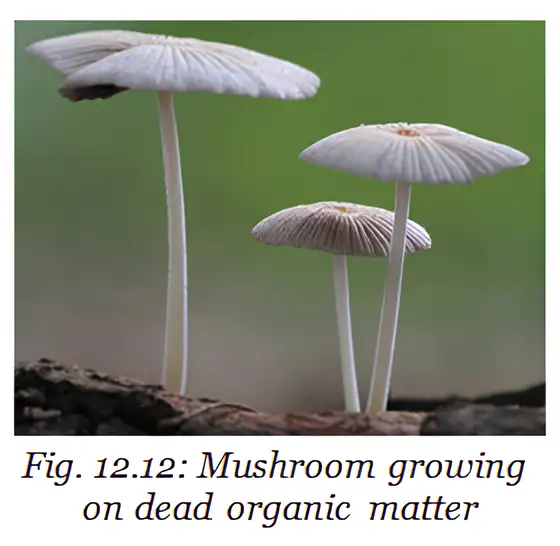
Decomposition and Nutrient Recycling
Migratory Birds and Ecosystems
How One Ecological Change Affects Others
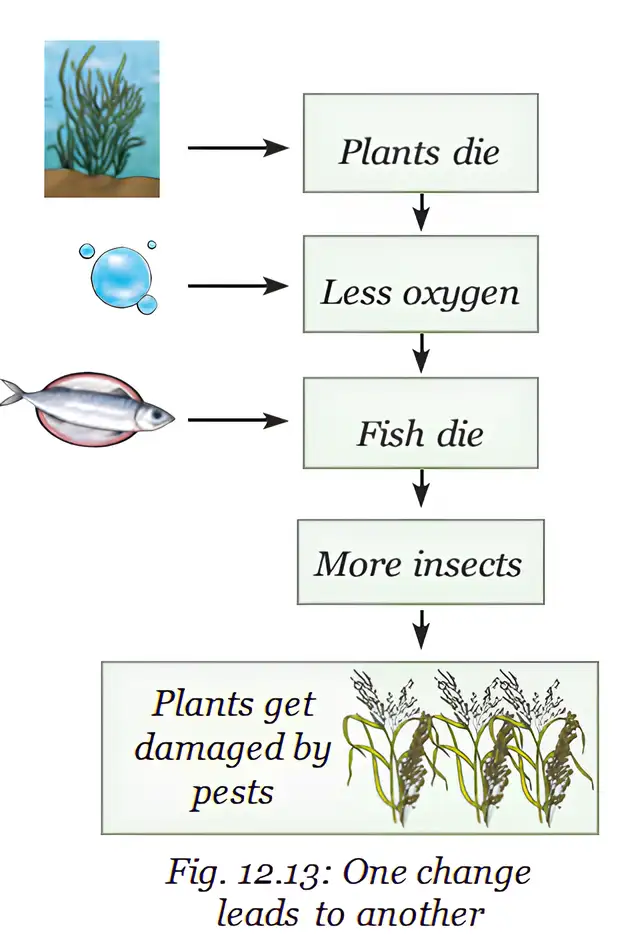
Pond Pollution: A Chain of Effects
- Pollution increases → many pond plants die.
- Fewer plants → less oxygen is produced in the water.
- Less oxygen → fish populations decline, reducing the number of consumers.
- Fewer fish → insect populations increase and spread to nearby farmland.
- More crop pests → farmers use pesticides, which may further harm the environment.
Frog Decline and Pesticide Use
Frog-Leg Export in India
- 1980sIndia was a major exporter of frog legs, especially from the Indian bullfrog; large-scale harvesting reduced frog populations.
Consequences of Harvesting Frogs
- Large-scale frog harvesting → fewer frogs.
- Fewer frogs, which eat insects → more agricultural pests.
- More pests → farmers use more synthetic pesticides.
- Pesticides → harm to the environment, soil and water quality, and human and environmental health.
- To prevent further ecological damage → the Government of India banned frog-leg exports.
Ecosystem balance — A dynamic state in which interactions between organisms and their environment keep populations and resources stable.
Maintaining Ecosystem Balance
- Dynamic balance is not fixed; populations and resources can change while the ecosystem remains balanced.
- Disruption can result from natural changes or human actions, such as pollution, overharvesting and pesticide use.
- Interdependence means a change in one population can cause a chain of effects across the ecosystem.
How do decomposers help maintain nature?
Why did the decline in frogs lead to greater pesticide use?
What does it mean that ecosystem balance is dynamic?
Quick recap
- Decomposers break down dead matter and recycle nutrients into the soil.
- Migratory birds link habitats and can pollinate, disperse seeds and control insect pests.
- A change in one part of an ecosystem can trigger a chain of effects elsewhere.
- Fewer frogs can mean more crop pests and increased pesticide use.
- Ecosystem balance is dynamic and can be disrupted by natural or human-made changes.
How Do Interactions Maintain Balance in Ecosystems
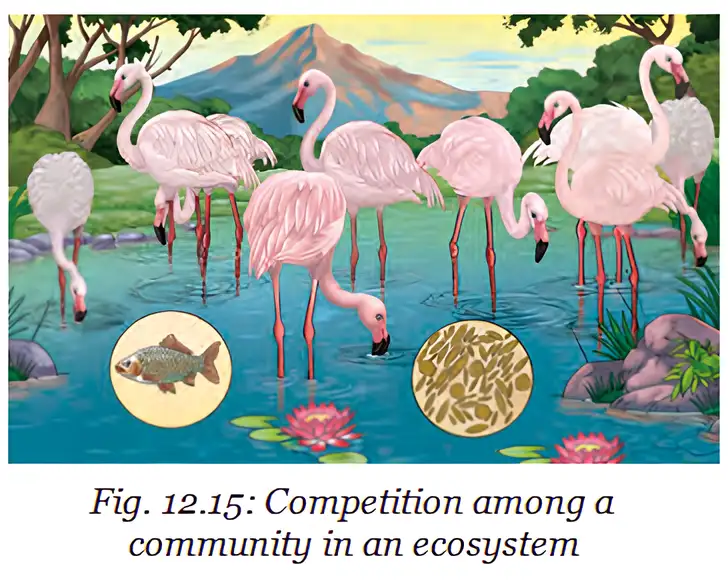
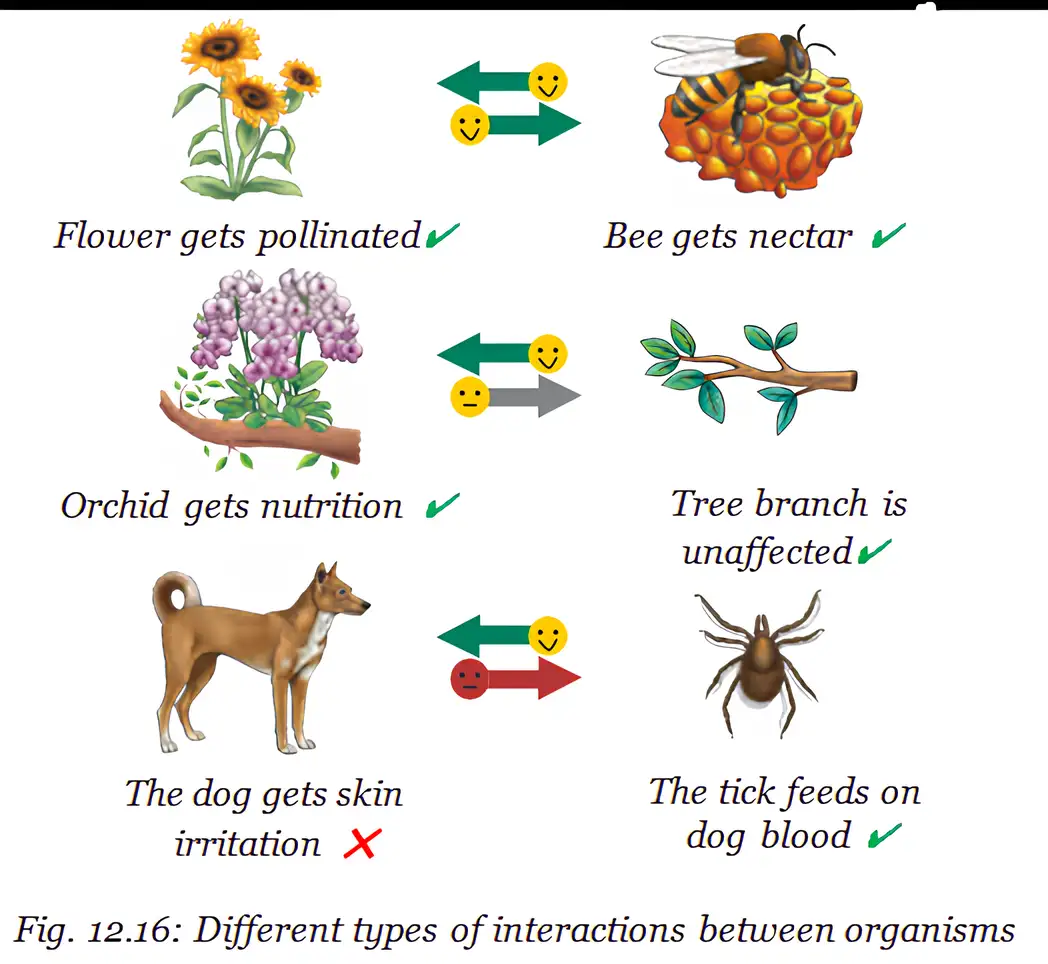
Competition and Other Interactions
Benefits of Ecosystems
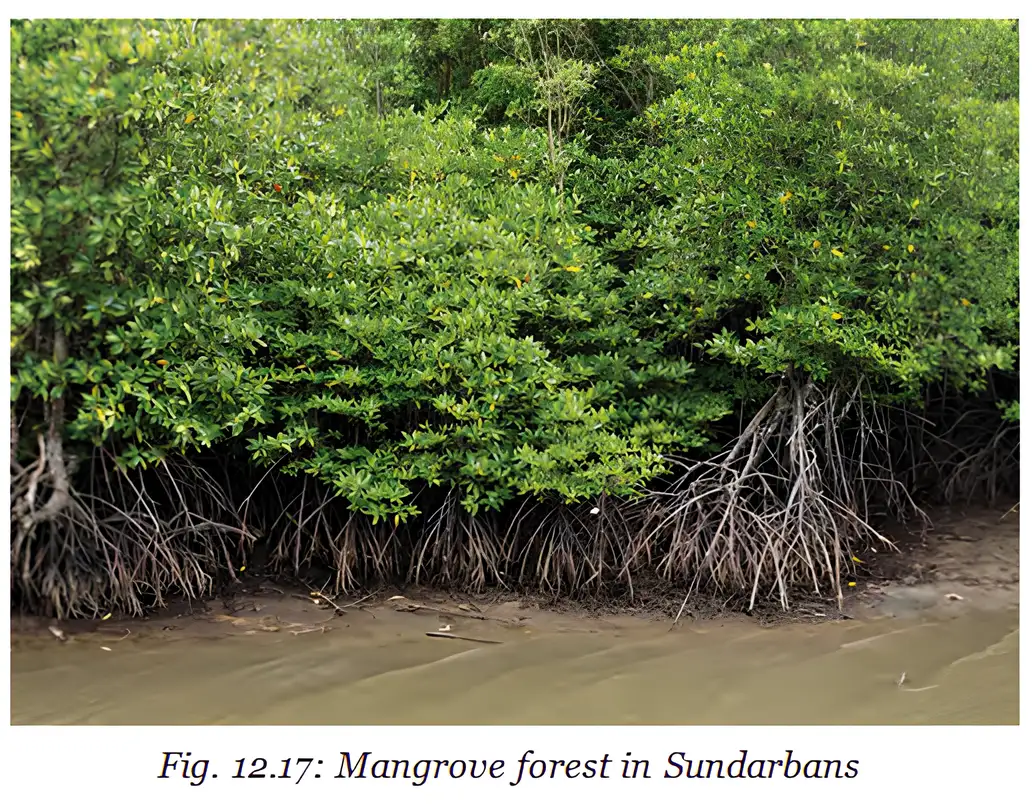
The Sundarbans: Importance and Threats
Threats to Ecosystems Across India
Protected Areas
Quick recap
- Competition for limited resources controls populations and helps keep ecosystems balanced.
- Mutualism benefits both organisms; commensalism benefits one without affecting the other; parasitism benefits one and harms the other.
- Ecosystems provide resources, protection, and aesthetic and recreational benefits to people.
- The Sundarbans are the world's largest mangrove forests and protect people from storm winds and waves.
- Logging, hunting, resource overuse, and pollution threaten the Sundarbans and other ecosystems.
- Protected areas conserve wildlife and habitats for future generations.
Human-made Ecosystems
Human-made Ecosystems
Farming and the Green Revolution
Effects of Unsustainable Farming
Sustainable Farming
How can overuse of synthetic fertilisers affect soil?
What is monoculture, and why can it be harmful?
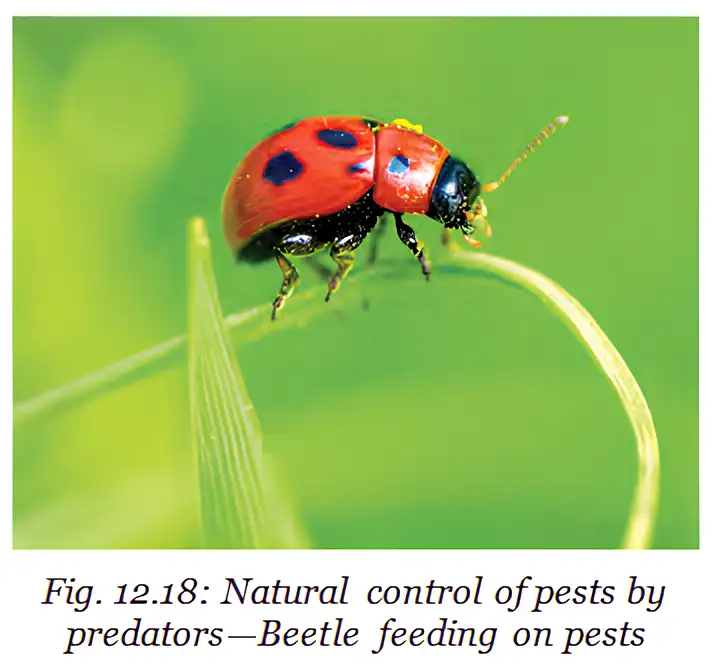
How can natural predators help farms?
Quick recap
- Human-made ecosystems include farms, fish ponds and parks; they need human care.
- The Green Revolution increased food production using machines and synthetic farm inputs.
- Overuse of synthetic inputs, excessive groundwater extraction and monoculture can make farming unsustainable.
- Synthetic fertiliser overuse can reduce helpful soil microorganisms, humus and natural predators.
- Overuse of pesticides and repeated monoculture can contribute to soil degradation; some pests may become pesticide-resistant.
- Organic and natural farming aim to reduce synthetic inputs and support soil and ecosystem health.
Snapshots
Habitats and Ecosystems
Ecosystem — An ecosystem forms through interactions between the biotic and abiotic components of an area.
| Type | Examples |
|---|---|
| Terrestrial | Forests, grasslands and deserts |
| Aquatic | Ponds, lakes, seas and oceans |
Organisms and Feeding Relationships
Food chain — A food chain shows who eats whom in an ecosystem.
Relationships Between Organisms
Ecosystem Benefits and Protection
How do decomposers support an ecosystem?
Distinguish a food chain from a food web.
Quick recap
- Habitat: A place with suitable conditions for an organism to live and grow.
- Ecosystem: Interactions between living and non-living components in an area.
- Ecosystems: Terrestrial types include forests, grasslands and deserts; aquatic types include ponds, lakes, seas and oceans.
- Organism roles: Producers make food, consumers eat organisms, and decomposers recycle nutrients.
- Feeding relationships: Food chains link feeding sequences; food webs connect chains; trophic levels mark positions in a chain.
- Interactions: Mutualism benefits both; commensalism benefits one without affecting the other; parasitism benefits one and harms the other.
- Protection: Ecosystems benefit people but face human-caused threats; conservation helps protect them.
Science — ALL CHAPTERS
1
Exploring the Investigative World of Science
2
The Invisible Living World: Beyond Our Naked Eye
3
Health: The Ultimate Treasure
4
Electricity: Magnetic and Heating Effects
5
Exploring Forces
6
Pressure, Winds, Storms, and Cyclones
7
Particulate Nature of Matter
8
Nature of Matter: Elements, Compounds, and Mixtures
9
The Amazing World of Solutes, Solvents, and Solutions
10
Light: Mirrors and Lenses
11
Keeping Time with the Skies
12
How Nature Works in Harmony
13
Our Home: Earth, a Unique Life Sustaining Planet