CLASS 8 . SCIENCE . CURIOSITY . ELECTRICITY MAGNETIC-AND-HEATING-EFFECTS
Chapter 4 : Electricity: Magnetic and Heating Effects
Ch 4
SCIENCE
CLASS 8
Magnetic Effect of Current
Discovery and Explanation
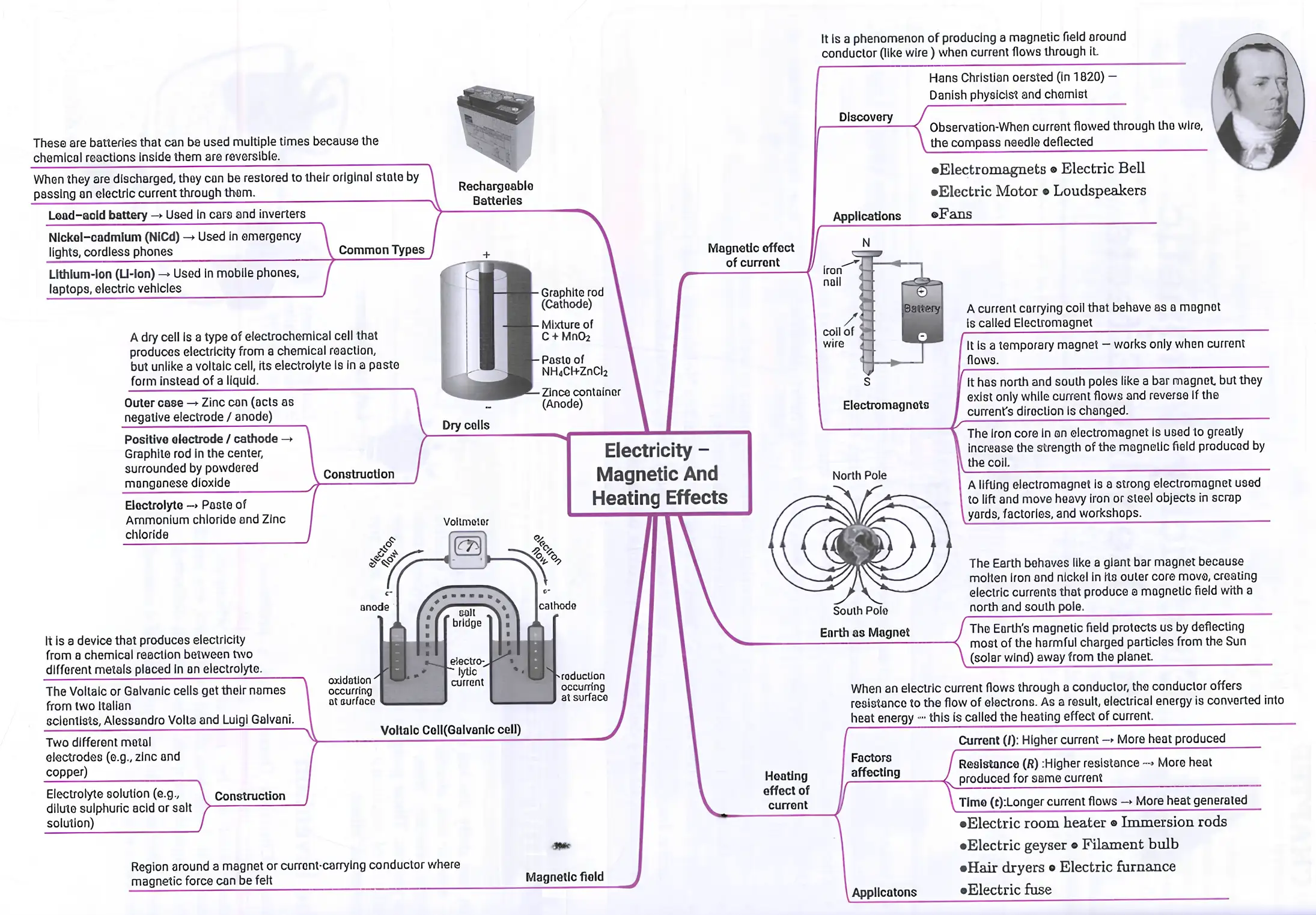
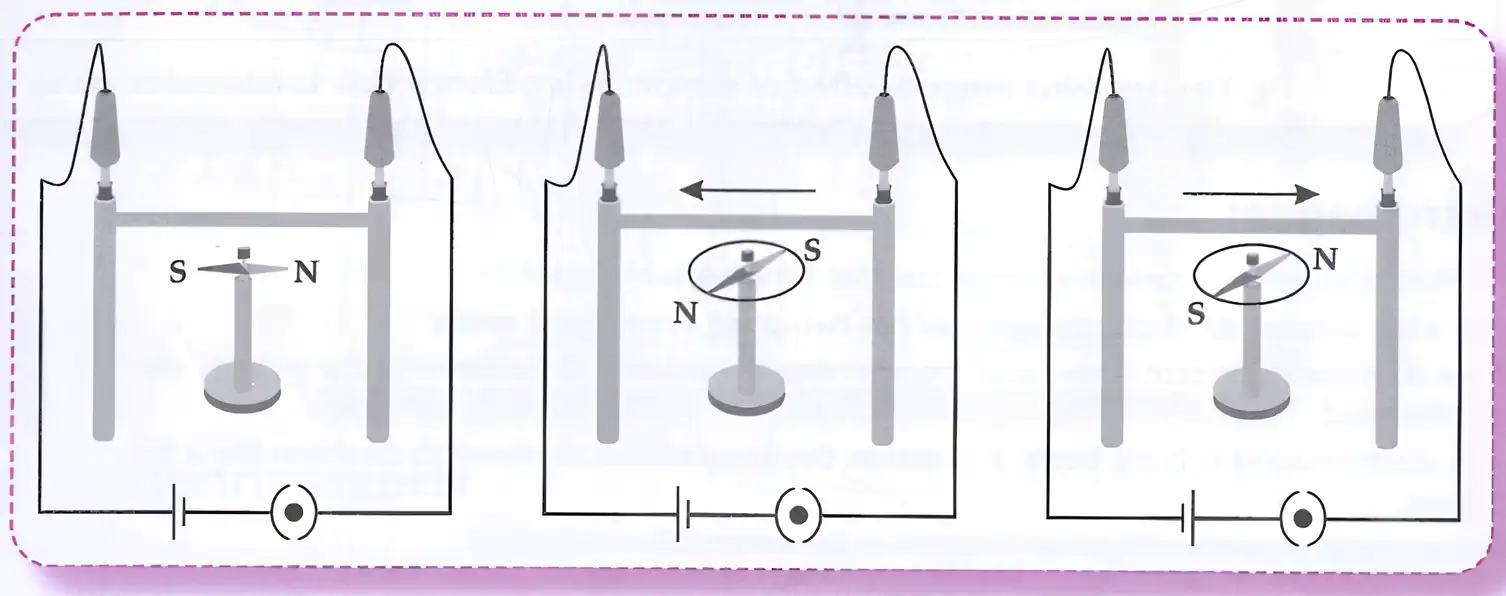
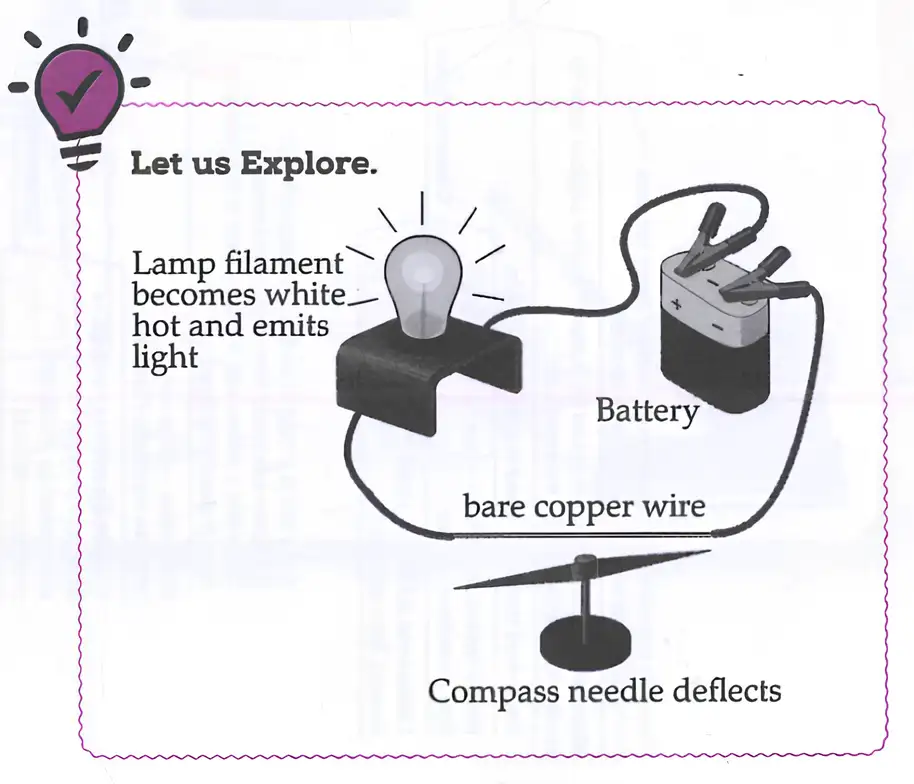
Hans Christian Oersted discovered that an electric current flowing through a wire produces a magnetic field around it. This magnetic field can deflect a nearby compass needle, demonstrating the connection between electricity and magnetism.
Characteristics of Magnetic Effect
- The compass needle deflects when current flows through a wire.
- The deflection disappears when the current stops.
- Reversing the current direction reverses the needle's deflection.
- Increasing current strength increases the deflection.
- Decreasing current strength decreases the deflection.
Practical Applications
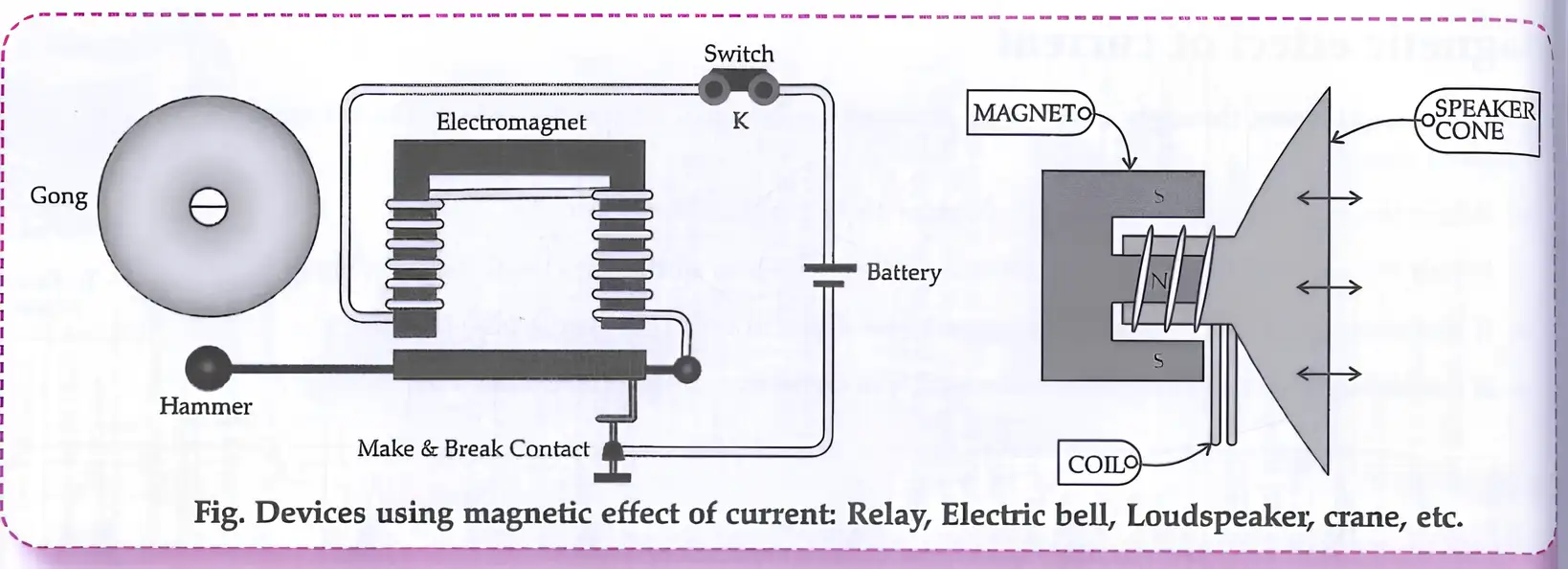
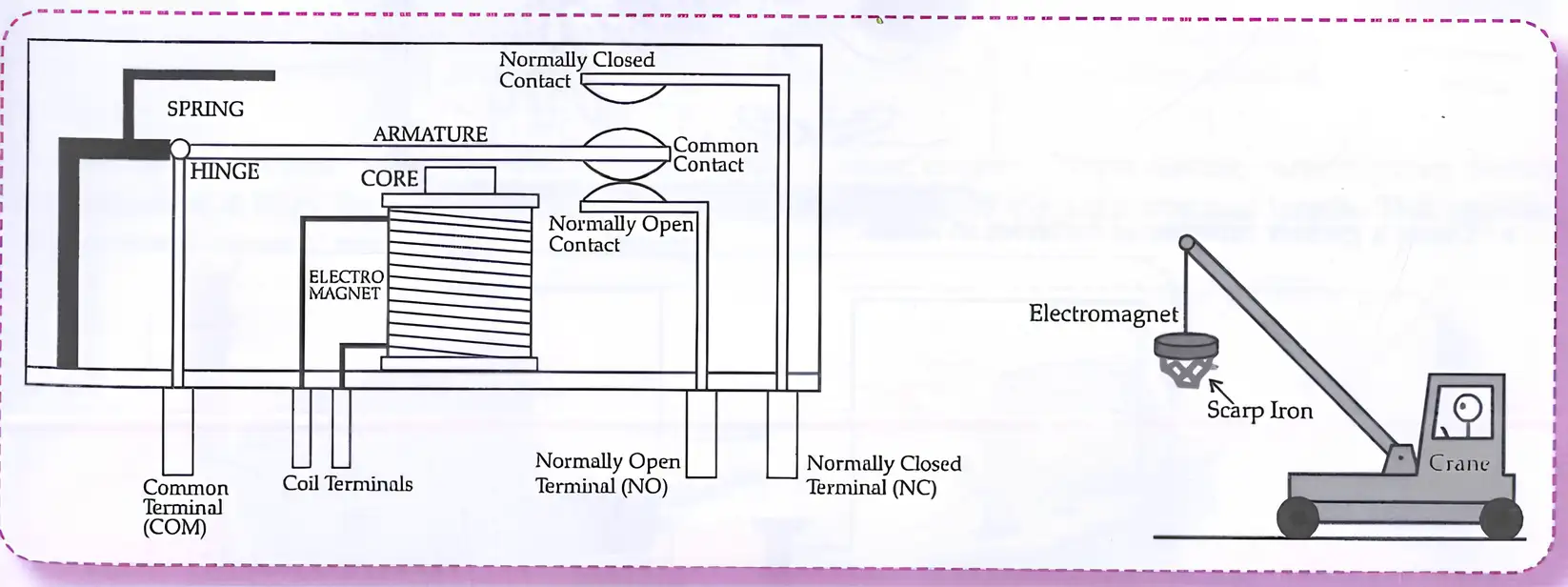
The magnetic effect of current is used in electric bells, electric motors, fans, loudspeakers, cranes, relays, and MRI machines.
Electromagnets
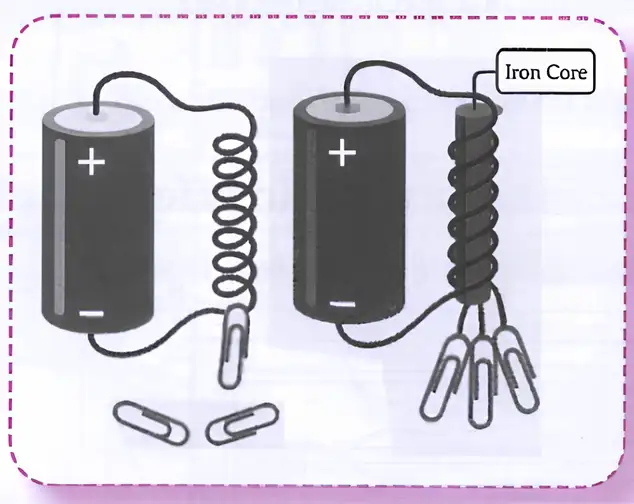
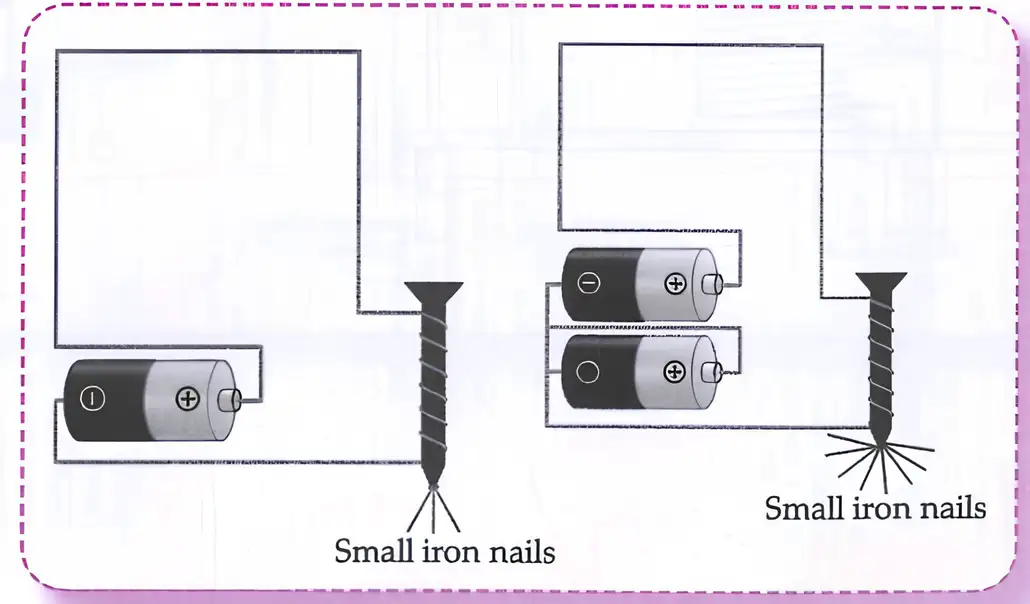
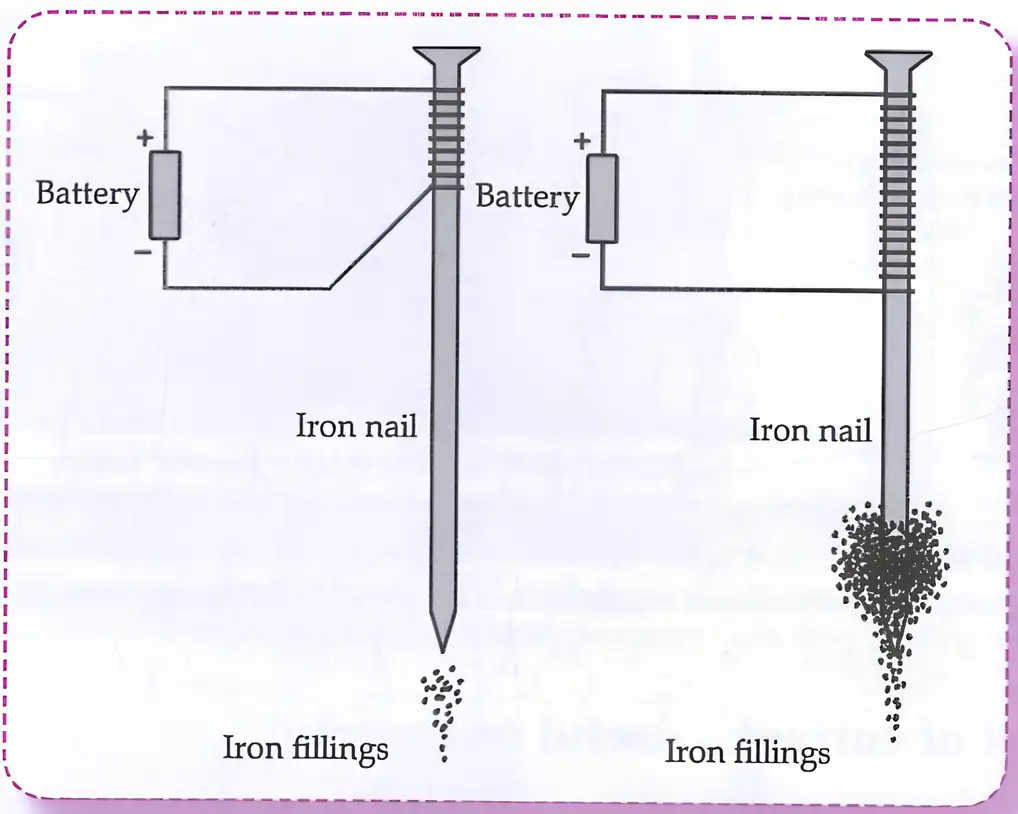
An electromagnet is a coil of wire carrying current that behaves like a magnet with north and south poles. The magnetic property disappears when the current is switched off. The strength of an electromagnet can be increased by inserting an iron core, increasing the number of batteries in series, or increasing the number of coil turns.
Earth's Magnetism
The Earth acts as a giant magnet due to electric currents in its molten core. Its magnetic field protects us by deflecting harmful solar particles.
Solved Examples
Example 1: A compass needle near a wire deflects when current flows. What happens if the current direction is reversed?
Solution: Reversing the current reverses the magnetic field direction, causing the compass needle to deflect in the opposite direction.
Example 2: How can the strength of an electromagnet be increased?
Solution: The strength can be increased by inserting an iron core inside the coil, increasing the number of batteries in series to increase current, or increasing the number of turns in the coil.
Practice Set
- Level 1: What causes the deflection of a compass needle near a current-carrying wire?
- Level 2: Explain how an electromagnet works and how its strength can be increased.
- Level 3: Describe an application of electromagnets in industry and explain how the magnetic effect is utilized.
Answer Key
- Level 1: The magnetic field produced by the electric current flowing through the wire causes the deflection.
- Level 2: An electromagnet is a coil of wire carrying current that produces a magnetic field. Its strength can be increased by inserting an iron core, increasing the current by adding batteries in series, or increasing the number of coil turns.
- Level 3: Electromagnets are used in cranes to lift heavy iron objects. When current flows through the coil, it creates a magnetic field that magnetizes the iron core, allowing it to attract and lift metal objects. Turning off the current releases the objects.
Heating Effect of Current
Explanation
When electric current passes through a conductor, it encounters resistance which converts electrical energy into heat. This is known as the heating effect of electric current.
Applications
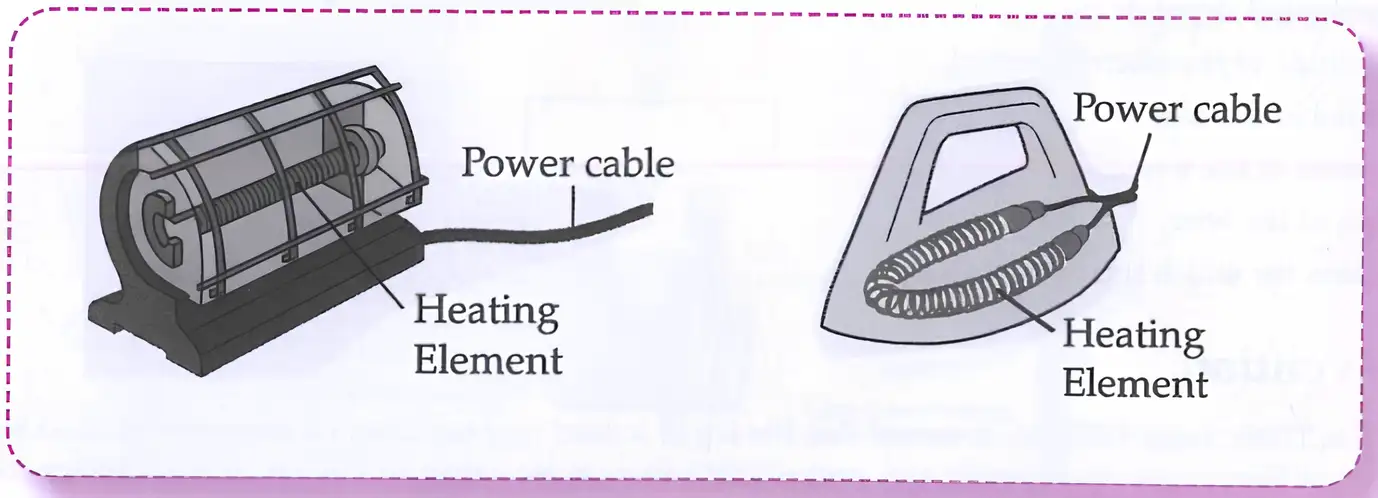
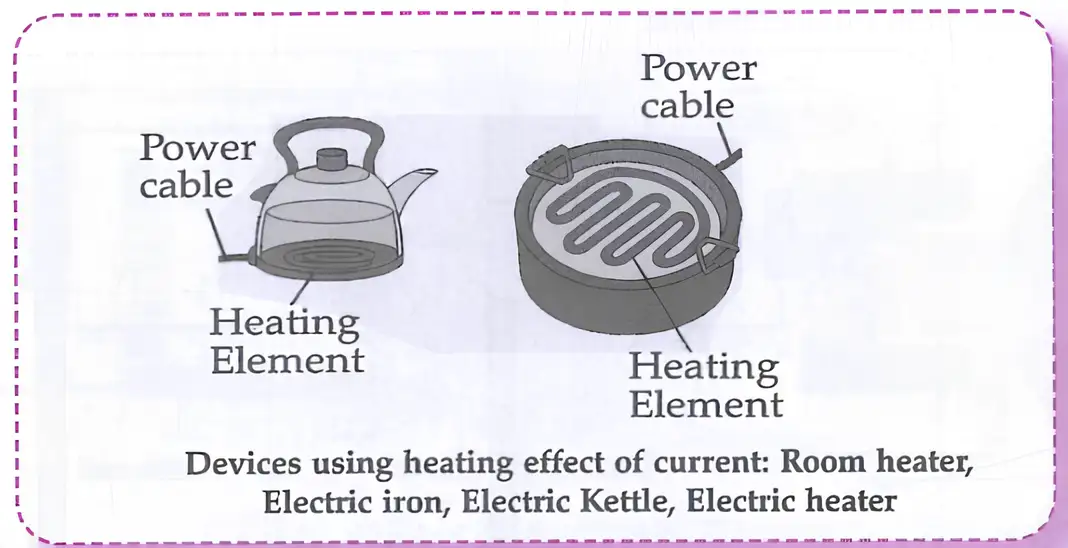
This effect is used in household appliances like electric heaters, irons, immersion water heaters, electric kettles, toasters, and geysers. The heating element in these devices is a coil or rod with higher resistance than copper wire, which heats up when current flows.
Industrial Use
High-temperature electric furnaces use the heating effect to melt metals like iron in steel industries.
Useful and Wasteful Heating
The heating effect is useful when heat is the intended output, such as in heaters and toasters. It is wasteful when heat is produced unintentionally, such as in electric fans or incandescent bulbs, leading to energy loss.
Factors Affecting Heat Generation
- Magnitude of electric current
- Material of the wire
- Thickness of the wire
- Length of the wire
- Duration of current flow
Solved Examples
Example 1: Why does an electric iron get hot when switched on?
Solution: The electric current passes through the iron's heating element, which has high resistance. This resistance converts electrical energy into heat, making the iron hot.
Example 2: What happens if a wire with low current-carrying capacity is used for a high-wattage appliance?
Solution: The wire heats up excessively due to high current, which can damage plugs, sockets, and may cause fire hazards.
Practice Set
- Level 1: What is the heating effect of electric current?
- Level 2: Name two household appliances that use the heating effect of current.
- Level 3: Explain why using wires with low current capacity for high-power devices is dangerous.
Answer Key
- Level 1: The heating effect of electric current is the production of heat when current passes through a conductor due to resistance.
- Level 2: Electric iron and electric heater.
- Level 3: Wires with low current capacity heat up excessively when high current passes through, which can damage electrical components and cause fire hazards.
Batteries
Voltaic Cells
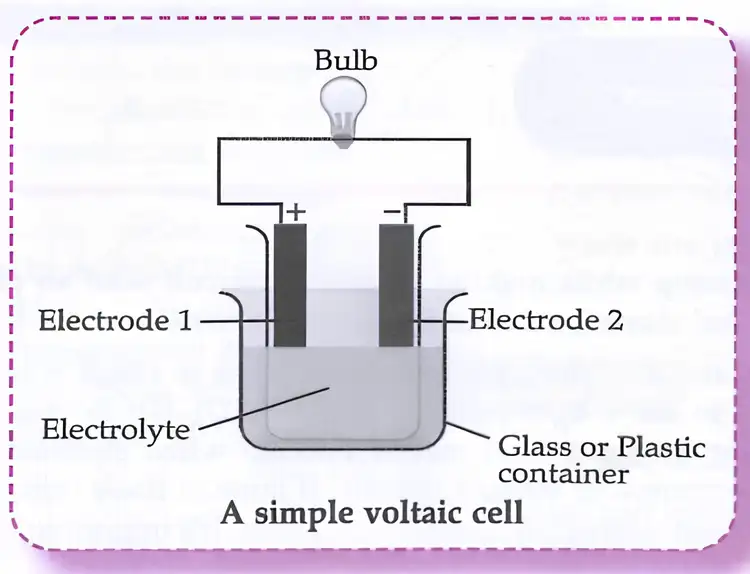
A voltaic cell (galvanic cell) produces electricity from chemical reactions between two different metal electrodes and an electrolyte solution. Common metal pairs include zinc-copper and zinc-silver. Electrolytes can be lemon juice, sulphuric acid, or salt solutions.
Dry Cells
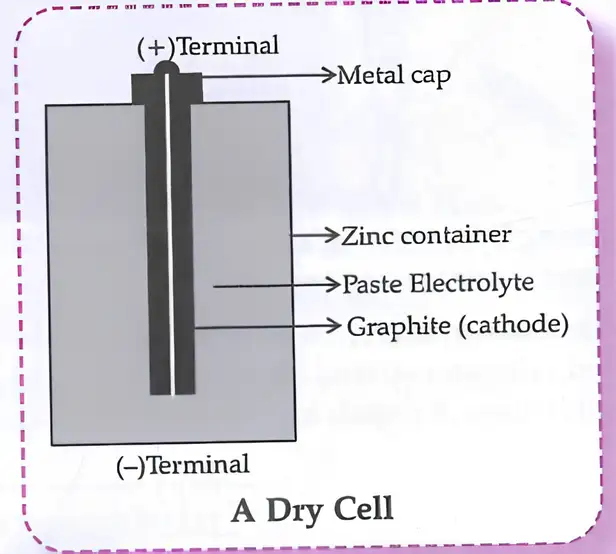
Dry cells are widely used batteries with a paste electrolyte instead of liquid. They consist of a zinc container (negative terminal), a graphite rod (positive terminal), and a paste electrolyte. Dry cells are typically single-use.
Rechargeable Batteries
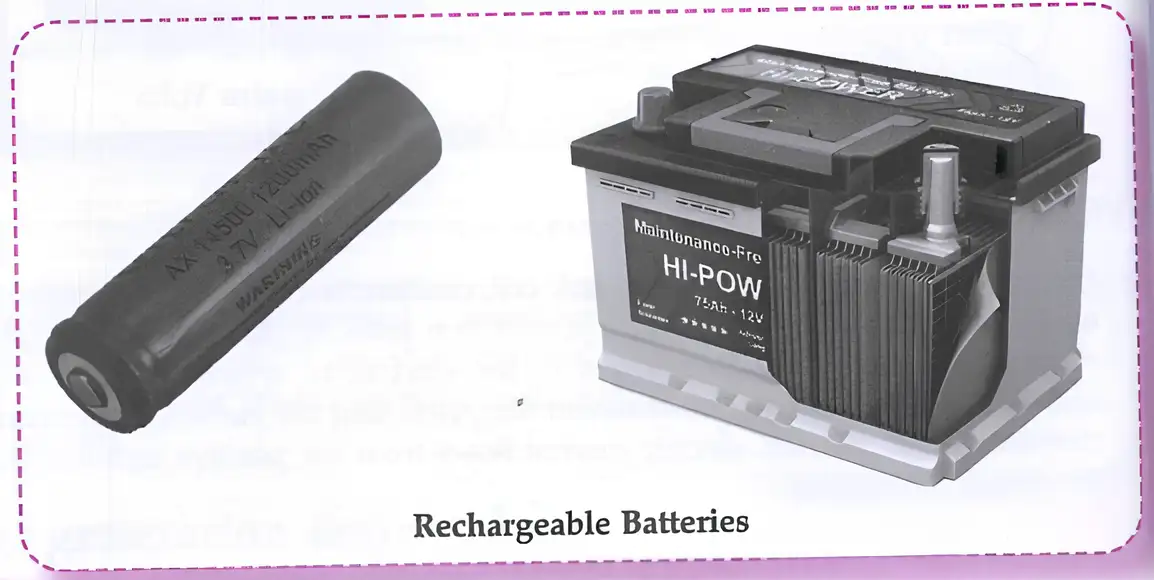
Rechargeable batteries can be reused multiple times by reversing the chemical reactions through charging. Examples include lead-acid batteries (used in cars), nickel-cadmium batteries (used in emergency lights), and lithium-ion batteries (used in phones and laptops). Rechargeable batteries eventually wear out after about 1000 charge cycles.
Solved Examples
Example 1: What is the main difference between a dry cell and a voltaic cell?
Solution: A dry cell uses a paste electrolyte and is portable and convenient, while a voltaic cell uses a liquid electrolyte and is less convenient for everyday use.
Example 2: Why are rechargeable batteries preferred over dry cells in some applications?
Solution: Rechargeable batteries can be used multiple times, reducing waste and cost over time.
Practice Set
- Level 1: What is an electrolyte in a battery?
- Level 2: Name two types of rechargeable batteries and their common uses.
- Level 3: Explain why dry cells are called 'use-and-throw' batteries.
Answer Key
- Level 1: An electrolyte is a substance (liquid or paste) that allows the flow of electric charge inside a battery.
- Level 2: Lead-acid batteries (used in cars) and lithium-ion batteries (used in phones and laptops).
- Level 3: Dry cells are called 'use-and-throw' because they cannot be recharged and must be discarded after use.
Quick Reference Table
- Magnetic Effect of Current: Electric current flowing through a wire produces a magnetic field around it, which can deflect a compass needle.
- Electromagnet: A coil of wire carrying current that acts like a magnet; its strength can be increased by adding an iron core, increasing current, or increasing coil turns.
- Earth's Magnetism: The Earth behaves like a giant magnet due to electric currents in its molten core, protecting us from solar particles.
- Heating Effect of Current: Electric current passing through a conductor produces heat due to resistance; used in heaters, irons, kettles, and industrial furnaces.
- Batteries: Devices that convert chemical energy into electrical energy. Types include voltaic cells, dry cells, and rechargeable batteries.
- Dry Cells: Batteries with a paste electrolyte, zinc container as negative terminal, and graphite rod as positive terminal; typically single-use.
- Rechargeable Batteries: Batteries that can be recharged and reused multiple times, such as lead-acid, nickel-cadmium, and lithium-ion batteries.
- Important Scientists: Hans Christian Oersted (discovered magnetic effect of current), Luigi Galvani (studied bioelectricity), Alessandro Volta (invented the battery).
- Key Terms: Magnetic field, electromagnet, electrolyte, electrode, heating element, voltaic cell, dry cell, rechargeable battery.
Common Mistakes and Misconceptions
- Confusing Magnetic and Heating Effects: Students sometimes mix up the magnetic effect of current with the heating effect; these are distinct phenomena with different applications.
- Reversing Current Direction: Forgetting that reversing current reverses the magnetic field and compass needle deflection.
- Electromagnet Strength: Overlooking factors that increase electromagnet strength such as iron core insertion, more batteries, or more coil turns.
- Dry Cell Usage: Assuming dry cells are rechargeable; they are generally single-use and must be discarded after use.
- Heating Effect Waste: Not recognizing that heat produced in devices like fans or bulbs is often unwanted energy loss.
- Wire Capacity: Using wires with insufficient current capacity can cause overheating and fire hazards, which is often underestimated.
- Battery Electrolyte: Confusing the role of electrolyte as just a liquid; it can be a paste in dry cells and is essential for ion movement.
Glossary
- Magnetic Field: The region around a current-carrying wire where magnetic effects are observed.
- Electromagnet: A magnet created by electric current flowing through a coil of wire, which can be turned on or off.
- Electrolyte: A substance (liquid or paste) that allows the flow of electric charge inside a battery.
- Electrode: Metal plates in a battery where chemical reactions occur to produce electricity.
- Heating Element: A wire or coil with high resistance that produces heat when electric current passes through it.
- Voltaic Cell: A battery that produces electricity from chemical reactions between two different metals and an electrolyte.
- Dry Cell: A type of battery with a paste electrolyte, zinc container as negative terminal, and graphite rod as positive terminal.
- Rechargeable Battery: A battery that can be recharged and used multiple times by reversing chemical reactions.
- Resistance: The opposition to the flow of electric current, causing electrical energy to convert into heat.
- Current: The flow of electric charge through a conductor.
- Electric Current: The movement of electrons through a conductor, producing magnetic and heating effects.