CLASS 8 . SCIENCE . CURIOSITY . PRESSURE WINDS-STORMS-AND-CYCLONES
Chapter 6 : Pressure, Winds, Storms, and Cyclones
Ch 6
SCIENCE
CLASS 8
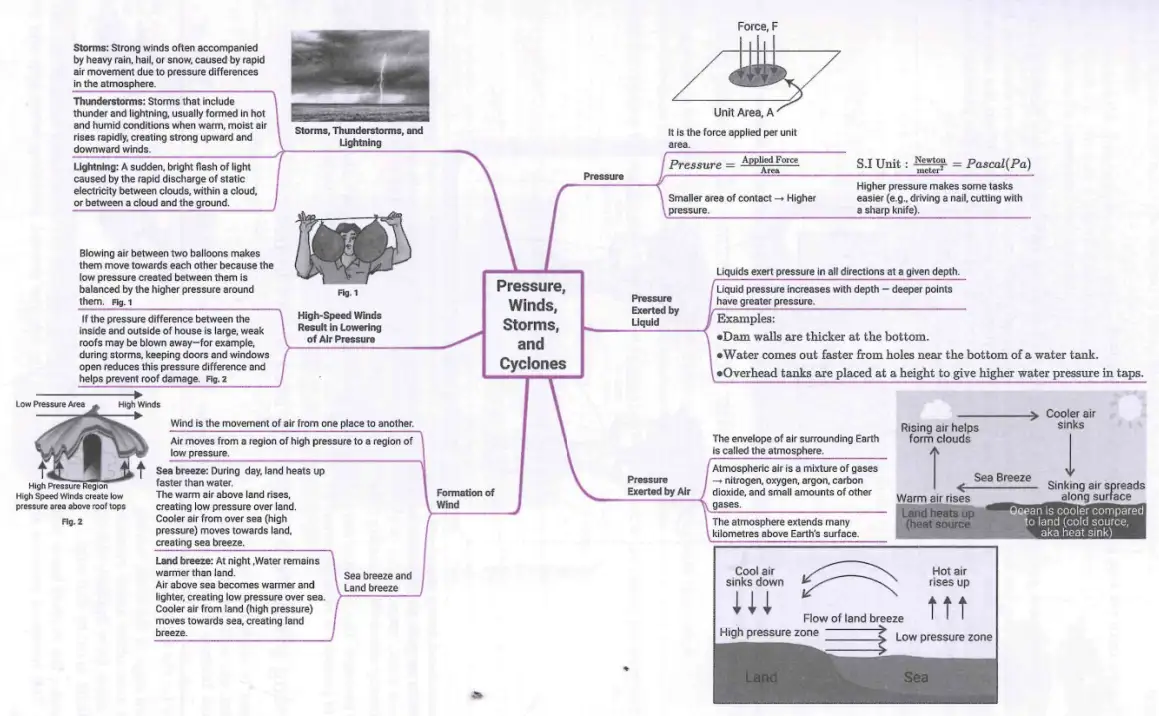
Pressure
Definition and Concept
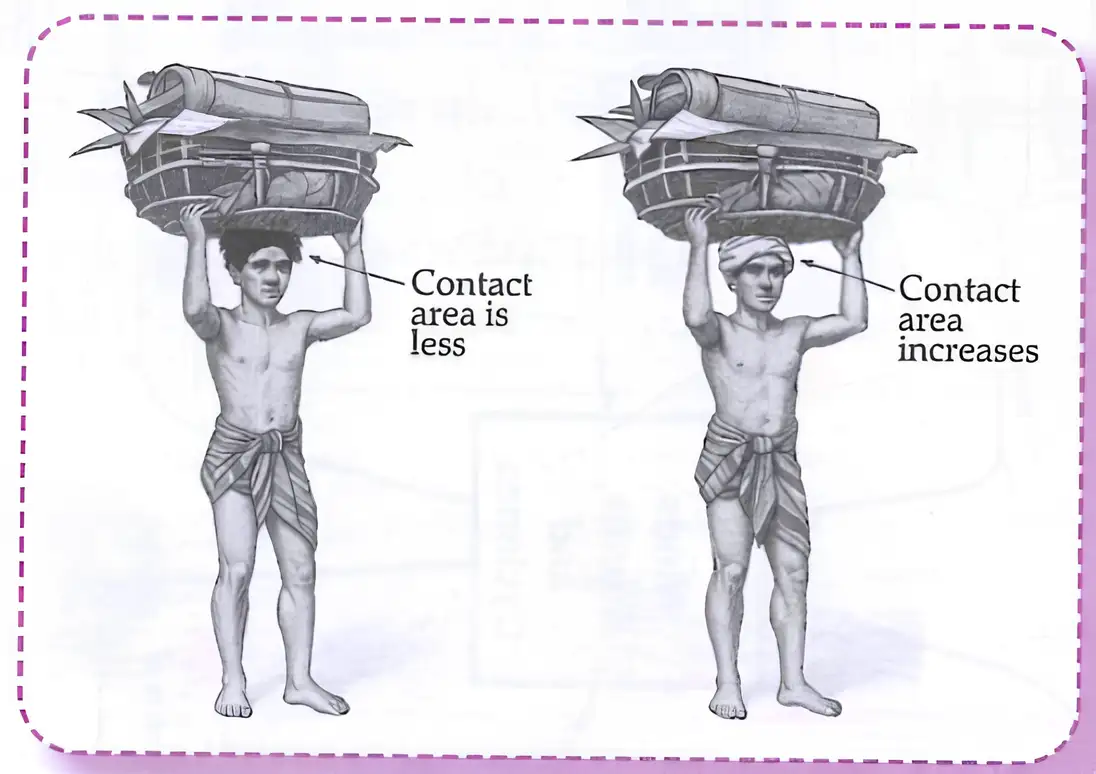
Pressure is defined as the force applied per unit area on a surface. It is calculated by dividing the force by the area over which it is applied. Mathematically, pressure = force/area. When the area decreases for the same force, the pressure increases, and vice versa.
Pressure by Liquids
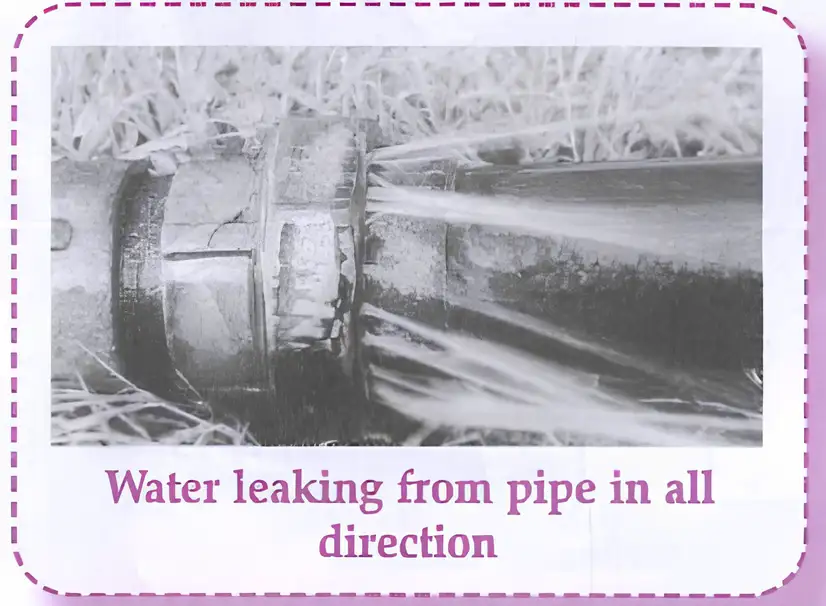
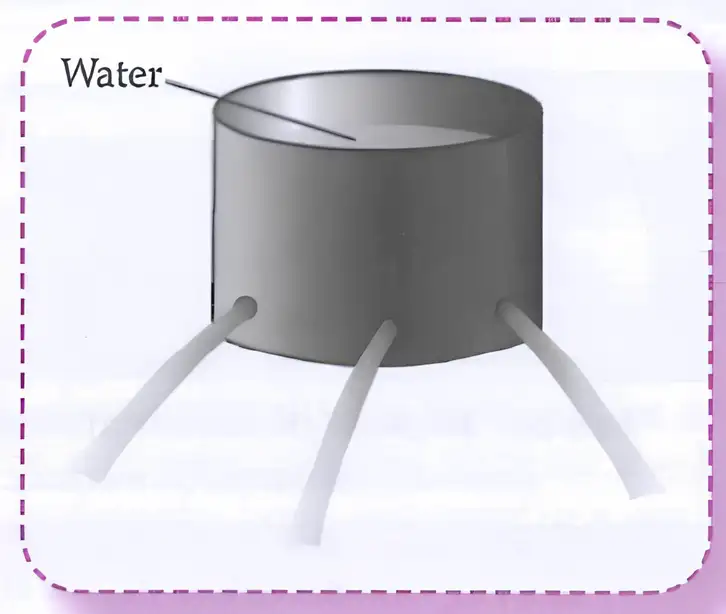
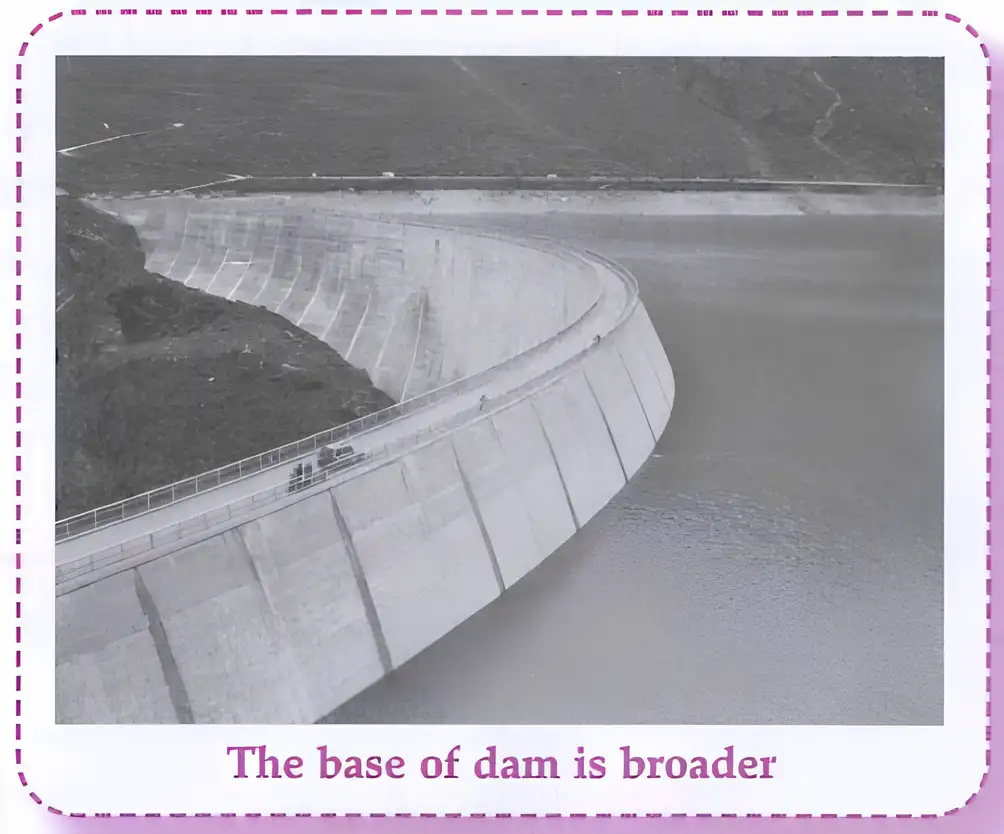
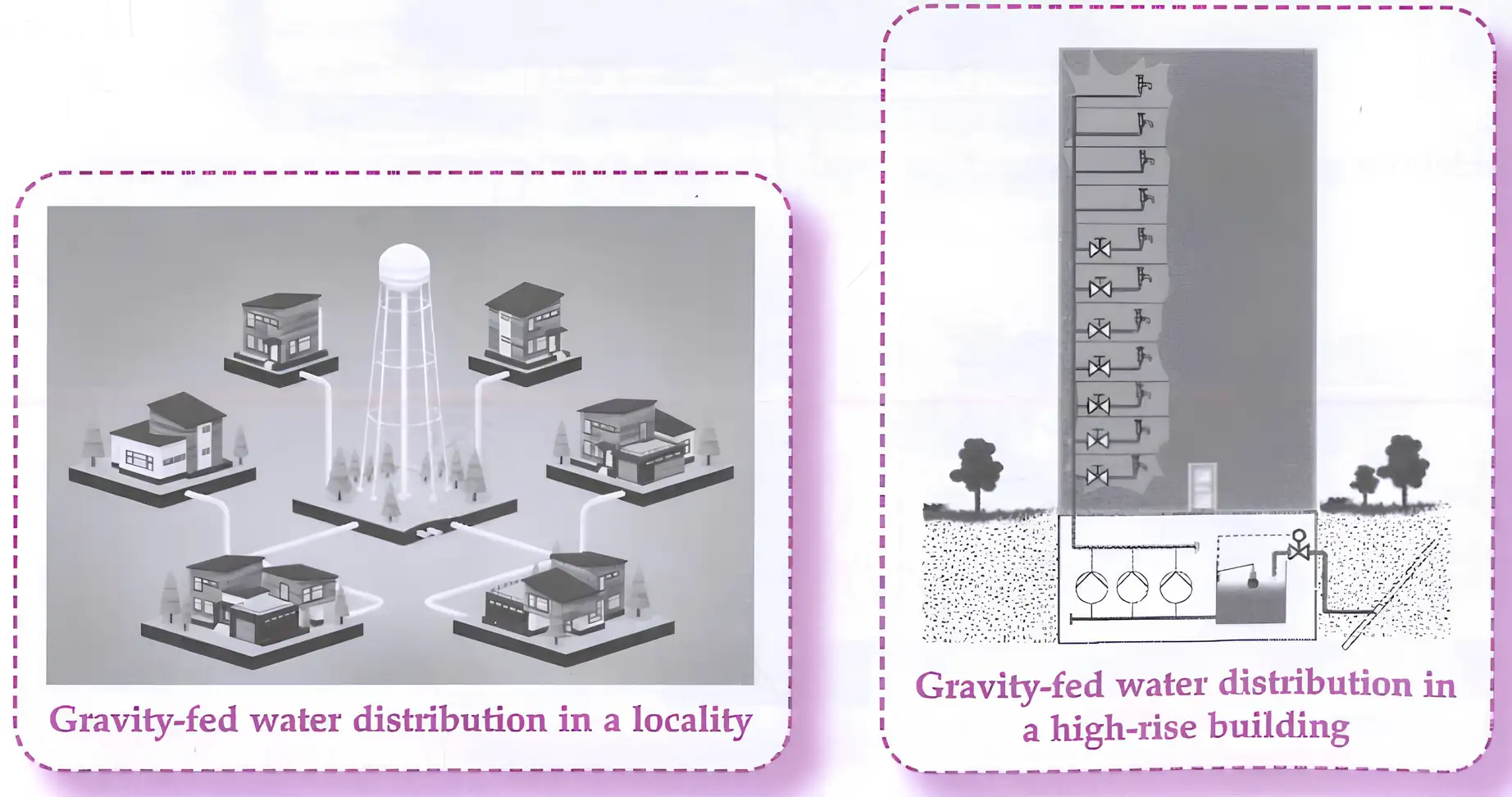
Liquids exert pressure in all directions, not just downwards. The pressure exerted by a liquid increases with depth due to the weight of the liquid above. This explains why dams are built thicker at the bottom and why overhead water tanks are placed at a height to ensure water flows smoothly.
Pressure by Air
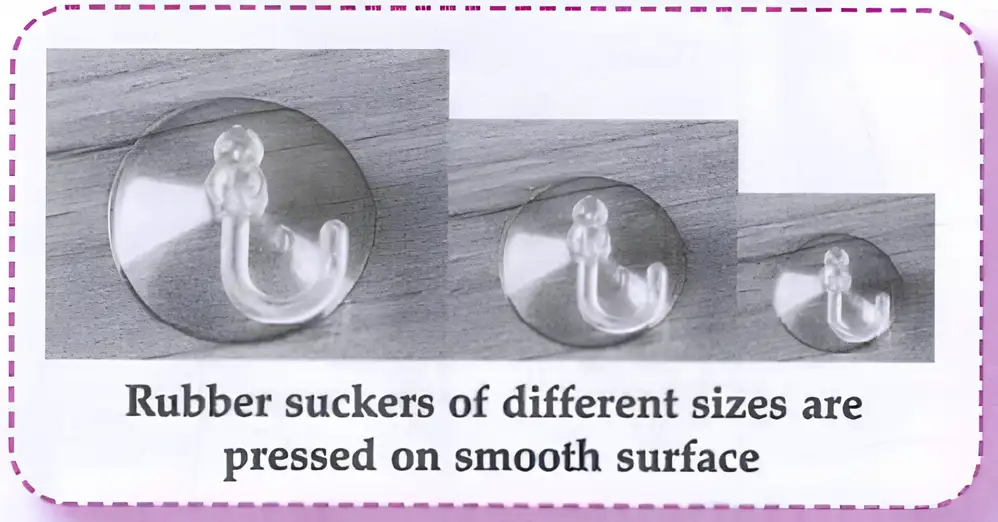
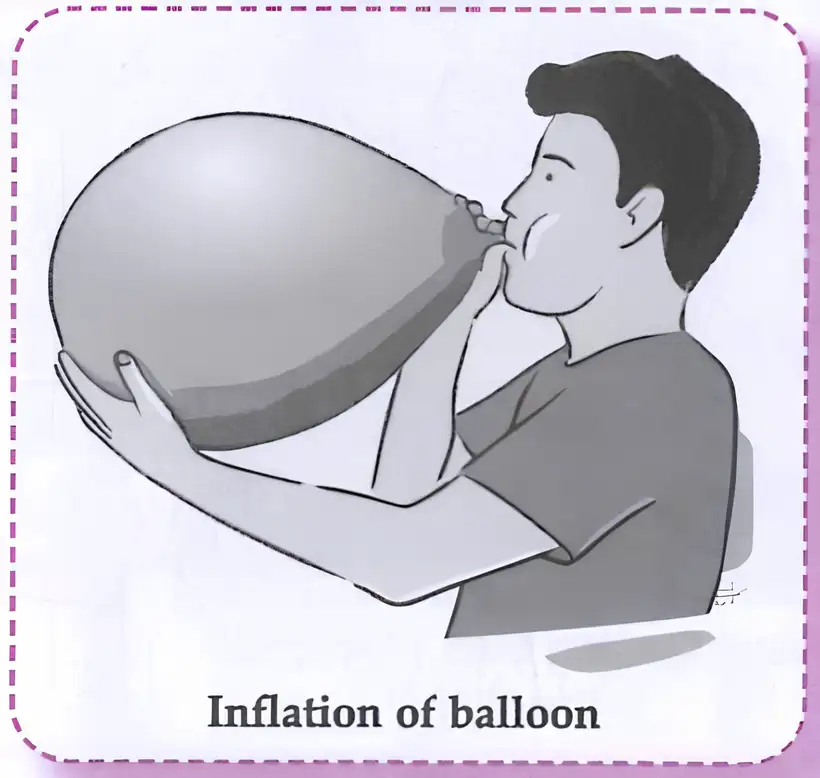
Air, like liquids, exerts pressure known as atmospheric pressure. This pressure is due to the weight of the air in the atmosphere pressing down on the Earth's surface. Atmospheric pressure affects weather patterns and the movement of air.
Increasing and Decreasing Pressure
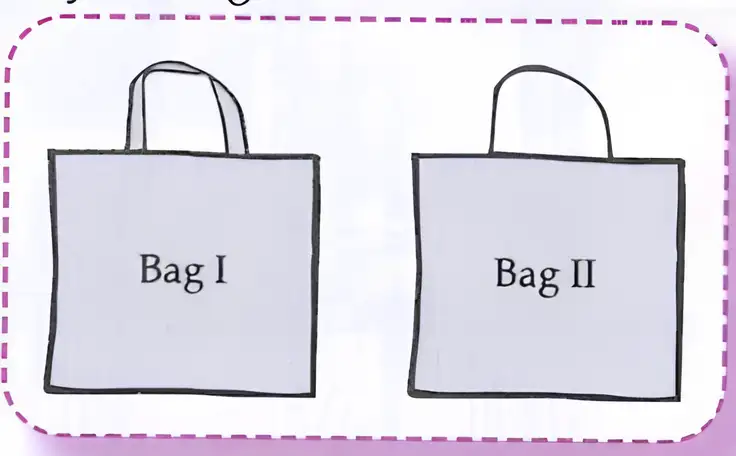
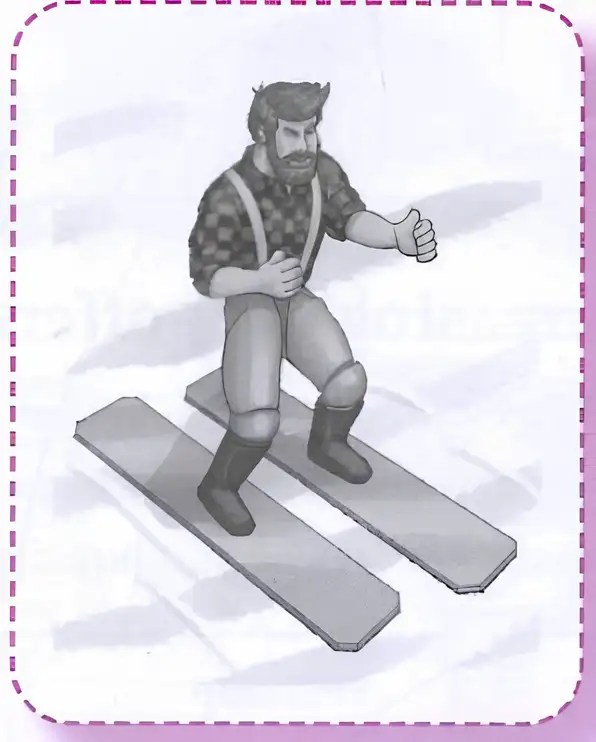
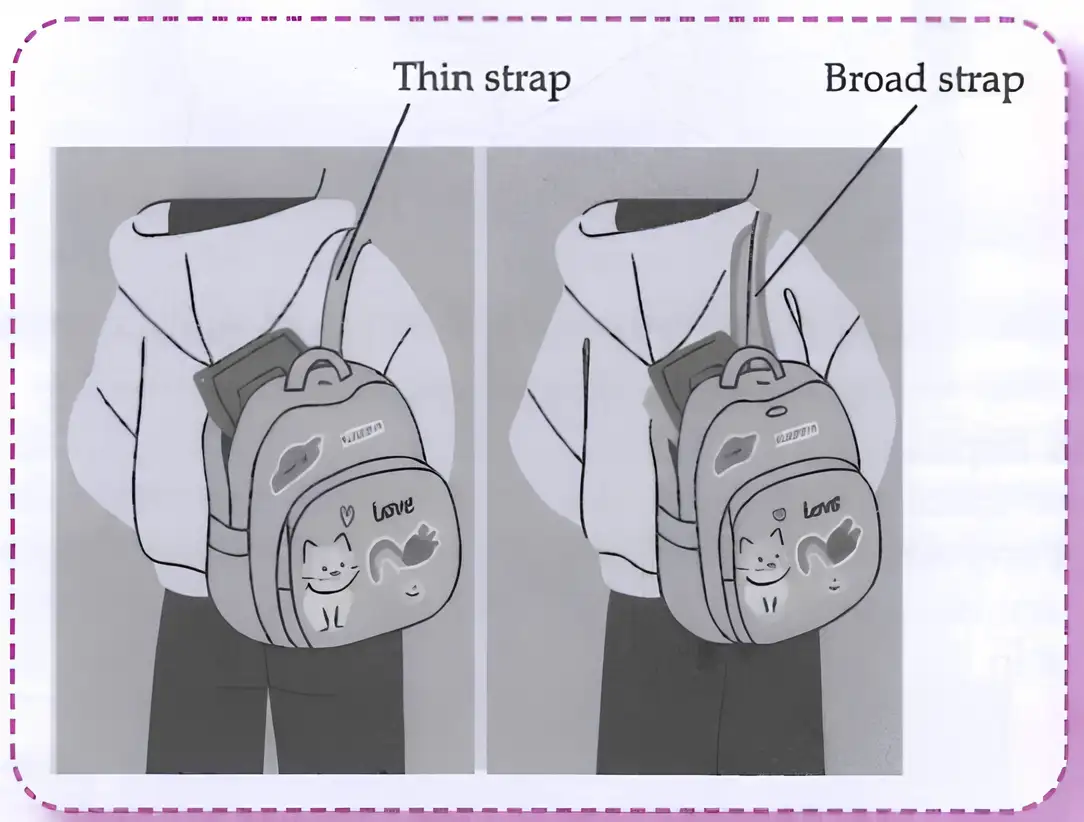
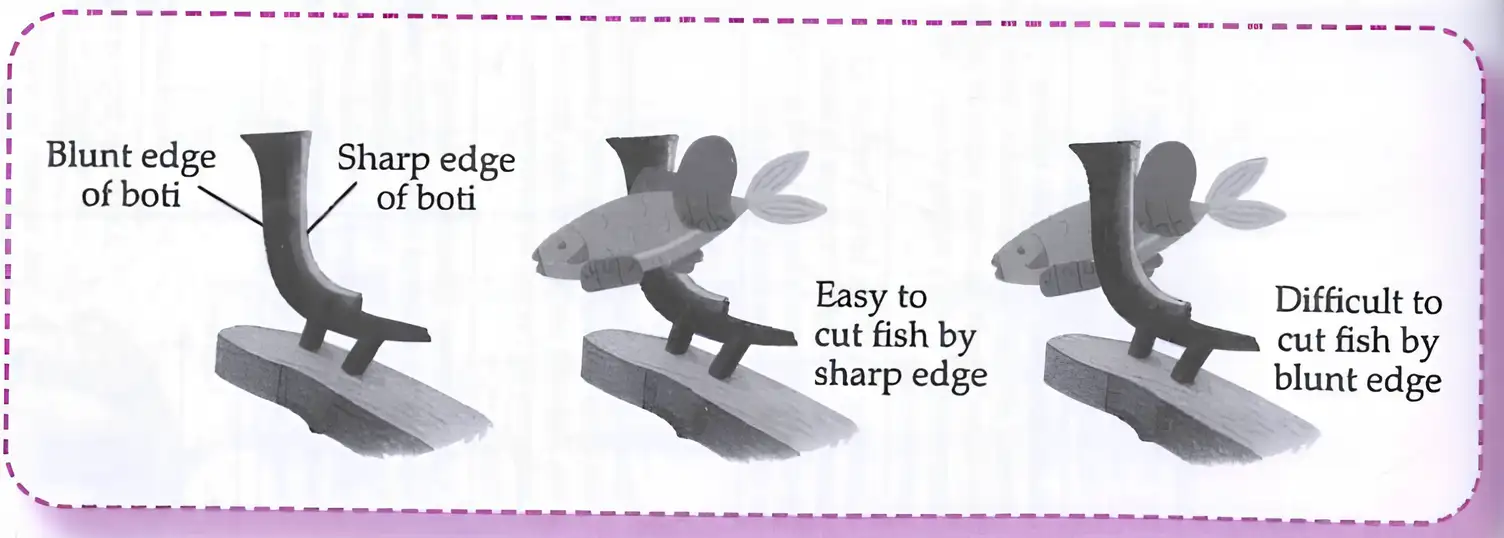
Pressure can be increased by reducing the area over which a force is applied, such as the sharp edge of a knife cutting more effectively than a blunt edge. Conversely, pressure can be decreased by increasing the area, such as broad straps on a bag distributing weight more comfortably.
Applications of Pressure
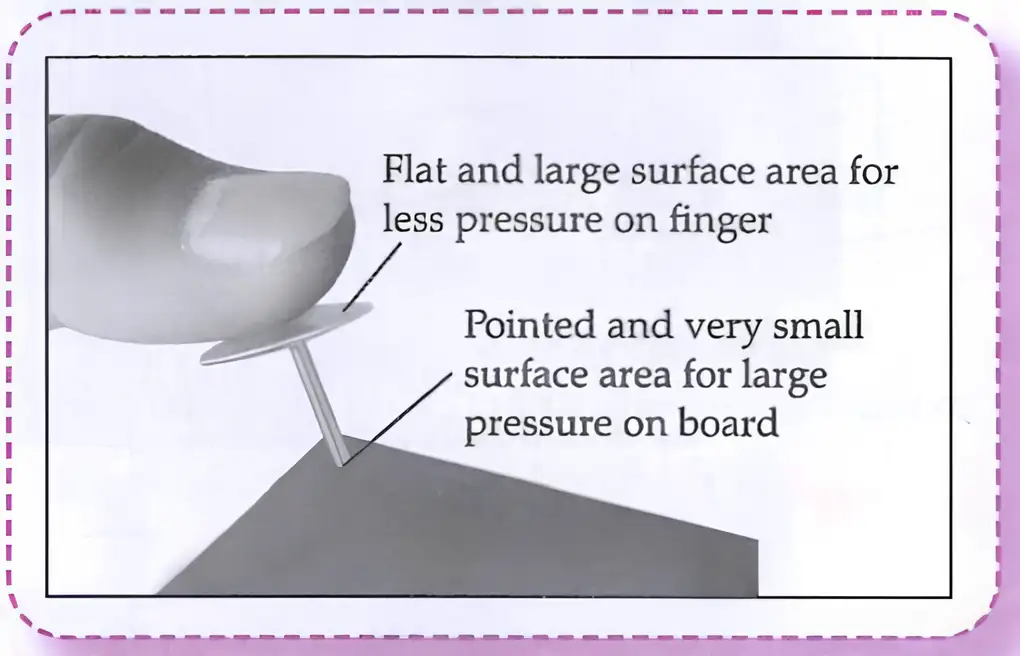
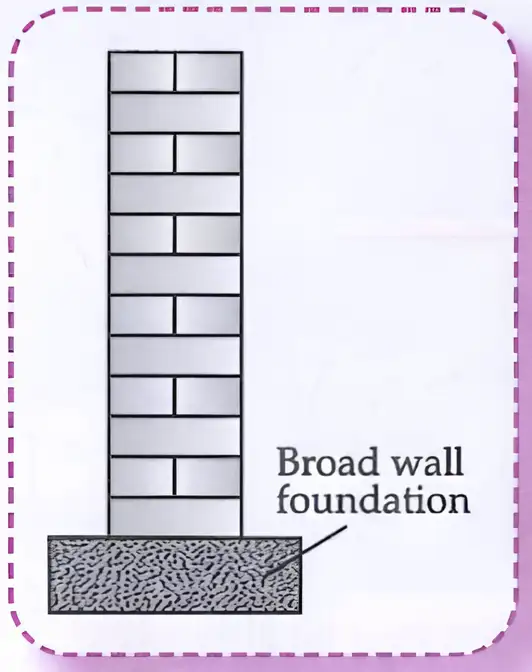
Examples include the use of studs on football boots to increase pressure for better grip, the design of drawing pins with a sharp end to exert high pressure for easy penetration, and the use of broad foundations for walls to reduce pressure on the ground.


Water Distribution Systems
Water tanks placed at heights use the pressure exerted by the water column to distribute water efficiently to different areas without the need for pumps.
Solved Examples
Example 1: Calculate the pressure exerted by a force of 100 N applied over an area of 0.5 m².
Solution:
Pressure = Force / Area = 100 N / 0.5 m² = 200 N/m² or 200 Pa.
Example 2: Explain why the base of a dam is wider than the top.
Solution:
The pressure exerted by water increases with depth. The base of the dam experiences the highest pressure due to the weight of the water above. To withstand this pressure, the base is made wider and stronger than the top.
Practice Set
- Level 1 (Easy): Define pressure and state its SI unit.
- Level 2 (Moderate): Why do sharp knives cut better than blunt knives?
- Level 3 (Challenging): A force of 500 N is applied on a surface of area 2 m². Calculate the pressure exerted and explain how increasing the area affects the pressure.
Answer Key
- Level 1: Pressure is the force applied per unit area. Its SI unit is pascal (Pa), which is equal to newton per square meter (N/m²).
- Level 2: Sharp knives have a smaller contact area, which increases the pressure for the same force, making it easier to cut.
- Level 3: Pressure = 500 N / 2 m² = 250 Pa. Increasing the area decreases the pressure for the same force.
Wind Formation
Movement of Air
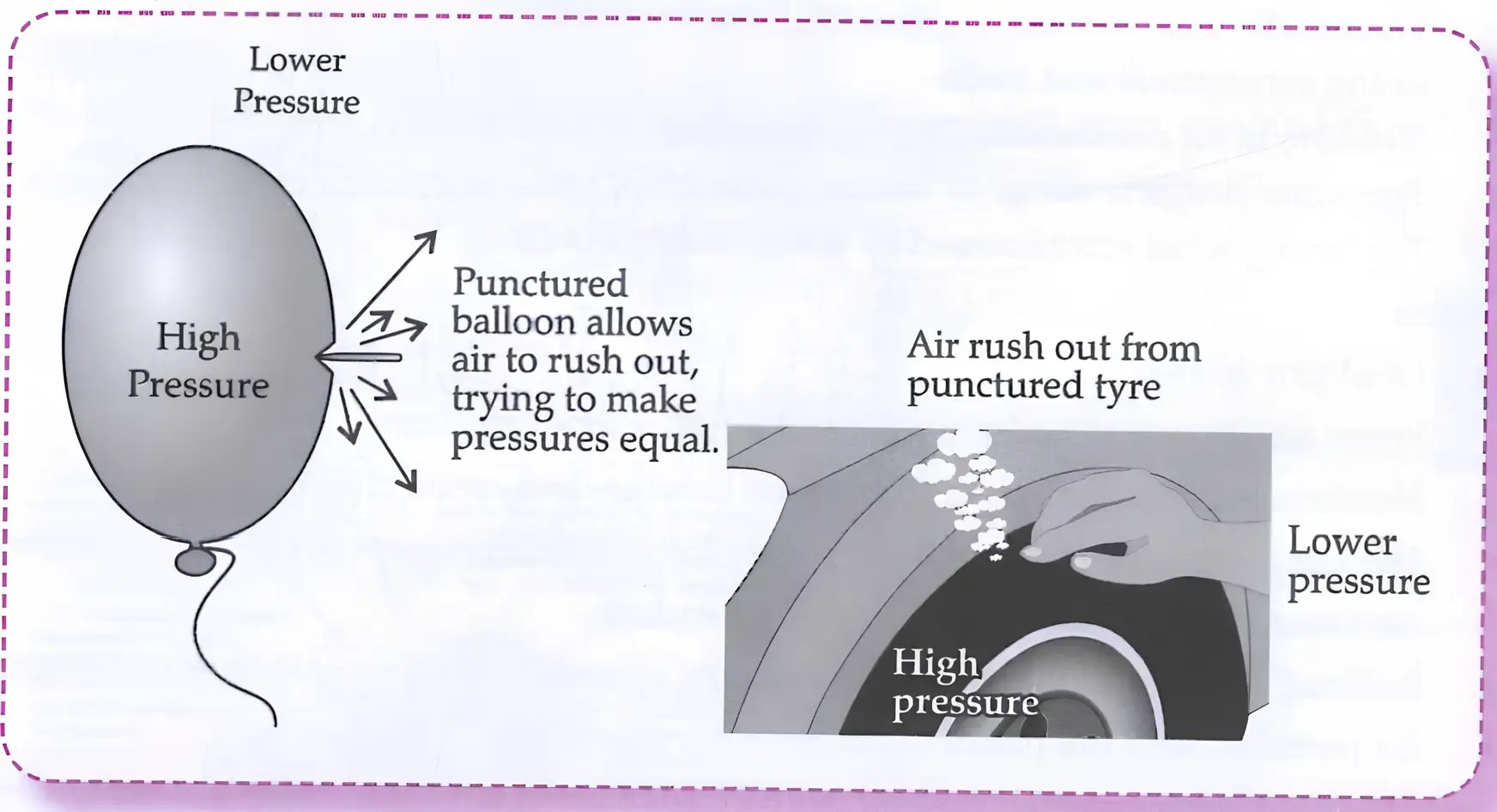
Wind is the movement of air from regions of high pressure to regions of low pressure. This movement occurs due to differences in atmospheric pressure caused by uneven heating of the Earth's surface.
Sea Breeze
During the day, land heats up faster than water. Warm air over the land rises, creating a low-pressure area. Cooler air from the sea moves towards the land to replace the rising warm air, creating a sea breeze.
Land Breeze
At night, land cools faster than water. Warm air over the sea rises, creating a low-pressure area. Cooler air from the land moves towards the sea, creating a land breeze.
Effect of Wind Speed on Pressure
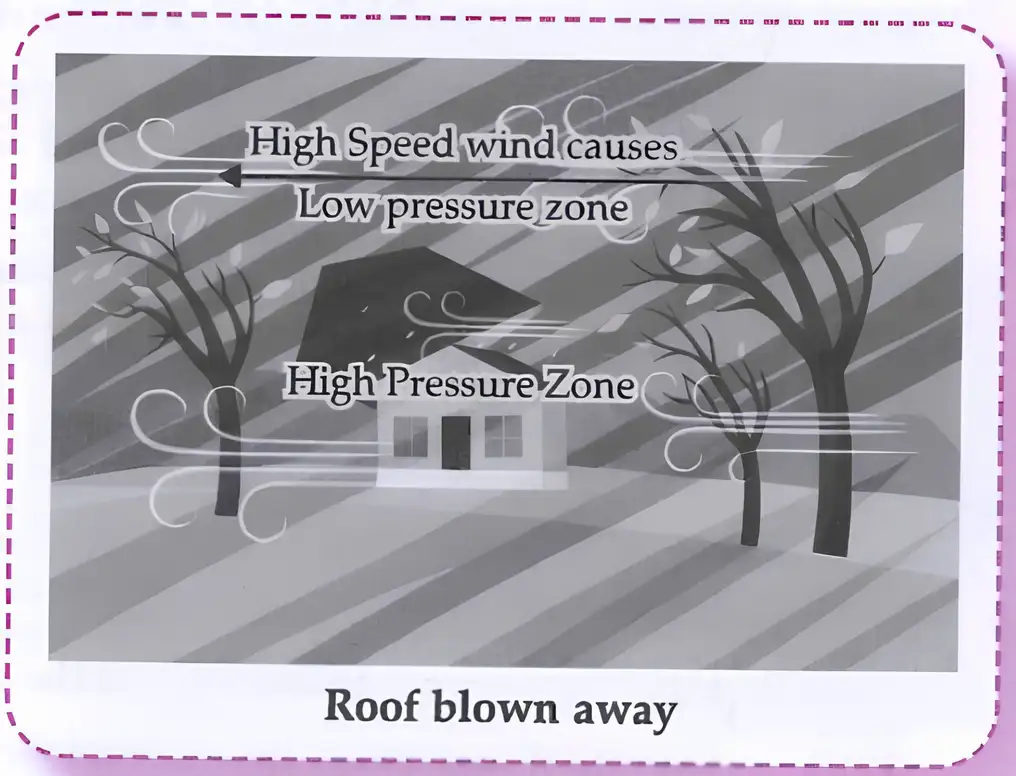
High-speed winds cause a decrease in air pressure in the area they move through. This can create low-pressure zones that affect structures, such as roofs being lifted off during storms.
Solved Examples
Example 1: Explain why wind blows from sea to land during the day.
Solution:
During the day, land heats up faster than the sea, causing air over the land to rise and create a low-pressure area. Cooler air from the sea moves towards the land to fill this low-pressure area, resulting in a sea breeze.
Example 2: Describe why roofs may be blown off during strong winds.
Solution:
Strong winds create low pressure above the roof while the pressure inside the house remains higher. This pressure difference creates an upward force that can lift and blow the roof away.
Practice Set
- Level 1 (Easy): What causes wind to blow?
- Level 2 (Moderate): Differentiate between sea breeze and land breeze.
- Level 3 (Challenging): Explain how high-speed winds can cause damage to buildings.
Answer Key
- Level 1: Wind blows due to air moving from high-pressure areas to low-pressure areas.
- Level 2: Sea breeze occurs during the day when cool air moves from sea to land; land breeze occurs at night when cool air moves from land to sea.
- Level 3: High-speed winds lower air pressure above buildings, creating a pressure difference that can lift roofs and cause damage.
Storms and Cyclones
Storm Formation
Storms form when warm, moist air rises rapidly, creating low-pressure areas. Cooler air rushes in to replace it, causing strong winds. The rising air cools, moisture condenses to form clouds and precipitation, resulting in storms.
Thunderstorms and Lightning
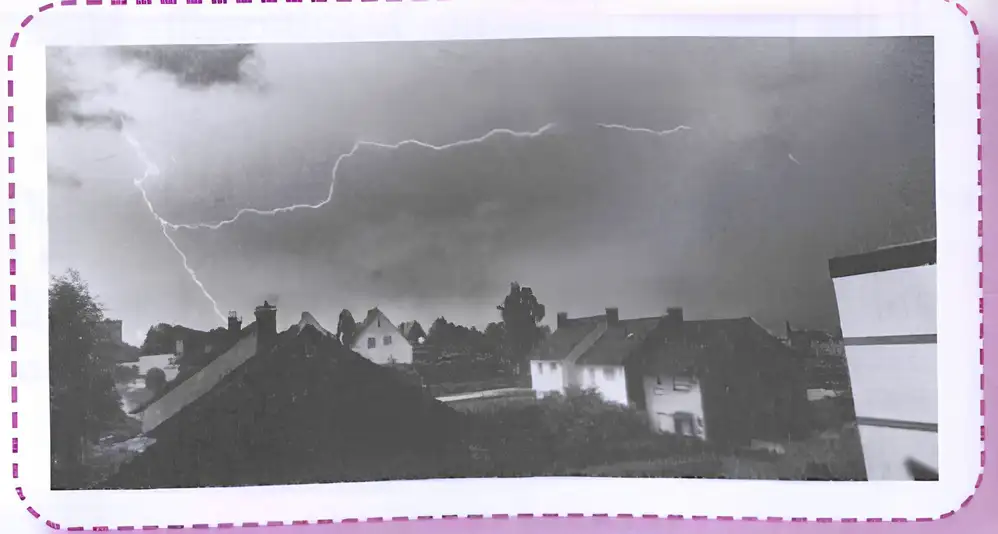
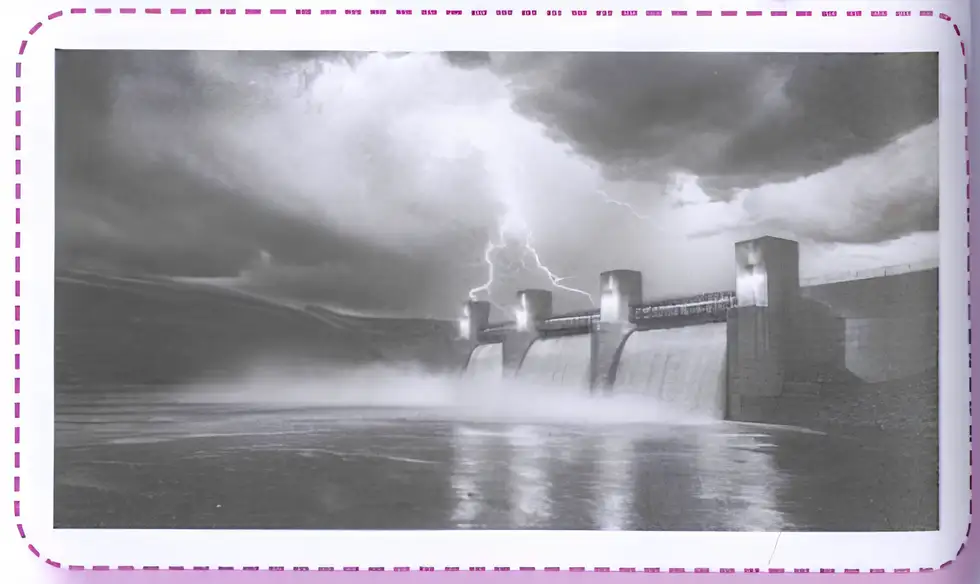
Thunderstorms involve strong updrafts and downdrafts that generate static electricity. Lightning is a sudden discharge of this electricity between clouds or between clouds and the ground, accompanied by thunder.
Localised Thunderstorms
Examples include Kalboishakhi in West Bengal and Bangladesh, Bordoisila in Assam, and Mango showers in Karnataka. These are seasonal storms that affect local weather and agriculture.
Safety Measures
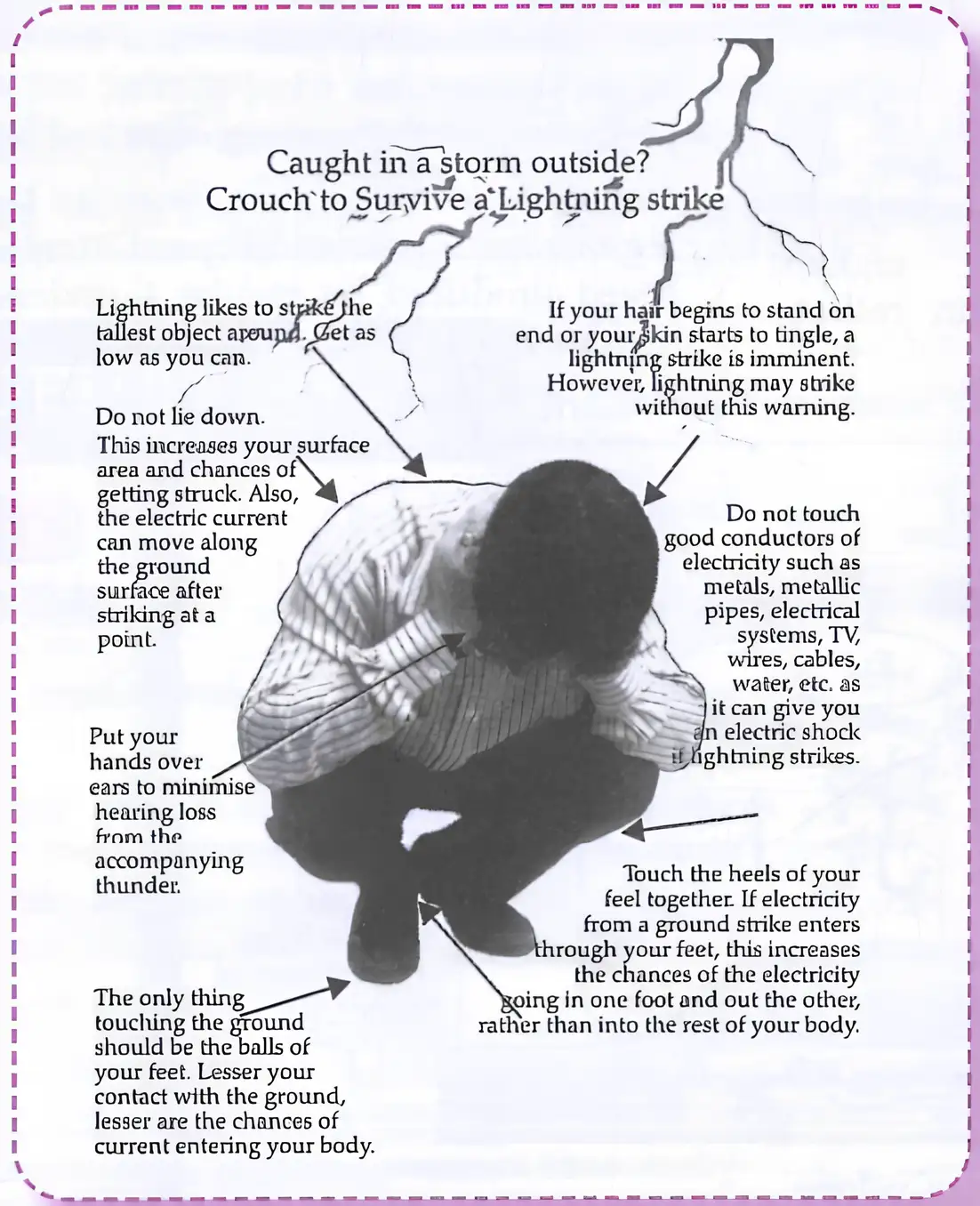
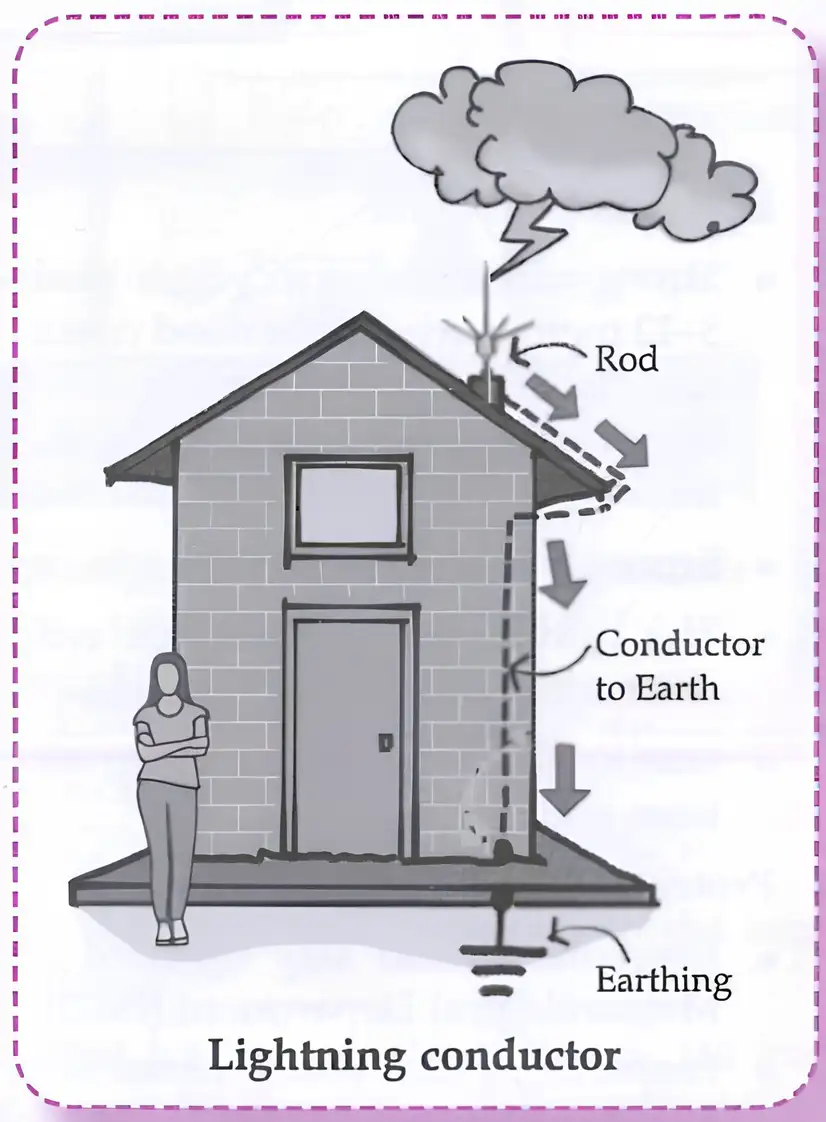
During lightning, avoid tall objects, stay in low-lying areas, crouch down with minimal ground contact, and avoid using metal objects or electrical devices. Lightning conductors protect buildings by safely directing electrical charges to the ground.
Cyclone Formation
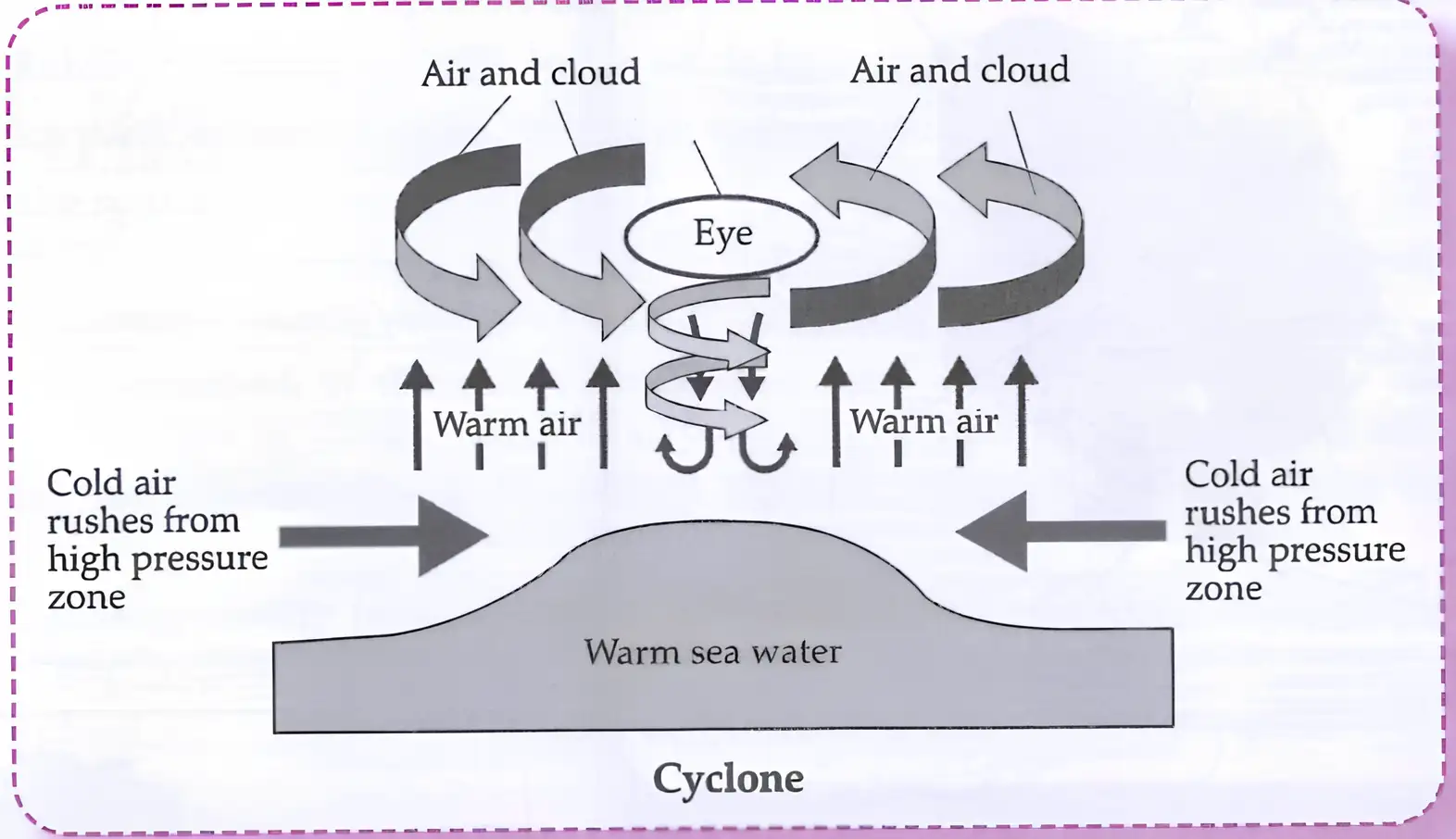
Cyclones form over warm ocean waters when warm, moist air rises, cools, and condenses to form clouds. Earth's rotation causes the system to spin, creating a low-pressure center called the eye. Cyclones bring strong winds, heavy rain, and can cause flooding and damage.
Protection from Cyclones
Stay updated with weather reports, keep emergency kits ready, and move to designated cyclone shelters when necessary.
Solved Examples
Example 1: Describe the steps involved in the formation of a cyclone.
Solution:
Warm ocean water heats the air above, which rises and cools. Moisture condenses to form clouds. Earth's rotation causes the system to spin, creating a low-pressure center called the eye. The cyclone intensifies with strong winds and rain.
Example 2: Explain how lightning is formed during thunderstorms.
Solution:
Strong updrafts and downdrafts in clouds cause friction, generating static electricity. Positive charges accumulate at the top of clouds and negative charges at the bottom. When the charge difference becomes large, lightning occurs as a sudden discharge.
Practice Set
- Level 1 (Easy): What is a cyclone?
- Level 2 (Moderate): List safety measures to follow during a thunderstorm.
- Level 3 (Challenging): Explain the impact of cyclones on coastal areas.
Answer Key
- Level 1: A cyclone is a large storm system with strong winds and rain formed over warm ocean waters.
- Level 2: Safety measures include staying away from tall objects, crouching down, avoiding metal objects, and staying indoors.
- Level 3: Cyclones cause strong winds, flooding from storm surges, damage to crops and buildings, and disruption of electricity and communication.
Quick Reference Table
- Pressure: Force applied per unit area, measured in pascals (Pa).
- Atmospheric Pressure: Pressure exerted by the weight of air in the atmosphere, approximately 101325 Pa at sea level.
- Pascal's Law: Pressure exerted by a liquid is transmitted equally in all directions.
- Wind: Movement of air from high-pressure to low-pressure areas.
- Sea Breeze: Cool air from the sea moves to land during the day due to temperature differences.
- Land Breeze: Cool air from land moves to sea at night due to temperature differences.
- Storm: Strong wind accompanied by rain, caused by rapid air movement and pressure differences.
- Thunderstorm: Storm with lightning and thunder caused by static electricity in clouds.
- Lightning: Sudden discharge of static electricity between clouds or cloud and ground.
- Cyclone: Large rotating storm system formed over warm ocean waters with low pressure at the center.
- Eye of Cyclone: Calm center of a cyclone with lowest pressure.
- Lightning Conductor: Metal rod installed on buildings to safely direct lightning to the ground.
Common Mistakes and Misconceptions
- Mistake: Believing that air does not exert pressure because it is invisible.
Correction: Air exerts pressure due to its weight, affecting weather and objects. - Mistake: Thinking wind always blows from land to sea.
Correction: Wind direction depends on pressure differences; sea breeze occurs during the day, land breeze at night. - Mistake: Assuming lightning never strikes the same place twice.
Correction: Lightning can strike the same place multiple times. - Mistake: Believing sharp knives cut because of sharpness alone.
Correction: Sharp knives cut better because they exert higher pressure due to smaller contact area. - Mistake: Thinking that increasing the force always increases pressure.
Correction: Pressure depends on both force and area; increasing area decreases pressure for the same force. - Mistake: Closing doors and windows during storms to protect the house.
Correction: Keeping them open equalizes pressure inside and outside, preventing roof damage.
Glossary
- Pressure: The force applied per unit area on a surface.
- Pascal (Pa): The SI unit of pressure, equal to one newton per square meter (N/m²).
- Atmospheric Pressure: The pressure exerted by the weight of the air in the atmosphere.
- Wind: The movement of air from high-pressure to low-pressure areas.
- Sea Breeze: A cool wind blowing from the sea to the land during the day.
- Land Breeze: A cool wind blowing from the land to the sea at night.
- Storm: A strong wind accompanied by rain or other precipitation.
- Thunderstorm: A storm with thunder and lightning caused by static electricity.
- Lightning: A sudden flash of electricity during a thunderstorm.
- Cyclone: A large rotating storm system with strong winds and heavy rain.
- Eye of Cyclone: The calm center of a cyclone with the lowest pressure.
- Lightning Conductor: A metal rod that protects buildings by directing lightning safely to the ground.