CLASS 8 . SCIENCE . CURIOSITY . THE INVISIBLE-LIVING-WORLD-BEYOND-OUR-NAKED-EYE
Chapter 2 : The Invisible Living World: Beyond Our Naked Eye
Ch 2
SCIENCE
CLASS 8
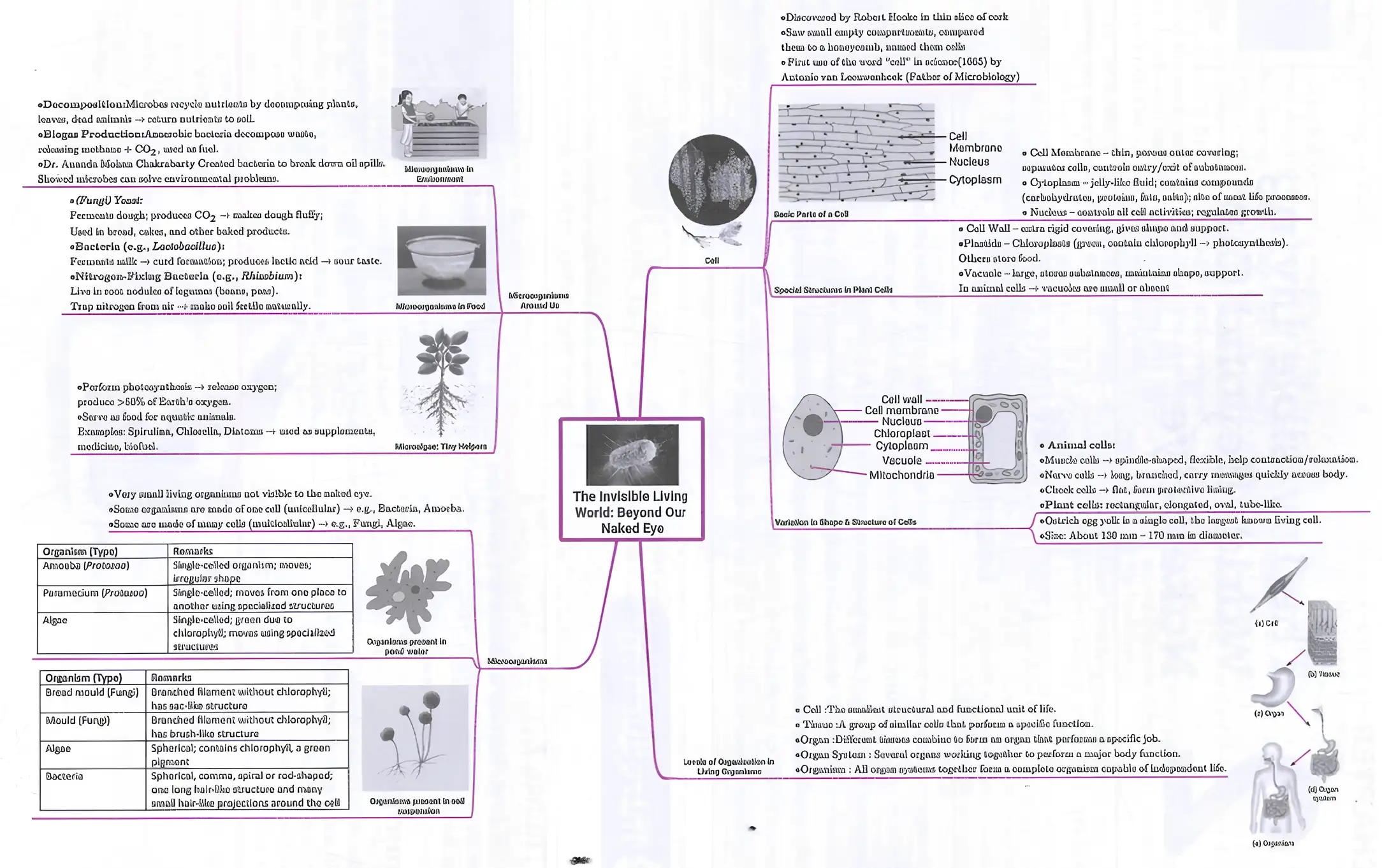
Cells
Basic Unit of Life
Cells are the smallest structural and functional units of all living organisms. They can be unicellular, consisting of a single cell, or multicellular, made up of many cells working together.
Cell Structure
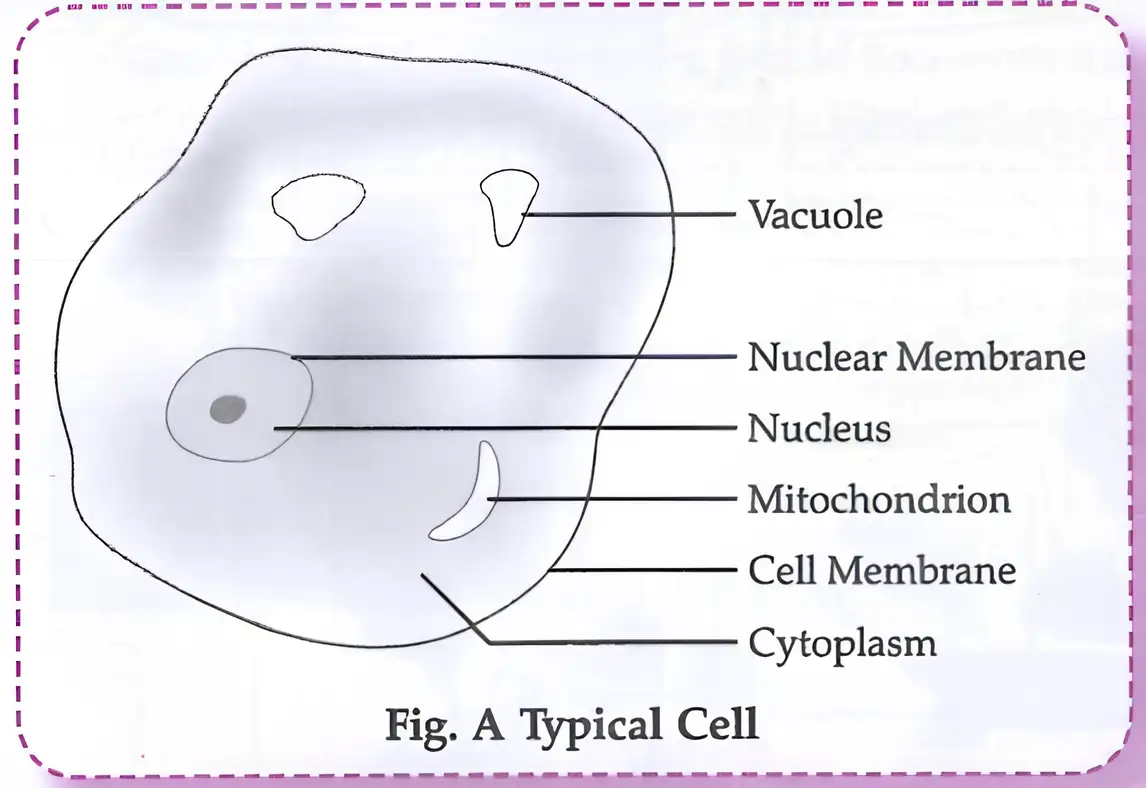
All cells have three main parts: the cell membrane, cytoplasm, and nucleus. The cell membrane acts as a protective barrier controlling the entry and exit of substances. The cytoplasm is a jelly-like fluid where cell components are suspended and where many life processes occur. The nucleus contains genetic material (DNA) and regulates cell activities.
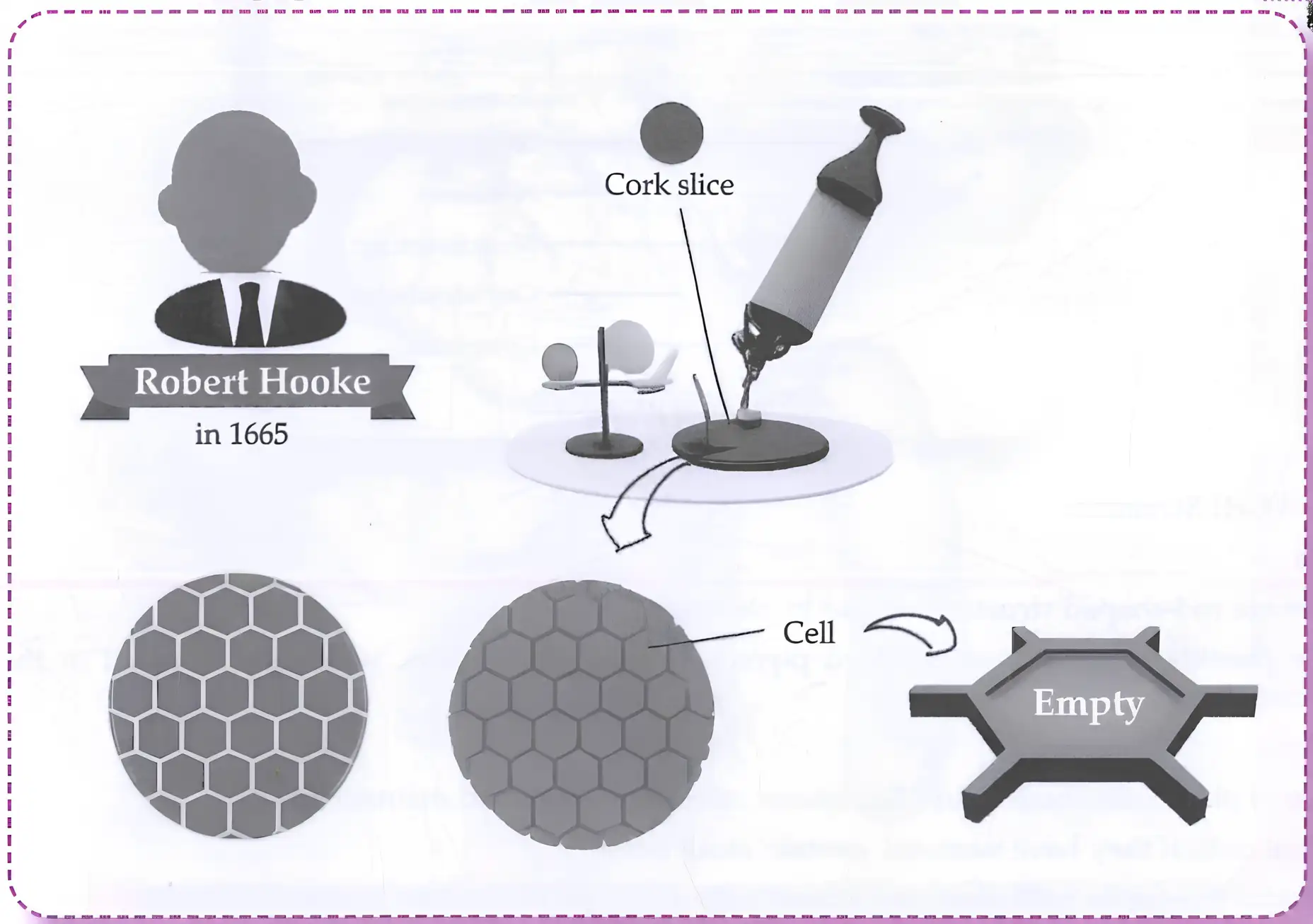
Plant vs Animal Cells
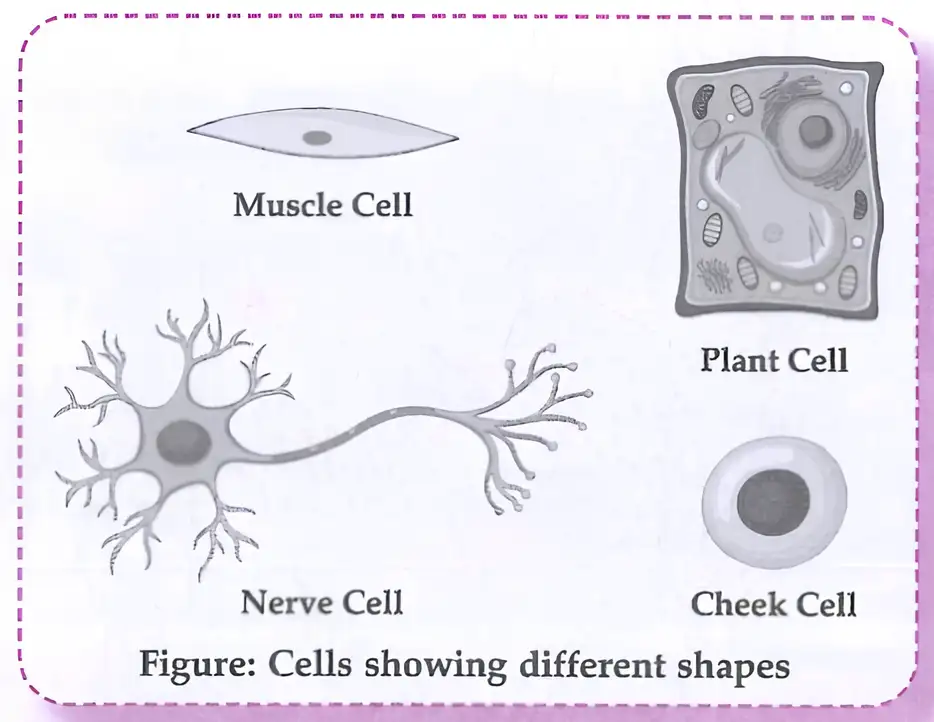
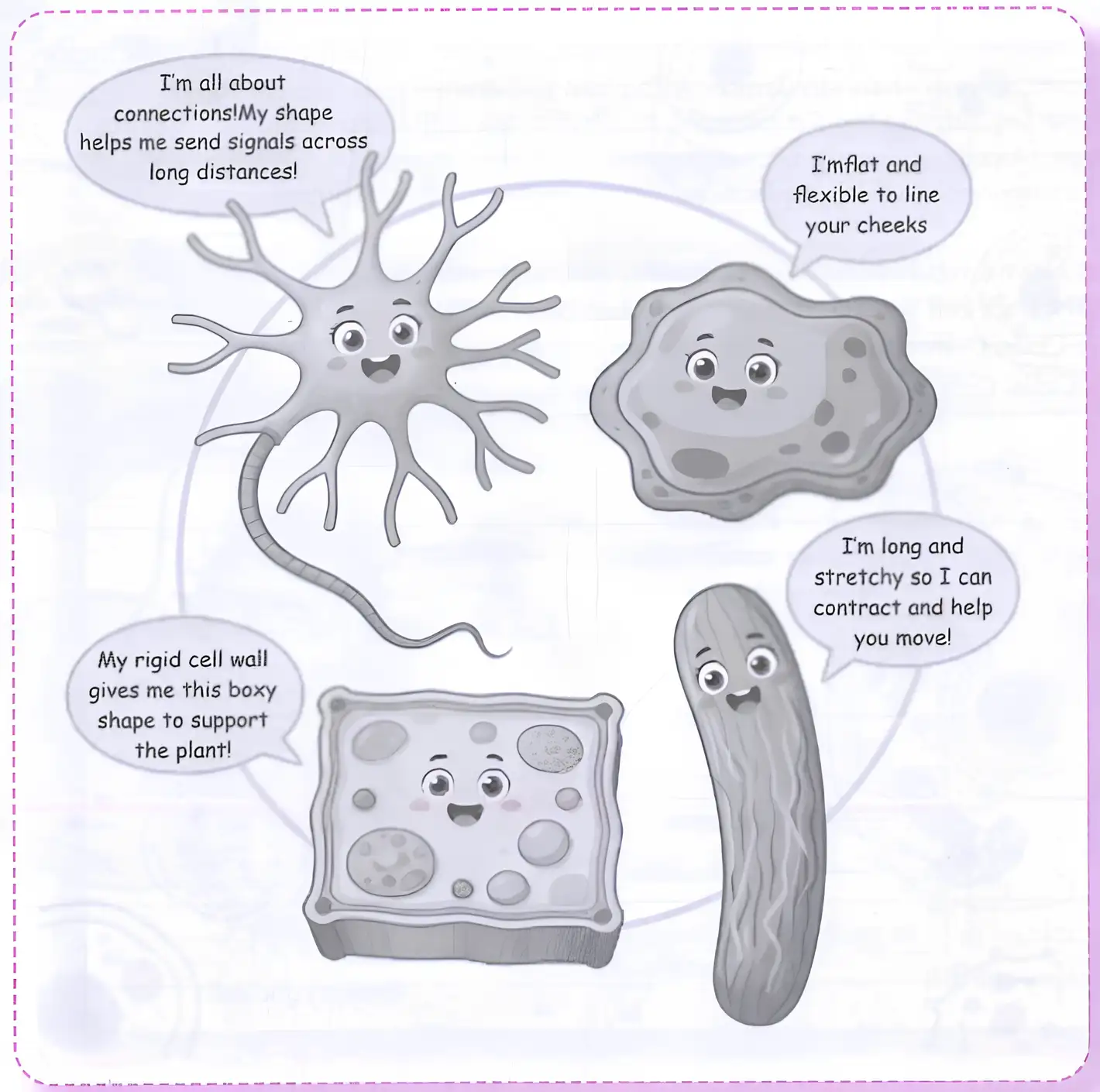
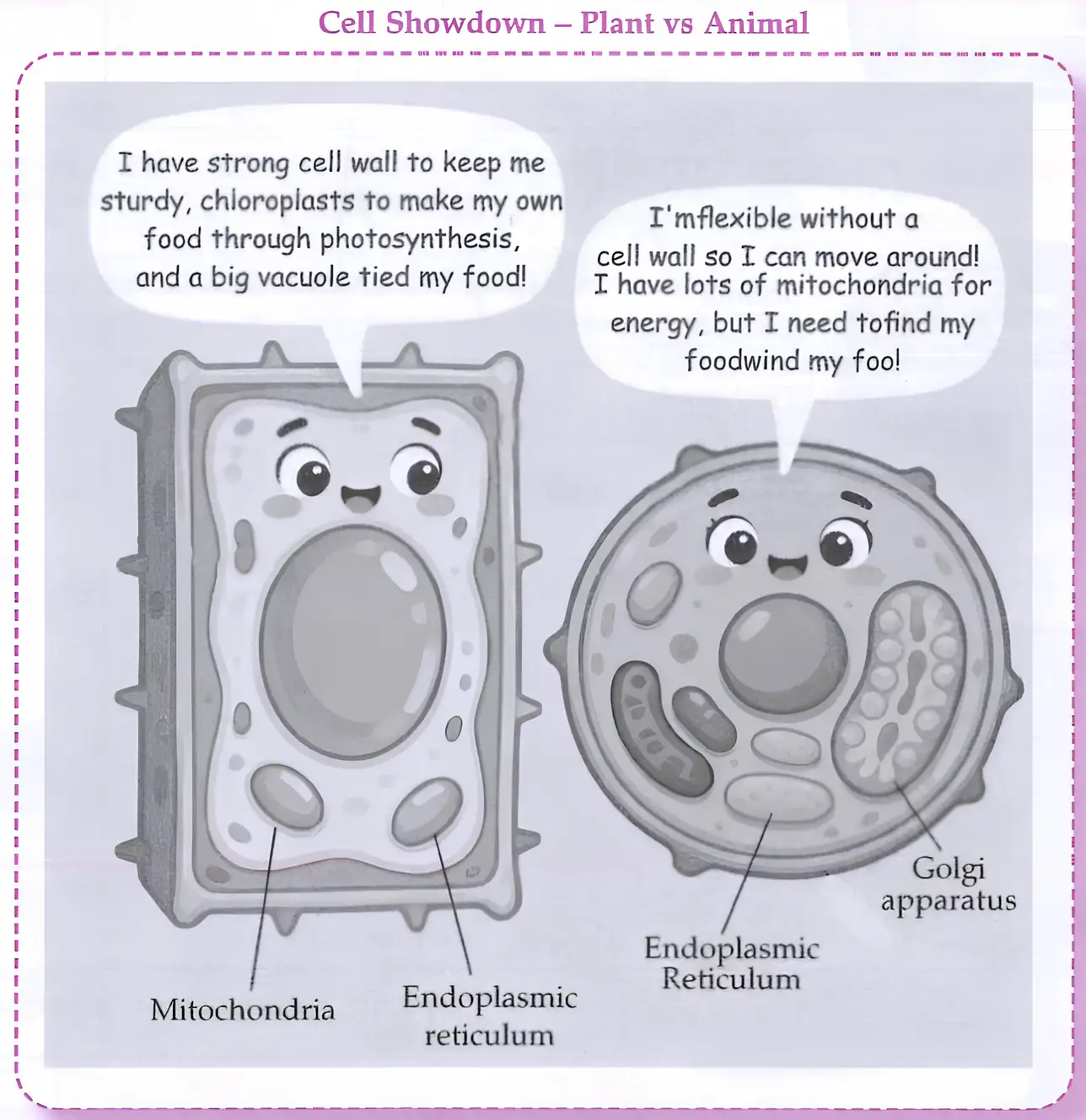
Plant cells have additional structures such as a rigid cell wall for support, chloroplasts for photosynthesis, and large central vacuoles for storage. Animal cells lack a cell wall and chloroplasts and have smaller vacuoles. The shapes of cells vary according to their functions, such as spindle-shaped muscle cells and branched nerve cells.
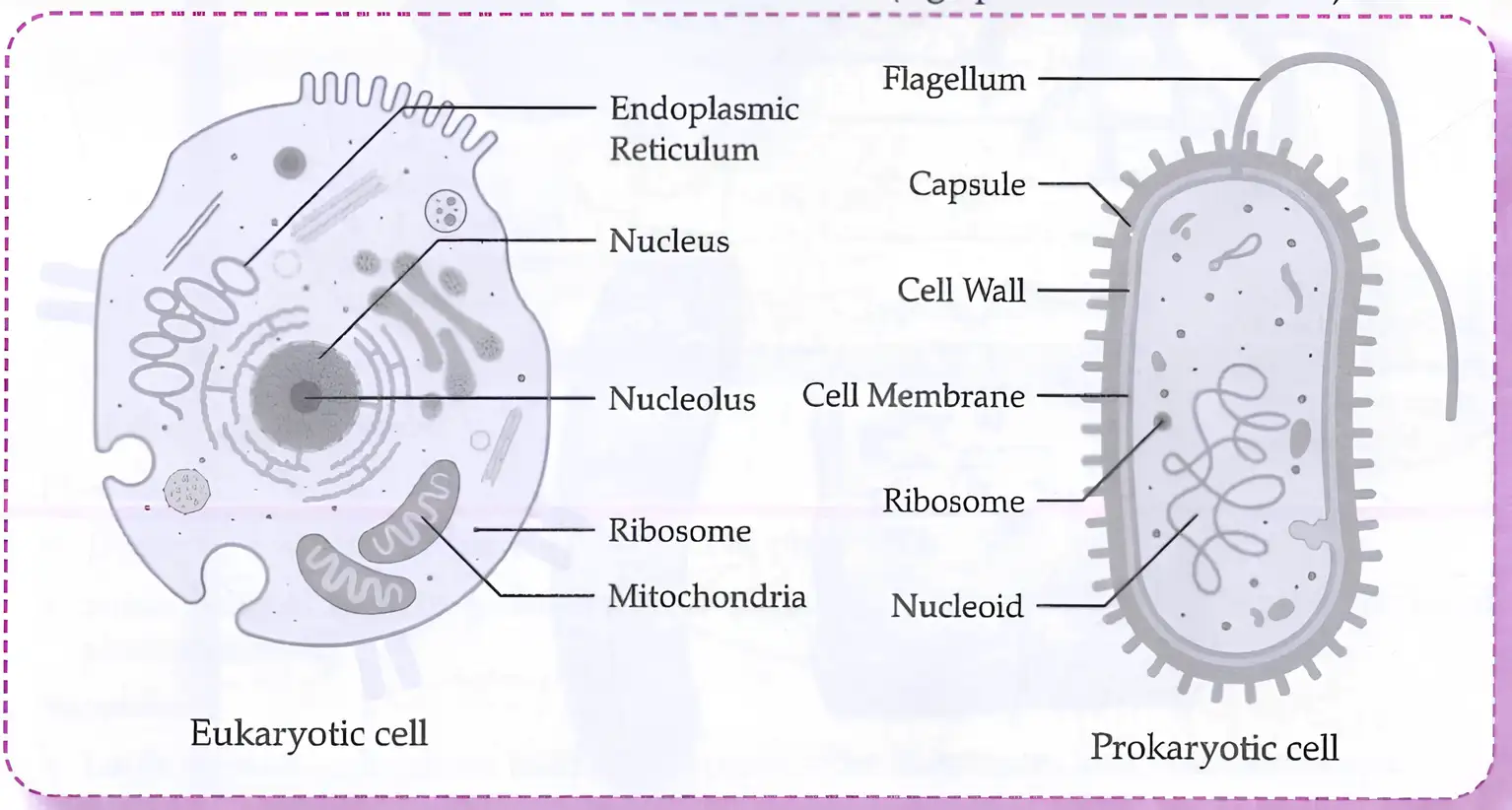
Specialized Cell Structures
Plastids like chloroplasts in plant cells help in food production through photosynthesis. Mitochondria present in both plant and animal cells generate energy. Vacuoles store nutrients and waste products, with plant cells having larger vacuoles.
Solved Examples
Example 1: Identify the main differences between plant and animal cells.
Solution: Plant cells have a cell wall, chloroplasts, and large vacuoles, while animal cells do not have a cell wall or chloroplasts and have smaller vacuoles. Plant cells are usually rectangular, and animal cells are irregular or round.
Example 2: Explain the function of the nucleus in a cell.
Solution: The nucleus contains the cell's genetic material (DNA) and controls the activities of the cell, including growth and reproduction.
Practice Set
- Level 1: What is the basic unit of life?
- Level 2: Name two differences between plant and animal cells.
- Level 3: Describe the role of mitochondria in a cell.
Answer Key
Level 1: The basic unit of life is the cell.
Level 2: Plant cells have a cell wall and chloroplasts; animal cells do not.
Level 3: Mitochondria are the energy centers of the cell, producing energy through respiration.
Microscope
Purpose and Use
A microscope is an instrument used to magnify small objects that cannot be seen with the naked eye, such as cells and microorganisms.
Parts and Functioning
A compound light microscope has an eyepiece to look through, objective lenses of different magnifications, a stage to hold the specimen slide, and focus knobs to adjust clarity. Light passes through the specimen to form a magnified image.
Steps to Use
Place the specimen on the stage, secure it with clips, start with the lowest power lens, focus using coarse and fine knobs, and increase magnification as needed.
Solved Examples
Example 1: How does a microscope help in studying cells?
Solution: A microscope magnifies tiny cells, making their structures visible and allowing detailed study of their parts and functions.
Example 2: What is the role of the fine focus knob?
Solution: The fine focus knob sharpens the image after rough focusing, providing a clear and detailed view of the specimen.
Practice Set
- Level 1: What is the main function of a microscope?
- Level 2: Name two parts of a compound microscope.
- Level 3: Explain the process of focusing a specimen under a microscope.
Answer Key
Level 1: To magnify small objects for detailed observation.
Level 2: Eyepiece and objective lenses.
Level 3: Start with the lowest power lens, use the coarse focus knob to bring the specimen roughly into focus, then use the fine focus knob to sharpen the image.
Microorganisms
Definition and Types
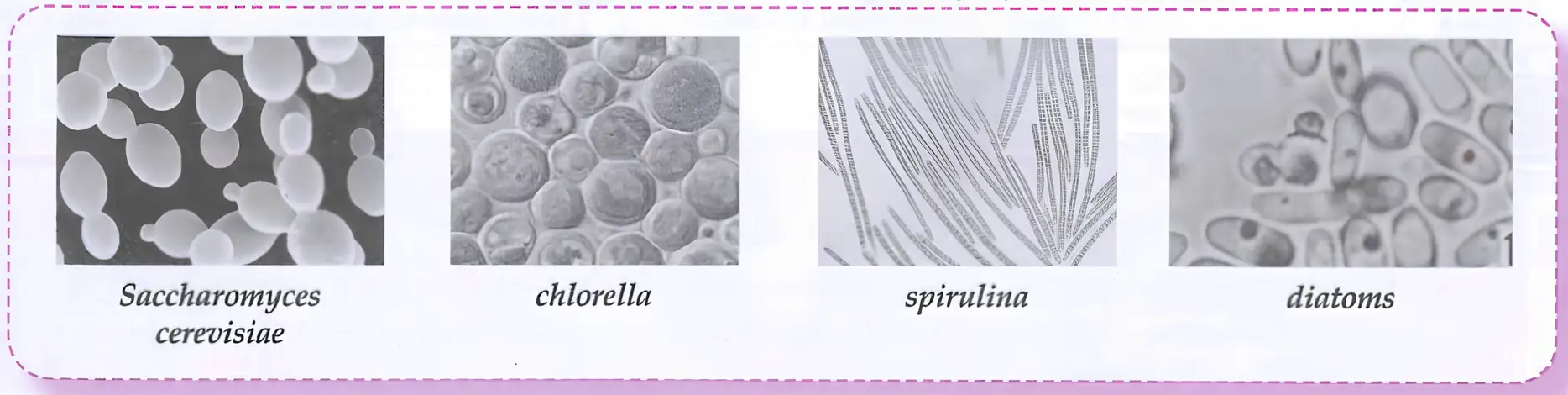
Microorganisms are tiny living organisms invisible to the naked eye. They include unicellular organisms like bacteria and protozoa, and multicellular organisms like fungi and algae.
Roles in Environment and Food
Microorganisms decompose organic waste, recycle nutrients, fix nitrogen in soil, and are used in food production such as bread, yogurt, and cheese. They also help in environmental cleanup and energy production.
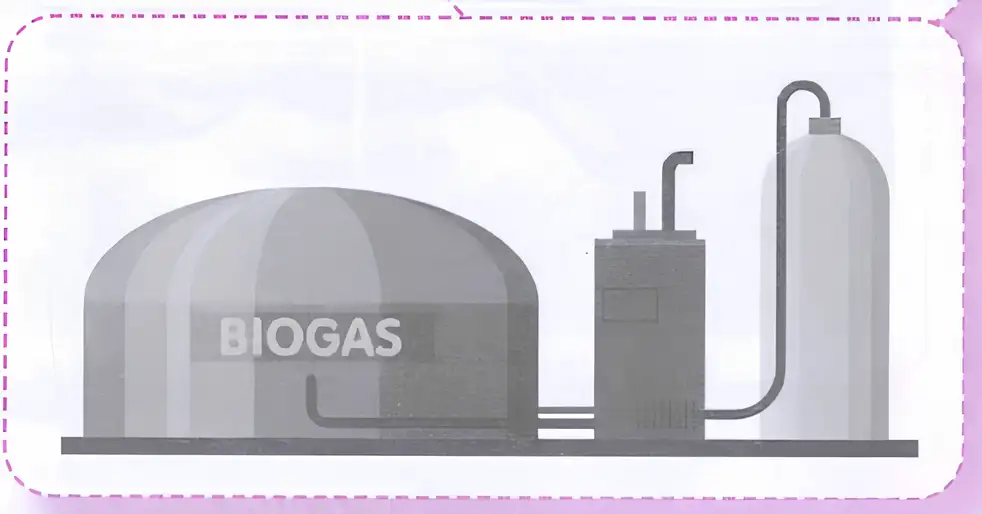
Examples and Characteristics
Bacteria are single-celled without a nucleus, protozoa have a nucleus and move using pseudopods, fungi absorb nutrients from other organisms, and algae perform photosynthesis like plants.
Solved Examples
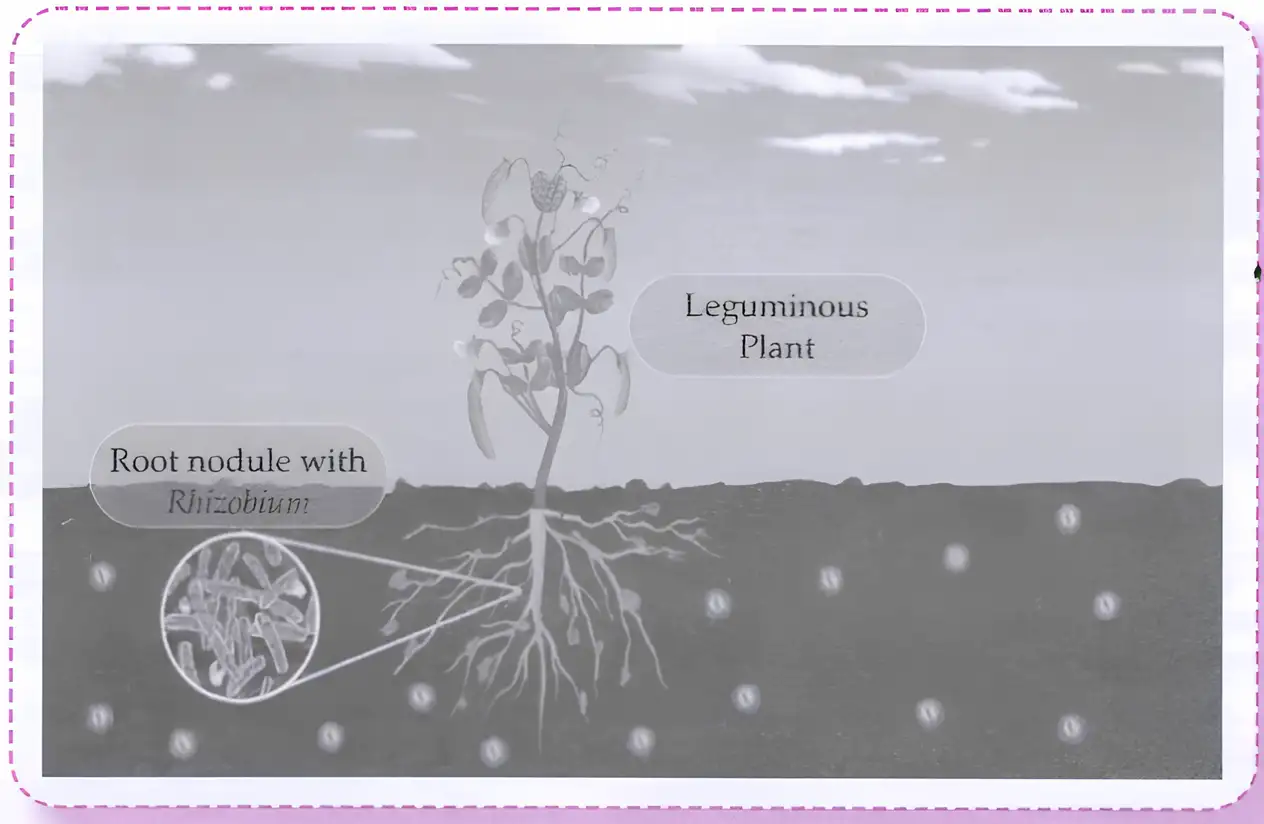
Example 1: What role do Rhizobium bacteria play in agriculture?
Solution: Rhizobium bacteria fix atmospheric nitrogen into a form usable by plants, enriching soil fertility and reducing the need for chemical fertilizers.
Example 2: How is yeast used in food production?
Solution: Yeast ferments sugars in dough, producing carbon dioxide that makes bread rise and alcohol that adds flavor.
Practice Set
- Level 1: Name two types of microorganisms.
- Level 2: Explain how microorganisms help in decomposition.
- Level 3: Describe the process of nitrogen fixation by bacteria.
Answer Key
Level 1: Bacteria and fungi.
Level 2: Microorganisms break down dead organic matter into simpler substances, recycling nutrients back into the soil.
Level 3: Nitrogen-fixing bacteria convert atmospheric nitrogen into ammonia, which plants can absorb and use for growth.
Biological Organisation
Levels of Organisation
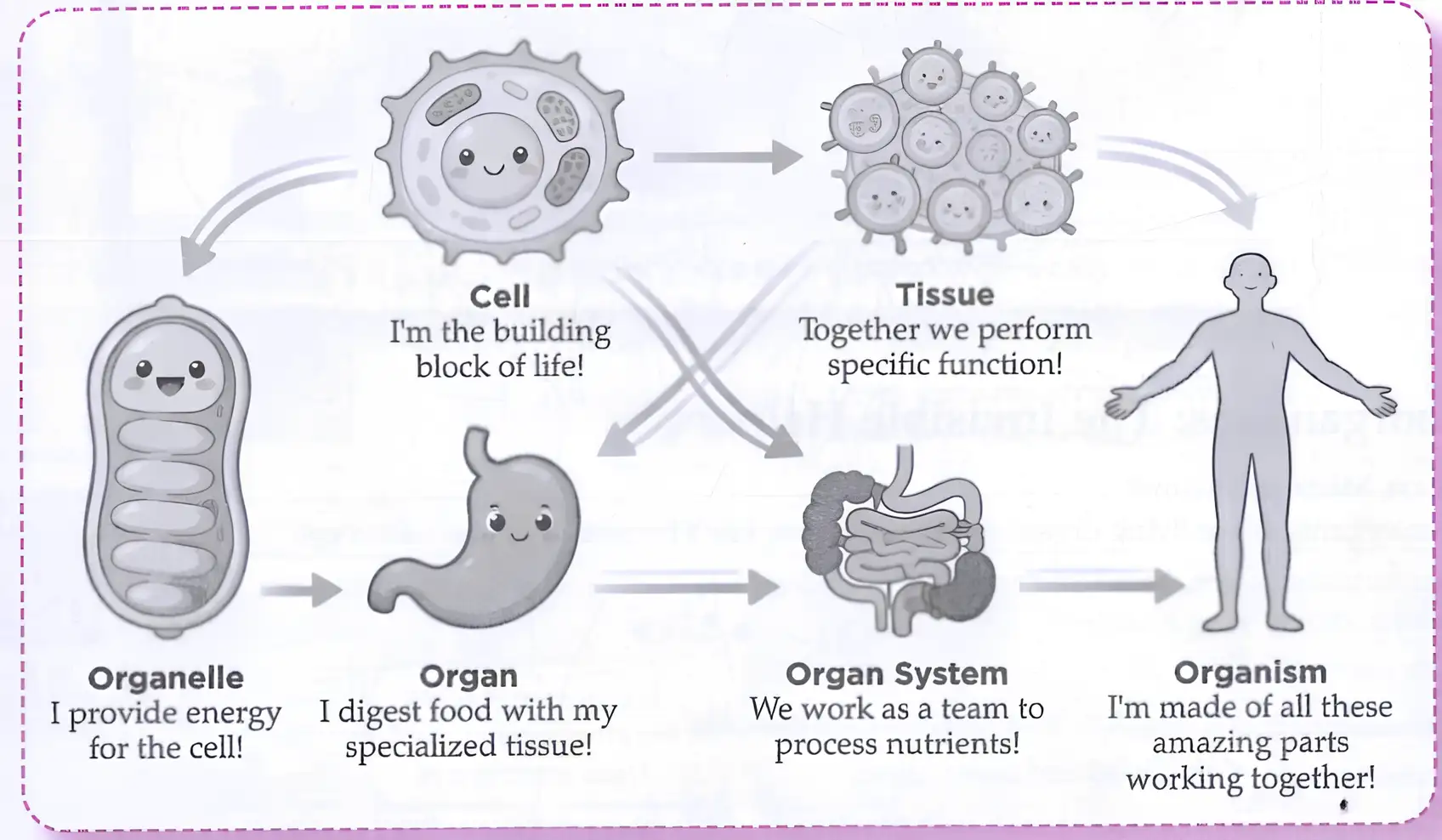
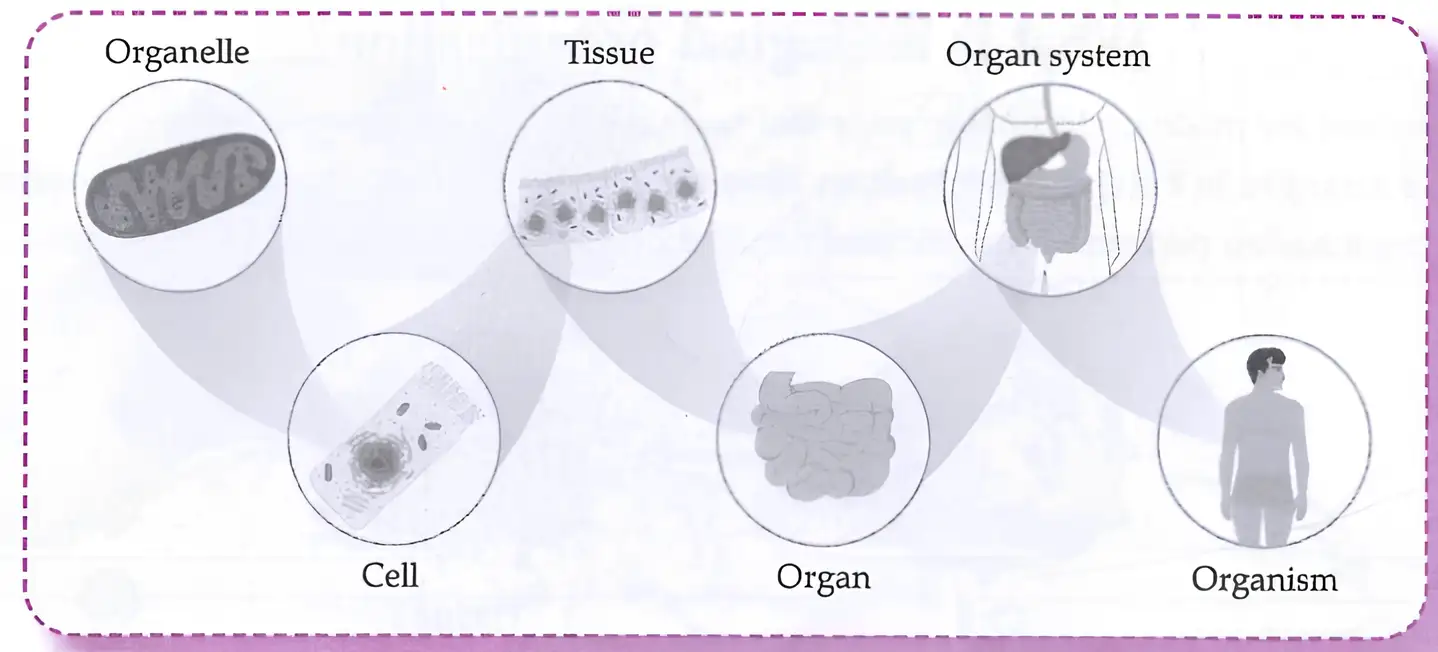
Living organisms are organized from the smallest to largest levels: organelles, cells, tissues, organs, organ systems, and organisms.
Functions of Each Level
Organelles perform specific functions within cells. Cells are the basic units of life. Tissues are groups of similar cells working together. Organs are made of tissues performing specific tasks. Organ systems are groups of organs working together to perform complex functions. Organisms are complete living beings.
Examples
Muscle tissue helps in movement, the heart is an organ that pumps blood, and the digestive system processes food.
Solved Examples
Example 1: What is a tissue?
Solution: A tissue is a group of similar cells that work together to perform a specific function.
Example 2: Give an example of an organ system and its function.
Solution: The digestive system, which includes the mouth, stomach, and intestines, helps in breaking down and absorbing food.
Practice Set
- Level 1: What is the basic unit of life?
- Level 2: Name the levels of biological organisation in order.
- Level 3: Explain how organs and organ systems are related.
Answer Key
Level 1: Cell.
Level 2: Organelle, cell, tissue, organ, organ system, organism.
Level 3: Organs are made of tissues and perform specific functions; organ systems are groups of organs working together to perform complex functions.
Quick Reference Table
Cells: Basic units of life; structural and functional units of organisms.
Microscope: Instrument to magnify small objects, enabling study of cells and microorganisms.
Microorganisms: Tiny living organisms including bacteria, fungi, protozoa, and algae; important in decomposition, nitrogen fixation, and food production.
Biological Organisation: Hierarchical levels from organelles to organisms, showing increasing complexity and function.
Cell Membrane: Controls entry and exit of substances in a cell.
Cytoplasm: Jelly-like fluid where cell activities occur.
Nucleus: Contains genetic material and regulates cell functions.
Cell Wall: Rigid outer layer in plant cells providing support.
Chloroplasts: Organelles in plant cells responsible for photosynthesis.
Vacuoles: Storage structures in cells; large in plant cells.
Prokaryotic Cells: Cells without a defined nucleus (e.g., bacteria).
Eukaryotic Cells: Cells with a nucleus and organelles (e.g., plant and animal cells).
Fermentation: Process by which yeast and bacteria produce food products like bread and curd.
Nitrogen Fixation: Conversion of atmospheric nitrogen into usable forms by bacteria like Rhizobium.
Common Mistakes and Misconceptions
- Confusing cell wall with cell membrane: The cell wall is present only in plant cells and provides rigidity, while the cell membrane is present in all cells and controls substance movement.
- Assuming all microorganisms cause diseases: Many microorganisms are beneficial, helping in processes like decomposition, nitrogen fixation, and food production.
- Mixing up unicellular and multicellular organisms: Unicellular organisms consist of a single cell performing all life functions, whereas multicellular organisms have specialized cells forming tissues and organs.
- Believing that all cells have the same shape: Cells vary in shape depending on their function, such as nerve cells being branched and muscle cells being spindle-shaped.
- Thinking that microscopes create images of objects: Microscopes magnify existing images; they do not create images but enlarge the view of tiny objects.
- Assuming viruses are living organisms like bacteria: Viruses are not considered living cells as they cannot reproduce independently and require a host cell.
- Confusing chloroplasts with mitochondria: Chloroplasts are involved in photosynthesis in plant cells, while mitochondria generate energy in both plant and animal cells.
- Believing that all bacteria are harmful: Many bacteria are helpful, such as those involved in nitrogen fixation and food fermentation.
Glossary
Cell: The basic structural and functional unit of all living organisms.
Cell Membrane: A thin layer surrounding the cell that controls the movement of substances in and out.
Cytoplasm: Jelly-like substance inside the cell where organelles are suspended and many cellular activities occur.
Nucleus: The control center of the cell containing genetic material (DNA).
Cell Wall: A rigid outer layer found in plant cells that provides support and protection.
Chloroplast: Organelles in plant cells that carry out photosynthesis to make food.
Vacuole: Storage sacs within cells; large in plant cells and small or absent in animal cells.
Prokaryotic Cell: A cell without a defined nucleus, such as bacteria.
Eukaryotic Cell: A cell with a well-defined nucleus and organelles, such as plant and animal cells.
Microorganisms: Tiny living organisms that cannot be seen with the naked eye, including bacteria, fungi, protozoa, and algae.
Microscope: An instrument used to magnify small objects to make them visible.
Fermentation: A process where microorganisms like yeast convert sugars into alcohol or acids, used in food production.
Nitrogen Fixation: The conversion of atmospheric nitrogen into a form usable by plants, carried out by certain bacteria.
Tissue: A group of similar cells working together to perform a specific function.
Organ: A structure made of different tissues that performs a particular function.
Organ System: A group of organs working together to perform complex functions.
Organism: A complete living being made up of organ systems.