CLASS 8 . SCIENCE . CURIOSITY . EXPLORING THE-INVESTIGATIVE-WORLD-OF-SCIENCE
Chapter 1 : Exploring the Investigative World of Science
Ch 1
SCIENCE
CLASS 8
Spirit of Science
Curiosity and Questions
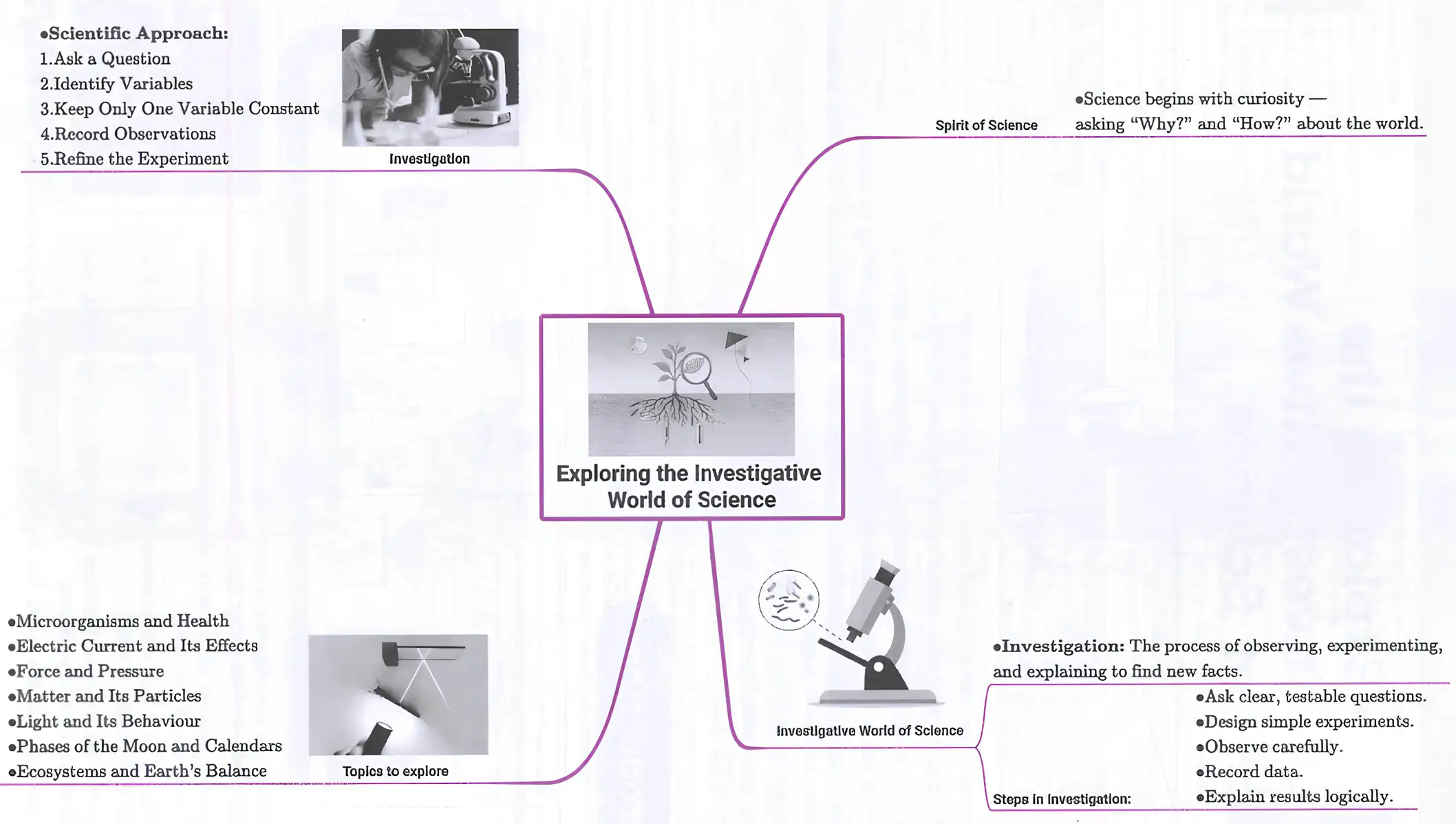
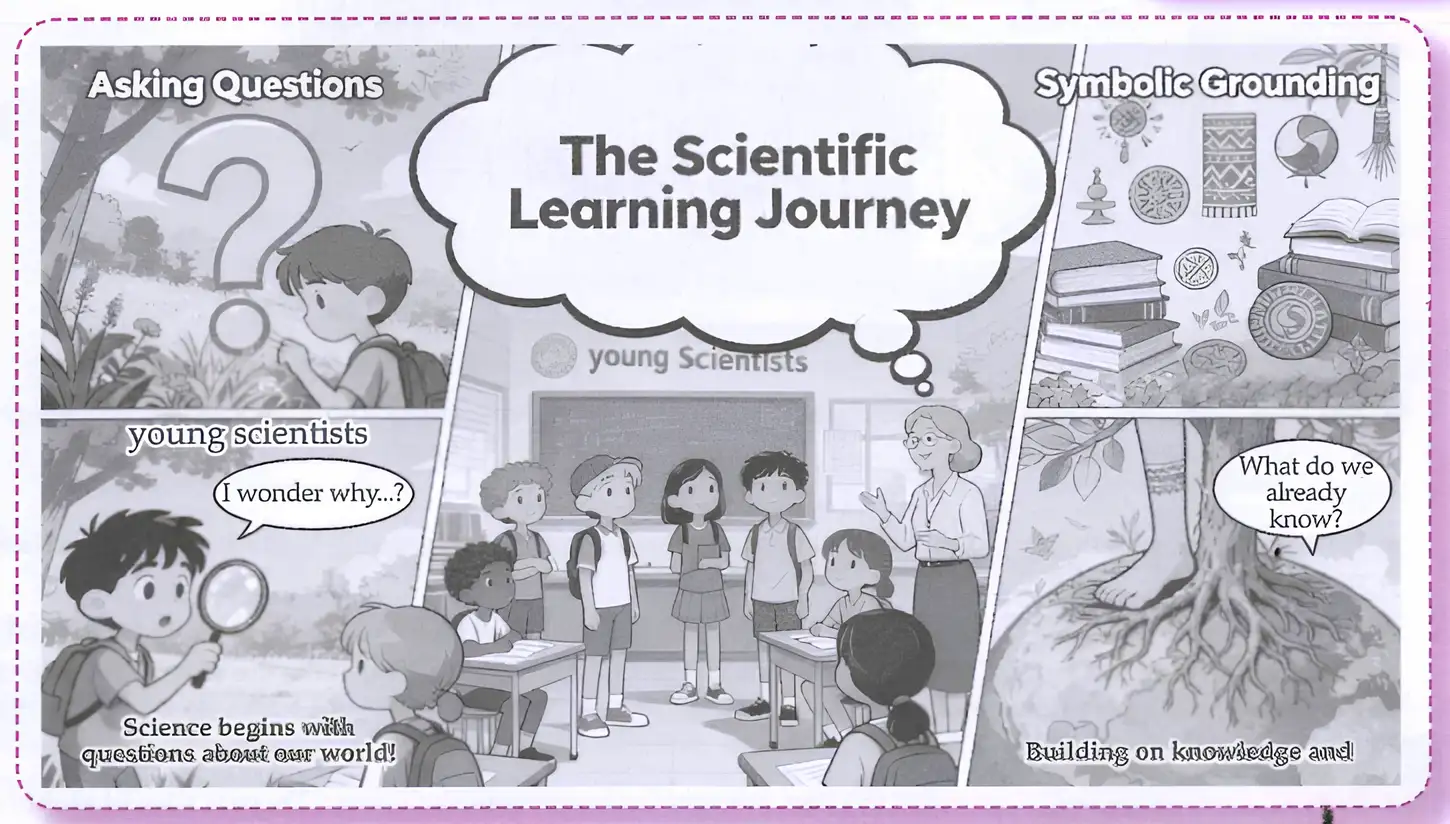
Science begins with curiosity, the desire to understand the world around us. It involves asking questions such as "Why?" and "How?" to explore natural phenomena.
Scientific Approach
The scientific approach involves systematic steps: asking a clear question, identifying variables, keeping only one variable constant at a time, recording observations carefully, and refining experiments based on results.
Exploration Topics
Science explores diverse topics including microorganisms and health, electric current, force, matter, light, moon phases, and ecosystems.
Investigative Process
Scientific investigation means observing, experimenting, and explaining to discover new facts. It requires designing simple experiments, making careful observations, recording data, and logically explaining results.
Solved Examples
Example 1: A student wonders why a puri puffs up unevenly when fried. They plan an experiment by varying dough thickness and oil temperature, observe the puffing, and conclude that steam formation causes puffing, affected by dough thickness and oil temperature.
Practice Set
- Level 1: What is the first step in the scientific approach?
- Level 2: Why is it important to keep only one variable constant in an experiment?
- Level 3: Design a simple experiment to test how temperature affects the rate of a chemical reaction.
Answer Key
- Level 1: Asking a clear, testable question.
- Level 2: To ensure that the effect observed is due to the variable being tested, avoiding confusion from multiple changing factors.
- Level 3: Keep all factors constant except temperature; measure reaction rate at different temperatures; record observations and analyze results.
Forces and Motion
Effect of Force
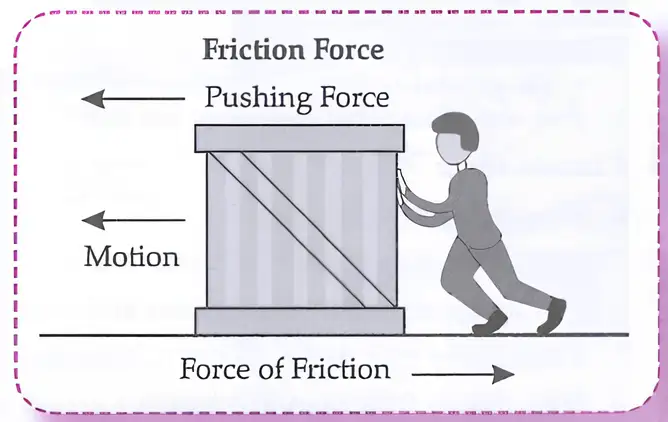
Force can make objects speed up, slow down, stop, or change direction. It is a push or pull acting on an object.
Examples of Forces
A ball thrown upwards falls due to gravity pulling it down. A car stops because friction in the brakes opposes its motion.
Pressure
Pressure is force distributed over an area. Small pressure differences cause gentle breezes, while large differences can cause storms or cyclones.
Solved Examples
Example 1: A person pushes a box with a force of 50 N. The friction force opposing the motion is 30 N. Will the box move? Calculate the net force.
Solution: Net force = Applied force - Friction force = 50 N - 30 N = 20 N. Since net force is positive, the box will move in the direction of the applied force.
Practice Set
- Level 1: What happens to an object when a force is applied?
- Level 2: Explain how friction affects motion.
- Level 3: Calculate the pressure exerted by a force of 100 N on an area of 5 m².
Answer Key
- Level 1: It may speed up, slow down, stop, or change direction.
- Level 2: Friction opposes motion, making it harder for objects to move.
- Level 3: Pressure = Force / Area = 100 N / 5 m² = 20 N/m².
Particles of Matter
Definition of Matter
Matter is anything that has mass and occupies space. It is made up of tiny particles.
States of Matter
There are three main states: solids, liquids, and gases.
Solids
Particles are closely packed in a fixed pattern and vibrate in place. Solids have fixed shape and volume.
Liquids
Particles are close but can move past each other. Liquids have fixed volume but take the shape of their container.
Gases
Particles are far apart and move randomly at high speeds. Gases have neither fixed shape nor volume and fill their container.
Classification of Matter
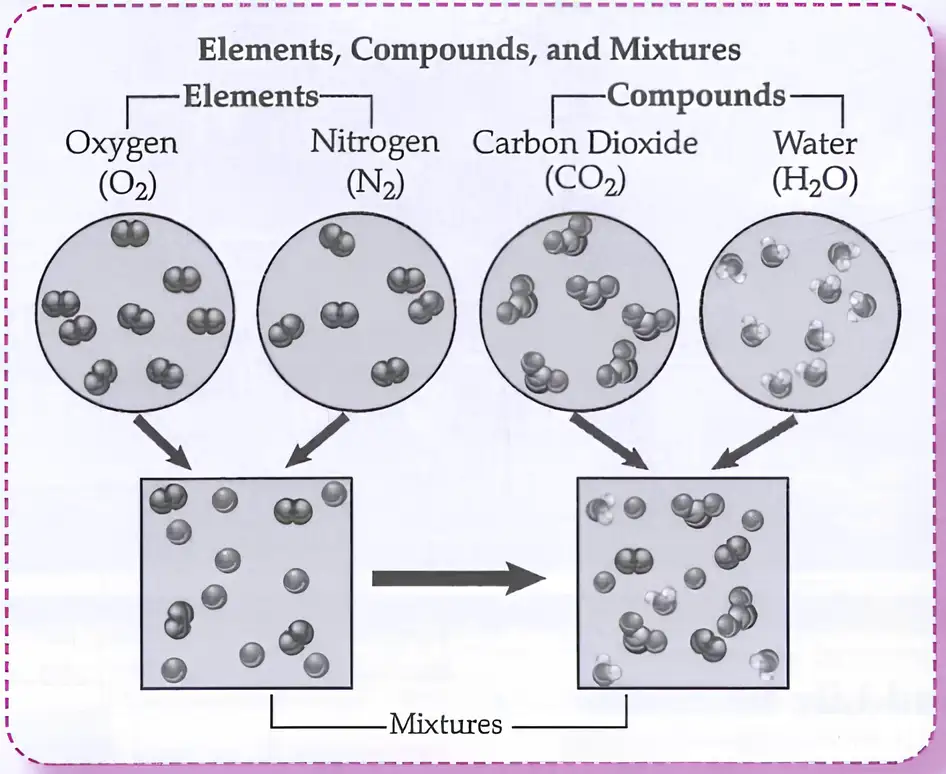
Elements are pure substances made of one type of atom. Compounds are substances formed by chemical bonding of two or more elements. Mixtures are physical combinations of substances without chemical bonding.
Solved Examples
Example 1: Identify whether air is an element, compound, or mixture.
Solution: Air is a mixture of gases like nitrogen and oxygen, physically combined but not chemically bonded.
Practice Set
- Level 1: What is matter?
- Level 2: Describe the particle arrangement in liquids.
- Level 3: Explain the difference between a compound and a mixture with examples.
Answer Key
- Level 1: Matter is anything that has mass and occupies space.
- Level 2: Particles are close together but can move past each other freely.
- Level 3: A compound is chemically bonded substances (e.g., water), while a mixture is a physical combination (e.g., salt water).
Light
Reflection
Light reflects off smooth, shiny surfaces like mirrors, bouncing back in a predictable way to form images.
Refraction
Light bends when it passes from one transparent medium to another, such as air to glass. This bending is called refraction and is used in lenses.
Applications
Lenses help correct vision, cameras focus light, and the Moon reflects sunlight, causing its phases.
Solved Examples
Example 1: Explain why the Moon appears to change shape during the month.
Solution: The Moon's phases occur because of its orbit around Earth, changing the portion of the sunlit side visible to us.
Practice Set
- Level 1: What is reflection of light?
- Level 2: How does refraction help in vision correction?
- Level 3: Describe the cause of the Moon's phases.
Answer Key
- Level 1: Reflection is the bouncing back of light from a surface.
- Level 2: Lenses bend light to focus it on the retina, correcting vision defects.
- Level 3: The Moon's phases are due to its changing position relative to Earth and Sun, altering the visible illuminated portion.
Moon and Calendars
Phases of the Moon
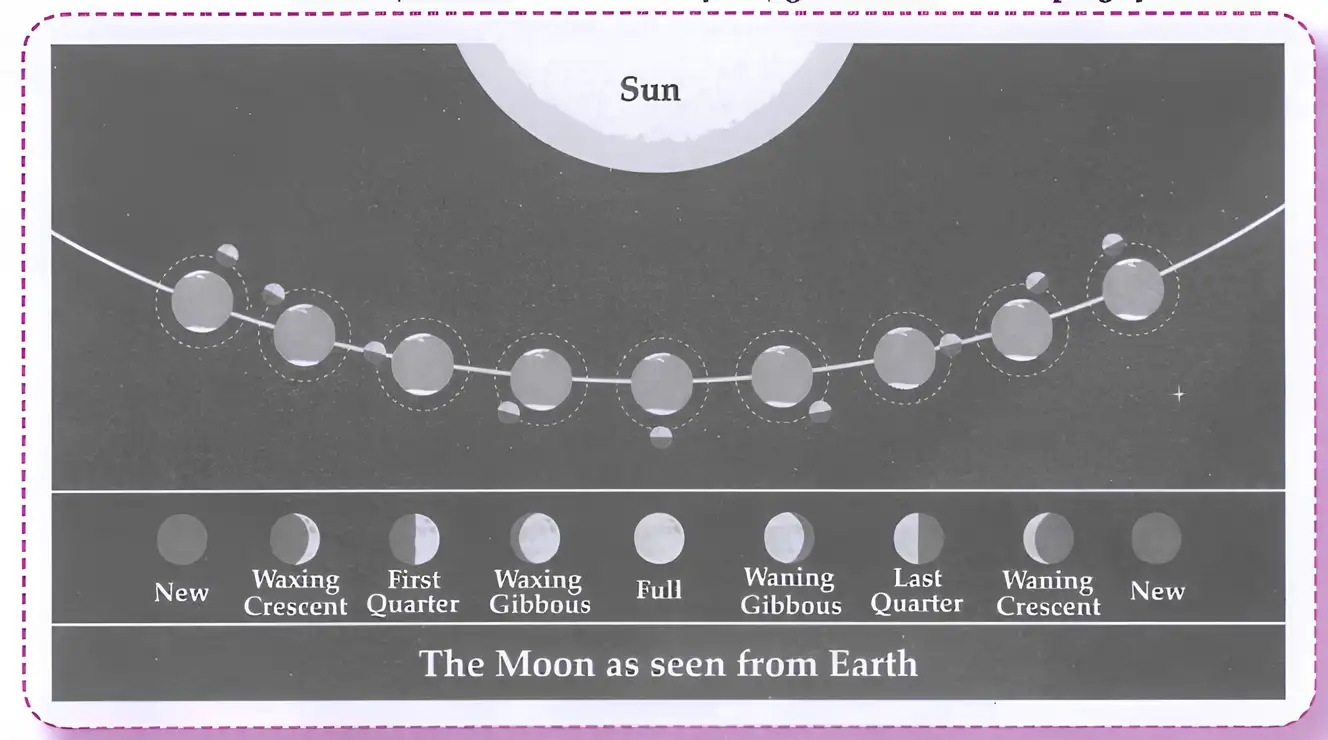
The Moon completes a cycle of phases approximately every 29.5 days, from new moon to full moon and back.
Cause of Phases
The phases result from the changing angles of sunlight on the Moon as it orbits Earth.
Calendars
Observations of lunar cycles led to the creation of early calendars and timekeeping systems.
Solved Examples
Example 1: How long does it take for the Moon to complete one full phase cycle?
Solution: About 29.5 days.
Practice Set
- Level 1: What causes the phases of the Moon?
- Level 2: How were lunar phases used in early calendars?
- Level 3: Explain why the Moon does not change shape even though it appears to.
Answer Key
- Level 1: The changing position of the Moon relative to Earth and Sun causes the phases.
- Level 2: The regular lunar cycle was used to mark time and create calendars.
- Level 3: The Moon's shape stays the same; the visible illuminated part changes due to sunlight angles.
Ecosystems and Life
Conditions for Life
Earth supports life due to its suitable distance from the Sun, presence of oxygen, protective atmosphere, and liquid water.
Interactions
Living beings interact with their environment, including air, water, sunlight, soil, and other organisms.
Ecosystem Fragility
Ecosystems are delicate and can be easily disturbed by environmental changes.
Solved Examples
Example 1: Why is Earth's atmosphere important for life?
Solution: It provides oxygen for breathing and protects from harmful ultraviolet rays.
Practice Set
- Level 1: Name three conditions that make Earth suitable for life.
- Level 2: How do living organisms interact with their environment?
- Level 3: Explain why ecosystems are sensitive to changes.
Answer Key
- Level 1: Suitable distance from Sun, oxygen, liquid water.
- Level 2: Organisms depend on air, water, sunlight, soil, and other organisms for survival.
- Level 3: Changes can disrupt food chains, habitats, and balance, affecting all organisms.
Climate Change and Impact
Human Activities
Pollution, deforestation, and greenhouse gas emissions disturb Earth's natural balance.
Effects
These activities cause global warming, climate change, and extreme weather patterns.
Role of Science
Science helps us understand causes and develop solutions to protect the environment.
Solved Examples
Example 1: What are some effects of human activities on the environment?
Solution: Global warming, climate change, and dangerous weather events.
Practice Set
- Level 1: Name one human activity that harms the environment.
- Level 2: How does deforestation affect climate?
- Level 3: Suggest ways science can help reduce climate change.
Answer Key
- Level 1: Pollution.
- Level 2: It reduces trees that absorb carbon dioxide, increasing greenhouse gases.
- Level 3: Developing renewable energy, improving waste management, and promoting conservation.
Quick Reference Table
- Spirit of Science: Begins with curiosity and asking questions to explore the natural world.
- Scientific Approach: Involves asking questions, controlling variables, observing, recording data, and refining experiments.
- Forces and Motion: Force causes changes in motion; pressure is force over area.
- Particles of Matter: Matter has mass and volume; exists as solids, liquids, and gases with distinct particle arrangements.
- Light: Reflects from surfaces and refracts through lenses; causes Moon phases.
- Moon and Calendars: Moon phases cycle every 29.5 days; lunar cycles helped develop calendars.
- Ecosystems and Life: Earth supports life due to suitable conditions; organisms interact with environment.
- Climate Change and Impact: Human activities cause global warming and climate change; science aids in solutions.
Common Mistakes and Misconceptions
- Confusing Variables: Changing multiple variables at once can lead to unclear results.
- Misunderstanding Force: Thinking force always causes motion; sometimes it balances other forces.
- States of Matter: Assuming solids, liquids, and gases are rigid categories; some substances can change states under conditions.
- Light Behavior: Believing light bends only in lenses; refraction occurs in many transparent materials.
- Moon Phases: Thinking the Moon changes shape physically; phases are due to sunlight angles.
- Ecosystem Stability: Underestimating how small changes can disrupt ecosystems.
- Climate Change: Assuming climate change is natural only; human activities significantly contribute.
Glossary
- Curiosity: A strong desire to learn or know something.
- Variable: A factor that can change in an experiment.
- Force: A push or pull that can change an object's motion.
- Pressure: Force applied over a specific area.
- Matter: Anything that has mass and occupies space.
- Element: A pure substance made of one type of atom.
- Compound: A substance formed when two or more elements chemically combine.
- Mixture: A physical combination of substances not chemically bonded.
- Reflection: Bouncing back of light from a surface.
- Refraction: Bending of light as it passes from one medium to another.
- Moon Phases: The changing appearance of the Moon as seen from Earth during its orbit.
- Ecosystem: A community of living organisms interacting with their environment.
- Climate Change: Long-term changes in Earth's climate caused by natural and human factors.