Force
Definition and Effects
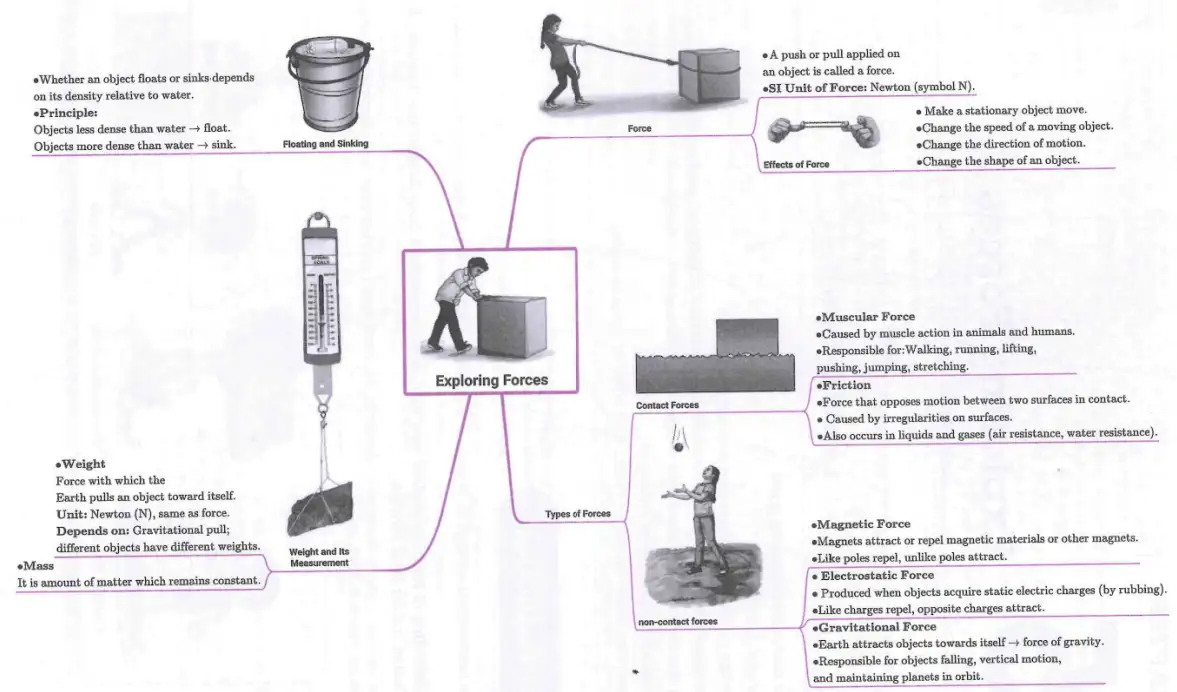
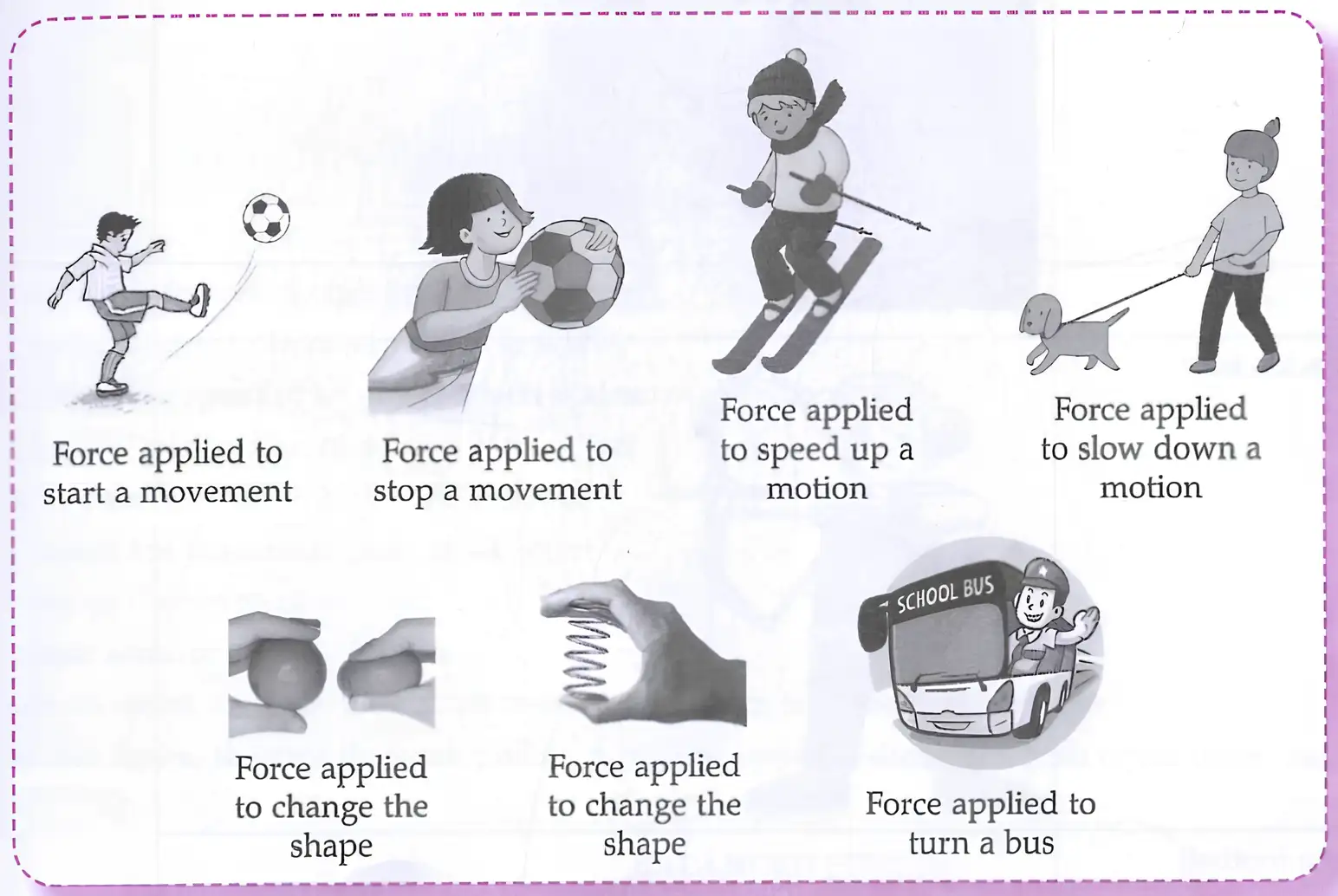
Force is a push or pull on an object that can start or stop its movement, change its speed or direction, or alter its shape or size. It requires interaction between at least two objects.
Everyday Examples
Forces are involved in many daily activities such as pushing a door, pulling a drawer, riding a bicycle, or kicking a football. They cause objects to move, stop, change direction, or change shape.
Balanced Forces
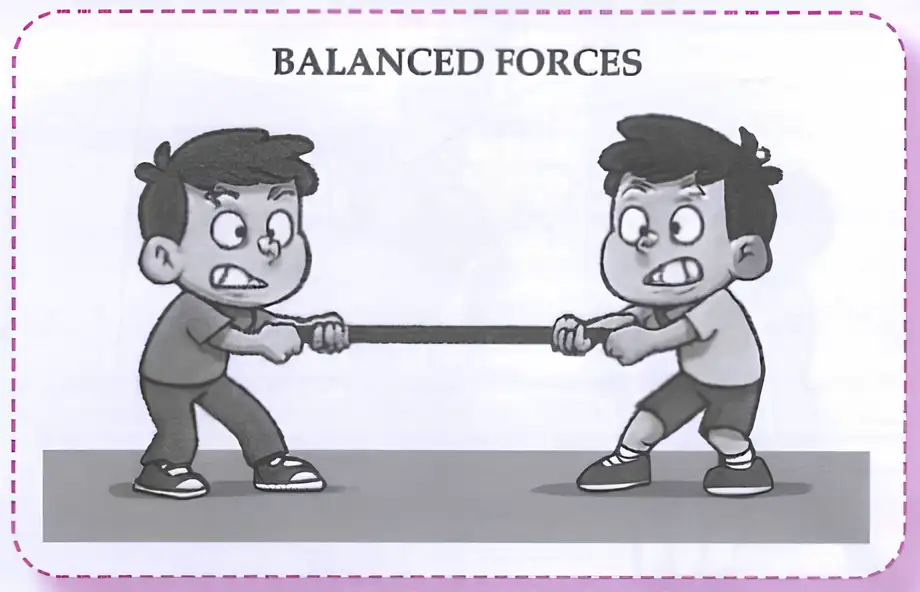
When two forces of equal magnitude act in opposite directions on an object, they cancel each other out, resulting in no change in motion. This is called balanced force.
Unit of Force
The SI unit of force is the newton (N). One newton is the force that produces an acceleration of 1 meter per second squared on a mass of 1 kilogram.
Types of Forces
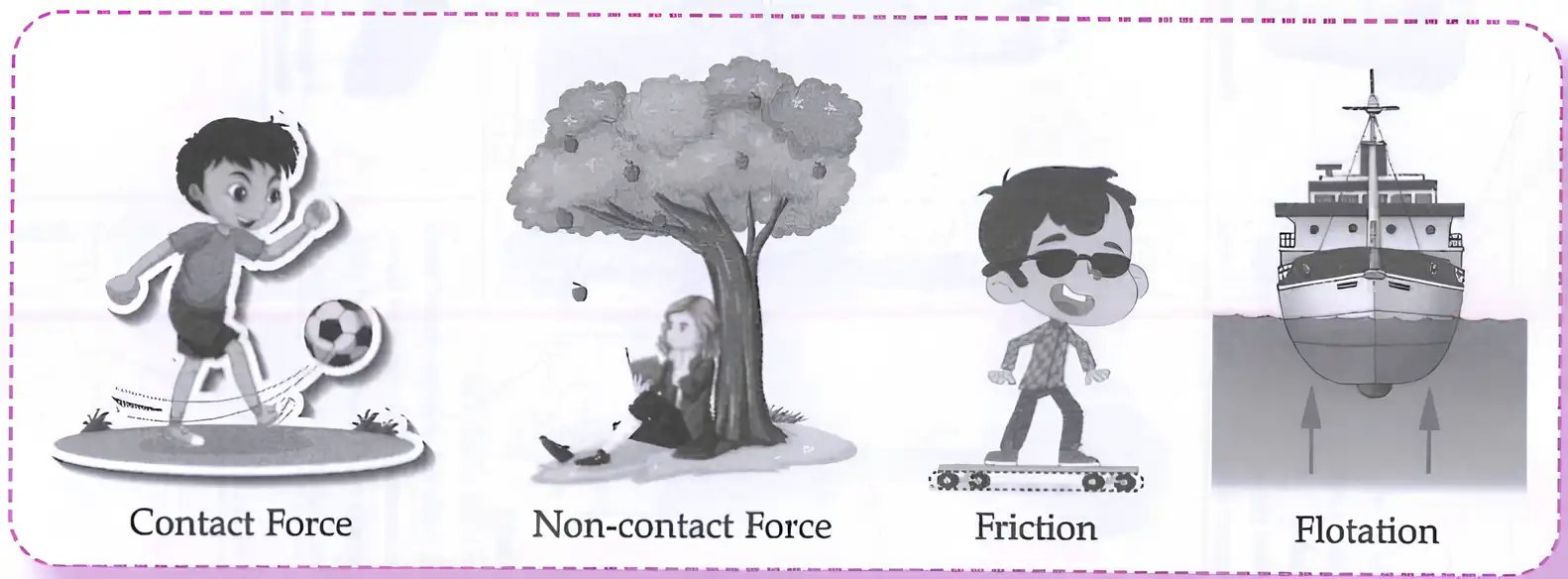
Forces are broadly classified into contact forces and non-contact forces.
Contact Force
Definition
Contact forces act when two objects physically touch each other. They can be direct, like pushing a cart, or indirect, like pulling a bucket with a rope.
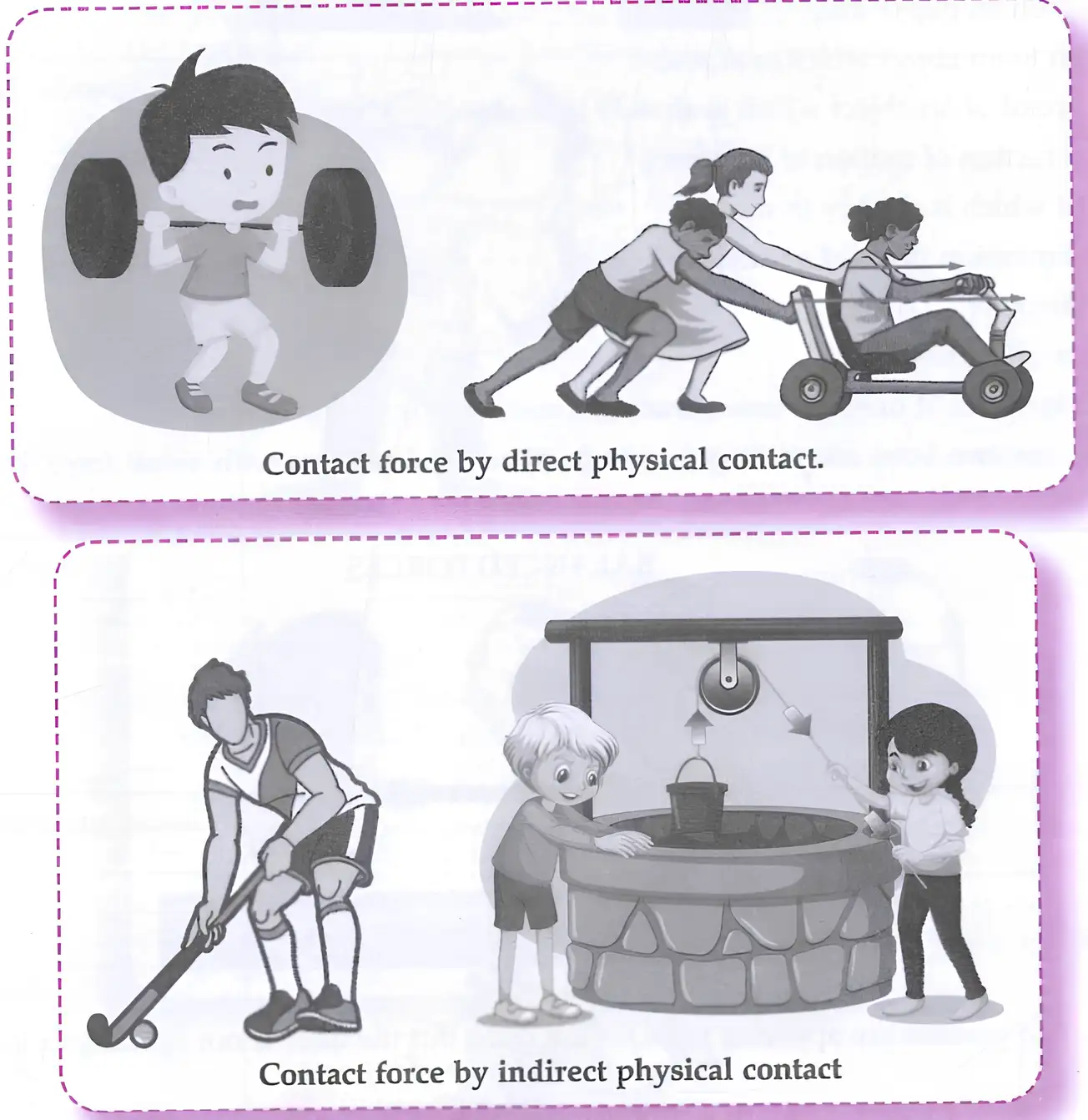
Examples of Contact Forces
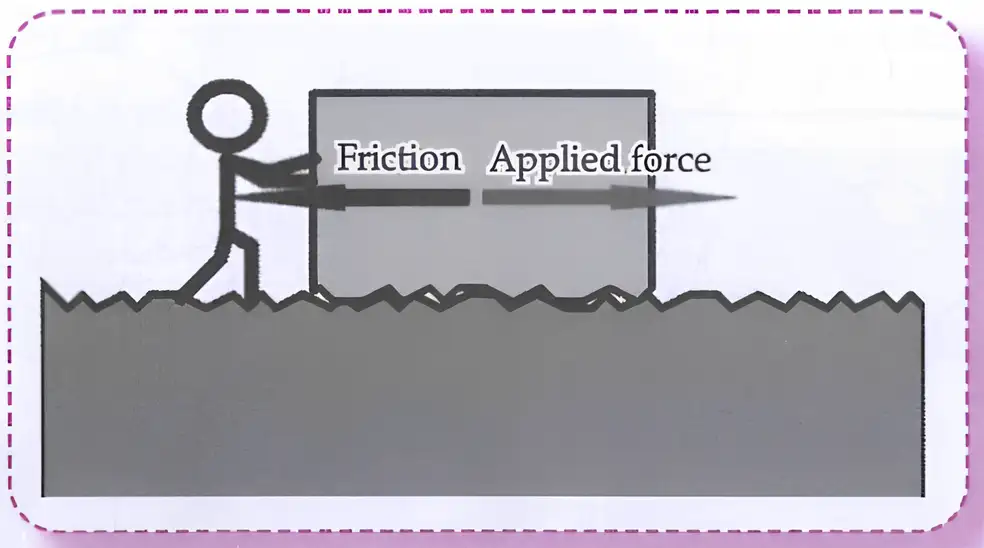
Muscular force is a common contact force generated by muscle contraction, enabling activities like walking, running, lifting, and chewing. Friction is another contact force that opposes motion between surfaces in contact.
Friction
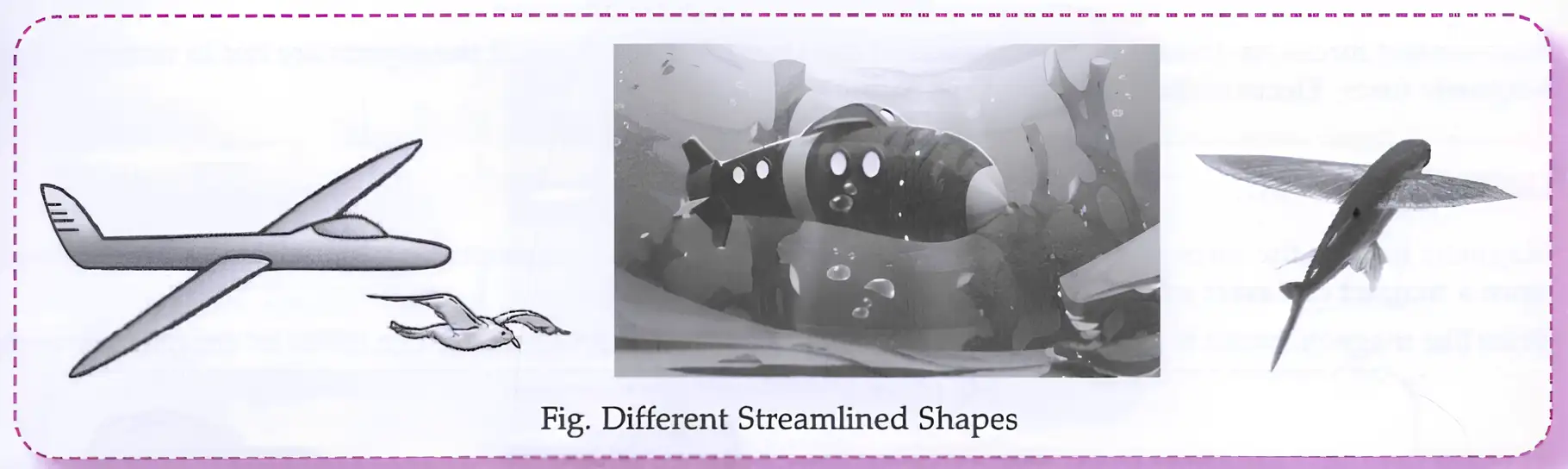
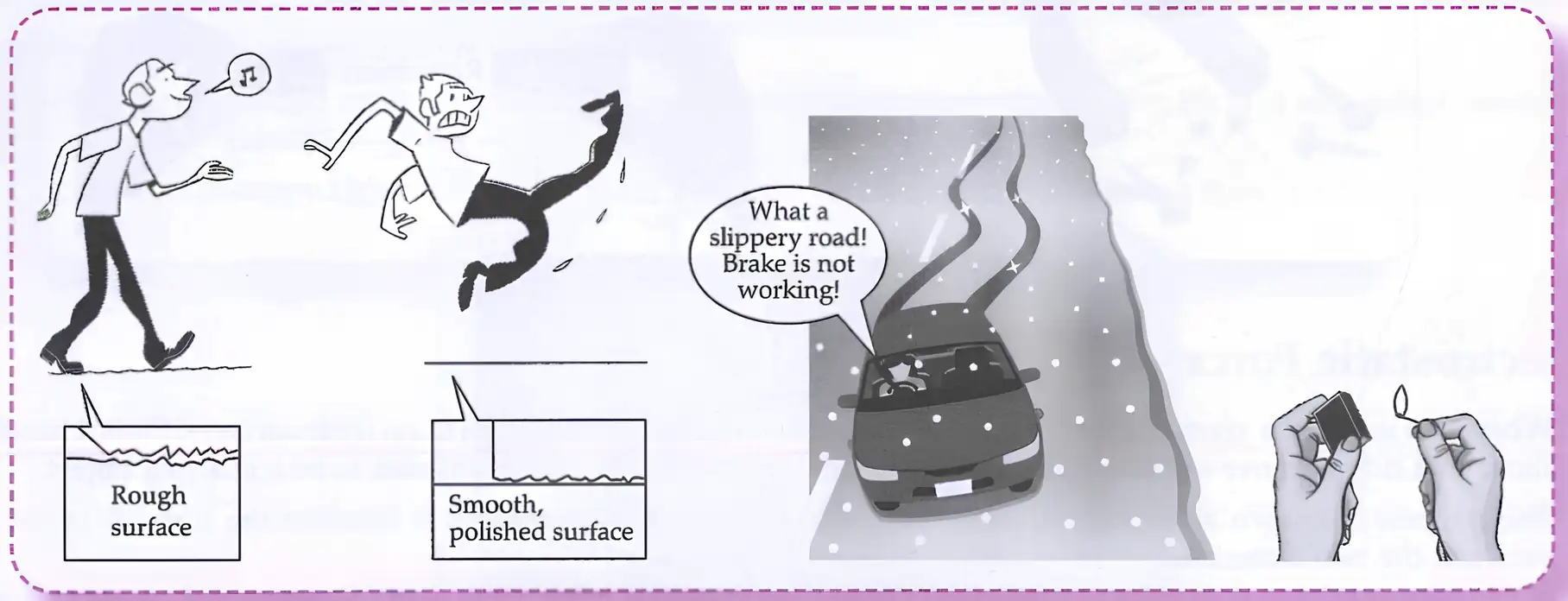
Friction arises due to surface irregularities and acts opposite to the direction of motion. It can be beneficial by providing grip or harmful by causing wear and energy loss. Streamlined shapes reduce frictional resistance in fluids.
Non-contact Force
Definition
Non-contact forces act over a distance without physical contact between objects.
Magnetic Force
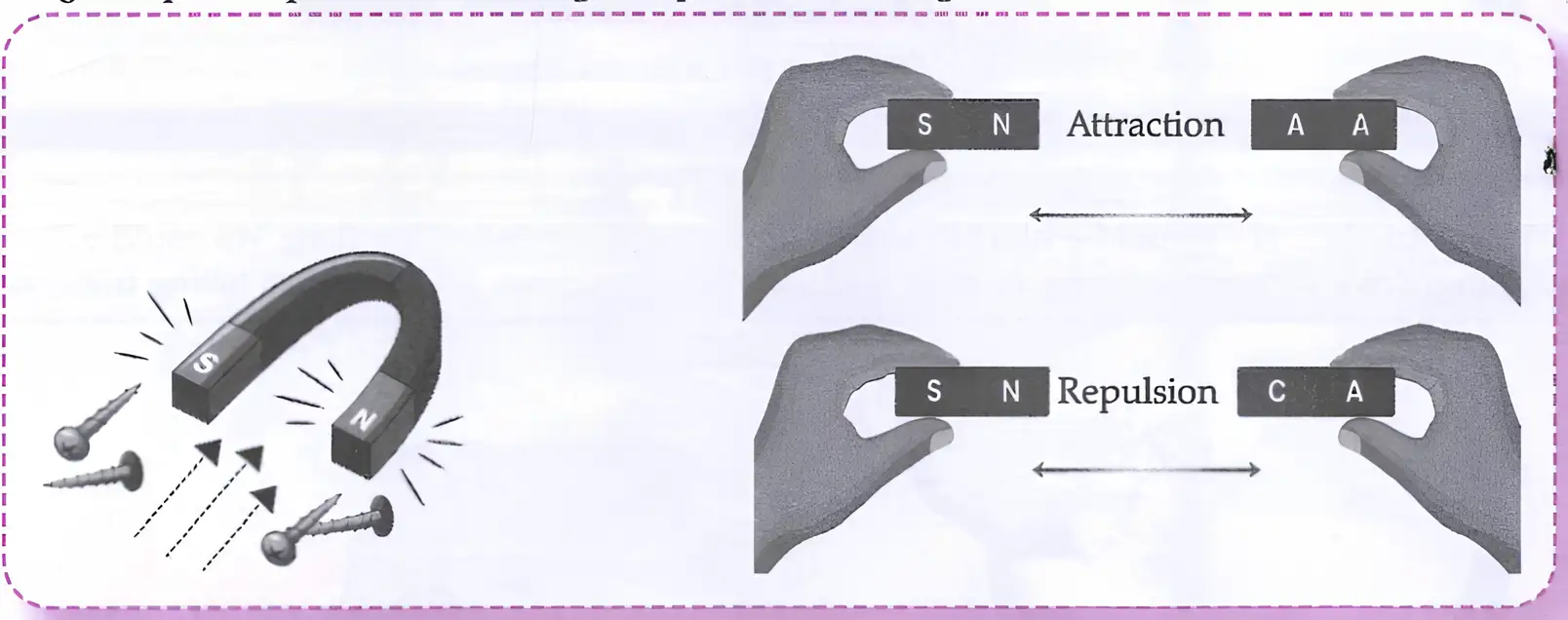
Magnetic force is exerted by magnets and magnetic materials. Like poles repel, unlike poles attract.
Electrostatic Force
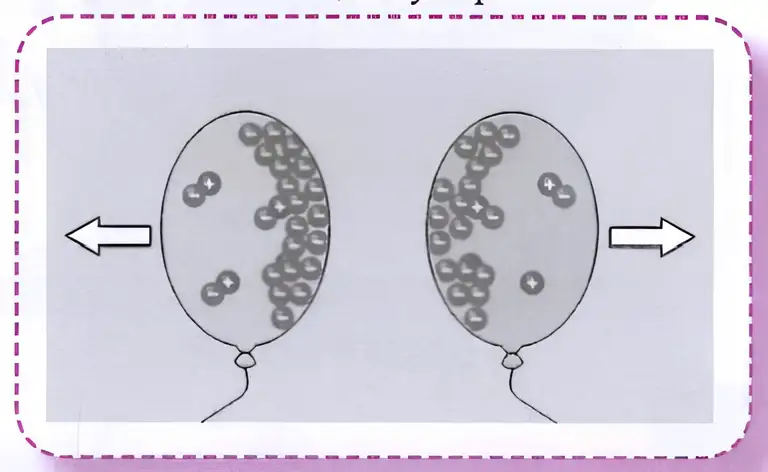
Electrostatic force arises from static electric charges generated by friction. Like charges repel and unlike charges attract.
Gravitational Force
Gravitational force is the attraction between masses. It acts over a distance and is always attractive. Earth’s gravity pulls objects toward its center, giving them weight.
Weight and Mass
Difference Between Mass and Weight
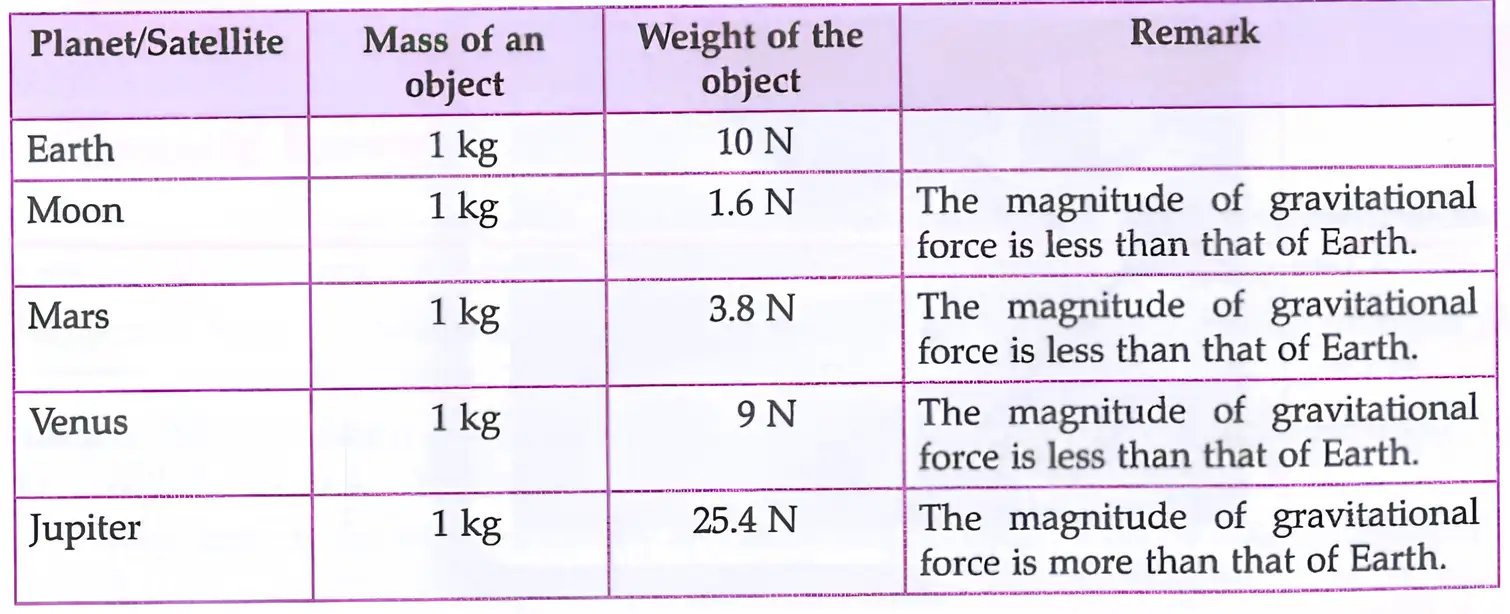
Mass is the amount of matter in an object and remains constant everywhere. Weight is the force due to gravity acting on the mass and varies with location.
Measurement
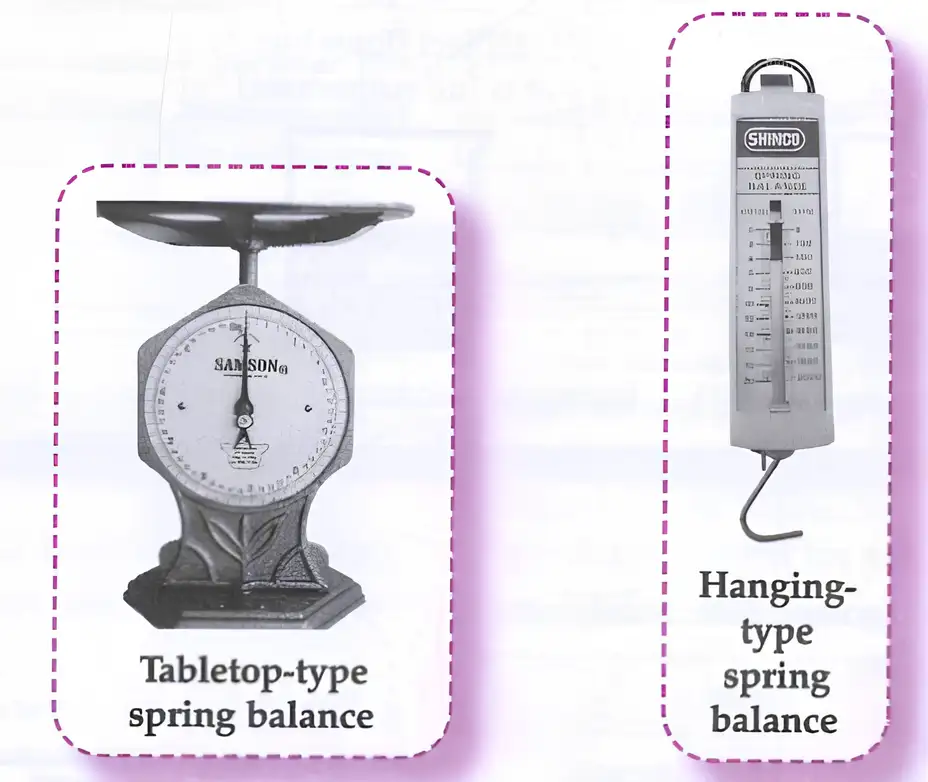
Mass is measured using a balance, while weight is measured using a spring balance calibrated in newtons.
Variation of Weight
Weight varies on different planets due to differences in gravitational force, even though mass remains the same.
Floating and Sinking
Archimedes’ Principle
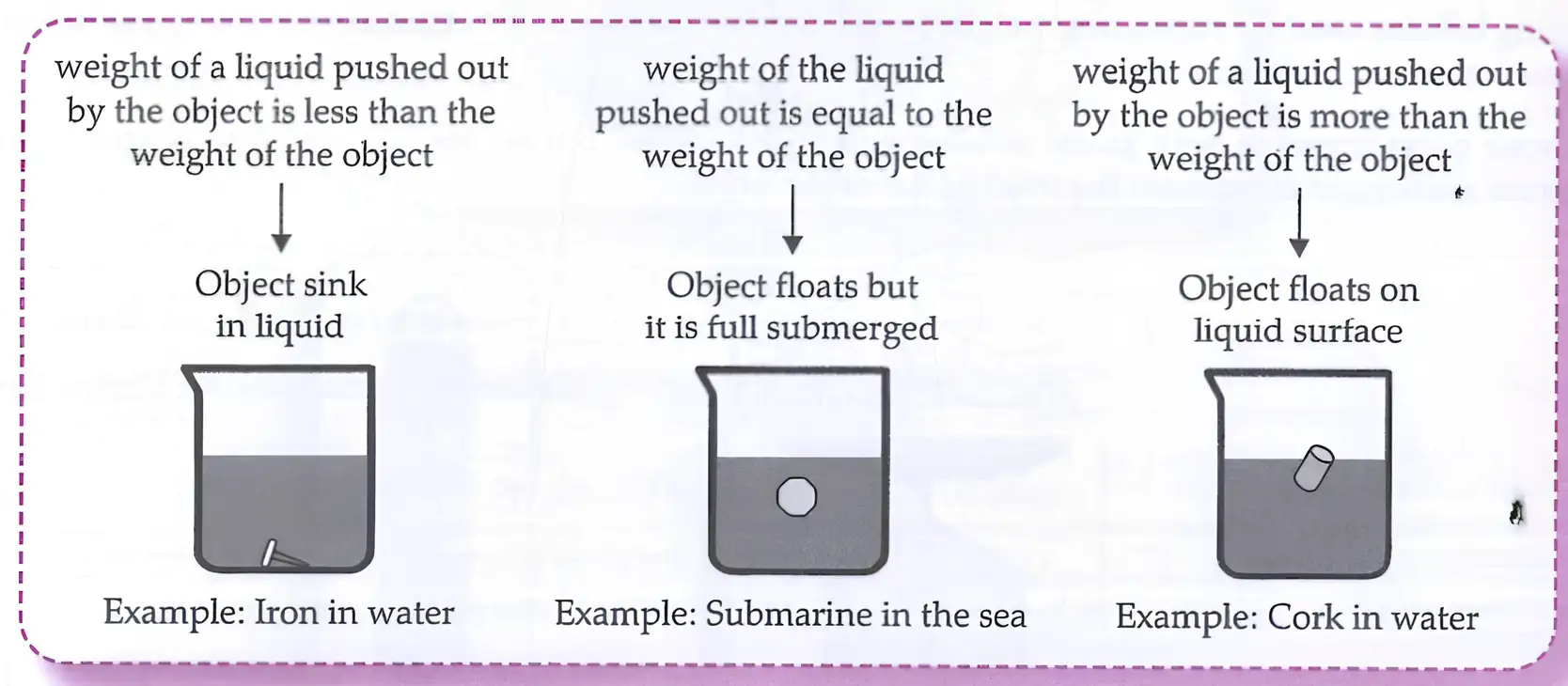
An object immersed in a liquid experiences an upward buoyant force equal to the weight of the liquid displaced.
Conditions for Floating and Sinking
If the buoyant force is less than the object's weight, it sinks. If equal, it floats fully submerged. If greater, it floats on the surface.
Density and Buoyancy
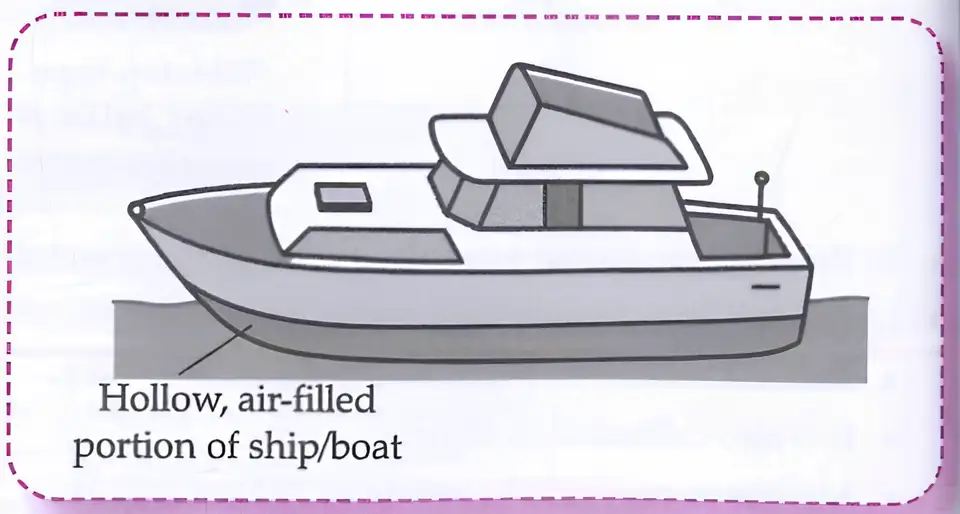
Objects denser than the liquid sink; those less dense float. For example, iron sinks in water, but an iron ship floats due to its hollow air-filled parts reducing average density.
Examples
Pumice rocks float because they are porous and less dense than water, while normal rocks sink.
Solved Examples
Example 1: Calculating Force
A 5 kg object is accelerated at 2 m/s². Calculate the force applied.
Solution:
Force, \( F = m \times a = 5 \text{ kg} \times 2 \text{ m/s}^2 = 10 \text{ N} \)
Example 2: Weight on Different Planets
An object has a mass of 10 kg. Calculate its weight on Earth (gravity = 9.8 m/s²) and Moon (gravity = 1.6 m/s²).
Solution:
Weight on Earth, \( W = m \times g = 10 \times 9.8 = 98 \text{ N} \)
Weight on Moon, \( W = 10 \times 1.6 = 16 \text{ N} \)
Example 3: Floating Object
An object displaces 2 kg of water. If the object’s weight is 15 N, will it float or sink? (Take gravity = 10 m/s²)
Solution:
Weight of displaced water = mass × gravity = 2 kg × 10 m/s² = 20 N
Since buoyant force (20 N) > object weight (15 N), the object will float.
Practice Set
- Level 1: Define force and list two effects it can have on an object.
- Level 2: Explain the difference between mass and weight with examples.
- Level 3: A 3 kg object is pushed with a force of 15 N. Calculate its acceleration.
Answer Key
- Level 1: Force is a push or pull that can start or stop motion, change speed or direction, or change shape of an object.
- Level 2: Mass is the amount of matter in an object and is constant everywhere; weight is the force due to gravity acting on the mass and varies with location. Example: A person’s mass is the same on Earth and Moon, but weight is less on the Moon.
- Level 3: Using \( F = m \times a \), acceleration \( a = F/m = 15/3 = 5 \text{ m/s}^2 \).
Quick Reference Table
Force: Push or pull causing change in motion or shape; unit: newton (N).
Contact Forces: Muscular force, friction.
Non-contact Forces: Magnetic, electrostatic, gravitational.
Mass: Amount of matter; constant; unit: kilogram (kg).
Weight: Force due to gravity; varies; unit: newton (N).
Archimedes’ Principle: Buoyant force equals weight of displaced liquid.
Density and Buoyancy: Object floats if density less than liquid; sinks if greater.
Common Mistakes and Misconceptions
Confusing mass with weight; mass is constant, weight varies with gravity.
Assuming balanced forces mean no forces act; forces act but cancel out.
Believing friction always hinders motion; friction can be essential for walking and driving.
Thinking objects float because they are light; floating depends on density relative to fluid.
Glossary
Force: A push or pull on an object.
Mass: Amount of matter in an object.
Weight: Force due to gravity acting on mass.
Friction: Force opposing motion between surfaces.
Buoyant Force: Upward force exerted by a fluid on an immersed object.
Density: Mass per unit volume of a substance.
Balanced Force: Equal and opposite forces acting on an object.