CLASS 8 . SCIENCE . CURIOSITY . KEEPING TIME-WITH-THE-SKIES
Chapter 11 : Keeping Time with the Skies
Ch 11
SCIENCE
CLASS 8
Moon and Satellites
Natural and Artificial Satellites
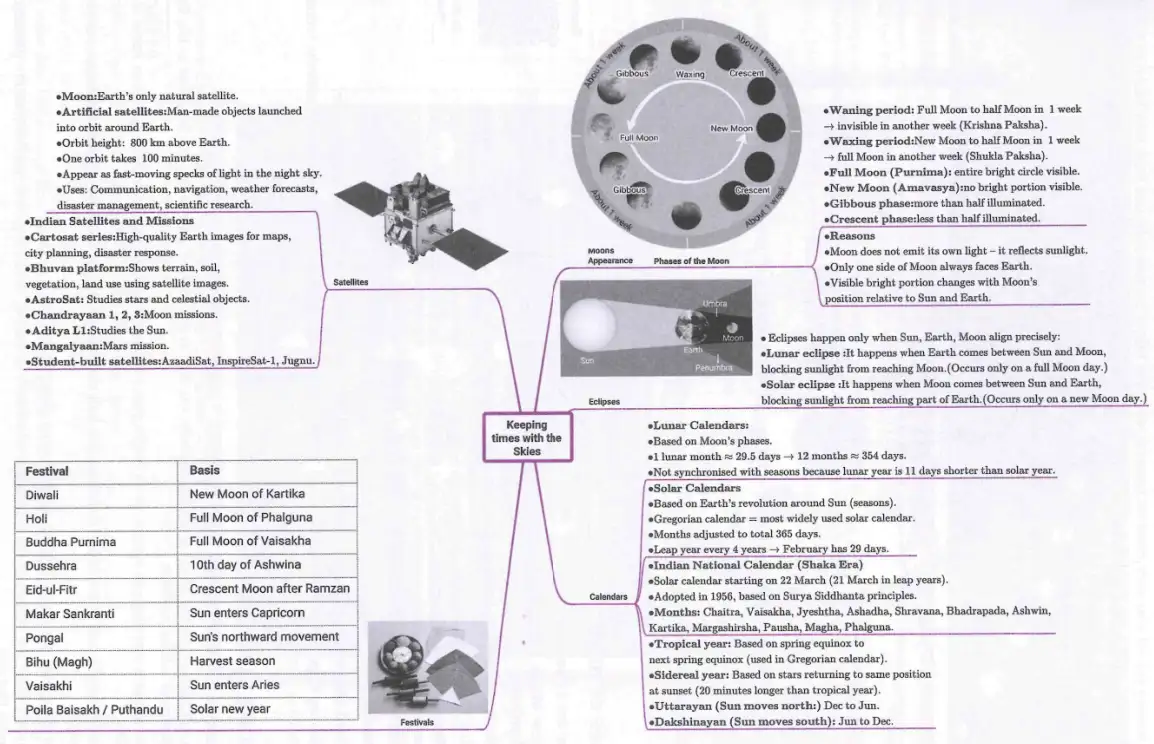
The Moon is Earth's natural satellite, orbiting our planet and influencing various natural phenomena. In addition to the Moon, many artificial satellites orbit Earth, serving purposes such as communication, weather forecasting, navigation, and scientific research. India has developed its own satellites and space missions to contribute to these fields.
Functions of Satellites
Satellites relay signals for television, telephone, and internet services. They also collect data about Earth's atmosphere, oceans, land, and ice, aiding in disaster management and environmental monitoring. Scientific satellites explore celestial bodies and phenomena beyond Earth's surface.
Phases of the Moon
Changing Appearance of the Moon
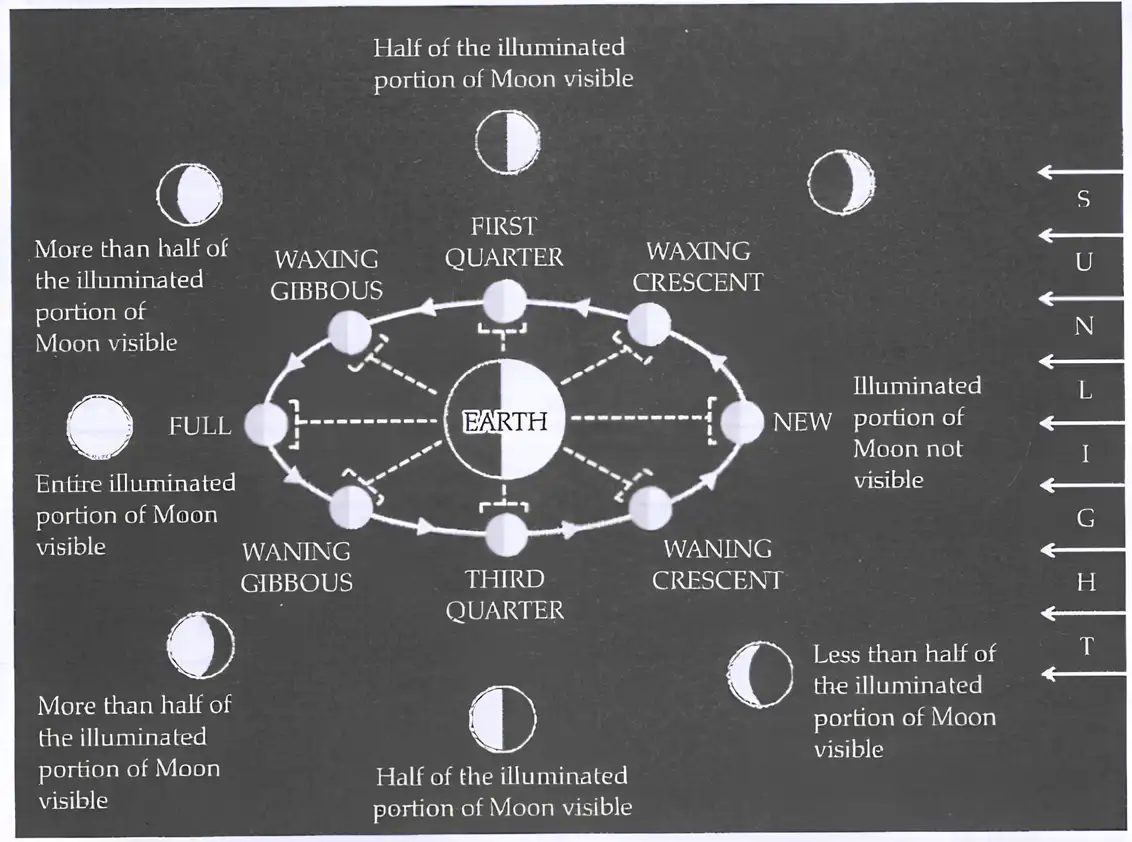
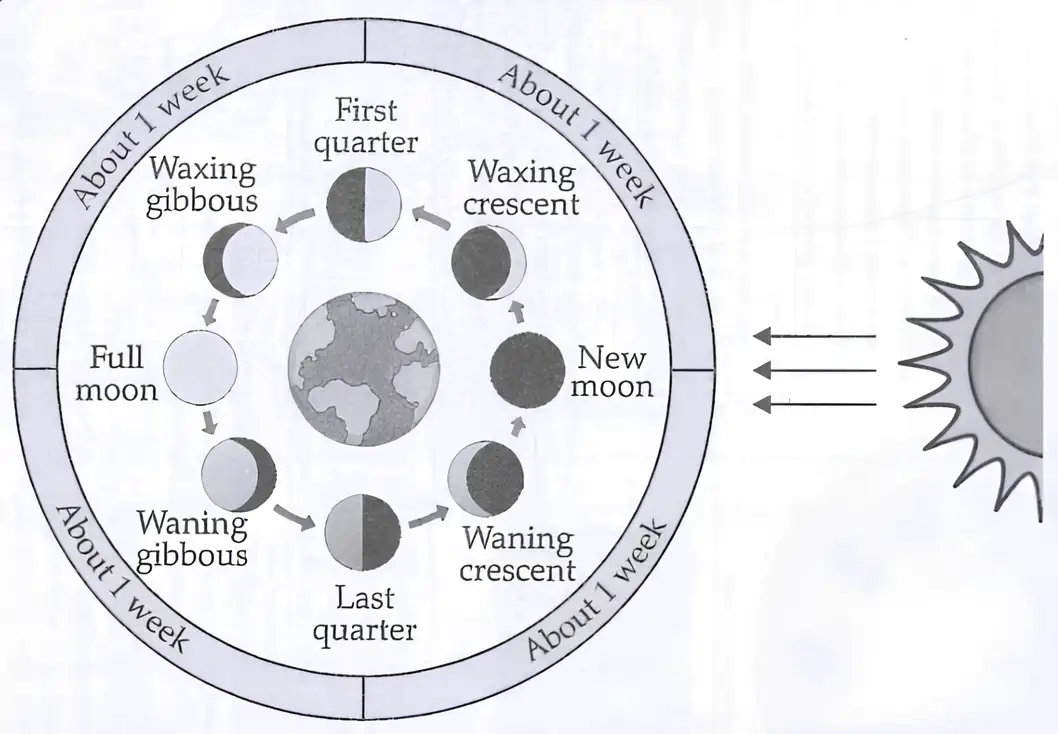
The Moon appears to change shape over a lunar month due to its position relative to the Earth and Sun. This cycle includes phases such as New Moon, Crescent, Gibbous, and Full Moon. The cycle from one Full Moon to the next takes about 29.5 days.
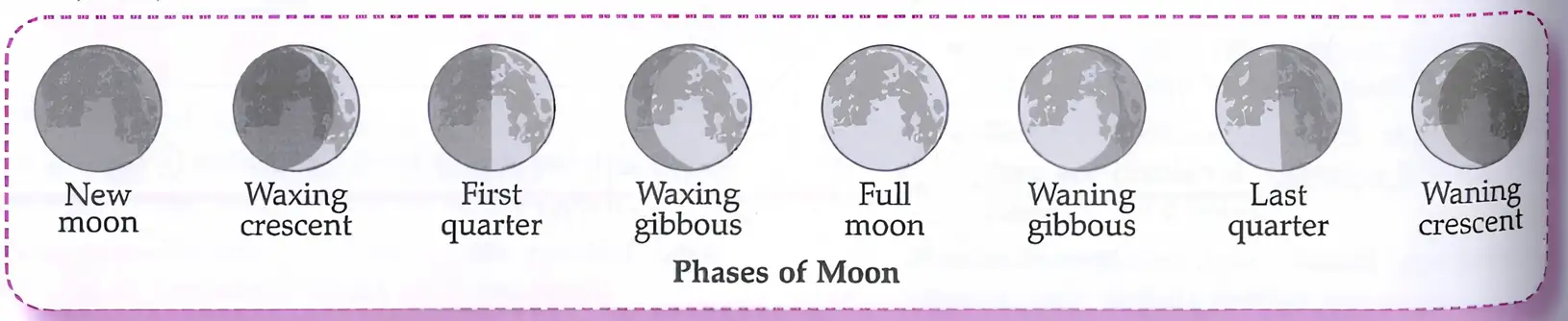
Details of Moon Phases
The eight main phases of the Moon are:
- New Moon: The Moon is between Earth and the Sun, and the side facing Earth is dark.
- Waxing Crescent: A small sliver of the Moon becomes visible, increasing in size.
- First Quarter: Half of the Moon's face is illuminated.
- Waxing Gibbous: More than half of the Moon is lit and growing.
- Full Moon: The entire face of the Moon is illuminated.
- Waning Gibbous: The illuminated portion begins to decrease.
- Third Quarter: Half of the Moon is lit, opposite side to First Quarter.
- Waning Crescent: A small sliver remains lit, decreasing until New Moon.
Moon's Position and Visibility
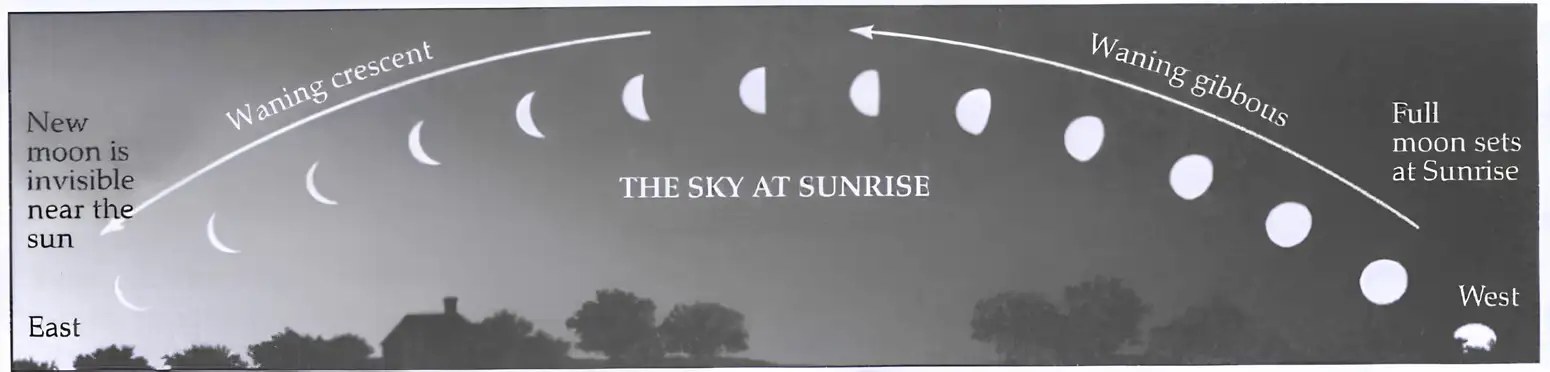
The Moon's location changes daily. On a Full Moon day, it is opposite the Sun at sunrise, rising in the east and setting in the west. The Moon rises and sets about 50 minutes later each day due to its orbital motion combined with Earth's rotation. Waxing Moons are easiest to spot at sunset, while waning Moons are visible at sunrise.
Eclipses
Types of Eclipses
Eclipses occur when the Sun, Earth, and Moon align perfectly. A lunar eclipse happens when Earth blocks sunlight from reaching the Moon, causing the Moon to darken. A solar eclipse occurs when the Moon blocks sunlight from reaching Earth, casting a shadow on Earth’s surface.
Conditions for Eclipses
Eclipses only occur during specific alignments: a lunar eclipse during a Full Moon when Earth is between the Sun and Moon, and a solar eclipse during a New Moon when the Moon is between the Sun and Earth.
Calendars
Natural Cycles for Time Measurement
Time measurement is based on two natural cycles: Earth's rotation and revolution, and the Moon's phase cycle.
Types of Calendars
Solar Calendar: Based on Earth's revolution around the Sun, consisting of 12 months with varying days, totaling 365 days in a common year and 366 days in a leap year. The Gregorian calendar is a solar calendar.
Lunar Calendar: Based on the Moon's phases, consisting of 12 lunar months of about 29.5 days each, totaling approximately 354 days. Lunar calendars do not synchronize well with seasons.
Luni-Solar Calendar: Combines lunar months with adjustments to align with the solar year by adding an extra month every few years to keep seasons consistent.
Indian National Calendar
Adopted alongside the Gregorian calendar, the Indian National Calendar starts on 1st Chaitra (March 22 or March 21 in leap years). It has 12 months with 30 or 31 days each, aligning with astronomical principles.
Festivals
Astronomical Basis of Festivals
Many Indian festivals are based on lunar or solar events. For example, Diwali occurs on the New Moon day, Holi on the Full Moon day, and others are linked to the Sun's movement into zodiac signs. These festivals follow lunar or luni-solar calendars, causing their dates to shift in the Gregorian calendar.
Examples of Festivals
- Diwali: New Moon day, lunar calendar
- Holi: Full Moon day, lunar calendar
- Buddha Purnima: Full Moon day, lunar calendar
- Dussehra: Based on Sun's position, solar calendar
- Eid-ul-Fitr: Based on lunar calendar, date shifts annually
Indian Space Program
Key Figures
Vikram Sarabhai: Known as the Father of the Indian Space Programme, he initiated India's space research efforts.
A.P.J. Abdul Kalam: Renowned aerospace scientist and former President of India, instrumental in missile and space technology development.
Space Research Centres
- Vikram Sarabhai Space Centre (VSSC), Thiruvananthapuram
- Satish Dhawan Space Centre (SDSC), Sriharikota
- Space Applications Centre (SAC), Ahmedabad
- Indian Space Research Organisation (ISRO), Bengaluru
Indian Satellites and Missions
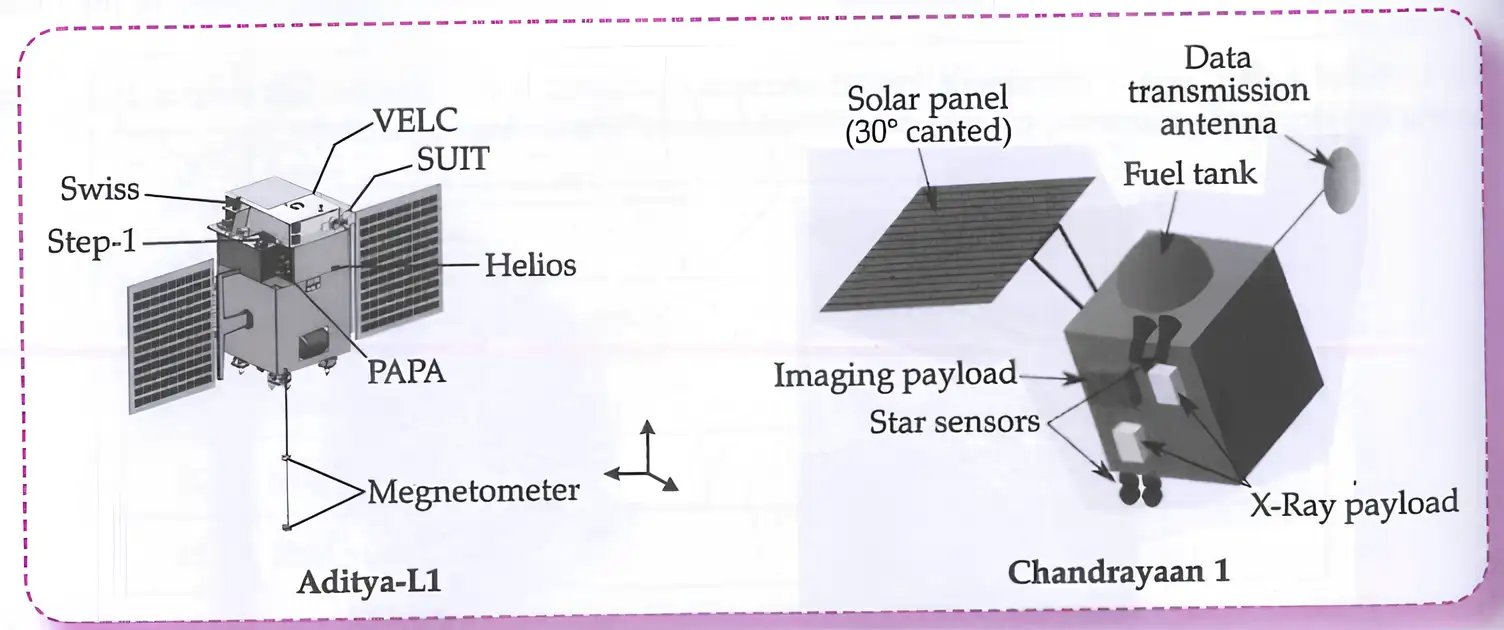
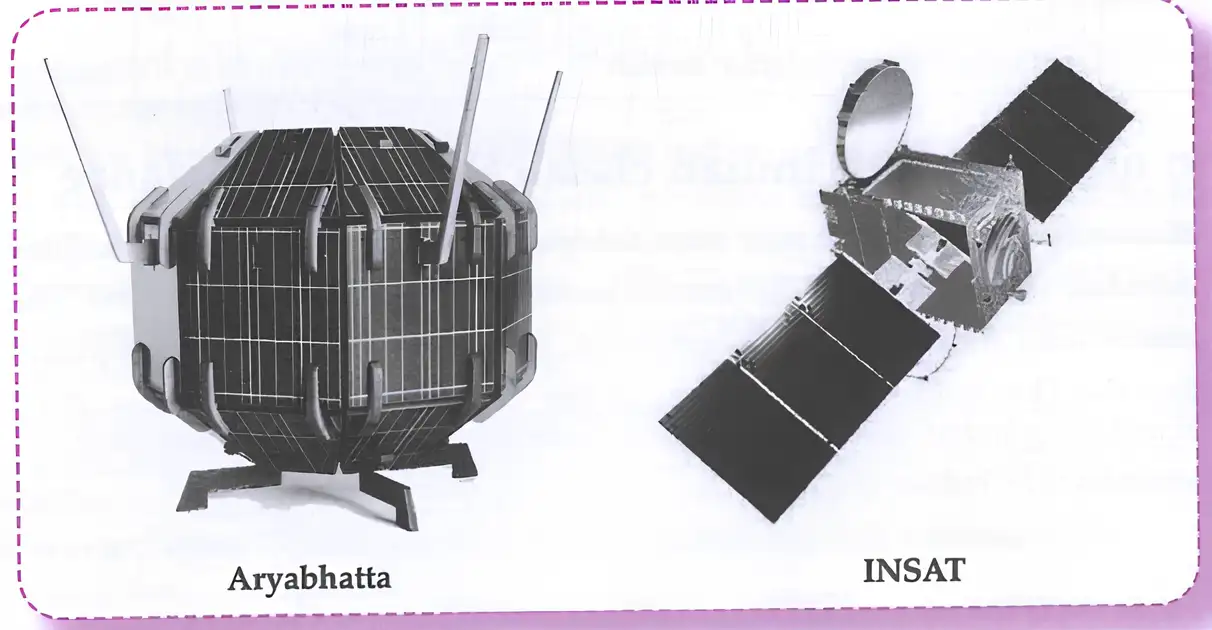
India has launched various satellites for communication (GSAT, INSAT), Earth observation (EOS, CARTOSAT, ROHINI, BHASKAR), and navigation (IRNSS).
Notable spacecraft include:
- AstroSat: India's first dedicated astronomy satellite studying celestial sources in multiple bands.
- Mars Orbiter: India's first interplanetary mission orbiting Mars.
- Chandrayaan-1: First lunar mission launched in 2008.
- Chandrayaan-2: Advanced lunar mission following Chandrayaan-1.
- Aditya-L1: Satellite dedicated to studying the Sun.