CLASS 12-HUMANITIES . HISTORY . THEMES IN INDIAN HISTORY PART III . REBELS AND-THE-RAJ-THE-REVOLT-OF-1857-AND-ITS-REPRESENTATIONS
Chapter 2 : REBELS AND THE RAJ THE REVOLT OF 1857 AND ITS REPRESENTATIONS
Ch 2
HISTORY
CLASS 12-HUMANITIES
Rebels and the Raj 1857 Revolt and Its Representations
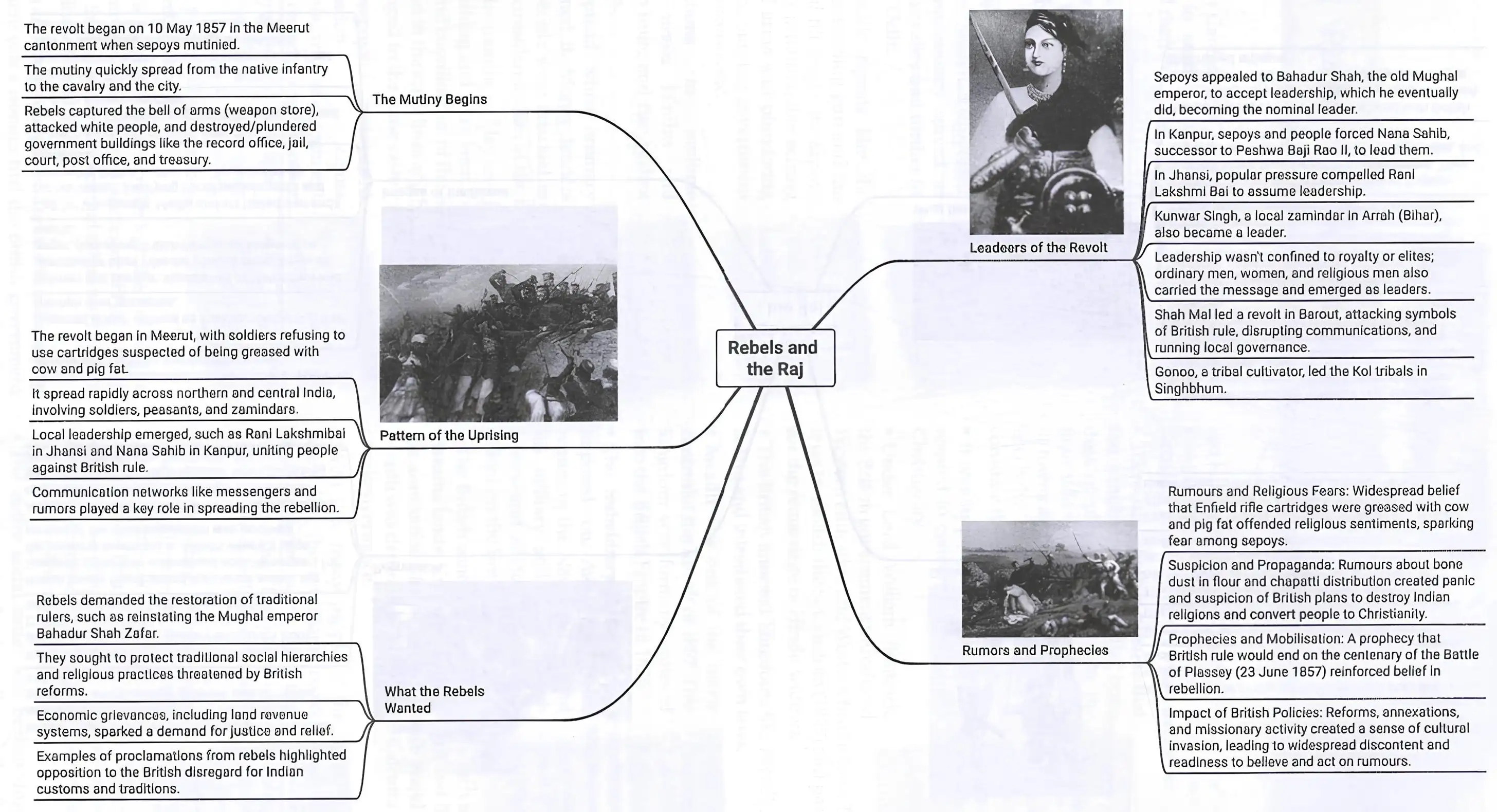
The Revolt of 1857, also known as the First War of Independence, was a major uprising against British colonial rule in India. It began as a mutiny of sepoys in Meerut on 10 May 1857 and quickly spread to other regions, involving soldiers, peasants, landlords, and local leaders. The causes of the revolt were both immediate and long-term, including political annexations, economic exploitation, social and religious grievances, and rumors that offended religious sentiments.
The revolt was marked by diverse motivations among different groups. Sepoys were dissatisfied with low wages, leave cancellations, and the introduction of the Enfield rifle cartridges rumored to be greased with cow and pig fat, offending Hindu and Muslim beliefs. Peasants and landlords were aggrieved by British land revenue policies, annexations of kingdoms like Awadh, and the breakdown of traditional social orders.
The rebellion had significant consequences, including administrative changes by the British, shifts in policies, and the eventual end of the Mughal Empire. The revolt was represented differently by nationalist historians and British accounts, with nationalist views celebrating it as a united struggle for freedom, while British narratives often portrayed it as a mutiny. Artistic and literary works have kept alive the memory of the revolt, highlighting the heroism of leaders like Rani Lakshmibai.
Exam Question
Q: What were the immediate and long-term causes of the Revolt of 1857?
A: Immediate causes included the introduction of the Enfield rifle cartridges rumored to be greased with cow and pig fat, offending religious sentiments of Hindu and Muslim sepoys. Long-term causes involved political annexations like that of Awadh, economic exploitation through land revenue policies, social and religious reforms imposed by the British, and widespread dissatisfaction among peasants, landlords, and soldiers.
Pattern of the Rebellion
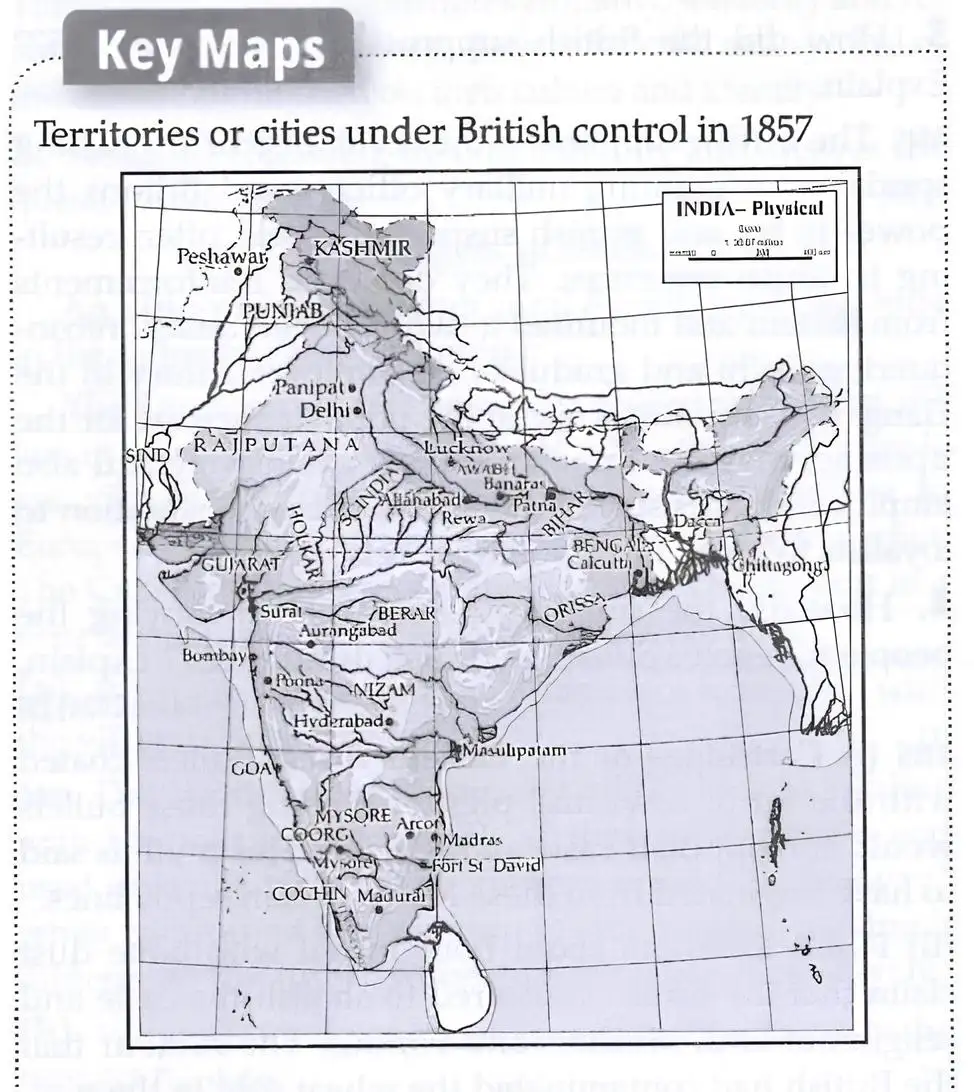
The rebellion started with the mutiny of sepoys in Meerut on 10 May 1857 and quickly spread to Delhi, where the Mughal Emperor Bahadur Shah Zafar was declared the leader. The revolt spread across the Gangetic valley and beyond, with coordinated actions such as seizing arms, plundering treasuries, and burning government buildings. Proclamations urged Hindus and Muslims to unite against the British.
Ordinary people, including peasants and townsfolk, joined the revolt. The sepoys maintained communication across cantonments, spreading plans and discussions. Key leaders like Rani Lakshmibai of Jhansi, Nana Sahib of Kanpur, and Kunwar Singh of Bihar played important roles. Rumors and prophecies fueled the uprising, including fears of religious conversion and corruption of caste and religion by the British.
The British annexation policies, such as the Subsidiary Alliance and the Summary Settlement in Awadh, dispossessed taluqdars and disrupted traditional social orders, increasing dissatisfaction. The link between sepoys and rural society helped the rebellion spread rapidly.
Exam Question
Q: How did the rebellion spread after the initial mutiny in Meerut?
A: After the mutiny in Meerut, the sepoys marched to Delhi and declared Bahadur Shah Zafar as their leader. The revolt spread to the Gangetic valley and other regions through coordinated actions, proclamations, and communication among sepoys. Local leaders and ordinary people joined the uprising, motivated by rumors and grievances against British policies.
What the Rebels Wanted
The rebels aimed to restore traditional rulers and protect social and religious customs. They condemned British annexations and policies that dispossessed landholders and ruined artisans and weavers. The rebels tried to establish authority in places like Delhi, Lucknow, and Kanpur, maintaining administration, collecting land revenue, and organizing military resistance.
The proclamations appealed to both Hindus and Muslims, showing unity against British rule despite British attempts to create religious divisions. The British responded with martial law and harsh repression, but landlords and peasants in regions like Uttar Pradesh collectively resisted. The British rewarded loyal landlords and dispossessed others, leading to further social disruption.
Exam Question
Q: What were the main demands and goals of the rebels during the 1857 revolt?
A: The rebels wanted to restore traditional rulers, protect social and religious customs, and reverse British annexations and policies that dispossessed landholders and harmed artisans. They sought to establish their own authority and administration and unite Hindus and Muslims against British rule.
Images of the Revolt
Records from the rebels' perspective are limited, but British accounts include letters, diaries, and official reports. Visual representations such as paintings, sketches, and cartoons depicted the revolt with varying emotions. British artworks often portrayed their forces as heroes and the rebels as villains, influencing public opinion in Britain to demand retribution.
Notable paintings like "Relief of Lucknow" and "In Memoriam" depicted British suffering and heroism. Indian nationalist movements later celebrated the revolt as the First War of Independence, with heroic portrayals of leaders like Rani Lakshmibai. Art and literature have played a key role in shaping the memory and interpretation of the revolt.
Exam Question
Q: How did British and Indian representations of the 1857 revolt differ?
A: British representations often depicted the revolt as a violent mutiny requiring harsh repression, highlighting British heroism and suffering. Indian nationalist representations celebrated it as the First War of Independence, portraying rebel leaders as heroes fighting for freedom and unity.
Key Dates of the Revolt
| Year | Event | Significance |
|---|---|---|
| 1801 | Subsidiary Alliance introduced by Wellesley in Awadh | Established British indirect control over Awadh |
| 1856 | Nawab Wajid Ali Shah deposed; Awadh annexed | Triggered widespread discontent leading to revolt |
| 1856-57 | Summary revenue settlements introduced in Awadh | Dispossessed taluqdars and peasants, increasing grievances |
| 10 May 1857 | Mutiny starts in Meerut | Beginning of the Revolt of 1857 |
| 11-12 May 1857 | Delhi garrison’s revolt; Bahadur Shah accepts leadership | Symbolic leadership of the revolt |
| May-June 1857 | Mutiny turns into a general revolt of the people | Widespread participation across regions |
| 30 June 1857 | British suffer defeat in the battle of Chinhat | Significant rebel victory |
| 25 Sept 1857 | British forces enter the Residency in Lucknow | Turning point in suppressing the revolt |
| June 1858 | Rani Lakshmibai killed in battle | Loss of a key rebel leader |
Solved Examples
Example 1: Explain the role of rumors in the spread of the 1857 revolt.
Answer: Rumors played a significant role in mobilizing people during the revolt. For example, the rumor that the British had greased rifle cartridges with cow and pig fat offended Hindu and Muslim religious beliefs, leading to widespread anger among sepoys. Other rumors suggested that the British intended to convert Indians to Christianity and corrupt their caste and religion, which increased distrust and motivated more people to join the uprising.
Example 2: Describe the impact of British land revenue policies on the revolt.
Answer: British land revenue policies, such as the Summary Settlement in Awadh, dispossessed taluqdars and disrupted traditional social orders. Peasants were directly exposed to rigid revenue collection methods, leading to dissatisfaction. This economic distress contributed to the widespread support for the revolt among rural populations.
Practice Set
Easy
- When and where did the Revolt of 1857 begin?
- Who was declared the leader of the revolt in Delhi?
Moderate
- What were the main causes of the 1857 revolt?
- Explain the role of Rani Lakshmibai in the revolt.
Challenging
- Analyze the impact of British annexation policies on the social structure of Awadh.
- Discuss how the revolt of 1857 influenced the Indian National Movement.
Answer Key
Easy
- The Revolt of 1857 began on 10 May 1857 in Meerut.
- Bahadur Shah Zafar was declared the leader of the revolt in Delhi.
Moderate
- Main causes included political annexations, economic exploitation, social and religious grievances, and immediate triggers like the greased cartridges.
- Rani Lakshmibai was a key leader who fought bravely against the British and became a symbol of resistance.
Challenging
- British annexation policies dispossessed traditional rulers and taluqdars, breaking down social orders and causing economic hardship, which fueled the revolt.
- The revolt inspired later nationalist movements by highlighting the possibility of united resistance against British rule and became known as the First War of Independence.
Quick Reference
- Mutiny: A rebellion against authority, especially by soldiers.
- Bell of arms: Store room where weapons were kept.
- Firangi: Term used to designate foreigners, often derogatory.
- Emissaries: Persons sent on special diplomatic missions.
- Enfield Rifle: Rifle introduced in 1857 with cartridges rumored to offend religious beliefs.
- Subsidiary Alliance: British strategy to control Indian states indirectly.
- Annexation: Formal act of acquiring territory.
Glossary
- Mutiny
- A rebellion against authority, especially by soldiers.
- Bell of arms
- A store room where weapons are kept.
- Firangi
- A term used to designate foreigners, often derogatory.
- Emissaries
- Persons sent as diplomatic representatives on special missions.
- Enfield Rifle
- A rifle introduced in 1857, with cartridges rumored to be greased with cow and pig fat, offending religious sentiments.
- Subsidiary Alliance
- A British strategy to establish indirect control over Indian states by forcing rulers to accept British military presence.
- Annexation
- The formal act of acquiring sovereignty over territory outside one's domain.