CLASS 12-HUMANITIES . HISTORY . THEMES IN INDIAN HISTORY PART I . KINGS FARMERS-AND-TOWNS-EARLY-STATES-AND-ECONOMIES-C-600-BCE-600-CE
Chapter 2 : KINGS, FARMERS AND TOWNS EARLY STATES AND ECONOMIES (C. 600 BCE-600 CE)
Ch 2
HISTORY
CLASS 12-HUMANITIES
Kings, Farmers and Towns Early States and Economies (c. 600 BCE-600 CE)
This chapter explores the political, economic, and social developments in ancient India from 600 BCE to 600 CE. It covers the formation of early states, the rise of empires, changes in agriculture and rural life, the growth of towns and trade, and the use of inscriptions as historical evidence.
The Early States Empires and the New Notions of Kingship
Between 1500 BCE and 600 CE, India witnessed significant changes including the composition of the Rigveda, emergence of agricultural settlements, and new burial practices like megaliths in Central and South India. Around 600 BCE, sixteen Mahajanapadas or states existed, governed by monarchies or oligarchies (sanghas or ganas). Magadha became the most powerful state between the 6th and 4th centuries BCE.
James Prinsep's decipherment of Brahmi and Kharosthi scripts in the 1830s helped reconstruct the history of dynasties. The Mauryan Empire, founded by Chandragupta Maurya, unified much of India. Emperor Ashoka promoted ethical governance and inscribed his messages on rocks and pillars across the empire. The Mauryan political centers included Pataliputra, Taxila, Ujjain, Tosali, and Suvarnagiri.
Later kingdoms such as the Satavahanas, Shakas, Kushanas, and Guptas controlled large territories and trade networks. The Gupta period is known for its literature, coins, and inscriptions like the Prayaga Prashasti praising rulers like Samudragupta.
Exam Questions
Q1: What were the Mahajanapadas and why was Magadha significant among them?
A1: The Mahajanapadas were sixteen large states or kingdoms in ancient India around 600 BCE. Magadha was significant because it became the most powerful state between the 6th and 4th centuries BCE, eventually leading to the Mauryan Empire.
Q2: How did James Prinsep contribute to the study of ancient Indian history?
A2: James Prinsep deciphered the Brahmi and Kharosthi scripts in the 1830s, enabling historians to read inscriptions and coins, which provided valuable information about ancient Indian dynasties and rulers.
Changing Countryside and the New Cities
During this period, agricultural practices improved with iron tools, transplantation of paddy, and irrigation methods like wells and tanks. Land grants were given to Brahmanas and religious institutions, sometimes indicating weakening royal power. Social differentiation increased among peasants, landowners, and slaves.
Urban centers such as Pataliputra, Ujjain, Puhar, and Mathura grew as trade hubs. Various craftspeople and merchants lived in towns. Trade routes connected India to Africa, West Asia, and China. The introduction of coinage, including punch-marked silver and copper coins, facilitated trade. The Kushanas issued the first gold coins, and Indo-Greeks minted coins with rulers' images and names.
Exam Questions
Q1: What were some agricultural improvements in ancient India between 600 BCE and 600 CE?
A1: Improvements included the use of iron-tipped ploughshares, transplantation of paddy, and irrigation through wells, tanks, and canals.
Q2: How did towns contribute to the economy during this period?
A2: Towns served as centers for crafts, trade, and commerce, with guilds controlling various occupations and trade routes connecting India to other regions.
Historical Evidence from Inscriptions and the Limitations of the Inscriptions
Inscriptions, especially those in Brahmi and Kharosthi scripts, are crucial sources for reconstructing ancient Indian history. Ashoka's inscriptions spread across the subcontinent provide insights into his governance and messages. Epigraphists analyze inscriptions for content, style, and language to verify historical facts.
However, inscriptions have limitations: they often represent elite perspectives, are incomplete or damaged, and rarely reflect the lives of common people. Ashoka's inscriptions were mostly on rocks along communication routes, raising questions about their accessibility to the general population.
Exam Questions
Q1: Why are inscriptions important for studying ancient Indian history?
A1: Inscriptions provide direct evidence about rulers, political events, and social conditions, helping historians reconstruct history.
Q2: What are some limitations of using inscriptions as historical sources?
A2: They often reflect only elite views, may be incomplete or damaged, and do not provide information about common people's lives.
Solved Examples
Example 1: Explain the significance of the Mauryan Empire in early Indian history.
Answer: The Mauryan Empire, founded by Chandragupta Maurya, was the first large empire to unify most of India. Under Ashoka, it promoted ethical governance and spread Buddhism. The empire's inscriptions provide valuable historical evidence.
Example 2: Describe the role of trade in the growth of towns during 600 BCE to 600 CE.
Answer: Trade connected Indian towns to regions like Africa, West Asia, and China. Towns became centers for crafts and commerce, supported by guilds and facilitated by coinage, leading to economic growth.
Practice Set
Easy
- What script did James Prinsep decipher?
- Name two important cities during the Mauryan Empire.
Moderate
- Explain the significance of land grants in ancient India.
- What were the main features of the Mahajanapadas?
Challenging
- Discuss the limitations of inscriptions as sources for understanding ancient Indian history.
- Analyze the impact of trade routes on the political and economic landscape of early Indian states.
Answer Key
- Easy: Brahmi and Kharosthi scripts; Pataliputra and Taxila.
- Moderate: Land grants were given to Brahmanas and religious institutions, sometimes indicating weakening royal power and helping extend agriculture or win allies; Mahajanapadas were sixteen large states with monarchies or oligarchies, important for political organization.
- Challenging: Inscriptions often reflect elite views, may be incomplete or damaged, and lack information about common people; Trade routes connected India to distant regions, facilitating economic growth and political alliances.
Quick Reference
- Mahajanapadas: Sixteen large states around 600 BCE.
- Mauryan Empire: First large empire unifying most of India.
- Ashoka: Mauryan emperor known for ethical governance and inscriptions.
- Land Grants: Gifts of land to Brahmanas and institutions.
- Inscriptions: Written records on rocks and pillars used as historical evidence.
- Trade Routes: Connected India to Africa, West Asia, and China.
Glossary
- Megaliths: Large prehistoric stones used to build monuments.
- Kharosthi: Ancient script used in Gandhara.
- Janapada: Realms, republics, and kingdoms of the Vedic period.
- Oligarchy: Government by a group of men.
- Prashastis: Sanskrit inscriptions praising kings.
- Epigraphy: Study of inscriptions.
Chronology of Key Events
| Year | Event | Significance |
|---|---|---|
| 600-500 BCE | Paddy transplantation, urbanisation in the Ganga Valley, Mahajanapadas, punch-marked coins | Development of agriculture, urban centres, and early states |
| 500-400 BCE | Rulers of Magadha consolidated power | Rise of Magadha as a dominant state |
| 327-325 BCE | Invasion of Alexander of Macedonia | Exposure to foreign cultures and political changes |
| 321 BCE | Accession of Chandragupta Maurya | Foundation of the Mauryan Empire |
| 272/268-231 BCE | Rule of Ashoka | Promotion of ethical governance and spread of Buddhism |
| 185 BCE | End of Mauryan rule | Transition to regional kingdoms |
| 200-100 BCE | Coming of the Cholas, Cheras and Pandyas; Indo-Greek rule in Northwest | Expansion of kingdoms and cultural exchanges |
| 78 CE | Accession of Kanishka of the Kushanas | Expansion of Kushana Empire and trade |
| 320 CE | Beginning of Gupta rule | Golden age of Indian culture and political stability |
Key Maps
Mahajanapadas and Cities
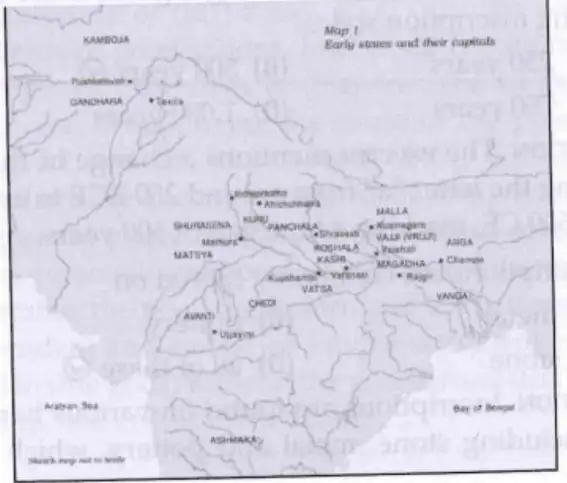
This map shows the locations of the sixteen Mahajanapadas and their capitals, highlighting early political organization and settlement patterns in ancient India.
Distribution of Asokan Inscriptions
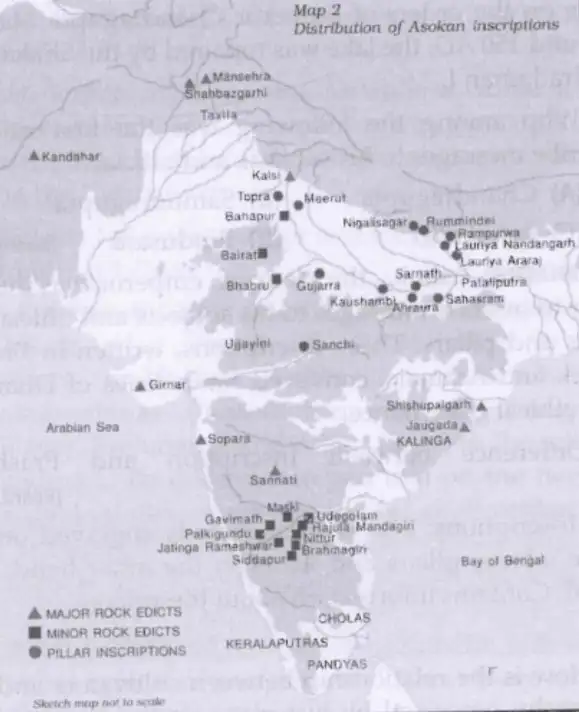
The map illustrates the spread of Ashoka's inscriptions across the Indian subcontinent, indicating the extent of his empire and communication efforts.
Important Kingdoms and Towns
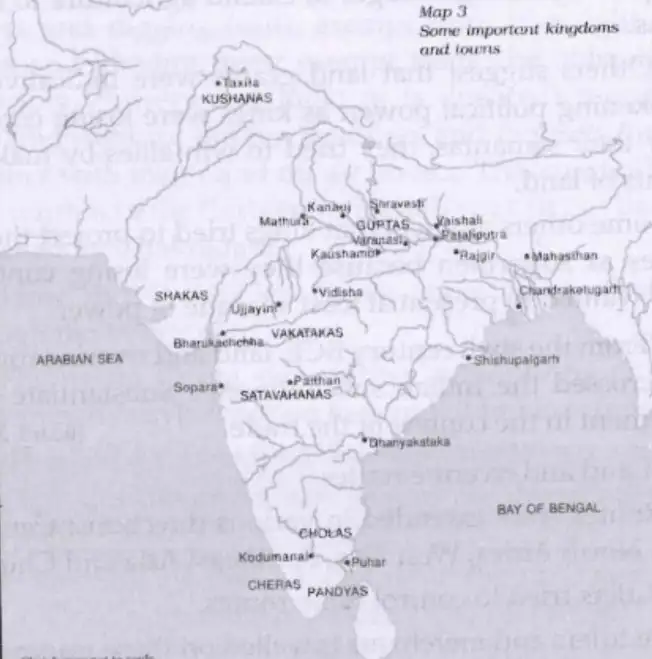
This historical map shows major kingdoms like the Kushanas, Guptas, Shakas, and others, along with important towns, providing insight into political and cultural centers.