CLASS 12-HUMANITIES . HISTORY . THEMES IN INDIAN HISTORY PART I . THINKERS BELIEFS-AND-BUILDINGS-CULTURAL-DEVELOPMENTS-C-600-BCE-600-CE
Chapter 4 : THINKERS, BELIEFS AND BUILDINGS CULTURAL DEVELOPMENTS (C. 600 BCE - 600 CE)
Ch 4
HISTORY
CLASS 12-HUMANITIES
Thinkers, Beliefs and Buildings Cultural Developments (c. 600 BCE-600 CE)
This period witnessed significant cultural developments marked by the emergence of new religious thinkers, beliefs, and monumental architecture. The Sanchi Stupa, built under Emperor Ashoka, symbolizes Buddhist enlightenment and houses relics of the Buddha. Early religious practices involved sacrifices, but thinkers like Mahavira and Gautama Buddha questioned these rituals, promoting meditation, non-violence, and spiritual growth. Buddhism emphasized right actions, mindfulness, karma, rebirth, impermanence, and equality, rejecting caste discrimination. These religious ideas and architectural achievements reflect important cultural shifts in ancient India.
Exam Question
Q: What is the significance of the Sanchi Stupa in ancient Indian culture?
A: The Sanchi Stupa is significant as it houses the relics of Buddha and symbolizes enlightenment. Built under Emperor Ashoka, it reflects royal support for Buddhism and showcases important Buddhist art and architecture.
Causes for the Rise of New Philosophers and Philosophies
Between 600 BCE and 600 CE, new philosophical ideas emerged due to social, economic, and religious changes. Historians rely on Buddhist, Jaina, and Brahmanical texts, monuments, and inscriptions to study this period. The decline of ritualistic sacrifices and the questioning of Vedic traditions led to lively debates and the rise of new sects. Thinkers like Zarathustra, Kong Zi, Socrates, Plato, Aristotle, Mahavira, and Buddha sought to understand human existence and cosmic order. The spread of cities and kingdoms reflected evolving social and economic life, fostering diverse philosophical schools.
Exam Question
Q: Why did new philosophical ideas emerge during 600 BCE to 600 CE?
A: New philosophical ideas emerged due to questioning of Vedic rituals, social and economic changes, and lively debates among thinkers who sought to understand human existence and cosmic order.
Jainism and Buddhism
Jainism, predating Mahavira, emphasized the belief that life exists in all beings and promoted non-violence and truth. Jain scholars produced literature in Prakrit, Sanskrit, and Tamil. Buddhism, founded by Siddhartha Gautama (Buddha), taught the path to enlightenment through meditation and righteous living. Buddha rejected caste discrimination and emphasized the impermanence of the world. He founded the Sangha, a community of monks and later nuns, promoting simple living. After his death, Buddhism split into Hinayana and Mahayana branches.
Exam Question
Q: What are the key teachings of Mahavira and Buddha?
A: Mahavira taught detachment, non-violence, truth, and equality. Buddha taught the middle path, impermanence, rejection of caste discrimination, and the path to enlightenment through meditation and righteous living.
Stupas—(Sanchi Stupa and Amaravati)
Stupas are sacred Buddhist monuments housing relics of the Buddha. The tradition of building stupas may predate Buddhism but became associated with it through Ashoka's patronage. Important stupas include Sanchi, Sarnath, and Amaravati. The stupa structure evolved from simple mounds to complex architectural forms with elements like the anda (dome), harmika (balcony), and yashti (mast). Preservation efforts by rulers like Shahjehan Begum and scholars have helped maintain these monuments. The Sanchi Stupa features carvings depicting Buddhist stories and symbols representing the Buddha.
Exam Question
Q: Describe the architectural features of a Buddhist stupa.
A: A Buddhist stupa includes a dome-shaped anda housing relics, a harmika balcony symbolizing the abode of gods, a yashti mast rising from the harmika, and a railing separating sacred space from the secular world.
New Religious Traditions
Buddhism evolved with the development of Mahayana, emphasizing the worship of Buddha and Bodhisattvas who help others attain enlightenment. Puranic Hinduism grew with devotional cults in Vaishnavism and Shaivism, focusing on worship of deities like Vishnu and Shiva. Temples evolved from small shrines (garbhagriha) to elaborate structures with shikharas, assembly halls, and decorated walls. Cave temples like the Kailashnatha temple became prominent. Puranic stories, compiled by Brahmanas, helped interpret religious images and symbols.
Exam Question
Q: How did religious architecture evolve during this period?
A: Religious architecture evolved from small shrines to elaborate temples with tall shikharas, assembly halls, and decorated walls. Cave temples also became prominent, reflecting complex religious ideas and practices.
Key Dates
| Year | Event | Significance |
|---|---|---|
| 1814 | Founding of the Indian Museum, Calcutta | Preservation and study of Indian cultural heritage began |
| 1834 | Publication of Essay on the Architecture of the Hindus; Cunningham explores Sarnath Stupa | Early archaeological studies of Buddhist monuments |
| 1854 | Alexander Cunningham publishes Bhilsa Topes | Documentation of Sanchi Stupa and Buddhist sites |
| 1880 | H.H. Cole appointed Curator of Ancient Monuments | Conservation efforts for ancient monuments |
| 1914 | John Marshall and Alfred Foucher publish The Monuments of Sanchi | Comprehensive study of Sanchi Stupa |
| 1989 | Sanchi declared a World Heritage Site | International recognition and protection of Sanchi |
Exam Question
Q: Why is the year 1989 significant in the history of Sanchi Stupa?
A: In 1989, Sanchi was declared a World Heritage Site, recognizing its global cultural importance and ensuring its protection.
Major Buddhist Sites
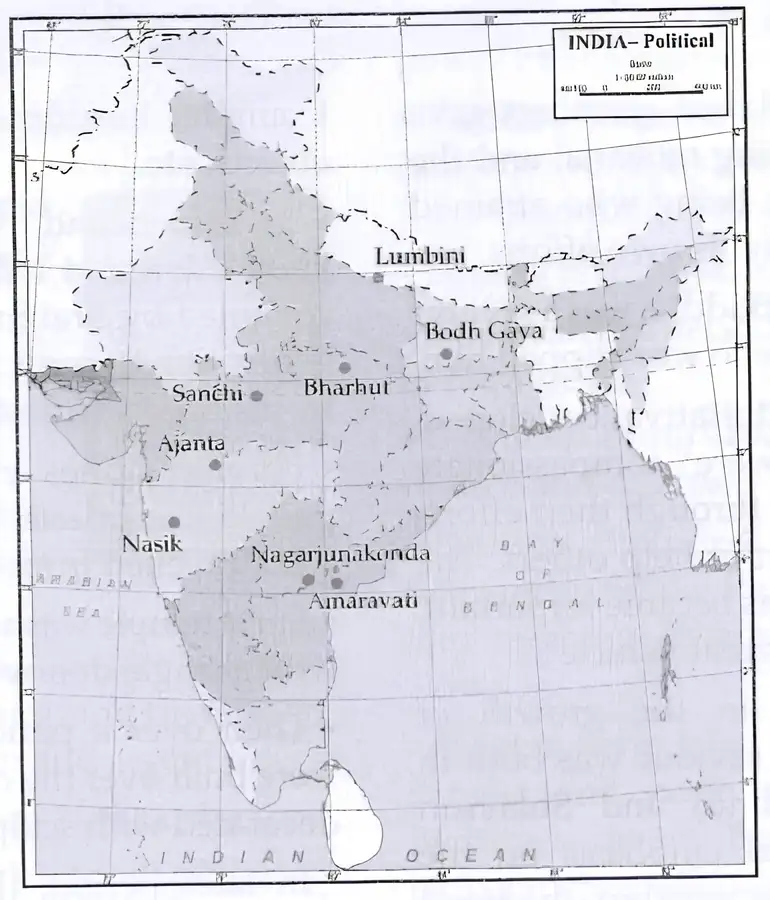
This map shows important ancient Buddhist sites across India, including Lumbini (birthplace of Buddha), Bodh Gaya (place of enlightenment), Sanchi (famous stupa), and Ajanta (monastic caves). These sites are crucial for understanding the geographical spread and cultural heritage of Buddhism in India.
Exam Question
Q: Name two major Buddhist sites and their significance.
A: Lumbini is the birthplace of Buddha, and Bodh Gaya is where Buddha attained enlightenment. Both are important pilgrimage sites for Buddhists.
Solved Examples
Example 1: Explain the role of Emperor Ashoka in the spread of Buddhism.
Answer: Emperor Ashoka supported Buddhism by building stupas like Sanchi, spreading Buddhist teachings, and promoting non-violence and dharma across his empire.
Example 2: What are the main differences between Hinayana and Mahayana Buddhism?
Answer: Hinayana focuses on individual enlightenment and strict adherence to original teachings, while Mahayana emphasizes the worship of Buddha and Bodhisattvas and helping others attain enlightenment.
Practice Set
Easy
- What is a stupa?
- Name the founder of Buddhism.
Moderate
- Describe the teachings of Mahavira.
- What is the significance of the Sanchi Stupa?
Challenging
- Explain the evolution of religious architecture during 600 BCE to 600 CE.
- Discuss the causes for the rise of new philosophical ideas in ancient India.
Answer Key
- What is a stupa? A Buddhist monument housing relics of the Buddha.
- Name the founder of Buddhism. Siddhartha Gautama, known as Buddha.
- Describe the teachings of Mahavira. Emphasized non-violence, truth, detachment, and equality.
- What is the significance of the Sanchi Stupa? It houses Buddha's relics and symbolizes enlightenment.
- Explain the evolution of religious architecture during 600 BCE to 600 CE. From small shrines to elaborate temples with shikharas and cave temples.
- Discuss the causes for the rise of new philosophical ideas in ancient India. Questioning of Vedic rituals, social changes, and lively debates among thinkers.
Quick Reference
- Sanchi Stupa: Buddhist monument built under Ashoka.
- Mahavira: Jain teacher emphasizing non-violence.
- Buddha: Founder of Buddhism, taught the middle path.
- Stupa: Structure housing relics of saints.
- Hinayana and Mahayana: Two major branches of Buddhism.
- Garbhagriha: Inner sanctum of Hindu temples.
Glossary
- Stupa: A dome-shaped Buddhist monument containing relics.
- Chaitya: A Buddhist prayer hall or shrine.
- Relic: Physical remains of a saint or holy person.
- Hagiography: Biography of a saint or religious leader.
- Upanishads: Ancient Brahmanical philosophical texts.
- Bodhisattva: A compassionate being in Mahayana Buddhism who helps others attain enlightenment.
- Garbhagriha: The innermost sanctum of a Hindu temple where the deity resides.