SOLUTIONS

2026 BOARD EXAM

CBSE Class 12 PCM Chemistry Board Paper 2026 — Set 3 Solutions

2026

Chemistry

Class 12 PCM

CBSE EXAMINATION PAPER-2026

CHEMISTRY

(Solved)

Time allowed : 3 hours

Maximum Marks : 82

General Instructions :

Read the following instructions carefully and follow them :

  1. This question paper contains 41 questions. All questions are compulsory.
  2. This question paper is divided into 5 sections.
  3. Section A – questions number 1 to 5 are case based questions
  4. Section B – questions number 6 to 21 are multiple choice questions
  5. Section C – questions number 22 to 27 are very short answer
  6. Section D – questions number 28 to 35 are short answer
  7. Section E – questions number 36 to 41 are long answer
  8. There is no overall choice given in the question paper. However, an internal choice has been provided in few questions.
  9. Use of calculator is NOT allowed.

Section A

Question 1. Living systems are made up of various complex biomolecules like carbohydrates, proteins, nucleic acids, lipids, etc. Proteins and carbohydrates are essential constituents of our food. In addition, some simple molecules like vitamins and mineral salts also play an important role in the functions of organisms. All proteins are polymers of α-amino acids. Proteins can be classified into two types on the basis of their molecular shape — Fibrous and Globular proteins. Vitamins are accessory food factors required in the diet. They are classified as fat-soluble and water-soluble. Deficiency of vitamins leads to many diseases. Nucleic acids are the polymers of nucleotides which in turn consist of a base, a pentose sugar and phosphate moiety. There are two types of nucleic acids — DNA and RNA. Nucleic acids are responsible for the transfer of characters from parents to offsprings.
Question 2. Living systems are made up of various complex biomolecules like carbohydrates, proteins, nucleic acids, lipids, etc. Proteins and carbohydrates are essential constituents of our food. In addition, some simple molecules like vitamins and mineral salts also play an important role in the functions of organisms. All proteins are polymers of α - amino acids. Proteins can be classified into two types on the basis of their molecular shape — Fibrous and Globular proteins. Vitamins are accessory food factors required in the diet. They are classified as fat-soluble and water-soluble. Deficiency of vitamins leads to many diseases. Nucleic acids are the polymers of nucleotides which in turn consist of a base, a pentose sugar and phosphate moiety. There are two types of nucleic acids — DNA and RNA. Nucleic acids are responsible for the transfer of characters from parents to offsprings.

(1) Write the name of basic building units of proteins and nucleic acids. How can you differentiate between Fibrous and Globular proteins on the basis of their structures ?

[2 Marks]
Answer: The basic building units of proteins are α-amino acids and for nucleic acids, they are nucleotides which consist of a base, a pentose sugar and a phosphate group. Fibrous proteins have long, thin structures and provide structural support, whereas Globular proteins have a compact, spherical shape and perform dynamic functions. This is explained in the case passage where proteins are classified by their molecular shape as Fibrous and Globular proteins.
Key Points: Basic units of proteins are α-amino acids - Basic units of nucleic acids are nucleotides - Fibrous proteins are elongated and provide support, Globular proteins are compact and functional

(2) What products would be formed when a nucleotide from DNA containing thymine is hydrolyzed ?

[2 Marks]
Answer: When a DNA nucleotide containing thymine is hydrolyzed, it breaks down into three products: the nitrogenous base thymine, the pentose sugar deoxyribose, and a phosphate group. This is because, as explained in the case, nucleotides are composed of a base, a pentose sugar, and a phosphate moiety. Hydrolysis cleaves the bonds holding these components together, releasing thymine, deoxyribose sugar, and phosphate ions as separate molecules.
This process reflects the basic structural composition of DNA nucleotides provided in the passage.
Key Points: Nucleotide hydrolysis produces thymine base - Deoxyribose sugar is released - Phosphate group is formed
Question 3. Living systems are made up of various complex biomolecules like carbohydrates, proteins, nucleic acids, lipids, etc. Proteins and carbohydrates are essential constituents of our food. In addition, some simple molecules like vitamins and mineral salts also play an important role in the functions of organisms. All proteins are polymers of α - amino acids. Proteins can be classified into two types on the basis of their molecular shape — Fibrous and Globular proteins. Vitamins are accessory food factors required in the diet. They are classified as fat-soluble and water-soluble. Deficiency of vitamins leads to many diseases. Nucleic acids are the polymers of nucleotides which in turn consist of a base, a pentose sugar and phosphate moiety. There are two types of nucleic acids — DNA and RNA. Nucleic acids are responsible for the transfer of characters from parents to offsprings.

(1) Give one example each of a fat-soluble vitamin and a water-soluble vitamin.

[2 Marks]
Answer: According to the case passage, vitamins are important accessory food factors required in the diet and are classified as fat-soluble and water-soluble. An example of a fat-soluble vitamin is vitamin A which helps in maintaining good vision and healthy skin. An example of a water-soluble vitamin is vitamin C which is important for healing wounds and maintaining the immune system. Both types of vitamins are essential for normal growth and health.
Key Points: Vitamins are accessory food factors - Vitamins are classified as fat-soluble and water-soluble - Examples: vitamin A (fat-soluble), vitamin C (water-soluble)

(2) Write one structural difference between DNA and RNA.

[2 Marks]
Answer: One structural difference between DNA and RNA is the type of sugar present in their nucleotides. DNA contains deoxyribose sugar, whereas RNA contains ribose sugar. This difference is important because deoxyribose lacks one oxygen atom that ribose has. Also, DNA is usually double-stranded, while RNA is single-stranded. These points are related to the structure and function of nucleic acids as described in the case paragraph.
Key Points: DNA contains deoxyribose sugar - RNA contains ribose sugar - DNA is double-stranded, RNA is single-stranded
Question 4. Alcohols have higher boiling points than other compounds, namely hydrocarbons, ethers and haloalkanes of comparable molecular masses. On oxidation, primary alcohols yield aldehydes with mild oxidizing agents and carboxylic acids with strong oxidizing agents. Secondary alcohols yield ketones on oxidation while tertiary alcohols are resistant to oxidation. Ethers may be prepared by dehydration of alcohols and Williamson synthesis. The C − O bond in ethers can be cleaved by hydrogen halides. The presence of − OH group in phenols activates the aromatic ring towards electrophilic substitution and directs the incoming group to ortho and para positions due to resonance effect. In presence of NaOH, phenol generates phenoxide ion which is even more reactive than phenol. Thus, in alkaline medium, phenol undergoes Kolbe’s reaction.

(1) Write the reaction involved in Kolbe’s reaction.

[2 Marks]
Answer: In Kolbe’s reaction, phenol reacts with sodium hydroxide to form phenoxide ion, which is more reactive. On treating this phenoxide ion with carbon dioxide and then acidification, salicylic acid is formed. The reaction is: phenol + NaOH gives sodium phenoxide; sodium phenoxide + CO2 under pressure gives salicylate ion; after acidification, salicylic acid is produced. This shows phenol undergoing Kolbe’s reaction in alkaline medium as mentioned in the passage.
Key Points: Phenol reacts with NaOH to form phenoxide ion - Phenoxide ion reacts with CO2 to form salicylate ion - Acidification yields salicylic acid in Kolbe's reaction

(2) Name the reagents used in the following reactions : (i) Oxidation of a primary alcohol to aldehyde (ii) Oxidation of a primary alcohol to carboxylic acid

[2 Marks]
Answer: (i) Mild oxidising agents like PCC (Pyridinium chlorochromate) or controlled amount of potassium dichromate (K2Cr2O7) in acidic medium are used to oxidise primary alcohols to aldehydes.
(ii) Strong oxidising agents such as potassium permanganate (KMnO4) or excess potassium dichromate (K2Cr2O7) in acidic or alkaline medium oxidise primary alcohols further to carboxylic acids. These reagents are mentioned in the case for different oxidation levels of primary alcohols.
Key Points: Mild oxidising agents like PCC oxidise primary alcohols to aldehydes - Strong oxidising agents like KMnO4 or K2Cr2O7 oxidise primary alcohols to carboxylic acids - Primary alcohol oxidation depends on strength of oxidising agent
Question 5. Alcohols have higher boiling points than other compounds, namely hydrocarbons, ethers and haloalkanes of comparable molecular masses. On oxidation, primary alcohols yield aldehydes with mild oxidizing agents and carboxylic acids with strong oxidizing agents. Secondary alcohols yield ketones on oxidation while tertiary alcohols are resistant to oxidation. Ethers may be prepared by dehydration of alcohols and Williamson synthesis. The C − O bond in ethers can be cleaved by hydrogen halides. The presence of − OH group in phenols activates the aromatic ring towards electrophilic substitution and directs the incoming group to ortho and para positions due to resonance effect. In presence of NaOH, phenol generates phenoxide ion which is even more reactive than phenol. Thus, in alkaline medium, phenol undergoes Kolbe’s reaction.

(1) Write the products of the following reaction :

Diagram 1 – CBSE Class 12 PCM Chemistry 2026 Set 3 Solutions [2 Marks]
Answer: In alkaline medium, phenol forms phenoxide ion which undergoes Kolbe's reaction to give salicylic acid as the major product. The reaction introduces a carboxyl group at the ortho position relative to the –OH group due to activation by resonance. Thus, when phenol reacts with sodium hydroxide and carbon dioxide under certain conditions, the product formed is salicylic acid. This shows how phenol reacts in the presence of base, as explained in the case passage.
Key Points: Phenol forms phenoxide ion in NaOH - Phenoxide ion undergoes Kolbe's reaction - Product is salicylic acid with carboxyl group at ortho position

(2) Why are tertiary alcohols resistant to oxidation ?

[2 Marks]
Answer: Answer: Tertiary alcohols are resistant to oxidation because they do not have a hydrogen atom attached to the carbon bearing the –OH group, which is essential for oxidation. As the case passage states, oxidation of alcohols involves the removal of hydrogen from the carbon with –OH. In tertiary alcohols, since this hydrogen is absent, they cannot be easily oxidised to form ketones or aldehydes. Hence, tertiary alcohols are more resistant to oxidation compared to primary and secondary alcohols.
Key Points: No hydrogen atom on carbon with –OH group - Essential hydrogen removal needed for oxidation absent - Tertiary alcohols cannot form carbonyl compounds by oxidation

Section B

Question 6.

The intermediate formed during the slowest step involved in the dehydration of alcohol is :

[1 Mark]
  • (A) free radical
  • (B) carbocation
  • (C) protonated alcohol
  • (D) carbanion
Explanation: During the dehydration of alcohol, the protonated alcohol loses a molecule of water, resulting in the formation of a positively charged carbon intermediate called a carbocation. This carbocation intermediate is formed in the slowest step and is crucial for the reaction to proceed. The other options such as carbanion, protonated alcohol, and free radical are not intermediate species in this step.
Question 7.

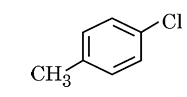
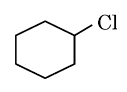
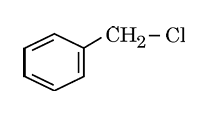
Which of the following will be the least reactive towards nucleophilic substitution reaction ?

[1 Mark]
  • (A) Diagram 2 – CBSE Class 12 PCM Chemistry 2026 Set 3 Solutions
  • (B) Diagram 3 – CBSE Class 12 PCM Chemistry 2026 Set 3 Solutions
  • (C) Diagram 4 – CBSE Class 12 PCM Chemistry 2026 Set 3 Solutions
  • (D) CH₃ – Cl
Explanation: Aryl halides are the least reactive towards nucleophilic substitution reactions because the halogen atom is attached directly to an aromatic ring. This attachment causes resonance stabilization, which strengthens the carbon-halogen bond and makes it less susceptible to substitution. Additionally, the partial double bond character due to resonance decreases the electrophilicity of the carbon attached to the halogen, hindering nucleophilic attack. In contrast, alkyl halides like CH₃Cl (methyl chloride) undergo nucleophilic substitution more readily.
Question 8. The oxidation number of Co in [Co(en)₃]₂(SO₄)₃ is :
[1 Mark]
  • (A) + 3
  • (B) + 2
  • (C) + 6
  • (D) + 4
Explanation: In the compound [Co(en)₃]₂(SO₄)₃, there are 2 complex cations and 3 sulfate ions. Each sulfate ion (SO₄) has a charge of 2-. Since the compound is electrically neutral, the total positive charge must balance the total negative charge. The total negative charge from 3 sulfates is 3 × (-2) = -6. Therefore, the total positive charge from 2 [Co(en)₃] units must be +6, meaning each [Co(en)₃] complex carries a +3 charge. Ethane-1,2-diamine (en) is a neutral ligand, so the oxidation number of Co in the complex ion must be +3.
Question 9.

According to Werner’s theory, the primary valencies of the central metal atom :

[1 Mark]
  • (A) are satisfied by negative ions.
  • (B) are non-ionisable.
  • (C) are equal to its coordination number.
  • (D) are satisfied by neutral molecules or negative ions
Explanation: According to the given context, primary valencies are normally ionisable and are satisfied by negative ions. This means that the primary valence corresponds to the oxidation state of the metal and is fulfilled by negatively charged ions. The other statements relate to secondary valences (coordination number and non-ionisable nature), which are different from primary valences.
Question 10.

Which of the following reagent is used to distinguish between (C₂H₅)₂NH and (C₂H₅)₃N ?

[1 Mark]
  • (A) Conc. HCl + ZnCl₂
  • (B) CHCl₃ + KOH
  • (C) C₆H₅SO₂Cl
  • (D) NaOH + I₂
Explanation: The reagent NaOH + I₂ (iodine in alkaline solution) is used in the Hofmann's test which distinguishes between secondary amines like (C₂H₅)₂NH and tertiary amines like (C₂H₅)₃N. Secondary amines react with this reagent to give a yellow precipitate of iodoform (CHI₃), while tertiary amines do not give this reaction. Hence, NaOH + I₂ can be used to distinguish between (C₂H₅)₂NH (a secondary amine) and (C₂H₅)₃N (a tertiary amine).
Question 11.

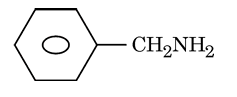
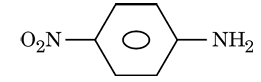
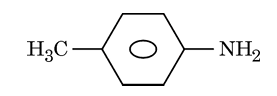
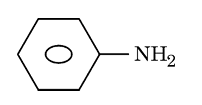
Among the following, which is the strongest base ?

[1 Mark]
  • (A) Diagram 5 – CBSE Class 12 PCM Chemistry 2026 Set 3 Solutions
  • (B) Diagram 6 – CBSE Class 12 PCM Chemistry 2026 Set 3 Solutions
  • (C) Diagram 7 – CBSE Class 12 PCM Chemistry 2026 Set 3 Solutions
  • (D) Diagram 8 – CBSE Class 12 PCM Chemistry 2026 Set 3 Solutions
Explanation: Dimethylamine is the strongest base among the options because it has the largest ionization constant (K_b). The ionization constant indicates how strongly a base ionizes in water; a larger K_b value means a stronger base. Chemically, dimethylamine has an amine group with two methyl groups attached, which increases its electron-donating ability, making it more effective at accepting protons compared to other bases listed.
Question 12.

In aqueous solution, Cr₂O₇²⁻ ion converts to which of the following in alkaline medium ?

[1 Mark]
  • (A) CrO₃
  • (B) Cr³⁺
  • (C) CrO₄²⁻
  • (D) CrO
Explanation: In alkaline medium, the dichromate ion Cr₂O₇²⁻ converts to the chromate ion CrO₄²⁻. This is because in basic conditions, equilibrium exists between dichromate and chromate ions, and the alkaline medium favors formation of chromate ion.
Question 13. The boiling point of an azeotropic mixture of water and ethanol is less than that of pure water and ethanol. The mixture shows :
[1 Mark]
  • (A) positive deviation from Raoult’s Law.
  • (B) negative deviation from Raoult’s Law.
  • (C) no deviation from Raoult’s Law.
  • (D) that the solution is an ideal solution.
Explanation: The boiling point of an azeotropic mixture of water and ethanol is less than that of the pure components, which means it forms a minimum boiling azeotrope. According to the context, minimum boiling azeotropes occur when there is a large positive deviation from Raoult's law. Positive deviation arises due to weaker intermolecular interactions between the different molecules compared to the pure substances, increasing the vapor pressure and lowering the boiling point. Thus, the ethanol-water mixture shows positive deviation from Raoult’s law.
Question 14.

The mole fraction of a solute in 2·0 molal aqueous solution is :

[1 Mark]
  • (A) 0·00347
  • (B) 0·347
  • (C) 1·87
  • (D) 0·0347
Explanation: Molality (m) is defined as moles of solute per kilogram of solvent. Given 2 molal solution means 2 moles of solute in 1 kg of solvent. Mole fraction of solute (X_solute) = moles of solute / (moles of solute + moles of solvent). Assuming solvent is water with molar mass 18 g/mol, so 1 kg solvent = 1000 g / 18 g/mol = 55.56 moles. Therefore, X_solute = 2 / (2 + 55.56) ≈ 2 / 57.56 ≈ 0.0347. Hence, the correct mole fraction of solute is 0.0347.
Question 15.

On electrolysis of very dilute aqueous solution of NaCl using platinum electrodes :

[1 Mark]
  • (A) H₂ gas is evolved at cathode.
  • (B) O₂ gas is evolved at anode.
  • (C) H₂ gas is evolved at anode.
  • (D) Na is produced at cathode.
Explanation: In the electrolysis of very dilute aqueous NaCl solution, water molecules are preferentially reduced at the cathode rather than Na⁺ ions because water is more easily reduced. This reduction produces H₂ gas at the cathode. At the anode, chloride ions are oxidized to chlorine gas; oxygen gas is not produced. Sodium metal is not formed because Na⁺ ions remain in solution combined with OH⁻ ions to form NaOH.
Question 16.

For a reaction 3A → 2B, the rate of reaction +d[B]/ dt is equal to :

[1 Mark]
  • (A) -1/3d[A]/dt
  • (B) +2d[A]/dt
  • (C) -3/2d[A]/dt
  • (D) -2/3d[A]/dt
Explanation: The rate of a reaction can be expressed in terms of the change in concentration of reactants or products, adjusted by their stoichiometric coefficients. For the reaction 3A → 2B, the rate of consumption of A is related to the rate of formation of B by the ratio of their coefficients. Thus, rate = -(1/3)d[A]/dt = (1/2)d[B]/dt, which rearranges to d[B]/dt = - (2/3)d[A]/dt. Therefore, the correct option is -2/3d[A]/dt.
Question 17.

On hydrolysis, which of the following carbohydrates gives only glucose ?

[1 Mark]
  • (A) Lactose
  • (B) Maltose
  • (C) Galactose
  • (D) Sucrose
Explanation:

Maltose is a disaccharide composed of two glucose molecules. On hydrolysis, maltose breaks down to give two molecules of glucose only. In contrast, lactose gives glucose and galactose upon hydrolysis, sucrose gives glucose and fructose, and galactose is a monosaccharide, not a disaccharide.

Question 18.

Assertion (A) : Separation of Zr and Hf is difficult. Reason (R) : Because Zr and Hf lie in the same group of the periodic table.

[1 Mark]
  • (A) Both Assertion (A) and Reason (R) are true, but Reason (R) is not the correct explanation of the Assertion (A).
  • (B) Both Assertion (A) and Reason (R) are true and Reason (R) is the correct explanation of the Assertion (A).
  • (C) Assertion (A) is true, but Reason (R) is false.
  • (D) Assertion (A) is false, but Reason (R) is true.
Explanation: The assertion that separation of Zr and Hf is difficult is true. However, the reason given—that it is because Zr and Hf lie in the same group—is not the correct explanation. The real reason for the difficulty in separation is that Zr and Hf have almost identical atomic radii (Zr: 160 pm, Hf: 159 pm) due to the lanthanoid contraction. This causes them to have very similar chemical and physical properties, making their separation difficult.
Question 19.

Assertion (A) : Phenol is less acidic than 4-methylphenol. Reason (R) : The presence of an electron releasing group in phenol makes it less acidic.

[1 Mark]
  • (A) Both Assertion (A) and Reason (R) are true and Reason (R) is the correct explanation of the Assertion (A).
  • (B) Both Assertion (A) and Reason (R) are true, but Reason (R) is not the correct explanation of the Assertion (A).
  • (C) Assertion (A) is true, but Reason (R) is false.
  • (D) Assertion (A) is false, but Reason (R) is true.
Explanation: The assertion is false because phenol is actually more acidic than 4-methylphenol. The methyl group (-CH3) in 4-methylphenol is an electron-releasing group which decreases acidity by destabilizing the phenoxide ion formed after losing a proton. The reason is true because electron-releasing groups decrease acidity by increasing electron density on the oxygen, thus making the release of H+ less favorable. Therefore, the correct explanation is that phenol is more acidic than 4-methylphenol due to the electron-donating effect of the methyl group decreasing acidity.
Question 20.

Assertion (A) : Aromatic primary amines cannot be prepared by Gabriel phthalimide synthesis. Reason (R) : Gabriel phthalimide synthesis is used for the preparation of primary aliphatic amines.

[1 Mark]
  • (A) Both Assertion (A) and Reason (R) are true, but Reason (R) is not the correct explanation of the Assertion (A).
  • (B) Both Assertion (A) and Reason (R) are true and Reason (R) is the correct explanation of the Assertion (A).
  • (C) Assertion (A) is false, but Reason (R) is true.
  • (D) Assertion (A) is true, but Reason (R) is false.
Explanation:

Gabriel phthalimide synthesis involves the nucleophilic substitution of an alkyl halide by the phthalimide anion to form a primary amine after hydrolysis. This method works well for primary aliphatic amines because alkyl halides readily undergo nucleophilic substitution. However, aromatic primary amines cannot be prepared by this method since aryl halides do not undergo nucleophilic substitution with the phthalimide anion. Therefore, the assertion that aromatic primary amines cannot be prepared by Gabriel phthalimide synthesis is correct, and the reason that this synthesis is used for primary aliphatic amines is the correct explanation.

Question 21.

Assertion (A) : Order of reaction is applicable to elementary as well as complex reactions. Reason (R) : Order of a reaction is an experimental quantity.

[1 Mark]
  • (A) Assertion (A) is false, but Reason (R) is true.
  • (B) Both Assertion (A) and Reason (R) are true and Reason (R) is the correct explanation of the Assertion (A).
  • (C) Both Assertion (A) and Reason (R) are true, but Reason (R) is not the correct explanation of the Assertion (A).
  • (D) Assertion (A) is true, but Reason (R) is false.
Explanation: Order of a reaction can be applied to both elementary and complex reactions. It is an experimental quantity because it is determined from the rate law, which is found through experiments and cannot be predicted simply from the balanced chemical equation. Hence, the Assertion is true and the Reason correctly explains the Assertion.

Section C

Question 22.

For the compound having molecular formula C₄H₉Br, write : (a) the isomer which is most reactive towards S_N1 displacement. (b) the isomer which, on reacting with Na metal in the presence of dry ether, gives 2,5-Dimethylhexane.

[2 Marks]
Answer: (a) The isomer most reactive towards S_N1 displacement is the tertiary bromide, 2-bromo-2-methylpropane (tert-butyl bromide), because it forms the most stable tertiary carbocation intermediate during the reaction.
(b) The isomer which on reacting with sodium metal in dry ether gives 2,5-Dimethylhexane is 3-bromo-2,4-dimethylpentane. Sodium metal causes coupling of two alkyl bromides via Wurtz reaction to form 2,5-Dimethylhexane.
Key Points: S_N1 reactivity depends on carbocation stability - Tertiary carbocation is most stable hence highest reactivity - Wurtz reaction with Na metal couples alkyl bromides - 3-bromo-2,4-dimethylpentane gives 2,5-Dimethylhexane on coupling
Question 23.

For a reaction A + B → Products, the rate law is :

Rate = k[A][B]³ᐟ²

Write the overall order of the reaction. Can this reaction be an elementary reaction ? Give reason in support of your answer.

[2 Marks]
Answer: (a) The order with respect to A is 1 and with respect to B is 3/2. The overall order of the reaction is 1 + 3/2 = 5/2 or 2.5.
(b) This reaction is unlikely to be an elementary reaction because the order with respect to B is a fractional value (3/2). Elementary reactions usually have integer orders equal to the molecularity of the step since they involve a single step where reactants collide directly. Fractional orders suggest a complex mechanism with more than one step.
Key Points: Order with respect to A is 1 - Order with respect to B is 3/2 - Overall order is 5/2 - Fractional order suggests complex mechanism - Elementary reactions have integer orders equal to molecularity
Question 24.

Explain why, on addition of 1 mol of KCl to 1 litre of water, the boiling point of water increases, while the addition of 1 mol of methyl alcohol to 1 litre of water decreases the boiling point.

[2 Marks]
Answer: When 1 mol of KCl is added to 1 litre of water, it dissociates into K+ and Cl- ions, creating 2 moles of particles. This increases the number of solute particles, causing boiling point elevation due to the colligative property effect. However, methyl alcohol does not dissociate but mixes with water and lowers the vapour pressure by forming hydrogen bonds, which leads to boiling point lowering or depression due to its interaction with water molecules.
Key Points: KCl dissociates into ions increasing particle number - Increased solute particles cause boiling point elevation - Methyl alcohol forms hydrogen bonds and lowers vapour pressure leading to boiling point depression
Question 25.

Write IUPAC names of the following compounds :

(i) [PtCl₂(en)₂]SO₄

(ii) (NH₄)₂[CoF₄]

[2 Marks]
Answer: (i) For the compound [PtCl2(en)2]SO4:
The ligands are chloride ions (Cl-) and ethane-1,2-diamine (en) ligands.
Since en is a neutral bidentate ligand, it is named as 'ethane-1,2-diamine'.
The number of each ligand is indicated by prefixes: di for chloride, and two for en.
The cationic complex is platinum with an oxidation state of +4 to balance the sulfate anion SO42-.
Therefore, the IUPAC name is dichlorido-bis(ethane-1,2-diamine)platinum(IV) sulfate.

(ii) For the compound (NH4)2[CoF4]:
The complex ion is [CoF4]2-, with fluoride ligands.
Fluoride (F-) is the ligand and cobalt is the central metal.
The oxidation state of cobalt in [CoF4]2- is +2.
The cation is ammonium ion (NH4+).
The IUPAC name is ammonium tetrafluoridocobaltate(II).
Key Points: Identify ligands and their numbers - Determine central metal oxidation state - Name ligands alphabetically with prefixes - Name central metal with oxidation state in brackets - Name entire compound with cation followed by anion
Question 26.

Define the following terms with a suitable example in each case :

(i) Ambidentate ligand

(ii) Double salt

[2 Marks]
Answer: (i) Ambidentate ligand: An ambidentate ligand is a ligand that can attach to the central metal atom or ion through two different atoms, but only one atom at a time forms a coordinate bond. For example, the NO2- ion can bind through nitrogen or oxygen atom.
(ii) Double salt: A double salt is a solid crystalline compound that contains two different salts combined in a fixed ratio and crystallized together. It dissociates completely into its ions in aqueous solution. Example: KAl(SO4)2 . 12H2O (Potash alum) is a double salt of K2SO4 and Al2(SO4)3.
Key Points: Ambidentate ligand binds through two different atoms-one at a time - NO2- is an example - Double salt contains two different salts crystallized together - It dissociates completely in solution - KAl(SO4)2 . 12H2O is an example
Question 27.

How do you explain the following ?

(a) Presence of a straight chain in glucose

(b) Presence of five − OH groups in glucose which are attached to different carbon atoms

[2 Marks]
Answer: (a) Glucose exists in equilibrium between its straight-chain form and cyclic form. The straight chain is the open-chain form with an aldehyde group at one end.
(b) Glucose has five hydroxyl (−OH) groups attached to different carbon atoms (C2, C3, C4, C5, and C6). These −OH groups make glucose a polyhydroxy aldehyde and contribute to its chemical properties and ability to form hydrogen bonds.
Key Points: Glucose has open-chain and cyclic forms - Straight chain contains an aldehyde group at C1 - Five hydroxyl groups attached to carbons 2,3,4,5,6 - Hydroxyl groups define glucose as polyhydroxy aldehyde

Section D

Question 28.

The half-life period of a radioactive element is 1·5 × 10¹⁰ years. Calculate the time in which the activity of the element is reduced to 75% of its original value.

[Given : log 2 = 0·30, log 3 = 0·48, log 4 = 0·60]

[3 Marks]
Answer: Given:
Half-life, t1/2 = 1.5 * 1010 years
Activity reduced to 75%, so remaining activity = 75% of original = 0.75 A0
Let the time taken for this be t.

Formula relating activity and time is:
A = A0 * (1/2)t/t1/2
where A is the activity after time t, and A0 is the initial activity.

So, 0.75 A0 = A0 * (1/2)t/1.5*1010
Dividing both sides by A0,
0.75 = (1/2)t/1.5*1010

Taking logarithm (base 10) both sides:
log 0.75 = (t / 1.5 * 1010) * log (1/2)
We know, log 0.75 = log (3/4) = log 3 - log 4 = 0.48 - 0.60 = -0.12
Also, log (1/2) = - log 2 = -0.30

Substituting values:
-0.12 = (t / 1.5 * 1010) * (-0.30)

Simplify:
-0.12 = -0.30 * (t / 1.5 * 1010)
Divide both sides by -0.30:
t / 1.5 * 1010 = (-0.12)/(-0.30) = 0.4

Therefore,
t = 0.4 * 1.5 * 1010 = 0.6 * 1010 years = 6 * 109 years

Answer: The activity of the element reduces to 75% of its original value in 6 * 109 years.
Key Points: Use of decay formula A = A0 * (1/2)^(t/t1/2) - Taking logarithms to solve for time - Substitution of given log values to simplify calculation
Question 29.

State Kohlrausch’s law of independent migration of ions. With the help of a curve, explain why it is not easy to determine Λ°ₘ for weak electrolytes by extrapolating the concentration − molar conductivity curve, as it is for strong electrolytes.

[3 Marks]
Answer: (a) Kohlrausch’s law of independent migration of ions states that at infinite dilution, the molar conductivity (Λₘ°) of an electrolyte is equal to the sum of the individual contributions of its constituent ions, i.e., Λₘ° = λₙ° + λₒ°, where λₙ° and λₒ° are the limiting molar ionic conductivities of the cation and anion respectively.
(b) Explanation with the help of a curve: For strong electrolytes, the molar conductivity decreases slightly and linearly with the square root of concentration due to ion interactions, making it easy to extrapolate the concentration vs molar conductivity curve to zero concentration to find Λₘ°.
However, for weak electrolytes, the molar conductivity increases steeply at very low concentrations due to incomplete dissociation and gradual increase in the degree of ionization (α). This non-linear behaviour causes the extrapolation of the curve to infinite dilution to be inaccurate.
Therefore, it is difficult to determine Λₘ° for weak electrolytes by simple extrapolation. Instead, Kohlrausch’s law is used to calculate Λₘ° from the ionic conductivities of the ions.
Key Points: Kohlrausch’s law states molar conductivity at infinite dilution equals sum of ionic conductivities - Strong electrolytes show linear decrease allowing easy extrapolation - Weak electrolytes show steep, non-linear increase due to incomplete dissociation making extrapolation difficult
Question 30.

An antifreeze solution is prepared by dissolving 31 g of ethylene glycol (Molar mass = 62 g mol⁻¹) in 600 g of water. Calculate the freezing point of the solution. (K_f for water = 1·86 K kg mol⁻¹

[3 Marks]
Answer: Step 1: Calculate moles of ethylene glycol
Molar mass of ethylene glycol = 62 g mol-1
Moles of ethylene glycol = mass / molar mass = 31 g / 62 g mol-1 = 0.5 mol
Step 2: Calculate mass of water in kilograms
Mass of water = 600 g = 600/1000 = 0.6 kg
Step 3: Calculate molality
Molality = moles of solute / mass of solvent in kg = 0.5 mol / 0.6 kg = 0.833 mol kg-1
Step 4: Calculate freezing point depression
Delta Tf = Kf * molality = 1.86 K kg mol-1 * 0.833 mol kg-1 = 1.55 K
Step 5: Calculate freezing point of the solution
Normal freezing point of water = 0 deg C = 273.15 K
Freezing point of solution = 273.15 K - 1.55 K = 271.6 K
Therefore, the freezing point of the solution is 271.6 K or -1.55 deg C.
Key Points: Calculate moles of solute - Calculate molality - Use freezing point depression formula
Question 31.

Answer the following questions about the complexes

[NiCl₄]²⁻ and [Ni(CN)₄]²⁻

(i) Write the hybridization involved in each case.

(ii) Which of them is the inner orbital complex and which one is the outer orbital complex ?

(iii) Compare their magnetic behaviour. [Atomic number : Ni = 28]

[3 Marks]
Answer: (i) The hybridization in [NiCl₄]2- is sp3. Here, Ni2+ uses its 4s and three 4p orbitals for hybridization. In [Ni(CN)₄]2-, the hybridization is dsp2 where Ni2+ uses one 3d, one 4s and two 4p orbitals.
(ii) [Ni(CN)₄]2- is an inner orbital complex because it involves the 3d orbital in hybridization leading to a square planar geometry and strong field ligand CN-. [NiCl₄]2- is an outer orbital complex, using only s and p orbitals, leading to tetrahedral geometry with the weak field ligand Cl-.
(iii) Magnetic behaviour: [NiCl₄]2- is paramagnetic because it is a high spin complex with unpaired electrons. [Ni(CN)₄]2- is diamagnetic due to pairing of electrons caused by the strong field CN- ligand, resulting in no unpaired electrons.
Key Points: Hybridization in [NiCl4]2- is sp3 and in [Ni(CN)4]2- is dsp2 - [Ni(CN)4]2- is inner orbital complex and [NiCl4]2- is outer orbital complex - [NiCl4]2- is paramagnetic and [Ni(CN)4]2- is diamagnetic due to electron pairing
Question 32.

(i) Name two coordination compounds which are important in biological systems.

(ii) What is meant by chelate effect ? Give an example.

(iii) Why are low spin tetrahedral complexes rarely formed ?

[3 Marks]
Answer: (i) Two important coordination compounds in biological systems are haemoglobin (contains Fe2+ ion coordinated to a porphyrin ligand) and chlorophyll (contains Mg2+ ion in coordination with a porphyrin ring).
(ii) Chelate effect refers to the enhanced stability of coordination compounds where ligands form rings with the central metal ion by binding through more than one donor atom (multidentate ligands). This increases the stability compared to similar complexes with monodentate ligands. For example, ethylenediamine (en) acts as a bidentate ligand forming a chelate complex with Ni2+, [Ni(en)3]2+.
(iii) Low spin tetrahedral complexes are rarely formed because the crystal field splitting in tetrahedral geometry is smaller and causes weaker ligand field strength. Hence, the pairing energy is usually greater than the ligand field splitting energy, favoring high spin configuration rather than low spin in tetrahedral complexes.
Key Points: Haemoglobin and chlorophyll are biological coordination compounds - Chelate effect increases complex stability via multidentate ligands forming rings - Low spin tetrahedral complexes rare due to small splitting and higher pairing energy
Question 33.

Give reasons for the following :

(a) Although chlorine is an electron-withdrawing group, yet it is ortho-, para-directing in electrophilic aromatic substitution reactions.

(b) Aryl halides cannot be prepared by reacting phenol with concentrated halogen acids or phosphorus halides.

(c) Chloroform is stored in closed dark coloured bottles.

[3 Marks]
Answer: (a) Chlorine is an electron-withdrawing group due to its -I effect but it also has lone pairs that participate in resonance donating electron density to the ring at ortho and para positions. This resonance stabilizes the carbocation intermediate formed during electrophilic substitution, making chlorine an ortho-para director despite overall electron withdrawal.
(b) Aryl halides cannot be prepared by reacting phenol with concentrated halogen acids or phosphorus halides because phenol has an -OH group strongly bonded to the aromatic ring. These reagents cannot replace the -OH group easily due to the strength of the C-O bond and the stability of the phenol structure. Moreover, phenol reacts differently forming other products, not aryl halides.
(c) Chloroform is stored in closed dark coloured bottles to prevent its decomposition by light and air. Exposure to light and oxygen causes chloroform to form highly toxic and carcinogenic phosgene gas. The dark bottles reduce light exposure and closed bottles limit air contact, thus increasing safety and shelf life.
Key Points: Chlorine donates electrons by resonance at ortho and para positions - Phenol's C-O bond is strong, so halogen acids or phosphorus halides cannot replace the -OH group - Chloroform decomposes on light and air exposure forming toxic phosgene - stored in dark closed bottles to prevent this
Question 34.

How will you obtain the following from benzenediazonium chloride ? Give chemical equations involved :

(a) Chlorobenzene

(b) Benzene

(c) Benzonitrile

[3 Marks]
Answer: (a) To obtain chlorobenzene from benzenediazonium chloride, treat it with cuprous chloride (CuCl) in the presence of heat. The diazonium group is replaced by chlorine.
C6H5N2+Cl- + CuCl → C6H5Cl + N2 + CuCl2
(b) To get benzene, benzenediazonium chloride is reduced using hypophosphorous acid (H3PO2). The diazonium group is replaced by hydrogen.
C6H5N2+Cl- + H3PO2 + H2O → C6H6 + N2 + H3PO3 + HCl
(c) To obtain benzonitrile, benzenediazonium chloride reacts with cuprous cyanide (CuCN). The diazonium group is replaced by the cyanide group.
C6H5N2+Cl- + CuCN → C6H5CN + N2 + CuCl
Key Points: Benzenediazonium chloride reacts with CuCl to give chlorobenzene - Reduction with H3PO2 gives benzene - Reaction with CuCN produces benzonitrile
Question 35.

An organic compound (A) with molecular formula C₃H₅N on reaction with C₆H₅MgBr followed by hydrolysis, gives a compound (B). Compound (B) forms an orange-red precipitate with 2,4-DNP reagent and does not give iodoform test. It neither reduces Tollens’ or Fehling’s reagent nor does it decolourise bromine water. On drastic oxidation with chromic acid it gives a carboxylic acid (C) having molecular formula C₇H₆O₂. Identify the compounds (A), (B) and (C). Write the reactions of compound (A) with C₆H₅MgBr followed by hydrolysis to give compound (B).

[3 Marks]
Answer: Identification of compounds:
(a) Compound (A) has molecular formula C3H5N. It reacts with phenylmagnesium bromide (C6H5MgBr) followed by hydrolysis to give compound (B). The molecular formula suggests (A) is propenenitrile (acrylonitrile).
(b) Compound (B) forms an orange-red precipitate with 2,4-DNP reagent indicating it is a ketone or aldehyde. It does not give iodoform test, so it is not a methyl ketone. It neither reduces Tollens’ nor Fehling’s reagent indicating it is not an aldehyde. It does not decolourise bromine water, so it lacks carbon-carbon double bonds.
(c) On oxidation with chromic acid compound (B) gives carboxylic acid (C) with formula C7H6O2, which is benzoic acid.
Compounds identified:
(A) Propenenitrile (acrylonitrile), C2H3CN
(B) Phenylacetone (C9H10O), formed from addition of C6H5MgBr to nitrile and hydrolysis results in phenyl ketone
(C) Benzoic acid, C7H6O2
Reactions:
Step 1: Reaction of (A) with phenylmagnesium bromide (C6H5MgBr):
C2H3CN + C6H5MgBr → C6H5-CH2-C=NMgBr (Grignard addition to nitrile forms imine magnesium salt)
Step 2: Hydrolysis:
C6H5-CH2-C=NMgBr + H2O/H+ → C6H5-CH2-COCH3 (phenylacetone, a ketone)
Summary:
Compound (A) is acrylonitrile (C2H3CN). On reaction with phenylmagnesium bromide and hydrolysis it gives phenylacetone (B), a ketone which forms an orange-red precipitate with 2,4-DNP reagent and does not give iodoform test. On oxidation phenylacetone gives benzoic acid (C).
Key Points: Compound A is acrylonitrile (C3H5N)- Compound B is phenylacetone formed by reaction of A with phenylmagnesium bromide and hydrolysis- Compound C is benzoic acid formed by oxidation of B with chromic acid

Section E

Question 36.

(i) Describe giving reason which one of the following pairs has the property indicated :

(I) Fe or Cu − higher melting point

(II) Ti³⁺ or Sc³⁺ − coloured in aqueous solution

(III) Cr or Zn⁻ higher third ionisation enthalpy

(ii) Write the ionic equations for the oxidizing action of – MnO⁻₄ in acidic medium with :

(I) Fe²⁺ ion

(II) I⁻ ion

[5 Marks]
Answer: (i) (I) Fe has higher melting point than Cu because Fe is a transition metal with more unpaired 3d electrons allowing stronger metallic bonding which requires more energy to break.
(II) Ti³⁺ ion is coloured in aqueous solution whereas Sc³⁺ is not because Ti³⁺ has unpaired d electrons (d1 configuration) that allow d-d transitions causing colour while Sc³⁺ has no d electrons.
(III) Cr has higher third ionisation enthalpy than Zn because after removing two electrons, Cr attains a half-filled stable d5 configuration which requires more energy to remove the third electron, unlike Zn which has a filled d10 configuration.
(ii) Ionic equations for the oxidizing action of MnO₄- in acidic medium:
(I) MnO₄- + 5Fe2+ + 8H+ → Mn2+ + 5Fe3+ + 4H2O
(II) MnO₄- + 8I- + 8H+ → Mn2+ + 4I2 + 4H2O
Thus, MnO₄- acts as a strong oxidising agent in acidic medium converting Fe2+ to Fe3+ and I- to I2.
Key Points: Fe higher melting point due to stronger metallic bonding - Ti³⁺ coloured due to unpaired d electron, Sc³⁺ colourless - Cr higher third ionisation enthalpy due to half-filled d5 stability - MnO₄⁻ oxidises Fe²⁺ to Fe³⁺ in acid - MnO₄⁻ oxidises I⁻ to I₂ in acid
Question 37.

(i) A black-brown coloured solid (A) when fused with KOH in the presence of air, produces a dark green coloured compound (B) which on electrolytic oxidation in alkaline medium gives a dark purple coloured compound (C). Identify (A), (B) and (C). Write the reactions involved.

(ii) What happens when an acidic solution of the green compound (B) is allowed to stand for some time ? Also write the equation involved. What is this type of reaction called ?

[5 Marks]
Answer: (i) Identification and reactions:
Compound (A) is Manganese dioxide (MnO2), a black-brown solid.
When fused with KOH in the presence of air, MnO2 forms Potassium manganate (K2MnO4), which is dark green in colour. This is compound (B).
Reaction: MnO2 + 2 KOH + 0.5 O2 → K2MnO4 + H2O

On electrolytic oxidation of compound (B) in alkaline medium, dark purple coloured Potassium permanganate (KMnO4) is formed. This is compound (C).
Reaction: 2 K2MnO4 + 2 H2O → 2 KMnO4 + 2 KOH + H2

(ii) When an acidic solution of compound (B) (Potassium manganate) is allowed to stand for some time, it undergoes disproportionation into Potassium permanganate (KMnO4) and Manganese dioxide (MnO2), which precipitates as brown solid.
Reaction: 3 K2MnO4 + 4 H+ → 2 KMnO4 + MnO2 + 2 K+ + 2 H2O
This reaction is called disproportionation, where the same element in one oxidation state is both oxidized and reduced.

Summary:
A = MnO2 (black-brown solid), B = K2MnO4 (dark green), C = KMnO4 (dark purple). The reactions involve oxidation and electrolytic oxidation converting Mn from +4 to +6 to +7 oxidation states, and disproportionation in acidic medium.
Key Points: A is MnO2 black-brown solid - Fusion with KOH and air forms green K2MnO4 (B) - Electrolytic oxidation of (B) forms purple KMnO4 (C) - Acidic solution of (B) undergoes disproportionation into KMnO4 and MnO2 - Disproportionation is oxidation and reduction of same element simultaneously
Question 38.

Write the product(s) when :

(I) One mol of ethanal is treated with 1 mol of CH3OH in the presence of dry HCl gas. (II) Benzaldehyde is treated with conc. NaOH. (III) Ethanoic acid is heated in the presence of P₂O₅.

(ii) Write a simple chemical test to distinguish between Ethanal and Propanal.

(iii) Write the name of the reagent to transform Allyl alcohol to Propenal.

[5 Marks]
Answer: (a) When one mole of ethanal (CH3CHO) is treated with one mole of methanol (CH3OH) in the presence of dry HCl gas, an acetal is formed. The product is 1,1-dimethoxyethane (CH3CH(OCH3)2). This reaction occurs because dry HCl acts as an acid catalyst promoting the formation of the acetal.

(b) When benzaldehyde (C6H5CHO) is treated with concentrated NaOH, it undergoes Cannizzaro reaction (since benzaldehyde has no alpha-hydrogen). One molecule of benzaldehyde is reduced to benzyl alcohol (C6H5CH2OH) and another molecule is oxidized to sodium benzoate (C6H5COONa).

(c) When ethanoic acid (CH3COOH) is heated with phosphorus pentoxide (P2O5), it results in the formation of acid anhydride. Specifically, acetic anhydride ((CH3CO)2O) is formed with the removal of water.

(ii) To distinguish between ethanal and propanal, use the Tollen's test or Fehling's test. Both aldehydes give a positive result, but propanal can undergo aldol condensation in the presence of dilute NaOH and heat (forming a yellow precipitate) whereas ethanal gives a simpler reaction. Alternatively, the iodoform test is positive for ethanal (gives yellow precipitate of CHI3), but negative for propanal, so iodoform test can be used to distinguish them.

(iii) The reagent used to transform allyl alcohol (CH2=CH–CH2OH) to propenal (CH2=CH–CHO) is PCC (Pyridinium chlorochromate). PCC oxidizes the primary alcohol to the corresponding aldehyde without further oxidation to acid.
Key Points: Formation of acetal from ethanal and methanol in dry HCl - Cannizzaro reaction of benzaldehyde with conc NaOH producing benzyl alcohol and sodium benzoate - Conversion of ethanoic acid to acetic anhydride by P2O5 - Iodoform test to distinguish ethanal and propanal - PCC reagent for oxidation of allyl alcohol to propenal
Question 39.

(i) Draw the structure of the semi carbazone of acetone

(ii) Why areα-hydrogen atoms of aldehydes and ketones acidic in nature ?

(iii) Arrange the following compounds in increasing order of their reactivity towards HCN

CH₃COCH₃, CH₃CHO, (CH₃)₃C − C =O − CH₃

(iv) Write the reaction involved in Etard reaction

[5 Marks] Diagram 9 – CBSE Class 12 PCM Chemistry 2026 Set 3 Solutions
Answer: (i) Structure of semi carbazone of acetone: Acetone reacts with semicarbazide to form semi carbazone. The structure is: CH3-C(=N-NH-C(=O)-NH2)-CH3. Here, the carbonyl group (>C=O) of acetone is replaced by >C=NNH-C(=O)-NH2 group.
(ii) Acidity of α-hydrogen atoms of aldehydes and ketones: The α-hydrogen atoms are acidic because the α-carbon is adjacent to the carbonyl group which is highly electronegative due to oxygen. When α-hydrogen is removed as H+, the resulting carbanion is stabilized by resonance with the carbonyl group, delocalizing the negative charge over oxygen. This resonance stabilization increases the acidity of α-hydrogen atoms.
(iii) Increasing order of reactivity towards HCN: The reactivity towards HCN depends on the partial positive charge on the carbonyl carbon. Steric hindrance decreases reactivity. Hence, order is (CH3)3C-C=O-CH3 < CH3COCH3 < CH3CHO.
(iv) Etard reaction: In Etard reaction, methyl ketones are oxidized by chromium(VI) chloride (Etard reagent) to corresponding aldehydes. For example, acetone on treatment with Etard reagent gives acetaldehyde:
CH3-CO-CH3 + CrO2Cl2 → CH3-CHO + other products.
This reaction is useful for selective oxidation of methyl ketones to aldehydes.
Key Points: Structure of semi carbazone shows replacement of >C=O by >C=NNH-C(=O)-NH2 - α-hydrogen acidity due to resonance stabilization of carbanion - Reactivity towards HCN depends on steric hindrance and partial positive charge on carbonyl carbon - Etard reaction oxidizes methyl ketones to aldehydes using chromium(VI) chloride
Question 40.

Calculate the electrode potential of a half-cell for zinc electrode dipping in 0·01 M ZnSO₄ solution at 25°C. Given : E°_ Zn²⁺ /Zn = − 0·76 V [log 10 = 1]

(ii) Write anode, cathode and overall reaction involved in dry cell

(iii) Equilibrium constant (K_c) is related to E°_cell but not to E_cell. Why ?

[5 Marks]
Answer: (a) Calculation of electrode potential using Nernst equation:
E = E° - (0.059/2) log [Zn2+]
Given, E° = -0.76 V, [Zn2+] = 0.01 M, log 10 = 1
So, E = -0.76 - (0.059/2) log 0.01
= -0.76 - (0.059/2)(-2) [since log 0.01 = -2]
= -0.76 + 0.059 = -0.701 V

(b) Reactions in dry cell:
Anode (oxidation): Zn (s) → Zn2+ + 2 e-
Cathode (reduction): 2 MnO2 + 2 NH4+ + 2 e- → Mn2O3 + 2 NH3 + H2O
Overall reaction: Zn + 2 MnO2 + 2 NH4+ → Zn2+ + Mn2O3 + 2 NH3 + H2O

(c) Explanation why Kc is related to E°_cell but not to E_cell:
Equilibrium constant Kc corresponds to standard conditions where free energy change is minimum and the system is at equilibrium. E°_cell represents the cell potential under standard conditions and is directly linked to standard Gibbs free energy change (ΔG°), which relates to Kc by the equation ΔG° = -RT ln Kc. However, E_cell depends on conditions such as concentration or pressure which can vary and do not represent true equilibrium, so it is not directly related to Kc. Hence, only standard electrode potential E°_cell is related to equilibrium constant Kc.
Key Points: Use of Nernst equation for electrode potential calculation - Anode, cathode and overall reaction in dry cell - Relationship between E°_cell, E_cell and equilibrium constant K_c
Question 41.

(i) The conductivity of 0·001 M solution of acetic acid is 3·905 ˣ 10⁻⁵ S cm⁻¹. Calculate its molar conductivity and degree of dissociation (α). Given : λ°_ CH₃COO⁻ = 40·9 S cm²mol⁻¹.

λ° _H⁺ =349.6S cm²mol⁻¹.

(ii) Give reasons for the following : (I) Why does a mercury cell deliver a constant voltage for its entire life ? (II) Why is it necessary to use salt bridge in a galvanic cell ?

[5 Marks]
Answer: (i) Given: Concentration, c = 0.001 M = 0.001 mol L-1 Conductivity, κ = 3.905 x 10⁻⁵ S cm-1 Molar conductivity (Λm) is calculated by the formula: Λm = κ / c = (3.905 x 10⁻⁵) / (0.001) = 0.03905 S cm2 mol-1 Given molar conductivities at infinite dilution: λ°H+ = 349.6 S cm2 mol-1, λ°CH3COO- = 40.9 S cm2 mol-1 Molar conductivity at infinite dilution of acetic acid, Λm0 = λ°H+ + λ°CH3COO- = 349.6 + 40.9 = 390.5 S cm2 mol-1 Degree of dissociation, α = Λm / Λm0 = 0.03905 / 390.5 = 0.0001 (approximately) Hence, molar conductivity = 39.05 S cm2 mol-1
Degree of dissociation (α) = 0.0001 or 0.01%.

(ii) Reason (I): A mercury cell delivers a constant voltage for its entire life because it is a primary cell with a fixed chemical composition and the reaction occurs at a steady rate. The mercury electrode and the zinc electrode reactions maintain a constant electromotive force until the zinc is consumed.

Reason (II): A salt bridge is necessary in a galvanic cell to maintain electrical neutrality by allowing the flow of ions between the two half-cells. It prevents the mixing of different solutions and completes the electrical circuit without allowing the solutions to mix and react directly, thereby allowing the redox reaction to proceed smoothly.
Key Points: Molar conductivity calculated using Λm = conductivity/concentration - Degree of dissociation α = Λm / Λm0 for weak electrolytes - Mercury cell has stable reactions giving constant voltage - Salt bridge maintains electrical neutrality and prevents solution mixing

Paper Details

CBSE Board Exam 2026

Class

Class 12 PCM

Subject

Chemistry

Year

2026

Set

Set 3

Other Years — Chemistry

2022 Set-1

2022 Set-2

2022 Set-3

2022 Set-4

2022 Set-5

2023 Set-1

2023 Set-2

2023 Set-3

2023 Set-4

2023 Set-5

2024 Set-1

2024 Set-2

2024 Set-3

2024 Set-4

2024 Set-5

2025 Set-1

2025 Set-2

2025 Set-3

2025 Set-4

2025 Set-5

2025 Set-6

2026 Set-1

2026 Set-2

2026 Set-3

2026 Set-4