SOLUTIONS
2026 BOARD EXAM
CBSE Class 12 PCM Chemistry Board Paper 2026 — Set 1 Solutions
2026
Chemistry
Class 12 PCM
CBSE EXAMINATION PAPER-2026
CHEMISTRY
(Solved)
General Instructions :
Read the following instructions carefully and follow them :
- This question paper contains 42 questions. All questions are compulsory.
- This question paper is divided into 5 sections.
- Section A – questions number 1 to 6 are case based questions
- Section B – questions number 7 to 22 are multiple choice questions
- Section C – questions number 23 to 28 are very short answer
- Section D – questions number 29 to 36 are short answer
- Section E – questions number 37 to 42 are long answer
- There is no overall choice given in the question paper. However, an internal choice has been provided in few questions.
- Use of calculator is NOT allowed.
Section A
(1) Write structural formulae of the compound A and B :
 [1 Mark]
Compound B is the arenediazonium salt formed by diazotization of compound A, generally represented as C6H5N2+Cl-. These compounds relate to the passage where primary aromatic amines form arenediazonium salts that are used for further substitution reactions.
(2) Why CH₃ – NH₂ is a stronger base than (CH₃)₃N in aqueous solution ?
[2 Marks]In CH₃ – NH₂, the nitrogen's lone pair is easily available to accept a proton, and it forms strong hydrogen bonds with water, stabilising the ammonium ion.
In (CH₃)₃N, bulky methyl groups cause steric hindrance which reduces the availability of the lone pair and also hinder solvation by water; thus it is less basic.
This explanation aligns with the case passage that states basicity depends on availability of the unshared electron pair and solvation stabilising the ammonium ion.
(3) A compound ‘X’ with molecular formula C₃H₉N reacts with Hinsberg reagent to give a product insoluble in alkali. Identify ‘X’.
[1 Mark](1) How can you convert aniline to benzonitrile ?
[2 Marks]Reaction steps:
1. C6H5NH2 + HNO2 → C6H5N2+
2. C6H5N2+ + CuCN → C6H5CN + N2 + Cu
(2) Why is –NH₂ group of aniline acetylated before carrying out nitration ?
[2 Marks](1) In octahedral crystal field, energies of which d-orbitals will be raised when ligands approach the central metal atom/ion ? Give reason in support of your answer.
[2 Marks](2) Using crystal field theory, write the electronic configuration of central metal atom/ion of the following : (i) [CoF₆]³⁻ (ii) [Co(NH₃)₆]³⁺ [At. No. : Co = 27]
[2 Marks](1) [NiCl₄]²⁻ is paramagnetic while [Ni(CO)₄] is diamagnetic though both are tetrahedral. Why? [Atomic No. : Ni = 28]
[2 Marks]This difference in ligand field strength explains the different magnetic properties.
(2) Write hybridization and magnetic behaviour of the complex [Fe(CN)₆]³⁻.[ Atomic No. : Fe = 26]
The magnetic behaviour indicates strong field ligands cause pairing and low spin states.
Section B
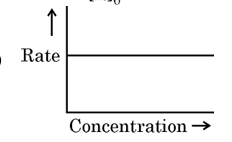
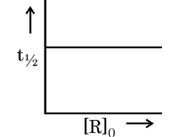
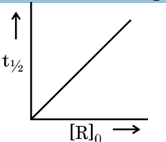
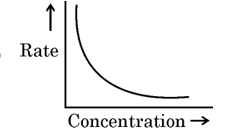
Which of the following curve represents the first order reaction ?
-
(A)
-
(B)
-
(C)
-
(D)
Which of the following solutions will have the lowest freezing point in water ?
Which of the following is not a transition metal ?
Mercury (Hg) is not considered a transition metal because it has a completely filled d-subshell (d10 configuration) and does not exhibit most properties typical of transition elements, such as variable oxidation states. According to the context, Zn, Cd, and Hg do not show most of the properties of transition elements despite being in the d-block. Cu, Ag, and Sc are considered transition metals.
Which of the following represents the fraction of molecules with energies equal to or greater than Eₐ?
What will happen during the electrolysis of aqueous solution of CuCl₂ by using platinum electrodes ?
Aspirin is obtained by acetylation of
The secondary valency of Co in the complex [Co(NH₃)₅(NO₂)]²⁺ is
At low temperature, phenol reacts with dil. HNO₃ to yield
At low temperature (around 298 K), phenol reacts with dilute nitric acid to give a mixture of ortho- and para- nitrophenols. This occurs because the hydroxyl group (-OH) in phenol is an activating group that directs the incoming nitro group (NO₂) to the ortho and para positions on the benzene ring. Therefore, both ortho- and para-nitrophenols are formed under these conditions.
Which of the following is ‘not’ true about enantiomers ?
Aniline on direct nitration yields
- (A) C₆H₅ – N(CH₃)₂
- (B) C₆H₅ – NH₂
-
(C)
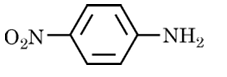
- (D) C₆H₅ – NH(CH₃)
The deficiency of which of the following vitamins causes increased fragility of red blood cells and muscular weakness :
Assertion (A) : The presence of –OH group in phenols directs the incoming group to meta position in the ring. Reason (R) : –OH group in phenols activates the aromatic ring towards electrophilic substitution reaction.
Assertion (A) : Actinoids show wide range of oxidation states. Reason (R) : Actinoids are radioactive in nature.
Assertion (A) : The pentaacetate of glucose does not react with H2N – OH. Reason (R) : It indicates the presence of free – CHO group in glucose.
Section C
What type of deviation from Raoult’s law is shown by a mixture of phenol and aniline ? Give reason.
What will happen to the boiling point of the solution on mixing phenol and aniline ?
Reason: In this mixture, strong intermolecular hydrogen bonding occurs between phenol (with phenolic proton) and aniline (with lone pair on nitrogen). These interactions are stronger than those present in the individual pure components.
(b) Due to strong intermolecular attractions, the boiling point of the solution increases on mixing phenol and aniline as more energy is required to break these interactions.
Why are haloarenes less reactive towards nucleophilic substitution reaction ? Give two reasons.
(i) The C—Cl bond in haloarenes has partial double bond character because of resonance with the aromatic ring, making the bond stronger and difficult to break.
(ii) The bond length of C—Cl in haloarenes (169 pm) is shorter than in haloalkanes (177 pm), which makes the bond cleavage harder.
Therefore, nucleophiles find it difficult to replace the halogen in haloarenes, making nucleophilic substitution reactions slow and difficult.
(a) Write IUPAC names of the following coordination compounds:
(i) [Ag(NH₃)₂] [Ag(CN)₂]
(ii) K₃[Fe(C₂O₄)₃]
(ii) The complex ion is [Fe(C2O4)3]3-, where C2O42- is called oxalato. Potassium ion K+ balances the charge. The IUPAC name is Potassium trioxalatoferrate(III).
(i) Give a chemical test to show that [Co(NH₃)₅SO₄]Cl and [Co(NH₃)₅Cl]SO₄ are ionisation isomers.
(ii) What is meant by the ‘Chelate effect’ ? Give an example.
(ii) Chelate effect is the enhanced stability of a coordination complex when multidentate ligands form rings with the metal ion compared to similar monodentate ligands. Example: [Co(en)3]3+, where en = ethylenediamine is a bidentate ligand that forms stable chelates.
Differentiate between the following :
(i) Peptide linkage and Glycosidic linkage
(ii) Essential amino acids and Non-essential amino acids
Glycosidic linkage: It is a bond formed between two monosaccharides through a dehydration reaction, linking them to form disaccharides or polysaccharides.
(ii) Essential amino acids: These cannot be synthesized by the human body and must be obtained from food.
Non-essential amino acids: These can be made by the body and are not required to be taken from diet.
Following reaction takes place in one step :
2A + B→ 2C How will the rate of above reaction change if the volume of the reaction vessel is decreased to one third of its original volume ? Will there be any change in the order of reaction with the reduced volume ?
In summary:
1. Rate increases 9 times when volume is reduced to one third.
2. The order of reaction remains unchanged at 2.
Section D
For the first order thermal decomposition reaction, following data was obtained :
Calculate rate constant.
[Given : log 3 = 0.48]
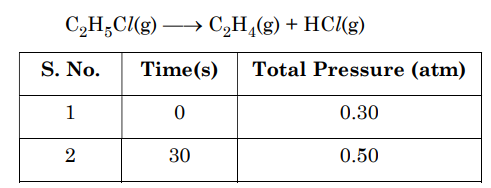
For a first order reaction, the rate constant k is given by the formula:
k = (2.303 / t) * log (C0 / Ct),
where C0 = initial concentration, Ct = concentration at time t, t = time.
As data is given, substitute the values into the formula.
Use log 3 = 0.48 wherever required.
Calculate the value of k stepwise.
Hence, the rate constant k for the given thermal decomposition reaction is obtained by applying the above formula using the provided data.
What type of battery is Mercury cell ? Why it is more advantageous than dry cell ? Write overall reaction taking place in Mercury cell.
(b) It is more advantageous than dry cell because it has a stable voltage, longer shelf life, less prone to leakage, and provides a steady current for a longer time. Hence, it is used in devices like watches and hearing aids.
(c) Overall reaction in Mercury cell is:
Anode: Zn + 2OH- → ZnO + H2O + 2e-
Cathode: HgO + H2O + 2e- → Hg + 2OH-
Overall: Zn + HgO → ZnO + Hg
Answer the following :
(i) Why is the Equilibrium Constant (K_c ) related to E°_cell and not to E_cell ?
(ii) Two metals ‘A’ and ‘B’ have standard electrode potential values of –0.24 V and +0.80 V respectively. Which of these will liberate hydrogen gas from dil. H₂SO₄?
(iii) Write the cell reaction which occurs in lead storage battery when it is in charging.
(ii) Metal A has E° = –0.24 V and metal B has E° = +0.80 V. Hydrogen liberation from dilute H2SO4 occurs if the metal has lower standard electrode potential than hydrogen (0 V). So metal A (–0.24 V) will liberate hydrogen gas, whereas metal B (+0.80 V) will not.
(iii) During charging of the lead storage battery, the reverse reaction occurs:
PbSO4 + 2H2O → Pb + PbO2 + 2H+ + 2SO42-. This reaction reforms Pb and PbO2 electrodes from PbSO4 and water raising the battery charge.
Calculate the boiling point of a solution containing 0.61 g of benzoic acid (Molar mass = 122 g mol⁻¹) in 5 g of CS₂ in which it dimerises to the extent of 88%. The boiling point and K_b of CS₂ are 46.2°C and 2.3 K kg mol⁻¹ respectively.
Moles = mass / molar mass = 0.61 g / 122 g mol-1 = 0.005 mol
Step 2: Calculate moles of dimer formed due to 88% dimerisation
Dimerisation extent = 88%, so 88% of monomers form dimers
Number of monomers in dimers = 0.88 * 0.005 mol = 0.0044 mol
Number of dimers formed = 0.0044 mol / 2 = 0.0022 mol
Remaining monomers = 0.005 - 0.0044 = 0.0006 mol
Step 3: Calculate total moles of particles in solution considering dimerisation
Particles from dimers = 0.0022 mol (each dimer counts as one particle)
Particles from monomers = 0.0006 mol
Total particles = 0.0022 + 0.0006 = 0.0028 mol
Step 4: Calculate molality of solution
Mass of solvent (CS2) = 5 g = 0.005 kg
Molality (m) = total moles of particles / kg solvent = 0.0028 mol / 0.005 kg = 0.56 mol kg-1
Step 5: Calculate boiling point elevation (∆Tb) using formula
∆Tb = Kb * molality = 2.3 K kg mol-1 * 0.56 mol kg-1 = 1.288 K
Step 6: Calculate boiling point of solution
Boiling point of pure CS2 = 46.2°C
Boiling point of solution = 46.2 + 1.288 = 47.49°C
Final answer: The boiling point of the solution is approximately 47.5°C.
Write the reactions of D-Glucose with the following :
(a) HI
(b) Br₂ water
(c) Conc. HNO₃
(b) Reaction with Br₂ water: D-Glucose reacts with bromine water which is a mild oxidising agent to give gluconic acid. The aldehyde group of glucose is oxidised to a carboxylic acid group without affecting other hydroxyl groups.
Reaction: C6H12O6 + Br₂ + H2O → C6H12O7 (gluconic acid) + 2HBr
(c) Reaction with concentrated HNO₃: D-Glucose on treatment with concentrated nitric acid is fully oxidised to saccharic acid (a dicarboxylic acid) by oxidation of both aldehyde and primary alcohol groups to carboxylic acids.
Give reasons for the following :
(a) Carboxylic acids have higher boiling point than alcohols of comparable molecular masses.
(b) Alpha (α) hydrogens of aldehydes and ketones are acidic in nature.
(c) Nucleophilic addition of ammonia and its derivatives does not occur with carbonyl group in strongly acidic medium.
(b) Alpha (α) hydrogens of aldehydes and ketones are acidic because the hydrogen atoms attached to the carbon adjacent to the carbonyl group (C=O) can be easily removed due to the resonance stabilization of the enolate ion formed after deprotonation.
(c) Nucleophilic addition of ammonia and its derivatives does not occur in strongly acidic medium because under such conditions, ammonia and its derivatives get protonated and thus lose their nucleophilicity. Moreover, the carbonyl oxygen is also protonated, making the carbon more electrophilic but ammonia cannot add effectively due to its protonation.
Write the reaction involved in the following :
(a) Reimer-Tiemann reaction
(b) Kolbe’s reaction
(c) Friedal-Crafts acylation of anisole
(b) Kolbe’s reaction: Phenol reacts with sodium hydroxide and carbon dioxide under pressure, then acidified to give salicylic acid. Reaction: C6H5ONa + CO2 → C6H4(OH)COONa (sodium salicylate); on acidification it gives salicylic acid C6H4(OH)COOH.
(c) Friedel-Crafts acylation of anisole: Anisole (C6H5OCH3) undergoes acylation with an acid chloride (RCOCl) in presence of anhydrous aluminium chloride (AlCl3) to give acylated anisole. For example, with acetyl chloride (CH3COCl): C6H5OCH3 + CH3COCl → C6H4(COCH3)OCH3 + HCl. This reaction introduces the acyl group into the aromatic ring mainly at the ortho and para positions to the methoxy group due to its activating effect.
Compound ‘X’ with molecular formula C₄H₉Br reacts with aqueous KOH to give an alcohol. The rate of this reaction depends only on the concentration of the compound ‘X’. When an optically active isomer ‘Y’ of the compound ‘X’ was treated with aqueous KOH solution, the rate of reaction was found to be dependent on concentration of compound ‘Y’ and aqueous KOH both.
(a) Write down the structural formula of both ‘X’ and ‘Y’.
(b) Out of ‘X’ and ‘Y’, which one will undergo racemisation and why ?
(c) Out of ‘X’ and ‘Y’, which one will form product with inversion of configuration and why ?
(b) Compound X undergoes racemisation because it reacts by the SN1 mechanism involving a planar carbocation intermediate, allowing attack from both sides and forming a racemic mixture.
(c) Compound Y forms product with inversion of configuration because it undergoes SN2 reaction where the nucleophile attacks from the opposite side of the leaving group causing inversion (Walden inversion) of stereochemistry.
Section E
Calculate emf and ΔG for the following cell at 298 K :
Mg(s) / Mg²⁺(0.01 M) // Ag⁺(0.001 M) / Ag(s)
Given : E°_Mg²⁺/Mg = –2.37 V E°_Ag⁺/Ag = +0.80 V
[1 F = 96500 C mol⁻¹, log 10 = 1]
E°cell = E° (cathode) - E° (anode) = 0.80 V - (–2.37 V) = 0.80 V + 2.37 V = 3.17 V
Step 2: Write the cell reaction:
Mg(s) → Mg²+ + 2e−
Ag∗+ + e− → Ag(s)
Overall: Mg(s) + 2Ag∗+ → Mg²+ + 2Ag(s)
Step 3: Calculate the reaction quotient Q:
Q = [Mg²+] / [Ag∗+]2 = 0.01 / (0.001)2 = 0.01 / 0.000001 = 10,000 = 104
Step 4: Use the Nernst equation to calculate emf at given concentrations:
Ecell = E°cell - (0.0592 / n) * log Q
Here n = 2 (number of electrons transferred)
Ecell = 3.17 V - (0.0592 / 2) * log 104 = 3.17 V - 0.0296 * 4 = 3.17 V - 0.1184 = 3.0516 V
Step 5: Calculate ΔG using ΔG = – nFEcell
ΔG = – 2 * 96500 * 3.0516 = –588,642 J = –588.64 kJ
Final answers:
Emf, Ecell = 3.05 V
Gibbs free energy change, ΔG = –588.64 kJ
This means the reaction is spontaneous since ΔG is negative and the cell emf is positive at these concentrations.
For the reaction :
2AgCl(s) + H₂(g) (0.4 atm) → 2Ag(s) + 2H⁺ (0.1 M) + 2Cl ⁻ (0.2 M)
Calculate emf of the cell at 25°C.
Given : ΔG° = – 43500 J mol⁻¹
[log 10 = 1, 1 F = 96500 C mol⁻¹]
∆G° = -nFE°
-43500 = -(2)(96500)(E°) [Here, n = 2 because 2 electrons are involved]
E° = 43500 / (2 * 96500) = 0.2257 V
Step 2: Calculate reaction quotient Q
The reaction is 2AgCl(s) + H₂(g) → 2Ag(s) + 2H+ + 2Cl-
Q = [H+]2 * [Cl-]2 / (PH2)
= (0.1)2 * (0.2)2 / 0.4 = (0.01) * (0.04) / 0.4 = 0.0004 / 0.4 = 0.001
Step 3: Use Nernst equation to find emf at given conditions
E = E° - (RT / nF) * lnQ
At 25°C, RT/F = 0.0257 V, so,
E = 0.2257 - (0.0257/2) * ln0.001
ln 0.001 = ln(10-3) = -3 * ln10 = -3 * 2.303 = -6.909
E = 0.2257 - (0.0257/2) * (-6.909) = 0.2257 + 0.0887 = 0.3144 V
Final answer: The emf of the cell at 25°C is 0.31 V (approx)
Answer the following questions :
(i) Name a member of the lanthanoid series
(I) which exhibits +4 oxidation state
(II) which exhibits +2 oxidation state.
(ii) Why transition metals act as good catalyst ?
(iii) Why Cr has higher melting point than Mn ?
(iv) What happens when acidic solution of potassium permanganate is allowed to stand for sometime ? Give the equation involved. What is this type of reaction called ?
(II) Europium (Eu) is a lanthanoid which exhibits +2 oxidation state.
(b) Transition metals act as good catalysts because they have variable oxidation states which allow them to easily gain and lose electrons during chemical reactions. They also have unfilled d-orbitals that can form intermediate complexes with reactants, lowering the activation energy and increasing the reaction rate.
(c) Chromium (Cr) has a higher melting point than Manganese (Mn) because Cr has a stronger metallic bonding. Cr has a half-filled 3d and 4s subshell configuration which provides greater stability and stronger bonding between atoms compared to Mn which has more electrons but less stable configuration.
(d) When acidic solution of potassium permanganate (KMnO4) is allowed to stand for some time, it undergoes disproportionation reaction. The purple permanganate ion (Mn in +7 oxidation state) gets reduced to MnO2 (Mn in +4 state) and oxidized to Mn2+ (Mn in +2 state). The equation is:
3 MnO4- + 4 H+ → 2 MnO42- + MnO2 + 2 H2O
This type of reaction is called disproportionation because the same species undergoes both oxidation and reduction simultaneously.
Answer the following questions :
(i) Draw structure of the 2, 4-dinitrophenyl hyzdrazone derivative of benzaldehyde.
(ii) Arrange the following in increasing order of their reactivity towards HCN :
Di-tert. butyl ketone, Acetaldehyde, Acetone
(iii) Give a simple chemical test to distinguish between benzoic acid and ethyl benzoate.
(iv) Write the name of the reagent to convert Ethanenitrile to Ethanal.
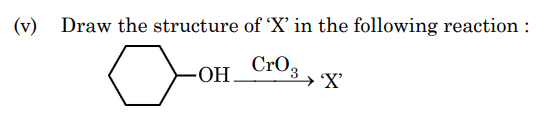
(ii) The increasing order of reactivity towards HCN is: Di-tert-butyl ketone < Acetone < Acetaldehyde.
Explanation: Acetaldehyde is an aldehyde and more reactive than ketones. Acetone is a methyl ketone and relatively more reactive. Di-tert-butyl ketone has large bulky groups which cause steric hindrance, reducing its reactivity.
(iii) To distinguish between benzoic acid and ethyl benzoate, add sodium bicarbonate (NaHCO3) solution. Benzoic acid reacts with NaHCO3 to produce carbon dioxide gas (effervescence) due to formation of sodium benzoate and CO2. Ethyl benzoate does not show effervescence.
(iv) Ethanenitrile can be converted to Ethanal by the reagent Stannous chloride (SnCl2) in acidic medium or by controlled reduction using diisobutylaluminium hydride (DIBAL-H).
(ii) Write the ionic equations for the oxidising action of potassium permanganate for its reaction with I⁻ in both acidic and alkaline solutions.
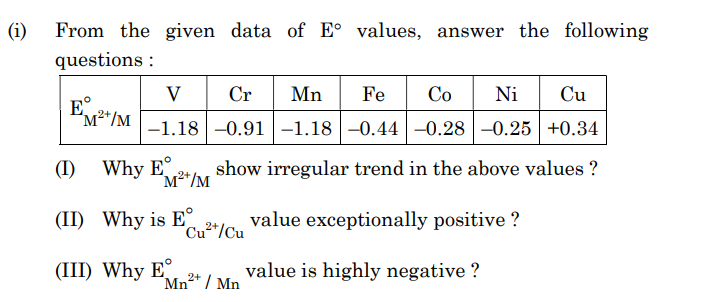
(a) In acidic solution:
The purple permanganate ion (MnO4-) acts as a strong oxidizing agent and oxidizes iodide ion (I-) to iodine (I2). The MnO4- is reduced to Mn2+ in acidic medium.
Balanced ionic equation:
MnO4- + 8H+ + 5I- → Mn2+ + 4H2O + 5/2 I2
(b) In alkaline solution:
In the basic medium, MnO4- is reduced to manganese dioxide (MnO2) which is a brown precipitate. The iodide ion (I-) is again oxidized to iodine (I2).
Balanced ionic equation:
2MnO4- + H2O + 3I- → 2MnO2 + 2OH- + 3/2 I2
Thus, in acidic medium permanganate is reduced to Mn2+ ion and in alkaline medium it is reduced to solid MnO2. The iodide ion is oxidized to iodine in both cases.
(i) An organic compound (X) has the molecular formula C₅H₁₀O. Draw structures for (X) if it :
(I) does not give Tollen’s test but gives a positive iodoform test.
(II) does not give Tollen’s test and iodoform test but undergoes Aldol condensation.
(III) undergoes Cannizzaro’s reaction.
(ii) Show how each of the following compounds can be converted to benzoic acid :
(I) Acetophenone (II) Ethyl benzene
(I) Does not give Tollen’s test but gives positive iodoform test: This indicates presence of a methyl ketone group. Tollen’s test is positive for aldehydes not ketones. The positive iodoform test indicates a methyl ketone group (-COCH3). A suitable structure is 3-pentanone (CH3-CO-CH2-CH2-CH3).
(II) Does not give Tollen’s or iodoform test but undergoes Aldol condensation: This means the compound is an aldehyde without a methyl group adjacent to the carbonyl. Aldol condensation requires alpha hydrogen atoms. A suitable aldehyde is pentanal (CH3-CH2-CH2-CH2-CHO). It does not give iodoform or Tollen’s test positive but can undergo aldol condensation.
(III) Undergoes Cannizzaro’s reaction: Cannizzaro’s reaction happens with aldehydes which lack alpha hydrogen atoms. It results in one molecule being oxidized to acid and another reduced to alcohol. An example is 3,3-dimethylpropanal ((CH3)2C-CH2-CHO) which has no alpha-hydrogen atoms and undergoes Cannizzaro reaction.
(ii) Conversion to benzoic acid:
(I) Acetophenone to benzoic acid:
Acetophenone (C6H5-CO-CH3) on oxidation with strong oxidising agent like KMnO4 converts the methyl ketone group to carboxyl group forming benzoic acid (C6H5-COOH).
(II) Ethyl benzene to benzoic acid:
Ethyl benzene (C6H5-CH2-CH3) on oxidation by KMnO4 converts the side chain to carboxyl group forming benzoic acid (C6H5-COOH).
Summary:
- Methyl ketones give positive iodoform test; aldehydes give Tollen’s test positivity.
- Aldol condensation requires alpha hydrogen atoms.
- Cannizzaro reaction occurs with aldehydes lacking alpha hydrogens.
- Benzoic acid can be prepared by oxidation of acetophenone or ethyl benzene.
Other Years — Chemistry