QUESTION PAPER

2026 BOARD EXAM

CBSE Class 12 PCM Chemistry Board Paper 2026 — Set 1

2026

Chemistry

Class 12 PCM

CBSE EXAMINATION PAPER-2026

CHEMISTRY

(Solved)

Time allowed : 3 hours

Maximum Marks : 82

General Instructions :

Read the following instructions carefully and follow them :

  1. This question paper contains 42 questions. All questions are compulsory.
  2. This question paper is divided into 5 sections.
  3. Section A – questions number 1 to 6 are case based questions
  4. Section B – questions number 7 to 22 are multiple choice questions
  5. Section C – questions number 23 to 28 are very short answer
  6. Section D – questions number 29 to 36 are short answer
  7. Section E – questions number 37 to 42 are long answer
  8. There is no overall choice given in the question paper. However, an internal choice has been provided in few questions.
  9. Use of calculator is NOT allowed.

Section A

Question 1. The reaction of amines with mineral acids to form ammonium salts shows that these are basic in nature. Aliphatic amines are stronger bases than ammonia whereas aromatic amines are weaker bases than ammonia. Aliphatic and aromatic primary and secondary amines react with acid chlorides, anhydrides and esters by nucleophilic substitution reaction. The main problem encountered during electrophilic substitution reactions of aromatic amines is that of their high reactivity. Substitution tends to occur at ortho-and para-positions. Hinsberg reagent is used for the identification and distinction between primary, secondary and tertiary amines. Aryldiazonium salts, usually obtained from arylamines, undergo replacement of the diazonium group with a variety of nucleophiles to provide advantageous methods for producing aryl halides, cyanides, phenols and arenes.
Question 2. The reaction of amines with mineral acids to form ammonium salts shows that these are basic in nature. Aliphatic amines are stronger bases than ammonia whereas aromatic amines are weaker bases than ammonia. Aliphatic and aromatic primary and secondary amines react with acid chlorides, anhydrides and esters by nucleophilic substitution reaction. The main problem encountered during electrophilic substitution reactions of aromatic amines is that of their high reactivity. Substitution tends to occur at ortho-and para-positions. Hinsberg reagent is used for the identification and distinction between primary, secondary and tertiary amines. Aryldiazonium salts, usually obtained from arylamines, undergo replacement of the diazonium group with a variety of nucleophiles to provide advantageous methods for producing aryl halides, cyanides, phenols and arenes.
Question 3. The reaction of amines with mineral acids to form ammonium salts shows that these are basic in nature. Aliphatic amines are stronger bases than ammonia whereas aromatic amines are weaker bases than ammonia. Aliphatic and aromatic primary and secondary amines react with acid chlorides, anhydrides and esters by nucleophilic substitution reaction. The main problem encountered during electrophilic substitution reactions of aromatic amines is that of their high reactivity. Substitution tends to occur at ortho-and para-positions. Hinsberg reagent is used for the identification and distinction between primary, secondary and tertiary amines. Aryldiazonium salts, usually obtained from arylamines, undergo replacement of the diazonium group with a variety of nucleophiles to provide advantageous methods for producing aryl halides, cyanides, phenols and arenes.

(1) Write structural formulae of the compound A and B :

Diagram 1 – CBSE Class 12 PCM Chemistry 2026 Set 1 [1 Mark]

(2) Why CH₃ – NH₂ is a stronger base than (CH₃)₃N in aqueous solution ?

[2 Marks]

(3) A compound ‘X’ with molecular formula C₃H₉N reacts with Hinsberg reagent to give a product insoluble in alkali. Identify ‘X’.

[1 Mark]
Question 4. The reaction of amines with mineral acids to form ammonium salts shows that these are basic in nature. Aliphatic amines are stronger bases than ammonia whereas aromatic amines are weaker bases than ammonia. Aliphatic and aromatic primary and secondary amines react with acid chlorides, anhydrides and esters by nucleophilic substitution reaction. The main problem encountered during electrophilic substitution reactions of aromatic amines is that of their high reactivity. Substitution tends to occur at ortho-and para-positions. Hinsberg reagent is used for the identification and distinction between primary, secondary and tertiary amines. Aryldiazonium salts, usually obtained from arylamines, undergo replacement of the diazonium group with a variety of nucleophiles to provide advantageous methods for producing aryl halides, cyanides, phenols and arenes.

(1) How can you convert aniline to benzonitrile ?

[2 Marks]

(2) Why is –NH₂ group of aniline acetylated before carrying out nitration ?

[2 Marks]
Question 5. The Valence Bond Theory (VBT) explains the formation, magnetic behaviour and geometry of coordination compounds. The Crystal Field Theory (CFT) of coordination compounds is based on the effect of different crystal fields (provided by the ligands taken as point charges), on the degeneracy of d-orbital energies of the central metal atom/ion. The splitting of the d-orbitals provides different electronic arrangements in strong and weak crystal fields.

(1) In octahedral crystal field, energies of which d-orbitals will be raised when ligands approach the central metal atom/ion ? Give reason in support of your answer.

[2 Marks]

(2) Using crystal field theory, write the electronic configuration of central metal atom/ion of the following : (i) [CoF₆]³⁻ (ii) [Co(NH₃)₆]³⁺ [At. No. : Co = 27]

[2 Marks]
Question 6. The Valence Bond Theory (VBT) explains the formation, magnetic behaviour and geometry of coordination compounds. The Crystal Field Theory (CFT) of coordination compounds is based on the effect of different crystal fields (provided by the ligands taken as point charges), on the degeneracy of d-orbital energies of the central metal atom/ion. The splitting of the d-orbitals provides different electronic arrangements in strong and weak crystal fields.

(1) [NiCl₄]²⁻ is paramagnetic while [Ni(CO)₄] is diamagnetic though both are tetrahedral. Why? [Atomic No. : Ni = 28]

[2 Marks]

(2)

Write hybridization and magnetic behaviour of the complex [Fe(CN)₆]³⁻.[ Atomic No. : Fe = 26]

[2 Marks]

Section B

Question 7.

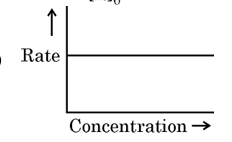
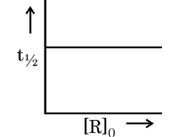
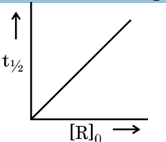
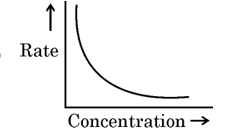
Which of the following curve represents the first order reaction ?

[1 Mark]
  • (A) Diagram 2 – CBSE Class 12 PCM Chemistry 2026 Set 1
  • (B) Diagram 3 – CBSE Class 12 PCM Chemistry 2026 Set 1
  • (C) Diagram 4 – CBSE Class 12 PCM Chemistry 2026 Set 1
  • (D) Diagram 5 – CBSE Class 12 PCM Chemistry 2026 Set 1
Question 8.

Which of the following solutions will have the lowest freezing point in water ?

[1 Mark]
  • (A) 0.1 M Glucose
  • (B) 0.1 M CaCl₂
  • (C) 0.1 M Urea
  • (D) 0.1 M KCl
Question 9.

Which of the following is not a transition metal ?

[1 Mark]
  • (A) Cu
  • (B) Hg
  • (C) Ag
  • (D) Sc
Question 10.

Which of the following represents the fraction of molecules with energies equal to or greater than Eₐ​?

[1 Mark]
  • (A) + Eₐ​/RT
  • (B) e−ᴱₐ/ᴿᵀ
  • (C) - Eₐ​/RT
  • (D) e⁺ᴱₐ/ᴿᵀ
Question 11.

What will happen during the electrolysis of aqueous solution of CuCl₂ by using platinum electrodes ?

[1 Mark]
  • (A) Cu will deposit at Anode
  • (B) H₂ gas will be released at cathode
  • (C) Cl₂ gas will be released at anode
  • (D) O₂ gas will be released at anode
Question 12.

Aspirin is obtained by acetylation of

[1 Mark]
  • (A) Benzoic acid
  • (B) 2-Hydroxybenzoic acid
  • (C) Salicylaldehyde
  • (D) Phenol
Question 13.

The secondary valency of Co in the complex [Co(NH₃)₅​(NO₂)]²⁺ is

[1 Mark]
  • (A) 5
  • (B) 4
  • (C) 6
  • (D) 1
Question 14.

At low temperature, phenol reacts with dil. HNO₃ to yield

[1 Mark]
  • (A) 2, 4, 6-Trinitrophenol
  • (B) ortho-and para-nitrophenol
  • (C) o-Nitrophenol only
  • (D) p-Nitrophenol only
Question 15.

Which of the following is ‘not’ true about enantiomers ?

[1 Mark]
  • (A) They have the same chemical reactivity.
  • (B) They have the same refractive index.
  • (C) They have the same melting or boiling point.
  • (D) They have the same specific rotation.
Question 16.

Aniline on direct nitration yields

[1 Mark]
  • (A) 51%-para, 47%-meta, 2%-ortho derivatives
  • (B) 51%-ortho, 47%-para, 2%-meta derivatives
  • (C) 51%-ortho, 47%-meta, 2%-para derivatives
  • (D) 51%-meta, 47%-ortho, 2%-para derivatives
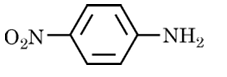
Question 17. Which of the following amines has lowest pK_b value ?
[1 Mark]
  • (A) C₆H₅ – N(CH₃)₂
  • (B) C₆H₅ – NH₂
  • (C) Diagram 6 – CBSE Class 12 PCM Chemistry 2026 Set 1
  • (D) C₆H₅ – NH(CH₃)
Question 18.

The deficiency of which of the following vitamins causes increased fragility of red blood cells and muscular weakness :

[1 Mark]
  • (A) Vitamin E
  • (B) Vitamin D
  • (C) Vitamin A
  • (D) Vitamin K
Question 19. Assertion (A) : It is not possible to separate the components of an azeotrope by fractional distillation. Reason (R) : Components of an azeotrope have the same composition in liquid and vapour phase and boil at a constant temperature.
[1 Mark]
  • (A) Both Assertion (A) and Reason (R) are true, but Reason (R) is not the correct explanation of the Assertion (A).
  • (B) Assertion (A) is false, but Reason (R) is true.
  • (C) Both Assertion (A) and Reason (R) are true and Reason (R) is the correct explanation of the Assertion (A).
  • (D) Assertion (A) is true, but Reason (R) is false.
Question 20.

Assertion (A) : The presence of –OH group in phenols directs the incoming group to meta position in the ring. Reason (R) : –OH group in phenols activates the aromatic ring towards electrophilic substitution reaction.

[1 Mark]
  • (A) Both Assertion (A) and Reason (R) are true and Reason (R) is the correct explanation of the Assertion (A).
  • (B) Assertion (A) is false, but Reason (R) is true.
  • (C) Both Assertion (A) and Reason (R) are true, but Reason (R) is not the correct explanation of the Assertion (A).
  • (D) Assertion (A) is true, but Reason (R) is false.
Question 21.

Assertion (A) : Actinoids show wide range of oxidation states. Reason (R) : Actinoids are radioactive in nature.

[1 Mark]
  • (A) Both Assertion (A) and Reason (R) are true, but Reason (R) is not the correct explanation of the Assertion (A).
  • (B) Assertion (A) is false, but Reason (R) is true.
  • (C) Both Assertion (A) and Reason (R) are true and Reason (R) is the correct explanation of the Assertion (A).
  • (D) Assertion (A) is true, but Reason (R) is false.
Question 22.

Assertion (A) : The pentaacetate of glucose does not react with H2N – OH. Reason (R) : It indicates the presence of free – CHO group in glucose.

[1 Mark]
  • (A) Both Assertion (A) and Reason (R) are true and Reason (R) is the correct explanation of the Assertion (A).
  • (B) Assertion (A) is true, but Reason (R) is false.
  • (C) Assertion (A) is false, but Reason (R) is true.
  • (D) Both Assertion (A) and Reason (R) are true, but Reason (R) is not the correct explanation of the Assertion (A).

Section C

Question 23.

What type of deviation from Raoult’s law is shown by a mixture of phenol and aniline ? Give reason.

What will happen to the boiling point of the solution on mixing phenol and aniline ?

[2 Marks]
Question 24.

Why are haloarenes less reactive towards nucleophilic substitution reaction ? Give two reasons.

[2 Marks]
Question 25.

(a) Write IUPAC names of the following coordination compounds:

(i) [Ag(NH₃)₂] [Ag(CN)₂]

(ii) K₃[Fe(C₂O₄)₃]

[2 Marks]
Question 26.

(i) Give a chemical test to show that [Co(NH₃)₅SO₄]Cl and [Co(NH₃)₅Cl]SO₄ are ionisation isomers.

(ii) What is meant by the ‘Chelate effect’ ? Give an example.

[2 Marks]
Question 27.

Differentiate between the following :

(i) Peptide linkage and Glycosidic linkage

(ii) Essential amino acids and Non-essential amino acids

[2 Marks]
Question 28.

Following reaction takes place in one step :

2A + B→ 2C How will the rate of above reaction change if the volume of the reaction vessel is decreased to one third of its original volume ? Will there be any change in the order of reaction with the reduced volume ?

[2 Marks]

Section D

Question 29.

For the first order thermal decomposition reaction, following data was obtained :

Calculate rate constant.

[Given : log 3 = 0.48]
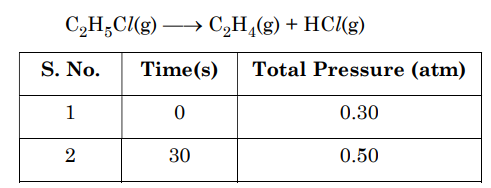
[3 Marks] Diagram 7 – CBSE Class 12 PCM Chemistry 2026 Set 1
Question 30.

What type of battery is Mercury cell ? Why it is more advantageous than dry cell ? Write overall reaction taking place in Mercury cell.

[3 Marks]
Question 31.

Answer the following :

(i) Why is the Equilibrium Constant (K_c ) related to E°_cell and not to E_cell ?

(ii) Two metals ‘A’ and ‘B’ have standard electrode potential values of –0.24 V and +0.80 V respectively. Which of these will liberate hydrogen gas from dil. H₂SO₄?

(iii) Write the cell reaction which occurs in lead storage battery when it is in charging.

[3 Marks]
Question 32.

Calculate the boiling point of a solution containing 0.61 g of benzoic acid (Molar mass = 122 g mol⁻¹) in 5 g of CS₂ in which it dimerises to the extent of 88%. The boiling point and K_b of CS₂ are 46.2°C and 2.3 K kg mol⁻¹ respectively.

[3 Marks]
Question 33.

Write the reactions of D-Glucose with the following :

(a) HI

(b) Br₂ water

(c) Conc. HNO₃

[3 Marks]
Question 34.

Give reasons for the following :

(a) Carboxylic acids have higher boiling point than alcohols of comparable molecular masses.

(b) Alpha (α) hydrogens of aldehydes and ketones are acidic in nature.

(c) Nucleophilic addition of ammonia and its derivatives does not occur with carbonyl group in strongly acidic medium.

[3 Marks]
Question 35.

Write the reaction involved in the following :

(a) Reimer-Tiemann reaction

(b) Kolbe’s reaction

(c) Friedal-Crafts acylation of anisole

[3 Marks]
Question 36.

Compound ‘X’ with molecular formula C₄H₉Br reacts with aqueous KOH to give an alcohol. The rate of this reaction depends only on the concentration of the compound ‘X’. When an optically active isomer ‘Y’ of the compound ‘X’ was treated with aqueous KOH solution, the rate of reaction was found to be dependent on concentration of compound ‘Y’ and aqueous KOH both.

(a) Write down the structural formula of both ‘X’ and ‘Y’.

(b) Out of ‘X’ and ‘Y’, which one will undergo racemisation and why ?

(c) Out of ‘X’ and ‘Y’, which one will form product with inversion of configuration and why ?

[3 Marks]

Section E

Question 37.

Calculate emf and ΔG for the following cell at 298 K :

Mg(s) / Mg²⁺(0.01 M) // Ag⁺(0.001 M) / Ag(s)

Given : E°_Mg²⁺/Mg = –2.37 V E°_Ag⁺/Ag = +0.80 V

[1 F = 96500 C mol⁻¹, log 10 = 1]

[5 Marks]
Question 38.

For the reaction :

2AgCl(s) + H₂(g) (0.4 atm) → 2Ag(s) + 2H⁺ (0.1 M) + 2Cl ⁻ (0.2 M)

Calculate emf of the cell at 25°C.

Given : ΔG° = – 43500 J mol⁻¹

[log 10 = 1, 1 F = 96500 C mol⁻¹]

[5 Marks]
Question 39.

Answer the following questions :

(i) Name a member of the lanthanoid series

(I) which exhibits +4 oxidation state

(II) which exhibits +2 oxidation state.

(ii) Why transition metals act as good catalyst ?

(iii) Why Cr has higher melting point than Mn ?

(iv) What happens when acidic solution of potassium permanganate is allowed to stand for sometime ? Give the equation involved. What is this type of reaction called ?

[5 Marks]
Question 40.

Answer the following questions :

(i) Draw structure of the 2, 4-dinitrophenyl hyzdrazone derivative of benzaldehyde.

(ii) Arrange the following in increasing order of their reactivity towards HCN :

Di-tert. butyl ketone, Acetaldehyde, Acetone

(iii) Give a simple chemical test to distinguish between benzoic acid and ethyl benzoate.

(iv) Write the name of the reagent to convert Ethanenitrile to Ethanal.
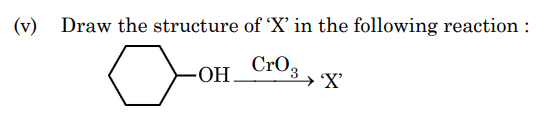
[5 Marks] Diagram 8 – CBSE Class 12 PCM Chemistry 2026 Set 1
Question 41.

(ii) Write the ionic equations for the oxidising action of potassium permanganate for its reaction with I⁻ in both acidic and alkaline solutions.
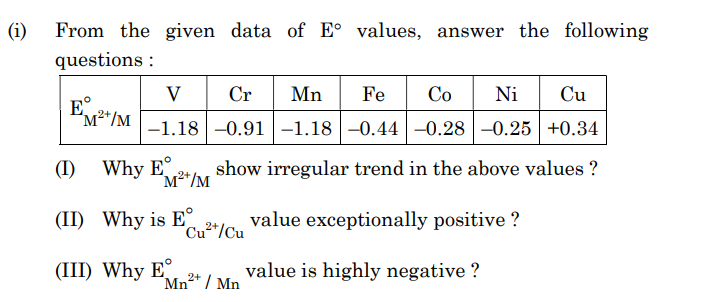
[5 Marks] Diagram 9 – CBSE Class 12 PCM Chemistry 2026 Set 1
Question 42.

(i) An organic compound (X) has the molecular formula C₅H₁₀O. Draw structures for (X) if it :

(I) does not give Tollen’s test but gives a positive iodoform test.

(II) does not give Tollen’s test and iodoform test but undergoes Aldol condensation.

(III) undergoes Cannizzaro’s reaction.

(ii) Show how each of the following compounds can be converted to benzoic acid :

(I) Acetophenone (II) Ethyl benzene

[5 Marks]

Paper Details

CBSE Board Exam 2026

Class

Class 12 PCM

Subject

Chemistry

Year

2026

Set

Set 1

Other Years — Chemistry

2022 Set-1

2022 Set-2

2022 Set-3

2022 Set-4

2022 Set-5

2023 Set-1

2023 Set-2

2023 Set-3

2023 Set-4

2023 Set-5

2024 Set-1

2024 Set-2

2024 Set-3

2024 Set-4

2024 Set-5

2025 Set-1

2025 Set-2

2025 Set-3

2025 Set-4

2025 Set-5

2025 Set-6

2026 Set-1

2026 Set-2

2026 Set-3

2026 Set-4