SOLUTIONS
2026 BOARD EXAM
CBSE Class 12 PCB Biology Board Paper 2026 — Set 5 Solutions
2026
Biology
Class 12 PCB
CBSE EXAMINATION PAPER-2026
BIOLOGY
(Solved)
General Instructions :
Read the following instructions carefully and follow them :
- This question paper contains 39 questions. All questions are compulsory.
- This question paper is divided into 5 sections.
- Section A – questions number 1 to 2 are case based questions
- Section B – questions number 3 to 18 are multiple choice questions
- Section C – questions number 19 to 26 are very short answer
- Section D – questions number 27 to 33 are short answer
- Section E – questions number 34 to 39 are long answer
- There is no overall choice given in the question paper. However, an internal choice has been provided in few questions.
- Use of calculator is NOT allowed.
Section A
(1) Why is the strand of DNA with 3'→ 5' polarity transcribed and not the other strand of 5'→ 3' polarity
[1 Mark](2) Why is hn RNA required to undergo splicing
[1 Mark](3) Why is only one strand of the DNA transcribed ? Give two reasons.
[2 Marks]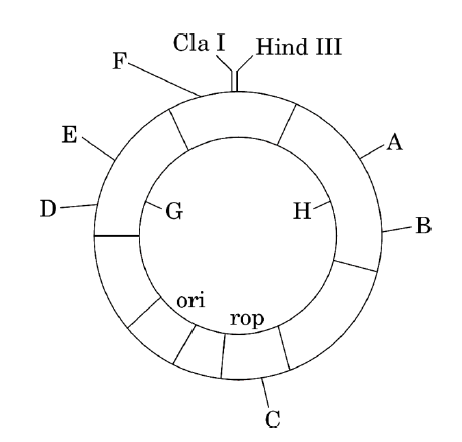
(1) Why are plasmids and bacteriophages used as cloning vectors?
[1 Mark]Plasmids and bacteriophages are used as cloning vectors because they can carry foreign DNA into host cells and replicate independently. As mentioned in the passage, plasmids like pBR322 multiply the alien DNA according to their copy number, making many copies. Their ability to be engineered allows easy linking of foreign DNA and selection of recombinants, which helps in efficient cloning in host organisms such as E. coli.
(2) Name the two restriction sites each in the two genes you have identified as selectable markers.
[2 Marks](3) (i) Identify : (a) The gene in the cloning vector that controls the copy number of the vector. (b) The restriction site – C in the ‘rop’ gene
(b) The restriction site C is located within the rop gene of the pBR322 plasmid vector where enzymes can cut the DNA to allow insertion of foreign DNA.
Section B
Identify the parts P, Q, R, S in the figure given below and select the option in the correct order.
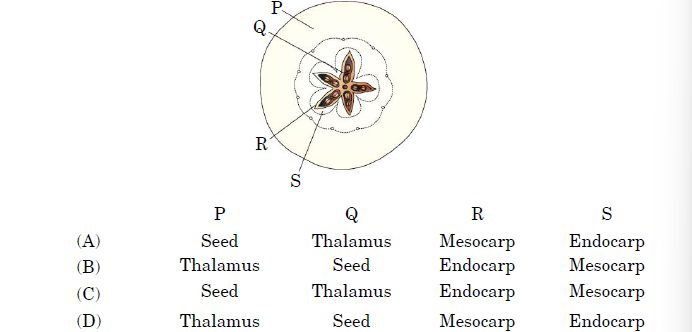
Based on the context provided, part R represents the side chain group (R group) of an amino acid, which varies among amino acids; this corresponds to option B. The first position is represented by rows on the left side (U, C, A, G), aligning with option D. The second position is organized across the top (U, C, A, G), matching option C. The third position is divided into four columns under each second position, labeled U, C, A, G, which corresponds to option A. Therefore, the correct order identifying P, Q, R, S is D, C, B, A.
The foetal ejection reflex in human triggers the release of ________hormone from __________. Fill in the blanks by choosing right option.
The foetal ejection reflex triggers the release of oxytocin from the maternal pituitary. Oxytocin then acts on the uterine muscles causing stronger uterine contractions which help in the process of parturition. This is explained in the context where the reflex is initiated and oxytocin secretion from maternal pituitary is stimulated.
A DNA molecule is 160 base pairs long. It has 30% Guanine. How many Adenine bases are present in this DNA molecule ?
In DNA, the amount of Guanine (G) equals Cytosine (C), and Adenine (A) equals Thymine (T). Given that Guanine is 30%, Cytosine will also be 30%, so G + C = 60% of bases. The remaining 40% are Adenine and Thymine (A + T). Since A = T, Adenine will be half of 40%, which is 20% of the total bases. The total bases are 160 base pairs, so total bases (single strands) = 160 × 2 = 320 bases. 20% of 320 = 0.20 × 320 = 64 Adenine bases. However, as the question states 160 base pairs (implying total 160 bases, not 320), if total bases are considered as 160, then Adenine is 20% of 160 = 32, but this is not among the options. Assuming 160 bases total (single strands), the Adenine count based on 30% Guanine is 48 bases. Therefore, the correct number of Adenine bases is 48.
In Pisum sativum, the flower colour may be violet (V) or white (v). What proportion of the offspring in a cross of ‘VV’ × ‘vv’ would be expected to be violet ?
In the given cross, one parent is homozygous dominant (VV) for violet flower colour and the other parent is homozygous recessive (vv) for white flower colour. All offspring will inherit one dominant allele (V) from the VV parent and one recessive allele (v) from the vv parent, making them heterozygous (Vv). Since violet (V) is dominant over white (v), all offspring will have violet flowers. Thus, 100% of the offspring are expected to be violet.
In a human female, menstrual cycle of 28 days is represented by the diagram given below. Select the correct statement related with this diagram
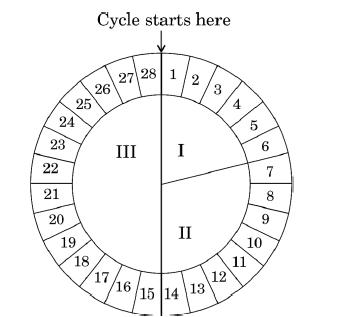
In the menstrual cycle, the corpus luteum forms after ovulation (which occurs around the middle of the cycle) and secretes progesterone during the luteal phase (phase III). This progesterone is responsible for maintaining the endometrium, making it suitable for pregnancy. If pregnancy occurs, progesterone helps maintain it. The primary follicle matures into a Graafian follicle during the follicular (proliferative) phase, which is phase II, not phase I. Also, the corpus luteum secretes progesterone in phase III, not phase I. Thus, the correct statement is that the hormone secreted in large amounts in phase III is responsible for maintaining pregnancy.
Monascus purpureus is a yeast used commercially in the production of which one of the following ?
Monascus purpureus is a yeast known for producing statins, which are used as blood-cholesterol lowering agents. The context specifies that statins produced by Monascus purpureus have been commercialised for this purpose. Other options like ethanol are produced by Saccharomyces cerevisiae, streptokinase by Streptococcus, and citric acid by Aspergillus niger, so these are not correct for Monascus purpureus.
Given below is the restriction site of a restriction endonuclease Pst I and the cleavage sites on a DNA molecule
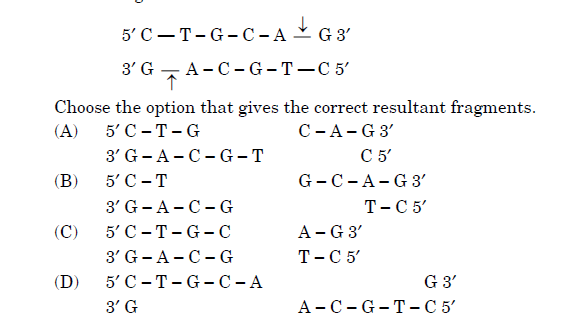
The restriction enzyme Pst I recognizes a specific DNA sequence and cuts at defined positions within this sequence on both strands of the DNA. This results in characteristic cleavage sites that produce sticky ends useful for gene cloning. Option B correctly represents the cleavage pattern created by Pst I as described in the context of restriction enzyme action, where the enzyme scans DNA for its recognition site and cuts the sugar-phosphate backbone at those precise locations.
Choose a correct option that shows an interaction in which one species benefits while the other is neither harmed nor benefitted
The interaction where one species benefits and the other is neither harmed nor benefited is called commensalism. Among the options given, the relationship between sea anemone and clownfish is a classic example of commensalism, where the clownfish gets protection by living among the anemone's tentacles, and the anemone is neither harmed nor benefits significantly. Other interactions listed either involve harm or mutual benefit.
Transgenic animals have their genetic material manipulated. Select the correct option in reference to transgenic animals
Transgenic animals are created by inserting a foreign DNA segment into their genome. This foreign DNA integrates into the animal's genetic material, making it present in all cells of the animal. The foreign DNA is responsible for expressing an extra gene, which is why 'Foreign DNA is present in all of its cells' is the correct answer. Foreign RNA is not permanently integrated into the genome and thus is not present in all cells.
Select the odd option in the context of convergent evolution
Thorns of Bougainvillea and Tendrils of Cucurbita represent homology, meaning they have a common ancestral origin but have adapted differently; hence this is divergent evolution, not convergent evolution. The other options, such as Eyes of Octopus and Mammals, Flying Squirrel and Flying Phalanger, and Flippers of Penguins and Dolphins, show similar traits evolved independently in unrelated species adapting to similar environments, which is convergent evolution.
Which of the following fish led to the extinction of an ecologically unique assemblage of more than 200 species of cichlid fish in Lake Victoria of East Africa ?
The Nile perch introduced into Lake Victoria in East Africa led to the extinction of more than 200 species of cichlid fish that were ecologically unique to the lake. This invasive species caused significant environmental damage by preying on the native cichlid fish, which severely reduced their populations.
Assertion (A) : The embryo with 8 to 16 blastomeres is called a morula.
Reason (R) : The morula continues to divide and transform into trophoblast
The assertion is correct because the embryo with 8 to 16 blastomeres is indeed called a morula. However, the reason is incorrect because the morula does not transform into trophoblast. Instead, the morula continues to divide and develops into a blastocyst. The blastocyst has an outer layer of cells called trophoblast and an inner cell mass. Therefore, the transformation into trophoblast happens at the blastocyst stage, not at the morula stage.
Assertion (A) : Repetitive sequences make up a very large portion of human genome.
Reason (R) : Repetitive sequences do not have direct coding functions in the genome.
Repetitive sequences constitute a large portion of the human genome as stated in the context. These sequences are repeated many times and normally do not code for proteins, meaning they do not have direct coding functions. This explains why the repetitive sequences make up a large part of the genome without contributing directly to coding proteins, hence both the assertion and reason are true and the reason correctly explains the assertion.
Assertion (A) : Trichoderma species are free living fungi that are very common in the root ecosystems.
Reason (R) : They are effective bio-control agents of several plant pathogens.
Trichoderma species are indeed free-living fungi commonly found in root ecosystems, as mentioned in the context. They act as effective biocontrol agents against several plant pathogens by preventing diseases caused by harmful fungi. Thus, both the assertion and reason are true, and the reason correctly explains the assertion.
Section C
Mention the functions of each of the following :
(i) Tassels of Corn Cob
(ii) Scutellum
(ii) Scutellum: The scutellum is a specialized cotyledon in monocot seeds like corn. Its function is to absorb food from the endosperm and transfer it to the growing embryo during germination.
Farmers prefer apomictic seeds over hybrid seeds. Give any two reasons.
1. Apomictic seeds produce plants that are genetically identical to the parent plant, so farmers get uniform crops year after year without segregation of characters.
2. Farmers can save and reuse apomictic seeds for many years, reducing the need to buy new seeds every season, thus lowering their cost of cultivation.
Define the term ‘amniocentesis’. Why has the government imposed a statutory ban in spite of its importance in the medical field ?
Reason for Statutory Ban: Although amniocentesis is important for detecting genetic diseases, the government has imposed a ban on its misuse for sex determination. This is because people use it to find out the sex of the fetus and often abort female fetuses, which is illegal and leads to female foeticide. Such misuse harms both the mother and the fetus and is socially unethical. Hence, the statutory ban helps prevent this malpractice and protects the rights of the unborn girl child.
Name the lymphoid organ that acts as a large reservoir of erythrocytes. Explain its role as a lymphoid organ
As a lymphoid organ, the spleen contains lymphocytes and phagocytes which help filter blood by trapping and destroying harmful microorganisms and old or damaged red blood cells, thereby protecting the body from infections and maintaining healthy blood cells.
Suggest how a virus-free healthy plant can be obtained from a diseased sugarcane plant.
In order to force bacteria to take up the recombinant DNA, they must be made competent. Explain how it can be achieved.
Then, the cells are incubated with recombinant DNA on ice, followed by a brief heat shock at 42 deg C, and quickly returned to ice.
This process makes the bacteria competent and enables them to take up recombinant DNA from their surroundings.
Differentiate between grazing food chain and detritus food chain
Detritus Food Chain (DFC): It begins with dead organic matter (detritus). Detritivores like earthworms break down detritus, and then decomposers act on them.
Key Difference: GFC starts with living producers while DFC starts with dead organic matter. GFC involves herbivores and carnivores, whereas DFC involves decomposers and detritivores.
Ecological pyramids are widely accepted but they still have some limitations. Write any two limitations
(a) Ecological pyramids assume a simple food chain, but in nature, food webs are more complex involving multiple species at different trophic levels, which pyramids do not represent.
(b) These pyramids do not include saprophytes, which play an important role in ecosystems by decomposing organic matter and recycling nutrients, thus giving an incomplete picture of energy flow and matter cycling.
Section D
List any three outbreeding devices that flowering plants have developed for cross-pollination and explain how they help to encourage cross-pollination.
(a) Herkogamy: In this device, the anthers and stigma are positioned in such a way that self-pollination is prevented. For example, in sunflowers, the stamens and stigma mature at different positions or heights which makes self-pollination difficult and promotes pollen transfer from another flower.
(b) Dichogamy: Here, the anthers and stigma of the flower mature at different times. This can be of two types: protandry, where anthers mature first followed by stigma; and protogyny, where stigma matures first followed by anthers. This time difference reduces the chance of self-pollination and encourages cross-pollination.
(c) Self-incompatibility: This is a genetic mechanism where pollen from the same plant is unable to fertilize the ovules due to chemical or physiological rejection. This prevents self-pollination and ensures cross-pollination from another plant.
These devices help to increase genetic variation in plants by promoting cross-pollination, which leads to stronger and adaptable plant species.
Draw a labelled diagram of a ‘replicating fork’ showing the polarity. Why does DNA replication occur within such ‘fork’ ?
The diagram shows the DNA double helix unwinding at the replication fork forming two single strands.
The two template strands are antiparallel: One strand runs 5’ to 3’ and the other runs 3’ to 5’.
The leading strand is synthesized continuously in the 5’ to 3’ direction.
The lagging strand is synthesized discontinuously forming Okazaki fragments also in the 5’ to 3’ direction.
Polarity is indicated with 5’ and 3’ ends on all strands.
(b) Why DNA replication occurs within such a ‘fork’:
DNA replication occurs at the replication fork because it is the area where the double-stranded DNA unwinds to form two single strands.
This fork allows the DNA polymerase enzymes to read each original strand and synthesize new complementary strands.
The fork structure is necessary because the two strands are antiparallel and replication is directional (5’ to 3’).
Therefore, one strand is copied continuously (leading strand) and the other is copied in fragments (lagging strand).
This ensures accurate and efficient copying of DNA during cell division.
Study the given chart showing evolution of plants. Answer the following questions.
(a) Identify the plant which acts as an immediate ancestor of both ferns and conifers.
(b) Name the nearest ancestors of flowering plants.
(c) Name the most primitive group of plants.
(d) Psilophyton provides common ancestry to which classes ?
(e) Name the common ancestor of psilophyton and seed ferns.
(f) Name the common ancestor of mosses and tracheophytes.
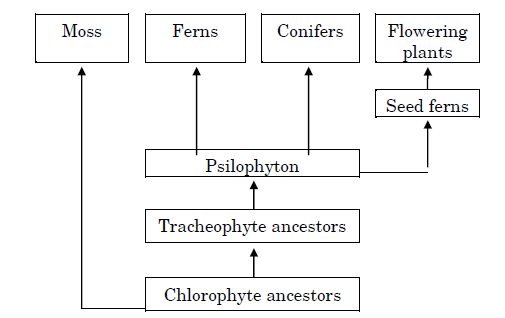
(b) The nearest ancestors of flowering plants are conifers, which belong to the gymnosperms group.
(c) The most primitive group of plants is the green algae, which are aquatic and simple in structure.
(d) Psilophyton provides common ancestry to early vascular plants like ferns (pteridophytes) and seed plants (gymnosperms and angiosperms).
(e) The common ancestor of psilophyton and seed ferns is the Rhynia-type plants, early vascular plants with simple structures.
(f) The common ancestor of mosses and tracheophytes is the bryophyte-like plants, which show transitional features between non-vascular and vascular plants.
Mention a product of human welfare obtained with the help of each one of the following:
(a) Saccharomyces cerevisiae
(b) Propionibacterium shermanni
(c) Aspergillus niger
(d) Trichoderma polysporum
(e) Acetobacter aceti
(f) Streptococcus
(b) Propionibacterium shermanni is used in the production of Swiss cheese, where it produces carbon dioxide bubbles that form holes in the cheese.
(c) Aspergillus niger produces citric acid, which is used in food and pharmaceutical industries.
(d) Trichoderma polysporum produces enzymes like cellulase that are used in industrial applications for breaking down cellulose.
(e) Acetobacter aceti converts ethanol into acetic acid (vinegar), which is used as a preservative and condiment.
(f) Streptococcus species are used in the production of curd from milk by fermentation.
Transgenic animals are produced by man. Explain any three ways in which such animals can be beneficial to humans.
(a) Medical Research and Disease Study: Transgenic animals help scientists study human diseases by mimicking genetic conditions. This allows better understanding of diseases like cancer, diabetes, and cystic fibrosis.
(b) Production of Useful Proteins: Some transgenic animals are engineered to produce important human proteins in their milk or blood, such as insulin or clotting factors, which are used to treat diseases.
(c) Agricultural Improvements: Transgenic animals can be made to grow faster, resist diseases, or have improved nutritional qualities, which helps in increasing food production and quality for humans.
Explain Gause’s ‘Competitive Exclusion Principle’ with the help of a suitable example.
Explain the level of biodiversity at genetic, species and ecological levels with the help of one example each.
(b) Species diversity: It is the variety of different species in a given area. For example, a forest containing many species of trees, animals, birds, and insects has high species diversity.
(c) Ecological diversity: It refers to the variety of ecosystems in a particular area. For example, forests, grasslands, deserts, and wetlands in a region represent ecological diversity. Each ecosystem supports different types of life forms and interactions among them.
Section E
Briefly explain the events of fertilisation and implantation in an adult human female.
Development after fertilisation: The zygote undergoes multiple cell divisions to form a solid ball of cells called the morula, which then develops into a hollow structure known as the blastocyst.
Implantation: The blastocyst travels down the fallopian tube into the uterus and embeds itself into the thick, nutrient-rich lining of the uterine wall. This process is called implantation and marks the beginning of pregnancy. Implantation allows the blastocyst to receive nutrients and grow into an embryo.
(i) Arrange the following hormones in sequence of their secretion in a pregnant woman : hCG; LH; FSH; Relaxin.
(ii) Mention the source and the functions of the above mentioned hormones.
(ii) Source and functions of the hormones:
FSH (Follicle Stimulating Hormone): Secreted by the anterior pituitary gland. It stimulates the growth of ovarian follicles and helps in maturation of the egg before ovulation.
LH (Luteinizing Hormone): Also secreted by the anterior pituitary gland. LH triggers ovulation, the release of the mature egg from the ovary and stimulates formation of the corpus luteum which secretes progesterone to support pregnancy.
hCG (Human Chorionic Gonadotropin): Secreted by the placenta soon after implantation. It maintains the corpus luteum, ensuring continued production of progesterone during early pregnancy, thus supporting the uterine lining.
Relaxin: Secreted by the ovary (corpus luteum) and placenta during later pregnancy. It relaxes the uterine muscles to prevent contractions, softens the cervix, and prepares the birth canal for delivery.
In summary, FSH and LH act initially to support ovulation and corpus luteum formation; hCG maintains the corpus luteum during early pregnancy; and relaxin acts later to facilitate childbirth.
Work out separate monohybrid crosses up to F₂ generation between two pea plants and two Antirrhinum plants, both having contrasting traits with respect to the colour of the flower. Comment on the patterns of inheritance in the crosses carried out in such two cases.
Consider two pure-breeding pea plants, one with purple flowers (PP) and the other with white flowers (pp). Purple flower colour (P) is dominant over white (p).
F₁ Generation: Crossing PP (purple) x pp (white) gives all Pp plants with purple flowers.
F₂ Generation: Self-crossing F₁ plants (Pp x Pp) gives genotypes in a ratio 1 PP : 2 Pp : 1 pp. Phenotypically, 3 purple : 1 white.
Explanation: The results show classical Mendelian monohybrid inheritance where the dominant trait masks the recessive in F₁ and segregates in 3:1 ratio in F₂.
(b) Cross in Antirrhinum Plants (Flower Colour):
Consider red flowered Antirrhinum (RR) and white flowered (rr). This cross demonstrates incomplete dominance.
F₁ Generation: RR x rr gives all Rr plants with pink flowers (blend of red and white).
F₂ Generation: Self-crossing Rr x Rr produces RR (red) : 2 Rr (pink) : rr (white) in 1:2:1 phenotypic ratio.
Explanation: Here, neither allele is completely dominant, resulting in an intermediate phenotype in heterozygous condition. The F₂ generation thus shows three distinct phenotypes in 1:2:1 ratio.
Patterns of Inheritance Comparison:
- In pea plants, simple dominance causes F₁ to show only dominant phenotype and F₂ to segregate 3:1.
- In Antirrhinum, incomplete dominance results in F₁ showing intermediate phenotype and F₂ segregating in 1:2:1 ratio.
- This shows different modes of inheritance for flower colour depending on the species and alleles involved.
Answer the following questions:
(i) How does a chromosomal disorder differ from a Mendelian disorder ? Write one example for each.
(ii) Name the phenomenon that leads to situations like ‘XO’ abnormality in humans. Also name this genetic disorder. How are individuals with an XO chromosomal abnormality affected ? Write its symptoms as well as karyotype
A Mendelian disorder is caused due to mutation or alteration in a single gene, following Mendel's laws of inheritance. An example is Sickle Cell Anaemia caused by mutation in a single gene.
(ii) The phenomenon that leads to situations like 'XO' abnormality is called nondisjunction, where chromosomes fail to separate properly during cell division.
The genetic disorder caused by this is known as Turner's syndrome.
Individuals with XO chromosomal pattern have only one X chromosome and no second sex chromosome, so their karyotype is written as 45, XO.
Symptoms of Turner's syndrome include short stature, webbed neck, low hairline, swelling of hands and feet, underdeveloped ovaries leading to infertility, and heart defects. These individuals are phenotypically female but sterile.
Thus, Turner's syndrome is a chromosomal disorder resulting from nondisjunction leading to XO karyotype affecting physical and reproductive development.
(i) Draw the structure of an antibody molecule and label any four of its parts.
(ii) Differentiate between active and passive immunity. Write any three differences
1. Heavy chain
2. Light chain
3. Antigen binding site
4. Hinge region
(ii) Differences between Active and Passive Immunity:
1. Source: Active immunity is produced by the body itself when exposed to an antigen, whereas passive immunity is gained by receiving antibodies from another source.
2. Duration: Active immunity provides long-lasting or permanent protection; passive immunity offers temporary protection.
3. Onset: Active immunity takes time to develop, while passive immunity is immediate.
Thus, active immunity helps the body to remember the antigen and respond faster in future, but passive immunity provides quick defense without memory.
(i) (a) Write the scientific names of the two species of filarial worms causing filariasis.
(b) How do they affect the body of infected persons ?
(c) How does the disease spread ?
(ii) Mention the source and the role of the following in providing defence against infection in the human body :
(a) Histamine
(b) Interferons
(b) These worms live in the lymphatic vessels, mainly of the lower limbs, causing chronic inflammation and lymphatic obstruction, which leads to fibrosis or thickening and scarring of connective tissue. This results in swelling and enlargement of tissues, a condition called elephantiasis.
(c) The disease spreads through the bite of infected female mosquitoes which act as vectors. When a mosquito bites an infected person, it picks up microfilariae, which develop into infective larvae inside the mosquito. When this mosquito bites a healthy person, the larvae enter the body and cause infection.
(ii) (a) Histamine is released from mast cells and basophils when the body detects an allergen or injury. Its role is to increase the permeability of blood vessels which allows immune cells and substances to reach the infected or injured area quickly, causing inflammation which helps in defence against infection.
(b) Interferons are proteins produced by virus-infected cells. They help in defending the body by interfering with viral replication inside host cells and activating immune cells like natural killer cells to destroy infected cells. They provide resistance against viral infections.
Other Years — Biology