SOLUTIONS
2026 BOARD EXAM
CBSE Class 12 PCB Biology Board Paper 2026 — Set 3 Solutions
2026
Biology
Class 12 PCB
CBSE EXAMINATION PAPER-2026
BIOLOGY
(Solved)
General Instructions :
Read the following instructions carefully and follow them :
- This question paper contains 39 questions. All questions are compulsory.
- This question paper is divided into 5 sections.
- Section A – questions number 1 to 2 are case based questions
- Section B – questions number 3 to 18 are multiple choice questions
- Section C – questions number 19 to 26 are very short answer
- Section D – questions number 27 to 33 are short answer
- Section E – questions number 34 to 39 are long answer
- There is no overall choice given in the question paper. However, an internal choice has been provided in few questions.
- Use of calculator is NOT allowed.
Section A
Read the following passage and answer the question that follow :
The data below shows the concentration of nicotine smoked by a smoker taking 10 puffs/minute
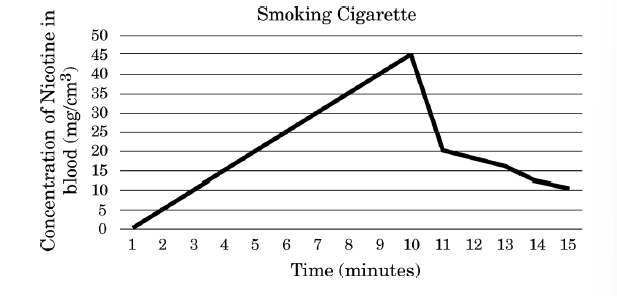
(1) With reference to the above graph, explain the concentration of nicotine in the blood at 10 minutes.
[1 Mark](2) How will this affect the concentration of carbon monoxide and haem-bound oxygen at 10 minutes ?
[1 Mark](3) To which class of compounds does nicotine belong ? Name one other drug from the same class.
[2 Marks]Read the following passage and answer the questions that follow:
India is one of the megadiverse countries housing around 8·1 per cent of global species diversity, although its land area is only 2·4 per cent of the world’s land area. Many of the species are highly threatened due to human activities like deforestation, mining and habitat fragmentation. Laws like Wildlife (Protection) Act, 1972 were enacted by the Government of India to preserve our biological wealth. Various conservation measures are being implemented to save the threatened species.
The following bar graph shows the number of species conserved under different biodiversity conservation methods.
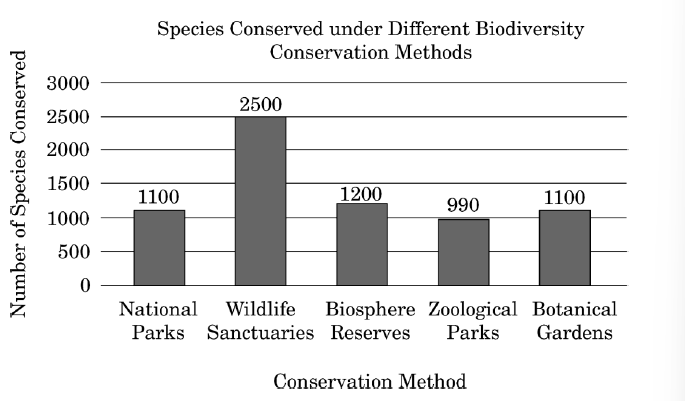
(1) Which method conserves the highest number of species ? Is it ex situ or in situ conservation
[1 Mark](2) Which other methods shown in the diagram are opposite to the one identified by you in question (a) ? How are these two conservation approaches different ?
[2 Marks](3) Write two features of Biodiversity hotspots
1. Biodiversity hotspots are regions with very high numbers of plant and animal species, much higher than other areas.
2. These areas face accelerated habitat loss and need strict protection to conserve their rich biodiversity, as mentioned in the case passage about India’s hotspots like the Western Ghats and Himalaya.
Section B
Foetal ejection reflex in human female triggers the release of which hormone ?
The foetal ejection reflex initiates mild uterine contractions which triggers the release of oxytocin from the maternal pituitary gland. Oxytocin then acts on the uterine muscles to cause stronger contractions, facilitating childbirth. This mechanism forms a positive feedback loop between uterine contractions and oxytocin secretion.
Which of the following is not a functional unit of an ecosystem ?
Stratification is a structural feature of an ecosystem, referring to the arrangement of species in layers. Functional units of an ecosystem involve processes such as productivity, decomposition, and energy flow, which represent the functions or activities within the ecosystem. Therefore, stratification is not a functional unit but a structural component.
Match Column I with Column II and select the correct option
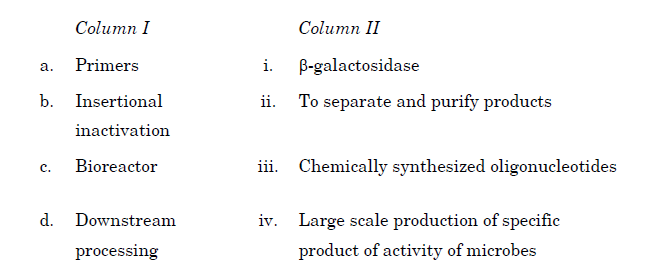
Based on the context, the alleles I^A, I^B, and i correspond to blood groups A, B, and O respectively with i being recessive. Matching accordingly, option a-i, b-iii, c-iv, d-ii correctly pairs the alleles and their traits as described. This option reflects the correct genotypes and phenotypes according to the provided information about blood group inheritance.
Golden rice is a promising transgenic crop. When released for cultivation, it will help in
Golden rice is genetically modified to be enriched with Vitamin A. It is designed to help reduce Vitamin A deficiency in humans, which is a major nutritional issue in many countries. This is supported by the context stating that golden rice is Vitamin ‘A’ enriched rice, thus enhancing the nutritional value of food.
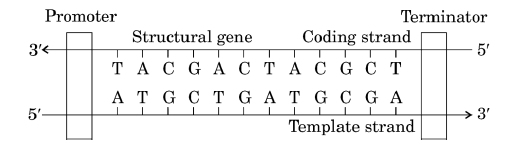
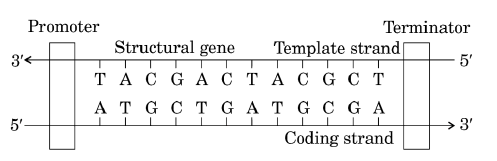
Four different transcription units are shown below. Choose the option with the correct image
-
(A) Option C
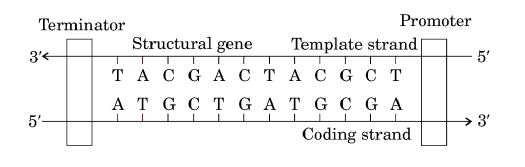
-
(B) Option D
-
(C) Option B
-
(D) Option A
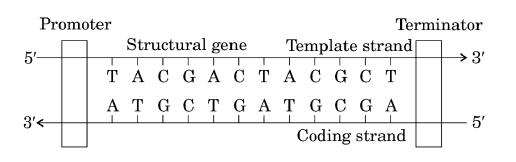
A transcription unit in DNA consists of three main regions: the promoter, the coding region, and the terminator. The correct image should clearly show these regions in the proper order along the DNA strand. Option 3 correctly depicts these elements in sequence, illustrating the promoter region at the start, followed by the coding sequence, and ending with the terminator. This matches the schematic structure of a transcription unit as explained in the given context.
Appearance of antibiotic-resistant bacteria is an example of evolution due to
The appearance of antibiotic-resistant bacteria results from the use of antibiotics by humans, which acts as a selection pressure leading to the survival of resistant varieties. This process occurs on a much shorter time scale due to human influence and is an example of evolution caused by anthropogenic action (human activities), rather than natural evolutionary processes like adaptive radiation or divergent evolution.
Identify the statements that correctly describe Darwin’s Theory of Evolution
(i) Overproduction of organisms leads to competition.
(ii) Variation is inherited and causes evolution.
(iii) Acquired characters are inherited
(iv) Survival depends on favourable traits
(v) New species arise due to accumulation of favourable variations
Darwin's Theory of Evolution is based on natural selection where overproduction of organisms leads to competition for limited resources (statement i). Variation among individuals is inherited and is crucial for evolution (statement ii). Survival depends on favourable traits that help organisms adapt better to their environment (statement iv). New species arise due to the accumulation of favourable variations over generations (statement v). However, acquired characters are not inherited according to Darwin's theory, so statement (iii) is incorrect.
Which of the following is not a symptom of Ascariasis ?
According to the given context, symptoms of Ascariasis caused by Ascaris include intestinal blockage, anemia, muscular pain, and fever. Skin ulcers are not mentioned as a symptom of Ascariasis. Therefore, 'Skin ulcers' is the correct answer as it is not a symptom of this disease.
The smallest part of DNA molecule that can be changed by point mutation is :
A point mutation is a change in a single nucleotide of the DNA sequence. According to the context, each nucleotide is represented by letters {U, C, A, G}, and a codon consists of three nucleotides. A point mutation involves alteration of one nucleotide, making 'Nucleotide' the smallest part of DNA that can be changed by point mutation.
Some statements regarding drugs and alcohol are given below: (i) Adolescents are more vulnerable to peer pressure. (ii) Drug addiction leads to increased tolerance level of the receptors present in our body. (iii) Alcohol affects the central nervous system. (iv) Excessive use of drugs helps to increase energy. (v) Anabolic steroids decrease aggressiveness Choose the option with correct statement(s).
Statement (i) is correct because adolescents are indeed more vulnerable to peer pressure, which can lead to drug and alcohol use. Statement (ii) is correct as repeated use of drugs increases the tolerance levels of receptors, making them respond only to higher doses, leading to addiction. Statement (iii) is correct; alcohol affects the central nervous system. Statements (iv) and (v) are incorrect; excessive use of drugs typically does not increase energy, and anabolic steroids usually increase aggressiveness, not decrease it.
Assertion (A) : Activated sludge contains large population of bacteria. Reason (R) : These bacteria help in anaerobic digestion of human waste in biogas plant
Activated sludge does contain a large population of bacteria, but these bacteria perform aerobic digestion (require oxygen) in the aeration tank. The anaerobic digestion of human waste in biogas plants is carried out by different bacteria called methanogens, which grow in the absence of oxygen. Therefore, the reason is false as it incorrectly attributes anaerobic digestion to the bacteria in activated sludge.
Assertion (A) : Ecosystems require a constant supply of energy to synthesize the molecules they require. Reason (R) : This is to counteract the universal tendency towards increasing disorderliness as per Second Law of Thermodynamics.
Ecosystems require a constant supply of energy to build complex molecules because, according to the Second Law of Thermodynamics, natural processes tend towards increasing disorder or entropy. To maintain order and synthesize necessary molecules, energy must be continuously supplied. This is why ecosystems receive energy mainly from the sun, allowing producers to perform photosynthesis and support the rest of the food chain. Thus, both the Assertion and the Reason are true, and the Reason correctly explains the Assertion.
Section C
A person complains of persistent itching in the groin region and scalp. The person also shows dry and scaly lesions on skin, nails, etc.
(i) Identify the disease.
(ii) Name its two causative agents.
(iii) Mention its mode of transmission.
(ii) Two causative agents are Microsporum and Trichophyton.
(iii) The mode of transmission is through direct contact with an infected person, animal, or by sharing contaminated items like towels and clothing.
A girl develops sneezing, watery eyes and difficulty in breathing every time she visits a flower garden.
(i) Identify the condition.
(ii) Name the immune component responsible for this condition.
(iii) Name the chemical released.
(iv) State one medicine used to treat such a condition
(b) The immune component responsible is Immunoglobulin E (IgE) antibodies.
(c) The chemical released during this condition is Histamine.
(d) One medicine used to treat allergy is Antihistamine.
(i) Mention any two characteristics of Neanderthal man that lived near East and Central Asia.
(ii) Identify the following hominids with respect to human evolution :
(I) Brain capacity 900 cc, probably ate meat.
(II) First human-like with brain capacity 650 – 800 cc
They used hides to protect their body and buried their dead.
(ii) (I) Homo erectus had a brain capacity of about 900 cc and probably ate meat.
(II) Homo habilis was the first human-like being with a brain capacity of 650-800 cc and probably did not eat meat.
The allele for brown eyes (B) is dominant over blue eyes (b). In a population, 36% of individuals have blue eyes.
Assuming Hardy-Weinberg equilibrium, calculate
(i) Frequency of allele B
(ii) Percentage of heterozygous individuals
(iii) Percentage of individuals that are homozygous dominant
(working to be shown)
Frequency of allele B = 1 - 0.6 = 0.4
(ii) Percentage of heterozygous individuals (Bb) = 2pq = 2 * 0.4 * 0.6 = 0.48 or 48%
(iii) Percentage of homozygous dominant individuals (BB) = p2 = 0.4 * 0.4 = 0.16 or 16%
This calculation is based on Hardy-Weinberg principle where p + q = 1 and p2 + 2pq + q2 = 1, where p is frequency of dominant allele and q is frequency of recessive allele.
What did Henking observe in his experiments on insects that led to the discovery of sex chromosome ? How did his observation contribute to our understanding of sex determination
(b) This observation indicated that the presence or absence of this chromosome determined the sex of the offspring, leading to the concept of sex chromosomes controlling sex determination.
(c) Thus, Henking's discovery helped establish that sex is genetically determined by chromosomes, which was a major advance in genetics.
Given below is the schematic representation of the process of electrophoresis. Identify the alphabets representing the
(I) Anode end, and
(II) Lightest/Smallest DNA in matrix
(ii) What is Agarose gel and why is it used in this process ?
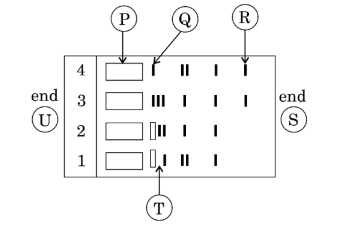
(b) The lightest or smallest DNA fragments travel farthest in the gel matrix.
(ii) Agarose gel is a natural polymer extracted from seaweed that forms a porous matrix. It is used in electrophoresis because it acts like a sieve allowing DNA fragments to separate according to size; smaller fragments move faster and farther through the gel than larger ones.
After performing gel electrophoresis, a student observes that DNA fragments are not visible.
(i) Suggest a reason for this and explain how fragments can be made visible.
(ii) Also explain how a specific DNA fragment can be collected from the gel for further use.
(ii) To collect a specific DNA fragment, cut the band carefully from the gel using a clean blade after visualization. Then, extract the DNA from the gel slice using a gel extraction kit for further experiments.
GEAC is a regulatory body under the Ministry of Environment, Forest and Climate Change in India.
(a) Write the full form of GEAC.
(b) Mention two of its important functions related to biotechnology
(b) Two important functions of GEAC related to biotechnology are:
1. It evaluates and approves the release of genetically modified organisms (GMOs) into the environment.
2. It ensures the safety of biotechnology research and products before they are allowed for commercial use or public release.
Section D
Answer the following questions:
(a) Explain the different ways by which apomictic seeds can be developed.
(b) Mention one advantage of apomictic seeds for farmers
(a) What is meant by translation in protein synthesis ?
(b) Explain charging of tRNA (aminoacylation of tRNA) and mention its importance in the process of translation.
(b) Charging of tRNA or aminoacylation of tRNA is the process in which an amino acid is attached to its specific tRNA molecule by the enzyme aminoacyl-tRNA synthetase using energy from ATP. This charged tRNA then carries the amino acid to the ribosome during translation. The importance of charging is that it activates amino acids for peptide bond formation and ensures the correct amino acid is added according to the mRNA codon, enabling accurate protein synthesis.
(a) What is the carrying capacity of a species in a habitat ?
(b) Explain the growth curve that takes this capacity into account
(b) The growth curve taking carrying capacity into account is the sigmoid or S-shaped curve. Initially, the population grows slowly during the lag phase, then rapidly during acceleration phase. As resources become limited, growth slows down during deceleration phase and finally stabilizes at carrying capacity, forming an asymptote. The fraction (K - N) / K shows how much room is left for growth where N is current population size. This curve represents realistic population growth under resource limitations.
In vitro fertilization (IVF) is a popular method these days that is helping childless couples to bear a child.
(a) Write the different steps that are carried out in this technique.
(b) Would you consider gamete intra fallopian transfer as a type of IVF ? Justify your answer.
(b) No, gamete intra fallopian transfer (GIFT) is not considered a type of IVF. In GIFT, eggs and sperms are collected and immediately transferred into the fallopian tube where fertilisation occurs naturally inside the body. In contrast, IVF involves fertilisation outside the body in the laboratory and then transferring the embryo into the uterus. Thus, the main difference is the site of fertilisation: outside the body in IVF and inside the fallopian tube in GIFT.
Draw a neat diagram of a maize grain showing the internal structure and label any five parts.
1. Pericarp: The outer protective covering of the grain.
2. Cotyledon (Scutellum): A large, shield-shaped structure inside that absorbs food from the endosperm to nourish the embryo.
3. Endosperm: The food storage tissue, rich in starch, that supplies energy to the growing embryo.
4. Embryo: The young root (radicle) and shoot (plumule) that develops into the new plant.
5. Plumule: The part of the embryo that grows into the shoot.
This diagram helps in understanding the seed structure and its function during germination and growth.
Cow dung and water are mixed and fed into a biogas plant to allow digestion of biowastes. The person performing this process says that there is no need to provide an inoculum.
(a) Do you agree with him ? Justify your answer.
(b) What happens to the biowaste inside the digester ?
(c) Name the useful by-products obtained from this process and mention how they are used.
(b) Inside the digester, the biowaste undergoes anaerobic digestion, where the bacteria break down the organic matter in the absence of oxygen. This process produces biogas, mainly consisting of methane and carbon dioxide, while the leftover material becomes nutrient-rich slurry.
(c) The useful by-products are biogas and slurry. Biogas is a mixture of methane and carbon dioxide and is used as a clean fuel for cooking and lighting. The slurry, which is the digested residue, is used as a fertilizer in fields to enrich the soil with nutrients.
(a) Describe the experiment conducted by T.H. Morgan on Drosophila melanogaster involving eye colour and body colour.
(b) How did the results deviate from Mendelian inheritance pattern ?
(c) Explain the two genetic terms used by Morgan for his observations.
(a) T.H. Morgan conducted dihybrid crosses using Drosophila melanogaster to study eye colour and body colour. He crossed yellow-bodied, white-eyed females with brown-bodied, red-eyed males and then intercrossed the F1 progeny.
(b) He observed that the genes for these two traits did not segregate independently, as the F2 progeny did not show the typical Mendelian 9:3:3:1 ratio but deviated significantly, indicating the genes were linked.
(c) Morgan used the terms "linked genes" for genes located close together on the same chromosome that tend to be inherited together, and "crossing over" for the process where linked genes were sometimes separated during meiosis, producing new gene combinations.
Section E
(i) Describe the series of experiments conducted by Frederick Griffith. Comment on the significance of the result obtained.
(ii) State the contribution of Avery, MacLeod and McCarty.
(ii) Oswald Avery, Colin MacLeod, and Maclyn McCarty further studied Griffith's transforming principle to determine its chemical nature. Between 1933 and 1944, they purified various biomolecules such as proteins, DNA and RNA from heat-killed S bacteria and tested their ability to transform live R bacteria into S bacteria. They discovered that only DNA was able to cause transformation, proving that DNA is the genetic material responsible for heredity. Their contribution was crucial because it changed the scientific view from proteins being the genetic material to DNA holding genetic information, laying the foundation for molecular genetics.
The following questions are based on haemophilia
(i) Work out the crosses between :
(a) Normal female and Haemophilic male
(b) Carrier female and Normal male
(c) Carrier female and Haemophilic male
(ii) Write the conclusions you draw from these crosses. Comment on the type of inheritance of the disease.
(Use : X – Normal, Xh – Haemophilic
(a) Normal female (XX) x Haemophilic male (XhY)
Genotypes: Female: XX, Male: XhY
Gametes: Female: X, Male: Xh or Y
F1 Offspring: Females – XXh (carriers, normal phenotype), Males – XY (normal)
(b) Carrier female (XXh) x Normal male (XY)
Genotypes: Female: XXh, Male: XY
Gametes: Female: X or Xh, Male: X or Y
F1 Offspring: Females – XX (normal), XXh (carriers); Males – XY (normal), XhY (haemophilic)
(c) Carrier female (XXh) x Haemophilic male (XhY)
Genotypes: Female: XXh, Male: XhY
Gametes: Female: X or Xh, Male: Xh or Y
F1 Offspring: Females – XXh (carriers), XhXh (haemophilic); Males – XY (normal), XhY (haemophilic)
(ii) Conclusions and type of inheritance:
Haemophilia is a sex-linked recessive disorder caused by the recessive gene Xh on the X chromosome.
Normal males have genotype XY and do not carry the gene.
Females can be normal (XX), carriers (XXh) or rarely haemophilic (XhXh).
Carrier females generally do not show symptoms but can pass the gene to their sons who may be affected.
The disorder appears mostly in males because they have only one X chromosome.
Crosses demonstrate that affected males cannot pass the disease to their sons but all daughters of affected males become carriers if the mother is normal.
This shows that haemophilia is inherited in an X-linked recessive manner.
Thus, disease affects males more frequently and females act as carriers.
(i) Explain any two basic principles/core techniques on which biotechnology is based.
(ii) Describe any three key tools used in Recombinant DNA technology.
1. Genetic Engineering : It involves the manipulation and modification of an organism's genes using biotechnology tools to create recombinant DNA which can be introduced into host organisms to express desired traits.
2. Recombinant DNA Technology : It is the process of combining DNA molecules from different sources into one molecule to create new genetic combinations that are of value in research, medicine, and industry.
(ii) Three key tools used in Recombinant DNA technology are:
1. Restriction Enzymes : Also known as restriction endonucleases, these enzymes cut DNA at specific sequences, creating fragments that can be used for genetic recombination.
2. DNA Ligase : This enzyme joins DNA fragments together by forming phosphodiester bonds, essential for connecting inserted DNA fragments into a vector.
3. Vectors : These are DNA molecules like plasmids or viruses used to carry foreign DNA into a host cell where it can be replicated and/or expressed. They help in gene cloning and transfer.
‘‘Early and accurate diagnosis of diseases is vital in medical technology.’’
(i) Name the conventional methods of diagnosis and their disadvantages.
(ii) Which three diagnostic techniques have been developed through Biotechnology ? Explain how each one helps in detecting diseases.
Disadvantages: They often detect diseases at a late stage, are less sensitive and less specific, may give false results, and cannot identify infection at molecular level for early diagnosis.
(ii) Three diagnostic techniques developed through Biotechnology:
1. Recombinant DNA Technology: It helps in detecting diseases by identifying specific genetic markers or genes related to pathogens. This allows early detection of infections and genetic disorders by analyzing DNA sequences.
2. Polymerase Chain Reaction (PCR): PCR amplifies small amounts of DNA from pathogens to detectable levels. This enables detection of infectious agents even when their quantity is very low, facilitating early and accurate diagnosis.
3. Enzyme Linked Immunosorbent Assay (ELISA): ELISA detects the presence of antigens or antibodies in a patient's sample using enzyme-linked antibodies. It helps diagnose infectious diseases like HIV, dengue, and malaria by confirming the immune response to pathogens.
These biotechnology techniques improve early detection, accuracy, and help in timely treatment of diseases.
Oogenesis is a discontinuous process that begins before birth and is completed after puberty.
(i) Trace the development of a gamete mother cell till its release from the ovary during ovulation.
(ii) Name the two pituitary hormones that play an important role in the process.
(i) Draw a labelled two-celled structure of male gametophyte of an angiosperm.
(ii) Name the three layers that surround the cytoplasm of a male gametophyte starting from innermost to outermost layer.
(iii) Which organic material makes the outermost layer ? Mention its advantage.
(iv) Why is the outermost layer of male gametophyte not continuous ?
(ii) The three layers surrounding the cytoplasm of a male gametophyte starting from innermost to outermost are: 1. Plasma membrane 2. Intine 3. Exine
(iii) The outermost layer, the exine, is mainly made up of an organic material called sporopollenin. The advantage of sporopollenin is that it is highly resistant to physical damage, chemical degradation, and enzymatic attack, thus protecting the pollen grain during its transfer from anther to stigma.
(iv) The outermost layer, exine, is not continuous because it has thin areas called germ pores. These germ pores allow the pollen tube to emerge during germination, facilitating the fertilization process.
Other Years — Biology