SOLUTIONS
2026 BOARD EXAM
CBSE Class 12 PCB Biology Board Paper 2026 — Set 1 Solutions
2026
Biology
Class 12 PCB
CBSE EXAMINATION PAPER-2026
BIOLOGY
(Solved)
General Instructions :
Read the following instructions carefully and follow them :
- This question paper contains 38 questions. All questions are compulsory.
- This question paper is divided into 5 sections.
- Section A – questions number 1 to 2 are case based questions
- Section B – questions number 3 to 18 are multiple choice questions
- Section C – questions number 19 to 25 are very short answer
- Section D – questions number 26 to 32 are short answer
- Section E – questions number 33 to 38 are long answer
- There is no overall choice given in the question paper. However, an internal choice has been provided in few questions.
- Use of calculator is NOT allowed.
Section A
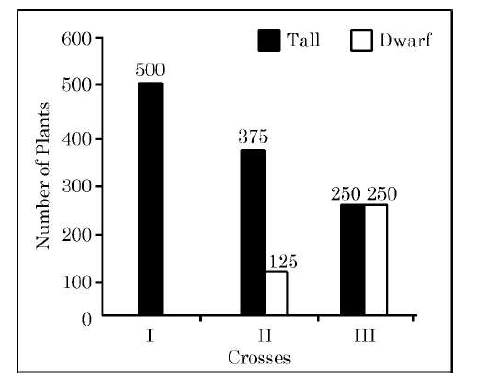
(1) What can you infer about the genotype of parents in crosses I and II?
[1 Mark](2) Which genetic cross is represented by these crosses?
[1 Mark]This helps analyse the progeny phenotypes, as explained in the case passage.
(3) Looking at bar graph of cross III, identify the type of cross performed and its importance in genetics.
[2 Marks]Importance: A test cross is performed by crossing an organism showing a dominant phenotype with a homozygous recessive organism to determine the genotype of the dominant phenotype individual.
This helps in predicting whether the organism is homozygous or heterozygous for the trait, as mentioned in the case passage where the genotype can be easily analysed from the progeny.
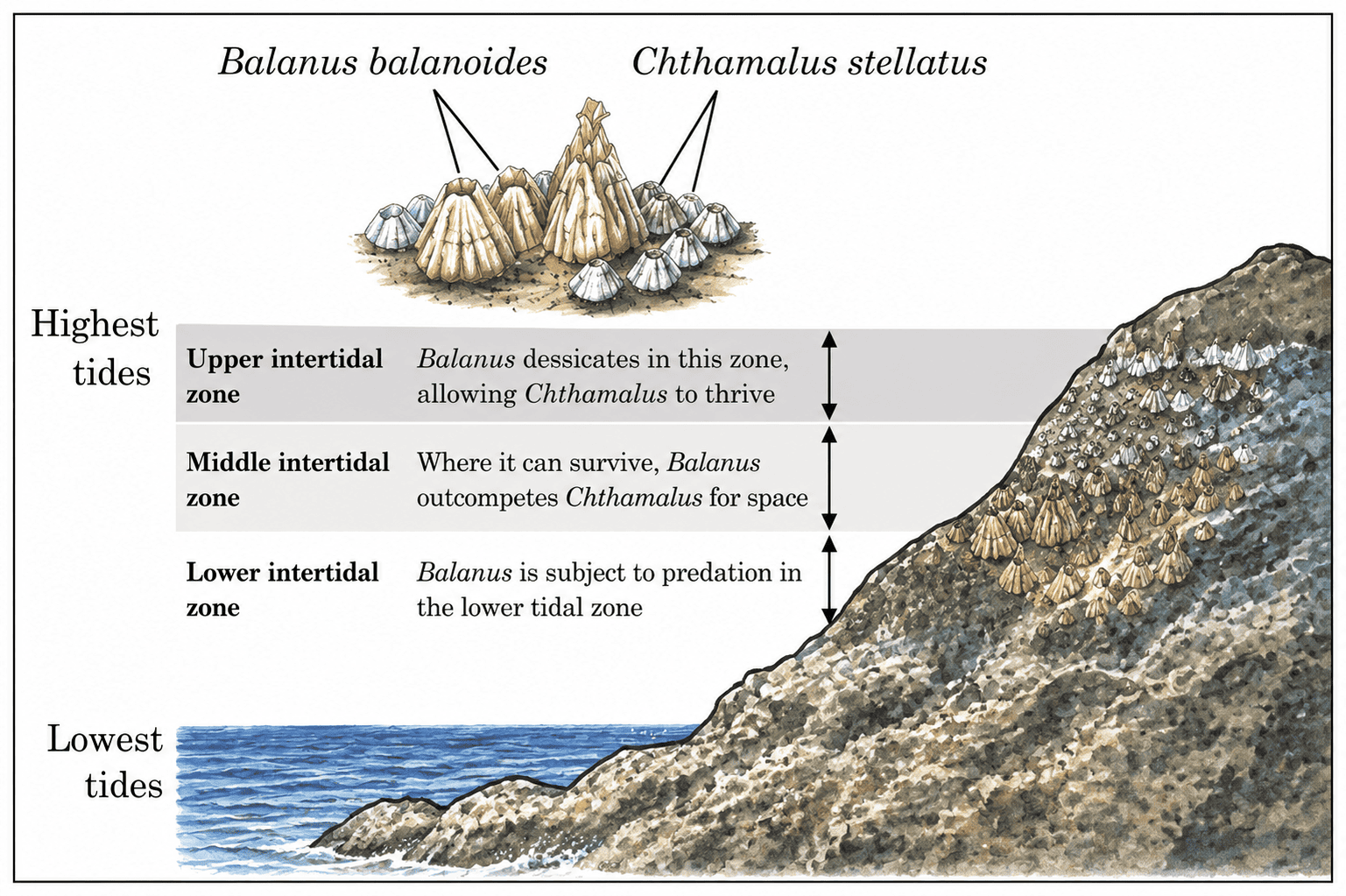
(1) Two different species can compete for the same resource. Give another example of it.
[1 Mark](2) Identify and define the ecological phenomenon demonstrated by this observation.
 [1 Mark]
Competitive release means a species expands its range when competition from another species is removed.
(3) How do species avoid competition in nature ? Explain with an example.
[2 Marks]This reduces direct competition and helps both species survive.
Section B
Identify the plant in which emasculation is not required for artificial hybridization.
Emasculation is the process of removing anthers from a flower to prevent self-pollination during artificial hybridization. It is required in plants that have bisexual flowers where self-pollination can occur, such as pea, wheat, and rice. Papaya, however, is a dioecious plant having male and female flowers on separate plants, so emasculation is not required because there is no risk of self-pollination.
Which of the following is not a component of immune system?
Red blood cells (RBCs) mainly carry oxygen in the blood and do not participate in immune responses. The immune system components include bone marrow (where immune cells are produced), lymphocytes (a type of white blood cell involved in immunity), and plasma proteins (which include antibodies and other immune factors). Therefore, RBCs are not a component of the immune system.
Select the option that shows correct statements:
(i) Corpus luteum secretes progesterone.
(ii) Only FSH attains a peak level in middle of cycle.
(iii) LH surge induces rupture of graafian follicle.
(iv) Luteal phase of menstrual cycle is also called proliferative phase
Statement (i) is correct because corpus luteum secretes large amounts of progesterone which is essential for maintenance of the endometrium. Statement (iii) is correct because LH surge induces rupture of the Graafian follicle leading to ovulation. Statement (ii) is incorrect because both LH and FSH attain peak levels in the middle of the cycle. Statement (iv) is incorrect because the luteal phase is also called the secretory phase, while the proliferative phase corresponds to the follicular phase.
Select the mismatched pair :
The mismatched pair is 'Genetically different strains of rice in India – Less than 1000' because India actually has more than 50,000 genetically different strains of rice, as given in the context. The other options are correctly matched: Zoological parks are an example of ex-situ conservation, Robert May estimated about 7 million species worldwide, and there are 12 mega-diversity countries in the world.
In the following figure, two ways of pairing of two homologous pairs of chromosomes are shown. Which of the following phenomena is expressed
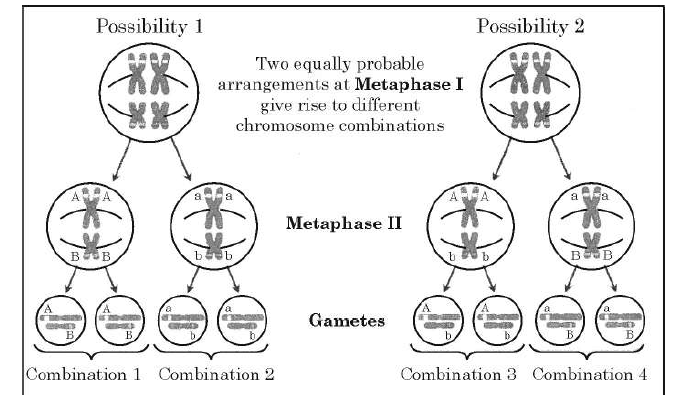
The phenomenon expressed in the figure is the independent assortment of genes. This is based on the fact that different pairs of homologous chromosomes (and hence the genes located on them) assort independently from each other during meiosis, resulting in various combinations of genes in gametes. This matches the Law of Independent Assortment, which states that alleles of different genes segregate independently of one another. The other options such as linkage of genes, multiple alleles, and incomplete dominance describe different genetic phenomena that are not illustrated by the independent pairing and segregation of chromosome pairs.
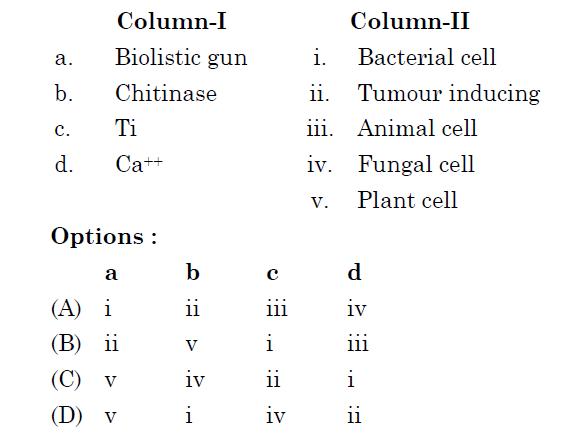
The idea of use and disuse of organs for evolution of organism was proposed by
Lamarck was the naturalist who proposed that evolution occurs through the use and disuse of organs. He gave examples such as giraffes elongating their necks in response to reaching for leaves on tall trees. This idea preceded Darwin's theory of natural selection.
Which of the following statements about plasmids is incorrect ?
Plasmids are small, circular, extra-chromosomal DNA molecules found in bacteria that replicate autonomously, independent of the bacterial chromosomal DNA. The given context states that plasmids replicate within bacterial cells independent of chromosomal DNA control. Therefore, the statement that their replication is controlled by chromosomal DNA is incorrect.
Which connective tissue connects ovary to pelvic wall and uterus ?
Ligaments are the connective tissues that connect organs to bones or other structures. In the female reproductive system, ligaments connect the ovary to the pelvic wall and the uterus, providing support and maintaining their positions. Tendons connect muscles to bones, cartilage is a flexible connective tissue found in joints, and bones are rigid structures, so they are not correct in this context.
Assertion (A) : The population of melanized moths increased in industrial areas after Industrial Revolution.
Reason (R) : In Industrial environment lichen covered trees were replaced by soot-covered trees offering better camouflage to dark coloured moths.
Before industrialization, white-winged moths were more common because they could camouflage well on lichen-covered trees. After industrialization, the trees got covered with soot and became dark, which favored the dark-colored or melanized moths in terms of camouflage. This better camouflage helped them avoid predators, leading to an increase in their population in industrial areas. Therefore, both the assertion and reason are true, and the reason correctly explains the assertion.
Assertion (A) : The milk produced by transgenic cow ‘Rosie’ was nutritionally more balanced product for human babies than natural cow milk.
Reason (R) : It was human protein enriched milk containing human alpha lactaglobulin.
Assertion (A) : Flocs are masses of bacteria associated with fungal filaments in secondary treatment of sewage.
Reason (R) : Flocs help in digestion of solid waste by anaerobic respiration
Flocs are indeed masses of bacteria associated with fungal filaments that form mesh-like structures during secondary treatment of sewage, which is an aerobic process where air is pumped to provide oxygen. Therefore, Assertion (A) is true. However, the digestion of solid waste by flocs occurs via aerobic respiration, not anaerobic respiration, because oxygen is supplied in the aeration tanks. Hence, the Reason (R) is false.
Assertion (A) : In terrestrial ecosystem much larger fraction of energy flows through grazing food chain. Reason (R) : Grazing food chain may be connected to Detritus food chain at some levels.
In terrestrial ecosystems, a much larger fraction of energy flows through the detritus food chain rather than the grazing food chain, so the assertion is false. However, the reason is true because the grazing food chain and detritus food chain are interconnected at some levels, with some organisms acting as prey for both chains, forming a food web.
Section C
(a) Define Humoral immune response.
(b) Name any two types of antibodies found to give humoral immune response in humans.
(b) Two types of antibodies involved in humoral immune response are IgG and IgM.
Identify the stage of follicle where primary oocyte undergoes first meiotic division.
Also mention the products of this division
(b) The first meiotic division produces two cells: a large haploid secondary oocyte and a small first polar body. The secondary oocyte contains 23 chromosomes and retains most of the cytoplasm, while the first polar body usually degenerates.
Study the sequence of bases in a DNA molecule that is shown below and answer the questions.
5' – GAATTC – 3'
3' – CTTAAG – 5'
(a) What are such sequences called ? Name the enzyme used that recognises such nucleotide sequences.
(b) How do these enzymes function ?
(b) Restriction enzymes function by recognising specific palindromic nucleotide sequences in DNA and cutting the DNA at or near these sites. They act as molecular scissors and are used by bacteria as a defence mechanism against viruses. In biotechnology, they help cut DNA into smaller fragments for analysis or recombination.
(a) Analyse the following two cases of sex determination in different organisms :
Case I : Males have (XO) sex chromosomes and females have two copies of same sex chromosome (XX).
Case II : Females have two different sex chromosomes (ZW) and males have two copies of same sex chromosome (ZZ).
Identify the type of heterogamety in each case, giving one example of each.
Case II: Females have ZW sex chromosomes and males have ZZ. This is called female heterogamety because females produce two types of gametes: one with Z and one with W chromosome. An example is bird (e.g. hen and rooster).
(i) Differentiate between a DNA and RNA nucleotide.
(ii) Name the two types of bonds present within a single nucleotide.
(ii) The two types of bonds present within a nucleotide are phosphodiester bond (between sugar and phosphate group) and glycosidic bond (between sugar and nitrogenous base).
Given below is a pyramid found in an ecosystem, where each bar represents the standing crop available in the trophic level.
(i) Identify the kind of pyramid and with the help of an example explain the conditions where this kind of pyramid is possible in nature.
(ii) Write any two limitations of ecological pyramids
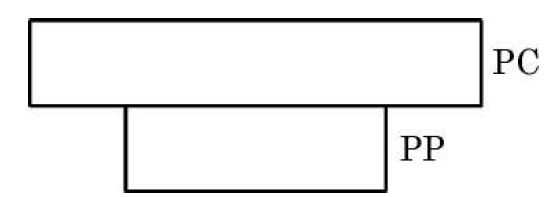
(ii) Limitations of ecological pyramids are: 1. They do not show the exact energy transfer efficiency between trophic levels. 2. They ignore species playing multiple trophic roles or omnivores which belong to more than one trophic level.
In an ecosystem there was loss of biodiversity due to some project in that area.
(i) How will biodiversity be affected ? (2 points)
(ii) List two major causes of loss of biodiversity
1. There will be a decline in the number of different species in the ecosystem which reduces genetic diversity.
2. The ecosystem will become less stable and less able to resist environmental changes like drought.
(ii) Two major causes of loss of biodiversity are:
1. Deforestation and habitat destruction due to human activities.
2. Pollution which degrades habitats and kills many species.
Section D
(a) Do all pollen grains remain viable for the same length of time ? Support your answer with two suitable examples.
(b) How are pollen grains stored in pollen banks?
(b) Pollen grains are stored in pollen banks by keeping them at very low temperatures, often in liquid nitrogen at about -196 deg Celsius. This low temperature helps to preserve the viability of pollen grains for long periods, sometimes years. Such stored pollen is used in crop breeding programmes to cross different plant varieties and improve crop quality.
(a) What is pedigree analysis ? Mention its importance in human genetics. (2 pts.)
(b) Analyse the following pedigree and write the
(i) Pattern of inheritance.
(ii) Give one example of disease showing such an inheritance pattern
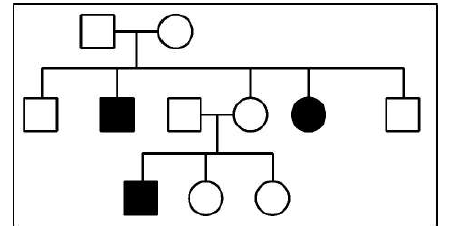
(b) (i) The pattern of inheritance shown in the pedigree is autosomal dominant because the trait appears in every generation and both males and females are affected equally.
(ii) An example of a disease showing autosomal dominant inheritance is Huntington's disease.
(a) How is Hardy-Weinberg expression (p² + 2pq + q²) = 1 derived ?
(b) List any two factors that disturb the genetic equilibrium.
(b) Two factors that disturb genetic equilibrium are:
1. Mutation - changes in the DNA sequence can create new alleles.
2. Natural selection - differential survival and reproduction affect allele frequencies.
Draw a neat diagram of megasporangium of an angiosperm and label any six parts.
(Since this is a text-based answer, please refer to your textbook or class notes for the diagram.)
Labels and Explanation of Six Parts:
1. Integuments: These are the two protective layers surrounding the megasporangium except at one point called the micropyle.
2. Micropyle: It is a small opening in the integuments through which the pollen tube enters during fertilisation.
3. Nucellus: The central tissue inside the integuments that provides nourishment to developing female gametophyte.
4. Megaspore Mother Cell (MMC): It is a diploid cell within the nucellus that undergoes meiosis to form megaspores.
5. Embryo Sac: The female gametophyte developed from the functional megaspore after meiosis and mitotic divisions.
6. Funicle: The stalk that connects the ovule to the ovary wall.
These parts together form the typical ovule (megasporangium) in angiosperms, essential for seed formation after fertilisation.
(a) Mention the scientific name of the source plant and the part from which opioids are extracted.
(b) How are morphine and heroin related ? Mention the effect each one of them has on human body.
(b) Morphine and heroin are chemically related; heroin is a derivative of morphine. Heroin is produced by acetylation of morphine, meaning two acetyl groups are added to morphine. Morphine is a natural opioid used medically for pain relief, acting as a strong analgesic. Heroin, however, is an illegal drug that acts as a depressant, slowing down body functions and affecting the central nervous system. While morphine is used under medical supervision, heroin is highly addictive and harmful to the human body.
A farmer grew two varieties of corn crop in field A and B. He grew normal corn crops in field A and GM corn crops in field B.
He observed that corn borers attacked only in field A. To control it, spores of Bt were sprayed on field A.
(a) Name the gene in the spores responsible for control of pest.
(b) What effect will the spores of Bt have on insect pest ?
(c) How has corn plants of field B developed resistance against this pest ? Explain.
(b) The spores of Bt produce Bt toxin which is toxic to the insect pest. When the pest ingests the Bt toxin, it attacks the gut cells of the insect causing paralysis and death, thus effectively controlling the pest.
(c) The corn plants of field B are genetically modified to contain the Bt gene (cryIAb). This gene produces the Bt toxin within the plant itself, providing continuous protection against corn borers without the need for external spraying. This genetic modification helps the plants to resist attack by the pest naturally and effectively.
Observe the given picture carefully. A mixture of DNA with fragments ranging from 100 base pairs to 1800 base pairs were separated by electrophoresis on agarose gel with the following arrangement:
(a) What result will be obtained in staining with ethidium bromide ? Explain with reasons.
(b) The above setup was modified as shown below and a band with 100 base pairs was obtained at X.
What changes were made to the previous design to get a band at ‘X’. Why did the band appear at ‘X’ ?
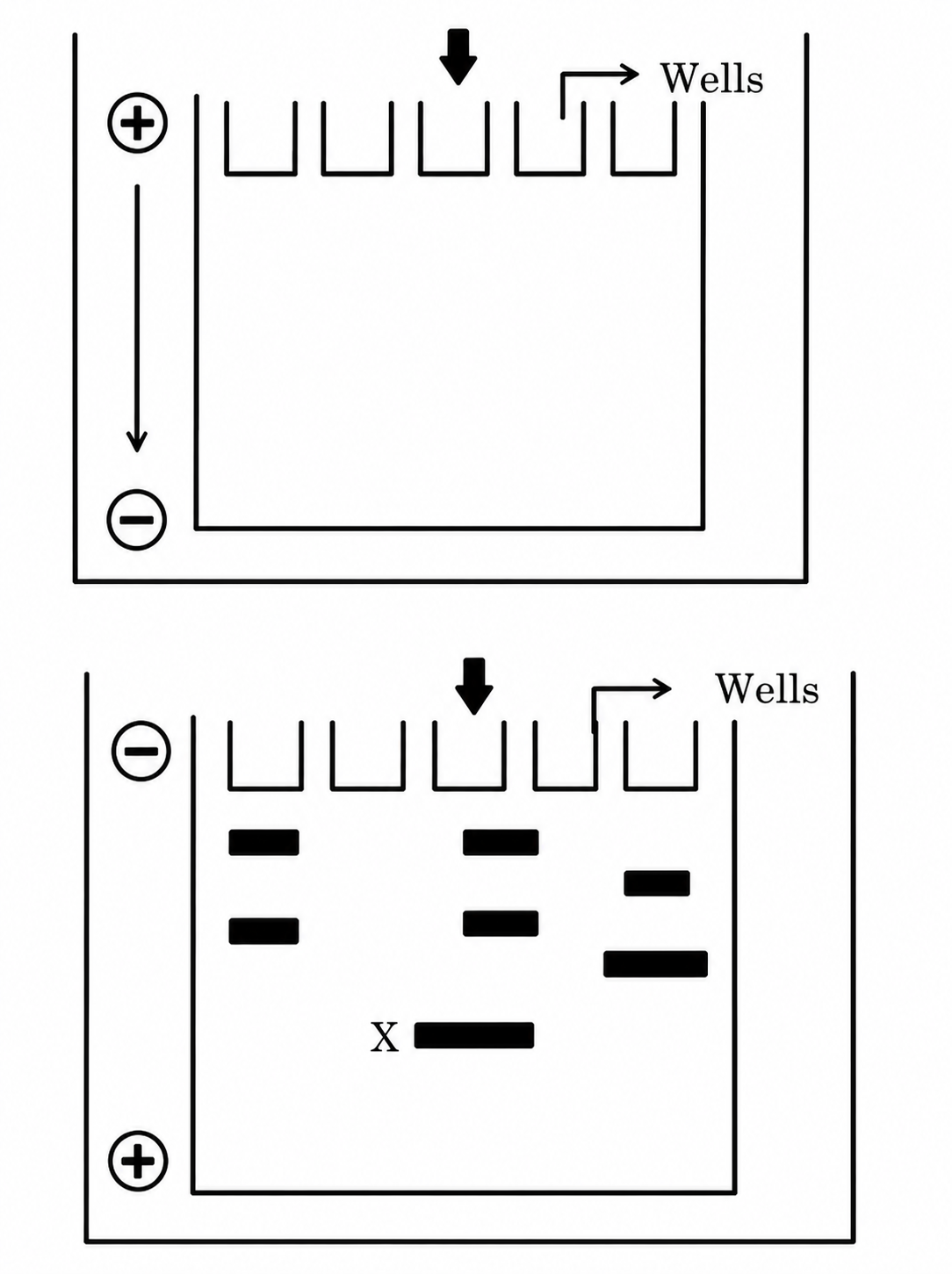
(b) To obtain a band with 100 base pairs at position X, the gel composition or running conditions were modified such as increasing agarose concentration or changing the buffer. The band appears at X because smaller DNA fragments move faster through the gel matrix and migrate farther. The change allowed better resolution for small fragments like 100 base pairs to be distinctly separated and visualized at position X.
Section E
Trace the events from fertilization till implantation of blastocyst in human female. Also mention the site where fertilization takes place.
(b) Events from fertilization to implantation:
1. Fertilization is the process where a sperm cell fuses with an ovum (egg) to form a zygote.
2. The zygote undergoes multiple mitotic cell divisions called cleavage, forming a solid ball of cells known as morula.
3. The morula then develops into a blastocyst, which is a hollow structure with an inner cell mass.
4. The blastocyst travels down the fallopian tube towards the uterus over a period of about 5-6 days.
5. Once in the uterus, the blastocyst attaches itself to the thickened lining of the uterus, called the endometrium. This process is called implantation.
6. Implantation allows the blastocyst to receive nutrients and oxygen from the mother to grow and develop into an embryo.
Thus, fertilization in the fallopian tube followed by development of morula and blastocyst, transportation to the uterus, and implantation in the uterine lining are key events from fertilization till implantation.
(i) Case studies of some couples are given below. They were not able to have kids even though the parents were not taking any precautions. They also do not wish to adopt a child or take the help of donors. Study these cases and suggest an appropriate Assisted Reproductive Technology that could help them.
Case I – Female – Normal Reports
Male – Normal sperms but no connection between epididymis and vas deferens.
Case II – Female – Normal eggs but Fallopian tube blocked.
Male – Normal sperms. Male reports are normal.
Case III – Female – Normal Reports.
Male – Low sperm count with less motility
(ii) Copper releasing intrauterine devices are very effective and popular contraceptive devices. Name any two copper releasing IUDs. Write two reasons that make them effective contraceptives.
Case II: The female has blocked Fallopian tubes which prevent the egg and sperm from meeting. The suitable ART is In Vitro Fertilization (IVF) where eggs are collected from the ovary, fertilized by sperms outside the body, and the embryo is implanted into the uterus.
Case III: Male has low sperm count and less motility making natural fertilization difficult. The suitable ART is Artificial Insemination (AI) or Intrauterine Insemination (IUI) where motile sperms are concentrated and placed directly into the female reproductive tract to increase chances of fertilization.
(ii) Two common copper releasing IUDs are Copper T 200 and Multiload 375.
Two reasons that make copper IUDs effective are:
1. Copper ions released act as a spermicide by creating a toxic environment for sperms, reducing their motility and viability.
2. The presence of the device increases phagocytosis of sperms by uterine cells, preventing fertilization. These factors together make copper IUDs highly effective contraceptives.
(i) Watson and Crick’s discovery of double helical structure was based on which two findings. Also mention the name of the scientists associated with these findings.
(ii) Write down the salient features of double helix structure of DNA (any three points
(i) Watson and Crick’s discovery of the double helical structure of DNA was based on two important findings: first, the X-ray diffraction photographs of DNA taken by Rosalind Franklin and Maurice Wilkins, which revealed the helical shape of DNA; second, Chargaff's rules discovered by Erwin Chargaff, which stated that the amount of adenine (A) equals thymine (T) and the amount of guanine (G) equals cytosine (C) in DNA. These findings helped Watson and Crick to model the DNA as a double helix.
(ii) Salient features of the double helix structure of DNA:
1. DNA consists of two polynucleotide chains twisted around each other in a right-handed double helix.
2. The sugar-phosphate backbones form the outer sides of the helix, while nitrogenous bases are paired inside like rungs of a ladder.
3. Base pairing occurs with adenine pairing to thymine by two hydrogen bonds and guanine pairing to cytosine by three hydrogen bonds, ensuring complementary strands.
These features explain the stability and replication mechanism of DNA.
Given below is a stretch of DNA showing the coding strand of structural gene of transcription unit.
5' - ATG ACC GTA TTT TCT GTA GTG CCC GTA CTT CAG GCA TTA 3'
(i) Write the corresponding template strand and m-RNA strand that will be transcribed along with its polarity.
(ii) If GUA of transcribed mRNA is an intron, then depict the sequence involved in formation of mRNA / mature / processed hn RNA strand :
(1) In a bacterium
(2) In humans
(iii) How many amino acids the resulting polypeptide will have after the process of translation in humans
The template strand will be complementary and antiparallel: 3' - TAC TGG CAT AAA AGA CAT CAC GGG CAT GAA GTC CGT AAT - 5'
The mRNA strand is complementary to template strand and has polarity 5' to 3': 5' - AUG ACC GUA UUU UCU GUA GUG CCC GUA CUU CAG GCA UUA - 3'
(ii) If GUA codon in the mRNA is an intron, then during RNA processing the intron sequence is removed:
(1) In bacteria, there is generally no RNA splicing, so the mRNA remains same without intron removal: 5' - AUG ACC GUA UUU UCU GUA GUG CCC GUA CUU CAG GCA UUA - 3'
(2) In humans, introns are removed from hnRNA to form mature mRNA. So the intron GUA codon is spliced out. The sequence involved in mature mRNA will be the original mRNA sequence with GUA removed from the intron position. If the intron is exactly the GUA triplet, then mature mRNA will be: 5' - AUG ACC UUU UCU GUG CCC GUA CUU CAG GCA UUA - 3'
(iii) To find the number of amino acids, the mRNA is read in codons starting from start codon AUG. After the intron removal, count the number of codons excluding stop codons. Here, the mRNA codes for 12 codons in total. Assuming the last codon is a stop codon, the polypeptide will have 11 amino acids.
(i) Name the protozoan species that is responsible for causing the most serious and even fatal malarial disease.
(ii) Name the host in which the parasite completes its sexual stages and explain the changes taking place.
(iii) How does the parasite damage the human body after entering the blood stream ?
(iv) Suggest two effective preventive measures to control the spread of this disease in endemic regions
(b) The parasite completes its sexual stages inside the female Anopheles mosquito, which acts as the definitive host. Inside the mosquito's stomach, gametocytes (sexual forms) of Plasmodium undergo fertilization to form zygotes. The zygote develops into ookinetes, which penetrate the stomach wall and form oocysts. The oocysts grow and release numerous sporozoites, which migrate to the mosquito's salivary glands, making the mosquito infectious.
(c) After entering the human bloodstream through a mosquito bite, the sporozoites reach the liver cells, multiply asexually producing merozoites. These merozoites then enter red blood cells, multiply further causing the cells to burst. This destruction of red blood cells leads to symptoms like fever, chills, anemia, and in severe cases, damage to vital organs which can be fatal.
(d) Two effective preventive measures to control malaria in endemic regions are: 1. Using insecticide-treated mosquito nets and wearing protective clothing to avoid mosquito bites. 2. Eliminating mosquito breeding sites by draining stagnant water and maintaining hygiene to reduce mosquito population.
(i) What are bio-fertilizers ?
(ii) Name the different types of microorganisms used as biofertilizers in organic farming and explain how each contributes to soil fertility.
(iii) Write two advantages of using bio-fertilizers over chemical fertilizers
(ii) The main types of microorganisms used as biofertilizers in organic farming are:
1. Rhizobium bacteria: They form symbiotic relationships with roots of leguminous plants and fix atmospheric nitrogen into organic forms which plants can use.
2. Cyanobacteria (Blue green algae): They are used in paddy fields where they fix atmospheric nitrogen and add organic matter to improve soil fertility.
3. Phosphorus solubilizing bacteria (PSB): They convert insoluble phosphorus in soil into soluble forms, making it available for plants.
4. Mycorrhiza fungi: They form mutual association with plant roots helping in absorption of water and nutrients like phosphorus.
(iii) Two advantages of bio-fertilizers over chemical fertilizers are:
1. Bio-fertilizers are eco-friendly and do not cause pollution.
2. They improve soil health and fertility in a natural way by increasing beneficial microbial activity.
Other Years — Biology