CLASS 12-HUMANITIES . SOCIOLOGY . SOCIAL CHANGE AND DEVELOPMENT IN INDIA . PATTERNS OF-INDUSTRIALISATION-AND-URBANISATION
Chapter 5 : Patterns of Industrialisation and Urbanisation
Ch 5
SOCIOLOGY
CLASS 12-HUMANITIES
Bollywood and Industrial Work
Bollywood in Mumbai, Maharashtra, is not only a place of dreams but also a significant workplace for many. Workers such as dancers, stunt artists, and extras are part of unions like the junior artists association, which demands fair wages, eight-hour shifts, and safe working conditions. The industry’s products are marketed through film distributors, cinema hall owners, and shops selling music cassettes and videos. Workers live in different parts of the city based on their earnings and social status, reflecting social divisions in living conditions, food habits, and clothing. Despite these differences, residents share common experiences such as watching films and cricket, facing air pollution, and aspiring for their children's success.
Exam Question
Q: How do social divisions manifest among workers in Mumbai’s Bollywood industry?
A: Social divisions are seen in where workers live, what they eat, and their clothing, with wealthier individuals living in affluent areas like Juhu and others in less privileged areas like Girangaon.
Industrial Society and Social Relations
Industrialisation changes how people work and interact. Sociologists study how technology and job types influence social relations and how social institutions like caste, kinship, gender, and region affect work organisation and marketing. For example, women are more prevalent in nursing and teaching due to societal views on gender roles, despite nursing being physically demanding. Social patterns shape who produces, works, and sells, influencing society’s functioning.
Exam Question
Q: Why are women more commonly found in certain jobs like nursing and teaching?
A: Society associates women with caring and nurturing roles, influencing their concentration in jobs like nursing and teaching, despite the physical demands of such work.
Images of Industrial Society
Early sociologists like Karl Marx, Max Weber, and Emile Durkheim linked industrialisation with urbanisation, loss of close rural relationships, and the rise of anonymous professional relations. Industrial work involves detailed division of labour, often repetitive and exhausting, leading to alienation where workers see work as survival rather than fulfillment. Industrialisation can reduce caste distinctions in public spaces but economic inequalities persist, with upper caste men dominating well-paying professions and women often paid less.
Exam Question
Q: What is alienation in the context of industrial work?
A: Alienation is when workers do not enjoy their work and see it only as a means to survive, often because they perform repetitive tasks without seeing the final product.
Industrialisation in India
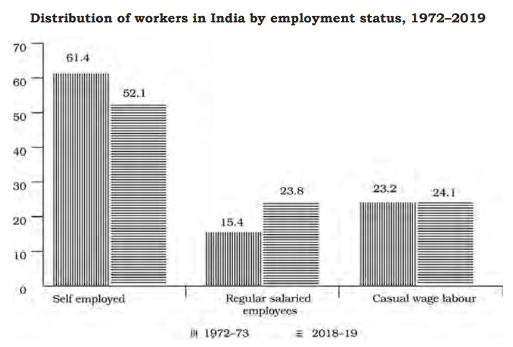
India’s industrialisation differs from developed countries. In 2018–19, 43% of workers were in agriculture, 17% in industry, and 32% in services. Agriculture’s contribution to growth has declined, while services contribute more than half. Over 52% of workers are self-employed, 24% regular salaried, and 24% casual labour. The organised sector, employing ten or more people, is small, with over 90% working in the informal sector. This limits exposure to diverse workplaces and secure jobs, with many depending on personal relationships for employment. Government jobs provide security and help overcome social boundaries, but informal workers lack union representation and face poor working conditions.
Exam Question
Q: What are the characteristics of the organised and unorganised sectors in India?
A: The organised sector includes units with ten or more employees, offering secure jobs and benefits, while the unorganised sector comprises over 90% of workers, often lacking job security and union representation.
Globalisation, Liberalisation, and Indian Industry
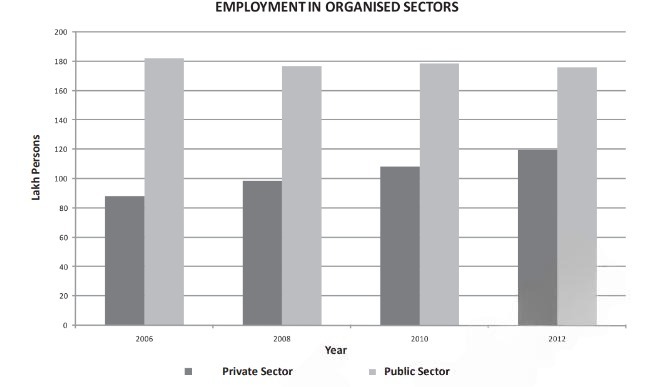
Since the 1990s, liberalisation policies have encouraged private and foreign investment, reducing licensing requirements. Many Indian companies have been acquired by multinationals, while some have become multinational themselves. Retail liberalisation challenges small shops. Disinvestment of public sector companies raises job security concerns. Outsourcing and contracting have increased, often leading to low wages and poor conditions. Employment in government jobs, once a major source of security, is declining. Liberalisation is linked to rising income inequality.
Exam Question
Q: How has liberalisation affected employment in India?
A: Liberalisation has increased private and foreign investment, led to outsourcing and contracting, reduced secure government jobs, and contributed to rising income inequality.
How People Find Jobs
Most people find jobs through personal contacts rather than advertisements or employment exchanges. Self-employed individuals rely on their reputation and mobile phones to reach clients. Factory workers were traditionally recruited by contractors or jobbers, but now management and unions play roles. Contract work and casual labour are common, with many workers hoping to pass jobs to their children. Government schemes like MUDRA and Make in India aim to generate employment and support marginalized groups.
Exam Question
Q: What role do personal contacts play in job finding in India?
A: Personal contacts are crucial for self-employed and casual workers to find jobs, as many rely on reputation and networks rather than formal advertisements.
How Work is Carried Out
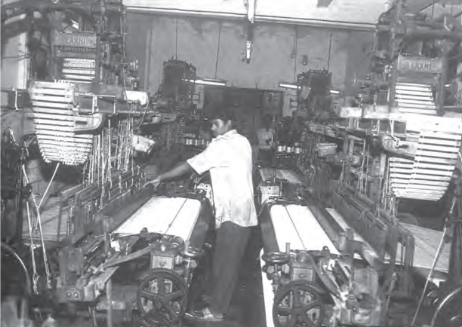
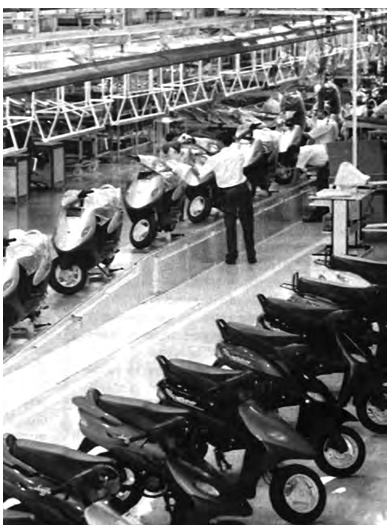
Work settings in India range from automated large companies to small home-based production. Managers aim to increase productivity by extending hours or increasing output. Mechanisation can reduce employment and deskill workers, as seen in textile mills and IT sectors. Workers often face long hours and high pressure, with outsourcing increasing job insecurity. The joint family system sometimes supports working families by helping with childcare.
Exam Question
Q: How does mechanisation affect workers in industrial settings?
A: Mechanisation can reduce the number of workers needed and deskill jobs, making workers extensions of machines and increasing work pressure.
Working Conditions
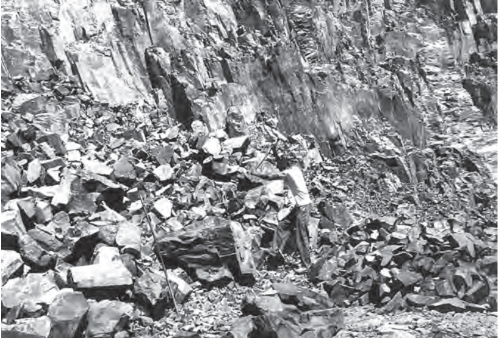
Working conditions in industries like mining can be hazardous, with risks of accidents, diseases, and poor safety enforcement, especially in smaller operations. Migrant workers, often young and single, face loneliness and vulnerability but may gain economic independence. Government laws regulate working hours and safety, but enforcement is inconsistent.
Exam Question
Q: What are some dangers faced by workers in underground mines?
A: Workers face flooding, fires, roof collapses, gas emissions, ventilation failures, and diseases like tuberculosis and silicosis.
Home-Based Work
Home-based work includes manufacturing lace, zari, carpets, bidis, and agarbattis, mainly done by women and children. Contractors supply raw materials and collect finished products, paying workers on a piece-rate basis. The bidi industry involves multiple stages from leaf collection to final sale, with workers often dependent on contractors.
Exam Question
Q: How is home-based work organised in industries like bidi manufacturing?
A: Contractors provide raw materials to home workers who produce goods on a piece-rate basis; finished products are collected and sold through manufacturers and distributors.
Strikes and Unions
Workers sometimes strike to protest poor conditions, but strikes are difficult due to management tactics and loss of wages. The Bombay Textile strike of 1982, led by Dr. Datta Samant, involved 250,000 workers demanding better wages and union rights. The strike lasted nearly two years, ending with many workers losing jobs and migrating to other sectors or towns. Mill owners did not modernise and are now selling land for real estate, leading to conflicts over Mumbai’s future.
Exam Question
Q: What were the outcomes of the Bombay Textile strike of 1982?
A: The strike ended with many workers losing jobs, migration to other sectors, and mill lands being sold for real estate development.
Solved Examples
Example 1: Explain the impact of mechanisation on employment in Indian industries.
Answer: Mechanisation increases production efficiency but reduces the number of workers needed, leading to job losses and deskilling of remaining workers.
Example 2: Describe the difference between organised and unorganised sectors in India.
Answer: The organised sector includes registered units with secure jobs and benefits, while the unorganised sector comprises small-scale, informal workplaces lacking job security and union representation.
Practice Set
Easy
- What is the primary sector of employment in India?
- Define alienation in industrial work.
Moderate
- Explain the role of contractors in casual labour recruitment.
- How has liberalisation affected small shops in India?
Challenging
- Discuss the social implications of the small size of the organised sector in India.
- Analyse the effects of outsourcing on workers’ conditions.
Answer Key
- Primary sector includes agriculture and mining.
- Alienation is when workers feel disconnected from their work and see it only as a means to survive.
- Contractors recruit casual labour, often providing loans and controlling workers through debt.
- Liberalisation has led to competition from large retail chains, threatening small shops.
- The small organised sector limits workers’ exposure to diverse workplaces and secure jobs, increasing vulnerability.
- Outsourcing often leads to low wages, poor working conditions, and reduced union power.
Quick Reference
- Industrialisation: Process of economic and social change involving machinery and factory work.
- Alienation: Feeling of disconnection from work due to repetitive tasks.
- Organised Sector: Registered workplaces with job security and benefits.
- Unorganised Sector: Informal workplaces lacking security and union representation.
- Liberalisation: Economic policy encouraging private and foreign investment.
- Outsourcing: Contracting work to smaller firms or individuals.
- Strike: Workers’ refusal to work to demand better conditions.
Glossary
- Alienation: A condition where workers feel estranged from their work.
- Contract Work: Employment where workers are hired on temporary or casual basis.
- Disinvestment: Selling government shares in public sector companies.
- Industrialisation: Development of industries in a country or region.
- Liberalisation: Removal of government restrictions in the economy.
- Outsourcing: Hiring external firms to perform certain business functions.
- Strike: Collective refusal to work by employees to press demands.
Chronology of Industrialisation in India
| Time Period / Year | Event / Change | Importance |
|---|---|---|
| 1972–73 | 61.4% workers self-employed | Majority in informal sector |
| 1990s | Liberalisation policies introduced | Encouraged private and foreign investment |
| 1982 | Bombay Textile Strike | Major labour unrest, job losses |
| 2018–19 | 52.1% workers self-employed; 23.8% regular salaried | Shift towards formal employment |
| 2006–2012 | Growth in private sector employment | Private sector employment increased steadily |