CBSE EXAMINATION PAPER-2026
SCIENCE
(Solved)
General Instructions :
Read the following instructions carefully and follow them :
- This question paper contains 45 questions. All questions are compulsory.
- This question paper is divided into 5 sections.
- Section A – questions number 1 to 3 are case based questions
- Section B – questions number 4 to 23 are multiple choice questions
- Section C – questions number 24 to 31 are very short answer
- Section D – questions number 32 to 39 are short answer
- Section E – questions number 40 to 45 are long answer
- There is no overall choice given in the question paper. However, an internal choice has been provided in few questions.
- Use of calculator is NOT allowed.
Section A
(1) Why only tall pea plants were observed in F₁ progeny?
[1 Mark](2) By which method did Mendel obtain F₂ progeny?
[1 Mark](3) Write one difference between dominant and recessive trait.
[2 Marks]Read the following passage and answer the questions given below :
Most of metals occur in combined state in form of ores. Carbonate ores are converted into oxides by calcination and sulphide ores by roasting. Oxides are reduced with suitable reducing agent like carbon to get free metal. Highly reactive metals like – Al, Mg are also used as reducing agents to obtain metal from their oxides. Most reactive metals are obtained by electrolytic reduction of their molten ores. Alloying is a very good method of improving the properties of a metal. We can get desired properties by this method. The electrical conductivity and melting point of an alloy is less than that of pure metals.
(1) Why carbonate or sulphide ores are converted into oxides before extraction of metal from it ?
[1 Mark](2) Write a reaction in which Aluminium is used as a reducing agent to obtain metal from its oxide.
[1 Mark](3) How is copper obtained from its ore (Cu₂S) ? Give equations of the reactions.
[2 Marks]Read the following passage and answer the questions given :
Lenses can form different types of images depending upon their focal length and position of object. A convex lens can create real, inverted or virtual, erect images, while a concave lens forms only virtual and diminished images. The focal length determines the power of lens. Convex lenses have positive focal length while concave lenses have negative focal length by convention. When lenses are placed together, their combined power is determined by the sum of their individual powers. Ray diagrams help to visualize how light converges or diverges through lens to form an image.
(1) Illustrate the formation of image with the help of ray diagram, when the object is placed between the optical centre and principal focus of concave lens.
[1 Mark](2) A convex lens of focal length 20 cm is used to form an image. If an object is placed at 40 cm from the lens, what will be the position and nature of image ?
[1 Mark](3) Two lenses are placed in contact. One is a concave lens with focal length 2 m and the other is a convex lens with focal length 1.5 m. What type of lens will the combination behave as (convex or concave) ? Give reason.
[1 Mark](4) A lens combination consists of a convex lens of focal length 30 cm and a concave lens of focal length 15 cm placed together. Find the equivalent focal length and power of this lens combination.
[1 Mark]This method uses the sum of individual powers as stated in the passage.
Section B
Which structure in a leaf is mainly responsible for gaseous exchange?
Stomata are tiny pores present on the surface of leaves. They are enclosed by two kidney-shaped guard cells and are primarily responsible for the exchange of gases such as oxygen and carbon dioxide with the atmosphere. This gaseous exchange is essential for photosynthesis and transpiration in plants. Other options like cuticle, xylem, and phloem do not have the primary role of gaseous exchange.
Identify the type of reproduction shown in the diagram given below:
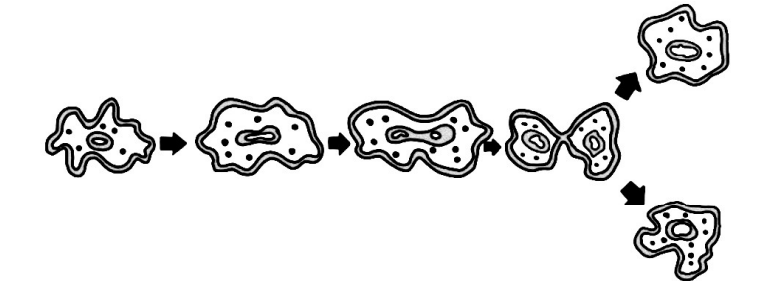
The reproduction shown is binary fission, a type of asexual reproduction in which a single organism, such as an amoeba, divides into two identical daughter organisms. This method involves the division of the nucleus followed by the division of the cytoplasm and is typical for single-celled organisms like amoeba. Other options like budding relate to organisms such as hydra where new individuals develop from small buds, spore formation involves spores, and fragmentation involves breaking into parts, which are not described here.
Identify the correct statement for Spirogyra, Leishmania and Hydra:
Spirogyra reproduces asexually by fragmentation where the filaments break up into smaller pieces that grow into new individuals. Hydra reproduces asexually by budding where new individuals develop as outgrowths from the parent. Leishmania, being a unicellular protozoan, also reproduces asexually by methods such as binary fission. Therefore, the correct statement for all three organisms is that they reproduce asexually.
Pancreas secretes pancreatic juice which contain certain enzyme that helps in digestion of food. Choose the correct option from the following:
Pancreatic juice contains enzymes such as trypsin and lipase. Trypsin is responsible for digesting proteins, while lipase breaks down emulsified fats. The context explains that bile salts emulsify fats, increasing the efficiency of lipase to act on them. Hence, trypsin digests proteins and lipase digests emulsified fats.
Sex is determined by different factors in various species. However, in human beings, it is determined genetically. Which amongst the following option(s) is/are correct for human beings?
(i) Gamete carrying X chromosome from female parent.
(ii) Gamete carrying X chromosome from male parent.
(iii) Gamete carrying Y chromosome from male parent.
In human beings, the female gamete (egg) always carries the X chromosome, while the male gamete (sperm) can carry either an X or a Y chromosome. The combination of these chromosomes determines the sex of the offspring: XX results in a female and XY results in a male. Therefore, (i) the female gamete carrying X chromosome is correct, and (iii) the male gamete carrying Y chromosome is also correct because it influences the male sex determination. Option (ii) (gamete carrying X chromosome from male parent) is a sperm with X chromosome, which is possible, but the question asks which options are correct collectively; since female gametes do not carry X chromosomes from the male parent, (i) and (iii) are the correct options representing female and male gametes respectively.
Which of the following group is not 'biodegradable'?
Two statements are given, one labelled as Assertion (A) and the other is labelled as Reason (R). Select the correct answer to these questions from the codes (A), (B), (C) and (D) as given below :
Assertion (A): Reflex actions do not involve thinking.
Reason (R): Most reflex actions are controlled by the spinal cord.
Reflex actions occur without the involvement of thinking processes, as they are automatic and rapid responses to stimuli. This is because reflex actions are controlled primarily by the spinal cord, which handles simple neural circuits called reflex arcs without involving the brain's complex network needed for thinking. Hence, both the assertion and reason are true, and the reason correctly explains the assertion.
Two statements are given, one labelled as Assertion (A) and the other is labelled as Reason (R). Select the correct answer to these questions from the codes (A), (B), (C) and (D) as given below :
Assertion (A): In human beings, the respiratory pigment is haemoglobin present in red blood cells. Reason (R): Haemoglobin has a very high affinity for carbon dioxide.
The assertion is correct because in human beings, haemoglobin is the respiratory pigment present in red blood cells that carries oxygen. However, the reason is incorrect because haemoglobin has a very high affinity for oxygen, not carbon dioxide. Carbon dioxide is mostly transported dissolved in blood plasma or as bicarbonate ions, not primarily bound to haemoglobin.
(i) AgNO₃ + NaCl → NaNO₃ + AgCl
(ii) K₂SO₄ + BaCl₂ → BaSO₄ + 2KCl
Which of the following options clearly describes both the reactions?
Which one of the following can be used as an acid-base indicator by a visually impaired (blind) student ?
Acid-base indicators typically change color in different pH solutions, which visually impaired students cannot see. Vanilla essence can be used as an acid-base indicator by a blind student because it changes its smell in acidic or basic solutions, allowing detection through smell rather than sight. Litmus, methyl orange, and turmeric indicate acids and bases by color changes, which require vision to observe.
The gases evolved on heating lead (II) nitrate crystals are :
When lead (II) nitrate crystals are heated, they decompose to form lead oxide (PbO) as a solid residue and gases nitrogen dioxide (NO₂) and oxygen (O₂). Nitrogen dioxide is a reddish-brown gas visible as fumes, and oxygen is also released. The decomposition reaction is: 2Pb(NO₃)₂ → 2PbO + 4NO₂ + O₂. Thus, the correct gases evolved are NO₂ and O₂.
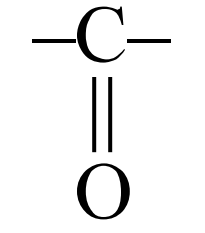
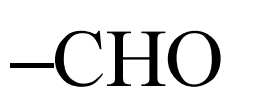
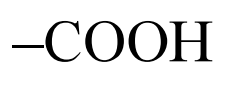
The formula of functional group for aldehyde is :
-
(A)
-
(B)
-
(C)
-
(D)
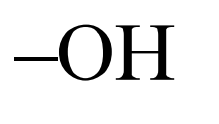
The functional group for aldehyde is represented as -CHO, where a carbon atom is double bonded to an oxygen atom and single bonded to a hydrogen atom. This group attaches to the carbon chain by replacing one hydrogen atom. This is evident from the example of propanal, which has the aldehyde group (-CHO) at the end of the chain.
When an element ‘X’ reacts with water, it starts floating. Identify the element ‘X’ :
When calcium reacts with water, it produces calcium hydroxide and hydrogen gas. The bubbles of hydrogen gas formed stick to the metal surface, causing the metal to start floating on water. Potassium and sodium react violently with water and do not show this floating behavior. Iron does not react significantly with water. Therefore, the element 'X' is calcium.
Two statements are given, one labelled asAssertion (A) and the other as labelled as Reason (R). Select the correct answer to these questions from the codes (A), (B), (C) and (D) as given below :
Assertion (A) : Carbon shares its valence electrons with other atoms of carbon or with atoms of other elements.
Reason (R) : The shared electrons belong to the outermost shells of both the atoms and lead to both atoms attaining the noble gas configuration.
Assertion (A) is correct because carbon shares its valence electrons with other carbon atoms or atoms of different elements to form bonds. Reason (R) is also correct as the shared electrons belong to the outermost shells of both atoms involved in the bonding, enabling both atoms to achieve a stable noble gas electron configuration. Hence, Reason (R) correctly explains Assertion (A).
A convex lens of focal length 15 cm, is forming a real image. If the size of image is same as the size of object, then position of object and position of image will be, respectively :
For a convex lens, when the size of the image is the same as the size of the object and the image is real, the object is placed at twice the focal length (2F) from the lens. Given the focal length f = 15 cm, 2F = 30 cm. The object position is therefore at –30 cm (object distances are taken negative in lens formula convention for real objects in front of the lens), and the real image is formed at +30 cm on the other side of the lens. Hence, the object is at –30 cm and the image is at +30 cm, with both sizes being equal.
two statements are given, one labelled as Assertion (A) and the other as labelled as Reason (R). Select the correct answer to this question from the codes (A), (B), (C) and (D) as given below :
Assertion (A) : When rays of white light pass through a prism, on emerging they give spectrum of seven colours.
Reason (R) : It is due to the scattering of light that red light bends minimum and violet light bends the maximum.
Assertion (A) is true because when white light passes through a prism, it splits into seven colours forming a spectrum. However, Reason (R) is not correct because this bending is not due to scattering of light but due to refraction and dispersion. Different colours bend by different amounts in the prism because they have different wavelengths and refractive indices; red light bends the least and violet light bends the most due to this difference in refraction, not scattering.
Section C
What is the function of diaphragm in human respiratory system? Where is it present in human body?
(b) It is present below the lungs, forming the floor of the chest cavity in the human body.
State two differences between the act of chewing food and salivation on sight of food.
(b) Chewing involves movement of teeth and tongue to mix food with saliva, whereas salivation is the secretion of saliva without any food being present in the mouth.
State two differences between pollination and fertilization.
Difference 2: Pollination is a physical process and occurs before fertilization, whereas fertilization is a biological process that leads to seed formation.
Draw a neat diagram to show germination of pollen on the female reproductive part of the flower. Name and label only the following parts:
(a) The part that receives the pollen grain
(b) The structure that carries the male germ cell to reach the female germ cell
Explanation: (a) The Stigma is the top part of the female reproductive organ that receives pollen grains during pollination.
(b) The Pollen tube is a tubular structure that grows from the pollen grain through the style to carry the male germ cell to the female germ cell for fertilization.
(a) What are amphoteric oxides ?
(b) Categorise the following based on their nature :
ZnO, Na₂O, CO₂
(b) Based on their nature: ZnO is an amphoteric oxide because it reacts with both acids and bases; Na₂O is a basic oxide as it reacts with acids to form salt and water; CO₂ is an acidic oxide as it reacts with bases to form salt and water.
The given figure shows image formation by a lens. Analyse the figure and answer the following questions :
(a) What is the type of lens used for image formation in the given ray diagram ?
(b) If the real image is formed at a distance of 30 cm from the lens and the size of image is twice the size of the object, then where was the object placed ?
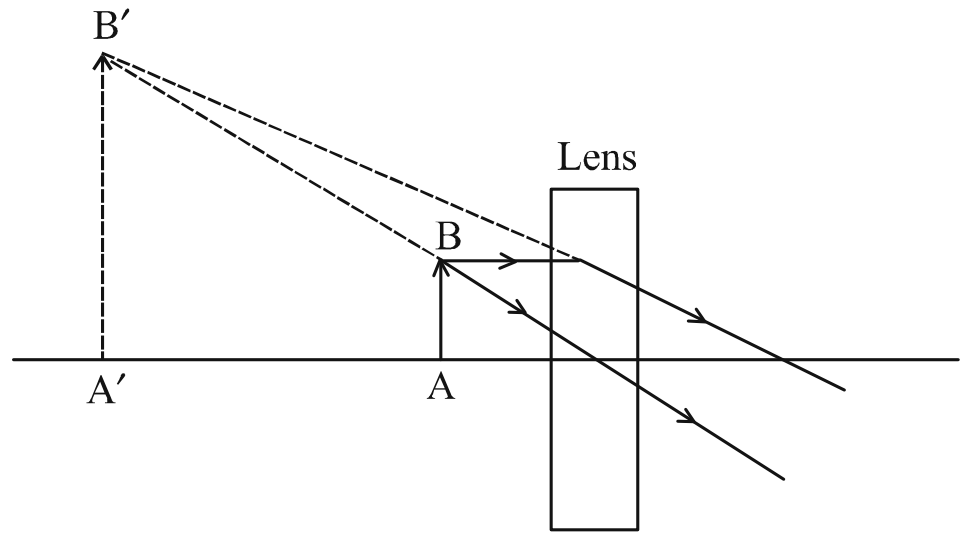
(b) Given, image distance v = +30 cm, magnification m = -2 (since image is real and inverted, magnification is negative and size is twice the object)
Using magnification formula, m = v / u, so u = v / m = 30 / -2 = -15 cm.
Therefore, the object was placed 15 cm in front of the lens. This distance is less than twice the focal length which means the object lies between the focal length and 2f of the lens, forming a real, inverted and magnified image.
The resistance of a wire of 0.01 cm radius and 1.0 cm length is 7 Ω. Calculate its resistivity.
Therefore, the resistivity of the wire is approximately 2.2 * 10-5 Ω m.
An electric heater is rated 220 V; 11 A. Calculate the power consumed if the heater is operated at 200 V.
The power consumed at rated voltage P = V * I = 220 * 11 = 2420 W
Resistance of heater coil, R = V / I = 220 / 11 = 20 Ω
When operating at 200 V, current I = V / R = 200 / 20 = 10 A
Power consumed at 200 V, P = V * I = 200 * 10 = 2000 W
Therefore, the power consumed by the heater at 200 V is 2000 W.
Section D
Given below is a pyramid showing various trophic levels in an ecosystem.
(a) From the organisms listed below, identify which one is to be placed at which trophic level?
Deer, Grass, Lion, Snake, Rabbit
(b) Discuss the reason why primary consumers will have more energy as compared to secondary consumers?
(c) Why is the base of the pyramid broad?
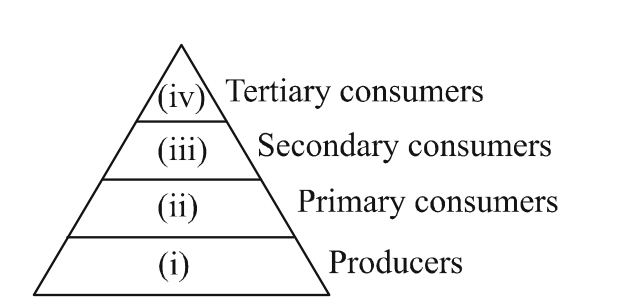
Producers - Grass (makes its own food through photosynthesis)
Primary consumers - Deer and Rabbit (they eat grass)
Secondary consumers - Snake (eats primary consumers)
Tertiary consumers - Lion (eats secondary consumers)
(b) Primary consumers have more energy than secondary consumers because energy is lost at each trophic level. When one organism eats another, about 90% of energy is used in life processes or lost as heat, so only about 10% energy is passed on. Hence, primary consumers receive more energy from producers than secondary consumers receive from primary consumers.
(c) The base of the pyramid is broad because it represents producers which have the highest amount of energy and biomass. They form the foundation of the ecosystem by producing energy through photosynthesis and supporting all other trophic levels above them. As energy decreases at each higher level, the pyramid narrows.
Give differences between the following:
(a) Nephron and neuron
(b) Sensory nerve and motor nerve
(c) Consumers and decomposers
(b) Sensory nerve carries messages from sense organs to the brain or spinal cord. Motor nerve carries messages from the brain or spinal cord to muscles or glands to produce response.
(c) Consumers are animals that depend on others for food, such as herbivores, carnivores, and omnivores. Decomposers are organisms like fungi and bacteria that break down dead plants and animals, returning nutrients to the soil.
(a) Name the substance oxidised and reduced in the following reaction :
ZnO + C → Zn + CO
(b) Balance the following chemical reaction :
Pb(NO₃)₂ + KI → PbI₂ + KNO₃
(c) Give one example each of electrolytic decomposition and decomposition by sunlight.
(b) Balancing the reaction Pb(NO₃)₂ + KI → PbI₂ + KNO₃:
We balance iodine and potassium first. 1 Pb(NO₃)₂ reacts with 2 KI to form 1 PbI₂ and 2 KNO₃. So, the balanced equation is:
Pb(NO₃)₂ + 2 KI → PbI₂ + 2 KNO₃
(c) Examples:
Electrolytic decomposition: Decomposition of water by passing electric current to obtain hydrogen and oxygen gases, reaction is 2 H₂O (l) → 2 H₂ (g) + O₂ (g).
Decomposition by sunlight: Decomposition of silver chloride (AgCl) on exposure to sunlight forming silver and chlorine gas, reaction is 2 AgCl (s) → 2 Ag (s) + Cl₂ (g).
Explain chlor-alkali process with chemical equation. Name the products formed at anode and cathode.
Write the preparation of following compounds with balanced chemical equation :
(i) Baking soda
(ii) Bleaching powder
(iii) Plaster of Paris
Sodium carbonate solution is passed through carbon dioxide gas which results in the formation of baking soda.
Na2CO3 + CO2 + H2O → 2NaHCO3
(ii) Preparation of Bleaching Powder
Bleaching powder is prepared by passing chlorine gas over dry slaked lime (Ca(OH)2).
2Cl2 + 2Ca(OH)2 → CaOCl2 + CaCl2 + 2H2O
(iii) Preparation of Plaster of Paris
Plaster of Paris is prepared by heating gypsum (calcium sulfate dihydrate) to about 150 degrees Celsius to remove water of crystallization.
CaSO4·2H2O (heated) → CaSO4·½H2O + 1½ H2O
A person is unable to read a book placed closer than 1 metre from his eyes. Identify the defect of vision in his eyes. Draw the ray diagrams to show the defect of vision and its correction.
(a) The defect of vision is Hypermetropia or Far-sightedness. A person with hypermetropia cannot see nearby objects clearly because the near point is farther than normal (greater than 25 cm).
(b) Reason: This happens if the eyeball is too short or the eye lens has less curvature, so the image of a nearby object is formed behind the retina instead of on it.
(c) Correction: This defect can be corrected by using a convex lens (converging lens) which converges the rays before they enter the eye, so that image forms on the retina and the person can see nearby objects clearly.
Ray diagram for defect: Rays from a nearby object focus behind the retina.
Ray diagram for correction: Convex lens converges rays to focus on the retina.
The convex lens provides the additional focusing power needed for the eye to see nearby objects clearly.
(a) Describe an activity to show that a current carrying conductor, placed in an external magnetic field experiences a force.
(b) Imagine that you are sitting in a chamber with your back to one wall. An electron beam, moving horizontally towards the front wall from the back wall, is deflected by a strong magnetic field to your right side. Find the direction of the magnetic field.
(b) Given that the electron beam is moving from the back wall towards the front wall and is deflected to your right side, use the right-hand rule for force on a moving charge. Since electrons carry a negative charge, the force direction is opposite to that predicted by the right-hand rule for positive charges. Point your fingers in the direction of the velocity (frontwards), the force is to the right. To get to the force direction, your palm faces the force direction for a positive charge, but electrons are negative so force is opposite to that. Hence, the magnetic field direction will be vertically downward. Thus, the magnetic field is directed vertically downward (from top to bottom).
(a) The pattern of magnetic field due to a current carrying wire depends upon the shape made by that wire. Justify.
(b) A current carrying straight wire AB is shown in the given figure. Out of X, Y and Z on which point will the strength of magnetic field be maximum and why?
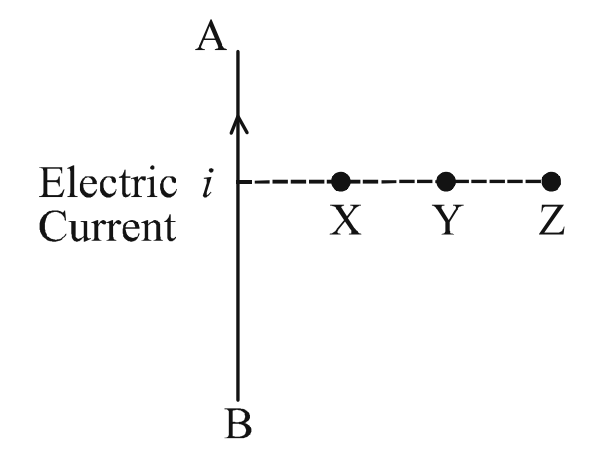
(b) The magnetic field strength is maximum at point X, which is closest to the current carrying wire AB. This is because magnetic field strength around a straight current carrying conductor is inversely proportional to the distance from the wire. Hence, the closer the point is to the wire, the stronger the magnetic field at that point.
Section E
Given below are certain situations. Analyse each and describe its possible impact :
(i) A population of bacteria living in temperate waters whose temperature increased by global warming.
(ii) The sperm encounters the egg when it reaches the oviduct in human females.
(iii) Self pollination does not occur in a flower that contains only pistil.
(iv) Egg does not get fertilised in a human female.
(v) When the seed is placed under appropriate condition of water and air in the soil?
(ii) The sperm encountering the egg in the oviduct is vital for fertilisation in humans. This meeting allows the sperm to penetrate the egg, resulting in fertilisation which initiates the development of a new organism.
(iii) A flower having only pistil cannot undergo self pollination because it lacks stamens which produce pollen. Hence, no pollen is available to fertilise the ovules, and the flower must rely on cross-pollination for reproduction.
(iv) If the egg does not get fertilised in a human female, pregnancy will not occur and the egg along with the uterine lining is shed during menstruation. This means no new organism is formed.
(v) When a seed is placed under appropriate conditions of water and air in the soil, it absorbs water causing it to swell and activates enzymes that start germination. Air provides oxygen necessary for respiration, supplying energy needed for the growth of the embryo inside the seed.
Given below are certain situations. Analyse and describe what would happen when :
(i) Spores are liberated from blob-like structures of the bread mould?
(ii) Leaves of bryophyllum fall on wet soil?
(iii) A pollen from different species land on the stigma of totally unrelated species?
(iv) Copper-T is placed in the uterus of a human female?
(v) Spirogyra breaks into smaller fragments upon maturation?
(ii) When leaves of bryophyllum fall on wet soil, they develop adventitious buds at their margins which grow into new plants. This is an example of vegetative propagation by leaf buds.
(iii) If pollen from a different species lands on the stigma of a totally unrelated species, fertilisation does not occur because the pollen will not germinate or grow a pollen tube on the stigma of an unrelated species, preventing cross-species hybridisation.
(iv) When Copper-T is placed in the uterus of a human female, it acts as a contraceptive device by preventing fertilisation. It creates an environment that is toxic to sperms and also stops implantation of the fertilised egg in the uterine lining.
(v) When Spirogyra breaks into smaller fragments upon maturation, each fragment can grow into a new Spirogyra filament. This is a method of asexual reproduction called fragmentation.
(i) Give reasons for the following :
(I) Covalent compounds are poor conductor of electricity.
(II) Soap does not form lather in hard water.
(III) Carbon shows catenation but silicon does not.
(ii) Write chemical equations for the following :
(I) Oxidation of ethanol by acidified K₂Cr₂O₇.
(II) Hydrogenation of ethene.
(I) Covalent compounds are poor conductors of electricity because they do not have free ions or charged particles to carry electric current in solid or molten state.
(II) Soap does not form lather in hard water because hard water contains calcium and magnesium ions which react with soap to form insoluble compounds called scum, preventing lather formation.
(III) Carbon shows catenation due to strong C-C bonds and the ability to form stable chains, whereas silicon does not show catenation extensively because Si-Si bonds are weaker and silicon's larger size reduces bond strength.
(ii) Write chemical equations:
(I) Oxidation of ethanol by acidified K₂Cr₂O⁷:
C2H5OH + [O] → CH3CHO + H2O (Ethanol to Ethanal)
CH3CHO + [O] → CH3COOH (Ethanal to Ethanoic acid)
(Overall reaction): C2H5OH + 2[O] → CH3COOH + H2O
(II) Hydrogenation of ethene:
C2H4 + H2 → C2H6
(Ethene reacts with hydrogen in the presence of nickel catalyst to form ethane)
Mohan heated ethanol with a compound 'X' in the presence of a few drops of conc. H₂SO₄, and observed that a sweet smelling compound 'Y' is formed. When 'Y' is treated with sodium hydroxide it gives back ethanol and a compound 'Z'.
(i) Identify 'X', 'Y' and 'Z'.
(ii) Write the role of conc. H₂SO₄ in the reaction.
(iii) Write the chemical equations involved and name the reactions.
X is ethanoic acid (CH3COOH).
Y is ethyl ethanoate (CH3COOC2H5), an ester with a sweet smell.
Z is sodium ethanoate (CH3COONa).
(ii) Role of concentrated H2SO4:
Conc. H2SO4 acts as a catalyst and dehydrating agent in the esterification reaction. It helps remove water formed during the reaction, shifting the equilibrium towards ester formation and increases the rate of reaction.
(iii) Chemical equations and reaction names:
1. Esterification reaction:
CH3COOH + C2H5OH conc. H2SO4⇌ CH3COOC2H5 + H2O
This reaction forms the ester Y (ethyl ethanoate).
2. Hydrolysis of ester (saponification):
CH3COOC2H5 + NaOH → CH3COONa + C2H5OH
The ester Y reacts with sodium hydroxide to give sodium ethanoate (Z) and ethanol.
Summary:
- Compound X: Ethanoic acid
- Compound Y: Ethyl ethanoate (sweet smelling ester)
- Compound Z: Sodium ethanoate
- Conc. H2SO4 acts as catalyst and dehydrating agent
- The reactions are esterification and saponification (alkaline hydrolysis).
(i) Due to change in length and area of cross-section of a conductor, resistance of conductor changes while resistivity does not change. Why ?
(ii) Conductors of electric toasters and electric iron are made of an alloy rather than a pure metal. Why ?
(iii) Define the S.I. unit of electric current.
(ii) Conductors of electric toasters and irons are made of alloys because alloys have higher resistivity and do not oxidise or burn easily at high temperatures. This makes them suitable for heating elements as they can withstand high heat without damage.
(iii) The S.I. unit of electric current is the ampere (A). One ampere is defined as the current which when flowing through a conductor produces a force of 2*10-7 newton per meter between two parallel conductors placed one meter apart in vacuum.
(i) How many bulbs of resistance 8 Ω each should be connected in parallel combination to draw a current of 2 A from a battery of 4 V ?
(ii) Name the device used for measuring electric current. How is it connected in a circuit ?
(iii) State Joule’s law of heating.
Total resistance, Rtotal = V / I = 4 / 2 = 2 Ω
For n bulbs connected in parallel: 1 / Rtotal = n / R
So, n = R / Rtotal = 8 / 2 = 4
Therefore, 4 bulbs should be connected in parallel.
(ii) The device used for measuring electric current is called an ammeter.
An ammeter is always connected in series with the component in the circuit so that the current flowing through the circuit also flows through the ammeter.
(iii) Joule’s law of heating states that the heat produced in a resistor is directly proportional to the square of the current flowing through the resistor, the resistance of the resistor, and the time for which the current flows.
Mathematically, H = I2 * R * t, where H is heat produced, I is current, R is resistance, and t is time.
Other Years — Science