CLASS 9 . SOCIAL SCIENCE . UNDERSTANDING SOCIETY INDIA AND BEYOND PART I . UNDERSTANDING SOCIAL-SCIENCE
Chapter 1 : Understanding Social Science
Ch 1
SOCIAL SCIENCE
CLASS 9
What is Social Science
Social Science is the systematic study of human society. It explores how people live together, how environments influence life, how governments function, how economies operate, and how the past and present shape the world. Unlike natural sciences that study the physical world, Social Science focuses on society, institutions, cultures, and human interactions. It helps us understand why events occur and how different aspects of life are interconnected.
Exam Questions
Q1: What does Social Science study?
A1: Social Science studies human society, including social relationships, institutions, cultures, governance, economy, and the interaction between people and their environment.
Q2: How is Social Science different from natural sciences?
A2: Natural sciences study the physical world, while Social Science focuses on human society, its institutions, cultures, and interactions.
Social Science in Everyday Life
Daily life depends on systems of governance, economic production, social cooperation, and the natural environment. From the materials used to build houses to the food we eat, transportation, education, and electricity, all are connected through social systems. Social Science helps us understand why people live in different types of settlements, why communities have diverse languages and traditions, how governments make decisions, and how environmental factors affect life.
Exam Questions
Q1: Give examples of how Social Science is connected to everyday life.
A1: Examples include understanding how food reaches our plates, how roads are planned, how schools are shaped by policies, and how electricity is supplied.
Q2: Why do some people live in cities while others live in villages?
A2: Settlement patterns depend on historical, geographical, economic, and social factors studied by Social Science.
Understanding Society through Time and Traditions
Societies have evolved over thousands of years from early human communities dependent on nature to complex civilizations with agriculture, governance, and culture. Indian knowledge traditions valued inquiry, observation, and reasoning, exemplified by concepts like Pañchamahābhūtas (five great elements) and vasudhaiva kutumbakam (the world is one family). Early political thought linked governance with public welfare and ethical responsibility, as seen in the Arthaśāstra. Modern Social Science continues this legacy by studying how societies change and endure over time.
Exam Questions
Q1: What is the significance of the concept of Pañchamahābhūtas in Social Science?
A1: It explains the natural world as an interconnected system influencing human life, environment, and culture.
Q2: How did early Indian political thought view governance?
A2: Governance was linked to public welfare, ethical responsibility, and duties of rulers towards people.
Social Science as a Study of Disciplines
Social Science is a group of related disciplines that together provide a comprehensive understanding of society. The core disciplines in Grades 9–10 are Geography, History, Political Science, and Economics. Other fields like Sociology, Philosophy, Anthropology, and Psychology also contribute to understanding social relationships, ethics, and human behaviour.
Exam Questions
Q1: Name the four core disciplines of Social Science studied in Grades 9–10.
A1: Geography, History, Political Science, and Economics.
Q2: Why is Social Science considered a group of disciplines rather than a single subject?
A2: Because it studies different aspects of human life through various fields that together provide a holistic understanding of society.
Geography
Geography studies the location and distribution of places, materials, and people, and the relationships between human societies and their environment. It examines physical features of the Earth and human communities, focusing on interactions and influences over time. Geography uses tools like maps, globes, atlases, and Geographical Information Systems (GIS) to understand spatial and temporal perspectives.
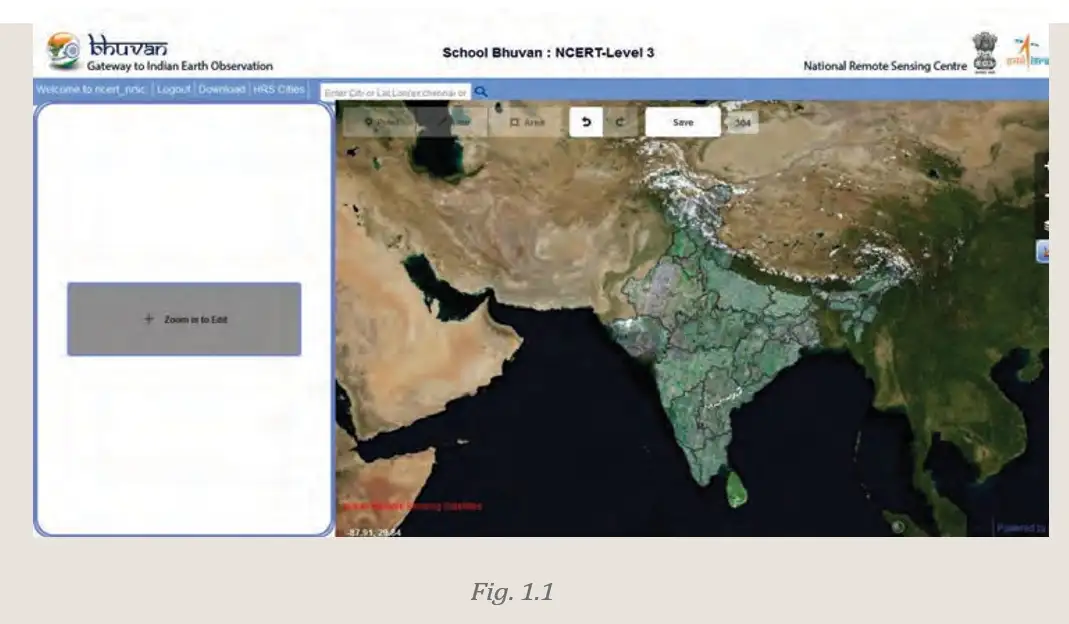
The Bhuvan portal is an Indian Earth observation platform that provides satellite images and maps to study geography and observe Earth’s surface.
Exam Questions
Q1: What does Geography study?
A1: Geography studies the Earth’s physical features, human communities, and their interactions, focusing on location, distribution, and relationships.
Q2: Name some tools used in Geography.
A2: Maps, globes, atlases, Geographical Information Systems (GIS), and infographics.
History
History studies the human past to understand experiences, values, and changes over time. It uses various sources such as archaeological remains, literary texts, genealogical records, folklore, and documents. Indian historical traditions include the itihāsa-purāṇa, which preserves cultural memory through stories. Modern historiography relies on empirical evidence and scientific methods like carbon dating and archaeology.
Exam Questions
Q1: What are some sources used in History?
A1: Archaeological remains, literary texts, genealogical records, folklore, oral traditions, and documents.
Q2: How does modern historiography differ from traditional historical methods?
A2: It relies more on empirical evidence and scientific methods to establish timelines and understand the past.
Literary Sources
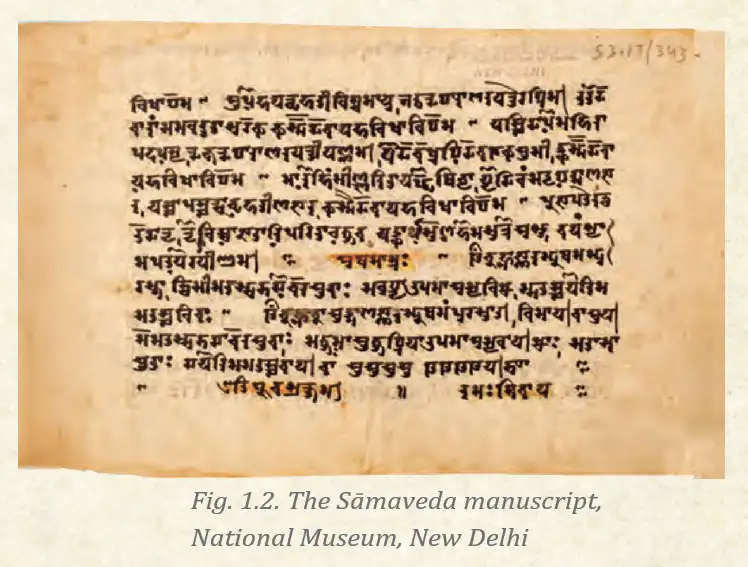
The Sāmaveda is an ancient Indian sacred text containing melodies and chants used in Vedic rituals, preserved as a historical document.

The Tirukkural is an ancient Tamil text offering ethical wisdom, preserved on palm-leaf manuscripts, reflecting ancient literary and moral traditions.
Exam Questions
Q1: What is the significance of literary sources in History?
A1: They provide cultural, religious, and ethical insights and preserve knowledge across generations.
Q2: Name two examples of literary sources mentioned.
A2: The Sāmaveda and the Tirukkural.
Archaeological Sources
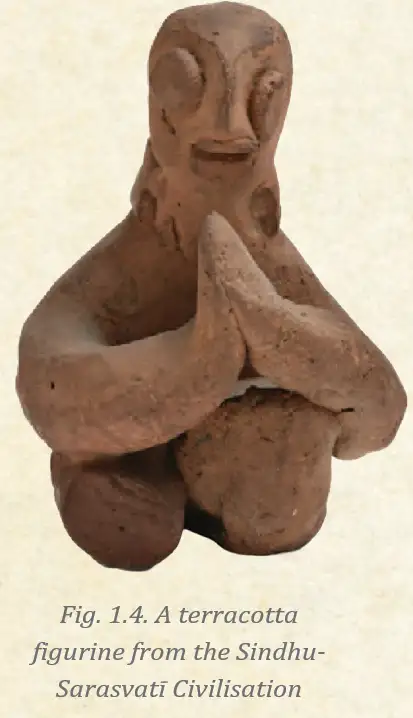
Terracotta figurines and other artefacts from ancient civilizations like the Indus Valley help us understand daily life, beliefs, and art.
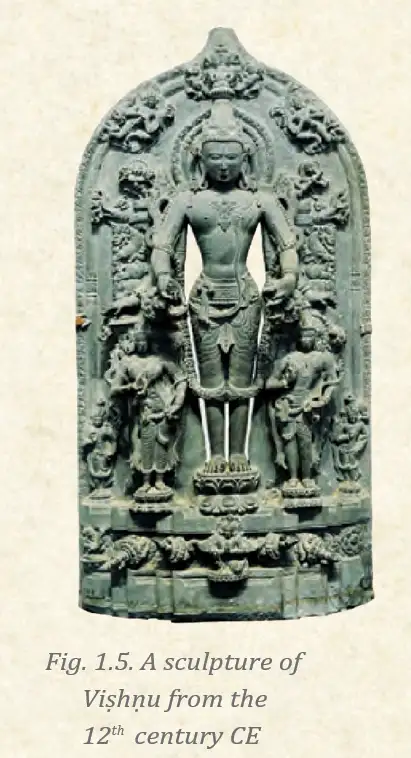
Stone sculptures, such as that of Vishnu from the 12th century CE, reflect religious and cultural traditions of ancient India.
Exam Questions
Q1: What do archaeological sources include?
A1: Monuments, architectural structures, artefacts, sculptures, and excavated sites.
Q2: How do archaeological sources help historians?
A2: They provide material evidence about past cultures, beliefs, and daily life.
Epigraphic Sources
Epigraphic sources are texts inscribed on durable materials like stone or metal, providing direct evidence about past events, rulers, and society.
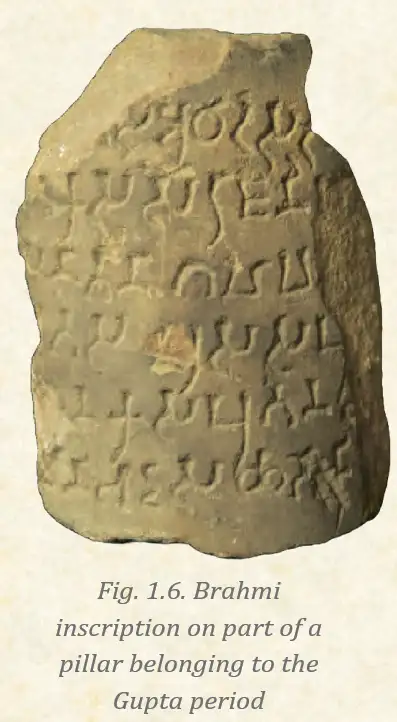
Stone pillars with inscriptions in Brahmi script from the Gupta period record royal orders and religious texts, helping historians learn about that era.
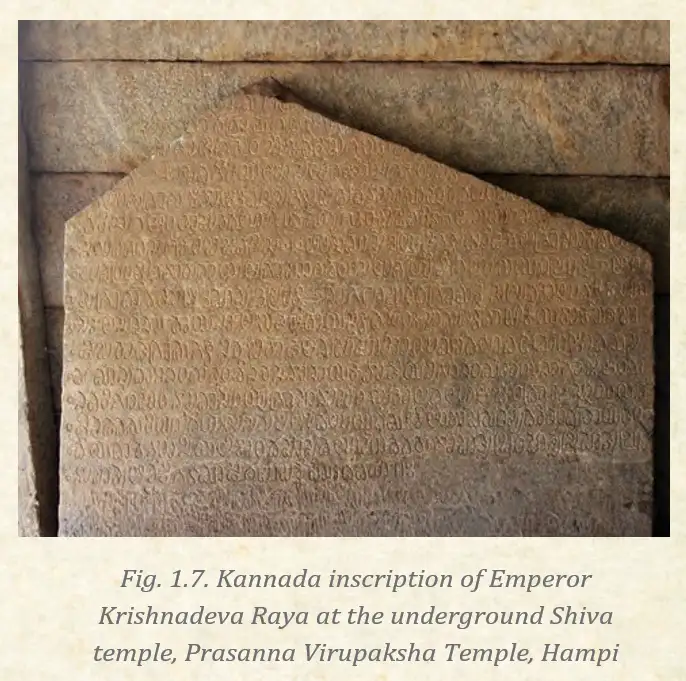
Inscriptions in Kannada from Emperor Krishnadeva Raya’s time found in temples provide information about culture, religion, and governance.
Exam Questions
Q1: What are epigraphic sources?
A1: Texts inscribed on durable materials that provide historical evidence.
Q2: How do inscriptions help historians?
A2: They offer direct information about rulers, administration, culture, and events.
Numismatic Sources
Numismatic sources include coins and currency that help study economy, chronology, rulers, trade, and culture through inscriptions and symbols.
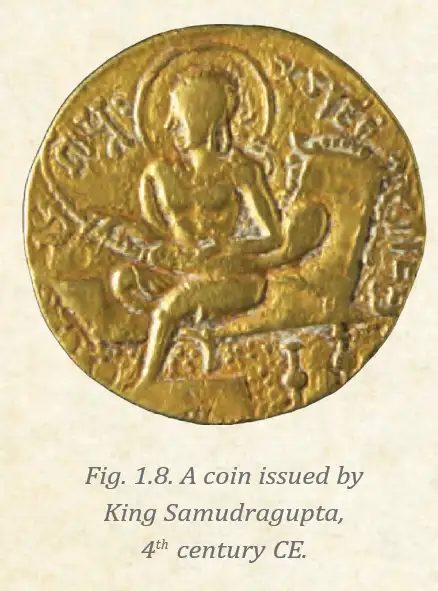
Gold coins from King Samudragupta’s era show wealth and royal power, helping understand history and culture.
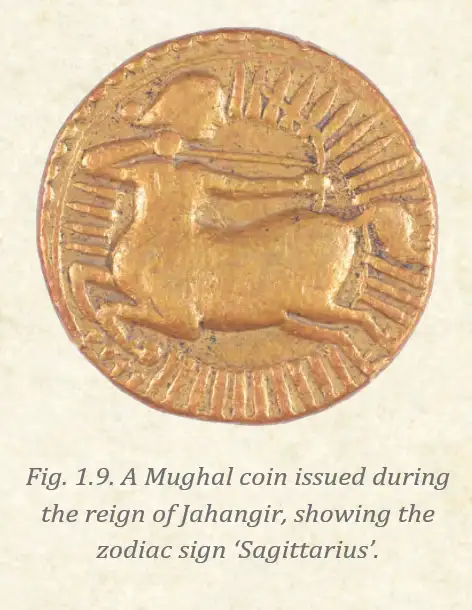
Mughal coins with zodiac symbols reflect cultural beliefs and astrology’s importance during that period.
Exam Questions
Q1: What information do numismatic sources provide?
A1: They provide insights into economy, rulers, trade, political boundaries, and culture.
Q2: Give examples of numismatic sources mentioned.
A2: Gold coins of King Samudragupta and Mughal coins with zodiac signs.
Political Science
Political Science studies governance, power distribution, decision-making, and institutions of the State. It examines constitutions, governments, social movements, and the exercise of power. Indian political thought links politics with moral duty, economic well-being, and ethical leadership, as seen in ancient texts like the Arthaśāstra. The Panchayati Raj system exemplifies grassroots democracy in India. Political Science helps understand modern democratic practices and governance challenges.
Exam Questions
Q1: What does Political Science study?
A1: It studies governance, power, decision-making, constitutions, governments, and political institutions.
Q2: How does ancient Indian political thought view power?
A2: Power is a responsibility linked to ethics, welfare, and duties of rulers.
Economics
Economics studies how individuals and societies use limited resources to meet needs. It examines production, exchange, distribution of goods and services, and decision-making by consumers, producers, and governments. India’s economic history includes a rich past, colonial disruptions, and post-independence development. Economics helps understand growth, poverty, equity, and sustainable development.
Exam Questions
Q1: What does Economics study?
A1: Economics studies production, distribution, and consumption of goods and services and resource allocation.
Q2: Why is economic development important for India?
A2: It helps improve incomes, reduce poverty, and ensure sustainable growth benefiting all sections of society.
Why Should We Study Social Science
Social Science helps us understand how societal systems like housing, water, roads, education, and markets develop and function. It explains cultural diversity and unity in India, promotes respect and cooperation, and prepares citizens for responsible participation in democracy. It also strengthens critical thinking about social challenges and connects past, present, and future for better decision-making.
Exam Questions
Q1: How does Social Science help in understanding cultural diversity?
A1: It explains differences as outcomes of geographical, historical, cultural, and economic factors, fostering respect and cooperation.
Q2: Why is Social Science important for democratic participation?
A2: It helps citizens understand government functions and make informed decisions in civic life.
The Future of Social Science
Social Science will continue to grow in importance as societies face rapid changes like urbanisation, environmental issues, migration, and globalisation. It equips citizens with skills to observe, question, analyse evidence, and recognise connections. Social Science will help address challenges such as climate change, sustainable development, social harmony, and responsible technology use, preparing informed and thoughtful citizens.
Exam Questions
Q1: What challenges will Social Science help address in the future?
A1: Climate change, sustainable development, social harmony, equitable resource use, and responsible technology use.
Q2: How does Social Science prepare citizens for the future?
A2: By developing skills to observe, question, analyse, and participate responsibly in society.
Secondary-Stage Social Science: Your Two-Year Learning Journey Grades 9–10
Social Science is a window into the world, helping students understand the past, present, and their role as responsible citizens. Over two years, students explore History, Geography, Political Science, and Economics, studying historical events, geographical influences, political systems, and economic processes. The curriculum encourages critical thinking, evidence analysis, and understanding of social diversity, democracy, and global connections.
Exam Questions
Q1: What are the main disciplines studied in Grades 9–10 Social Science?
A1: History, Geography, Political Science, and Economics.
Q2: How does studying Social Science help students?
A2: It helps them understand society, think critically, analyse evidence, and become responsible citizens.
Solved Examples
Example 1: Explain why Social Science is important in understanding everyday life.
Answer: Social Science explains how various systems like governance, economy, culture, and environment interact to shape daily life. It helps us understand the reasons behind settlement patterns, cultural diversity, and government decisions.
Example 2: Describe the role of archaeological sources in studying history.
Answer: Archaeological sources such as monuments, artefacts, and sculptures provide material evidence about past societies, their culture, beliefs, and daily life, helping historians reconstruct history.
Practice Set
Easy
- What is Social Science?
- Name two literary sources used in History.
- What does Geography study?
Moderate
- Explain the significance of the Arthaśāstra in Indian political thought.
- How do numismatic sources help historians?
- Why is economic development important for India?
Challenging
- Discuss how Social Science integrates different disciplines to provide a holistic understanding of society.
- Analyse the role of Social Science in addressing future challenges like climate change and sustainable development.
Answer Key
Easy
- Social Science is the systematic study of human society, its institutions, cultures, and interactions.
- The Sāmaveda and the Tirukkural.
- Geography studies the Earth’s physical features, human communities, and their interactions.
Moderate
- The Arthaśāstra is an ancient Indian text that discusses governance, administration, economic management, and duties of rulers, showing early systematic political thought.
- Numismatic sources provide information about economy, rulers, trade, political boundaries, and culture through coins and inscriptions.
- Economic development improves incomes, reduces poverty, and ensures sustainable growth benefiting all sections of society.
Challenging
- Social Science integrates disciplines like Geography, History, Political Science, and Economics to study different aspects of society, providing a comprehensive understanding of human life and social processes.
- Social Science equips citizens with skills to analyse evidence, understand complex issues, and participate responsibly in addressing challenges like climate change and sustainable development.
Quick Reference
- Social Science: Study of human society and its various aspects.
- Geography: Study of Earth’s physical features and human-environment interactions.
- History: Study of the human past using various sources.
- Political Science: Study of governance, power, and political institutions.
- Economics: Study of production, distribution, and consumption of goods and services.
- Sources of History: Literary, Archaeological, Epigraphic, Numismatic.
- Pañchamahābhūtas: Five great elements concept explaining natural world.
- Arthaśāstra: Ancient Indian treatise on governance and administration.
- Panchayati Raj: Local self-governance system in Indian villages.
Glossary
- Empirical evidence: Information collected by observation or experimentation.
- Genealogical records: Documents tracing family lineage and ancestry.
- Epigraphic source: Texts inscribed on durable materials like stone or metal.
- Numismatic source: Coins and currency used to study history and economy.
- Itihāsa-purāṇa: Indian tradition of preserving history through stories.
- Pañchamahābhūtas: Concept of five fundamental elements in Indian philosophy.
- Arthaśāstra: Ancient Indian text on politics and administration.
- Panchayati Raj: System of local self-government in Indian villages.