CLASS 9 . SOCIAL SCIENCE . UNDERSTANDING SOCIETY INDIA AND BEYOND PART I . ELECTIONS
Chapter 7 : Elections
Ch 7
SOCIAL SCIENCE
CLASS 9
Importance of Elections in Democracy
The Big Questions
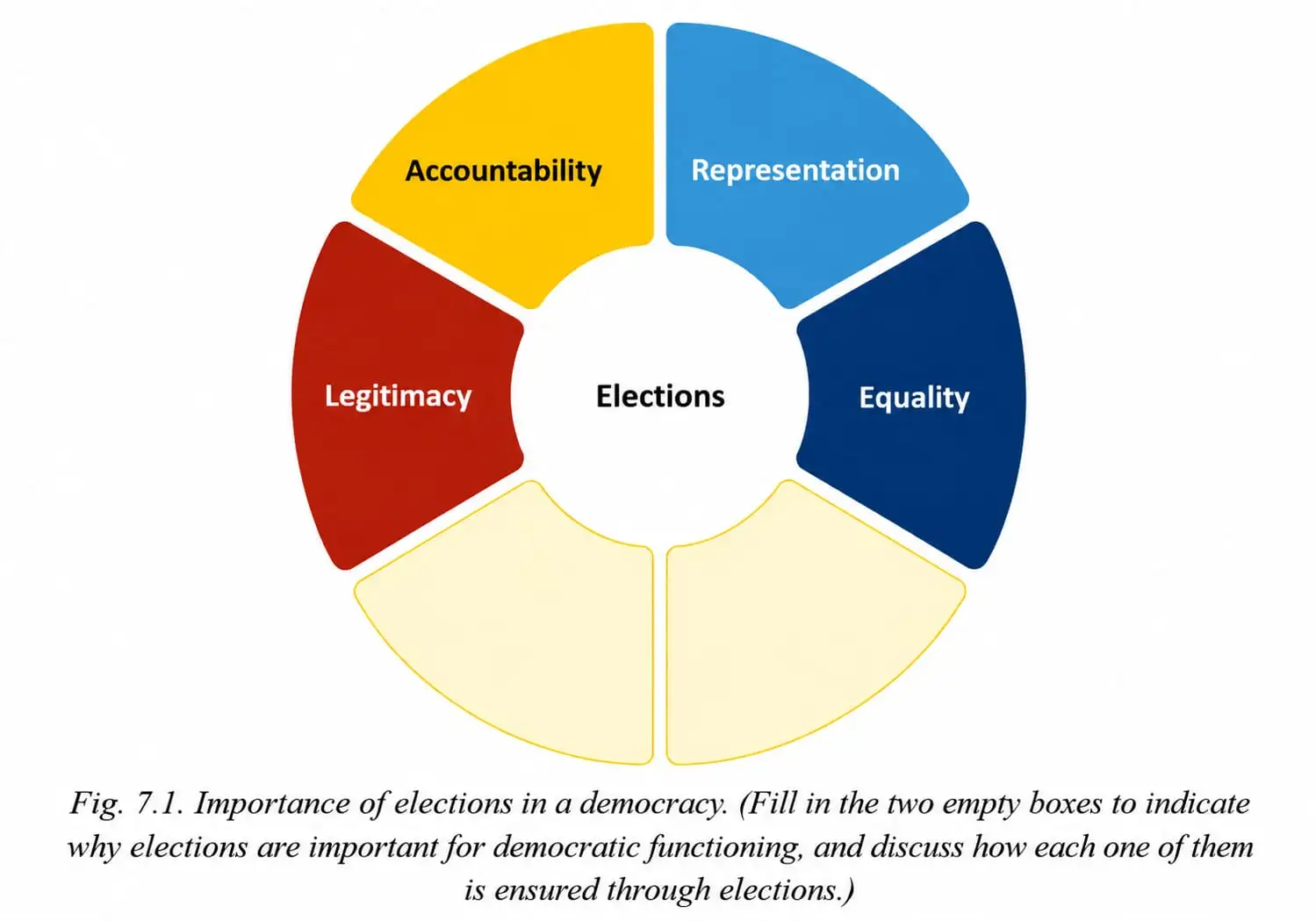
Elections are essential to a democratic system because they allow citizens to choose their representatives and hold them accountable. They ensure political representation, fairness, and legitimacy in governance. Institutions and laws play a crucial role in maintaining free and fair elections, while challenges such as misinformation and intimidation can affect the democratic process.
Direct and Indirect Elections
Direct elections involve citizens voting directly for their representatives, such as members of the Lok Sabha, Vidhan Sabha, and local bodies. Indirect elections involve elected representatives voting for leaders, such as the President, Vice President, and members of the Rajya Sabha.
Periodic Elections and Accountability
Periodic elections are vital to democracy as they ensure that representatives remain accountable to the people. Governments cannot continue beyond their term without seeking a fresh mandate. Elections provide the principal means for citizens to exercise their right to vote and hold leaders responsible.
Functions of Elections
- Accountability: Leaders must answer to the people and can be voted out.
- Representation: Leaders reflect the views of the people they serve.
- Equality: Every citizen has an equal chance to vote and be heard.
- Legitimacy: Elections give the government rightful authority to rule.
- Participation: Citizens take part in decision-making.
- Transparency: The electoral process is clear and fair.
Exam Question
Why are periodic elections important in a democracy?
Periodic elections ensure that elected representatives remain accountable to the people and that governments cannot continue without the people's mandate, thus upholding democratic principles.
India's Election Machinery
Electoral Process and Stakeholders
India's electoral process is vast and complex, requiring laws, coordination, and a robust system at national, state, and local levels. Key stakeholders include the Election Commission of India (ECI), political parties, civil society, media, and voters. The Constitution and parliamentary laws define their roles and powers.
Exam Question
What roles do different stakeholders play in India's election process?
The ECI manages the election process, political parties contest elections, civil society and media inform and monitor, and voters participate by casting their votes, ensuring a democratic process.
Electoral Systems in India
First-Past-The-Post and Proportional Representation
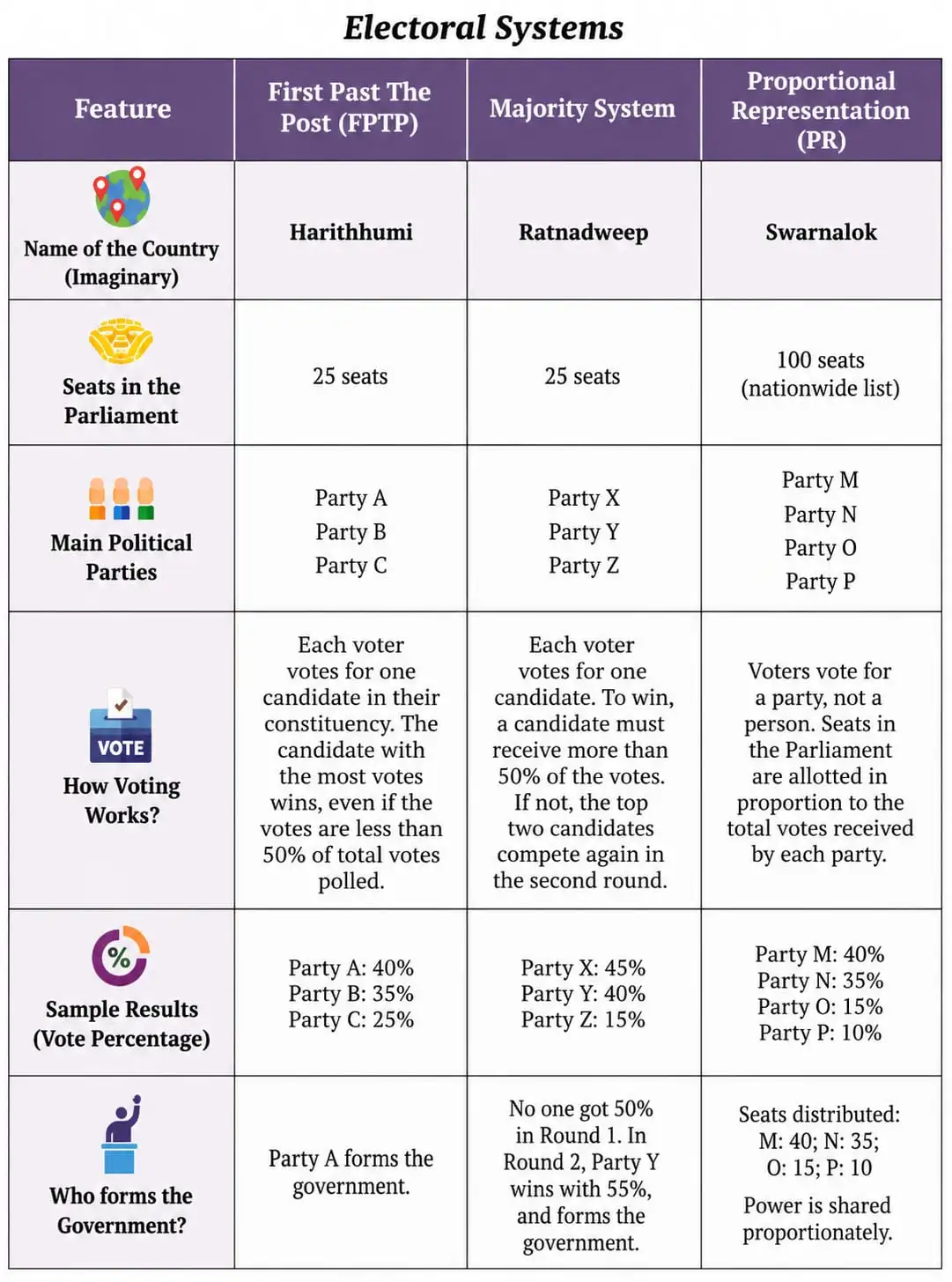
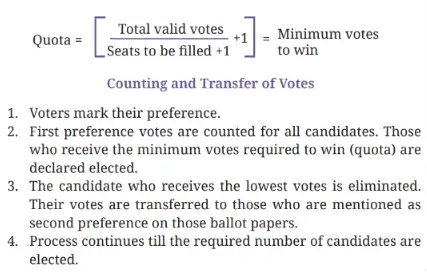
India uses the First-Past-The-Post (FPTP) system for Lok Sabha and Vidhan Sabha elections, where the candidate with the most votes wins. The Rajya Sabha, President, and Vice President elections use proportional representation with a single transferable vote system.
Bicameral Legislatures
Some states have a bicameral legislature with the Vidhan Parishad (Legislative Council) elected through proportional representation and the Vidhan Sabha (Legislative Assembly) elected through FPTP.
Exam Question
What is the difference between the First-Past-The-Post system and the Proportional Representation system?
In FPTP, the candidate with the most votes wins the seat, even without a majority. In Proportional Representation, seats are allocated based on the percentage of votes each party receives, often using a single transferable vote system.
Major Election Laws in India
The Representation of the People Acts
The Representation of the People Act, 1950, deals with seat allocation, delimitation, and electoral rolls. The Representation of the People Act, 1951, covers nomination, campaigning, voting procedures, and dispute resolution. The Presidential and Vice-Presidential Act, 1952, governs elections for these offices.
Electoral Offences and Corrupt Practices
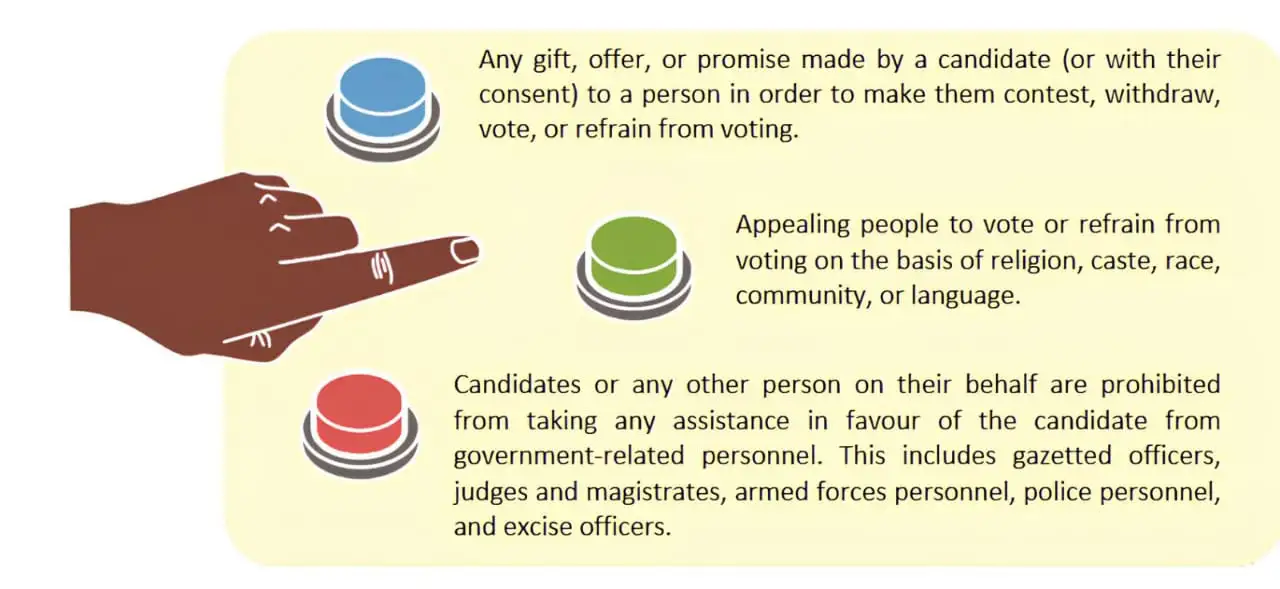
The 1951 Act lists offences such as giving gifts to influence votes, appealing on religious or caste grounds, and misuse of government officials during elections.
Exam Question
What are some corrupt practices prohibited during elections?
Prohibited practices include giving gifts to influence voters, appealing to voters based on religion or caste, and using government officials to influence election outcomes.
Delimitation Commission
Purpose and Function
Delimitation adjusts the boundaries of parliamentary and assembly constituencies based on population changes to ensure equal representation. Article 82 mandates the formation of the Delimitation Commission. India has had four commissions in 1952, 1963, 1973, and 2002.
Exam Question
Why is delimitation important in elections?
Delimitation ensures that each elected representative represents approximately the same number of people, maintaining fairness in political representation.
Election Commission of India
Constitutional Role and Functions
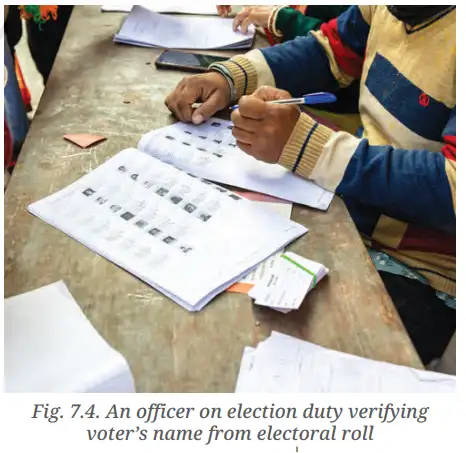
The ECI is an autonomous constitutional body responsible for supervising, directing, and controlling elections to the Parliament, State Legislatures, and offices of the President and Vice President. It prepares electoral rolls, conducts Special Intensive Revision, registers political parties, allocates symbols, and decides election schedules.
Exam Question
What are the key functions of the Election Commission of India?
The ECI prepares and updates electoral rolls, schedules elections, registers political parties, allocates election symbols, and ensures free and fair elections.
Political Parties
Role in Democracy
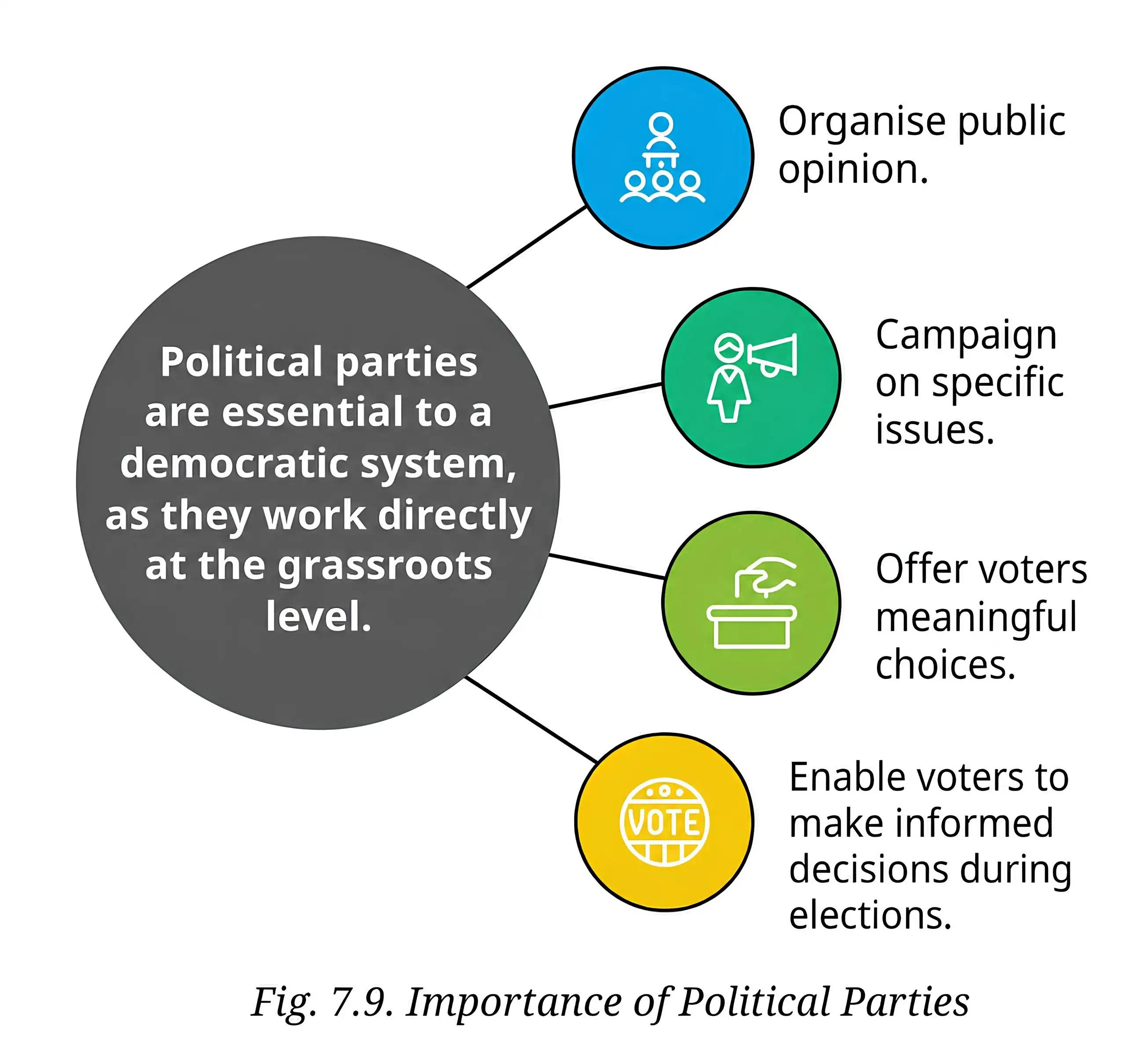
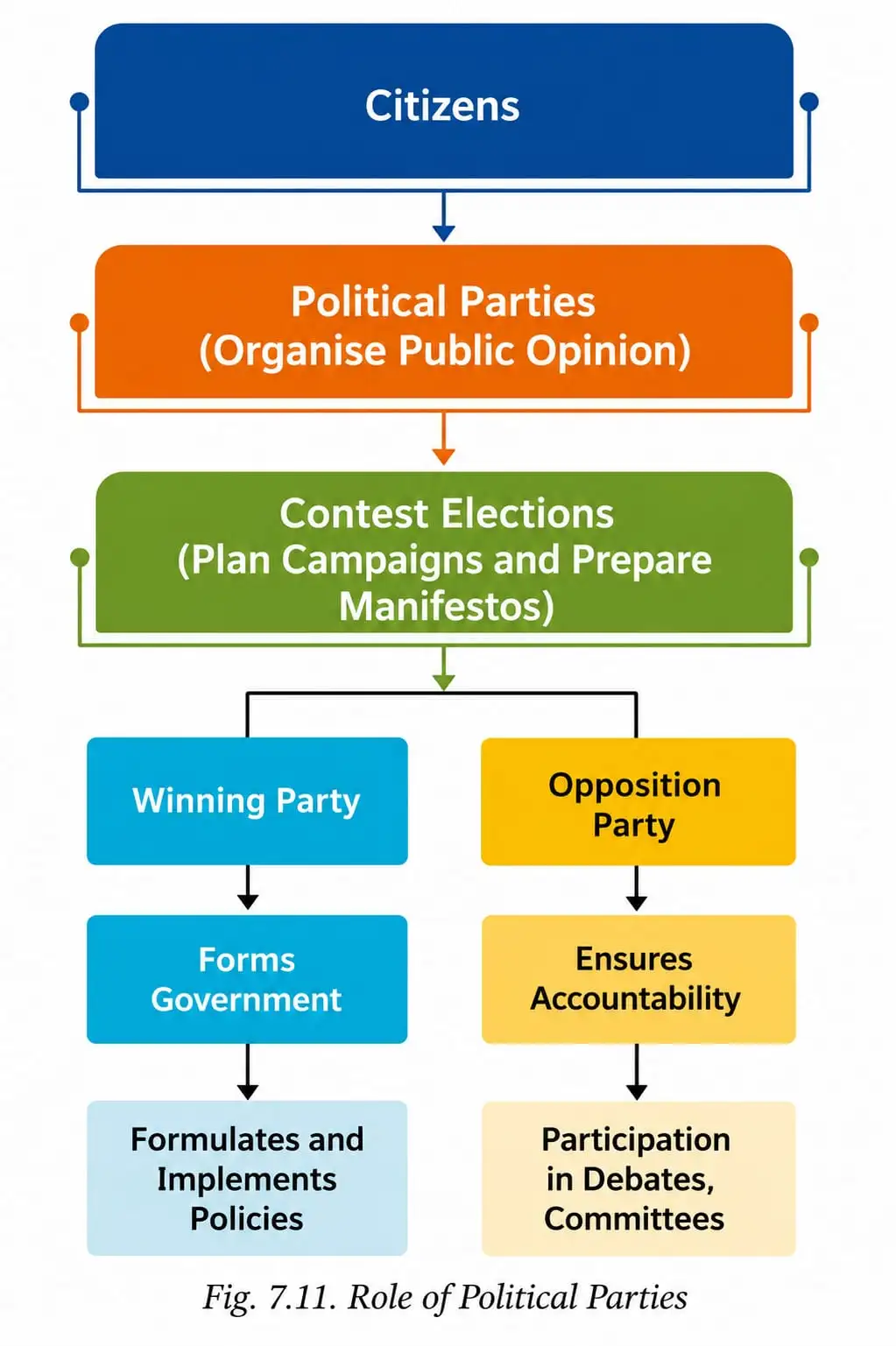
Political parties organize public opinion, campaign on issues, offer voters choices, and help voters make informed decisions. They present policies and manifestos during elections and play a key role in governance and accountability.
Multi-Party System and Defection
India has a multi-party system reflecting its diversity. Defection refers to elected members leaving their party, which can destabilize governments. The Anti-Defection Law (1985) prevents such practices by disqualifying defectors.
Recognition of Political Parties
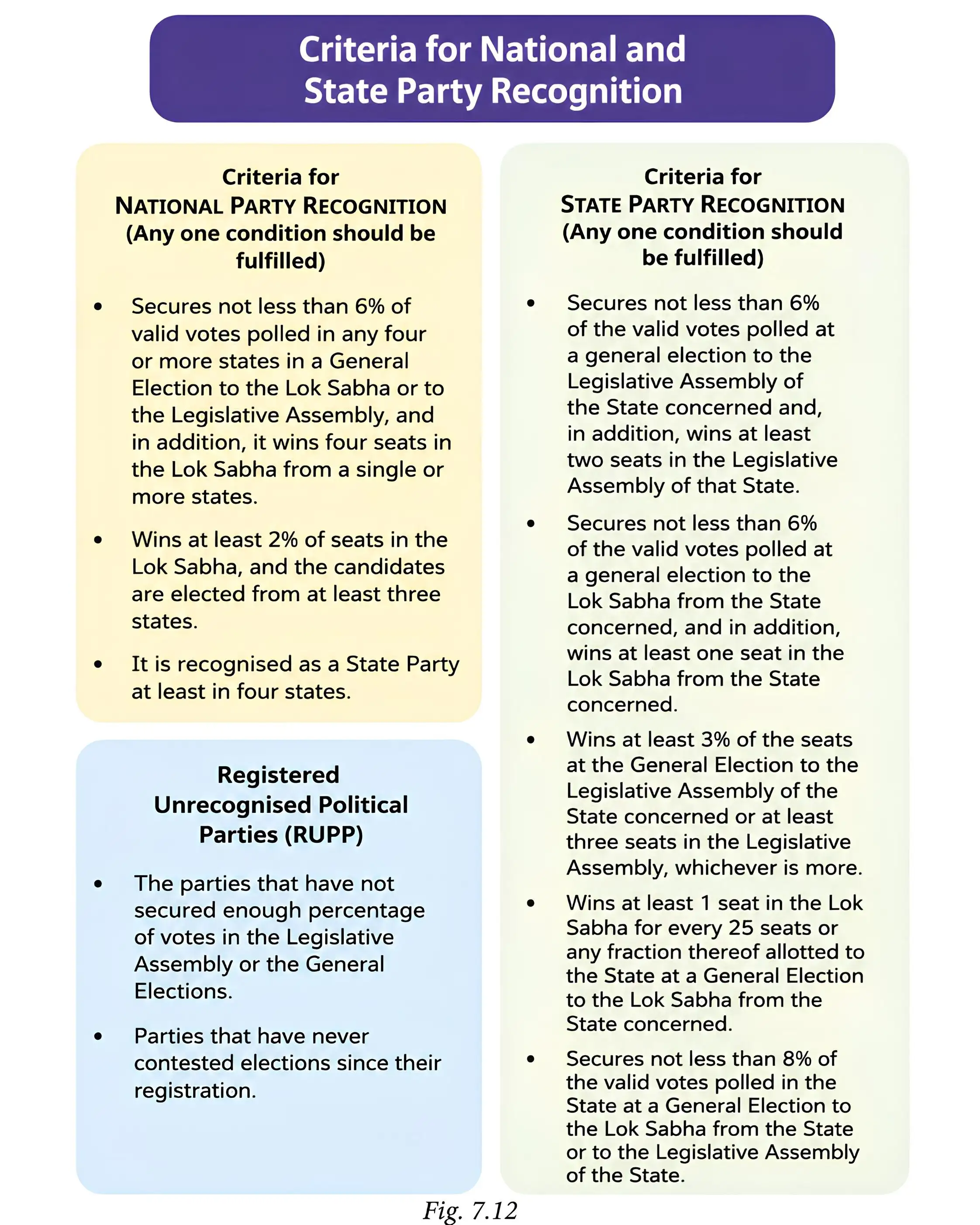
The ECI recognizes national and state parties based on vote share and seats won. Registered Unrecognised Political Parties (RUPP) have limited privileges.
Exam Question
What is the purpose of the Anti-Defection Law?
The Anti-Defection Law aims to prevent elected members from switching parties after elections, ensuring political stability and party discipline.
Challenges to Free and Fair Elections
Common Challenges
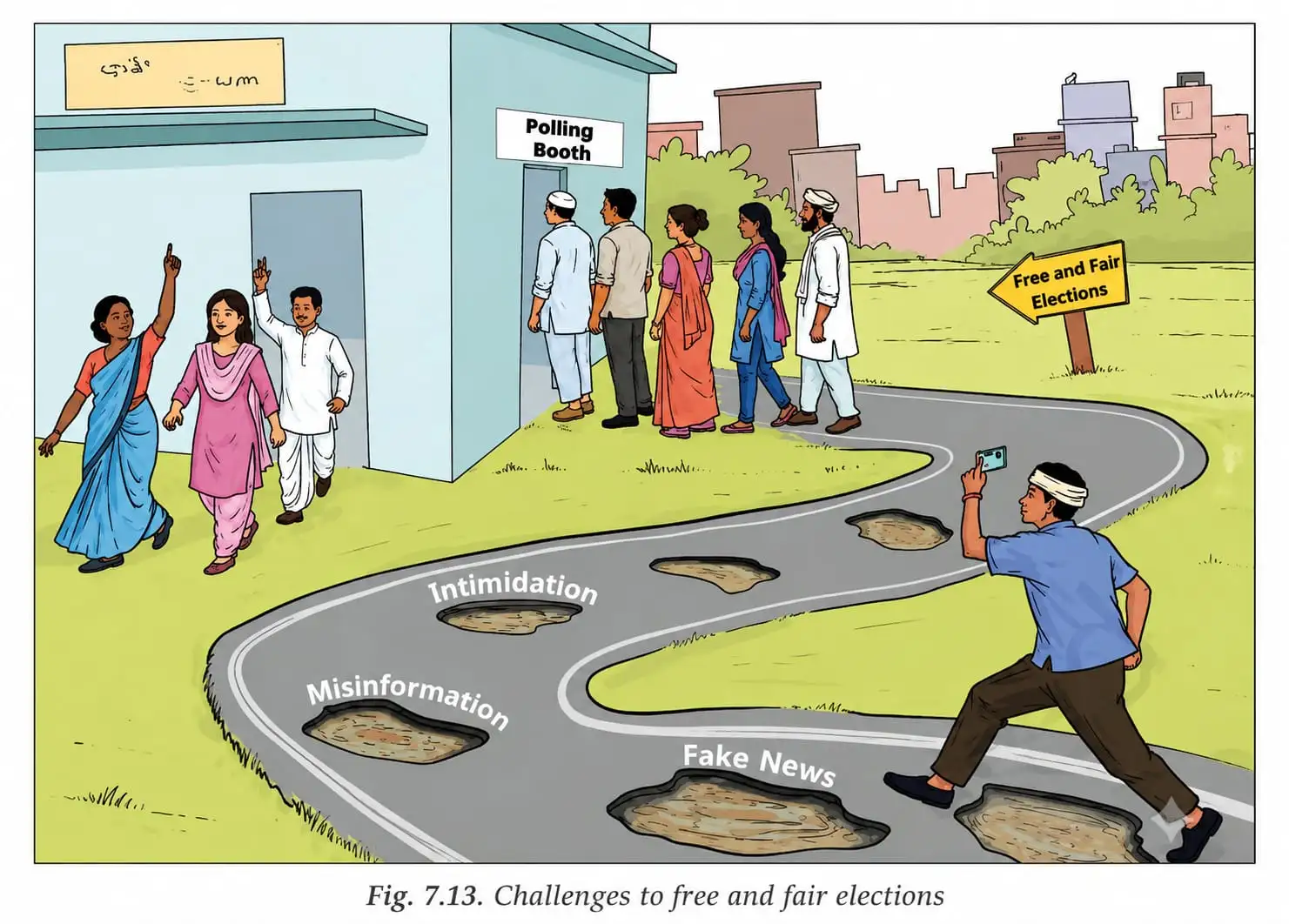
Challenges include misinformation, fake news, intimidation, and accessibility issues. These can undermine the fairness and inclusiveness of elections.
Measures to Ensure Fairness
The ECI uses laws, the Model Code of Conduct, Electronic Voting Machines (EVMs), Voter Verifiable Paper Audit Trail (VVPAT), and awareness campaigns to address challenges and maintain election integrity.
Exam Question
How does the Election Commission of India ensure free and fair elections?
The ECI enforces election laws, monitors campaigns, uses technology like EVMs and VVPAT, conducts voter awareness programs, and takes action against violations to ensure elections are free and fair.
Solved Examples
Example 1
Question: What is the significance of the Representation of the People Act, 1951?
Answer: It regulates the conduct of elections, including nomination, campaigning, voting procedures, and dispute resolution, ensuring transparency and fairness.
Example 2
Question: Explain the role of the Election Commission of India in maintaining democracy.
Answer: The ECI supervises elections, prepares electoral rolls, registers parties, schedules elections, and ensures free and fair voting, thus upholding democratic principles.
Practice Set
Easy
- What is a direct election?
- Name two offices elected through indirect elections in India.
- What is the main function of the Election Commission of India?
Moderate
- Describe the First-Past-The-Post electoral system.
- What are the main provisions of the Representation of the People Act, 1950?
- Explain the role of political parties in elections.
Challenging
- Discuss the importance of delimitation in ensuring fair representation.
- Analyze the impact of the Anti-Defection Law on political stability.
- Evaluate the challenges faced by the Election Commission in conducting free and fair elections in India.
Answer Key
Easy
- Direct election is when citizens vote directly for their representatives.
- President and Vice President are elected through indirect elections.
- The Election Commission of India conducts and supervises elections.
Moderate
- FPTP is a system where the candidate with the most votes wins the seat.
- The 1950 Act deals with seat allocation, delimitation, and electoral rolls.
- Political parties organize public opinion, present policies, and help voters make informed choices.
Challenging
- Delimitation ensures equal population representation in constituencies.
- The Anti-Defection Law prevents elected members from switching parties, promoting stability.
- The ECI faces challenges like misinformation, large voter base, and diverse regions but uses laws and technology to maintain fairness.
Quick Reference
- Direct Elections: Citizens vote directly for representatives.
- Indirect Elections: Representatives elect leaders.
- First-Past-The-Post: Candidate with most votes wins.
- Proportional Representation: Seats allocated based on vote percentage.
- Representation of the People Act: Laws governing elections.
- Delimitation Commission: Adjusts constituency boundaries.
- Election Commission of India: Conducts and supervises elections.
- Anti-Defection Law: Prevents party switching by elected members.
Glossary
- Accountability: The responsibility of elected leaders to answer to the people.
- Delimitation: The process of redrawing constituency boundaries based on population.
- Direct Election: Election where citizens vote directly for candidates.
- Election Commission of India: Constitutional body managing elections.
- First-Past-The-Post: Electoral system where the highest vote-getter wins.
- Indirect Election: Election where representatives elect leaders.
- Political Party: An organized group contesting elections to form government.
- Proportional Representation: Electoral system allocating seats based on vote share.
- Representation of the People Act: Laws regulating elections in India.
- Voter Verifiable Paper Audit Trail: A method to verify votes cast electronically.