CLASS 9 . SOCIAL SCIENCE . UNDERSTANDING SOCIETY INDIA AND BEYOND PART I . DEMOCRACY
Chapter 6 : Democracy
Ch 6
SOCIAL SCIENCE
CLASS 9
The Big Questions
1. How has the idea of democracy evolved over time and shaped our understanding of it today?
2. What are the different forms of democracy, and how are they practised in India and other parts of the world?
3. What are the essential features of a democracy and how do they extend beyond government institutions?
4. What are the challenges faced by Indian democracy?
Introduction to Democracy
Democracy is a form of government where power and authority rest with the citizens who elect their representatives through free and fair elections. It is founded on principles of freedom, equality, justice, rights, and duties, ensuring citizens can vote, express opinions, and participate in decision-making.
India is the world’s largest democracy with over 140 crore people and a voter base of over 96.8 crore (2024). The Constitution of India, adopted in 1949 and effective from 1950, safeguards democratic principles and Fundamental Rights, ensuring no discrimination based on religion, race, caste, sex, or place of birth. It promotes active citizen participation at all levels through elections.
The democratic ethos in India evolved over a long historical process, influenced by indigenous traditions and global democratic values.
Tracing Democratic Traditions from Early Times
Democratic ideas have deep roots in Indian history, evident in Vedic period assemblies like Sabha, Samiti, and Vidhata which involved collective decision-making. Early republican states (gaṇas or saṁghas) functioned with kings consulting assemblies and ministers.
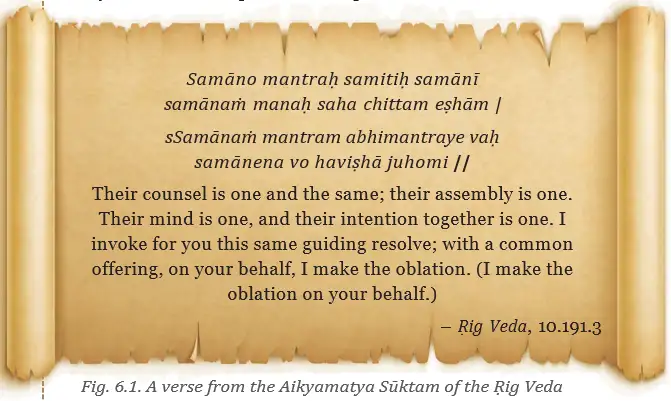
A verse from the Ṛig Veda emphasizes unity in thought and action, highlighting democratic values of consultation and shared responsibility.
The Bauddha Saṁghas, monastic communities established by Gautama Buddha, practiced collective decision-making through debate and voting.
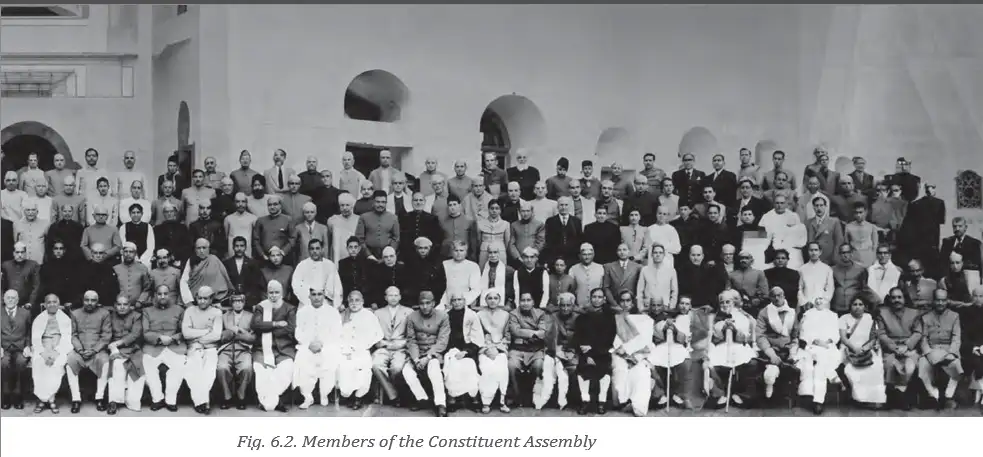
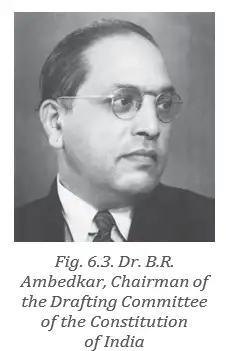
Foreign invasions and British colonial rule disrupted political participation, but the struggle for independence revived democratic ideas. The Constituent Assembly (1946-1950) drafted the Indian Constitution, influenced by indigenous traditions and global democratic values, creating a flexible and responsive document.
Principles of Democracy
Democracy rests on essential principles upheld by the Indian Constitution.
Popular Sovereignty
The ultimate power lies with the people. Governments are elected through free and fair elections. Every citizen aged 18 and above has the right to vote (Universal Adult Franchise).
Exam Question:
Why is it important that the ultimate source of power rests with the people in a democracy?
Answer: Because it ensures that the government represents the will of the people and is accountable to them.
Rule of Law
Ensures equality before the law and equal protection of the law. No one is above the law. Disputes are resolved through legal procedures, preventing misuse of power and protecting rights.
Exam Question:
What does the rule of law ensure in a democracy?
Answer: It ensures that all individuals are treated equally under the law and that laws are enforced fairly without discrimination.
Fundamental Rights
The Constitution guarantees six Fundamental Rights protecting citizens' freedoms and dignity, including the Right to Equality, Freedom, Freedom of Religion, and Constitutional Remedies. These rights are enforceable in courts and subject to reasonable restrictions.
Exam Question:
What is the significance of Fundamental Rights in a democracy?
Answer: They protect citizens' freedoms and ensure justice and equality, enabling active participation in democracy.
Separation of Powers
The legislature, executive, and judiciary have distinct roles to prevent concentration of power. The judiciary upholds the Constitution and protects democratic values through impartial justice and mechanisms like Public Interest Litigation.
Exam Question:
Why is the separation of powers important in a democracy?
Answer: It prevents abuse of power by distributing responsibilities and ensures checks and balances among government branches.
Accountability and Transparency
Governments are accountable to citizens through elections, public debates, and civil society engagement. Laws like the Right to Information Act promote transparency.
Exam Question:
How do accountability and transparency strengthen democracy?
Answer: They build trust between the government and citizens and ensure government actions are open to scrutiny.
Multi-Party System
Multiple political parties represent diverse interests, allowing citizens to choose suitable representatives. Parties operate under legal frameworks ensuring fair competition.
Exam Question:
What is the role of a multi-party system in democracy?
Answer: It provides citizens with choices and represents diverse views, enhancing democratic participation.
Safeguarding the Rights of Vulnerable Groups
The government protects marginalized communities by promoting equitable resource distribution and social justice, as stated in Article 46 of the Constitution.
Exam Question:
Why is it important to safeguard the rights of vulnerable groups in a democracy?
Answer: To ensure equality and prevent discrimination, enabling all citizens to participate fully in democracy.
Role of Media in Democracy
Media informs citizens, raises public issues, and acts as the 'fourth pillar of democracy' by safeguarding voices and democratic principles.
Exam Question:
Why is media called the fourth pillar of democracy?
Answer: Because it informs the public, facilitates debate, and holds the government accountable.
Types of Democracy
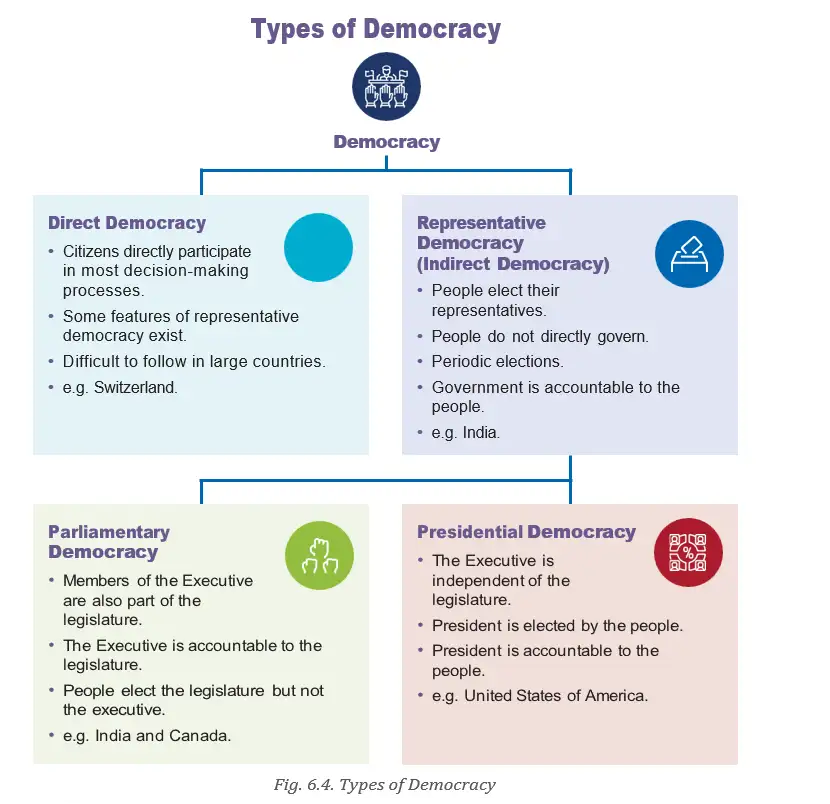
Democracy varies by how citizens participate and how power is structured. Types include Direct Democracy, Representative Democracy (Parliamentary and Presidential).
Exam Question:
What are the main differences between parliamentary and presidential democracy?
Answer: In parliamentary democracy, the executive is part of the legislature; in presidential democracy, the executive is separate and elected independently.
Democracy in Practice: India’s Living Democracy
India’s democracy is notable for its scale, diversity, and inclusiveness, with over 96.8 crore voters, elections in multiple languages, and over 2,800 political parties.
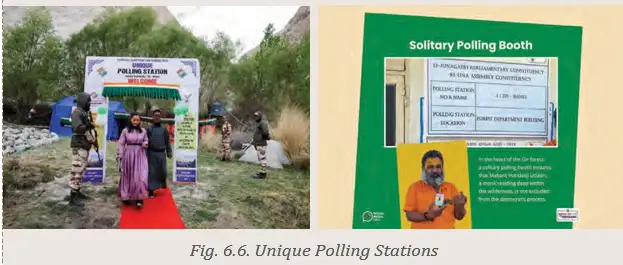
Polling stations are set up even in remote areas to ensure every citizen can vote.
India’s three-tier government system (Union, State, Local) facilitates democratic participation and protects tribal heritage through Autonomous District Councils and the PESA Act.
Case Study: Democracy at the Grassroots in India
Examples of local self-government show democracy beyond elections:
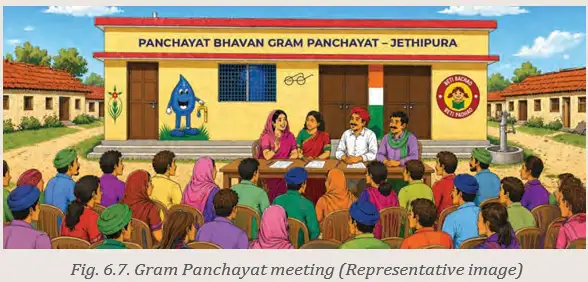
1. Jethipura Gram Panchayat, Gujarat
Awarded for effective Gram Sabha conduct, inclusive participation, and addressing education, sanitation, and welfare issues.
2. South Manubankul Gram Panchayat, Tripura
Recognised as a women-friendly Panchayat promoting women’s participation and inclusive development.
Exam Question:
How do local self-government institutions strengthen democracy?
Answer: By enabling active citizen participation, addressing local issues, and promoting inclusiveness.
Women and the Right to Vote: The Indian Experience
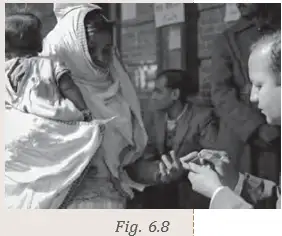
Unlike many countries where women struggled for voting rights, Indian women received universal adult franchise in 1950 without prolonged struggle. However, social prejudices still affect their political representation.
Women’s Reservation in Local Bodies
Constitutional provisions reserve at least one-third of seats for women in Panchayats and Municipalities, with some states providing 50% reservation.
Exam Question:
Why is women’s reservation important in democratic institutions?
Answer: It ensures women’s participation and representation, promoting gender equality in governance.
Right to Information Act
Enacted in 2005, the RTI Act empowers citizens to access government information, enhancing transparency and accountability. It was shaped through democratic processes involving citizens, civil society, and elected representatives.
Exam Question:
How does the Right to Information Act strengthen democracy?
Answer: By allowing citizens to obtain information from the government, it promotes transparency and accountability.
Challenges to Democratic Practices in India
Challenges include illiteracy, misinformation, inequality, poverty, regionalism, and social discrimination. The spread of fake news through social media affects public opinion and trust in institutions.
Exam Question:
What are some challenges faced by Indian democracy?
Answer: Misinformation, social inequality, poverty, and gaps in law implementation weaken democratic participation.
Emergency (1975-77)
During the Emergency, Fundamental Rights were suspended, press censored, and political leaders arrested. Mass movements restored democracy in 1977, highlighting the resilience of Indian democratic institutions.
Exam Question:
What was the impact of the Emergency on Indian democracy?
Answer: It showed the vulnerability of democracy but also its strength through citizen resistance and constitutional safeguards.
Democracy and You
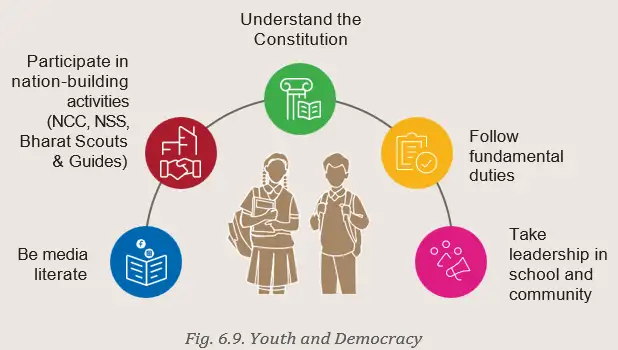
Being informed and responsible citizens is vital. Activities like reading news, participating in NSS and NCC, and respecting civic duties strengthen democracy.
Exam Question:
How can young people contribute to strengthening democracy?
Answer: By being informed, participating in community activities, respecting laws, and promoting democratic values.
Summary and Key Points
- Democracy is a system of self-governance involving institutions, rules, and practices for citizen participation beyond elections.
- It is guided by principles like transparency, participation, inclusion, fairness, equality, accountability, and respect for diverse opinions.
- India’s democratic ideas have ancient roots and are enshrined in its Constitution, which provides for popular sovereignty, fundamental rights, rule of law, and separation of powers.
- India is the world’s largest democracy by scale and participation, though challenges remain.
- Democracy varies globally but shares common values and principles.
- Citizens contribute through civic awareness, responsible media use, community participation, and respect for democratic norms.
Solved Examples
Example 1: Explain the principle of popular sovereignty.
Answer: Popular sovereignty means that the ultimate power in a democracy rests with the people. The government derives its authority from the consent of the governed, exercised through free and fair elections.
Example 2: What is the significance of the separation of powers?
Answer: Separation of powers divides government functions among the legislature, executive, and judiciary to prevent concentration of power and ensure checks and balances.
Practice Set
Easy
- Define democracy.
- What is Universal Adult Franchise?
- Name two Fundamental Rights guaranteed by the Indian Constitution.
Moderate
- Explain the role of the judiciary in a democracy.
- What is the importance of accountability and transparency?
- Describe the multi-party system in India.
Challenging
- Discuss the impact of the Emergency on Indian democracy.
- How do local self-government institutions strengthen democracy?
- Explain the significance of the Right to Information Act.
Answer Key
- Define democracy: A system of government where power rests with the people who elect representatives.
- Universal Adult Franchise: The right of all citizens aged 18 and above to vote.
- Two Fundamental Rights: Right to Equality, Right to Freedom.
- Role of judiciary: Upholds the Constitution, protects rights, and ensures laws are constitutional.
- Accountability and transparency: Ensure government actions are open and officials answer to the public.
- Multi-party system: Multiple political parties represent diverse interests, allowing choice.
- Impact of Emergency: Suspension of rights, censorship, but eventual restoration of democracy.
- Local self-government: Enables citizen participation and addresses local issues.
- Right to Information Act: Empowers citizens to access government information, promoting transparency.
Quick Reference
- Popular Sovereignty: Power rests with the people.
- Rule of Law: Equality before law and legal protection.
- Fundamental Rights: Basic freedoms guaranteed by the Constitution.
- Separation of Powers: Division of government functions.
- Accountability and Transparency: Government answerability and openness.
- Multi-Party System: Multiple political parties competing in elections.
- Right to Information Act: Law enabling citizens to access government information.
Glossary
- Popular Sovereignty: The principle that the authority of the government is created and sustained by the consent of its people.
- Rule of Law: The concept that all individuals and institutions are subject to and accountable to law.
- Fundamental Rights: Basic rights guaranteed to all citizens by the Constitution.
- Separation of Powers: The division of government responsibilities into distinct branches to limit any one branch from exercising the core functions of another.
- Accountability: The obligation of government officials to explain and justify their actions to the public.
- Transparency: Openness in government actions and decisions.
- Multi-Party System: A political system where multiple parties have the capacity to gain control of government offices.
- Right to Information Act: Legislation that allows citizens to request information from the government.
- Emergency: A period when normal constitutional rights are suspended due to crisis.
- Civic Responsibility: Duties of citizens to participate actively and responsibly in democratic processes.