CLASS 9 . SOCIAL SCIENCE . UNDERSTANDING SOCIETY INDIA AND BEYOND PART I . BUILDING BLOCKS-IN-ECONOMICS-THE-PROBLEM-OF-CHOICE
Chapter 8 : Building Blocks in Economics: The Problem of Choice
Ch 8
SOCIAL SCIENCE
CLASS 9
The Big Questions
Economic choices are decisions made by individuals, enterprises, and governments about how to use limited resources to satisfy unlimited wants. Examples include deciding whether to spend money on snacks or save for shoes, allocating limited books among students, choosing crops based on soil and market demand, and government spending priorities.
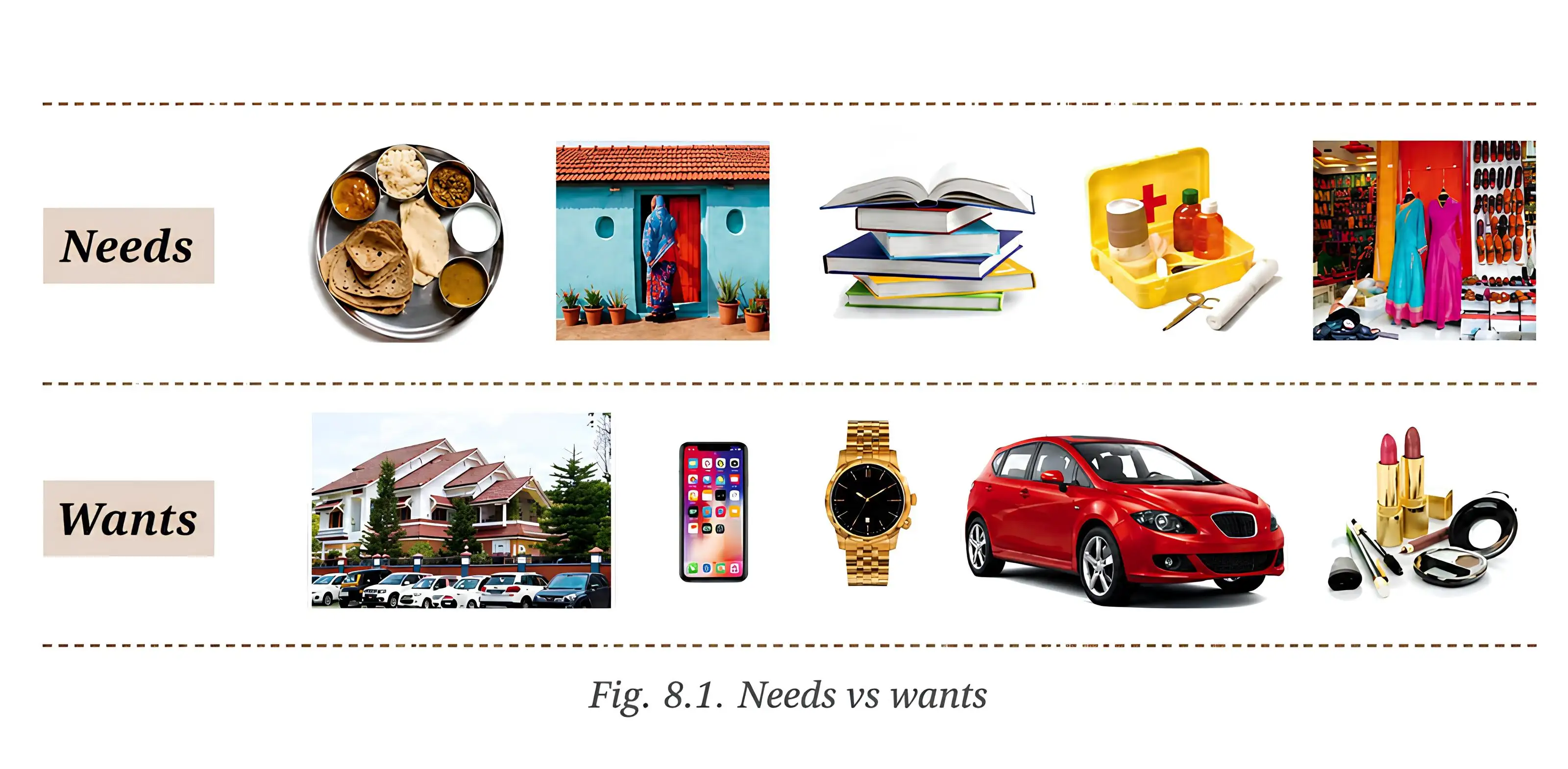
Human wants are classified into needs (essential for survival like food, water, shelter) and wants (non-essential items like gadgets and vacations). Understanding this distinction helps prioritize resource use.
A market is a place where buying and selling of goods and services occur, either physically or virtually.
Exam Questions
Q1. What is the difference between needs and wants?
A1. Needs are essential for survival, such as food and shelter, while wants are desires that improve comfort but are not essential.
Q2. Why do individuals and governments have to make economic choices?
A2. Because resources are limited but wants are unlimited, choices must be made on how to allocate resources efficiently.
Choices and Limited Resources
Resources, including land, labour, capital, and technology, are limited and can be used in alternative ways. Choosing one use means giving up another, which is called opportunity cost.
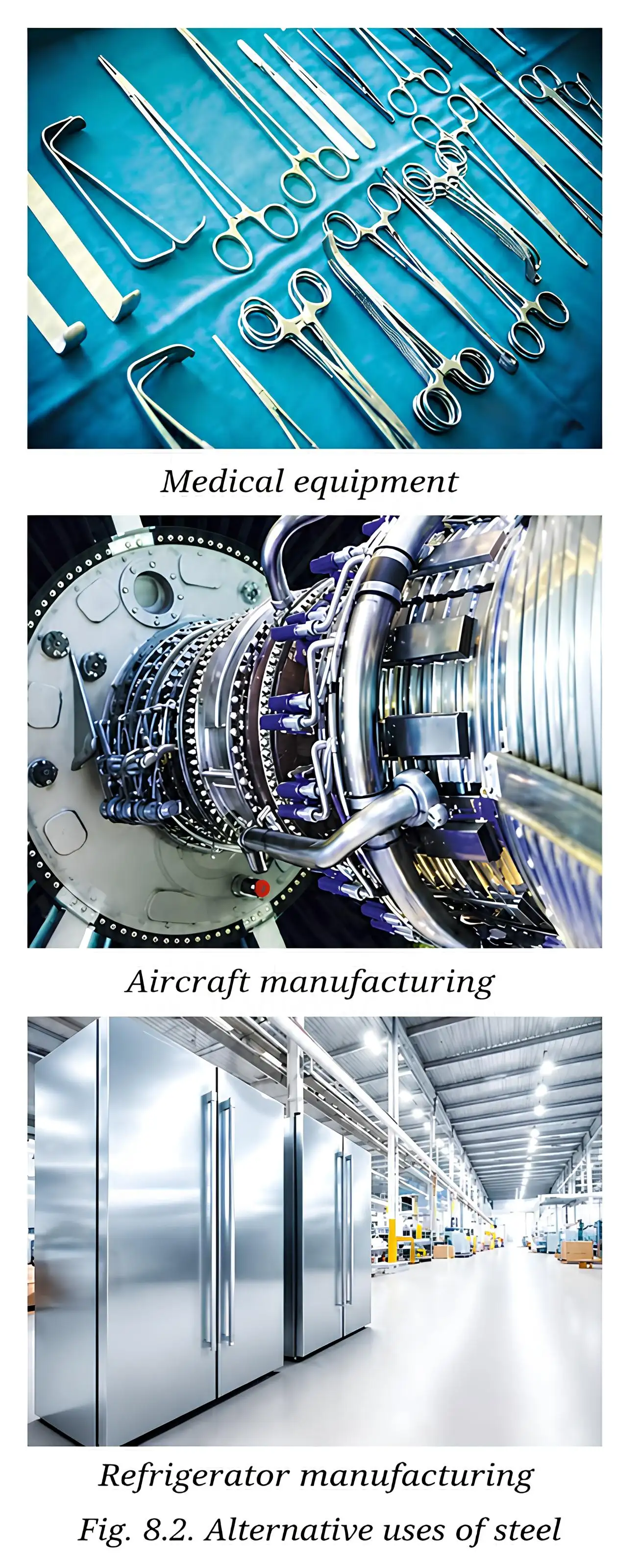
Example: Steel is used in medical equipment, aircraft manufacturing, and refrigerators, showing its versatility.
Opportunity cost is illustrated by a farmer choosing between growing barley or wheat on limited land. The Production Possibility Curve (PPC) shows the trade-off between producing these two crops efficiently.
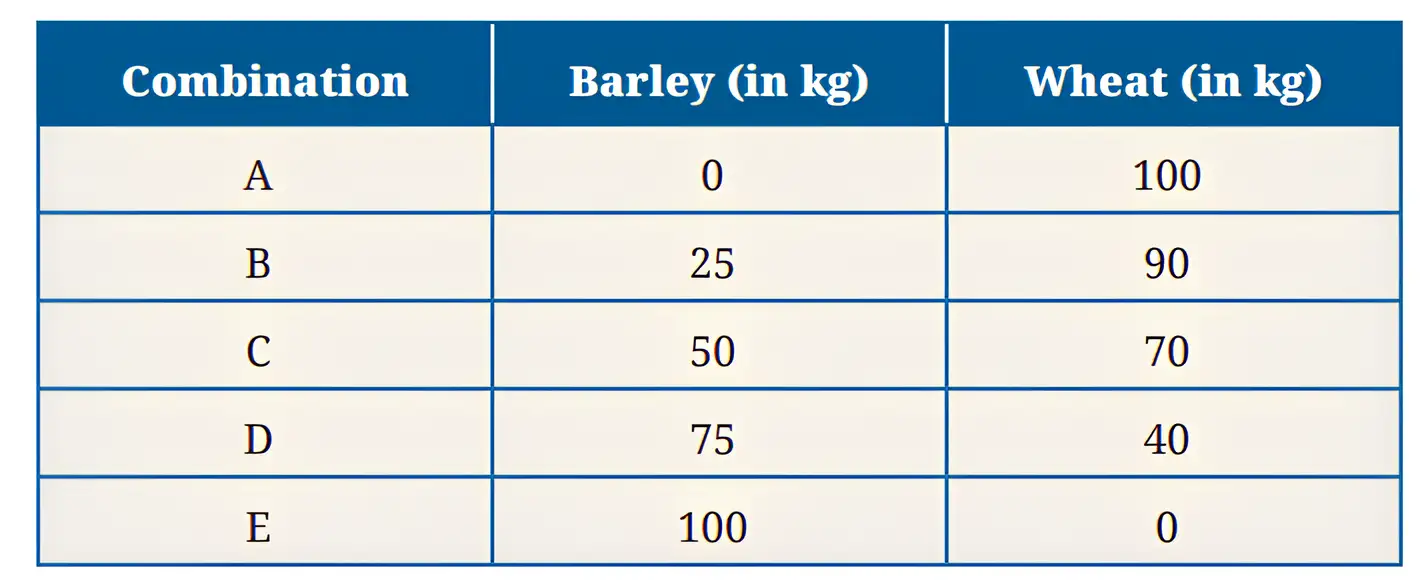
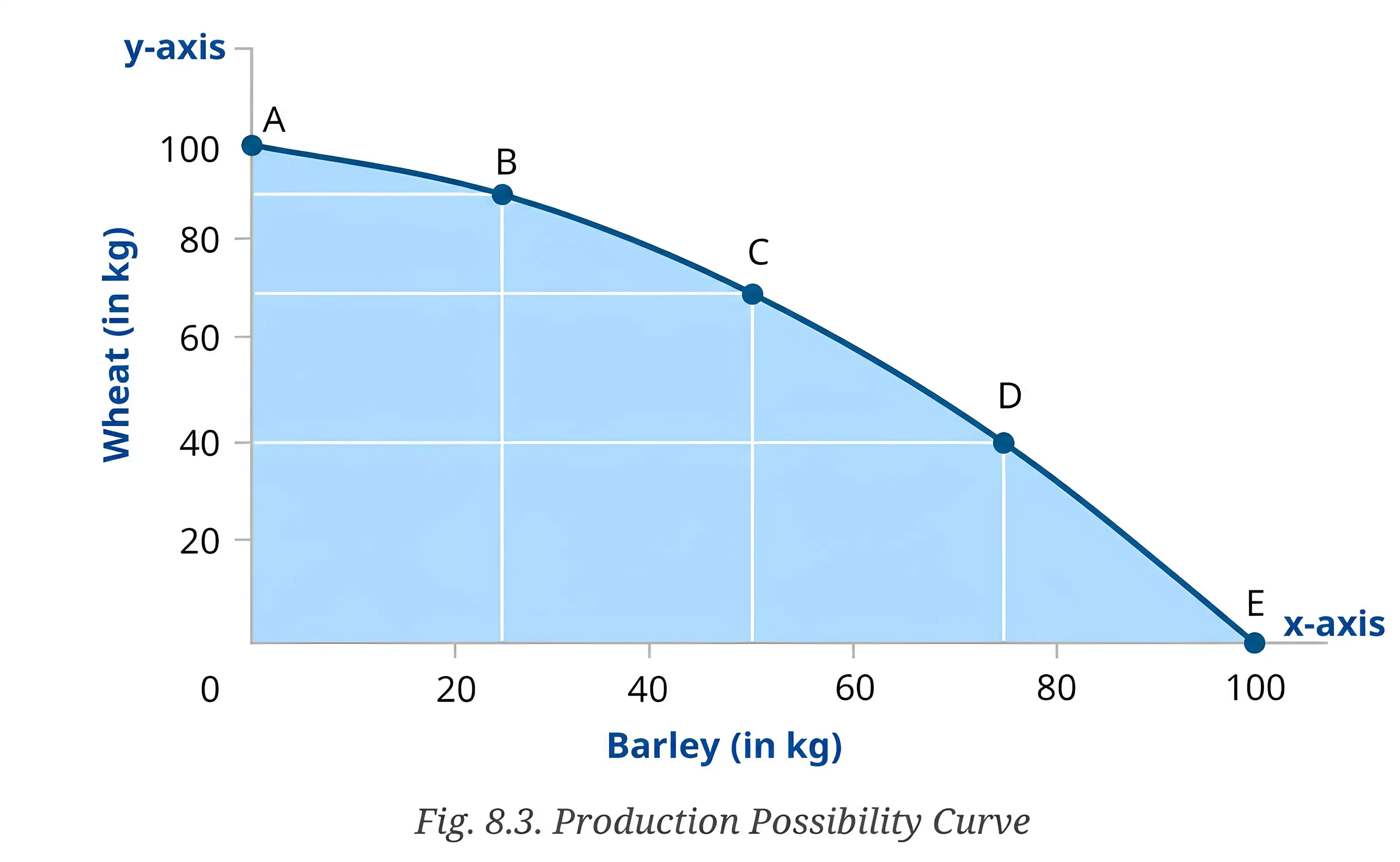
The PPC curve is downward sloping and bowed outwards, indicating increasing opportunity costs as more of one good is produced.
Exam Questions
Q1. What is opportunity cost?
A1. Opportunity cost is the value of the next best alternative given up when a choice is made.
Q2. What does the Production Possibility Curve show?
A2. It shows the maximum possible combinations of two goods that can be produced with available resources and the trade-offs involved.
What does Economics Deal with?
Economics, derived from Greek words meaning household management, studies how individuals, enterprises, and governments make choices to allocate limited resources to satisfy unlimited wants.
It explains interactions among consumers, producers, governments, and financial institutions, covering topics like wages, wealth distribution, price determination, investment, and government policies.
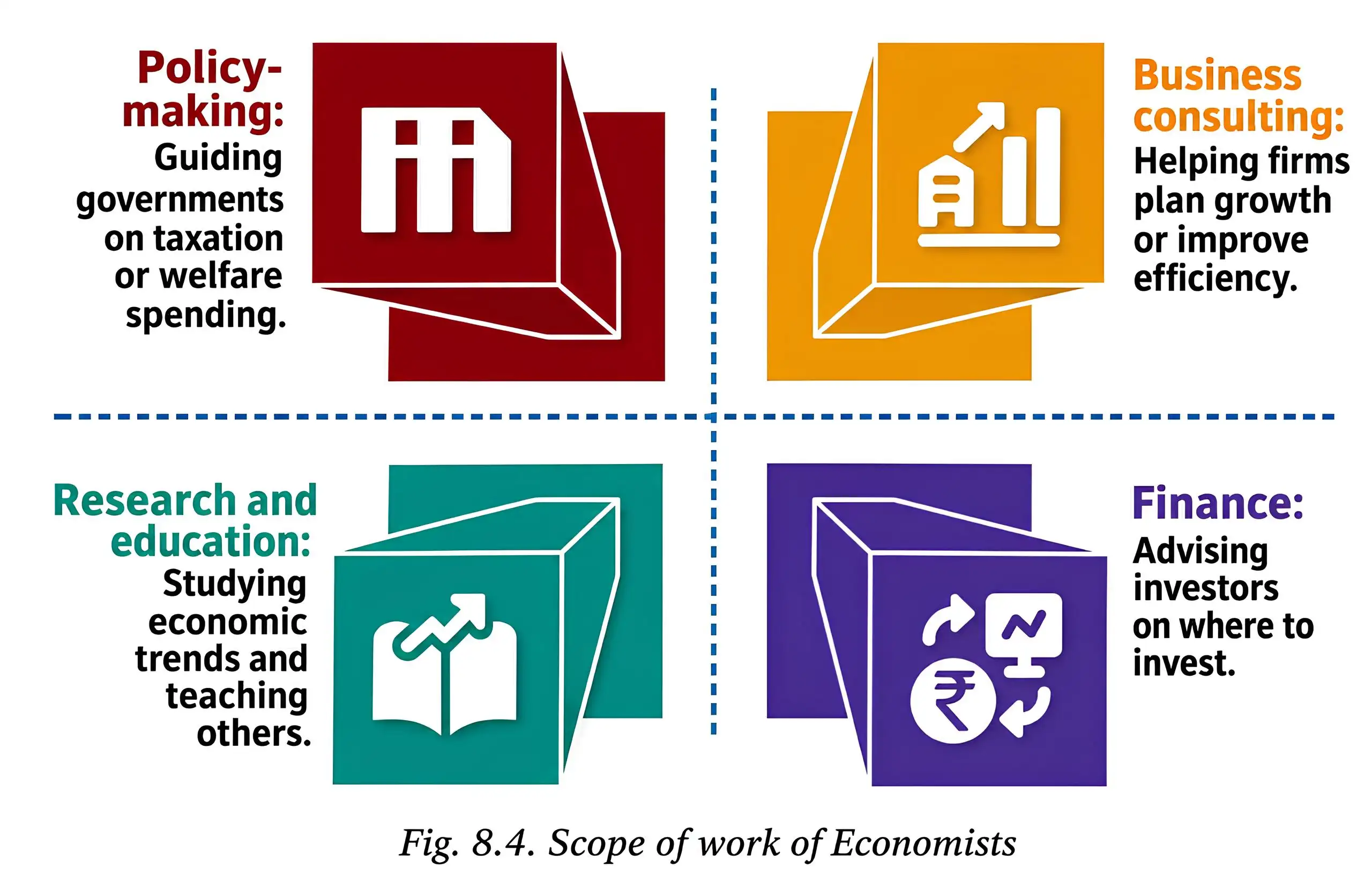
Economists work in policy-making, business consulting, research and education, and finance to help optimize resource use.
Exam Questions
Q1. What is the scope of economics?
A1. Economics studies how choices are made to allocate limited resources among competing uses to satisfy needs and wants.
Q2. How do economists help society?
A2. They analyze data and alternatives to guide individuals, enterprises, and governments in making informed economic decisions.
Key Questions in Economics
Economics addresses three fundamental questions arising from scarcity:
- What to produce?
- How to produce?
- For whom to produce?
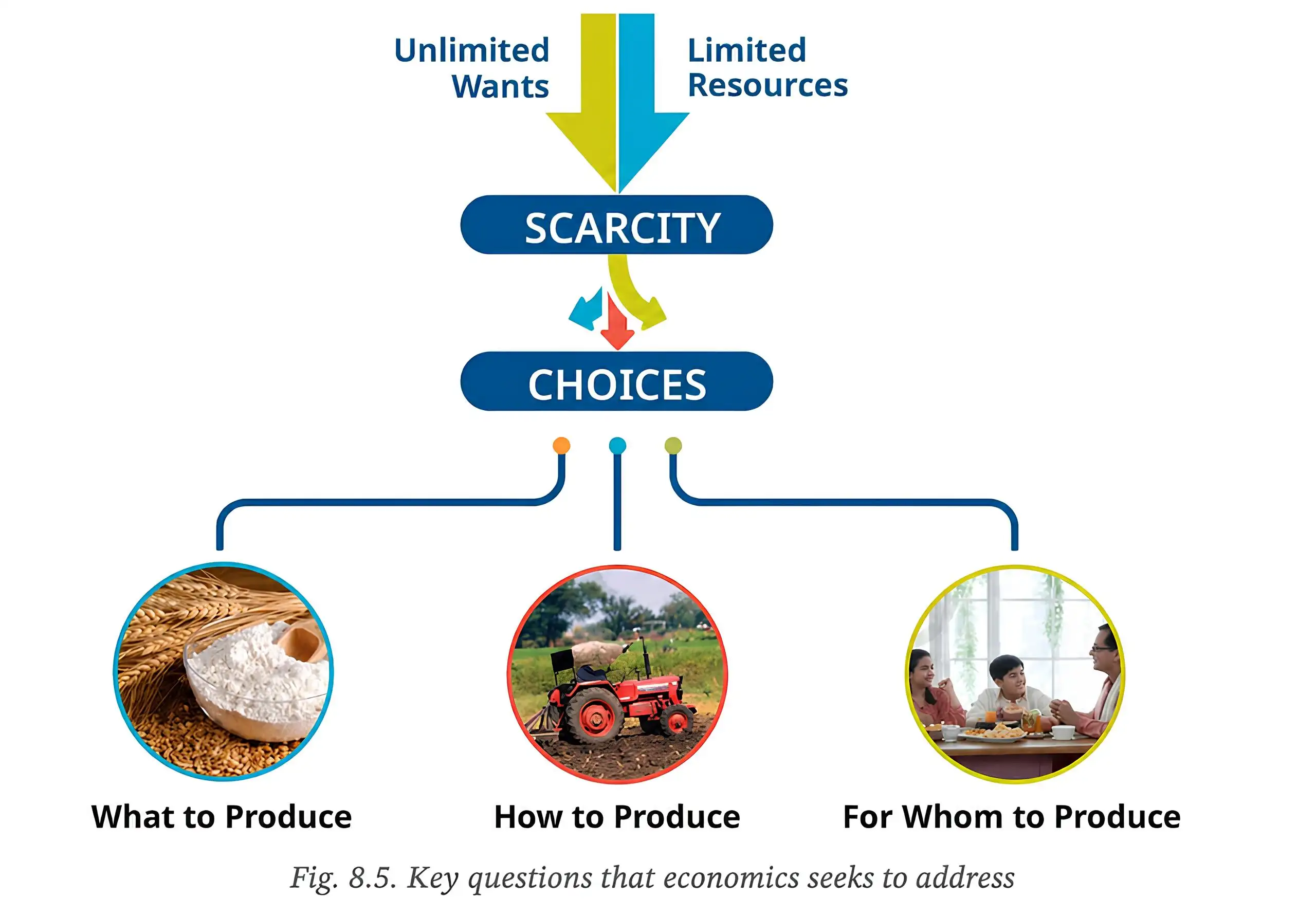
What to Produce and for Whom?
This question involves deciding which goods and services to produce and in what quantities, balancing short-term profits and long-term sustainability. For example, choosing between water-intensive crops like sugarcane and drought-resistant crops like millets involves opportunity costs and environmental considerations.
Deciding for whom to produce involves targeting different consumer groups based on income, needs, and preferences, such as different types of shoes for students, professionals, athletes, and casual users.
Exam Questions
Q1. Why is the question 'what to produce' important?
A1. It determines the allocation of resources to produce goods that meet the needs and wants of society efficiently.
Q2. How does 'for whom to produce' affect production?
A2. It influences the type and quality of goods produced to match the preferences and purchasing power of different consumer groups.
How to Produce?
This question concerns the methods and resources used in production, including the choice between labour-intensive and capital-intensive techniques.
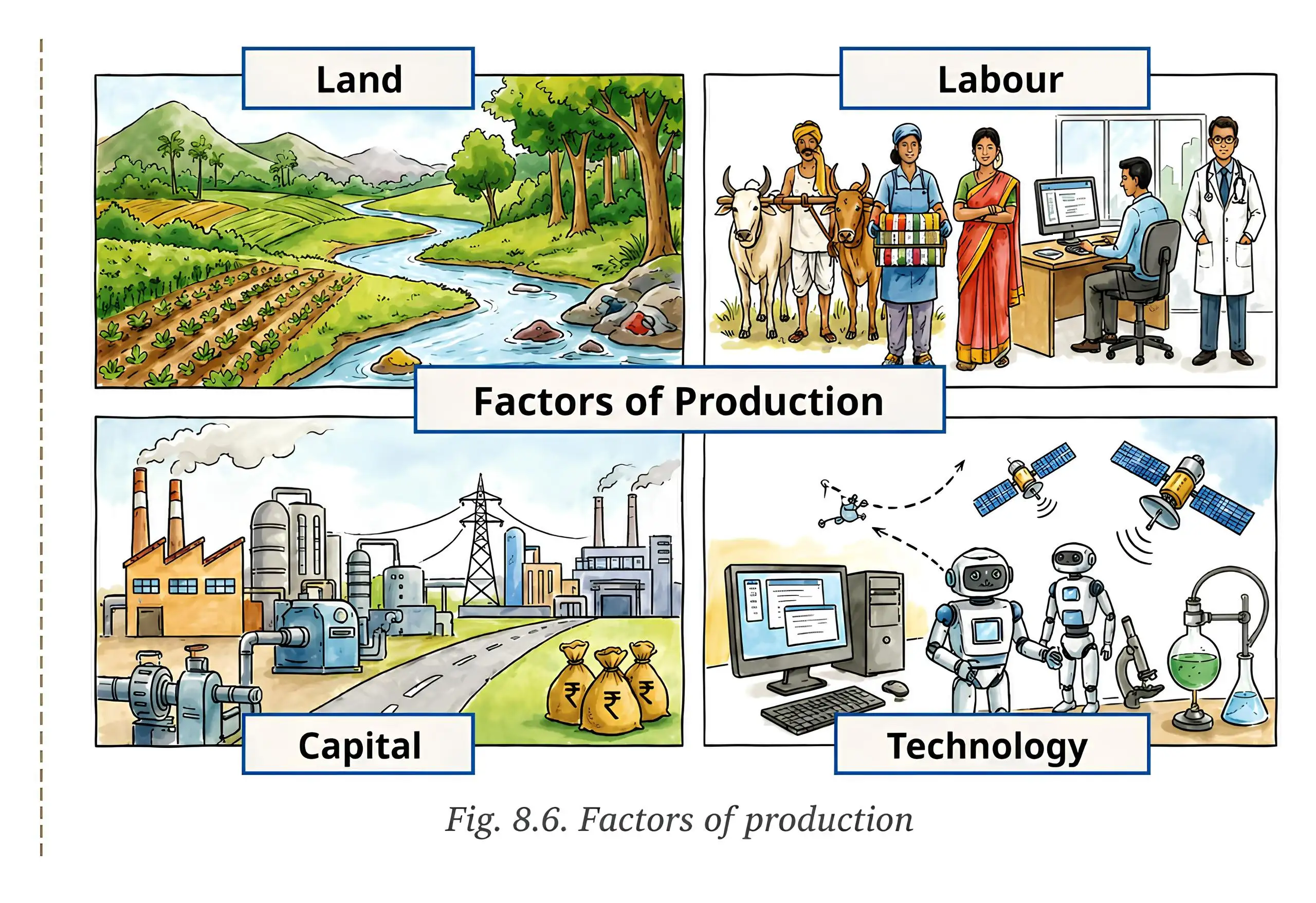
Factors of production include land, labour, capital, and technology. The choice depends on costs, technology availability, product nature, and government regulations.
Exam Questions
Q1. What are the factors of production?
A1. Land, labour, capital, and technology used to produce goods and services.
Q2. What influences the choice of production technique?
A2. Cost of capital, technology, product nature, availability of labour, and government laws.
Economic Systems
The economic system of a country defines how resources are organized and who controls production, consumption, and distribution.
Planned Economy
In a planned economy, the government centrally controls economic decisions, owns most resources, and regulates production. This limits competition and innovation. Examples include the former Soviet Union, North Korea, and Cuba.
Market Economy
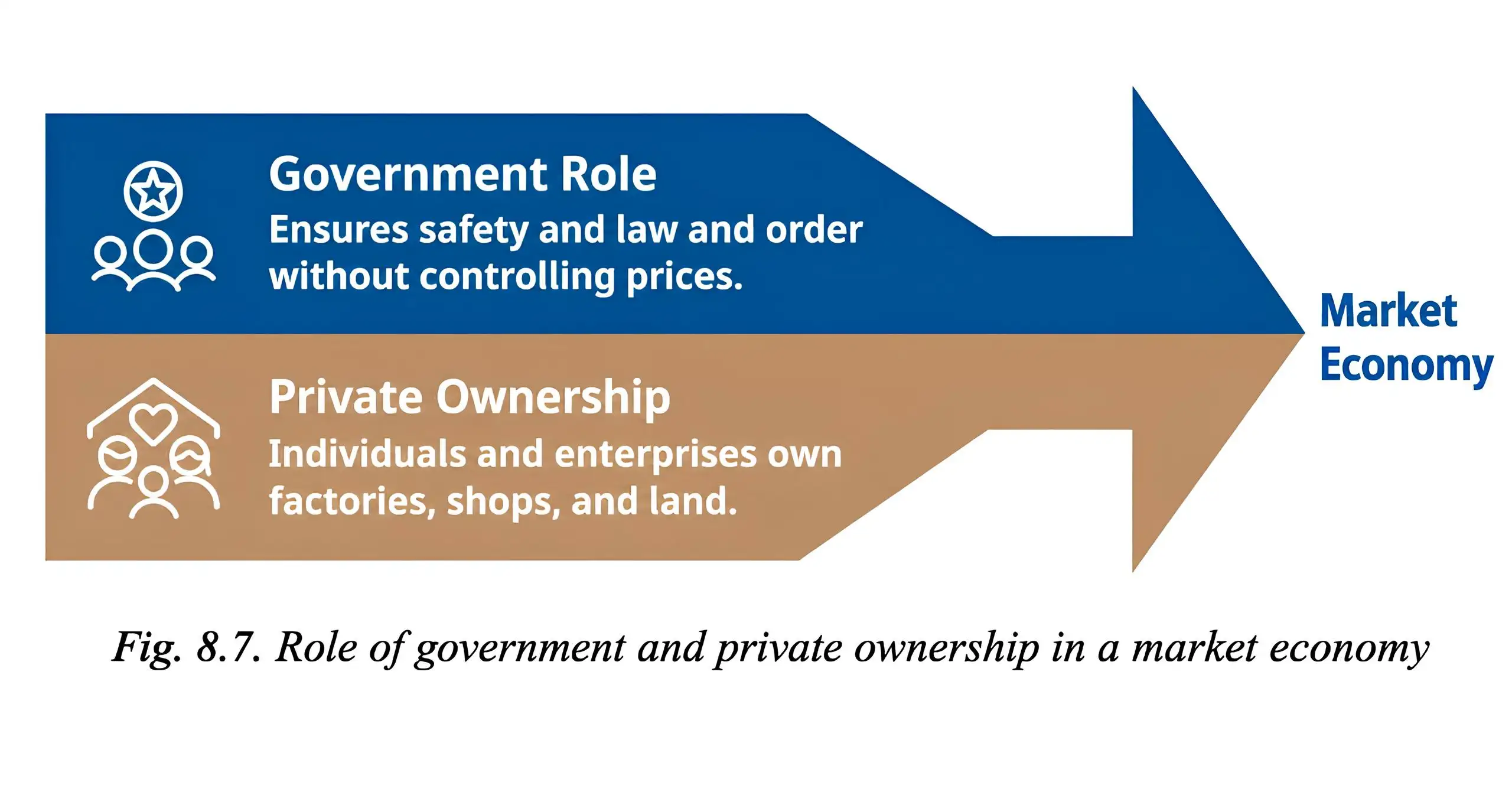
In a market economy, decisions are made by market forces of demand and supply with minimal government intervention. Private ownership dominates, encouraging competition and innovation. Examples include the USA, Japan, and Hong Kong.
Mixed Economy
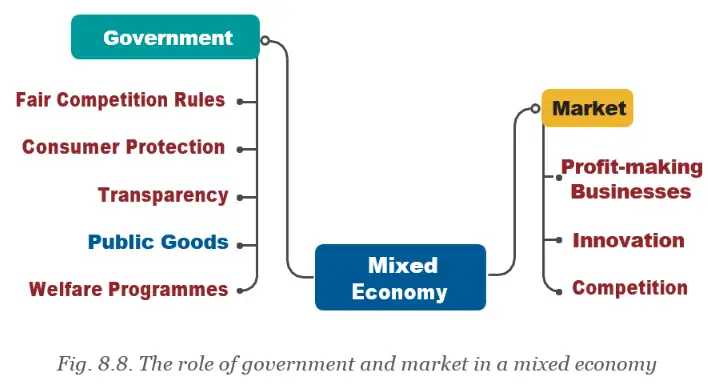
A mixed economy combines features of planned and market economies, with both government and private sector playing roles. Examples include India (post-1991), China (post-1978), Germany, and Sweden.
Exam Questions
Q1. What is a planned economy?
A1. An economic system where the government controls resource allocation and production decisions.
Q2. How does a market economy function?
A2. It relies on demand and supply forces with private ownership and minimal government control.
Q3. What characterizes a mixed economy?
A3. It combines government regulation and private enterprise to balance economic growth and public welfare.
Solved Examples
- Example: A farmer has 100 kg of land and can grow either barley or wheat. If growing 60 kg of barley means producing 40 kg of wheat, what is the opportunity cost of producing 1 kg of barley?
Solution: The opportunity cost of 1 kg of barley is the amount of wheat given up. Here, 60 kg barley replaces 60 kg wheat (from 100 to 40 kg), so opportunity cost = (100-40)/60 = 1 kg wheat per kg barley. - Example: A family has a budget of ₹1000. They must decide between buying food (needs) and a new video game (want). How should they decide?
Solution: They should prioritize needs like food first, then allocate remaining money to wants if possible, considering opportunity cost.
Practice Set
Easy
- Define needs and wants with examples.
- What is opportunity cost?
- List the factors of production.
Moderate
- Explain the three key questions of economics.
- Describe the differences between planned and market economies.
- How does the Production Possibility Curve illustrate opportunity cost?
Challenging
- Analyze how a mixed economy balances government and private sector roles.
- Discuss the trade-offs involved in choosing production techniques.
- Explain the significance of the Economic Survey in policy-making.
Answer Key
- Needs are essentials for survival; wants are desires that improve comfort.
- Opportunity cost is the value of the next best alternative given up.
- Factors of production are land, labour, capital, and technology.
- The three key questions are what to produce, how to produce, and for whom to produce.
- Planned economies have government control; market economies rely on demand and supply.
- The PPC shows trade-offs and opportunity costs between two goods.
- A mixed economy combines government regulation and private enterprise.
- Trade-offs in production techniques depend on costs, technology, and product nature.
- The Economic Survey provides data and analysis to guide government policy.
Quick Reference
- Needs: Essential goods and services required for survival.
- Wants: Non-essential goods and services that improve quality of life.
- Opportunity Cost: The value of the next best alternative forgone.
- Production Possibility Curve: A graph showing trade-offs between two goods.
- Factors of Production: Land, labour, capital, and technology.
- Planned Economy: Government-controlled economic system.
- Market Economy: Economy driven by demand and supply with private ownership.
- Mixed Economy: Combination of planned and market economies.
- Economic Survey: Annual report on the Indian economy guiding policy decisions.
Glossary
- Economics
- The study of how individuals and societies allocate limited resources to satisfy unlimited wants.
- Opportunity Cost
- The value of the next best alternative given up when making a choice.
- Production Possibility Curve (PPC)
- A curve showing the maximum possible output combinations of two goods with available resources.
- Factors of Production
- Resources used to produce goods and services: land, labour, capital, and technology.
- Planned Economy
- An economic system where the government controls production and resource allocation.
- Market Economy
- An economic system where market forces determine production and prices with minimal government intervention.
- Mixed Economy
- An economic system combining features of planned and market economies.
- Economic Survey
- An annual report by the government reviewing economic performance and guiding policy.
| Time Period / Year | Event / Change | Importance |
|---|---|---|
| Pre-1991 | India follows a planned economy model | Government controls industries and resource allocation |
| 1991 | Economic reforms introduced in India | Shift towards market-oriented economy with private enterprise |
| Post-1991 | Mixed economy model in India | Combination of government regulation and private sector growth |