CLASS 12-HUMANITIES . ENGLISH . KALEIDOSCOPE . THE WILD-SWANS-AT-COOLE
Chapter 11 : The Wild Swans At Coole
Ch 11
ENGLISH
CLASS 12-HUMANITIES
Introduction to W.B. Yeats
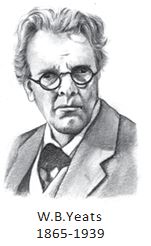
William Butler Yeats (1865-1939) was a renowned Irish poet, dramatist, and mystic. He played a significant role in the Irish Literary Revival and was a co-founder of the Abbey Theatre. Yeats was awarded the Nobel Prize for Literature in 1923, recognizing his profound influence on 20th-century literature. His works often explore themes of mysticism, Irish identity, and the passage of time.
The accompanying portrait of Yeats shows him as an older man with glasses and formal attire, reflecting his serious and thoughtful nature. This image helps students connect with the poet behind the words and appreciate his literary legacy.
Summary of The Wild Swans at Coole
"The Wild Swans at Coole" is a reflective poem by W.B. Yeats that captures the beauty and mystery of nature, particularly focusing on a group of fifty-nine swans observed by the poet at Coole Park during autumn. The poem contrasts the eternal vitality of the swans with the poet's own aging and changing life.
The poem begins with vivid imagery of the autumn landscape: trees in their autumn beauty, dry woodland paths, and a still sky mirrored in the water. The poet recounts how he has observed these swans for nineteen autumns, noting their unwearied passion and companionship despite the passage of time.
However, the poet's heart is now sore, reflecting his awareness of his own aging and the changes in his life. The swans remain mysterious and beautiful, drifting on the water, and the poet wonders where they will build their nests and delight future observers once they have flown away.
Themes in The Wild Swans at Coole
- Change and Aging: The poem contrasts the poet's aging with the seemingly unchanging vitality of the swans.
- Nature's Beauty and Mystery: The swans symbolize the enduring beauty and mystery of the natural world.
- Memory and Time: The poet reflects on the passage of nineteen years and the changes that time brings.
- Loneliness and Companionship: The swans' companionship contrasts with the poet's sense of solitude.
Literary Devices Used in the Poem
- Imagery: Vivid descriptions of autumn, the swans, and the landscape create a strong visual effect (e.g., "The trees are in their autumn beauty", "Mirrors a still sky").
- Symbolism: The swans symbolize eternal beauty, passion, and the mystery of life.
- Alliteration: Repetition of consonant sounds, such as "bell-beat of their wings" enhances the musical quality.
- Rhyme Scheme: The poem follows a consistent rhyme scheme, contributing to its rhythm and flow.
- Contrast: The lively swans are contrasted with the poet’s aging and changing emotions.
Important Quotes and Explanations
- "The trees are in their autumn beauty" – This line sets the scene and symbolizes the poet’s own autumn of life, a time of change and reflection.
- "I have looked upon those brilliant creatures, And now my heart is sore." – The poet expresses a poignant awareness of his own aging compared to the swans’ enduring vitality.
- "Their hearts have not grown old; Passion or conquest, wander where they will, Attend upon them still." – The swans remain youthful and passionate, symbolizing eternal life and beauty.
- "But now they drift on the still water, Mysterious, beautiful;" – The swans’ mysterious presence evokes a sense of wonder and the unknown future.
Explanation of Key Lines
The opening lines describe the autumn setting, which parallels the poet’s own stage in life. The "nineteenth autumn" marks the passage of time since the poet first observed the swans, emphasizing themes of memory and change.
The lines about the swans paddling in the cold streams and climbing the air highlight their vitality and freedom, contrasting with the poet’s feelings of aging and loss.
The final stanza’s question about where the swans will build their nests after they have flown away reflects the poet’s contemplation of impermanence and the continuation of life beyond his own experience.
Practice Set
Level 1 – Easy
- What season is described in the poem "The Wild Swans at Coole"?
- Who is the poet of "The Wild Swans at Coole"?
- How many swans does the poet observe?
Level 2 – Moderate
- Explain the significance of the swans in the poem.
- What does the poet mean by "my heart is sore"?
- Describe the contrast between the swans and the poet.
Level 3 – Challenging
- Analyze the theme of change and aging as presented in the poem.
- Discuss the use of imagery and symbolism in "The Wild Swans at Coole."
- How does Yeats use the natural setting to reflect human emotions?
Answer Key
Level 1 – Easy
- The season described is autumn.
- The poet is W.B. Yeats.
- The poet observes fifty-nine swans.
Level 2 – Moderate
- The swans symbolize eternal beauty, passion, and the mystery of life, remaining unchanged despite the passage of time.
- "My heart is sore" refers to the poet’s sadness and awareness of his own aging and the changes in his life.
- The swans are lively, youthful, and passionate, while the poet feels aged, changed, and reflective.
Level 3 – Challenging
- The poem explores the inevitability of change and aging, contrasting the poet’s mortal life with the swans’ seeming immortality.
- Imagery such as autumn trees and still water creates a vivid natural setting, while symbolism in the swans represents eternal beauty and mystery.
- Yeats uses the autumn landscape and the swans’ behavior to mirror his own feelings of nostalgia, loss, and contemplation of life’s cycles.
Quick Reference
- Poet: W.B. Yeats (1865-1939)
- Theme: Change, aging, nature’s beauty, memory
- Setting: Autumn at Coole Park
- Key Symbols: Swans, autumn trees, still water
- Literary Devices: Imagery, symbolism, alliteration, rhyme, contrast
Glossary
- Autumn: The season between summer and winter, often associated with change and maturity.
- Imagery: Descriptive language that creates vivid pictures in the reader’s mind.
- Symbolism: Use of symbols to represent ideas or qualities.
- Alliteration: Repetition of consonant sounds at the beginning of words.
- Rhyme Scheme: The pattern of rhymes at the end of each line in a poem.
- Companionable: Friendly and sociable.