CLASS 12-HUMANITIES . ENGLISH . KALEIDOSCOPE . THE MARK-ON-THE-WALL
Chapter 15 : The Mark On The Wall
Ch 15
ENGLISH
CLASS 12-HUMANITIES
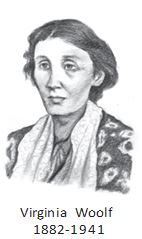
Introduction to Virginia Woolf
Virginia Woolf (1882-1941) was a prominent English writer and a key figure in modernist literature of the 20th century. Known for her innovative narrative techniques, she explored complex themes such as time, consciousness, and personal identity. Woolf grew up in a literary environment, influenced by her father’s extensive library and the intellectual Bloomsbury Group. Along with her husband, she founded the Hogarth Press, a successful publishing house. Her notable novels include Mrs Dalloway and To the Lighthouse, where she experimented with capturing the flow of time and mental experiences.
Key Elements
- Modernist literary figure: Emphasis on stream of consciousness and psychological depth.
- Bloomsbury Group: Intellectual circle influencing her work.
- Innovative style: Non-linear narration and exploration of inner thoughts.
Textual Evidence
Woolf’s belief that imaginative literature should reflect the continuous flow of experience rather than a straight narrative line is evident in her essay The Mark On The Wall.
Practice Set
- Level 1: Who was Virginia Woolf and what is she known for?
- Level 2: Explain the significance of the Bloomsbury Group in Woolf’s life.
- Level 3: Discuss Woolf’s narrative technique and how it differs from traditional storytelling.
Answer Key
- Virginia Woolf was an English modernist writer known for her innovative narrative style and exploration of consciousness.
- The Bloomsbury Group was an intellectual circle that influenced Woolf’s literary development and ideas.
- Woolf’s narrative technique focuses on the flow of thoughts and mental impressions rather than chronological events.
Quick Reference
Virginia Woolf: Modernist writer, Bloomsbury Group, stream of consciousness, Hogarth Press.
Glossary
- Modernism: A literary movement emphasizing new narrative techniques and psychological depth.
- Stream of consciousness: A narrative mode that depicts the continuous flow of a character’s thoughts.
- Bloomsbury Group: A group of English writers and intellectuals in the early 20th century.
Summary of The Mark On The Wall
The Mark On The Wall is an essay by Virginia Woolf that captures a stream of consciousness triggered by the sight of a small mark on a wall. The narrator’s thoughts wander through memories, reflections on life, knowledge, and the nature of reality. The mark becomes a symbol for the fleeting and fragmented nature of human experience and thought. The essay explores how the mind moves from one idea to another, often without clear logic, reflecting the complexity of consciousness.
Key Elements
- Stream of consciousness: The narrative flows through the narrator’s thoughts and impressions.
- Reflection on reality: The mark prompts philosophical musings on knowledge and existence.
- Imagery and symbolism: The mark symbolizes the elusive nature of truth and perception.
Textual Evidence
"Perhaps it was the middle of January in the present year that I first looked up and saw the mark on the wall..." This opening sets the reflective tone and introduces the mark as a focal point for the narrator’s thoughts.
Practice Set
- Level 1: What is the mark on the wall and how does it affect the narrator?
- Level 2: Describe the flow of thoughts that the mark triggers in the narrator’s mind.
- Level 3: Analyze how the mark on the wall serves as a symbol in the essay.
Answer Key
- The mark is a small black spot on the wall that captures the narrator’s attention and triggers a chain of thoughts.
- The narrator’s thoughts move freely from memories to philosophical reflections, showing the mind’s associative nature.
- The mark symbolizes the complexity and mystery of perception and reality.
Quick Reference
Mark on the wall: symbol, stream of consciousness, reflection, perception.
Glossary
- Symbolism: Use of symbols to represent ideas or qualities.
- Imagery: Descriptive language that appeals to the senses.
Themes in The Mark On The Wall
The essay explores several important themes that reflect Woolf’s modernist concerns:
Key Themes
- Perception and Reality: The uncertainty about the mark’s nature reflects the elusive nature of reality.
- Flow of Consciousness: The continuous, non-linear movement of thoughts mirrors human mental processes.
- Knowledge and Ignorance: The narrator questions the limits of knowledge and the value of learned information.
- Freedom and Constraint: Reflections on societal rules and traditions highlight the tension between freedom and discipline.
Textual Evidence
"No, no, nothing is proved, nothing is known..." expresses the theme of uncertainty and limits of knowledge.
Practice Set
- Level 1: What does the narrator say about knowledge and learning?
- Level 2: How does the essay depict the flow of human thoughts?
- Level 3: Discuss the theme of freedom versus societal rules as presented in the essay.
Answer Key
- The narrator suggests that knowledge is limited and often uncertain.
- The essay shows thoughts as fluid, associative, and non-linear.
- The essay critiques blind adherence to rules and celebrates the idea of freedom.
Quick Reference
Perception, reality, knowledge, freedom, flow of consciousness.
Glossary
- Consciousness: Awareness of one’s own thoughts and surroundings.
- Philosophical reflection: Deep thinking about fundamental questions of existence and knowledge.
Literary Devices in The Mark On The Wall
Virginia Woolf employs various literary devices to create the essay’s reflective and flowing style:
Key Devices
- Stream of Consciousness: A narrative technique that presents thoughts as they occur, without logical sequence.
- Imagery: Vivid descriptions, such as the mark on the wall, the tree tapping on the window, and the flowing river, evoke sensory experiences.
- Symbolism: The mark on the wall symbolizes deeper philosophical ideas about perception and reality.
- Non-periodic Sentences: Loose sentence structures that mimic natural thought patterns.
Textual Evidence
"How readily our thoughts swarm upon a new object, lifting it a little way, as ants carry a blade of straw so feverishly, and then leave it..." illustrates imagery and stream of consciousness.
Practice Set
- Level 1: Define stream of consciousness and give an example from the essay.
- Level 2: Identify examples of imagery in the text.
- Level 3: Explain how symbolism is used in the essay.
Answer Key
- Stream of consciousness is a narrative style showing continuous flow of thoughts; example: the narrator’s shifting reflections on the mark.
- Imagery includes descriptions of the mark, the tree tapping, and the river.
- The mark symbolizes the elusive nature of reality and perception.
Quick Reference
Stream of consciousness, imagery, symbolism, non-periodic sentences.
Glossary
- Non-periodic sentence: A sentence that can be broken into parts without losing meaning, reflecting natural speech.
- Symbol: An object or mark representing a deeper meaning.
Important Quotes from The Mark On The Wall
Several quotes from the essay highlight its central ideas and style:
- "Perhaps it was the middle of January in the present year that I first looked up and saw the mark on the wall."
- "How readily our thoughts swarm upon a new object, lifting it a little way, as ants carry a blade of straw so feverishly, and then leave it..."
- "No, no, nothing is proved, nothing is known."
- "Waking from a midnight dream of horror, one hastily turns on the light and lies quiescent, worshipping the chest of drawers, worshipping solidity, worshipping reality..."
Explanation of Key Lines
These lines illustrate the narrator’s reflective tone, the associative nature of thought, the theme of uncertainty, and the human desire for tangible reality.
Practice Set
- Level 1: What does the first quote reveal about the narrator’s experience?
- Level 2: How does the second quote describe the mind’s activity?
- Level 3: Discuss the significance of the third quote in the context of knowledge.
Answer Key
- The first quote sets the scene and introduces the mark as a trigger for reflection.
- The second quote shows how thoughts quickly move from one idea to another.
- The third quote emphasizes the limits and uncertainty of human knowledge.
Quick Reference
Quotes, reflection, thought process, uncertainty.
Glossary
- Reflection: Serious thought or consideration.
- Uncertainty: The state of being unsure or unknown.
Language Work: Content and Function Words
This section explains the difference between content words and function words, using examples from the essay.
Explanation
Content words carry meaning and include nouns, verbs, adjectives, and adverbs. Function words serve grammatical purposes and include conjunctions, pronouns, articles, and prepositions. For example, in the sentence "I looked up and saw the mark on the wall," the words "I," "and," and "the" are function words, while "looked," "saw," "mark," and "wall" are content words.
Examples
- Content words: ants, carry, blade, straw, readily, swarm
- Function words: and, the, I, our
Practice Set
- Level 1: Identify content and function words in simple sentences.
- Level 2: Classify words from given examples into content or function categories.
- Level 3: Explain the role of function words in sentence structure.
Answer Key
- Content words provide the main meaning; function words connect and organize the sentence.
- Examples from the text show clear distinctions between the two types.
Quick Reference
Content words: nouns, verbs, adjectives, adverbs; Function words: conjunctions, pronouns, articles, prepositions.
Glossary
- Content words: Words that carry lexical meaning.
- Function words: Words that have grammatical roles.
Pronunciation: Strong and Weak Forms
This section discusses how certain words in English have strong and weak pronunciations depending on emphasis and context.
Explanation
Words like "is" are pronounced strongly (/iz/) when emphasized, but weakly (/s/ or /z/) in normal speech. For example, "He is responsible" emphasizes "is," while "He is a doctor" uses the weak form. This variation affects the rhythm and flow of spoken English.
Practice Set
- Level 1: Identify strong and weak forms of common words in sentences.
- Level 2: Practice pronouncing words with both forms in different contexts.
- Level 3: Find five more words with strong and weak forms and explain their usage.
Answer Key
- Strong forms occur when words are stressed or isolated; weak forms occur in connected speech without emphasis.
- Examples include "a," "and," "had," "is," and "not."
Quick Reference
Strong form: emphasized pronunciation; Weak form: unstressed, reduced pronunciation.
Glossary
- Strong form: Pronunciation of a word with full emphasis.
- Weak form: Reduced pronunciation in unstressed positions.