Class 8 . Mathematics . Ganita Prakash Part I . A Square and a Cube
Chapter 1: A Square And A Cube
Ch 1
Mathematics
Class 8
Introduction
The Locker-Toggling Puzzle
How the lockers change
- Starting state: All \(100\) lockers are closed.
- Person \(n\): Toggles every locker whose number is a multiple of \(n\).
- Toggle: A closed locker becomes open; an open locker becomes closed.
- Key idea: Locker \(k\) is toggled once for each factor of \(k\).
An odd number of toggles leaves the locker open; an even number leaves it closed.
Factor Pairs and Square Numbers
Square number — A number that can be written as a whole number multiplied by itself is a square number, or simply a square.
Factors occur in partner pairs whose product is the number. A square has one equal-factor pair, so it has an odd number of factors. Every non-square has only unequal pairs and therefore an even number of factors.
| Number | Factor pairs | Number of factors |
|---|---|---|
| \(6\) | \(1 \times 6\), \(2 \times 3\) | Even: \(4\) |
| \(9\) | \(1 \times 9\), \(3 \times 3\) | Odd: \(3\) |
| \(36\) | \(1 \times 36\), \(2 \times 18\), \(3 \times 12\), \(4 \times 9\), \(6 \times 6\) | Odd: \(9\) |
A number is a square when its equal-factor pair is \(m \times m\).
Predict whether a locker stays open
- List the factors of the locker number, or pair them by multiplication.$$a\times b=k$$
- Check whether one factor pair has equal factors.$$a=b$$
- If there is an equal pair, the number is a square and its locker remains open.$$k=m^2\Rightarrow\text{open}$$
- If all pairs are unequal, the locker is toggled an even number of times and closes.$$\text{even number of factors}\Rightarrow\text{closed}$$
Will locker \(16\) be open or closed at the end?
- Find how many times locker \(16\) is toggled by listing its factors.$$1,2,4,8,16$$
- The equal-factor pair is \(4\) multiplied by itself, so \(16\) is a square.$$4\times4=16$$
- It has five factors, so it is toggled an odd number of times.$$5\text{ is odd}$$
Find the open lockers from \(1\) to \(100\)
- Only square-numbered lockers remain open.$$k=n^2$$
- List the squares of whole numbers from \(1\) through \(10\).$$1^2,2^2,3^2,\ldots,10^2$$
Open lockers
- Open locker numbers: \(1, 4, 9, 16, 25, 36, 49, 64, 81, 100\).
- Count: There are \(10\) open lockers because these are the squares from \(1^2\) to \(10^2\).
Lockers Toggled Exactly Twice
Prime number — A prime number has exactly two factors: \(1\) and itself.
A locker numbered with a prime is toggled exactly twice: by person \(1\) and by the person whose number matches the locker. The number \(1\) has only one factor, so its locker is toggled once.
Which first five lockers are toggled exactly twice?
How many times is locker \(25\) toggled, and does it stay open?
Will locker \(20\) remain open or closed?
Which lockers from \(1\) to \(20\) are toggled exactly twice?
Do not assume every locker is toggled twice because person \(1\) touches every locker. Count all factors: only prime-numbered lockers have exactly two factors.
Quick recap
- A locker is toggled once for each factor of its number.
- An odd number of toggles leaves a locker open; an even number leaves it closed.
- Factors form pairs; only a square has one equal-factor pair.
- Therefore, exactly the square-numbered lockers remain open.
- From \(1\) to \(100\), the open lockers are \(1,4,9,16,25,36,49,64,81,100\).
- Prime-numbered lockers are toggled exactly twice; the first five are \(2,3,5,7,11\).
Square Numbers Part-1
Square Numbers
Units Digits of Perfect Squares
Trailing Zeros and Parity
Perfect Squares and Odd Numbers
Gaps Between Consecutive Squares
Perfect Squares and Triangular Numbers
Which of \(483, 576,\) and \(627\) can be ruled out as perfect squares using their units digits?
How many natural numbers lie strictly between \(12^2\) and \(13^2\)?
How many trailing zeros does the square of a number ending in four zeros have?
Quick recap
- A square is \(n^2=n\times n\); for a square with side \(n\), its area is \(n^2\).
- Perfect squares can end only in \(0, 1, 4, 5, 6,\) or \(9\); these endings do not guarantee a number is a square.
- A number with \(k\) trailing zeros has a square with \(2k\) trailing zeros; a number and its square have the same parity.
- The sum of the first \(n\) odd numbers is \(n^2\), and the \(n\)th odd number is \(2n-1\).
- The gap between \(n^2\) and \((n+1)^2\) is \(2n+1\), with \(2n\) natural numbers between them.
- Consecutive triangular numbers add to a square: \(T_{n-1}+T_n=n^2\).
- The largest perfect square below \(1000\) is \(31^2=961\).
Square Numbers Part - 2
Square Roots
Recognising Perfect Squares
Methods for Checking and Finding Square Roots
A number is a perfect square if and only if every exponent in its prime factorisation is even.
Use prime factorisation to decide whether \(1156\) and \(2800\) are perfect squares.
- Determine whether \(1156\) and \(2800\) are perfect squares using prime factorisation.
- Factor \(1156\); both prime exponents are even.$$1156=2^2\times17^2=(2\times17)^2=34^2$$
- Factor \(2800\); the exponent of \(7\) is odd, so its factors cannot all be paired.$$2800=2^4\times5^2\times7$$
Estimating Square Roots
Applications and Square Patterns
Find the smallest number by which \(9408\) must be multiplied to make a perfect square. Find the square root of the product.
Find the smallest square number divisible by each of \(4, 9,\) and \(10\).
How many integers lie strictly between \(99^2\) and \(100^2\)?
Do not treat a possible last digit as proof that a number is a perfect square. Also, the integer roots of \(64\) are \(\pm8\), but the radical denotes only the positive root: \(\sqrt{64}=8\).
Quick recap
- A positive perfect square has two integer roots, but \(\sqrt{N}\) denotes the positive root.
- Perfect squares can end only in \(0,1,4,5,6,\) or \(9\), and have an even number of trailing zeros.
- Successive odd-number subtraction reaches zero after \(k\) steps for the square \(k^2\).
- A number is a perfect square exactly when all prime exponents are even.
- Bracket square roots between nearby squares, then narrow and verify the interval.
- There are \(2n\) integers strictly between \(n^2\) and \((n+1)^2\).
Cubic Numbers
Cubes and Perfect Cubes
Cube — A cube is a solid whose faces meet at right angles and whose edges are all equal.
Perfect cube — A number obtained by multiplying the same number by itself three times is a perfect cube.
Key properties
- Notation: The cube of \(n\) is \(n^3=n\times n\times n\).
- Examples: \(1=1^3\), \(8=2^3\), \(27=3^3\), and \(125=5^3\).
- Geometry: A cube with edge length \(n\) units contains \(n^3\) unit cubes; an edge of \(4\) units gives \(64\) unit cubes.
- Possible last digits: Cubes can end in any digit from \(0\) to 9; the last digit depends on the number’s last digit.
- Small cubes: Non-negative one-digit cubes are \(0,1,8\); two-digit cubes are \(27,64\); three-digit cubes are \(125,216,343,512,729\).
- Trailing zeroes: A cube cannot end in exactly two zeroes; its number of trailing zeroes is a multiple of \(3\).
| Last digit of number | Last digit of cube |
|---|---|
| \(0\) | \(0\) |
| \(1\) | \(1\) |
| \(2\) | \(8\) |
| \(3\) | \(7\) |
| \(4\) | \(4\) |
| \(5\) | \(5\) |
| \(6\) | \(6\) |
| \(7\) | \(3\) |
| \(8\) | \(2\) |
| \(9\) | \(9\) |
Each trailing zero requires a factor of \(10=2\times5\). In a perfect cube, prime-factor exponents occur in multiples of \(3\), so trailing zeroes occur in groups of three.
Use for the cube of a number or the number of unit cubes in a cube with an integer edge length.
Find the number of unit cubes
- Count the unit lengths along one edge.$$n$$
- Multiply the edge count by itself three times.$$n\times n\times n=n^3$$
How many unit cubes make a cube with edge length \(4\) units?
- Use the edge length as the number of unit cubes along each dimension.$$4\times4\times4$$
- Multiply to find the total number of unit cubes.$$4^3=64$$
Cubes of Fractions, Decimals and Negative Numbers
Cubing rational numbers — Cube a fraction, decimal or negative number by multiplying it by itself three times.
Key properties
- Fractions: Cube the numerator and denominator separately.
- Decimals: Multiply the decimal by itself three times; \((13.08)^3=2237.810112\).
- Negative numbers: The cube of a negative number is negative because it has three negative factors; \((-6)^3=-216\).
Cube both the numerator and denominator.
Cube a fraction
- Cube the numerator and denominator separately.$$\left(\frac{a}{b}\right)^3=\frac{a^3}{b^3}$$
- Simplify the resulting fraction if possible.
Evaluate \(\left(\frac{4}{6}\right)^3\).
- Cube the numerator and denominator.$$\left(\frac{4}{6}\right)^3=\frac{4^3}{6^3}=\frac{64}{216}$$
- Reduce the fraction to simplest form.$$\frac{64}{216}=\frac{8}{27}$$
Do not cube only the numerator of a fraction: cube both numerator and denominator. A negative number cubed stays negative.
Taxicab Numbers
Taxicab number — A taxicab number can be written as the sum of two positive cubes in two different ways.
Key examples
- Hardy–Ramanujan number: \(1729\) is the smallest taxicab number.
- Two representations: \(1729=1^3+12^3=9^3+10^3\).
- Next examples: \(4104=2^3+16^3=9^3+15^3\).
- Another example: \(13832=2^3+24^3=18^3+20^3\).
Use this form to show that a number is a taxicab number.
Verify a taxicab representation
- Find two distinct pairs of positive integers.
- Cube each number and check that the two sums are equal.$$a^3+b^3=c^3+d^3$$
Show two ways to express \(4104\) as a sum of two positive cubes.
- Evaluate the first pair of cubes.$$2^3+16^3=8+4096=4104$$
- Evaluate the second pair of cubes; both sums match.$$9^3+15^3=729+3375=4104$$
Perfect Cubes and Consecutive Odd Numbers
Consecutive odd-number pattern — The \(n\) consecutive odd numbers from \(n^2-n+1\) to \(n^2+n-1\) sum to \(n^3\).
Examples
- First cubes: \(1=1^3\); \(3+5=8=2^3\); \(7+9+11=27=3^3\).
- Further cubes: \(13+15+17+19=4^3\); \(21+23+25+27+29=5^3\).
- Sixth cube: \(31+33+35+37+39+41=216=6^3\).
The list has \(n\) terms, begins at \(n^2-n+1\), and ends at \(n^2+n-1\).
Recognise the odd-number sum
- Count the number of consecutive odd terms.$$n$$
- If the first term is \(n^2-n+1\), their sum is the corresponding cube.$$n^3$$
Find the sum \(91+93+95+97+99+101+103+105+107+109\) without adding term by term.
- There are ten terms, and the first matches the pattern for \(n=10\).$$10^2-10+1=91$$
- The sum is therefore the cube of ten.$$91+93+95+97+99+101+103+105+107+109=10^3=1000$$
Cube Roots
Cube root — The cube root of \(y\) is the number \(x\) whose cube equals \(y\).
Key properties
- Notation: If \(y=x^3\), then \(\sqrt[3]{y}=x\).
- Examples: \(\sqrt[3]{8}=2\), \(\sqrt[3]{27}=3\), and \(\sqrt[3]{1000}=10\).
- Inverse operations: Taking a cube root reverses cubing: \(\sqrt[3]{n^3}=n\).
- Useful values: \(\sqrt[3]{64}=4\), \(\sqrt[3]{512}=8\), and \(\sqrt[3]{729}=9\).
Cubing and taking the cube root are inverse operations.
Find a cube root
- Identify the number whose cube is the given number.$$x^3=y$$
- Write that number as the cube root.$$x=\sqrt[3]{y}$$
Find \(\sqrt[3]{729}\).
- Recognise \(729\) as the cube of nine.$$9^3=9\times9\times9=729$$
- Take the cube root.$$\sqrt[3]{729}=9$$
Testing Perfect Cubes by Prime Factorisation
Prime-factorisation test — A number is a perfect cube exactly when every prime factor in its prime factorisation occurs a multiple of three times.
Key properties
- Grouping rule: Group identical prime factors in triplets; one factor from each triplet contributes to the cube root.
- Perfect cube: \(3375=3^3\times5^3=15^3\), so \(\sqrt[3]{3375}=15\).
- Not a perfect cube: \(500=2^2\times5^3\) has a prime exponent that is not a multiple of \(3\).
- Prime factors of a cube: Each prime factor of the original number appears three times as often in its cube; for example, \(12^3=2^6\times3^3=1728\).
Every exponent in the prime factorisation must be divisible by \(3\).
Find a cube root using prime factors
- Write the number as a product of prime factors.
- Group equal prime factors into triplets.
- Multiply one factor from each triplet; leftover factors mean the number is not a perfect cube.
Find \(\sqrt[3]{3375}\) using prime factorisation.
- Factorise \(3375\) into primes and form triplets.$$3375=3^3\times5^3$$
- Take one factor from each triplet to find the cube root.$$\sqrt[3]{3375}=3\times5=15$$
Successive Differences of Cubes
Successive differences — Successive differences are found by subtracting each term of a sequence from the next term, then repeating the process on the resulting lists.
Cubes and their differences
- Cubes: \(1,8,27,64,125,216,\ldots\).
- First differences: \(7,19,37,61,91\).
- Second differences: \(12,18,24,30\).
- Third differences: \(6,6,6\); the third differences of consecutive cubes are constant.
For the sequence of consecutive integer cubes, the third differences are constant.
Find successive differences
- Subtract each cube from the next to find the first differences.$$8-1=7,\quad27-8=19,\quad64-27=37$$
- Repeat subtraction to get second differences, then third differences.$$19-7=12,\quad37-19=18,\quad18-12=6$$
Find the successive differences of \(1,8,27,64\) up to the third difference.
- Start with four consecutive cubes.$$1,8,27,64$$
- Find the first and second differences.$$7,19,37\quad\longrightarrow\quad12,18$$
- Subtract once more to find the third difference.$$18-12=6$$
Is \(2160\) a perfect cube?
Evaluate \((-4)^3\).
Find \(7+9+11\) using the consecutive odd-number pattern.
Quick recap
- A cube is a solid with equal edges and right-angled faces; a perfect cube has the form \(n^3=n\times n\times n\).
- Cubes can end in any digit, and their trailing zeroes occur in groups of three.
- A taxicab number has two distinct representations as sums of two positive cubes; \(1729\) is the smallest.
- The \(n\) consecutive odd numbers from \(n^2-n+1\) through \(n^2+n-1\) sum to \(n^3\).
- A perfect cube has prime-factor exponents that are all multiples of \(3\).
- Cube roots reverse cubing, and consecutive cubes have constant third differences.
A Pinch of History
Early square and cube calculations
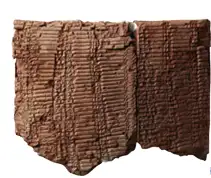
- Babylonians: The earliest known lists of perfect squares and cubes date to about 1700 BCE.
- Clay tablets: The lists helped people find square roots and cube roots for land measurement, building design and other geometric calculations.
Ancient Indian terms for powers
| Term | Meaning |
|---|---|
| Varga | A square figure or its area; also the square power, or the product of a number with itself. |
| Ghana | A solid cube; also the cube power, or the product of a number with itself three times. |
| Varga-varga | The fourth power. |
- Usage: These terms were used in India at least from the third century BCE.
- Aryabhata (499 CE): He used *varga* for a square figure and its area, and for the product of two equal quantities.
- Origin: The use of *varga* for a square power is linked to the shape of a square.
The historical meaning of “root”
Mula — The Sanskrit word *mula*, meaning a plant root, basis, cause or origin, was used for mathematical root-taking.
- Varga-mula: The term for square root; *ghana-mula* meant cube root.
- Usage in India: *Mula* was used for the mathematical idea of a root at least from the first century BCE.
- Later terms: The plant-root meaning was carried into Arabic as *jidhr* and Latin as *radix*.
- Pada: Another term for root, meaning foot, basis, cause or origin.
- Brahmagupta (628 CE): He explained that the *pada* (root) of a *krti* (square) is the quantity whose square it is.
Find the cube roots of \(27000\) and \(10648\). Also identify the cube roots of \(1331\), \(4913\), \(12167\) and \(32768\).
What is the least positive integer to multiply \(1323\) by to make it a perfect cube?
State true or false: (i) the cube of any odd number is even; (ii) no perfect cube ends in \(8\); (iii) a two-digit number may have a three-digit cube; (iv) a two-digit number may have a cube with seven or more digits; (v) cube numbers have an odd number of factors. Also identify the greatest of \(67^3-66^3\), \(43^3-42^3\), \(67^2-66^2\) and \(43^2-42^2\).
Quick recap
- The Babylonians had the earliest known lists of perfect squares and cubes, dating to about 1700 BCE.
- *Varga* referred to a square, its area and a square power; *ghana* referred to a cube and a cube power.
- Aryabhata discussed *varga* in 499 CE; these Sanskrit power terms were used in India from at least the third century BCE.
- *Mula* meant root and was used in India at least from the first century BCE; *varga-mula* and *ghana-mula* meant square root and cube root.
- Arabic *jidhr* and Latin *radix* also derive from words for a plant root; Brahmagupta discussed *pada* in 628 CE.
Summary
Square Numbers and Their Properties
Use this to find the square of a number.
Square Roots
Cubes and Cube Roots
Use this to find the cube of a number.
Cube root — A cube root is a number which, when cubed, gives the original number; it is written using \(\sqrt[3]{}\), so \(\sqrt[3]{27}=3\).
Prime Factorisation Tests
In the prime factorisation, each exponent must be a multiple of \(2\) for a perfect square, or a multiple of \(3\) for a perfect cube.
Check a Number by Prime Factorisation
- Write the number as a product of prime factors.
- Group identical factors in pairs to test for a perfect square, or in threes to test for a perfect cube.
- If no factors are left over, the number is the corresponding perfect power.
Find the positive square root of \(144\) by prime factorisation.
- Find the square root of \(144\) using prime factorisation.
- Factorise \(144\) into primes.$$144=2^4\times3^2$$
- Pair the identical prime factors and take one factor from each pair.$$144=(2\times2)(2\times2)(3\times3)$$
- Multiply the selected factors to obtain the positive square root.$$\sqrt{144}=2\times2\times3=12$$
Is \(196\) a perfect square? Find its positive square root using prime factors.
Is \(216\) a perfect cube? Use prime factorisation.
Find the cube root of \(125\).
Quick recap
- A square is a number multiplied by itself; a cube is a number multiplied by itself three times.
- Perfect squares can end only in \(0\), \(1\), \(4\), \(5\), \(6\), or \(9\), and have an even number of trailing zeros.
- Square root reverses squaring; the positive square root is written as \(\sqrt{}\).
- Cube root reverses cubing and is written as \(\sqrt[3]{}\).
- Prime factors must form pairs for a perfect square and groups of three for a perfect cube.
Formula sheet
Mathematics — ALL CHAPTERS
1
A Square And A Cube
2
Power Play
3
A Story of Numbers
4
Quadrilaterals
5
Number Play
6
We Distribute, Yet Things Multiply
7
Proportional Reasoning-1
1
Fractions in Disguise
2
The Baudhayana-Pythagoras Theorem
3
Proportional Reasoning-2
4
Exploring Some Geometric Themes
5
Tales by Dots and Lines
6
Algebra Play
7
Area