Class 12 Humanities . Geography . Fundamentals Of Human Geography . Tertiary and Quaternary Activities
Chapter 6: Tertiary And Quaternary Activities
Ch 6
Geography
Class 12 Humanities
Introduction And Types Of Tertiary Activities
Tertiary activities — Service activities that provide useful work rather than directly processing physical raw materials.
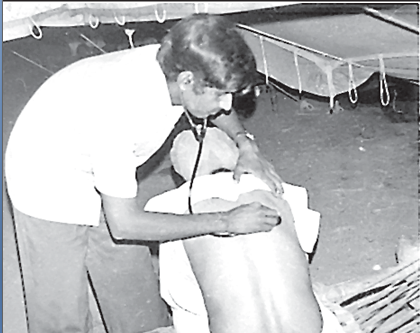
- Services are special skills or work provided in exchange for payment; healthcare, education, law, governance and recreation often require professional knowledge and training.
- Workers are central to this sector: many services are performed by skilled labour, trained professionals and consultants.
- Production means providing services that are consumed; its output is measured indirectly through wages and salaries.
- Exchange includes trade, transport and communication, which help overcome distance.
- Examples include plumbers, electricians, technicians, launderers, barbers, shopkeepers, drivers, cashiers, teachers, doctors, lawyers and publishers.
- Economic development shifts employment patterns: primary-sector work is more common in early development, while tertiary employment dominates in developed economies; a moderate share works in the secondary sector.
- Compared with secondary activities, tertiary work relies more on specialised skills, experience and knowledge than on machinery, production techniques and factory processes.
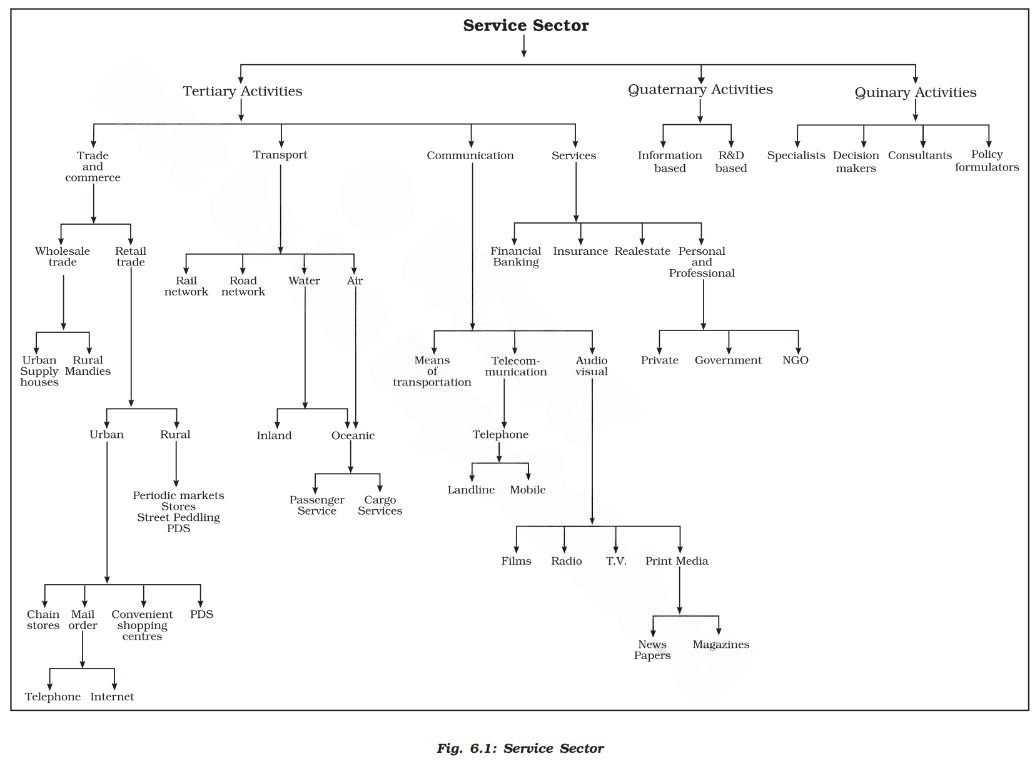
Trade and Commerce
Trade — The buying and selling of goods produced elsewhere; retail and wholesale trading are generally undertaken for profit.
- Trading centres are towns or cities where trade takes place. Trade developed from local barter to money-based exchange on an international scale, creating collection and distribution centres.
- Marketing centres are classified as rural or urban according to the goods and services they provide.
| Feature | Rural marketing centres | Urban marketing centres |
|---|---|---|
| Role and reach | Serve nearby settlements as local collection and distribution centres. | Provide goods and services to a wider population. |
| Character | Quasi-urban and relatively rudimentary; personal and professional services are limited. | Offer ordinary goods and a wider range of specialised services. |
| Markets and services | Often include mandis (wholesale markets) and retail areas; supply goods and services frequently needed by rural people. | Include markets for labour, housing and semi-finished or finished products, as well as educational and professional services. |
| Examples | Local collecting and distributing centres. | Teachers, lawyers, consultants, physicians, dentists and veterinary doctors. |
Periodic Markets
- Location: common in rural areas that lack regular markets.
- Operation: held on specified dates at set intervals, such as weekly or biweekly; markets may move from one place to another.
- Purpose: bring together nearby people to meet demand accumulated between market days; travelling shopkeepers can serve a large area.
Retail and Wholesale Trading
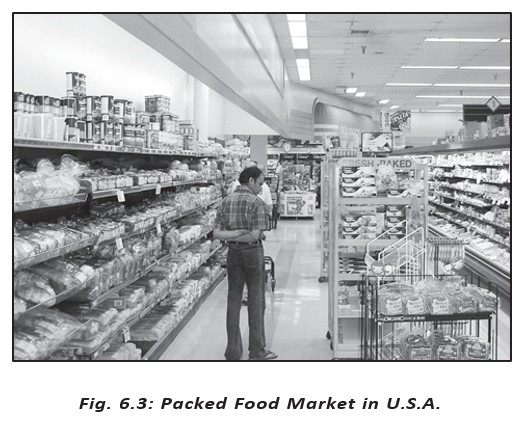
Retail trading — The sale of goods directly to consumers, usually through stores or other retail channels.
| Form | Examples or features |
|---|---|
| Store retailing | Sales from fixed establishments or stores devoted to selling. |
| Non-store retailing | Street peddling, handcarts, trucks, door-to-door sales, mail-order, telephone sales, vending machines and the internet. |
| Consumer cooperatives | The first major innovation in large-scale retailing. |
| Department stores | Department heads have authority to purchase goods and oversee sales in their sections. |
| Chain stores | Buy economically, may have goods made to their specifications, use skilled executive specialists and can test an idea in one store before applying it across many. |
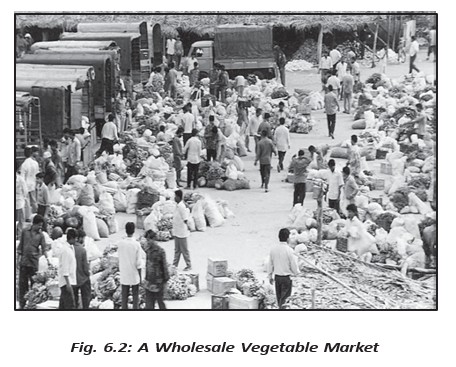
Wholesale trading — Bulk trade conducted through intermediary merchants and supply houses rather than directly through retail stores.
How Wholesale Trade Works
- Supply chain: most retailers obtain goods through wholesalers, though some large stores and chains buy directly from manufacturers.
- Credit: wholesalers may extend substantial credit, allowing retailers to operate largely on the wholesaler’s capital.
Transport
Transport — A service that physically carries people, materials and manufactured goods from one place to another.
- Purpose: transport meets the need for mobility and supports the production, distribution and consumption of goods.
- Economic effect: transportation significantly enhances the value of materials at different stages of the system.
- Modern requirement: societies need speedy and efficient transport systems.
| Measure | Meaning |
|---|---|
| Kilometre distance | Actual distance along the route. |
| Time distance | Time taken to travel along a route. |
| Cost distance | Expense of travelling along a route. |
Transport Networks and Accessibility
- Choice of transport: time or cost distance can determine which mode is selected.
- Isochrones are map lines joining places that take equal time to reach.
- Network: a system of connected transport routes made up of nodes and links.
- Node: a meeting point of two or more routes, a route’s origin or destination, or a sizeable town along it.
- Link: a road joining two nodes; a network with many links connects places more effectively.
| Factor | Effect or examples |
|---|---|
| Population size | A larger population creates greater demand for transport. |
| Settlement and economic locations | Cities, towns, villages, industrial centres and raw-material sources shape routes. |
| Trade patterns | The pattern of trade between places influences route connections. |
| Physical conditions | Landscape and climate affect route planning and transport. |
| Available funds | Funding affects the ability to overcome obstacles along a route. |
Communication
Communication services — Services that transmit words, messages, facts and ideas.
- Traditional link to transport: writing preserved messages that were carried by people, animals, boats, roads, railways and aircraft; transport routes therefore also act as lines of communication.
- New technologies: mobile telephony and satellites have made many communications independent of transport, but older systems remain important because they are inexpensive.
- Postal services: large volumes of mail continue to be handled by post offices around the world.
| Service or medium | Role and key point |
|---|---|
| Telecommunications | Modern technology greatly increased message speed, reducing delivery from weeks to minutes; mobile phones allow direct, instantaneous communication from almost anywhere. |
| Older technologies | Telegraph, Morse code and telex have largely become outdated. |
| Radio and television | Relay news, pictures and telephone calls to large audiences; mass media used for advertising and entertainment. |
| Newspapers | Report events from around the world. |
| Satellite communication | Relays information about Earth and from space. |
| Internet | Has transformed the global communication system. |
Services
Services — Activities that meet the needs of industry, individuals, or both.
- Service levels: low-order services, such as grocery shops and laundries, are widespread; high-order services, such as accounting, consultancy and physicians’ services, are more specialised.
- Labour type: gardeners, launderers and barbers mainly perform physical labour; teachers, lawyers, physicians and musicians mainly perform mental labour.
- Users: services are provided to individual consumers who can afford to pay, as well as to industry.
| Service type | Examples and features |
|---|---|
| Regulated and public services | Highways, bridges, firefighting, education and customer care may be provided or supervised by governments or companies. |
| Corporations | State and union legislation has established corporations to supervise or control transport, telecommunications, energy and water supply. |
| Professional services | Primarily healthcare, engineering, law and management. |
| Recreational and entertainment services | Location depends on the market: multiplexes and restaurants may locate in or near the Central Business District (CBD), while golf courses may choose cheaper land outside it. |
| Personal services | Help people manage daily life; workers often migrate from rural areas, may be unskilled and generally work in the unorganised sector. |
Personal Services: Example from India
- Domestic work includes housekeepers, cooks and gardeners.
- Mumbai dabbawala service delivers tiffin meals to about 1,75,000 customers across the city.
- Isochrone
- A map line joining places that take equal time to reach.
- Node
- A point in a transport network where routes meet or begin or end.
- Link
- A road or route connecting two nodes.
- CBD
- Central Business District; a market-oriented location for services such as restaurants and multiplexes.
How do tertiary activities differ from secondary activities?
What are the three ways of measuring transport distance?
Distinguish between retail and wholesale trading.
Quick recap
- Tertiary activities provide paid services, and their output is measured indirectly through wages and salaries.
- Rural marketing centres mainly serve nearby settlements; urban centres offer wider and more specialised goods and services.
- Retail trade sells directly to consumers; wholesale trade moves goods in bulk, usually through intermediaries.
- Transport distance is measured by route length, time or cost; networks consist of nodes connected by links.
- Communication combines transport-linked systems with telecommunications, satellites, mass media and the internet.
- Services can be low- or high-order, physical- or mental-labour based, regulated, professional, recreational or personal.
People Engaged In Tertiary Activities
Tertiary activities and employment
- Tertiary activities provide services and are present in all societies.
- Employment pattern: A higher percentage of workers provides services in more developed countries than in less developed countries.
- Trend: Employment in tertiary activities has increased, while employment in primary and secondary activities has remained unchanged or declined.
Tourism
Tourism — Travel undertaken for recreation rather than business.
Scale and economic effects of tourism
- Scale: Tourism is the world’s largest tertiary activity by registered jobs, with about 250 million jobs, and earns revenue equal to 40 per cent of total GDP.
- Local employment: Tourism creates work in accommodation, meals, transport, entertainment and shops serving visitors.
- Wider effects: Tourist demand supports infrastructure industries, retail trade and craft industries, including souvenir-making.
- Seasonality: Some destinations depend on favourable weather during holiday periods; others attract visitors throughout the year.
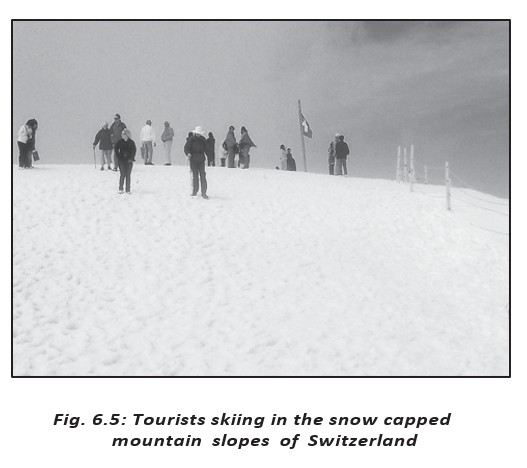
Tourist Regions and Attractions
| Region or destination | Examples or appeal |
|---|---|
| Warm coastal regions | Mediterranean Coast and the West Coast of India |
| Winter sports regions | Mainly mountainous areas suited to winter recreation |
| Scenic and natural areas | Scenic landscapes and national parks |
| Historic towns | Monuments, heritage sites and cultural activities |
| Attraction | What draws visitors |
|---|---|
| Climate | Beach tourists often seek warm, sunny weather. Mediterranean areas have higher temperatures, long sunshine hours and low rainfall during the peak holiday season. |
| Winter climate | Winter visitors may seek warmer conditions than at home or snow cover suitable for skiing. |
| Landscape | Mountains, lakes, spectacular coasts and landscapes relatively unaltered by people. |
| History and art | Ancient or picturesque towns, archaeological sites, castles, palaces and churches. |
| Culture and economy | Local customs attract visitors; low-cost services can make a region especially popular. |
Homestays as tourism businesses
- Homestays: Heritage homes in Goa, Madikere and Coorg in Karnataka have emerged as profitable accommodation businesses.
Medical Services for Overseas Patients
Medical travel to India
- 2005About 55,000 patients from the USA visited India for treatment—a small number compared with the millions of surgeries performed annually in the US healthcare system.
Medical services and outsourcing
- India’s role: India has emerged as a leading medical-tourism destination; metropolitan hospitals serve patients from around the world.
- Other beneficiaries: Medical tourism also benefits developing countries such as Thailand, Singapore and Malaysia.
- Medical outsourcing: Hospitals in India, Switzerland and Australia provide services such as reading radiology images and interpreting MRI and ultrasound tests.
- Potential benefit: Outsourcing can benefit patients when it improves quality or provides specialised care.
Medical tourism — International travel in which medical treatment is combined with tourism.
How tourism supports local economies
- Tourist visits increase demand for services
- -> local jobs grow in accommodation, meals, transport and entertainment
- -> infrastructure, retail trade and craft industries also benefit
- Tertiary activities
- Activities that provide services.
- Tourism
- Travel for recreation rather than business.
- Medical tourism
- Combining international travel with medical treatment.
- Medical outsourcing
- Having medical tests or data interpreted by service providers in another location.
How does tourism benefit local economies?
What is medical tourism, and what is medical outsourcing?
Quick recap
- Tertiary activities provide services, and their employment share is higher in more developed countries.
- Tourism creates jobs and revenue while supporting related industries.
- Climate, landscape, history, art, culture and cost shape a destination’s tourist appeal.
- Medical tourism combines treatment with international travel; India is a leading destination.
- Medical outsourcing can improve quality or provide specialised care when focused on patient benefit.
Quaternary Activities And Quinary Activities
Information and Knowledge Services
Quaternary activities — Knowledge-oriented services involving the collection, production and dissemination of information, research, development and specialised technical skills.
The Quaternary Sector
- Economic role: Along with the tertiary sector, it has become a major basis of economic growth, replacing much primary- and secondary-sector employment.
- Knowledge sector: Over half of workers in developed economies are employed in knowledge-related work; demand for information services has grown rapidly.
- Examples: Software development, statistics, tax consultancy, mutual fund management and medical transcription.
- Workplaces: Offices, schools, universities, hospitals, doctors’ offices, theatres, accounting firms and brokerages.
- Outsourcing: Quaternary work can be outsourced because it is generally not tied to resources, environmental conditions or a particular market location.
High-Level Decision-Making
Quinary activities — High-level services involving the creation and interpretation of ideas, data evaluation, assessment of new technologies and major decision-making.
Nature and Importance
- Decision-makers: Performed by senior business executives, government and policy officials, research scientists, and financial and legal consultants.
- Gold-collar professions: These workers use highly specialised, often highly paid skills.
- Economic importance: Their influence in advanced economies is much greater than their share of total workers.
- Difference from quaternary work: Quaternary activities focus broadly on information, research and technical expertise; quinary activities emphasise high-level interpretation, evaluation and decisions.
Outsourcing: Causes and Effects
- Countries with skilled workers, good English-language skills, lower wages and lower overhead costs attract outsourced work.
- Companies transfer work to these locations to reduce costs and improve efficiency.
- Call centres and other jobs have grown in India, China, Eastern Europe, Israel, the Philippines and Costa Rica.
- Outsourcing may reduce out-migration from destination countries, while job-seeking youths in outsourcing countries may resist the loss of domestic jobs.
- Comparative advantage helps outsourcing continue despite resistance.
Knowledge Process Outsourcing (KPO)
- KPO: Information-driven outsourcing that relies on highly skilled workers and specialised knowledge.
- KPO vs BPO: KPO is distinct from Business Process Outsourcing because it involves highly skilled workers.
- Examples: Research and development, e-learning, business research, intellectual-property research, legal work and banking.
- Benefit: KPO can help companies create additional business opportunities.
- New trend: Home shoring is presented as an alternative to outsourcing.
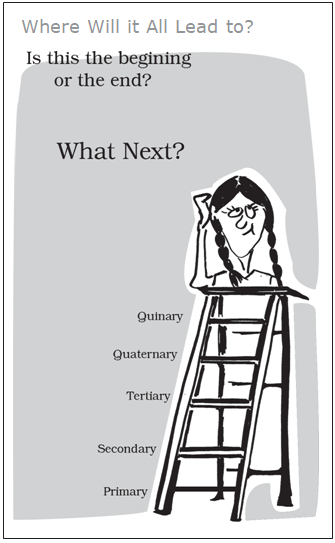
Outsourcing
Outsourcing — Contracting work to an outside agency to improve efficiency and reduce costs.
Offshoring and Outsourced Work
- Offshoring: Moving work to overseas locations; outsourcing and offshoring may occur together.
- Common outsourced work: Information technology, human resources, customer support, call-centre services, and sometimes manufacturing and engineering.
- Data processing: IT-related work that can be carried out in countries with skilled workers and lower wages.
- Example: A company in Hyderabad or Manila may complete a GIS project for a client in the United States or Japan.
| Collar colour | Nature of work |
|---|---|
| Red | Primary-sector work, often involving outdoor or manual labour |
| Gold | Highly skilled, specialised professional or executive work |
| White | Office, administrative or professional work |
| Grey | Work combining manual and technical or office skills |
| Blue | Manual or industrial work, often involving physical labour |
| Pink | Service-sector work, traditionally associated with care or personal services |
The Digital Divide
Digital divide — Unequal access to information and communication technology (ICT) and the opportunities and benefits it provides.
Where the Divide Occurs
- Between countries: Developed countries have generally advanced faster in providing ICT access, while developing countries have lagged behind.
- Within countries: Metropolitan centres may have better connectivity than peripheral rural areas; this is seen in large countries such as India and Russia.
- Factors: Economic, political and social differences affect how quickly countries provide ICT access and benefits to citizens.
Distinguish outsourcing from offshoring.
How does KPO differ from BPO? Give two examples of KPO work.
What is the digital divide?
Quick recap
- Quaternary activities centre on information, research, development and specialised technical knowledge.
- Quinary activities focus on interpreting ideas and data, evaluating technologies and making high-level decisions.
- Outsourcing contracts work to an outside agency; offshoring moves work overseas.
- KPO is skilled, knowledge-intensive outsourcing; examples include research, legal work and banking.
- Lower wages, available skills and lower overhead costs encourage companies to outsource work abroad.
- The digital divide is unequal ICT access between countries and within countries.
Geography — ALL CHAPTERS
1
Human Geography Nature And Scope
2
The World Population Distribution, Density And Growth
3
Human Development
4
Primary Activities
5
Secondary Activities
6
Tertiary And Quaternary Activities
7
Transport And Communication
8
International Trade
1
UNIT -I POPULATION DISTRIBUTION ,DENSITY, GROWTH AND COMPOSITION
2
UNIT -II HUMAN SETTLEMENTS
3
UNIT- III LAND RESOURCES AND AGRICULTURE
4
UNIT -III WATER RESOURCES
5
UNIT - III MINERAL AND ENERGY RESOURCES
6
UNIT -III PLANNING AND SUSTAINABLE DEVELOPMENT IN INDIAN CONTEXT
7
UNIT -IV TRANSPORT AND COMMUNICATION
8
UNIT -IV INTERNATIONAL TRADE
9
UNIT - V GEOGRAPHICAL PERSPECTIVE ON SELECTED ISSUES AND PROBLEMS