SOLUTIONS

2022 BOARD EXAM

CBSE Class 10 English Board Paper 2022 — Set 1 Solutions

2022

English

Class 10

CBSE EXAMINATION PAPER-2022

ENGLISH

(Solved)

Time allowed : 3 hours

Maximum Marks : 46

General Instructions :

Read the following instructions carefully and follow them :

  1. This question paper contains 19 questions. All questions are compulsory.
  2. This question paper is divided into 7 sections.
  3. Section A – questions number 1 to 2 are unseen passage
  4. Section B – questions number 3 to 4 are case based questions
  5. Section C – questions number 5 to 11 are short answer
  6. Section D – questions number 12 to 13 are grammar short
  7. Section E – questions number 14 to 16 are long answer
  8. Section F – questions number 17 to 17 are letter
  9. Section G – questions number 18 to 19 are paragraph
  10. There is no overall choice given in the question paper. However, an internal choice has been provided in few questions.
  11. Use of calculator is NOT allowed.

Section A

Question 1.

Read the passage given below :

Sifting through the sands of time

1 When you’re on the beach, you're stepping on ancient mountains, skeletons of marine animals, even tiny diamonds. Sand provides a mineral treasure-trove, a record of geology’s earth-changing processes.

2 Sand : as children we play on it and as adults we relax on it. It is something we complain about when it gets in our food, and praise when it’s moulded into castles. But we don’t often look at it. If we did, we would discover an account of a geological past and a history of marine life that goes back thousands and, in some cases, millions of years.

3 Sand covers not just sea-shores, but also ocean beds, deserts and mountains. It is one of the most common substances on Earth. And it is a major element in man-made items too — concrete is largely sand, while glass is made of little else.

4 What exactly is sand ? Well, it is larger than fine dust and smaller than shingle. Depending on its age and origin, a particular sand can consist of tiny pebbles or porous granules. Its grain may have the shape of stars or spirals, their edges jagged or smooth. They have come from the erosion of rocks, or from the skeletons of marine organisms which accumulate on the bottom of the oceans, or even from volcanic eruptions.

5 Colour is another clue to sand’s origins. If it is a dazzling white, its grains may be derived from nearby coral outcrops, from crystalline quartz rocks or from gypsum. On Pacific islands jet black sands form from volcanic minerals.

6 Usually, the older the granules, the finer they are and the smoother the edges. The fine, white beaches, for instance, are recycled from sandstone several hundred million years old. Perhaps they will be stone once more, in another few hundred million.

7 Sand is an irreplaceable industrial ingredient whose uses are legion : but it has one vital function you might never even notice. Sand cushions our land from the sea’s impact, and geologists say it often does a better job of protecting our shores than the most advanced coastal technology. On the basis of your understanding of the passage , answer any five questions from the six given below:

(1)

How is sand a ‘treasure-trove’ ?

[1 Mark]
Answer: Sand is called a 'treasure-trove' because it contains a lot of valuable things hidden within it, such as ancient mountains, skeletons of marine animals, tiny diamonds, and minerals. It holds important information about Earth's geology and the history of marine life, acting as a natural record of processes that have shaped our planet over millions of years.
Key Points: Sand contains valuable materials like ancient mountains, marine animal skeletons, and tiny diamonds-Sand reveals important geological history and Earth-changing processes-It holds records of marine life and natural history dating back millions of years

(2)

How is sand both a pain and a pleasure ?

[1 Mark]
Answer: Sand is a pleasure because children enjoy playing with it, and adults like to relax on sandy beaches. However, sand can be a pain when it gets into our food or belongings, making them dirty and uncomfortable.
Key Points: Sand is pleasurable for play and relaxation-Sand can be irritating when it gets into food or belongings-The dual nature of sand as enjoyable and troublesome

(3)

Name two man-made materials that contain sand.

[1 Mark]
Answer: Two man-made materials that contain sand are concrete and glass.
Key Points: Mention concrete as a material largely made of sand - Mention glass as a material made mostly from sand - Both are common man-made materials involving sand

(4)

List the different shapes of sand.

[1 Mark]
Answer: The different shapes of sand grains include stars, spirals, jagged edges, and smooth edges.
Key Points: Grains of sand can have star shapes - Some grains are spiral-shaped - Edges of sand grains can be jagged - Other grains have smooth edges

(5)

What is the origin of white sand ?

[1 Mark]
Answer: White sand originates from nearby coral outcrops, crystalline quartz rocks, or gypsum. These materials give white sand its dazzling white color.
Key Points: White sand is dazzling white in color- Derived from coral outcrops- Comes from crystalline quartz rocks- Can also come from gypsum

(6)

In what ways are older granules different from recent granules ?

[1 Mark]
Answer: Older granules are generally finer in size and have smoother edges compared to recent granules. The passage explains that as sand grains get older, they become more worn down and polished over time.
Key Points: Older granules are finer-Older granules have smoother edges-Recent granules are coarser and have jagged edges
Question 2.

Read the passage given below :

Extraction And Purification Of Drinking Water

1 Some consumers choose to purchase bottled drinking water, rather than relying on city tap water supplies. Bottled water has typically been extracted from wunderground sources. If water exists underground, but has no natural exit points, bottling companies may construct a water table well by drilling down to extract water from an unconfined aquifer. This is done when the Earth’s natural water level — known as a water table — is much lower than the Earth’s surface. In some cases, as with a valley or gully on a mountain, the level of the water table may be higher than the Earth’s surface, and a natural spring can emerge. Bottling companies are permitted to extract this water from a hole drilled into the underground spring, but the composition of the water must be identical to that of the naturally surfacing variety nearby.

2 Artesian water is drawn from a confined aquifer, a deep underground cavity of porous rock that holds water and bears pressure from a confining layer above it. This water can be accessed if companies drill a vertical channel down into the confined aquifer. Due to the pressurised nature of this aquifer, water will often rise up from within it and form a flowing artesian well, which appears as an explosive fountain at the Earth’s surface. However, this only occurs when the surface is lower than the natural water table. If the surface is not lower than the natural water table, it is still possible to draw artesian water by using an extraction pump.

3 Some bottled water is advertised as ‘purified’, which means it has been subjected to a variety of cleansing processes. A common filtering procedure, known as reverse osmosis, involves the water being pressed through microscopic membranes that prevent larger contaminants from passing through. The microscopic size of these holes is such that they can even obstruct germs, but they are most effective against undesirable materials such as salt, nitrates and lime scale. One disadvantage of reverse osmosis is that a lot of unusable water is generated as a by-product of the procedure; this must be thrown away.

4 For treating pathogens, an impressive newer option is ultraviolet (UV) light. Powerful UV light has natural antibacterial qualities, so this process simply requires water to be subjected to a sufficient strength of UV light as it passes through a treatment chamber. The light neutralises many harmful germs by removing their DNA, thereby impeding their ability to replicate. A particularly impressive quality of UV light is its ability to neutralise highly resistant viral agents such as hepatitis.

5 The overall effects of UV light treatment are variable, however, which leaves many municipal water treatment processes relying on chlorination. Its powerful and comprehensive antimicrobial effect notwithstanding, chlorination is also extremely inexpensive and remains the only antimicrobial treatment capable of ensuring water remains contaminant-free all the way through the pipes and to the taps of domestic homes. Many members of the public remain suspicious of water that has been treated with such a harsh chemical. Its ease of use and affordability has meant that chlorine often plays an important role in making tainted water supplies safe for consumption immediately after natural disasters have occurred.

On the basis of your understanding of the passage, answer any five questions from the six given below :

(1) Under what conditions does a natural spring emerge ?

[1 Mark]
Answer: A natural spring emerges when the level of the water table is higher than the Earth's surface, such as in a valley or gully on a mountain.
Key Points: Water table level higher than Earth's surface - Natural spring forms in valleys or gullies on mountains - Water flows out naturally from underground

(2)

What is a confined aquifer ?

[1 Mark]
Answer: A confined aquifer is a deep underground cavity of porous rock that holds water, trapped under pressure by a confining layer above it.
Key Points: Confined aquifer definition- Located deep underground- Porous rock holding water- Water is under pressure- Covered by a confining layer

(3)

What forms a flowing artesian well ?

[1 Mark]
Answer: A flowing artesian well is formed when water is drawn from a confined aquifer that is under pressure, and the Earth's surface is lower than the natural water table. This pressure causes the water to rise up through the drilled channel and flow out naturally at the surface.
Key Points: Confined aquifer-Pressurized water-Earth's surface lower than water table-Water rises naturally-Forms flowing artesian well

(4)

Explain the term ‘purified’ water.

[1 Mark]
Answer: Purified water is water that has been cleaned and filtered to remove harmful substances such as salts, nitrates, germs, and lime scale. This is done through various processes like reverse osmosis, which uses microscopic membranes to block contaminants and germs, making the water safe and clean for drinking.
Key Points: Purified water is cleaned water-Purification removes harmful substances and germs-Common purification process is reverse osmosis-Removes salts, nitrates, lime scale, and germs-Makes water safe for consumption

(5)

How are pathogens treated ?

[1 Mark]
Answer: Pathogens in water are treated using ultraviolet (UV) light. UV light has natural antibacterial qualities that neutralize harmful germs by removing their DNA, which stops them from replicating. This method is effective even against highly resistant viruses like hepatitis.
Key Points: Use of ultraviolet (UV) light-UV light acts as a natural antibacterial agent-Removes DNA of germs to prevent replication-Effective against resistant viruses like hepatitis

(6)

Why is municipal water treated by chlorination ?

[1 Mark]
Answer: Municipal water is treated by chlorination because chlorination is a powerful and inexpensive antimicrobial method that ensures the water remains free from contaminants all the way through the pipes to households. It helps to keep the water safe for consumption, especially after natural disasters.
Key Points: Chlorination is an effective antimicrobial treatment-Chlorination is inexpensive and easy to use-It keeps water contaminant-free through pipelines-It is important for making tainted water safe after natural disasters

Section B

Question 3. Read the passage given below : Sifting through the sands of time 1 When you’re on the beach, you’re stepping on ancient mountains, skeletons of marine animals, even tiny diamonds. Sand provides a mineral treasure-trove, a record of geology’s earth-changing processes. 2 Sand : as children we play on it and as adults we relax on it. It is something we complain about when it gets in our food, and praise when it’s moulded into castles. But we don’t often look at it. If we did, we would discover an account of a geological past and a history of marine life that goes back thousands and, in some cases, millions of years. 3 Sand covers not just sea-shores, but also ocean beds, deserts and mountains. It is one of the most common substances on Earth. And it is a major element in man-made items too — concrete is largely sand, while glass is made of little else. 4 What exactly is sand ? Well, it is larger than fine dust and smaller than shingle. Depending on its age and origin, a particular sand can consist of tiny pebbles or porous granules. Its grain may have the shape of stars or spirals, their edges jagged or smooth. They have come from the erosion of rocks, or from the skeletons of marine organisms which accumulate on the bottom of the oceans, or even from volcanic eruptions. 5 Colour is another clue to sand’s origins. If it is a dazzling white, its grains may be derived from nearby coral outcrops, from crystalline quartz rocks or from gypsum. On Pacific islands jet black sands form from volcanic minerals. 6 Usually, the older the granules, the finer they are and the smoother the edges. The fine, white beaches, for instance, are recycled from sandstone several hundred million years old. Perhaps they will be stone once more, in another few hundred million. 7 Sand is an irreplaceable industrial ingredient whose uses are legion : but it has one vital function you might never even notice. Sand cushions our land from the sea’s impact, and geologists say it often does a better job of protecting our shores than the most advanced coastal technology.

(1) How is sand a ‘treasure-trove’ ?

[1 Mark]
Answer: Sand is called a "treasure-trove" because it holds many valuable things like tiny diamonds, ancient mountains, and skeletons of marine animals under it.
It tells us about Earths geological history and the life forms that lived millions of years ago as mentioned in the passage.
Hence, sand is like a natural storehouse of minerals and history that scientists study to understand Earths past.
Key Points: Sand contains valuable minerals and ancient remains - Sand records Earths geological past - Sand reveals history of marine life and geology

(2) List the different shapes of sand.

[1 Mark]
Answer: According to the passage, sand grains can have different shapes such as stars or spirals. Their edges can be jagged or smooth. These shapes depend on the sand's origin and age.
Key Points: sand grains have star shapes - sand grains can be spiral shaped - edges of grains can be jagged or smooth

(3) Name two man-made materials that contain sand.

[1 Mark]
Answer: Answer: Concrete and glass are two man-made materials that contain sand. As mentioned in the passage, concrete is largely made of sand and glass is made mostly of sand as its main ingredient.
Key Points: Concrete contains sand - Glass is mainly made from sand - Sand is an important industrial ingredient

(4) How is sand both a pain and a pleasure ?

[1 Mark]
Answer: Sand is a pleasure because we enjoy playing and relaxing on it at the beach, as mentioned in the passage. However, sand can be a pain when it gets in our food or clothes, causing discomfort. Thus, sand gives us joy during fun activities but also causes minor troubles, showing it is both a pain and a pleasure.
Key Points: Sand is enjoyable for play and relaxation - Sand can be annoying when it gets in food or clothes - Sand has both positive and negative effects

(5) What is the origin of white sand ?

[1 Mark]
Answer: Answer: White sand originates from grains that come from nearby coral outcrops, crystalline quartz rocks, or gypsum as mentioned in the passage. These grains give the sand its dazzling white colour. Older sands on white beaches are recycled from sandstone that is several hundred million years old.
This shows that white sand is made from natural materials like coral and rocks, representing a long geological history.
Key Points: White sand derives from coral outcrops - White sand grains come from crystalline quartz rocks or gypsum - White sand on beaches is recycled from old sandstone

(6)

In what ways are older granules different from recent granules ?

[1 Mark]
Answer: Older granules are finer and have smoother edges compared to recent granules. This is because older sand grains have been worn down over a longer time by natural forces like erosion. As mentioned in the passage, fine white beaches come from old sandstone several hundred million years old, showing how older granules change shape and size with time.
Key Points: Older granules are finer - Older granules have smoother edges - Older granules are recycled from ancient rocks
Question 4. Read the passage given below : Extraction And Purification Of Drinking Water 1 Some consumers choose to purchase bottled drinking water, rather than relying on city tap water supplies. Bottled water has typically been extracted from underground sources. If water exists underground, but has no natural exit points, bottling companies may construct a water table well by drilling down to extract water from an unconfined aquifer. This is done when the Earth’s natural water level — known as a water table — is much lower than the Earth’s surface. In some cases, as with a valley or gully on a mountain, the level of the water table may be higher than the Earth’s surface, and a natural spring can emerge. Bottling companies are permitted to extract this water from a hole drilled into the underground spring, but the composition of the water must be identical to that of the naturally surfacing variety nearby. 2 Artesian water is drawn from a confined aquifer, a deep underground cavity of porous rock that holds water and bears pressure from a confining layer above it. This water can be accessed if companies drill a vertical channel down into the confined aquifer. Due to the pressurised nature of this aquifer, water will often rise up from within it and form a flowing artesian well, which appears as an explosive fountain at the Earth’s surface. However, this only occurs when the surface is lower than the natural water table. If the surface is not lower than the natural water table, it is still possible to draw artesian water by using an extraction pump. 3 Some bottled water is advertised as ‘purified’, which means it has been subjected to a variety of cleansing processes. A common filtering procedure, known as reverse osmosis, involves the water being pressed through microscopic membranes that prevent larger contaminants from passing through. The microscopic size of these holes is such that they can even obstruct germs, but they are most effective against undesirable materials such as salt, nitrates and lime scale. One disadvantage of reverse osmosis is that a lot of unusable water is generated as a by-product of the procedure; this must be thrown away. 4 For treating pathogens, an impressive newer option is ultraviolet (UV) light. Powerful UV light has natural antibacterial qualities, so this process simply requires water to be subjected to a sufficient strength of UV light as it passes through a treatment chamber. The light neutralises many harmful germs by removing their DNA, thereby impeding their ability to replicate. A particularly impressive quality of UV light is its ability to neutralise highly resistant viral agents such as hepatitis. 5 The overall effects of UV light treatment are variable, however, which leaves many municipal water treatment processes relying on chlorination. Its powerful and comprehensive antimicrobial effect notwithstanding, chlorination is also extremely inexpensive and remains the only antimicrobial treatment capable of ensuring water remains contaminant-free all the way through the pipes and to the taps of domestic homes. Many members of the public remain suspicious of water that has been treated with such a harsh chemical. Its ease of use and affordability has meant that chlorine often plays an important role in making tainted water supplies safe for consumption immediately after natural disasters have occurred.

(1) Under what conditions does a natural spring emerge?

[1 Mark]
Answer: A natural spring emerges when the level of the water table is higher than the Earth’s surface, such as in a valley or gully. In these cases, water flows naturally out of the ground without pumping, as explained in the passage.
Key Points: water table higher than Earth’s surface - natural spring occurs - water exits naturally from underground

(2) What forms a flowing artesian well?

[1 Mark]
Answer: Answer: A flowing artesian well is formed when water rises up from a confined aquifer due to natural pressure. This pressure forces the water to flow out as a fountain at the Earth’s surface if the ground level is lower than the water table, as explained in the passage under point 2.
Key Points: Flowing artesian well is formed by water rising naturally from a confined aquifer - Due to pressure from a confining layer above the aquifer - Water flows out when surface is lower than water table

(3) What is a confined aquifer?

[1 Mark]
Answer: Confined aquifer is a deep underground cavity of porous rock that holds water under pressure from a layer above. It is accessed by drilling a vertical channel. Due to the pressure, water can rise up naturally, forming an artesian well, or be pumped out.
This definition is based on Paragraph 2 of the passage.
Key Points: Deep underground porous rock cavity - Holds water under pressure - Accessed by drilling vertical channel

(4) Explain the term ‘purified’ water.

[1 Mark]
Answer: Purified water is water that has been cleaned by various methods to remove harmful substances.
As per the passage, one common method is reverse osmosis, where water is pressed through tiny membranes that block contaminants like salt, nitrates and germs.
This process helps make drinking water safe and clean to use.
Key Points: Purified water is cleaned water - Reverse osmosis used for purification - Removes contaminants and germs

(5) How are pathogens treated?

[1 Mark]
Answer: Pathogens in water are treated using ultraviolet (UV) light which kills harmful germs by damaging their DNA as explained in the passage. Also, chlorination is used for making water safe because it kills microbes and keeps water clean till it reaches taps.
Key Points: Pathogens treated by UV light - UV light removes DNA of germs - Chlorination kills microbes and keeps water safe

(6)

Why is municipal water treated by chlorination ?

[1 Mark]
Answer: Municipal water is treated by chlorination because it is a powerful and inexpensive method to kill harmful microbes and keep water safe. Chlorine ensures water stays clean all through the pipes to homes, making it reliable and effective for public health.

Key Points: chlorination is powerful antimicrobial - inexpensive and easy to use - keeps water safe through pipes to taps

Section C

Question 5. How, according to Buddha, can one obtain peace of mind? (The Sermon at Benares)
[2 Marks]
Answer: According to Buddha, one can obtain peace of mind by understanding and accepting the nature of suffering and the transient nature of life. In the Sermon at Benares, Buddha taught that attachment to worldly things causes suffering because everything is impermanent. To achieve peace of mind, one must free oneself from desires, attachments, and ignorance. He emphasized living a life of moderation, ethical conduct, meditation, and wisdom. Buddha illustrated this teaching with the story of the mustard seed, where a girl could not find a household free from sorrow, showing that suffering is universal. Recognizing this truth helps one develop compassion and detachment, leading to inner peace and enlightenment.
Key Points: Understand nature of suffering - Accept impermanence of life - Free from desires and attachments - Practice moderation and ethical conduct - Develop wisdom and compassion
Question 6. Write a brief character sketch of Lomov. (The Proposal)
[2 Marks]
Answer: Lomov is a nervous and excitable man who appears worried and suffers from various physical ailments like palpitations and a numb foot. He is overly concerned about social propriety and marriage, which makes him anxious. Despite his nervousness, he is earnest in his intentions to marry Natalya and values good qualities like housekeeping and education in a partner. His conversations often reveal his impatience and quick temper, especially when arguing with Natalya over trivial matters. Lomov’s character is a mixture of enthusiasm, vulnerability, and comic impatience, making him both amusing and relatable.
Key Points: Lomov is nervous and excitable-Lomov suffers from physical ailments like palpitations-Lomov is anxious about marriage and social propriety-He values Natalya's qualities such as housekeeping and education-He has a quick temper and argues over trivial subjects-He is earnest and sincere in seeking marriage-Lomov's character adds a comic element to the play
Question 7.

What are the essential qualities for becoming a scientist, according

to Ebright’s teacher ? (The Making of a Scientist)

[2 Marks]
Answer: According to Ebright’s teacher, the essential qualities for becoming a scientist include having a first-rate mind, strong curiosity, and the will to win for the right reasons. These qualities guide a scientist to explore, learn, and persevere even when faced with failures. For example, Richard Ebright, despite not winning at a science fair in seventh grade, continued to pursue his scientific interests with enthusiasm and determination. His curiosity was ignited by a book called The Travels of Monarch X, and with persistence and the right mindset, he made significant progress in science. Ebright’s teacher emphasizes that real science requires not just talent but also passion, honesty, and dedication to pursuing truth, which are key elements in making a successful scientist.
Key Points: First-rate mind-Curious nature-Will to win for the right reasons-Persistence after failure-Passion for learning-Honesty and dedication to truth-Inspired by scientific curiosity
Question 8. Describe the feelings of the young lawyer when he came to know the reality of the hack driver.
[2 Marks]
Answer: The young lawyer felt a profound sadness upon discovering the reality of the hack driver. Unlike the fear shown by the greedy man or the anger of the rich man, his feelings were not about the material loss but about the breach of trust. He experienced disappointment and sorrow, realizing that the theft was not just about money but symbolized a loss of faith in someone he had trusted. This emotional response reflects his deeper values and understanding of human relationships beyond mere financial aspects.
Key Points: Young lawyer felt sadness not anger or fear-The sadness was due to loss of trust, not money-Contrast with other reactions: greed, anger, acceptance-Reveals the lawyer’s deeper understanding and sensitivity towards human values-The emotional impact of betrayal more than material loss
Question 9. What attracts visitors to Coorg? (Glimpses of India)
[2 Marks]
Answer: Coorg, also known as Kodagu, attracts visitors with its breathtaking natural beauty, including misty hills, lush evergreen rainforests, and sprawling coffee plantations. The region's unique cultural heritage, seen in traditional crafts like basket weaving and the presence of indigenous communities, adds to its charm. Visitors can explore attractions like the sixty-four-acre Nisargadhama island via a rope bridge and encounter Buddhist monks from India’s largest Tibetan settlement at nearby Bylakuppe. The peaceful environment with colonial bungalows tucked under tree canopies and opportunities to stay on coffee estates or resorts provides an authentic Coorgi experience, making it a popular travel destination.
Key Points: Misty hills and lush evergreen rainforests-Coffee plantations and estates-Traditional basket weaving and local culture-Nisargadhama island accessed by a rope bridge-Buddhist monks from nearby Bylakuppe colonial bungalows and resorts for authentic stay
Question 10.

“Don’t bite your nails Amanda !

Don’t hunch your shoulders Amanda !”

What does this reflect about Amanda’s mother

[2 Marks]
Answer: These statements reflect that Amanda’s mother is very concerned about Amanda’s manners and appearance. She pays close attention to how Amanda behaves and grooms herself, wanting her to behave properly and present herself well. The repeated instructions indicate that the mother is quite strict and possibly a bit nagging, focusing on correcting Amanda’s habits such as biting nails, slouching, and sulking. This shows that she cares about Amanda’s upbringing and discipline but also suggests she may be overcritical or impatient.
Key Points: Amanda’s mother is concerned about Amanda’s manners-Attentive to Amanda’s posture and habits-Strict and nagging tone-Cares about discipline and appearance-Wants Amanda to behave properly
Question 11.

Walt Whitman in ‘Animals’ shows his preference for living with

animals. Justify.

[2 Marks]
Answer: In the poem 'Animals' by Walt Whitman, the poet expresses his preference for living in harmony with animals rather than humans. He admires the innocence and honesty of animals, who live without pretense or cruelty, unlike humans who often behave willfully and subject animals to suffering. Whitman suggests that animals possess a natural goodness and freedom that humans lack. He indirectly criticizes how humans impose their will and control over animals, causing them harm. The poet envies animals for their simple, sincere existence and highlights qualities like loyalty and companionship found especially in dogs and cats. Overall, Whitman’s portrayal shows that he values the genuine, peaceful life of animals and prefers their company to human complexities and injustices.
Key Points: Preference for animals over humans - Animals' innocence and honesty - Criticism of human willfulness and cruelty - Animals' natural goodness and freedom - Qualities of dogs and cats like loyalty and companionship - Indirect commentary on subjecting animals to suffering

Section D

Question 12.

The following paragraph has not been edited. There is one error in each line. Identify the error and write its correction against the correct blank number. Remember to underline the correction.

The first one has been done for you.

While the worst for COVID-19 in India (e.g.) for of

seems to be over, one may remain (a) __________ __________

vigilant and response quickly to (b) __________ __________

any future spike of cases. (c) __________ __________

[3 Marks]
Answer:

The errors and their corrections are as follows:

While the worst for COVID-19 in India (e.g.) of - Corrected to: While the worst of COVID-19 in India seems to be over.

(a) remain remain vigilant - Correct phrase: remain vigilant

(b) response respond quickly - Correct verb form: respond quickly

(c) to to any future spike of cases - Correct preposition retained.

Also, use a modal once in the sentence: "one must remain vigilant and respond quickly to any future spike of cases."

Hence the corrected paragraph is:
"While the worst of COVID-19 in India seems to be over, one must remain vigilant and respond quickly to any future spike of cases."

Key Points: Identify one error in each line- Correction with underlining- Use correct preposition ('of' instead of 'for')- Use correct verb form ('respond' instead of 'response')- Use modal verb once ('must')- Correct phrase: 'remain vigilant'- Form the corrected sentence clearly
Question 13.

Read the conversation below and complete the passage that follows:

Rahul : It is difficult to fight against peer pressure. Youth easily gets influenced by the lifestyle of its peers.

Radhika : Peer pressure has its benefits as well. Our peers also motivate and inspire us to do better and work hard.

Rahul said that it was difficult to fight against peer pressure as (a) ___________. Radhika replied that peer pressure had its benefits as well it (b) ___________.

[2 Marks]
Answer: Rahul said that it was difficult to fight against peer pressure as youth easily get influenced by the lifestyle of their peers. Radhika replied that peer pressure had its benefits as well; it motivates and inspires us to do better and work hard.
Key Points: Rahul's view on difficulty in resisting peer pressure - influence of peers' lifestyle-Radhika's view on positive aspects of peer pressure - motivation and inspiration to improve

Section E

Question 14.

Imagine you are Bholi and you have been invited to give a speech on the importance of girl education. Write the speech on ‘Girl Education and Empowerment’.

[4 Marks]
Answer:

Respected Principal, teachers, and my dear friends,

Today I stand before you as Bholi to speak on a very important topic: Girl Education and Empowerment. Education is the key to a bright future for every child, especially girls. Unfortunately, in many places, girls are not treated equally and often denied the right to education. This creates many social barriers and inequalities. However, with encouragement and proper support, like the help I received from my teacher, girls can overcome these barriers and achieve great things.

Girl education empowers girls to become confident, independent, and capable individuals. Educated girls can make informed decisions about their lives and contribute meaningfully to society. The Government of India has also recognized this importance by launching the Beti Bachao Beti Padhao scheme to save and educate the girl child.

By educating girls, we can break the cycle of poverty, reduce child marriages, and improve health and economic conditions in our communities. Everyone has a role to play in changing social attitudes towards girls. We must encourage every girl to dream big and never let difficulties discourage her.

Let us all pledge to support girl education and work together for an empowered and equal society where every girl gets her right to learn and shine.

Thank you.

Key Points: Importance of education for girls-Overcoming social barriers like Bholi with teacher's support-Girls not treated equally with boys-Role of Beti Bachao Beti Padhao scheme-Benefits of educating girls like empowerment and independence-Need to change social attitudes-Personal and collective responsibility to support girl education-Encouragement to girls to dream big and not be discouraged
Question 15. Valli was a mature girl and ahead of her age. Justify the statement with evidence from the text. (Madam Rides the Bus)
[4 Marks]
Answer: Valli can be described as a mature girl who is ahead of her age, as seen from her actions and thoughts in the story "Madam Rides the Bus." From the beginning, she displays independence and confidence by deciding to pay her own bus fare and travel to the city alone, even though others doubt a mere girl could do so. When the conductor and passengers call her 'madam' or treat her differently, she reacts with a mix of shyness and self-assurance, showing her awareness of grown-up behavior. Furthermore, Valli refuses to make friends with the elderly woman on the bus, likely because she is thoughtful and selective about her company. Her command to 'stop the bus' and her assertion that she is not a child reflect her mature disposition and desire to be treated with respect. Additionally, Valli enjoys the bus ride thoroughly, observing everything with curiosity and excitement, which indicates her keen interest in understanding the world beyond her village. Her ability to keep her thoughts to herself, such as when she refuses to look out of the window on the way back, reveals an inner control and maturity that is beyond her years. These examples from the text clearly show that Valli is a mature and forward-thinking girl.
Key Points: Valli pays her own fare and travels alone - Valli insists on being called 'madam', not a child - Valli feels shy but confident among passengers - Valli enjoys the bus ride and observes keenly - Valli refuses to make friends with elderly woman thoughtfully - Valli asserts her maturity by her actions and words - Valli controls her emotions, like refusing to look out the window on the way back
Question 16.

Matilda realised that one little act of negligence can lead to total ruin. What do you learn from this and how would you move on in life ? (The Necklace)

[4 Marks]
Answer:

In 'The Necklace' by Guy de Maupassant, Matilda's life is drastically changed due to a moment of carelessness when she loses the borrowed necklace. This one act of negligence leads to her and her husband's downfall, as they spend years living in poverty to replace the necklace. From Matilda’s experience, we learn the importance of honesty, responsibility, and being careful with other people's belongings. Instead of hiding the truth and borrowing money to replace the necklace, confessing honestly to her friend would have helped avoid the severe consequences. Moving forward in life, it is essential to take accountability for our actions and learn from our mistakes. We should be truthful, cautious, and value what we have rather than constantly longing for materialistic things. Misplaced pride often results in unnecessary suffering, as seen in Matilda’s case. By practicing humility and integrity, we can prevent small errors from becoming catastrophic. Thus, this story teaches us to be mindful and responsible in life, making wise choices instead of hiding problems, which ultimately leads to peace and growth.

Key Points: Matilda's negligence led to total ruin-She lost a borrowed necklace which they replaced by living in poverty-Importance of honesty and responsibility-Confessing the truth would have avoided tragedy-Lesson to be careful and accountable in life-Value contentment over materialism-Pride can cause unnecessary suffering-Be humble and truthful to avoid big consequences

Section F

Question 17.

You are Rita/Rahul and you came across the following information on your local club notice-board:

Better Living

How to tackle stress, build concentration and remain fit and healthy Yoga, a way of life Join free yoga camp for students.

You wish to enrol but require more information. Write a letter to the Yoga Institute, M.G. Road, Pune, enquiring details of timing, batch size, eligibility, etc. for joining the course.

[5 Marks]
Answer:

Rita
12, Bloomfield Street,
Pune - 411001.

15 May 2024

The Director,
Yoga Institute,
M.G. Road,
Pune.

Subject: Inquiry about Yoga Camp for Students

Dear Sir/Madam,

I came across the notice about the free yoga camp for students organized by your institute. I am very interested in joining this camp to learn how to tackle stress, improve concentration, and remain fit and healthy.

Kindly provide me with the details about the camp timing, the duration of each session, and the total length of the course. I would also like to know the batch size and whether there are any eligibility criteria for participation. Additionally, please inform me about the exercises included and the level of experience required.

I look forward to your response so that I can join the camp and benefit from this opportunity.

Thank you.

Yours faithfully,
Rita

Key Points: Mention your name and address- Date of writing letter- Address the letter to the Yoga Institute at M.G. Road, Pune- Mention the reference of the notice you saw about the free yoga camp for students- Express your interest in joining the camp- Ask about the course timings, batch size, and eligibility criteria- Request additional information on duration and course details- Polite closing and signature

Section G

Question 18.

Internet provides every information one seeks at the click of a button. As a result children today are living in a comfort zone. According to research, this will result in long-term consequences which will affect their brain. Based on the following chart, write an analytical paragraph in not more than 120 words on activities to improve brain power :
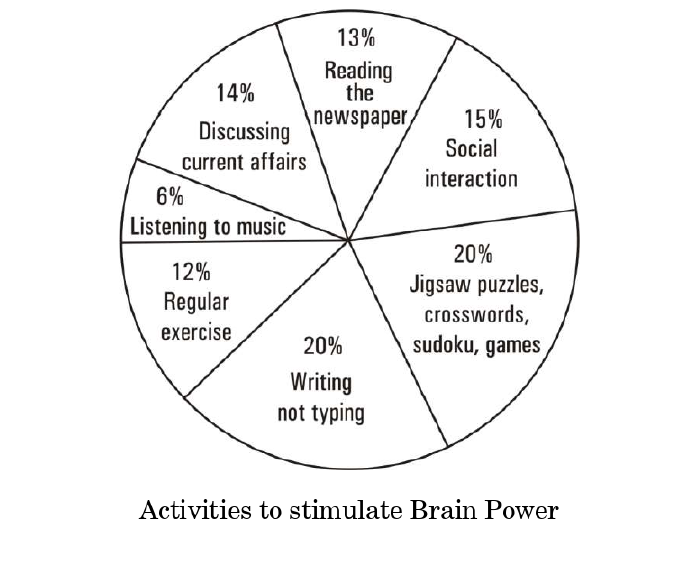
[5 Marks] Diagram 1 – CBSE Class 10 English 2022 Set 1 Solutions
Answer: The internet makes finding information easy, but relying on it excessively may hinder children's brain development. To improve brain power, engaging in activities that stimulate thinking and creativity is essential. For example, solving puzzles and reading books encourage problem-solving skills and imagination. Physical activities like sports increase blood flow to the brain, enhancing concentration. Social interactions and learning new skills also promote cognitive growth by challenging the brain. These activities help children step out of their comfort zone created by digital ease and develop mental strength, critical thinking, and creativity, which are important for long-term brain health.
Key Points: Excessive internet use limits brain exercise - Importance of engaging in puzzles and reading for cognitive skills - Physical activities boost brain function - Social interactions and learning new skills enhance mental growth - Activities help children avoid comfort zone and improve brain power
Question 19.

You are Rita/Rahul and you came across the following information on your local club notice-board.

You wish to enrol but require more information. Write a letter to the Yoga Institute, M.G. Road, Pune, enquiring details of timing, batch size, eligibility, etc. for joining the course.

[5 Marks] Diagram 2 – CBSE Class 10 English 2022 Set 1 Solutions
Answer: Dear Sir/Madam,
I am Rahul, and I saw a notice about the yoga course at your institute on M.G. Road, Pune. I am interested in joining the course but would like to know more details before enrolling.
Could you please provide information about the timing of the classes, the duration and frequency of the course, and the batch size? Also, I would like to know if there is any eligibility criteria for joining the course.
Additionally, I would appreciate if you could inform me about the fees and the type of yoga taught.
Thank you for your assistance. I look forward to your reply.
Yours sincerely,
Rahul
Class 10, Section B
Date: [Insert Date]
Key Points: Enquire about timing - Ask about batch size - Request eligibility criteria

Paper Details

CBSE Board Exam 2022

Class

Class 10

Subject

English

Year

2022

Set

Set 1

Other Years — English

2022 Set-1

2022 Set-2

2022 Set-3

2022 Set-4

2023 Set-1

2023 Set-2

2023 Set-3

2023 Set-4

2024 Set-1

2024 Set-2

2024 Set-3

2024 Set-4

2024 Set-5

2025 Set-1

2025 Set-2

2025 Set-3

2025 Set-4

2025 Set-5

2025 Set-6

2026 Set-2

2026 Set-3

2026 Set-4

2026 Set-5