Essential Techniques for Separating Mixtures
Fundamental Approaches to Isolate Mixture Components
Manual Sorting of Components
This straightforward technique involves physically selecting and removing unwanted parts from a mixture by hand. It is particularly effective when the components are distinctly visible and separable without any equipment. This method can be used to isolate impurities or to separate useful items from each other.
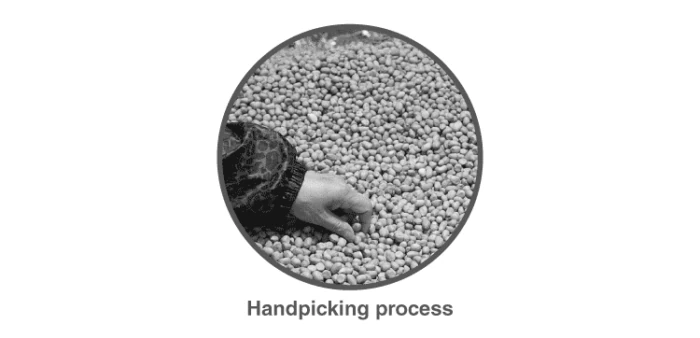
Handpicking to separate different items
Example: Imagine you have a bowl containing red and yellow apples mixed together. By handpicking, you can separate all the red apples from the yellow ones without any additional tools.
Separating Grains from Stalks by Beating
Threshing is a traditional agricultural process used to detach grains from their stalks after harvesting. The dried stalks are beaten to loosen the grains, which then fall off for further processing. This method is essential for preparing crops like wheat for consumption or sale.
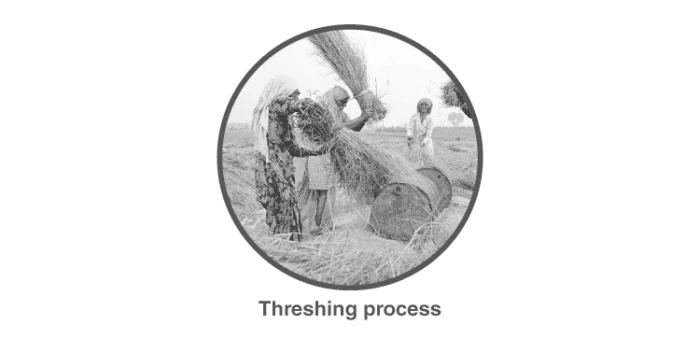
Threshing to separate grains from stalks
Example: A farmer harvests barley and dries the stalks. By beating the stalks against a hard surface, the barley grains are separated and collected for milling.
Using Air to Remove Lighter Impurities
Winnowing utilizes the wind or a controlled air current to separate lighter husks and chaff from heavier grains. When the mixture is dropped from a height, the wind blows away the lighter particles, leaving the heavier grains to collect below. This method is crucial for cleaning grains before grinding.
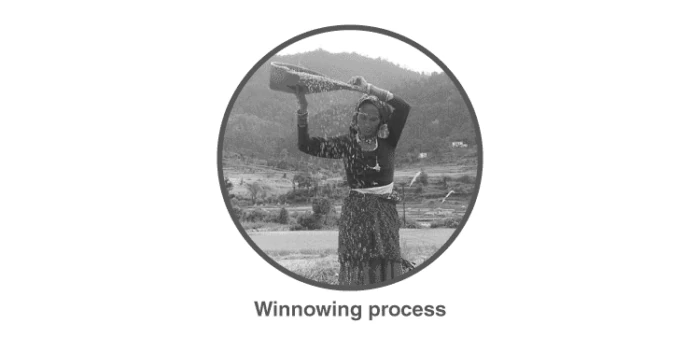
Winnowing to separate chaff from grains
Example: After threshing rice, a farmer uses a fan to blow air through the mixture, which removes the husks while the rice grains fall into a container.
Techniques Based on Physical Properties of Mixtures
Separating by Particle Size Using Sieves
Sieving is a method that separates components of a mixture based on their size differences. The mixture is passed through a mesh or sieve with specific pore sizes. Smaller particles pass through the sieve, while larger ones remain on top, enabling effective segregation.
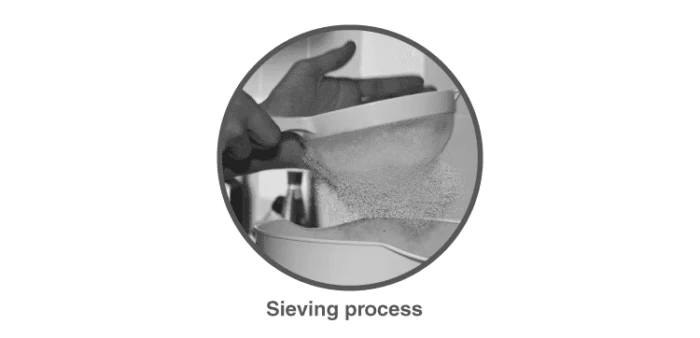
Sieving to separate coarse and fine particles
Example: To separate flour from husk particles, the mixture is passed through a sieve with fine holes. The flour passes through, leaving the husk behind.
Evaporation to Retrieve Dissolved Solids
Evaporation is used to separate a soluble solid from a liquid by heating the solution until the liquid evaporates, leaving the solid residue behind. This method is commonly applied to recover salts or other solids dissolved in water or organic solvents.
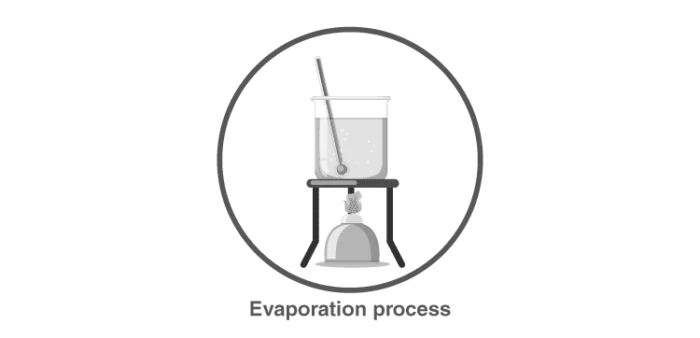
Evaporation to isolate dissolved solids
Example: Saltwater is heated until all the water evaporates, leaving salt crystals behind. This is useful for obtaining salt from seawater.
Distillation for Separating Liquids with Different Boiling Points
Distillation separates components of a liquid mixture by heating it to vaporize the more volatile component, which is then condensed back into liquid form and collected separately. This technique is essential for purifying liquids or separating miscible liquids with distinct boiling points.
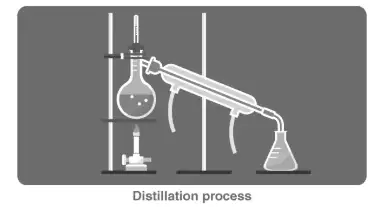
This image shows a distillation setup used in chemistry to separate liquids. Step-by-step explanation: 1. The liquid mixture is heated in the round-bottom flask. 2. The liquid with the lower boiling point turns into vapor first. 3. The vapor travels through the tube and cools down in the condenser. 4. The cooled vapor turns back into liquid (called the distillate). 5. The distillate is collected in the separate flask at the end. This process helps to separate liquids based on their boiling points.
Example: A mixture of ethanol and water is heated. Since ethanol boils at \(78.4^\circ \text{C}\) and water at \(100^\circ \text{C}\), ethanol vaporizes first, is condensed, and collected separately.
Methods Exploiting Density and Magnetic Properties
Filtering and Sedimentation to Separate Solids from Liquids
Filtration removes insoluble solids from liquids by passing the mixture through a filter medium that traps solid particles. Sedimentation allows heavier particles to settle at the bottom of a container over time due to gravity, facilitating separation by decanting the clear liquid.
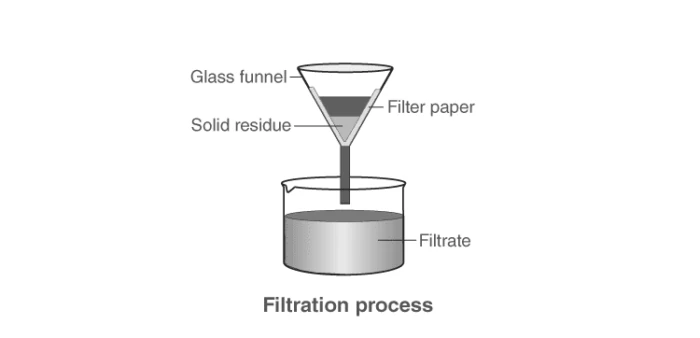
Filtration to separate sand from water
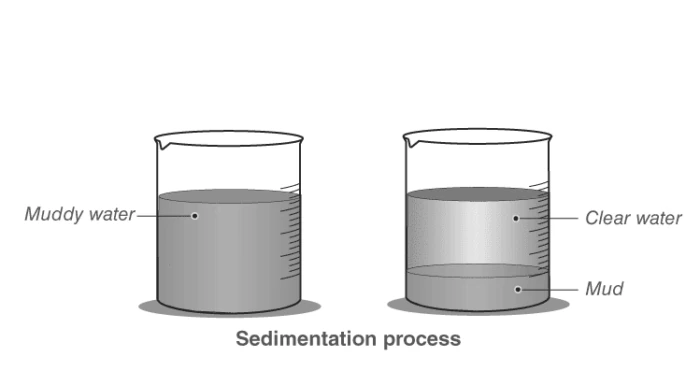
Sedimentation allowing solids to settle
Example: To separate muddy water, the mixture is left undisturbed so that soil particles settle at the bottom. The clear water is then poured off, and the remaining solids can be filtered out.
Using a Separating Funnel for Immiscible Liquids
A separating funnel exploits the difference in densities of two immiscible liquids to separate them. When the mixture is poured into the funnel, the denser liquid settles at the bottom and can be drained off separately from the lighter liquid above.
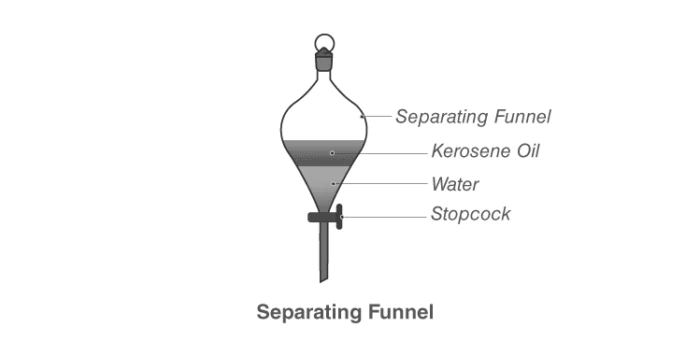
Separating funnel separating oil and water
Example: A mixture of oil and water is poured into a separating funnel. After settling, water (denser) is drained from the bottom, leaving oil in the funnel.
Magnetic Separation for Magnetic Components
This method uses magnets to attract and remove magnetic materials from a mixture. It is particularly useful when one component exhibits magnetic properties while others do not, allowing for quick and efficient separation.
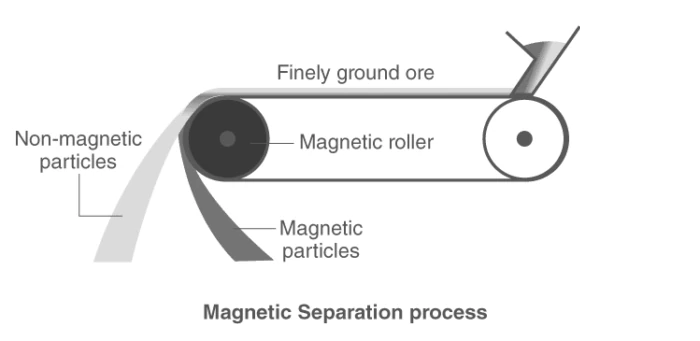
Magnetic separation of iron particles
Example: Iron filings mixed with sand can be separated by passing a magnet over the mixture, which attracts the iron filings, leaving the sand behind.
Quick Reference: Summary of Separation Techniques
Method | Principle | Typical Use |
|---|---|---|
Handpicking | Manual selection based on visible differences | Separating different colored fruits or impurities |
Threshing | Beating to detach grains from stalks | Harvested cereal crops |
Winnowing | Using air to remove lighter particles | Cleaning grains from husks |
Sieving | Separation by particle size | Separating flour from husk |
Evaporation | Removing solvent by heating | Obtaining salt from saltwater |
Distillation | Separating liquids by boiling points | Purifying alcohol from water |
Filtration | Trapping solids using filter medium | Removing sand from water |
Sedimentation | Settling of heavier particles by gravity | Clarifying muddy water |
Separating Funnel | Density difference of immiscible liquids | Separating oil and water |
Magnetic Separation | Magnetic attraction of components | Removing iron filings from sand |
Glossary of Key Terms
Term | Definition |
|---|---|
Mixture | A combination of two or more substances physically combined. |
Threshing | Process of beating harvested crops to separate grains from stalks. |
Winnowing | Using wind or air to separate lighter husks from heavier grains. |
Sieving | Separating particles based on size using a mesh or sieve. |
Evaporation | Heating a solution to remove the solvent as vapor, leaving solids behind. |
Distillation | Separating liquids by boiling and condensing based on boiling points. |
Filtration | Removing insoluble solids from liquids using a filter medium. |
Sedimentation | Settling of heavier particles at the bottom of a liquid over time. |
Separating Funnel | Apparatus used to separate immiscible liquids by density difference. |
Magnetic Separation | Using magnets to separate magnetic materials from mixtures. |
Frequently Asked Questions
What are common chemical methods used for separation?
Chemical separation techniques include distillation, crystallization, adsorption, membrane filtration, absorption, stripping, and oxidation, which are used to isolate and purify substances based on chemical properties.
How can sand and salt be separated from their mixture?
Sand, being insoluble in water, can be separated by filtration after dissolving salt in water. Salt can then be recovered by evaporating the water, leaving salt crystals behind.
What are the two main types of mixtures?
Mixtures are classified as heterogeneous, where components are physically distinct, and homogeneous, where components are uniformly mixed and not visibly separable.
Is Coca-Cola considered a mixture?
Yes, Coca-Cola is a homogeneous mixture where sugar and water are uniformly blended, making it appear as a single phase.
Can homogeneous mixtures be separated?
Yes, homogeneous mixtures can be separated by methods like distillation, which exploits differences in boiling points to isolate components.