Exploring Ultrasound and Its Diverse Applications
Understanding Ultrasound and Its Fundamental Properties
Defining Ultrasound Waves
Ultrasound refers to sound waves that possess frequencies exceeding the upper limit of human hearing, typically above 20,000 Hertz. While this threshold can vary slightly among individuals, ultrasound waves share similar physical characteristics with audible sound waves but operate at much higher frequencies.
These high-frequency waves are harnessed in various scientific and technological fields, including navigation, medical diagnostics, cleaning, and structural testing. Notably, certain animals like bats and porpoises utilize ultrasound naturally to navigate and detect their surroundings.
Solution: Since 25,000 Hz is greater than the typical human hearing limit of 20,000 Hz, this sound wave is classified as ultrasound. Ultrasound waves are defined as those with frequencies above the audible range, making 25,000 Hz a valid ultrasound frequency.
Practical Uses of Ultrasound in Industry and Medicine
Ultrasonic Cleaning Techniques
Ultrasonic cleaning employs high-frequency sound waves to remove contaminants from objects with intricate or hard-to-reach parts, such as spiral tubes or delicate electronic components. The item is submerged in a cleaning solution, and ultrasonic waves generate microscopic vibrations that dislodge dirt and grease effectively without damaging the object.
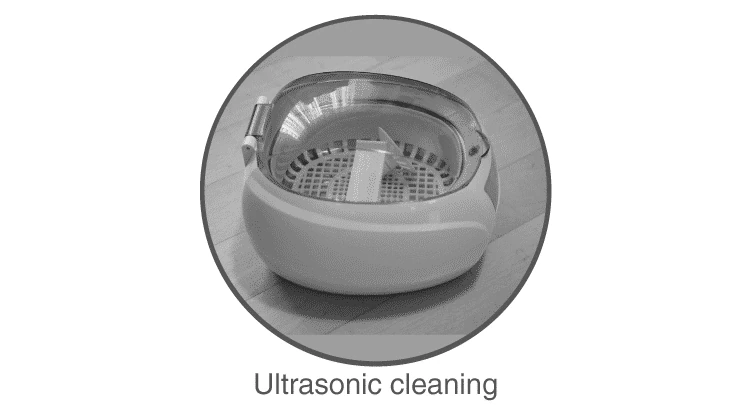
Solution: Ultrasonic waves can reach tiny crevices and complex shapes that manual cleaning might miss. The high-frequency vibrations effectively remove dirt without causing physical damage, making it ideal for delicate watch components.
Detecting Structural Flaws Using Ultrasound
Ultrasound is a vital tool for identifying cracks and defects in metal components used in construction, such as beams in buildings and bridges. High-frequency sound waves are transmitted into the material, and the reflected echoes reveal the presence and location of flaws based on distinctive echo patterns.
Trained operators analyze these echo patterns, often with software assistance, to assess the integrity of the structure and ensure safety standards are met.
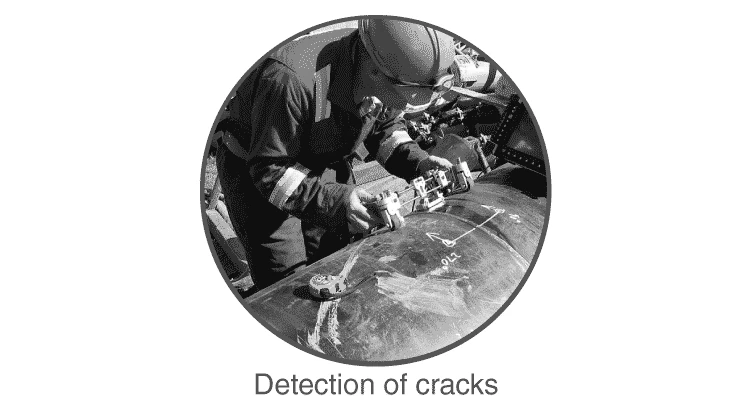
Solution: A deviation from the standard echo pattern suggests the presence of a flaw or crack in the metal. This irregular echo helps the operator identify and locate the defect for further evaluation or repair.
Imaging the Heart with Echocardiography
Echocardiography utilizes ultrasonic waves to create detailed images of the heart. By sending ultrasound pulses and detecting their reflections from various heart structures, doctors can visualize heart chambers, valves, and blood flow, aiding in diagnosis and treatment planning.
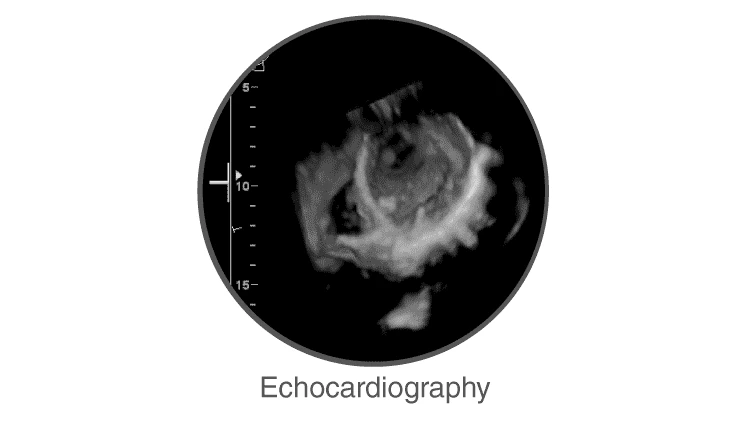
Solution: Echocardiography captures reflected ultrasound waves from heart valves, allowing visualization of their movement and structure. Abnormalities such as valve stenosis or regurgitation alter these reflections, enabling diagnosis through the images produced.
Ultrasonography for Internal Body Imaging
Ultrasonography is a diagnostic method that produces sonograms by sending ultrasound pulses into body tissues. Different tissues reflect these waves to varying degrees, and the echoes are processed to form images of muscles, joints, and internal organs, assisting in medical evaluations.
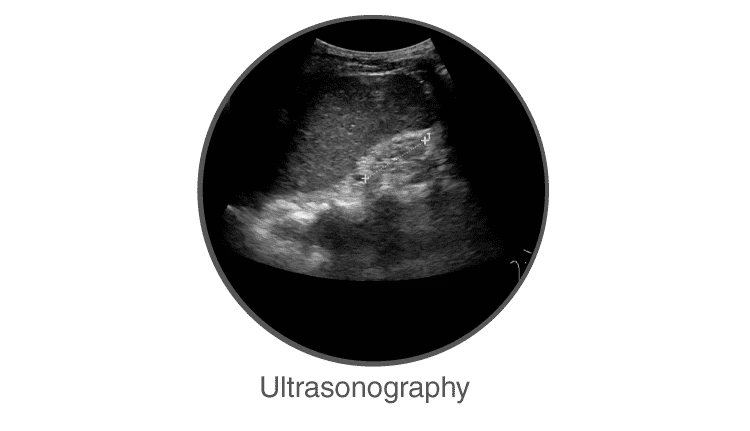
Solution: Ultrasonography is non-invasive and does not use ionizing radiation, making it safer for soft tissue imaging. It provides real-time images and better contrast for soft tissues compared to X-rays, which are more suited for bones.
Breaking Kidney Stones with Lithotripsy
Lithotripsy employs focused ultrasonic waves to fragment kidney stones into smaller pieces. These high-energy waves pass through the body without causing harm to surrounding tissues, enabling the stones to be expelled naturally through the urinary tract.
Solution: Ultrasound waves concentrate energy on the kidney stone, causing it to break into smaller fragments. These smaller pieces can then pass through the urinary system more easily, reducing the need for invasive surgery.
SONAR: Navigating Underwater with Sound
SONAR (Sound Navigation and Ranging) uses ultrasonic waves to detect objects and navigate underwater. By emitting sound pulses and analyzing their echoes, SONAR systems can determine the distance, size, and shape of underwater objects, aiding in navigation and communication.
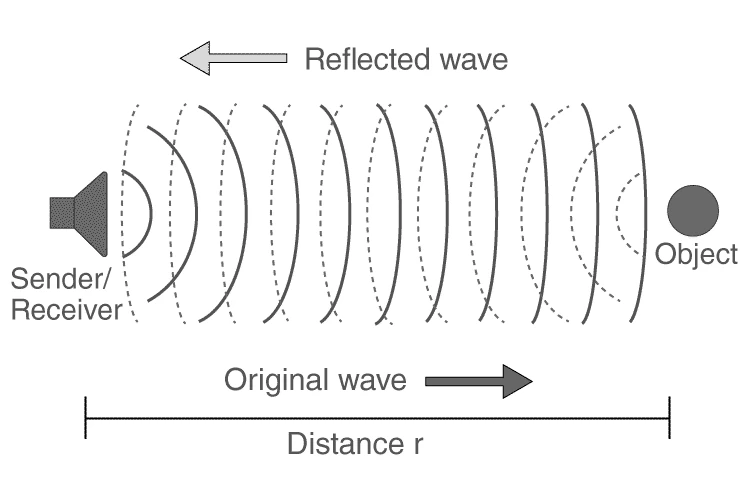
Solution: SONAR emits a sound pulse that travels to the obstacle and reflects back. By measuring the time interval \( t \) between emission and echo reception and knowing the speed of sound in water \( v \approx 1500 \text{ m/s} \), the distance \( d \) is calculated as:
\[ d = \frac{v \times t}{2} \]
The division by 2 accounts for the round trip of the sound wave.
How Bats Use Echolocation to Navigate
Echolocation is a natural technique where animals like bats emit ultrasonic sounds that bounce off nearby objects, producing echoes. By interpreting these echoes, bats can determine the location, size, and shape of obstacles and prey, enabling them to navigate effectively in darkness.
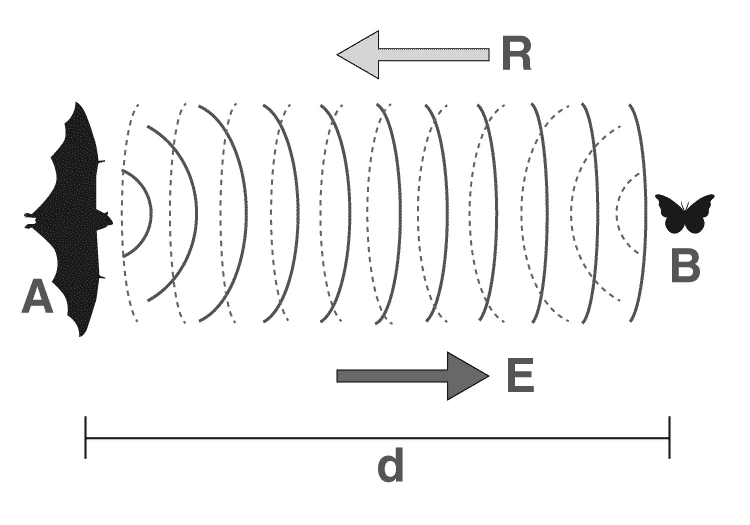
Solution: The total time for the pulse to travel to the object and back is \( t = 0.01 \text{ s} \). The distance \( d \) to the object is:
\[ d = \frac{v \times t}{2} = \frac{340 \times 0.01}{2} = 1.7 \text{ meters} \]
The object is 1.7 meters away from the bat.
Summary Table: Key Ultrasound Applications
| Application | Purpose | Key Principle |
|---|---|---|
| Ultrasonic Cleaning | Remove dirt from complex objects | High-frequency vibrations detach contaminants |
| Crack Detection | Identify flaws in metals | Echo patterns reveal structural defects |
| Echocardiography | Visualize heart structure | Reflection of ultrasound waves from heart tissues |
| Ultrasonography | Image internal organs and tissues | Echoes from different tissues form sonograms |
| Lithotripsy | Break kidney stones | Focused ultrasonic waves fragment stones |
| SONAR | Underwater navigation and detection | Sound pulses and echo timing determine distances |
| Echolocation | Animal navigation and prey detection | Ultrasound echoes provide spatial information |
Glossary of Important Terms
| Term | Definition |
|---|---|
| Ultrasound | Sound waves with frequencies above 20,000 Hz, beyond human hearing. |
| Echolocation | Biological sonar used by animals to locate objects via sound echoes. |
| Sonogram | An image produced by ultrasonography showing internal body structures. |
| SONAR | Technique using sound waves to navigate and detect underwater objects. |
| Lithotripsy | Medical procedure using ultrasound to break kidney stones. |
| Echo | Reflected sound wave returning to the source after hitting an object. |
| Frequency | Number of wave cycles per second, measured in Hertz (Hz). |
| Ultrasonography | Imaging technique using ultrasound to view internal organs. |
| Crack Detection | Use of ultrasound to find flaws in materials by analyzing echoes. |
| Reflection | Return of sound waves after striking a surface or boundary. |
Frequently Asked Questions (FAQs)
What defines ultrasound compared to audible sound?
Ultrasound consists of sound waves with frequencies higher than 20,000 Hz, which is above the range detectable by the average human ear.
How is ultrasound utilized in medical diagnostics?
Ultrasound is used to create images of internal body parts, such as muscles and organs, through techniques like ultrasonography and echocardiography, aiding in non-invasive diagnosis.
In what way do bats employ ultrasound for navigation?
Bats emit ultrasonic pulses that reflect off objects, and by interpreting the returning echoes, they can locate prey and avoid obstacles even in complete darkness.
Why is ultrasonic cleaning preferred for delicate instruments?
Because ultrasonic waves can reach intricate areas and remove dirt without physical abrasion, making it safer and more effective than manual cleaning for sensitive items.
How does ultrasound help in detecting cracks in metal structures?
Ultrasound waves reflect differently from flaws compared to intact areas, allowing trained operators to identify and locate cracks by analyzing echo patterns.