Sexual Reproduction in Flowering Plants: Structure and Processes
Floral Anatomy and Its Role in Reproduction
Overview of Flower Components and Their Functions
Flowering plants, known as angiosperms, reproduce sexually through specialized structures within the flower. Each flower consists of several whorls, some fertile and others sterile, all contributing to the reproductive cycle. Understanding the anatomy of a flower is essential to grasp how reproduction occurs in these plants.
The outermost layer, the calyx, is made up of sepals that protect the flower bud before it blooms. These sepals are typically green but can sometimes resemble petals, a condition called petaloid calyx. Next is the corolla, composed of petals that are often colorful and fragrant to attract pollinators such as insects and animals.
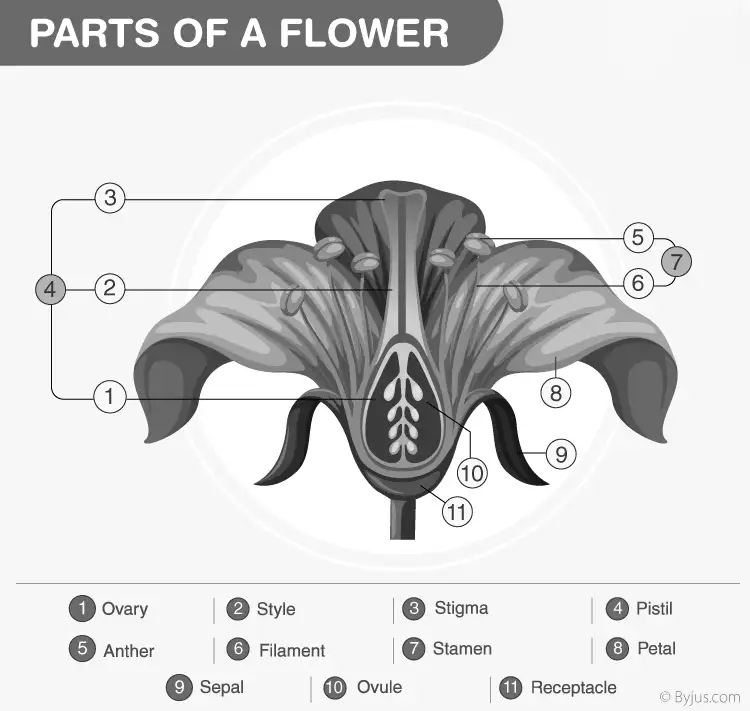
Illustration of Flower Parts
Example Problem
Question: Identify the whorl of a flower that primarily attracts pollinators and explain its significance.
Solution:
The corolla is the whorl consisting of petals.
Petals are often brightly colored and may emit fragrance.
This attracts insects and animals, facilitating pollination.
Thus, the corolla plays a crucial role in sexual reproduction by aiding pollen transfer.
Male Reproductive Structures and Pollen Formation
Structure and Function of Androecium
The androecium represents the male reproductive part of the flower, consisting of multiple stamens. Each stamen includes a filament that supports the anther, where pollen grains develop. Pollen grains contain the male gametes necessary for fertilization.
The anther is a sac-like structure divided into four lobes, each containing pollen sacs or microsporangia. Within these sacs, microspore mother cells undergo meiosis to produce haploid microspores, a process called microsporogenesis.
Microsporangium Layers and Pollen Development
The microsporangium wall is composed of several layers:
Tapetum: Innermost nutritive layer with multinucleate cells supporting pollen development.
Middle layer: Thin-walled cells beneath the endothecium.
Endothecium: Located just inside the epidermis, helps in anther dehiscence.
Epidermis: Outermost protective layer, sometimes called exothecium when fibrous.
Microsporocytes within the microsporangia divide meiotically to form pollen grains, which are the male gametophytes. Each pollen grain has a tough outer wall called the exine, made of sporopollenin, and an inner intine layer composed of cellulose and pectin.
Example Problem
Question: Describe the process of microsporogenesis and the structure of a mature pollen grain.
Solution:
Microsporogenesis is the meiotic division of microspore mother cells inside the microsporangia.
Each microspore mother cell produces four haploid microspores.
These microspores develop into pollen grains, the male gametophytes.
A mature pollen grain has two layers: the outer exine (sporopollenin-rich) and the inner intine (cellulose and pectin).
Female Reproductive System and Ovule Development
Gynoecium Structure and Variations
The gynoecium is the female reproductive part of the flower, centrally located and composed of one or more pistils. Each pistil includes three parts: the stigma, style, and ovary. The ovary contains ovules, which develop into seeds after fertilization.
Gynoecium types vary:
Monocarpellary: Single pistil, e.g., peas.
Multicarpellary: Multiple pistils.
Syncarpous: Pistils fused together, e.g., tomato.
Apocarpous: Pistils free from each other, e.g., lotus.
Megasporogenesis and Female Gametophyte Formation
Within the ovule, a megaspore mother cell undergoes meiosis to produce four megaspores. Typically, three degenerate, and the remaining functional megaspore develops into the female gametophyte, which contains the egg cell ready for fertilization.
Example Problem
Question: Explain the process of megasporogenesis and its significance in flowering plants.
Solution:
Megasporogenesis is the meiotic division of the megaspore mother cell inside the ovule.
Four haploid megaspores are produced; three degenerate, one remains functional.
The functional megaspore develops into the female gametophyte containing the egg cell.
This process is vital for producing the female gamete necessary for fertilization.
Pollination and Fertilization Mechanisms
Pollination Types and Their Ecological Importance
Pollination is the transfer of pollen grains from the anther to the stigma, enabling sexual reproduction. It can be:
Self-pollination: Pollen from the same flower or plant fertilizes the ovule.
Cross-pollination: Pollen is transferred between flowers of different plants of the same species.
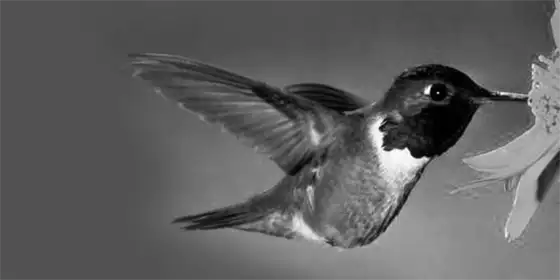
Visual Representation of Pollination
Fertilization Process and Seed Formation
After pollination, pollen grains germinate on the stigma, forming a pollen tube that grows down the style to the ovary. Two male gametes travel through this tube; one fuses with the egg cell forming a zygote, while the other combines with polar nuclei to form the endosperm, which nourishes the developing embryo. This double fertilization results in seed and fruit formation.
Example Problem
Question: Describe the sequence of events from pollination to seed formation in flowering plants.
Solution:
Pollen grains land on the stigma and absorb water, swelling up.
A pollen tube forms and grows through the style to the ovary.
Two male gametes travel down the tube; one fertilizes the egg, forming a zygote.
The other male gamete fuses with polar nuclei to create the endosperm.
Fertilization leads to seed development; the ovary matures into fruit.
Essential Roles and Adaptations of Flowers
Functions and Diversity in Flowering Plants
Flowers primarily facilitate reproduction in angiosperms. They are modified shoots adapted to attract pollinators and ensure successful fertilization. Being heterosporous, they produce microspores (male) and megaspores (female) that develop into gametophytes. Flowers also support pollen tube growth and seed formation.
Some flowers are unisexual, lacking either male or female organs, while others are bisexual. Various floral parts, such as the calyx, may also assist in seed and fruit dispersal through specialized modifications.
Example Problem
Question: Explain why flowers are considered crucial for the survival and propagation of angiosperms.
Solution:
Flowers enable sexual reproduction, ensuring genetic diversity.
They attract pollinators, facilitating pollen transfer.
Flowers produce gametes and support fertilization and seed development.
Modifications in flowers aid in seed dispersal, promoting species spread.
Quick Reference: Key Concepts in Flowering Plant Reproduction
Term | Definition |
|---|---|
Angiosperms | Plants that produce flowers and seeds enclosed within fruits. |
Calyx | Outer whorl of a flower made of sepals, protecting the bud. |
Corolla | Whorl of petals that attract pollinators. |
Androecium | Male reproductive part consisting of stamens. |
Microsporogenesis | Meiotic formation of microspores (pollen grains) in anthers. |
Gynoecium | Female reproductive part composed of pistils. |
Megasporogenesis | Meiotic formation of megaspores inside ovules. |
Pollination | Transfer of pollen from anther to stigma. |
Fertilization | Fusion of male and female gametes to form a zygote. |
Endosperm | Nutrient-rich tissue formed after fertilization to nourish the embryo. |
Glossary of Important Terms
Term | Meaning |
|---|---|
Angiosperm | A plant that produces flowers and seeds enclosed in fruits. |
Calyptra | Protective cap or covering (not part of flower anatomy). |
Microsporangium | Structure in anther where microspores develop. |
Microsporocyte | Diploid cell that undergoes meiosis to form microspores. |
Megaspore | Haploid spore that develops into female gametophyte. |
Pistil | Female reproductive organ of a flower, consisting of ovary, style, and stigma. |
Pollination | Transfer of pollen grains to the stigma for fertilization. |
Stigma | Sticky tip of the pistil that captures pollen grains. |
Endothecium | Layer inside anther aiding in pollen release. |
Exine | Outer tough layer of pollen grain wall made of sporopollenin. |
Frequently Asked Questions
Do all plants reproduce sexually through flowers?
Only angiosperms reproduce sexually via flowers. Gymnosperms and other non-flowering plants use different reproductive methods.
How does pollination contribute to plant reproduction?
Pollination transfers pollen to the stigma, enabling fertilization and seed formation, which is essential for plant reproduction.
What are the main stages in the life cycle of a flowering plant?
The stages include seed germination, growth, flowering, pollination, fertilization, seed formation, and seed dispersal.
Which plants die after flowering and seed production?
Monocarpic plants flower once, produce seeds, and then die, completing their life cycle in a single reproductive event.
What is gregarious flowering in plants?
Gregarious flowering is when all individuals of a species flower simultaneously at long intervals, such as bamboo flowering every 60-130 years.