Fundamentals and Techniques of Plant Breeding
Understanding the Purpose and Goals of Plant Breeding
Defining Plant Breeding and Its Core Intentions
Plant breeding involves the deliberate alteration and selection of plant traits to develop new varieties that exhibit specific, desirable features. This process focuses on enhancing qualities such as yield, resistance, and adaptability by crossing plants with superior characteristics to generate improved offspring.
By carefully choosing parent plants with favorable traits and combining them, breeders aim to create populations that outperform their predecessors in various agronomic aspects.
Example: A farmer wants to cultivate wheat that yields more grain and resists rust disease. By selecting parent plants exhibiting high yield and disease resistance, breeders can cross them to develop a new variety combining both traits.
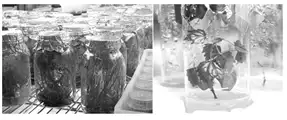
Diagram illustrating the process of plant breeding
Primary Objectives in Developing New Plant Varieties
The main aims of plant breeding include:
Enhancing crop productivity to meet food demands.
Introducing specific traits such as improved nutritional quality or appearance.
Creating varieties resistant to pests and diseases to reduce losses.
Developing plants capable of withstanding harsh environmental conditions like drought or salinity.
Remember: The ultimate goal of plant breeding is to combine multiple beneficial traits into a single variety to improve overall crop performance.
Exploring Various Methods Employed in Plant Breeding
Backcrossing: Refining Traits Through Repeated Crosses
Backcrossing is a technique where a plant possessing a desired trait is crossed repeatedly with another plant that lacks this trait but has other valuable characteristics. This method helps introduce a specific trait into an established variety while retaining most of its original features.
Example: Suppose a tomato variety has excellent taste but is susceptible to blight. By backcrossing it with a blight-resistant wild relative, breeders can develop a tasty tomato that also resists the disease.
Inbreeding: Preserving Genetic Purity Through Self-Fertilization
Inbreeding involves self-pollination within a plant to produce offspring genetically similar to the parent. This process helps maintain stable traits across generations and is useful for developing pure lines with uniform characteristics.
Example: A breeder self-pollinates a maize plant with high starch content over several generations to stabilize this trait in the progeny.
Hybrid Breeding: Combining Diverse Parents for Superior Offspring
Hybrid breeding crosses two genetically distinct parent plants to produce offspring that exhibit hybrid vigor, often resulting in higher yield, better quality, or improved resistance compared to either parent.
Example: Crossing two different rice varieties, one with high yield and another with drought tolerance, can produce hybrids that perform well under water stress and produce more grain.
Mutation Breeding: Generating Novel Traits via Genetic Changes
Mutation breeding induces changes in the plant’s genetic material either naturally or through exposure to chemicals or radiation. These mutations can create new traits that may be beneficial for crop improvement.
Example: Exposing barley seeds to gamma rays to develop varieties with improved disease resistance.
Genetic Engineering: Directly Modifying Plant DNA for Desired Traits
Genetic engineering involves inserting specific genes into a plant’s genome to confer new characteristics, such as pest resistance or herbicide tolerance. Crops developed this way are called genetically modified organisms (GMOs).
Example: Bt cotton contains a gene from the bacterium Bacillus thuringiensis, enabling it to resist bollworm infestation.
Stepwise Approach to Modern Plant Breeding Practices
Gathering Genetic Diversity for Breeding Material
The initial phase in plant breeding is collecting a wide range of genetic material, known as germplasm, which includes seeds and plants from cultivated varieties, wild relatives, and landraces. This diversity provides the raw material for selecting desirable traits.
Example: Collecting various wheat strains from different regions to find genes for drought tolerance.
Assessing and Choosing Parent Plants with Target Traits
After gathering germplasm, breeders evaluate the plants to identify those exhibiting traits of interest. Selected parents are expected to pass these traits to their offspring.
Example: Choosing a maize plant with high protein content to cross with another that shows strong pest resistance.
Crossing Selected Parents to Generate Hybrid Progeny
In this stage, breeders perform controlled pollination by transferring pollen from one parent to the stigma of another to combine their traits. This process is meticulous and may require many attempts to obtain progeny with the ideal combination.
Example: Crossing two tomato plants, one with large fruit size and another with early maturity, to develop hybrids combining both features.
Identifying and Stabilizing Superior Offspring
Progeny exhibiting the desired traits are selected and self-pollinated over successive generations to achieve genetic uniformity (homozygosity), ensuring the traits are stable and heritable.
Example: Selfing a hybrid rice plant with high yield and disease resistance for several generations to fix these traits.
Field Testing and Commercial Release of New Varieties
The promising lines are tested extensively in research stations and farmers’ fields across different agroclimatic zones to evaluate performance under varied conditions. Successful varieties are then officially released for cultivation.
Example: Testing a new wheat variety for yield and disease resistance in multiple locations before commercial distribution.
Quick Reference: Summary of Plant Breeding Essentials
Aspect | Key Points |
|---|---|
Purpose | Develop plants with improved yield, quality, resistance, and stress tolerance |
Methods | Backcrossing, Inbreeding, Hybridization, Mutation breeding, Genetic engineering |
Initial Step | Collection of diverse germplasm including wild relatives |
Parent Selection | Evaluation of traits to choose suitable parents for crossing |
Crossing | Controlled pollination to combine desired traits |
Stabilization | Self-pollination to fix traits in progeny |
Testing | Multi-location trials to assess agronomic performance |
Release | Commercialization of superior cultivars for farmers |
Glossary of Key Terms in Plant Breeding
Term | Definition |
|---|---|
Backcrossing | Crossing a hybrid with one of its parents to transfer a specific trait |
Germplasm | Collection of genetic resources such as seeds or plants used for breeding |
Hybrid Vigor | Enhanced qualities in offspring resulting from crossing genetically different parents |
Homozygosity | Genetic condition where both alleles for a trait are identical |
Inbreeding | Self-fertilization to maintain genetic uniformity |
Mutation | Change in DNA sequence that can create new traits |
Genetic Engineering | Direct manipulation of an organism’s genes using biotechnology |
Progeny | Offspring or descendants of a plant |
Selection | Choosing plants with desirable traits for breeding |
Variety | A plant group with distinct characteristics maintained through propagation |
Frequently Asked Questions on Plant Breeding
What is the main goal of plant breeding?
The primary aim is to develop plant varieties with improved yield, quality, resistance to diseases, and tolerance to environmental stresses.
How does hybrid breeding improve crop performance?
By crossing genetically diverse parents, hybrid breeding produces offspring with hybrid vigor, resulting in better growth, yield, and resilience.
Why is germplasm collection important in breeding?
Germplasm provides the genetic diversity necessary to select and combine traits for developing superior plant varieties.
What role does mutation breeding play in crop improvement?
Mutation breeding introduces new genetic variations that can lead to beneficial traits not found in existing varieties.
How are genetically modified crops different from traditional bred crops?
Genetically modified crops have specific genes inserted directly into their DNA, enabling traits that may not be achievable through conventional breeding.