Comprehensive Insights into Ecology and Its Dynamics
Foundations of Ecology: Understanding Life and Environment Interactions
Defining Ecology and Its Scope
Ecology is a scientific discipline that explores the relationships between living organisms and their surroundings. It encompasses various levels of biological organization, including individual organisms, populations, communities, ecosystems, and the biosphere. The primary objective of ecologists is to deepen knowledge about life processes, adaptations, habitats, and the complex interactions that sustain biodiversity.
This field integrates aspects of biology and environmental science to analyze how organisms coexist and influence their environment, providing critical insights into sustaining life on Earth.

Visual representation of Ecology
Example: Consider a forest ecosystem where trees, animals, fungi, and microorganisms interact with soil, water, and climate. An ecologist studying this system would examine how these components influence each other and contribute to the ecosystem's health and sustainability.
Components Influencing Ecosystems: Living and Non-Living Elements
Living Elements: Biotic Factors
Biotic factors refer to all living entities within an ecosystem that interact with each other and their environment. These include organisms such as plants, animals, fungi, bacteria, and other microorganisms. Their interactions shape community dynamics and influence ecosystem functions.
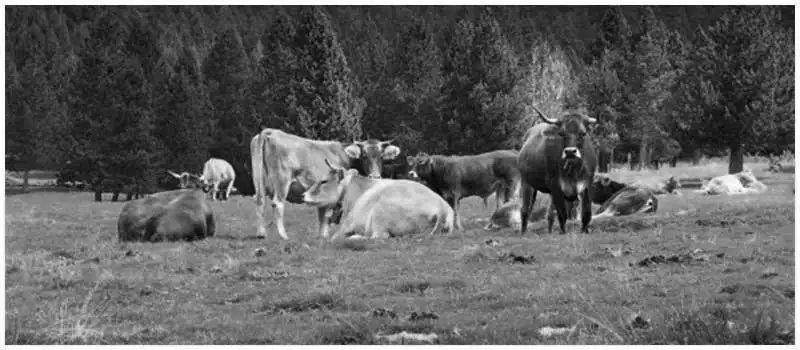
Examples of Biotic Components
Example: In a pond ecosystem, fish, algae, insects, and bacteria represent biotic factors that interact through food chains and nutrient cycles.
Non-Living Elements: Abiotic Factors
Abiotic factors consist of the physical and chemical components of an ecosystem that affect living organisms. These include sunlight, temperature, soil, water, air, minerals, and moisture. Abiotic factors originate from the atmosphere, lithosphere, and hydrosphere and play a crucial role in shaping habitats and influencing biological processes.
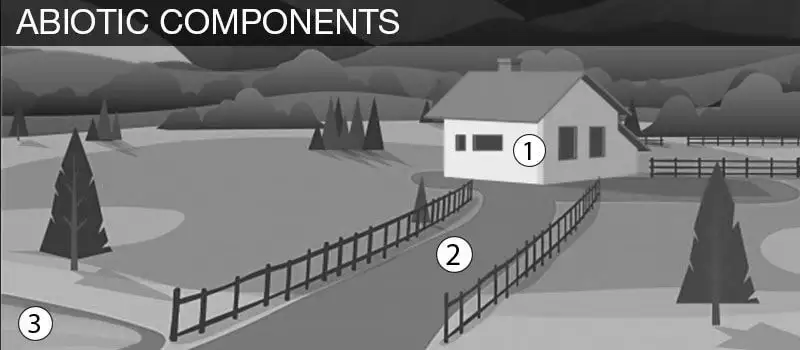
Examples of Abiotic Components
Example: Soil pH and moisture levels in a grassland determine which plant species can thrive, thereby influencing the entire ecosystem's composition.
Exploring Ecology's Branches: Diverse Perspectives on Environmental Interactions
Global and Landscape Ecology
Global ecology examines the interactions among Earth's major ecosystems, including land, atmosphere, and oceans, to understand planetary-scale processes. Landscape ecology focuses on the flow of energy, materials, and organisms across heterogeneous landscapes, emphasizing human impacts on ecosystem structure and function.
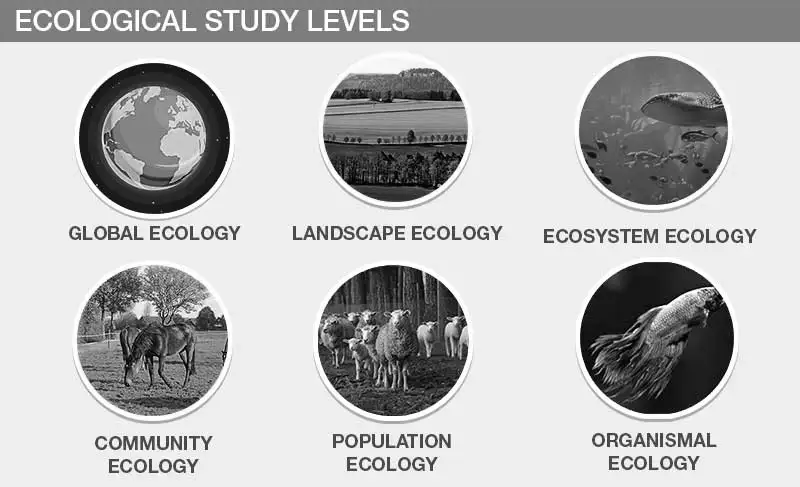
Classification of Ecology Types
Example: Studying deforestation effects on regional climate patterns involves global and landscape ecology principles to assess environmental changes.
Ecosystem and Community Ecology
Ecosystem ecology investigates the interactions between living organisms and their physical environment, focusing on energy flow and nutrient cycling. Community ecology analyzes how populations of different species coexist and interact within a defined area, shaping community structure and biodiversity.
Example: Observing predator-prey relationships in a forest community helps understand population control and species coexistence.
Population, Organismal, and Molecular Ecology
Population ecology studies factors influencing population size, genetic composition, and distribution, including birth, death, immigration, and emigration rates. Organismal ecology focuses on individual species' adaptations and behaviors in response to environmental challenges. Molecular ecology explores ecological interactions at the genetic and protein levels, revealing how molecular processes affect organismal and ecosystem dynamics.
Example: Analyzing how a fish population adapts genetically to polluted waters combines population and molecular ecology insights.
Significance of Ecology: Protecting and Sustaining Our Environment
Environmental Conservation and Resource Management
Ecology provides essential knowledge to understand human impacts on the environment, highlighting the causes of habitat degradation and species extinction. This understanding is vital for conserving biodiversity and managing natural resources sustainably.
Example: Awareness of ecological principles has led to the protection of endangered species like the Bengal tiger through habitat preservation efforts.
Energy Efficiency and Promoting Eco-Friendly Practices
By studying ecological energy flows, we learn to optimize resource use and prevent overexploitation of energy sources such as sunlight and nutrients. Ecology encourages lifestyles that harmonize with nature, fostering sustainable development and environmental stewardship.
Example: Implementing solar energy systems reduces reliance on fossil fuels, aligning with ecological energy conservation principles.
Practical Illustrations of Ecology in Action
Human Ecology and Environmental Impact
Human ecology studies the reciprocal relationships between humans and their environment, emphasizing how human activities affect ecological balance and how sustainable practices can improve both human welfare and environmental health.
Example: Urban planning that incorporates green spaces helps mitigate pollution and supports biodiversity within cities.
Niche Construction and Ecosystem Engineering
Niche construction refers to how organisms modify their environment to enhance survival and reproduction, often benefiting other species as well. This concept highlights the active role organisms play in shaping ecosystems.
Example: Termites build large mounds that regulate temperature and humidity, creating a stable habitat for their colony and influencing surrounding soil properties.
Quick Reference: Key Ecology Concepts at a Glance
Term | Definition | Example |
|---|---|---|
Ecology | Study of interactions between organisms and their environment | Forest ecosystem dynamics |
Biotic Factors | Living components of an ecosystem | Plants, animals, bacteria |
Abiotic Factors | Non-living physical and chemical elements | Sunlight, soil, water |
Population Ecology | Study of population size, distribution, and genetics | Fish population growth in a lake |
Community Ecology | Interactions among different species in an area | Predator-prey relationships |
Ecosystem Ecology | Energy flow and nutrient cycling in ecosystems | Carbon cycle in a rainforest |
Organismal Ecology | Individual organism's adaptations and behavior | Polar bear's cold tolerance |
Molecular Ecology | Genetic and protein-level ecological interactions | Genetic adaptation to pollution |
Niche Construction | Organisms modifying their environment | Beaver dam building |
Global Ecology | Planet-wide ecosystem interactions | Climate change effects on oceans |
Glossary of Essential Ecology Terms
Term | Meaning |
|---|---|
Adaptation | Traits that enhance survival in a specific environment |
Biodiversity | Variety of life forms within an ecosystem |
Community | Group of populations of different species living together |
Ecologist | Scientist who studies ecological relationships |
Ecosystem | Interaction of living and non-living components in an area |
Habitat | Natural environment where an organism lives |
Population | Group of individuals of the same species in a location |
Succession | Gradual change in ecosystem structure over time |
Trophic Level | Position of an organism in a food chain |
Variation | Differences in traits among individuals of a species |
Frequently Asked Questions on Ecology
What does ecology study?
Ecology investigates how organisms interact with each other and their physical environment across various biological levels.
Which levels are studied in ecology?
Ecology examines organisms, populations, communities, ecosystems, and the biosphere to understand life-environment relationships.
Can you list the main branches of ecology?
Key branches include molecular, organismal, population, community, ecosystem, landscape, and global ecology.
How is ecology connected to evolution?
Ecological interactions influence evolutionary processes by shaping natural selection and species adaptation.
Who introduced the term ecology?
The term was coined by Ernst Haeckel, a German zoologist, integrating concepts from biology, geology, and evolution.