Understanding Bacterial Infections in Humans
Overview of Bacterial Illnesses and Their Impact
Nature and Role of Bacteria in Human Health
Bacteria are microscopic organisms found ubiquitously in the environment and within the human body. While many bacterial species coexist harmlessly or even beneficially with humans, a small fraction are responsible for causing diseases. These harmful bacteria, termed pathogenic bacteria, can invade body tissues and fluids, overcoming the body's natural defense systems. Their presence can lead to direct cellular damage, toxin release, disruption of normal cellular functions, or trigger immune responses that inadvertently harm the host's own cells.
Despite the vast diversity of bacteria, fewer than a hundred species are known to cause human diseases. The body's innate immunity plays a crucial role in controlling bacterial growth and preventing infections.
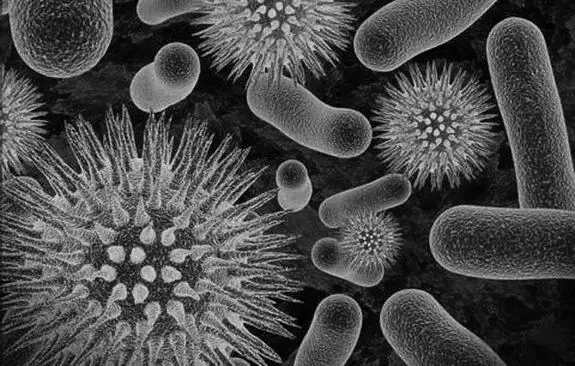
Microscopic representation of bacterial pathogens
Example: Differentiating Beneficial and Harmful Bacteria
Consider the bacteria in the human gut. While thousands of species aid digestion and nutrient absorption, only a few cause infections. For instance, Escherichia coli strains can be both beneficial and pathogenic depending on the variant.
Question: If a person has 10,000 bacterial species in their gut, and only 0.5% are harmful, how many species are potentially pathogenic?
Solution:
Number of harmful species = \( 10,000 \times \frac{0.5}{100} = 50 \) species.
Thus, out of 10,000 species, approximately 50 could be disease-causing.
Common Bacterial Diseases and Their Transmission
Major Bacterial Illnesses Affecting Humans
Several bacterial infections are prevalent in humans, each caused by specific bacteria. Some notable diseases include diphtheria caused by Corynebacterium diphtheriae, leprosy by Mycobacterium leprae, whooping cough (pertussis) by Bordetella pertussis, tetanus by Clostridium tetani, and plague by Yersinia pestis. Other infections such as syphilis and gonorrhea are caused by Treponema pallidum and Neisseria gonorrhoeae respectively.
Bacterial diseases are contagious and spread through various routes including contaminated food and water, direct contact, airborne droplets, sexual contact, and exposure to infected bodily fluids or vectors.
Example: Calculating Infection Risk from Contaminated Water
Problem: In a village, 30% of water sources are contaminated with pathogenic bacteria. If a person drinks water from 5 different sources randomly, what is the probability that at least one source is contaminated?
Solution:
Probability that a single source is not contaminated = \( 1 - 0.30 = 0.70 \).
Probability that all 5 sources are uncontaminated = \( 0.70^5 = 0.16807 \).
Therefore, probability that at least one source is contaminated = \( 1 - 0.16807 = 0.83193 \) or 83.19%.
This indicates a high risk of exposure to bacterial pathogens through water.
Mechanisms, Symptoms, and Management of Bacterial Infections
How Bacteria Cause Disease and Clinical Signs
Pathogenic bacteria can harm the host through several mechanisms. They may directly invade and damage cells by attaching and extracting nutrients, or release toxins such as endotoxins from Gram-negative bacteria that disrupt normal cellular processes. Additionally, bacteria can provoke excessive immune responses that result in tissue damage.
Common symptoms of bacterial infections include painful urination with blood, irritability, diarrhea, nausea, general weakness, neck stiffness, flu-like symptoms, and skin rashes or lesions. Individuals with compromised immunity, malnutrition, or chronic illnesses are more vulnerable to these infections.
Example: Antibiotic Dosage Calculation
Problem: A patient is prescribed an antibiotic at a dose of 15 mg per kg of body weight per day. If the patient weighs 60 kg, calculate the total daily dose and the dose per administration if the medicine is given thrice daily.
Solution:
Total daily dose = \( 15 \times 60 = 900 \text{ mg} \).
Dose per administration = \( \frac{900}{3} = 300 \text{ mg} \).
The patient should receive 300 mg of the antibiotic every 8 hours.
Approaches to Treatment and Prevention
Bacterial infections are primarily treated with antibiotics, which either kill bacteria (bactericidal) or inhibit their growth (bacteriostatic). Phage therapy, using bacteriophages to target bacteria, is an emerging treatment method. However, antibiotic resistance due to overuse poses a significant challenge.
Preventive measures include vaccination, maintaining hygiene, proper cooking of food, sterilization of medical instruments, handwashing, avoiding unprotected sexual contact, and isolating infected individuals to prevent spread.
Exam Tip: Always remember that bacterial diseases are communicable and can be controlled by hygiene and vaccination. Antibiotic misuse leads to resistance, making treatment difficult.
Quick Reference: Summary of Bacterial Diseases
Disease | Causative Bacterium | Transmission Mode | Key Symptoms | Prevention |
|---|---|---|---|---|
Diphtheria | Corynebacterium diphtheriae | Airborne droplets | Sore throat, fever, membrane formation in throat | Vaccination, hygiene |
Leprosy | Mycobacterium leprae | Prolonged close contact | Skin lesions, nerve damage | Early diagnosis, treatment |
Tetanus | Clostridium tetani | Wound contamination | Muscle stiffness, spasms | Vaccination, wound care |
Cholera | Vibrio cholerae | Contaminated water/food | Severe diarrhea, dehydration | Sanitation, clean water |
Plague | Yersinia pestis | Flea bites, contact with infected animals | Fever, swollen lymph nodes | Vector control, antibiotics |
Glossary of Key Terms
Term | Definition |
|---|---|
Pathogenic Bacteria | Bacteria capable of causing disease in a host organism. |
Innate Immunity | The body's natural defense mechanism against pathogens. |
Endotoxins | Toxins released from the outer membrane of Gram-negative bacteria upon cell death. |
Bactericidal | Agents that kill bacteria directly. |
Bacteriostatic | Agents that inhibit bacterial growth without killing them. |
Phage Therapy | Treatment using bacteriophages to target and destroy bacteria. |
Antibiotic Resistance | The ability of bacteria to survive and multiply despite antibiotic treatment. |
Communicable Disease | A disease that can be transmitted from one individual to another. |
Vector | An organism that transmits pathogens between hosts. |
Vaccination | Administration of a vaccine to stimulate immunity against a disease. |
Frequently Asked Questions
What distinguishes pathogenic bacteria from beneficial bacteria?
Pathogenic bacteria cause diseases by invading tissues or releasing toxins, whereas beneficial bacteria support bodily functions like digestion and immunity without causing harm.
How do bacterial diseases commonly spread among people?
They spread through contaminated food, water, air droplets, direct contact, sexual transmission, and exposure to infected bodily fluids or vectors.
Why is antibiotic resistance a concern in treating bacterial infections?
Overuse and misuse of antibiotics allow bacteria to evolve mechanisms to survive treatment, making infections harder to cure and increasing the risk of spread.
Can bacterial infections be prevented effectively?
Yes, through vaccination, good hygiene practices, safe food handling, sterilization of medical tools, and avoiding contact with infected individuals.
What are the main symptoms indicating a bacterial infection?
Symptoms vary but often include fever, pain, inflammation, diarrhea, vomiting, rashes, and flu-like signs depending on the infection site.