Understanding Population Census and Its Applications
Comprehensive Overview of Population Census
Essence and Purpose of Census
The census is a systematic procedure aimed at gathering detailed information about individuals residing within a specific geographic area. It represents an official enumeration conducted periodically to capture demographic and socioeconomic data of the population.
This process involves collecting, organizing, and publishing data such as employment status, age distribution, educational qualifications, and overall population size, providing a foundational dataset for various administrative and planning activities.
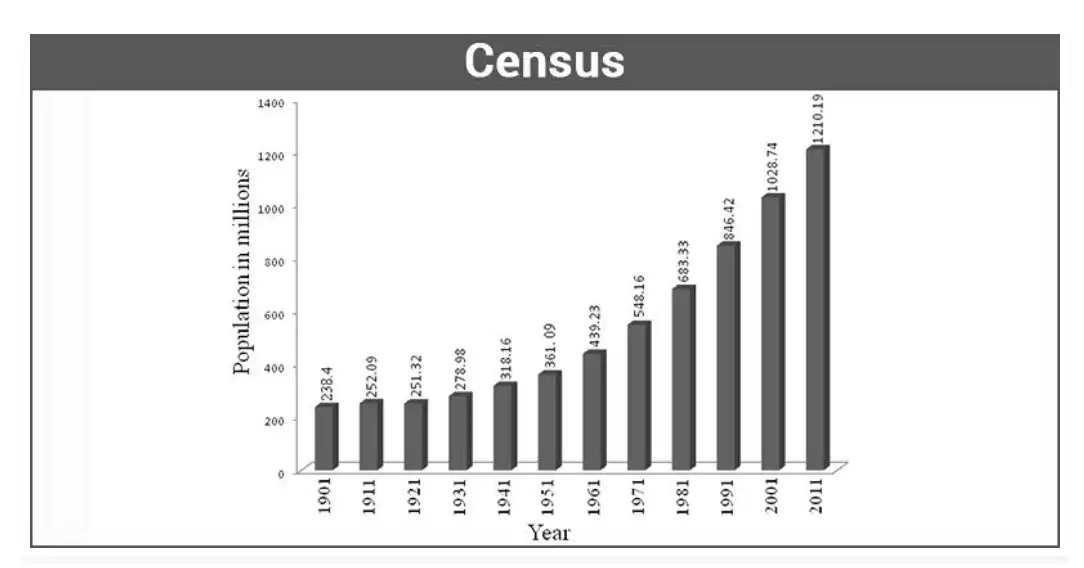
Visual representation of the Census procedure
Example Problem
A country plans to conduct a census to record the population details of a city with an estimated 1.2 million residents. The census aims to collect data on age groups, employment, and education levels. Explain why such detailed data collection is essential for government planning.
Solution:
Detailed demographic data helps the government allocate resources effectively, such as healthcare and education.
Employment data assists in identifying areas with high unemployment, guiding job creation policies.
Age distribution informs pension schemes and youth services planning.
Educational qualifications data supports the development of targeted skill development programs.
Approaches to Statistical Data Collection
Complete Enumeration versus Sampling Techniques
Statistical research can be conducted through two primary methods: complete enumeration and sample surveys. Complete enumeration involves studying every unit within the survey domain, ensuring comprehensive data collection. Conversely, sample surveys analyze a subset of units, using their characteristics to infer conclusions about the entire population.
While complete enumeration provides exhaustive data, it is often resource-intensive. Sample surveys offer a cost-effective alternative but require careful selection to maintain representativeness and accuracy.
Example Problem
A researcher wants to estimate the average household income in a town of 50,000 families. Conducting a full census is impractical. If the researcher surveys 1,000 randomly selected families and finds an average income of ₹45,000 per month, explain how this sample survey can be used to estimate the town's average income.
Solution:
The sample of 1,000 families represents 2% of the total population, chosen randomly to avoid bias.
The average income of ₹45,000 from the sample is used as an estimate for the entire town.
Statistical techniques can calculate confidence intervals to express the reliability of this estimate.
This approach saves time and resources compared to surveying all 50,000 families.
Utilization and Classification of Census Data
Applications and Geographic Segmentation
The data obtained from census operations serve multiple stakeholders. Governments utilize this information to design welfare schemes, plan educational infrastructure, enhance transportation networks, and forecast budgetary requirements. Businesses analyze census data to identify market demands and strategize new ventures. Students and researchers also benefit by understanding employment trends and wage patterns.
For statistical convenience, large urban areas are divided into smaller units called census tracts. These tracts are designed to be homogeneous in terms of population traits, living standards, and economic conditions, facilitating detailed analysis and policy implementation.
Example Problem
A metropolitan city is divided into 120 census tracts for detailed demographic analysis. If one tract has a population of 8,500 with a median income of ₹60,000, explain how this information can assist local authorities.
Solution:
Authorities can identify specific needs of the tract, such as infrastructure or social services.
Median income data helps in assessing economic well-being and targeting financial aid.
Population size guides resource allocation like schools, hospitals, and public transport.
Such granularity enables tailored policy-making rather than broad, less effective measures.
Quick Reference: Key Points on Census and Statistical Methods
Concept | Description |
|---|---|
Census | Official, periodic count and survey of a population including demographic and socioeconomic data. |
Complete Enumeration | Studying every unit in the population for comprehensive data collection. |
Sample Survey | Analyzing a representative subset to infer characteristics of the whole population. |
Census Tracts | Small, uniform geographic areas within cities used for detailed statistical analysis. |
Applications | Government planning, business strategy, educational research, and social welfare. |
Data Collected | Age, employment, education, socioeconomic status, population size. |
Frequency | Conducted at regular intervals, often every 10 years. |
Importance | Informs policy-making, resource distribution, and economic development. |
Limitations | Complete enumeration is costly and time-consuming; sample surveys require careful design. |
Data Usage | Supports demographic studies, urban planning, and market research. |
Glossary of Essential Terms
Term | Definition |
|---|---|
Census | A systematic process of collecting and recording population data. |
Enumeration | Counting every individual or unit in a population. |
Sample Survey | Studying a subset of the population to estimate characteristics of the whole. |
Demographics | Statistical data relating to the population and particular groups within it. |
Socioeconomic Status | Classification based on income, education, and occupation. |
Census Tract | A small geographic area used for detailed population analysis. |
Median Income | The middle value of income distribution in a population. |
Sampling | The process of selecting a representative group from a population. |
Data Compilation | Organizing collected data into a structured format for analysis. |
Policy Planning | Designing strategies based on data to address societal needs. |
Frequently Asked Questions
What is the main objective of conducting a census?
The primary goal is to obtain accurate and comprehensive data about the population to aid in effective governance, resource allocation, and planning.
How does a sample survey differ from a complete census?
A sample survey studies a portion of the population to infer characteristics, while a complete census counts every individual in the population.
Why are census tracts important in urban areas?
Census tracts divide large cities into smaller, uniform areas to facilitate detailed demographic and economic analysis for targeted policy-making.
Who benefits from census data besides the government?
Businesses, researchers, students, and social organizations use census data for market analysis, academic studies, and social welfare programs.
How often is a census typically conducted?
Most countries conduct a census every 10 years to keep demographic data up to date.