Comprehensive Guide to Organic Solvents
Understanding Organic Solvents and Their Classification
Defining Organic Solvents and Their Molecular Composition
Organic solvents are chemical substances primarily composed of carbon atoms, often accompanied by hydrogen atoms, forming carbon-based molecular frameworks. These solvents play a crucial role in dissolving various materials to form solutions or to separate components during extraction processes. Unlike general solvents, organic solvents specifically contain carbon within their molecular structure, which imparts unique chemical properties.
For instance, benzene is a classic example of an organic solvent, characterized by a ring of six carbon atoms bonded together, forming a stable aromatic structure.
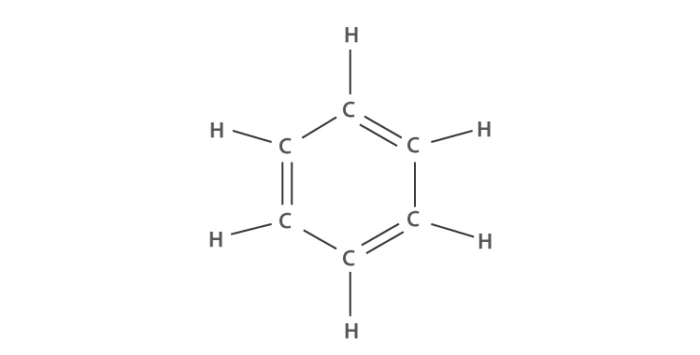
Molecular structure of benzene
Organic solvents are broadly categorized based on their origin into natural and synthetic types. Natural solvents are those produced by living organisms, while synthetic solvents are manufactured through chemical reactions involving organic compounds.
Example: Identify whether ethanol, commonly derived from fermentation, is a natural or synthetic organic solvent.
Solution: Ethanol produced by fermentation is a natural solvent as it is generated by biological processes in living organisms.
Varieties of Organic Solvents and Their Functional Characteristics
Classification Based on Molecular Structure and Functional Groups
Organic solvents are classified into several types depending on their molecular framework and functional groups, each exhibiting distinct chemical behaviors and applications.
Aliphatic Solvents: These solvents belong to the alkene family and are generally nonpolar. They are widely used in industries such as oil extraction, paint formulation, dye manufacturing, pharmaceuticals, polymerization, and adhesives.
Aromatic Solvents: Similar to aliphatic solvents in their nonpolar nature, aromatic solvents contain benzene rings and are employed in adhesives, paints, printing inks, extraction processes, insecticides, and dyeing.
Carbonyl Solvents: This group includes esters and other compounds with polar characteristics. They find applications in nail polish removers, electronic cleaning agents, circuit board manufacturing, decaffeination, adhesives, and food flavoring.
Additionally, alcohols represent another category of organic solvents used extensively in both industrial and commercial settings.
Examples of different organic solvent types
Example: Classify toluene based on its molecular structure and typical uses.
Solution: Toluene is an aromatic solvent due to its benzene ring structure. It is commonly used as a paint thinner and in adhesives, aligning with the characteristics of aromatic solvents.
Key Properties and Practical Uses of Organic Solvents
Physical and Chemical Traits of Organic Solvents
Organic solvents possess several defining physical and chemical properties that influence their behavior and applications:
Volatility: These solvents readily vaporize at room temperature, which is why they often emit noticeable odors when exposed to air.
Low Boiling Points: The boiling points of organic solvents are generally low, contributing to their high volatility and ease of evaporation.
Appearance: Most organic solvents are clear, colorless liquids with relatively low molecular weights.
Common Applications Across Industries
Organic solvents are integral to numerous industrial and consumer products, including:
Coatings and polishes
Paint thinners and removers (e.g., toluene)
Cleaning agents and degreasers
Nail polish removers (e.g., acetone, ethyl acetate, methyl acetate)
Detergents and perfumes
Spot removers and various chemical synthesis processes
Industrial uses of organic solvents
Example: Explain why acetone is an effective solvent for removing grease stains.
Solution: Acetone contains both polar carbonyl groups and nonpolar methyl groups, enabling it to dissolve a wide range of substances including nonpolar fats and greases. This dual polarity makes acetone highly effective in breaking down and removing grease stains.
Quick Reference: Summary of Organic Solvent Types and Uses
Solvent Type | Polarity | Common Uses | Example |
|---|---|---|---|
Aliphatic | Nonpolar | Oil extraction, paints, dyes, adhesives | Hexane |
Aromatic | Nonpolar | Paints, printing inks, insecticides | Toluene |
Carbonyl | Polar | Nail polish removers, electronic cleaners | Ethyl acetate |
Alcohols | Polar | Disinfectants, solvents in pharmaceuticals | Ethanol |
Glossary of Essential Terms Related to Organic Solvents
Term | Definition |
|---|---|
Organic Solvent | A carbon-based chemical compound used to dissolve other substances. |
Volatility | The tendency of a substance to vaporize at normal temperatures. |
Aliphatic Solvent | Nonpolar solvents derived from alkenes or alkanes. |
Aromatic Solvent | Nonpolar solvents containing benzene rings. |
Carbonyl Group | A functional group featuring a carbon atom double-bonded to oxygen. |
Polarity | The distribution of electrical charge over atoms in a molecule. |
Boiling Point | The temperature at which a liquid turns into vapor. |
Extraction | The process of separating a substance from a mixture using a solvent. |
Degreaser | A solvent used to remove grease and oils from surfaces. |
Miscible | Ability of two liquids to mix in all proportions without separating. |
Frequently Asked Questions About Organic Solvents
What is considered the most versatile solvent?
Water is often called the "universal solvent" because it can dissolve a wider variety of substances than any other liquid, making it essential for life and many chemical processes.
Is acetone classified as a protic or aprotic solvent?
Acetone is an aprotic solvent. Although it has moderate acidity, it lacks hydrogen atoms bonded to electronegative atoms, which is characteristic of protic solvents.
What defines fat solvents and why are they important?
Fat solvents are chemicals capable of dissolving lipids (fats). They are typically nonpolar and water-immiscible, such as diethyl ether, and are crucial in processes involving fat extraction or cleaning.
Why does acetone effectively dissolve fats?
Acetone's molecular structure includes both polar and nonpolar groups, allowing it to interact with and dissolve nonpolar fat molecules efficiently.
How does acetone compare to water as a solvent?
Acetone can dissolve both polar and nonpolar substances and is miscible with water, making it a more versatile solvent in many chemical applications compared to water, which primarily dissolves polar substances.