Comprehensive Overview of Organic Compounds and Their Classification
Understanding Organic Compounds and Their Fundamental Nature
Defining Organic Compounds and Their Core Characteristics
Organic compounds are chemical substances that contain carbon atoms within their molecular structure. These compounds can exist in solid, liquid, or gaseous states and typically feature carbon atoms bonded covalently to other elements such as hydrogen, oxygen, nitrogen, and sometimes phosphorus. Unlike inorganic compounds, organic molecules predominantly consist of carbon-hydrogen frameworks, which form the basis of countless substances found in living organisms and synthetic materials.
It is important to note that not all carbon-containing substances are classified as organic. For instance, carbon dioxide, carbon monoxide, cyanides, and carbonates are generally excluded from the organic category due to their distinct chemical properties and bonding patterns.
Solution: Carbon monoxide consists of one carbon atom bonded to one oxygen atom. Despite containing carbon, it is not considered an organic compound because it lacks carbon-hydrogen bonds and does not exhibit typical organic chemical behavior.
Classification of Organic Compounds Based on Structural Features
Open Chain (Acyclic) Organic Molecules
Open chain organic compounds, also known as aliphatic compounds, consist of carbon atoms arranged in straight or branched chains without forming rings. These molecules can be saturated or unsaturated depending on the presence of single, double, or triple bonds between carbon atoms. Alkanes, alkenes, and alkynes are common examples of acyclic compounds.
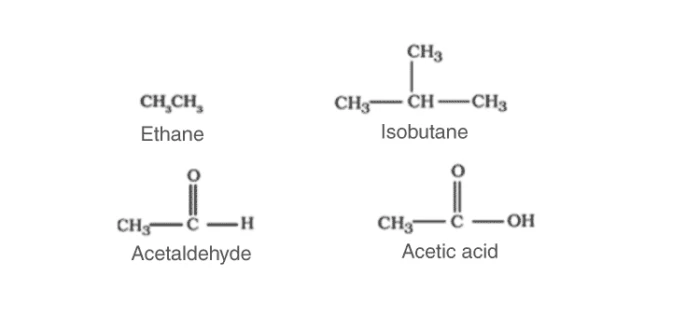
Solution: For alkanes, the general formula is \( C_nH_{2n+2} \). For \( n=5 \), the formula is:
\[ C_5H_{2(5)+2} = C_5H_{12} \]
This compound is pentane, a saturated hydrocarbon with no double or triple bonds.
Cyclic Organic Compounds: Alicyclic and Aromatic Types
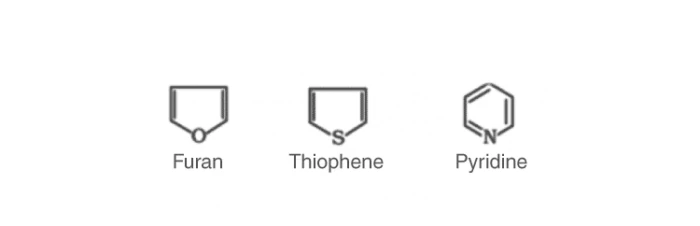
Cyclic organic compounds feature carbon atoms connected in ring structures. Alicyclic compounds are ring-shaped molecules composed solely of carbon atoms, resembling aliphatic compounds in their chemical behavior but differing in structure. When the ring contains atoms other than carbon, such as nitrogen or oxygen, the compound is termed heterocyclic.
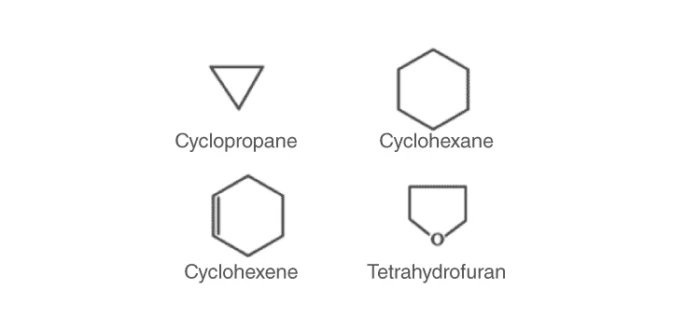
Aromatic compounds are a special class of cyclic molecules characterized by conjugated pi-electron systems that follow Huckel's rule, such as benzene. These compounds exhibit unique stability and chemical properties. Aromatic rings can be purely carbon-based (benzenoid) or contain heteroatoms (heterocyclic aromatic compounds).
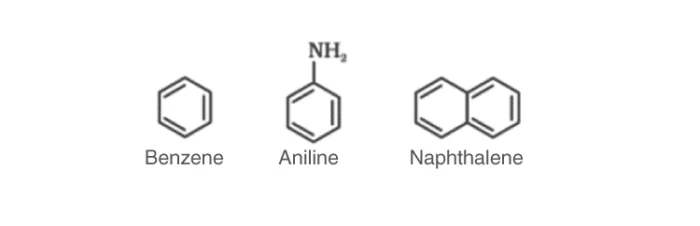

Solution: Benzene has a planar ring structure with six carbon atoms and alternating double bonds, creating a conjugated pi-electron system. It follows Huckel's rule with \( 4n + 2 = 6 \) pi electrons (where \( n=1 \)), which confers exceptional stability and aromaticity.
Classification Based on Functional Groups and Homologous Series
Role of Functional Groups in Organic Chemistry
Functional groups are specific atoms or groups of atoms within molecules that determine the characteristic chemical reactions of those compounds. They are responsible for the diverse properties and reactivities observed in organic chemistry. Common functional groups include hydroxyl (-OH), aldehyde (-CHO), and carboxyl (-COOH) groups.
Solution: Ethanol contains the hydroxyl (-OH) functional group, which classifies it as an alcohol. This group imparts properties such as polarity, ability to form hydrogen bonds, and reactivity with acids and bases.
Understanding Homologous Series in Organic Compounds
A homologous series is a family of organic compounds that share the same functional group and exhibit a gradual change in physical properties due to the addition of a constant unit, typically a \( \text{CH}_2 \) group. Members of a homologous series can be represented by a general formula, and each successive compound differs by one \( \text{CH}_2 \) unit.
Examples of homologous series include alkanes, alkenes, alkynes, haloalkanes, alcohols, and amines.
Solution: The general formula for alkenes is \( C_nH_{2n} \). For \( n=4 \), the molecular formula is:
\[ C_4H_{2(4)} = C_4H_8 \]
This compound is butene, an unsaturated hydrocarbon with one double bond.
Summary Table: Key Features of Organic Compound Classifications
| Classification | Structural Characteristics | Examples | Distinctive Properties |
|---|---|---|---|
| Acyclic (Open Chain) | Straight or branched chains of carbon atoms | Alkanes, Alkenes, Alkynes | Variable saturation; simple bonding patterns |
| Alicyclic (Closed Chain) | Carbon atoms arranged in rings without aromaticity | Cycloalkanes, Cycloalkenes | Ring strain affects reactivity; similar to aliphatic compounds |
| Aromatic | Planar ring systems with conjugated pi electrons | Benzene, Toluene | Exceptional stability; unique chemical behavior |
| Heterocyclic Aromatic | Rings containing carbon and other atoms (N, O, S) | Pyridine, Furan | Distinct electronic properties; biological significance |
| Functional Group Based | Defined by specific reactive groups | Alcohols (-OH), Aldehydes (-CHO), Carboxylic Acids (-COOH) | Determines chemical reactivity and classification |
| Homologous Series | Compounds differing by \( \text{CH}_2 \) units with same functional group | Alkanes, Alkenes, Alcohols | Gradual change in physical properties; predictable formulas |
Glossary of Essential Terms in Organic Chemistry
| Term | Definition |
|---|---|
| Organic Compound | A chemical compound containing carbon atoms covalently bonded to other elements, primarily hydrogen. |
| Acyclic Compound | Organic molecules with carbon atoms arranged in open chains, not forming rings. |
| Alicyclic Compound | Cyclic organic compounds with carbon atoms forming ring structures but lacking aromaticity. |
| Aromatic Compound | Compounds containing planar ring systems with conjugated pi electrons following Huckel's rule. |
| Heterocyclic Compound | Cyclic compounds where the ring contains atoms other than carbon, such as nitrogen or oxygen. |
| Functional Group | A specific group of atoms within molecules responsible for characteristic chemical reactions. |
| Homologous Series | A family of compounds with the same functional group differing by a constant unit, usually \( \text{CH}_2 \). |
| Hydrocarbon | Organic compounds composed exclusively of carbon and hydrogen atoms. |
| Isomer | Compounds with the same molecular formula but different structural arrangements. |
| Alkane | Saturated hydrocarbons containing only single bonds between carbon atoms. |
Frequently Asked Questions on Organic Compounds
What defines an organic compound?
Organic compounds are primarily characterized by the presence of carbon atoms covalently bonded to hydrogen and other elements, forming diverse molecular structures.
Can inorganic compounds contain carbon?
Yes, some inorganic compounds contain carbon, such as carbon dioxide and carbonates, but they are not classified as organic due to their bonding and properties.
Why are organic compounds important in daily life?
They form the basis of many materials and substances including fuels, medicines, plastics, and biological molecules essential for life.
How are organic compounds classified?
They are classified based on their structure (acyclic, cyclic, aromatic), functional groups, and homologous series.
What is a homologous series in organic chemistry?
A homologous series is a group of compounds with the same functional group and similar chemical properties, differing by a constant unit, typically \( \text{CH}_2 \).