Understanding Physical and Chemical Transformations
Distinguishing Physical Modifications
Nature and Features of Physical Changes
Physical changes involve alterations in a substance's external characteristics such as shape, size, color, or state without affecting its chemical identity. These modifications are generally temporary and reversible, as the internal molecular structure remains unchanged. Common examples include changes in state like melting, freezing, or boiling, and physical manipulations like folding or dissolving.
Key attributes of physical changes include:
Temporary transformations that do not alter chemical composition.
Rearrangement of molecules without breaking or forming chemical bonds.
No new substances are produced.
Usually reversible by simple physical means.
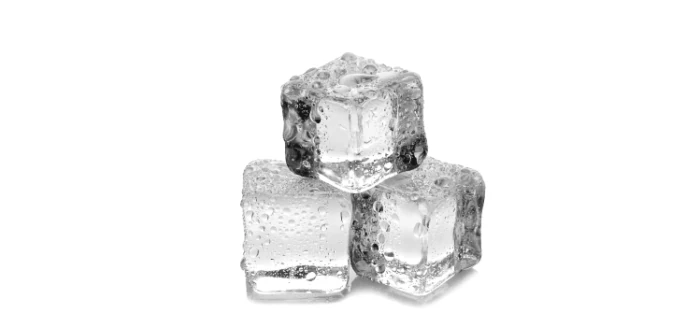
Illustration of Chemical and Physical Changes
Example Problem
A block of wax weighing 50 grams is heated until it melts completely. After cooling, it solidifies back to wax. Explain the type of change and whether the process is reversible.
Solution:
The melting of wax is a physical change because only the state of wax changes from solid to liquid without altering its chemical composition. Since the wax solidifies back upon cooling, the change is reversible. No new substance is formed during this process.
Exploring Chemical Transformations
Characteristics and Implications of Chemical Changes
Chemical changes occur when a substance undergoes a transformation that alters its chemical structure, resulting in the formation of one or more new substances. These changes are typically permanent and often accompanied by energy changes such as heat, light, or electricity emission or absorption. Unlike physical changes, chemical changes are generally irreversible through simple physical methods.
Important features of chemical changes include:
Permanent alteration of the original substance's chemical composition.
Formation or breaking of atomic bonds at the molecular level.
Possible release or absorption of energy in various forms.
Usually irreversible by physical means.
Visual Depiction of Chemical and Physical Changes
Example Problem
When 10 grams of iron is left exposed to moist air for several days, it forms 12 grams of rust. Identify the type of change and explain why the mass increases.
Solution:
This is a chemical change because iron reacts with oxygen and moisture to form a new substance, rust (iron oxide).
The increase in mass is due to the combination of iron with oxygen from the air.
The process is irreversible by simple physical means.
Comparing and Applying Change Concepts
Identifying and Differentiating Change Types
Understanding the distinction between physical and chemical changes is crucial for interpreting everyday phenomena. Physical changes affect only the appearance or state, while chemical changes alter the substance's identity. Recognizing these differences helps in fields ranging from material science to biology.
Common examples of physical changes include:
Boiling water turning into steam.
Dissolving sugar in water.
Magnetizing a needle.
Examples of chemical changes are:
Burning wood producing ash and smoke.
Milk turning sour.
Cooking food.
Example Problem
A student dissolves 15 grams of salt in 100 mL of water and then evaporates the water to retrieve the salt crystals. Classify the changes involved and state if they are reversible.
Solution:
Dissolving salt in water is a physical change because salt molecules disperse but do not chemically alter.
Evaporation of water is also a physical change involving a state change from liquid to gas.
Both processes are reversible, as the salt can be recovered by evaporation.
Quick Reference Summary
Aspect | Physical Change | Chemical Change |
|---|---|---|
Effect on Composition | No change in chemical composition | Changes chemical composition |
Reversibility | Usually reversible | Generally irreversible |
Energy Change | No significant energy change | Energy may be absorbed or released |
Examples | Melting ice, folding paper, dissolving sugar | Burning wood, rusting iron, cooking food |
New Substance Formation | No new substances formed | New substances formed |
Glossary of Key Terms
Term | Definition |
|---|---|
Physical Change | A change affecting physical properties without altering chemical composition. |
Chemical Change | A transformation that changes the chemical identity of a substance. |
Reversible | A change that can be undone by simple physical means. |
Irreversible | A change that cannot be reversed by physical methods. |
State of Matter | The physical form in which a substance exists: solid, liquid, or gas. |
Energy Change | Absorption or release of energy during a chemical or physical process. |
Molecular Structure | The arrangement of atoms within a molecule. |
Bond Formation | The process of atoms joining together to form molecules. |
Bond Breaking | The process of breaking chemical bonds between atoms. |
Condensation | The change of state from gas to liquid. |
Frequently Asked Questions
What is the main difference between physical and chemical changes?
Physical changes alter only the appearance or state of a substance without changing its chemical identity, while chemical changes result in the formation of new substances with different chemical properties.
Can all physical changes be reversed?
Most physical changes are reversible, such as melting and freezing, but some may be difficult to reverse depending on the context.
Why are chemical changes usually irreversible?
Chemical changes involve breaking and forming of bonds, creating new substances, which cannot be undone by simple physical methods.
Does dissolving sugar in water count as a physical or chemical change?
Dissolving sugar in water is a physical change because the sugar molecules disperse but do not chemically react or form new substances.
What are some signs that a chemical change has occurred?
Signs include color change, gas production, temperature change, formation of a precipitate, or emission/absorption of energy.