Understanding Acids, Bases, and Salts: Properties and Reactions
Fundamentals of Acids, Bases, and Salts
Core Definitions and Characteristics
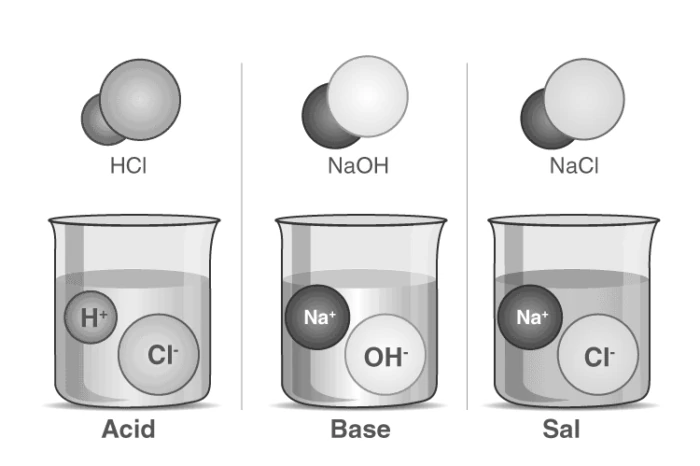
Acids, bases, and salts are fundamental chemical substances with distinct properties and behaviors in aqueous solutions. An acid is a compound that imparts a sour flavor, changes blue litmus paper to red, and reacts with bases to form neutral products. Conversely, a base tastes bitter, feels slippery, turns red litmus paper blue, and neutralizes acids. Salts are neutral compounds formed when acids and bases react, and their solutions do not alter litmus colors.
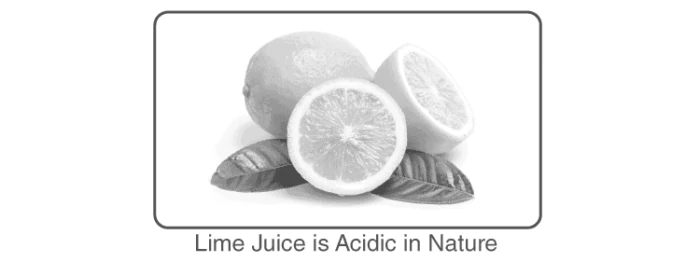
These substances are commonly found in nature and daily life. For instance, citric acid is abundant in citrus fruits, lactic acid in dairy products, and hydrochloric acid in stomach juices. Bases like lime water are also naturally occurring and widely used in household applications.
Example Problem
Question: Identify whether the following substances are acids, bases, or salts based on their properties: vinegar (sour taste, turns blue litmus red), soap (bitter taste, turns red litmus blue), and table salt (no effect on litmus).
Solution:
- Vinegar is an acid because it tastes sour and changes blue litmus paper to red.
- Soap is a base as it tastes bitter and turns red litmus paper blue.
- Table salt is neutral since it does not affect the color of litmus paper.
Exploring the Nature and Types of Acids
Properties and Classification of Acids
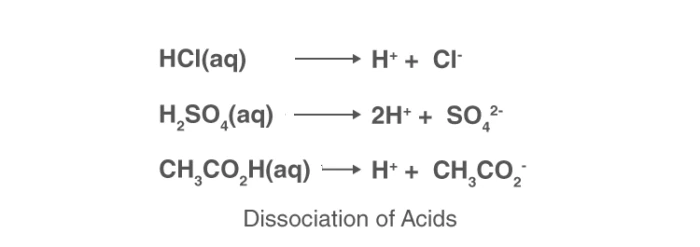
The word "acid" originates from the Latin term "acidus," meaning sour, reflecting their characteristic taste. Acids release hydronium ions (\( \mathrm{H_3O^+} \)) when dissolved in water, which is responsible for their acidic behavior. They turn blue litmus paper red and dissociate into ions in aqueous solutions.
Acids are broadly categorized into natural and mineral acids. Natural acids, such as citric acid in lemons and lactic acid in milk, are derived from biological sources. Mineral acids, including hydrochloric acid (\( \mathrm{HCl} \)) and sulfuric acid (\( \mathrm{H_2SO_4} \)), are synthesized from minerals and are commonly used in laboratories and industries.
Example Problem
Question: Write the dissociation equation for sulfuric acid in water and explain its acidic nature.
Solution:
Sulfuric acid dissociates in water in two steps:
\[ \mathrm{H_2SO_4 (aq) \rightarrow H^+ (aq) + HSO_4^- (aq)} \]
\[ \mathrm{HSO_4^- (aq) \rightleftharpoons H^+ (aq) + SO_4^{2-} (aq)} \]
The release of \( \mathrm{H^+} \) ions in solution is responsible for the acidic properties, such as sour taste and litmus color change.
Understanding Bases and Their Characteristics
Definition and Common Features of Bases
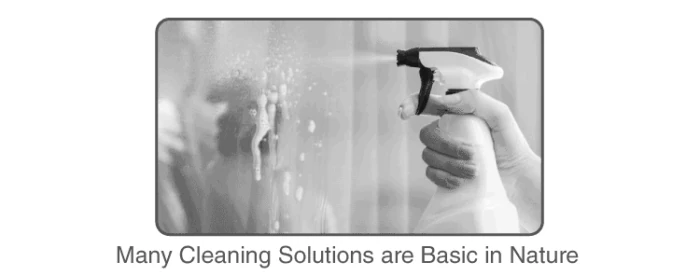
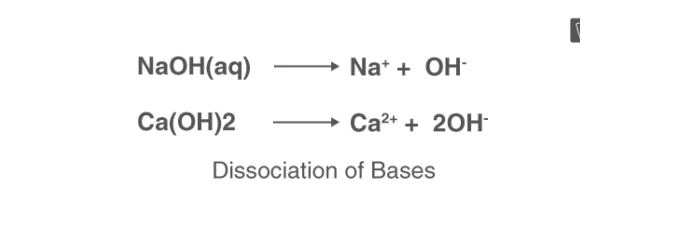
Bases are substances that produce hydroxide ions (\( \mathrm{OH^-} \)) when dissolved in water. They typically have a bitter taste and a slippery or soapy texture. Bases turn red litmus paper blue, indicating their alkaline nature. Many cleaning agents and household products are basic in nature.
Bases dissociate in aqueous solutions to yield their constituent ions, which is the basis for their chemical behavior.
Example Problem
Question: Write the dissociation equation for sodium hydroxide in water and describe its effect on litmus paper.
Solution:
Sodium hydroxide dissociates as follows:
\[ \mathrm{NaOH (aq) \rightarrow Na^+ (aq) + OH^- (aq)} \]
The hydroxide ions (\( \mathrm{OH^-} \)) increase the alkalinity of the solution, turning red litmus paper blue.
Salts: Formation and Properties
Nature and Creation of Salts
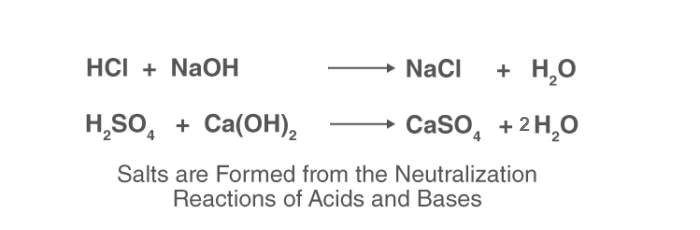
Salts are ionic compounds formed when acids react with bases in a neutralization reaction. They consist of positively charged ions (cations) from bases and negatively charged ions (anions) from acids. The resulting compound is generally neutral, and its aqueous solution does not change the color of litmus paper.
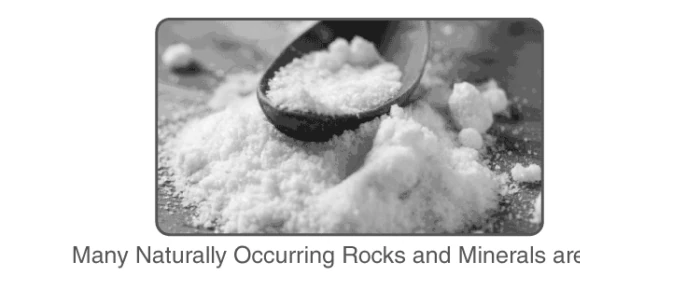
Salts occur naturally, such as sodium chloride and potassium chloride found in seawater and mineral deposits.
Example Problem
Question: Write the balanced chemical equation for the reaction between hydrochloric acid and sodium hydroxide, and identify the products formed.
Solution:
The neutralization reaction is:
\[ \mathrm{HCl (aq) + NaOH (aq) \rightarrow NaCl (aq) + H_2O (l)} \]
This reaction produces sodium chloride (a salt) and water.
Quick Reference: Summary of Acids, Bases, and Salts
| Substance | Characteristic | Litmus Test | Example |
|---|---|---|---|
| Acid | Sour taste, releases \( \mathrm{H_3O^+} \) ions | Turns blue litmus red | Citric acid, HCl |
| Base | Bitter taste, slippery feel, releases \( \mathrm{OH^-} \) ions | Turns red litmus blue | NaOH, lime water |
| Salt | Neutral compound formed by acid-base reaction | No change in litmus color | NaCl, KCl |
Glossary of Key Terms
| Term | Definition |
|---|---|
| Acid | A substance that produces hydronium ions (\( \mathrm{H_3O^+} \)) in water and tastes sour. |
| Base | A compound that releases hydroxide ions (\( \mathrm{OH^-} \)) in solution and tastes bitter. |
| Salt | An ionic compound formed from the neutralization of an acid and a base. |
| Neutralization | A chemical reaction where an acid and a base react to form salt and water. |
| Litmus Test | A method to identify acidic or basic nature using litmus paper. |
| Hydronium Ion | The ion \( \mathrm{H_3O^+} \) formed when acids ionize in water. |
| Hydroxide Ion | The ion \( \mathrm{OH^-} \) produced by bases in aqueous solutions. |
| Mineral Acid | Acids derived from minerals, e.g., hydrochloric acid, sulfuric acid. |
| Natural Acid | Acids obtained from natural sources like fruits and animal products. |
| Cation | Positively charged ion present in salts and bases. |
| Anion | Negatively charged ion present in salts and acids. |
Frequently Asked Questions
What defines a salt in chemistry?
A salt is a compound formed when an acid reacts with a base, consisting of cations from the base and anions from the acid, typically resulting in a neutral substance.
Is ammonium chloride considered a basic salt?
No, ammonium chloride is an acid salt because it is formed from a strong acid (hydrochloric acid) and a weak base (ammonium hydroxide).
What are the main categories of acids?
Acids are classified as organic (containing carbon) and inorganic (mineral) acids. Organic acids are generally weaker and derived from living organisms, while inorganic acids are stronger and mineral-based.
Can salts be acidic or basic?
Salts are usually neutral, but some can be basic or acidic depending on the strength of the parent acid and base. For example, sodium chloride is neutral, while salts from weak acids or bases may show acidic or basic properties.
What occurs when salt reacts with hydrochloric acid?
When a metal reacts with hydrochloric acid, it produces a salt and hydrogen gas. For example, sodium metal reacts with HCl to form sodium chloride and hydrogen gas:
\[ \mathrm{2Na (s) + 2HCl (aq) \rightarrow 2NaCl (aq) + H_2 (g)} \]