Comprehensive Overview of Pteridophytes: Characteristics, Classification, and Life Cycle
Fundamental Traits and Evolutionary Significance of Pteridophytes
Distinctive Features and Adaptations of Pteridophytes
Pteridophytes represent one of the earliest groups of vascular plants that successfully transitioned from aquatic to terrestrial habitats. Unlike seed plants, they propagate through spores rather than seeds, a trait inherited from their ancient ancestors. These plants possess true roots, stems, and leaves, which mark a significant evolutionary advancement over non-vascular plants. Their vascular system, although lacking xylem vessels and companion cells in phloem, facilitates efficient transport of water and nutrients, enabling them to thrive in diverse environments.
Reproduction occurs via spores produced in specialized structures called sporangia, which are often grouped on modified leaves known as sporophylls. The sexual organs are multicellular, with male antheridia and female archegonia, supporting a complex life cycle featuring alternation of generations where both gametophyte and sporophyte stages are free-living.
Example Problem: Identifying Pteridophyte Characteristics
A plant species exhibits vascular tissues but lacks seeds and reproduces through spores. It has true roots, stems, and leaves, and its spores develop inside sporangia located on specialized leaves. Based on these features, classify the plant and explain why it fits into that category.
Solution:
The presence of vascular tissues indicates it is a tracheophyte.
Reproduction through spores and absence of seeds exclude it from seed plants.
True roots, stems, and leaves confirm it is a higher plant than bryophytes.
Spores developing in sporangia on sporophylls are characteristic of pteridophytes.
Therefore, the plant is classified as a pteridophyte, a seedless vascular plant reproducing via spores.
Classification and Structural Diversity within Pteridophytes
Major Classes and Their Distinctive Morphologies
Pteridophytes are categorized into four principal classes, each exhibiting unique structural and reproductive traits. These classes illustrate the evolutionary progression and diversity within the group.
Psilopsida: The most primitive class, characterized by dichotomously branched, photosynthetic stems without true leaves. Rhizoids are present, and the sporophyte is homosporous with synangia. Examples include Psilotum and Tmesipteris.
Lycopsida: Known as club mosses, these plants have well-differentiated roots, stems, rhizophores, and leaves. They can be homosporous or heterosporous. Representative genera are Selaginella and Lycopodium.
Sphenopsida: Commonly called horsetails, they possess roots from underground rhizomes, jointed stems, and scale-like leaves. They are homosporous, with sporangia borne on strobili. The genus Equisetum is a typical example.
Pteropsida: These are the true ferns with well-developed roots, stems, and leaves. They may be homosporous or heterosporous, and their antherozoids are multiflagellate. Examples include Pteris, Dryopteris, and Adiantum.
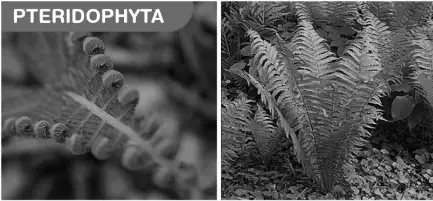
Illustration of a micelle structure relevant to plant cell biology
Example Problem: Classifying a Pteridophyte Specimen
A plant has jointed stems with scale-like leaves and produces spores on cone-like structures called strobili. It is homosporous and has roots emerging from underground rhizomes. Identify the class to which this plant belongs and justify your answer.
Solution:
Jointed stems and scale-like leaves are typical of horsetails.
Presence of strobili bearing sporangia confirms reproductive features of Sphenopsida.
Roots from underground rhizomes align with Sphenopsida characteristics.
Homosporous nature further supports this classification.
Hence, the plant belongs to the class Sphenopsida.
Life Cycle Dynamics and Reproductive Strategies of Pteridophytes
Alternation of Generations and Gametophyte Sexuality
Pteridophytes exhibit a life cycle marked by a clear alternation between the diploid sporophyte and haploid gametophyte generations, both of which are independent and capable of free living. This contrasts with seed plants where the gametophyte is often reduced and dependent.
The gametophytes can be dioicous, where individual plants produce either male or female sex organs, or monoicous, where a single gametophyte bears both antheridia and archegonia. Additionally, the timing of maturation of these sex organs varies: in protandrous gametophytes, antheridia mature before archegonia, while in protogynous ones, archegonia mature first.
Diagram depicting the alternation of generations in pteridophytes
Example Problem: Understanding Gametophyte Sexuality
A pteridophyte gametophyte produces both antheridia and archegonia on the same individual, but the antheridia mature before the archegonia. Classify the gametophyte's sexuality and explain the significance of this timing.
Solution:
Since both sex organs are present on the same gametophyte, it is monoicous.
Because antheridia mature before archegonia, it is protandrous.
This timing reduces the chance of self-fertilization, promoting genetic diversity.
Thus, the gametophyte is monoicous and protandrous, enhancing reproductive success.
Quick Reference: Key Points on Pteridophytes
Aspect | Details |
|---|---|
Reproduction | By spores, no seeds |
Vascular System | Present, lacks xylem vessels and phloem companion cells |
Plant Body | True roots, stems, and leaves |
Life Cycle | Alternation of generations with free-living gametophyte and sporophyte |
Sexual Organs | Multicellular antheridia and archegonia |
Spore Types | Homosporous or heterosporous |
Major Classes | Psilopsida, Lycopsida, Sphenopsida, Pteropsida |
Habitat | Moist, shady environments like swamps and forest floors |
Common Names | Ferns, horsetails, club mosses |
Evolutionary Importance | First true vascular plants on land |
Glossary of Essential Terms
Term | Definition |
|---|---|
Antheridium | Male sex organ producing sperm in pteridophytes |
Archegonium | Female sex organ producing eggs in pteridophytes |
Homosporous | Producing one type of spore |
Heterosporous | Producing two distinct types of spores: microspores and megaspores |
Sporangium | Structure where spores are formed |
Sporophyll | Leaf that bears sporangia |
Rhizome | Underground horizontal stem |
Tracheophyte | Vascular plant with specialized conducting tissues |
Protandrous | Condition where male sex organs mature before female ones |
Protogynous | Condition where female sex organs mature before male ones |
Frequently Asked Questions
What defines pteridophytes in the plant kingdom?
Pteridophytes are vascular plants that reproduce via spores instead of seeds, possessing true roots, stems, and leaves, and exhibiting alternation of generations with free-living gametophyte and sporophyte stages.
Which are the main groups within pteridophytes?
The primary classes include Psilopsida (whisk ferns), Lycopsida (club mosses), Sphenopsida (horsetails), and Pteropsida (true ferns).
Why are pteridophytes called tracheophytes?
Because they have specialized vascular tissues—xylem and phloem—that conduct water and nutrients, distinguishing them from non-vascular plants.
Where do pteridophytes typically grow?
They thrive in moist, shaded environments such as forest floors, swamps, and crevices of rocks where humidity is high.
What is the significance of the alternation of generations in pteridophytes?
This life cycle allows both haploid and diploid stages to be independent and free-living, increasing adaptability and survival chances in varying environments.