Comprehensive Overview of Kingdom Protista
Understanding Protists: The First Eukaryotic Life Forms
Defining Protists and Their Unique Features
Protists are a diverse group of eukaryotic organisms that do not fit neatly into the categories of plants, animals, or fungi. Predominantly unicellular, some protists form colonies or multicellular structures. They thrive mainly in aquatic or moist environments and can also exist as parasites.
The term "Protista" originates from the Greek word "protistos," meaning "the very first," highlighting their status as some of the earliest eukaryotic life forms. Their cells contain a nucleus enclosed within membranes and various organelles. Many protists possess locomotive structures such as flagella or cilia, enabling movement.
Scientists believe protists represent an evolutionary bridge linking plants, animals, and fungi, all of which likely evolved from a common protist-like ancestor billions of years ago. Although this ancestor is hypothetical, genetic evidence supports this connection.
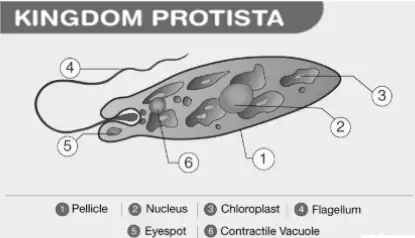
Illustration representing Kingdom Protista
Example Problem
Question: Explain why protists are considered the earliest eukaryotic organisms and how they relate to other kingdoms.
Answer: Protists have membrane-bound nuclei and organelles, a hallmark of eukaryotic cells.
They exhibit characteristics of plants, animals, and fungi, indicating a shared ancestry.
Genetic studies trace key genes in plants and animals back to protist-like ancestors.
Thus, protists are viewed as the foundational eukaryotes from which other kingdoms evolved.
Key Traits of Kingdom Protista
Distinctive Characteristics and Adaptations
All protists are eukaryotic, possessing a nucleus enclosed by a membrane. They predominantly inhabit aquatic or moist terrestrial environments. While most protists are unicellular, some, like kelp, are multicellular and can grow to impressive sizes.
Protists display diverse nutritional modes: some are autotrophs capable of photosynthesis, while others are heterotrophs relying on external organic sources. Symbiotic relationships are common; for example, kelp provides shelter to otters, which in turn protect kelp by preying on sea urchins.
Locomotion in protists is facilitated by cilia, flagella, or pseudopodia. Reproduction is mainly asexual, with sexual reproduction occurring rarely under stress conditions.
Example Problem
Question: Describe the modes of nutrition and locomotion found in protists, providing examples.
Answer: Nutrition: Protists can be autotrophic (e.g., Euglena performs photosynthesis) or heterotrophic (e.g., Amoeba consumes other organisms).
Locomotion: Movement is achieved via flagella (e.g., Euglena), cilia (e.g., Paramecium), or pseudopodia (e.g., Amoeba).
These adaptations allow protists to survive in varied environments and obtain nutrients efficiently.
Organizing Protists: Classification and Groups
Major Categories Within Kingdom Protista
Kingdom Protista is divided into several groups based on morphology, nutrition, and locomotion:
Protozoa: Unicellular, mostly heterotrophic organisms exhibiting animal-like behavior. Examples include Amoeba (with pseudopodia), Paramecium (with cilia), and Euglena (flagellated and photosynthetic).
Slime Moulds: Saprophytic organisms feeding on decaying matter, often visible as plasmodium aggregates with multiple nuclei.
Chrysophytes, Dinoflagellates, and Euglenoids: Mostly photosynthetic, these can be unicellular or multicellular. Chrysophytes like diatoms have siliceous cell walls; dinoflagellates cause phenomena like red tides; euglenoids combine plant and animal traits.
Example Problem
Question: Classify the following protists: Amoeba, Diatoms, Plasmodium, and Euglena, and mention one key feature of each.
Answer:
Amoeba: Amoeboid protozoan; moves using pseudopodia.
Diatoms: Chrysophyte; possess hard siliceous cell walls.
Plasmodium: Sporozoan protozoan; causes malaria and has a spore-like life stage.
Euglena: Euglenoid; flagellated and capable of photosynthesis.
Economic and Ecological Significance of Protists
Roles in Ecosystems and Human Applications
Protists form the base of many aquatic food chains, serving as primary producers and food sources for various marine animals. They engage in symbiotic relationships, contribute to oxygen production, and some species are utilized in biofuel production.
For instance, phytoplankton sustains large marine mammals like whales, while seaweed (a multicellular protist) is harvested for food and industrial uses. Zooplankton, another protist group, supports numerous aquatic species including shrimp and crab larvae.
Example Problem
Question: Explain two ways in which protists impact human industries and ecosystems.
Answer: Protists like algae produce oxygen through photosynthesis, supporting aquatic life and contributing to atmospheric oxygen.
Seaweeds are harvested for food, fertilizers, and biofuel, providing economic benefits.
Some protists cause diseases (e.g., Plasmodium causes malaria), impacting public health.
Quick Reference: Summary of Kingdom Protista
Aspect | Details |
|---|---|
Cell Type | Eukaryotic with membrane-bound nucleus and organelles |
Cellularity | Mostly unicellular; some multicellular (e.g., kelp) |
Habitat | Aquatic, moist terrestrial environments, parasitic |
Nutrition | Autotrophic, heterotrophic, or mixotrophic |
Locomotion | Flagella, cilia, pseudopodia |
Reproduction | Primarily asexual; sexual reproduction rare |
Major Groups | Protozoa, Slime Moulds, Chrysophytes, Dinoflagellates, Euglenoids |
Ecological Role | Primary producers, symbionts, food source, oxygen producers |
Economic Importance | Food, biofuel, industrial applications, disease agents |
Glossary of Key Terms
Term | Definition |
|---|---|
Autotrophic | Organisms that produce their own food through photosynthesis or chemosynthesis |
Heterotrophic | Organisms that obtain nutrition by consuming other organisms |
Flagella | Whip-like structures used for movement in some protists |
Cilia | Short hair-like projections aiding in locomotion and feeding |
Pseudopodia | Temporary projections of cytoplasm used for movement and engulfing food |
Plasmodium | A multinucleate mass of cytoplasm found in slime moulds |
Chrysophytes | A group of protists including diatoms with siliceous cell walls |
Dinoflagellates | Photosynthetic protists known for bioluminescence and red tides |
Euglenoids | Protists with characteristics of both plants and animals, lacking a cell wall |
Symbiosis | A close and often long-term interaction between two different species |
Frequently Asked Questions
What defines a protist?
Protists are eukaryotic organisms, mostly unicellular, that do not belong to plants, animals, or fungi. They have membrane-bound nuclei and organelles and can be autotrophic, heterotrophic, or parasitic.
Can protists be multicellular?
Yes, while most protists are unicellular, some like kelp and certain algae are multicellular and can grow to large sizes.
How are protists classified?
Protists are grouped into categories such as protozoa, slime moulds, chrysophytes, dinoflagellates, and euglenoids based on their structure, nutrition, and locomotion.
What role do protists play in ecosystems?
Protists are primary producers in aquatic food chains, contribute to oxygen production, and serve as food for many marine animals.
Do protists reproduce sexually?
Protists mainly reproduce asexually, but sexual reproduction can occur, usually under stressful environmental conditions.